Power Pop fan, Baseball, Beatles, Alternative music, old movies, and tv show fan. Also anything to do with pop culture in the 60s and 70s... I'm also a songwriter, bass and guitar player. Not the slightest bit interested in politics at all.
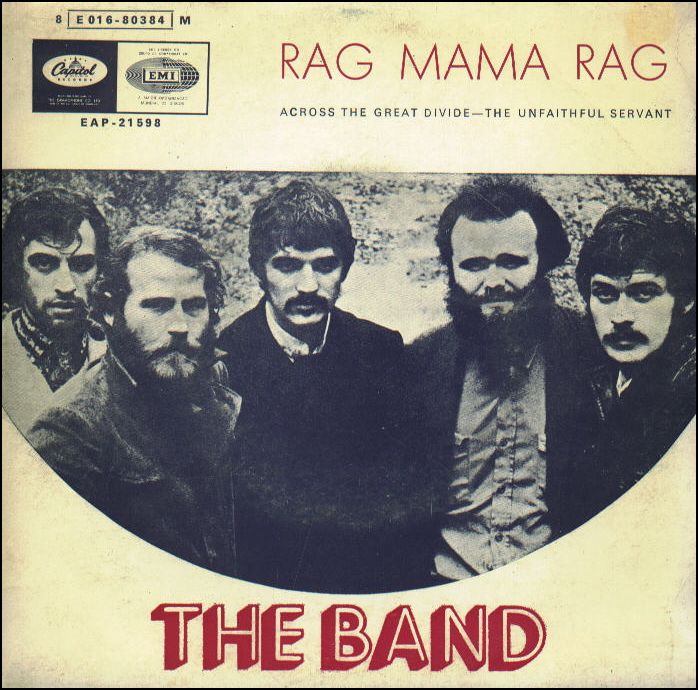
It doesn’t get much better than this. This wasn’t a huge hit but it doesn’t mean that much when it’s The Band.
The Band did this song by playing musical chairs with the instruments. Most of them grabbed something different than what they normally played. Levon (drummer) sang and played Mandolin, Richard Manuel (piano) played drums, Rick Danko (bass) played fiddle, Garth Hudson (keyboards) played uprigtht piano and producer John Simon played Tuba.
Robbie Robertson wrote the song and was the only one playing their normal instrument…guitar.
The song peaked at #57 in the Billboard 100, #46 in Canada, and #16 in the UK in 1970. The song was on their second album The Band.
Songfacts
One of the Band’s first big European hit singles, “Rag Mama Rag” has some unusual instrumentation. Lead pianist Richard Manuel played drums, drummer Levon Helm played mandolin and sang lead, and bassist Rick Danko played a fiddle. This left the bass spot open on this track, and it was filled by the album’s producer, John Simon. He improvised a bassline on tuba, although he had no idea how to play the instrument. >>
Robbie Robertson is the only songwriter credited on this track, although other members of the group claim they made contributions. The song finds Levon Helm trying to convince his girl to come back home so she can “rag all over” his house. What he has in mind in unclear: “rag” could mean playing ragtime music (a possibility, considering the line “rosin up the bow”), but he might have more prurient intentions.
Rag Mama Rag
Rag Mama rag, can’t believe its true. Rag Mama Rag, what did you do? Crawled up to the railroad track Let the four nine-teen scratch my back
Sag mama sag now What’s come over you Rag Mama Rag, I’m a pulling out your gag. Gonna turn you lose like an old caboose, Got a tail I need a drag.
I ask about your turtle, And you ask about the weather, Well, I can’t jump the hurdle And we can’t get together.
We could be relaxing in my sleeping bag, But all you want to do for me mama Is rag Mama rag there’s no-where to go, Rag Mama rag. Come on resin up the bow.
Rag Mama rag, where do ya roam? Rag Mama rag, bring your skinny little body back home. Its dog eat dog and cat eat mouse, you can You can rag Mama rag all over my house.
Hail stones beating on the roof, The bourbon is a hundred proof, Its you and me and the telephone Our destiny is quite well known.
We don’t need to sit and brag. All we gotta do is Rag Mama rag Mama rag. Rag Mama rag Where do you roam? Rag Mama rag, bring your skinny little body back home
I would hear this song over at my relatives when I was young. They had two or three Elvis greatest hit albums so I got to know his music pretty well. Before Elvis entered the army he was as about has hot of an entertainer as you could get. He was rock and roll to many people…the Big E, the King, The Hip Shaking Man…
Elvis released this in 1956 and it was the B side to Hound Dog. That is a pretty good single to say the least! According to Joel Whitburn It is the only single in history to have both sides reach #1 in the US.
Don’t Be Cruel written by Otis Blackwell, a songwriter who came up with a lot of hits for Elvis. In addition to this, he also wrote “Return to Sender,” “All Shook Up,” and “One Broken Heart for Sale” for Elvis. He also wrote “Fever,” which was made famous by Peggy Lee, and “Great Balls Of Fire” for Jerry Lee Lewis. Blackwell died in 2002 at age 70.
Cheap Trick covered this in 1988. Their version peaked at #4 in the Billboard 100, #2 in Canada, #6 in New Zealand, and #77 in the UK. I did like this version also.
Joel Whitburn (writer): “As far as the two-sided Presley hit ‘Hound Dog” / “Don’t Be Cruel,’ I’ve always tabulated that single 45 as two #1 hits. ‘Hound Dog’ was the first title to chart and the first one to be listed as the lead #1 song. Billboard’s ‘Best Sellers in Stores’ chart listed the the #1 song on 8/18/56 as ‘Hound Dog/Don’t Be Cruel.’ It was also shown that way when it first topped the ‘Most Played in Juke Boxes’ chart on 9/1/56. There is absolutely no doubt that the initial sales and ‘buzz’ about this record was for ‘Hound Dog.’ It was a smash #1 hit right out of the box. As airplay began to favor ‘Don’t Be Cruel,’ the two titles were flip-flopped at #1, with ‘Don’t Be Cruel’ actually showing more weeks as the #1 lead song. Again, I have always tabulated these two titles as two #1 songs. There is no way you can consider this 4-times platinum record as one #1 hit. And, neither does RIAA who awards gold and platinum selling records. They show ‘Hound Dog’ / ‘Don’t Be Cruel’ as both receiving platinum designations.”
From Songfacts
On Christmas Eve 1955, Otis Blackwell found himself on the streets in front of the Brill Building in New York City trying to stay warm. Things weren’t going well for Blackwell – it was raining and there were leaks in the soles of his shoes. His friend Leroy Kirkland walked by and asked Otis if he had written any more songs. Otis said yes. Over the next week, he sold 6 of them to a publishing company for $25 each. Management at The Brill Building liked him so much they offered him a full-time job writing, and Blackwell accepted. Not long after, Otis got some very good news: This up-and-coming rock star wanted to record one of his songs. The deal was, the guy wanted half the writer’s fee. Otis said, “No way I’m gonna give up half that song.” His friends convinced him that half of something was better than all of nothing. Besides, this new singer just might “make it” and if he did, Otis’ royalties would be tremendous. Over the next few days, Otis agreed. It wasn’t Elvis who wanted half the “writer’s fee.” It was his manager, Colonel Tom Parker. The song became one of Elvis’ biggest and longest running hits. (Thanks to the disc jockey, author and music historian Ron Foster.)
Elvis’ bass player Bill Black released an instrumental version of this in 1960 which hit US #11.
Don’t Be Cruel
You know I can be found Sitting home all alone If you can’t come around At least please telephone Don’t be cruel to who a heart that’s true
Baby, if I made you mad For something I might have said Please, let’s forget the past The future looks bright ahead Don’t be cruel to who a heart that’s true I don’t want no other love Baby it’s just you I’m thinking of
Don’t stop thinking of me Don’t make me feel this way Come on over here and love me You know what I want you to say Don’t be cruel to who a heart that’s true Why should we be apart? I really love you baby, cross my heart
Let’s walk up to the preacher And let us say I do Then you’ll know you’ll have me And I’ll know that I’ll have you, Don’t be cruel to who a heart that’s true I don’t want no other love, Baby it’s just you I’m thinking of
Don’t be cruel to who a heart that’s true Don’t be cruel to who a heart that’s true I don’t want no other love Baby it’s just you I’m thinking of
No matter how many times I’ve heard this song it sounds great.
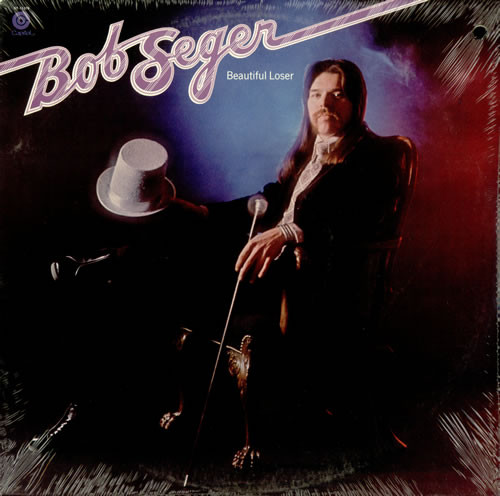
Seger worked hard for his success. He spent years touring and in 1968 with Capitol Records he scored a hit with Ramblin’ Gamblin’ Man. After that he didn’t have much success until his second stint with Capitol records.
He first left the label to record for Palladium, a Warner Bros. subsidiary run by his manager, Edward Andrews. Seger released three albums on Palladium, but when he delivered Beautiful Loser, Warner Bros. rejected it and Seger went back to Capitol. The album sold about as well as Seger’s previous releases, maybe 50,000 copies, mostly in Michigan. But his next release was the live album Live Bullet, recorded at two Detroit shows in 1975 and released in April 1976. With “Beautiful Loser” one of the standout tracks, the album proved a winner and had sold well over 100,000 by the time Seger released his next one, the breakthrough Night Moves. His sudden success stoked interest in his back catalog; Beautiful Loser ended up selling over 2 million.
Radio stations usually play the live version of “Beautiful Loser” together with “Traveling Man” off the 1976 Live Bullet album. The two songs are separate cuts but flow together perfectly.
Bob Seger:“I’ve never written the lyrics and tried to build the music around that. It’s usually a feel or a verse or a chorus, and the lyrics will come after I’ve decided that a certain pattern or groove or rhythm is cool. Then I’ll start singing gibberish over that and just find a lyrical idea that fits the ideas that I started out with.
Other times I’ll just sit down and say, ‘I wanna write a song called this.’ That’s how ‘Beautiful Loser’ happened. I just loved the title, which I got from a book of poetry from Leonard Cohen called Beautiful Losers, with an ‘s,’ and I thought it was a really cool title.
From Songfacts
This song is about people who set their goals so low, they never achieve anything. It is not about Seger personally. He told Creem magazine in a 1986 interview: “A lot of people think I wrote ‘Beautiful Loser’ about myself. I got the idea for that song from a book of Leonard Cohen poetry by the same name. The song was about underachievers in general. I very rarely write about myself that much. I draw on my own experiences like anyone else, but I’m not what you’d call auteuristic. I’m not like my songs at all. I’m a lot more up person than what I write.”
Cohen’s book that Seger refers to is called Beautiful Losers.
Seger took almost a year to write this. He played around with many different arrangements of the song until he got it right. In a 1994 interview with Music Connection, he explained:
Actually, I wrote three or four songs called ‘Beautiful Loser’ until I came up with the one that worked. But that’s a pretty rare thing.”
Glenn Frey, a member of the Eagles and a friend of Seger’s, was one of the first people Seger played this for. Frey loved it and helped Seger tweak it before it was released.
Seger spent a lot of time on the road, and he didn’t like to work on songs when he was touring. When it came time to make an album, he would work with his Silver Bullet Band, but also repair to Muscle Shoals Sound Studio in Alabama, where he a cadre of very talented musicians served as his backing band.
“Beautiful Loser” was one of the tracks he recorded at Muscle Shoals, which had two standout keyboard players in their ranks: Barry Beckett and Spooner Oldham.
Beautiful Loser
He wants to dream like a young man With the wisdom of an old man He wants his home and security He wants to live like a sailor at sea
Beautiful loser Where you gonna fall? When you realize You just can’t have it all
He’s your oldest and your best friend If you need him, he’ll be there again He’s always willing to be second-best A perfect lodger, a perfect guest
Beautiful loser Read it on the wall And realize You just can’t have it all You just can’t have it all
You just can’t have it all Ohh, ohh, can’t have it all You can try, you can try, but you can’t have it all Oh yeah
He’ll never make any enemies, enemies, no He won’t complain if he’s caught in a freeze He’ll always ask, he’ll always say please
Beautiful loser Never take it all ‘Cause it’s easier And faster when you fall
You just don’t need it all You just don’t need it all You just don’t need it all Just don’t need it all
I remember this song when I was a young fellow. The Five Man Electrical Band was a rock band from Ottawa, Ontario. They started out as The Staccatos in 1963 and had success in the Canadian Charts between 1965-1975. In 1969 is when they changed their name to The Five Man Electrical Band. They had 8 top twenty hits and 4 top ten hits in Canada.
In America though they were known mostly for Signs but they did have a top 40 song called Absolutely Right. Signs was the B-Side to Absolutely Right.
This was written by the lead singer Les Emmerson. Emmerson wrote the song after taking a road trip on Route 66 in California, where he noticed many billboards that obscured the beautiful scenery. This posed a question: Who is allowed to put up signs that interfere with nature? This led to another query: Who gets to make the rules that appear on so many signs?
“Signs” was included on their second album in 1970, but not considered single-worthy by their record label, as it didn’t fit a standard pop format.
In 1970, it was issued as the B-side to the single “Hello Melinda Goodbye,” which peaked at #55 on the Canadian chart. Disk jockeys preferred the flip side, however, and started playing “Signs,” which was then released as an A-side in 1971.
It peaked at #3 in the Billboard 100 and #4 in Canada in 1971.
The follow-up, “Absolutely Right,” also did well in America, peaking at #26 in the Billboard 100 and #3 in Canada.
From Songfacts
The song gave voice to those without power or property rights, which in many cases were young people.
This song starts with a line that became one of the most memorable in rock: “And the sign said, ‘Long-haired freaky people need not apply.'”
By starting with the word “And,” we feel that we are picking up a story, and it’s clear that the singer has put a lot of thought into this. The first verse is a classic tale of how looks can be deceiving, as the difference between an “upstanding man” and a hippie can be something as superficial as hair.
The next verse finds the singer looking at a “no trespassing” sign and questioning its authority. This resonates with anyone who has seen beautiful beaches, vistas, and other points of nature marked as private property, often with nobody there to enjoy it.
We then enter a private club with a strict dress code, and we hear the line most willful wanderers have been confronted with: “You ain’t supposed to be here.”
Finally, we end up in church, which brings God into our story. If ever there is something that is open to all, it it God, but even in church, a donation is called for. At this point, our hero turns the tables and makes his own sign, thanking God for the wonder of life.
Tesla revived this song in 1990 when they recorded a live, acoustic version for their album Five Man Acoustical Jam, which was recorded at the Trocadero Theatre in Philadelphia on July 2, 1990.
The band was on tour with Mötley Crüe, opening for the rockers on the Dr. Feelgood tour. July 2 was an off-day, so Tesla booked the acoustic show and had each band member pick a cover song to perform. Lead singer Jeff Keith picked “Signs,” a song he grew up listening to in Oklahoma. His bandmates, however, didn’t know the song, so Jeff had to round up a copy so they could learn it.
The song was the highlight of the performance, and the set was so well-received that it was released as an album, which they titled Five Man Acoustical Jam as an allusion to the original artist. Released as a single ahead of the album, the song made #2 on the Mainstream Rock chart, but didn’t crack the Hot 100. When the album started selling and MTV began airing the video, the song was re-released, making #8 on the Hot 100 in April 1991.
Tesla’s version was one of the first acoustic hit songs of the ’90s and helped launch the “Unplugged” trend. MTV ramped up their series of Unplugged concerts shortly after Tesla’s cover became a hit.
The line, “If God was here he’d tell you to your face, Man, you’re some kinda sinner” has a double-meaning, as “Man” could be just a throwaway expression, but could also be about man as a species.
In Tesla’s unedited version they replace the phrase “Blockin’ out the scenery, breakin’ my mind” with “F–kin’ up the scenery, breakin’ my mind.”
Signs
And the sign said “Long-haired freaky people need not apply” So I tucked my hair up under my hat and I went in to ask him why He said “You look like a fine upstanding young man, I think you’ll do” So I took off my hat, I said “Imagine that. Huh! Me workin’ for you!” Whoa-oh-oh
Sign, sign, everywhere a sign Blockin’ out the scenery, breakin’ my mind Do this, don’t do that, can’t you read the sign?
And the sign said anybody caught trespassin’ would be shot on sight So I jumped on the fence and-a yelled at the house, “Hey! What gives you the right?” “To put up a fence to keep me out or to keep mother nature in” “If God was here he’d tell you to your face, Man, you’re some kinda sinner”
Sign, sign, everywhere a sign Blockin’ out the scenery, breakin’ my mind Do this, don’t do that, can’t you read the sign?
Now, hey you, mister, can’t you read? You’ve got to have a shirt and tie to get a seat You can’t even watch, no you can’t eat You ain’t supposed to be here The sign said you got to have a membership card to get inside Ugh!
And the sign said, “Everybody welcome. Come in, kneel down and pray” But when they passed around the plate at the end of it all, I didn’t have a penny to pay So I got me a pen and a paper and I made up my own little sign I said, “Thank you, Lord, for thinkin’ ’bout me. I’m alive and doin’ fine.” Wooo!
Sign, sign, everywhere a sign Blockin’ out the scenery, breakin’ my mind Do this, don’t do that, can’t you read the sign?
I really like the sound they had at that time…it was dirty and raw.
For this song they got the idea from war stories they heard when they did a show at an American Air Force base during a tour of Europe. The four members wrote the song when they were in a grim deserted place in Zurich where they were playing for a small sum of money to an even smaller audience.
The band wanted to use this as the title of the album, but the record company thought it was too controversial and made them use “Paranoid,” another song on the album, instead. The album art, however, is a literal interpretation of a “War Pig,” showing a war “pig” with a sword and shield.
It was originally titled ‘Walpurgis’, an anniversary associated with witches and Satanists, but was changed on the recommendation of Black Sabbath’s record company. Ozzy released the original version on his 1997 album The Ozzman Cometh… the song though as the finish product was…just talk about the nightmare of War.
Geezer Butler : “Britain was on the verge of being brought into it, there was protests in the street, all kinds of anti -Vietnam things going on. War is the real Satanism. Politicians are the real Satanists. That’s what I was trying to say.”
Songfacts
This is one of many Black Sabbath songs that is often misinterpreted as evil. The song speaks out against the horrors of war.
On the US albums, this is listed as “War Pigs/Luke’s Wall.” “Luke’s Wall” is another name for the end of the song.
On the 1994 Black Sabbath tribute album Nativity In Black, Faith No More contributed a live cover version. Faith No More also covered this on their 1989 album The Real Thing.
War Pigs has been used as the name of various Black Sabbath tribute bands. We found one in Australia and another in Long Island, NY.
Ozzy’s former guitarist Zakk Wylde did a cover of this song after he went solo. Other artists who did covers: Slaves on Dope, Pig, Ether, Faith No More, Weezer, Boss Tweed, Red House Painters, Members Only, Badlands, Soulfly, Vital Remains, Ween, Sheavy, Gov’t Mule, Phish, Sacred Reich, Alice Donut, Flores Secas, Banda Arie, and Flores Secas.
This song is used for an encore in the video game Guitar Hero II for Playstation 2 and Xbox 360.
When the Sacramento band Tesla recorded this in 2007, lead guitarist Frank Hannon added a peace of Jimi Hendrix flavored “The Star Spangled Banner” to start the song.” It is the final track on Tesla’s Real To Reel 2-disk cover album, which is a tribute to Tesla’s mentors.
The song starts with the lyric, “Generals gathered in their masses. Just like witches at black masses.” Bassist and lyricist Geezer Butler was asked during a 2013 interview with Spin magazine why he used “masses” twice rather than coming up with a different word. “I just couldn’t think of anything else to rhyme with it,” he admitted. “And a lot of the old Victorian poets used to do stuff like that – rhyming the same word together. It didn’t really bother me. It wasn’t a lesson in poetry or anything.”
The song soundtracked a TV spot previewing the 2014 movie, 300: Rise Of An Empire.
War Pigs
Generals gathered in their masses Just like witches at black masses Evil minds that plot destruction Sorcerers of death’s construction In the fields the bodies burning As the war machine keeps turning Death and hatred to mankind Poisoning their brainwashed minds Oh lord yeah!
Politicians hide themselves away They only started the war Why should they go out to fight? They leave that role to the poor
Yeah
Time will tell on their power minds Making war just for fun Treating people just like pawns in chess Wait ’till their judgment day comes Yeah!
Now in darkness world stops turning Ashes where the bodies burning No more war pigs have the power Hand of God has struck the hour Day of judgment, God is calling On their knees the war pig’s crawling Begging mercy for their sins Satan laughing spreads his wings Oh lord yeah!
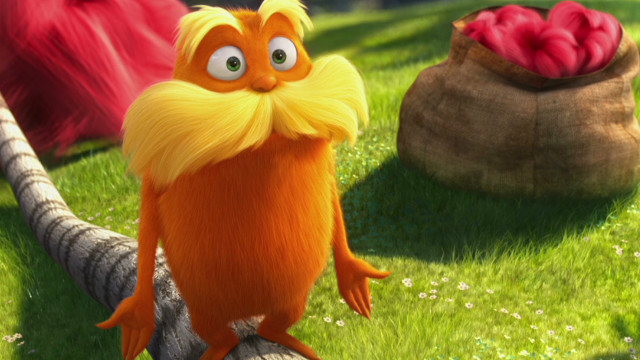
“I am the Lorax who speaks for the trees, which you seem to be chopping as fast as you please”
“Unless someone like you cares a whole awful lot, Nothing is going to get better. It’s not.” The Lorax
I always looked forward seeing The Lorax cartoon when I was a kid. It was the first environmental show that I remember seeing. It did have an effect on me with all of those Truffula Trees cut down and seeing the animals looking for homes. A animated movie was released in 2012 and I liked that one also…but not near as much as the cartoon.
Seuss wanted to write an ‘environmental protection’ book but didn’t want to come across as preachy. Published just more than a year after Earth Day was first celebrated in the United States on April 22, 1970, The Lorax also tackled the theme of deforestation in tandem with him fighting his own battle to keep a suburban development project from clearing the Eucalyptus trees around his La Jolla, California, home
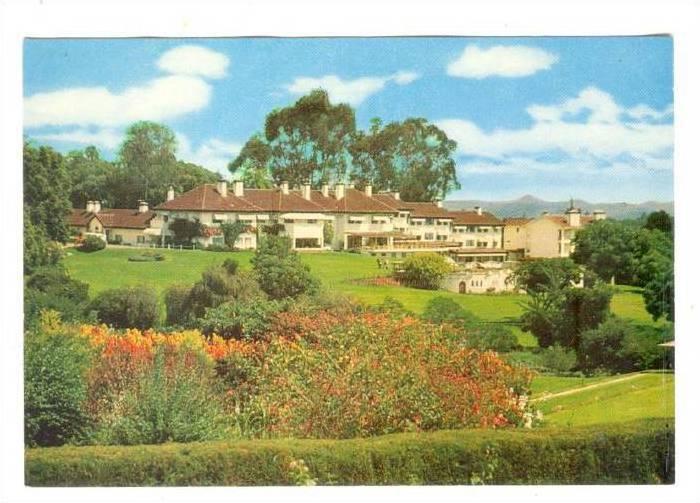
He was inspired by a vacation to Kenya. In September of 1970 at a celebrity retreat in a lavish Kenyan country club. Owned by actor William Holden, the Mount Kenya Safari Club played host to famous actors and writers… in exclusive cocktail hours and spontaneous safaris. Theodor Geisel was there with his second wife. He composed most of the manuscript that would become The Lorax.
The book was released a year later and was met with controversy because of the ecological message. It was seen as unfettered capitalism in over-drive against the good of the environment.
The Lorax was a gruff character who not only spoke for the trees but also for the animals. The Lorax gets justifiably exasperated with the Once-ler.
The Once-ler came to the land and found out that if he used the Truffula trees he could make “thneeds.” Thneeds was basically material that could be manipulated into anything. He started selling them like crazy and built a factory. He proceeded to pollute the air and basically make the land barren.
The Lorax kept warning him about about the trees and animals. Ultimately, the Lorax’s admonitions fell on deaf ears, and it ends with Truffulas, and the ecosystem they once supported, on the brink of extinction… sounds familiar?
At the end there is a glimmer of hope. Years later a young boy comes across the now wasted land and talks to the Once-ler and the Once-ler gives the boy the last Truffula seeds to plant…
You’re in charge of the last of the Truffula seeds.
And Truffula Trees are what everyone needs.
Plant a new Truffula.
Treat it with care.
Give it clean water and feed it fresh air.
Grow a forest.
Protect it from axes that hack.
Then the Lorax and all of his friends may come back.
Some say the Lorax was inspired by the Patas Monkey
It’s been months since I did a Sunday album cut and I really enjoy album cuts more than hits most of the time. This is a great one to kick it off again.
This song is from my favorite album by David Bowie…Hunky Dory which contained my favorite Bowie song… Life On Mars .
David Bowie played the opening piano line and keyboardist Rick Wakeman, who later became a member of Yes, took over for the rest of the song. Wakeman was also credited with performing on the Hunky Dory tracks “Life On Mars?” and “Changes.”
The album Hunky Dory peaked at #57 in the Billboard Album Charts, #43 in Canada, #30 in New Zealand, and #3 in the UK in 1971. Looks like the UK were the ones in the know here. Hard to believe this only reached #57 and #43 in the US and Canada.
Peter Noone of the Herman Hermits covered this song. That just doesn’t compute to me but he did. I have the Peter Noone version right after the Songfacts section. To give Noone credit…the song peaked at #12 in the UK in 1971.
Aphoristic reviews Hunky Dory on his David Bowie reviews…check it out.
From Songfacts
According to the book Bowie: An illustrated Record by Roy Carr and Charles Shaar Murray, this song heralds “the impending obsolescence of the human race in favor of an alliance between arriving aliens and the youth of the present society.” All Music Guide on the other hand regards this as more of a Nietzschean lyric “invoking concepts of the ‘homo superior.'”
Uncut magazine June 2008 thought it might be interesting to get Phil May from the 1960s British band The Pretty Things to give his opinion. He told them: “I’ve always interpreted this song as a fantasy of outsiders taking over. In terms of using our name, I think we were a beacon to him. I’ve never had a conversation with him about it, but there was ‘Pretty Things Are Going to Hell’ (from 1999s hours… too. I think the phrase is a euphemism for how he saw our band when he was starting up-somebody shining a light on his situation, when for the rest of his life, he was on his own.”
He recalled to Danny Baker on his BBC Radio 5 Live show in 2017:
“David wanted it to be very simple but if I remember rightly he kept cocking up the little riff. He did a few bits of it and I did the rest. He did the beginning.”
Peter Noone covered this six months prior to the release of the Hunky Dory album. Bowie played the piano on the former Herman’s Hermits vocalist’s version, which peaked at #12 in the UK. When Noone’s recording with producer Mickie Most couldn’t match the feel of Bowie’s demo, they asked Bowie to show them how it’s done.
In a Songfacts interview, Noone said: “We tried to record it from the demo which was just David on the piano, but the piano player just couldn’t get it. We had Herbie Flowers, the world’s greatest bass player, and the best people in the studio, the best drummer and everything, but nobody could play the part that David Bowie played because David played it in F sharp. He could only play on black keys. And for normal piano players, that’s unusual and difficult. We wanted to record the song in F and nobody could do it.
Mickie said, ‘Let’s get Bowie over here.’
David comes in. Bowie says, ‘I can’t play it all the way through. I get tired. I’m not a real piano player.’
So Mickie says, ‘Let’s record one section and then we’ll cut the tape and repeat it three times.’
David says, ‘That sounds like a good idea.’
So he plays it perfectly once, everybody loves it, it’s a great version, then we repeat it. It was one of the first bits-and-pieces type of recordings. David played it great once and we worked around that. We just put the vocals on it and Mickie put some violins on it that night – I don’t know why, we didn’t need them. But he said, ‘I put some violins on it, if you don’t like it we’ll get rid of it.’ But of course they never got rid of anything if they spent money on it.”
“He could only play the song in F#, which became the new key, Noone recalled to Mojo magazine in 2011. “Suddenly with him playing the piano the song came alive. We cut it sort of half-live, I kept the original scratch vocal and they just doubled the high notes. It was mixed in 30 minutes.”
It was Bowie, said Noone, who suggested he change the line “the earth is a bitch” to “the earth is a beast” to ensure the single didn’t miss out on radio airplay.
David Bowie expert Nicholas Pegg told Q magazine this song began life with the title of “I’d Like a Big Girl With a Couple Of Melons.”
Peter Noone performed his version on the British TV series Top Of The Pops in 1971. Bowie joined him on piano, making his second appearance on the show.
Ok…I have to include Mr. Noone also
Oh! You Pretty Things
Wake up you sleepy head Put on some clothes, shake up your bed Put another log on the fire for me I’ve made some breakfast and coffee Look out my window and what do I see A crack in the sky and a hand reaching down to me All the nightmares came today And it looks as though they’re here to stay
What are we coming to No room for me, no fun for you I think about a world to come Where the books were found by the Golden ones Written in pain, written in awe By a puzzled man who questioned What we were here for All the strangers came today And it looks as though they’re here to stay
Oh you Pretty Things Don’t you know you’re driving your Mamas and Papas insane Oh you Pretty Things Don’t you know you’re driving your Mamas and Papas insane Let me make it plain You gotta make way for the Homo Superior
Look out at your children See their faces in golden rays Don’t kid yourself they belong to you They’re the start of a coming race The earth is a bitch We’ve finished our news Homo Sapiens have outgrown their use All the strangers came today And it looks as though they’re here to stay
Oh you Pretty Things Don’t you know you’re driving your Mamas and Papas insane Oh you Pretty Things Don’t you know you’re driving your Mamas and Papas insane Let me make it plain You gotta make way for the Homo Superior
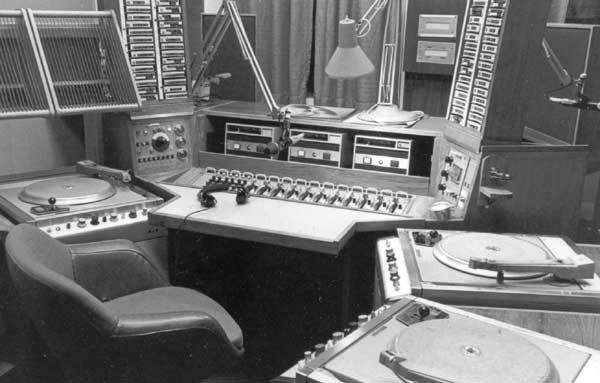
We are going to mix it up today. First I want to thank Keith Allen (nostalgicitalian) for being kind enough to answer 15 questions. Keith said he would be happy to answer any questions you have if we didn’t cover it. I have a link to a post of his at the bottom of the page that he elaborates on the last question.
To make this more well rounded I reached out to a few bloggers for some questions. Hanspostcard, Vic, Lisa, Run-Sew-Read, and Dave,…so thank you all. I wanted to reach out more but I didn’t want Keith to have to type a novel worth of answers.
Remember to go over to Keith’s blog and ask anything that was not covered. First a little about Keith.
Keith Allen’s Bio:
Keith Allen was born and raised in Michigan. While he was a senior in high school (1988), he became an intern at WKSG, Kiss-FM in Detroit, which would lead to his first on air job. He would next work at WMXD-FM also in Detroit. For someone with no radio experience whatsoever, starting his career in the 6th biggest market in the country (at the time) was pretty special.
In 1991, he moved to the west side of the state to work at WKZC-FM. The job was short lived, a mere 6 months. Upon moving back to Detroit, he was lucky enough to land a job at the first oldies station in the country, the historic Honey Radio (WHND-AM). It was here that he really honed his on air personality. When Honey went off the air in 1994, he started at his next country station, WWWW-FM (W4 Country) in Detroit. Yes, the same station Howard Stern is at in Private Parts.
In 1998, Keith got a call from Flint, Michigan to come work at a fairly new country station, WFBE-FM (B-95). In 2002, the station changed management and he travelled across town to WKCQ-FM. He continued his career in country music at WCEN-FM (The Moose), which was a powerhouse station that covered 27 counties in the state. He returned to WFBE-FM to do mornings after a 5 year stay at the Moose. After another management change, and another firing, Keith decided to go back to school to learn another trade.
He began working as a part-time personality on WCRZ-FM (Cars 108) in Flint. An opportunity to actually program a station came in 2009. He became program director of 103.9 The Fox (WRSR-FM) until the station was sold. He returned to WCRZ-FM part time, as well as doing part time work again for The Moose. He remained at both places until the Covid-19 pandemic. While technically still employed at both stations, he has been off the air since March.
He currently works full time as a Polysomnographic Technologist at a Sleep Evaluations Center. He helps to diagnose Sleep Apnea in adults and children.
Why did you want to be a DJ?
When I was in high school, I was a band nerd. I loved playing in band and actually aspired to be a band director. During my senior year, I worked part time at a boat marina in the Parts Department. In the fall and winter, once the boats were winterized, business was slow. So I would sit in there with the radio on and do inventory. I would listen to Jim McKenzie on Kiss-FM every day. He was a great example of what a DJ should be – the listener’s friend. Every day I listened, and I felt like he was talking to just me. He kept me company while I worked. The more I listened to him and other DJ’s, the more I began to think, “Hey, I could do that! I’d enjoy doing that!” I called the station and asked to speak to someone about getting into the business. The guy I spoke with told me that I could 1) go to broadcast school or 2) intern at the station for a while and see if I could break in that way. I chose Option #2.
I started interning for the news guy. I took news stories off the wire and rewrote stories and helped compile a newscast. I then began hanging out with the morning show (Paul Christy and the Christy Critters). I enjoyed this so much more. This was where the real action was. I got to see them plan bits, edit phone calls, and more. Eventually, I started running Paul’s Saturday show, which was all on tape. He would throw it to me from the tape and ask about the sport scores, lottery numbers, and weather. I did this for about 6 months and they let the overnight guy go. I was asked to fill in on the show temporarily. The temporary job ended up being full time. Paul believed I had some talent (although not much of it showed during my time there) and gave me my first break in radio.
Who was your personal favorite DJ and what did you like about that DJ.?
It’s hard to pick just one, because there really are so many. If I had to narrow it down, I’d say on a national scale – Wolfman Jack. He was just so fun to listen to and he always said some of the coolest stuff. I used to close my show with one of his quotes: “Keep smiling. A smile is just a light in the window letting people know your heart’s at home.” I thought that was just awesome!
Local DJ, would have to be Richard D from Honey Radio. I really found him to be a great mentor and teacher. He and I loved the same bad jokes and used to make fun of each other all the time on the radio. His show had daily benchmarks, which were so reminiscent of the “good old days” of radio when DJ’s were truly personalities. He branded everything. When somebody won a contest, he would “Richard D-clare” them the winner. He always played an obscure record every day called the “Tricky Dicky Off The Wall Record” (he had a whole intro to this). He’d read celebrity birthdays and history bits from his “Poor Richard D’s Almanac,” and so much more. He ALWAYS sounded like he was having fun and I really tried to do the same thing. He really was one of the best!
How did the business change from the time you began until the time you ended your career?
When I first got into radio, I feel like I was spoiled. We had a lot of freedom. We were creative and got to do a lot of bits on the air. Again, radio was still a place that people went to hear music, but also enjoyed listening to what the DJ’s had to say. Johnny Molson, who I followed on the air at WKSG, did some fantastic “theater of the mind” bits and had fun with them!
Somewhere in the early 90’s, research started to say that DJ’s talked too much. “More Music” became a thing, and DJ’s were told to shut up and read the cards. To ensure that DJ’s kept it short, there were liner cards placed in the studios for us to read. Talk breaks were eliminated and when we did talk it was to 1) outro the song, 2) read the liner card, 3) promote what was coming up next, and 4) play the commercials.
In truth, as another great mentor told me, it wasn’t that DJ’s talked too much – it was that they didn’t have anything to say. Jay Trachman helped me to take a bit, write it out to where it all fit together and you didn’t waste the listener’s time. Bits had a “catch” or a “hook” to peak your interest, then the “meat” of the bit, followed by the “out” or the “punchline”. Short – to the point – and still entertaining.
How much control did you have on the playlist?
Today – none. You can bet that 99% of all stations have their music scheduled in advance.
When I first started, our station was “all request.” We had a computer in the studio and as long as the song met criteria, we could pretty much play whatever listeners asked for. It was a pretty cool thing. We had to check and make sure that the song hadn’t been played before we got on the air or that it wasn’t scheduled later in the show. Even request shows today only have a few spots for request. Music is scheduled ahead of time.
When I was playing current music, in country, I had the chance to voice an opinion about which new song I thought we should add to the play list. It was something that the Music Director, Program Director, and consultant made decisions on.
Is there one song you had to play that sticks out as one you really disliked?
I could probably name one song from every station I worked at! While at country radio it was almost every song Rascal Flatts put out after their first album…LOL. They all began to sound the same to me. It always bothered me that stations would add new songs from “super stars” even though they knew the song was a piece of garbage.
Anyway, I digress. The one song that sticks out to me is The Boll Weevil Song by Brook Benton. It seemed like this always played on Honey. I’m not sure why it aggravated me so much, but I actually said how much I disliked it on the air. Johnny Molson once talked about The Elusive Butterfly by Bob Lind saying, “It sounds like someone ate a Hallmark card and threw up” regarding the lyrics.
I think all DJ’s have their favorite songs and ones they hate. That’s why there is volume control in the on air studio … I turned the speakers down a lot!
Of the musicians you met or interviewed- which one impressed you the most?
In almost 30 years, I have met so many. Let me say that country artists are usually the most generous and gracious. I found that to be true with 95% of them. George Strait, Wynonna Judd, Emily West, Jeff Bates, Reba McEntire, and SO many were just like talking to friends. They were just amazing.
Martina McBride impressed me the most. I was escorting a backstage winner to her show. She had bid like $700 on a silent auction package to see Martina, get a limo ride to the show, backstage passes, and dinner. The auction was for St. Jude Children’s Research Hospital. I introduced the winner to Martina and told her about our winner. When she heard that she had bid that much money to be there, she called someone over to her and whispered something to them. Martina was so nice to this winner. She autographed everything that the winner had with her, including the T-shirts she bought at the merchandise booth. Her guy came back with a bunch of items and gave them to our winner. There was a huge autographed window poster (like you would see in record stores), key chains, more T-shirts, bumper stickers, and all things Martina – almost all autographed. THEN she gave the listener her money back for the shirts she had bought before the show. She thanked the listener for being such a supporter of St. Jude and our station. Most meet and greets are very quick, but Martina gave this winner almost 15 minutes. It was truly amazing and speaks volumes for who Martina is.
Who was the best/worst interview?
Again, I have done so many great in person and telephone interviews, it is hard to pick the “best.” In the running would be Rainn Wilson (Dwight from the Office), as he was very funny and was familiar with our area. Also up near the top – Elmo from Sesame Street. That was such a hoot. I’m not even sure why we had him on the show, but Kevin Clash, who is the voice of Elmo, called and he had a very deep voice. We chatted for a sec before the interview and BAM – there was Elmo! My oldest son was about 2 when I did this interview and Kevin recorded a special message for him as Elmo and sent a stuffed Elmo to him at our home! Pretty cool. I also played poker with Chely Wright on the air as part of our interview because she took my money at a charity event and I told her I wanted a chance to win it back… LOL
Toss up for the top spot – Aaron Tippin and Jewel. Aaron was just amazing. He was in for a show and was a blast to talk to. He bleeds red, white, and blue! He shared some great stories from on the road and he shared his mutual love for the music of Sinatra and Dean Martin.
Jewel, was a sweetheart. She was live with me in the studio promoting her country album and show. Her life is just so fascinating that it was easy to talk with her. I asked if there was anything off limits, because I didn’t know if she really wanted to talk about the fact that she was living out of her van for a while. She told me to ask whatever I wanted. We talked about her poetry, her life in Alaska, her family, her hobbies, her pop albums, and a small role she had in a Wizard of Oz show. I felt like I knew her all my life. She was such a joy to hang out with. After she left, about an hour later, her record rep who was with her called me and told me that she said our interview was one of the best she had ever done. She had told him I made her feel so at home.
I still have a voice mail on my cell phone from her telling me she would see me at her show that night. The show she was doing that night was about an hour and a half away from me and I had tickets. However, there was a snow storm and I was unable to get out of the driveway to make it up to the show.
How would you respond if an interviewee accidentally swore during a live broadcast?
Most stations are equipped with an “oops” button just for this reason. The live feed of a station is usually broadcast on a five second delay. So if someone swears, you hit the button and it jumps ahead to the live feed and eventually goes back to 5 seconds. Yes, I have had to use this on occasion. Most folks don’t hear when it happens, but a radio guy can tell when the button was pressed.
That’s why most interviews are recorded. When an interview is recorded, you can edit out stuff you don’t necessarily want in the interview. You can also save it in pieces and play each piece over an hour or so and it sounds like the artist is hanging with you for an hour, when in reality, they were on the phone with you for 10-15 minutes. We recorded the majority of our interviews whether they were in studio or on the phone. Some, however, were broadcast live.
Was there any difference between being a DJ at a Country Station and a Rock Station besides the music?
First of all, your audience is different. Your target demo for a Country station is usually women aged 25-54. Your target for a Classic Rock station is men around that same age group or older. So when you prep for a show, you cater how you prep to those demos.
Country stations really focus on artist stuff. We had a few prep services that had all kinds of stories and sound bites from country singers about writing songs, awards, their favorite recipe, etc… Country artists, especially current artists, always have something going on – a tour, a book, a new album, etc… With Classic Rock (just like oldies) the music doesn’t change. You are a “gold” based format. You are playing only hits that have been around for decades. Many artists have passed away. So you talk about the songs themselves, the stories behind the songs (much like Max does in his blog), maybe a new biography, or a movie where a song is featured.
Depending on WHO you are talking to, you prepare a show for that. You could talk about deer hunting on a rock station, where as you would probably talk about a deer widow’s weekend on a country station. You have to know who your audience is and you go from there.
Another thing that was different for me was my vocal delivery. I found myself to be very conversational, but energetic on the country station. On the rock station, it was different. We didn’t talk up a lot of intros, so I was often talking with no music going behind me. This allowed me to slow my delivery down a bit (not quite Johnny Fever or Venus Flytrap) and it was a bit more “me,” if that makes any sense….LOL
Keith, what is your most memorable moment on radio?
I have three that I will never forget. The first was our St. Jude Radiothons. I had been to St. Jude Children’s Research Hospital in Memphis. Touring the hospital, hearing the stories, seeing all that they do, and then coming back presenting it all to our listeners was quite an emotional experience. I was lucky to meet two children whose family benefited from St. Jude and interview them on the air – Kyle and Allyson made an impact on me and our listeners.
The other was the last day that Honey Radio was on the air. That day in November of 1994, we did our morning show, and then turned it over to Boogie Brian, who was the last live jock from our studio. I recently went back and listened to the last break I did. It is hard to listen to. I felt like I could ad lib it, I wish I had written something down. I was holding back tears through the whole break. Then, when Boogie played his prerecorded 15 minute sign off, we all sat in a production room listening. We all cried. One of the most emotional days of my life, second only to ….
9/11. The planes hit the Twin Towers before I went on the air at 10am. That day, I was the eyes and ears of what developments were happening for my listeners. I remember the disbelief. I remember the fear. I remember the vivid visuals we saw on the news. Life changed that day for all of us and radio changed too. We began playing the National Anthem every day at noon. We had numerous appearances where we raised money for victim’s families. We sponsored blood drives and so much more. The events of that day and literally throwing the format out the window to broadcast the latest information will stick with me forever.
What is your most embarrassing moment on the radio?
I always say that I broadcast the worst five minutes of radio in Detroit Radio History: Short set up: My morning show partner, Rob, did a ton of voices. These characters were all part of the show and I was usually the guy who tried to keep the show (and them) in check. So, the week Honey went off the air, Rob insisted I do a voice live on the air. I had done it a couple times, but had recorded it. The character was “Mitch Wallace”, who was loosely based on a real listener who called us all the time. I had called Rob at home and used that voice and he said it was so good, he thought the guy had his number! This particular day we had a stupid bit planned. I was to enter the studio as “Mitch”. I was to be upset about the station going off the air. (Keep in mind this is long before school shootings and active shooters) I was to have a gun and Chuckie the bouncer (based on Charles Bronson) was going to beat me (Mitch) up and throw me out the window and we would then go into commercials. For the theater of the mind, this bit required some sound effects. Now, if only it had gone as smoothly as I described.…….
We had 6 cart (tape) machines. Each machine played a different thing. In #1 was the song we were talking out of. In #2 was the gunshot sound. #3 had the “fight scene” sounds (which were from an old western and had corny music playing underneath the fight). #4 had the glass breaking. #5 had the door slam for Chuckie’s exit and #6 had the first commercial. I had NEVER done the character live before. So when I did, I saw Rob start to chuckle, and that is all it took for me to start to lose it. From there on, it spirals out of control. We both began to laugh hard. I was laughing so much, I had tears in my eyes and couldn’t see the board in front of me to push the buttons to start the commercial (because by this time, it was obvious we couldn’t do the bit). We laughed all the way through the commercial set. Rob insists that we can do it so out of the commercial break, we decide to try again. As soon as I start to do the Mitch character, I started laughing again. I said to Rob (and the entire listening audience) “Aw, hell, forget it!” We were going to do the weather out of the bit this time, featuring our Scottish weatherman Lucky McCloud (another Rob voice). The first thing I did after laughing was cue up the bagpipe music we played when he did the weather….miraculously, Rob was able to jump into the Lucky character and eventually the bit happened on the air…..it was a long way to go for something that was probably only funny to us, but it remains one of my favorite moments on air with him. It was also probably the most embarrassing.
WKRP, what about it is realistic and what is not?
LOL – DJ’s and other radio people get asked this a lot! I guess it depends on who you ask. Here are my thoughts –
Are there sales people like Herb? Yes. Are they as annoying? Yes!
Are all news people like Les? No, but there are plenty other folks in the biz like him.
Do all stations have a sexy secretary/receptionist? Some of the stations I worked at did.
Are all General Managers like Mr. Carlson? No, some are actually quite bright and know their stuff.
Do DJ’s usually give their program directors (like Andy) a headache? Yes. Very much so!
Do Programmers and General Managers often not see eye to eye on what’s going on with the station? Many times this is true.
Can you get fired for saying “booger” on the air? I don’t think so. We spent an entire morning talking about how those green raisins look like boogers and we weren’t fired.
Do many DJ’s have big egos like Venus and weird idiosyncrasies like Johnny? Yes, and you know it almost immediately when you meet them.
In many ways, WKRP is very realistic and while radio people probably find the show funnier than the average viewer, we also find one thing particularly annoying – the DJ’s don’t wear headphones in the studio. When a DJ turns on the microphone, the speakers in the studio shut off so there is no feedback. The DJ can hear the music and his/her voice in the headphones, so they know when to stop talking. These guys never seem to have headphones on and it has always bothered me.
They also seem to have the uncanny ability to throw a record on the turntable and have the song cued up immediately. I never had to spin vinyl until I moved to the west side of the state. I can tell you, you have to put the needle on the start of the groove, play it through a small cue speaker and wait for the song to start. You then stop it and turn the record back a ¼ turn, so that when you hit start, it plays at the right speed and doesn’t wind up to it. Carts are a whole lot easier, but almost all the music on WKRP is on vinyl.
When did radio start to change in your eyes?
I think radio has always been changing. What I look back on as the “good old days” of radio are not for those who were in it long before I was. If I had to pick the moment it changed for the worse in my career, it would be the late 1990’s. Bill Clinton signed the Telecommunications Act of 1996 which lifted the “cap” on radio station ownership. This led to many of the locally owned stations to be bought up by the big radio corporations like Cumulus, Clear Channel, and Citadel.
With less owners and more corporate control, music programming was dictated by those corporate programmers. So music playlists became smaller – which meant you were hearing the same songs more often. It also meant that some markets were not hearing local bands. Can you imagine Detroit NOT playing any Motown artists, Bob Seger, or Kid Rock!?
With automation technology, the ability to record ahead of time became a thing. I remember a few times where I was “on air” and listening to myself as I drove to a wedding I was DJing. With big corporations trying to save money, they began eliminating DJ’s. They were replaced by syndication or DJ’s from other markets who were recording shows from their home market. Today, it is rare to find a station with more than one live LOCAL DJ. When you do, it is usually a locally owned station.
When I was in radio, the fear was that Sirius XM radio was going to be the death of terrestrial radio. In truth, terrestrial radio killed itself from the inside with automation and consolidation. I guess the more I think about it, going back to question #13 … If I could bring back something from the past, it would be the way radio used to be, because terrestrial radio today is just sad to listen to.
If you could reach back in time and revive things that DJs used to do, say or play on the air, what would you bring back?
DJ’s used to have a big say in music. Many of them were playing singles on 45 on the air. So many hits from the 50’s and 60’s became hits because a DJ decided to spin “the other side” of the record because they liked it. Elvis and the Beatles had “two-sided hits” because DJ’s played both sides. I wish that DJ’s today had a little bigger part in selecting music for airplay. They really don’t – I will explain that in the answer to your next question.
Why do stations play only a few select songs from a band to death while ignoring their other songs?
There are a lot of factors involved in this, but the simple answer is because of music testing and consultants.
Back in the 80’s and 90’s that had a format called “Album Oriented Rock” or AOR. These stations tended to play deeper cuts or songs that weren’t necessarily “singles”. This format really doesn’t exist anymore, at least the way it was back then.
So what is a single? It is the song from an album that record companies (and sometimes artists) believe would be a hit. It is a song that will get lots of airplay and sell the album. It is a song that they feel is “the hit.” Most albums have 3-4 singles and then there is a new album. The songs that were not released as singles don’t get any airplay.
Music testing happens in all formats. It happens with old and new songs. They usually do it in an auditorium. They get an audience of various ages and genders and play them 500-1000 “hooks” of songs. These hooks are the 15 seconds of a song that are most recognizable. They audience then rates the song. Is it played too much? Is it played too little? Do you love it? Do you hate it? Is it offensive? Etc…The data collected from these music tests can help a consultant decide what songs his stations need to be playing and which ones need to go away.
With new music, it works the same way. If listeners like the song and the test scores are high, that song will get more plays. If the songs tests bad, it will get less plays on the play list or just go away all together.
If you have any questions for Keith you can go to the link below and ask away! He also elaborates on this last question on the link below.
This song and Jessica are their two most well known instrumentals.
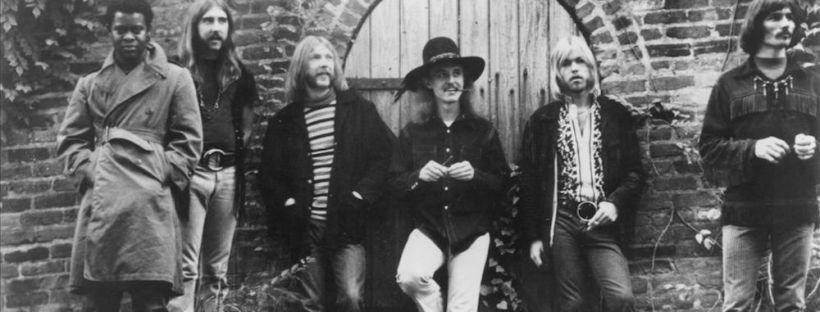
The Allman Brothers…much like the Grateful Dead could deliver live. They constantly toured early in their careers and played free concerts in parks all over to grow their audience. They released one of the best live albums of all time with At Fillmore East.
This song was originally on their second album Idlewild South in 1970 and later on their live album At Fillmore East.
Allmans guitarist Dickey Betts wrote this song for a girl, but not the one in the title. Elizabeth Reed Napier (b. November 9, 1845) is buried at the Rose Hill Cemetery in Macon, Georgia, where Betts would often write.
He used the name from her headstone as the title because he did not want to reveal who the song was really about: a girl he had an affair with who was Boz Scaggs’ girlfriend.
Duane Allman and Berry Oakley are buried in the same cemetery as Elizabeth Reed Napier.
From Songfacts
This was the first original instrumental song by The Allman Brothers.
Betts wrote this is based on Miles Davis’ “All Blues.” While Davis had been incorporating elements of rock into his jazz, Betts used pieces of jazz for this rock instrumental. Jazz rhythms make excellent use of the two-drummer format the Allmans use.
This is one of their live favorites. It usually evolves into a lengthy jam.
At concerts, this was a showcase for Allman’s drummers Jaimoe and Butch Trucks, who performed a drum solo at the end.
The live version on At Fillmore East takes up almost a whole side. Because of the extended jams, it became a double album, but the band insisted it be priced close to a single album.
The earliest known recordings of this song are from the band’s Fillmore East performances on February 11, 13 and 14, 1970. The Allman Brothers were on a bill with the Grateful Dead and Love; the Dead’s soundman Owsley “Bear” Stanley kept tape rolling and got the recordings, which were compiled into his “Sonic Journal” project and released in 2018 as Allman Brothers Band Fillmore East February 1970.
This is one Stones song that you hear John Lennon and Paul McCartney singing backup on. Mick Jagger would sing backup on the Beatles “Baby I’m A Rich Man.”
Mick Jagger and Keith Richards wrote this after they were arrested along with Brian Jones on drug charges stemming from a raid on Keith’s house, Redlands, on February 12, 1967. This song was a thank you message to the fans who supported Jagger and Richards through their arrest – note the jail door shutting at the first.
I somehow had the original single to this when I was a kid…I haven’t a clue how I got it.
This is just a personal opinion but I do believe Mick and Keith edited this video and Brian came out looking terrible in it. I have to wonder if they did it on purpose. I’m probably way off base but things were not going well for Brian Jones at this time…and yes he made a lot of his own trouble. He was being hounded by the police…with some of it not justified. Mick and Keith could have left those bad shots of Brian high out of the video…it couldn’t have help him out.
The song peaked at #8 in the UK and #50 in the Billboard 100 in 1967.
From Songfacts
This was also a “Thank You” to The Beatles, The Who and the editorial page of the London Times, who supported and spoke out in favor of the Stones after Jagger, Richards and Jones were arrested on drug charges. The Who recorded and released a double A-side of the Stones’ “The Last Time” and “Under My Thumb” to keep the Stones’ music alive while they were going through their court and prison difficulties.
The Rolling Stones lead guitarist at the time, Brian Jones, played a Mellotron, which was an early synthesizer, on this track. Jones was a founding member of the band, but the more popular they got, the more his drug habit affected him. By 1969 he was out of the band’s good graces and was fired, then found dead in his swimming pool less than a month later. “We Love You” is a testament to his influence on the band. “Despite being off his head on Mandrax by this time, Brian manages to arrange the track with that syncopated layer of psychedelic madness,” says Nick Reynolds, co-producer of the documentary Rolling Stone: Life and Death of Brian Jones. “Pure genius.”
The Stones made a promotional film for this song that was banned by the BBC but shown elsewhere. It was directed by Peter Whitehead and based on The Trials Of Oscar Wilde with Mick Jagger as Oscar, Keith Richards as the Marquis and Marianne Faithfull as Bosie.
We Love You
We don’t care if you only love we We don’t care if you only love we We love you, we love you, and we hope That you will love we too We love they, we love they, and We want you to love they too Ah
We don’t care if you hound we and Love is all around we Love can’t get our minds off We love you, we love you
You will never win we Your uniforms don’t fit we We forget the place we’re in ‘Cause we love you We love you, of course, we do
I love you, I love you And I hope that you won’t prove wrong too We love you, we do, we love you, we do
We have here a Stones- Beatles collaboration…a slight one with Mick Jagger is said to be singing backups to this song.The John and Paul returned the favor on the Stones song We Love You.
I first heard this on the Magical Mystery Tour album. I love the bass sound that Paul got on this song.
The cool sounding instrument on this song is the the Clavioline which John plays. It was a forerunner to the synthesizer.
John Lennon and Paul McCartney wrote parts of this separately and combined it to make one song… something they would repeat on “A Day In The Life.” At one point, the song was called “One Of The Beautiful People.”
On August 7th, 1967, just three weeks after the single was released in the US, George Harrison and entourage decided to make a brief visit to the Haight-Ashbury district of San Francisco, California, to visit the highly publicized “beautiful people” of the area and played the song on an acoustic after one was produced from a growing crowd. George didn’t stay too long.
Near the end of the song legend has it that John sings “Baby, you’re a rich f*g jew” as a reference to Brian Epstein toward the end of the song. Whether it is…it’s hard to tell. Whatever is in your head when you listen…it can become that. I’ve never read where John admitted it…and if he would have done that…I don’t see him shying away from admitting it.
Eddie Kramer…future producer for the Jimi Hendrix played the vibraphone.
From Songfacts
This song is about how everybody can have the things that matter, and it has nothing to do with material possessions. The Beatles were rich, but they claimed that money was not that important to them.
It was rumored that The Beatles sang “Baby you’re a rich fag Jew” as a slur to their manager, Brian Epstein. He was rich, gay and Jewish, but The Beatles never said this was about him. Epstein died later in that year when he overdosed on sleeping pills.
The Beatles started working on this song with the intention of using it on the Yellow Submarine soundtrack. It was used in the 1968 movie, but didn’t appear on the soundtrack.
Mick Jagger sang backup. McCartney and Lennon returned the favor by singing on The Stones’ “We Love You.”
Brian Jones, the guitarist from The Rolling Stones, played an oboe on this. A few years earlier, Lennon and McCartney gave The Stones a song called “I Wanna Be Your Man,” which was one of their first hits, and helped convince Mick Jagger and Keith Richards that they should write their own songs.
This was released as the B-side of “All You Need Is Love.”
Lennon played clavioline and piano on the song and George Harrison played tambourine. There is actually no guitar on this song at all. Paul played bass and piano as well.
This was released in mono, but in 1971 it was remixed in stereo along with several other tracks for a German version of Magical Mystery Tour. The stereo version is the one that is now the most common.
The comedy rap trio The Fat Boys performed this song in their 1987 movie Disorderlies.
In 2010, this song was used at the end of the movie The Social Network to punctuate the raging financial success of the guys who invented Facebook. It was one of the few Beatles songs licensed to a movie in its original form, meaning the Beatles version was used. Apple Corp. is very particular about where Beatles songs are used.
At one point in this song, The Beatles ask, “How does it feel to be one of the beautiful people?” The phrase “beautiful people” was used a lot in 1967 as a derisive way to describe the social elite. A popular book by Marilyn Bender was published that year called The Beautiful People: a Candid Examination of a Cultural Phenomenon – the Marriage of Fashion and Society in the ’60s.
Baby You’re A Rich Man
How does it feel to be One of the beautiful people Now that you know who you are What do you want to be And have you traveled very far? Far as the eye can see
How does it feel to be One of the beautiful people How often have you been there Often enough to know What did you see when you were there Nothing that doesn’t show
Baby you’re a rich man Baby you’re a rich man Baby you’re a rich man, too You keep all your money in a big brown bag Inside a zoo, what a thing to do Baby you’re a rich man Baby you’re a rich man Baby you’re a rich man, too
How does it feel to be One of the beautiful people Tuned to a natural E Happy to be that way Now that you’ve found another key What are you going to play
Baby you’re a rich man Baby you’re a rich man Baby you’re a rich man, too You keep all your money in a big brown bag Inside a zoo, what a thing to do Baby, baby, you’re a rich man Baby you’re a rich man Baby you’re a rich man, too, oh Baby you’re a rich man Baby you’re a rich man (baby) Baby you’re a rich man, too Baby you’re a rich man Baby you’re a rich man Baby you’re a rich man, too
I want to make an announcement (clears throat) Saturday I will have something different…I will be interviewing a Disc Jockey…he will answer some of my and other blogger’s questions that I requested. He has been kind of enough to do this through email.
This song will always be linked to John Lennon to me. The reason for this is right after John was murdered this was huge and on the charts. I listened to the radio religiously back then and got to know this one well.
Steely Dan were essentially the duo Donald Fagen (vocals & keyboards) and Walter Becker (guitar & bass) who formed the partnership in 1972 and used an ever-changing cycle of musicians. They took their moniker from the name of a female sex toy featured in Naked Lunch by William Burroughs.
Becker and Fagen parted ways in 1980, leaving “Hey Nineteen” un-played until their 1993 reunion.
The song peaked at #10 in the Billboard 100 and #5 in Canada in 1981. The song was on the album Gaucho which peaked at #9 in the Billboard Album Charts, #18 in Canada, and #27 in the UK in 1980.
From Songfacts
In this song, an older man is seducing a 19-year-old girl. He’s a bit conflicted, as her inexperience frustrates him when she doesn’t even remember Aretha Franklin. However, on this particular night and with the help of some Cuervo Gold tequila, everything is wonderful.
Steely Dan used a variety of musicians on their albums. On this track, Hugh McCracken played guitar, Rick Marotta was on drums, and Victor Feldman and Steve Gadd added percussion. Walter Becker also added guitar, and Donald Fagen played the Fender Rhodes electric piano and the synthesizer.
Roger Nichols, who was one of the engineers on the Gaucho sessions, fashioned a drum machine they used on this track. Dubbed “Wendel,” it was one of the first of its kind, and it allowed them to record Rick Marotta’s drum parts and play them back with perfect precision.
The LM-1, which was the first programable drum machine sold to the public that sampled real instruments, was introduced in 1980, the year Gaucho was released, so many assumed that’s what Steely Dan used. They didn’t, but there was a connection. Roger Linn, who created the LM-1, told Songfacts: “By coincidence, Roger and I had both bought our first computers in around 1975 at a place called Computer Power and Light in Studio City, an area of Los Angeles. Wendel used that same computer and a early but high-quality digital audio interface, running a program he had written to enter simple looping beats on the screen. A very creative and talented guy.”
Hey Nineteen
Way back when in sixty seven I was the dandy of Gamma Chi Sweet things from Boston So young and willing Moved down to Scarsdale And where the hell am I
Hey nineteen No we can’t dance together No we can’t talk at all Please take me along When you slide on down
Hey nineteen That’s ‘Retha Franklin She don’t remember the Queen of Soul It’s hard times befallen The sole survivors She thinks I’m crazy But I’m just growing old
Hey nineteen No we got nothing in common No we can’t talk at all Please take me along When you slide on down
Nice Sure looks good Mmm mmm mmm Skate a little roller now
The Cuervo Gold The fine Colombian Make tonight a wonderful thing Say it again
The Cuervo Gold The fine Colombian Make tonight a wonderful thing
The Cuervo Gold The fine Colombian Make tonight a wonderful thing
No we can’t dance together No we can’t talk at all
Mr. Blandings Builds His Dream House fulfills my romance portion of the draft.
In the 80s a loose remake of this movie was made…it was called The Money Pit…but it doesn’t stack up to this one in my opinion. I first saw this movie in the late eighties and have watched it many times since.
This movie was based on a true story, which was turned into a bestselling book. It was written by Eric Hodgins from his own experience. Hodgins and his wife had a house built and the initial estimate for building it came in at $11,000. It ultimately cost $56,000 to finish and nearly drove him into bankruptcy. He said the book “wrote itself.”
A New York advertising executive Jim Blandings (Cary Grant) lives in a cramped apartment with his wife Muriel, two daughters, and housekeeper Gussie. Anyone who has an apartment or starter home with a growing family will be able to relate to this movie.
They look on upgrading the apartment but after the 7,000 dollar estimate is shot down…Jim and Muriel start looking at houses to in Connecticut to live. They find an old house and Jim buys it without checking with his lawyer Bill Cole (played wonderfully by Melvyn Douglas) who informs Jim he got rooked. Jim still wants it…he says somethings you have to buy from the heart. They looked at the house more thoroughly and it is basically falling in.
After getting it checked out it is determined that it would be cheaper tearing the house down and building a new one. This is when the movie really starts. All the estimates seem to shoot up (as in real life) and the price they started with escalates. Partly because of the Blanding’s “small” requests. Anyone who has worked with a contractor can relate.
Wrong estimates, supplies shipped to the wrong address, Jim and Muriel’s naivety, and unforeseen problems in building the house has Jim wanting his head examined for attempting to build a house. All the while the house was being built Jim has to come up with a slogan for “Wham Ham” or his job could be in jeopardy.
The movie was released in 1948 so yes the prices are different now but many of the problems are just the same. It’s a very funny movie with the problems of the house along with Jim’s growing jealousy of Bill’s closeness to Muriel.
Cary Grant, Myrna Loy, and Melvyn Douglas are perfectly cast for this film. Grant and Loy were a great couple but the one that makes this movie tick is Melvyn Douglas as Bill Cole… Jim’s best friend and lawyer. He really stands out in this movie with comedic relief.
As with other movies in this era…the character actors flow in and out of the story and make a lot of scenes great. This is one of the reasons I like these older Hollywood movies so much. Pay attention to the well digger Mr. Tesander played perfectly by Harry Shannon. They add humor and the human element.
RKO (who made the movie) made a deal with 20th Century Fox who had 2,000 acres of landscape in the Malibu hills that served as their location ranch. After the deal was struck the house was built and is the one you see in the movie as it’s being built. It still stands and is now part of the Malibu Creek State Park, and it’s used for the administrative offices
Seventy three “replica” Dream Houses were built in 1948 to tie in with the promotion and release of the movie. Some were raffled off at the day of film release, after ticket sales held during public viewing prior to premiere, and others were put up for public sale by the contractors who built them.
A scene in the movie where Muriel is explaining the color scheme
“First, the living room. I want it to be a soft green. Not as blue-green as a robin’s egg, but not as yellow-green as daffodils. Now, the dining room. Not just yellow–something bright and sunshiny. If you send one of your workers to the grocer for a pound of butter and match that, they can’t go wrong.”
The painter turns to the guy next to him. “Got that, Charlie?”
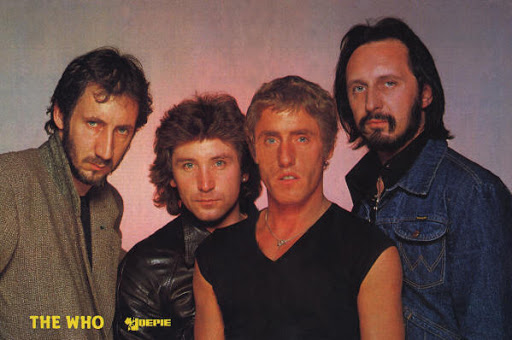
This was the first album the Who made without Keith Moon called Face Dances. Kenney Jones was playing drums and the album had a substantial hit with You Better You Bet. It was also the first new Who album I ever bought. The other ones had been collections of their older hits. I can’t say that I don’t the Moon version of the Who but the album did have some good songs on it.
This song is one of the best songs off of Face Dances. To my surprise it was not released as a single.
The album peaked at #4 in the Billboard Album Charts, #2 in the UK, and #1 in Canada in 1981.
Roger Daltrey:“Pete’s a very complicated bunch of people… And you never know which one of him you’re going to get. There’s one that’s so wonderful, so caring, so spiritual. But there are others that are horrendous-and I mean horrendous…. That’s the madness of genius, so I accept it. I don’t judge him. I love him. I love all of hims.”
Another Tricky Day
You can’t always get it When you really want it You can’t always get it at all Just because there’s space In your life it’s a waste To spend your time why don’t you wait for the call
(Just gotta get used to it) We all get it in the end (Just gotta get used to it) We go down and we come up again (Just gotta get used to it) You irritate me my friend (This is no social crisis) This is you having fun (No crisis) Getting burned by the sun (This is true) This is no social crisis Just another tricky day for you
You can always get higher Just because you aspire You could expire even knowing. Don’t push the hands Just hang on to the band You can dance while your knowledge is growing
(It could happen anytime) You can’t expect to never cry (Patience is priceless) Not when you try to fly so high (Just stay on that line) Rock and roll will never die (This is no social crisis) [etc.]
Another tricky day Another gently nagging pain What the papers say Just seems to bring down heavier rain The world seems in a spiral Life seems such a worthless title But break out and start a fire y’all It’s all here on the vinyl (No crisis) [etc.]
[Repeat verse 1.]
(Just gotta get used to it) Gotta get used to waiting (Just gotta get used to it) You know how the ice is (Just gotta get used to it) It’s thin where you’re skating (This is no social crisis) [etc.]
America missed the boat on T-Rex. The only substantial hit they had here was Bang a Gong.The song peaked at #1 in the UK and #45 in Canada in 1972. In the UK they were huge and for a short time rivaling The Beatles early popularity. ‘Metal Guru’, T Rex’s fourth and final UK No.1. It topped the chart for four weeks from May–June 1972.
This was a busy time for the band. They were working on the album between March and April 1972 and Ringo Star took photographs for the front and back cover for the album The Slider.
At the time Ringo was taking the pictures he was also starting a documentary about T Rex called Born To Boogie. I do give the doc a thumbs up…I have it and watched it a few times. It shows just how popular T.Rex was during the early seventies.
Marc Bolan:“It’s a festival of life song. I relate ‘Metal Guru’ to all gods around – someone special, a godhead. I thought how God would be, he’d be all alone without a telephone.”
Metal Guru
Metal Guru, is it you? Metal Guru, is it you? Sittin’ there in your armor-plated chair, oh yeah
Metal Guru, is it true? Metal Guru, is it true? All alone without a telephone, oh yeah
Metal Guru, could it be You’re gonna bring my baby to me? She’ll be wild You know, a rock ‘n’ roll child, oh yeah
Metal Guru, has it been Just like a silver-studded sabre-tooth dream? I’ll be clean, you know Pollution machine, oh yeah
Metal Guru, is it you? Metal Guru, is it you? Oh yeah
Metal Guru, could it be You’re gonna bring my baby to me? She’ll be wild You know, a rock ‘n’ roll child, oh yeah
Metal Guru, is it true? Metal Guru, is it true? All alone without a telephone, oh
Metal Guru, could it be You’re gonna bring my baby to me? She’ll be wild You know, a rock ‘n’ roll child, oh yeah
Metal Guru, is it you? Metal Guru, is it you? Yeah, yeah, yeah Metal Guru, is it you? Yeah, yeah, yeah Metal Guru, is it you? Yeah, yeah, yeah
Metal Guru, is it you? Yeah, yeah, yeah Metal Guru, is it you? Yeah, yeah, yeah Metal Guru, is it you? Yeah, yeah, yeah Metal Guru, is it you? Yeah, yeah, yeah











 PowerPop... An Eclectic Collection of Pop Culture