Power Pop fan, Baseball, Beatles, Alternative music, old movies, and tv show fan. Also anything to do with pop culture in the 60s and 70s... I'm also a songwriter, bass and guitar player. Not the slightest bit interested in politics at all.
The first thing I noticed are the huge drums that start this song off. Eddie was one of the great rock and roll guitar players in the 50s. His guitar playing influenced bands such as The Clash, The Ramones, and The Sex Pistols.
Cochran wrote this with the help of Sharon Sheeley, who became Eddie’s girlfriend. There weren’t many female songwriters at the time, but Sheeley’s first effort, “Poor Little Fool,” became a #1 hit for Ricky Nelson.
She met Eddie when she asked him to record one of her songs.
On April 17, 1960, Cochran was killed in a car accident at age 21. Sheeley and Gene Vincent were also in the car and injured in the crash, but Cochran went through the windshield.
Sheeley continued to write songs for artists like Brenda Lee and Irma Thomas. She died in 2002 at age 62.
Somethin’ Else
A look a-there, here she comes There comes that girl again Wanted to date her since I don’t know when But she don’t notice me when I pass She goes with all the guys from outta my class But that can’t stop me from a-thinkin’ to myself She’s sure fine lookin’ man, she’s something else
Hey, look a-there, across the street There’s a car made just for me To own that car would be a luxery But right now I can’t afford the gas A brand new convertible is outta my class But that can’t stop me from athinkin’ to myself That car’s fine lookin’ man, it’s something else
Hey, look a-here, just wait and see Worked hard and saved my dough I’ll buy that car that I been wanting so Get me that girl and we’ll go ridin’ around We’ll look real sharp with the flight top down I keep right on a-dreamin’ and a-thinkin’ to myself When it all comes true man, wow, that’s something else
Look a-there, what’s all this Never thought I’d do this before But here I am a-knockin’ on her door My car’s out front and it’s all mine Just a forty-one ford, not a fifty-nine I got that girl an’ I’m a-thinkin’ to myself She’s sure fine lookin’ man, wow, she’s something else
I’m letting my regular format rest this weekend and contine what I started Friday, a foray into some rockabilly. I hope you stay with me. Let start off this Saturday morning with one of the best…Wanda Jackson.
After posting about Joyce Green a while back I started hunting around for more rockabilly songs. The vocal that Jackson has on this is great. Hard to believe she was a teenager when did this.
Fujiyama Mama is a song written by Jack Hammer. It was first recorded in 1955 by Annisteen Allen. In 1957 rockabilly singer Wanda Jackson recorded it. It did not chart in the United States, but Jackson’s recording peaked at #1 in Japan for several months in 1958.
So why wasn’t this a hit in America? Wanda said “Nobody would play it,” she insists. “They barely had accepted Elvis and the other ones, and they weren’t too sure about accepting a teenage girl singing this kind of music..”
Others have said America wasn’t too happy about the sexual meaning of the lyrics being delivered by a teenage girl. The Japanese enjoyed hearing familiar places in the song much more than the memory of the war. It’s still a cult favorite in Japan.
Wanda Jackson: I’m going to go back now to the year 1958. … Finally, I got a number one song in rock and roll. [Applause.] Thank you, but it wasn’t in America. [Laughs.] It took them a little bit longer to find me. But Japan found me in ’58 and made this song number one for a whole summer. And those people still sing it today—I can’t believe it. Like an evergreen song, you know? Every generation. It’s amazing.
Fuijyama Mama
I’ve been to Nagasaki, Hiroshima too The things I did to them baby, I can do to you
‘Cause I’m a Fujiyama Mama And I’m just about to blow my top Fujiyama-yama, Fujiyama And when I start erupting Ain’t nobody gonna make me stop
I drink a quart of sake, smoke dynamite I chase it with tobbacy and then shoot out the lights
‘Cause I’m a Fujiyama Mama And I’m just about to blow my top Fujiyama-yama, Fujiyama And when I start erupting Ain’t nobody gonna make me stop
Well you can talk about me, say that I’m mean I’ll blow your head off baby with nitroglycerine
‘Cause I’m a Fujiyama Mama And I’m just about to blow my top Fujiyama-yama, Fujiyama And when I start erupting Ain’t nobody gonna make me stop
Well you can say I’m crazy, so deaf and dumb But I can cause destruction just like the atom bomb
‘Cause I’m a Fujiyama Mama And I’m just about to blow my top Fujiyama-yama, Fujiyama And when I start erupting Ain’t nobody gonna make me stop
I drink a quart of sake, smoke dynamite I chase it with tobbacy and then shoot out the lights
‘Cause I’m a Fujiyama Mama And I’m just about to blow my top Fujiyama-yama, Fujiyama And when I start erupting Ain’t nobody gonna make me stop
The lead guitarist on the track was Johnny Meeks, who had replaced Cliff Gallup. The song has a great rockabilly vibe to it…from this came rock but it’s hard to top this.
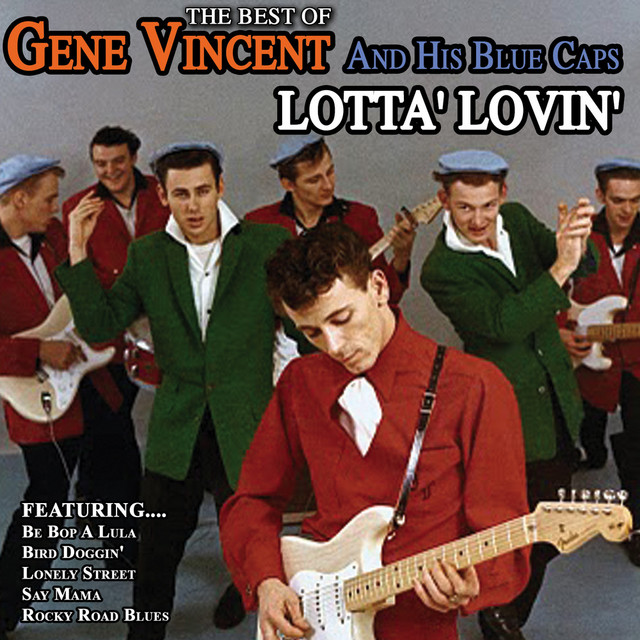
In August 1957, a year after he had scored a million-seller with his debut single, Be-Bop-A-Lula Gene Vincent returned to the U.S. Top 20 with Lotta Lovin’ which, briefly restored his career here that was all too ready to overlook him.
‘Be-Bop-A-Lula’ had propelled Vincent into the limelight while he was still an amateur with only a few hometown appearances to his name. Years later, he blamed his quick baptism of fire for his rapid descent into alcohol.
What didn’t help was the car accident he had on April 16, 1960…with Eddie Cochran in a taxi which killed Cochran. Vincent whose leg was weak due to a wound incurred in combat in Korea…was injured. He walked with a noticeable limp for the rest of his life.
In 1962 he was in Hamburg and played on the same bill as the Beatles. The Beatles got pretty close to him.
Lotta Lovin’
Well I wanna-wanna lotta-lotta lovin’ Well I wanna-wanna lotta-lotta huggin’ So baby can’t you see that you were meant for me I want your lovin’, yes-a-ree.
Well I wanna-wanna lotta-lotta huggin’ Well I wanna-wanna lotta-lotta kissin’ So baby please proceed to get the love I need I want your lovin’ yes indeed.
Well, I want you, I love you, I need you so much Why don’t you give out with that magic touch You send me, you thrill me, baby you’re so fine I want your lovin’ baby all the time.
Well I wanna-wanna lotta-lotta lovin’ Well I wanna-wanna lotta-lotta kissin’ So baby don’t forget I gonna get you yet I want your lovin’, aw you bet. (Rock)
Well, I want you, I love you, I need you so much Why don’t you give out with that magic touch You send me, you thrill me, baby you’re so fine I want your lovin’ baby all the time
Well I wanna-wanna lotta-lotta lovin’ Well I wanna-wanna lotta-lotta huggin’ So baby don’t forget I gonna get you yet I want your lovin’, aw you bet. (Rock)
Well I wanna-wanna lotta lovin’ Well I wanna-wanna lotta huggin’ So baby don’t forget I gonna get you yet I want your lovin’, aw you bet Well,I need your lovin’, aw you bet Well, I want your lovin’, aw you bet Well,I need your lovin’, aw you bet Well, I want your lovin’, aw you bet.
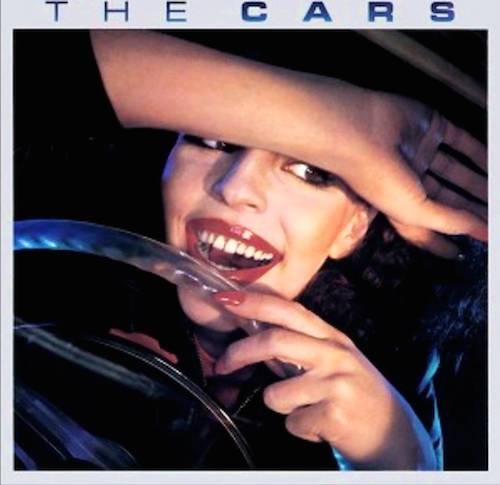
One more song off of that great debut album. It might be one of the best debut albums of anyone.
This was written by Cars singer/guitarist Ric Ocasek and keyboard player Greg Hawkes. It’s one of the few songs Hawkes received songwriter credit on.
Most teenage boys in the eighties will remember this song. It was featured in the 1982 movie Fast Times At Ridgemont High during an unforgettable scene where the actress Phoebe Cates gets out a swimming pool while actor Judge Rienhold has his fantasy. This song was not included in the music soundtrack available for the film.
While it was never released as a single, the song was popular on rock radio stations and known as a great one to listen to through headphones. With lead vocals by Cars bass player Benjamin Orr, this song uses various studio production techniques to explore the stereo spectrum as the sound goes back and forth between the speakers.
From Songfacts
The song draws parallels between manipulating a stereo recording and moving through life. It’s a rare song where the word “tremolo” appears, which means manipulating a single note.
This song is often used to reference the famous Fast Times At Ridgemont High scene in which it appears. TV series that have paid homage include:
Family Guy in the 2001 episode “The Kiss Seen Round the World,” when Meg fantasizes about newscaster Tom Tucker.
One Tree Hill in the 2009 episode “I Just Died in Your Arms Tonight” when Clay sees Sara getting out of his pool.
Stranger Things in the 2019 episode “Suzie, Do You Copy?” when a group of women ogle a male lifeguard at the pool. Later in the episode, Dustin says his girlfriend is like Phoebe Cates, “only hotter.”
The song has also appeared in episodes of Parenthood, Scrubs, Alias and The Sopranos.
Moving In Stereo
Life’s the same I’m moving in stereo Life’s the same except for my shoes Life’s the same you’re shakin’ like tremolo Life’s the same it’s all inside you
It’s so easy to blow up your problems It’s so easy to play up your breakdown It’s so easy to fly through the window It’s so easy to fool with the sound
It’s so tough to get up It’s so tough It’s so tough to live up It’s so tough on you
Life’s the same I’m moving in stereo Life’s the same except for my shoes Life’s the same you’re shakin’ like tremolo Life’s the same it’s all inside you
Life’s the same I’m moving in stereo Life’s the same except for my shoes Life’s the same you’re shakin’ like tremolo Life’s the same it’s all inside you
Whenever I hear this song… I think of David Essex’s song Rock On. It makes sense…Michael Stipe wrote this as a tribute to Rock On.
They recorded a demo version of this song at John Keane Studios, a favorite place for the band to work in their hometown of Athens, Ga. Before the bulk of the Automatic for the People sessions were to take place in March and April, the group spent a little more than a week in New Orleans, playing and recording in Daniel Lanois’ Kingsway Studio.
The ended up recording a complete demo of the song in New Orleans they would use as the basis of the song.
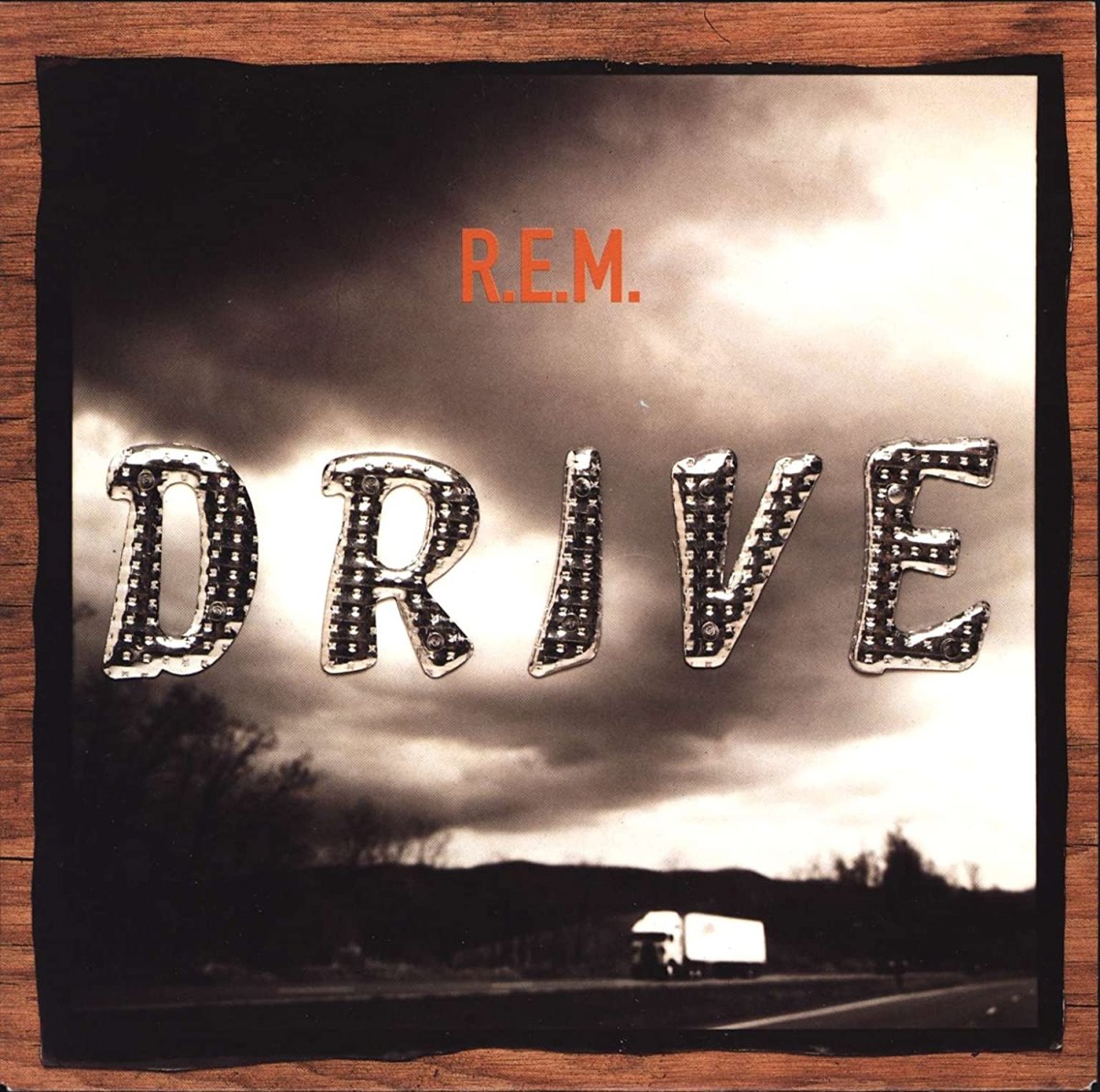
Automatic For the People was released in 1992. The album title comes from a sign at “Weaver D’s Delicious Fine Foods” diner in Athens, Georgia. It read, “Delicious Fine Foods – Automatic For The People.” The diner was near the university in Athens, and was a regular hangout for Stipe and his friends in the band’s early days.
The song peaked at #28 in the Billboard 100, #7 in Canada, #11, and #5 in New Zealand in 1992.
Michael Stipe:There were, before Punk, a few songs that resonated with me. One was David Essex’s ‘Rock On.’ ‘Drive’ is a homage to that. It was the first song I wrote on computer. Before, I had a typewriter. The reason is my handwriting changes dramatically day to day. I don’t trust it. I will write one of the best lyrics ever and discard it because the handwriting looks like s–t. Or the handwriting looks good but it’s a crap lyric, lo and behold, it’s in the song. Too late.”
Mike Mills about the video: “I’m not much of a symbolist. There’s something messianic about being passed over the heads of the people like that, and yet we’re anything but messiahs. That was always a strange thing to me. I mean, yes, they get to touch you, but at the same time they’re holding you up like a saint.”
Michael Stipe:“The other interesting thing about that video was what happened backstage,” he added. “We shot it in Los Angeles with a thousand people as extras. River Phoenix came, hang out in the trailer. We had a great time, until Oliver Stone showed up. I think they had both been drinking, and they got in a fist fight in my trail (gaffaws heartily). I think River won, to tell you the truth. I know he did, in fact.”
From Songfacts
The central lyric, “Hey kids, rock n’ roll,” was borrowed from “Rock On” by David Essex. The words may be the same, but the mood is completely different. This is a much more somber song.
Lead singer Michael Stipe explained in the November 12, 2009 issue of Rolling Stone: “
Guitarist Peter Buck used a nickel as a guitar pick for the mid-song guitar solo to get a sharper sound. He overdubbed the track six times.
There is a line in the song that goes, “Smack, crack, bushwhacked.” This can be seen as an indictment of then-U.S. President George Bush (the first one). Lead singer Michael Stipe had taken out ads in college newspapers in 1988 saying, “Don’t Get Bushwhacked. Get out and vote. Vote Dukakis.” They weren’t very effective.
This was released two months before the national election between George H. W. Bush and Bill Clinton. Clinton won that one, but eight years later Bush’s son became president. When the younger Bush ran for re-election in 2004, R.E.M. performed concerts to benefit his opponent, John Kerry.
This song has no chorus. That doesn’t happen very often in hit songs.
This was the first single released off the album. It was issued a few days before the album came out.
At live shows, R.E.M. played a funk-rock version of this song because its ambient atmosphere was difficult to duplicate. This version appears on a 1993 benefit album for Greenpeace called Alternative NRG.
Director Peter Care shot the black-and-white music video at Sepulveda Dam in the Sherman Oaks area of Los Angeles. The clip mostly has Stipe crowdsurfing as he performs the song.
The implication was unclear; is the audience protecting him, or ready to tear him apart? Stipe told Mojo it was both. “It’s everything. I’m about to be devoured.”
Drive
Smack, crack, bushwhacked Tie another one to the racks, baby Hey kids, rock and roll Nobody tells you where to go, baby
What if I ride, what if you walk? What if you rock around the clock? Tick-tock, tick-tock What if you did, what if you walk? What if you tried to get off, baby?
Hey, kids, where are you? Nobody tells you what to do, baby Hey kids, shake a leg Maybe you’re crazy in the head, baby
Maybe you did, maybe you walked Maybe you rocked around the clock Tick-tock, tick-tock Maybe I ride, maybe you walk Maybe I drive to get off, baby
Hey kids, shake a leg Maybe you’re crazy in the head, baby Ollie, Ollie, Ollie, Ollie, Ollie Ollie, Ollie in come free, baby Hey, kids, where are you? Nobody tells you what to do, baby
Smack, crack, shack-a-lack Tie another one to your backs, baby Hey kids, rock and roll Nobody tells you where to go, baby
Maybe you did, maybe you walk Maybe you rock around the clock Tick-tock, tick-tock Maybe I ride, maybe you walk Maybe I drive to get off, baby
Hey kids, where are you? Nobody tells you what to do, baby Hey kids, rock and roll Nobody tells you where to go, baby Baby Baby
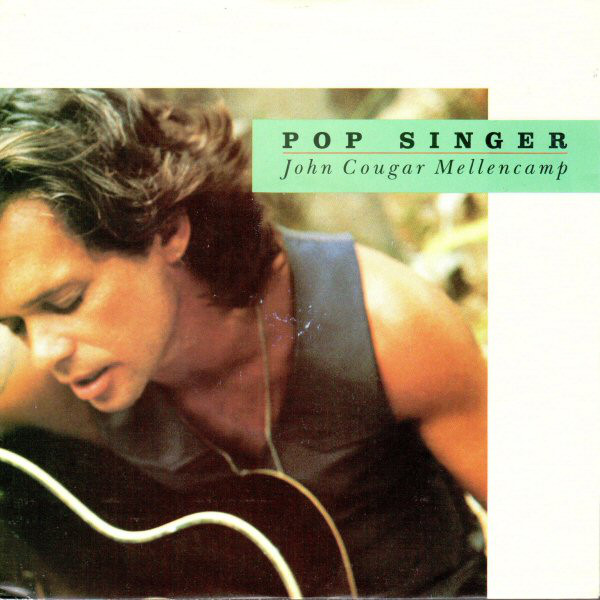
This song was off of the 1989 album Big Daddy. The two radio songs that got me to buy the album were Jackie Brown and this one.
In this song John didn’t want to be a pop or rock star. He didn’t want to do what the stars had to do to have hits. He wanted to be taken seriously and real. He had been through all of that when a manager renamed him to “Johnny Cougar” but he did remake his career by releasing more roots music and
This song peaked at #15 in the Billboard 100 and #1 in Canada in 1989.
John Mellencamp:“Everybody wanted to be a rock star in the ’80s,” he said. “Everybody but me.”
From Songfacts
“The most crucial thing for me is that I want it to be real.”
That’s what Mellencamp told Creem magazine in 1987. Two years later, he released a song about it. In “Pop Singer,” he explains that the music is what is important to him, and that he has no use for the gladhanding, trend-following or fan interaction that is expected of Pop Stars.
Mellencamp wasn’t always so “real” – his manager had him use the stage name “Johnny Cougar,” which took him years to reverse. He soon took control of his career, however, and did things on his terms. Any part of the job that isn’t related to making or performing music is something Mellencamp avoids. He will begrudgingly do promotion, but refuses corporate music traditions like radio station concerts and meet-and-greets. This stance didn’t endear him to industry types, but many fans found his candor refreshing and appreciated his authenticity and devotion to his craft.
When he wrote this song, Mellencamp was going through a divorce with his second wife, Victoria Granucci. “I was questioning the importance of music,” he told Rolling Stone. “Everybody was having to kiss everybody’s ass. If you want to be on MTV, then come here and do this. All these backroom deals were getting made. I was like, ‘I don’t want any part of this.'”
Mellencamp articulated his position in this song in his 2018 DVD Plain Spoken, where he explained that what he was after was a creative life away from his hometown of Seymour, Indiana. Had he become a painter, he would have been just as fulfilled, but when his demo got him a management deal, he was drawn toward music.
This song runs just 2:46, which is appropriate, as hit pop songs tend to be short, in part so radio stations can play more of them.
Pop Singer
Never wanted to be no pop singer, Never wanted to write no pop songs. Never had no weird hair to get my songs over. Never wanted to hang out after the show. Pop singer (writing) of pop songs.
Never wanted to have my picture taken. Now, who would want to look into these eyes? Just want to make it real – good, bad or indifferent. That’s the way that I live and that’s the way that I’ll die (As a) Pop singer (of) pop songs.
Pop singer, writing of pop song.
Never wanted to be no pop singer, Never want to write no pop songs. Never wanted to have a manager over for dinner. Never wanted to hang out after the show.
Pop singer, writing pop songs. Never wanted to be no pop singer, of pop songs. A pop singer. Never wanted to write no pop songs.
This is the Replacements 3rd album “Let It Be.” They named it that to joke with their manager who was an obsessed Beatles fan. The song to me sounds like an early Rod Stewart song in style.
While most of the popular music in the world at the time were playing New Wave or Heavy Metal…the Replacements were themselves. No special stage clothes just whatever they were wearing at the time. The word “alternative” was used for the Replacements in the 1980s. Only college stations would play them regularly. They were not good with compromises…and that part took a toll on their popularity…and one of the reasons they are not as well known today.
A band that had one of the best songwriters of the 80s could not get out of their own way and to the masses.
“Unsatisfied” may have been inspired by Westerberg’s developing interest in palmistry. Every palm reader he saw told him that the lines of his hand meant he was doomed to be unhappy forever. The song was a testament to the band’s ad-lib approach. Westerberg barely had any lyrics, save for the “I’m so unsatisfied” hook, and improvised as he sang.
Bob Stinson hadn’t even heard the song before cutting it. “We ran through it one time. Then Bob came in and played along for about half of it. Steve rolled the tape, and that was it,” said Westerberg. “That one was really nice because there was no time to think. He played real well on that—reserved, but with emotion.”
Later on when the Replacements opened up for Keith Richards this song was dedicated to Keith who wrote Satisfaction.
Unsatisfied
Look me in the eye Then, tell me that I’m satisfied Was you satisfied? Look me in the eye Then, tell me that I’m satisfied Hey, are you satisfied?
And it goes so slowly on Everything I’ve ever wanted Tell me what’s wrong
Look me in the eye And tell me that I’m satisfied Were you satisfied? Look me in the eye Then, tell me I’m satisfied And now are you satisfied?
Everything goes Well, anything goes all of the time Everything you dream of Is right in front of you And everything is a lie (or) And liberty is a lie
Look me in the eye And tell me that I’m satisfed Look me in the eye Unsatisfied I’m so, I’m so unsatisfied I’m so dissatisfied I’m so, I’m so unsatisfied I’m so unsatisfied Well, I’m-a I’m so, I’m so unsatisfied I’m so dissatis, dissattis… I’m so
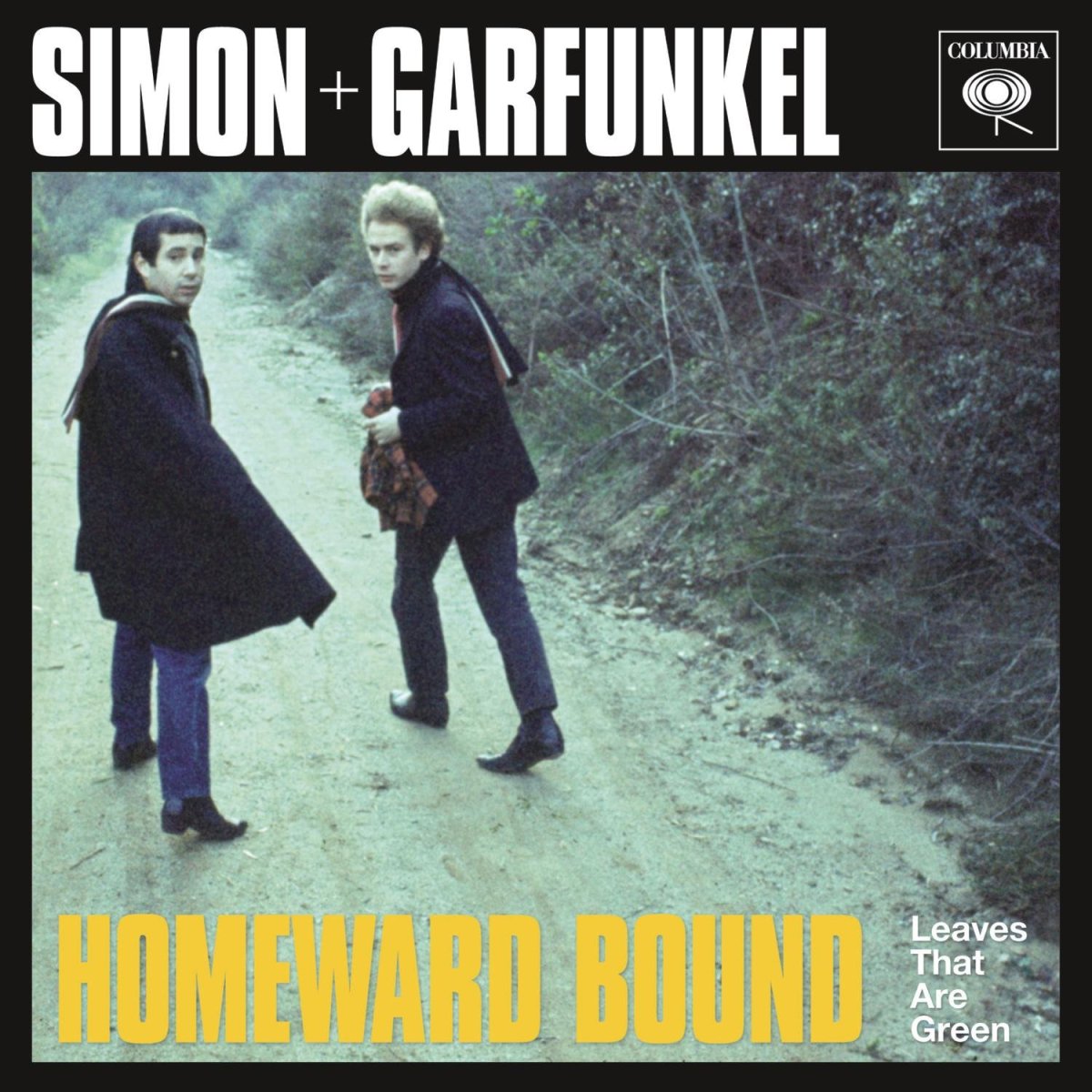
It all started for me with a Simon and Garfunkel greatest hits package and I was instantly a fan.
Being a Beatle fan I always liked the version that Paul and George Harrison did on SNL in 1976 which was their highest rated episode up til that point. Paul played this and “Here Comes The Sun” with Paul Simon in 1976 on Saturday Night Live.
This was just the second Simon & Garfunkel single, following up “The Sound Of Silence,” which became a surprise hit when their record company added instrumentation and released it a year after it was first recorded. The duo had parted ways, but got back together in a hurry when “Sound of Silence” hit #1 in America.
The song peaked at #5 in the Billboard 100, #2 in Canada, #1 in New Zealand, and #9 in the UK in 1966. It appeared on the album Parsley, Sage, Rosemary and Thyme but they recorded it during the Sound of Silence album sessions.
Paul Simon: “That was written in Liverpool when I was traveling. What I like about that is that it has a very clear memory of Liverpool station and the streets of Liverpool and the club I played at and me at age 22. It’s like a snapshot, a photograph of a long time ago. I like that about it but I don’t like the song that much. First of all, it’s not an original title. That’s one of the main problems with it. It’s been around forever. No, the early songs I can’t say I really like them. But there’s something naive and sweet-natured and I must say I like that about it. They’re not angry. And that means that I wasn’t angry or unhappy. And that’s my memory of that time: it was just about idyllic. It was just the best time of my life, I think, up until recently, these last five years or so, six years… This has been the best time of my life. But before that, I would say that that was.”
From Songfacts
Paul Simon lived in Brentwood, Essex, England when he wrote this song. When traveling back from Wigan, where he was playing, he got stuck at the train station and wrote this. The song has a double meaning: literally, wanting for a ticket home to Brentwood, but on the other hand, yearning to go to his home in the US.
Along with “I Am A Rock,” this was recorded at a late-night session in New York City with producer Bob Johnston. Simon played acoustic guitar, and Ralph Casale was on electric. Johnston was working on Bob Dylan’s Highway 61 album around this time, and Casale recalls that drummer Bobby Gregg and organist Al Kooper – both Dylan regulars – played on this Simon & Garfunkel session as well.
Paul Simon performed this song with Billy Joel at Joel’s concert on August 4, 2015 at Nassau Coliseum in Long Island, New York. This was the last concert at the venerable arena, and Simon was a surprise guest. It marked the first time Joel and Simon ever sung together.
Peter Carlin called his 2016 novel about Paul Simon Homeward Bound. “Given the immigrant story beneath Paul’s life and work (what are his many musical re-creations if not the assimilation process writ in music over and over again) ‘Homeward Bound’ worked too well to ignore,” he explained.
Homeward Bound
I’m sitting in the railway station. Got a ticket to my destination. On a tour of one-night stands my suitcase and guitar in hand. And every stop is neatly planned for a poet and a one-man band. Homeward bound, I wish I was, Homeward bound, Home where my thought’s escaping, Home where my music’s playing, Home where my love lies waiting Silently for me.
Every day’s an endless stream Of cigarettes and magazines. And each town looks the same to me, the movies and the factories And every stranger’s face I see reminds me that I long to be, Homeward bound, I wish I was, Homeward bound, Home where my thought’s escaping, Home where my music’s playing, Home where my love lies waiting Silently for me.
Tonight I’ll sing my songs again, I’ll play the game and pretend. But all my words come back to me in shades of mediocrity Like emptiness in harmony I need someone to comfort me. Homeward bound, I wish I was, Homeward bound, Home where my thought’s escaping, Home where my music’s playing, Home where my love lies waiting Silently for me. Silently for me.
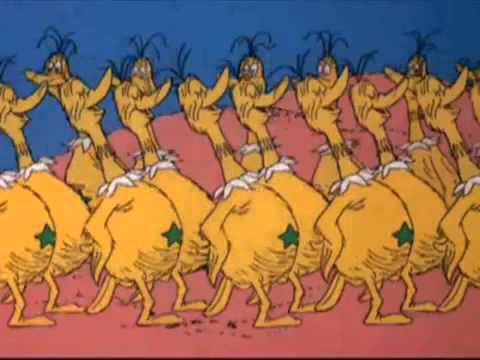
It only lasts around 12 minutes and it was squeezed in between Green Eggs and Ham and The Zax. They were packaged in a program called Doctor Suess On The Loose.
The Sneetches teaches us all that we are all the same no matter who we are or what we look like… and the stupidity of discrimination. I would wait all year for these 3 great segments…
There were two different types of Sneetches that live near the beach. The Star-Belly Sneetches have stars on their bellies. They believe that the star makes them more important than the Plain-Belly Sneetches who do not have stars. The Star-Belly Sneetches brag that they are the best on the beach and will not play games or socialize with those without the star.
One day Sylvester McMonkey McBean arrives and announces that he can solve the problem for the Plain-Belly Sneetches for a small price. They agree to his offer. The Plain-Belly Sneetches enter a large machine and pop out with a star on the bellies. The Star-Belly Sneetches are angry because they no longer feel superior. They decide to pay Sylvester McMonkey McBean to take off their stars. The Sneetches pay to put on, take off, and put on the stars for the rest of the day.
Eventually, the Sneetches run out of money and Sylvester McMonkey McBean leaves with all their money. He leaves saying that a Sneetch never learns. However, the Sneetches did learn a lesson that day. They decide that no kind of Sneetch is better than another. They forgot about the stars and became friends.
I’m going to write about my top 10 favorite TZ episodes in the next few weeks…Most of the Twilight Zones are like songs to me…to be enjoyed over and over. The Twilight Zone is not really an ordinary TV show. It’s THE TWILIGHT ZONE. This is my personal choice for #4 on my list.
This one I will be giving it all away…more than I usually do…so just a warning.
This one I love and it’s one of the most memorable episodes. If you have never seen it…stop reading now. It’s one of my favorites (and supposedly Rod Serling’s favorite of all that he wrote).
It’s so heartbreaking at the end and I feel so much for Mr. Bemis. This one more than any other Twilight Zone surprised me a bit. It is one of the best twists of any Twilight Zone.
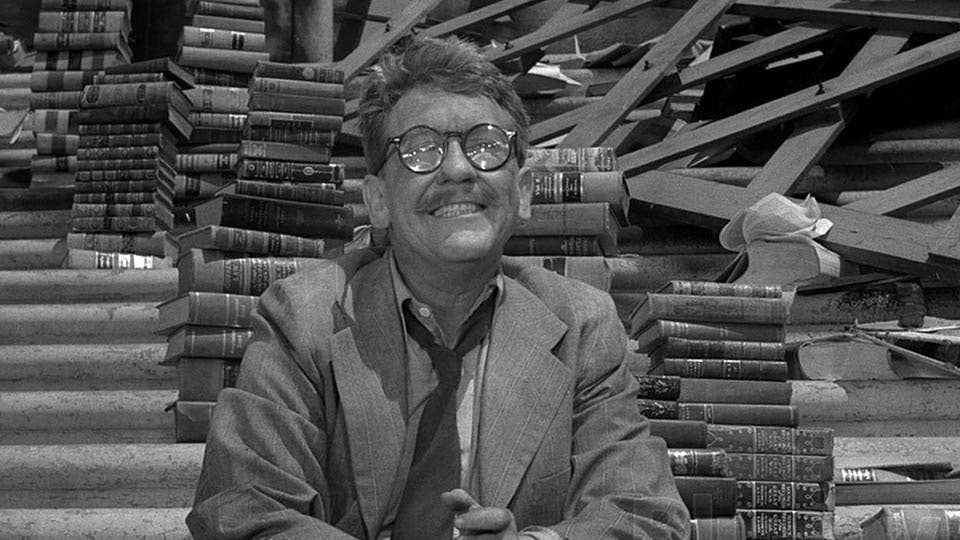
Rod Serling Opening Narration:Witness Mr. Henry Bemis, a charter member in the fraternity of dreamers. A bookish little man whose passion is the printed page, but who is conspired against by a bank president and a wife and a world full of tongue-cluckers and the unrelenting hands of a clock. But in just a moment, Mr. Bemis will enter a world without bank presidents or wives or clocks or anything else. He’ll have a world all to himself… without anyone.
The show was written by Rod Serling and Lynn Venable.
Henry Bemis (Burgess Meredith) is a bookish bank teller who has a childlike fascination for the written word…any written word be it books, periodicals, newspapers. He delights in taking any moment to read, through his incredibly thick “coke-bottle” glasses, even on his salaried time. He is consistently harassed by his wife, customers, and boss for his love of print to the point that he must sneak into the bank’s vault where he works to read on his lunch hour.
During one such visit, a nuclear bomb blast levels his city, leaving him unscathed, whereupon he exits to find that he has “time enough at last” to read all he wants when he finds the local library’s contents scattered about. At this point, (warning: spoiler!) he stacks the books into towers and rejoices in the solitude that will allow him to read everything he can…but in reaching for a particular book, his glasses slip off his face and smash….leaving him to mutter: “That’s not fair… that’s not fair at all… There was time now…. There was…all the time I needed!.. It’s not fair”. The scene then closes with the image panning away from a crying Bemis.
The Twilight Zones are mostly moral plays and justice usually is delivered to a guilty party. On this one, Mr. Bemis isn’t a bad guy. I can’t help but feel pity for Mr. Bemis. It’s not like he was anti-social. He tried to bond with people, although awkwardly, he did try.
He wasn’t the best worker but not terrible and he did read on his lunch breaks. If this episode has a bad “guy” it would be his boss and wife who took away the thing he loved the most. Maybe he was a little selfish and single-minded…but he paid an awfully big price…but the positive…he did survive!
Rod Serling Closing Narration:The best-laid plans of mice and men…and Henry Bemis, the small man in the glasses who wanted nothing but time. Henry Bemis, now just a part of a smashed landscape, just a piece of the rubble, just a fragment of what man has deeded to himself. Mr. Henry Bemis, in the Twilight Zone.
CAST
Burgess Meredith – Henry Bemis Vaughn Taylor – Mr. Carsville Jacqueline deWit – Helen Bemis (as Jaqueline deWit) Lela Bliss – Mrs. Chester
When you play in a bar band…you better know this song. I played it so many times that while I still like listening to the song…I dreaded playing it but it was hard to avoid. Just to add a little fun to it I would add a naughty description in the lyrics…no I won’t repeat here…trying to make the guys laugh. I’d get a wink from some of the slow dancers but no one seemed to mind…it added a little spice to this slower than slow song.
It’s another song inspired by Pattie Boyd. The list is long with Pattie. She inspired a lot of great songs. George Harrison wrote “Something” and “For You Blue” for her, while she inspired Clapton to write this, “Layla,” “Why Does Love Have To Be So Sad,” and “Forever Man.”
Pattie was married to George Harrison when Clapton expressed his love for her in the song “Layla.” Clapton and Harrison remained good friends, and Harrison even played at their wedding in 1979. Eric and Pattie divorced in 1988.
The song peaked at #16 in the Billboard 100, #15 in Canada, #2 in New Zealand, and #81 in the UK in 1977. The song was on the album Slowhand.
Pattie Boyd: “Clapton was sitting round playing his guitar while I was trying on dresses upstairs. I was taking so long and I was panicking about my hair, my clothes, everything, and I came downstairs expecting him to really berate me but he said, ‘Listen to this!'”
From Songfacts
A fixture at proms and weddings, Eric Clapton wrote “Wonderful Tonight” in 1976 while waiting for his girlfriend (and future wife) Pattie to get ready for a night out. They were going to a Buddy Holly tribute that Paul McCartney put together, and Clapton was in the familiar position of waiting while she tried on clothes.
On March 28, 1979, the day after they were married, Clapton brought Pattie on stage and sang this to her at his show in Tucson, Arizona.
Clapton released a live version in 1991 recorded in London with the National Philharmonic Orchestra. This is the version that charted in the UK. It is included on his album 24 Nights. In the time she had taken to get ready Clapton had written this song.
In the 2000 Friends episode “The One With the Proposal,” this plays in the background while Chandler and Monica are dancing. It also shows up in the 1984 Miami Vice episode “One Eyed Jack” and in the 2013 movie Captain Phillips. >>
This was used in the movie The Story Of Us with Bruce Willis and Michelle Pfeiffer. The song plays in the background as they eat dinner together at home, even though they had separated.
In 1997 the boy band Damage recorded a cover reaching #3 in the UK. A then unknown Craig David sent in a self-written song called “I’m Ready” for a competition Damage was running, which they used as the B-side.
Wonderful Tonight
It’s late in the evening; she’s wondering what clothes to wear. She’ll put on her make-up and brushes her long blonde hair. And then she asks me, “Do I look all right?” And I say, “Yes, you look wonderful tonight.”
We go to a party and everyone turns to see This beautiful lady that’s walking around with me. And then she asks me, “Do you feel all right?” And I say, “Yes, I feel wonderful tonight.”
I feel wonderful because I see The love light in your eyes.
And the wonder of it all Is that you just don’t realize how much I love you. It’s time to go home now and I’ve got an aching head, So I give her the car keys and she helps me to bed.
And then I tell her, as I turn out the light, I say, “My darling, you were wonderful tonight. Oh my darling, you were wonderful tonight.”
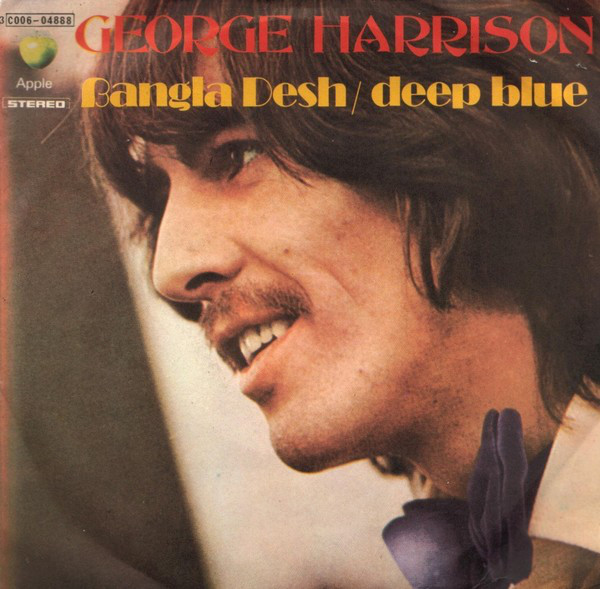
When the Beatles broke up I’m sure everyone was looking at John and Paul but George was the one who made the most noise at first. This was right after his masterpiece album All Things Must Pass.
George wrote this song and it describes the plight of the people of Bangladesh, who were fighting for independence from Pakistan. It was to raise awareness for the millions of refugees from the country formerly known as East Pakistan, following the 1970 Bhola cyclone and the outbreak of the Bangladesh Liberation War.
Harrison learned about it from his friend and Sitar player Ravi Shanker. He wrote the song for the Concert for Bangladesh, a fund raiser he helped organize with Shankar that was held at Madison Square Garden over the course of two shows on August 1, 1971. Performers that helped out were Bob Dylan, Badfinger, Eric Clapton, Ringo Starr and Leon Russell.
The song was released three days earlier to promote the event and start raising money for the cause… Harrison then performed it during the concert as an encore at both shows. He held the first rock benefit show which was years before Live Aid.
It was released as a non album single and it peaked at #23 in the Billboard 100, #13 in Canada and #10 in the UK in 1971.
From Songfacts
The country of Bangladesh was known as East Pakistan until March 26, 1971, when it declared independence. This triggered a war with Pakistan, which ruled the country to that point. Many in the area had died during a massive cyclone in November 1970, and the war was ravaging the country once again. Refugees, many Hindu, fled to India by the millions.
Outside of South Asia, this wasn’t a major news story, but Harrison’s efforts brought it to the forefront, especially in America. For many, this song was the first time they heard the word “Bangladesh.”
This was the first charity single by a major artist, and the Concert for Bangladesh was the first benefit concert on this scale. Harrison pulled a page from John Lennon’s playbook by making it a multi-media event, with a single, concert, album and film all pulling to help the same cause. It was a remarkably ambitious undertaking that has yet to be duplicated on this level, although Live Aid, which was associated with the single “Do They Know It’s Christmas?,” was broadcast with a global footprint to an enormous audience and had a much greater impact.
This song charted and got a lot of airplay when it was released, but it quickly vanished because it’s locked to a specific event and sung in the present (so many people are dying fast). Of George Harrison’s hits, it’s the one you’re least likely to hear on any playlist.
George Harrison is the only credited writer on this song, but Leon Russell, who performed at Concert for Bangladesh, gave him some help, suggesting the opening lines that set up the story (“My friend came to me with sadness in his eyes”). Russell most likely played piano on the track.
The title is officially “Bangla Desh,” but has also appeared as “Bangla-Desh” and what has become the common spelling of the country’s name, “Bangladesh.”
Harrison recorded this song with producer Phil Spector, who worked on Harrison’s solo album All Things Must Pass in 1970.
George Harrison was careful not to take a political position in this song, instead staying focused on the suffering. In this way, it was the model for most charity songs that came after.
The song and the concert were pulled together in about five weeks. The concert album wasn’t released until December 20, 1971, and the film didn’t appear until March 23, 1972. The album won the Grammy for Album of the Year at the 1973 ceremony.
Harrison was in London producing the Badfinger album Straight Up when he pivoted to organize the Concert for Bangladesh. Todd Rundgren took over as producer to finish the album, which includes the hits “Day After Day” and “Baby Blue.” Badfinger served as part of the backing band for the concert, and their lead singer, Pete Ham, joined Harrison to perform “Here Comes The Sun.”
Getting the money earned from this song and the related relief efforts to the right place proved challenging. The IRS audited The Beatles’ Apple Records during the ’70s, which prevented a lot of money that was raised from getting to Bangladesh. $2 million was sent through UNICEF in 1972 before the audit; $8.8 million was finally sent in 1981. Harrison kept doing good deeds through his Material World charitable trust.
Bangla Desh
My friend came to me With sadness in his eyes Told me that he wanted help Before his country dies
Although I couldn’t feel the pain I knew I had to try Now I’m asking all of you Help us save some lives
Bangla Desh, Bangla Desh Where so many people are dying fast And it sure looks like a mess I’ve never seen such distress Now won’t you lend your hand Try to understand Relieve the people of Bangla Desh
Bangla Desh, Bangla Desh Such a great disaster I don’t understand But it sure looks like a mess I never known such distress Please don’t turn away I want to hear you say Relieve the people of Bangla Desh
Relieve the people of Bangla Desh
Bangla Desh, Bangla Desh Though it may seem so far From where we all are It’s something we can’t reject That suffering I can’t neglect Now won’t you give some bread Get the starving fed We got to relieve Bangla Desh
Relieve the people of Bangla Desh We got to relieve Bangla Desh
Now won’t you lend your hand Try to understand Relieve the people of Bangla Desh
Thanks to msjadeli (Lisa) for suggesting The Black Keys.
Dan Auerbach of the Black Keys describes a Ten-Cent-Pistol as “this low-rent, heinous substance that disfigures you, like homemade napalm.” In the song, a woman takes revenge on her cheating man and his mistress by throwing the acid on their faces.
This was on the 2010 album Brothers. The album peaked at #3 in the Billboard Album Charts, #4 in Canada, and #29 in the UK
Another definition for Ten Cent Pistol is Drugs (usually heroin) laced with lethal amounts of poison. Arsenic is common. Used as revenge against addicts and dealers alike.
The song is smooth and I love his voice…it sounds old…it sounds like his voice is coming out of a 1950s radio yet the music is not. It would have fit on the Pulp Fiction soundtrack easily.
From Songfacts
This was one of 10 songs from the Brothers album that The Black Keys recorded at Muscle Shoals Sound Studios in Sheffield, Alabama. From 1969-1978, the studio was owned by the famous Muscle Shoals Rhythm Section, who recorded classic tracks like “I’ll Take You There” and “Old Time Rock And Roll” there. In 1999, Noel Webster bought the studio and eventually re-opened it. The Black Keys, in search of a classic southern studio and a vintage Soul sound, booked the place for two weeks, and spent 10 days in the area before heading back to Akron, Ohio, which seemed cosmopolitan by comparison. There’s no real nightlife in Muscle Shoals, so artists quickly get down to business, which is what Auerbach and Carney did, setting up at 10 a.m. and using an array of old instruments.
Mark Neill, who produced this track with the band, discussed the instrumentation on this song in a track-by-track on The Black Keys Fan Lounge: “Ten Cent Pistol is a slightly jazzy tune with very Ethiopian sounding 12 string guitar on it. It’s a cheap Harmony 12 string. It sounds like a lot of that incredible African guitar sound, incredible sounds out of simple instruments. It reminds me a lot of that. Two different groups come to mind that had a feel that reminds me of this. The 12 string lead on it reminds me of something very African.
We started the record with my Rickenbacker, I have a custom Rickenbacker, so the first demos were done with that. The sounds he [Dan] gets out of his Harmony’s is incredible. I don’t think there was any conscious decision officially, but I know we both agreed the sound he gets out of his Harmony’s is unbelievable.
I would say, other than ‘These Days,’ you are hearing his two Harmony guitars. And there are a few instances of a Supro guitar, which he gets a really unique sound out of. All of the recording gear at Muscle Shoals including the 1956 Gretsch drums, bass, guitar amp are from Soil of the South (Neill’s collection of vintage equipment). Dan and Pat brought congas, and various electronic keyboards as well as Dan’s guitars as well as a Music Master Fender bass amp for fuzz!”
The Black Keys
Well he ran around Late at night Holding hands Making light Of everything that came before But there she was behind the door
She hit them with her ten cent pistol Because they ruined her name Well she hit them with her ten cent pistol And they’ve never been the same
There’s nothing worse In this world Than pay-back from a A jealous girl The laws of man, they don’t apply When blood gets in a woman’s eye
Well she hit them with her ten cent pistol Because they ruined her name Oh she hit them with her ten cent pistol And they’ve never been the same, same
Stars did fall Thunder rolled Bugs crawled back In their holes The couple screamed, but it was far too late Her jealous heart did retaliate
She hit them with her ten cent pistol Because they ruined her name Well she hit them with her ten cent pistol And they’ve never been the same Oh the same All the same Never been the same
He hollered, rave on, children, I’m with you Rave on, cats, he cried It’s almost dawn, the cops are gone Let’s all get Dixie fried
He was born James Luther Dickinson but most people knew him as Jim Dickinson. It doesn’t get much more southern than this album and the title track.
He worked at Memphis Sun Records and Ardent Studios in the 1960s on, to sessions with the Rolling Stones (piano on Wild Horses at Muscle Shoals), Ry Cooder and Bob Dylan. He also played with his roots band Mud Boy & The Neutrons and the Dixie Flyers.
Dickinson produced recordings for performers as diverse as Willy DeVille, Green on Red, Mojo Nixon, Tav Falco’s Panther Burns, Toots and the Maytals and Screamin’ Jay Hawkins.
In the 70s he produced Big Star’s 3rd Sisters/Lovers album and in the 80s The Replacements Please To Meet Me album in Memphis.
In 1971 he started to focus on production work, producing and appearing on Ry Cooder’s acclaimed Into The Purple Valley and Boomer’s Story albums. Atlantic offered him a chance to record a solo album, and his debut Dixie Fried came out in 1972. It gave him the chance to present his own off-beat take on southern roots music, resulting in an album full of R&B and country.
The song was written by Carl Perkins and Howard “Curley” Griffin.
So if you want… sit back and sip some Tennessee Straight Sour Mash Whiskey and get Dixie Fried.
Dixie Fried
On the outskirts of town, there’s a little night spot Dan dropped in about five o’clock Took off his jacket, said, the night is short He reached in his pocket and he flashed a quart
He hollered, rave on, children, I’m with you Rave on, cats, he cried It’s almost dawn, the cops are gone Let’s all get Dixie fried
Well, Dan got happy and he started raving He pulled out a razor, but he wasn’t shaving And all the cats knew to jump and hop ‘Cause Dan was raised in a butcher shop
He hollered, rave on, children, I’m with you Rave on, cats, he cried It’s almost dawn, the cops are gone Let’s all get Dixie fried
Well, the cops heard Dan when he started to shout They all ran in to see what it was about And I heard him holler as they led him away He turned his head and this is what he had to say
He hollered, rave on, children, I’m with you
Rave on, cats, he cried It’s almost dawn, the cops are gone Let’s all get Dixie fried
Now, Dan was the bravest man that we ever saw He let us all know, he wasn’t scared of the law The black dog barked, but the boy didn’t flinch He said, it ain’t my fault, hon, that I been pinched
He hollered, rave on, children, I’m with you Rave on, cats, he cried It’s almost dawn, the cops are gone Let’s all get Dixie fried
Now, Dan was the bravest man we ever saw He let us all know he wasn’t scared of the law And I heard him holler as they led him away He turned his head and this was what he had to say
He hollered, rave on, children, I’m with you Rave on, cats, he cried It’s almost dawn, the cops are gone Let’s all get Dixie fried
Yeah, it’s almost dawn, the cops ain’t gone And I’ve been Dixie fried
I love this era of the Stones. This song was about the record company putting pressure on the Stones to follow up their biggest to date…and their biggest hit ever, Satisfaction.
The song peaked at #1 in the Billboard 100, Canada, and the UK in 1965.
It was on the US album December’s Children (And Everybody’s) released in 1965 and it peaked at #4 in the Billboard Album Charts.
Keith Richards: “‘Get Off My Cloud’ was basically a response to people knocking on our door asking us for the follow up to ‘Satisfaction,’ which was such an enormous hit worldwide. This, to us, was mind-blowing. I mean not only was it a #1 record but, boom! We thought, ‘At last. We can sit back and maybe think about events.’ Suddenly there’s the knock at the door and of course what came out of that was ‘Get Off Of My Cloud.’ Because within three weeks, in those days hey, they want another single. And we weren’t quite ready for that. So it was our response to the knock at the door: Get off of my cloud. And I’m surprised that it did so well. I mean it has a certain charm but I really remember it as a knee-jerk reaction. And it came out better than I thought.”
Mick Jagger: “That was Keith’s melody and my lyrics. It’s a stop-bugging-me, post-teenage-alienation song. The grown-up world was a very ordered society in the ’60s, and I was coming out of it. America was even more ordered than anywhere else. I found it was a very restrictive society in thought and behavior and dress.”
From Songfacts
There was a bit of controversy over this song, as it sounded like it could be about drugs. Some radio stations shied away from the song.
Stones manager Andrew Long Oldham produced this.
Ian Stewart played piano on this track. Keith Richards explained: “That was just one of those things you could do in those days – shadow a guitar with a piano. As long as you didn’t make it obvious, it would add some different air to a track.”
The B-side of this single was “I’m Free,” which remained obscure until it was revived by The Soup Dragons in 1990.
In 1973 The Dramatics scored an R&B hit with “Hey You! Get Off My Mountain,” which also contained the chorus lyrics, “Hey You! Get Off My Cloud.”
Get Off Of My Cloud
I live in an apartment on the ninety-ninth floor of my block And I sit at home looking out the window Imagining the world has stopped Then in flies a guy who’s all dressed up just like a Union Jack And says, “I’ve won five pounds if I have his kind of detergent pack”
I says, “hey, you, get off of my cloud Hey, you, get off of my cloud Hey, you, get off of my cloud Don’t hang around ’cause two’s a crowd On my cloud, baby”
The telephone is ringing I say, “hi, it’s me, who is there on the line?” A voice says, “hi, hello, how are you?” “Well, I guess I’m doin’ fine” He says, “it’s three a.m., there’s too much noise Don’t you people ever want to go to bed? Just ’cause you feel so good Do you have to drive me out of my head?”
I says, “hey, you, get off of my cloud Hey, you, get off of my cloud Hey, you, get off of my cloud Don’t hang around ’cause two’s a crowd On my cloud, baby, yeah”
I was sick and tired, fed up with this And decided to take a drive downtown It was so very quiet and peaceful There was nobody, not a soul around I laid myself out, I was so tired And I started to dream In the morning the parking tickets were just Like a flag stuck on my window screen
I says, “hey, you, get off of my cloud Hey, you, get off of my cloud Hey, you, get off of my cloud Don’t hang around ’cause two’s a crowd On my cloud, baby”
“Hey, you, get off of my cloud Hey, you, get off of my cloud Hey, you, get off of my cloud Don’t hang around ’cause two’s a crowd On my cloud, hey, you









 PowerPop... An Eclectic Collection of Pop Culture