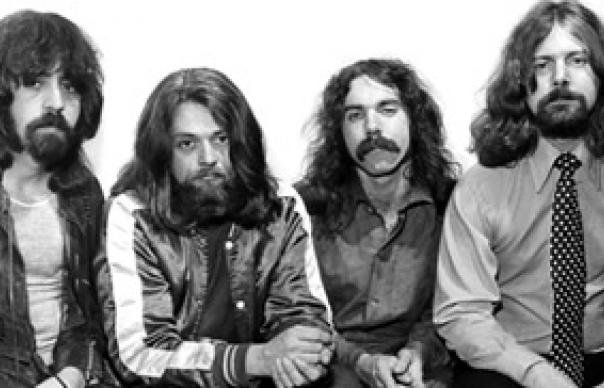
They were founded by singer, guitarist, and songwriter Todd Rundgren and bassist Carson Van Osten. Drummer Thom Mooney and vocalist/keyboardist Robert “Stewkey” Antoni would join last.
In celebration of Todd Rundgren getting in the Jann Wenner Rock and Roll Hall of Fame FINALLY…It makes no sense why the guy wasn’t in there 20 years ago. Not just as a performer but as a producer as well. Rundgren not getting in until now is one of the reasons it’s hard for me to take the Hall seriously…but I’m happy he is finally in.
In 2016, Rundgren told an interviewer: “It doesn’t have the same cachet as a Nobel Peace Prize or some historical foundation. If I told you about how they actually determine who gets into the Hall of Fame, you’d think that I was bullshitting you, because I’ve been told what’s involved. … It’s just as corrupt as anything else, and that’s why I don’t care.”
He was asked how he felt about finally being inducted and he said: “I’m happy for the fans. They’ve waited a long time for this.” He was probably more happy about the 2016 Honorary doctorate from Berklee College of Music, where he delivered the commencement address, and an honorary doctorate from DePauw University.
The Nazz self titled album was released in 1968. This was the A side of the single released…the B side was “Hello It’s Me”…yes the same song we know but an early version of it.
They formed in 1967 and their first concert was something to remember…opening for the Doors. Some say the band took its name from the Yardbirds’ 1966 song “The Nazz Are Blue”, other sources say the name came from a 1952 monologue, “The Nazz”, by the American Beatnik comedian Lord Buckley.
The band would release 3 albums after which Rundgren started a solo career.
Open My Eyes peaked at #112 in the Billboard Album Charts and Hello It’s Me peaked at #66 in 1968…
Todd would go on and released Hello It’s Me solo and it was a massive hit. It peaked at # 2 in the Billboard 100 and #17 in Canada in 1973.
He would also form the band Utopia in 1973.
Open My Eyes
Underneath your gaze I was found in The haze I’m wandering around in I am lost in the dark of my own room And I can’t see a thing but the fire in your eyes
Clear my eyes, make me wise Or is all I believe in lies I don’t know when or where to go And I can’t see a thing ’til you open my eyes
I’ve been told by some you’ll forget me The thought doesn’t upset me I am blind to whatever they’re saying And all I can see is the fire in your eyes
Clear my eyes, make me wise Or is all I believe in lies I really don’t know when or where to go And I can’t see a thing ’til you open my eyes Can’t see a thing ’til you open my eyes Can’t see a thing ’til you open my eyes Can’t see a thing ’til you open my eyes
Can’t believe that it’s on your mind To leave me behind
Clear my eyes, make me wise Or is all I believe in lies I really don’t know when or where to go And I can’t see a thing ’til you open my eyes Can’t see a thing ’til you open my eyes Can’t see a thing ’til you open my eyes Can’t see a thing ’til you open my eyes Can’t see a thing ’til you open my eyes
The Kinks were so different than other bands. They may have reached the popularity of the Who if they wouldn’t have been banned from touring in America in the late sixties.
The song pokes fun at the fashion scene on Carnaby Street in the Swinging Sixties London…I was written from the point of view of someone who was there living every minute of it. It was released on the Pye label in the UK on February 25 backed by “Sittin’ On My Sofa,” and on Reprise in the United States on April 27. The band’s 10th UK single, it was produced by Shel Talmy.
The song makes me want to go to Carnaby Street but…only in the sixties when it acted as the epicenter of fashion.
The song peaked at #36 in the Billboard 100, #4 in the UK, and #11 in Canada in 1966.
Shel Talmy:“Ray Davies was one of the more prolific songwriters I have ever worked with. He could literally write a dozen songs overnight if he felt the mood. We used to get together about once a month or once every week or two and go through the stuff he had. I would pick out the ones that I thought were real far along, and the ones that were not so far along, and the ones that would probably never be far along. ‘Dedicated Follower Of Fashion’ was one that stood out immediately.”
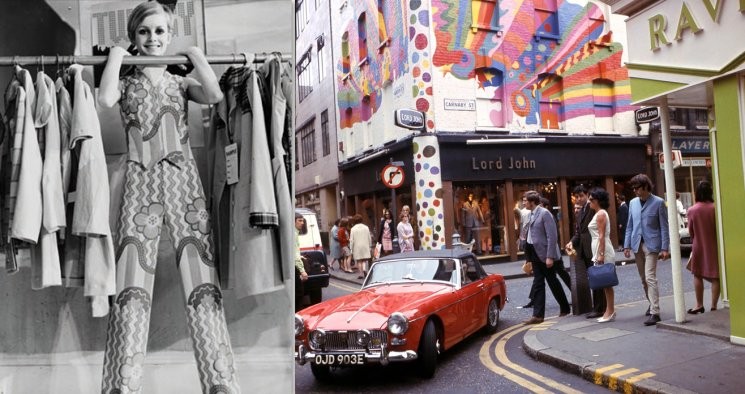
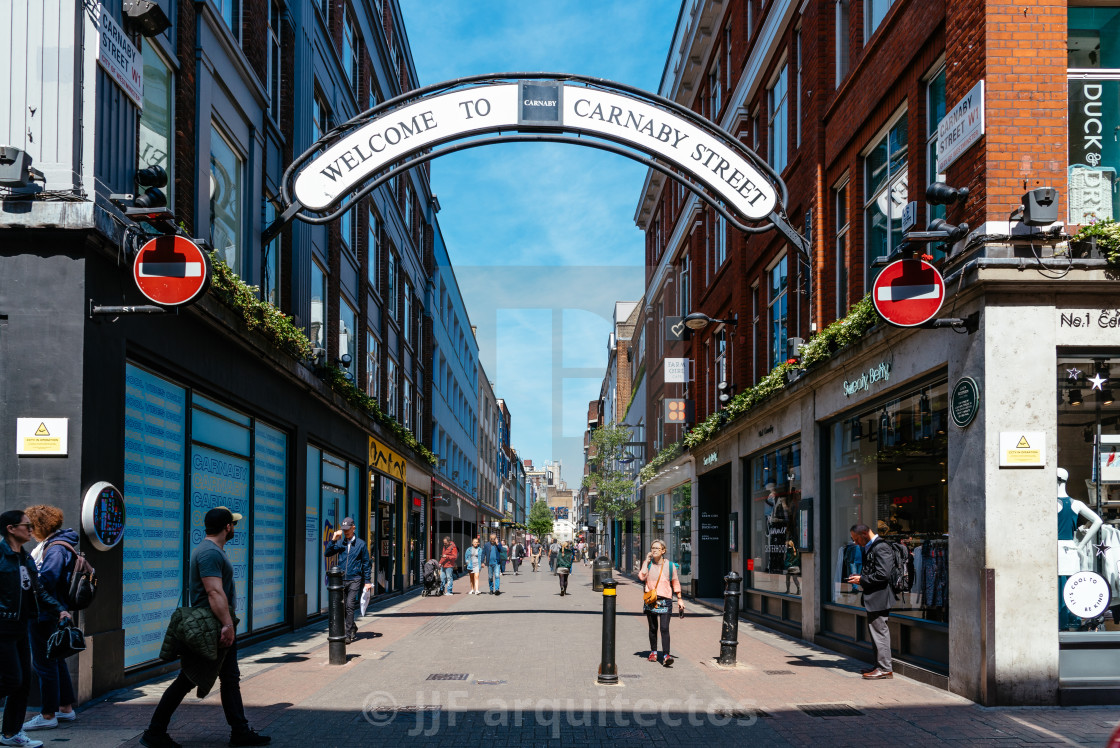
Carnaby Street…I look at sixties pictures of it and it looks really cool and different… when I see modern pictures of it…it looks like a shopping place that you could see at other places.
This looks like somewhere I would love to go
This one is modern…not as colorful!
From Songfacts
According to the online discography compiled by Kinks fan Dave Emlen, it was re-released in the US in August/September the following year, still on Reprise but backed by “Who’ll Be The Next In Line.”
“Dedicated Follower Of Fashion” is one of the band’s best-known songs, and has been included on a number of albums.
Although Carnaby Street dates to the 17th century, like the Kings Road, Chelsea, it will be linked forever to the fashion explosion that happened particularly in Britain during the so-called Swinging ’60s.
In spite of its chart success, not everyone in the Davies camp was enamored with the song. After Kinks bass player Peter Quaife died in June 2010, his obituary in the London Independent quoted him on it thus: “an incredibly boring song to play, and I had to play it night after night.”
According to a 2011 NME interview with Ray Davies, despite its fey overtones, the song is actually a scathing attack on a fop who made fun of the singer’s trousers.
Producer Shel Talmy helped frame The Kinks’ raucous guitar sound, and also had a great ear for a hit song. In a Songfacts interview with Talmy, he said:
Dedicated Follower Of Fashion
They seek him here, they seek him there His clothes are loud, but never square It will make or break him so he’s got to buy the best ‘Cause he’s a dedicated follower of fashion
And when he does his little rounds ‘Round the boutiques of London Town Eagerly pursuing all the latest fads and trends ‘Cause he’s a dedicated follower of fashion
Oh yes he is (oh yes he is), oh yes he is (oh yes he is) He thinks he is a flower to be looked at And when he pulls his frilly nylon panties right up tight He feels a dedicated follower of fashion
Oh yes he is (oh yes he is), oh yes he is (oh yes he is) There’s one thing that he loves and that is flattery One week he’s in polka-dots, the next week he is in stripes ‘Cause he’s a dedicated follower of fashion
They seek him here, they seek him there In Regent Street and Leicester Square Everywhere the Carnabetian army marches on Each one an dedicated follower of fashion
Oh yes he is (oh yes he is), oh yes he is (oh yes he is) His world is built ’round discotheques and parties This pleasure-seeking individual always looks his best ‘Cause he’s a dedicated follower of fashion
Oh yes he is (oh yes he is), oh yes he is (oh yes he is) He flits from shop to shop just like a butterfly In matters of the cloth he is as fickle as can be ‘Cause he’s a dedicated follower of fashion He’s a dedicated follower of fashion He’s a dedicated follower of fashion
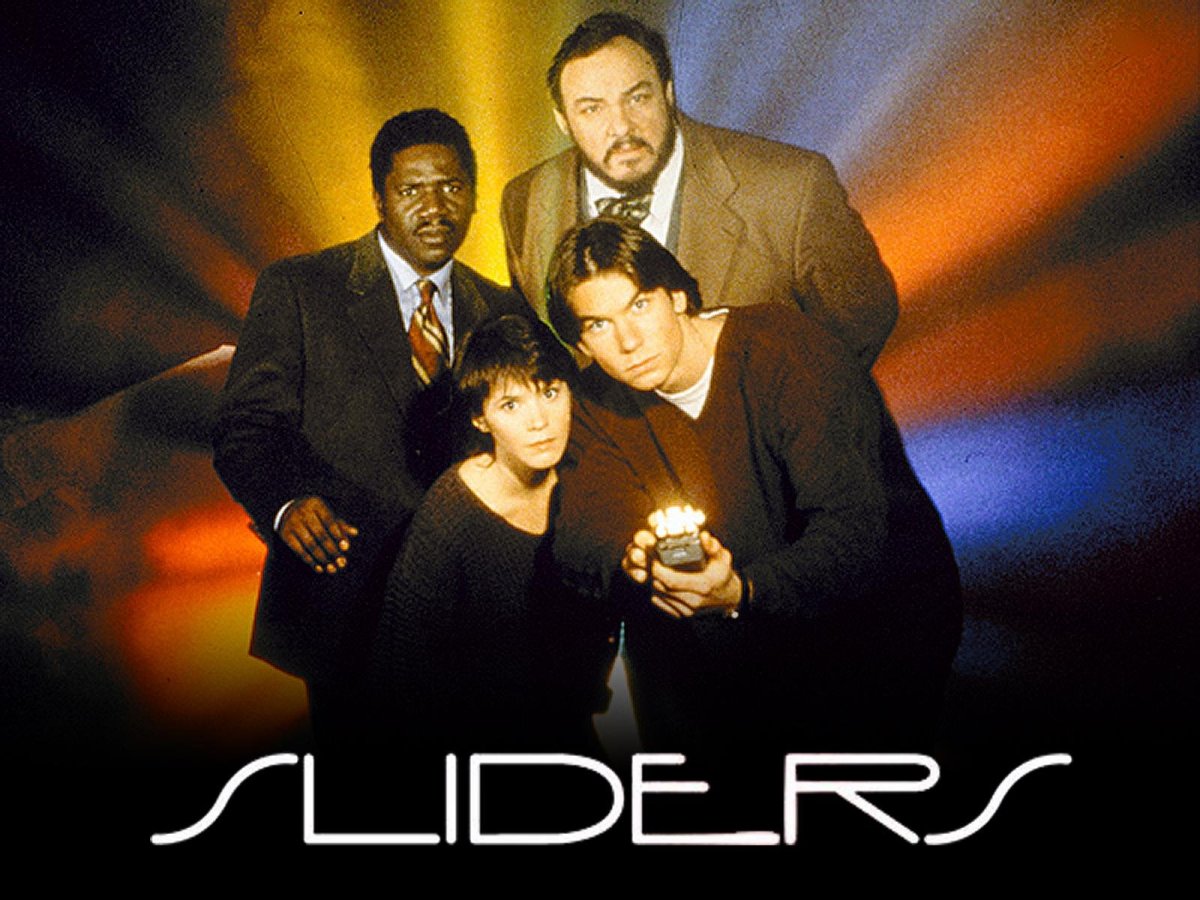
Does anyone remember this Fox and then SyFy Channel show from the 1990’s? The show ran from 1995 to 2000.
I remember this show in the nineties but I never once saw an episode back then. I like science fiction a lot but for some reason I never tuned in. Lately I have been able to watch this show and after a couple of seasons it started to grow on me. Then during the last part of the 3rd season it started to go downhill rapidly and by the 4 – 5th season the whole thing changed.
The plot was that a young genius Quinn Mallory creates a device that opens portals to alternative realities. After an accident leaves them lost, Mallory and his companions: his physics professor, Professor Maximillian Arturo, his work colleague and potential love, Wade Wells, and a once famous soul singer, Rembrandt Brown, “slide” from reality to reality in search of home. They go to parallel worlds where things did not develop like our world. One world Kennedy may not have been killed, the other one penicillin not invented, and etc… They don’t travel in time though…just a different earth in the same decade and time.
I’ve read up on it and as usual…the network was the culprit. Trying to appeal to the “MTV Generation” they changed the show dramatically. By the end of the 5th season only one original slider was left. They ended up doing away with all of the original characters and even the one that survived (Cleavant Derricks) til the 5th season probably would not have made it to the 6th if there had been a 6th.
The show had decent ratings but Fox couldn’t help themselves and messed around with the show and show runner at that time…Tracy Torme. Starting in the 3rd season newer writers started to rip off movie ideas and put them in the show. Shakespearean actor John Rhys-Davies knew what kind of potential the show had and complained loudly about the awful scripts…he was the first to go…after Sabrina Lloyd left, the lead actor Jerry O’Connell soon quit
On top of everything else the network would air the action episodes first and therefore air them all out of order…so when they went into a new world they would be dressed differently than the episode that was shown before…because that could have been coming from a world in a future episode or one two or three back.
I’m very surprised that no one has rebooted this series. The possibilities are endless with that plot. Like the recent movie “Yesterday” it showed a world where The Beatles never existed and how the world had changed.
It was cool to see what worlds they would land in…each history was like ours except for a few things…like one episode where the British had won the war.
A horrible “what if” power that Lt. Fitzgerald (William Reynolds) has… when he looks at his fellow soldiers… he knows which ones are about to die. A powerful episode and one that was remade in the 80s Twilight Zone reboot but it didn’t come close to this one.
One thing that struck me about actor William Reynolds…he looks like he could have walked out of 2021. Most of the time on older shows most actors and actresses look from that time period…he looks like he could be starring in a movie or TV show today.
Rod Serling served in the US Army’s 511th Parachute Infantry Regiment, 11th Airborne Division, during the liberation of the Philippines, where this episode is set.
The night of the planned air date, a plane carrying Richard L. Bare (Director) and William Reynolds crashed in the Caribbean Sea, injuring both (though not seriously). It is believed that during their swim to land, they discussed the episode that night and Bare requested Reynolds not to look at him. He later admitted that he commended Buck Houghton’s decision to reschedule rather than use the incident for publicity.
This is episode 19 of season one…we are over halfway through the first season.
This show was written by Rod Serling
Rod Serling’s Opening Narration:
Infantry platoon, U.S. Army, Philippine Islands, 1945. These are the faces of the young men who fight, as if some omniscient painter had mixed a tube of oils that were at one time earth brown, dust gray, blood red, beard black, and fear—yellow white, and these men were the models. For this is the province of combat, and these are the faces of war.
Summary
In the Philippines in 1945, Army Lt. Fitzgerald has developed the disturbing ability to look into his men’s faces and know who will be killed in the next battle. He says it’s like a light is shined on their faces. His superior, Capt. Phil Riker, consults the medical officer but he finds nothing conclusive. Fitzgerald passes out when visiting one of his wounded men in the hospital after he sees the light on his face. When he sees the light on Riker’s face, he begs him not to go out. After they return from the military operation, he sees that there will be one other casualty that day.
Rod Serling’s Closing Narration:
From William Shakespeare, Richard the Third, a small excerpt. The line reads, ‘He has come to open the purple testament of bleeding war.’ And for Lieutenant William Fitzgerald, A Company, First Platoon, the testament is closed. Lieutenant Fitzgerald has found the Twilight Zone.
CAST
Rod Serling … Narrator (voice) Dick York … Capt. Phil Riker William Reynolds … Lt. Fitzgerald William Phipps … Sergeant Barney Phillips … Capt. E.L. Gunther S. John Launer … Lieutenant Colonel Michael Vandever … Smitty Paul Mazursky … Orderly Marc Cavell … Freeman Warren Oates … Jeep Driver Ron Masak … Harmonica Man
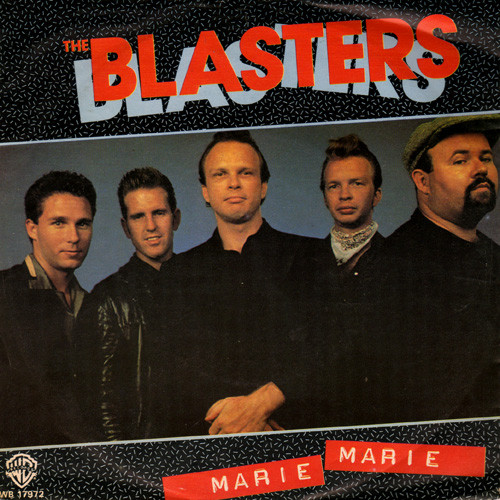
If I’m feeling a need of some old school driving Rock and Roll/Rockabilly…I look no further than the Blasters. No studio embellishments, no gimmicks, no tricks…just rock and roll.
The Blasters never had mainstream success…but popular radio back in the 80s would have been greatly improved by these guys.
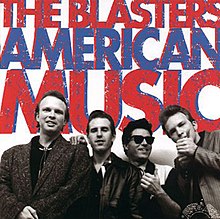
The Blasters are a rock and roll band formed in 1979 in Downey, California, by brothers Phil Alvin (vocals and guitar) and Dave Alvin (guitar), with bass guitarist John Bazz and drummer Bill Bateman.
Marie Marie was released in 1980 on The Blaster’s debut album American Music on the small independent label Rollin’ Rock. It was then re-recorded a year later for The Blaster’s second album The Blasters, released by Slash Records and distributed by Warmer Bros.
The artist Shakin Stevens covered the song in 1980 and his version had chart success. Steven’s version peaked at #19 in the UK, 28 in Ireland, and #18 in Germany in 1981.
The song was written by Dave Alvin…here he is talking about how he wrote it.
Dave Alvin:“About 30 minutes before we left to go to rehearsal, I sat down at our kitchen table and I just wrote the lyrics – just came to me. I was kind of – I remember being a little kid and we were driving down this road up near the Puente Hills. And there was an old Victorian farmhouse and there was a girl sitting on the porch with a guitar. And for whatever reason, that image stuck with me and so I just wrote that. So in like 20 minutes we had [the song].”
Phil Alvin:“I thought Joe Turner’s backup band on Atlantic records – I had these 78s – I thought they were the Blues Blasters. That ends up it was Jimmy McCracklin. I just took the ‘Blues’ off and Joe finally told me, that’s Jimmy McCracklin’s name, but you tell ‘im I gave you permission to steal it.”
Marie Marie
Marie Marie Playing guitar on the back porch I sit in my car While she sings so sad Marie Marie It’s so lonely in these farmlands Please come with me To the bright lights downtown Marie Marie I said, “Hey, pretty girl Don’t you understand I just want to be your loving man” Marie Marie The sun is down in the corn fields The evening is dark And you sing so sad Marie Marie
Marie Marie I got two weeks in back pay There’s gas in my car And your folks say I must go I said, “Hey, pretty girl Don’t you understand I just want to be your loving man” Marie Marie Marie Marie Playing guitar on the back porch I leave in my car While you sing so sad Marie Marie
I knew a few songs from The Smiths in the 80s but I found out more in the last few years from bloggers like Dave from A Sound Day. This intro is just plain epic. The Smiths had difficulty playing this song live. Johnny Marr, had troubles recreating the guitar effect in concert. The tremolo is perfect in this song.
Bassist, Andy Rourke, called the song “the bane of The Smiths’ live career.”
The song was released in 1985 and it peaked at #24 in the UK, #39 in New Zealand, an d #36 in the US Dance Chart… The single was re-released in 1992 and it peaked at #16 in the UK.
This incridble song was the B side to William, It Was Really Nothing. It was on the album Hatful of Hollow. The album was a compilation album released in 1984 and it peaked at #7 in the UK. In 2000, Q magazine placed the album at No. 44 on its list of the “100 Greatest British Albums Ever”.
Guitarist Johnny Marr has described this song as The Smiths’ “most enduring record.” It is supposedly about their singer’s Morrissey’s crippling shyness. It has since become an anthem for the alienated and socially isolated.
Johnny Marr:“I wanted an introduction that was almost as potent as ‘Layla.’ When it plays in a club or a pub, everyone knows what it is.”
Johnny Marr:“I wanted it to be really, really tense and swampy, all at the same time. Layering the slide part was what gave it the real tension. The tremolo effect came from laying down a regular rhythm part with a capo at the 2nd fret on a Les Paul, then sending that out in to the live room to four Fender Twins. John was controlling the tremolo on two of them and I was controlling the other two, and whenever they went out of sync we just had to stop the track and start all over again. It took an eternity.”
From Songfacts
Marr wrote this song, “William, It Was Really Nothing” and “Please, Please, Please, Let Me Get What I Want” over a productive four-day period in June 1984.
The Smiths installed red lightbulbs in their London studio to create the perfect atmosphere to record this song in.
The oscillating guitar has been compared to the one heard in The Rolling Stones’ cover of Bo Diddley’s song, “I Need You Baby (Mona).” This would not be the last time that Marr would steal a riff from the Stones!
This song was named after a question posed in Marjorie Rosen’s feminist film study, Popcorn Venus – one of Morrissey’s favorite books.
Morrissey lifted the line, “The heir to nothing in particular,” from the 19th century novel, Middlemarch, by George Eliot.
Marr told The Guardian newspaper that the producer, John Porter, misjudged this song’s opening lyric: “I remember when Morrissey first sang, ‘I am the son and the heir…’ John Porter went, ‘Ah great, the elements!’ Morrissey continued, ‘…of a shyness that is criminally vulgar.’ I knew he’d hit the bullseye there and then.”
Unlike many British acts, The Smiths hadn’t made any music videos. By 1985, MTV was very popular in America and a key to promoting songs to a young audience, so Jeff Ayeroff, who was in charge of video promotion at Warner Music, parent to The Smith’s US label Sire, commissioned a video. Video directors weren’t easy to come by at the time unless you had a substantial budget, and Ayeroff only wanted to shell out $5,000. He hired Paula Greif, who had been designing album covers, to make the video, giving her the instruction, “Find some performance footage and put a girl in it.”
Greif did just that, using footage from a show in Leicester shot in 1984 by the band’s live sound engineer, Grant Showbiz. She combined this with Super 8 video she shot of a female model dancing as if she was at the show. The band had no involvement.
Morrissey told Creem magazine that he detested the video. “It had absolutely nothing to do with The Smiths,” he said. “Quite naturally we were swamped with letters from very distressed American friends saying, ‘Why on earth did you make this foul video?’ And of course it must be understood that Sire made that video, and we saw the video and we said to Sire, ‘You can’t possibly release this… this degrading video.’ And they said, ‘Well, maybe you shouldn’t really be on our label.’ It was quite disastrous.”
Morrissey and Marr receive 25% of the royalties for the Soho hit, “Hippychick,” which interpolates this song’s guitar riff.
The band Love Spit Love, which included Psychedelic Furs members Richard and Tim Butler, recorded a new version of this song for the 1996 movie The Craft, which is about a coven of strikingly attractive teenage witches. In 1998, this same cover version was used as the theme song to the TV series Charmed, which is about a coven of strikingly attractive teenage witches.
The song also appears in the movies The Wedding Singer (1998) and Closer (2004).
The Russian duo t.A.T.u. of “All The Things She Said” fame covered this song in 2002. Marr slammed the “silly” cover, though Morrissey called it “magnificent.” Their version was used in the 2008 episode of Gossip Girl, “Pret-a-Poor-J.”
This song featured in a commercial for Pepe Jeans in 1988, also appeared in a 1999 commercial for the Nissan Maxima (without lyrics).
This was the B-side to the “William, It Was Really Nothing” single, which was released in 1984. After British radio picked up on the song, it was released as a standalone single in 1985, when it charted at an underwhelming #24, much to the disappointment of Morrissey, who bemoaned to Creem magazine: “It’s hard to believe that ‘How Soon Is Now’ was not a hit. I thought that was the one.” It was reissued for a third time in 1992, when it charted at #16.
The single artwork was a still of the actor, Sean Barrett, from the 1958 film, Dunkirk. Barrett was praying in the image, but because he also looked like he was holding his crotch, the sleeve was deemed to be offensive and was consequently banned in the US.
How Soon Is Now
I am the son And the heir Of a shyness that is criminally vulgar I am the son and heir Of nothing in particular
You shut your mouth How can you say I go about things the wrong way? I am human and I need to be loved Just like everybody else does
I am the son And the heir Of a shyness that is criminally vulgar I am the son and heir Of nothing in particular
You shut your mouth How can you say I go about things the wrong way? I am human and I need to be loved Just like everybody else does
There’s a club if you’d like to go You could meet somebody who really loves you So you go and you stand on your own And you leave on your own And you go home and you cry And you want to die
When you say it’s gonna happen “now” When exactly do you mean? See I’ve already waited too long And all my hope is gone
You shut your mouth How can you say I go about things the wrong way? I am human and I need to be loved Just like everybody else does
This is one of my most watched episodes of the Twilight Zone. I love time travel and this one is wonderful. Kenneth Haigh plays Lt. William Terrance Decker a British soldier who took off in his plane in 1917 and landed in 1959 at an American Air Force base. He’s held captive with the Americans believing his actions to be a prank.
I like how this one has a resolution at the end. You find out how the event affected everyone…including old “Leadbottom.”
The show like most of the other episodes is very well written, acted, and executed. This is a great episode. I could have easily given this a 5 star rating.
Richard Matheson wrote this episodes and he was one of my favorite writers of the show next to Serling. He would write 16 Twilight Episodes and among other things we would write for Star Trek the original series.
Witness Flight Lieutenant William Terrance Decker, Royal Flying Corps, returning from a patrol somewhere over France. The year is 1917. The problem is that the lieutenant is hopelessly lost. Lieutenant Decker will soon discover that a man can be lost not only in terms of maps and miles, but also in time – and time in this case can be measured in eternities.
Summary
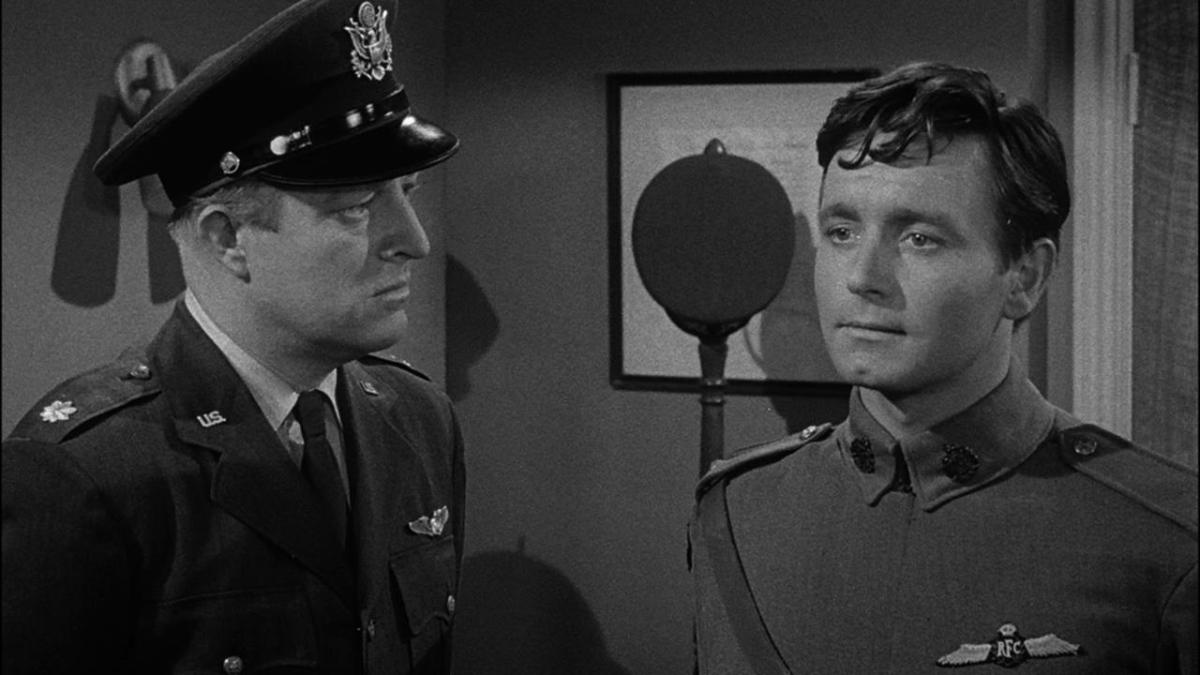
Trying to find his way home after a dogfight in World War I, Royal Flying Corps Flt. Lt. William Terrance Decker lands at a U.S. Air Force base 42 years in the future. No one believes him when he claims to be from 1917, thinking someone is trying to put one over on them. Decker himself admits that before suddenly leaping into the future he was actually flying away from an serial encounter and leaving his friend in a lurch. He also realizes that he may have an opportunity to rectify that situation.
Rod Serling’s Closing Narration:
Dialog from a play, Hamlet to Horatio: There are more things in heaven and earth than are dreamt of in your philosophy. Dialog from a play written long before men took to the sky: There are more things in heaven and earth and in the sky than perhaps can be dreamt of. And somewhere in between heaven, the sky, and the earth, lies the Twilight Zone.
CAST
Kenneth Haigh … Lt. William Terrance Decker Alexander Scourby … Maj. Gen. George Harper Simon Scott … Maj. Wilson Robert Warwick … A.V.M. Alexander ‘Leadbottom’ Mackaye, R.A.F. Harry Raybould … Corporal Jerry Catron … Guard
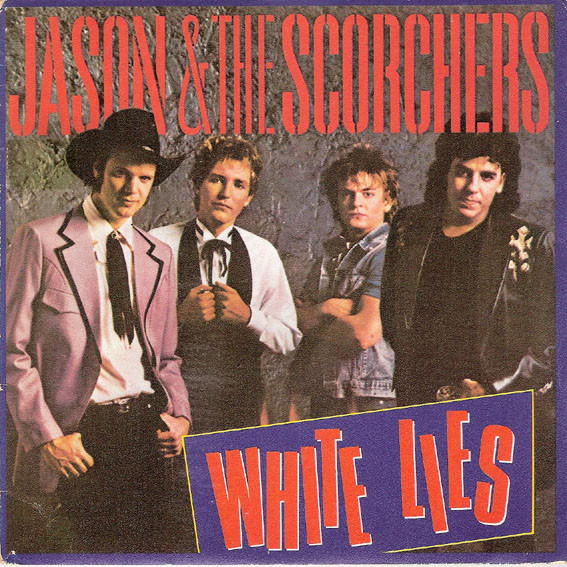
In the mid eighties I had a friend who were into Jason and the Scorchers so I gave them a listen. They were big on college radio and they had many ties with Nashville and played here quite often.
I first heard them do a live version of “The Race Is On”…the old George Jones song and it won me over. They were really a big deal in the southeast in the middle eighties and should have spread more. Their music seemed to have a kinship to the Georgia Satellites but they were a little more country. They did have some MTV play with this song and Golden Ball and Chain.
The band was formed in 1981. They were together through the 80s till the drummer Perry Baggs was diagnosed with diabetes and could not finish a 1990 tour. They have regrouped since then off and on and altogether have released 15 albums with the last one being in 2010. In 2012 Perry Baggs passed away because of diabetes.
They played a mixture between country and rock and fell into the cracks. They seemed too rock for country and too country for rock. Live they were unbeatable.
This song was released in 1985 on the album Lost and Found.
AllMusic’s Mark Deming called Lost & Found“the best record this fine band would ever make.”
Below is the reunited band on the Conan show in 1998…promoting a live album.
White Lies
White lies Every evening when I walk through the door I hear the same old lies that I’ve heard before: You’re going out for the evening, going out with a friend. Do you really want me to believe that again? You’re telling white lies, you’re telling white lies. I can see right through that this disguise. Can’t you tell I can tell when you’re telling white lies? Take these chains and set me free, Release me from this misery. Now, don’t you waste my time with your alibis ’cause your heart can’t hide what I see in your eyes. You’re telling white lies, you’re telling white lies. I can see right through that thin disguise. Can’t you tell I can tell when you’re telling white lies? Every evening when I walk through that door I get the same old lies that I’ve heard before: You’re going out for the evening, going out with a friend. Do you really want me to believe that again? You’re telling white lies, you’re telling whire lies. I can see right through that thin disguise. Can’t you tell I can tell when you’re telling white lies? You’re telling white lies, you’re telling white lies. I can see right through that thin disguise. Can’t you tell I can tell when you’re telling white lies? White lies White lies White lies
This is the second time I’ve published this…it vanished from the Reader.
I watched this last week and also Thursday night again just to make sure I wasn’t marking it too low.
This is the only episode so far I’ve given a lower than 3 stars to. As always the episode has a moral lesson but…it loses something. Everett Sloane plays Franklin Gibbs who is a grouchy man who with his suffering wife Flora wins a trip to Las Vegas. Flora is just excited to be there but Everett will have none of it. He reluctantly plays a slot machine and wins…from there on it’s all down hill for Franklin. He is hooked like a bass on a line. Everett catches the gambling “fever.” I feel the episode is forced. Yes there is an important lesson but it doesn’t happen naturally at all.
Rod is preaching in this episode. Franklin goes from hating everything about gambling and fun to being a grumpy gambler in the span of a few minutes. This one needed more time to build.There is nothing wrong with Everett Sloane’s acting…the change is just too quick.
I do have sympathy with his wife… You can also tell poor Flora never gets out of the house.
The Fever was inspired by Rod Serling’s celebratory trip to Las Vegas when The Twilight Zone was first signed. His wife Carol Serling had good luck at the casino, but he himself kept losing to a slot-machine not unlike the one shown here, and battled it for a good while.
Even though the episode takes place in Las Vegas, it was filmed in California where slots were illegal at the time. The producers had to broker an arrangement with the LAPD to borrow real slot machines that had been confiscated by the police for use in the episode. Said producer Buck Houghton, “There was a policeman on the set at all times, to make damn sure that somebody didn’t take one off and set it up in his uncle’s barber shop.”
This show was written by Rod Serling
Rod Serling’s Opening Narration:
Mr. and Mrs. Franklin Gibbs, three days and two nights all expenses paid at a Las Vegas hotel, won by virtue of Mrs. Gibbs’s knack with a phrase. But unbeknownst to either Mr. and Mrs. Gibbs is the fact that there’s a prize in their package, neither expected nor bargained for. In just a moment, one of them will succumb to an illness worse than any virus can produce. A most inoperative, deadly life-shattering affliction known as the Fever.
Summary
Flora and Franklin Gibbs head off to Las Vegas for a two-night, all-expense-paid vacation won by Flora in a contest. Franklin has agreed to go with her but he is unimpressed with the place, especially the casino looking down on all of those poor fools, as he calls them, playing slot machines. He severely admonishes Flora when she puts a nickel in a slot machine, accusing her of throwing away her money. When a drunken gambler gives him a dollar and insists that he play the machine, Franklin wins and there begins his descent into madness.
Rod Serling’s Closing Narration:
Mr. Franklin Gibbs, visitor to Las Vegas, who lost his money, his reason, and finally his life to an inanimate, metal machine, variously described as a “one-armed bandit”, a “slot machine”, or, in Mr. Franklin Gibbs’ words, a “monster with a will all of its own.” For our purposes, we’ll stick with the latter definition because we’re in the Twilight Zone.
CAST
Rod Serling … Narrator (voice)
Everett Sloane … Franklin Gibbs
Vivi Janiss … Flora Gibbs
William Kendis … Hansen
Lee Millar … Joe
Lee Sands … Floor Manager
Marc Towers … Cashier
Art Lewis … Drunk
Arthur Peterson … Sheriff
This song is one of my favorite songs off the 1969 Tommy album along with the song Christmas. I never thought Tommy was their best album by any means but it is the one that broke them to a mass audience.
While Townshend was backstage at a Door’s concert, a security guard roughly handled a girl who was attempting to touch Jim Morrison, just as Sally was attempting to touch Tommy. There is a video of the real “Sally Simpson” back stage and Jim Morrison is trying to help her. I have the video at the bottom. I never knew a video existed of this until recently.
The song was never released as a single but is a great section of the story of Tommy. In Baba O’Riley there is a lyric that mentions Sally or a different Sally. “Sally, take my hand we’ll travel south ‘cross land”…could it be? I doubt it but you never know.
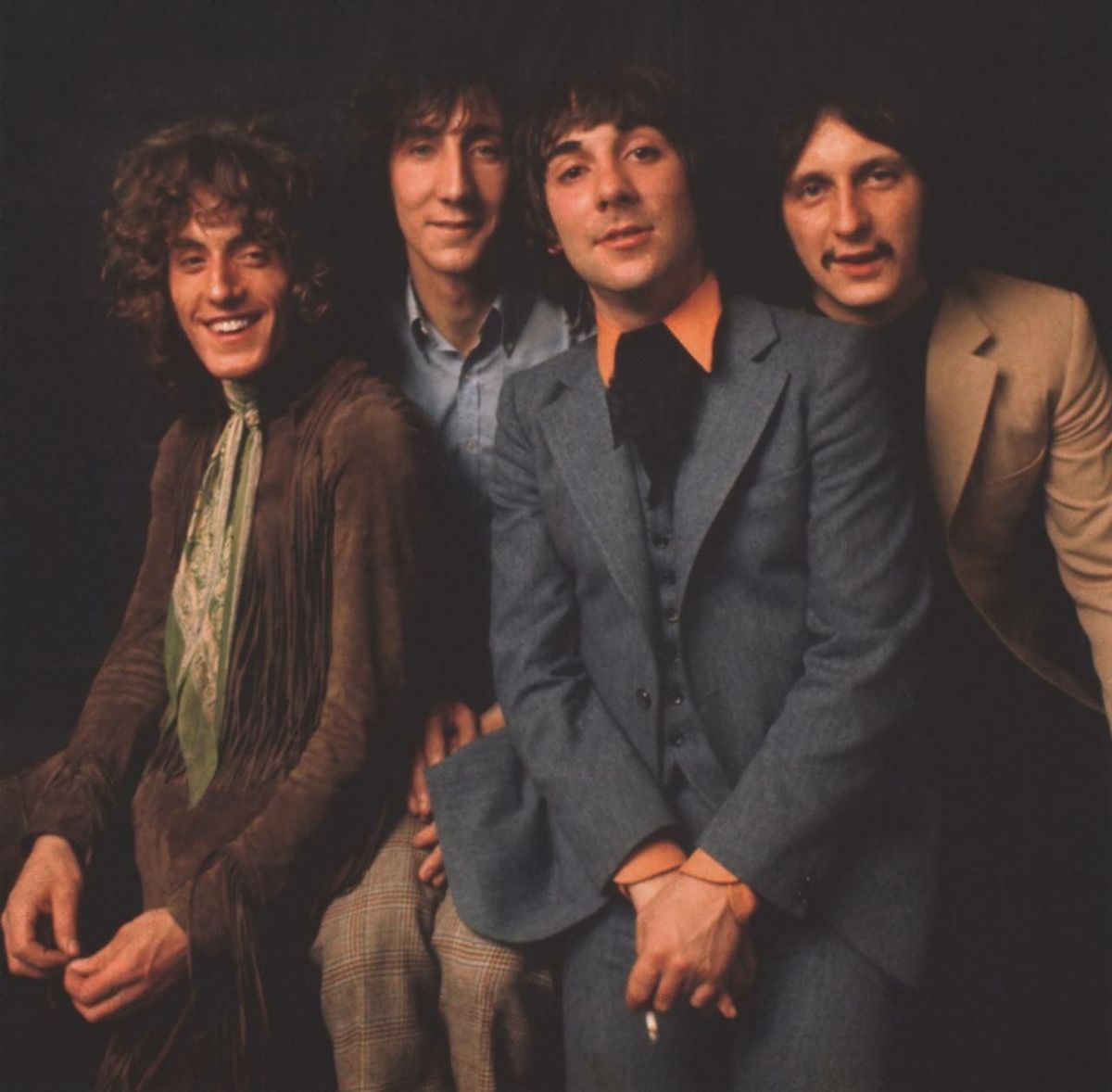
The Who during this time were touring and including opera houses. They were as tight as a band can be…it was soon after that they released what I think is the greatest live album ever…Live At Leeds.
Here is video of Jim Morrison tending to “Sally” backstage. Yep, real footage of the girl that inspired Pete to write Sally Simpson.
Sally Simpson
Outside the house Mr. Simpson announced that Sally couldn’t go to the meeting. He went on cleaning his blue Rolls Royce and she ran inside weeping. She got to her room and tears splashed the picture of the new Messiah. She picked up a book of her fathers life and threw it on the fire!
She knew from the start Deep down in her heart That she and Tommy were worlds apart, But her Mother said never mind your part… Is to be what you’ll be.
The theme of the sermon was come unto me, Love will find a way, So Sally decided to ignore her dad, and sneak out anyway! She spent all afternoon getting ready, and decided she’d try to touch him, Maybe he’d see that she was free and talk to her this Sunday.
She knew from the start Deep down in her heart That she and Tommy were worlds apart, But her Mother said never mind your part… Is to be what you’ll be.
She arrived at six and the place was swinging to gospel music by nine. Group after group appeared on the stage and Sally just sat there crying. She bit her nails looking pretty as a picture right in the very front row And then a DJ wearing a blazer with a badge ran on and said ‘here we go!’
The crowd went crazy As Tommy hit the stage! Little Sally got lost as the police bossed The crowd back in a rage!
But soon the atmosphere was cooler as Tommy gave a lesson. Sally just had to let him know she loved him and leapt up on the rostrum! She ran cross stage to the spotlit figure and touched him on the face Tommy whirled around as a uniformed man, threw her of the stage.
She knew from the start Deep down in her heart That she and Tommy were worlds apart, But her Mother said never mind your part… Is to be what you’ll be. Her cheek hit a chair and blood trickled down, mingling with her tears, Tommy carried on preaching and his voice filled Sally’s ear She caught his eye she had to try but couldn’t see through the lights Her face was gashed and the ambulance men had to carry her out that night.
The crowd went crazy As Tommy left the stage! Little Sally was lost for the price of a touch And a gash across her face! OOoooh.
Sixteen stitches put her right and her Dad said ‘don’t say I didn’t warn yer’. Sally got married to a rock musician she met in California Tommy always talks about the day the disciples all went wild! Sally still carries a scar on her cheek to remind her of his smile.
She knew from the start Deep down in her heart That she and Tommy were worlds apart, But her Mother said never mind your part… Is to be what you’ll be.
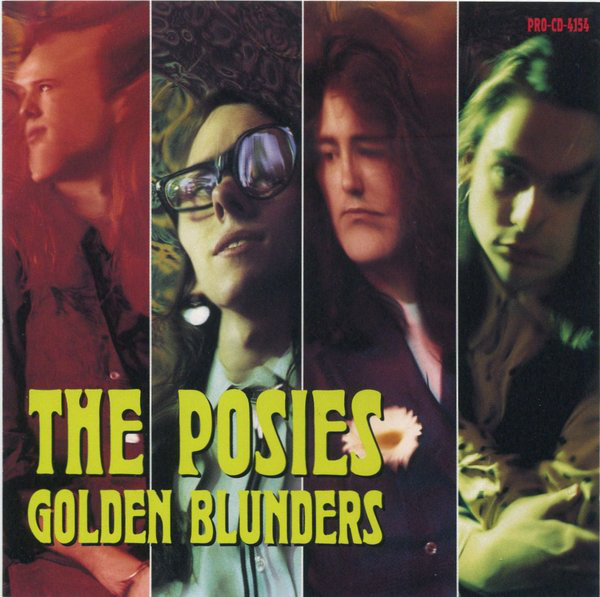
Ken Stringfellow and Jon Auer started to write songs together while in High School in Bellingham, Washington in 1986. They were influenced by The Hollies, Hüsker Dü, XTC, Elvis Costello, Squeeze, and Big Star.
They released an album Failure on cassette and vinyl near the end of 1988 on local indie label PopLlama. Several major labels noticed the band early on and in late 1989 they signed to new Geffen Records imprint DGC Records. The released an album Dear 23 in 1990 and this was their first single. The song peaked at #17 in the US Modern Rock Tracks in 1990.
Ringo Starr would cover Golden Blunders on his 1992 solo album Time Takes Time.
There is no surprise after listening to the Posies that guitarists Ken Stringfellow and Jon Auer would join Big Star’s Alex Chilton and drummer Jody Stephens to record and tour as Big Star in the 90s and up until Alex’s death in 2010.
Ken and Jon’s harmonies, writing, and playing are top notch. The 80’s and 90’s popular radio left a lot to be desired, at least to me, they could have really used these guys…I may have liked that era much better hearing more of this.
Jon Auer on Golden Blunders: “It’s about two kids in high school who mess up the rest of their lives,” “There’s the implication of a teenage pregnancy but there’s not any amazing message here.”
Golden Blunders
Golden blunders come in pairs, they’re very unaware What they know is what they’ve seen Education wasn’t fun, but now that school is done Higher learning’s just begun (Chorus) You’re gonna watch what you say for a long time You’re gonna suffer the guilt forever You’re gonna get in the way at the wrong time You’re gonna mess up things you thought you would never Disappointment breeds contempt, it make you feel inept Never thought you’d feel alone (at home) His and hers forever more, throw your freedom out of the door Before you find out what it’s for (Chorus) Four weeks seemed like a long time then – but nine months is longer now But even if you never speak again – you’ve already made the wedding vow (Chorus) Honeymoons will never start, bonds will blow apart Just as fast as they were made Men and women please beware : don’t pretend you care Nothing lasts when nothing’s there (Repeat Chorus)
Back in the 80s I bought some compilation Byrds tape with this song on it. I had never heard it before but I liked it right away. It does borrow from 50’s rock and roll just a little bit just enough to give it flavor.
Tiffany Queen was written and recorded live in the studio and it is a fun song. The song was on the album Farther Along and was released in 1971. The album peaked at #152 in the Billboard Al bum Charts and #41 in Canada.
Farther Along was not their best album…their next album would be the reunion of the original members in 1973. That album was called Byrds and it peaked at #20 in the Billboard Album Charts, #19 in Canada, and #31 in the UK.
Roger McGuinn:“We wouldn’t really write at a session, because studio time was so expensive. Usually the writing would take place at someone’s house, either my house or the other guy’s house. We’d sit down at a table and chairs with a legal pad and start working on it. And you know, it definitely is work, it’s a lot more perspiration than inspiration! Once in a while you get a tune that’s pretty fully formed, like you wake up having heard it in a dream or something, but that’s only happened once in a while to me. An example of that would be the song Tiffany Queen: I dreamed that song and went in and recorded it the next day. I can’t think of any others.”
Tiffany Queen
Happiness hit me on the first day that we met She was sitting in my kitchen with a face I can’t forget She was looking in my direction and calling with her eyes I was trying to do and interview and telling them all lies Last year in the summer with a tiffany lamp over her head
They asked me what I thought about the 50’s rock n roll Then they got into a limousine and fell into a hole I moved into the kitchen and I quickly fell in love The warden came along and asked me what I was thinking of Last year in the summer with a tiffany lamp over her head
Well I grabbed her by the hand and with a few things I could The warden said your leaving you better leave for good I made it to Tasmania to buy a devil dog We met a handsome prince who turned into a frog Last year in the summer with a tiffany lamp over her head
Now we’re living out in Malibu the ocean by our side Laying in the sunshine drifting with the tide Happiness hit me on the first day that we met She was sitting in my kitchen with a face I can’t forget Last year in the summer with a tiffany lamp over her head Over her head
There are episodes that are hard for me to rate but some…like this one…is really easy…it’s a 5 star classic without a second thought.
A beautiful young lady is traveling across the country and has a blow out. After she gets the tire fixed she is back on the road but keeps seeing this hitch hiker everywhere she goes. The lady (Nan Adams) is perfectly played by Inger Stevens. This has everything you would want out of a Twilight Zone. Great suspense, a little horror, and a Twilight Zone twist.
Lucille Fletcher got the idea for this story in 1940 when she and her husband Bernard Herrmann were driving cross-country from New York to California. On the first day of the trip they saw the same odd-looking man on the side of the road it two different locations. She found the occurrence rather eerie and thought it might be a good concept for a story.
In the original story, the character of Nan was a male, Ronald. Rod Serling believed that a female in the situation would be reacted to with more feeling by audiences. She was named after one of his daughters.
This show was written by Rod Serling and Lucille Fletcher
Rod Serling’s Opening Narration:
Her name is Nan Adams. She’s twenty-seven years old. Her occupation: buyer at a New York department store. At present on vacation, driving cross-country to Los Angeles, California from Manhattan…Minor incident on Highway 11 in Pennsylvania. Perhaps, to be filed away under “accidents you walk away from.” But from this moment on, Nan Adams’ companion on a trip to California will be terror. Her route: fear. Her destination: quite unknown.
Summary
Nan Adams is driving across country from Manhattan to Los Angeles. Apart from a blown tire, the trip has been more or less uneventful. That is until she begins to see the same man, over and over again, hitchhiking along the highway. No matter how far she goes or how far she drives, the hitchhiker always seems to be ahead of her. She also seems to be the only person who can see him. When Nan decides to call home, all is revealed.
Rod Serling’s Closing Narration:
Nan Adams, age twenty-seven. She was driving to California; to Los Angeles. She didn’t make it. There was a detour… through the Twilight Zone.
CAST
Inger Stevens … Nan Adams
Adam Williams … Sailor
Lew Gallo … Mechanic
Leonard Strong … The Hitch-Hiker
Russ Bender … Counterman
George Mitchell … Gas Station Man
Their Satanic Majesties Request…the more I listen to this album the more I like it. It wasn’t up to their normal standards but it is nice to know the St0nes stretched themselves and tried something different. They would later dip into reggae and disco but this was an album worth of change that never happened again.
This psychedelic period was coming off of one of their best stretches which I think they produced some of their best music with songs like Ruby Tuesday.
Mick Jagger got the idea for this while in jail on drug charges from the famous Redland’s bust.
On this track, their lead guitarist, Brian Jones, played a Mellotron, an early synthesizer. Jones played a number of unusual instruments in his time with the band, which lasted from their founding in 1962 until 1969, when he was fired after a number of clashes with the rest of the Stones.
Brian Jones has been over rated and underrated but his subtle touch on songs was missed.
Just weeks after leaving the band… Jones drowned in his swimming pool.
After Brian was gone it was noticeable in the Stones. He was a great utility guy who could play about any instrument. Mick Taylor replaced him and that lead to the Stones golden period. In my opinion, Taylor was the best guitar player the Stones ever had in the band. He was a huge part of their sound. When he left there was a hole in the sound that never came back.
From Songfacts
Space exploration was big at the time, and was probably an influence on this song. Pink Floyd was making music with a similar sound.
The psychedelic sound reflected the times. It was the summer of love (1967).
The Stones played this on their Steel Wheels tour in 1989. A show in Atlantic City was broadcast with this song shot in 3D, which viewers could see using those goofy glasses.
Various echo effects and drum sounds were added in overdubbing.
The ’90s psychedelic group The Brian Jonestown Massacre recorded a tribute to the Stones’ psychedelic period (and this song) called Their Satanic Majesties’ Second Request.
2000 Light Years From Home
Sun turnin’ ’round with graceful motion We’re setting off with soft explosion Bound for a star with fiery oceans It’s so very lonely You’re a hundred light years from home
Freezing red deserts turn to dark Energy here in every part It’s so very lonely You’re six hundred light years from home
It’s so very lonely You’re a thousand light years from home It’s so very lonely You’re a thousand light years from home
Bell flight fourteen you now can land See you on Aldebaran Safe on the green desert sand It’s so very lonely You’re 2000 light years from home It’s so very lonely You’re 2000 light years from home
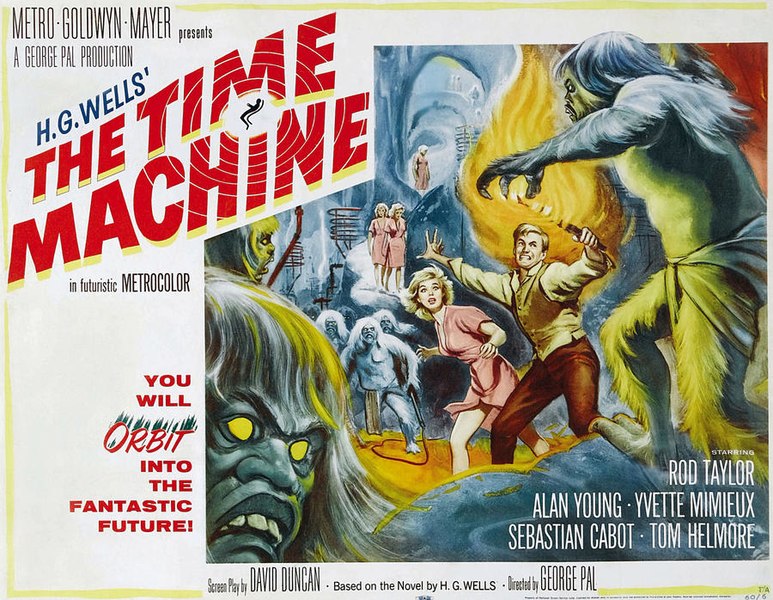
I have always liked Time Travel movies and this one is one of the best I’ve watched. The movie was based on the H.G. Wells book The Time Machine published in 1895. The way they present it is believable.
I somehow missed this movie until 2005. It stars Rod Taylor as George Wells, Alan Young as David Filby/James Filby , and the beautiful Yvette Mimieux as Weena and Alan Young. It also has Sebastian Cabot as Dr. Philip Hillyer.
Rod Taylor portrays George Wells, and he builds a Time Machine. Other than the Tardis (Doctor Who) it’s the coolest time machine I’ve seen. He builds a miniature one and while his friends watch, he turns the small machine on and it disappears into the future. His friends don’t really believe it. They question what good it will do if it really works? Who would buy it? George gets aggravated and takes off. I can’t say I blame him.
This time machine doesn’t physically move but just occupies the same space in the time.
He takes the machine for a test ride into the future. They had no CGI but they get across time travel fine. To show time passing they set up a mannequin across the street to show different clothing styles passing by with the time which is brilliant. Sometimes subtle ways are better than obvious ones.
George’s journey began on December 31, 1899 and he goes to October 12, 802,701 with some stops on the way. He witnesses some of the first and second World War and nuclear destruction. When he gets to 802,701 the adventure begins.
He ends up in a future society where all the people are young. They do nothing all day but play and eat…hmmm millennials? Just kidding…George shows this society there is a price they pay for playing all day. The young people there have no clue on what is going on. No laws, curiosity, and no anxiety for the future. They are sheep and they don’t even know or seem to care.
My favorite part of the movie is the creatures called the Morlocks with glowing eyes that live underground because they could not stand light. They provide the clueless land dwellers with food for obvious reasons. This is a truly classic movie. Don’t’ bother with the remake in 2002…get this version.
Alan Young does a great job as David Filby…George’s best friend and later David’s son…
My son watched this when he was 8 and feared the Morlocks but kept watching. He still watches it now. It was filmed in 1960 and the film won an Oscar for Best Effects, Special Effects. Does it measure up to today’s special effects? No, but it gets the story across so if you like classic sci-fi you might like this one. I’ve seen it many times and never got tired of it.







 PowerPop... An Eclectic Collection of Pop Culture