Tom Petty – American Girl

She couldn’t help thinkin’ that there 
Was a little more to life 
Somewhere else 

This song builds tension throughout using Mike Campbell’s guitar and Tom’s urgent voice. As you all know, I love dynamics in songs. That is why I like Bruce Springsteen and others. They know how to build it in songs. 

This song and The Waiting are the two songs that really won me over to Tom Petty and The Heartbreakers. The ringing 12-string that introduces it with the Roger McGuinn-like vocals…it’s hard not to like. The story that Roger McGuinn tells is that the first time he heard the song, he thought it was an old Byrds song he had recorded and forgotten about. Roger liked it so much that he covered it. 

Tom Petty wrote this song in 1976 while living in an apartment near the University of Florida in Gainesville. Despite now being a classic song, it wasn’t a hit here on release. The song got a boost in the early nineties. In Silence of the Lambs, it’s played in the scene where the character Catherine Martin is singing along in her car before being kidnapped.

The song peaked at #40 in the UK and #68 in the Cash Box Top 100. Even though Petty and his band were from the US, this caught on in England long before it got any attention in America. As a result, Petty started his first big tour in the UK, where this was a bigger hit.

One urban legend is that the song is about a University of Florida student who committed suicide by jumping off the Beaty Towers dormitory. Tom Petty denied that on separate occasions. 

Mike Campbell: “We cut that track on the 4th of July. I don’t know if that had anything to do with Tom writing it about an American girl.”

Tom Petty: “‘American Girl’ doesn’t really sound like The Byrds; it evokes The Byrds. People are usually influenced by more than one thing, so your music becomes a mixture. There’s nothing really new, but always new ways to combine things. We tried to play as good as whoever we admired but never could.”

Tom Petty: “I wrote that in a little apartment I had in Encino. It was right next to the freeway and the cars sometimes sounded like waves from the ocean, which is why there’s the line about the waves crashing on the beach. The words just came tumbling out very quickly – and it was the start of writing about people who are longing for something else in life, something better than they have.”

Here is Roger live in 1977…Roger McGuinn doing Tom Petty doing Roger McGuinn…cool!

American Girl

Well she was an American girl 
Raised on promises 
She couldn’t help thinkin’ that there 
Was a little more to life 
Somewhere else 
After all it was a great big world 
With lots of places to run to 
Yeah, and if she had to die 
Tryin’ she had one little promise 
She was gonna keep 

Oh yeah, all right 
Take it easy baby 
Make it last all night 
She was an American girl 

It was kind of cold that night 
She stood alone on her balcony 
She could the cars roll by 
Out on 441 
Like waves crashin’ in the beach 
And for one desperate moment there 
He crept back in her memory 
God it’s so painful 
Something that’s so close 
And still so far out of reach 

Oh yeah, all right 
Take it easy baby 
Make it last all night 
She was an American girl
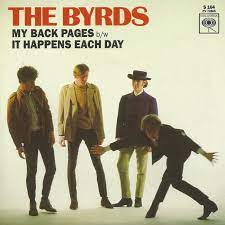
Byrds – My Back Pages

I was so much older then, I’m younger than that now

This is my favorite song by the Byrds. I like the Byrds’ arrangement of this great Bob Dylan song. Roger McGuinn’s voice plus Rickenbacker is always a winning combination. Dylan recorded his version in 1964 on his Another Side of Bob Dylan album. I fell for the song because of the line, I was so much older then, I’m younger than that now. Just a great phrase from a catalog that is full of them. 

On the countless Dylan songs that are covered, I will usually like Dylan’s version better…on this one, I prefer the Byrds. The song peaked at #30 on the Billboard 100 in 1967. It’s one of those songs that I so wish I could have written. Even the title is cool because “My Back Pages” is not uttered in the song. 

Bob Dylan helped the Byrds a lot with Mr. Tambourine Man and other songs. The Byrds, in turn, helped widen Bob’s popularity to the new rock audience that was developing, which may not have heard some of these songs as much. 

In 1992 the Bob Dylan 30th Anniversary Concert happened, and my cousin had the complete concert on VHS. He had a satellite, so I didn’t have to wait for it to be released almost a year later. I’ll never forget this song being played with Roger McGuinn sharing the stage with Dylan, Tom Petty, George Harrison, Eric Clapton, and Neil Young.

Roger McGuinn: “I don’t try to interpret what Bob meant when he wrote the song. He doesn’t do that, and to do that, you spoil it for people who have a different meaning of the song.”

The song being played at Bob Dylan’s 30th Anniversary concert. Bob Dylan, Roger McGuinn, Neil Young, George Harrison, Eric Clapton, and a bunch more. 


My Back Pages

Crimson flames tied through my ears
Rollin’ high and mighty traps
Countless with fire on flaming roads
Using ideas as my maps
We’ll meet on edges, soon, said I
Proud ‘neath heated brow

Ah, but I was so much older then
I’m younger than that now
Half-wracked prejudice leaped forth
Rip down all hate, I screamed
Lies that life is black and white
Spoke from my skull I dreamed
Romantic facts of musketeers
Foundationed deep, somehow
Ah, but I was so much older then
I’m younger than that now

In a soldier’s stance, I aimed my hand
At the mongrel dogs who teach
Fearing not that I’d become my enemy
In the instant that I preach
Sisters fled by confusion boats
Mutiny from stern to bow
Ah, but I was so much older then
I’m younger than that now

Ah, but I was so much older then
I’m younger than that now

My guard stood hard when abstract threats
Too noble to neglect
Deceived me into thinking
I had something to protect
Good and bad, I define these terms
Quite clear, no doubt, somehow
Ah, but I was so much older then
I’m younger than that now

Byrds – Drug Store Truck Driving Man

This song is on the Dr. Byrds & Mr. Hyde album by the Byrds. It’s a really good song and the song’s origin is interesting. It was written in response to an on-air argument with Ralph Emery, who was an all-night country DJ on a country radio station at the time. It was written by Roger McGuinn and Gram Parsons. The song was an open letter to Emery.

Before I get into the song which I really like…I want everyone to know I’m not downing Emery because of this. I grew up with Ralph Emery on television in the 1970s. I was never a fan because his show wasn’t in my age group. To be fair to Ralph…he did invite Roger McGuinn on his show in 1985 when Vern Gosdin covered Turn, Turn, Turn and Roger played guitar. He was on there more than once so it was all in the past by that time. Times had changed so much by the 80s…rock and country went together by then but in the 60s Buck Owens touched on it but not many people were doing both…the Byrds with Gram Parsons were pioneers in a way with Sweetheart Of The Rodeo.

In 1968 The Byrds were in Nashville promoting their new country album Sweetheart of the Rodeo and got a cool reception at the Grand Ole Opry. They got into an argument with Emery on air when he said that “You Ain’t Going Nowhere” wasn’t country and then proceeded to call them long-haired hippies and would not play the record. He also didn’t understand what the song meant and Roger told him that Dylan wrote it…well that didn’t help!

Ralph Emery would not budge…It was the 1960s in a very fifties Nashville and Ralph could not get past the hair although they didn’t have excessively long hair. It would open up a bit in the early seventies with Outlaw country music by Willie Nelson, Kris Kristofferson, and Waylon Jennings. That movement would soon join traditionalists and the outlaw crowd together. They Byrds helped, in their own way, to make that happen.

The lyrics were about the narrow-mindedness of then certain segments of the country music industry. Lines like “He’s the all-American boy” and “he don’t like the way we play” reflect the hate that McGuinn and Parsons felt from some in Nashville. The title, “Drug Store Truck Drivin’ Man,” is a dig at Emery, suggesting that he was more of a conventional figure who could not appreciate or understand the Byrds’ approach to country music. But I’m glad it happened because we got a good country-rock song out of it.

Chris Hillman: “There was the funny story with Ralph Emery, the DJ in Nashville, where he had The Gilded Palace Of Sin tacked on the wall outside of his office, and with a big red pen it said, ‘This is not country music.’ Roger and Gram had gone to do an interview with him when we were all still with the Byrds, and Ralph was such a jerk to them then that they wrote that song “Drug Store Truck Driving Man”. A classic! I wish I’d written a part of that. But later, whenever I’d go on his show with the Desert Rose Band, Ralph would ask, “Did you write that song?” Finally, I had to say, “No, but I wish I had!” So when Roger was on later, Ralph would say, “Well, how is Gram doing?” and Roger would answer, “He’s still dead.” McGuinn was pretty darned quick in those situations!” 

I’m adding a live version and a hell of a story by Jason and the Scorchers…on how they played this song and it found a spot on Ralph Emery’s TV show in the early 80s.

Ralph Emery when he invited McGuinn on his show in 1985

Drug Store Truck Drivin’ Man

He’s a drug store truck-drivin’ man
He’s the head of the Ku Klux Klan
When summer rolls around
He’ll be lucky if he’s not in town

Well, he’s got him a house on the hill
He plays country records till you’ve had your fill
He’s a fireman’s friend he’s an all-night DJ
But he sure does think different from the records he plays

He’s a drug store truck-drivin’ man
He’s the head of the Ku Klux Klan
When summer rolls around
He’ll be lucky if he’s not in town

Well, he don’t like the young folks I know
He told me one night on his radio show
He’s got him a medal he won in the War
It weighs five-hundred pounds and it sleeps on his floor

He’s a drug store truck drivin’ man
He’s the head of the Ku Klux Klan
When summer rolls around
He’ll be lucky if he’s not in town

He’s been like a father to me
He’s the only DJ you can hear after three
I’m an all-night musician in a rock and roll band
And why he don’t like me I can’t understand

He’s a drug store truck-drivin’ man
He’s the head of the Ku Klux Klan
When summer rolls around
He’ll be lucky if he’s not in town

He’ll be lucky if he’s not in town

This one’s for you, Ralph

Chris Hillman – She Don’t Care About Time

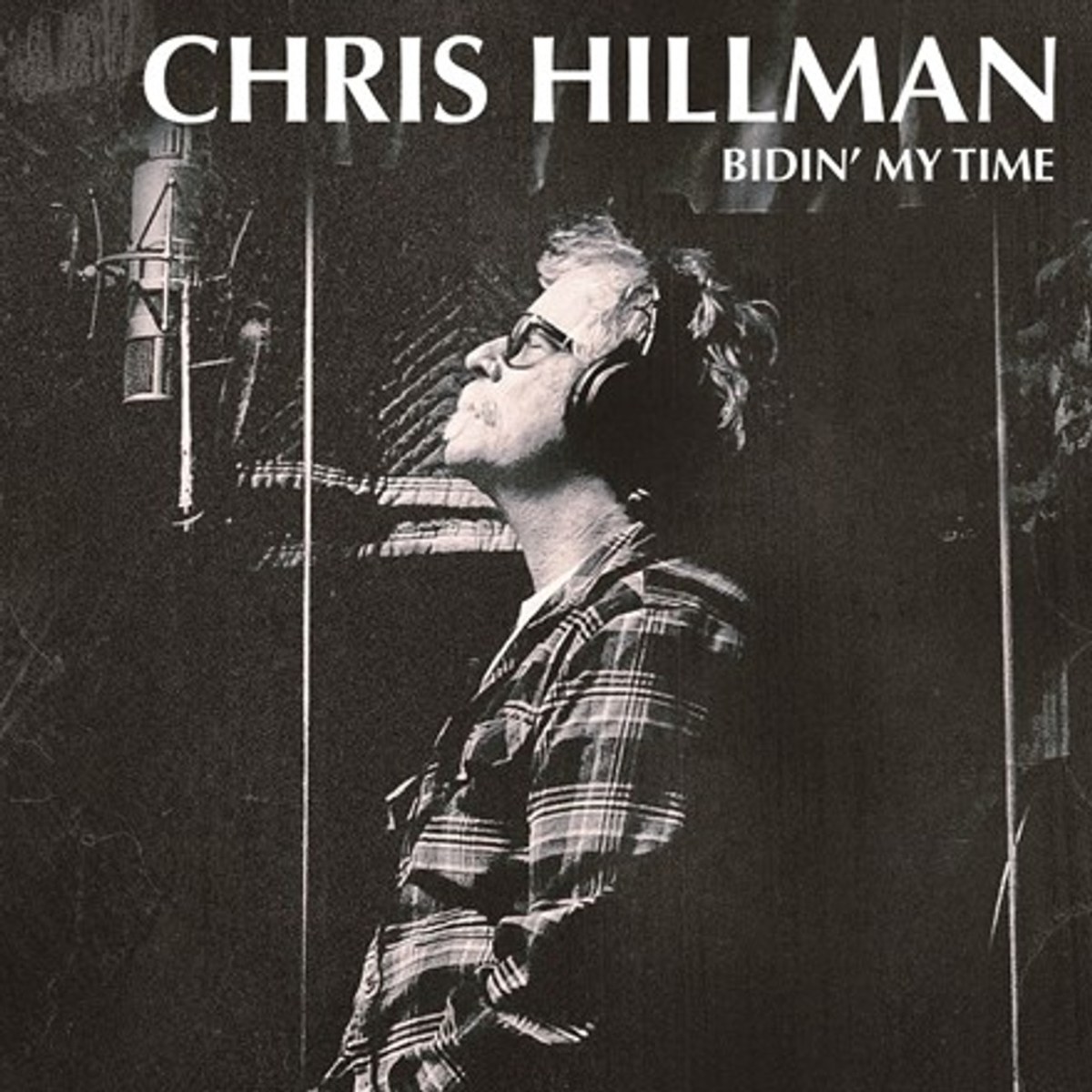
This song had the perfect producer…Tom Petty. In 2017 this album (Bidn’ My Time) by Chris Hillman was released. CB sent me a link to this song and I liked the jangle and the song. The next day I listened to it some more and it suddenly dawned on me…I’ve heard this song before.

After I looked at the title again I knew I’d heard it. It was a Byrd song written by Gene Clark. It was a B-side on the single with Turn, Turn, Turn. Clark was an excellent songwriter and his songs included Eight Miles High and I’ll Feel A Whole Lot Better.

Chris Hillman joined the Byrds as the bass guitarist without ever having played the instrument. With his background in country and folk music, he picked up playing the bass with no problem. He brought country music to the Byrds. After David Crosby quit…Gram Parsons was recruited and Hillman found another member to share his love of country music with. They made the Sweetheart of the Rodeo album in 1968 which still serves as inspiration for musicians.

Parsons quit the Bryds after that album and Hillman brought in the great guitarist Clarence White to replace Gram. Soon after that Hillman quit and formed The Flying Burrito Brothers with Gram Parsons.

In the 1980s, Hillman formed The Desert Rose Band which had some success in the Country charts.

Hillman thought he was done making albums but Tom Petty and Desert Rose Band remember Herb Pedersen had other ideas. Pedersen convinced Hillman to make one more album and Tom Petty wanted to produce it. The album is very rootsy and also contains the Byrds sound. A couple of Byrds help with out with the album…David Crosby and Roger McGuinn. Petty brought Heartbreakers Benmont Tench, Steve Ferrone, and Mike Campbell.

I listened to this album and it’s a combination of jangle, bluegrass, country rock, and folk. It’s a nice melding of all of these styles.

I’m going to add this video which is a very short story about the album.

She Don’t Care About Time

Hallways and staircases everyday to climb
To go up to my white walled room out on the end of time
Where I can be with my love for she is all that is mine
And she’ll always be there, my love don’t care about time

I laugh with her, cry with her, hold her close she is mine
The way she tells me of her love and never is she trying
She don’t have to be assured of many good things to find
And she’ll always be there, my love don’t care about time

Her eyes are dark and deep with love, her hair hangs long and fine
She walks with ease and all she sees is never wrong or right
And with her arms around me tight I see her all in my mind
And she’ll always be there my love don’t care about time

Tom Petty – The Waiting ….Power Pop Friday #3000!

Well everyone…this is powerpop’s 3000th post! I want to thank all of you for making this happen. There was a while when I started that I didn’t know if I would go on because as we all know…it’s sometimes hard to get started and known in word press. The big break for me came when Hanspostcard republished one of my posts (the 1967 movie Bedazzled) and I started to get a few readers and that grew. The reason I keep doing it is because of the comments…meeting like-minded people is the reason this is still fun so thanks again.

Fireweorks

In the early 1990s, my cousin Mark and I shared an apartment in Nashville. On our answering service we would leave funny or what we thought were funny messages. I broke out the guitar and we did the chorus of this song as a message. It went over well but we got tired of hearing it every time someone called.

If I had to rank Tom Petty songs in my personal list. This song would come right behind American Girls as far as my favorite Tom Petty songs. I’m a huge Tom Petty fan and one of the reasons besides the music is this. At the time, Tom Petty was so popular his record label wanted to charge $1 more for the LP than the standard $8.98, but they backed down after he considered naming the album $8.98. Tom seemed to be a good man.

I bought the single when it came out in 1981 and then the album Hard Promises. This song has a Byrds feel and is reminiscent of the mid-sixties.  It peaked at #19 on the Billboard 100, #6 in Canada, and #27 in New Zealand and it didn’t chart in the UK…the UK missed the boat on this one.

Tom seemed to always channel his inner Roger McGuinn. American Girl is a prime example. It sounds so much like Roger McGuinn that the first time Roger heard the song he asked his manager “when did I record this?” McGuinn met Petty and they got along great…McGuinn invited Petty to open up for him on his 1976 tour.

In the 1980s I watched the Gary Shandling Show faithfully and I remember that Tom Petty played this song on one episode.

Tom Petty: “I remember writing that one very well. That was a hard one. Went on for weeks.  I got the chorus right away. And I had that guitar riff, that really good lick. Couldn’t get anything else. (Softly) I had a really hard time. And I knew it was good, and it just went on endlessly. It was one of those where I really worked on it until I was too tired to go any longer. And I’d get right up and start again and spend the whole day to the point where other people in the house would complain. “You’ve been playing that lick for hours.” Very hard.

It’s one that has really survived over the years because it’s so adaptable to so many situations. I even think of that line from time to time. Because I really don’t like waiting. I’m peculiar in that I’m on time, most of the time. I’m very punctual.

Roger [McGuinn] swears to me that he told me that line. And maybe he did, but I’m not sure that’s where I got it from. I remember getting it from something I read, that Janis Joplin said, “I love being onstage, it’s just the waiting.”

Roger McGuinn on hearing Tom Petty for the first time:

“I said, ‘when did I record that?” I was kidding, but the vocal style sounded just like me and then there was the Rickenbacker guitar, which I used. The vocal inflections were just like mine. I was told that a guy from Florida named Tom Petty wrote and sings the song, and I said that I had to meet him. I liked him enough to invite Petty and the Heartbreakers to open for us in 1976. When I covered ‘American Girl,’ I changed a word or two and Tom asked me if it was because the vocal was too high and I said ‘yes.’ I had fun with Tom’s song.”

Tom on the Gary Shandling show. I remember this episode. 

Again thank you to everyone!

The Waiting

Oh baby, don’t it feel like heaven right now?Don’t it feel like something from a dream?Yeah, I’ve never known nothing quite like thisDon’t it feel like tonight might never be again?Baby, we know better than to try and pretend

Honey, no one could’ve ever told me ’bout thisI said yeah, yeah (yeah, yeah)Yeah, yeah, yeah, yeah

The waiting is the hardest partEvery day you see one more cardYou take it on faith, you take it to the heartThe waiting is the hardest part

Well, yeah, I might have chased a couple women aroundAll it ever got me was downYeah, then there were those that made me feel goodBut never as good as I feel right nowBaby, you’re the only one that’s ever known how

To make me wanna live like I wanna live nowI said yeah, yeah (yeah, yeah)Yeah, yeah, yeah, yeah

The waiting is the hardest partEvery day you get one more yardYou take it on faith, you take it to the heartThe waiting is the hardest part

Oh, don’t let it kill you baby, don’t let it get to youDon’t let it kill you baby, don’t let it get to youI’ll be your bleeding heart, I’ll be your crying foolDon’t let this go too far, don’t let it get to you

Yeah, yeah (yeah, yeah)Yeah, yeah, yeah, yeah

The waiting is the hardest partEvery day you get one more yardYou take it on faith, you take it to the heartThe waiting is the hardest part

Yeah, the waiting is the hardest part

Woah-ohIt’s the hardest partWoah-ohIt’s the hardest part

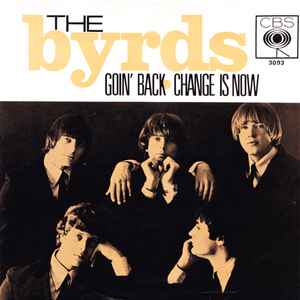
Byrds – Goin’ Back

Before I start…I’ll be off and on this weekend because I’m traveling to Memphis to see Big E’s house…Graceland… for the 3rd time.

Power pop can be traced back to George Harrison and Roger McGuinn’s 12-string Rickenbackers. This was right before the Byrds dived into country rock with Graham Parsons and made the Sweethearts of the Rodeo album.

Byrds - The Notorious Byrd Brothers

The Notorious Byrd Brothers cover controversy. It has been said that McGuinn or the other Byrds wanted to insult the fired David Crosby by placing a horse in the stall beside them in his place. McGuinn had the best response to this… “If we had intended to do that, we would have turned the horse around.”

The album (The Notorious Byrd Brothers) marked Gene Clark’s brief return to the band. He had left The Byrds the year before and made a solo album that was critically praised but failed commercially. His supposedly fear of flying had a huge impact. After the album was released he toured with the band briefly but after an anxiety attack in Minneapolis, he quit.

David Crosby was fired by McGuinn and Hillman before the album was finished. He was upset at the rest of the band for finishing one of his songs and using it among many things. Crosby was not in favor of doing this song written by “two Brill Building writers” and they should only record their original music. They bickered back and forth and Crosby was fired. Crosby went on to fame in Crosby, Stills, and Nash. Parsons and Hillman would, later on, form the Flying Burrito Brothers. 

Crosby also fought with drummer Michael Clarke and Clarke soon quit before it was finished. This left McGuinn and Hillman and that is when they got Gene Clark to take Crosby’s place which lasted only 3 weeks.

Clarence White, the future Byrd the following year, helped out on the album with pedal steel guitar. Goin’ Back was a Goffin and King song. The first version/hit was by Dusty Springfield and it peaked at #10 in the UK in 1966.

The single was released a few months before The Notorious Byrd Brothers. Goin’ Back peaked at #89 on the Billboard 100 in 1967.

Gene Clark:  “The fear of flying wasn’t why I quit the group, When you’re 19, 20 years old and you start on a fantasy, then six months later you’re hanging out with The Beatles and The Rolling Stones, it can cause you to become a little disturbed. The reason for the group’s breakup was much less the fear of flying than it was we were too young to handle the amount of success that was thrown at us all at once.”

David Crosby: “I started going up and hanging out with Roger and Gene, we would sing together at The Troubadour, Gene was from a family of 11 from somewhere like Mississippi, he had no clue what the rules were, so he would just do it in a way that somebody else hadn’t thought of. And Roger was so smart, who listened to and go, ‘Well, we could just do this and this to it,’ and boom, it’s a record! I almost hate giving Roger as much credit as I do, but you can’t deny it – he was a moving force behind that band, and he did create the arrangements for the songs.”

Photographer Gus Webster: I get asked about this cover shot for The Byrds all the time. This was shot a couple of years after I first worked for them. The picture was done up in [Topanga] Canyon. The group was going through changes. I got a call to shoot the album cover. They wanted to go out to the country, since their first album cover was shot in a studio.

So I found this abandoned barn with four open windows. There was a horse in the field. I put each one of the guys in the windows. And in the last window I put the horse. I was mistakenly accused of denigrating David Crosby. It wasn’t to replace Crosby, who had been fired; it wasn’t to insult anyone. It was just to balance the composition. It was just a space and a horse — and what an image.”

Goin’ Back

I think I’m goin’ back
To the things I learned so well in my youth,
I think I’m returning to
The days when I was young enough to know the truth

Now there are no games
To only pass the time
No more coloring books,
No Christmas bells to chime
But thinking young and growing older is no sin
And I can play the game of life to win

I can recall a time,
When I wasn’t afraid to reach out to a friend
And now I think I’ve got
A lot more than a skipping rope to lift

Now there’s more to do
Than watch my sailboat glide
Then everyday can be my magic carpet ride
And I can play hide and seek with my fears,
And live my life instead of counting my years

Let everyone debate the true reality,
I’d rather see the world the way it used to be
A little bit of freedom, all we’re left
So catch me if you can
I’m goin’ back

I can recall,
I can remember

I can recall,
I can remember

I can recall,
I can remember

Byrds – Tiffany Queen

Back in the 80s I bought some compilation Byrds tape with this song on it. I had never heard it before but I liked it right away. It does borrow from 50’s rock and roll just a little bit just enough to give it flavor.

Tiffany Queen was written and recorded live in the studio and it is a fun song. The song was on the album Farther Along and was released in 1971. The album peaked at #152 in the Billboard Al bum Charts and #41 in Canada.

FartherAlongCover.jpg

Farther Along was not their best album…their next album would be the reunion of the original members in 1973. That album was called Byrds and it peaked at #20 in the Billboard Album Charts, #19 in Canada, and #31 in the UK.

Roger McGuinn: “We wouldn’t really write at a session, because studio time was so expensive. Usually the writing would take place at someone’s house, either my house or the other guy’s house. We’d sit down at a table and chairs with a legal pad and start working on it. And you know, it definitely is work, it’s a lot more perspiration than inspiration! Once in a while you get a tune that’s pretty fully formed, like you wake up having heard it in a dream or something, but that’s only happened once in a while to me. An example of that would be the song Tiffany Queen: I dreamed that song and went in and recorded it the next day. I can’t think of any others.”

Tiffany Queen

Happiness hit me on the first day that we met
She was sitting in my kitchen with a face I can’t forget
She was looking in my direction and calling with her eyes
I was trying to do and interview and telling them all lies
Last year in the summer with a tiffany lamp over her head

They asked me what I thought about the 50’s rock n roll
Then they got into a limousine and fell into a hole
I moved into the kitchen and I quickly fell in love
The warden came along and asked me what I was thinking of
Last year in the summer with a tiffany lamp over her head

Well I grabbed her by the hand and with a few things I could
The warden said your leaving you better leave for good
I made it to Tasmania to buy a devil dog
We met a handsome prince who turned into a frog
Last year in the summer with a tiffany lamp over her head

Now we’re living out in Malibu the ocean by our side
Laying in the sunshine drifting with the tide
Happiness hit me on the first day that we met
She was sitting in my kitchen with a face I can’t forget
Last year in the summer with a tiffany lamp over her head
Over her head

Byrds – Turn! Turn! Turn! (To Everything There Is a Season)

I love to feature a Byrd’s song because it’s time to break out the Rickenbacker 12 string guitar and hear the magical jangle and ringing tone.

This was written by Pete Seeger, an influential folk singer and activist. He recorded a demo of the song around 1961, and included a live version on his 1962 album The Bitter And The Sweet with just voice and guitar.

The lyrics were taken from a passage from the book of Ecclesiastes (3:1-8) in The Bible. They were rearranged and paired with Seeger’s music to make the song.

When The Byrds started working on this song, McGuinn and David Crosby devised a new arrangement of Seeger’s original, but it took the band over 50 tries to get the sound right. The song was released on the Turn, Turn, Turn album in 1965. The album peaked at #17 in the Billboard Album Charts and #11 in the UK.

The song peaked at #1 in the Billboard 100, #26 in the UK, and #3 in Canada in 1965.

Ecclesiastes (3:1-8)

To every thing there is a season, and a time to every purpose under the heaven:

A time to be born, and a time to die; a time to plant, and a time to pluck up that which is planted; A time to kill, and a time to heal; a time to break down, and a time to build up; A time to weep, and a time to laugh; a time to mourn, and a time to dance; A time to cast away stones, and a time to gather stones together; a time to embrace, and a time to refrain from embracing; A time to get, and a time to lose; a time to keep, and a time to cast away; A time to rend, and a time to sew; a time to keep silence, and a time to speak; A time to love, and a time to hate; a time of war, and a time of peace.

From Songfacts

Seeger: “I got a letter from my publisher, and he says, ‘Pete, I can’t sell these protest songs you write.’ And I was angry. I sat down with a tape recorder and said, ‘I can’t write the kind of songs you want. You gotta go to somebody else. This is the only kind of song I know how to write.’ I pulled out this slip of paper in my pocket and improvised a melody to it in fifteen minutes. And I sent it to him. And I got a letter from him the next week that said, ‘Wonderful! Just what I’m looking for.’ Within two months he’d sold it to the Limelighters and then to the Byrds. I liked the Byrds’ record very much, incidentally. All those clanging, steel guitars – they sound like bells.” (this appears in Zollo’s book Songwriters On Songwriting)

A folk trio called The Limeliters released an upbeat, banjo-based version in 1962.

Before he recorded this song with The Byrds, Jim McGuinn (who later went by Roger) played acoustic 12-string guitar on Judy Collins’ 1963 version, which appears on her album Judy Collins #3. He also worked up the arrangement with Collins.

Judy Collins’ version was released as a single in 1969 when it was included on her album Recollections. It reached #69 in the US, the only Hot 100 appearance of the song besides The Byrds’ rendition.

Dolly Parton covered this on her 1984 album of cover songs The Great Pretender, and again in 2005 on Those Were The Days

Roger McGuinn teamed up with country artist Vern Gosdin, who was once a member of Chris Hillman’s bluegrass band The Hillman and one half of The Gosdin Brothers (who occasionally opened for The Byrds), for a cover of this song on Gosdin’s 1984 album There Is A Season. McGuinn played the same 12-string Rickenbacker that he used on The Byrds’ recording of the song. In 1994 a previously unreleased version that was originally remixed in 1984 for an anticipated single was included on the The Truly Great Hits Of Vern Gosdin

This was used in the movie Forrest Gump as Forrest says goodbye to Jenny, who is leaving for Berkeley.

I love Roger’s glasses…I did track down a pair of them in the 80s…I then lost them and bought some off of Ebay…they are not easy to find.

Turn Turn Turn

To everything (turn, turn, turn)
There is a season (turn, turn, turn)
And a time to every purpose, under heaven

A time to be born, a time to die
A time to plant, a time to reap
A time to kill, a time to heal
A time to laugh, a time to weep

To everything (turn, turn, turn)
There is a season (turn, turn, turn)
And a time to every purpose, under heaven

A time to build up, a time to break down
A time to dance, a time to mourn
A time to cast away stones, a time to gather stones together

To everything (turn, turn, turn)
There is a season (turn, turn, turn)
And a time to every purpose, under heaven

A time of love, a time of hate
A time of war, a time of peace
A time you may embrace, a time to refrain from embracing

To everything (turn, turn, turn)
There is a season (turn, turn, turn)
And a time to every purpose, under heaven

A time to gain, a time to lose
A time to rend, a time to sew
A time for love, a time for hate
A time for peace, I swear it’s not too late

My Favorite Guitarists

Here are some of my favorite guitarists. Being fast is not something I care about… I’ve always liked guitarists who play with feel more than finger tapping.


Roger McGuinn, Byrds – He will not rip off lightning licks but he plays the Rickenbacker 12 string like no one else. I like the tone and his understated style.

Image result for roger mcguinn playing guitar byrds

Neil Young – This may seem like an odd choice but when Neil plays the electric guitar…anything that can happen will. He plays by feel and feedback and God bless him for that.

Related image

Brian May, Queen– You can hum his solos. One of the most melodic lead guitar players I’ve ever heard.

Image result for brian may playing guitar young

Pete Townsend, Who – The king of the power chord. Pete does not have blinding speed but every note he plays is for a purpose.

Related image

Keith Richards, Stones – The Human Riff… When Keith found G tuning the Stones sound changed forever and it may have been the key to their longevity.

Related image

George Harrison, Beatles – After the Beatles, he reinvented himself into a great slide guitar player. Guitar players are still trying to find that tone. He had a great touch and taste in whatever he played.

Related image

Buddy Guy – For electric blues and the tone he gets Buddy Guy is the man. Below is a picture of Buddy at the Festival Express playing a great version of Money.

Image result for buddy guy festival express

Jimi Hendrix – Like Keith Moon…many musicians have tried to copy him but none have. It is controlled chaos but I like it.

Image result for jimi hendrix 1970

Chuck Berry – Rock and roll owes a lot to him…he has been copied more than anyone.

Related image

Scotty Moore, Elvis – The guitar player backing Elvis on his great 50s hits. Keith Richards said of Moore… Everyone else wanted to be Elvis, I wanted to be Scotty.

Image result for scotty moore 1955

Also

Robert Johnson, Eric Clapton, Duane Allman, Peter Green, Lindsey Buckingham, BB King, Joe Walsh, Jimmy Page

https://www.youtube.com/watch?v=tu4gbiZegP0&ab_channel=mistadobalina29


The Byrds – Drug Store Truck Driving Man

This song is on the Dr. Byrds & Mr. Hyde album by the Byrds. It’s a really good song and the song’s origin is interesting. It was written in response to an on-air argument with Ralph Emery, who was an all-night country DJ on a country radio station at the time. It was written by Roger McGuinn and Gram Parsons. The song was an open letter to Emery.

Before I get into the song which I really like…I want everyone to know I’m not downing Emery because of this. I grew up with Ralph Emery on television in the 1970s. I was never a fan because his show wasn’t in my age group. To be fair to Ralph…he did invite Roger McGuinn on his show in 1985 when Vern Gosdin covered Turn, Turn, Turn and Roger played guitar. He was on there more than once so it was all in the past by that time. Times had changed so much by the 80s…rock and country went together by then but in the 60s Buck Owens touched on it but not many people were doing both…the Byrds with Gram Parsons were pioneers in a way with Sweetheart Of The Rodeo.

In 1968 The Byrds were in Nashville promoting their new country album Sweetheart of the Rodeo and got a cool reception at the Grand Ole Opry. They got into an argument with Emery on air when he said that “You Ain’t Going Nowhere” wasn’t country and then proceeded to call them long-haired hippies and would not play the record. He also didn’t understand what the song meant and Roger told him that Dylan wrote it…well that didn’t help!

Ralph Emery would not budge…It was the 1960s in a very fifties Nashville and Ralph could not get past the hair although they didn’t have excessively long hair. It would open up a bit in the early seventies with Outlaw country music by Willie Nelson, Kris Kristofferson, and Waylon Jennings. That movement would soon join traditionalists and the outlaw crowd together. They Byrds helped, in their own way, to make that happen.

The lyrics were about the narrow-mindedness of then certain segments of the country music industry. Lines like “He’s the all-American boy” and “he don’t like the way we play” reflect the hate that McGuinn and Parsons felt from some in Nashville. The title, “Drug Store Truck Drivin’ Man,” is a dig at Emery, suggesting that he was more of a conventional figure who could not appreciate or understand the Byrds’ approach to country music. But I’m glad it happened because we got a good country-rock song out of it.

Chris Hillman: “There was the funny story with Ralph Emery, the DJ in Nashville, where he had The Gilded Palace Of Sin tacked on the wall outside of his office, and with a big red pen it said, ‘This is not country music.’ Roger and Gram had gone to do an interview with him when we were all still with the Byrds, and Ralph was such a jerk to them then that they wrote that song “Drug Store Truck Driving Man”. A classic! I wish I’d written a part of that. But later, whenever I’d go on his show with the Desert Rose Band, Ralph would ask, “Did you write that song?” Finally, I had to say, “No, but I wish I had!” So when Roger was on later, Ralph would say, “Well, how is Gram doing?” and Roger would answer, “He’s still dead.” McGuinn was pretty darned quick in those situations!” 

I’m adding a live version and a hell of a story by Jason and the Scorchers…on how they played this song and it found a spot on Ralph Emery’s TV show in the early 80s.

Ralph Emery when he invited McGuinn on his show in 1985

Drug Store Truck Drivin’ Man

He’s a drug store truck-drivin’ man
He’s the head of the Ku Klux Klan
When summer rolls around
He’ll be lucky if he’s not in town

Well, he’s got him a house on the hill
He plays country records till you’ve had your fill
He’s a fireman’s friend he’s an all-night DJ
But he sure does think different from the records he plays

He’s a drug store truck-drivin’ man
He’s the head of the Ku Klux Klan
When summer rolls around
He’ll be lucky if he’s not in town

Well, he don’t like the young folks I know
He told me one night on his radio show
He’s got him a medal he won in the War
It weighs five-hundred pounds and it sleeps on his floor

He’s a drug store truck drivin’ man
He’s the head of the Ku Klux Klan
When summer rolls around
He’ll be lucky if he’s not in town

He’s been like a father to me
He’s the only DJ you can hear after three
I’m an all-night musician in a rock and roll band
And why he don’t like me I can’t understand

He’s a drug store truck-drivin’ man
He’s the head of the Ku Klux Klan
When summer rolls around
He’ll be lucky if he’s not in town

He’ll be lucky if he’s not in town

This one’s for you, Ralph

https://www.youtube.com/watch?v=piNF7LUehsM&ab_channel=burritodlx

Roger McGuinn

Those glasses and Rickenbacker equals the sixties rock band. One of my favorite guitar players ever. I loved the jangling 12 string Rickenbacker that McGuinn is famous for… Roger heard George Harrison use one and then McGuinn took it to a new level in songs like Eight Miles High.

I was lucky to see him solo in 1987. He will not rip into a Hendrix solo but the sound he gets out of his 12 string Rickenbacker is great. On the songs, he did only on his 12-string acoustic he makes them sound full without a band.

His sound is the sound of the mid-sixties. He was a founder of the Byrds and was with them through all of their incarnations. The jangly pop, country rock, and the more rock music jamming faze in the early seventies.

The Byrds started in 1964 and lasted until 1973. McGuinn was the only member to remain with the band the entire run. Personally, I like all of the phases of the band. The last phase is probably the least well known but with Clarence White playing guitar with his B-Bender was fantastic. Songs like “Lover of the Bayou,”” Ballad of Easy Rider,” and “Chestnut Mare” are memorable.

McGuinn also collaborated with Bob Dylan on the soundtrack “Pat Garrett and Billy the Kid” and joined Bob in the mid-seventies on his Rolling Thunder Revue tour.

The Byrds influenced many artists like Elvis Costello, The La’s, Wilco, REM, and The Jayhawks but the one I think of the most is Tom Petty. Tom helped revive the jangly sound in the seventies with American Girl which sounded very close to McGuinn. This is Roger talking in 2014:

“When I heard ‘American Girl’ for the first time I said, ‘when did I record that?’ I was kidding but the vocal style sounded just like me and then there was the Rickenbacker guitar, which I used. The vocal inflections were just like mine. I was told that a guy from Florida named Tom Petty wrote and sings the song, and I said that I had to meet him.

Roger invited Tom to open up for him in 1976 and they were friends after that. Roger released an album in 1991 titled “Back To Rio” with help from Tom Petty, Elvis Costello, and others.

His solo career was never too successful until 1989 with a country hit “You Aint Going Nowhere” that made it to number 6 in the Country Charts. That was ironic after being told by Nashville disc Jockey Ralph Emery in 1968 that the song wasn’t country when the Byrds covered it. In 1991 he had his most commercial album “Back To Rio” that made it to #44 on the Billboard Charts and two singles “King of the Hill”#2 and “Someone To Love”#12.

Roger, Chris Hillman, Marty Stuart are currently doing a small tour for the 50th anniversary of Sweetheart of the Rodeo…I see the Ryman on there and I see me there.

The Byrds’ Co-Founders Roger McGuinn & Chris Hillman Announce ‘Sweetheart Of The Rodeo’ 50th Anniversary Tour