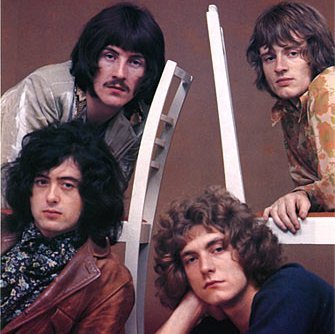
Led Zeppelin – Ramble On

What I like about Zeppelin is change. Every album took a step in another direction. It wasn’t just the bombardment of hard guitars like the first album. They stepped into folk, reggae, rockabilly, soul, blues, country, and rock and roll. The fans and critics complained at times especially over Led Zeppelin III.

I’ve always liked this song. John Paul Jones’s bass stands out in this song. His bass in some Zeppelin songs is back in the mix a bit. The lyrics were inspired by J. R. R. Tolkien and similar themes appeared on subsequent Led Zeppelin albums. In this song they did what they did best…light and dark…soft and hard. The dynamics they worked on would later culminate into Stairway to Heaven.

This song was on Led Zeppelin II that they recorded all over in different studios on their first tour. They recorded this song in New York.

The album Led Zeppelin II peaked at #1 in the Billboard Album Charts, #1 in Canada, and #1 in the UK.

From Songfacts

Some of Robert Plant’s lyrics in this song were inspired by the work of J.R.R. Tolkien, author of The Lord of The Rings. The references are to the adventures of the Hobbit, Frodo Baggins, as he goes to “the darkest depths of Mordor” and encounters “Gollum and the evil one.” Plant later admitted in an audio documentary that he was embarrassed by the Tolkien references, as they don’t make all that much sense – a fair maiden wouldn’t be found in Mordor, and Gollum would want nothing to do with her anyway, since his only concern is the precious ring.

This is one of Led Zeppelin’s most enduring songs, but they never performed it live from start to finish while the band was active. It was in their set when Zeppelin reunited for a one-off concert at the O2 Arena in London on December 10, 2007. John Bonham’s son Jason filled in on drums at that show.

What John Bonham played as percussion to supplement his drums on this song is not clear. It sounds like bongos, but has been reported to be a plastic garbage pail or a guitar case.

The concept of the troubadour “rambling on” – going from place to place and constantly moving forward – is one Robert Plant embraced. In his post-Zeppelin career, he went from one project to the next, refusing to fall back on nostalgia. It was Plant who kiboshed the proposed Led Zep reunion tour in 2007.

The group Train covered this on their 2001 Midnight Moon album. Their lead singer, Pat Monahan, was once in a band that did entire sets of Zeppelin songs. Producer Brendan O’Brien heard Train’s version and agreed to produce their second album.

This was sampled by the Insane Clown Posse for the song “50 Bucks” on their rare album Psychopathics From Outer Space and was also the single that accompanied The Pendulum #7, a 12-comic series of the group done by Chaos! Comics.

Along with “Going To California,” this is one of two Led Zeppelin songs used in the 2019 indie film The Friend. The band agreed to license the songs at a much lower rate than usual after hearing pleas from the filmmakers. The movie tells the true story of Nicole Teague, a woman with terminal cancer. The songs were part of her story and played an important role in the narrative.

Ramble On

Leaves are falling all around
It’s time I was on my way
Thanks to you I’m much obliged
For such a pleasant stay
But now it’s time for me to go
The autumn moon lights my way
For now I smell the rain
And with it pain
And it’s headed my way

Ah, sometimes I grow so tired
But I know I’ve got one thing I got to do

Ramble on
And now’s the time, the time is now
To sing my song
I’m goin’ ’round the world, I got to find my girl
On my way
I’ve been this way ten years to the day
Ramble on
Gotta find the queen of all my dreams

Got no time for spreadin’ roots
The time has come to be gone
And thoough our health we drank a thousand times
It’s time to ramble on

Ramble on
And now’s the time, the time is now
To sing my song
I’m going ’round the world, I got to find my girl
On my way
I’ve been this way ten years to the day
I gotta ramble on
I gotta find the queen of all my dreams

I ain’t tellin’ no lie
Mine’s a tale that can’t be told
My freedom I hold dear
How years ago in days of old
When magic filled the air
‘T was in the darkest depths of Mordor
I met a girl so fair
But Gollum, and the evil one
Crept up and slipped away with her
Her, her, yeah
Ain’t nothing I can do, no

I guess I keep on rambling
I’m gonna, yeah, yeah, yeah
Sing my song (I gotta find my baby)
I gotta ramble on, sing my song
Gotta work my way around the world baby, baby
Ramble on, yeah
Doo, doo, doo, doo, doo, my baby
Doo, doo, doo, doo
Doodoo doodoo doodoo doodoo doodoo

I gotta keep searching for my baby
(Baby, baby, baby, baby, baby, baby)
I gotta keep-a-searchin’ for my baby
(My, my, my, my, my, my, my baby)
Yeah yeah, yeah yeah, yeah yeah yeah
Yeah yeah yeah yeah yeah yeah yeah
I can’t find my bluebird
I listen to my bluebird sing
I can’t find my bluebird
I keep rambling, baby

 

Led Zeppelin – In The Evening

This is my favorite song on In Through The Out Door. The beginning sounds like the end of the world is coming. There is a build-up of sound and then Jimmy blasts the main riff of this song.

The intro was apparently taken from a soundtrack Jimmy Page was working on for fellow Aleister Crowley admirer Kenneth Anger’s film Lucifer Rising.

The song was not released as a single as usual for Led Zeppelin but the album peaked at #1 in the Billboard Album Charts in 1979. This album and The Wall by Pink Floyd were said to help save a Record industry that was slumping at the time.

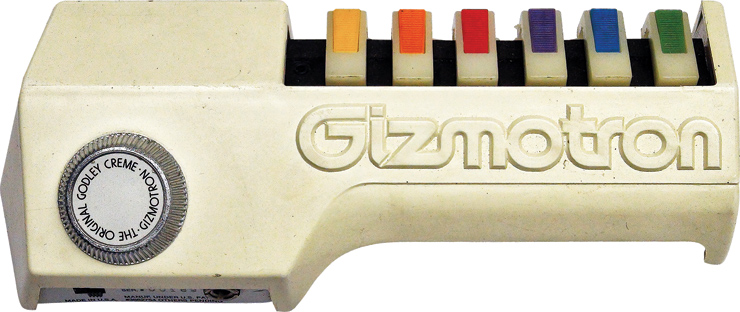
Jimmy Page used a drone effect on his guitar similar to create a sound similar to what he did on the song “In The Light,” but instead of using a cello bow on his guitar, he used a Gizmotron to create the effect. The Gizmotron is a guitar processing device invented by Lol Creme and Kevin Godley from the band 10cc to get a strange distorted sound.

After reading about the Gizmotron…I want one!

Gizmotron

Gizmotron | Vintage Guitar® magazine

A rare, restored, and  working Gizmotron.


From Songfacts

Robert Plant’s lyrics are about how the rich and famous are still exposed to pain and suffering, just in different ways.

When they were recording this album, Jimmy Page and John Bonham were spending a lot of time together and would usually show up at the studio very late and work through the night. This started out with just drums and keyboards created by John Paul Jones, who had a new drum machine to work with.

Robert Plant called this song, “A great one, a real stomper.”

In The Evening

In the evening
When the day is done
I’m looking for a woman
But the girl don’t come
So don’t let her
Play you for a fool
She don’t show no pity, baby
She don’t make no rules

Oh, I need your love
I need your love
Oh, I need your love
I just got to have

So don’t you let her
Oh, get under your skin
It’s only bad luck and trouble
From the day that you begin
I hear you crying in the darkness,
Don’t ask nobody’s help
Ain’t no pockets full of mercy, baby
‘Cause you can only blame yourself

Oh, I need your love
Oh, oh, I need your love
Yeah, I need your love
I just got to have

Oh, it’s simple
All the pain that you go through
You can turn away from fortune, fortune, fortune
‘Cause that’s all that’s left to you
Oh, it’s lonely at the bottom
Man, it’s dizzy at the top
But if you’re standing in the middle
Ain’t no way you’re gonna stop, oh

Oh, I need your love
Oh, oh, I need your love
I just got to have

Ooh, whatever that your days may bring
No use hiding in a corner
‘Cause that won’t change a thing
If you’re dancing in the doldrums
One day soon, it’s got to stop, it’s got to stop
When you’re the master of the off-chance
When you don’t expect a lot

Oh, I need your love
Oh, oh, I need your love
Oh yeah, I need your love
I just got to have, I just got to have

Concert for Kampuchea

When I posted a Rockpile song last week… I heard from Sharon E. Cathcart talking about this concert. A few days later Val mentioned this concert on a Little Richard post. I haven’t thought of this concert in years so I thought it would be a great subject.

I did see a copy of this in the 80s at some point. I’ve watched it the last few nights and it is really good. A few facts about the show…The Pretenders debut album was released the day before they played, this was John Bonham’s last appearance on stage in England, and the Wings last concert appearance.

Concert for the People of Kampuchea was a series of concerts in 1979 featuring Queen, The Clash, The Pretenders, Rockpile, The Who, Elvis Costello, Wings, and many more artists. I’ll post the entire lineup at the bottom. These concerts had a great amount of British talent that would not be rivaled until Live Aid in 1985. The proceeds would be directed to the emergency relief work of the U.N. agencies for the civilians in Kampuchea.

The concerts were held at the Hammersmith Odeon in London over 4 days from 26-29 December 1979 to raise money for the victims of war-torn Cambodia (then called Kampuchea). The event was organized by former Beatle Paul McCartney and Kurt Waldheim (who was then Secretary-General of the UN, later Austrian president).

Waldheim initially approached McCartney, hoping his current band Wings would participate. But he also discussed a performance with George Harrison, and then the gossip wheel started turning. The Beatle reunion rumors started to overtake the press for the show itself. Paul had to completely deny it of course. He was quoted saying: “The Beatles are over and finished with,”  “None of us is even interested in doing it. There’s lots of reasons. Imagine if we came back and did a big show that wasn’t good. What a drag.” None of the ex Beatles showed…except Paul

An album and EP were released in 1981, and the best of the concerts was released as a film, Concert for Kampuchea in 1980. The album wasn’t released until 1981 and it peaked at #36 and the song Little Sister by Rockpile and Robert Plant peaked at #8.

When Wings’ main set was complete on the last night, McCartney invited a Who’s Who assemblage of British rockers to the stage to play four songs as an encore as the “Rockestra”. The list included three members of Led Zeppelin (Plant, John Bonham and John Paul Jones), Townshend, former Small Faces/Faces bandmates Ronnie Lane and Kenney Jones, Procol Harum’s Gary Brooker, Wings, plus members of Rockpile and the Pretenders, among others.

Here is a complete list.

  • Piano: Paul McCartney
  • Keyboards: Linda McCartney, Tony Ashton, Gary Brooker
  • Guitars: Denny Laine, Laurence Juber, James Honeyman-Scott, Dave Edmunds, Billy Bremner, Pete Townshend, Robert Plant
  • Bass: Paul McCartney, Bruce Thomas, Ronnie Lane, John Paul Jones
  • Drums, Percussion: Steve Holley, Kenney Jones, Tony Carr, Morris Pert, Speedy Acquaye, John Bonham
  • Horns: Howie Casey, Steve Howard, Thaddeus Richard, Tony Dorsey
  • Vocals: Paul McCartney, Linda McCartney, John Paul Jones, Ronnie Lane, Bruce Thomas, Robert Plant

That is a talented bunch.

McCartney did assemble the above musicians with some more like David Gilmour to record a couple of songs on the Wings Back To The Egg album…So Glad to See You Here and Rockestra Theme.

Here is the complete list of acts who played during the concerts.

The Blockheads
The Clash
Elvis Costello
Ian Dury
The Pretenders
Matumbi
Robert Plant
Queen
Rockpile
The Specials
Wings
The Who

December 26

  • Queen

December 27

  • Ian Dury and the Blockheads (with guest Mick Jones on “Sweet Gene Vincent”)
  • Matumbi
  • The Clash

December 28

  • The Pretenders
  • The Specials
  • The Who

December 29

  • Elvis Costello & The Attractions
  • Rockpile (with guest Robert Plant on “Little Sister”)
  • Wings
  • Rockestra

Selected setlists

Queen

  1. Jailhouse Rock
  2. We Will Rock You (fast version)
  3. Let Me Entertain You
  4. Somebody to Love
  5. If You Can’t Beat Them
  6. Mustapha
  7. Death on Two Legs
  8. Killer Queen
  9. I’m in Love with My Car
  10. Get Down, Make Love
  11. You’re My Best Friend
  12. Save Me
  13. Now I’m Here
  14. Don’t Stop Me Now
  15. Spread Your Wings
  16. Love of My Life
  17. ’39
  18. Keep Yourself Alive
  19. Drums solo
  20. Guitar solo with parts of Silent Night
  21. Brighton Rock reprise
  22. Crazy Little Thing Called Love
  23. Bohemian Rhapsody
  24. Tie Your Mother Down
  25. Sheer Heart Attack
  26. We Will Rock You
  27. We Are the Champions
  28. God Save the Queen (tape)

Ian Dury & The Blockheads

  1. Clevor Trevor
  2. Inbetweenies
  3. Don’t Ask Me
  4. Reasons To Be Cheerful
  5. Sink My Boats
  6. Waiting For Your Taxi
  7. This Is What We Find
  8. Mischief
  9. What A Waste
  10. Hit Me With Your Rhythm Stick
  11. Sweet Gene Vincent

The Clash

  1. Clash City Rockers
  2. Brand New Cadillac
  3. Safe European Home
  4. Jimmy Jazz
  5. Clampdown
  6. The Guns of Brixton
  7. Train in Vain
  8. Wrong ‘Em Boyo
  9. Koka Kola
  10. (White Man) In Hammersmith Palais
  11. Stay Free
  12. Bankrobber
  13. Janie Jones
  14. Complete Control
  15. Armagideon Time
  16. London Calling

The Specials

  1. (Dawning Of a) New Era
  2. Do The Dog
  3. Monkey Man
  4. Concrete Jungle
  5. Too Hot
  6. Doesn’t Make It Alright
  7. Too Much Too Young
  8. Guns Of Navarone
  9. Little Bitch
  10. A Message To You Rudy
  11. Nite Club
  12. Gangsters
  13. Longshot Kick The Bucket
  14. Skinhead Moonstomp
  15. Madness

The Who

  1. Substitute
  2. I Can’t Explain
  3. Baba O’Riley
  4. The Punk and the Godfather
  5. My Wife
  6. Sister Disco
  7. Behind Blue Eyes
  8. Music Must Change
  9. Drowned
  10. Who Are You
  11. 5.15
  12. Pinball Wizard
  13. See Me Feel Me
  14. Long Live Rock
  15. My Generation
  16. I’m a Man
  17. Hoochie Coochie Man
  18. Sparks
  19. I Can See for Miles
  20. I Don’t Want To Be an Old Man
  21. Won’t Get Fooled Again
  22. Summertime Blues
  23. Dancing In The Streets
  24. Dance It Away
  25. The Real Me

Rockpile

  1. Three Time Loser
  2. Crawling From The Wreckage
  3. Little Sister

Wings

  1. Got to Get You into My Life
  2. Getting Closer
  3. Every Night
  4. Again And Again And Again
  5. I’ve Had Enough
  6. No Words
  7. Cook Of The House
  8. Old Siam, Sir
  9. Maybe I’m Amazed
  10. The Fool on the Hill
  11. Hot As Sun
  12. Spin It On
  13. Twenty Flight Rock
  14. Go Now
  15. Arrow Through Me
  16. Coming Up
  17. Goodnight Tonight
  18. Yesterday
  19. Mull of Kintyre
  20. Band on the Run

Rockestra

  1. Rockestra Theme
  2. Let It Be
  3. Lucille
  4. Rockestra Theme (reprise)


Led Zeppelin – Kashmir

This is one of my favorite songs from Led Zeppelin. I think it’s one of their best if not their best. It was on the Physical Graffiti Album released in 1975. The song did not chart but is hugely popular on the radio.

The song is hypnotic to listen to. The drums are the key to this song… Jimmy Page has said this about John Bonham on Kashmir… It was what he didn’t do that made it work.

Jimmy also said this was the best Led Zeppelin guitar riff.

Kashmir, also known as Cashmere, is a lush mountain region North of Pakistan. India and Pakistan have disputed control of the area for years. The fabric Cashmere is made from the hair of goats from the region. The area is also famous for growing poppies, from which heroin is made.

The songwriters were John Bonham, Jimmy Page, and Robert Plant.

Robert Plant – Plant explained: “‘Kashmir’ came from a trip Jimmy and me made down the Moroccan Atlantic coast, from Agadir down to Sidi Ifni. We were just the same as the other hippies really.”

From Songfacts

All band members agreed this was one of their best musical achievements. Robert Plant said it was “One of my favorites… it was so positive, lyrically.” 

Plant wrote the lyrics in 1973 while driving through the Sahara Desert on the way to the National Festival of folklore in Morocco. Kashmir is in Southern Asia; he was nowhere near it. In Mojo magazine, September 2010, 

The original title was “Driving To Kashmir.”

This runs 8:31. Radio stations had no problem playing it, especially after “Stairway To Heaven,” which was almost as long, did so well.

The signature guitar riff began as a tuning cycle Jimmy Page had been using for years.

This is one of the few Zeppelin songs to use outside musicians. Session players were brought in for the string and horn sections. Jimmy Page said (Rolling Stone, 2012): “I knew that this wasn’t just something guitar-based. All of the guitar parts would be on there. But the orchestra needed to sit there, reflecting those other parts, doing what the guitars were but with the colors of a symphony.”

Speaking with Dan Rather in 2018, Robert Plant said: “It was a great achievement to take such a monstrously dramatic musical piece and find a lyric that was ambiguous enough, and a delivery that was not over-pumped. It was almost the antithesis of the music, this lyric and this vocal delivery that was just about enough to get in there.”

Led Zeppelin played this in every live show from it’s debut in 1975 to their last concert in 1980.

Page and Plant recorded this with an orchestra and Moroccan musicians for their 1994 Unledded album.

Puff Daddy (he wasn’t Diddy yet) sampled this in 1998 for a song called “Come With Me.” He performed it on Saturday Night Live with Page on guitar.

The remaining members of Led Zeppelin performed this at the Atlantic Records 40th-anniversary party in 1988 with Jason Bonham on drums. It was a mess – the keyboards got lost in the feed and Plant was bumped by a fan and forgot some of the words. They had more success when they performed the song on December 10, 2007, at a benefit show to raise money for the Ahmet Ertegun education fund.

In the movie Fast Times At Ridgemont High, Mike Damone tells Mark Ratner, “When it comes down to making out, whenever possible, put on side one of Led Zeppelin 4. In the next scene, he is on the date with this song playing in the car. Cameron Crowe, who wrote the screenplay, couldn’t get the rights to any of the songs on Led Zeppelin 4, so he used “Kashmir” instead. Crowe used Zeppelin’s “That’s The Way” on his 2001 movie Almost Famous.

Plant said in an audio documentary that he loved this song not only because of its intensity but also because it was so intense without being considered “heavy metal,” a label none of the band liked. 

Jimmy Page: “The intensity of ‘Kashmir’ was such that when we had it completed, we knew there was something really hypnotic to it, we couldn’t even describe such a quality. At the beginning, there was only Bonzo [drummer John Bonham] and me in Headley Grange. He played the rhythm on drums, and I found the riff as well as the overdubs which were thereafter duplicated by an orchestra, to bring more life to the track. It sounded so frightening at first…”

Zeppelin’s manager Peter Grant said: “I remember Bonzo having me listen to the demo of ‘Kashmir’ with only him and Jimmy. It was fantastic. What’s funny is that after a first recording of the song, we found it sounded a bit like a dirge. We were in Paris, we had Atlantic listen to it, and we all thought it really sounded like a dirge. So Richard (Cole) was sent to Southall in London to find a Pakistanese orchestra. Jonesy put it all together and the final result was exactly what was needed. He was an exceptional arranger.” 

“Kashmir” makes the “songs performed at the Super Bowl” list because a few seconds of it played during Shakira’s set when she performed at halftime in the matchup between the Kansas City Chiefs and San Francisco 49ers in 2020.


Kashmir

Oh, let the sun beat down upon my face
And stars to fill my dream
I’m a traveler of both time and space
To be where I have been
To sit with elders of the gentle race
This world has seldom seen
They talk of days for which they sit and wait
All will be revealed

Talk in song from tongues of lilting grace
Sounds caress my ear
And not a word I heard could I relate
The story was quite clear

Oh, oh
Oh, oh

Oh, oh baby, I been flying
No yeah, mama, there ain’t no denying
Oh, oh yeah I’ve been flying
Mama, mama, ain’t no denying, no denying

All I see turns to brown
As the sun burns the ground
And my eyes fill with sand
As I scan this wasted land
Trying to find, trying to find, where I’ve been

Oh, pilot of the storm who leaves no trace
Like thoughts inside a dream
Heed the path that led me to that place
Yellow desert stream
Like Shangri-la beneath the summer moon
I will return again
Sure as the dust that floats high in June
When moving through Kashmir

Oh, father of the four winds fill my sails
Across the sea of years
With no provision but an open face
Along the straits of fear

Oh, oh
Oh, oh

Oh, when I’m on, when I’m on my way, yeah
When I see, when I see the way, you stay yeah

Oh, yeah-yeah, oh, yeah-yeah, when I’m down
Oh, yeah-yeah, oh, yeah-yeah, but I’m down, so down
Oh, my baby, oh, my baby, let me take you there
Come on, come on, oh, let me take you there, let me take you there

My Favorite Drummers

This is my top ten favorite drummers…I’m sure I’m going to leave some great ones out. Like guitarists, I like drummers with feel more than technique. Anyone who has read this blog knows who my number 1 is without question…

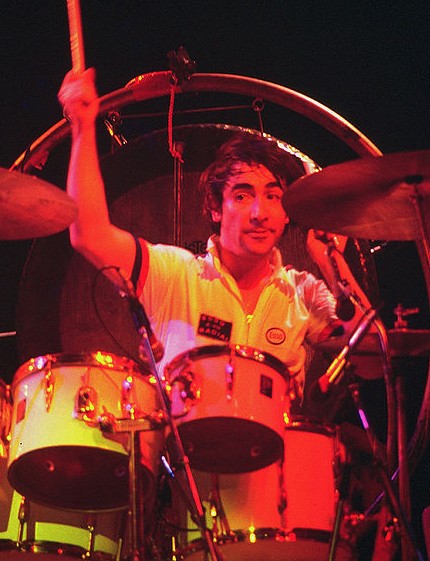
1…Keith Moon, The Who – It’s hard if not impossible to copy this man’s drumming style. He changed the Who completely and was their engine. I’m not a drummer so I really never cared like some drummers do if he played by the rules in drumming…Was he disciplined? No, but it worked well for him and for the songs. Songs like Bargain and Goin’ Mobile are great examples of Keith.

Related image

2…John Bonham, Led Zeppelin – Without Bonham, there is no Led Zeppelin as we know them. He was the ultimate groove drummer. He was a bricklayer and had hard hands and hit the drums incredibly hard but with a light touch also.

Related image

3…Levon Helm, The Band – Not only was he a great drummer but also a soulful singer. He brought something many drummers didn’t… a bit of the old south.

Related image

4…Charlie Watts, Rolling Stones – Charlie and Ringo made their respective groups swing. Charlie can play blues, rock, big band, and jazz. Charlie and his rhythm section partner Bill Wyman were overlooked being in the same band with Mick and Keith. On top of his drumming skills…Charlie grounds the band much like Ringo did for the Beatles.

Related image

5…Ringo Starr, The Beatles – He was not Moon or Bonham in flash but he played exactly what was needed…He could have gone overboard and the songs would have suffered. He played for the song. Some have called him the human metronome. I cannot imagine any other drummer for The Beatles. His tom tom work on Sgt Pepper alone is excellent.

Image result for ringo starr drumming 1968

6…Mitch Mitchell, Jimi Hendrix Experience – Any holes left in Jimi’s music would be quickly filled in by Mitch. He was a jazz drummer who fused it into rock.

Image result for mitch mitchell

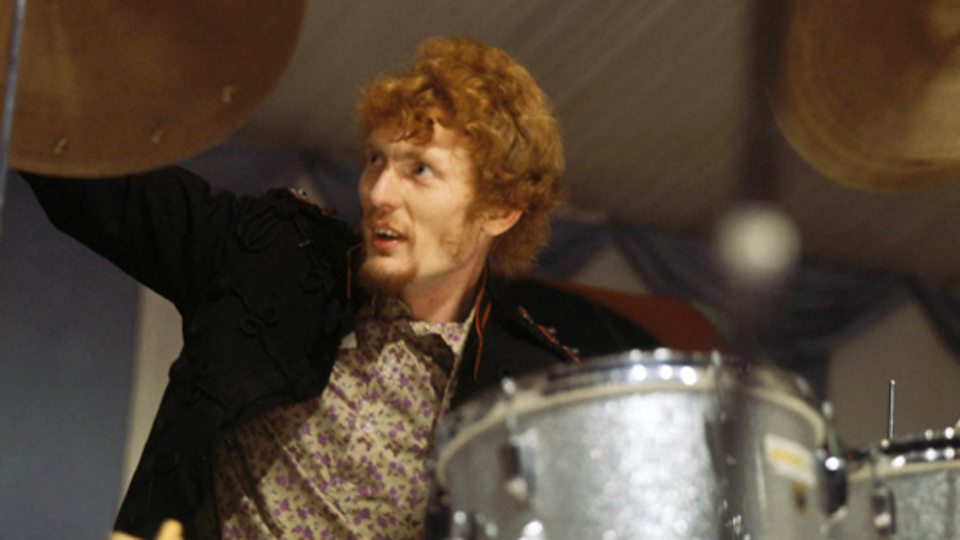
7…Ginger Baker, Cream – If this was a list of “likable people” Ginger would not be in the top 1000 but his drumming was some of the best of the sixties and I’m sure he would say “ever”… He was as big of part of Cream’s sound as Clapton or Bruce.

Image result for ginger baker

8…Bobby Elliot, Hollies – Drummer from the Hollies that other drummers have admired. He hit the drums hard and his fills were great… He is often overlooked but he is always spot on.

Image result for bobby elliott drumming

9…Dave Grohl, Foo Fighters, Nirvana – He can play anything… He fuels those Nirvana songs…and is really great at whatever instrument he plays.

Image result for dave grohl drumming

10…Clem Burke, Blondie – An exciting drummer that was heavily influenced by number 1 on this list. He has played with Pete Townshend, Bob Dylan, Iggy Pop, and David Bowie.

Image result for Clem Burke


Honorable Mention

Gene Krupa, Buddy Miles, Mick Fleetwood, Max Weinberg, “D.J.” Fontana, Benny Benjamin, Stewart Copeland, and Hal Blaine.

Yes, I know… No Neil Peart…yes he is a great drummer…just not my style of music.


Led Zeppelin’s Ascent and Descent

Led Zeppelin ruled the hard rock landscape of the 1970s. Critics didn’t like them and they didn’t like the press. They sold tons of records and their concerts were instant sellouts. They spawned a lot of bad imitators in their wake. By 1975 things started to go wrong for the band and soon by the start of the new decade they were done.

Led Zeppelin formed in 1968 while Jimmy Page was still with the Yardbirds but with only bass player Chris Dreja and he still left in the group. To fill other gig obligations Page formed the New Yardbirds with Robert Plant and his recommendation for drummer John Bonham. Chris Dreja dropped out so studio bassist John Paul Jones filled the bass position.

After a change of name, they were off and running. They made their first self-titled album and signed a huge deal with Atlantic Records. The album had bad reviews but sold very well. The band made their reputation off of live performances.

Their manager at this point was Peter Grant and with him made their mark on the industry. Peter made sure his band made money and no one would stand in the way. He told promoters the band was to get 90 percent of the gate…which was unheard of at the time. The promoters gave in because they would rather have ten percent of that than 100 percent of nothing.

The musicians were great. Robert Plant could sing and wail like no other. John Bonham was a groove extraordinaire who had his own style. John Paul Jones was a great underrated bass and keyboard player. Jimmy Page was one of the best studio guitarists there was at the time. Similar to The Who…it was like a Rock All-Star lineup.

Zeppelin’s first three albums were building up to the fourth. You can see it build with the first and second album’s electric hard edge to the third where the acoustic is introduced more and a more folk side is shown. It all peaked with the classic 1971 Led Zeppelin IV with the perfect combination of the two.

Songs that came off that album are classics like Stairway to Heaven, Black Dog, Four Sticks, Rock and Roll, Going to California, When the Levee Breaks, The Battle of Evermore, and my favorite Misty Mountain Hop. This album and the Who’s Who’s Next came out within months of each other and both of these albums are the foundation of classic rock radio.

More great albums were to follow like Houses of the Holy and Physical Graffiti though none would match the fourth album. After Physical Graffiti things started to go south for Zeppelin.

Their reputation kept growing and it was not all about their music. Wild stories about groupies, Peter Grant stopping at nothing if he perceived an injustice toward his band and there was the Jimmy Page strong occult interest that followed the band like a dark cloud. John Bonham was described as a nice family man until he started to drink. When drunk he would turn into “The Beast” (as bandmates called him) and could terrorize anyone near the band. They did a series of concerts in 1975 at Earl’s Court and after that The Zeppelin started to descend.

In 1975 Robert Plant and his wife were in a serious car wreck and it would take Plant a few months to recuperate and soon the band would record the album Presence with Plant still not able to walk without assistance. The band would not tour in 1976 because of Plants injuries but started an American tour beginning in April 1977.

When Zeppelin started in 1968 critics didn’t like them and Zeppelin didn’t trust the press. Critics thought their first two albums were the work of blues-ripoff artists. Led Zeppelin never forgot that. This was one set of rules in 1977 shared with the press covering the band.

1. Never talk to anyone in the band unless they first talk to you.
1a. Do not make any sort of eye contact with John Bonham. This is for your own safety.
2. Do not talk to Peter Grant or [Tour Manager] Richard Cole — for any reason.
3. Keep your cassette player turned off at all times unless conducting an interview.
4. Never ask questions about anything other than music.
5. Most importantly, understand this — the band will read what is written about them.

The tour was beset with problems with rowdy crowds, Pages increasing heroin intake, and Bonham’s drinking. Peter Grant had hired a British gangster named John Bindon to handle security. Zeppelin’s security crew and John Bonham attacked one of promoter’s Bill Graham’s staff after Grants 11-year-old son was pushed down… After that incident in Oakland, they flew to New Orleans for the next show and Plant received a phone call from back home informing him that his five-year-old son Karac died from a stomach infection. The entire tour was immediately canceled as Plant flew home to be with his family. The last Oakland concert was the last time they played in America.

In 1979 they would get back together and release “In Through the Out Door“, a softer more synthesizer-based album. Plant and Jones did the majority of the writing on the album. Zeppelin did two great shows at Knebworth in 1979 and a short European tour in 1980. While rehearsing for the American tour John Bonham died of asphyxiation in his sleep after a night of heavy drinking in Page’s home on September 25, 1980. Unlike the Who, who continued on without their one of a kind drummer, Led Zeppelin was no more.

The band regrouped three times for one-off concerts. Once in 1985 for Live Aid with two drummers (Phil Collins and Tony Thompson )and in 1988 for the Atlantic Records 40th Anniversary with Jason Bonham on drums. Neither of those turned out too well.
They did regroup in 2007 for a  concert with Jason Bonham drumming. This time they sounded comparable to their younger days and their fans clamored for a reunion and tour…Plant all but ruled that out.

I like most of their albums and consider them one of the biggest rock bands ever…They have made some of the best albums in Rock history. I just never got into them like The Who, Beatles, Stones, Cream, and Kinks. The more I learn about them the more distant they get. Their mystique and image became larger than their music at times.

I’m going to attempt to rank 10 of Led Zeppelin’s albums coming up this week.

Led Zeppelin 02.jpg