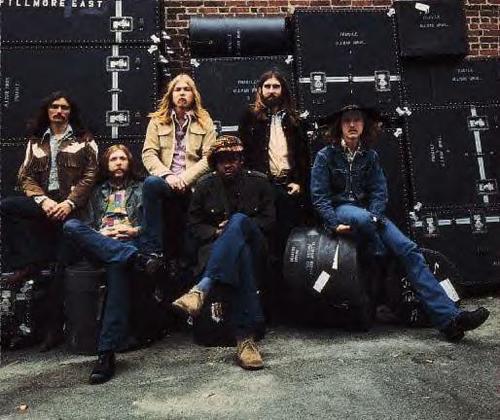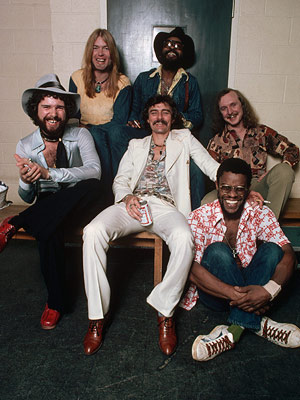
Love Valley Rock Festival…1970

Today is the 44th anniversary of this Rock Festival at Love Valley.

What a festival this was and what a town it still is. It happened in Love Valley North Carolina. The headliners were The Allman Brothers who at that time only had one album out and were largely unknown to the masses. This huge festival was soon known as Woodstock South.  Between 100,000-200,000 showed up.

A man named Andy Barker always wanted to live in a western town. When he was 29 years old he bought some land in 1954 and moved his family there. The land was in Iredell County and he he built the town and it was chartered in 1963. It has a saloon, hitching posts, a small church, and more. No cars are allowed in town…you can walk or ride a horse through.

It’s the place for riding horses, rodeos, and hiking trails with 2000 acres to cover. The population of Love Valley is right now at 96. Through the years it seems to stay around 100.
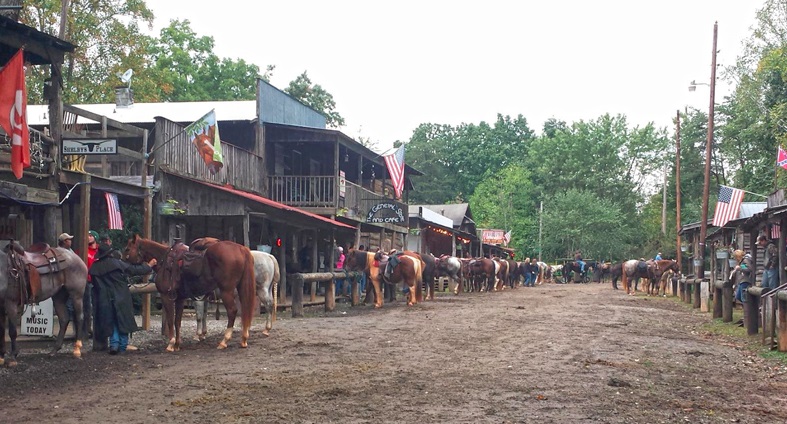
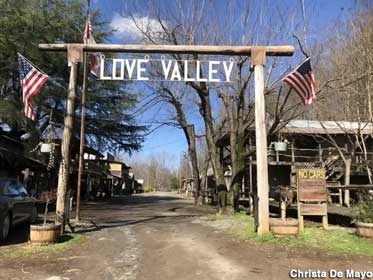
Love Valley: The Town Where Cars Aren't Allowed, Only HorsesLove Valley, NC - Town With No Cars, Only Horses

In 1969 Andy’s daughter Tonda wanted to go to Woodstock but he thought she was too young. So he asked her and her 16-year-old brother Jet Barker to organize a festive concert in Love Valley. While in college she had worked with an entertainment coordinator at college and knew the ropes. She managed to secure the Allman Brothers Band who at the time were known in the south but that is about it. They also got some more local bands to fill it out…it was a large bill. It took place Thursday, July 16-18, 1970.

One interesting thing that happened was that the Hell’s Angels and Outlaws showed up to battle each other. According to witnesses, Andy Barker stopped them, confiscated a chain and ax from each, and told them there would be no trouble there. They seemed to respect this man because after that the gangs dispersed and some camped out with no reported trouble. The festival went off without any major hitch.

Tonda: “It was perfect, it was like a dream. We had worked so hard and we could finally just sit down and enjoy it.”

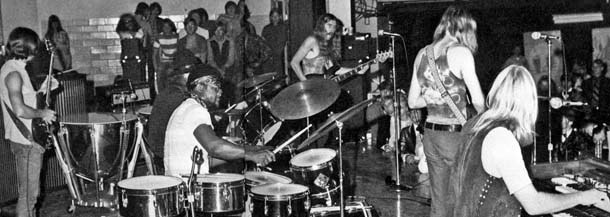
Andy planned to make a documentary of it but it didn’t happen. All we have to look at is some grainy footage but that grainy footage shows Duane Allman a year before At Fillmore East was released. They were finishing up their second album Idlewild South at this time. Some very nice bootlegs are out there from their multiple sets.

Along with the Allman Brothers, the lineup consisted of these bands: Big Brother and the Holding Company (without Janis), Radar, Peace Core, Wet Willie, Johnny Jenkins, Tony Joe White, Hampton Grease Band, Donnydale, Catfish Freedom, Sundown, Chakra, Hot Rain, Kallabash, Warm Stone Blind, Captain John’s Fishmarket. There were over 40 bands over that weekend.

Some like Wet Willie would go on to have a few hits. Tony Joe White had a top ten hit with Polk Salad Annie the year before.

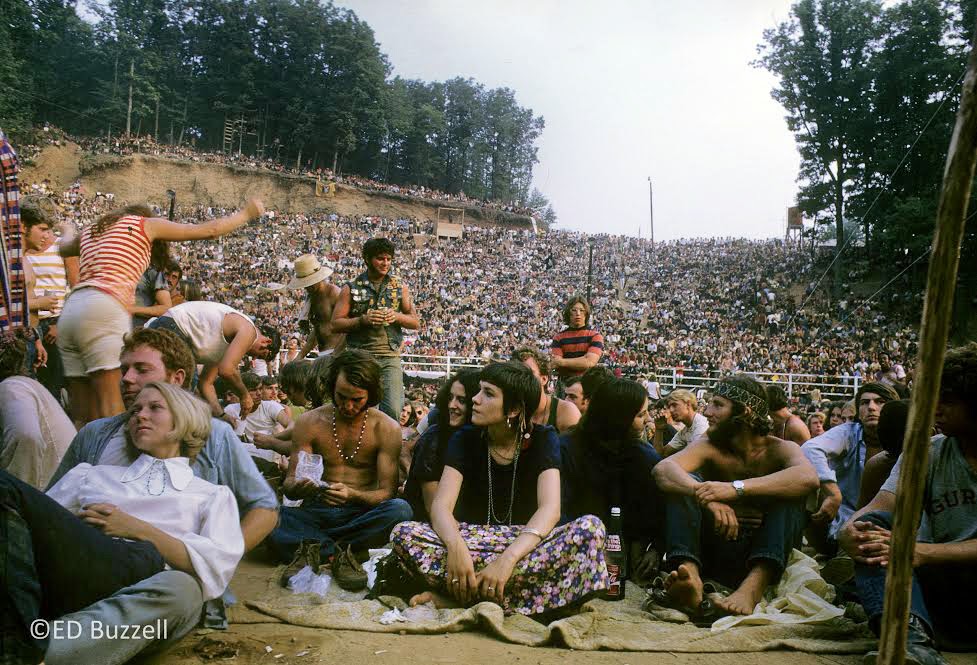
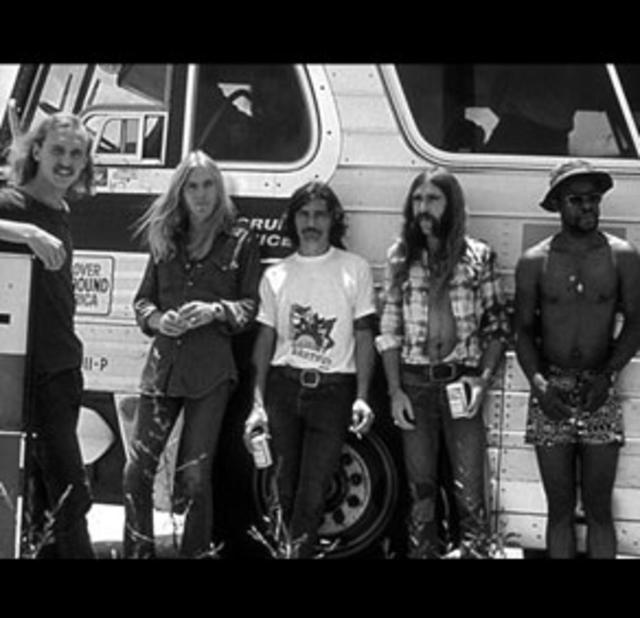
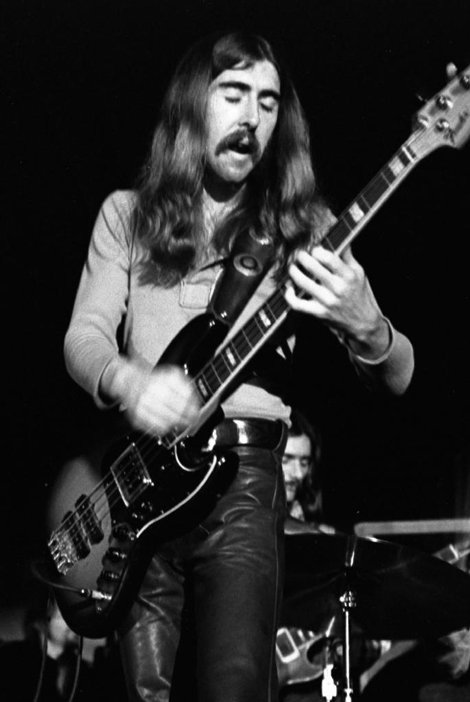
Ed Buzzell was a UPI stringer and took these photographs...they are amazing. They don’t show many bands…just the people…you feel like you are there.
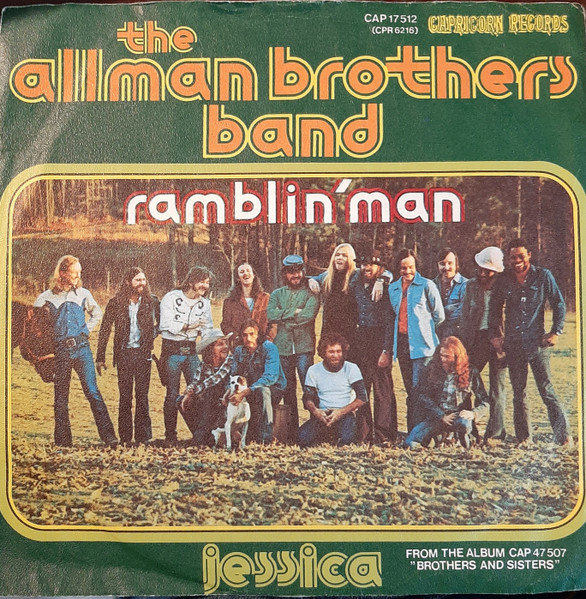
Allman Brothers – Ramblin’ Man

I’ve written a ton of Allman Brother posts but for some odd reason, I never wrote bout this one…their biggest hit. I never thought it was their best song but I do love Dickey Betts’s guitar work in this one. It was on their album “Brothers and Sisters” and it hit a chord with pop culture. Two popular shows at the time The Waltons and Little House on the Prairie fit in with the family theme.

After finishing Eat A Peach after Duane died…they started to work on Brothers and Sisters. They refused to replace Duane Allman with another guitar player. They didn’t want someone at that time just mimicking Duane. While they were recording the album, Gregg Allman recorded his first solo album, Laid Back. He was working with a fantastic piano player named Chuck Leavell. Gregg later invited Chuck to join the Allman Brothers and the Brothers agreed he would fit perfectly and give them a different sound.

Barry Oakley was in disarray at this time after Duane died. For a year he was spiraling down with drugs and drink. In September of 1972, Chuck joined the band and Barry Oakley was excited. It was the first time that he seemed like his old self again since Duane passed. He took Leavell under his wing and showed him the ropes of being in that band.

Leavell said he was fantastic and some of the band thought that Oakley may have been coming out of it and back to himself. That was not to be. On November 11, 1972, Berry Oakley died in a motorcycle crash within a few blocks of where Duane crashed a year and 13 days earlier. He played on two songs on this album…Wasted Words and Ramblin’ Man. Lamar Williams replaced him and finished the album on bass.

Dicky Betts knew a country guy he was friends with and the guy always told him…” are you still playing your guitar and doing the best that you can?” The phrase stuck with Betts. He had the germ of the idea before The Allman Brothers started. Before Duane was killed the band played around with the song in some rehearsals in Gatlinburg.

He was hesitant to record the song. He thought it could be too country for the band. They needed a song and recorded it anyway and it sounded great. He added the solos at the end to make it more of an Allman Brothers song.

The Allman Brothers and The Grateful Dead were not known for their top ten hits. This is their highest-charting single. It also helped propel the album Brothers and Sisters to the top of the Billboard Album Chart chart, solidifying the band’s status as one of the leading acts of the Southern rock genre…although they were more of a  blues, jazz, rock, and jam band.

The album peaked at #1 on the Billboard Album Charts #1 in Canada, and #42 in the UK. What helped the album was Ramblin’ Man and Jessica, two of their most classic songs. They toured with this album and played sold-out stadiums and arenas.

Ramblin’ Man peaked at #2 on the Billboard Hot 100 Charts and #7 in Canada in 1973.

Just found out that Dickey Betts passed away today at age 80.

Dickey Betts: “When I was a kid, my dad was in construction and used to move the family band and forth between central Florida’s east and west coasts, I’d go to one school for a year and then the other the next. I had two sets of friends and spent a lot of time in the back seat of a Greyhound bus. Ramblin’ was in my blood.”

The Allman’s November 2nd, 1972 performance went down at Hofstra University in Hempstead, New York. Portions of the show were broadcast on ABC’s In Concert program. In this clip below we get to see rare footage of the post-Duane, pre-Berry death lineup of the band which featured Gregg Allman, Dickey Betts, Jaimoe, Chuck Leavell, Butch Trucks, and Oakley. Barry Oakley would die 9 days after this concert…it was his last concert with the band and Chuck Leavell’s first concert with them. This was before the single was released.

Ramblin’ Man

Lord, I was born a ramblin’ manTryin’ to make a livin’ and doin’ the best I canAnd when it’s time for leavin’I hope you’ll understandThat I was born a ramblin’ man

Well, my father was a gambler down in GeorgiaAnd he wound up on the wrong end of a gunAnd I was born in the back seat of a Greyhound busRollin’ down highway 41

Lord, I was born a ramblin’ manTryin’ to make a livin’ and doin’ the best I canAnd when it’s time for leavin’I hope you’ll understandThat I was born a ramblin’ man

Alright

I’m on my way to New Orleans this mornin’Leaving out of Nashville, TennesseeThey’re always having a good time down on the bayouLord, and Delta women think the world of me

Lord, I was born a ramblin’ manTryin’ to make a livin’ and doin’ the best I canAnd when it’s time for leavin’I hope you’ll understandThat I was born a ramblin’ man

Lord, I was born a ramblin’ manLord, I was born a ramblin’ manLord, I was born a ramblin’ manLord, I was born a ramblin’ man

Allman Brothers – Wasted Words

There is nothing better than sitting back on a cool Fall day and listening to the Allman Brothers.

The album Brothers and Sisters was released in August 1973. This was almost two years after Duane Allman had died. Around a year later on November 11, 1972…their bassist Berry Oakley died on a motorcycle within a few blocks of where Duane crashed. Some of the band members have said…Berry died on the day that Duane died but his body just kept moving until a little over a year later. He never got over Duane dying and his drug and alcohol use escalated. He was on his motorcycle and hit a bus. He went back to his house and they took him to a hospital where he died a short time later.

berry-oakley-tractor-bass-allman-brothers

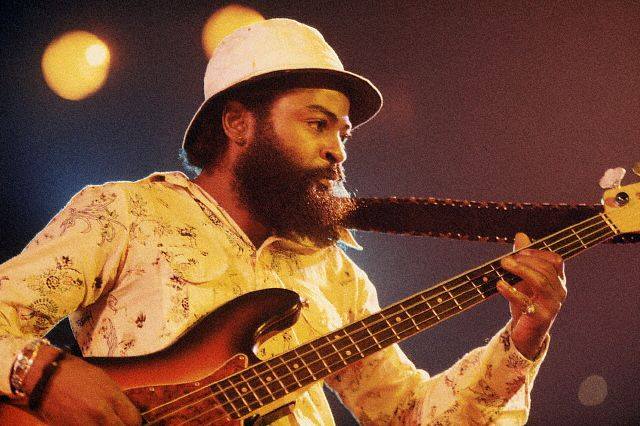
Let me say this about Berry Oakley. He is sadly overlooked today. Not only was he a superb blues bass player but he had something that not all blues bassists have. He had a great sense of melody…I would compare him to Paul McCartney in that department. In the middle of those jams, you would hear the bass playing these wonderful countermelodies…he was unique in that way.

The Allmans recorded Brother and Sisters between October and December of 1972. It was a monster hit for the Brothers. It contains the last songs that Oakley ever played on. Berry Oakley played on this song and the huge hit Ramblin’ Man that he recorded shortly before his death. They had try-outs for another bass player but Jaimo’s friend Lamar Williams won out easily. He played with the band until they broke up briefly in 1976. He developed lung cancer at the age of 32 from exposure to Agent Orange during his Vietnam service and died in 1983.

Gregg Allman wrote this and Dickey Betts played a slide on the song. He didn’t like playing slide because of Duane. When Duane died instead of replacing him with another guitar player…they recruited the great piano player Chuck Leavell. That was a smart thing to do because of the comparisons to Duane on whoever would have taken that spot. Dickey had to play slide when they played their older songs but it’s something he stayed away from on newer songs when he could.

The album peaked at #1 on the Billboard 100, #1 in Canada, and #42 in the UK. What helped the album was Ramblin’ Man and Jessica, two of their most classic songs. They toured with this album and played sold-out stadiums and arenas. A little later they would lease The Starship… the same one that Led Zeppelin used in the seventies. They were up there with The Who, Led Zeppelin, and the monster bands of the seventies.

The first time I heard of the Allman Brothers was on SNL where Dan Ackroyd played Jimmy Carter talking down a caller on acid. I was around 9 when I heard it and it stuck. I have it below.

Wasted Words

Can you tell me, tell me, friend, just exactly where I’ve been?
Is that so much to ask I’ll pay you back no matter what the task
You seem really sure ’bout something I don’t know,
Take that load off, looks like chest’s about to go
Your wasted words already been heard, are you really god, yes or no?

Well, all day and half the night you’re walkin’ round lookin’ such a fright
Good is it me or is it you?
I’d make a wager and I’d hope you lose
Time’s gone, looks like Rome is ’bout to fall,
Next time take the elevator, please don’t crawl
Your wasted words so absurd, are you really Satan, yes or no?
Tell me now baby?
Ooh hoo
Oh

Well, I ain’t no saint and you sure as hell ain’t no savior
Every other Christmas I would practice good behavior
That was then, this is now, don’t ask me to be mister clean
Baby, I don’t know how
Ring my phone ’bout ten more times, we will see,
Find that broke down line and let it be
Your wasted words will never be heard, go on home baby and watch it on TV

Weekday soap-box specialty, you know what I’m talkin’ ’bout now
By the way, this song’s for you, sincerely, me

Allman Brothers – Whipping Post

The bass line at the beginning of the song is iconic. The best version of this one is the live cut. Whipping Post was one of the first songs Gregg Allman wrote for the Allman Brothers. That bass intro has a time signature of 11/8…not a common one to use.

He was staying with friends and thought of the lyrics but could not find a pencil and paper so he wrote the lyrics on an ironing board with burnt matches in the middle of the night. He had to be quiet and not wake up his friend’s child. He caught hell for messing up the ironing board but I think it was worth it.

The Allman Brothers…much like the Grateful Dead could deliver live. They constantly toured early in their careers and played free concerts in parks all over to grow their audience. They released one of the best live albums of all time with At Fillmore East. Money wasn’t the thing…they built a grassroots following and they were probably more popular in New York than anywhere else for this southern band.

The song was originally on their debut album The Allman Brothers Band and it peaked at #188. A live version was on the At Fillmore East album and it peaked at #13 on the Billboard Album Charts and #44 in Canada in 1971.

Frank Zappa would sometimes cover this song live.

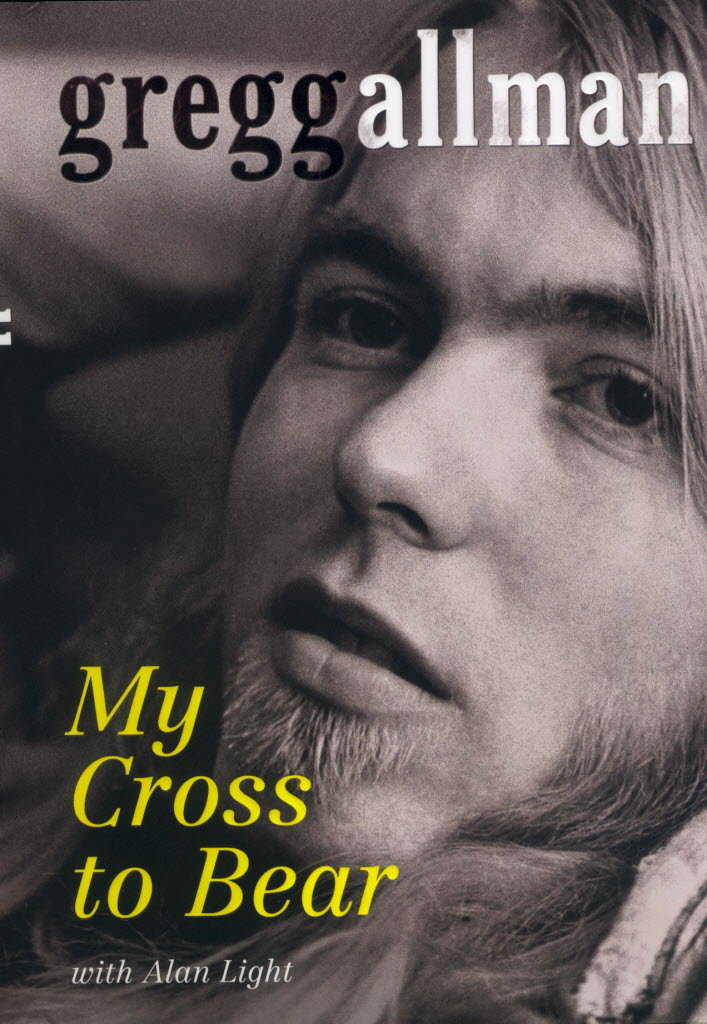
This is Gregg Allman from the book “My Cross to Bear”

So that first night, I laid me down to go to sleep on my attic couch, and I dozed off for a while. All of a sudden I woke up, because a song had me by the ass. The intro had three sets of three, and two little steps that allowed you to jump back up on the next triad. I thought it was different, and I love different things. It hit me like a ton of bricks. I wish the rest of them had come like this—it was all right there in my head, all I had to do was write it down so I wouldn’t forget it by the morning.

I started feeling around for a light switch, but I couldn’t find one anywhere. I was in my sock feet; I just had on my drawers and a T-shirt. I found my way into the kitchen and it was pitch-dark. I had my hands out and I touched an ironing board—thank goodness, instead of tripping over it, which would’ve made a terrible noise.

I was feeling all around the counters for a piece of paper. I couldn’t find any paper or a pencil anywhere, but I did find a box of kitchen matches. A car happened to go by, and its lights flashed long enough to allow me to see that red, white, and blue box. I knew I could use the matches to write with, because I had diddled around enough with art to know that charcoal would work.

I figured the ironing board cover would work as a pad, so I’d strike a match, blow it out, use the charcoal tip to write with, and then strike another one. I charted out the three triads and the two little steps, and then I went to work on the lyrics:
“I’ve been run down, and I’ve been lied to …”

I got it all down on that ironing board cover, in the closest thing to shorthand as I could muster up. I was really proud that I didn’t wake Brittany up. The next morning, Hop raised so much fucking hell with me about that ironing board cover, but it worked out, and we got “Whipping Post” down that day…

The seldom-heard studio version.

Whipping Post

I’ve been run down and I’ve been lied to.
And I don’t know why, I let that mean woman make me a fool.
She took all my money, wrecks my new car.
Now she’s with one of my good time buddies,
They’re drinkin in some cross-town bar.

Sometimes I feel, sometimes I feel,
Like I been tied to the whippin’ post.
Tied to the whippin’ post, tied to the whippin’ post.
Good Lord, I feel like I’m dyin’.

My friends tell me, that I’ve been such a fool.
But I had to stand by and take it baby, all for lovin’ you.
Drown myself in sorrow as I look at what you’ve done.
But nothing seemed to change, the bad times stayed the same,
And I can’t run.

Sometimes I feel, sometimes I feel,
Like I been tied to the whippin’ post.
Tied to the whippin’ post, tied to the whippin’ post.
Good Lord, I feel like I’m dyin’.

Sometimes I feel, sometimes I feel,
Like I been tied to the whippin’ post.
Tied to the whippin’ post, tied to the whippin’ post.
Good Lord, I feel like I’m dyin’.


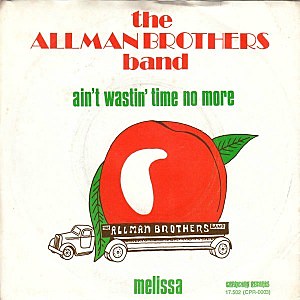
Allman Brothers – Ain’t Wastin’ Time No More

This is one of the first Allman Brothers songs I remember hearing on the radio.

It’s a fantastic song that you don’t hear as much as some of the other Allman songs like Rambling Man. Gregg Allman had most of the music written already but wrote the lyrics right after his brother Duane died in a motorcycle wreck.

It’s about Gregg dealing with the loss of his brother and the soldiers coming back from Vietnam. The Allmans had just started recording the album Eat A Peach when Duane died. Soon after he passed they went to Miami to finish the album.

They started to work on this album in September of 1971 and laid down the basic tracks for “Blue Sky,” “Stand Back” and “Little Martha.” Duane Allman died on October 29, 1971. So those tracks have Duane playing on them and of course, all of the live material features him on guitar. After he died the band went back to the studio and recorded the rest and it was finished in December.

The album also included live tracks that were not used on At Fillmore East like One Way Out, Trouble No More, and a 33-minute “Mountain Jam” that was built off a riff from a Donovan song “There is a Mountain.”

They had some sort of chemistry live that was incredible. I’m usually not a fan of long endless live songs but they keep the intensity up…plus with this album, you get the best of both worlds. The album was released on February 12, 1972, and it peaked at #4 on the Billboard 100 and #12 in Canada. The original name was going to be “Eat A Peach for Peace.”

Dickey Betts had never played electric slide before but when Duane died he was forced to learn the old material and put his spin on Duane’s slide parts. He also came up with new slide parts to this song and Melissa.

The song peaked at #77 on the Billboard 100 in 1972.

Gregg Allman: Losing Duane really slammed Dickey too, but he didn’t show it. We didn’t see too much of Dickey after my brother died. He had this huge garden, and when something would piss him off, he would go out there and sling a hoe or a shovel or an ax for about four hours in the hot sun. He’d come back in for dinner, and he’d be okay. The cat really does have a heart, and I think he really cared about my brother—you don’t go naming your child after someone that you don’t care for.

When my brother died, Dickey really stepped up. He wood-shedded like crazy; I remember him learning how to play the slide part for “Ain’t Wastin’ Time No More” on the airplane, during the flight down to Miami to finish up Eat a Peach.

Ain’t Wastin’ Time No More

Last Sunday morning, the sunshine felt like rain
The week before, they all seemed the same
With the help of God and true friends, I’ve come to realize
I still have two strong legs, and even wings to fly

So I, ain’t a wastin’ time no more
‘Cause time goes by like hurricanes, and faster things

Well, Lord, Lord, Miss Sally, why are your cryin?
Been around here three long days, lookin’ like we’re dyin’
Go step yourself outside and look up at the stars above
And go on downtown, baby, find somebody to love

Meanwhile, I ain’t a wastin’ time no more
‘Cause time goes by like pourin’ rain, and much faster things

You don’t need no gypsy to tell you why
Ya can’t let one precious day to slip by
Well, look inside yourself, and if you don’t see what you want
May be sometimes then ya don’t
But leave your mind alone and just get high

Well, by and by, way after many years have gone
And all the war freaks die off, leavin’ us alone
We’ll raise our children, in the peaceful way we can
It’s up to you and me brother to try and try again

So, hear us now, we ain’t wastin’ time no more
‘Cause time rolls by like hurricanes
Runnin’ after the subway train
Don’t forget the pourin’ rain

Allman Brothers – It’s Not My Cross To Bear

In 1969 Duane Allman hand-picked the members he wanted in his band. The first member he picked was drummer Johnny Lee Johnson…better known as Jaimoe or Jai Johanny Johanson. He then looked at a band called “The 2nd Coming” and he got members guitarist Dickey Betts and bassist Berry Oakley out of that band and continued. He also picked another drummer named Butch Trucks out of the band The 31st of February.

Duane wanted the best band possible. People were confused that he wanted two drummers and a guitar player who could play almost better than him. He didn’t care about that as much at all…as long as it sounded good. Dickey Betts was not the easiest person to get along with but he respected Duane so much that they never had any problems. They spurred each other live to go further.

They needed a singer and Duane automatically thought of this brother Gregg. Gregg was living in LA at this point with Jackson Browne sharing an apartment. He told Gregg to come to Macon Georgia with this band. Gregg came armed with songs and walked into the door. He heard the band and didn’t know if he was good enough to do it. The big brother Duane jumped on Gregg and told him not to embarrass him and get behind the keyboards and do his thing. Gregg as always listened to Duane and of course, he fit perfectly. Duane knew exactly what he was doing.

On a side note…the band had a keyboard player named Reese Wynans. Reese knew his stint with the band was done with Gregg joining. They already had two guitarists and two drummers…they didn’t need another keyboard player with Gregg joining. Duane helped him get some studio work and hooked him up with other musicians. Reese’s career was only starting. Later on, Reese joined Stevie Ray Vaughan and Double Trouble in 1985, playing keyboards on Soul to Soul and In Step. He performed live with the group until Stevie’s death in 1990.

Allman Brothers - It's Not My Cross To Bear B

He moved to Nashville, Tennessee in 1992, Reese has played keyboards for a number of country artists including Brooks & Dunn, Trisha Yearwood, Martina McBride, and Hank Williams Jr. He has also played for blues artists Buddy Guy, John Mayall, Kenny Wayne Shepard, Colin James, Ana Popovic, Dudley Taft, Eli Cook, and Los Lonely Boys. I personally met Reese at my guitar tech’s business… a great guy. 

The Allman Brothers toured relentlessly through 1969-1971 playing at clubs and also doing free shows in the park in what town they were at…the same thing that The Grateful Dead did also. Money wasn’t the thing…they built a grass roots following and they were probably more popular in New York than anywhere else.

This song was on their debut album The Allman Brothers Band released in 1969. The album was hailed by critics but it didn’t sell but 35,000 copies at the time. When you look at the album now…it’s full of songs that would be their bedrock for years. Whipping Post, Dreams, and Trouble No More to name but a few.

Gregg Allman was the main songwriter in the band at first. Dicky Betts would soon start writing more around the second album. Allman wrote this about a girlfriend and wrote a song called Blackhearted Woman about that same girlfriend. They recorded the album in two weeks total…played it and mixed it.

They would release their second album the following year. That album did a little better but it still didn’t take off despite having many songs (Midnight Rider, In Memory of Elizabeth Reed, and more) that would make them famous later. It was in 1971 when they released At Fillmore East that all the years of touring paid off. It was a massive hit peaking at #13 and they were set up for a great career. Up until then, the record company had been advancing them money since 1969 and that album paid everything off. They finally had money coming in and the ability to get what they wanted.

Then on October 29, 1971, Duane Allman was killed on a motorcycle in Macon Georgia. They thought about breaking up but they stayed together and had a huge career with albums Eat A Peach (which Duane is on a few tracks) and the massive Brothers and Sisters. Around a year later…their bassist Berry Oakley died on a motorcycle within a few blocks of where Duane crashed.

When punk came in the late seventies they struggled because no one wanted blues jams anymore even if the musicianship was top notch and it was. That is something about the punk and New Wave movement I didn’t like. Some bands like this who were musically superior got swept away for a while.

Classic radio started to get popular and all of these bands that were ignored during punk and new wave were sought after again. In the late eighties, Gregg had a huge hit with I’m No Angel and the band reformed and played until Oct. 28, 2014 when they officially retired as a band.

I truly think they had more talent in that band than most of their peers. I have to add that I think Gregg could be the best white blues singer of his era.

It’s Not My Cross To Bear

Yeah, yeah, yeah

I have not come, yeah
To testify
About our bad, bad misfortune
And I ain’t here a wond’rin’ why
But I’ll live on and I’ll be strong
‘Cause it just ain’t my cross to bear

I sat down and wrote you a long letter
It was just the other day
Said, sure as the sunrise, baby
Tomorrow I’ll be up and on my way
But I’ll live on
And I’ll be strong
‘Cause it just ain’t my cross to bear
Oh no

Oh, but I’ll live on and I’ll be strong
‘Cause it just ain’t my cross to bear
Yes now baby

But in the end, baby
Long towards the end of your road
Don’t reach out for me, babe
‘Cause I’m not gonna carry your load
But I’ll live on and I’ll be strong
‘Cause it just ain’t my cross to bear
Yeah, yeah
Yeah yeah, yeah yeah, yeah yeah, yeah yeah, yeah yeah, yeah yeah

Allman Brothers – Trouble No More

Gregg Allman sounded like an old man in his early twenties and when he WAS an older man. He could sing like he lived every bit of the blues he was singing about. This was the first song the Allman Brothers ever played in front of an audience.

It’s hard to believe that their first two albums didn’t go anywhere in the charts. The first two were made up of many of their classic songs. Their first album The Allman Brothers Band contained Whipping Post, Trouble No More, It’s Not My Cross To Bear, and one of their signature songs Dreams.

Their second album Idlewild South contained In Memory of Elizabeth Reed, Midnight Rider, and Hoochie Koochie Man. It took their third album At Fillmore East to kickstart their career to the top. Many of those songs on the first two albums would be classic now thanks to the live treatment they were given on the double live album.

After Duane was killed on a motorcycle on October 29, 1971 the band finished up the album that was started a few months before. Eat A Peach was released in 1972 with studio cuts and some live cuts that were left over from the At Fillmore East album including Trouble No More. The album was a massive hit and a perfect followup to At Fillmore East. The album had radio-friendly songs plus great live versions of songs they had been playing in their set.

This was a popular Muddy Waters song. It’s based on a 1935 song called “Someday Baby Blues” by a country-blues singer named Sleepy John Estes. Waters transformed the song with his Chicago blues style, adding a much more prominent guitar. On the Muddy recording….Little Walter played the harmonica and Jimmy Rogers played the guitar.

The Allman Brothers did their own interpretation of blues songs and usually with an extra charge. The first time they played the song was on May 11, 1969, when they played at Piedmont Park in Atlanta at a free festival sponsored by an underground newspaper… the paper gave them a glowing review and put them on the map outside of Macon.

On October 28, 2014, the band played their final show, the farewell concert at the Beacon Theater in New York City. Their final song was Trouble No More.

Trouble No More

Don’t care how long you gone
I don’t care how long you staying
But, good kind treatment
Gonna bring you home someday
But someday baby
You ain’t gonna trouble poor me anymore

You just keep on betting
That the dice won’t pass
Well you know, darling
You are living too fast
But someday, baby
You ain’t gonna trouble poor me anymore

I’m gonna tell everybody
In your neighborhood
That you’s a sweet little girl
But, you don’t mean me no good
But someday baby
You ain’t gonna trouble poor me anymore

Well, I know you’re leavin
Well, you call that gone
Well, without love
You can’t stay long
But someday baby
You ain’t gonna trouble poor me anymore

Well, goodbye baby
Come on, shake my hand
I don’t want no woman
You can have a man
But someday baby
You ain’t gonna trouble poor me anymore

Skydog – The Duane Allman Story: by Randy Poe

After re-reading Gregg Allman’s biography My Cross To Bear  I noticed this book about his brother Duane… the founding member of the Allman Brothers Band. It’s a good read and an informative book. Its forward is written by one of his friends…ZZ Top’s guitarist Billy Gibbons.

The Allman Brothers Band formed in 1969 and they lost their leader Duane Allman in 1971. They continued on to be one of the most successful American bands ever. They finally called it quits in 2014.

I saw this book about Duane and I was excited to read it. Going in… I had read Gregg’s bio, Duane’s daughter’s (Galadrielle Allman) book Please Be With Me: A Song for My Father, Duane Allman, and One Way Out: The Inside History of the Allman Brothers Band so I was well rounded on the Allman Brothers. Duane lived a short life but Poe seemed to find many of the musicians he played within the 60s and 70s.

Duane believed in brotherhood…not just with his brother but the band and the entire cast around them. Phil Walden was the president of Capricorn Records, The Allman Brothers record label. He would call for a meeting with the band…he really only wanted to see Duane. Duane not only brought everyone in the band but he brought the roadies also. He told Walden flatly.. .you will not talk with just me but with all of us. Walden would reply …but Duane why are the roadies in here? Duane said they were just as important as the band…without them, we can’t play. The roadies would stay. Duane’s lack of ego in his vision for the Allman Brothers Band made them who they were even after he was gone.

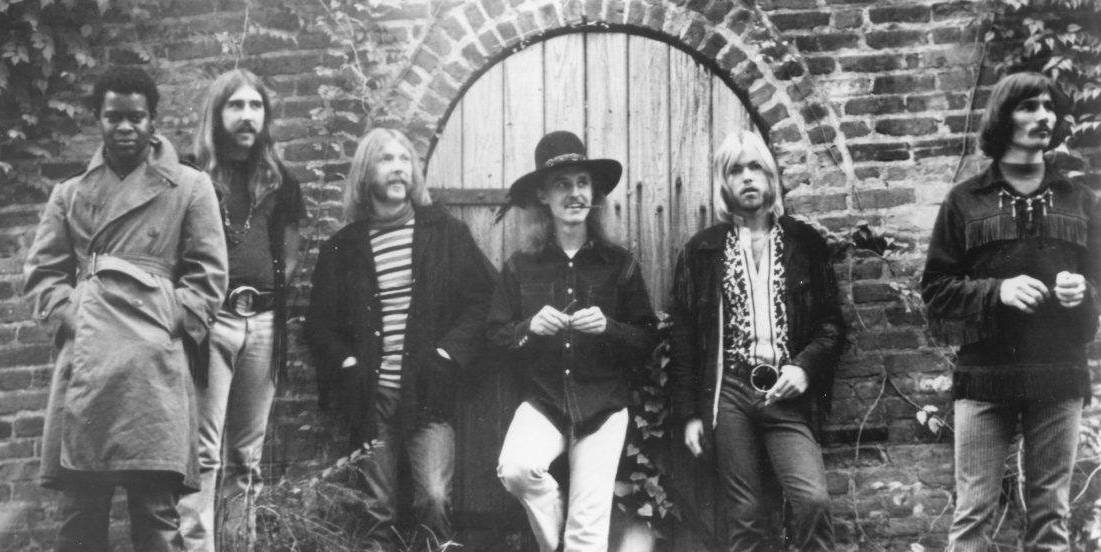
He created a family atmosphere with the Allman Brothers organization. Their 3rd album At Fillmore East was their breakthrough…the album cover shows the band against a brick wall. On the other side of the album shows the roadies in front of the wall also…and a picture of one roadie Twiggs Lyndon who couldn’t be there that day. Another band that shared that same philosophy was the Grateful Dead where the roadies were family. Modern businesses would be wise to take this philosophy and use it.

Duane worked with many musicians and touched their lives. Many that drifted in and out of his bands were not forgotten. The original keyboard player for the Allman Brothers was Reese Wynans until Greg joined. Duane broke it to Reese that the band didn’t need two keyboard players.

In a short time, Duane met Boz Scaggs and recommended Reese to play with him and he did. That started his successful career and he would play with many musicians in his career and was the keyboard player in Stevie Ray Vaughan’s band Double Trouble.

This book doesn’t stop at Duane’s death. It follows the band all the way up to their end in 2014. In the end, he gives a good discography of Duane’s studio recordings. It’s really incredible how many sessions the man was on and he didn’t even reach the age of 25.

The book goes over why he turned Eric Clapton down on joining Derek and the Dominos. This was before the Allman Brothers had made it. He remained loyal to his band because it took him so long to find the right mix of musicians to get the sound he wanted. They didn’t have a hit until the Live At Fillmore East album was released in July of 1971. It would go gold 5 days before Duane was killed. 

I would recommend this book to anyone wanting to know more about Duane and The Allman Brothers. It is full of great information. After you read it you will want to look up all of the recordings he was on. His playing was edgy, tasteful, and like great jazz…takes you on a journey.

At the end of the book, you have to wonder how far he would have gone if he would have lived.

One passage from the book: “In September 2003 ‘Rolling Stone’ published its list of the “100 Greatest Guitarists of All Time”, placing Duane at #2 just behind Jimi Hendrix. Gregg Allman commented that he thought it was a very wonderful gesture and said “…I thought ‘You made your mark man. You didn’t make any money, but you made your mark.”‘ Rounding out the top five were B.B. King, Eric Clapton and Robert Johnson—pretty impressive company for a kid from the South who didn’t even live to see his 25th birthday.”.

If you want to read about the Allman Brothers I would recommend these books also.

My Cross To Bear by Alan Light and Gregg Allman

One Way Out: The Inside History of the Allman Brothers Band by Alan Paul

For a more personal view and her journey to know her dad…

Please Be With Me: A Song for My Father, Duane Allman by Galadrielle Allman

Allman Brothers – Southbound

Just the opening licks to this song hook me for the rest of the way. Southbound was on the number 1 album Brothers and Sisters in 1973.

The Sound of Vinyl

The making of this album was anything but easy. On October 29, 1971, Duane Allman was killed in a motorcycle wreck. He was the undisputed leader of the band and the source of their music. After he died it hit the members hard including his brother Gregg Allman. They all agreed to continue on though. They had just released Live At Fillmore East (selected for preservation in the Library of Congress)…along with Live At Leeds considered the top live rock album of all time.

It was just climbing up the charts and money started for once to roll in for the band. They were working on the follow-up album Eat A Peach when Duane was killed. They regrouped and finished the album. It was a hybrid of studio/live recordings. Dickey Betts the other guitar player took a crash course on slide guitar.

The one member that could not get over Duane’s death was bass player Berry Oakley. He was not just another bass player. His playing reminds me of Paul McCartney in a way because it was so melodic. After Duane died he pretty much gave up and was drinking constantly. The other band members tried to babysit him on tour but nothing worked. Gregg Allman said: Berry didn’t want to die but he didn’t want to live either. 

Remembering Allman Brothers Bassist Berry Oakley On The Anniversary Of His  Untimely Death [Videos]

Duane Allman and Berry Oakley

On November 11, 1972, three blocks from where Duane was killed, Berry ran straight into a City Bus with his motorcycle. Some say it was on purpose because there were no skid marks at the scene. Someone took him home after he refused to go to the hospital. Three hours later he was rushed to the hospital, delirious and in pain, and died of cerebral swelling caused by a fractured skull. The Doctors said even if he would have gone straight to the hospital after the accident…he couldn’t have been saved.

The Allmans again decided to carry on. They didn’t replace Duane at first with another guitar player…they replaced him with a piano player named Chuck Leavell who would later play with the Rolling Stones among others. Oakley was replaced by  Lamar Williams, an old friend of drummer Jaimoe. Lamar would die early also in 1983 of lung cancer. His doctors believed that the disease was derived from exposure to Agent Orange during his Vietnam service. The album sessions started in the Autumn of 1972 and Oakley’s bass can be heard on two songs… “Wasted Words” and their huge hit “Ramblin’ Man.”

Lamar Williams (Allman Brothers) | Know Your Bass Player

Lamar Williams

Lamar Williams plays bass on Southbound… Southbound was written by Dickey Betts with Gregg on lead vocals.

Southbound

Well I’m Southbound, Lord I’m comin’ home to you
Well I’m Southbound, baby, Lord I’m comin’ home to you
I got that old lonesome feelin’ that’s sometimes called the blues
Well I been workin’ every night, travelin’ every day
Oh, I been workin’ every night, traveling every day
Oh you can tell your other man, sweet daddy’s on the way
Aww, ya better believe
Well I’m Southbound
Whoa I’m Southbound
Oh you better tell your other man, sweet daddy’s on his way
Got your hands full now baby, as soon as I hit that door
You’ll have your hands full now woman, just as soon as I hit that door
Well I’m gonna make it on up to you for all the things you should have had before
Lord, I’m Southbound
Oh I’m Southbound, baby
Whoa I’m Southbound, yeah baby
Well I’m gonna make it on up to you for all the things you should have had before

Allman Brothers – Revival

The Allman Brothers have such a unique style that you can recognize their music right off with the dual lead of Duane Allman and Dickey Betts. This band broke through by touring constantly and playing free shows in parks from Georgia to New York. They played a mixture of rock, blues, country, and jazz and were one of the best.

This was the first Allman Brothers song to chart, this peaked at #92 in the Billboard 100. This was the first original song the band recorded that was not written by Gregg Allman. Guitarist Dickey Betts wrote it.

It was the lead single from their second studio album, Idlewild South released in 1970. Named for a remote farmhouse/cabin the band rented for rehearsals, and where much of it was written and conceived, Idlewild South includes two of the band’s best-loved songs, In Memory of Elizabeth Reed and Midnight Rider.

This was the first Allman Brothers album produced by the legendary producer and engineer, Tom Dowd. During its recording, the band was constantly touring and their sound was road-tested, so much so that instead of doing it as a conventional multi-track recording, the band and Dowd opted to record most of the album live in the studio with minimum if any overdubs.  The band was just that good.

In 1970 they moved into what they called The Big House in Macon Georgia. They didn’t have a lot of money, but their wives and girlfriends found this house to rent. Older big houses like this weren’t too expensive back in 1970 to rent.

It’s now the Allman Brothers museum…it’s on my list to visit.

Visit Us - The Big House Museum

Revival

People can you feel it?
Love is everywhere
People can you hear it?
The song is in the air
We’re in a revolution
Don’t you know we’re right
Everyone is singing, yeah
There’ll be no one to fight
People can you feel it?
Love is everywhere
People can you feel it?
Love is everywhere
People can you feel it?
Love is everywhere
People can you feel it?
Love is everywhere
People can you feel it?
Love is everywhere
People can you feel it?
Love is everywhere
Love is everywhere
Love is everywhere
Love is everywhere
Love is everywhere
Love is everywhere
Love is everywhere
Love is everywhere
People can you feel it?
Love is everywhere
People can you feel it?
Love is everywhere
People can you feel it?
Love is everywhere
People can you feel it?
Love is everywhere
People can you feel it?
Love is everywhere
People can you feel it?
Love is everywhere
People can you feel it?
Love is everywhere
People can you feel it?
Love is everywhere

Love Valley Rock Festival…1970

By the summer of 1970, the spirit of Woodstock was still echoing across the American counterculture, and a small mountain town in North Carolina decided it wanted a piece of that magic, or at least its own funky version. Enter: the Love Valley Rock Festival, an improbable blend of peace, pot, rock ‘n’ roll… and cowboys. It went down in July 1970 like a haywire Southern cousin to Woodstock, with more horses, and a whole lotta Allman Brothers.

What a festival this was, and what a town it still is. It happened in Love Valley, North Carolina. The headliners were The Allman Brothers, who at that time only had one album out and were largely unknown to the masses. This huge festival was soon known as Woodstock South.  Between 100,000 and 200,000 showed up.

A man named Andy Barker always wanted to live in a western town. At the age of 29, he purchased some land in 1954 and relocated his family there. The land was in Iredell County, and he built the town, which was chartered in 1963. It has a saloon, hitching posts, a small church, and more. No cars are allowed in town…you can walk or ride a horse through.

It’s the place for riding horses, rodeos, and hiking trails with 2000 acres to cover. The population of Love Valley is currently 96. Through the years, it seems to stay around 100.

Love Valley: The Town Where Cars Aren't Allowed, Only HorsesLove Valley, NC - Town With No Cars, Only Horses

In 1969, Andy’s daughter Tonda wanted to go to Woodstock, but he thought she was too young. So he asked her and her 16-year-old brother, Jet Barker, to organize a festive concert in Love Valley. While in college, she had worked with an entertainment coordinator at the college and knew the ropes. She managed to secure the Allman Brothers Band, who at the time were known in the south but that is about it. They also got some more local bands to fill it out…it was a large bill. It took place on Thursday, July 16-18, 1970.

One interesting thing that happened was that the Hell’s Angels and Outlaws showed up to do battle with each other. According to witnesses, Andy Barker stopped them and confiscated a chain and ax from each and told them there would be no trouble here. They seemed to respect this man because after that, the gangs dispersed, and some camped out with no reported trouble. The festival went off without any major hitches.

Tonda: “It was perfect, it was like a dream. We had worked so hard and we could finally just sit down and enjoy it.”

Andy planned to make a documentary of it, but it didn’t happen. All we have to look at is some grainy footage, but that grainy footage shows Duane Allman a year before At Fillmore East was released. They were finishing up their second album, Idlewild South, at this time. Some very nice bootlegs are out there from their multiple sets.

Along with the Allman Brothers, the line up consisted of these bands: Big Brother and the Holding Company (without Janis), Radar, Peace Core, Wet Willie, Johnny Jenkins, Tony Joe White, Hampton Grease Band, Donnydale, Catfish Freedom, Sundown, Chakra, Hot Rain, Kallabash, Warm Stone Blind, Captain John’s Fishmarket. There were over 40 bands over that weekend.

Some, like Wet Willie, would go on to have a few hits. Tony Joe White had a top ten hit with Polk Salad Annie the year before.

The Love Valley Festival doesn’t get the press that Altamont or even Atlanta Pop did. There’s no movie, no official recordings, no box set retrospective. Just faded photos, whispered stories, and a ghost-town memory of the time the South went psychedelic under the watchful eye of a cowboy mayor with a dream.

It’s part of what makes digging through this era so damn fun. Not all the magic happened on the coasts. Sometimes it galloped in on horseback, plugged into a wall of amps, and raised a little hell in the Carolina hills.

Ed Buzzell was a UPI stringer and took these photographs…they are amazing. They don’t show many bands…just the people…you feel like you are there. (Unfortunately, Ed Buzzell or someone else took them down.) If you know where they are now, or if they are anywhere, please let me know in the comments. 
My Cross To Bear

I was never a huge Allman Brothers Band fan. I always respected them and I liked their radio songs and heard enough of Duane Allman to know he was a great slide guitar player. I also knew Gregg could make any song his song because of his vocals. I never really wanted to know more about them.

A friend of mine recommended Gregg Allman’s autobiography My Cross To Bear. I have a 72-mile round trip car ride to work every day so I downloaded the audio version. I took a  chance on this one a couple of years ago and I really enjoyed it.  I also downloaded the E-book after I finished it.

The Allman Brothers have always been known as the Godfathers of Southern Rock. I never considered them Southern Rock…like Gregg himself said… they were a blues band with some jazz thrown in and they were from the south.

The audiobook is narrated by Will Patton who does a great job of channeling Gregg.

It is like having Gregg over on your back porch telling you these great stories. He is very down to earth and does not try to make his mistakes sound like someone else’s fault. If you want to know about Duane Allman get this book. He is honest about his brother…warts and all. He doesn’t try to whitewash himself either.

He starts at the Rock and Roll Hall of Fame induction where he was sick, miserable, and bloated because of his drinking problem…from there he starts going back through his personal history and the many ups and downs of the Allman Brothers. He covers the bands that Duane and he formed…The Escorts, The Allman Joys (which I would have kept that name) and Hourglass.

Hourglass made a couple of albums of original material and covers but the record company made them “pop” everything up. They would not let them play with an edge. The Escorts and Allman Joys were cover bands… very good cover bands.

After reading the book I have started to listen to the Allman Brothers more. He gives you some funny stories and you see how close that band was in the early days before Duane and Berry Oakley died. He mentions his struggles with Dickey Betts, alcohol, drugs and wives. You also read about a “foot shooting” party…

He also talks about being on stage noticing Eric Clapton among the audience. That led to the Layla sessions. Eric was a big fan of Duane’s slide playing.

You learn some history about a cover band’s travels, trials, and tribulations in the mid-1960s…youtube has a few crude recordings of the Allman Joys live in the mid-60s. Below is The Allman Joys version of Help. I would have never thought it was Gregg Allman singing.

If you are a music fan you will probably enjoy this book.

Help by the Allman Joys in 1966 is the opening song.