I posted this in 2017 when not many people knew I was here.
The questions:
Why did the professor bring that many books? Why did the Howells bring that much cash on a 3-hour cruise? How many dresses did Ginger pack? How many red/blue/white shirts did Gilligan, Skipper and the Professor own respectively? Why did they let Gilligan participate in getting rescued ploys? The Professor was a Macgyver times 20… He could make anything out of coconut shells, vines, and a spare part off of the SS Minnow…but he couldn’t build a raft or boat?
You tend to overlook that and just have fun. The network and critics hated the show. The public liked it and it has never stopped being broadcast because of syndication. Every day after school this was always on and I was always hoping as a kid for them to get off that island. I had no clue it was filmed years before I was watching it. They finally were rescued in some TV movies in the 70s long after the show had gone off the air. When I was a kid I went to a muscular dystrophy telethon and there she was…Dawn Wells standing there and I was 10 years old. She gave me an autographed picture and shook my hand…I didn’t wash that hand for at least a week…until mom made me. Sadly I lost the picture but I will never forget meeting her. She was down to earth and really kind.
Gilligan’s Island was a fun slapstick comedy show. My favorite episode is the one with The Mosquitos rock band. The Mosquitos were really a group called the Wellingtons… they are the group that sang the theme song to Gilligan’s Island and Davy Crockett.
My son’s 14th birthday party happened a few years ago and we had a projector set up for a giant screen…what did 14-year-old kids want to see in 2014? Gilligan’s Island. One thing I noticed about the color shows…they are very vivid….the color jumps out at you.
And THE question that gets asked… answer…Mary Ann!
Mary Ann
The Mosquitoes…Bingo, Bango, Bongo, and Irving.. love the glasses that Irving is wearing…in real life…the Wellingtons.
The first Band album I ever bought was The Best of The Band. When I heard “The Shape I’m In” I knew I was going to like them. I knew the hits of course but the songs I never heard of at that point were great. I then started to buy their albums and loving this band. The song was off on the album Stage Fright and was a B side to the song “Time To Kill.”
There is a great version on The Last Waltz which is below. Robbie wrote the song for Richard to sing and at that time Levon, Rick, and Richard were heavy into heroin and drinking. The song peaked at #64 in Canada.
Robbie Robertson talks some about writing this song
At one time, there was talk that if you wanted to play like the angels, you had to dance with the devil—that heroin was a gateway to music supremacy. That myth was yesterday, but the power of addiction was still in full force. It hit me hard that in a band like ours, if we weren’t operating on all cylinders, it threw the whole machine off course. This was the first time that writing songs was painful for me. In some cases I couldn’t help but reflect on what was happening behind the curtain. I wrote “The Shape I’m In” for Richard to sing, “Stage Fright” for Rick, and “The W. S. Walcott Medicine Show” for Levon—all with undertones of madness and self-destruction. While watching Richard pound out the rhythm on the clavichord, I couldn’t help but see the irony as he sang out, “Oh, you don’t know, the shape I’m in.”
The Shape I’m In
Go out yonder, peace in the valley Come downtown, have to rumble in the alley Oh, you don’t know the shape I’m in
Has anybody seen my lady This livin’ alone would drive me crazy Oh, you don’t know the shape I’m in
I’m gonna go down by the water But I ain’t gonna jump in, no, no I’ll just be lookin’ for my maker And I hear that that’s where she’s been?
Oh, out of nine lives, I spent seven Now, how in the world do you get to Heaven Oh, you don’t know the shape I’m in
I’ve just spent 60 days in the jail house For the crime of having no dough, no no Now here I am back out on the street For the crime of having nowhere to go
Save your neck or save your brother Looks like it’s one or the other Oh, you don’t know the shape I’m in
Now two young kids might start a ruckus You know they feel you’re tryin’ to shuck us Oh, you don’t know the shape I’m in
I bought Tea for the Tillerman for this song and became a fan. The song peaked at #11 in the Billboard 100 in 1971. Stevens is a very good songwriter who has had his songs covered by many artists including Rod Stewart, Don Williams, Jimmy Cliff and many more…and his unique voice sets him apart.
Cat Stevens on Wild World
“It was one of those chord sequences that’s very common in Spanish music. I turned it around and came up with that theme- which is a recurring theme in my work- which is to do with leaving, the sadness of leaving, and the anticipation of what lies beyond. There is a criticism sometimes of my music, that it’s kind of naïve, but then again that’s exactly why people like it. It goes back to the pure childish approach of seeing things almost for the first time. A kid can say things like, ‘Why is a cow?’ You shouldn’t put those words together! But if you do, then it makes you stop and think.”
Stevens wrote this about searching for peace and happiness in a crazy world. There was some speculation that much of the song was a message to Patti D’Arbanville, an actress he had been dating. Stevens cleared this up when he spoke about the song on The Chris Isaak Hour in 2009. Said Stevens: “I was trying to relate to my life. I was at the point where it was beginning to happen and I was myself going into the world. I’d done my career before, and I was sort of warning myself to be careful this time around because it was happening. It was not me writing about somebody specific, although other people may have informed the song, but it was more about me. It’s talking about losing touch with home and reality – home especially.”
This was a #8 UK hit for Jimmy Cliff three months before Stevens released his version. Cliff explained to Mojo magazine July 2012 that Stevens produced his cover. “I felt an affinity with Cat Stevens,” he said. “They tried to market him as a rock act and like me, he was more than that and one day I went to the publisher and he played me this demo of ‘Wild World’ and he told me that Steve (Cat’s real name) had written it but he didn’t like it. I loved it right away so he called up Steve and put me on the phone to him. Steve asked what my key was, I said and he started playing guitar down the phone, He said we have to record it together so he went in and did the track and I went in the following day, helped put on the backing voices with Doris Troy and then it was time to put my voice on and Steve directed me to sing the high notes. He was a really good producer and it was a big hit.”
Maxi Priest recorded this in 1988. His version hit #5 in the UK.
This was released as a single only in the US. Stevens’ European label, Island Records, wanted to encourage people to buy the albums rather than the 45s.
This was one of the songs that convinced Stevens, now known as Yusuf Islam, to release a boxed set of his songs in 2001. He stopped making secular music in 1979 but came to realize that people find strength and inspiration in the songs he recorded as Cat Stevens.
This was Stevens’ first song to chart in the US.
In an interview with Mojo magazine June 2009, the comment was made that lyrically this song has “an uninhibited simplicity.” Stevens responded:
Stevens that this is, “a song about me.”
TV presenter Jonathan King covered this after he accused the Pet Shop Boys of ripping off the song’s melody for their 1987 hit “It’s A Sin.” He eventually dropped the claim… after the duo sued him and won.
Wild World
Now that I’ve lost everything to you You say you want to start something new And it’s breaking my heart you’re leaving Baby, I’m grieving
But if you want to leave, take good care Hope you have a lot of nice things to wear But then a lot of nice things turn bad out there
Oh baby baby it’s a wild world It’s hard to get by just upon a smile Oh baby baby it’s a wild world I’ll always remember you like a child, girl
You know I’ve seen a lot of what the world can do And it’s breaking my heart in two ‘Cause I never want to see you sad girl Don’t be a bad girl
But if you want to leave take good care Hope you make a lot of nice friends out there But just remember there’s a lot of bad and beware Beware
Oh baby baby it’s a wild world It’s hard to get by just upon a smile Oh baby baby it’s a wild world And I’ll always remember you like a child, girl
Baby I love you But if you want to leave take good care Hope you make a lot of nice friends out there But just remember there’s a lot of bad and beware Beware
Oh baby baby it’s a wild world It’s hard to get by just upon a smile Oh baby baby it’s a wild world And I’ll always remember you like a child, girl
Oh baby baby it’s a wild world And it’s hard to get by just upon a smile Oh baby baby it’s a wild world And I’ll always remember you like a child, girl
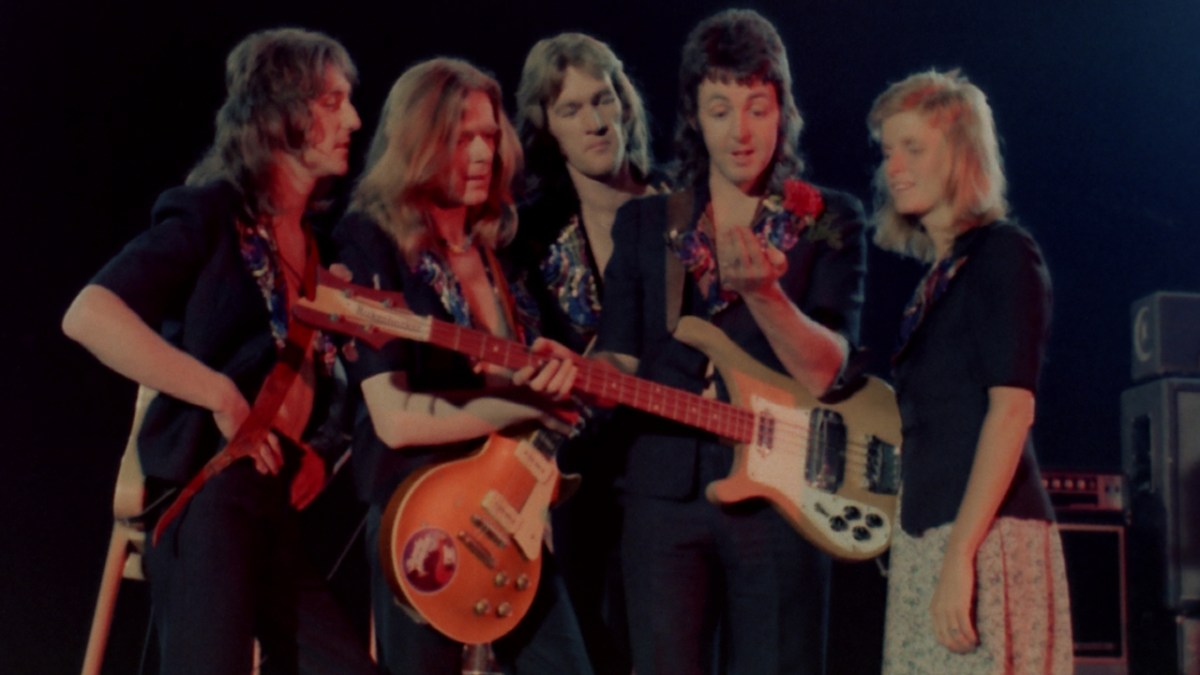
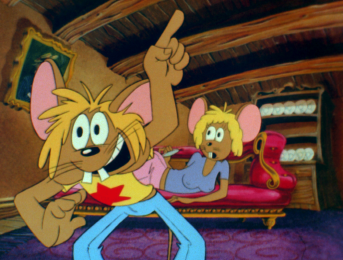
Never-before-seen, The Bruce McMouse Show is a concert film with a difference. Paul McCartney opens with the story of how the band came to meet the inimitable impresario Bruce McMouse. Featuring the original Wings line up, live concert footage from Wings’ 1972 European tour is interspersed with animated scenes, introducing a family of mice living under the stage. After opening the film with ‘Big Barn Bed’ – taken from Wings’ LP Red Rose Speedway – the camera takes us down through the floorboards into this charming animated world. We see Bruce McMouse regale his children with stories from his past, when son Soily rushes into the room in a whirlwind of excitement announcing that “The Wings” are playing above them.
As the concert plays on, Bruce declares to his wife Yvonne that Paul and the band need his help. Bruce then proceeds to venture on stage to offers his services as producer. As the concert progresses, the animated scenes culminate with dozens of animated mice flocking to the venue to see Wings play. The film was directed by Barry Chattington and produced by Roger Cherrill with the live elements taken from four shows in Holland and Germany in 1972.
Paul viewed the initial concert edit and realized there was great potential in the material captured. Prior to the European tour, Paul had the idea of a family of mice and sketched the characters. Picking up the idea, Eric Wylam took Paul’s sketches and created the final McMouse family. This storyline was incorporated and used as a linking theme within the concert footage. The voice-overs for the animated mice took place at the end of 1973, recorded by Paul and Linda McCartney, Deryck Guyler, Pat Coombs and Derek Nimmo.
Production stretched from 1972 to 1977 when the film was complete, however, with changes in the band’s line-up and music scene, the project was shelved. ‘The Bruce McMouse Show’has been fully restored in 2018 at Final Frame Post alongside a brand-new audio mix (stereo and 5.1) created at AIR Studios and mastered at Abbey Road.
I can’t help but like this song. It’s super catchy and the vocals sound so good. My 18-year-old son of all people got me into listening to 40s music…Frank Sintra and big band and I heard this one on satellite radio and remembered hearing it when I was younger.
The Andrews Sisters made the song famous when they performed it in the 1940 Abbott and Costello movie Buck Privates. The song begins in the movie with a solo trumpeter opening Reveille jazz style before a piano enters with a boogie-woogie bass vamp. Dressed in military uniforms and sitting on barstools drinking malts, the sisters stand up and start singing their inimitable close harmonies (notes near enough to grab with one hand on a piano). At the Academy Awards the following spring, “Boogie Woogie Bugle Boy” won the Oscar for Best Song.
By the time they retired from singing professionally, the Andrews Sisters had become the most successful female vocal group in history to that point, recording some 600 tunes that sold 75 million to 100 million records. When the Vocal Group Hall of Fame opened in Sharon, Pennsylvania, in 1998, they were among the original inductees. “Boogie Woogie Bugle Boy” remains their signature song and was voted number 6 of 365 on the 2001 list Songs of the Century.
There is a 70s version with Bette Midler and a newer version with Katy Perry…I’ll stick with the Andrew Sisters.
Boogie Woogie Bugle Boy
He was a famous trumpet man from out Chicago way
He had a boogie style that no one else could play
He was the top man at his craft
But then his number came up and he was gone with the draft
He’s in the army now, a-blowin’ reveille
He’s the boogie woogie bugle boy of Company B
They made him blow a bugle for his Uncle Sam
It really brought him down because he couldn’t jam
The captain seemed to understand
Because the next day the cap’ went out and drafted a band
And now the company jumps when he plays reveille
He’s the boogie woogie bugle boy of Company B
A-toot, a-toot, a-toot-diddelyada-toot
He blows it eight-to-the-bar, in boogie rhythm
He can’t blow a note unless the bass and guitar is playin’ with ‘I’m
He makes the company jump when he plays reveille
He’s the boogie woogie bugle boy of Company B
He was some boogie woogie bugle boy of Company B
And when he plays the boogie woogie bugle he was busy as a “bzzz” bee
And when he plays he makes the company jump eight-to-the-bar
He’s the boogie woogie bugle boy of Company B
Toot toot toot-diddelyada, Toot-diddelyada, toot-toot
He blows it eight-to-the-bar
He can’t blow a note if the bass and guitar isn’t with ‘I’m
Ha-ha-hand the company jumps when he plays reveille
He’s the boogie woogie bugle boy of Company B
(Instrumental)
He puts the boys to sleep with boogie every night
And wakes ’em up the same way in the early bright
They clap their hands and stamp their feet
Because they know how he plays when someone gives him a beat
He really breaks it up when he plays reveille
He’s boogie woogie bugle boy of Company B
The below trailer scared the hell out of me when I was a kid. I had that scream in my head at night and I peeked around every corner. This is a 70’s B Drive-in type movie…but I enjoyed it. I could not talk my mom into taking me to see this one in 1977…I did convince her to take me to see The Car that same year.
It’s Alive was released in a limited run in 1974. It was reissued with the below commercial in 1977 and that is when I heard that damn scream. The budget was $500,000 and the US gross was over $14,000,000 and by 1977 it climbed over $30,000,000 worldwide. Mr. Cohen did very well… there were sequels….but of course!
The Davises have had a baby but they are not sending out any announcements. Most new parents are a little scared when they have a baby. The Davises are terrified. You see there is only one thing wrong with the Davis baby… IT’S ALIVE…(insert scream)
The movie is about a couple who have a killer mutant baby but it does have some social commentary about the medicines and chemicals we take that will cause trouble…as in mutant killer babies.
It was written, produced, and directed by Larry Cohen. The couple’s name was Frank and Lenore Davis…Lenore had been given contraceptive medicine and the doctor who prescribed the drugs to Lenore was contacted by a pharmaceutical company executive. The executive acknowledges that the child’s mutation may have been caused by the drugs. He tells the doctor that the child must be destroyed to prevent the discovery of the company’s liability.
It’s Alive Cast… Cast. John P. Ryan as Frank Davis, Andrew Duggan as the Professor, Sharon Farrell as Lenore Davism, Guy Stockwell as Bob Clayton, James Dixon as Lieutenant Perkins, Michael Ansara as the Captain, and William Wellman Jr. as Charley.
The film was followed by two sequels, It Lives Again (1978) and It’s Alive III: Island of the Alive (1987) and a remake, It’s Alive (2009).
I first heard this song in the seventies and liked it. I ordered Three Dog Night’s Greatest hits off of television. They were very successful in the late sixties and seventies…songs like Joy To The World, Family of Man, Black and White, The Show Must Go On, etc… They racked up 11 top ten hits and 3 number 1’s… and 21 songs in the Billboard 100 altogether.
They were unusual because they had not one, not two…but three lead singers.
I always wondered what “Shambala” meant…now I know. The word ‘Shambala’ has a spiritual meaning in the Buddhist religion, and some Tibetan Buddhists believe that it is a mythical kingdom or a mystical land hidden somewhere in the Himalaya mountains…
The song’s writer, Daniel Moore, told this story. I remember getting excited about the sound of the word, ‘Shambala.’ Before I wrote the song, I called a friend, Eddie Zip, who I’d been working with and telling him, ‘That word Shambala has a magic sound to it, you ought to put together a band and call it Shambala, you couldn’t lose.’ We had just recorded one of his songs titled ‘Don’t Make God’s Children Cry.’ We were getting – ELEVATED!
I wrote the words and melody, a capella, driving on the Ventura Freeway in about 10 minutes. I got home, picked up my Martin guitar and had the music finished in 5 minutes; a pretty good 15 minutes.
The song peaked at #3 in the Billboard 100 and #4 in Canada in 1973.
This is the commercial I ordered it from back in 1970s.
This was written by the songwriter Daniel Moore, and first released by the Texas songwriter B.W. Stevenson. Moore told Songfacts: “Regarding the song, ‘Shambala,’ it was written entirely by myself, Daniel Moore, in the fall of 1972. It was recorded by Three Dog Night in December of 1972. It was recorded by B.W. Stevenson in Late February, 1973 and released two weeks before the Three Dog Night version was released. During those two weeks B.W.’s version sold 125,000 single 45s. Then Three Dog Night released their version and sold 1,250,000 single 45s.”
Later in 1973, with the Three Dog Night version of “Shambala” climbing the charts, Stevenson released a carbon copy single called “My Maria” (credited to Stevenson and Moore), which peaked at #9 US, two months after “Shambala” hit #3.
‘In 1972 my brother, Matthew, called me and informed me that he had received a letter from Dorothy Beg at Lake Pleasant, Massachusetts that told him where and who he had been in his past lives. He had sent a letter to her requesting this information. After recounting several past lives the letter ended with, ‘My messenger tells me to tell you, ‘Let your light shine in the halls of Shambala.” In the phone conversation at that point Matthew said, ‘Shambala, what the hell is that?’
So I did some research and found dozens of references to the word Shambala, the 5000-year-old word originating from Sanskrit. Some were weird, some were goofy but the one I liked was found in Alice Bailey’s Treatise On White Magic. It basically said that there was a gigantic cavern under the Gobi Desert that has a replica of every evolving human being. And when that replica begins to light up or glow (meaning you are cleaning up your act and becoming more spiritual minded or raising your consciousness to a higher level), there is point where your replica gets bright enough to warrant a spiritual teacher being sent to you.
The recording session of my demo in 1972 was with Dean Parks and Jim Varley. Dean (playing bass) was sitting with me (I was engineering, playing the acoustic guitar and singing live) in the control room. We were wearing earphones with the speakers turned off, and 50 feet away at the other end of the studio on the other side of the glass with earphones, was Jim Varley playing drums. Twenty-eight years later I had Greg Beck overdub an electric guitar and that is what you hear on this recording. That’s the only time Dean Parks and Greg Beck have played together, according to Greg.
Three Dog Night heard the song through a publisher, Lindy Blaskey, who was working at ABC Dunhill Publishing. He called me and was very excited because he had gotten such a positive reaction from Three Dog Night and their producer Richie Podler. Anyway, they cut it, it was their single and it was a hit. Bless all of their hearts.
Postscript: In the Guinness Book of World Records, under Prophecies, there is a reference to Shambala where it says, ‘Any one who furthers the name, ‘Shambala’ shall be rewarded 100 times.’ And so it is.”
This was used in a commercial television advertisement campaign for Citgo Petroleum.
Cory Wells, who along with Danny Hutton and Chuck Negron was one of three vocalists in the band, sang lead on this track. Wells died in 2015 at age 74.
Shambala
Wash away my troubles, wash away my pain With the rain in Shambala Wash away my sorrow, wash away my shame With the rain in Shambala
[Chorus] Ah, ooh, yeah, yeah, yeah, yeah, yeah
Everyone is helpful, everyone is kind On the road to Shambala Everyone is lucky, everyone is so kind On the road to Shambala
[Chorus]
How does your light shine, in the halls of Shambala
I can tell my sister by the flowers in her eyes On the road to Shambala I can tell my brother by the flowers in her eyes On the road to Shambala
[Chorus]
How does your light shine, in the halls of Shambala
This haunted car movie was before Christine and though it’s not as good it is entertaining. It was panned when released but it does have a 6.1 in IMDB which is not terrible. The movie resembles Jaws but with a driverless demon car instead of a shark.
It’s a cross between a science-fiction and a horror film about an angry, driverless automobile that terrorizes a small Utah town for several days, squashing one hitchhiker, two bicyclists, one sheriff, one school teacher, and assorted policemen.
While much of the plot and dialog in The Car is pretty silly, there are some terrific moments in it, like the opening scene, where two bicyclists are rammed off a high bridge, which was reportedly the highest free fall stunt of its time. There’s also a scene where the car hides in the dark, then it flies through the window of a house, running over a woman in her kitchen.
The Car cast James Brolin, Ronnie Cox, Kathleen Lloyd, John Marley, R.G Armstrong, John Rubinstein, and Elizabeth Thompson.
I talked my mom into taking me to see this movie when I was ten in 1977. She gave it a big thumbs down. As B movies go you can get much worse than this movie.
The Star of the film is The Car! Designed and engineered by legendary car builder George Barris, who was also responsible for such iconic movie vehicles as the Batmobile, The Munster’s Koach and many others, The Car began life as 1971 Lincoln Continental Mark III Coupe.
Guillermo Del Toro is known to drive a replica of the Lincoln from the film. He is a fan of the movie.
It has its fans and detractors but it is remembered. Below The Car in this Simpsons Treehouse of Horror episode with Maggie driving while chasing and hitting Millhouse.
This song was co-written by Easybeats guitarists George Young and Harry Vanda, who were the primary songwriters in the group (Young is the older brother of Malcolm and Angus Young from AC/DC). A nice mid-sixties pop/rock song.
Friday On My Mind peaked at #16 in the Billboard 100 in 1967.
The Easybeats were already huge in their native Australia when they recorded this song, but this was their first hit outside of that country. After scoring several Aussie hits in 1965, they got an international distribution deal in 1966. In the UK, “Come And See Her” was their first single, and in the US, “Women (Make You Feel Alright)” was chosen. Their second single in each territory was “Friday On My Mind,” which was their breakthrough (the song was also a huge hit in Australia, where it was #1 for eight weeks).
Previously, the band’s main songwriting team had been George Young and lead singer Stevie Wright. Vanda and Young produced The Easybeats’ later albums and after the group broke up in 1969, formed their own group, Flash And The Pan, which had a few successes during the late ’70s and early ’80s. They also continued writing and producing hits for other artists like AC/DC and John Paul Young. >>
This song has quite a buildup. After the opening cymbal crash, its just a staccato guitar for the next 20 seconds underscoring Stevie Wright’s vocal where he runs through the days of the week, explaining why Monday-Thursday don’t excite him. The bass finally comes in as he gets closer to the weekend. Finally, 30 seconds into the song, we hit Friday and the drums come in to play.
This energy carries into the chorus, where we hear about the plans for the weekend. But then it’s back to Monday, and we do the “five-day drag once more.” This time, however, the tempo is faster and he’s even more optimistic, knowing that his time will come. The second chorus is even more energetic and repeats to close out the song. All of this is packed into 2:47, making it one of the more distinctive and energetic hits of the era.
The group was not able to capitalize, falling victim to drug abuse, management struggles, and internal strife. It was six month before their next single, “Who’ll Be The One,” appeared, and listeners were underwhelmed. They never had another US hit and in the UK managed just one more: “Hello, How are You,” which made #20 in 1968.
The group recorded this song in London with producer Shel Talmy, who is famous for his work with The Who.
Friday On My Mind
Monday mornin’ feels so bad Ev’rybody seems to nag me Comin’ Tuesday I feel better Even my old man looks good Wed’sday just don’t go Thursday goes too slow I’ve got Friday on my mind
Gonna have fun in the city Be with my girl, she’s so pretty She looks fine tonight She is out of sight to me Tonight I’ll spend my bread, tonight I’ll lose my head, tonight I’ve got to get to night Monday I’ll have Friday on my mind
Do the five day grind once more I know of nothin’ else that bugs me More than workin’ for the rich man Hey! I’ll change that scene one day Today I might be mad, tomorrow I’ll be glad ‘Cause I’ll have Friday on my mind
Gonna have fun in the city Be with my girl, she’s so pretty She looks fine tonight. She is out of sight to me Tonight I’ll spend my bread, tonight I’ll lose my head, tonight I’ve got to get to night Monday I’ll have Friday on my mind
Fantastic song that you don’t hear as much as some of the other Allman songs like Rambling Man. Gregg Allman had most of the music written already but wrote the lyrics right after his brother Duane died in a motorcycle wreck. It’s about Gregg dealing with the loss of his brother and the soldiers coming back from Vietnam. The Allmans were halfway through with the album Eat A Peach when Duane died. Soon after he passed they went to Miami to finish the album.
The song peaked at #77 in the Billboard 100 in 1972.
Gregg Allman talking about the song from “My Cross To Bear”
Losing Duane really slammed Dickey too, but he didn’t show it. We didn’t see too much of Dickey after my brother died. He had this huge garden, and when something would piss him off, he would go out there and sling a hoe or a shovel or an ax for about four hours in the hot sun. He’d come back in for dinner, and he’d be okay. The cat really does have a heart, and I think he really cared about my brother—you don’t go naming your child after someone that you don’t care for.
When my brother died, Dickey really stepped up. He wood-shedded like crazy; I remember him learning how to play the slide part for “Ain’t Wastin’ Time No More” on the airplane, during the flight down to Miami to finish up Eat a Peach.
Ain’t Wastin’ Time No More
Last Sunday morning, the sunshine felt like rain The week before, they all seemed the same With the help of God and true friends, I’ve come to realize I still have two strong legs, and even wings to fly
So I, ain’t a wastin’ time no more ‘Cause time goes by like hurricanes, and faster things
Well, Lord, Lord, Miss Sally, why are your cryin? Been around here three long days, lookin’ like we’re dyin’ Go step yourself outside and look up at the stars above And go on downtown, baby, find somebody to love
Meanwhile, I ain’t a wastin’ time no more ‘Cause time goes by like pourin’ rain, and much faster things
You don’t need no gypsy to tell you why Ya can’t let one precious day to slip by Well, look inside yourself, and if you don’t see what you want May be sometimes then ya don’t But leave your mind alone and just get high
Well, by and by, way after many years have gone And all the war freaks die off, leavin’ us alone We’ll raise our children, in the peaceful way we can It’s up to you and me brother to try and try again
So, hear us now, we ain’t wastin’ time no more ‘Cause time rolls by like hurricanes Runnin’ after the subway train Don’t forget the pourin’ rain
Starts off with a nice guitar riff. The Vogues are from Turtle Creek, Pennsylvania, a suburb of Pittsburgh. This was the first of eight US Top 40 hits for The Vogues, who recorded the song in Pittsburgh’s Gateway Studios. Its follow-up, “Five O’Clock World,” is their best-known tune.
This song peaked at #4 in the Billboard 100 in 1964.
Petula Clark is best known as a recording artist with a resumé that includes the American #1 hits “Downtown” and “My Love,” both of which were penned by Tony Hatch. However the English songbird is also a fine songwriter, having composed over 100 tunes including this hit for The Vogues. Petula told us it came about because she needed one more song for her I Know a Place album and Tony Hatch had run out of ideas. He asked her to write something and she came up with this song’s melody, to which he added the lyric.
This was the first of eight US Top 40 hits for Turtle Creek, Pennsylvania Pop group The Vogues, who recorded the song in Pittsburgh’s Gateway Studios. Its follow-up, “Five O’Clock World,” is their best-known tune.
The success of the Vogues’ cover alerted Petula Clark’s UK label to the song’s hit potential. Pye rush released Clark’s own version as a single and it peaked at #23 in the singer’s native country and also reached #4 in Australia. In addition Clark recorded a French version entitled “Un Mal Pour Un Bien,” which climbed to #6 in France. However, the English songstress vetoed her US label, Warner Bros’, suggestion to issue it as a single in America to battle with the Vogues’ version.
Surprisingly, despite her success, Petula does not consider herself to be a songwriter at all. She told us: “I’m a sometime songwriter. I’ll write a song if it comes to me, but nobody could say to me, “Will you write me a song?” Because I wouldn’t know how to do that. It just has to come.”
You’re The One
Every time we meet, everything is sweet Oh, you’re so tender, I must surrender My love is your love, now and forever
You’re the one that I long to kiss Baby, you’re the one that I really miss (yeah, yeah, yeah) You’re the one that I’m dreamin’ of Baby, you’re the one that I love
Keep me in your heart, never let us part Ooh, never leave me, please don’t deceive me I want you only, you must believe me
You’re the one that I long to kiss Baby, you’re the one that I really miss (yeah, yeah, yeah) You’re the one that I’m dreamin’ of Baby, you’re the one that I love
I adore you and no one before you could make me feel this way, yay Since I met you I just can’t forget you, I love you more each day (Yeah, yeah, yeah, yeah)
There may be some tears through the comin’ years Ooh, all the while I know you’ll be smilin’ Your love will guide me through every mile ’cause
This is one of the best double A side singles ever released…The B side to I Get Around was “Don’t Worry Baby.” I had this single growing up and would watch the yellow and orange 45 spin. I’m not an audiophile but I will say the vinyl version of I Get Around jumps off the record at you while the cd seems flat.
I Get Around peaked at #1 in the Billboard 100 while reaching #7 in the UK in 1964. This was The Beach Boys first number 1 in the US. It was rated fifth biggest seller of 1964 by both Billboard and Cash Box indicating close to 2 million US units sold.
From Songfacts.
Like most early Beach Boys songs, this does not have deep lyrical content; it’s a fun song about a teenage lifestyle featuring friends, girls and cars. Musically, however, it was incredibly innovative, with an opening fuzz guitar, stop-start rhythms and a keyboard line working in and out of the song. Written by Brian Wilson with contributions from Mike Love, it was the first Beach Boys recording after The Beatles took hold in America, and Wilson responded with this rather complex creation.
This was The Beach Boys first #1 in their own country (“Surfin’ Safari” went to #1 in Sweden two years earlier). Father-manager Murry Wilson and therefore his beleaguered son Brian despaired over not hitting the top spot in the US, coming off second best first to the Four Seasons through 1962 and into ’63, then to Jan & Dean when they got to #1 that summer with “Surf City” – a song Brian Wilson wrote – and then into 1964 with the Beatles took over.
This was The Beach Boys real breakthrough in the UK, reaching #7 in a chart that for months had seen only British faces. It was effusively pushed by Mick Jagger on British TV’s Juke Box Jury and he personally circulated copies of it to the UK’s independent pirate radio stations offshore. It was also #1 in Canada and New Zealand.
Fuzzed and reverbed guitar were demonstrated in this way before anyone else in rock, but too subtle for the general public to notice. It was about three years later that fuzz and reverb became a huge deal from the amplifiers of Jimi Hendrix, Eric Clapton, and Keith Richards.
In our interview with Randy Bachman, he recalls a conversation with Brian Wilson where Wilson explained that this song is based on the Broadway show tune “Five Foot Two, Eyes of Blue.” Said Bachman:
“I said, ‘How did you do that?’ He said, ‘Well, when they say to stay on the C chord for two beats, I stay on it for four. Or if they say stay on the C chord for eight beats, I stay on it for two.’ So if you listen to ‘Five Foot Two, Eyes of Blue, oh, what those five feet could do,’ that’s ‘I Get Around.’ But they went, ‘Round, round, get around, I get around.’ And then he put his own, ‘Woo oo,’ and then he wrote his own song and he put in his own lyrics.”
I Get Around
Round round get around I get around Yeah Get around round round I get around I get around Get around round round I get around From town to town Get around round round I get around I’m a real cool head Get around round round I get around I’m makin’ real good bread
I’m gettin’ bugged driving up and down the same old strip I gotta finda new place where the kids are hip
My buddies and me are getting real well known Yeah, the bad guys know us and they leave us alone
I get around Get around round round I get around From town to town Get around round round I get around I’m a real cool head Get around round round I get around I’m makin’ real good bread Get around round round I get around I get around Round Get around round round oooo Wah wa ooo Wah wa ooo Wah wa ooo
We always take my car cause it’s never been beat And we’ve never missed yet with the girls we meet
None of the guys go steady cause it wouldn’t be right To leave their best girl home now on Saturday night
I get around Get around round round I get around From town to town Get around round round I get around I’m a real cool head Get around round round I get around I’m makin’ real good bread Get around round round I get around I get around Round Ah ah ah ah ah ah ah ah
Round round get around I get around Yeah Get around round round I get around Get around round round I get around Wah wa ooo Get around round round I get around Oooo ooo ooo Get around round round I get around Ahh ooo ooo Get around round round I get around Ahh ooo ooo Get around round round I get around Ahh ooo ooo
A great pop song by Ace and this was their only top 40 hit. Paul Carrack was the lead singer of Ace. He went on to sing for Squeeze and Mike And The Mechanics and had a solo hit with “Don’t Shed a Tear.” He also worked as a keyboardist in Roxy Music and a backup musician for Frankie Miller.
This song peaked at #3 in the Billboard 100, #3 in Canada, and #20 in the UK.
Many listeners believed that this was a love song. The truth is that is was about bass player Terry Comer working with other bands (he played briefly with The Sutherland Brothers and Quiver before returning to Ace). He didn’t tell the members of Ace and they felt cheated.
This was Ace’s only hit. They broke up in 1977.
The bass introduction is borrowed from “Traveling Song” by the British folk rock group Pentangle.
When singer-songwriter Paul Carrack appeared on the BBC Breakfast news programme on June 29, 2009 he was asked about the inspiration for this song. Rather than being about a two-timing lover it was, he said, about another band who were “trying to nick our bass player”. “How Long?” was one of the first songs he ever wrote and remains one of his biggest hits. It was released on the Anchor label, copyright 1974, backed by “Sniffin’ About”, and produced by John Anthony for Neptune Productions. It has been recorded many times since. Terry Comer, the bass player a rival band were trying to “nick”, returned in time to play on the original recording.
How Long
How long has this been goin’ on How long has this been goin’ on
Well, if friends with their fancy persuasion Don’t admit that it’s part of a scheme But I can’t help but have my suspicions ‘Cause I ain’t quite as dumb as I seem And you said you was never intendin’ To break up our scene in this way But there ain’t any use in pretendin’ It could happen to us any day
How long has this been goin’ on How long has this been goin’ on
—- musical interlude —-
Oh, your friends with their fancy persuasion Don’t admit that it’s part of a scheme But I can’t help but have my suspicion ‘Cause I ain’t quite as dumb as I seem Oh, you said you was never intending To break up our scene in this way But there ain’t any use in pretendin’ It could happen to us any day
And how long has this been going on How long has this been going on How long
How long has this been going on How long has this been going on How long has this been going on How long How long has this been going o
The song was written by Holland-Dozier-Holland. Lamont Dozier said it was inspired by a girl he just couldn’t give up. “The more I tried the deeper I fell,” he said. “I made excuses for her and all the wrong she had done to me. She was a necessary evil that I just couldn’t overcome.”
The song peaked at #12 in the Billboard 100 in 1966.
Rod Stewart later covered this song in 1975 and again with Ronald Isley which reached #10 in the Billboard 100 in 1990.
The Isley Brothers became one of the most successful acts of the ’70s, and also one of the most independent – they wrote, produced and released their own music throughout the decade. But in 1966, they were signed to Motown Records, who teamed them with the songwriting/production team of Eddie Holland, Lamont Dozier and Brian Holland (Holland-Dozier-Holland), who put together this heartbreak song for the group.
Released as their first Motown single, it was a hit, but their last Top 40 with the label, who reassigned Holland-Dozier-Holland to other artists. In 1968, The Isley Brothers left Motown to record on their own label, T-Neck Records. Their first T-Neck release was the group’s biggest hit: “It’s Your Thing.”
This is one of those Motown songs with an upbeat tune but heartwrenching lyrics about a guy who is devastated by the loss of his girl. The poor dude just can’t move on, and like the singer in “Ain’t Too Proud To Beg,” he’s abandoned his pride: “If you leave me a hundred times, a hundred times I’ll take you back. I’m yours whenever you want me.”
Rod Stewart, a huge fan of both Motown and The Isley Brothers, recorded his own version in 1975 and released it as a single. His rendition was a big hit in the UK, climbing to #4, but it only went to #83 in America. He did a lot better stateside when he recorded the song as a duet with Ronald Isley in 1989. This version made #10 in the US.
In the UK, this song originally charted at #47, but it reached #3 when it was re-released to coincide with a promotional tour of Britain from The Isley Brothers.
Motown singer Tammi Terrell made #67 with her 1969 cover version of this song.
This Old Heart of Mine (Is Weak For You)
This old heart of mine been broke a thousand times Each time you break away, I fear you’ve gone to stay Lonely nights that come, memories that flow, bringing you back again Hurting me more and more
Maybe it’s my mistake to show this love I feel inside ‘Cause each day that passes by you got me Never knowing if I’m coming or going, but I, I love you This old heart darling, is weak for you I love you, yes, I do These old arms of mine miss having you around Makes these tears inside start a-falling down
Always with half a kiss You remind me of what I miss Though I try to control myself Like a fool I start grinnin’ ’cause my head starts spinnin’ ’cause I
I love you This is old heart, darling is weak for you I love you, yes I do, yes I do
Ooh, I try hard to hide, my hurt inside This old heart of mine always keeps me cryin’ The way you’re treating me, leaves me incomplete You’re here for the day, gone for the week now
But if you leave me a hundred times A hundred times I’ll take you back I’m yours whenever you want me I’m not too proud to shout it, tell the world about it ’cause I
I love you This is old heart, darling is weak for you I love you This is old heart, darling is weak for you
I love you This is old heart, darling is weak for you I love you, yes I do, yes I do I love you, yes I do, darling is weak for you
I’ve been music heavy lately and wanted to live up more to the “eclectic” part of the blog’s name.
In first grade…I found the wonderous invention called Play-Doh. I loved making things and the smell of play-doh… I had a friend in school named Kevin…he would eat Play-Doh at times…I didn’t go that far. Kevin would deny eating it but when he smiled the teacher would see yellow, blue, and red all between his teeth… He would also eat crayons…Lost touch with Kevin after second grade when I assigned to a different school in our area which was closer…maybe that was for the best…
Today if I ever walk by Play-Doh I have to pick it up and do something with it. When my son was a kid we would make all sorts of things. I always loved taking the top off of a new one and trying to keep the colors separated…
Kevin where ever you are now…this post is for you.
In the 1930s Noah McVicker created a substance that looked like putty out of flour, water, salt, boric acid, and mineral oil. His family’s soap company — Kutol Products — in Cincinnati, Ohio, marketed his creation as a wallpaper cleaner.
It wasn’t until after World War II that Noah McVicker’s nephew, Joseph McVicker soon realized that Kutol Products’ wallpaper cleaner also could be used as modeling clay. In 1955, he tested the product in Cincinnati-area schools and daycares. The following year, the Woodward & Lothrop Department Store in Washington, DC, began to sell the clay, which McVicker had named Play-Doh. Noah and Joseph McVicker applied for a patent for Play-Doh in 1958, but the United States Patent Office did not officially patent the clay until January 26, 1965.
Captain Kangaroo had a part in the popularity.
When it was just a new company with no advertising budget, Joe McVicker talked his way in to visit Bob Keeshan, better known as Captain Kangaroo. Although the company couldn’t pay the show outright, McVicker offered them two percent of Play-Doh sales for featuring the product once a week. Keeshan loved the compound and began featuring it three times weekly.
Today, Play-Doh is owned by Hasbro that continues to make and sell the product through its Playskool line. In 2003, the Toy Industry Association added Play-Dohto its “Century of Toys List,” which contains the 100 most memorable and creative toys of the last 100 years.
Since its “invention,” over 700 million pounds of Play-Dohhave been sold around the world!