Jonny Quest was different than many cartoons I watched…the artwork and stories were above the normal ones at the time.
Jonny Quest the series was about the globe-trotting adventures of an eleven-year-old boy (Jonny), his scientist father (Dr. Benton Quest), his adopted brother Hadji (from Calcutta, India), his government bodyguard (Race Bannon) and his bulldog (Bandit). A young future Animal House actor Tim Matheson voiced Jonny Quest.
When I was a kid I loved Jonny’s father Dr. Benton Quest’s hands-off approach in raising Jonny and Hadji. They would be scuba diving with sharks and off in the jungle with their dog Bandit without any parent around…The character Race would help them out and protect them when needed. It was exciting to see kids have the freedom to explore new places.
The series that premiered on September 18th, 1964 that is one of the most celebrated and influential animated series to come from Hanna-Barbera. The series premiered on September 18th, 1964 and is one of the best and most influential animated series to come from Hanna-Barbera. Jonny Quest only ran for one season with 26 episodes but the influence of that series is still being felt and it spawned a comic book, a remake in the 1980s, 1990s, and a couple of tv movies.
Doug Wildey was the artist and the show was going to be based on an old radio show called Jack Armstrong but Hanna-Barbera thought the rights were too expensive so they just made their own show. Wildey drew some influence from the James Bond movie Doctor No.
The artwork and the stories made Jonny Quest special.
I’m not a big fan of newer country music…but this song sounded fresh when it was released. The song crossed over and peaked at #41 in the Billboard 100, #1 in the US Country Songs, and #1 Canda Country Tracks in 1998. The song was on the album Wide Open Spaces and it peaked at #4 on the Billboard Album Charts, #1 on the Country Album Charts, and #1 in the Canadian Country Album Charts in 1999.
Susan Gibson wrote the song years earlier. Gibson was the lead singer of the alt-country band The Groobees. They decided to include “Wide Open Spaces” on their album and their producer was Lloyd Maines… the father of Dixie Chicks lead singer, Natalie Maines. He thought the song would be perfect for the Dixie Chicks and they agreed. After testing it on a couple of audiences, they made it the title track for their major-label debut.
This album was the first album which Natalie Maines was the lead singer.
Their career was going great until all hell broke loose in 2003 after lead singer Natalie Maines criticized George Bush and the invasion of Iraq during a London concert. Country radio led the backlash against the Dixie Chicks. Stations banned their music and even told listeners to trash their CDs.
This defiant, nude cover on ‘Entertainment Weekly’ added fuel to the fire.
If this would have been a rock act that did the same thing…would this have happened? I would say no…
On June 26, 2019, The Dixie Chicks has confirmed that they are returning to music with a new studio album after a 13-year hiatus. They are expecting to record their first new studio album since 2006’s Taking the Long Way.
From Songfacts
This song was written by Susan Gibson, who was lead singer of a Texas-based band called The Groobees. She wrote the tune back in 1993 in a spirit of rebellion during her first return home from the University of Montana for Christmas break. “My mom probably said something like, ‘What time did you get home last night, honey?’ Whatever it was rubbed me the wrong way,” Gibson told The Montanan. “I sat down at the kitchen table and wrote furiously for twelve minutes, and then I went and did something else. I forgot all about it.”
The lyrics were so specific to Gibson’s own experience, including lines about her dad warning her to check the oil in her car, she was hesitant about giving away such a personal song. Then she heard the Dixie Chicks’ version: “It made me bawl my eyes out. It was so beautiful—it had this stunning musicianship and very professional production. I could still see my handwriting on the page, and here was this gorgeous recording of it.”
Lloyd Maines, father of Dixie Chicks lead singer Natalie Maines, worked with The Groobees, and brought the song to the Chicks. The Groobees recorded their version in 1999.
Thom Oliphant helmed the music video, which intercuts touring footage with the girls singing in open fields of wildflowers as well as performing at Winter Park, Colorado’s annual West Fest. In a Songfacts interview, Oliphant recalled: “That song probably moved them from big clubs to arenas over the course of that year, so we were just out documenting.
A lot of that stuff was shot without a clock ticking. You’re on a bus and we would shoot some stuff, and then it all was woven together with a couple of big days of shooting out around Denver. It made it look like it was all about the same time, but it wasn’t.”
The video was named the Country Music Association’s Video of the Year in 1999.
The Groobees broke up a couple of years after this became a hit, partly because they couldn’t agree on how to handle the success. Susan Gibson, who collected the bulk of the royalties as the tune’s sole writer, explained in Lone Star Music Magazine: “We were once a unified band with nothing to lose and all struggling in the same direction. Some band members thought that the success of that song meant that we could afford to take those crappy-paying, but good-exposure gigs. Others thought it meant we didn’t have to. That discrepancy resulted in each of us taking our own piece of the pie and going forward in our different directions.”
Gibson has since carved a career for herself as a solo artist, but still delights in hearing fans talk about the song: “Because the Dixie Chicks made that song so huge, I have enjoyed the look on people’s faces when they hear that I wrote that song. About 80 percent of the time, somebody has a cool story attached to it about leaving home, getting married, getting divorced, and breaking down in Moab, Utah. 19 percent of the time it’s like, ‘Oh! My mom loooooves that song!’ And there’s 1 percent out there that are like, ‘I don’t really listen to music.’ That’s OK. It’s the stories that I hear back from people that put a face to the huge numbers associated with that song.”
This spent four weeks at #1 on the country chart.
Wide Open Spaces
Who doesn’t know what I’m talking about Who’s never left home, who’s never struck out To find a dream and a life of their own A place in the clouds, a foundation of stone
Many precede and many will follow A young girl’s dreams no longer hollow It takes the shape of a place out west But what it holds for her, she hasn’t yet guessed
She needs wide open spaces Room to make her big mistakes She needs new faces She knows the high stakes
She traveled this road as a child Wide eyed and grinning, she never tired But now she won’t be coming back with the rest If these are life’s lessons, she’ll take this test
She needs wide open spaces Room to make her big mistakes She needs new faces She knows the high stakes
She knows the high stakes
As her folks drive away, her dad yells, “Check the oil!” Mom stares out the window and says, “I’m leaving my girl” She said, “It didn’t seem like that long ago” When she stood there and let her own folks know
She needed wide open spaces Room to make her big mistakes She needs new faces She knows the high stakes
She knows the high stakes She knows the highest stakes She knows the highest stakes She knows the highest stakes
Probably the most famous dog actor in the 60’s and 70’s. The two roles he is best known for were Benji and “The Dog” on Petticoat Junction.
In 1960, animal trainer Frank Inn found Higgins at the Burbank Animal Shelter as a puppy. A fluffy black-and-tan mixed-breed dog, he was marked like a Border Terrier, and Inn believed him to be a mix of Miniature Poodle, Cocker Spaniel, and Schnauzer. He took an immediate liking to Higgins and saw a real potential for acting in him. Higgins ended up being his biggest star.
Frank Inn, also trained Arnold Ziffel (the pig) and all of the other animals used on The Beverly Hillbillies, Petticoat Junction, Green Acres, and The Waltons TV series.
Higgins won a Patsy Award in 1967, and he was cover-featured on an issue of TV Guide magazine. He was really close to Edgar Buchanan who played Uncle Joe on Petticoat Junction. They were both in the movie Benji and it would be the last role for each actor.
From 1964-1970 he was in 174 episodes of Petticoat Junction. He also appeared in The Beverly Hillbillies, Village of the Giants, Green Acres, and in the early 1970s appeared in Lassie. In 1971, at the age of 14, Higgins starred in a TV movie with Vincent Price called “Mooch Goes to Hollywood.” Frank Inn retired Higgins, but in 1974, he brought him out of retirement to star in his greatest role, the loveable dog “Benji.”
Higgins was born December 12, 1957 (per wiki), and sadly passed away November 11, 1975…he was 4 weeks shy of his 18th birthday. Frank Inn had Higgins cremated and wanted his ashes buried with him when he died. Frank died in 2002 but because of changes in the law…Higgins could not be buried with him.
After Higgins passed away his daughter played “Benji” in the next Benji movie in 1977.
A great song by The Byrds that was written by Bob Dylan. The Byrds released this song in 1968 and it was on their classic album Sweetheart of the Rodeo. Their version was released 3 years before Dylan commercially released a version of the song on his Greatest Hits Vol 2 album in 1971.
You Ain’t Going Nowhere peaked at #74 on the Billboard 100 in 1968. This country-rock song has been covered many times by different artists.
Dylan’s original Basement Tapes demo of this song contained the lyric “Pick up your money, pack up your tent”, which was mistakenly altered by McGuinn in the Byrds’ version to “Pack up your money, pick up your tent.” Dylan took note of this lyric change in his 1971 recording of the song, singing “Pack up your money, put up your tent McGuinn. You ain’t goin’ nowhere.” McGuinn said: “It was an honor to be in a Bob Dylan song! I got the words wrong and he changed all the words for his version of it. He and I have always been kind of like that. He likes to poke fun at me.”
From Songfacts
The likely influence on this song was Dylan’s 1967 motorcycle accident, which severely limited his mobility. The song was recorded in the basement of a house where members of The Band lived, and played with Dylan while he experimented with new sounds. The Basement Tapes album was not officially released until 1975, but the songs were circulated and this one drew the attention of The Byrds, who released it on their 1968 album Sweetheart of the Rodeo.
The Byrds released “You Ain’t Going Nowhere” as the first single off the album peaking at #45 in the US and #74 in the UK. Guitarist and singer Roger McGuinn recalled to Uncut that their record label, Columbia Records (which was also Dylan’s record label), sent their producer Gary Usher some demos from Dylan’s Woodstock sessions. Among them were “You Ain’t Goin’ Nowhere” and “Nothing Was Delivered” (which the Byrds also recorded),
Roger McGuinn said “I thought they sounded really good,” he said. “You didn’t know what Bob was up to; and far as I knew, he was just laid up from a motorcycle accident. But I think it was probably a reaction to the psychedelic thing. It just got to be too much and everybody wanted to back off.”
You Ain’t Going Nowhere
Clouds so swift Rain won’t lift Gate won’t close Railings froze Get your mind off wintertime You ain’t goin nowhere Whoo-ee ride me high Tomorrow’s the day My bride’s gonna come Oh, Oh are we gonna fly Down in the easy chairI don’t care How many letters they send Morning came and morning went Pack up your money Pick up your tent You ain’t goin nowhere Whoo-ee ride me high Tomorrow’s the day My bride’s gonna come Oh, Oh are we gonna fly Down in the easy chairBuy me a flute And a gun that shoots Tailgates and substitutes Strap yourself To a tree with roots You ain’t goin nowhere Whoo-ee ride me high Tomorrow’s the day My bride’s gonna come Oh, Oh are we gonna fly Down in the easy chair
Now Genghis Kahn He could not keep All his kings Supplied with sleep We’ll climb that hill no matter how steep When we get up to it Whoo-ee ride me high Tomorrow’s the day My bride’s gonna come Oh, Oh are we gonna fly Down in the easy chair
On my quest to find more powerpop music…this band was recommended to me and I’ve been listening to them for a week or so. The Beths are a band out of New Zealand and they formed in 2015. The songs are full of good guitar hooks and with Elizabeth Stokes clever writing and voice… make them fun to listen to. They have some 90s indie sound with a little of the 60s thrown in.
Happy Unhappy is off of their debut album…Future Me Hates Me released in 2018. The members are Elizabeth Stokes(vocals, guitar) Jonathan Pearce(guitar), Benjamin Sinclair (bass) and Ivan Luketina-Johnston (drums).
Their main songwriter, Elizabeth Stokes, also fronts the Beths, a New Zealand group that combines energized guitar riffs, melodic hooks, and harmonized backing vocals in their impulsive indie rock. Having already won fans as a live act, the band released its first album, Future Me Hates Me, in 2018.
Happy Unhappy
I was higher than a biplane Then you hit me like a hurricane I bailed out, hit the ground Washed up in a storm drainStumbled up the driveway With a handshake and a slow wave Now I’m crashed out on the couch Wondering if you feel the same‘Cause you’re in my brain taking up space I need for remembering pins and to take out the bins And that one particular film that that actor was in I see your face superimposed over everything It ain’t right (It ain’t right, it ain’t right)‘Cause I was fine on my own Tolling steady like a dial tone Couldn’t you leave me I was happy unhappy But now I’m overthrown Wish my heart were really made of stone And I could forget you Like I really want to
I was living with your spare change In the pocket of your cutaways And I get so spent waiting on your lunch break Broke every window pane So I can feel the cold rain When I lie in bed catching death trying to wash it all away‘Cause you’re in my brain taking up space I need for delivering lies and suppressing the sighs And for navigating the escape when I get lost in your eyes It’s taking up all of my time just to keep it in line It ain’t right (It ain’t right, it ain’t right)‘Cause I was fine on my own Tolling steady like a dial tone Couldn’t you leave me, I was happy unhappy But now I’m overthrown Wish my heart were really made of stone And I could forget you Like I really want toI was fine on my own Tolling steady like a dial tone Couldn’t you leave me, I was happy unhappy But now I’m overthrown Wish my heart were really made of stone And I could forget you Like I really want toI could forget you I could forget you I could forget you
Cheap Trick is such a fun band and was/is one of the hardest working bands in rock. This song was originally on their album Heaven Tonight that peaked at #48 in the Billboard Album Charts and Surrender peaked only at #62 in the Billboard 100. The version of the song that is probably best known is the live version on their breakthrough live album Cheap Trick At Budokan in 1979.
Guitar player and writer Rick Nielsen said: “I used to hear my friends saying they thought their parents were strange. The first thing I got was the opening of the chorus: ‘Mommy’s all right, daddy’s all right.’ It just rolled off at one sitting. Those opening lines, ‘Mother told me, yes, she told me I ‘d meet girls like you.’ that ‘s advice to the lovelorn, and obviously inspired by the old Shirelles hit ‘Mama said that there’d be days like this.’ It ‘s a good way to start a song if you can make it go with a chord progression.”
Surrender was ranked #471 on its list of “the 500 Greatest Songs of All Time”
From Songfacts
Though it was not a big chart hit, this teen anthem is one of Cheap Trick’s best-known songs. The singer thinks of his parents as a bit overprotective and kind of weird, but he gains a new respect for them at the end of the song when he wakes up and they are rolling around on the couch listening to his KISS records. Cheap Trick guitarist-songwriter Rick Nielsen recalls in Rolling Stone’s Top 500 songs magazine that when he wrote it, he had to “go back and put me in the head of a 14-year-old.”
This song is featured in a number of films. In Fast Times At Ridgemont High (1983) the ticket hustler Mike Damone sings “Surrender” to help try to persuade a girl to buy tickets to a Cheap Trick concert. Band members Rick Nielsen and Robin Zander appear in the film Daddy Day Care (2003), which also features this song.
In 2017, it was used in the closing credits of the film Guardians of the Galaxy Vol. 2 and included on the soundtrack; director James Gunn used the Cheap Trick song “If You Want My Love” in his 2011 independent film Super.
This appears on Cheap Trick’s live album At Budokan. Robin Zander’s speech, which opens the live version is sampled on the Beastie Boy’s 1992 single “Jimmy James.”
In a Blender magazine interview, Cheap Trick ‘s drummer Bun E. Carlos recalls, “We had that track back in 1975. We used to rehearse in the basement of Rick [Nielsen]’s dad’s music shop on Seventh Avenue in Rockford, Illinois. As soon as I heard it, I thought it was a really interesting lyric.”
This song contains one of the more famous key changes in rock. According to Rick Nielsen, the song begins in B flat, goes to B for two verses, then changes key to C around 2:15 as Robin Zander sings, “Whatever happened to all this season’s losers of the year…”
The live version of this song from the Budokan concert was used on the Detroit Rock City soundtrack. The movie was about some kids going to a KISS concert.
The lyrics about the mother being in the WAC’s is a reference to the Women’s Army Corps, which was active during World War II. And if you’re wondering why those lyrics, “Now I had heard the WACs recruited old maids for the war,” don’t make much sense, it’s because they weren’t written that way. The original lyrics were deemed too racy: “Now I had heard the WACs were either old maids or whores.”
The high-pitched sound in the mix was made using an arpeggiator on the keyboard. When the band recorded their next album, Dream Police, they used a real string section since they had a bigger budget. This is best heard on the title track.
Cheap Trick’s version of “In The Street,” originally recorded by Big Star, was used as the theme song of That ’70s Show. In this version, they incorporate the “We’re all alright” chant from “Surrender.”
In concert, this is the song where Rick Nielsen would break out his famous 5-necked guitar. Nielsen owns hundreds of guitars, many with outrageous designs built by the Hamer Guitar company.
The studio version on Heaven Tonight
The live version
Surrender
Mother told me, yes, she told me I’d meet girls like you She also told me, “Stay away, you’ll never know what you’ll catch” Just the other day I heard a soldier falling off Some Indonesian junk that’s going round
Mommy’s alright, daddy’s alright, they just seem a little weird Surrender, surrender, but don’t give yourself away
Father says, “Your mother’s right, she’s really up on things Before we married, mommy served in the Wacs in the Philippines” Now, I had heard the Wacs recruited old maids for the war But mommy isn’t one of those, I’ve known her all these years
Mommy’s alright, daddy’s alright, they just seem a little weird Surrender, surrender, but don’t give yourself away
Whatever happened to all this season’s losers of the year? Every time I got to thinking, where’d they disappear? When I woke up, mom and dad were rolling on the couch Rolling numbers, rock and rolling, got my kiss records out
Mommy’s alright, daddy’s alright, they just seem a little weird Surrender, surrender, but don’t give yourself away
Away Away
Surrender, surrender, but don’t give yourself away Surrender, surrender, but don’t give yourself away Surrender, surrender, but don’t give yourself away
I’ve said this before about other artists but I thought Marshall would have had more hits when I first heard his music in the early 80s. This is his only top forty hit…incredibly it was the only song Crenshaw had in the top 100. The song peaked at #32 in the Billboard 100 in 1982. Someday, Someway was on his self-titled debut album Marshall Crenshaw that peaked at #50 on the Billboard album charts in 1982.
Marshall Crenshaw on the song: “I was taking basic rhythmic grooves from some of my favorite old rock ‘n’ roll records,” “There was a record that I really loved by Gene Vincent called ‘Lotta Lovin” that had a particular kind of beat to it. It just really did a thing to my nervous system.”
From Songfacts
Marshall Crenshaw is an American singer-songwriter who got his first break playing John Lennon in the off-Broadway touring company of the musical Beatlemania. While in New York, he recorded this song for Alan Betrock’s Shake Records, after which he was signed to Warner Bros. Records. “While I was there, I wrote ‘Someday, Someway’ and five or six of the other tunes on my first album,” he recalled to Spinner UK. “I wrote those in my hotel room. That was my next move in life, to be a recording artist. I actually had a sense of artistic direction and off I went.”
Retro rocker Robert Gordon was the first to record this tune, taking the song to #76 in 1981, then Crenshaw’s own version made #36 the next year. Though his self-titled debut album was acclaimed as a pop masterpiece upon release, this song was to be his only Billboard Top 40 hit. However he has continued to record over the next few decades and has also had some success in Hollywood, appearing in the film Peggy Sue Got Married as well as portraying Buddy Holly in La Bamba.
Speaking to American Songwriter magazine, Crenshaw described the writing of this song as an ‘Eureka’ moment. He said: “By this time I’d already written ‘(You’re My) Favorite Waste of Time’ and some other good ones, but I really thought that “Someday” was a breakthrough. I liked that it had this hypnotic riff-type basis; I’d used the basic groove to ‘Lotta Lovin’ by Gene Vincent as a starting point, thought that that was cool. And I liked the lyrics, they were nice and spare but had some depth, lots of possible meanings and implications, etc. There was something kind of mysterious about it and I liked that. It was one of those ones that came out in a rush.”
Some Day, Some Way
I can’t stand to see you sad I can’t bear to hear you cry If you can’t tell me what you need All I can do is wonder why
Someday, someway aw Someday, someway, yeah now Someday, someway Maybe I’ll understand you
After all you’ve done for me All I really want to do Is take the love you brought my way And give it all right back to you
Someday, someway Someday, someway yeah yeah Someday, someway Maybe you’ll understand me You’ve taken everything from me I’ve taken everything from you
I’ll love you for my whole life through Now after all you’ve done for me All I really want to do Is take the love you brought my way And give it all right back to you
Someday, someway aw Someday, someway, yeah now Someday, someway maybe you’ll understand me You’ve taken everything from me I’ve taken everything from you
I’ll love you for my whole life through I can’t stand to see you sad I can’t bear to hear you cry If you can’t tell me what you need All I can do is wonder why
Someday, someway aw Someday, someway, yeah yeah Someday, someway Maybe I’ll understand you
Someday, someway aw Someday, someway, yeah yeah Someday, someway Maybe you’ll understand me
Someday, someway oh! Someday, someway, yeah now Someday, someway Maybe I’ll understand you
This was a song on their second album Bayou Country which peaked at #7 in 1969. Cool song and cool guitar lick by John Fogerty. The song is about things that are forbidden…only makes you want them more. Fogerty said: “Why is it that those things that are really bad for you – candy, ice cream, alcohol – taste so good? Why is it that the things that we can’t have we want even more?”
This song was not one of their big hits but a great song all the same. The band made a video for the song with them playing on a yacht and fans coming aboard.
From Songfacts
A bootleg is an example of an item made more appealing because it is illicit. In the ’60s, a bootleg was an illegal recording of a concert. These were often very low quality but still coveted, as they were rare and unauthorized.
Tom Fogerty played the acoustic guitar on this track.
Suzy maybe give you some cherry pie, But lord, that ain’t no fun. Better you grab it when she ain’t lookin’ ‘Cause you know you’d rather have it on the run.
The Babys were a British rock band that was active from 1975-1981. The band had 8 songs in the Billboard top 100. This song peaked at #13 in the Billboard 100, #8 in Canada, #1 in Australia, and #45 in the UK in 1977.
What I liked about The Baby’s was the voice of John Waite. He would later turn solo after the Babys broke up to have a few hits of his own. I never got to see them live but friends told me they were better live than on their records.
From Songfacts
This was the breakout hit for The Babys, a British rock group fronted by John Waite, which also includes Wally Stocker, Tony Brock, and Mike Corby. The song is about a man torn between the possibility of experiencing his great love and the fear of the consequences of its failure. It is known for its strong backup vocals performed by The Babettes, who are Lisa Freeman Roberts, Pat Henderson, Myrna Matthews, and Marti McCall
Isn’t It Time
Falling in love was the last thing I had on my mind Holding you is a warmth that I thought I could never find (Sitting here all alone) Just trying to decide (Whether to go all alone) Or stay by your side (Then I stop myself because) I know I could cry I just can’t find the answers To the questions that keep going through my mind Hey babe Isn’t it time (Isn’t it time it took time to wait) (Falling in love could be your mistake) Isn’t it time (Isn’t it time you took time to wait) (Falling in love could be your mistake) I’ve seen visions of someone like you in my life A love that’s strong reaching out Holding me through the darkest night (Sitting here all alone) Just trying to decide (Whether to go all alone) Or stay by your side (Then I stop myself because) I don’t want to cry I just can’t find the answers To the questions that keep going through my mind Hey babe Isn’t it time (Isn’t it time it took time to wait) (Falling in love could be your mistake) Isn’t it time (Isn’t it time you took time to wait) (Falling in love could be your mistake) I feel a warmth in my heart And my soul that I never knew This love affair gives me strength That I need just to get me through (Sitting here all alone) Just wondering why (Then I stop myself because) I know I could cry (Then I think of you) And everything seems alright I’ve finally found the answers To the questions that keep going through my mind Hey babe Isn’t it time (Isn’t it time you don’t have to wait) (Don’t have to wait) I know it’s time (Losing this love could be your mistake) Ooh yeah (Isn’t it time) I know it’s time (Isn’t it time you don’t have to wait) It must be time (Don’t have to wait) (Losing this love could be your mistake) (Isn’t it time) It must be time (Isn’t time you don’t have to wait) (Don’t have to wait) It oughta be time (Losing this love could be your mistake) (Isn’t it time) (Isn’t it time you don’t have to wait) (Don’t have to wait) It must be time (Losing this love could be your mistake) (Isn’t it time) (Repeat and fade)
Leon Russell wrote this song. The “Delta Lady” is Rita Coolidge, who was born in Tennessee and moved to Memphis in 1967, where she met Russell. They started dating, and in 1969 Russell wrote this song about her. He was working on Joe Cocker’s second album at the time, so he contributed this song, which Cocker released as the first single from the set. Russell included the song on his first solo album the following year.
The song peaked at #69 in the Billboard 100 in 1969. The song was off the album Joe Cocker! that peaked at #11 in 1970. Leon and Rita Coolidge would tour with Cocker and appear on the live Mad Dogs and Englishmen album…Cocker’s highest-charting LP.
It’s always been one of my favorites from Joe…I still can’t help but think of John Belushi when Joe Cocker’s name comes up.
From Songfacts
This song’s muse Rita Coolidge is one of the backing vocalists on the track. In her autobiography, she recalls Cocker recording the song at Russell’s studio on Skyhill Drive in Los Angeles, where she served tea to the musicians and crew. She didn’t know at the time that the song would become her calling card: she named that autobiography Delta Lady.
The song is very sensual, with Cocker singing about finding the Delta Lady “wet and naked in the garden,” and how he thinks about those times when he’s away from her and longs for her touch. No matter where he goes, he thinks of her.
Leon Russell and Rita Coolidge joined Joe Cocker on his Mad Dogs and Englishmen tour, where she would sing “Superstar,” a song written by Russell and Bonnie Bramlett. “Here she is, our own Delta Lady,” Cocker would announce when introducing her, imprinting that appellation.
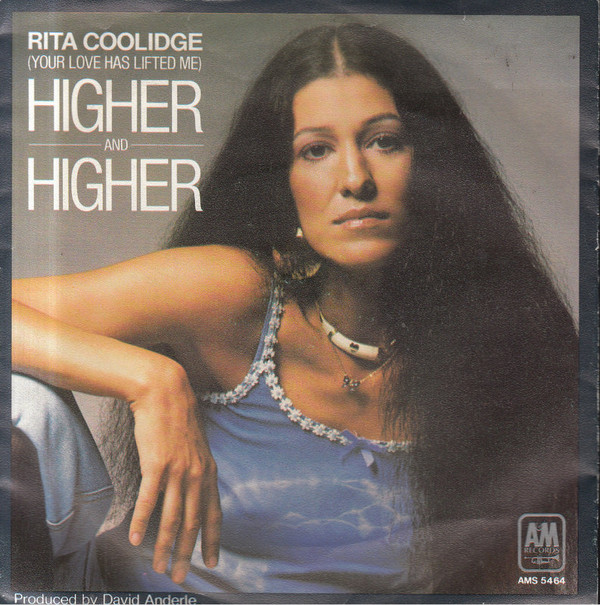
Russell wrote another song about Rita Coolidge, “A Song For You,” which also appeared on his debut album. The couple split soon after, just as their careers started taking off. Coolidge issued her first album in 1971 and had her first big hit in 1977 with a cover of Jackie Wilson’s “(Your Love Keeps Lifting Me) Higher And Higher.”
Delta Lady
Woman of the country now I’ve found you Longing in your soft and fertile delta And I whisper sighs to satisfy your longing For the warmth and tender shelter of my body Oh you’re my, yes you’re my Delta Lady Yes, you’re my, me oh my, Delta Lady
Please don’t ask how many times I found you Standing wet and naked in the garden And I think of days and different ways I held you Held you closely to me, yes our heart was beating Oh you’re my
Oh, and I’m over here in England But I think of you, think about you Because I love you
There are concrete mountains in the city And pretty city women live inside them And yet it seems the city scene is lacking I’m so glad you’re waiting for me in the country Oh you’re my
This is a gorgeous song. The harmonies that the brothers had were close to perfect.
The song was written by Boudleaux Bryant and released by the Brothers in 1958. This song predates the Hot 100 launch but it was #1 in the Country and R&B Charts.
I checked the Billboard Charts and found this note… Note that because their career predates the Hot 100’s 1958 launch, some of their best-known earlier hits aren’t on the list, including 1957’s “Bye Bye Love” and “Wake Up Little Susie” and 1958’s “All I Have to Do Is Dream.”)
Phil Everly: “I remember hearing ‘All I Have To Do Is Dream’ on acetate with Boudleaux’s version on it, and I said, at the time, they could have put Boudleaux’s out and it would have been a hit. It’s just a great, great song. It’s beautiful. Boudleaux was the main man who wrote all the great songs for us, and we love him.”
Boudleaux wrote sometimes by himself but other times he wrote with his wife Felice Bryant…they formed a very successful songwriting team. They wrote successful songs for the Everly Brothers and other artists, including “Bye, Bye Love,” “Wake Up Little Susie,” “Bird Dog,” “Devoted to You,” and many more…
From Songfacts
This song, which sold over a million copies, was written by Boudleaux Bryant, who was half of the world famous husband-and-wife songwriting team, Boudleaux and Felice Bryant. Together, this talented couple penned many huge hits for the Everly Brothers and other artists, including “Bye, Bye Love,” “Wake Up Little Susie,” “Bird Dog,” “Devoted to You,” “Hey Joe,” “Love Hurts,” “Raining In My Heart,” and “Rocky Top.”
Chet Atkins played tremolo-style guitar chords on the song, providing an interesting musical backing to the Everly Brothers’ unique vocal harmonies.
Boudleaux Bryant said regarding the phrase “Only trouble is, gee whiz”: “I can’t explain why I put that in there. It was just a lucky rhyme fall.”
The song reached the US charts in four straight decades: The Everly Brothers took it to #1 in 1958. Richard Chamberlain’s version went to #4 in 1963. Glen Campbell and Bobby Gentry reached #27 with it in 1970 and The Nitty Gritty Band landed at #66 in 1975. Andy Gibb and Victoria Principal peaked at #51 in 1981.
According to Billboard magazine, the song took just 15 minutes to write.
Boudleaux was literally the man of Felice’s dreams. When she first met him, Boudleaux was playing a gig with his jazz band at the Sherwood Hotel in Milwaukee, where Felice was working as an elevator operator. But she saw him years earlier – in a dream when she was 8 years old. She told Country Music People in 1981: “When I was eight years old, I dreamt of this man. He and I were dancing to ‘our song,’ and I remembered this man’s face. So when I saw Boudleaux I recognized him! I don’t know if you can call it love at first sight or ‘My god, you friend, I was wondering when you’d come along.’ But I just clung on to him. He didn’t know who the hell I was, but somehow I knew who he was.”
All I Have To Do Is Dream
Drea-ea-ea-ea-eam, dream, dream, dream Drea-ea-ea-ea-eam, dream, dream, dream When I want you in my arms When I want you and all your charms Whenever I want you, all I have to do is Drea-ea-ea-ea-eam, dream, dream, dream
When I feel blue in the night And I need you to hold me tight Whenever I want you, all I have to do is Drea-ea-ea-ea-eam
I can make you mine, taste your lips of wine Anytime night or day Only trouble is, gee whiz I’m dreamin’ my life away
I need you so that I could die I love you so and that is why Whenever I want you, all I have to do is Drea-ea-ea-ea-eam, dream, dream, dream Drea-ea-ea-ea-eam
I can make you mine, taste your lips of wine Anytime night or day Only trouble is, gee whiz I’m dreamin’ my life away
I need you so that I could die I love you so and that is why Whenever I want you, all I have to do is Drea-ea-ea-ea-eam, dream, dream, dream Drea-ea-ea-ea-eam, dream, dream, dream
This is my Spiderman. When I hear “Spiderman” this is what I think of…I loved the animation and its sixties background music. I watched it in syndication in the 70s and it still plays today. The budget wasn’t huge for the show and it did have repetition but it was a fun watch.
The first show to ever feature Spiderman premiered on September 9, 1967, on the ABC television network and ran for a total of three seasons, entering into syndication during its final season in 1970.
Grantray-Lawrence Animation was the original production company responsible for the series but was on the brink of bankruptcy by the time it premiered and had filed for it by year’s end, forcing them to hand over production duties to Krantz Films, Inc. Krantz Films cut the pre-existing budgets in half. The classic comic book villains were thrown out because of licensing costs, replaced by generic green-skinned alien King Mooks and their Mook henchmen, more often than not the product of Stock Footage recycled from episodes of Robin Hood…another of Krantz’s shows.
It remained quite popular in it’s day and also now with many fans. The theme song was written by Paul Francis Webster and Robert “Bob” Harris. The original song was recorded at RCA Studios in Toronto (where the cartoon was also produced) featuring 12 CBC vocalists (members of the Billy Van Singers, and Laurie Bower Singers groups) who added to the musical backing track supplied by RCA Studios, New York. The singers were paid only for the session and have had no residuals from its use since then.
Spiderman, Spiderman! Does whatever a spider he can. Spins a web any size, Catches thieves, just like flies. Look out! Here comes the Spiderman!
Is he strong? Listen, Bud! He’s got radioactive blood. Can he swing from a thread? Take a look overhead. Hey there, there goes the Spiderman!
In the chill of night, At the scene of the crime Like a streak of light He arrives just in time
Spiderman, Spiderman Friendly neighborhood Spiderman Wealth and fame he’s ignored Action is his reward To him, life is a great big bang-up Wherever there’s a hang-up You’ll find the Spiderman!
I had a Zombies Greatest Hits CD in the 80s that had their popular songs and also a few more. This song was never a big hit but it caught my attention. Imagine The Swan was recorded after the classic Oracle and Odessy LP. Time of the Season was a big hit in 1969 but the band had already broken up.
The record company then wanted the Zombies to reform to cash in but that wasn’t going to happen. Rod Argent, the keyboard player did a couple of tracks under The Zombies name…he sang this one, not lead singer Colin Blunstone…Zombie member Chris White wrote the song.
It blended in well with the rest of their songs. Rod Argent would go on to form the band, Argent.
It was released as a single and wasn’t on an album until a late seventies compilation. The song made it to #109 on Billboard and #77 in Cash Box in America in 1969.
Rod Argent and Colin Blunstone talking about this song.
Imagine The Swan
Well I have a picture in color of you And it’s there in my room to remind me of you So it was with surprise that I saw you today And I did not recognize you, girl, what more can I say?
For the colors are gone You’ve become kind of gray And you’re not like the swan That I knew yesterday…
Now the pictures are wrong You’ve become kind of gray I imagine the swan That you were yesterday…
The sadness that I felt was hard on my eyes And the truth on my face was hard to disguse So I let you walk by I turned out of your way And I tried to close my eyes And let the sadness fall away…
For the colors are gone You’ve become kind of gray And you’re not like the swan That I knew yesterday…
Now the pictures are wrong You’ve become kind of gray I imagine the swan That you were yesterday…
Blondie only had 10 songs in the top 100 but they made the best of it. Out of those 10 songs were four number one hits. This song was made for the American Gigolo movie.
Call Me was written for Stevie Nicks to sing, I just can’t see Stevie pulling this off with the force that Debbie did. This was the most successful of all Blondie singles in the US, where it was the best-selling single of 1980.
European disco producer Giorgio Moroder wrote this with Blondie lead singer Debbie Harry, who became the first woman in British chart history to write three #1 hits. However, she wasn’t Moroder’s first choice. Moroder had originally wanted Stevie Nicks to provide vocals on the track but the Fleetwood Mac vocalist declined the offer. Debbie wrote most of the lyrics with Moroder.
Chris Stein, Blondie’s guitarist said that some of Moroder’s lyrics were sexually blatant and when Debbie started to rewrite it…she was much more subtle. The song was released on the American Gigolo soundtrack. In 2001 the song was included as a bonus track on the Autoamerican release.
Chris Stein: Debbie’s lyrics are much more subtle than the ones he wrote. His thing was very direct like saying I am a man and I go out and I f*** all the girls. Debbie’s lyrics are a lot more subtle and the movie in a way is not that blatant, it is sort of subtle.
From Songfacts
This song is about a prostitute. It was written for the film American Gigolo, where it plays in a scene where the lead character is “working.”
In 2002, The Box Tops recorded this for the compilation album When Pigs Fly: Songs You Never Thought You’d Hear. Cevin Soling, who was executive producer on the album, explains: “I got the Box Tops back together again, and that was a blast. That was so much fun working with the Box Tops. Especially with Alex Chilton there singing. I didn’t produce that. I was in the studio, but the producer on that one was a buy named Benji King, who was the keyboard player for the band Scandal. That studio experience was pretty funny, because he’s so full of energy. He’s always excited and always really into things. The Box Tops are each one degree more laid back to the next. Coming from the South, they’re all kind of very chill. Until you get to Alex Chilton, who’s practically catatonic. And so you have that contrast.”
In 2009, Franz Ferdinand covered this song for the War Child Presents Heroes charity album.
This song was covered by the heavy metal band In This Moment on their 2008 album, The Dream.
Giorgio Moroder told Billboard magazine that his difficult experience of recording this song with Blondie taught him not to work with rock bands. “There were always fights,” he recalled. “I was supposed to do an album with them after that. We went to the studio, and the guitarist was fighting with the keyboard player. I called their manager and quit.”
Call Me
Color me your color, baby Color me your car Color me your color, darling I know who you are Come up off your color chart I know where you’re comin’ from
Call me (call me) on the line Call me, call me any, anytime Call me (call me) my love You can call me any day or night Call me
Cover me with kisses, baby Cover me with love Roll me in designer sheets I’ll never get enough Emotions come, I don’t know why Cover up love’s alibi
Call me (call me) on the line Call me, call me any, anytime Call me (call me) oh love When you’re ready we can share the wine Call me
Oh, oh, oh, oh, oh, he speaks the languages of love Oh, oh, oh, oh, oh, amore, chiamami, chiamami Oh, oh, oh, oh, oh, appelle-moi mon cherie, appelle-moi Anytime, anyplace, anywhere, any way Anytime, anyplace, anywhere, any day-ay
Call me (call me) my love Call me, call me any, anytime Call me (call me) for a ride Call me, call me for some overtime Call me (call me) my love Call me, call me in a sweet design Call me (call me), call me for your lover’s lover’s alibi Call me (call me) on the line Call me, call me any, anytime Call me (call me) Oh, call me, oh, oh, ah Call me (call me) my love Call me, call me any, anytime
What a life that Burt Mustin lived. He didn’t start acting until he was 67 and he appeared in over 150 film and television productions. I first remembered him as Gus in Leave it to Beaver, Judd in The Andy Griffith Show, Bonanza, The Monkees, Gomer Pyle…the list is too long. He was also at the first World Series in 1903 to root on his hometown team, The Pittsburgh Pirates playing against the Boston Red Sox.
Burt was born on February 8, 1884, in Pittsburgh. After graduating from the Pennsylvania Military College in 1903 with a degree in engineering, Mustin became a car salesman. It was a rather new profession. He also worked for the Better Business Bureau, Mustin dabbled in amateur acting and singing. He belonged to the Barbershop Harmony Society and popped up in productions by the Pittsburgh Opera.
Mustin and his wife eventually retired to Arizona. In Tucson, the retiree took in a role in a local production of the play Detective Story. William Wyler — who would go on to direct Ben-Hur, Roman Holiday and Funny Girl — happened to catch the show and offered Mustin a role in his screen adaptation of Detective Story.
Thus, Burt Mustin made his screen debut at the age of 67 in 1951 and acted until he died in 1977 at the age of 92.
Below is Burt… on the Johnny Carson show talking about being at the first World Series.