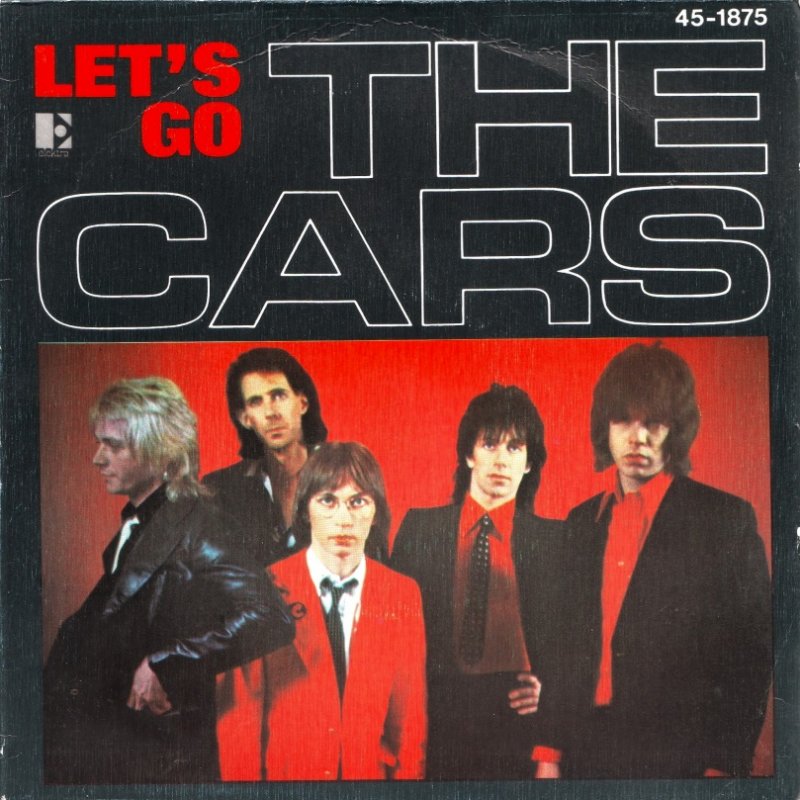
With Ric Ocasek passing away on Sunday I’ve been listening to his music tonight. He wrote some of the most catchy songs of the late seventies to the mid-eighties. Ric Ocasek wrote this song, but their bass player Benjamin Orr sang lead on this one.
The song was on their second album release Candy-O. The song peaked at #14 on the Billboard 100, #5 in Canada, and #40 in New Zealand in 1979. The song’s inspiration was from the 1962 song called “Let’s Go” by the Routers.
Ric Ocasek on Candy-O that was produced by Roy Thomas Baker who also produced Queen.
“We were ready to [produce] our own album if we couldn’t have found a producer,” “But I never had a real producer before Roy; all I ever knew was what I stumbled on. So I was interested to have someone who’s been doing it for 15 years as opposed to my five. I didn’t particularly care for his productions, except on Queen. Now, Queen is not one of my favorite bands, but you can’t help noticing a production like ‘Bohemian Rhapsody,’ the clarity and the way it’s put down. To me, it’s still an art form. I knew what I could do. I wanted to see what someone else could do. He turned out to be a great friend and taught us a lot about musical technique. He never infiltrated arrangements or musical ideas.”
A little off-topic but msjadeli was commenting with me and sent this great link to Ric’s artwork…
She’s driving away with the dim lights on And she’s making a play, she can’t go wrong She never waits too long
She’s winding them down on her clock machine And she won’t give up ’cause she’s seventeen She’s a frozen fire, she’s my one desire
I don’t want to hold her down Don’t want to break her crown When she says “let’s go I like the nightlife baby” She says, “I like the nightlife baby” She says, “let’s go”
She’s laughing inside ’cause they can’t refuse She’s so beautiful now, she doesn’t wear her shoes She never likes to choose
She’s got wonderful eyes and a risqué mouth And when I asked her before she said she’s holding out She’s a frozen fire, she’s my one desire
I don’t want to hold her down Don’t want to break her crown When she says, “let’s go” I like the nightlife baby” She says, “I like the nightlife baby” She says, “let’s go”
“I like the nightlife baby” She says, “I like the nightlife baby” She says, “let’s go”
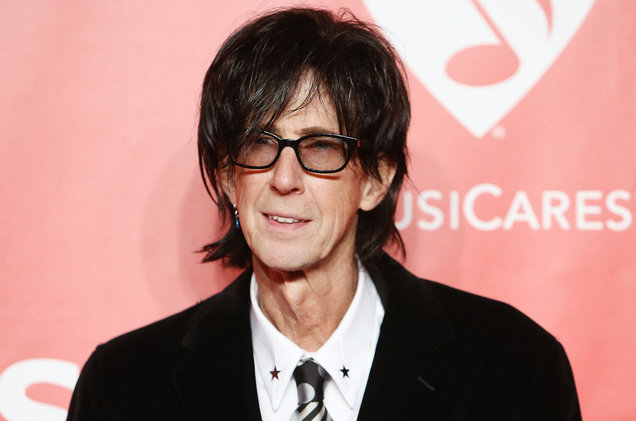
Sad news from New York tonight. Ric Ocasek was found dead in his Manhattan apartment on Sunday, law enforcement confirmed. Some reports say he was 75 and some say he was 70.
Ric wrote some of the best pop hits of the late seventies and eighties for the Cars. The Cars were a big part of my teenage years.
I would watch this on those magical Saturday mornings when the cartoons last until around noon. Then out the door, I would go but from 7am – noon it was a kids world.
Wacky Races is about a series of car competitions where eleven racers race in different location all over North America. The story revolves around Dick Dastardly and his dog Muttley who is determined to cheat just to win the game but they always lose every time. Wacky Races was produced by Hanna-Barbera and aired from 1968 to 1970.
Inspired by the 1965 film The Great Race the cartoon features eleven teams of racers competing to win the title of “World’s Wackiest Racer.” The roster of competitors included: Dick Dastardly and Muttley, The Slag Brothers, The Gruesome Twosome, Professor Pat Pending, The Red Max, Penelope Pitstop, Sergeant Blast and Private Meekly, The Ant Hill Mob, Lazy Luke, and Blubber Bear, Peter Perfect, and Rufus Ruffcut and Sawtooth.
The song was on the album Out of the Blue which was a favorite of mine. The song peaked at #35 on the Billboard 100 and #6 in the UK in 1978.
Jeff Lynne locked himself away to write this album: “It was dark and misty for two weeks, and I didn’t come up with a thing. Suddenly the sun shone and it was, ‘Wow, look at those beautiful Alps.’ I wrote Mr. Blue Sky and 13 other songs in the next two weeks.”
The song renewed its popularity with the inclusion on the Guardians of the Galaxy Vol 2 soundtrack.
From Songfacts
This song closes the side of the Out Of The Blue album known as “Concerto For A Rainy Day.” The lyric is suitably uplifting, following the concept of a rainy day that comes to an end.
Jeff Lynne has a “blue” streak: Other songs he wrote for ELO include “Out of the Blue” and “Midnight Blue.” Lynne is from the Birmingham area in England, where the Birmingham Football Club (or as Americans call it, “soccer team”) is called the Birmingham Blues. The “blues” in these songs are in some way a tribute to his team.
The synthesized voice at the end of the song sings, “Please turn me over” because in the old days when we used to listen to our music on vinyl, we had to turn the record over to hear the other side.
In 2003, this was featured in commercials for the Volkswagen convertible Bug. The spot shows a man slogging through his workday until he stops to look out a window and sees what’s out there. The song was also used in commercials for Sears.
This is played before the start of every football (soccer) match played by Birmingham City Football Club (nickname: “The Blues”). Many fans of the club associate the song with a former player (and later manager), Trevor Francis, who, through his association with the club in the ’70s, was believed to be friends with supporter Jeff Lynne.
This was used as the theme song to the short-lived series on NBC called LAX, which starred Heather Locklear and Blair Underwood as the runway and terminal managers, respectively.
This song was used in the Jim Carrey movie Eternal Sunshine of the Spotless Mind and was also featured in the movie Martian Child with John Cusack.
Jeff Lynne and Richard Tandy of ELO performed this song with Ed Sheeran at the Grammy Awards in 2015. ELO, which never won a Grammy, had returned to action in 2014 with a concert at Hyde Park in London.
According to data provided by music discovery app Shazam, Lynne, Tandy and Sheeran’s performance provided the most Shazamed moment of the entire telecast.
This plays during the opening credits of the 2017 movie Guardians of the Galaxy Vol. 2 in what director James Gunn called “the most hugely insane shot I’ve ever done.” Like the first film, the soundtrack is made up of ’70s hits that Chris Pratt’s character plays throughout on a Walkman.
Mr. Blue Sky
Sun is shinin’ in the sky There ain’t a cloud in sight It’s stopped rainin’ everybody’s in the play And don’t you know It’s a beautiful new day, hey hey
Runnin’ down the avenue See how the sun shines brightly in the city On the streets where once was pity Mr. Blue Sky is living here today, hey hey
Mr. Blue Sky please tell us why You had to hide away for so long (so long) Where did we go wrong?
Mr. Blue Sky please tell us why You had to hide away for so long (so long) Where did we go wrong?
Hey you with the pretty face Welcome to the human race A celebration, Mr. Blue Sky’s up there waitin’ And today is the day we’ve waited for
Oh Mr. Blue Sky please tell us why You had to hide away for so long (so long) Where did we go wrong?
Hey there Mr. Blue We’re so pleased to be with you Look around see what you do Everybody smiles at you
Hey there Mr. Blue We’re so pleased to be with you Look around see what you do Everybody smiles at you
(Mr. Blue Sky, Mr. Blue Sky) (Mr. Blue Sky)
Mr. Blue, you did it right But soon comes Mr. Night creepin’ over Now his hand is on your shoulder Never mind I’ll remember you this I’ll remember you this way
Mr. Blue Sky please tell us why You had to hide away for so long (so long) Where did we go wrong?
Hey there Mr. Blue (sky) We’re so pleased to be with you (sky) Look around see what you do (blue) Everybody smiles at you
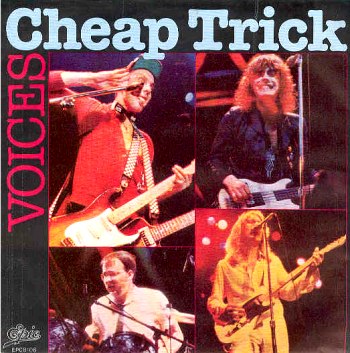
One of my top Cheap Trick songs. Robin Zanders voice sounds great in this Beatle-esque song.
This song peaked at #32 on the Billboard 100 and #12 in Canada in 1980. The song was on the Dream Police album that peaked at #6 in 1979 in the Billboard album chart. Voices was written by Rick Nielsen.
Rick Neilsen on Voices: We started off with the chorus as opposed to building up to the chorus. Because it’s like you know “Voices,” okay, and that’s the same thing with “Dream Police,” you know, you hear voices in your head or somebody’s just messing with your brain and hears voices. You hear something, it’s like you didn’t know what you were listening for until you heard the voices. Somebody, your mind’s eye, has some talking to do to you.
From Songfacts
Long before their earnest #1 hit “The Flame,” Cheap Trick released another ballad: “Voices.” It’s a love song of sorts:
I fell in love with you again
Please, can I see you every day?
Except that it’s coming from inside his own head. “You hear voices in your head or somebody’s just messing with your brain and hears voices,” the song’s writer, guitarist Rick Nielsen, told The A/V Club. “You hear something, it’s like you didn’t know what you were listening for until you heard the voices. Somebody, your mind’s eye, has some talking to do to you.”
The “title track of the album,” has a similar theme, with the singer dealing with someone else inside his head. Both songs also use a string section.
Arnold Levine directed the video for this song, which was done on the same shoot for the “Dream Police” clip.
Voices
You didn’t know what you were lookin’ for Til you heard the voices in your ear
Hey, it’s me again Plain to see again Please can I see you every day
I’m a fool again I fell in love with you again Please can I see you every day
You didn’t know what you were lookin’ for Til you heard the voices in your ear You didn’t know what you were lookin’ for Til you heard the voices in your ear
Words don’t come out right I try to say it oh so right I hope you understand my meaning
Hey, it’s me again I’m so in love with you again Please can I see you every day
You didn’t know what you were lookin’ for Til you heard the voices in your ear You didn’t know what you were lookin’ for Til you heard the voices in your ear
I remember every word you said (Word you said) I remember voices in my head (In my head) I remember ever word you said (Word you said)
I heard your voice-it Your voice is-cool voices Warm voices Just what I needed, too Words don’t seem right But its Cool voices-warm voices Your voice is Just what I needed for Love is the word-it’s Warm voices-your voice is Cool voices Just what I needed, too I heard your voice-it was Your voice is-cool voices Warm voices
Just what I needed, too Just what I needed, too Just what I needed, too
“I’m sort of amused by it, because it is so bizarre. It’s definitely avant-garde television. It’s definitely bad enough to be a classic.”
“If I had the time and a sledgehammer, I would track down every bootlegged copy of that program and smash it.”
That Force, alas, is not with him!
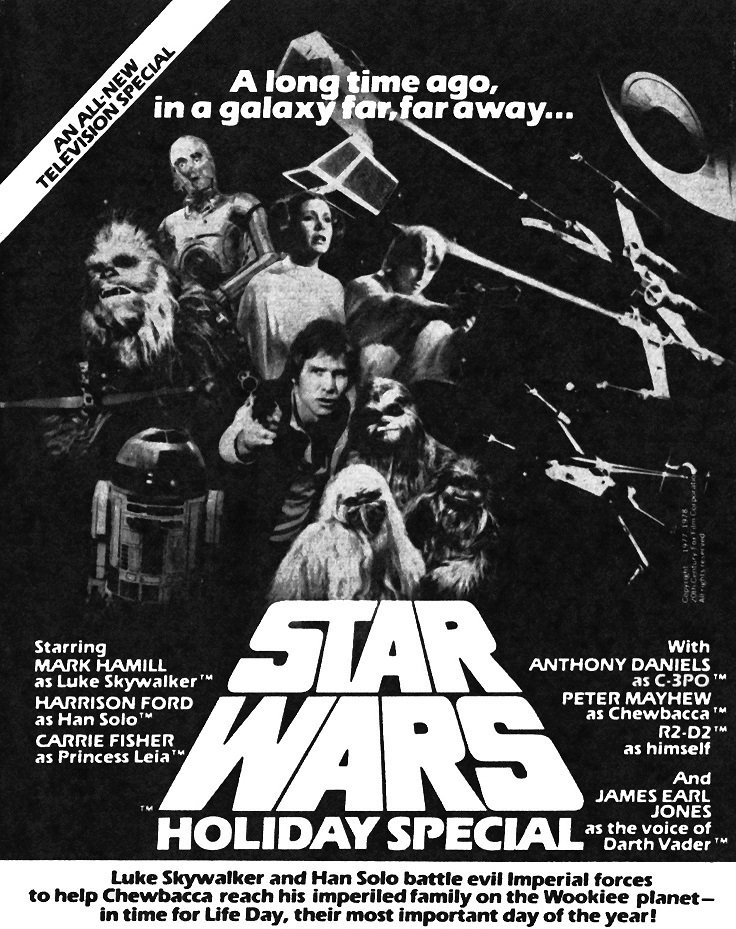
This show was shown once on national TV on November 17, 1978…and only once…for good reason. It was bad…really bad… almost Paul Lynde Halloween Special bad. Why George Lucas agreed to this I don’t know but he wanted every copy destroyed…copies are still out there and I have one. Now anyone can watch it because it is on Youtube.
I do like watching this show and the Paul Lynde Halloween Special…they are so bad they are good. George Lucas’s original intentions was a sentimental look at Chewbacca’s family during a galactic holiday celebration.
The uh…plot per IMDB was: It is Life Day, a holiday that is celebrated on Chewbacca’s home planet of Kashyyyk. Chewie and Han Solo are trying to get to the planet where Chewie’s family is waiting for him, but the Empire is out searching for the rebels, giving everyone a hard time. While we are waiting, we get a look at the everyday life of a Wookiee family. We meet all the familiar characters from Star Wars: Episode IV – A New Hope (1977) and we are introduced to Boba Fett during a short cartoon. We also pay a visit to the Cantina and meet all the monsters again.
Only in the 70s could this show happen…a few of the guest stars were Bea Arthur, Art Carney, Harvey Korman…and to top it off…Jefferson Starship!
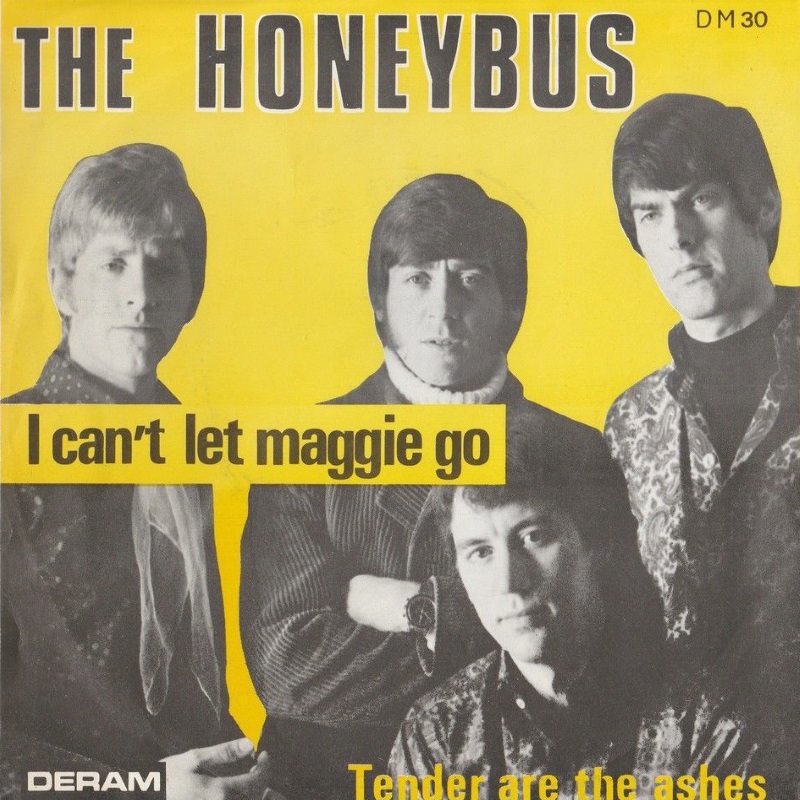
My 19-year-old son came in tonight and said a quick Hi Dad…he then muttered: “I Can’t Let Maggie Go… Honeybus.” I, of course, asked him what the hell he was talking about. He told me it was a song by a band named Honeybus (I thought it was a new band) and to listen to it because he couldn’t get it out of his head. I didn’t ask him where he heard this song but it stuck with me …late 60s light pop.
The band formed in London in 1967. After hitting with this song they were on the front page of music magazines Disc and Music Echo. The song peaked at #8 in the UK in 1968…but this would be their only hit.
I Can’t Let Maggie Go
She makes me laugh, she makes me cry, with a twinkle of her eye She flies like a bird in the sky She flies like a bird and I wish that she was mine She flies like a bird, oh me, oh my I see her sigh Now I know, I can’t let Maggie go
We walk here and we walk there People stop and people stare ‘Cause she flies like a bird in the sky She flies like a bird and I wish that she was mine She flies like a bird, oh me, oh my I see her sigh Now I know, I can’t let Maggie go
She flies like a bird in the sky She flies like a bird and I wish that she was mine She flies like a bird, oh me, oh my I see her sigh Now I know, I can’t let Maggie go
Oh yes, she flies like a bird in the sky She flies like a bird and I wish that she was mine (Oh yes, I wish that she was mine) She flies like a bird, oh me, oh my I see her sigh Now I know, I can’t let Maggie go
This song has been played a lot on radio and I try to stay away from posting songs like that but I still love it…and will turn it up when it comes on.
The song peaked at #7 on the Billboard 100, #5 in Canada, #2 in New Zealand, and #7 in the UK in 1974. The song was on Paul’s best-known album Band On The Run. The album was #1 in the US, Canada, and the UK.
It was a terrific single…I like the B side (Let Me Roll It) as much as the A-side. Tony Visconti, who did a lot of production work for David Bowie and Thin Lizzy, did the orchestration on this song.
From Songfacts
“Jet” was the name of a black Labrador that Paul McCartney and his wife Linda owned; the dog provided the title for the song. The McCartney’s owned a variety of animals, and at the time their brood included a Golden Lab named Poppy, a Dalmatian named Lucky, and the old Sheepdog Martha (from the Beatles song “Martha My Dear”). “Jet” was chosen not because he was Paul’s favorite, but because the name makes a very stadium-ready title, perfect for throwing your fist in the air when it’s performed in an arena. The song is really about freedom; McCartney did something similar when he used an amusement park ride as the title for a song about madness in “Helter Skelter.”
Paul’s wife Linda gave some clues to the thought process behind “Jet” when she said in 1976: “He wanted that one to be totally mad. Paul’s had a lot of practice in the studio. He’s done some very trippy things. Every now and then he remembers how much he loves it.”
Speaking with GQ in 2018, Paul McCartney told the story behind this song: “I was in a songwriting mood and I was up in Scotland. I just thought, OK, I just gotta go somewhere and try and write a song. We happened to have a little pony that was called Jet on the farm. I took my guitar and hiked up this great big hill. I found myself a place which was in the middle of nature, and just sat there and started making up a song.
I don’t know where all the words came from. Well I know where ‘Jet’ came from – I liked the name. The words are probably about me and my father-in-law. The early days of getting married and when your father-in-law is kind of a nuisance. He’s probably the ‘Major’ in it but it’s only a song so you kind of work your things out.
That one was written halfway up a mountain in Scotland, then recorded in Nigeria. I was wondering where to record and I fancied getting out of England, so I asked my record label which is EMI to supply me with a list of all the studios they had around the world – I knew they had a lot. One was in China, one was in Rio de Janeiro and one was in Lagos, Nigeria. So, I went, Yeah Lagos, come on, because I like African music a lot. I love the rhythms of African music so I chose that not realizing that it would be a really basic little studio. We kind of built half the studio. They didn’t have a vocal booth, so we had to explain to them: you take some wood, you get some glass and you put it in like that. So we built the vocal booths. But it was kind of nice, I liked the primitive aspect of it and being in Africa was a pretty interesting experience.”
It’s possible to read a deep meaning into the lyrics, “I thought the Major was a lady suffragette,” but David Bowie’s song Suffragette City was released the previous year, and it’s likely the word “suffragette,” which is a term for a woman fighting for the right to vote, was floating around in McCartney’s mind.
Linda McCartney was an official member of the band, and she was often maligned in the press as being dead weight. Her contributions on stage were rarely pronounced, which was probably the way the audio engineers mixing the shows liked it, but on live performances of this song you can kind of hear her playing the Mellotron if you listen carefully.
The Australian rock band Jet got their name from this song. McCartney and The Beatles were a big influence on them.
This was released as a single with “Mamunia” as the B-side, but three weeks later “Let Me Roll It” replaced it.
Jet
(Jet, Jet) (Jet) I can almost remember their funny faces That time you told them you were going to marrying soon And Jet I thought the only lonely place was on the moon
(Jet, Jet)
Jet was your father as bold as the sergeant major How come he told you that you were hardly old enough yet And Jet I thought the major was a lady suffragette
(Jet, Jet)
Ah mater want Jet to always love me Ah mater want Jet to always love me Ah mater, much later
(Jet)
And Jet I thought the major was a lady suffragette (Jet, Jet)
Ah mater want Jet to always love me Ah mater want Jet to always love me Ah mater, much later
Jet with the wind in your hair Of a thousand laces Climb on the back and we’ll go for a ride in the sky And Jet I thought that the major was a little lady suffragette
(Jet, Jet) And Jet you know I thought you was a little lady suffragette (Jet) A little lady My little lady, yes
This band was formed in 1971 in the Chicago suburb of Oak Park, Illinois. This song was released in 1977 and was on their self titled album…it did not chart.
The Pezband formed in the late seventies, Pezband combined Beatles type melodies with a rock ‘n roll edge. The band released three studio albums from 1977 till 1979, all of which were critically acclaimed. Rolling Stone cited their 1978 sophomore release, Laughing In The Dark as one of the best albums of the year.
However, like many bands I feature on Friday, Pezband’s great reviews didn’t translate into album sales, and the band broke up shortly after they released their third studio album in 1979, Cover to Cover.
In 1978, the group opened major stadium shows for Fleetwood Mac and Supertramp but never could move records. In 2012 they reunited and in 2013 planned a tour of Japan.
Baby It’s Cold Outside
Oh yeah I I I can’t take it no more It’s bad little girl what we’re headed for Oh and I I I can tell you right now I’m through with your lies this is my final bow
Well I know your secret I ain’t gonna keep it I’ll put it to you now Baby it’s cold outside (Baby it’s cold outside) Baby you know that you lied (Baby you know that you lied) Darlin’ you know that I love you so You should know that by now
Oh and I I I I’ll tell you again Yeah you’re a bad little girl Looks like this is the end
Well I know your secret I ain’t gonna keep it I’ll put it to you now Baby it’s cold outside (Baby it’s cold outside) Baby you know that you lied (Baby you know that you lied) Darlin’ you know that I love you so You should know that by now
Baby it’s cold outside (Baby it’s cold outside) Baby you know that you lied (Baby you know that you lied) Darlin’ you know that I love you so You should know that by now
Baby it’s cold outside (Baby it’s cold outside) Baby you know that you lied (Baby you know that you lied) Baby it’s cold outside (Baby it’s cold outside) Baby you know that you lied (Baby you know that you lied) Darlin’ you know that I love you so You should know that by now
Baby it’s cold outside (Baby it’s cold outside) Baby you know that you lied (Baby you know that you lied) Baby it’s cold outside (Baby it’s cold outside) Baby you know that you lied (Baby you know that you lied) Baby it’s cold outside (Baby it’s cold outside)
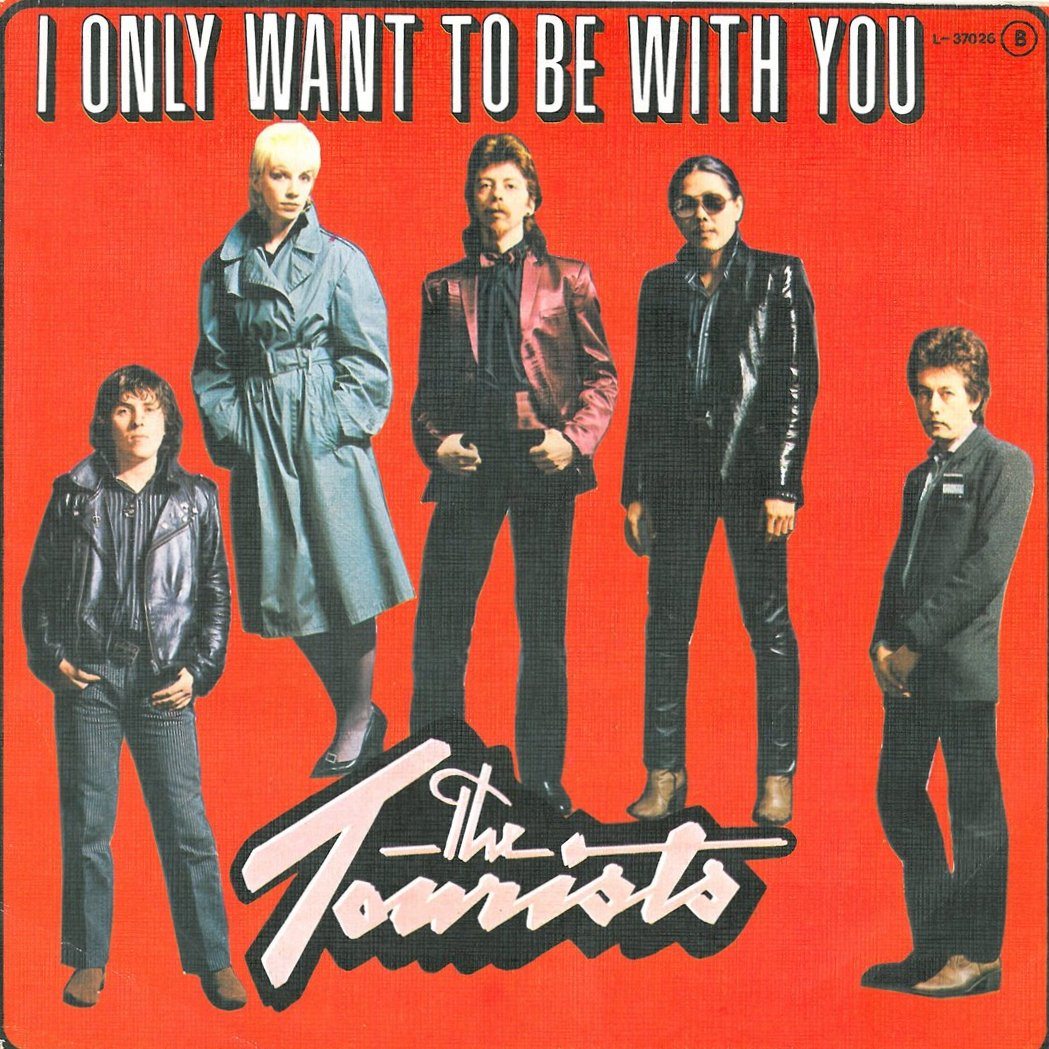
I was reading Dave’s article at A Sound Day about the Eurythmics and he mentioned the band that Annie Lennox and Dave Stewart were in before the Eurythmics. I can’t get their version of the song out of my head. The Tourist formed in 1976 and broke up in 1980. Stewart and Lennox would continue to work together and hit gold with the Eurythmics.
The song was written by Mike Hawker and Ivor Raymonde and first made famous by Dusty Springfield in 1964. After seeing Lennox and Stewart with the Eurythmics…this is fun to see and watch.
This song peaked at #83 on the Billboard 100 in 1980 and #4 in the UK in 1979.
I Only Want To Be With You
I dont know what it is that makes me love you so I only know I never want to let you go cause youve started something Oh, cant you see? That ever since we met Youve had a hold on me It happens to be true I only want to be with you
It doesnt matter where you go or what you do I want to spend each moment of the day with you Oh, look what has happened with just one kiss I never knew that I could be in love like this Its crazy but its true I only want to be with you
You stopped and smiled at me And asked if Id care to dance I fell into your open arms And I didnt stand a chance Now listen honey I just want to be beside you everywhere As long as were together, honey, I dont care cause youve started something Oh, cant you see? That ever since we met Youve had a hold on me No matter what you do I only want to be with you
Oh, oh, you stopped and you smiled at me And asked if Id care to dance I fell into your open arms And I didnt stand a chance Now hear me tell you I just want to be beside you everywhere As long as were together, honey, I dont care cause youve started something Oh, cant you see? That ever since we met Youve had a hold on me No matter what you do I only want to be with you I said no matter, no matter what you do I only want to be with you
Jeff Lynne wrote this song and it was recorded by the Move. I know the version by ELO more but I really like this version and this band. Do Ya was the B side to California Man and it was the only song by the Move to chart in the US. The band was extremely successful in the Uk. The Move had 7 top 10 hits, 10 top 40 and a number 1 in the UK Charts.
The Move formed in 1965 and was very successful until Roy Wood (lead singer and songwriter), Jeff Lynne (who joined in 1969), and Bev Bevan formed ELO in 1972. Do Ya came out at the time that ELO was forming. ELO made a studio recording of it and it appeared on the 1976 album A New World Record.
If you want to know about the Move…the below link is a good start.
In this life I’ve seen everything I can see woman I’ve seen lovers flying through the air Hand in hand I’ve seen babies dancing in the midnight sun And I’ve seen dreams that came from the heavenly skies above I’ve seen old men crying at their own grave sides And I’ve seen pigs all sitting watching Picture slides But I never seen nothin’ like you.
Do ya want my love Do ya want my face Do ya want my mind Do ya want my love
Well I heard the crowd singin’ out of tune As they sat and sang auld lang syne by the light Of the moon I heard the preacher bangin’ on the drums And I heard the police playin’ with their guns But I never heard nothing like you In the country where the sky touches down On the field she lay her down to rest In the morning sun They come a runnin’ just to get a look just to Feel to touch her long black hair they don’t Give a damn
Do ya want my love Do ya want my face Do ya want my mind Do ya want my love
Well I think you know what I’m trying to say Woman That is I’d like to save you for a rainy day I’ve seen enough of the world to know That i’ve got to get it all to get it all to grow
Do ya want my love Do ya want my face Do ya want my mind Do ya want my love
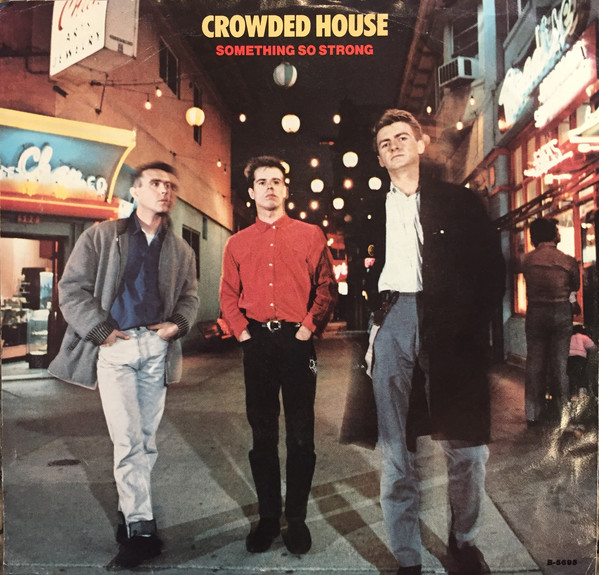
I’ve been doing this for a while now and I cannot believe I haven’t posted about Crowded House. It was love at first listen with this song. The lyric “bring life to frozen ground” still stands out to me and I cannot hear this song enough. As far as pop songs go it’s hard to beat this.
The song peaked at #7 on the Billboard 100, #3 in New Zealand, and #10 in Canada in 1987. The song was written by Neil Finn and Mitchell Froom.
I’ve played music for a long time and it fascinates me how songs develop. They can come at once or they can take time to build from pieces and parts. Below is a short home demo version of this song…below that… the finished product.
Love the Smoke on the Water tease in the video.
Crowded House
Love can make you weep, it can make you run for cover Roots that spread so deep, bring life to frozen ground
(Something so strong) could carry us away (Something so strong) could carry us today
Turning in my sleep, love can leave you cold The taste of jealousy, is like a lust for gold
(Something so strong) could carry us away (Something so strong) could carry us today
(I’ve been) feeling so much older (Frame me) and hang me on the wall (I’ve seen) you fall into the same trap (This thing) is happening to us all
(Something so strong) could carry us away (Something so strong) could carry us today
(Something so strong) (Something so strong) (Something so strong) Something something so strong
This was the opening track on the Question Of Balance album, and at one point it was going to be the title track. The song was recorded several months earlier than the other tracks on the album and its title was shortened from “Question Of Balance” to “Question.”
When I was younger I started with this album and owned everything up until Long Distance Voyager. Their early seventies output is my favorite period but I liked their entire catalog as a whole.
The song peaked at #21 in the Billboard 100 and #2 in the UK in 1970. In the UK, this became the group’s biggest hit for their classic lineup. Before John Lodge and Justin Hayward joined the group in 1966, they had a #1 UK hit with “Go Now.”
From Songfacts
Moody Blues guitarist/vocalist Justin Hayward wrote this song, which reflected the thoughts of many young people who were questioning the war in Vietnam. He told us: “We’d achieved great success in the United States and we were playing a lot of student venues and colleges, and the student audience was our audience. We were mixing with these people and seeing how different the problems were for them and the issues in being a member of the greatest nation on earth: the United States. How different they were from British people. I was just expressing my frustration around that, around the problems of anti-war and things that really concerned them, and for their own future that they may be conscripted. How that would morally be a dilemma for them and that kind of stuff. So it did really come out of that. And my own particular anger at what was happening. After a decade of peace and love, it still seemed we hadn’t made a difference in 1970. I suppose that was the theme of the song. And then the slow part of the song is really a reflection of that and not feeling defeated, but almost a quiet reflection of it, and mixing with a bit of a love song, as well.” (Here’s the full Justin Hayward interview.)
In the liner notes of the 1997 remastered CD, Justin Hayward wrote: “Sometime before we taped the album, we (documented) ‘Question,’ which was a song that I didn’t have on Friday night for a session (the next day). But, by the morning, I had it and it was recorded very quickly.” Hayward adds that it was “Recorded live, with no overdubbing or double-tracking, just a bit of echo.”
The song is a concert mainstay of The Moody Blues, which is fine with Justin Hayward, who tells us he never loses the emotion for it when he performs the tune. It’s also a song that has remained relevant. Says Hayward: “There’s no doubt that it still resonates, the lyrics reflect whichever generation you’re in. Whatever time you’re in, people are experiencing those emotions. And I find that people identify with it at any age.”
Many of the songs Justin Hayward wrote for The Moody Blues don’t have obvious titles – “The Voice,” for instance. This song is another one without a natural title where he chose a word from the lyrics to represent it.
Question
Why do we never get an answer When we’re knocking at the door With a thousand million questions About hate and death and war? ‘Cause when we stop and look around us There is nothing that we need In a world of persecution That is burning in its greed
Why do we never get an answer When we’re knocking at the door? Because the truth is hard to swallow That’s what the war of love is for
It’s not the way that you say it When you do those things to me It’s more the way that you mean it When you tell me what will be And when you stop and think about it You won’t believe it’s true That all the love you’ve been giving Has all been meant for you
I’m looking for someone to change my life I’m looking for a miracle in my life And if you could see what it’s done to me To lose the love I knew Could safely lead me through
Between the silence of the mountains And the crashing of the sea There lies a land I once lived in And she’s waiting there for me But in the grey of the morning My mind becomes confused Between the dead and the sleeping And the road that I must choose
I’m looking for someone to change my life I’m looking for a miracle in my life And if you could see what it’s done to me To lose the love I knew Could safely lead me to The land that I once knew To learn as we grow old The secrets of our soul It’s not the way that you say it when you do those things to me It’s more the way you really mean it when you tell me what will be
Why do we never get an answer When we’re knocking at the door With a thousand million questions About hate and death and war? When we stop and look around us There is nothing that we need In a world of persecution That is burning in its greed
Why do we never get an answer When we’re knocking at the door?
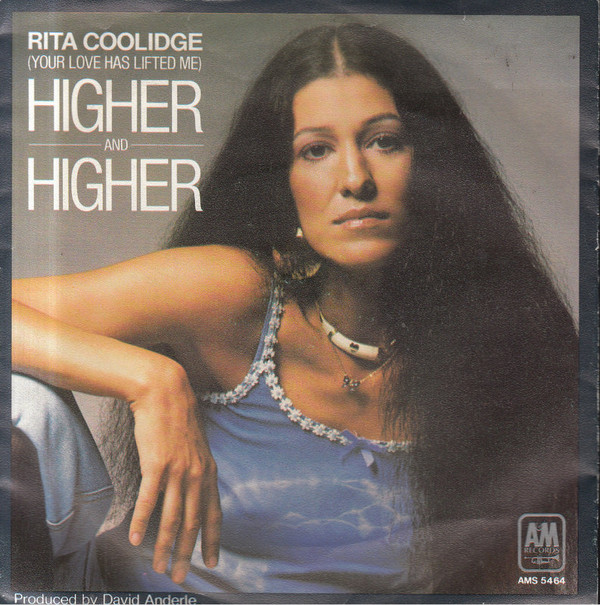
Rita’s version altered the title a bit from Your Love Keeps Lifting Me Higher and Higher to Your Love Has Lifted Me Higher and Higher. Her version slows it down a little and changes parts of the song from Jackie Wison’s but it’s great.
The arrangement of the song was by Booker T. Jones.
Rita’s version peaked 10 years after Jackie’s version at #2 on the Billboard 100 in 1977. The song peaked at #1 in Canada and #7 in New Zealand.
(Your Love Has Lifted Me) Higher And Higher
Your love is liftin’ me higher Than I’ve ever been lifted before
Your love is liftin’ me higher Than I’ve ever been lifted before So keep it up, quench my desire And I’ll be at your side forevermore
Now once, I was downhearted Disappointment was my closest friend But you came, he soon departed And he never showed his face again
Ohh I’m so glad I finally found you You’re that one in a million man When you wrap your lovin’ arms around me I can stand up and face the world again
Your love is liftin’ me higher Than I’ve ever been lifted before So keep it up, quench my desire And I’ll be at your side forevermore
Oh your love is liftin’ me higher Than I’ve ever been lifted before So keep it up, quench my desire And I’ll be at your side forevermore
Your love is liftin’ me higher Than I’ve ever been lifted before So keep it up, quench my desire And I’ll be at your side forevermore
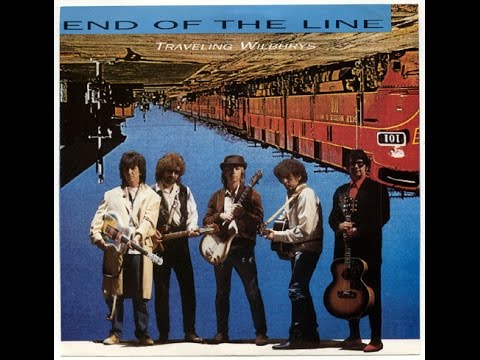
The video for this song is really sad. Roy Orbison died before the making of it and when his verse comes on they show a picture of him on the train and his guitar on a rocking chair.
This song and Handle with Care were the two biggest hits. This one made it to #2 on the Billboard Mainstream Rock Song Charts.
End of the Line
Well it’s all right, riding around in the breeze Well it’s all right, if you live the life you please Well it’s all right, doing the best you can Well it’s all right, as long as you lend a hand
You can sit around and wait for the phone to ring (end of the line) Waiting for someone to tell you everything (end of the line) Sit around and wonder what tomorrow will bring (end of the line) Maybe a diamond ring
Well it’s all right, even if they say you’re wrong Well it’s all right, sometimes you gotta be strong Well it’s all right, as long as you got somewhere to lay Well it’s all right, everyday is judgment day
Maybe somewhere down the road aways (end of the line) You’ll think of me, wonder where I am these days (end of the line) Maybe somewhere down the road when somebody plays (end of the line) Purple haze
Well it’s all right, even when push comes to shove Well it’s all right, if you got someone to love Well it’s all right, everything’ll work out fine Well it’s all right, we’re going to the end of the line
Don’t have to be ashamed of the car I drive (end of the line) I’m just glad to be here, happy to be alive (end of the line) It don’t matter if you’re by my side (end of the line) I’m satisfied
Well it’s all right, even if you’re old and grey Well it’s all right, you still got something to say Well it’s all right, remember to live and let live Well it’s all right, the best you can do is forgive
Well it’s all right, riding around in the breeze Well it’s all right, if you live the life you please Well it’s all right, even if the sun don’t shine Well it’s all right, we’re going to the end of the line








 PowerPop... An Eclectic Collection of Pop Culture