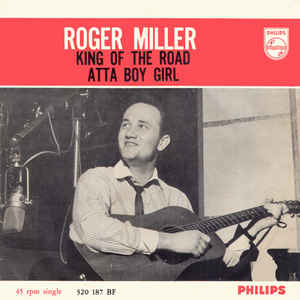
This is a Holly song that you don’t hear much and has been a favorite of mine. The sessions didn’t go the way that Buddy would have liked. His songs had more of a country feel than Holly would have liked.
I really like the rockabilly guitar played by Sonny Curtis. It was recorded at Bradley’s Barn in Nashville Tn in January 26, 1956.
This was Buddy Holly’s first single in April 1956, “Blue Days, Black Nights” was not a Buddy Holly composition; it was written by Ben Hall. The song was the B side to Love Me.
Due to a misspelling on Holly’s recording contract, his name was changed from Holley to Holly. This release is the first to use this spelling, He would go with that spelling the rest of his career.
Blue Days Black Nights
Blue days, black nights Blue tears keep on fallin’, for you dear Now you’re gone Blue days, black nights My heart keeps on calling for you dear And you alone
Memories of you make me sorry I gave you reason to doubt me But now you’re gone and I am left here all alone With blue memories, I think of you
Blue days, black nights I didn’t realize I would miss you The way I do And now somehow I know I will pay For the times I have made you blue
Stevens got the lyrics from a hymn book he found at a bookstore while looking for song ideas. It was a children’s hymn by Eleanor Farjeon, who also wrote a lot of children’s poetry.
Cat Stevens: “I accidentally fell upon the song when I was going through a slightly dry period and I needed another song or two for Teaser And The Firecat. I came across this hymn book, found this one song, and thought, This is good. I put the chords to it and then it started becoming associated with me.”
The song peaked at #6 on the Billboard 100, #9 in the UK, #3 in New Zealand and #4 in Canada. It was on the album Teaser and the Firecat which peaked at #2 on the Billboard Album Charts in 1972.
From Songfacts
Children in England would have heard Farjeon’s hymn in primary school. Scottish children sang the old Gaelic hymn, “Child in a manger, Infant of Mary” to this tune. This hymn predated “Morning” and was written in Gaelic by Mary MacDonald before being translated into English. For Scottish children it was a Christmas hymn. >>
Rick Wakeman, who later became a member of Yes, played keyboards on this track. He claims he was never paid for his work.
This was Stevens’ first single that did better in America than in England. “Peace Train” and “Wild World” were not released in the US.
This song is set to a Scottish tune entitled “Bunessan,” a melody that was named for a small island town in Scotland. >>
Neil Diamond recorded this in 1992 for his Christmas album (yes, Diamond is Jewish). His version went to #36 in the UK.
Morning Has Broken
Morning has broken like the first morning Blackbird has spoken like the first bird Praise for the singing Praise for the morning Praise for them springing fresh from the world
Sweet the rain’s new fall, sunlit from heaven Like the first dewfall on the first grass Praise for the sweetness of the wet garden Sprung in completeness where his feet pass
Mine is the sunlight Mine is the morning Born of the one light Eden saw play Praise with elation, praise ev’ry morning God’s recreation of the new day
Morning has broken like the first morning Blackbird has spoken like the first bird Praise for the singing Praise for the morning Praise for them springing fresh from the world
This show was not like the Mary Tyler Moore Show, Bob Newhart, or All In The Family. Those are great shows…some of the best ever sitcoms…but they were aimed more at adults while this one I always felt was largely aimed at teenagers. The show aired from 1978 to 1982. Rock and Roll on a sitcom was not common.
WKRP in Cincinnati” was produced by MTM – the studio Mary Tyler Moore and Grant Tinker built that produces shows such as The Bob Newhart Show, Mary Tyler Moore Show, Phyllis, The White Shadow, Rhoda, and many others.
The episode I remember the most having an effect on me was about the horrible event in 1979 when eleven people were killed at a Who concert in Cincinnati’s Riverfront Park. The show handled the tragic situation very well.
The plot…to make it short was about a Program Director (Andy Travis) who had a perfect record in turning bad radio stations around joins the staff at WKRP. The station is in the bottom of the ratings and he wants to change the format to Rock which is met with trepidation from the oddball staff.
The show would feature new rock music as well as old. Blondie gave the show one of their gold records in appreciation because the show played “Heart of Glass” and helped to make it number 1.
The extended theme song by Steve Carlisle Wkrp In Cincinnati peaked at #65 on the Billboard 100 in 1979…video at the bottom
The Cast
Bailey Quarters – Jan Smithers – A shy soft-spoken lady in charge of billing and station traffic soon worked herself up to an on-air personality and other duties. She and Jennifer on the show were a bit like Mary Ann and Ginger on Gilligans Island.
Andy Travis – Gary Sandy –Andy comes to the station as the new Program Director to turn the station around and finds the station’s employees…are like from the Island of Misfit Toys. He finds their strengths and tries to make it work. His character was based on real-life Program Director Mikel Herrington.
Dr. Johnny Fever – Howard Hesseman – Fun Fact…David Cassidy was offered this role but turned it down!
Johnny had been around for a while and was fired off a Los Angeles radio station for saying booger on air. He was probably my favorite character…next to Bailey…on the show when I first watched. Dr. Johnny Fever was based on real DJ “Skinny” Bobby Harper.
Venus Flytrap – Tim Reid – Venus was the night DJ and was one of the smoothest DJ’s ever…Venus wears 70’s type flashy clothes and in the series eventually becomes Assistant Program Director.
Herb Tarlek – Frank Bonner – Herb was a salesman and dressed very tacky and loud. He hits on Jennifer at every opportunity, despite being married… but gets turned down constantly.
Jennifer Marlowe – Loni Anderson – She was Ginger to Bailey’s Mary Ann. Mr. Carlson’s receptionist…she was the highest-paid employee at the station even though refusing to do most things that receptionists are required to do.
Arthur Carlson – Gordon Jump – The lovable but ineffective station manager who is the son of the station’s owner. He never wanted to know what was going on…, but when he tries to be hands-on…it leads to disastrous results (see Turkey’s Away episode)
Les Nessman – Richard Sanders – The incompetent News Director…Les was obsessed with the region’s hog farming industry…constantly mispronounced names… ignored obvious news stories for Hog Reports…but he would win the Silver Sow Award and The Buckeye Newshawk Award.
What a great single this was… Up On Cripple Creek with the B side of The Night They Drove Old Dixie Down. Robbie Robertson wrote this song and it appeared on The Band’s sophomore self-titled album.
This song was their highest-charting Billboard song and it peaked at #25 in 1970.
The Band rented Sammy Davis’s house turning the pool house into a recording studio, nailing baffles all along the outside wall and getting a great sound inside. The album was recorded there except “Up On Cripple Creek”, “Jemima Surrender” and “Whispering Pines” which was recorded at the Hit Factory studio in New York City.
The unusual sound that sounds like a jaw harp was achieved by Hudson with a wah-wah pedal on his clavinet.
The song has a great Americana sound to it. Hard to believe this band was all Canadian except for the southern Levon Helm.
From Songfacts
Guitarist Robbie Robertson wrote this song, which tells a disjointed story about a mountain man and a girl named Bessie. We hear about a trip to the horse races, listening to Spike Jones, and how what really makes him happy is when she “dips her doughnut in my tea.”
Like many songs by The Band, it’s wide open for interpretation. Robertson claims he doesn’t even know what’s going on. “I don’t really write songs with anything other than just a storytelling sense,” he said when asked about the song in Goldmine (August, 1998). “You sit down and write the song, and usually when something happens, you just don’t even know where it came from, or why it came, or anything like that. That’s the best. You know, when something comes out of you that surprises you. And it was one of those. You know, I was just sitting down to see if I could think of anything, and that’s what came out. But it was a fun song to write.”
Drummer Levon Helm sang lead on this track, giving it a very folksy vibe.
The guy in this song is one of the many curious characters Robbie Robertson has conceived. “We’re not dealing with people at the top of the ladder,” he said. “We’re saying what about that house out there in the middle of that field? What does this guy think, with that one light on upstairs, and that truck parked out there? That’s who I’m curious about.”
Robertson is listed as the only songwriter on this track, which is something his bandmates disputed, as they claimed they helped write it. Songwriting credits going to Robertson was a great source of friction in The Band.
That funky sound on “Up On Cripple Creek” was created by keyboardist Garth Hudson, who played a Hohner Clavinet D6 through a Vox Wah Wah pedal.
In The Band’s 2000 Greatest Hits compilation, Levon Helm said, “It took a long time to seep into us. We cut it two or three times, but nobody really liked it. It wasn’t quite enough fun. Finally one night we just got hold of it, doubled up a couple of chorus and harmony parts, and that was it.”
There are Cripple Creeks throughout the United States and Canada, including one in an old mining town in Colorado and another near Hamilton, Ontario. The title may have come from one of these places, but the song doesn’t appear to be set in one specific Cripple Creek.
The B-side of the single was “The Night They Drove Old Dixie Down,” which became a hit for Joan Baez in 1971.
The Band performed this on The Ed Sullivan Show in 1969. It was their only appearance on the show.
The rap duo Gang Starr sampled this on their 1990 track “Beyond Comprehension.”
Up On Cripple Creek
When I get off of this mountain You know where I want to go Straight down the Mississippi River To the Gulf of Mexico
To Lake George, Louisiana Little Bessie, girl that I once knew And she told me just to come on by If there’s anything she could do
Up on Cripple Creek she sends me If I spring a leak she mends me I don’t have to speak she defends me A drunkard’s dream if I ever did see one
Good luck had just stung me To the race track I did go She bet on one horse to win And I bet on another to show
Odds were in my favor I had him five to one When that nag came around the track Sure enough we had won
Up on Cripple Creek she sends me If I spring a leak she mends me I don’t have to speak she defends me A drunkard’s dream if I ever did see one
I took up all of my winnings And I gave my little Bessie half And she tore it up and blew it in my face Just for a laugh
Now there’s one thing in the whole wide world I sure would like to see That’s when that little love of mine Dips her doughnut in my tea
Up on Cripple Creek she sends me If I spring a leak she mends me I don’t have to speak she defends me A drunkard’s dream if I ever did see one
Now me and my mate were back at the shack We had Spike Jones on the box She said, “I can’t take the way he sings But I love to hear him talk”
Now that just gave my heart a fall To the bottom of my feet And I swore and I took another pull My Bessie can’t be beat
Up on Cripple Creek she sends me If I spring a leak she mends me I don’t have to speak she defends me A drunkard’s dream if I ever did see one
As a flood out in California And up north it’s freezing cold And this living off the road Is getting pretty old
So I guess I’ll call up my big mama Tell her I’ll be rolling in But you know, deep down, I’m kinda tempted To go and see my sweet Bessie again
Up on Cripple Creek she sends me If I spring a leak she mends me I don’t have to speak she defends me A drunkard’s dream if I ever did see one
The sound of this song is amazing…from the drums to the guitar. It was very different than their other singles to this point.
It’s hard to believe that I Can See For Miles was The Who’s only top 10 hit in the Billboard 100. It peaked at #9 in the Billboard 100 and #10 in the UK in 1967. The song was recorded for the band’s 1967 album, The Who Sell Out.[3] It was the only song from the album to be released as a single. The album peaked at #48 in the Billboard Album Charts in 1968.
Pete Townshend considered this some of his best songwriting, calling it “a remarkable song.” He thought it would be a huge hit and was disappointed when it wasn’t.
Pete Townshend talking about this song: “I swoon when I hear the sound,” “The words, which aging senators have called ‘drug oriented,’ are about a jealous man with exceptionally good eyesight. Honest.”
The song is ranked #40 on Dave Marsh’s The 1001 Greatest Singles Ever Made
From Songfacts
Pete Townshend wrote this shortly after meeting his future wife Karen. It was a reminder that even though he was on the road, he could still keep an eye on her from miles away.
The song was inspired by the jealousy and suspicion that would well up inside him when he left to tour, but the song is written in character as a vindictive type who wants to get back at a girl. It’s a little creepy:
Well, here’s a poke at you
You’re gonna choke on it too
You’re gonna lose that smile
Because all the while
I can see for miles and miles
He’s warning her that she can’t get out of his sight.
In real life, Townshend married Karen Astley in 1968. They were together until their divorce in 2009.
Townshend’s guitar was overdubbed in the studio. They rarely played this live because it was impossible to recreate the sound with one guitar.
The Who Sell Out is a concept album that makes fun of radio commercials. Fake ads were inserted between songs on the first side of the album.
The word “Miles” is said 57 times in the song.
This was covered in a lighter, easygoing, and rather corny manner by Vegas lounge lizard Frankie Randall (who sang the lyric “There’s magic in my eyes” as “There’s magic in your eyes”, thus rather confusing the song’s meaning). It is included on the Golden Throats CD.
Townshend’s played a one-note guitar solo on this song. According to an interview he conducted with his mate Richard Barnes for the book The Story of Tommy, Townshend did this because he “couldn’t be bothered.” He later admitted that he felt very intimidated at the arrival of Hendrix on the London scene during that time and that he couldn’t ever compete in the guitar solo stakes.
Paul McCartney set out to write “Helter Skelter” shortly after reading a Pete Townshend interview, which described this track as, “The most raucous rock ‘n’ roll, the dirtiest thing they’d ever done.”
This is the theme song for the TV series CSI: Cyber, which debuted in 2015. It’s the fourth in the CSI franchise, with each series using a Who song as its theme. The song has some relevance to the show content, as the detectives use technology to investigate crimes that could be many miles away.
I Can See For Miles
I know you’ve deceived me, now here’s a surprise I know that you have ’cause there’s magic in my eyes
I can see for miles and miles and miles and miles and miles Oh yeah
If you think that I don’t know about the little tricks you’ve played And never see you when deliberately you put things in my way
Well, here’s a poke at you You’re gonna choke on it too You’re gonna lose that smile Because all the while
I can see for miles and miles I can see for miles and miles I can see for miles and miles and miles and miles and miles Oh yeah
You took advantage of my trust in you when I was so far away I saw you holding lots of other guys and now you’ve got the nerve to say
That you still want me Well, that’s as may be But you gotta stand trial Because all the while
I can see for miles and miles I can see for miles and miles I can see for miles and miles and miles and miles and miles Oh yeah
I know you’ve deceived me, now here’s a surprise I know that you have ’cause there’s magic in my eyes
I can see for miles and miles and miles and miles and miles Oh yeah
The Eiffel Tower and the Taj Mahal are mine to see on clear days You thought that I would need a crystal ball to see right through the haze
Well, here’s a poke at you You’re gonna choke on it too You’re gonna lose that smile Because all the while
I can see for miles and miles I can see for miles and miles I can see for miles and miles and miles and miles and miles And miles and miles and miles
I can see for miles and miles I can see for miles and miles I can see for miles and miles I can see for miles and miles I can see for miles and miles I can see for miles and miles
Bram Tchaikovsky in the mid-seventies was a member of the pub band the Motors.
Peter Bramall is better known for his stage name of Bram Tchaikovsky…it was also the name of the group he fronted in the late 70s & early 80s. Bram Tchaikovsky, the band, consisted of: Bram, the man, on guitar & vocals; along with Mike Broadbent on bass & keyboards; & Keith Boyce on drums. They signed to the new Radar label in 1978.
This song peaked at #37 in the Billboard 100 in 1979. The song was off the album Strange Man, Changed Man that peaked at #36 in the Billboard 100 in1979.
Bram Tchaikovsky – Girl Of My Dreams
Judy was an American girl She came in the morning With the U.S. mail Didn’t say nothing But she looked Pretty good to meGolden hair That shined so bright Loving eyes that Seem out of sightShe could keep the Secrets that we shared In my world of dreamsAnd a man needs something When he ain’t got Nothing to hang on to And there ain’t no telling When I’ll feel like Yelling I love youOoh, it gets lonely in the night When there ain’t no one around Ooh, she makes me feel all right Get my feet right off the groundShe’s the girl of my dreams She’s the girl of my dreamsJudy does what I ask her to She makes me happy When I feel blue She stares with The eyes of a child And gets me to my knees
Her heart, it Never beats in time Except when it’s Beating close to mine I keep her from my friends Locked away with my fantasies
And a man needs something When he ain’t got Nothing to hang on to And there ain’t no telling When I’ll feel like Yelling I love you
Ooh, it gets lonely in the night When there ain’t no one around Oooh, she makes me feel all right Get my feet right off the ground
She’s the girl of my dreams She’s the girl of my dreams She’s the girl of my dreams She’s the girl of my dreams She’s the girl of my dreams She’s the girl of my dreams…
Although this was a big hit for Blondie in 1978, it was actually first recorded by The Nerves, who released it on their one and only EP, in 1976. The song was written by the band’s guitarist Jack Lee.
It was picked up by Blondie, it reached #5 on the UK singles chart. It was Blondie’s second release from the Parallel Lines album on the Chrysalis label
When Debbie Harry rang asking Lee if she could record this song, Lee readily agreed and the rest was history. Jack Lee said the call couldn’t have come at a better time. “I remember the day vividly,” he recalled. “It was a Friday. They were going to cut off our electricity at six o’clock, the phone too.”
From Songfacts
Lee regretted his own version was never a hit, but said he always knew it was a special song: “Even people who hated me – and there were plenty – had to admit it was great.”
The song has subsequently been covered by many acts. These include UK girl band Girls Aloud and Def Leppard, who in 2006, both released covers of the song, on a limited edition bonus disc to The Sound of Girls Aloud and on Yeah! respectively.
Hanging On The Telephone Line
I’m in the phone booth, it’s the one across the hall If you don’t answer, I’ll just ring it off the wall I know he’s there, but I just had to call
Don’t leave me hanging on the telephone Don’t leave me hanging on the telephone
I heard your mother, now she’s going out the door Did she go to work or just go to the store? All those things she said, I told you to ignore Oh, why can’t we talk again? Oh, why can’t we talk again? Oh, why can’t we talk again?
Don’t leave me hanging on the telephone Don’t leave me hanging on the telephone
It’s good to hear your voice, you know it’s been so long If I don’t get your calls, then everything goes wrong I want to tell you something you’ve known all along
Don’t leave me hanging on the telephone
I had to interrupt and stop this conversation Your voice across the line gives me a strange sensation I’d like to talk when I can show you my affection Oh, I can’t control myself Oh, I can’t control myself Oh, I can’t control myself
Don’t leave me hanging on the telephone
Hang up and run to me Whoa, hang up and run to me Whoa, hang up and run to me Whoa, hang up and run to me Whoa oh oh oh, run to me
I Want You To Want me is when I first started to notice Cheap Trick…the version off of the Cheap TrickAt Budokon album
The song was included on their second album In Color, which was released later in 1977. This version had a medium tempo with a country feel and a honky-tonk piano throughout the song.
By 1978, the band had dropped this song from their setlist but restored it when they toured Japan that year since Japanese audiences loved the song. They played it on April 28 and 30 at their famous concerts that took place at the Budokan temple in Tokyo, which was a big deal because many Japanese citizens felt the temple was sacred and not appropriate for rock concerts. When the Beatles played at Budokan their were protests a decade before.
The song peaked at #7 on the Billboard 100 in 1979.
From Songfacts
This song has a long and intriguing history. It was written by Cheap Trick’s guitarist Rick Nielsen and recorded for their 1977 self-titled debut album, but it didn’t make the cut.
The concerts were released as the Live At Budokan album, which captured Cheap Trick’s live energy and turned their fortunes around in America, where the album was released in February 1979 and sold over 3 million copies. The extracted “I Want You To Want Me” became their first hit, charting at #7.
According to Rick Nielsen, the band considered this “sort of hokey pop” when they first recorded it, and the arrangement matched that sentiment, with finger snaps and a plaintive country feel. Robin Zander played up the schmaltz in the vocal, sounding like a woebegone cornpoke. This studio version fell flat, but when they played it as an earnest rocker, it worked.
The famous At Budokan version of this song was inspired by a French cover version (“J’attends Toutes les Nuits”) by a fairly obscure French synthpop artist named Niko Flynn, who sped up the tempo and put a beat to the song.
Many early Cheap Trick songs written by Rick Nielsen are from the perspective of characters who are a little unhinged (see: “Dream Police”), and the band played that up with their eccentric fashions and accessories. The guy in this song is a bit desperate and delusional, figuring a shoeshine and a new shirt will make the girl love him.
This is one of the few rock songs that starts with the chorus.
In 1978, this appeared as the B-side of Cheap Trick’s single “California Man.”
In 1997, the group recorded a new version of the In Color album (complete with this song), with producer Steve Albini, but it was never released.
The studio version
The live version
I Want You To Want Me
I want you to want me I need you to need me I’d love you to love me I’m beggin’ you to beg me I want you to want me I need you to need me I’d love you to love me
I’ll shine up my old brown shoes I’ll put on a brand new shirt I’ll get home early from work If you say that you love me Didn’t I, didn’t I, didn’t I See you cryin’ (cryin, cryin’) Oh, Didn’t I, didn’t I, didn’t I See you cryin’ (cryin, cryin’) Feelin’ all alone without a friend You know you feel like dyin’ (dyin’, dyin’) Oh, didn’t I, didn’t I, didn’t I See you cryin’ (cryin’, cryin’)
I want you to want me I need you to need me I’d love you to love me I’m beggin’ you to beg me
I’ll shine up my old brown shoes I’ll put on a brand new shirt I’ll get home early from work If you say that you love me Didn’t I, didn’t I, didn’t I See you cryin’ (cryin, cryin’) Oh, Didn’t I, didn’t I, didn’t I See you cryin’ (cryin, cryin’) Feelin’ all alone without a friend You know you feel like dyin’ (dyin’, dyin’) Oh, didn’t I, didn’t I, didn’t I See you cryin’ (cryin’, cryin’)
Feelin’ all alone without a friend You know you feel like dyin’ (dyin’, dyin’) Oh, didn’t I, didn’t I, didn’t I See you cryin’ (cryin’, cryin’) Feelin’ all alone without a friend You know you feel like dyin’ (dyin’, dyin’) Oh, didn’t I, didn’t I, didn’t I See you cryin’ (cryin’, cryin’)
I want you to want me I need you to need me I’d love you to love me I’m beggin’ you to beg me
This song sounds so good. The mix is great with the bass coming through. Little Sister was written by the Brill Building songwriters Doc Pomus and Mort Shuman. They also wrote the 1959 hit A Teenager In Love.
The song peaked at #5 in the Billboard 100 and #1 in the UK in 1961. Elvis recorded it at the RCA Nashville, Tennessee, studio in 1961. On the recording besides Elvis, was Scotty Moore (acoustic guitar), Hank Garland (electric guitar), Bob Moore (bass), D.J. Fontana and Buddy Harmon (drums), Floyd Cramer (organ), and The Jordanaires (backing vocals).
Dwight Yokum also does a great cover of this song.
Little Sister
Little sister, don’t you Little sister, don’t you Little sister, don’t you Kiss me once or twice Then say it’s very nice And then you run Little sister, don’t you Do what your big sister done
Well, I dated your big sister And took her to a show I went for some candy Along came Jim Dandy And they snuck right out of the door
Little sister, don’t you Little sister, don’t you Little sister, don’t you Kiss me once or twice Then say it’s very nice And then you run Little sister, don’t you Do what your big sister done
Every time I see your sister Well, she’s got somebody new She’s mean and she’s evil Like that old Boll Weevil Guess I’ll try my luck with you
Little sister, don’t you Little sister, don’t you Little sister, don’t you Kiss me once or twice Then say it’s very nice And then you run Little sister, don’t you Do what your big sister done
Well, I used to pull your pigtails And pinch your turned-up nose But you been a growin’ And, baby, it’s been showin’ From your head down to your toes
Little sister, don’t you Little sister, don’t you Little sister, don’t you Kiss me once or twice Then say it’s very nice And then you run Little sister, don’t you Do what your big sister done Little sister, don’t you Do what your big sister done
This is a cover of a blues song sung by Sonny Boy Williamson. It was reworked to fit the Allman’s style. Duane Allman’s brilliant slide guitar dominates this song along with Gregg’s voice…not to mention Dickey Betts guitar work also.
Recorded during the Fillmore East shows but not released until a year later on Eat a Peach. The album was released after Duane died in a motorcycle accident on October 29, 1971. The album peaked at #4 in 1972 in the Billboard Album Charts.
Elmore James, Sonny Boy Williamson II, and Marshall Sehorn are credited with writing the song.
From Songfacts
The Allmans recorded this at the Fillmore East in March 1971. It’s a live cut that follows three studio tracks on Eat A Peach.
The song is about a guy who is having an illicit affair with a woman whose husband has apparently come home. He’s starting to wonder if she’s worth the hassle, and one thing is for sure: he’s not going out the front door, since he doesn’t want to meet up with her man.
Duane Allman played his trademark bottleneck slide guitar on this song. It was released after his death on Eat A Peach, which was dedicated to him.
Berry Oakley comes in too early on the bass after the drum solo and messes up Duane’s slide solo. The drummers turn the beat around and cover it smoothly.
One Way Out
Ain’t but one way out baby, Lord I just can’t go out the door Ain’t but one way out baby, and Lord I just can’t go out the door ‘Cause there’s a man down there, might be your man I don’t know
Lord you got me trapped a woman, up on the second floor If I get by this time I won’t be trapped no more So raise your window baby, I can ease out soft and slow And Lord, your neighbors, no they won’t be Talking that stuff that they don’t know
Lord, I’m foolish to be here in the first place I know some man gonna walk in and take my place Ain’t no way in the world, I’m going out that front door ‘Cause there’s a man down there, might be your man I don’t know ‘Cause there’s a man down there, might be your man I don’t know ‘Cause there’s a man down there and Lord, it might just happen to be your man
Lord, it just might be your man Lord, it just a might be your man Oh baby, I just don’t know
I have heard this called a psychedelic Country song… CMT named it one of the 100 greatest Country songs of all-time. You know when the Muppets cover you…you have a hit. I remember it early on as a kid and in more modern times when Bruce Willis was mouthing the words it in Pulp Fiction.
Lew DeWitt, the original tenor for The Statler Brothers, wrote “Flowers on the Wall. He described it: “We took gospel harmonies and put them over in country music.” However, it did crossover to the pop charts.
Buoyed by interest from the country fans, folk listeners began to demand that rock stations play Flowers On The Wall. In December, the song appeared on Billboard’s Hot 100. Nine weeks later, it had peaked at #4 in the Billboard 100 and #2 in the Billboard Country Charts in 1966.
All together the Statler Brothers had 66 songs in the top 100, 33 in the Top Ten and 4 number 1’s in the Billboard Country Charts. Flowers On The Wall was their only top 10 Billboard 100 hit.
In 1966 it won the Grammy Award for Best Contemporary Performance-Group (Vocal or Instrumental.)
From Songfacts
Written by Statler Brothers singer Lew DeWitt, this song is about a guy who has been left lonely and nearly catatonic by the one he loves. He’s in a pretty bad spot, counting flowers on the wall and playing solitaire with a deck that’s missing a card.
This appears on the soundtrack to the movie Pulp Fiction. Bruce Willis is singing along to the song, which is playing on his car radio, just before he runs over Marsellus Wallace at an intersection. There’s another Bruce Willis connection to the song as well: Willis mentions spending his suspension “Smoking cigarettes and watching Captain Kangaroo” in Die Hard With A Vengeance.
Flowers On The Wall
I keep hearin’ you’re concerned about my happiness But all that thought you’re givin’ me is conscience I guess If I was walkin’ in your shoes, I wouldn’t worry none While you ‘n’ your friends are worried about me I’m havin’ lots of fun
Countin’ flowers on the wall That don’t bother me at all Playin’ solitaire till dawn with a deck of fifty-one Smokin’ cigarettes and watchin’ Captain Kangaroo Now don’t tell me I’ve nothin’ to do
Last night I dressed in tails, pretended I was on the town As long as I can dream it’s hard to slow this swinger down So please don’t give a thought to me, I’m really doin’ fine You can always find me here, I’m havin’ quite a time
Countin’ flowers on the wall That don’t bother me at all Playin’ solitaire till dawn with a deck of fifty-one Smokin’ cigarettes and watchin’ Captain Kangaroo Now don’t tell me I’ve nothin’ to do
It’s good to see you, I must go, I know I look a fright Anyway my eyes are not accustomed to this light And my shoes are not accustomed to this hard concrete So I must go back to my room and make my day complete
Countin’ flowers on the wall That don’t bother me at all Playin’ solitaire till dawn with a deck of fifty-one Smokin’ cigarettes and watchin’ Captain Kangaroo Now don’t tell me I’ve nothin’ to do
My son showed me a video on his phone and it fooled me at first. It’s easy to see why Robin Willaims and other actors and actresses have signed deals restricting their images for the future.
It’s not perfect You can tell when the actors turn their heads or in action scenes but one day it will be flawless…and these were made by a fan.
Under the YouTube username “Ctrl Shift Face,” this high-tech movie fan has used face swap technology to create some remixes of iconic movie scenes — complete with all new actors.
When I first started to pay attention to the lyrics to this song…I would have bet Mr. Fogerty wrote it under the influence while looking out his back door. John said the song was written for his son Josh, who at the time was three years old. It was inspired by the Dr. Seuss book And To Think I Saw It On Mulberry Street. In the book a kid is watching a parade go by with wondrous and magical animals and characters. Fogerty put the action “out my back door” to a place he could escape to.
The song was on the album Cosmo’s Factory… arguably Creedence’s best album. The song peaked at #2 in the Billboard 100 in 1970. Creedence had 16 songs in the top 100 in their short career but no number 1’s. Five songs peaked at #2. I never understood that but that is a post for another day. They were on a small label..Fantasy Records.
The album did peak at #1 in 1970.
There’s a giant doing cartwheels, a statue wearin’ high heels. Look at all the happy creatures dancing on the lawn. A dinosaur Victrola list’ning to Buck Owens.
Great imagination John…
From Songfacts
Much like The Beatles “Lucy In The Sky With Diamonds,” many people thought this was about drugs when it was really an innocent song inspired by a child. According to the drug theory, the “Flying Spoon” was a cocaine spoon, and the crazy animal images were an acid trip. This was even less plausible than the Beatles misinterpretation since Creedence Clearwater Revival was never into psychedelic drugs.
This is played in the film The Big Lebowski.
The album cover shows Creedence Clearwater Revival’s rehearsal space, which is not their original digs: they started rehearsing in a shed in the backyard of their drummer Doug Clifford’s house. Clifford once said it was “better than working in a factory,” so their rehearsal rooms became known as “The Factory.” Clifford’s nickname was Cosmo, so this space was known as “Cosmo’s Factory.”
John Fogerty played a bit of dobro on this track. He’s seen holding the instrument on the cover of the 1969 album Green River, but “Lookin’ Out My Back Door” is the only time he played it on a Creedence song. In 1993, he bought a dobro at a vintage guitar show and set out to master the instrument, playing it for hours on end and using it on his 1997 solo album Blue Moon Swamp. He got some help along the way from Jerry Douglas, a preeminent dobro player who was part of Alison Krauss’ band Union Station.
Lookin’ Out My Back Door
Just got home from Illinois lock the front door oh boy! Got to sit down take a rest on the porch. Imagination sets in pretty soon I’m singin’
Doo doo doo lookin’ out my back door.
There’s a giant doing cartwheels, a statue wearin’ high heels. Look at all the happy creatures dancing on the lawn. A dinosaur Victrola list’ning to Buck Owens.
Doo doo doo lookin’ out my back door.
Tambourines and elephants are playing in the band. Won’t you take a ride on the flyin’ spoon? Doo doo doo. Wond’rous apparition provided by magician.
Doo doo doo lookin’ out my back door.
Tambourines and elephants are playing in the band. Won’t you take a ride on the flyin’ spoon? Doo doo doo. Bother me tomorrow, today, I’ll buy no sorrows.
Doo doo doo lookin’ out my back door.
Forward troubles Illinois, lock the front door oh boy! Look at all the happy creatures dancing on the lawn. Bother me tomorrow, today, I’ll buy no sorrows.
I watched this tonight…oh how I miss Rodney Dangerfield. This movie was released in 1986 and while it’s not in the class of Caddyshack or Animal House…it’s a fun movie to pass the time.
Rodney plays a very rich owner (Thorton Melon) of Tall and Fat shops and has a son (Jason Melon) going to college played by Keith Gordon. Thorton catches his wife cheating…many times and they get a divorce. Jason lies to his dad about being on the swim team and in reality, is about to quit college. Thorton decides to be the oldest freshman on campus and joins his son in college.
Three interesting appearances in this movie…A young Robert Downey Jr…. he plays the eccentric best friend of Jason, Sam Kinison who plays a very loud Professor…and Kurt Vonnegut who plays himself.
This movie is a fun little comedy and Dangerfield gets off some really good one-liners:
With the shape my body is in, I could donate it to science fiction.
Bring a pitcher of beer every seven minutes until someone passes out, then bring one every ten minutes.
No kids? Well, get yourself some. Take it all. [hands officer more cash] And just remember, the best thing about kids… is making them!
I don’t know. I can’t figure women out. Today, they’re… independent. They only think about themselves. Why, during sex, Vanessa – she used to scream out her own name!
Ever notice that a few teenage characters in cartoons in the early seventies tended to look a lot like Shaggy from Scooby Doo?
Speed Buggy took its name from the main character–a talking orange dune buggy named “Speedy.” It also featured a trio of human characters who travel the world with Speedy to participate in races and win trophies… Mark, Debbie, and Tinker, the mechanic/driver…and Shaggy clone. The show was a huge success… it ended up airing on all three major networks.
Only sixteen 30-minute episodes of Speed Buggy were produced in 1973. It aired first run on CBS until 1975. Reruns aired on ABC in January 1976, replacing Uncle Croc’s Block, then on NBC, replacing the canceled McDuff, The Talking Dog, from November 27, 1976, until September 3, 1977 (thus completing the cycle of being on all three networks). Then was picked up by the USA Network for its Cartoon Express shows from 1982 to about 1990.
Not only is “Tinker” pretty much a copy of Shaggy… there are some similar character traits between Mark and Fred Jones (the blonde guy from Scooby Doo) and Debbie appears to be very similar to Daphne Blake in multiple ways.
Here is a picture of Speed Buggy cast and their doppelgangers from Scooby Doo
The voice talent comprised Mel Blanc as Speed Buggy, Michael Bell as Mark, Arlene Golonka as Debbie and Phil Luther Jr. as Tinker.
I’ve read where they based Speed Buggy off of Herbie The Love Bug