My last Halloween post…hope you enjoy the day and especially the night!
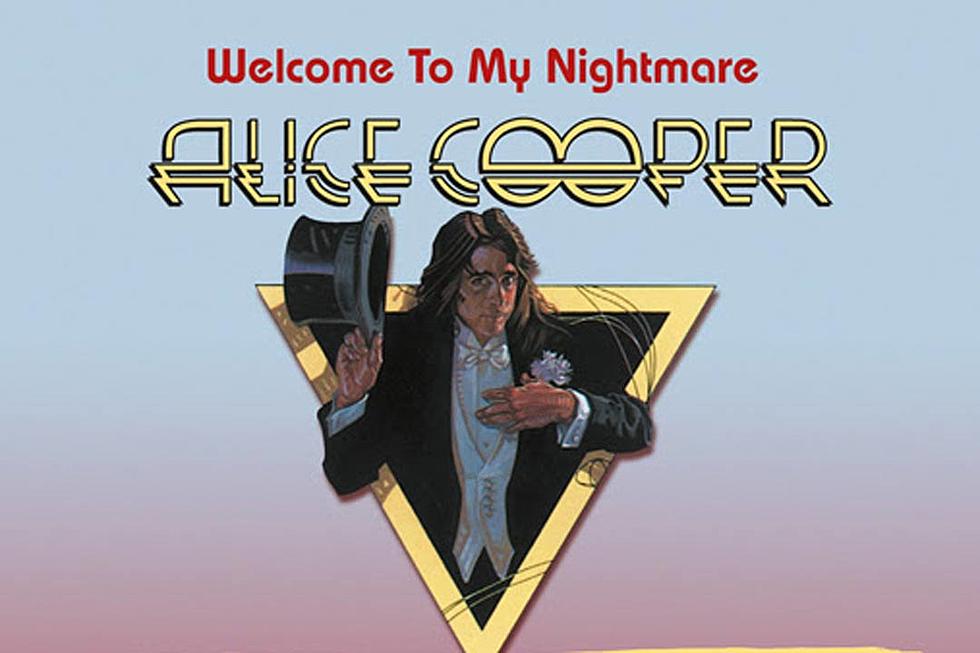
This song peaked at #45 in the Billboard 100 in 1975. The album of the same name peaked at #5 in the Billboard Album Charts in 1975. Alice Cooper (Vincent Furnier) parted with The Alice Cooper Band to make this album solo.
When Alice Cooper released Welcome To My Nightmare in February 1975, he was already one of the most famous rock celebrities on the planet. Between 1971 and 1974, the Alice Cooper Band, which consisted of Cooper himself (born Vincent Furnier), guitarists Glen Buxton and Michael Bruce, bassist Dennis Dunaway and drummer Neal Smith, had notched up an impressive run hit albums.
Alice Cooper: “People would come and see us play and just assume that as I was the lead singer then I must be Alice Cooper,” he explains today. “But originally the band was simply called the Alice Cooper Band. But because everyone thought I was Alice I decided it would be easier and better for the band to simply start calling myself Alice.Of course, later, when I would go solo for Welcome To My Nightmare, I’d really become Alice Cooper.”
From Songfacts
This was the centerpiece to Cooper’s 1975 tour, which opened with this song and set the stage for the macabre scenes that followed. Cooper approached the song as a production number, and that’s how he performed it. For the tour, the musicians were hidden in the back of the stage while Alice performed with various dancers and props. He would emerge in a haze of smoke, singing this song on a bed; the rest of the show was based on the idea that we were seeing his nightmares brought to life.
Any meaning in the song is up to the listener, as Alice explained, “I project images to the audience and they make up their own story to fit it. I have no message at all. I never did.”
In 1975, Cooper turned the stage show built around this song into a concert movie called Alice Cooper: Welcome to My Nightmare, and a TV movie called The Nightmare. The famous horror movie actor Vincent Price played “The Spirit of the Nightmare,” narrating the show. The movie was a precursor to long-form music videos, as it was a theatrical production set to music. The most famous long-form video arrived in 1984 with Michael Jackson’s “Thriller,” also featuring narration from Vincent Price.
Welcome To My Nightmare
Welcome to my nightmare I think you’re gonna like it I think you’re gonna feel like you belong A nocturnal vacation Unnecessary sedation You want to feel at home ’cause you belong
Welcome to my nightmare Welcome to my breakdown I hope I didn’t scare you That’s just the way we are when we come down We sweat and laugh and scream here ‘Cause life is just a dream here You know inside you feel right at home here
Welcome to my breakdown Whoa You’re welcome to my nightmare Yeah
Welcome to my nightmare I think you’re gonna like it I think you’re gonna feel that you belong We sweat laugh and scream here ‘Cause life is just a dream here You know inside you feel right at home here Welcome to my nightmare Welcome to my breakdown Yeah
This song was banned by the BBC from their airwaves in 1962 for “being too morbid.”…Really BBC?
Elvis Presley had no sense of humor about this song…he was not a fan and called it the dumbest record he ever heard… this coming from the man who sang Clambake…but I still love Elvis.
The song charted more than once…It peaked at #1 in 1962 in the Billboard 100 and #3 in the UK. It peaked at #91 in 1970 in the Billboard 100. It also charted at #10 in the Billboard 100 in 1973…and again in the UK in 2007 at #60.
Pickett and Lenny Capizzi wrote this song in about two hours. They recorded a demo to tape and brought it to Gary Paxton, lead singer of The Hollywood Argyles (“Alley Oop”). They recorded the song with Paxton and studio musicians Leon Russell, Johnny McCrae and Rickie Page, who were credited as “The Cryptkickers.” Paxton, who is credited as the song’s producer, also added the sound effects.
Paxton put the song out on his Garpax label and distributed it to radio stations around Southern California. The response was overwhelming, as the stations saw their phone banks lighting up with requests for the song. A deal was struck with London Records, who distributed the song worldwide.
From Songfacts
Pickett was a nightclub entertainer who performed with a group called The Cordials. He wrote “Monster Mash” with his friend Lenny Capizzi. They were both big horror movie fans, and Pickett would do an impression of the actor Boris Karloff (known for playing the monster in many Frankenstein movies) during the speaking part of “Little Darlin'” that went over well in his act. As Capizzi played the piano, he and Pickett put together this song with his Karloff impression in mind. They came up with the plot about Frankenstein’s monster starting a dance craze.
The lyrics are based on the story of Frankenstein, which started as a 1818 novel by Mary Shelley and evolved into various film adaptations. In the story, Dr. Frankenstein creates a creature who comes to life, but what he created is a monster. The book is sober tale of regret and unexpected consequences, but the story is often played for comedy. In this song, the monster throws a big dance party, which is enthusiastically attended by many other creatures of lore (Dracula, Wolfman).
Pickett is imitating Boris Karloff, but is narrating the story as Dr. Frankenstein, not the monster that Karloff famously portrayed.
This is a dance song based on the “Mashed Potato” dance craze, which is where The “Mash” in the title comes in.
The original title was “Monster Twist” in an attempt to jump on the Twist craze, but that fad was fading so they tried calling it “Monster Mashed Potato,” then settled on “Monster Mash.”
This being 1962, many of the sound effects had to be created in the studio. The sound effects on the song were done as follows:
The coffin being opened was made by pulling a rusty nail out of a lump of wood with the claw of a hammer.
The bubbling sounds came from blowing through a straw in a glass of water.
The sound of the chains was made by dropping chains onto plywood planks on the record studio floor.
This is arguably the most successful novelty song of all time. Bobby Pickett accomplished the rare feat of reaching the top 100 music chart three times with the same song. On October 20, 1962, the original release hit #1 in the US. The song re-entered the Billboard Hot 100 on August 29, 1970 peaking at #91, and then again on May 5, 1972 when it went all the way to #10. The song has sold over four million copies and continues to be a Halloween favorite.
The song made little impact in the UK until it was re-released there in 1973 and reached #3 on the Singles chart. By this time Boris Pickett was a 32-year-old part time New York cab driver.
Pickett quickly followed up this song with “Monsters’ Holiday,” where the monsters throw a mischievous Christmas party. The song, which was written by Paul Harrison of “Itsy Bitsy Teeny Weeny Yellow Polka Dot Bikini” fame, did well, reaching #30 and giving Pickett back-to-back holiday hits in 1962. The following year, he reached #88 with “Graduation Day,” his first entry that wasn’t a novelty song. “The Monster Swim” reached #135 in 1964, which was his last chart appearance until the “Monster Mash” re-issues.
This has been used in several TV shows, including Cheers, The Simpsons and Happy Days. It’s also been used in the movies Halloween III and Sweetheart’s Dance. In 1995, Monster Mash: The Movie was released, starring Pickett as Dr. Frankenstein.
Boris Karloff loved this song. He performed it on a special Halloween edition of the variety show Shindig! on October 30, 1965.
Artists who have covered this song include The Beach Boys (on their first live album – Beach Boys Concert, released in 1964), Misfits, Mannheim Steamroller and Sha-Na-Na. >>
Pickett was diagnosed with leukemia in 2000 and died in 2007. In his autobiography Monster Mash: Half Dead In Hollywood, he wrote: “Gone is that conditioned, morbid fear of physical death. I feel that psychological death is much more grueling and painful. Besides, to quote the great Bela Lugosi as Dracula, ‘To be dead… to be really dead… that must be glorious!’ Poor guy. A vampire’s half-life must really suck.”
Around Halloween in 2004, Pickett re-recorded the song as “Monster Slash.” The new version was a protest against President George W. Bush and his support for logging, mining and other environmental policies Pickett felt were harmful. Sample lyric: “The guests included big timber, big oil, mining magnates and their sons.”
Darlene Love, who sang the holiday favorite “Christmas (Baby Please Come Home),” claims that she was one of the backing singers on this track, which is plausible as she was one of the most popular session singers at the time. Love occasionally performed the song at Bette Midler’s Halloween shows.
The third release for this song in 1973 was a #1 hit in Australia, spending over 20 weeks on the Top 40 charts.
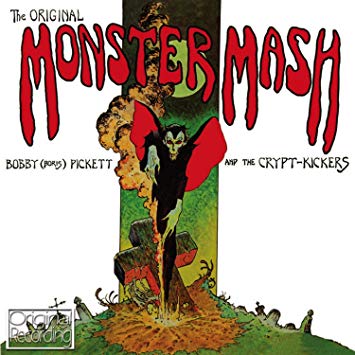
When a novelty song becomes a surprise hit, a hastily produced album typically follows (see: “Pac-Man Fever”). In this case, the album was called The Original Monster Mash and included songs like “Blood Bank Blues,” “Graveyard Shift,” “Transylvania Twist,” “Me And My Mummy” and “Irresistible Igor.”
Pickett extended the “Monster” brand throughout his career. In 1970, he released “Monster Man Jam,” 1973 saw “Monster Concert,” and in 1984 he released the inevitable “Monster Rap.”
Also an actor, Pickett made appearances on T.J. Hooker, Bonanza and The Beverly Hillbillies, and played Dr. Frankenstein in the 1995 film Monster Mash: The Movie, which also starred Candace Cameron and Jimmie Walker.
“Monster Mash” was the nickname of the professional basketball player Jamal Mashburn.
Monster Mash
I was working in the lab, late one night When my eyes beheld an eerie sight For my monster from his slab, began to rise And suddenly to my surprise
He did the mash, he did the monster mash The monster mash, it was a graveyard smash He did the mash, it caught on in a flash He did the mash, he did the monster mash
From my laboratory in the castle east To the master bedroom where the vampires feast The ghouls all came from their humble abodes To get a jolt from my electrodes
They did the mash, they did the monster mash The monster mash, it was a graveyard smash They did the mash, it caught on in a flash They did the mash, they did the monster mash
The zombies were having fun, the party had just begun The guests included Wolfman, Dracula, and his son
The scene was rockin’, all were digging the sounds Igor on chains, backed by his baying hounds The coffin-bangers were about to arrive With their vocal group, ‘The Crypt-Kicker Five’
They played the mash, they played the monster mash The monster mash, it was a graveyard smash They played the mash, it caught on in a flash They played the mash, they played the monster mash
Out from his coffin’, Drac’s voice did ring Seems he was troubled by just one thing He opened the lid and shook his fist and said “Whatever happened to my Transylvania Twist?
It’s now the mash, it’s now the monster mash The monster mash, it was graveyard smash It’s now the mash, it caught on in a flash It’s now the mash, it’s now the monster mash
Now everything’s cool, Drac’s a part of the band And my Monster Mash is the hit of the land For you, the living this mash was meant too When you get to my door, tell them Boris sent you
Then you can mash, then you can monster mash The monster mash and do my graveyard smash Then you can mash, you’ll catch on in a flash Then you can mash, then you can monster mash
Mash good! Easy, Igor, you impetuous young boy Mash good! Grrr!
This is a very good Anthology horror movie. If you like seeing bad people getting their due…this is for you.
I watched this movie as a seven-year-old on television. This movie set me straight for a while…no misbehaving after watching this. It’s got a feel of the Twilight Zone set in the early 1970s with vivid green nature surrounding that only 1970’s England on film can give you.
5 strangers travel through caves and wonder how and why they all got there as they meet a Crypt Keeper. One by one each has a story that is shown.
It still works now. The stories are well written and my favorite is “Blind Alleys” about someone who could care less about the welfare of other people. Actor Patrick Magee is great in this one. He also appeared in A Clockwork Orange as the…
Although this song has been played to death on the radio…I still will not turn the dial if I hear it come on.
Blue Öyster Cult’s first hit, this song was written by lead guitarist Donald Roeser, also known as Buck Dharma. He contributed his vocals to this track and also wrote their other Top 40 hit, “Burnin’ For You.” This song peaked at #12 in the Billboard 100 and #16 in the UK in 1976.
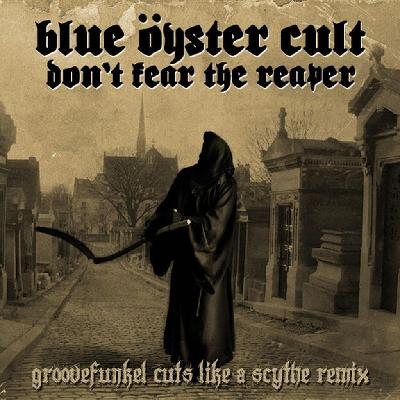
The album Don’t Fear The Reaper was on was Agents of Fortune. It peaked at #29 in the Billboard 100 in 1976.
The album features vocals and songwriting from Patti Smith. She was keyboardist Allen Lanier’s girlfriend at the time and had also contributed to one of BOC’s previous albums, Secret Treaties.
The song is played quite a bit on the radio but it is Halloween week so it fits.
From Songfacts
This was rumored to be about suicide, but it actually deals with the inevitability of death and the belief that we should not fear it. When Dharma wrote it, he was thinking about what would happen if he died at a young age and if he would be reunited with loved ones in the afterlife. Dharma explained in a 1995 interview with College Music Journal: “I felt that I had just achieved some kind of resonance with the psychology of people when I came up with that, I was actually kind of appalled when I first realized that some people were seeing it as an advertisement for suicide or something that was not my intention at all. It is, like, not to be afraid of it (as opposed to actively bring it about). It’s basically a love song where the love transcends the actual physical existence of the partners.”
Blue Öyster Cult was considered a “cult” band, somewhere in the realm of heavy metal with complex and often baffling lyrics dealing with the supernatural. Those inside the cult took the time to understand that like Black Sabbath, BOC combined outstanding musicianship with fantasy lyrics, and they weren’t for everyone. “Don’t Fear The Reaper” exposed them to a wider audience, which was good for business but bad for art. Buck Dharma said in a 1980 interview with NME: “Ever since ‘The Reaper’ was a hit we’ve been under pressure to duplicate that success; the body of our work failed. Even on (1977 album) Spectres everyone tried to write a hit single and that’s a bad mistake. The Cult is never destined to be successful at a format. To be a singles band you have to win the casual buyer.”
Some of the lyrics were inspired by Shakespeare’s Romeo And Juliet. In Shakespeare’s play, Romeo swallows poison when he believes Juliet is dead. Juliet responds by taking her own life. This led many people to believe the song was about suicide, but Dharma was using Romeo and Juliet as an example of a couple who had faith that they would be together after their death.
For the lyrics that begin, “40,000 men and women,” Dharma was guessing at the number of people who died every day.
An April 8, 2000 Saturday Night Live skit with Christopher Walken made fun of the extremely loud cowbell in this song. In the skit, the band would get upset when Will Ferrell would play the bell too loud, but Walken kept calling for “More Cowbell.” In the skit, Walken plays a super-producer named Bruce Dickinson, who the band respects enough to put up with his cowbell antics. There really is a Bruce Dickinson (besides the Iron Maiden lead singer), but he didn’t produce “(Don’t Fear) The Reaper” – that was David Lucas, who also brought us the General Electric “we bring good things to life” and the AT&T “reach out and touch someone” jingles. Dickinson is an archivist who works on album reissues, which means gathering master tapes to ensure the best sound quality. He is credited as the reissue producer on a later version of the album, which apparently is how he was named in the sketch.
Lucas and Dickinson both appeared on the Just My Show podcast, and Lucas explained that the cowbell was his idea, as the song “needed some momentum.” He grabbed a cowbell from a nearby recording studio and “just played four on the floor… not hard to do.” He found out about the SNL skit when a friend instant messaged him as it was airing.
Dickinson says he’s always felt a little funny about getting the producer role in the famous skit, but it has made life more interesting. Said Dickinson, “I work with Iggy Pop on a lot of stuff and a lot of times when he calls and I pick up the phone, he goes ‘More cowbell!'”
Blue Öyster Cult released their last album in 2001, but continued touring with core members Buck Dharma and Eric Bloom. When we spoke with Bloom in 2016, he said he still enjoyed performing this song, but he’s a little more ambivalent about the “More Cowbell” skit. “I saw it live on my TV in my house, and did not know it was going to be on, so I was more shocked than amused when it was on,” he said. “I certainly see the humor after it was on. It certainly has legs – it has become part of Americana at this point. Somebody brings it up to me on a regular basis.”
This has been used in several horror movies, including Halloween, The Frighteners and Scream (the version used in Scream is an acoustic cover by Gus Black). It was also used in a very non-horror capacity in the party scene of the Disney movie Miracle, which is about the US Hockey team beating the USSR at the 1980 Olympic Games.
This wasn’t released as a single in the UK until 1978, where it became their only hit in England.
Stephen King quoted the lyrics to this song in his novel The Stand, in which 99.9% of the US population is killed by a manmade disease called “Superflu.” It is also used in King’s miniseries of the same name during a montage showing the corpses of those who had been killed by the disease. King often quotes songs in the beginning of his books.
Don’t Fear The Reaper
All our times have come Here but now they’re gone Seasons don’t fear the reaper Nor do the wind, the sun or the rain, we can be like they are
Come on baby, don’t fear the reaper Baby take my hand, don’t fear the reaper We’ll be able to fly, don’t fear the reaper Baby I’m your man
La, la, la, la, la La, la, la, la, la
Valentine is done Here but now they’re gone Romeo and Juliet Are together in eternity, Romeo and Juliet 40,000 men and women everyday, like Romeo and Juliet 40,000 men and women everyday, Redefine happiness Another 40,000 coming everyday, We can be like they are
Come on baby, don’t fear the reaper Baby take my hand, don’t fear the reaper We’ll be able to fly, don’t fear the reaper Baby I’m your man
La, la, la, la, la La, la, la, la, la
Love of two is one Here but now they’re gone Came the last night of sadness And it was clear she couldn’t go on
Then the door was open and the wind appeared The candles blew then disappeared The curtains flew then he appeared, saying don’t be afraid
Come on baby, and she had no fear And she ran to him, then they started to fly They looked backward and said goodby, she had become like they are She had taken his hand, she had become like they are Come on baby, don’t fear the reaper
This TV movie scared a lot of kids in the 1970’s…including me… It is an anthology horror movie but the last story is the one that is remembered. For years I tried to find this movie and when I finally did I wasn’t disappointed. I knew going in that there was no CGI and it was a TV movie so I wasn’t disappointed seeing it at an older age. I assume this movie help inspire the Chucky movies of the late 1980’s. The story was written by Richard Matheson.
Karen Black plays Amelia who lives in an apartment. She comes home with this voodoo warrior looking doll. The doll is said to hold a killing spirit inside and there is a gold chain around it to supposedly hold the spirit in.
Amelia calls her mom and is fighting with her and finally lets her go…she notices that the chain is off…
48 years ago on October 29, 1971, Duane Allman died in Macon Georgia in a motorcycle crash. He was only 24 years old and the Allman Brothers had just released the At Fillmore East album in July…it was taking off. They had toured heavily since 1969 with two studio albums and hardly anything to show for it. The live album would push them over the top into stardom. Duane died right when it was beginning to happen. The album was just certified gold 4 days before the crash.
1 year and 13 days later on November 11, 1972, the bassist for the Allman Brothers Berry Oakley died a few blocks away from where Duane died on a motorcycle crash.
He also met Eric Clapton in 1970 and played on the Layla sessions with Derek and the Dominos with his slide guitar on Layla and throughout the album.
Rolling Stone magazine named him No. 2 on its list of the greatest guitarists of all time in 2003, trailing only Jimi Hendrix.
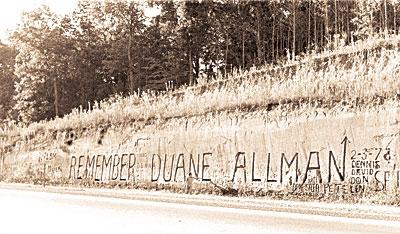
The above was made in 1973 by four young men from Vicksburg. They were college students who carved a roadside icon into a bluff along Interstate 20, at the time a new highway. The monument, which simply read, “Remember Duane Allman,” would later appear in Rolling Stone publications and continues receiving attention today
Responsible for the monument were Don Antoine, Dennis Garner, Len Raines and David Reid, who, in 1973, were freshmen at Hinds Junior College.
“We didn’t do this to go around bragging about it,” Reid said at a Sunday evening reunion of the four, an event he described as very rare. “We did it just to do it. Plus, we never even thought it would become the big deal that it did.”
Gregg Allman: “You should have seen my mother’s face when she first saw a picture of that,” he said. “She was quite honored and quite elated, almost to tears.”
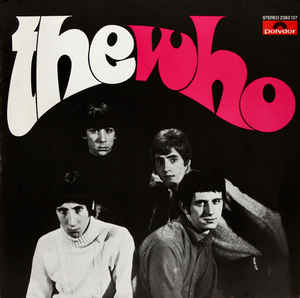
This was Jimi Hendrix’s favorite song of The Who…which didn’t amuse Pete.
This was the first Who song written by bass player, John Entwistle. Pete Townshend asked him to write a song for their second album…A Quick One. A common story about the song is that “Boris the Spider” was written after John had been out drinking with Bill Wyman. They were making up funny names for animals when Entwistle came up with Boris the Spider.
The song became a huge concert favorite because it was so fun and offset many of their more serious songs. Also, the popularity of the song eventually wore off on Entwistle himself, and he began ritualistically wearing a spider medallion on stage.
Pete Townshend had this to say about the song: Politics or my own shaky vanity might be the reason, but ‘Boris The Spider’ was never released as a single and should have been a hit. It was the most-requested song we ever played on stage, and if this really means anything to you guitar players, it was Hendrix’s favorite Who song. Which rubbed me up well the wrong way, I can tell you. John introduced us to ‘Boris’ in much the same way as I introduced us to our ‘Generation;’ through a tape recorder. We assembled in John’s three by ten-foot bedroom and listened incredulously as the strange and haunting chords emerged. Laced with words about the slightly gruesome death of a spider, the song had enough charm to send me back to my pad writing hits furiously.”
From Songfacts
Entwistle was afraid of spiders as a kid. He wrote this about seeing a spider crawling from the ceiling and squishing it.
Entwistle wrote this as a joke, but it became a concert favorite. It is a fun song that offset many of the more serious Who songs.
This was the only song from the album that they continued to play live.
In the UK, the album was called A Quick One. It was changed to Happy Jack in the US to avoid being offensive.
After he wrote this, Entwistle started wearing a spider medallion at concerts.
Boris The Spider
Look, he’s crawling up my wall Black and hairy, very small Now he’s up above my head Hanging by a little thread
Boris the spider Boris the spider
Now he’s dropped on to the floor Heading for the bedroom door Maybe he’s as scared as me Where’s he gone now, I can’t see
Since Halloween is coming upon us I thought I would feature a few songs referencing the normal culprits throughout the week.
When I was a teenager the song spooked me a bit…and still does. It’s powerful and dynamic with its samba beat. Mick Jagger has said this is about the dark side of man, not a celebration of Satanism. It does, in fact, show the dark side…the lines that stand out to me are: I shouted out, Who killed the Kennedys When after all It was you and me.
Mick Jagger: The satanic-imagery stuff was very overplayed [by journalists]. We didn’t want to really go down that road. And I felt that song was enough. You didn’t want to make a career out of it. But bands did that – Jimmy Page, for instance. I knew lots of people that were into Aleister Crowley. What I’m saying is, it wasn’t what I meant by the song “Sympathy for the Devil.” If you read it, it’s not about black magic, per se.
This song is infectious, it’s a great piece of writing by Mick. The lyrics were inspired by The Master and Margarita, a book by Mikhail Bulgakov. British singer Marianne Faithfull was Mick Jagger’s girlfriend at the time and she gave him the book. Faithfull came from an upper-class background and exposed Jagger to a lot of new ideas. In the book, the devil is a sophisticated socialite, a “man of wealth and taste.”
I usually keep my posts short and quick but songfacts for this song have a book of info on this one so read it if you want. A lot of interesting info.
From Songfacts
This perpetuated the image of the Stones as frightening bad boys, as opposed to the clean-cut Beatles. It was great marketing for the band, who got some press by implying an interest in the occult.
A documentary by French filmmaker Jean-Luc Godard called One Plus One captured the recording of this song, which took place over five days: June 5, 6, 8 – 10, 1968. At one point, a lamp for the documentary started a fire in the studio. The tapes were saved, but a lot of the Stones’ equipment was destroyed.
The original title was “The Devil Is My Name.” Said Jagger: “Songs can metamorphasize, and ‘Sympathy For The Devil’ is one of those songs that started off like one thing, I wrote it one way and then we started the change the rhythm. And then it became completely different. And then it got very exciting. It started off as a folk song and then became a samba. A good song can become anything. It’s got lots of historical references and lots of poetry.”
Keith Richards (2002): “‘Sympathy’ is quite an uplifting song. It’s just a matter of looking the Devil in the face. He’s there all the time. I’ve had very close contact with Lucifer – I’ve met him several times. Evil – people tend to bury it and hope it sorts itself out and doesn’t rear its ugly head. ‘Sympathy For The Devil’ is just as appropriate now, with 9/11. There it is again, big time. When that song was written, it was a time of turmoil. It was the first sort of international chaos since World War II. And confusion is not the ally of peace and love. You want to think the world is perfect. Everybody gets sucked into that. And as America has found out to its dismay, you can’t hide. You might as well accept the fact that evil is there and deal with it any way you can. Sympathy for the Devil is a song that says, Don’t forget him. If you confront him, then he’s out of a job.”
The song took on a darker meaning when The Stones played it at their Altamont Speedway concert on December 6, 1969, before a fan was fatally stabbed by Hells Angels gang members hired for security. As they played it, the crowd got more unruly; a few songs later, during “Under My Thumb,” the stabbing occurred. [This is all documented in the film Gimme Shelter]. The Stones kept “Sympathy” in the their setlists, playing it throughout 1970.
Some of the historical events mentioned in this song are the crucifixion of Christ, the Russian Revolution, World War II, and the Kennedy assassinations. Robert Kennedy was killed on June 5, 1968, after Mick Jagger started writing the song. His original lyric was “who killed Kennedy?” referring to the 1963 John F. Kennedy assassination, but he changed it to “who killed the Kennedys?”
Other historical events alluded to in the song include the Hundred Years’ War (“fought for ten decades”) and the Nazi Blitzkrieg (“the blitzkrieg raged, and the bodies stank”).
The “whoo-whoo” backing vocals were added when Richard’s girlfriend, Anita Pallenberg, did it during a take and the Stones liked how it sounded. Pallenberg sang it on the record along with Keith Richards, Brian Jones, Bill Wyman, Marianne Faithfull and Jimmy Miller.
Stones producer Jimmy Miller: “Anita (Pallenberg) was the epitome of what was happening at the time. She was very Chelsea. She’d arrive with the elite film crowd. During ‘Sympathy For The Devil’ when I started going whoo, whoo in the control room, so did they I had the engineer set up a mike so they could go out in the studio and whoo, whoo.”
On their 1989 Steel Wheels tour, The Stones performed this with Jagger standing high above the stage next to a fire. Mick wore a safety belt in case he fell.
The Stones performed this on Rock and Roll Circus, a British TV special The Stones taped in 1968 but never aired. It was released on video in 1995. During the performance, Jagger removes his shirt to reveal devil tattoos on his chest and arms.
Guns ‘N’ Roses covered this in 1994 for the move Interview With The Vampire (the song appears at the end of the movie, which stars Tom Cruise, Brad Pitt and a young Kirsten Dunst). Their version hit #9 in England, and marked the first appearance of their new guitarist Paul Huge (rhymes with “boogie” – he later went by “Tobias”), who replaced Gilby Clarke. Axl Rose brought in Huge, and it caused considerable conflict in the band, which broke apart over the next few years. At one point, Matt Sorum called Huge “the Yoko Ono of GNR.”
In our 2013 interview with Gilby Clarke, he recalls this recording as a signal that the band was over. “I knew that that was the ending because nobody told me about it,” he said. “Officially I was in the band at that time, and they did that song without me. That was one of the last straws for me, because nobody had said anything to me and they recorded a song by one of my favorite bands. It was pretty clear I’m a big Stones fan, and they recorded the song without me. So I knew that was it.”
The song ended up being the last one Axl Rose, Slash and Duff McKagan recorded together. “If you’ve ever wondered what the sound of a band breaking up sounds like, listen to Guns N’ Roses’ cover of ‘Sympathy for the Devil,'” Slash wrote in his memoir.
The beat is based on a Samba rhythm. Keith Richards said it “started as sort of a folk song with acoustics, and ended up as a kind of mad samba, with me playing bass and overdubbing the guitar later. That’s why I don’t like to go into the studio with all the songs worked out and planned beforehand.”
The opening lines of this song, “Please allow me to introduce myself I’m a man of wealth and taste,” were quoted by the Devil character (played by actor Rick Collins) in the 1989 film The Toxic Avenger Part III: The Last Temptation of Toxie.
Carlos Santana thought The Stones were playing with fire on this song. “I don’t have no sympathy for the devil,” he said in an NME interview. “I like the beat of the song but I never identify with the lyric. Jagger and Richards don’t really know the full extent of what they’re talking about. If they knew what they were getting into when they sing that song they would not be doing it. The devil is not Santa Claus. He’s for real.”
Santana was one of the performers at the ill-fated Altamont concert, and Carlos claimed he could feel a “demonic presence” during their set – a striking contrast to Woodstock, where the group conjured up peace and love. Santana didn’t allow any of their footage into the Gimme Shelter film.
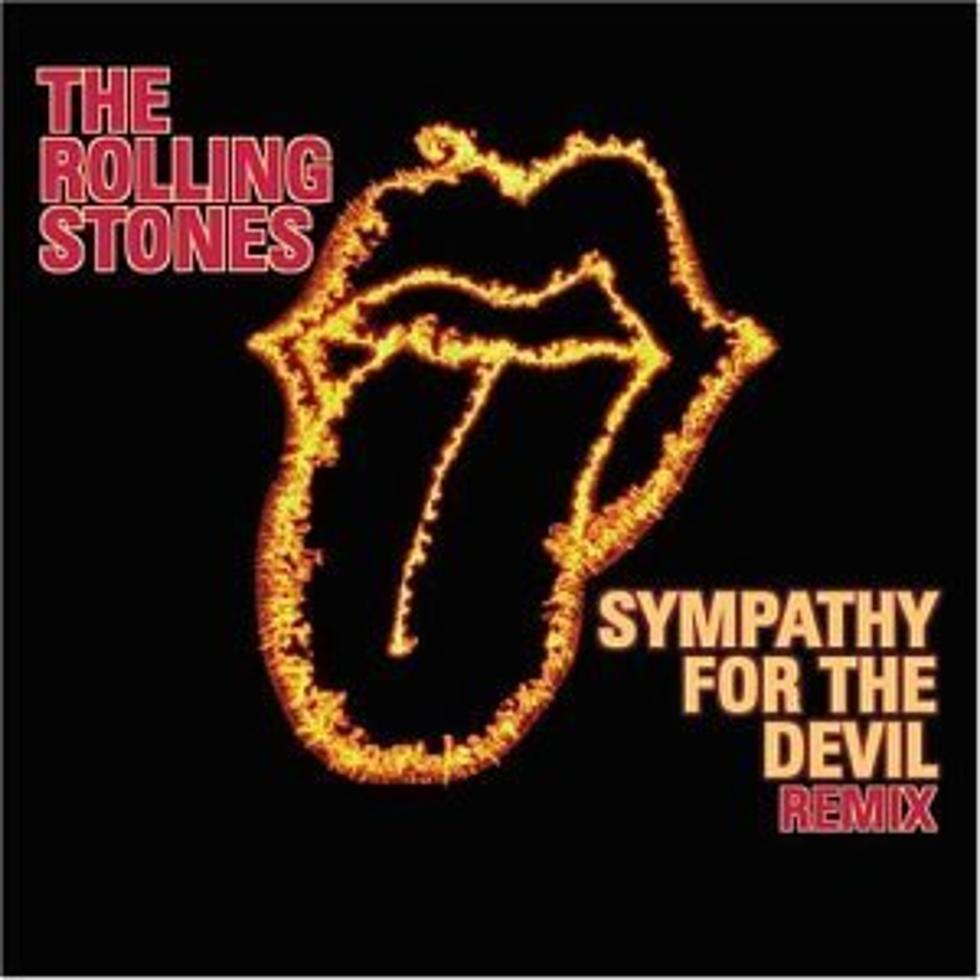
In 2003, The Stones released this as a “maxi-single,” with four versions of the song. The original was on there, as well as remixes by The Neptunes, Fatboy Slim, and Full Phatt.
The line, “And I laid traps for troubadours who get killed before they reach Bombay” possibly refers to the notorious Thuggee cult, who worshiped Kali, the Hindu goddess of death. They would waylay travelers on the roads of India, then kill the entire group in order to make off with their valuables. This seems to be the closest well known historical incident to fit the lyrics. Also, the Thuggee would have been well known in England, since the British Army put a stop to the cult during the colonial period.
Another interpretation is that the line refers to the hippies who traveled the “Hippie trail,” a passage through Turkey, Afghanistan, India and a few other countries that was popular in the counterculture community. Many of these travelers were killed and ripped off by drug peddlers in Afghanistan and Pakistan. Those shady deals could be the “traps.”
Some other worthy covers: Sandra Bernhard, Blood, Sweat & Tears, Bryan Ferry, Jane’s Addiction, The London Symphony Orchestra, Natalie Merchant, U2.
One verse of lyrics was recited by Intel vice president Steve McGeady during his testimony in Microsoft’s antitrust trial in November 1998. McGeady had written a memo about Microsoft with the subject “Sympathy For The Devil,” and when asked whether he was calling Microsoft the Devil, McGeady recited the passage about using your well-learned politesse.
In his book Mystery Train, Greil Marcus states that this was influenced by Robert Johnson’s song “Me and the Devil Blues.” Keith Richards describes Johnson’s influence as “Like a comet or a meteor” in the liner notes to Robert Johnson – The Complete Recordings.
Fitting for a song about Satan, the song is heavy on the low end, with the bass, percussion and piano prominent throughout the track. The guitar doesn’t come in until 2:50, when the solo comes in. It doesn’t return until nearly two minutes later, when it returns for some licks. The Stones typically change the arrangement when they perform it live, bringing the guitar in for the first “pleased to meet you line,” sometimes punctuated with pyro or other visual elements.
Jagger (1995): “It has a very hypnotic groove, a samba, which has a tremendous hypnotic power, rather like good dance music. It doesn’t speed up or down. It keeps this constant groove. Plus, the actual samba rhythm is a great one to sing on, but it’s also got some other suggestions in it, an undercurrent of being primitive – because it is a primitive African, South American, Afro-whatever-you-call-that rhythm. So to white people, it has a very sinister thing about it. But forgetting the cultural colors, it is a very good vehicle for producing a powerful piece. It becomes less pretentious because it’s a very unpretentious groove. If it had been done as a ballad, it wouldn’t have been as good.”
Jagger (1995): “I knew it was a good song. You just have this feeling. It had its poetic beginning, and then it had historic references and then philosophical jottings and so on. It’s all very well to write that in verse, but to make it into a pop song is something different. Especially in England – you’re skewered on the altar of pop culture if you become pretentious.”
In 2006, this was included in The National Review magazine’s list of the 50 most conservative rock lyrics. They claimed that this is an anti-Communist, conservative song and that the devil being referred to is Communist Russia.
The opening line was used in Volume 2 of 10 of the graphic novel V For Vendetta. >>
This song was used for a title of a episode of the anime series Cowboy Bebop. “Honky Tonk Women” is also the title of an episode.
In the TV series Will and Grace, The character Karen states that she always wanted to walk down the aisle when she got married for the fourth time to “Sympathy For The Devil.” When her husband-to-be refuses, she fights with him.
The industrial band Laibach released an entire album containing different covers of this song. The character and tone of the Laibach covers are largely very different from the Stones original. In the opening track the lead singer sings/shouts in a very deep bass voice with a thick Slavic accent. One of their covers contains references to the violence at the Altamont raceway.
Sympathy For The Devil
Please allow me to introduce myself I’m a man of wealth and taste I’ve been around for a long, long year Stole many a man’s soul to waste
And I was ’round when Jesus Christ Had his moment of doubt and pain Made damn sure that Pilate Washed his hands and sealed his fate
Pleased to meet you Hope you guess my name But what’s puzzling you Is the nature of my game
I stuck around St. Petersburg When I saw it was a time for a change Killed the czar and his ministers Anastasia screamed in vain
I rode a tank Held a general’s rank When the blitzkrieg raged And the bodies stank
Pleased to meet you Hope you guess my name, oh yeah Ah, what’s puzzling you Is the nature of my game, oh yeah
I watched with glee While your kings and queens Fought for ten decades For the gods they made
I shouted out Who killed the Kennedys? When after all It was you and me
Let me please introduce myself I’m a man of wealth and taste And I laid traps for troubadours Who get killed before they reached Bombay
Pleased to meet you Hope you guessed my name, oh yeah But what’s puzzling you Is the nature of my game, oh yeah, get down, baby
Pleased to meet you Hope you guessed my name, oh yeah But what’s confusing you Is just the nature of my game, mm yeah
Just as every cop is a criminal And all the sinners saints As heads is tails Just call me Lucifer ‘Cause I’m in need of some restraint
So if you meet me Have some courtesy Have some sympathy, and some taste Use all your well-learned politesse Or I’ll lay your soul to waste, mm yeah
Pleased to meet you Hope you guessed my name, mm yeah
But what’s puzzling you Is the nature of my game, mm mean it, get down
Oh yeah, get on down Oh yeah
Oh yeah
Tell me baby, what’s my name Tell me honey, can ya guess my name Tell me baby, what’s my name I tell you one time, you’re to blame
Oh, right
What’s my name Tell me, baby, what’s my name Tell me, sweetie, what’s my name
Sometimes I just have to hear some Devo to break the monotony. This is Devo from back in 1981. This song peaked at #43 in the Billboard 100, #8 in New Zealand and #17 in Canada. The song was not on their album New Traditionalists which was out at this time but it came packaged as a single included with the album.
It was also on the soundtrack of Heavy Metal.
It was written by Allen Toussaint in the early 1960s. Toussaint, as a pianist, writer, and producer, was part of the second wave of New Orleans’ Jazz and Blues culture. He worked with many big names from the era including Fats Domino, Chris Kenner, Benny Spellman, and Diamond Joe.
The song was made famous by Lee Dorsey in 1966.
From Songfacts on Working In A Coal Mine
Although “Working in the Coal Mine” sounds just like a jazz standard that could have been handed down from generation to generation of the American Old South, it was actually
In the ’60s, Toussaint wrote and produced several hits for Lee Dorsey, including “Ride Your Pony,” “Get Out of My Life Woman,” “Everything I Do Gonna Be Funky,” and “Holy Cow.”
In 1965, Toussaint wrote a song for Dorsey called “Work, Work, Work,” which was appropriate since Dorsey loved working on cars as much as he loved making music – he worked at a body shop and was often seen covered in grease. When he wrote for a specific artist, Toussaint would craft the song to that artist’s personality, which he did on “Working in the Coal Mine.”
Mining is very unpleasant work, but the incessant background vocals (“Workin’ in a coal mine, oops, about to slip down”) and Dorsey’s enthusiastic delivery turned the song – about a guy who is so tired from work that he can’t even have fun on Saturday – into a campy romp. An artist who didn’t appreciate and enjoy real work couldn’t have pulled it off, but Dorsey was the right man for the job. When he left the music business, he went back to bending fenders full-time.
That backing band on this track is The Meters, who were mainstays of the New Orleans funk sound. The Meters went on to work with Mick Jagger, Paul McCartney and Robert Palmer. They were also very successful recording on their own – in 1969 they hit #23 US with “Cissy Strut.”
A popular cover of this song was recorded by Devo and included on the soundtrack to the 1981 animated film Heavy Metal. Their version made #43 in the US.
In 1985, the country duo The Judds released the song on their album Rockin’ With The Rhythm.
This was recorded at J&M Studios in New Orleans, which was where just about every hit from that city was put to tape in the ’50s and ’60s. “Coal Mine” was one of the last hits recorded there, as financial problems led to its demise a few years later.
Dorsey’s label, Amy Records, commissioned a promotional film for his song (what would later be called a “music video”). The clip shows Dorsey emerging from the listening booth of a record store covered in dirt and wearing his work clothes. The clip was used to promote the song on British television shows.
You can also hear a snatch of this song in the Blaupunkt car stereo commercial of the ’90s. While we’re on the subject, we’re reminded of the fantastically popular (even record-breaking) indie video game Minecraft which has been storming the Internet gaming forums since its alpha release in 2010. Should the developers decide to create a TV advertisement, we can think of a song to recommend.
Working In A Coal Mine
Workin’ in the coal mine Goin’ on down, down Workin’ in a coal mine Oops, about to slip down Workin’ in a coal mine Goin’ on down, down Workin’ in a coal mine Oops, about to slip down
Five o’clock in the mornin’ I’m already up and gone Lord, I’m so tired How long can this go on?
Workin’ in the coal mine Goin’ on down, down Workin’ in a coal mine Oops, about to slip down Workin’ in a coal mine Goin’ on down, down Workin’ in a coal mine Oops, about to slip down
‘Cause I make a little money Haulin’ coal by the ton When Saturday rolls around I’m too tired for havin’ fun
Workin’ in the coal mine Goin’ on down, down Workin’ in a coal mine Oops, about to slip down Workin’ in a coal mine Goin’ on down, down Workin’ in a coal mine Oops, about to slip down
Lord I’m so tired How long can this go on?
Workin’ in the coal mine Goin’ on down, down Workin’ in a coal mine Oops, about to slip down Workin’ in a coal mine Goin’ on down, down Workin’ in a coal mine Oops, about to slip down
Five o’clock in the mornin’ I’m already up and gone Lord, I’m so tired How long can this go on?
Workin’ in the coal mine Goin’ on down, down Workin’ in a coal mine Oops, about to slip down Workin’ in a coal mine Goin’ on down, down Workin’ in a coal mine Oops, about to slip down
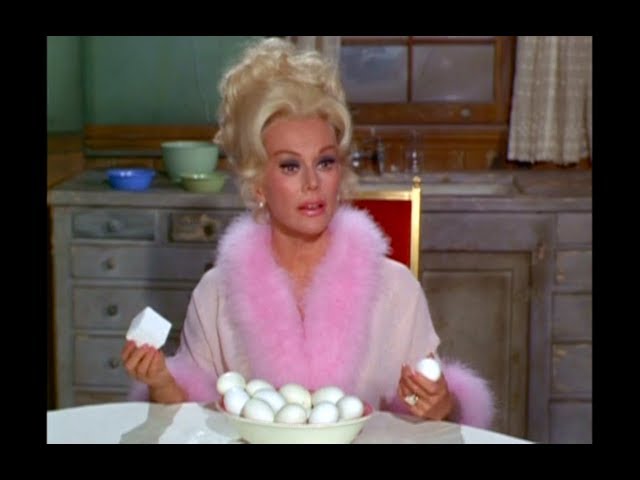
One of the most surreal shows ever on television. This one was different from most shows at the time or now. This episode is the one I think of the most. Chickens laying square eggs and toasters operating when you say… “Five” and the newer models operating when you say… “eight”
Probably the most outrageous episode of Green Acres. And that is saying something.
“Well, you know the old saying: you can lead a horse over the water, but you can’t make him think.”
Well, it should’t be too hard to find out, all we gotta do is look for a square chicken
GREEN ACRES – Square Is Not Round
This episode is the one I think of the most. Chickens laying square eggs and toasters operating when you say… “Five” and the newer models operating when you say… “eight” The Characters: Oliver and Lisa Douglas, Mr. Haney, Mr. Kimball, Eb Dawson, Fred Ziffel, Sam Drucker, Newt Kiley, Mr. Moody, and Arnold.
Oliver discovers that one of his chickens is laying square eggs, but he can’t find out which one it is. In addition, he finds out that he has a toaster that only works when you say the word “five”. When he mentions this to the boys at Drucker’s, they sympathize with him for having an old model–they have new models that only work when you say “eight”.
Mr. Kimball tells him about a man that would buy the chickens because square eggs would revolutionize shipping them. Mr. Haney comes by and wants to buy his “defective” chickens back but Oliver won’t budge. Mr. Moody comes and buys the chickens but they don’t lay any square eggs for him so he gives them back after stopping payment on the check he gave Oliver.
There is something else in the end but you need to watch it.
This is a beautiful song by Jimi with some great guitar.
Jimi wrote this song and it was inspired by the 1967 Monterey Pop Festival, a concert held for 3 days during 1967. It was attended by about 200,000 music fans, it happened 2 years before Woodstock. Jimi wrote about the atmosphere at the festival as if it was a girl. He described the feeling as “Everybody really flying and in a nice mood.” He named it “Little Wing” because he thought it could just fly away.
The song was on Axis: Bold as Love released in 1967. The album peaked at #3 in the Billboard 100 in 1968.
The same day they recorded “Layla,” Eric Clapton and Duane Allman recorded this as a tribute to Jimi, who was one of their guitar heroes. Hendrix died 9 days later. Jimi never heard their version of his song, which was released in 1970 on the Derek and the Dominos album, Layla And Other Assorted Love Songs.
From Songfacts
The guitar on the song is played in a very unique style. Jimi frets the roots of chords with his thumb, and then elaborates on them. It often involves shifts of quartile to tertian harmony and vice versa. In theory it is quite similar to the Jazz style of chord melody.
The song is particularly revered among guitar players. Tom Morello wrote in this 2011 tribute to Hendrix in Rolling Stone: “It’s just this gorgeous song that, as a guitar player, you can study your whole life and not get down, never get inside it the way that he does. He seamlessly weaves chords and single-note runs together and uses chord voicings that don’t appear in any music books.”
The percussion instrument that sounds like a xylophone is a glockenspiel, an instrument popular in marching bands containing steel bars that are stuck with hammers to produce notes.
Jimi ran his guitar through a Leslie speaker to create an unusual sound. The Leslie speaker was designed for organs and contains a rotating paddle that distorts the sound.
In 1963 Jimi recorded a song that may have been a precursor to this. The song “Fox,” which was one of his first recordings was played with sax player Lonnie Youngblood and sounded very similar to this.
This is one of the songs that had to be remixed just before the album was released when one of the master tapes went missing. No one ever found out what happened to the original tape but its been speculated that Jimi either accidentally left the tape in a taxi or purposely disposed of the tape because he wasn’t satisfied with its sound.
This song, along with “Spanish Castle Magic,” are the only songs Hendrix ever performed in concert from his Axis: Bold as Love album. He played this live only 8 times.
Hendrix has described this as being one of the few he likes from this album. He said “Little Wing” is “like one of those beautiful girls that come around sometimes.” Hendrix enjoyed writing slow songs because it was easier to put emotion into them.
Little Wing
Well she’s walking through the clouds With a circus mind That’s running wild Butterflies and zebras and moonbeams And fairly tales
That’s all she ever thinks about
Riding the wind
When I’m sad she comes to me With a thousand smiles She gives to me free
It’s alright, she says It’s alright Take anything you want from me Anything
I’m more of a studio guy when it comes to listening to bands but there are a few live albums I really like. This is my top 10 and a few honorable mentions at the bottom. Very few artists can improve on the studio version but sometimes some manage to pull it off.
10. Led Zeppelin – How the West Was Won – After the disappointing live album The Song Remains The Same, this album released in 2003 contained Led Zeppelin live in 1972 from two shows in top form.
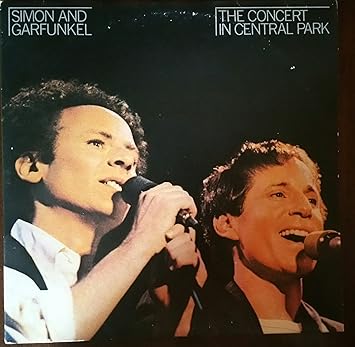
9: Simon And Garfunkel – The Concert In Central Park – This was big for me when it was released. I had by this time worn a groove out in their greatest hits. The band was great and their harmonies were as good as ever.
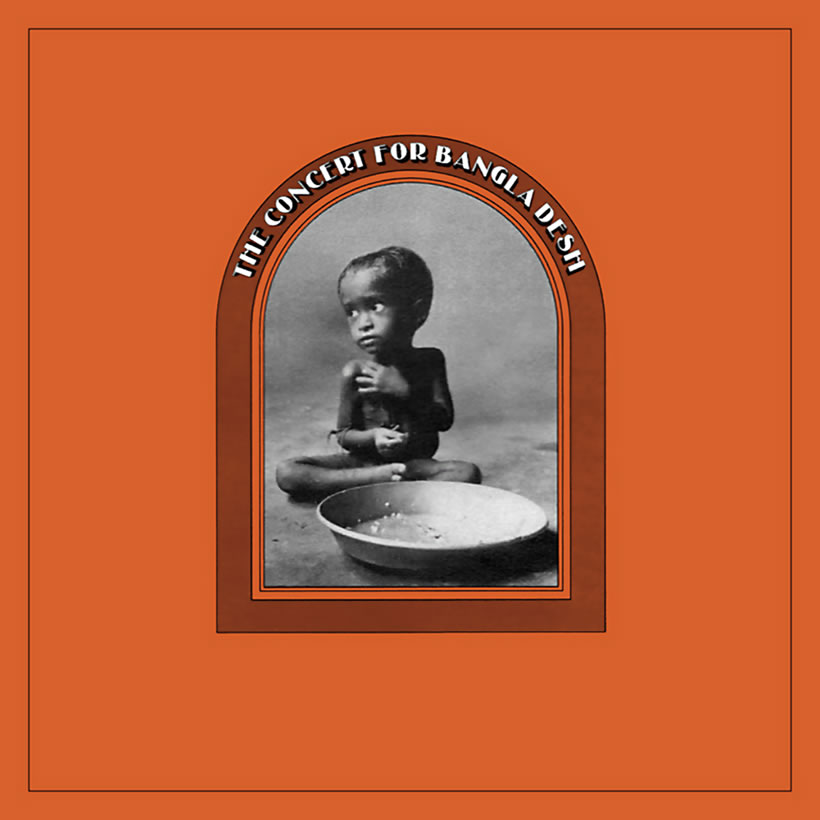
8: George Harrison – The Concert For Bangladesh – Fun to listen to George freed from the Beatles and he sounds great with Dylan, Billy Preston, Ringo, and other friends.
7: The Band: The Last Waltz – One of the best live albums ever. The Band’s last concert with Robbie with a host of talented famous friends. I still don’t get the Neil Diamond selection…nothing against Neil…he didn’t fit in with this atmosphere.
6: The Allman Brothers Band “At Fillmore East” – This album floats up and down this list depending on my mood. It was at number 2 when I first made this list a couple of weeks ago. This band was probably one of the most talented bands in the seventies. I didn’t start heavily listening to them until around 5-10 years ago. They are better live than in the studio. There was not a weak link in this 6 piece band…especially in the Duane version but later incarnations were almost as strong.
5: Bruce Springsteen & the E Street Band, ‘Live/1975-85’ – I listened to this so much in the 80s that I knew the stories Bruce would tell by heart. Later when listening to the studio version of a song I would expect the story that went with it.
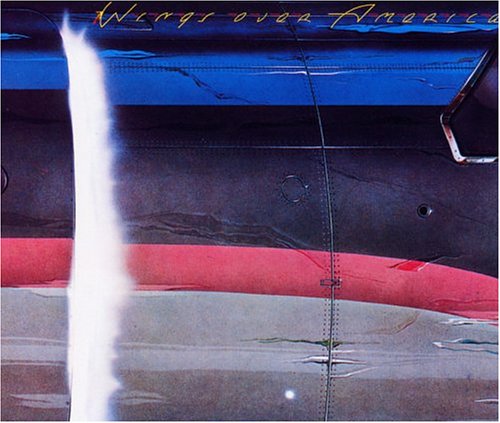
4: Paul McCartney Wings Over America – This triple album set was a live greatest hits. The songs had some edge to them thanks to Jimmy McCulloch the young prodigy guitar player. Paul even broke his silence on the Beatles and included five Beatle songs. Blackbird, I’ve Just Seen a Face, Yesterday, The Long and Winding Road, and Lady Madonna. Unlike the other 3 albums ahead of this on in the list, Paul didn’t mess with the songs too much from the original studio recordings.
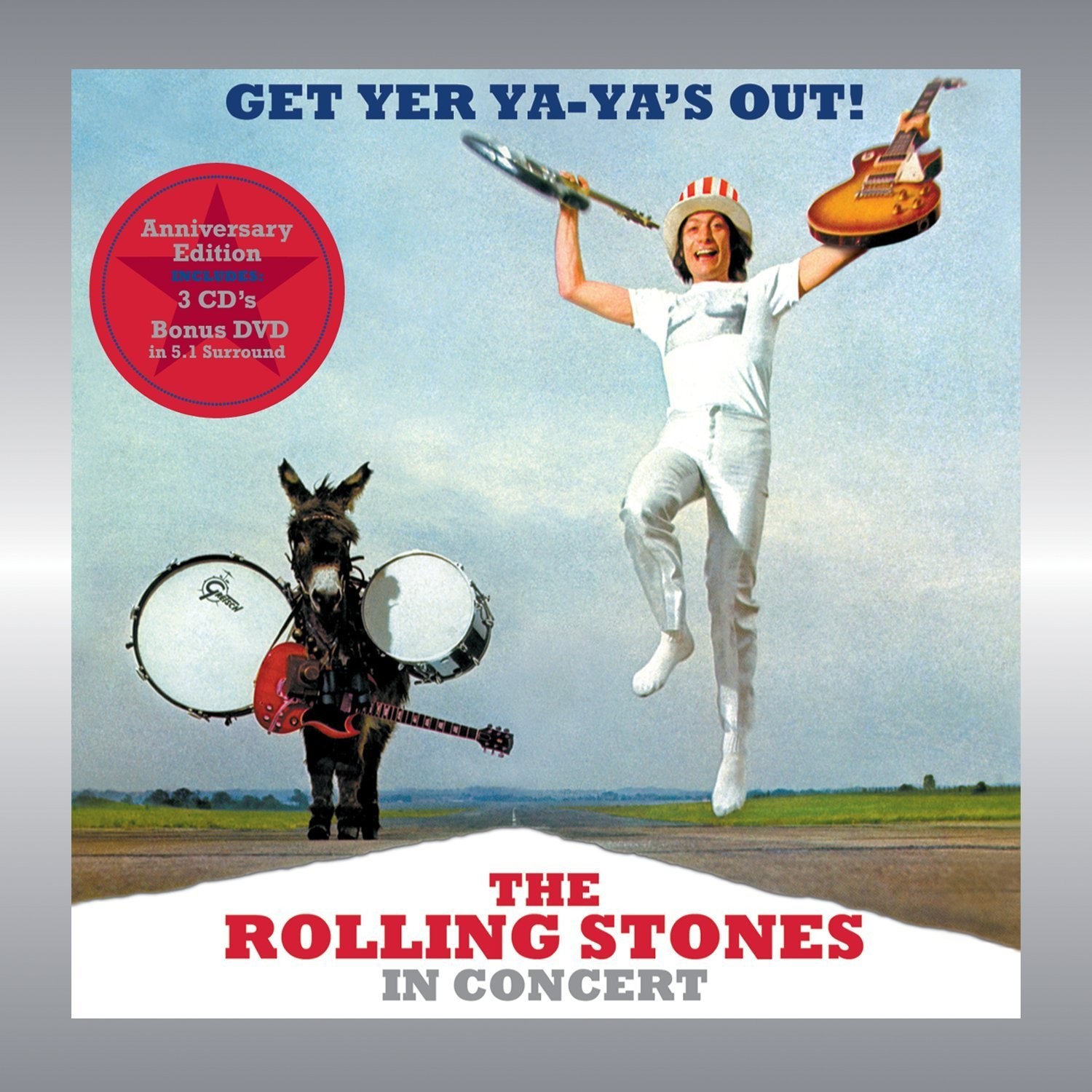
3: The Rolling Stones – ‘”Get Yer Ya-Ya’s Out!” – This tour and the 1972 tour were the Stones at their live peak.
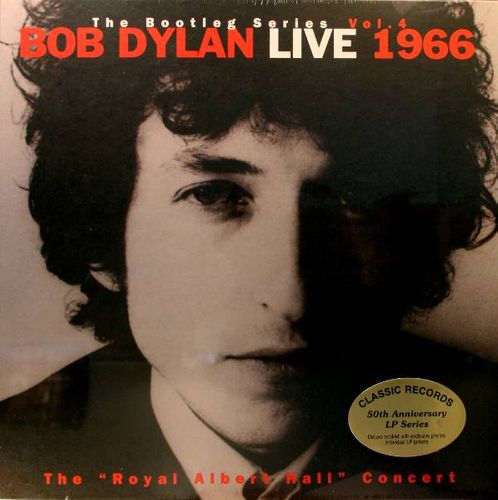
2: Bob Dylan – The Bootleg Series, Vol. 4: Bob Dylan Live 1966, The “Royal Albert Hall” Concert – I have seen Dylan 8 times but if I could pick a tour to see him on…I would go back and this would be the one. With The Band backing him up…minus Levon Helm but Mickey Jones on drums is very powerful.
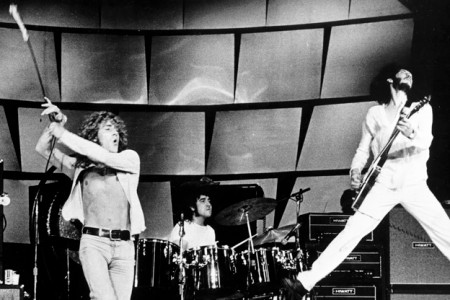
1: The Who – ‘Live at Leeds’ This album highlights The Who at their best. I don’t think I’ve ever heard a rock band so tight. The power of the performance is huge. Pete Townshend told his soundman Bob Pridden to erase all other shows on this tour at the time…Bob did… much to Pete’s regret later on.
Honorable Mentions
Beatles Live At The Star-Club in Hamburg Germany – The quality of the recording is pretty bad but it’s exciting to hear the punkish Beatles before Beatlemania hit.
The Runaways were formed in 1975 by producer Kim Fowley after guitarist Joan Jett and drummer Sandy West introduced themselves to him in hopes of starting a group. They eventually went on to recruit Lita Ford, Jackie Fox, and Cherie Currie. Lead singer, Currie, went into her audition with a rendition of Peggy Lee’s “Fever.” When the band refused to play the song, Jett and Fowley wrote the chorus of “Cherry Bomb”.
The album peaked at only #194 on the Billboard 100 in 1976. The Runaways materialized out of the Sunset Strip rock-club scene in the mid-1970s, enjoying a few years of fame. Their first gig was in 1975 and they broke up in 1979. The Runaways remain best remembered as the first band of both Joan Jett and Lita Ford.
From Songfacts
A “Cherry Bomb” is a small explosive device popular with kids, but in the context of this song, it means an underage girl who is lots of trouble – in this case taunting her parents and other adults with suggestions of promiscuity and bad behavior.
This was all by design, as Fowley was out to shock with The Runaways and generate a great deal of hype. The band earned a lot of press and a fair amount of rock credibility, since they played their own instruments and for the most part were genuinely talented. In many ways, however, Currie was the weak link – it was hard to take a band seriously when their lead singer wore lingerie on stage and presented herself as jailbait. Currie left the group in 1977 after their third album, and when asked why The Runaways were having a hard time being taken seriously, Joan Jett said, “It was that whole ‘Cherry Bomb With The Corset’ thing with Cherie.”
Joan Jett became the biggest star to come out of The Runaways, and her story was the focus of their 2010 movie, where she was portrayed by the fetching Kristen Stewart. When the group dissolved in 1979, she didn’t have a lot of offers, but the producer Kenny Laguna partnered with her, forming Blackheart Records and creating many classic songs, including the famous cover of the Arrows song “I Love Rock And Roll.” When we spoke with Laguna, he told us: “The record companies could care less about Joan Jett, they were busy signing every other Runaway. They thought Joan was the loser and they signed the other girls, who we’re all friends with, but I looked at the band and thought she was the Mick Jagger and Keith Richards of the band.”
To give you a hint as to how central this song is to The Runaways’ legacy, the poster of the 2010 Runaways movie features a juicy dripping cherry whose stem is lit and sparking like a bomb. Bevis and Butthead took one look at it and spontaneously combusted.
That’s Cherie Currie growling the vocals here, which were performed by Jett when she left the band. You know what else is on her resumé? Chainsaw artist. That is, she carves wood sculptures using a chainsaw. No, really, she’s good. Check her personal site here. How’s that for machisma? If you don’t see how carving art with a chainsaw is a metaphor for punk rock, we obviously haven’t been explaining this stuff clearly enough to you.
By the way, modern audiences might easily get Joan Jett and Lita Ford confused – their styles are very similar. They were both in The Runaways at the same time and basically wrote the book on all-girl punk bands in the ’70s – but really, they’re a continuation of the lineage first started by Suzi Quatro, whom Jett cites as an influence. You can hear the go-to-hell delinquent rebel in the style of all three, right?
Speaking at Kim Fowley’s memorial service, Joan Jett said that they wrote the song for Cherie Currie’s audition – the collaboration marked the first time Jett had written a song with someone else.
Joan Jett’s version was featured on the 1992 “Free Fall” episode of the TV series Highlander, which starred Jett as an immortal. The song can also be heard on a 2012 episode of True Blood and in the 1993 movie Dazed and Confused.
The song was featured in Marvel Studios’ 2014 film Guardians of the Galaxy. Director James Gunn explained how some of the music was used during the filming: “Where possible, the songs were played live on set,” he said. “When you see the gang walking down the hall to ‘Cherry Bomb,’ they were actually walking down the hall to ‘Cherry Bomb.'”
Accompanied by Dave Grohl, Joan Jett performed this song at the Rock and Roll Hall of Fame when she was inducted in 2015.
Cherry Bomb
Can’t stay at home, can’t stay at school. Old folks say ‘You poor little fool’. Down the streets I’m the girl next door. I’m the fox you’ve been waiting for.
Hello, daddy. Hello, mom. I’m your ch-ch-ch-cherry bomb! Hello world! I’m your wild girl. I’m your ch-ch-ch-cherry bomb!
Stone age love and strange sounds too. Come on, baby, let me get to you. Bad nights causing teenage blues. Get down ladies, you’ve got nothin’ to lose.
Hello, daddy. Hello, mom. I’m your ch-ch-ch-cherry bomb! Hello world! I’m your wild girl. I’m your ch-ch-ch-cherry bomb!
Hello, daddy. Hello, mom. I’m your ch-ch-ch-cherry bomb! Hello world! I’m your wild girl. I’m your ch-ch-ch-cherry bomb!
Hey, street boy, want some style? Your dead end dreams don’t make you smile. I’ll give you something to live for. Have you and grab you until you’re sore.
Hello, daddy. Hello, mom. I’m your ch-ch-ch-cherry bomb! Hello world! I’m your wild girl. I’m your ch-ch-ch-cherry bomb! Cherry bomb! Cherry bomb! Cherry bomb! Cherry bomb!
Some shows are easy to pick a classic episode…this one not so much. There are so many to pick from but personally, I really like this one. It was reported that The Pickle Story was Don Knott’s favorite of the series. Aunt Bee was a fantastic cook but don’t ask her to make pickles or marmalade. Andy, Barney, and Opie pays when she does…
“You mean you actually WANT her to make another batch of them kerosene cucumbers?” ” I gotta tell ya, my heart ain’t in this… Well, it’s not so much your heart we need, it’s your stomach” “I don’t know how I can face the future when I know there’s eight quarts of these pickles in it.“
The ANDY GRIFFITH SHOW – The Pickle Story
This show’s writing was top notch. There are a lot of shows that are memorable with The Andy Griffith Show. The Characters are Aunt Bee, Barney Fife, Opie Taylor, Andy Taylor, Clara Johnson, Motorist from Oregon, County Fair Judge
Clara drops by the Taylor house so Bee can sample some of the pickles she’s been working on for the county fair, which are delicious – they’ve won the blue ribbon 11 years in a row. Bee lets her sample some of the pickles that she’s been putting up for the family, which are terrible – the bane of her family’s meals for years. Aghast at the horrible concoction, Clara launches into a long list of polite suggestions that might help to make them better, but Bee waves them off. No less flabbergasted by her “kerosene cucumbers” are Andy and Barney who, unlike Clara, don’t know how to tell her that they’re awful. As a survival tactic, Andy and Barney plot to make her pickles edible by placing store-bought pickles in Aunt Bee’s jars while placing her pickles in store jars with Barney handing them out as gifts to passing motorists heading far away.
The plot works, but then Bee announces her decision to enter her pickles at the fair. Andy and Barney consider letting the matter slide, but when Clara drops by the courthouse to let Andy sample her pickles and pours her heart out about how much winning the contest at the fair means to her, Andy feels bad and suggests to Barney that they reverse their plan by eating all the store pickles so that Aunt Bee will have to make more. They do, she does, and once again they’re terrible – only this time it’ll be according to the judges at the fair. The winner is Clara for the 12th year in a row. Unfazed, Aunt Bee announces to Andy and Barney that, due to their recent appetite for her pickles, she’s made 16 jars for them to enjoy. Along with that terrible news, they also discover she’s started making heinous marmalade.
The Regrettes are a band from Los Angeles. They have been described as “girl-group power-pop-punk.”
They are worth checking out. They do have typical older teenage rebellion lyrics but they have some punch. They are having some success in California and are about to tour Europe. I do like the way they handled this cover of the classic Sweet song. The Regrettes released their second studio album, How Do You Love? in August of this year.
From Allmusic by Stephen Thomas Erlewine
Led by singer/songwriter Lydia Night, the Regrettes were all in their teens when they released their first singles in 2016. All three singles — “A Living Human Girl,” “Hey Now,” and “Hot” — show the Los Angeles-based quartet demonstrate a pop sense so keen, it could be called classicist if it weren’t for the nervy, punky energy and teenage rebellion that keep this music fresh.
Night formed the Regrettes with guitarist Genessa Gariano, bassist Sage Nicole, and drummer Maxx Morando in 2015. Night started playing guitar and writing songs when she was six, picking up pointers from classic rock and punk played around the house. She wound up enrolling in Los Angeles’ School of Rock program around the age of 12, which is when she first met Gariano and Nicole, but the Regrettes weren’t formed until late 2015. By that point, Night had several originals under her belt, all of which helped get the band signed to Warner Bros. “A Living Human Girl” appeared in the summer of 2016, followed by “Hey Now” and “Hot,” all teasers for their full-length debut, Feel Your Feelings Fool!, released by Warner in early 2017.
Early in 2018, the Regrettes released the EP Attention Seeker. A handful of singles followed that year, including “California Friends” and “Poor Boy,” continuing into 2019 with a cover of Queen’s “Don’t Stop Me Now.” Throughout the first half of the year, they issued several singles previewing their sophomore full-length, including “Pumpkin,” “Dress Up,” and “I Dare You.” Titled How Do You Love?, the album was released by Warner that August.
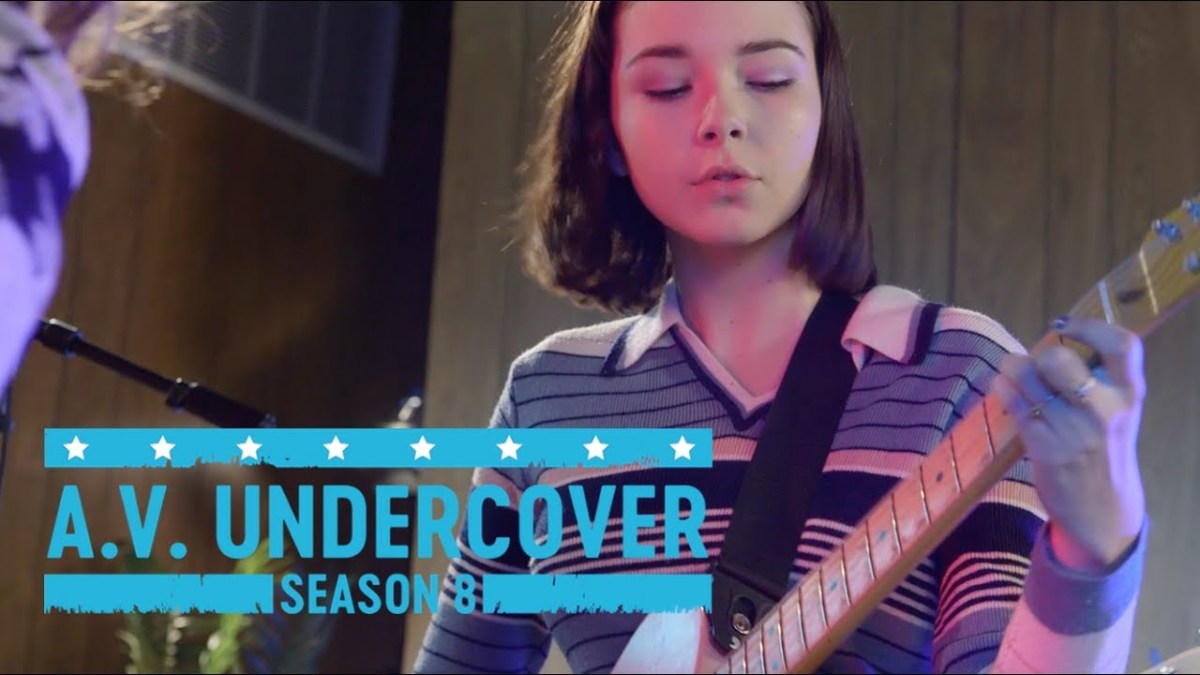
Regrettes cover Sweet’s Fox On The Run on the A.V Undercover Web Series
Fox on the Run
I don’t wanna know your name ‘Cause you don’t look the same The way you did before Okay, you think you got a pretty face But the rest of you is out of place You looked alright before
Fox on the run You scream and everybody comes a running Take a run and hide yourself away Foxy on the run F-foxy Fox on the run And hide away
You, you talk about just every band But the names you drop are second hand (second hand) I’ve heard it all before I don’t wanna know your name ‘Cause you don’t look the same The way you did before
Fox on the run You scream and everybody comes a running Take a run and hide yourself away Foxy on the run F-foxy Fox on the run And hide away
F-foxy Fox on the run You scream and everybody comes a running Take a run and hide yourself away Foxy is on the run F-foxy Fox on the run And hide away (Fox on the run) (Fox on the run) (Fox on the run) (Fox on the run)












:format(jpeg):mode_rgb():quality(90)/discogs-images/R-1333395-1381101639-9694.jpeg.jpg)


 PowerPop... An Eclectic Collection of Pop Culture