I had this single in the 70s. I was a kid and I knew every word. I had no clue what it meant…just thought it was a pretty song and the words were powerful. On my single, it was listed as “Only Women” it was shortened from “Only Women Bleed” by the record company because of protests by feminist groups.
Alice Cooper is singing about how women bleed from the heart, mind, and soul. Several feminist groups protested this song, but it was actually a sympathetic look at domestic abuse. It’s a rare song where Cooper doesn’t try to shock.
This ballad was on Alice Cooper’s Welcome To My Nightmare album. The song peaked at #12 in the Billboard 100, #1 in Canada, and #21 in New Zealand in 1975.
The song was written by Cooper and Dick Wagner. Wagner had the melody since the sixties but didn’t like the lyrics. He played the riff for Cooper, and the two developed new lyrics for the song.
The song was produced by Bob Ezrin using a demo that was recorded at the home studio of Micky Dolenz of The Monkees. Cooper and Wagner were able to walk to Dolenz house to record the demo.
Dick Wagner: “It’s really a song about domestic violence. It was misunderstood when it first came out. It was supposedly about a woman’s period, but it wasn’t. It was about a woman’s subservient position in society to a man. I’m a firm believer that women are the superior sex. ‘Only Women Bleed’ was a liberating kind of song.”
From Songfacts
Contrary to what many listeners believed, this is not about menstruation and it does not advocate domestic violence.
Alice Cooper and his guitarist Dick Wagner also wrote the ballads “You And Me” and “I Never Cry” together. Alice called this style “Heavy Metal Housewife Rock,” and explained in an interview with Creem: “I did those songs totally out of spite. I kept reading so many interviews and articles that I said I was never considered musical. Best rock show they ever saw, but musically lacking. They kept saying I was a performer but didn’t write anything. So I said, ‘Oh yeah? Yeah? Wait till you hear this!'”
Cooper performed the song with a single dancer, and it remained a part of his stage show for many of his concerts in the ensuing years. Alice told Mojo: “I didn’t realize it would end up as a woman’s anthem. I just needed a ballad for Welcome to my Nightmare.”
Dick Wagner wrote what would become the music for this song in 1968 when he was with a band called The Frost. Wagner wasn’t happy with the lyrics he wrote for the song, so he never recorded it. When he teamed up with Cooper in 1975, he played the music for Alice, who attached it to a title he was looking to use: “Only Women Bleed.” Based around that title, he and Wagner came up with the rest of the lyrics.
Only Women Bleed
Man’s got his woman to take his seed He’s got the power – oh She’s got the need She spends her life through pleasing up her man She feeds him dinner or anything she can
She cries alone at night too often He smokes and drinks and don’t come home at all Only women bleed Only women bleed Only women bleed
Man makes your hair gray He’s your life’s mistake All you’re really lookin’ for is an even break
He lies right at you You know you hate this game He slaps you once in a while and you live and love in pain
She cries alone at night too often He smokes and drinks and don’t come home at all Only women bleed Only women bleed Only women bleed Only women bleed Only women bleed Only women bleed Only women bleed
Black eyes all of the time Don’t spend a dime Clean up this grime And you there down on your knees begging me please come Watch me bleed
Only women bleed Only women bleed Only women bleed Only women bleed Only women bleed Only women bleed Only women bleed
This song was on Jimi Hendrix’s debut album Are You Experienced released in 1967. The song was written by Hendrix shortly before it was recorded. The guitar and the drum sound is incredible on this one.
The main lyrics in this song (“let me stand next to your fire”) came from a time when the band had just finished a gig in the cold around Christmas, 1966. They went to bass player Noel Redding’s mother’s house in Folkestone, England, and when they got there, Jimi asked Redding’s mother Margaret if he could “stand next to her fire” to warm up. The family dog, a German Shepherd, lay by the fire, which inspired the line, “Move over Rover, and let Jimi take over.”
The song was remixed in stereo for the American release of the album. In 1969, it was released as a stereo single in the UK with the title “Let Me Light Your Fire”
From Songfacts
This lyrical lightning bolt was a breakthrough for Hendrix, who had just started writing songs at the request of his manager Chas Chandler. Writing riffs was easy for him, and it turned out he had a talent for crafting lyrics as well, as he was able to turn a simple line into a fiery tale of lustful passion. (This story is verified in Mat Snow’s Mojo story on Hendrix that ran in the October 2006 issue.)
Hendrix is legendary for theatrics like setting his guitar on fire and playing it with his teeth (not at the same time). This was the song he was (appropriately) playing when he set it on fire for the first time. It happened at a concert in London in March 1967, two months before the Are You Experienced? the album was released. Hendrix was low on the bill (below Engelbert Humperdinck), and looking to garner some media attention. When he ignited his guitar, he created a buzz that grew to a roar as his career took off.
Hendrix set fire to his guitar once again at the Monterey Pop Festival in 1967. At that show, he didn’t do the bit during “Fire,” he did it after playing “Wild Thing.”
The Red Hot Chili Peppers often covered this song in their early years. They decided to play it again at Woodstock ’99 in Rome, New York, but this was a very different festival than the one where Jimi Hendrix performed the song in 1969. The ’99 crowd was violent and unruly; when RHCP launched into this song, they increased their level of mayhem, tearing the place up and setting fires (yes, Rome was burning). >>
Gary Moore covered this on his 1999 release A Different Beat. >>
In the movie Wayne’s World, Wayne falls in love with the bassist from an all-girl band (Tia Carrere) after seeing them cover this song at Gasworks
Fire
Alright, now listen, baby
You don’t care for me I don’-a care about that Gotta new fool, ha! I like it like that I have only one burning desire Let me stand next to your fire Let me stand next to your fire [Repeat 4 times]
Listen here, baby and stop acting so crazy You say your mum ain’t home, it ain’t my concern, Just play with me and you won’t get burned
I have only one itching desire Let me stand next to your fire Let me stand next to your fire [Repeat 4 times]
Oh! Move over, Rover and let Jimi take over Yeah, you know what I’m talking ’bout Yeah, get on with it, baby That’s what I’m talking ’bout Now dig this! Ha! Now listen, baby
You try to gimme your money you better save it, babe Save it for your rainy day
I have only one burning desire Let me stand next to your fire Let me stand next to your fire
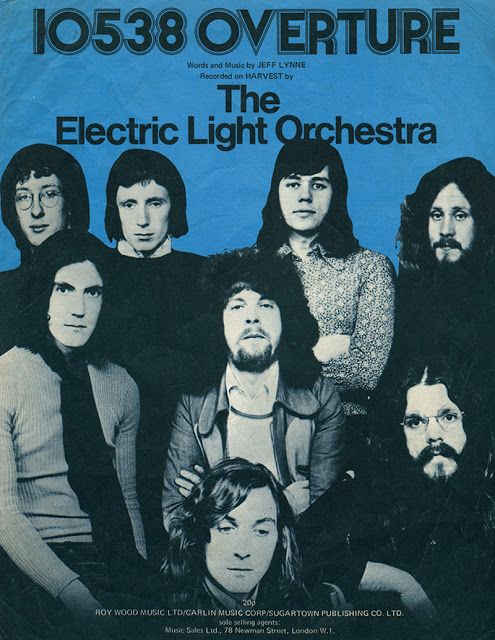
This was the first song ELO recorded and released. Jeff Lynne wrote it when he was in a band called The Move. This prompted some members of The Move to go ahead with plans to create a new band with string instruments called The Electric Light Orchestra.
The song peaked at #9 in the UK in 1972.
The album was first released in the UK as Electric Light Orchestra. When it was released in the US a few months later, someone from their American Record company called to find out the name of the album but didn’t get through. That person wrote down “No Answer” on the paperwork, and that was accidentally used as the name of the US release.
From Songfacts
Lynne wanted the lyrics to be about a man who had a number rather than a name.
1053 was the serial number of the desk Lynne used to write this. They added the 8 and included the word “Overture” to make it clear they were an orchestra.
10538 Overture
Did you see your friend crying from his eyes today Did you see him run through the streets and far away Did you see him run, did you see him fall Did his life flash by at the bedroom door
Did you hear the news it came across the air today Someone has been found on the rocks down in the bay Did you see him hide, did you see him crawl Does his life mean more than it did before
Did you see that man running through the streets today Did you catch his face, was it 10538
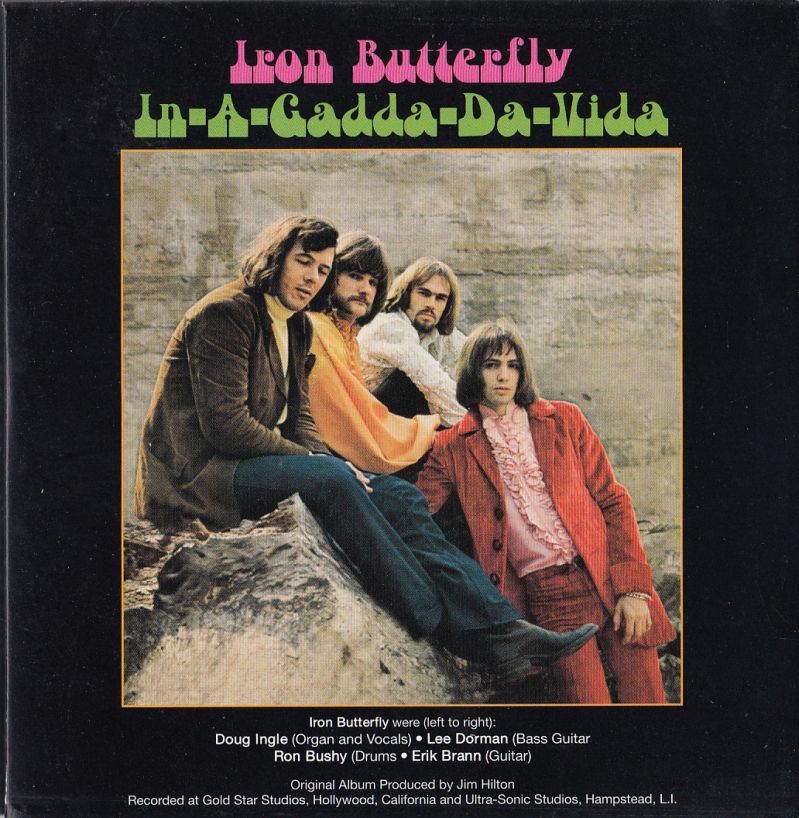
One of the most indulgent rock songs ever. It is 17:05 minutes long and has a grand total of only 30 different words in this song. You might think it has a deep, mystical meaning, but it’s really a translation error.
The title was supposed to be “In The Garden Of Eden.” Someone had written “In-A-Gadda-Da-Vida,” possibly while stoned, on a demo copy. A record company executive saw it and decided to use it as the title.
This was written by Doug Ingle, Iron Butterfly’s vocalist, and keyboard player. His father was a church organist, which influenced the drawn-out organ riffs in this song. When he wrote the song, Doug Ingle didn’t intend for it to be over 17 minutes long, but that’s how it played out. The single was edited down to 2:52, shaving over 14 minutes off the song!
This song reached #30 in the Billboard 100 in 1968.
So… light up some incense (or whatever you want), hang up some beads and turn up In A Gadda Da Vida full blast.
From Songfacts
As for the meaning of the song, it’s just a guy affirming his love for his special girl.
Ron Bushy’s drum solo is not as long as people think; it only runs about 2 1/2 minutes, from 6:30 to a little past 9 minutes. Doug Ingle’s organ solo immediately follows.
The band’s original guitar player quit before this was recorded. He was replaced by Eric Braun, who had only played the guitar for three months.
The title loosely translates as “In The Garden Of Life.”
This was the first hit song that could be classified as “heavy metal.” The phrase was introduced that year in the Steppenwolf song “Born To Be Wild.”
Iron Butterfly would have performed this at Woodstock, but they didn’t make it because they were stuck at the airport.
Hip-hop artist Nas has two different songs that sample “In-A-Gadda-Da-Vida.” The first is “Thief’s Theme” from his 2003 double album Street’s Disciple. The second is the title track of his 2006 album Hip-Hop is Dead. >>
Danny Weiss of Iron Butterfly was recommended to Al Kooper by David Crosby (of Crosby, Stills, & Nash), right when Kooper was forming Blood Sweat & Tears. As given in Backstage Passes and Backstabbing Bastards, “I loved the guitarist, introduced myself, and explained this concept to him. He thought it was a good idea, but insisted that he was committed to the band he was in. His name was Danny Weiss, and his band was Iron Butterfly. He left soon after we met anyway, and joined the great but doomed band Rhinoceros.”
The recording that is heard on the album was done as soundcheck filler for engineer Don Casale while the band waited for the arrival of producer Jim Hilton. However, after the rehearsal was completed it was agreed that the performance was of sufficient quality that another take wasn’t needed.
The song was used in The Simpsons episode “Bart Sells His Soul,” where Bart switches a hymn out for this song and convinces the Reverend Lovejoy it is penned by I. Ron Butterfly. The whole 17-minute version is played by the First Church of Springfield’s exhausted church organist.
In A Gadda Da Vida
In-a-gadda-da-vida honey, Don’tcha know that I love you? In-a-gadda-da-vida baby, Don’tcha know that I’ll always be true?
Oh won’tcha come with me, And take my hand? Oh won’tcha come with me, And walk this land?
Please take my hand… Let me tell ya now. In-a-gadda-da-vida honey, Don’tcha know that I love you?
In-a-gadda-da-vida baby, Don’tcha know that I’ll always be true? Oh won’tcha come with me, And take my hand?
Oh won’tcha come with me, And walk this land? Please take my hand… Let me tell ya.
Two,three,four! In-a-gadda-da-vida honey, Don’tcha know that I love you? In-a-gadda-da-vida baby, Don’tcha know that I’ll always be true?
When I first heard this…I would have bet money…and lost that it was Elvis singing this song. I was shocked when I found out that it wasn’t him. This song was written by the songwriting team of Dennis Lambert and Brian Potter. They wrote hits for various artists, including Glen Campbell, the Four Tops, and Dusty Springfield.
The song peaked at #4 in the Billboard 100 and #1 in Canada in 1971.
The backing group was the great studio musicians called “The Wrecking Crew” who played with countless artists including The Beach Boys, Simon and Garfunkel, and even Cher.
From Songfacts
This was Hamilton, Joe Frank & Reynolds’ third single and first Top 40 hit. Their two previous singles failed to reach the Top 40 and received very little radio play.
Rob Grill of The Grass Roots explained at a concert that this song was intended for his band, but they were about to release another single. So Potter and Lambert crafted “Two Divided by Love” for The Grass Roots, which sounds somewhat similar to this song. The Grass Roots perform “Don’t Pull Your Love (Out)” in concert, since it was supposed to be their song.
Don’t Pull Your Love
Don’t pull your love out on me, baby If you do, then I think that maybe I’ll just lay me down, cry for a hundred years Don’t pull your love out on me, honey Take my heart, my soul, my money But don’t leave me here drowning in my tears
You say you’re gonna leave, gonna take that big white bird, Gonna fly right out of here without a single word But you know you’ll break my heart when I watch you close that door Cause I know I won’t see you anymore
Don’t pull your love out on me, baby If you do, then I think that maybe I’ll just lay me down, cry for a hundred years Don’t pull your love out on me, honey Take my heart, my soul, my money But don’t leave me here drowning in my tears
Haven’t I been good to you, what about that brand new ring? Doesn’t that mean love to you, doesn’t that mean anything? If I threw away my pride and I got down on my knees, Would you make me beg you “pretty please”?
Don’t pull your love out on me, baby If you do, then I think that maybe I’ll just lay me down, cry for a hundred years Don’t pull your love out on me, honey Take my heart, my soul, my money But don’t leave me here drowning in my tears
There’s so much I want to do I’ve got love enough for two And I’ll never use it, girl, if I don’t have you
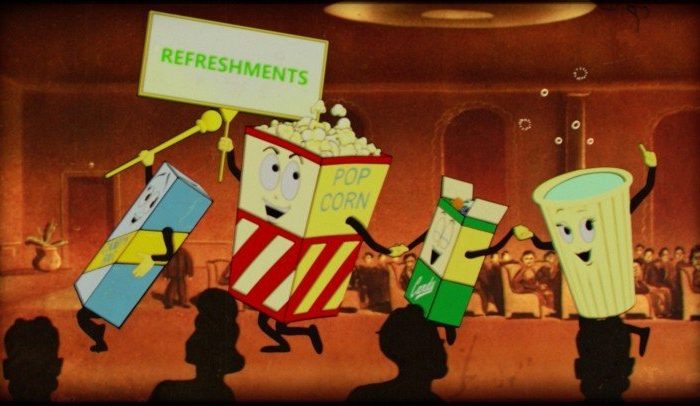
“Let’s All Go To The Lobby” is an animated short from the 1950’s that was played before movies and during drive-in intermissions.
This advertisement is beyond catchy. It’s hard to get it out of your head. Plus, who doesn’t want to see singing popcorn, candy, and a drink? I KNOW I DO!
I see this occasionally at the theater when they are showing an older movie.
In 1957 Chicago-based Filmack Studios released the trailer animated by the producer of Popeye, Dave Fleischer, as part of a series of similar Technicolor shorts to promote the newly installed concession stands in theaters across the country.
Filmack has continued selling copies in the decades since its production. The company estimates that 80% of independent theaters have screened the film at various points.
In 2000, “Let’s All Go to the Lobby” was selected for preservation in the National Film Registry by the Library of Congress as being culturally, historically, or aesthetically significant.
So everyone… Let’s Go Out To The Lobby!!!!
Let’s All Go To The Lobby
Let’s all go to the lobby Let’s all go to the lobby Let’s all go to the lobby And get ourselves a treat
Delicious things to eat The popcorn can’t be beat The sparkling drinks are just dandy The chocolate bars and nut candy So let’s all go to the lobby And get ourselves a treat Let’s all go to the lobby And get ourselves a treat
Johnny Otis wrote this song and had a hit with it in 1958. It peaked at #9 on the Billboard Hot 100 chart and #5 on the Billboard R&B chart. The song had a Bo Diddley type rhythm to it and it’s such a great groove.
Both versions are great…I think out of the two I favor Johnny’s version.
Eric Clapton included this song on his classic album 461 Ocean Boulevard. Willie and The Hand Jive peaked at #27 for Eric in the Billboard 100 in 1974.
The origin of the song came when one of Otis’ managers, Hal Ziegler, found out that rock’n’roll concert venues in England did not permit the teenagers to stand up and dance in the aisles, so they instead danced with their hands while remaining in their seats. At Otis’ concerts, performers would demonstrate Willie’s “hand jive” dance to the audience, so the audience could dance along.
Willie and the Hand Jive
I know a cat named Way-Out Willie Had a cool little chick named Rockin’ Billie Made a heart of stone Susie-Q, doin’ that crazy hand jive too Papa said “You will ruin my house. You and that hand jive have got to go” Willie said “Papa, don’t you put me down, Been doin’ that hand jive all over town.” Hand jive, hand jive, hand jive, doin’ that crazy hand jiveI don’t want you to get on the floor Gettin’ low, getting down with sister go Come on, get baby, little sister’ll die Said doin’ that hand jive one more time Hand jive, hand jive, hand jive, doin’ that crazy hand jive
Doctor getting low and he getting check Now they’re all digging that crazy beat Way-Out Willie gave ’em all a treat Been doin’ that hand jive with his feet Hand jive, hand jive, hand jive, doin’ that crazy hand jiveWilli and Billie got married last fall Had to live with his sisters and that ain’t all Daddy got famous it’s plain to see Been doin’ that hand jive on his knees Hand jive, hand jive, hand jive, doin’ that crazy hand jive
GOOD MORNING everyone. Play this song really LOUD and get on with your day!
The riff of this song is outstanding. It’s a riff that like Louie Louie and Wild Thing is learned by beginning guitar players.
This was released five months after lead singer Bon Scott died. ACDC asked Nobby Holder (lead singer of Slade) to join after Scott had died. Nobby has said that his loyalty was to Slade and turned them down. His voice really would have fit nicely.
The song is a tribute to Scott, and the lyrics, “Forget the hearse ’cause I never die” imply that he will live on forever through his music. With Brian Johnson on lead vocals, the Back In Black album proved that AC/DC could indeed carry on without Scott.
The song peaked at #37 in the Billboard 100 in 1981. The song was written by Brian Johnson, Angus Young, and Malcolm Young
From Songfacts
Brian Johnson made quite a statement with this song, quickly endearing himself to AC/DC fans and leaving little doubt that the band made the right pick to replace Bon Scott. Johnson had been in a group called Geordie, which Scott saw in 1973. After that show, Scott talked up the Geordie lead singer to his bandmates, and in 1980 when they were looking for a replacement, AC/DC’s producer Mutt Lange suggested him. At the time, Johnson was working as a windshield fitter and had recently reunited Geordie.
The band got the idea for the title before writing any of the song, although Malcolm Young had the main guitar riff for years and used to play it frequently as a warm-up tune. After Bon Scott’s death, Angus Young decided that their first album without him should be called Back In Black in tribute, and they wrote this song around that phrase.
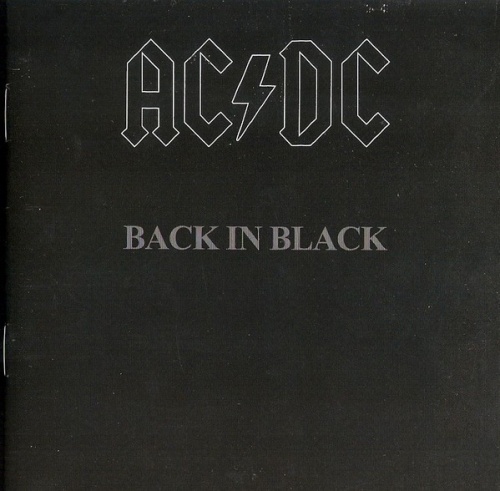
The album had a black cover with the band’s logo on it, which was a tribute to Bon Scott. They didn’t want it to feel mournful, however, and needed a title track that captured the essence of their fallen friend. They were certainly not going to do a ballad, so it fell on Brian Johnson to write a lyric that would rock, but also celebrate Scott without being morbid or literal.
Johnson says he wrote “Whatever came into my head,” which at the time he thought was nonsense. To the contrary, lines about abusing his nine lives and beating the rap summed up Scott perfectly, and his new bandmates loved it.
Bon Scott had several lyrical ideas for the album, but those were abandoned by the band in favor of new lyrics by Brian, Malcolm and Angus. Former AC/DC manager Ian Jeffrey claims to still have a folder that contains lyrics of 15 songs written for Back In Black by Bon, but Angus insists that all of Bon’s notebooks were given to his family.
This song was recorded in The Bahamas and produced in New York by Mutt Lange. Back In Black was one of the first big albums Lange produced. He went on to work with Def Leppard, Celine Dion, and Shania Twain (who he married in 1993). In the late-’70s, he produced two albums for the band Clover, which featured Huey Lewis on harmonica and Alex Call on lead vocals. Call explains Lange’s production style:
“Mutt is a real studio rat. He is Mr. Endurance in the studio. When we were making the records with him, he’d start working at 10:30, 11 in the morning and go until 3 at night, night after night. He is one of the guys that really developed that whole multi-multi-multi track recording. We’d do 8 tracks of background vocals going, “Oooooh” and bounce those down to one track and then do another 8, he was doing a lot of that. A lot of the things you hear on Def Leppard and that kind of stuff, he was developing that when he worked with us. We were the last record he did that wasn’t enormous, and that’s not his fault, he did a really good job with us. Mutt is famous for working long hours. The story I heard about one of the Shania sessions, he had Rob Hajakos, who’s one of the famous fiddle session men down here (Nashville). Rob was playing violin parts for like seven or eight hours and finally he said, ‘Can I take a break,’ and Mutt says, ‘What do you mean take a break?’ Rob goes, ‘Have you ever held one of these for eight hours under your chin?’ Mutt really loves to record, he loves music and he’s a real perfectionist and an innovator. An unbelievable commercial hook writer.” (Check out our full interview with Alex Call.)
This was the title track to AC/DC’s most popular album. It has sold over 19 million copies in the US, the 6th highest ever. Worldwide, it has sold over 40 million.
The Beastie Boys sampled this on their 1985 single “Rock Hard,” a single released in 1985 on Def Jam Records. They sampled it without AC/DC’s permission, so AC/DC refused to allow the Beastie Boys to include the song on their 1999 compilation album Beastie Boys Anthology: The Sounds of Science. >>
A remastered version is included on the 1997 Bon Scott tribute album, Bonfire.
The Atlanta Falcons football team used this as their theme song for a while. The Falcons also went through an MC Hammer phase, when they used “2 Legit 2 Quit” and let the rapper roam their sidelines.
This plays in the opening scene of the 2008 film Iron Man, providing an agressive intro to the Marvel Comic Universe movies. Other films to use the song include:
Grudge Match (2013) The Muppets (2011) Megamind (2010) The Karate Kid (2010) Brüno (2009) School of Rock (2003)
It was also used on episodes of
The Sopranos (“Cold Stones” – 2006) and Family Guy (“Peter Problems” – 2014).
This was used as the backing track to a bootleg version of Eminem’s 1999 hit “My Name Is” The song fits surprisingly well under Eminem’s rap.
Missy Elliott did a remix of this song called “Get Your Freak On (AC/DC remix)” that is played in the beginning of the movie The Rundown, starring Dwayne “The Rock” Johnson and Sean William Scott.
The Appalachian State Mountaineers football team use this song before and during their games, where it is a crowd favorite. The team colors are gold and black. >>
This features in a commercial for the 2015 Chevy Colorado pickup truck, where a mundane guy in a generic sedan is soundtracked with “Rainy Days And Mondays,” which becomes “Back In Black” when a much more exciting fellow comes into the shot and drives off in his black Colorado.
Kurt Cobain was given his first guitar for his 14th birthday, and this was the first song that he learned to play.
Back In Black
Back in black I hit the sack I’ve been too long I’m glad to be back Yes, I’m let loose From the noose That’s kept me hanging about I’ve been looking at the sky ‘Cause it’s gettin’ me high Forget the hearse ’cause I never die I got nine lives Cat’s eyes Abusin’ every one of them and running wild
‘Cause I’m back Yes, I’m back Well, I’m back Yes, I’m back Well, I’m back, back Well, I’m back in black Yes, I’m back in black
Back in the back Of a Cadillac Number one with a bullet, I’m a power pack Yes, I’m in a bang With a gang They’ve got to catch me if they want me to hang ‘Cause I’m back on the track And I’m beatin’ the flack Nobody’s gonna get me on another rap So look at me now I’m just makin’ my play Don’t try to push your luck, just get out of my way
‘Cause I’m back Yes, I’m back Well, I’m back Yes, I’m back Well, I’m back, back Well, I’m back in black Yes, I’m back in black
Well, I’m back, yes I’m back Well, I’m back, yes I’m back Well, I’m back, back Well I’m back in black Yes I’m back in black
Ho yeah Oh yeah Yes I am Oh yeah, yeah oh yeah Back in now Well I’m back, I’m back Back, (I’m back) Back, (I’m back) Back, (I’m back) Back, (I’m back) Back Back in black Yes I’m back in black Out of the sight
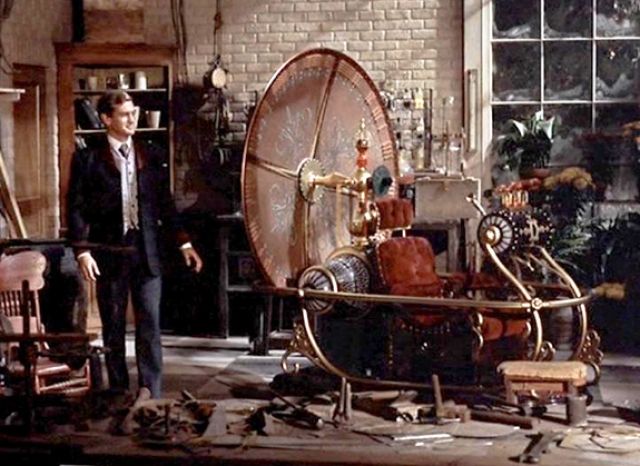
Where is the Time Machine from the Time Machine? I’ve always loved the Time Machine released in 1960. This movie is probably my favorite time travel movie. The prop was perfect that they created for this great movie. The movie was based on the novel by H.G. Wells, it was directed by George Pal, starred Rod Taylor, Alan Young, and Yvette Mimieux, and featured Oscar-winning special effects.
Time Machine prop itself was co-designed by George Pal and MGM art director William Ferrari. Pal incorporated the look of a horse-drawn sleigh, inspired from the winter sleigh rides of his youth.
After the film was completed the Time Machine prop was placed into storage by MGM. In the early 70s MGM held an auction that included the famous Ruby Slippers from The Wizard of Oz and the Time Machine. The Time Machine sold for between eight and ten thousand dollars to the owner of a traveling show.
Film historian Bob Burns tried to buy it at the auction but came up short. Around 5 years later a friend of a friend of Bob’s thought he saw the Time Machine Prop at a thrift shop in Orange California. Bob hurried over and with great excitement checked out the prop. There is was…The Time Machine in a thrift shop. It was not in good shape though. The chair was gone, the pods were broken, but the huge gold disc was in great shape.
When he got home Bob called George Pal (the director) when he got home and told him he had the Time Machine. George had given Bob the blueprints to the machine and Bob used these to restore the machine.
It only took Bob Burns and a crew 4 weeks to restore the machine and it was used in Bob’s annual Halloween show for 1976.
The original Time Machine has made appearances in other productions, including Carl Sagan’s “Cosmos”, “Gremlins, Mike Jittlov’s short “Time Tripper” (1978, and used within his feature film “The Wizard of Speed and Time” in 1989) and the documentary on the making of “The Time Machine” called “The Journey Back” (1993).
Bob Burns owns a ton of movie props. I would LOVE to tour his basement. He also owns the original King Kong.
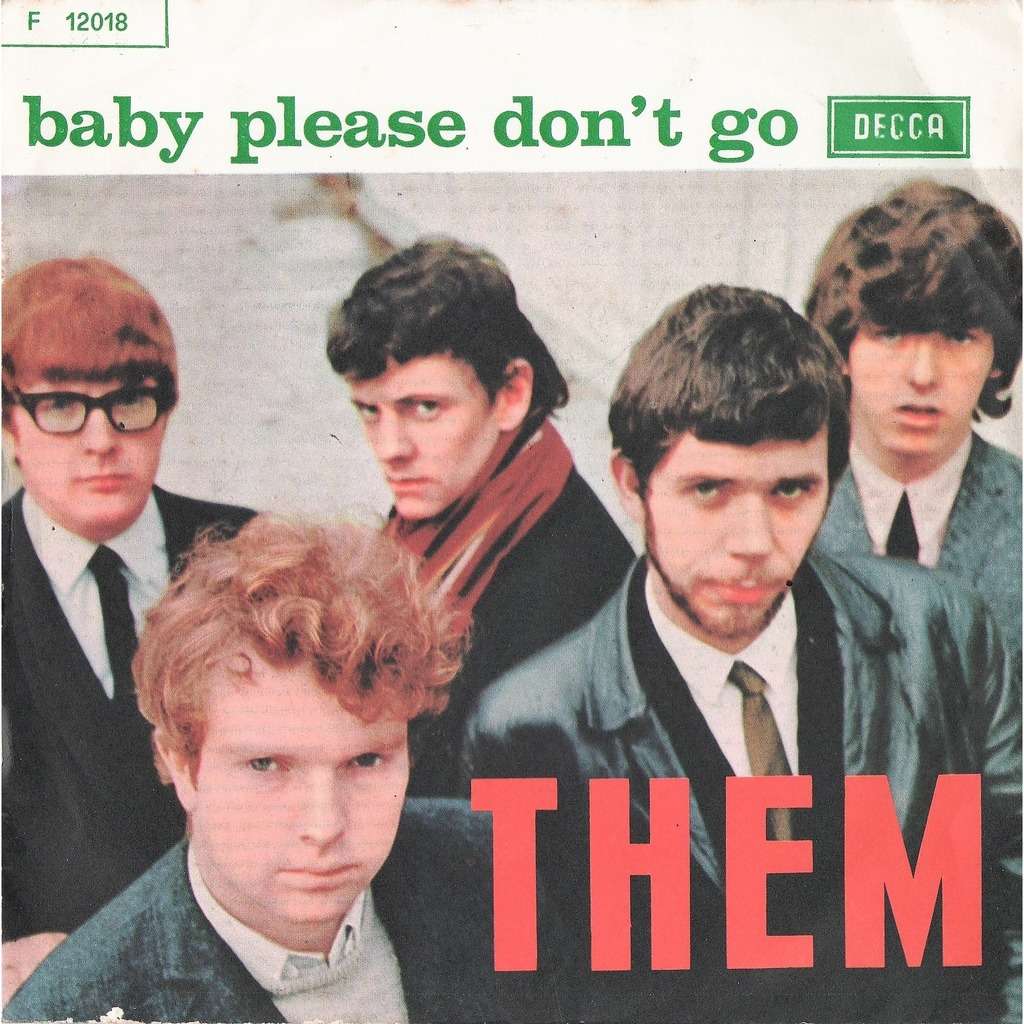
There are many versions of this old blues song but the one I know the best is Them featuring a 19-year-old Van Morrison on lead vocal. This song was the A-side to Gloria when it was released. Gloria ended up being the hit but this one managed to peak at #10 in 1961 and #65 in the UK in 1991.
Morrison based Them’s version on John Lee Hooker’s 1949 arrangement, which he titled “Don’t Go Baby.” He heard the song on Hooker’s 1959 Highway of Blues album.
A pre-Led Zeppelin Jimmy Page, a session musician at the time, played guitar on Them’s version. There’s debate over whether or not he wrote the guitar part or simply played what Them’s Billy Harrison came up with. Whether or not Page is actually the one playing is, itself, debated.
Blues great Big Joe Williams is credited with writing this song, but it was developed from a folk song titled “Long John,” which was recorded in 1934 by John and Alan Lomax for the Library of Congress. That recording captures the song being sung by black prisoners working at Darrington State Prison Farm in Texas. It was a popular tune there because “Long John” was about an escaped prisoner on the run from authorities.
Baby, Please Don’t Go
Baby, please don’t go Baby, please don’t go Baby, please don’t go Down to New Orleans You know I love you so Baby, please don’t go
Baby, your mind done gone Well, your mind done gone Left the county farm You had the shackles on Baby, please don’t go
Before I be your dog Before I be your dog Before I be your dog To git you way down here I make you walk alone Baby, please don’t go Hey
Baby, please don’t go Baby, please don’t go Baby, please don’t go Down to New Orleans You know I love you so Baby, please don’t go
Before I be your dog Before I be your dog Before I be your dog Git you way down here Make you walk alone Baby, please don’t go
Know how I feel right now My baby leavin’, on that midnight train And I’m cryin’
Baby, please don’t go Oh, baby please don’t go Baby, please don’t go Down to New Orleans You know I love you so Baby, please don’t go Let’s go
Before I be your dog Before I be your dog Before I be your dog To git you way down here I make you walk alone Baby, please don’t go, yeah
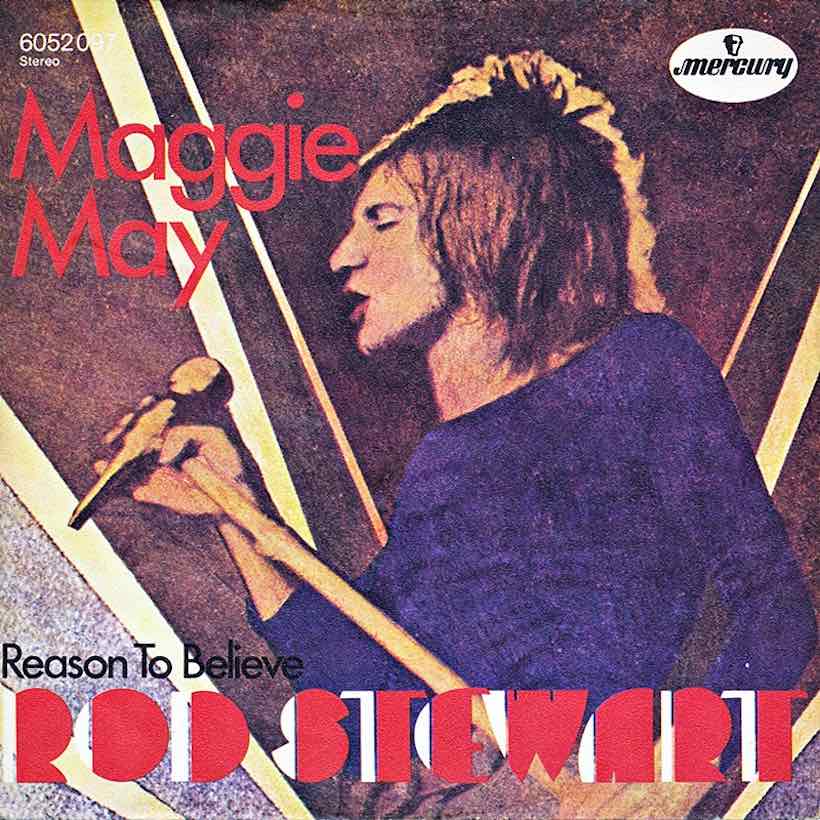
Yes, this song has been played to death but yes I still love it. Musically the acoustic guitar, mandolin, Rod’s scratchy voice, and those great bass lines that Ronnie Wood plays makes it so memorable. The 16-year-old me spent hours learning those bass lines.
Ray Jackson from the band Lindisfarne plays mandolin on this recording. This was the first big hit of the rock era to feature a mandolin, which was mostly heard in folk music. Stewart first used the instrument on Mandolin Wind, which was one of the first songs he recorded for the album Every Picture Tells a Story. He liked the results, so he used it on this song as well.
The song peaked at #1 in the Billboard 100, # in the UK, #1 in Canaday, and #3 in New Zealand.
Rod Stewart has said the song is a true story of what happened to him at the Beaulieu Jazz Festival as a 16 year old…
Rod Stewart: “At 16, I went to the Beaulieu Jazz Festival in the New Forest. I’d snuck in with some mates via an overflow sewage pipe. And there on a secluded patch of grass, I lost my not-remotely-prized virginity with an older (and larger) woman who’d come on to me very strongly in the beer tent. How much older, I can’t tell you – but old enough to be highly disappointed by the brevity of the experience.”
The Beaulieu Jazz Festival was held in 1961…at the bottom I have a video and at the 13-second mark you can see a 16-year-old Rod Stewart there as a fan… right before he met ‘Maggie”
From Songfacts
This song was inspired by the woman who deflowered Stewart when he was 16. In the January 2007 issue of Q magazine, Stewart said: “‘Maggie May’ was more or less a true story, about the first woman I had sex with, at the Beaulieu Jazz Festival.”
With his reputation on the line, Stewart was nervous. He said the encounter was over “in a few seconds.”
The name “Maggie May” does not occur in the song; Rod borrowed the title from “Maggie Mae,” a Liverpool folk song about a Lime Street prostitute which the Beatles included on their Let It Be album.
Stewart liked the play on words the title created, sometimes introducing the song by saying, “This is ‘Maggie May’ – sometimes she did, sometimes she didn’t.”
This song came together when Stewart began working with guitarist Martin Quittenton from the band Steamhammer. They convened at Stewart’s house in Muswell Hill, where Quittenton played some chords that caught Rod’s ear. As he sussed out a vocal melody, he started singing the words to the folk song “Maggie Mae,” which got him thinking about that day 10 years earlier when he had a quick-and-dirty tryst. They made a demo with Stewart singing fractures lines. From there, he got to work on the lyrics, filling a notebook with ideas and arriving at a story about a guy who falls for an older woman and is now both smitten and perplexed.
“Maggie May” remains the biggest mondolin-based hit ever recorded, although the theme music for The Godfather, released the following year, may be more recognized.
Every Picture Tells A Story was Stewart’s third solo album, and the one that made him a superstar. At the time, he was still lead singer of the Faces, and for this session, which took place at Morgan Sound Studios in Willesden, England, he brought in two of his mates from that group: Ronnie Wood (guitar/bass) and Ian McLagan (organ). The other musicians were drummer Mickey Waller (he forgot to bring his cymbals to the session, so those were overdubbed later), guitarist Martin Quittenton and mandolin player Ray Jackson.
The song came together quickly in the studio, helped along by Jackson’s mandolin contribution. Jackson had been hired to perform on the song “Mandolin Wind,” which is why he was available. Stewart asked him to play something they might use to end the song, which he improvised on the spot.
This became a huge hit in England and America, topping both the UK and US charts at the same time. Every Picture Tells A Story was also the #1 album on both sides of the Atlantic, making him the first artist to have the #1 song and album in both the US and UK simultaneously. Stewart’s success in the UK was expected, as he had a following there as a member of the Faces, but he was little known in America before “Maggie May” took off.
There is no real chorus in this song, but plenty of vocal and instrumental changes to keep it interesting. Running 5:46, it was considered an oddity with no hit potential and nearly left off the album. Stewart’s record company, Mercury, didn’t think it was a hit either, so used it as the B-side of the “Reason To Believe” single. Disc jockeys liked “Maggie” better, so they played it instead, forcing Mercury to put it out as a single. The first station to flip the single and play it as the A-side was WOKY in Milwaukee.
Ray Jackson, a British musician who played in the band Lindisfarne, played the mandolin on this song and on a few others for Stewart. In 2003, Jackson threatened legal action against Stewart, claiming he deserved a writing credit for his contribution. Jackson, who says he made just the standard £15 session fee for his work, stated: “I am convinced that my contribution to ‘Maggie May,’ which occurred in the early stages of my career when I was just becoming famous for my work with Lindisfarne, was essential to the success of the record.”
Stewart employed Jackson on subsequent recordings, but didn’t hear about his beef with the composer credit until the ’80s. Stewart’s retort (through a spokesman): “As is always the case in the studio, any musical contributions he may have made were fully paid for at the time as ‘work-for-hire.'”
Adding insult is Jackson’s credit on the album notes, which reads: “The mandolin was played by the mandolin player in Lindisfarne. The name slips my mind.”
Jackson never brought the case to court, but his threat did illuminate his contribution and help publicize his artistic endeavors.
The 32-second mandolin intro that appears on the album version was added later. Written and played by Martin Quittenton, it was listed as a separate song called “Henry” on UK versions of Every Picture Tells A Story. This was Stewart’s way of giving Quittenton a bonus: no matter the length, any song on an album earns royalties for the writer.
This section was excised from the single release, which still came in at 5:11, far longer than most hit singles.
When this became a hit, Stewart’s popularity surpassed that of his group, so Faces shows started being billed as “The Faces with Rod Stewart,” making him the focus.
Stewart moved to America a few years after this came out. He was doing very well there, but also wanted to avoid the huge taxes England levied on high-income entertainers. This was around the same time The Rolling Stones left England for tax reasons. Their album Exile on Main St. is a reference to their “tax exile” status.
To see Rod…go to the 13 second mark
Maggie May
Wake up, Maggie, I think I got something to say to you It’s late September and I really should be back at school I know I keep you amused, but I feel I’m being used Oh, Maggie, I couldn’t have tried any more
You led me away from home, just to save you from being alone You stole my heart, and that’s what really hurts
The morning sun, when it’s in your face really shows your age But that don’t worry me none in my eyes, you’re everything I laughed at all of your jokes, my love you didn’t need to coax Oh, Maggie, I couldn’t have tried any more
You led me away from home, just to save you from being alone You stole my soul, and that’s a pain I can do without
All I needed was a friend to lend a guiding hand But you turned into a lover, and, mother, what a lover you wore me out All you did was wreck my bed, and in the morning, kick me in the head Oh, Maggie, I couldn’t have tried any more
You led me away from home ’cause you didn’t wanna be alone You stole my heart, I couldn’t leave you if I tried
I suppose I could collect my books and get on back to school Or steal my daddy’s cue and make a living out of playing pool Or find myself a rock ‘n’ roll band that needs a helping hand Oh, Maggie, I wished I’d never seen your face
You made a first-class fool out of me But I’m as blind as a fool can be You stole my heart, but I love you anyway
Maggie, I wished I’d never seen your face I’ll get on back home one of these days Ooh, ooh, ooh
Peter Jackson combed through 55 hours of video footage to give a broader picture of the Let It Be sessions. A short preview was shown and it showed the Beatles in good spirits…against what we have read about. There was drama, but from what is being said…there was more good than not.
It will be interesting to get more of a broader picture of that time in the Beatles career…right before they made Abbey Road.
I will be there when it’s released. Here are a couple of articles.
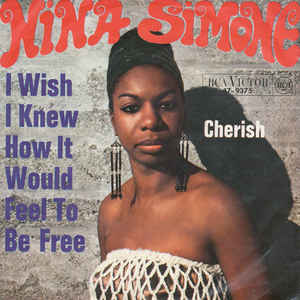
Billy Taylor originally composed this gospel jazz song as I Wish I Knew in 1952. He was spurred to write the tune when his daughter Kim came home from school singing a spiritual.
The song served as an anthem for the Civil Rights Movement in America in the 1960s. Nina’s version was recorded in 1967 on her Silk & Soul album and was widely played.
Silk and Soul peaked at #158 in the Billboard Album Charts.
It’s a beautiful moving song.
From Songfacts
Billy Taylor recorded the tune as an instrumental with a big-band lineup of 19 musicians on November 12, 1963. Taylor’s first recording of the song was done 10 days before President John F. Kennedy was assassinated. Once the lyrics were added, it became an anthem for the 1960s civil rights movement.
The musician’s daughter Kim, who became a law professor in New York, told The Financial Times the story how her father’s instrumental acquired lyrics.
“Dad initially recorded it as an instrumental. But, as I recall, he had written the first verse of the lyrics pretty early on. He got stuck at one point and invited [lyricist] Dick Dallas to collaborate to help him finish the lyrics and that’s when we got the later verses. I’ve always felt that there was a difference between the first verse and the later ones. I think you hear my dad’s voice most clearly in the first verse.”
Nina Simone covered the song in her 1967 album Silk & Soul. The following year, a recording by Solomon Burke reached #68 in the US charts. Other artists that have recorded versions of the tune include John Denver (1969) John Legend & The Roots (2010) and Emeli Sandé (2012).
The tune is widely known in the UK as a piano instrumental version, used for Film…, BBC Television’s long-running late night program about the cinema presented by Barry Norman. The version used by the BBC was recorded in 1967 by Taylor with a trio for his Wish I Knew How It Would Feel to be Free album.
Coca-Cola used the song to soundtrack a feelgood 2004 TV advert featuring Basement Jaxx vocalist Sharlene Hector. The lyrics were changed to the more sentimental, “I wish I could share all the love that’s in my heart.”
I Wish I Knew How It Would Feel To Be Free
I wish I knew how It would feel to be free I wish I could break All the chains holding me I wish I could say
All the things that I should say Say ’em loud say ’em clear For the whole round world to hear I wish I could share All the love that’s in my heart
Remove all the bars That keep us apart I wish you could know What it means to be me Then you’d see and agree That every man should be free
I wish I could give All I’m longin’ to give I wish I could live Like I’m longin’ to live I wish I could do All the things that I can do And though I’m way over due I’d be starting a new
Well I wish I could be Like a bird in the sky How sweet it would be If I found I could fly Oh I’d soar to the sun And look down at the sea
Than I’d sing ’cause I know, yea Then I’d sing ’cause I know, yea Then I’d sing ’cause I know
I’d know how it feels Oh I know how it feels to be free Yea yea! oh, I know how it feels
Yes I know Oh, I know How it feels How it feels To be free
This track sums up the 70s Stones very well. Great riff, great tone, and great Mick Jagger vocal. This song and album were produced by Jimmy Miller who also played percussion on this track.
This song was on the album Sticky Fingers. The album peaked at #1 in the Billboard Album Charts, #1 in the UK and #1 in Canada in 1971.
The Stones played a shorter version of this song a few times before it was released on the Sticky Fingers album. These performances took place on their 11-date UK farewell tour before they left England to avoid taxes. After these shows, they didn’t play it live again until 2002, at which point they could bring alone plenty of musicians to support it.
Mick Taylor: “‘Can’t You Hear Me Knocking’ is one of my favorites. (The jam at the end) just happened by accident; that was never planned. Towards the end of the song I just felt like carrying on playing. Everybody was putting their instruments down, but the tape was still rolling and it sounded good, so everybody quickly picked up their instruments again and carried on playing. It just happened, and it was a one-take thing. A lot of people seem to really like that part.”
From Songfacts
This is an unusually long Stones track, running 7:14. Mick Jagger’s work is done by 2:45, however, as the groove plays out for the next four-and-a-half minutes. The Stones were experimenting with different styles around this time, and “Can’t You Hear Me Knocking?” has a distinct Santana influence.
This featured Bobby Keys on sax, Rocky Dijon on percussion, and Billy Preston on the organ. Keys, along with trumpet player Jim Price, joined The Stones on their 1970 European tour after performing on Sticky Fingers. His lengthy sax solo on this track wasn’t planned out, but once he got going, he kept blowing while the tape ran and Keith Richards loved it.
Probably best not to read too much into the lyrics of this one, since even Mick Jagger isn’t exactly sure what he wrote. As Robert Greenfield recounts in his book Ain’t It Time We Said Goodbye, shortly before the album was released, someone realized that the lyrics for this song and a few others had not been filed, making them impossible to copyright. Members of the Stones camp were dispatched to write down the words by listening to the acetate pressings, and on this song, the best they could come up with for one of the lines near the end was “I’ve got flatted feet, now.” Jagger insisted he didn’t write that line, but couldn’t remember what the real line was, so it stuck.
Andy Warhol designed the Sticky Fingers album cover. Before he started working on it, Mick Jagger send Warhol a note warning that a complicated design could cause nasty production delays, but nonetheless giving him total creative control. The artist responded with a cover that contained an actual working zipper, which of course was a production nightmare.
The cover, however, was one of the most memorable ever made. It showed a man wearing very tight jeans behind that working zipper – many folks assumed this was Mick Jagger, but it was actually Joe Dallesandro, a actor and Warhol cohort. Dallesandro appeared on the cover of the April 15, 1971 issue of Rolling Stone magazine; the album was released on April 23.
Jimmy Miller mixed records for The Spencer Davis Group and produced Steve Winwood’s next group, Traffic.
This was used in the movies Casino (1995), Blow (2001), Without a Paddle (2004) and The Fighter (2010).
Mick Taylor was lead guitarist for The Stones at the time. This was one of his earliest songs with the band – he replaced Brian Jones, who died in 1969.
This appears in the video game Guitar Hero II.
With mentions of “cocaine eyes” and “speed-freak jive,” this song contains some pretty obvious drug references, which makes sense considering the company the band was keeping at the time – pretty much everyone in their circle was doing drugs.
Can’t You Hear Me Knocking
Yeah, you got satin shoes Yeah, you got plastic boots Y’all got cocaine eyes Yeah, you got speed freak jive now
Can’t you hear me knockin’ On your window Can’t you hear me knockin’ On your door Can’t you hear me knockin’ Down your dirty street All right now
Help me baby I ain’t no stranger Help me baby I ain’t no stranger
Can’t you hear me knockin’ Are you safe asleep Can’t you hear me knockin’ Down your gaslight street Can’t you hear me knockin’ Throw me down the keys
Hear me ringin’ Big bell toll Hear me singin’ Soft and low I’ve been beggin’ On my knees I’ve been kickin’ Help me please
Hear me howlin’ I wanna take you down Hear me growlin’ Yeah, I got flatted feet now now now Hear me prowlin’ All around your street Hear me knockin’ All around your town
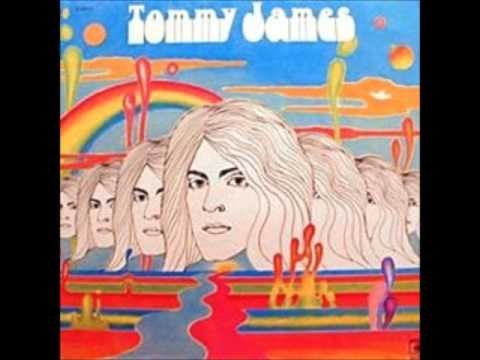
Draggin’ The Line was originally released on James’ second solo album, Christian Of The World. Draggin’ The Line wasn’t considered to be released as the single, and was ultimately was the B-side of the Church Street Soul Revival single. After DJs began playing the song, James went back into the studio to remix the record and add the horn charts. The song became James’ biggest solo hit peaking at #4 in the Billboard 100 in 1971.
Christian Of The World peaked at #131 in the Billboard Album Charts. Tommy’s backing band the Shondells were not on this record – the group broke up in 1970 and Tommy James continued to record as a solo artist.
Tommy James: “It’s almost like the bass guitar was speaking. And it just seemed to say ‘draggin’ the line’ to me. It’s weird. But we had the track before we had the song, and it was like the bass was speaking.”
“The line of ‘hugging a tree’ in there became kind of a slang expression for people who are interested in the ecology. ‘Tree Hugger’ came from that song.”
From Songfacts
In our interview with Tommy James, he explained: “‘Draggin’ The Line’ I wrote up at my farm in 1970, and it was with Bob King. My farm was in upstate New York, I had a couple hundred acres. It was a song I probably couldn’t have written in the city. We just kind of toyed with it. We wrote it, and it was a very repetitious track, and a very sort of hypnotic track. We had the track before we had the song. We went into the studio and just laid down, I don’t know, eight or ten bars of track. We looped it and looped it and looped it, and created the hypnotic rhythm. Bob played bass, Russ Leslie from Neon played drums, and I played guitar. And so we just created loops of tape based on this little riff, and when we had three-plus minutes of it put together we stopped, and then we wrote the song around the track. Second time I had ever done that – first one was “Mony” actually. ‘Draggin’ the Line’ just meant working every day. Nothing really very mysterious about it.”
Regarding the lyrics, “My dog Sam eats purple flowers,” James says: “I did have a cat named Sam – not a dog named Sam. He was a white Persian cat. That was just finding words that fit together (laughing) on a very mellow night, if you get my drift.”
Like many famous songs, this was not considered a hit at first. Says James: “The interesting thing about ‘Draggin’ the Line’ is it was originally the B-side, it was the flip-side of a record called ‘Church Street Soul Revival’ that I had out in 1970. And we put the record out, and the B-side got as much airplay as the A-side, and then finally more airplay. And so we could tell that radio wanted to go with ‘Draggin’ The Line.’ So we went into the studio and threw horns on it, and remixed it with more emphasis on the groove, and re-released it then as an A-side in 1971, and it went #1.”
Draggin’ The Line
Makin’ a livin’ the old, hard way. Takin’ and givin’ by day by day. I dig snow and rain and the bright sunshine. Draggin’ the line [draggin’ the line].
My dog, Sam, eats purple flowers. Ain’t got much, but what we got’s ours. We dig snow and rain and the bright sunshine. Draggin’ the line [draggin’ the line]. Draggin’ the line [draggin’ the line].
I feel fine. I’m talkin’ ’bout peace of mind. I’m gonna take my time. I’m gettin’ the good sign. Draggin’ the line [draggin’ the line]. Draggin’ the line [draggin’ the line].
Lovin’ the free and feelin’ spirit Of hugging a tree, when you get near it. Diggin’ the snow and rain and the bright sunshine. Draggin’ the line [draggin’ the line]. Draggin’ the line [draggin’ the line].
I feel fine. I’m talkin’ ’bout peace of mind. I’m gonna take my time. I’m gettin’ the good sign. Draggin’ the line [draggin’ the line]. Draggin’ the line [draggin’ the line].
Draggin’ the line [draggin’ the line]. La la la la la la la-la-la. Draggin’ the line [draggin’ the line]. La la la la la la la.










 PowerPop... An Eclectic Collection of Pop Culture