TV Draft Round 6 – Pick 2 – Paula Selects – Tell Me Your Secrets

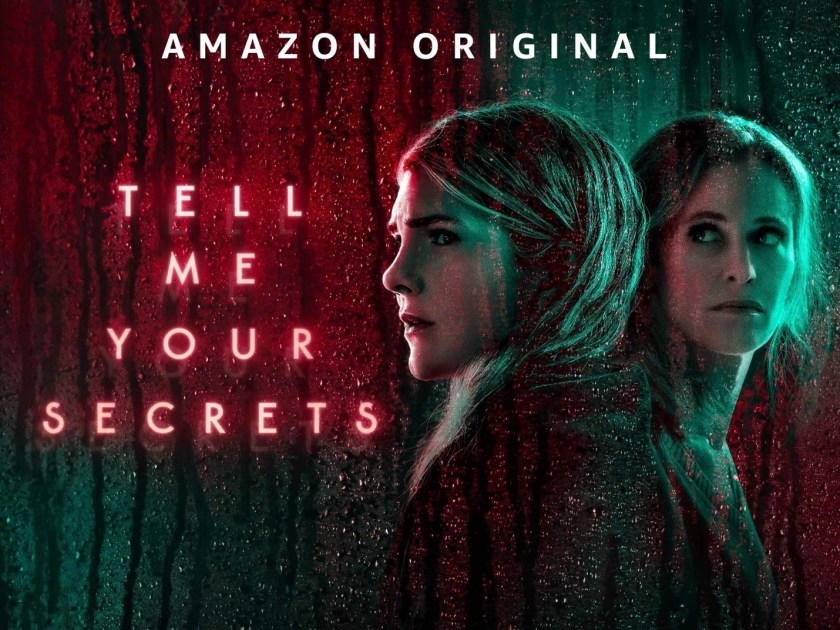
Tell Me Your Secrets

Welcome to the Hanspostcard TV Draft. I hope you will enjoy it! Today’s post was written by Paula at http://paulalight.com

Tell Me Your Secrets

I recently binged this thriller drama series on Prime, and I have to admit that I have a love/hate relationship with it. None of the characters are likeable, not even in a Tony Soprano funny but loveable mafia thug way, but it was hard to look away from the show. The story was strangely compelling, and I needed to know what happened to these fictional people I didn’t like at all! I guess that makes the writing successful.

The series was created by Harriet Warner and premiered on Prime in February 2021. There are four main characters: Emma Hall (played by Lily Rabe), Mary Barlow (Amy Brenneman), John Tyler (Hamish Linklater), and Peter Guillory (Enrique Murciano). I would also argue that there is a fifth main character, shown only in flashback, and that is Christopher (Kit) Parker, played by Xavier Samuel.

The show begins with the imprisoned Karen Miller agreeing to give up some info on Kit Parker, her former boyfriend who is also in prison for murder, and thus Karen is rewarded with a new identity as Emma Hall and placed into witness protection. One of the first problems for Emma is that due to PTSD she is able only to summon up vague flashes of unreliable memories, though it appears she is trying to cooperate with Peter, her parole officer. Some of her flashbacks make her appear to be an accomplice to Kit’s abductions/murders, and other times she seems like a victim who narrowly escaped, though Emma isn’t sure and neither are we. Peter sets her up in an old house in Saint James, Louisiana, which is located conveniently close to his own residence. It turns out that he has an unsavory history involving some other locals, and this takes a while to untangle, and he seems creepier as time goes by. Emma finds work in her former profession as a hairstylist, and she makes a few friends as well as enemies. Soon Emma becomes romantically involved with a local police officer, Tom Johnston (played by Marque Richardson), which brings a new set of complications. We also discover that Kit killed himself in his cell after reading a goodbye letter from Karen (who is now Emma), and Emma’s reaction is confusing. Did she love him, or was she terrified by him? Maybe both.

Simultaneously, back in Texas, Mary is obsessed with finding her missing daughter Theresa. She believes that, unlike Kit’s other victims, Theresa is still alive somewhere. Her husband and son disagree and urge Mary to accept that Theresa is dead and move on, but she refuses. John Tyler, a convicted serial rapist who has done his time, shows up at Mary’s foundation one day for a meeting and offers his services to help women feel safer, as he says he knows all an abductor’s tricks, and supposedly his motivation is redemption for his past crimes. Mary says no thanks because he won’t specifically focus on Theresa, but a bit later in the episode when Mary offers him a job with an expense account to find Karen (Emma) instead, John agrees. It is driving Mary nuts that the system is helping Karen (Emma) create a new life after they failed to find Theresa ~ and Mary believes that Karen (Emma) helped Kit with his abductions.

OK, so this might be an unpopular opinion, but I actually found John to be the most interesting character, though of course he’s still a bad guy overall. But his motivations are layered, while the other characters are much less complex. Mary is just an annoying beyotch, though I can certainly understand her unrelenting focus on her daughter. Emma grates on my nerves with her wishy-washy behaviors and bad decisions. Peter begins to seem more and more sinister as the episodes roll on and not in a sexy way despite his appearance. Some of the side stories are fascinating in their own right, such as the complex dynamics within one of the town’s prominent families, the Lords. Bodie Lord (played by Richard Thomas) has an increasingly dramatic role in the second half of S1. Emma has a run-in with Bodie’s daughter Rose (Chiara Aurelia), due to breaking up a fight, and her mother Diana (Katherine Willis), due to a hair coloring mishap, but Emma and Rose eventually become friends. The girl Rose was fighting with turns up dead, and when Emma shows Pete where she found the body, the body has disappeared. Meanwhile, John methodically runs down every possible lead within Karen’s former life to try to locate her in the present time with her new identity. It’s fascinating how he manipulates people, and you can easily see how his skills can be used for bad or good.

But what absolutely blew me away, and made the whole series worthwhile, was the E10 season finale. In no way did I ever see that coming! Honestly, I don’t know how the writers could top that shocker in a second season, but we’ll see. So far, no word on whether S2 will be happening.

Side note: some may find the storyline involving Bodie particularly relevant due to the current SCOTUS leak regarding Roe v Wade.

~*~

Paula Light is a poet, novelist, flash fiction fan, cupcake connoisseur, mom, grandma, cat mommy, etc. Her blog can be found at http://paulalight.com.

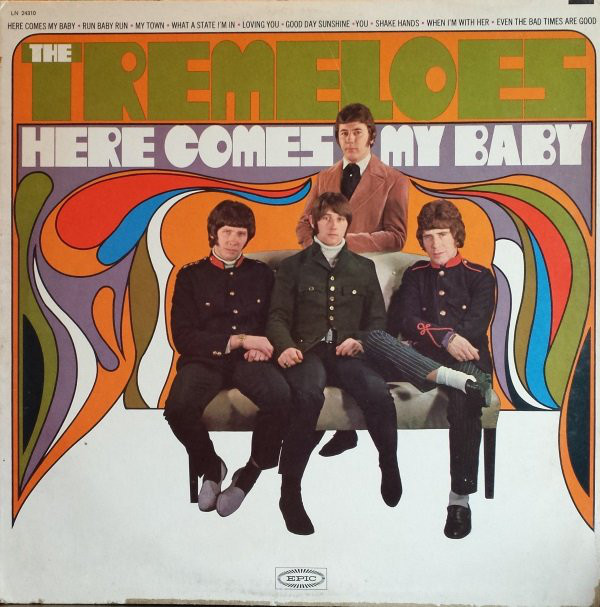
Tremeloes – Here Comes My Baby

This is a fun mid-sixties pop song by The Tremeloes. I like the live party atmosphere they created. Here Comes My Baby was written in 1966 by Cat Stevens. It was almost released as Steven’s first single, but “I Love My Dog” was thought to be stronger.

After “I Love My Dog’s” success, “Here Comes My Baby” was shelved for several months. The Tremeloes picked it up and it became their breakthrough hit in America and their first hit in the UK since their lead singer Brian Poole left them. The song’s success helped establish Cat Stevens as a songwriter and he included it on his first album Matthew And Son.

The Tremeloes had been a backup band for Brian Poole and when they split in 1966 after 8 UK hits, they looked to be another backing band set for junk pile. They bought in Len “Chip” Hawkes as their bassist and lead singer and their career took off.

Some trivia about the Tremeloes. Decca was looking to sign a guitar group in 1962 and the Tremeloes (at the time known as Brian Poole and the Tremeloes) and The Beatles auditioned… Decca picked The Tremeloes over The Beatles mostly because they were closer, based in London…while The Beatles were far away in Liverpool (Whoops!). That decision would haunt Dick Rowe (Decca Executive) for the rest of his life…He did end up signing The Rolling Stones though after a suggestion by George Harrison.

The song peaked at #13 in the Billboard 100, #4 in the UK Charts, and #7 in Canada in 1967.

This is one of those songs that I never get tired of and it always makes me feel good.  They did have some success after this song…Silence is Golden #13, Even the Bad Times Are Good #37, and several successful singles in the UK.

Cat Stevens version

Here Comes My Baby

In the midnight moonlight hour
I’ll be walking a long and lonely mile,
And every time I do,
I keep seeing this picture of youHere comes my baby, here she comes now,
And-a it becomes as no surprise to me
with another guy,Well, here comes my baby, here she comes now,
Walking with a love,
With a love that’s oh so fine
Never to be mine, no matter how I try,

You’ll never walk alone,
and you’re forever talking on the phone
I try to call you names,
but every time it comes out the same

Here comes my baby; here she comes now,
And-a it becomes as no surprise to me
with another guy,

Here comes my baby; here she comes now,
And-a it becomes as no surprise to me
with another guy

Here comes my baby.

TV Draft Round 6 – Pick 1 – Max Selects – The Twilight Zone

Welcome to the Hanspostcard TV Draft. I hope you will enjoy it! Today’s post was written by Max at https://powerpop.blog

There are a few older shows that a younger generation has heard of…I Love Lucy, The Andy Griffith Show, Bewitched, All In The Family, and a few others…but The Twilight Zone…  most generations have actually watched. It still stands up today.  I was reminded of how great of a show it was when I recently went through every episode on this blog.

The Twilight Zone contained 156 episodes and I graded them on a 1-5 scale and out of those episodes…I only had 4 total episodes that were under a 3. How many TV shows have that kind of ratio? Not that I am the official grade on The Twilight Zone but there are not many bad ones…even in IMDB’s 1-10 ratings there are only 3 episodes graded below 6.

I’ve seen reviews on every episode and they differ like night and day. People get passionate talking about this show. “Hey, do you know the one where all the guy wanted to do was read but broke his glasses?” “Yea but what about the one with Captain Kirk…oh yea I mean Shatner in the plane with the monster on the wing?” “How about the one where the humans find the alien cookbook that was called To Serve Man” “That’s a good one but do you remember the episode about the beautiful woman getting her bandages off of her eyes and everyone else is ugly?”

I’ve read reviews of my personal favorite episodes and they might be the polar opposites of someone else. They are all over the map because they mean something different to everyone.

The way Rod Serling handled social injustice, racial bigotry, the Cold War, McCarthyism, consumerism, and hatred with a science fiction twist was outstanding. He did this without preaching, exaggeration, or shoving his views on people. He used the art of subtlety that has been lost through the years. It was the way he could convey these thoughts that didn’t drive people away from the message… but brought them closer to it. In turn, he brings us closer to each other.

In a 1959 interview when the show just started, Mike Wallace suggested to Serling that by working on this series he had “given up on writing anything important for television.” Wallace missed the point of the show entirely. Serling DID write important material for the show…but through science fiction. It’s the only way censors and advertisers would allow it.

This show is hands down my favorite TV show of all time. I never get tired of it….even after over a year of posting about the show. Rod Serling was a fantastic writer and he picked some great writers like Richard Matheson, Earl Hamner Jr, Charles Beaumont, and  George Clayton Johnson to contribute to the show. The show ages well and the black and white only adds to it.

The Twilight Zone has been revived a few times. In the 80s and 2000s but they didn’t come close to the original. A movie was made in 1983 called Twilight Zone: The Movie but again… it didn’t scratch the surface of the original series.

TV can be a vast wasteland but Serling believed TV could matter. He refused to cater to the lowest denominator. He wrote intelligent stories and screenplays to challenge his viewers. He went to battle with the network censors, executives,  and advertisers to improve and protect the show. He succeeded in creating a show that still resonates today.

You could always depend on a twist in the smart scripts. Sometimes the guilty finger would point at the viewer… we would find out who the monster really was… it would be us… the human race. We all know the twists now, but the sense of justice is why The Twilight Zone is still relevant, and we keep coming back for more.

“There is a fifth dimension, beyond that which is known to man. It is a dimension as vast as space, and as timeless as infinity. It is the middle ground between light and shadow, between science and superstition, and it lies between the pit of man’s fears and the summit of his knowledge. This is the dimension of imagination. It is an area which we call The Twilight Zone.”

“A sickness known as hate; not a virus, not a microbe, not a germ – but a sickness nonetheless, highly contagious, deadly in its effects. Don’t look for it in the Twilight Zone – look for it in a mirror. Look for it before the light goes out altogether.”
― Rod Serling

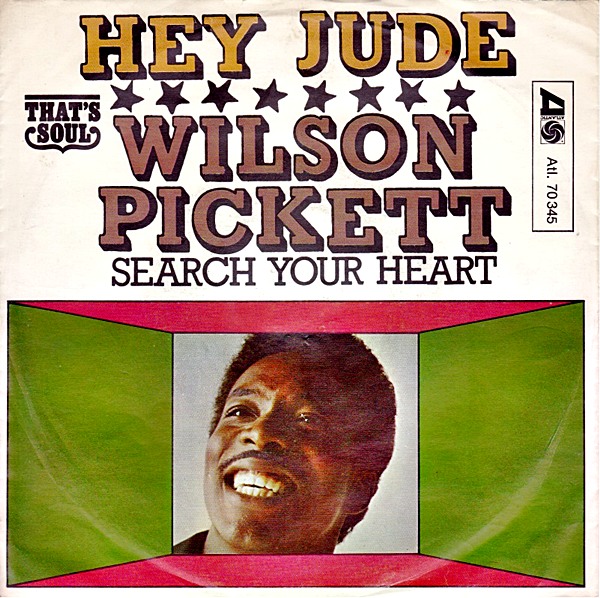
Wilson Pickett – Hey Jude

It’s rare that I post a cover of a Beatles song but this one is worth it. This song was a groundbreaker in the world of R&B and Soul because of the song selection and Duane Allman. This is a great performance of a great song. For me, it’s up there with Joe Cockers With A Little Help from My Friends as one of the best Beatle cover versions.

Duane Allman was working at Muscle Shoals playing on records in 1968. He played on some Clarence Carter records and then in walked Wilson Pickett. The problem was they had no song for Pickett to sing at the booked sessions. Duane Allman brought up Hey Jude to cover in front of Pickett and Rick Hall the producer.

Wilson Pickett and Rick Hall said no they didn’t want to cover the song. Hall and Pickett had objections that the song was currently moving up the charts and  the length of the song made getting it played on the radio almost impossible if you were not the Beatles,

Rick Hall told Allman that it didn’t make sense…the Beatles were the biggest band in the world and their version was clearly going to number 1. He told Allman it would be crazy to do it. Allman shook his head and said no it wouldn’t be crazy. Yes, he said the Beatles are the biggest band in the world and yes it will hit number 1 but that is the reason we should do it. He said just think of the attention we will get having a black artist cover this new Beatle song. Hall thought about it and soon agreed with Allman.

Rick Hall: ‘Their single’s gonna be number one. I mean, this is the biggest group in the world! And Duane said, ‘That’s exactly why we should do it — because [the Beatles single] will be Number one and they’re so big. The fact that we would cut the song with a black artist will get so much attention, it’ll be an automatic smash.’ That made all the sense in the world to me. So I said, ‘Well, okay. Let’s do it.’”

Pickett was not as easy to persuade.  Allman was firm but gentle with Pickett and finally, Wilson relented and he recorded it. It turned out to be an R&B classic. The head-turner was when Pickett started to scream and in came this electric slide guitar of Allman. At that point, you didn’t hear much electric slide on records outside of the blues. After this record, R&B and soul producers started to bring in more rock guitars to compliment what they had.

This record changed Allman’s career in ways he couldn’t have known. One of Duane’s guitar heroes heard this version and called Atlantic records (Wilson’s record label) and asked who is that guitar player? I want to know now. That guitar player who asked was Eric Clapton.

Later when Clapton was recording the Layla and Other Assorted Love Songs album his producer Tom Dowd asked him if he would mind if Duane Allman dropped by and watch him play. Clapton turned and confirmed that Allman was the guitar player on Pickett’s Hey Jude and when Dowd said yes…Clapton said yes tell him to come by because I want to see HIM play. Allman would end up playing and contributing to most of the Layla album.

The song peaked at #23 in the Billboard 100 and #13 in the R&B Charts in 1969. The rhythm guitar player in Muscle Shoals Jimmy Johnson later credited Allman’s performance on Wilson Pickett’s album Hey Jude as the beginning of Southern Rock. This was recorded a few months before the Allman Brothers formed.

Eric Clapton: “I remember hearing ‘Hey Jude’ by Wilson Pickett and calling either Ahmet Ertegun or Tom Dowd and saying, ‘Who’s that guitar player? To this day, I’ve never heard better rock guitar playing on an R&B record. It’s the best.”

Wilson Pickett: “He stood right in front of me, as though he was playing every note I was singing, and he was watching me as I sang, and as I screamed, he was screaming with his guitar.”

As a Beatle fan…the ironic thing about this song is that George and Paul got into a big disagreement with the Beatle version. George wanted to add guitar fills in between lines to echo them…that is what Duane Allman did in this version.

Hey Jude

Hey Jude, don’t make it bad
Take a sad song and make it better
Remember to let her into your heart,
Then you can start to make it better.

Hey Jude, don’t be afraid
You were made to go out and get her
The minute you let her under your skin,
Then you begin to make it better

And anytime you feel the pain, hey Jude, refrain,
Don’t carry the world upon your shoulders
For well you know that it’s a fool who plays it cool
By making his world a little colder

Hey Jude, don’t let me down
You have found her, now go and get her
Remember to let her into your heart,
Then you can start to make it better

So let it out and let it in, hey Jude, begin
You’re waiting for someone to perform with
And don’t you know that it’s just you, hey Jude, you’ll do
The movement you need is on your shoulder

Hey Jude, don’t make it bad
Take a sad song and make it better
Remember to let her under your skin,
Then you’ll begin to make it
Better better better better better better, (make it Jude) ooh

Na na na nananana, nananana, hey Jude (Repeat)

Yeah, yeah yeah yeah yeah yeah

Ju- Jude-y Jude-y Jude-y Jude-y Jude-y oow-wow

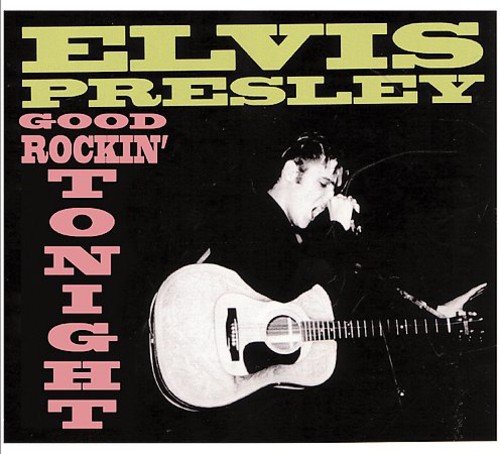
Elvis Presley – Good Rockin Tonight

When I think of Elvis …I admire him on one hand and on the other I pity him for how he ended up. When the big E was coming out of the Memphis radios on Sun Records…there was not anyone around that could touch him as a live rock and roll performer. Then came Colonel Tom Parker and Elvis became a huge star but with a steep cost.

Roy Brown first wrote and released this song in 1947. Elvis covered it and released it in 1954. His release was his second Sun Record release and the B side was a song called “I Don’t Care if the Sun Don’t Shine.” I wish Elvis could have stayed on Sun a little longer. Soon he would be gone to RCA. Great records but he had a sound on Sun that he never got back. His band was Scotty Moore on lead guitar and Bill Black on the double bass. The song didn’t chart many places but it did peak at #10 in Sweden.

His first single for Sun was “That’s Alright Mama.” On June 7, 1954, WHBQ Radio in Memphis became the first station to play this song when their disc jockey Dewey Phillips aired it on his Red, Hot and Blue show the day after Elvis recorded it. It soon built up regionally after that.

A Sun Records Tribute Assembles Old Timers of Rock & Roll - Frank Beacham's  Journal

On November 20, 1955, Elvis signed with RCA and after that, his records were everywhere. RCA could give him distribution all over the world but I wish they would have kept recording the Sun Studios with Sam Phillips. Mr. Phillips owned Sun Studios since 1952 and he would have a star-studded roster of Johnny Cash, Roy Orbison, Jerry Lee Lewis, Carl Perkins, and more.

He was also an early investor in the Holiday Inn chain of hotels and an advocate for racial equality, helping to break down racial barriers in the music industry.

The B Side I Don’t Care if the Sun Don’t Shine

Good Rockin Tonight

Well, I heard the news, there’s good rockin’ tonight
I’m gonna hold my baby as tight as I can
Tonight she’ll know I’m a mighty, mighty man
I heard the news, there’s good rockin’ tonight

I said, meet me and a-hurry behind the barn
Don’t you be afraid ’cause I’ll do you no harm
I want you to bring along my rockin’ shoes
‘Cause tonight I’m gonna rock away all our blues
I heard the news, there’s good rockin’ tonight

Well, we’re gonna rock
We’re gonna rock
Let’s rock
Come on and rock
We’re gonna rock all our blues away

Have you heard the news, everybody’s rockin’ tonight
I’m gonna hold my baby as tight as I can
Well, tonight she’ll know I’m a mighty, mighty man
I heard the news, there’s good rockin’ tonight

Well, we’re gonna rock, rock, rock, rock
Come on and rock, rock, rock, rock
Let’s rock, rock, rock, rock
Well, let’s rock, rock, rock, rock
We’re gonna rock all our blues away

Cowboy – Please Be With Me

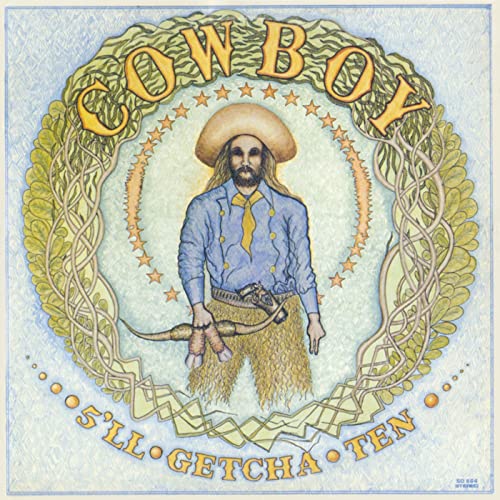
Beautiful melody and touching lyrics…this song is a lost gem. It would later be covered by Eric Clapton but I favor the 1971 original by Cowboy. If you don’t know this one…give the Cowboy version a listen.

Cowboy was a Southern folk-rock band formed in 1969 in Jacksonville, Florida, by singer-songwriters Scott Boyer and Tommy Talton.  The band also featured pianist Bill Pillmore, bassist George Clark, guitarist Pete Kowalke, and drummer Tom Wynn.

Please Be With Me was one of the last songs Duane Allman recorded before his tragic motorbike accident on October 29, 1971.  He played the dobro and it made the song. This song appears on 5’ll Getcha 10, the second record by Cowboy, a band that had landed a contract thanks to their friendship with Duane.

Please Be With Me — Cowboy | Last.fm

The band opened up for the Allmans on their 1970-1971 national tour. The album came out in October 1971. They would go on to release four albums in the early seventies.

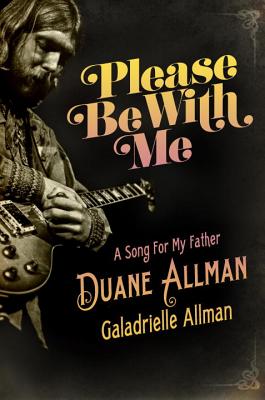
Galadrielle Allman, daughter of Duane Allman, used this song title for her book title instead of one of many Allman Brothers songs. It’s a very good book.

Please Be with Me: A Song for My Father, Duane Allman - Allman, Galadrielle

Butch Trucks (Drummer for ABB): ‘A few weeks after Duane died, when I still hadn’t really let loose or accepted it, I put on Please Be With Me and the dam burst and I started crying and crying, just racked with grief. I was sitting there listening to the song over and over and crying. To this day I can’t hear it without getting choked up.’

Scott Boyer:“I was sitting in this motel room all by myself and just for busy work I grabbed a pad and pencil and started writing freeform. Whatever popped into my head. About 10 minutes later and I had like 10 verses and three choruses, but nothing rhymed and nothing made any sense. It was just right out of my head and onto the paper. And I started connecting things. Put the third line from the third verse with the fourth line in the eight verse. Not necessarily because they made sense but because they rhymed. And I put together like three verses and a chorus and I put the pad down and I rolled over and went to sleep. And Duane (Allman) came into town the next day and said, ‘I want to play on this record with ya’ll but I want to play something brand new.’ We started tossing things around. And I said, ‘Well I wrote this thing last night. There’s nothing much to it.” And I played the song for Duane and (producer) Johnny Sandlin was also in the room and when I finished it they both went, ‘Wow, you wrote that last night, man? That’s beautiful.’ It is? [Laughs.] But that’s how the song got recorded because Duane wanted to play something brand new and I had this thing I had tossed off the night before. And I loved what Duane played on it. That dobro he played on it just comes to life when that thing comes on, man.”

Gregg Allman: The group Cowboy was on Capricorn, and we played their album 5’ll Getcha Ten quite a bit at the Big House. Scott Boyer had been in the 31st of February with Butch, and Cowboy had a sort of southern-folk sound to them. 

Please Be With Me

Upon my word what does it mean?
Is it love or is it me
That makes me change so suddenly
From looking out to feeling free?

I sit here lying in my bed
Wondering what it was I said
That made me think I lost my head
When I knew I lost my heart instead

So won’t you please read my signs
Be a gypsy
Tell me what I hope to find deep within me
And because you can find my mind
Please be with me

Of all the better things I’ve heard
Loving you has made the words
And all the rest seem so absurd
‘Cause in the end it all comes out I’m sure

So won’t you please read my signs
Be a gypsy
Tell me what I hope to find deep within me
And because you can find my mind
Please be with me

King Harvest – Dancing In The Moonlight

This song was leftover from my AM Radio Gold week I had a while back. It’s one of those songs that take me back to when I heard it on the radio. It’s almost impossible for me to be unhappy when this song is on. Kinda like how I Can See Clearly Now affects me. It was unlike the origin of the song.

It was written by the keyboard player/songwriter Sherman Kelly in 1969 after a trip to the Caribbean island of Saint Croix, where he was attacked by natives and left for dead. While he was recovering from his injuries, he wrote this song as an alternate reality.

The first band to record this song was Boffolongo, which was fronted by Larry Hoppen. The group recorded their debut album in 1969, and for their next album, released in 1970, Sherman Kelly joined the band on keyboards and brought them his song “Dancing In The Moonlight.” Kelly’s brother Wells also joined the band; this original version of the song featured Hoppen on guitar, Sherman on lead vocals, and Wells on drums.

In 1971, Wells Kelly paid a visit to the band King Harvest, who was working on a new album in Paris (his former Boffolongo bandmate Dave “Doc” Robinson was in the band). Wells came armed with some albums from America and also a copy of Boffolongo’s “Dancing In The Moonlight,” which King Harvest decided to record, this time with a more keyboard-driven sound and smoother production. The single, with lead vocals by Robinson, was released in Europe but stiffed; it was rescued by an American label called Perception Records that issued the song Stateside.

King Harvest released this song in 1972 and it reached #13 on the Billboard Charts, #5 in the UK charts, and #5 in Canada.

British band Toploader had a #7 hit in the UK with a cover of this after it was featured in a Sainsbury supermarket TV advert.

Dancing In The Moonlight ended up being an enduring hit for the band, and their only song to make much of an impact (“A Little Bit Like Magic” made #91 a few months later) King Harvest were never The Who, Beatles, or the Stones but they contributed to the texture of the seventies. They did end up releasing 10 albums! The latest in 2015.

Songwriter Sherman Kelly: On a trip to St. Croix in 1969, I was the first victim of a vicious St. Croix gang who eventually murdered 8 American tourists. At that time, I suffered multiple facial fractures and wounds and was left for dead. While I was recovering, I wrote “Dancin In The Moonlight” in which I envisioned an alternate reality, the dream of a peaceful and joyful celebration of life. The song became a huge hit and was recorded by many musicians worldwide. “Dancin In The Moonlight” continues to be popular to this day.

The first band Boffalongo to record it. 

Dancing In The Moonlight

We get it almost every night
When that ol’ moon gets-a big and bright
It’s a supernatural delight
Everybody’s dancin’ in the moonlight

Everybody here is out of sight
They don’t bark, and they don’t bite
They keep things loose, they keep things light
Everybody was dancin’ in the moonlight

Everybody’s dancin’ in the moonlight
Everybody’s feelin’ warm and right
It’s such a fine and natural sight
Everybody’s dancin’ in the moonlight

We like our fun and we never fight
You can’t dance and stay uptight
It’s a supernatural delight
Everybody was dancin’ in the moonlight

TV Draft Round 5 – Pick 8 – Mike -Selects – Mad Men

05 Mad Men

Welcome to the Hanspostcard TV Draft. I hope you will enjoy it! Today’s post was written by Mike at https://musiccitymike.net

Mad Men

As was the case with my previous draft pick, Breaking Bad, AMC’s Mad Men was one of the few other shows in recent memory whose brilliance found me watching regularly as it ran every week. Mad Men also undoubtedly holds the record for the show generating the most morning after talk in the office.

If the show is unfamiliar to you, the “Mad” is short for Madison Avenue and the series is a look at the high-pressure world of advertising centered in Manhattan in the 1960s. Pun intended, “mad” is also an apt description of the behavior the “men” in the show exhibit.

In assessing Mad Men’s appeal, there are several reasons for my loving this show. The first no doubt has to do with my age and having lived through its period setting of this historic decade. Visually, through the styles of dress and the décor of both home and office, the show brilliantly captures of the feel of the era. Like another current show that I enjoy, The Marvelous Mrs. Maisel, I am just captivated by the vibrant imagery that so captures the visuals of the 60s. Perhaps it’s just my long-lost nostalgia for those days?

Although I had yet to join the work force until the late 70s, Mad Men also so accurately depicts the office politics as they were back then. First and foremost were the ways men treated women and the way alcohol was a primal part of the business world back then. It was also a time when it seemed like everyone smoked and without ever getting a mean look, they smoked everywhere.

Front and center was Jon Hamm’s lead role as Don Draper, a man whose behavior was as easily despised as his creativity was admired.  The train wreck of his career from his puzzling self-destructive behavior, fueled by his booze-driven lust for women, was inevitable. You see it coming and wonder when he will hit bottom and whether he will recover.

The rest of the cast is equally appealing, and the ladies really steal the show in terms of presenting the evolution of women through the decade. This was true both at home through the character of Draper’s wife Betty played by January Jones and at work by the sexy but savvy Joan Harris played by Christina Henricks and the naive but otherwise smart, Peggy Olson, played by Elizabeth Moss. Joan struggles and eventually attains success despite having to overcome the beauty nature has given her while Peggy ultimately overcomes the hand she was dealt from her sheltered upbringing.

As for the other guys, John Slattery’s Roger Sterling was akin to Draper in terms of despicability while Vincent Kartheiser’s Pete Campbell faults took the cake due to the massive layer of immaturity that he could never overcome. And what a delight to see Broadway legend Robert Morse come out of hiding with a recurring role and even gift us with a dream sequence musical number!

The top appeal of Mad Men however though may be how actual history gets interwoven into its storylines. It was fun to see notable events and figures pass through as it was for emerging fashions and changing trends. All this also created great viewer anticipation as the years flew by. You knew that sooner or later we’d see JFK, The Beatles, and the space program.

And without spoiling anything, actual advertising history makes its way into one of the greatest endings in TV series history. Mad Men also featured one of the most infectious opening sequences of all time combining slick instrumental music to a clever graphic animation.

Kudos to show creator Matthew Weiner for seven brilliant seasons. Deservedly, Mad Men won 16 Emmys. It’s another show that I look to repeating in its entirety.

Supertramp – Breakfast In America

On a far distant radio a few days ago I heard It’s Raining Again and then this one. Sometimes I forget how big Supertramp was in the 70s and 80s…especially after this album.

In 1979 the album Breakfast In America was huge. The album had 4 singles in the Billboard 100. The album peaked at #1 in the Billboard Album Charts, #1 in Canada, #1 in New Zealand, and #3 in the UK…and won 2 Grammys.

The title song peaked at #62 in the Billboard 100 and #9 in the UK in 1979.

This album was released in 1979 and it came at the height of new wave and disco. Its domination of the single and album charts, and the airwaves, had to be unexpected by all concerned. Breakfast In America eclipsed anything they had done before and skyrocketed the band into the commercial stratosphere. Supertramp was never a typical chart band or obvious stadium touring giants. After this album, everything changed.

When they came to record the album, all five members had relocated full-time to the West Coast and bought apartments or houses there, and it was decided that the Colorado (Caribou Ranch) studio had been too sterile and so a new headquarters was found for Supertramp and co in Burbank, a home-from-home that was promptly given the name Southcombe. There, throughout 1978, they rehearsed the material and prepared the demos that would eventually be recorded at the Village Recorder studio in Los Angeles.

Roger Hodgson and Davies wrote most of the songs. They sometimes shared credit on songs… but  Roger Hodgson wrote this song 8 years earlier. Davies and Rogerson had a disagreement over the first line in the song. Rick Davies didn’t like “Take a look at my girlfriend, she’s the only one I got.” Roger won the battle.

Roger Hodgson:  “He never liked the lyric to ‘Breakfast.’ It’s so trite: ‘Take a look at my girlfriend.’ He’s much more into crafting a song. He would have been happier if I’d changed the lyric to either something funnier or more relevant. I tried, but it didn’t work out, so I was stuck with the original.”

Roger Hodgson: “The line ‘playing my jokes upon you,’ I think that kind of sums up the song. It was just mind chatter. Just writing down ideas as they came – fun thoughts all strung together. And I do remember the Beatles had just gone to America, and I was pretty impressed with that. That definitely stimulated my dream of wanting to go to America. And obviously seeing all those gorgeous California girls on the TV and thinking, Wow. That’s the place I want to go.”

Roger Hodgson: “I think I was 17 when I found this wonderful pump organ – a harmonium that you pump with your feet. I found it in this old lady’s house in the countryside near where I lived in England. I bought it for £26, and when I brought it back I proceeded to write all these songs on it: ‘Breakfast In America,’ ‘Two Of Us,’ ‘Soapbox Opera,’ even the beginning of ‘Fool’s Overture’ and ‘Logical Song.’ It’s amazing what this instrument pulled out of me.”

Here is a good live version…you are bloody well right!

Breakfast In America

Take a look at my girlfriend
She’s the only one I got
Not much of a girlfriend
Never seem to get a lot

Take a jumbo across the water
Like to see America
See the girls in California
I’m hoping it’s going to come true
But there’s not a lot I can do

Could we have kippers for breakfast
Mummy dear, mummy dear
They got to have ’em in Texas
‘Cause everyone’s a millionaire

I’m a winner, I’m a sinner
Do you want my autograph
I’m a loser, what a joker
I’m playing my jokes upon you
While there’s nothing better to do

Ba-ba-ba-dow, ba-bow-dum-doo-de-dow-de-dow, de
Ba-ba-ba-dow, ba-bow-dum-de-doo-de-dow
Na na na, nana na na na na

Don’t you look at my girlfriend (girlfriend)
She’s the only one I got
Not much of a girlfriend (girlfriend)
Never seem to get a lot (what’s she got, not a lot)

Take a jumbo cross the water
Like to see America
See the girls in California
I’m hoping it’s going to come true
But there’s not a lot I can do

Ba-ba-ba-dow, ba-bow-dum-doo-de-dow-de-dow, de
Ba-ba-ba-dow, ba-bow-dum-de-doo-de-dow

Hey oh, hey oh, hey oh, hey oh,
Hey oh, hey oh, hey oh, hey oh

Na na na, nana na na na nana

TV Draft Round 5 – Pick 7 – John Selects – CSI: Miami

Welcome to the Hanspostcard TV Draft. I hope you will enjoy it! Today’s post was written by John from https://thesoundofonehandtyping.com

  • Show: CSI: Miami
  • Network: CBS
  • Seasons: 10, 2002-2012

When CSI: Crime Scene Investigation (also known as CSI: Las Vegas) turned out to be such a hit when it debuted at the start of the new millennium, its producers said, “Hey! Let’s do a whole lot of them! Same thing, just in different cities!” Or perhaps it was the suits at CBS who said it. Anyway, no doubt they got together and decided that the second show should be set somewhere with a lot of violent crime and a lot of good-looking people (primarily women) running around scantily clad. So, they chose Miami, associated (rightly or wrongly) with illegal trade in both drugs and firearms and with lots of good-looking people running around in swimwear. As an added bonus, Miami is a city with a large Caribbean population, thus bringing that demographic into play.

The result was a show that played heavily on stereotypes and featured much more blood and carnage than its predecessor. Unlike its predecessor, which relied heavily on quirky crimes and equally quirky CSI’s solving them, CSI: Miami relied primarily on stories of gang wars waged by opposing drug kingpins who spent most of their time lounging by their swimming pools, surrounded by pneumatically-gifted and surgically-enhanced women in skimpy swimwear, while their footsoldiers went out and wreaked havoc on each other, and often innocent bystanders. Okay, that’s a bit of an oversimplification, but the longer the show was on the air, the more one-dimensional it became.

The Miami-Dade CSI’s were led by Lt. Horatio Caine, played by NYPD Blue alum David Caruso. David obviously prepared for the part by watching all of the “Dirty Harry” movies and episodes of (the original) Hawaii Five-O, because the character of Caine came off as a cross between Clint Eastwood and Jack Lord, in other words, a laid-back hard ass.

Just as the original CSI had Catherine Willows (Marg Helgenberger) as a counterpart for Gil Grissom (William Petersen), the original plan was to have Caine have a female counterpart as well. After Sela Ward (who eventually joined the cast of CSI:NY) turned that role down, the job was given to Kim Delaney, another NYPD Blue alum. She was gone after ten episodes, officially because there was “no chemistry” between her character and Caine. Rumor had it, however, that Caruso wanted her out.

Assisting Caine was Calleigh Duquesne, a petite, blonde, blue-eyed, and stunningly beautiful young woman played by the equally petite, blonde, blue-eyed, and stunningly beautiful Emily Procter. Calleigh was originally from New Orleans (although she sounded like she was from North Carolina, as is Ms. Procter) and joined the Miami CSI’s as a ballistics expert. The appeal was obvious: a beautiful blonde Southern girl who liked guns. Calleigh’s father was a down-on-his-luck attorney from New Orleans who drank a lot.

Calleigh had an on-again, off-again relationship with fellow CSI Eric Delko, played by Adam Rodriguez. Delko was a dedicated and responsible CSI who was frequently called on to don a scuba suit and look for evidence underwater. Tim Speedle (played by Rory Cochrane), on the other hand, though he was an excellent CSI, was a bit blasé about maintaining his pistol, which eventually led to his death. He was replaced by Ryan Wolfe (played by Jonathan Togo), who was obsessive-compulsive about maintaining his gun (and just about everything else).

Halfway through the series, a second female CSI, Natalia Boa Vista (played by the quite lovely Eva LaRue), was added to the cast to run around with Calleigh to crime scenes dressed as though they were going to a nightclub, in revealing tops, white pants, and high heels. Lt. Frank Tripp (played by Rex Linn) was a semi-regular member of the cast who was finally added to the permanent cast.

The Miami CSI’s were more likely than their Las Vegas counterparts to get involved in doing actual police work. With Caine in particular, you wondered “is this a CSI or a plainclothes cop?” Many of the relationships in the stories were with Caine, either family members such as Yelina Salas (played by Sofia Milos), who was his sister-in-law, and Julia Winston (played by Elizabeth Berkley from Saved By The Bell), who played a woman he had had an affair with, resulting in a son (played by, of all people, Justin Bieber).

For all of its faults (and I’ve barely scratched the surface here), CSI: Miami was fairly well-received, doing fairly well in the ratings and earning its share of awards, and it continues to be popular in syndication. The stories were generally well thought-out, although the execution was at times heavy-handed.

Curtis Mayfield – Superfly

Love this song and movie. Back in 2018 my son and I caught the movie in an Art House movie theatre that is located in Nashville. It was cool seeing this 1972 movie on the big screen. On top of a great movie, we got to hear the Curtis Mayfield soundtrack with surround sound in the theater.

Quinten Tarantino was strongly influenced by this movie for Jackie Brown. The endings are very similar. This song popularized the word “fly,” which means unusual and exceptional, particularly when it comes to fashion.

Curtis Mayfield was working on the songs for the movie while it was shooting, and would often visit the set, bringing in demos so the cast and crew could hear how they would integrate into the film. He even appears in the movie, performing the song “Pusherman” in a bar scene.

After seeing the screenplay, Mayfield jumped into the project and was given complete creative freedom. He wrote the songs to suit the scenes, but he made sure they could stand on their own, telling the stories even without the visuals. “Superfly” works very well outside of the film, as the character Mayfield describes could relate to anyone trying to survive and thrive under difficult situations.

The song peaked at #8 in the Billboard 100 and #5 in the R&B Charts in 1972.

Curtis Mayfield: “It was a glorious moment for our people as blacks, Priest had a mind, he wanted to get out. For once, in spite of what he was doing, he got away. So there came ‘Superfly’ the song. He was trying to get over. We couldn’t be so proud of him dealing coke or using coke, but at least the man had a mind and he wasn’t just some ugly dead something in the streets after it was all over. He got out.”

Superfly

Darkest of night
With the moon shining bright
There’s a set goin’ strong
Lotta things goin’ on
The man of the hour
Has an air of great power
The dudes have envied him for so long

[Chorus]
Superfly
You’re gonna make your fortune by and by
But if you lose, don’t ask no questions why
The only game you know is Do or Die
Ah-ha-ha

Hard to understand
What a hell of a man
This cat of the slum
Had a mind, wasn’t dumb
But a weakness was shown
Cause his hustle was wrong
His mind was his own
But the man lived alone

[Chorus]

The game he plays he plays for keeps
Hustlin’ times and ghetto streets
Tryin’ to get over
(That’s what he tryin’ to do, why’all)
Taking all that he can take
Gambling with the odds of fate
Tryin’ ta get over [Repeat: x4]
Woo, Superfly

The aim of his role
Was to move a lot of blow
Ask him his dream
What does it mean?
He wouldn’t know
“Can’t be like the rest”
Is the most he’ll confess
But the time’s running out
And there’s no happiness

[Chorus]

Superfly [Repeat: x4]

“Tryin’ to get over” [Repeat: x9]

TV Draft Round 5 – Pick 6 – Max Selects – The Andy Griffith Show

Welcome to the Hanspostcard TV Draft. I hope you will enjoy it! Today’s post was written by Max at https://powerpop.blog

There has been so much written about this show and the writing will never stop. It was a show about the quirky citizens of a fictional town called Mayberry. The Andy Griffith Show is not just another show. The series will be around long after we are gone and still being discovered by future generations.

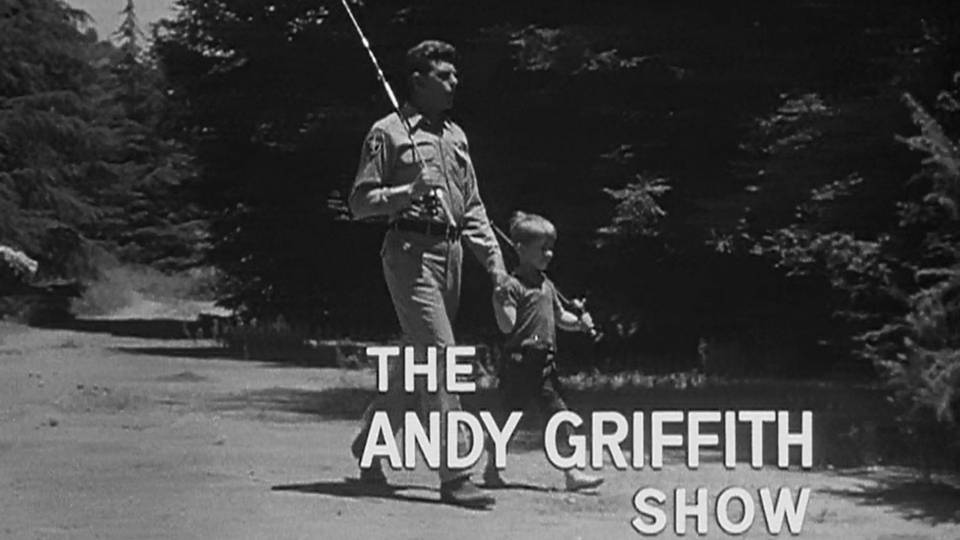
Some of the love I have for the show is about escapism. The low pressure of living in Mayberry is attractive. A place where you are allowed to live slowly and friends are only a few miles away. Nowadays our lives are so full of technology and rush that it would be tempting to walk through the screen to join Andy and Opie fishing out on Meyers Lake.

andy1.jpg

Mayberry was based on a small North Carolina town called Mount Airey where Andy grew up. Griffith has also said that although the show was in the sixties, Mayberry had a 1930s-1940s feel to it. When I’m asked where I grew up, I’ll say in a town kind of like Mayberry and they get what I’m saying.

The episode that best explains the show is… Man In A Hurry. A businessman’s car breaks down two miles from Mayberry on a Sunday. He has a business appointment in Charlotte the next morning. He walks to town and finds it deserted until church lets out. The garage is also closed on Sunday. Gomer is working but can only pump gas and Wally refuses to repair the car until Monday. The stranger can’t believe the pace of life in Mayberry and everyone’s lack of urgency. Andy tries to talk him into spending the night and getting the car fixed on Monday… he won’t have any of this non-sense… first but then he slowly realizes what great lives these people lead and ends up staying a little while longer than he could have.

Andy Griffith and Don Knotts were a great comedy team. I wish they would have made a few movies together. Knotts wanted to do that but Griffith always backed away from it. You can put them up there with other great comedy teams. Andy was a great straight man and Don played off of him well.

I’ve seen parents play episodes to their kids for lessons, schools play episodes for students, and heard of preachers writing sermons around episodes. The humor wasn’t dirty but it wasn’t sterile either. Most if not all of the first 5 season episodes are classics. It’s a show that you can catch at any time. During a rainout, between movies, and a binge-watch.

Dillards

The show offered a little of everything… One of the things I liked was the bluegrass music of The Dillards who appeared on the show as the Darlings. Denver Pyle played Briscoe Darling Jr. and played the jug with the Dillards. They were and STILL are a bluegrass band that tours and releases albums.

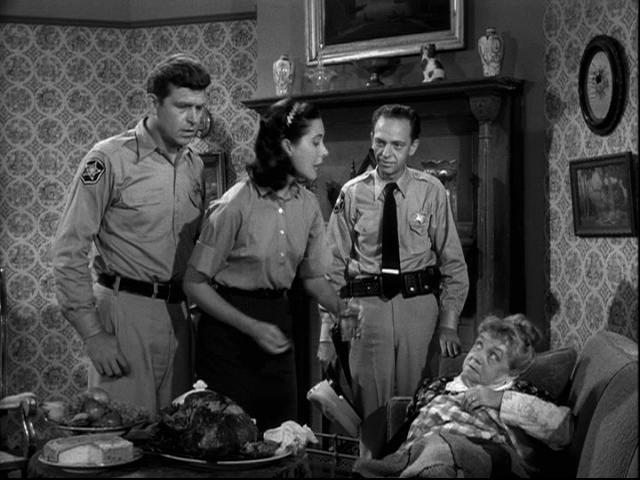
Andy had many girlfriends throughout the show. There was Ellie and she gave Andy all he could handle. Ellie, unfortunately, left after the first season. He saw the county nurse Mary Simpson (My favorite), Peggy McMillian, and then he met Helen Crump. Personally, I never liked Helen as much. Her nickname from some fans was Helen Grump because she could be a grump quite often. Andy ended up marrying Helen in the last season.

Thelma Lou was one of my favorite characters of the show. She put up with Barney’s shenanigans but was always there for him. Barney was foolish for letting her go but they finally got married. It didn’t happen on the show’s original run but they finally tied the knot in the reunion movie.

Aunt Bee

Then there was Aunt Bee Taylor. She took care of Andy and Opie and made sure they were fed well and came home to a clean house. Aunt Bee had a smile for everyone unless you got on her bad side. She could be stubborn and formidable when angered and she commanded the utmost respect from everyone. She was in a way, everyone’s Aunt.

Gomer and Goober

The two characters from Wally’s gas station were Gomer Pyle and Goober. Goober was a great mechanic and Gomer mostly filled your tank up with a story to go along with it. They were not the sharpest tools in the shed but both had hearts of gold and added to the show’s comedy.

Opie

Andy’s son from his only marriage was Opie Taylor. You never found out how Opie’s mother passed away but she did before we got to meet the Taylors. Opie is a super kid and Andy raised him the right way. He is kind and polite and when he does something wrong he usually had the sense to recognize that and correct the problem.

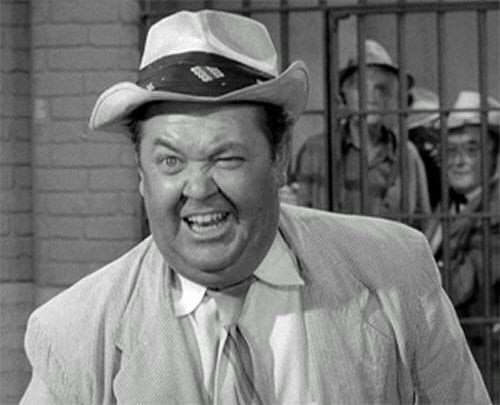
Otis Campbell

Otis Campbell… Otis was a good guy with only one problem. He was the town drunk. Andy and Barney knew him so well that they let Otis grab the jail key and let himself in when he was a bit intoxicated. During the reunion movie made in the 80s, he had given up the booze and was selling ice cream.

Seasons 1-5 were in Black and White with Don Knotts as Barney Fife. Don’s last season was the 5th season and seasons 6-8 were in color.  I have all of the Griffith Show episodes but I will admit…I don’t really watch the color episodes as much as the black and white ones. Yes, there are some good later episodes but it’s Andy. He walks around Mayberry like he is owed money. Andy later admitted on many of the later episodes he was going through the motions.

He started to get a little tenser on screen in the 5th season but Barney was still there and kept things light. In the 6th season with Barney gone, Andy acted impatient with his fellow quirky citizens where at one time he enjoyed them. The show just changed dramatically with color. It remained at number 1 but it just wasn’t the same.

It was one of the most successful television shows ever. The Series went out on top and had a successful spinoff called Mayberry RFD.

In the early 70s Mayberry RFD and other shows such as  The Beverly Hillbillies, Green Acres, Mister Ed, Lassie, Petticoat Junction, and Hee Haw were canceled because of the rural purge the network did… everything that had a tree got canceled it seemed. More important shows were coming like All In The Family and others but there was always room for others. In syndication these shows do great.

So follow me to Mayberry and don’t look back.

Thin Lizzy – Dancing in the Moonlight (It’s Caught Me in Its Spotlight)

I love listening to Phil Lynott sing. Thin Lizzy could give you a lot of different-sounding songs. In this song, it sounds like Phil was listening to the Moondance album by Van Morrison.

The record company added the (It’s Caught Me In It’s Spotlight) so people would not confuse this with the old AM hit Dancing In The Moonlight by King Harvest that I’ll be going over this week!

It’s the way Lynott phrased his lyrics that added to the experience. Thin Lizzy also had some great twin harmony lead guitar parts that made their sound. They were unique, to say the least. You had a black Irish bass player fronting a rock band and singing like a cross between fellow Irishman Van Morrison and American Bruce Springsteen. They were not just a hard blues band. They mixed rock, country,  blues, Celtic, and a little jazz in the mix.

The band’s name is a play on Tin Lizzie (“Thin” being pronounced “Tin” in an Irish accent). Tin Lizzie is either a reference to a robot character from The Dandy Comic or a nickname for the Model T Ford…

This song was on the Bad Reputation album released in 1977 and was written by Phil Lynott. It peaked #14 in the UK, #84 in Canada, and #4 in Ireland.

The album peaked at #39 in the Billboard Album Charts, #44 in Canada, and #4 in the UK in 1977.

Phil Lynott was the principal songwriter, but he encouraged the rest of the band to contribute their own material.

Scott Gorham (lead guitarist…one of them): “He taught us how to do this thing called ‘song writing.’ And until we got better and better at it and we could actually bring our own songs in, we brought in songs that were either partly finished or just ideas to put on one of his songs. We might bring in a song that was half finished, or a whole song minus the lyrics. And it was always minus the lyrics, because that was Phil Lynott’s domain. We knew that we weren’t ever going to touch or top his lyrics. So you just let him get on with it.”

Later on The Smashing Pumpkins covered “Dancing in the Moonlight (It’s Caught Me in Its Spotlight)” for various live performances.

Phil Lynott’s short life has been memorialized by a life-size bronze statue erected in central Dublin, just outside one of the famed bass player’s favorite pubs.

Phil Lynott, Thin Lizzy Lead Singer | Ireland Reaching Out

Thin Lizzy – Dancing in the Moonlight (It’s Caught Me in Its Spotlight)

When I passed you in the doorway
You took me with a glance
I should have took that last bus home
But I asked you for a dance

Now we go steady to the pictures
I always get chocolate stains on my pants
My father he’s going crazy
Say’s I’m living in a trance

But I’m dancing in the moonlight
It’s caught me in its spotlight
It’s alright, alright
Dancing in the moonlight
On the long hot summer night

It’s three o’clock in the morning
And I’m on the streets again
I disobeyed another warning
I should have been in by ten

Now I won’t get out until Sunday
I’ll have to say I stayed with friends
But it’s a habit worth forming
If it means to justify the end

TV Draft Round 5 – Pick 5 – Dave Selects – Emergency

Welcome to the Hanspostcard TV Draft. I hope you will enjoy it! Today’s post was written by Dave at https://soundday.wordpress.com/

TV shows are of course, first and foremost entertainment. But once in awhile they rise above just that and can actually create change for the better. Maybe even save lives. Recently, I’ve rediscovered one such show… and a lot of memories from my childhood!

Over-the-air station COZI-TV shows nothing but oldies. It’s the television version of a Golden Oldies radio station. Andy Griffin, Magnum PI, MASH… they’re all there. And recently, a fave of eight, nine-year old me, Emergency.

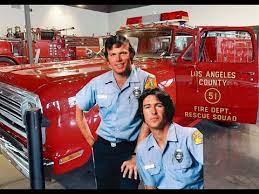
Emergency was the brainchild of Jack Webb, no surprise to those who had watched his earlier show, Adam 12, picked earlier in this by Max. The two had a similar overall feel and they even showed up in cameos on each other’s shows occasionally. While Adam 12 showed the day-to-day routines of two L.A. cops, Emergency dealt with an L.A. fire station, the goings on within it and on their runs. In particular, the show which ran on NBC from 1972-77 (plus six made for TV movies through 1979) focused on two paramedics who although firemen, responded to medical calls and were trained in medical care. Roy Desoto (actor Kevin Tighe) was the blonde, easy-going one while his partner who set many a lady’s heart a-flutter (and would later be immortalized in a Tubes song) was John Gage, played by dark and oft-brooding Randolph Mantooth. The rest of the firemen on their shift at “Station 51”, as well as the doctors and nurses of the local hospital ER were supporting characters. Those included real-life husband and wife Bobby Troup and Julie London, both of whom had music careers as well as acting ones; they portrayed the senior doctor (Dr. Early) and head nurse (Dixie) at the local ER the rescue squad took patients to. The plot outline was not unlike Adam 12, with its two patrol car cop buddies who spend a lot of time discussing life and responding to nuisance calls interspersed with a few high-tension emergency calls.

On Emergency, we follow along with John and Roy as they deal with mundane, everyday issues like John’s insomnia or Roy’s wondering about where to take his kids on holiday, interspersed with a few siren-screaming runs to heart attacks and snakebites, and fewer still infernos to respond to and help people survive. It really gave a feel for what it was like to be responding to a factory on fire, or trying to resuce people stuck in a car that was at the bottom of a cliff, or be surrounded by huge wildfires the whole department was trying to contain. Of course, like Adam 12, it was full of afros, moustaches and conservative morality… youth smoking “grass” laced with pesticides freaked out and confounded doctors with their life-threatening illnesses; doctors jumped in to keep lying parents from their frightened and bruised children while doling out counseling about dealing with stress. (It did, however, coming a bit later than Adam 12, miss out on stripy bell-bottom fashion and bad guys who said things like “you’re a jive cop!” or “say your prayers… I’m gonna send you to pig heaven, copper!”)

Part drama, part light-comedy, mixed with a small amount of action… it’s a far reach from the action shows and movies that are in favor now. But somehow, it worked. We cared about the characters lives… and learned.

Emergency was made by sticklers for detail. Mantooth said “Bob Cinader, who (co) created and produced the show said ‘we’re not going to make anything up. We have to get all the rescues from real fireman’s logs.” Mantooth and Tighe both took real paramedic courses, although they didn’t take the tests to be certified as such, and rode along with real L.A. firemen extensively. The exterior shots used a real L.A. fire station (Station 127 in Carson) and a real hospital nearby. Producers got to borrow an authentic L.A. pumper truck ( the Engine 51 in the show) and apparently, on a few shots forgot to relabel it as such, meaning the eagle-eyed viewer could sometimes see Station 51 responding in a differently-numbered truck. Driven by an actor, Dick Hammer, who played… Dick Hammer. You see, Hammer not only used his real name, he played his own role in real life – he was an actual L.A. fireman, thus having fire training and a license to drive the large vehicles. They opted for realism, which certainly helped us believe the episodes and feel engaged.

Roy and John, the paramedics, went to their medical calls in a modified pickup with all sorts of medical supplies, and radios to the hospital. Since they had medical training, they could undertake medical procedures like give IVs or CPR with the doctor’s instructions over the radio. At the time, the paramedic trucks were new and few and far between, so L.A. couldn’t loan them one. Thus the show got the blueprints and built an authentic replica themselves, and stocked it with the real equipment the true first responders used in the day.

It was interesting. It gave us a look at the ordinary work of fire-fighters and paramedics and some of the crazy calls they had to deal with. And in a small way, it changed the world.

Not only did Emergency pave the way for later, more action-packed shows like E.R. and Station 19, it changed society as well.

ME TV point out that when the show first aired, there were only 12 – one dozen – fire departments with paramedics in the entire country. (I was surprised to read that my particular hometown in Canada was the very first in that country to have paramedics in their fire department, that being in 1971). Then California governor Ronald Reagan had only signed legislation allowing for firemen to be trained as paramedics the previous year and L.A., Seattle and Miami were the only notable large urban areas in the U.S. with them at the time. What’s more, ambulances were largely nothing more than taxis for sick and injured people. The personnel on them did little besides get the patient to doctors and help down the road. By the end of the show in mid-’77, fully half of all Americans were within 10 minutes of responding fully-trained paramedics. Lives were saved…. and one has to imagine that Emergency was behind it. It’s hard to innumerate, but oral history suggests a lot of fire departments and city councils got on board to train their firemen and supply them with medical gear when people started wanting their town to have its own John Gage, Roy Desoto and Squad 51. A University of Baltimore study says “ample evidence suggests a conclusion that the TV show was a primary factor that fueled…paramedic training.” EMS World call Randy Mantooth the “goodwill ambassador” for their profession and point out “for all the popularity of classic shows such as the Honeymooners and Gunsmoke, the number of people they inspired to become bus drivers or sheriffs was probably small.” Not so Emergency. Schools offering the training to be paramedics saw a surge of applicants shortly after the show premiered.

Pretty cool. A little bit campy, a little comic, a little bit educational. Bits of high excitement, and lots of cool retro vehicles and fashions. I still enjoy it. What’s more, it was a show that changed history and made life safer. And still is interesting to watch close to 50 years on. Methinks we’ll never be saying that about the Kardashians.

Allman Brothers – Southbound

Just the opening licks to this song hook me for the rest of the way. Southbound was on the number 1 album Brothers and Sisters in 1973.

The Sound of Vinyl

The making of this album was anything but easy. On October 29, 1971, Duane Allman was killed in a motorcycle wreck. He was the undisputed leader of the band and the source of their music. After he died it hit the members hard including his brother Gregg Allman. They all agreed to continue on though. They had just released Live At Fillmore East (selected for preservation in the Library of Congress)…along with Live At Leeds considered the top live rock album of all time.

It was just climbing up the charts and money started for once to roll in for the band. They were working on the follow-up album Eat A Peach when Duane was killed. They regrouped and finished the album. It was a hybrid of studio/live recordings. Dickey Betts the other guitar player took a crash course on slide guitar.

The one member that could not get over Duane’s death was bass player Berry Oakley. He was not just another bass player. His playing reminds me of Paul McCartney in a way because it was so melodic. After Duane died he pretty much gave up and was drinking constantly. The other band members tried to babysit him on tour but nothing worked. Gregg Allman said: Berry didn’t want to die but he didn’t want to live either. 

Remembering Allman Brothers Bassist Berry Oakley On The Anniversary Of His  Untimely Death [Videos]

Duane Allman and Berry Oakley

On November 11, 1972, three blocks from where Duane was killed, Berry ran straight into a City Bus with his motorcycle. Some say it was on purpose because there were no skid marks at the scene. Someone took him home after he refused to go to the hospital. Three hours later he was rushed to the hospital, delirious and in pain, and died of cerebral swelling caused by a fractured skull. The Doctors said even if he would have gone straight to the hospital after the accident…he couldn’t have been saved.

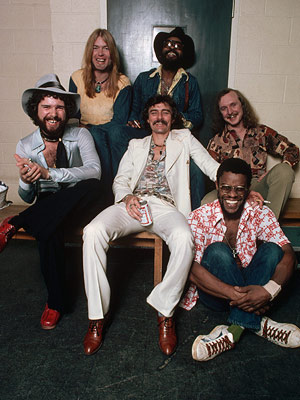
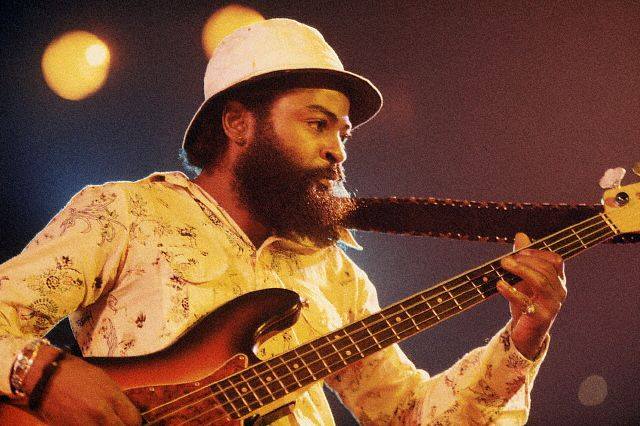
The Allmans again decided to carry on. They didn’t replace Duane at first with another guitar player…they replaced him with a piano player named Chuck Leavell who would later play with the Rolling Stones among others. Oakley was replaced by  Lamar Williams, an old friend of drummer Jaimoe. Lamar would die early also in 1983 of lung cancer. His doctors believed that the disease was derived from exposure to Agent Orange during his Vietnam service. The album sessions started in the Autumn of 1972 and Oakley’s bass can be heard on two songs… “Wasted Words” and their huge hit “Ramblin’ Man.”

Lamar Williams (Allman Brothers) | Know Your Bass Player

Lamar Williams

Lamar Williams plays bass on Southbound… Southbound was written by Dickey Betts with Gregg on lead vocals.

Southbound

Well I’m Southbound, Lord I’m comin’ home to you
Well I’m Southbound, baby, Lord I’m comin’ home to you
I got that old lonesome feelin’ that’s sometimes called the blues
Well I been workin’ every night, travelin’ every day
Oh, I been workin’ every night, traveling every day
Oh you can tell your other man, sweet daddy’s on the way
Aww, ya better believe
Well I’m Southbound
Whoa I’m Southbound
Oh you better tell your other man, sweet daddy’s on his way
Got your hands full now baby, as soon as I hit that door
You’ll have your hands full now woman, just as soon as I hit that door
Well I’m gonna make it on up to you for all the things you should have had before
Lord, I’m Southbound
Oh I’m Southbound, baby
Whoa I’m Southbound, yeah baby
Well I’m gonna make it on up to you for all the things you should have had before