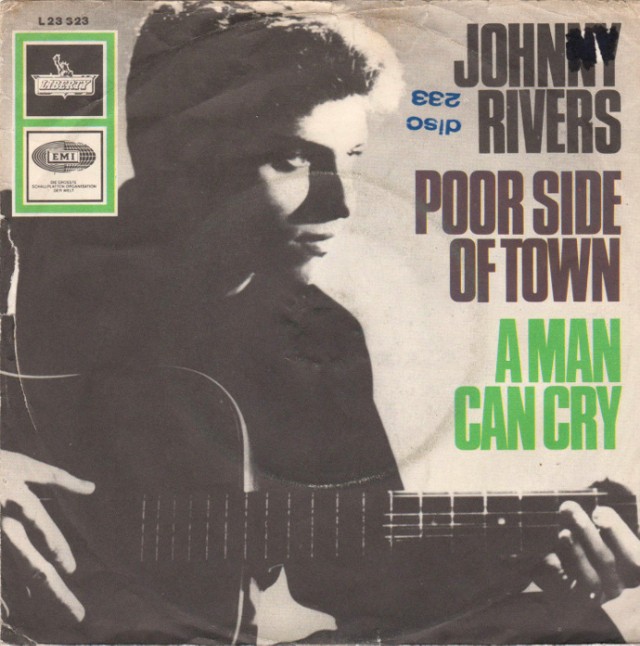
This song has always stuck with me because of that odd guitar riff. The song was written by Johnny Rivers and Lou Adler. Johnny had 29 songs in the top 100, 9 top ten hits, and one number one song. This is the one chart-topper Rivers achieved. It hit #1 in the Billboard 100 in 1966.
The song was on his Changes album that peaked at #33 in 1967. With this album, he moved into a more soulful, contemporary direction with his music. Instead of basic guitar-bass-drums, he added orchestral sounds from horns and strings.
This is Johnny Rivers’ only American chart topper. He co-wrote it with Lou Adler. Marty Paich, who arranged for Mel Torme and Ray Charles, did the string arrangement.
Johnny Rivers: “I had this tune I’d been working on, and I kept playing it for Lou. It took me about 6 months to finish. We cut it with Larry Knechtel, Joe Osborn and Hal Blaine. I did my vocal performances live with the band. I sat and played my guitar and sang. There weren’t any overdubs. So we said it could use some singers and maybe some strings. That’s the time we got together with (arranger) Marty Paich.”
This was a change of direction for Johnny Rivers, who had tired of the upbeat Go-Go sound that provided him with his early hits. However, he found his record company reluctant to tamper with a winning formula. He recalls, “Al Bennett and those guys were goin’ Man. don’t start comin’ out with ballads. You’re gonna kill your career. You got a good thing goin’ with this funky trio rock sound, stay with that.”
Poor Side of Town
How can you tell me how much you miss me When the last time I saw you, you wouldn’t even kiss me That rich guy you’ve been seein’ Must have put you down So welcome back baby To the poor side of town
To him you were nothin’ but a little plaything Not much more than an overnight fling To me you were the greatest thing this boy had ever found And girl it’s hard to find nice things On the poor side of town
I can’t blame you for tryin’ I’m tryin’ to make it too I’ve got one little hang up baby I just can’t make it without you
So tell me, are you gonna stay now Will you stand by me girl all the way now Oh with you by my side They just can’t keep us down Together we can make it girl From the poor side of town
(So tell me how much you love me) (Come be near to me and say you need me now)
Oh, with you by my side This world can’t keep us down Together we can make it baby From the poor side of town
I remember in Jr High school in 1981 I bought Long Distant Voyager by the Moody Blues. The album received heavy play and peaked at #1 in the Billboard album charts. The album had two top twenty hits with The Voice and Gemini Dream. The Voice peaked at #15 in the Billboard 100.
With no clear title in the lyrics, Justin Hayward had no idea what to name this song. When the group’s engineer, Greg Jackman, asked him what to call it, Hayward replied, “I’ll think of that after.”
Jackman thought he said, “Fat Arthur,” and wrote that on the tape. That was the song’s name right up to the mastering process when Jackman pushed for a more sensible title before they turned it over to the label. Hayward went through the lyrics and picked out “The Voice,” which is what stuck.
Mike Pinder left after the previous album Octave and was replaced by Patrick Moraz.
This was one of the songs that propelled The Moody Blues to a comeback in the early 1980s, and of their newer songs, it appealed the most strongly to fans of their original work. Written by Justin Hayward, the lyrics have the same philosophical tone of their songs in the late 1960s, and the song is alternately urgent and hopeful about the future. It seems to be telling listeners that they face major choices on how their world will turn out, and that there is great hope in it, but only if they make it happen of their own initiative.
After the Moody Blues came to San Francisco and played their psychedelia-tinged songs in 1967, they’ve been perceived in some circles as a Flower Power band. They are certainly very introspective, but their music changed with the times, thanks in part to a shift in songwriting for Justin Hayward. By the ’80s, he no longer needed to be in just the right mood to write a song (like he was on one Tuesday Afternoon), but could compose in his music room on a regular schedule. Hayward cites this discipline for the band’s continued success in the ’80s.
Hayward did something different on this track, recording two guitars to a click track and then bringing that tape to the band to give them the tempo and feel of the song. This is the method he used on many songs throughout the decade.
The Voice
Won’t you take me back to school? I need to learn the golden rule. Won’t you lay it on the line? I need to hear it just one more time.
Oh, won’t you tell me again? Oh, can you feel it? Oh, won’t you tell me again tonight?
Each and every heart it seems, Is bounded by a world of dreams. Each and every rising sun, Is greeted by a lonely one.
Oh, won’t you tell me again? Oh, can you feel it? Oh, won’t you tell me again tonight?
Cause out on the ocean of life my love. There a so many storms we must rise above. Can you hear the spirit calling, as it’s carried across the waves? You’re already falling it’s calling you back to face the music. And the song that is coming through. You’re already falling the one that it’s calling is you.
My a promise take a vow. And trust your feelings it easy now. Understand The Voice within. And feel a change already beginning.
Oh, won’t you tell me again? Oh, can you feel it? Oh, won’t you tell me again tonight? Tonight?
Oh, won’t you tell me again? Oh, can you feel it? Oh, won’t you tell me again tonight?
And how many words have I got to say? And how many times will it be this way? With your arms around the future and your back up against the past. You’re already falling it’s calling you on to face the music. And the song that is coming through. You’re already falling the one that it’s calling is you.
Each and every heart it seems, Is bounded by a world of dreams. Each and every rising sun, Is greeted by, a lonely, lonely one.
Won’t you tell me again? Oh, can you feel it? Oh, won’t you tell me again tonight?
A good rocker by George. He recorded this song when he was making his album All Things Must Pass in 1970. Eric Clapton, Jim Gordon, Bobby Keyes, and Badfinger are among the musicians on this recording.
The song peaked at #10 in the Billboard 100 and #3 in Canada in 1971. Originally, Harrison wrote this for Billy Preston with sort of a gospel feel. After it ended up being a fast rocker, he decided to record it himself.
In 2014 there was a contest to come up with a video to this song. The winner is at the bottom of the post. This is the announcement.
Congratulations to Brandon Moore from the United States whose video was chosen by Olivia & Dhani Harrison as the overall winner of the Genero.tv ‘What is Life’ Competition!
Preston was one the early artists on the Beatles’ Apple label (he released two albums), and he was present at the sessions that yielded “Get Back.”
Harrison was writing many religious songs at the time, but this wasn’t one of them. The lyrics are directed to a person, not God.
The original song had piccolo, trumpet, and oboe parts that weren’t used because Harrison didn’t like the feel. They can be heard on the 2000 reissue of the album, where the original backing track is included as an extra song.
Phil Spector produced the album. Bobby Whitlock, who played keyboards at the sessions, had this to say about him in his Songfacts interview: “The real show in that whole place was Phil Spector – what a funny guy. He’s not too funny now, but then, what he was doing in there and the way he was carrying on, I thought, they’ve got all these mics out here catching us jamming, where they need a mic is on the inside. He was a pretty colorful character to say the least. That was one of the highlights of it – listening to him and watching him and watching how he operated. I learned a lot just from being around him. He’s just eccentric, he’s real creative. I agree with his work ethic. I concur with him 100% when it comes to being creative in the studio – put 6 guitars on it if you need it. If it wasn’t for Phil Spector, forget about The Righteous Brothers. There probably wouldn’t be a lot of us here from ‘You’ve Lost That Lovin’ Feelin” – you know how many babies were made to that?”
On the album, the “O’Hara-Smith” singers are credited as background vocalists. Whitlock explains: “That’s Eric Clapton and me. If you listen, you can hear Eric and me wailing away.” (For more on these sessions, check out our Bobby Whitlock interview)
This has been covered by Olivia Newton-John and the surf band The Ventures. A version by Shawn Mullins appeared on the Big Daddy soundtrack.
In the UK, this was released as the B-side to “My Sweet Lord.” In the US, it was released as its own single, with “Apple Scruffs” as the B-side.
What Is Life
What I feel, I can’t say But my love is there for you anytime of day But if it’s not love that you need Then I’ll try my best to make everything succeed
Tell me, what is my life without your love Tell me, who am I without you, by my side
What I know, I can do If I give my love now to everyone like you But if it’s not love that you need Then I’ll try my best to make everything succeed
Tell me, what is my life without your love Tell me, who am I without you, by my side Tell me, what is my life without your love Tell me, who am I without you, by my side
What I feel, I can’t say But my love is there for you any time of day But if it’s not love that you need Then I’ll try my best to make everything succeed
Tell me, what is my life without your love Tell me, who am I without you, by my side Oh tell me, what is my life without your love Tell me, who am I without you, by my side
What is my life without your love Tell me, who am I without you, by my side
Oh tell me, what is my life without your love Tell me who am I without you by my side
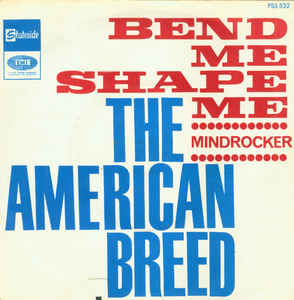
I owned a softrock compilation album with this song and It’s So Nice To Be With You on it. Bend Me, Shape Me peaked at #5 in the Billboard 100 in 1968. The group was formed in Cicero, Illinois as Gary & The Knight Lites. The founding members included Gary Loizzo- vocals and guitar, Charles Colbert, Jr.- bass guitar and vocals, Al Ciner- guitar and vocals, and Jim Michalak on drums.
This was originally recorded in 1967 by The Outsiders, who were known for their hit “Time Won’t Let Me.”
This was written by songwriters Scott English and Larry Weiss. Larry Weiss later wrote “Rhinestone Cowboy.”
The song is about a guy who is so enamored with a girl that he will let her do whatever she wants to him as long as she continues to love him.
In the UK this was a #3 hit in 1968 for Amen Corner. The following year they went to the top of the UK charts with “(If Paradise Is) Half As Nice.”
Bend Me, Shape Me
You are all the woman I need, and baby you know it, You can make this beggar a king, a clown or a poet. I’ll give you all that I own. You got me standing in line Out in the cold, pay me some mind. Bend me, shape me Anyway you want me, Long as you love me, it’s all right Bend me, shape me Anyway you want me, You got the power to turn on the light. Everybody tells me I’m wrong to want you so badly, But there’s a force driving me on, I follow it gladly. So let them laugh I don’t care, Cause I got nothing to hide, All that I want is you by my side. Bend me, shape me Anyway you want me, Long as you love me, it’s all right Bend me, shape me Anyway you want me, You got the power to turn on the light. Bend me shape me anyway you want me
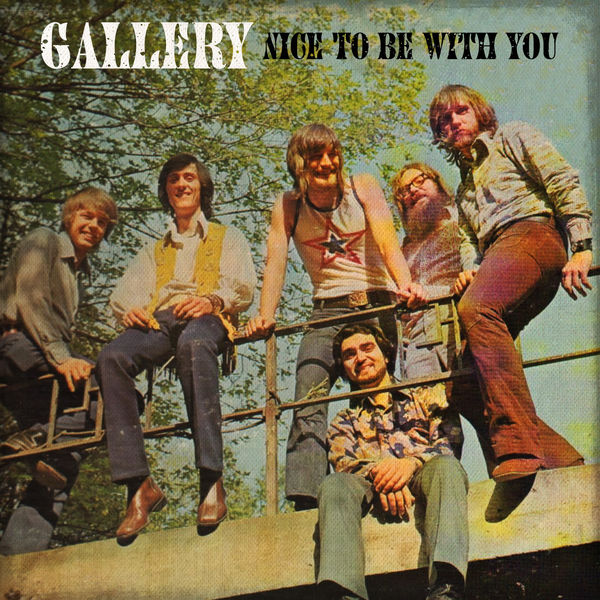
I had this song on a compilation album I had when I was around 18. Gallery was a 1970s American rock band, formed in Detroit, Michigan by Jim Gold. While they did record a number of songs, they are most famous for this 1972 hit single. They are a true one-hit wonder.
The song peaked at #4 on the Billboard 100 and #1 in Canada in 1972.
They had another hit as well as pointed out by a commenter…it was “I Believe In Music”, written by Mac Davis. It peaked at #22 on the Billboard 100 and #5 in Canada in 1972.
It’s So Nice To Be With You
Oh, it’s so nice to be with you I love all the things ya say and do And it’s so nice to hear you say You’re gonna please me in every way Honey, I got the notion you’re causin’ commotion in my soul
Baby, you and me have got somethin’ that’s real I know it’s gonna last a lifetime Aw, ya better believe it, girl at night I call your name Darkness fills my room, I’m only dreamin’ About the time I’m gonna be with you
Oh, it’s so nice to be with you I love all the things ya say and do And it’s so nice to hear you say You’re gonna please me in every way Honey, I got the notion you’re causin’ commotion in my soul
When I’m feelin’ down You’re there to pick me up and help me to carry on Aw, little things mean a lot when you need a shoulder to cry on I’m there to ease the pain and chase away the rain Aw, darlin’, I just gotta say
Oh, it’s so nice to be with you I love all the things ya say and do And it’s so nice to hear you say You’re gonna please me in every way
Oh, it’s so nice to be with you I love all the things ya say and do And it’s so nice to hear you say You’re gonna please me
This song has a gritty garage sound to it. There were many 1960’s garage bands that formed after The Beatles appeared on Ed Sullivan. The Seeds were formed in 1965 by Sly Saxon. Saxon wrote, “Pushin’ Too Hard” while sitting in the front seat of a car waiting for his girlfriend to finish grocery shopping at a supermarket. The song peaked at #36 in the Billboard 100 in 1967. The song is simple and repetitive but catchy in its own way.
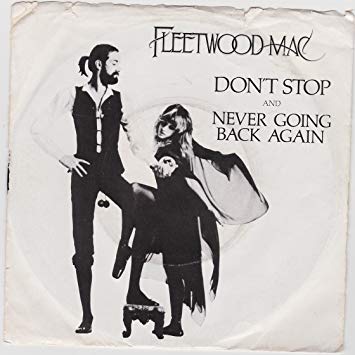
This song was a B side of “Don’t Stop” with both songs coming on the great album Rumors. This is a nice short acoustic Lindsey Buckingham written song. It’s a very understated but powerful song compared with the other ones on the album and one of my favorites.
Lindsey is a great guitar player. He is not flashy but he plays just what is needed like the sustained solo in “Go Your Own Way.” This song is what made me start listening to his playing.
from Rolling Stone Magazine: In the studio, co-producer Ken Caillat asked Buckingham to restring his guitar every 20 minutes. “I wanted to get the best sound on every one of his picking parts,” Caillat said. “I’m sure the roadies wanted to kill me. Restringing the guitar three times every hour was a bitch. But Lindsey had lots of parts on the song, and each one sounded magnificent.”
According to Q magazine, June 2009 the inspiration for this Lindsey Buckingham penned song was a brief relationship with a woman whom he’d met on the road. Buckingham had only recently broken up with his Fleetwood Mac co-singer Stevie Nicks.
Most of the Rumours album was recorded at The Record Plant in Sausalito, California, but this song was recorded at Studio City Sound Recording Studios in Los Angeles. According to recording assistant Cris Morris, this song took a while to record. Said Morris: “It was Lindsey’s pet project, just two guitar tracks but he did it over and over again. In the end his vocal didn’t quite match the guitar tracks so we had to slow them down a little.”
Never Going Back Again
She broke down and let me in Made me see where I’ve been
Been down one time Been down two times I’m never going back again
You don’t know what it means to win Come down and see me again
Been down one time Been down two times I’m never going back again
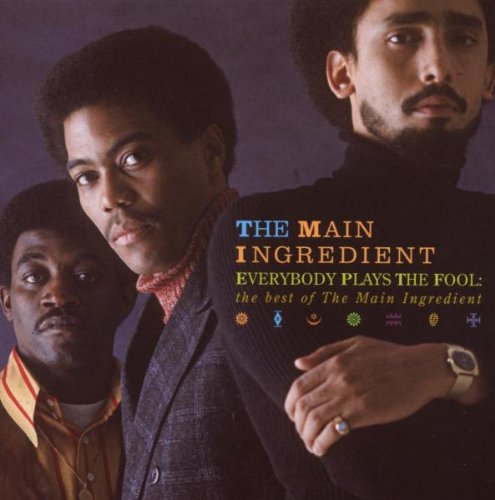
More soul from the seventies. The song peaked at #3 in the Billboard 100 and #6 in Canada. The Main Ingredient had two top ten hits and 11 songs in the top 100. The band was formed in Harlem, New York City in 1964 as a trio called the Poets, composed of lead singer Donald McPherson, Luther Simmons, Jr., and Tony Silvester. Don McPherson died of leukemia in 1971 and was replaced by Cuba Gooding, Sr…the father of Cuba Gooding Jr.
I love Seventies soul music. There were so many great artists like The Delfonics, The Chi-Lites, Smokey Robinson, and the list goes on.
Everybody Plays the Fool
Okay, so your heart is broken You sit around mopin’ Cryin’ and cryin’ You say you’re even thinkin’ about dyin’ Well, before you do anything rash, dig this
Everybody plays the fool sometime There’s no exception to the rule Listen, baby, it may be factual, may be cruel I ain’t lyin’, everybody plays the fool Falling in love is such an easy thing to do And there’s no guarantee that the one you love Is gonna love you
Oh-oh-oh, lovin’ eyes they cannot see A certain person could never be Love runs deeper than any ocean You can cloud your mind with emotion
Everybody plays the fool, sometime There’s no exception to the rule Listen, baby, it may be factual, may be cruel I want to tell ya Everybody plays the fool
How can you help it when the music starts to play And your ability to reason is swept away Oh-oh-oh, heaven on earth is all you see You’re out of touch with reality And now you cry but when you do Next time around someone cries for you
Everybody plays the fool, sometime They use your heart like a tool Listen, baby, they never tell you so in school I want to say it again Everybody plays the fool Listen to me, baby Everybody plays the fool, sometime (No exception) no exception to the rule It may be factual, may be cruel, sometime But everybody plays the fool Listen, listen, baby Everybody plays the fool
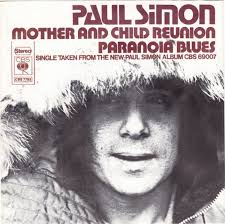
One of my favorite Paul Simon songs. The lyrics, melody, and the reggae feel make this song a classic. Paul’s songwriting is world class…the structure to his songs are great as well as is his guitar playing. The song peaked at #4 in the Billboard 100 and #5 in the UK in 1972.
Simon wrote this in response to the Jimmy Cliff song “Vietnam,” where a mother receives a letter about her son’s death on the battlefield. Simon recorded “Mother and Child Reunion” in Jamaica using Cliff’s musicians, hence the very authentic sound. Simon said of the song that it “became the first reggae hit by a non-Jamaican white guy outside Jamaica.”
Simon came up with the title after seeing a chicken and egg dish called “Mother and Child Reunion” on the menu at 456 Restaurant in Chinatown, New York.
This was Simon’s first single as a solo artist.
Paul Simon was ahead of the trend when he released this reggae-infused song: Johnny Nash went to #1 US later in 1972 with “I Can See Clearly Now,” and Eric Clapton topped the chart with “I Shot The Sheriff” (a Bob Marley cover) in 1974.
Mother and Child Reunion
No I would not give you false hope On this strange and mournful day But the mother and child reunion Is only a motion away, oh, little darling of mine
I can’t for the life of me Remember a sadder day I know they say let it be But it just don’t work out that way And the course of a lifetime runs Over and over again
No I would not give you false hope On this strange and mournful day But the mother and child reunion Is only a motion away, oh, little darling of mine
I just can’t believe it’s so Though it seems strange to say I never been laid so low In such a mysterious way And the course of a lifetime runs Over and over again
But I would not give you false hope On this strange and mournful day When the mother and child reunion Is only a motion away
Oh the mother and child reunion Is only a motion away Oh the mother and child reunion Is only a moment away
Oh the mother and child reunion Is only a motion away Oh the mother and child reunion Is only a moment away
Oh the mother and child reunion Is only a motion away Oh the mother and child reunion Is only a moment away
I remember hearing this song on Fast Times at Ridgemont High. A good pop song by Jackson in 1982 and it peaked at #7 in the Billboard 100 and #16 in Canada in 1982. It was written by Jackson Browne and Danny Kortchmar.
This was his highest ever charting song.
Jackson Browne recorded the song for the film because he was friends with its writer, Cameron Crowe. The song’s co-writer Danny Kortchmar was also friends with Crowe, and was working on the song “Love Rules” for the film with Don Henley when he came up with the framework for “Somebody’s Baby.” Kortchmar convinced Browne to finish writing the song and record it for the movie.
Browne has called this an “unabashed pop song.” Most musicians would want their most popular songs on their albums, but Browne was OK having it on the Fast Times at Ridgemont High soundtrack, despite the advice of his former label boss David Geffen, who told him he was nuts for giving it up.
This song is about a guy who is infatuated with a girl, and convinces himself that she must have a boyfriend. As he tries to work up the courage to talk to her, he keeps losing confidence by reminding himself that she’s too fine not to be taken.
This was part of a memorable scene in the movie Fast Times at Ridgemont High, where it was used to express the feelings of a frustrated teenager. The movie was a huge hit and helped drive the chart success of the song. “Somebody’s Baby” was the only hit from the soundtrack, although “Moving In Stereo” by The Cars was used in a famous scene and also became associated with the film.
Jackson Browne wrote this song with Danny Kortchmar, who played guitar on his Running On Empty and Lives In The Balance albums. Kortchmar had the music and the “must be somebody’s baby” hook. He knew Browne could do something special with the song, so he brought what he had to Jackson, who helped Kortchmar complete it. That’s what I brought to him: all the guitar parts and everything else. In our 2013 interview, Kortchmar explained:
“It was not typical of what Jackson writes at all, that song. But because it was for this movie he changed his general approach and came up with this fantastic song. It’s a brilliant lyric. I think it’s absolutely wonderful. But it’s atypical of him – he wasn’t sure what to make of it himself. He didn’t want to put it on his album that he was making because it was atypical of what he did, but it ended up being something that got requested a lot and he ended up playing it live and taking it to his heart, as it were. And now he plays it all the time.”
Somebody’s Baby
Well, just, a look at that girl with the lights comin’ up in her eyes. She’s got to be somebody’s baby. She must be somebody’s baby. All the guys on the corner stand back and let her walk on by.
She’s got to be somebody’s baby. She must be somebody’s baby. She’s got to be somebody’s baby. She’s so fine.
She’s probably somebody’s only light. Gonna shine tonight. Yeah, she’s probably somebody’s baby, all right.
I heard her talkin’ with her friend when she thought nobody else was around. She said she’s got to be somebody’s baby; she must be somebody’s baby. Cause when the cars and the signs and the street lights light up the town,
She’s got to be somebody’s baby; She must be somebody’s baby; She’s got to be somebody’s baby. She’s so
She’s gonna be somebody’s only light. Gonna shine tonight. Yeah, she’s gonna be somebody’s baby tonight.
I try to shut my eyes, but I can’t get her outta my sight. I know I’m gonna know her, but I gotta get over my fright. We’ll, I’m just gonna walk up to her. I’m gonna talk to her tonight.
Yeah, she’s gonna be somebody’s only light. Gonna shine tonight. Yeah, she’s gonna be somebody’s baby tonight. Gonna shine tonight, make her mine tonight.
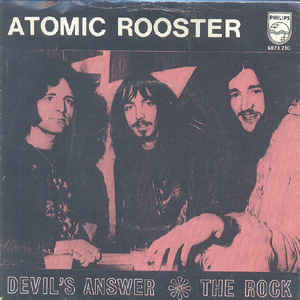
Atomic Rooster… Now that is a name. I’ve been in short term bands with different names such as… “The Flying Junebugs”, “The Cryin ‘Shame” and “Green Swingset” but Atomic Rooster is unique. Atomic Rooster was an English rock band, originally composed of former members of The Crazy World of Arthur Brown. Throughout their history keyboardist, Vincent Crane was the only constant member and wrote the majority of their material.
This is another song I noticed on the Life On Mars series in the mid-2000s.
Their history is defined by two periods: the early-mid-1970s and the early 1980s. Their genre in music is difficult to define since they went through radical changes in very short times during the life of the band. However, their best-known era represented a more hard rock/progressive rock sound, exemplified by their only hit singles, Tomorrow Night (UK No. 11) and The Devil’s Answer (UK No. 4), both in 1971.
The Devil’s Answer
People are looking but they don’t know what to do It’s the time of the season for the people like you Come back tomorrow, show the scars on your face It’s a clue to the answer we all chaseThree, five and seven lift the heaviest load reach the top of the heaven that’s fallen below Devil may care but you wish for the best can’t you see there’s an answer that lies there Come all you sinners and keep with the time can we see all the faces that have fallen behind Don’t make the reason it’s a secret for you
There’s a clue to the answer we all know There’s no clue to the answer we all know People are looking but they don’t know what to do It’s the time of the season for the people like you Come back tomorrow, show the scars on your faceIt’s a clue to the answer we all chase It’s a clue to the answer we all chase
This is a rocking song from 1971 made it to the top 10 at #10 in the Billboard 100, #5 in Canada, and #5 in the UK. This song got blacklisted and of course, gave it a boost. After singles such as “Mary Had A Little Lamb” this song gave Paul some “cool” teenager credibility about apparently getting high.
In an interview with the October 2010 edition of Mojo magazine, McCartney claimed to be surprised when the BBC blacklisted this song. Said the former Beatle: “Look at Bob Dylan, ‘everybody must get stoned.’ It was like, ‘Ooh, does he mean you get high? Or does he mean getting drunk? So there was that ambiguity and I assumed the same would apply to me.”
This song was banned by the BBC for what they described as “inappropriate sex and drugs references.” Fair enough – McCartney is singing about getting high, using his “sweet banana” and “doing it” to her!
McCartney talked about this song in a 2018 interview with GQ. “A lot of people were getting high, so to me it was just like a fantasy song, sort of saying, ‘Hey girl, come on let’s get high,'” he said. “It was just about the times. It’s very much a period piece, but it goes down well.”
McCartney dropped this from his setlists after 1976, but brought it back in 2013 and has played it recurrently ever since. As a grandfather, the song can be a bit embarrassing, so he tweaks it a bit, singing, “Let’s get hi… on life!”
Hi Hi Hi
Well, when I met you at the station You were standing with a bootleg in your hand. I took you back to my little place For a taste of a multicolored band. We’re gonna get hi hi hi, The night is young. She’ll be my funky little mama, Gonna rock it and we’ve only just begun.
We’re gonna get hi, hi, hi With the music on. Won’t say bye, bye, bye, bye, bye, bye, bye, bye Til the night is gone. I’m gonna do it to you, gonna do it, Sweet banana, you’ll never give up. We’re gettin’ hi, hi, hi, in the midday sun.
Well well, take off your face, Recover from the trip you’ve been on. I want to lie on the bed, Get you ready for my polygon. I’m gonna do it to you, gonna do it, Sweet banana, you’ve never been done. Yes, I go like a rabbit, gonna grab it, Gonna do it ’til the night is done.
We’re gonna get hi, hi, hi with the music on. Won’t say bye,bye, bye, bye, bye, bye, bye, bye Til the night is gone. I’m gonna do it to you, gonna do it, Sweet banana, you’ll never give up. We’re gonna get hi, hi, hi, we’re gonna get hi hi hi, We’re gonna get hi, hi, hi, in the midday sun.
Good riff and rock song by the Kinks. It starts off with a chord that is reminiscent of the “A Hard Days Night” intro. I was in high school when it was released and it was great to hear a guitar driven song.
Ray Davies wrote this about the stressful working schedules the Kinks were going through. The song peaked at #41 in the Billboard 100 in 1983.
Do It Again
Standing in the middle of nowhere Wondering how to begin Lost between tomorrow and yesterday Between now and then
And now we’re back where we started Here we go round again Day after day I get up and I say I better do it again
Where are all the people going Round and round till we reach the end One day leading to another Get up go out do it again
Then it’s back where you started Here we go round again Back where you started Come on do it again
And you think today is going to be better Change the world and do it again Give it all up and start all over You say you will but you don’t know when
Then it’s back where you started Here we go round again Day after day I get up and I say Come on better do it again
The days go by and you wish you were a different guy Different friends and a new set of clothes You make alterations and [a fact in you knows] A new house a new car a new job a new nose But it’s superficial and it’s only skin deep Cause the voices in your head keep shouting in your sleep Get back, get back
Back where you started, here we go round again Back where you started, come on do it again
Back where you started, here we go round again Day after day I get up and I say, do it agaiiinnn Do it again Day after day I get up and I say, do it again
The song started out as a mistake, but one that Charles Wright liked. The record company didn’t want him to record it. “No one wanted to record it. I had to sneak a bass player, drummer, and engineer into the studio one Sunday and cut it in secret,” Wright recalls. “The president of Warner Bros. told me I made a mistake. So did every DJ that I played it for. But I had a feeling that it was a hit.”
Charles was right…it peaked at #12 in the Billboard 100 in 1970. It has become one of the most licensed songs of the last 40 years.
Express Yourself
Express Yourself! Express Yourself!
You don’t ever need help from nobody else. All you got to do now:
Express Yourself!
What ever you do, do it good. What ever you do, do it good. All right…
It’s not what you look like, when you’re doin´ what you’re doin´. It’s what you’re doin´ when you’re doin´ what you look like you’re doin´!
Express Yourself! Express Yourself!
They’re doin´it on the moon, yeah… In the jungle too. Everybody on the floor, now. Jumpin´ like a kangaroo. So let the horns do the thing they do, yo…
Some people have everything, and other people don’t. But everything don’t mean a thing if it ain´t the thing you want.
Express Yourself! Express Yourself!
O, do it! O, do it. Do it to it. Go on and do it. Yo, do it. Give.
The first time I heard this song was the Dave Clark Five’s version. It was written by Motown president Berry Gordy Jr, who wrote it for The Temptations, but they failed to arrive for the recording session. At the same time but in a different Motown studio, The Contours arrived to record “It Must Be Love,” but Gordy had other ideas – he asked them to cut “Do You Love Me” instead. The song became one of Motown’s first hits.
The song peaked at #3 in the Billboard 100 in 1962. This would be The Contours last top 40 hits although they would place 8 songs in the top 100.
From Songfacts
Joe Billingslea of The Contours told Mojo magazine February 2009 the story of this song: “We had just left the record hop and we turned at the studio. The doors were always open in those days. Berry was down there at the piano and he said ‘I want you to try this song I’m writing.’ He told us how he wanted the backgrounds to go and we sang it. ‘Try it again, I didn’t quite like it,’ he said. After about the third time he said, ‘That’s not right. I think I’ll give it to The Temptations instead.’ I told him not to. We did it again and he said, ‘That’s exactly how I want it. Come in tomorrow morning, we’re going to record it.’ So we did.
I didn’t like the song. It reminded me of ‘Twist And Shout.’ I said: ‘This song ain’t gonna do nothin’, man.’ That same week it was released and the following week it made the charts. I turned around and said: I love that song! Did I change my opinion? Of course! We realized later that The Temptations could never have sung that song because it wasn’t suited to them but Berry had motivated us to sing it the way he wanted it.”
This song peaked in popularity just as Motown launched their first “Motortown Revue” tour to showcase their acts. The Countours were stars of the show, igniting crowds with “Do You Love Me.” Lower on the bill were some other Motown acts that had yet to hit, including Marvin Gaye, Little Stevie Wonder, and The Supremes.
After being featured in the 1988 movie Dirty Dancing, this was re-released 26 years after it was originally recorded. This time, it charted at #11. The song was a good fit for Dirty Dancing, which despite featuring some modern, original songs, was set in 1963. This was a great song of that era for a dance scene.
The Dave Clark Five recorded this in 1964 as the British Invasion was underway. Their rendition hit #11 in the US. On March 8, 1964, The DC5 played it on the first of their 12 appearances on The Ed Sullivan Show.
In his autobiography To Be Loved, recalls a confrontation with Motown’s primary bass player, James Jamerson, over this song. Jamerson, who is lauded as a creator of the Motown sound, was playing a jazz beat during the session despite Berry’s instructions. “You’ve got to stay on the f–kin’ downbeat,” Berry told him, hoping he wouldn’t have to kick his star bassist out of the session. When they rolled for the next take, Jamerson did as instructed, playing the Pop groove Gordy requested… until Berry took his eyes off him. “In that split second, Jamerson hit four or five Jazz upbeats in rapid succession,” Gordy recalled. “I turned to let him have it, but before I could say anything he had jumped back on the downbeat so brilliantly I could only smile.”
In 1963, London group Brian Poole And The Tremeloes recorded a version that topped the charts in 16 countries including the UK.
This song featured in a 2016 Pepsi commercial starring Janelle Monáe. In the spot, which debuted during the Super Bowl, Monáe dances to the song before entering another room where she goes through a time warp and joins in the celebration to Madonna’s “Express Yourself.”
Do You Love Me
You broke my heart ’cause I couldn’t dance, You didn’t even want me around And now I’m back to let you know I can really shake ’em down
Do you love me? (I can really move) Do you love me? (I’m in the groove) Now do you love me? (Do you love me now that I can dance?) Watch me, now (Work, work) ah, work it out baby (Work, work) well, I’m gonna drive you crazy (Work, work) ah, just a little bit of soul, now? (Work) Now I can mash potatoes (I can mash potatoes) I can do the twist (I can do the twist) Tell me, baby, do you like it like this? Tell me (tell me) tell me
Do you love me? Do you love me, baby? Now do you love me? (Do you love me now that I can dance?) Watch me, now (Work, work) ah, work it out baby (Work, work) well, I’m gonna drive you crazy (Work, work) you are getting kind of cold, now (Work) (Work, work) with just a little bit of soul, now ? (Work, work) come on, come on now (Work, work) I’m gonna drive you crazy (Work) I can mash potatoes I can do the twist Well now, tell me, baby, do you like it like this? Tell me (tell me) tell me
Do you love me? Do you love me, baby? Do you love me? Do you love me? Now that I can dance (Work, work) ah, work it out baby (Work, work) well, I’m gonna drive you crazy (Work, work) oh you are getting kind of cold, now (Work) (Work, work) with just a little bit of soul, now (Work, work) now don’t you get kinda bold, now? (Work, work) oh, work it out, baby