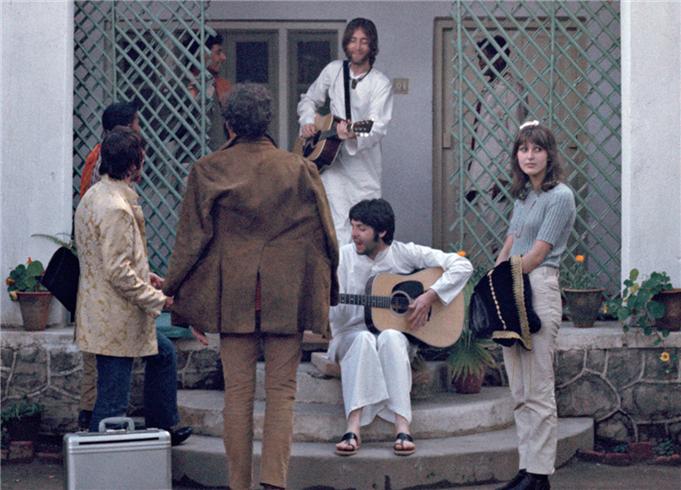
A beautiful song that was written by Paul McCartney that was on the White Album. Paul wrote it in India with a little help from Donovan to shape the song. It took 67 takes to get this song. McCartney played acoustic guitar and vocalized the bass (you can hear him going “bom, bom” in parts). John Lennon and Ringo Starr both added percussion using various instruments… George Harrison didn’t play on it at all.
The song would have fit comfortably on earlier Beatle albums. The melody is memorable and I always really liked the short guitar break after the choruses.
Paul McCartney: “I was doing a song, ‘I Will,’ that I had as a melody for quite a long time but I didn’t have lyrics to it. I remember sitting around with Donovan, and maybe a couple of other people. We were just sitting around one evening after our day of meditation and I played him this one and he liked it and we were trying to write some words. We kicked around a few lyrics, something about the moon, but they weren’t very satisfactory and I thought the melody was better than the words so I didn’t use them. I kept searching for better words and I wrote my own set in the end; very simple words, straight love-song words really. I think they’re quite effective. It’s still one of my favorite melodies that I’ve written. You just occasionally get lucky with a melody and it becomes rather complete and I think this is one of them; quite a complete tune.”
I Will
Who knows how long I’ve loved you You know I love you still Will I wait a lonely lifetime If you want me to, I will
For if I ever saw you I didn’t catch your name But it never really mattered I will always feel the same
Love you forever and forever Love you with all my heart Love you whenever we’re together Love you when we’re apart
And when at last I find you Your song will fill the air Sing it loud so I can hear you Make it easy to be near you For the things you do endear you to me You know I will I will
Father Christmas, give us some money We’ll beat you up if you make us annoyed Father Christmas, give us some money Don’t mess around with those silly toys
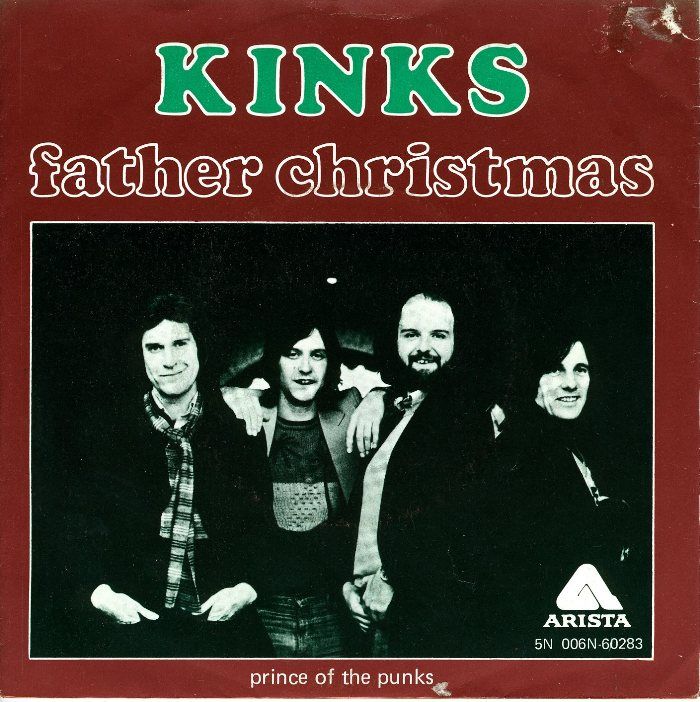
I’ve always like this raw and rough Christmas song. A writer at the NME wrote “”Successful Xmas songs are more about mood than specifics, but as this is an anti-Christmas song, it’s fine.” This is the kind of song you would expect from Ray Davies. Anti-Christmas or not…it has become a popular classic Christmas song that gets airplay every year.
The single was released during the height of punk rock and certainly exudes a punk attitude. Dave Davies told ABC Radio that he “always thought The Ramones would do a great version of it. I don’t know why they didn’t do it.”… thinking about it…Dave was right…it would have fit them perfectly.
The song was released in 1977 with the B side Prince Of The Punks. The track was included on the Arista compilation Come Dancing with The Kinks and is also available as a bonus track on the CD reissue of the Kinks’ 1978 album Misfits.
From Songfacts
“Father Christmas” is the name used in The UK and Australia for Santa Claus. This song is about a kid whose Christmas experience is a bit unusual. He never believed in Father Christmas, but finds himself performing as the character, and gets mugged by kids who tell him they want his money, not toys. He asks that if Father Christmas does exist, he bring a job for his dad and a machine gun so he can scare off the kids who mugged him.
This song is played in the background at the end of the movie Step Brothers as the camera is slowly zooming in on the family during The Holidays.
Ray Davies frequently stole shows by performing the song live wearing a Santa costume. “When the record came out we were on tour with a very successful band at the time supporting them,” he recalled during an interview with Southern California radio station KSWD. “I went on dressed as Santa at the end of the show to do ‘Father Christmas.’ And the other band found it hard to follow us. The following night with the same band I went to run on but there was a bunch of heavies preventing me from running on stage. And I was protesting. But the people said, ‘The Kinks didn’t do an encore but Santa Claus was there and they were stopping him from going on stage.'”
In England, Father Christmas is the personification of Christmas, in the same way as Santa Claus is in the United States. Although the characters are now synonymous, historically Father Christmas and Santa Claus have separate entities, stemming from unrelated traditions.
First written about in Tudor England and pre-dating the first recording of Santa Claus, Father Christmas was a jolly, well-nourished man who typified the spirit of good cheer at Christmas, bringing peace, joy, good food and wine and revelry. In time, the tradition merged with America’s Santa Claus with both riding in a reindeer-pulled sleigh carrying a sackful of toys that lands on the roofs of houses that contain good children. The mythical, white bearded Santa/Father Christmas then enters the properties through their chimneys clutching gifts for the well-behaved little ones inside.
Father Christmas
When I was small I believed in Santa Claus Though I knew it was my dad And I would hang up my stocking at Christmas Open my presents and I’d be glad
But the last time I played Father Christmas I stood outside a department store A gang of kids came over and mugged me And knocked my reindeer to the floor
They said Father Christmas, give us some money Don’t mess around with those silly toys We’ll beat you up if you don’t hand it over We want your bread so don’t make us annoyed Give all the toys to the little rich boys
Don’t give my brother a Steve Austin outfit Don’t give my sister a cuddly toy We don’t want a jigsaw or monopoly money We only want the real mccoy
Father Christmas, give us some money We’ll beat you up if you make us annoyed Father Christmas, give us some money Don’t mess around with those silly toys
But give my daddy a job ’cause he needs one He’s got lots of mouths to feed But if you’ve got one I’ll have a machine gun So I can scare all the kids on the street
Father Christmas, give us some money We got no time for your silly toys We’ll beat you up if you don’t hand it over Give all the toys to the little rich boys
Have yourself a merry merry Christmas Have yourself a good time But remember the kids who got nothin’ While you’re drinkin’ down your wine
Father Christmas, give us some money We got no time for your silly toys Father Christmas, please hand it over We’ll beat you up so don’t make us annoyed
Father Christmas, give us some money We got no time for your silly toys We’ll beat you up if you don’t hand it over We want your bread so don’t make us annoyed Give all the toys to the little rich boys
There has been many versions of this song but this one is the one I listen to the most.
Lou Baxter wrote this song but it was called “Merry Christmas Blues” and Charles Brown took it home to work it out. He rewrote it with the new title. Baxter wanted Charles Brown to record it the way Charles rewrote it and it became a big hit with Brown singing with Johnny Moore’s Three Blazers. Then the music business struck again…The company promised Charles he would have a co-writer credit but of course, it didn’t happen and Johnny Moore had his name listed on the song instead. Charles never got paid royalties for the song. It was originally released in 1947 and peaked at #3 in the Charts.
Charles Brown was inducted into the Rock and Roll Hall of Fame in 1999 but died before the induction.
Bruce Springsteen released a version of the song that I know the best.
This Dec 31st, 1980 performance of Merry Christmas Baby was recorded at Nassau Veterans Memorial Coliseum in Uniondale, NY, during The River Tour. The song was played in its E Street Band arrangement. It was released in November 1986 as the B-side to WAR. This was the lead single from the Live/1975-85 box set.
It was also on a complication album A Very Special Christmas of various artists released in 1987.
Merry Christmas Baby
Bring it down, band!
Now, I just came here tonight to say… I just wanna say… I just wanna say…
Merry Christmas baby, you surely treat me nice Come on, merry Christmas baby, you surely treat me nice I feel just like I’m living, living in paradise
Now listen Now you see, I feel real good tonight And I got music on the radio And I feel real good tonight And I got music on the radio And the boys in the band are playing pretty good! Now, I feel just like I wanna kiss you Underneath my mistletoe
But now listen Santa came down chimney, half past three With lots of nice little presents for my baby and me Merry Christmas baby, you surely treat me nice And I feel like I’m living, just living in paradise Come on boys!
Well now, Santa came down chimney, half past three With lots of nice little presents for my baby and me Merry Christmas baby, you surely treat me nice I feel like I’m living, I’m living in paradise
And I just came down to say Merry Christmas baby I just wanna say, merry Christmas baby I just wanna say, merry Christmas baby I just wanna say, merry Christmas baby And happy New Year, too! Oh yeah! Play it boys, go! Merry Christmas Ha-ha-ha-ha-ha-happy New Year Ohhhh!
The Red Button is the collaboration between singer-songwriters Seth Swirsky and Mike Ruekberg. Their original songs have catchy hooks of the pop music of the ’60s and ’70s, yet still sound modern. They have released two albums – She’s About to Cross My Mind (2007) and As Far As Yesterday Goes (2011).
Cruel Girl has a sixties sound. charted at #1 on Little Steven’s Underground Garage radio show for the week of July 22, 2007, and was named the 2nd Best Song of 2007 by Popbang Radio
The two met in 2005 and hit it off immediately; both of them admiring each other’s songs and sharing a taste for vintage pop.
Cruel Girl
Cruel Girl why you gotta treat me like a fool girl Bring me down with everything you do girl Break my faithful little heart in two girl, cruel girl
I know that I should go I should walk away But when I think of how things were only yesterday It makes me stay You were so sweet when we first met Now you’re so bad to me I just can’t forget
You’re a cruel girl I’ll do anything you want to do girl I’ll believe that every lie is true girl I could never settle for a new girl, cruel girl
What keeps me standing here staying by your side When the way you treat me girl only hurts my pride I can’t lie I can’t forget the words you said You used to hold me now you hurt me instead
Everytime I walk away I end up running back to you It’s true Other girls would treat me better Why you gotta be so cruel. So cruel
You were so sweet when we first met But then your pretty face went straight to your head
Oh you’re a cruel girl No one else can hurt me like you do girl But you know I’ll always be your fool girl I could never settle for a new girl cruel girl You’re so cruel, you’re so cruel Just don’t ever tell me that we’re through Oh, you’re so cruel
I once read where a critic said “Night Flight” was a song that would have fit nicely on a Stones album. I have to agree with him because I can see that.
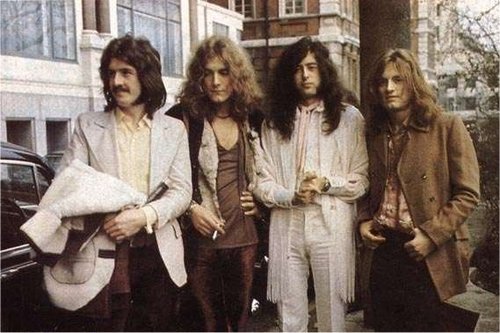
Led Zeppelin first recorded this song in 1971. it was intended for Led Zeppelin 4, but was put on Physical Graffiti to fill the double album. Most of this song was written by Led Zeppelin’s bass player, John Paul Jones, who is listed first on the writing credits. It is one of the few Led Zeppelin songs with no guitar solo. It is also credited to Jimmy Page and Robert Plant.
When I listen to Physical Graffiti I always make sure I give this one a listen. This song was not released as a sing because Zeppelin didn’t do that much at all…but I always thought it should have been.
According to Robert Plant…This song is about a man dodging a military draft.
From Songfacts
While there’s no official live recording of the band playing this, bootlegs abound of one time when they did it during a sound check on stage. A different studio version was produced with extra backing vocals.
In the liner notes for the Led Zeppelin box set, Jimmy Page declares: “To be able to fuse all these styles was always my dream in the early stages, but now the composing side of it is just as important.”
In Frank Moriarty’s book Seventies Rock: The Decade of Creative Chaos, Moriarty recounts how critics were less receptive to Zeppelin’s stateside invasion than their fans: “The writers insisted the band’s concerts did little more than placate legions of Quaalude-swallowing, whiskey-and-wine-swilling cretins, a vulgar audience that filled the soulless hockey rinks and municipal auditoriums of the United States – and Led Zeppelin was more to be blamed for the group’s low-rent audiences than praised for their music.” Good thing their reputation recovered, then!
Night Flight
I received a message from my brother across the water He sat laughin’ as he wrote the end’s in sight So I said goodbye to all my friends And packed my hopes inside a matchbox ‘Cause I know it’s time to fly
Oh yeah, come on, meet me in the morning Meet me in the middle of the night Ah yeah, the morning light is comin’ Don’t it make you want to go and feel alright
I just jumped a train that never stops So now somehow I’ll know I never finished payin’ for my ride Just n’ someone pushed a gun into my hand Tell me I’m the type of man to fight the fight that I’ll require
Oh yeah, come on, meet me in the morning Want you meet me in the middle of the night The morning light is comin’ Don’t it make you want to go and feel alright
Oh, mama, well I think it’s time I’m leavin’ Nothin’ here to make me stay Whoa, mama, well it must be time I’m goin’ They’re knockin’ down them doors They’re tryin’ to take me away
Please Mr. Brakeman, won’t you ring your bell And ring loud and clear Please Mr. Fireman, won’t you ring your bell Tell the people they got to fly away from here
I once saw a picture of a lady with a baby Southern lady, had a very, very special smile We are in the middle of a change in destination When the train stops, all together we will smile Oh, come on, come on now meet me in the morning Won’t you meet me in the middle of the night, night, night Oh oh, yeah, everybody know the mornin’ time is comin’ Don’t it make you want to feel alright Ah, ah, yeah, make me feel alright Fly now, baby Get to fly, yeah Fly now, baby Oh, hey, hey
No one crosses genres like Johnny Cash. I’ve seen rockers, heavy metal, and country fans like Johnny.
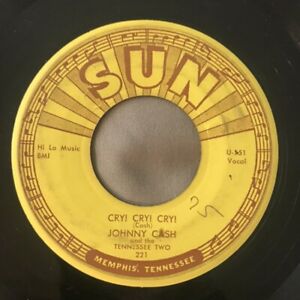
After Cash returned home from the Air Force and signed with Sun Records, he gave Sam Phillips the song “Hey Porter.” Phillips asked for a ballad for the B-side, so Cash went home and quickly wrote “Cry! Cry! Cry!” literally overnight. It became his first big hit.
“Cry! Cry! Cry!” was released and sold over 100,000 copies. The song was originally released in 1955 and reached #14 in the charts at the time. This song was the B side to Hey Porter.
Elvis Costello did a fantastic cover of this song in 1982 as the B side to I’m Your Toy.
Cry! Cry! Cry!
Everybody knows where you go when the sun goes down. I think you only live to see the lights uptown. I wasted my time when I would try, try, try. ‘Cause when the lights have lost their glow, you’ll cry, cry, cry.
Soon your sugar-daddies will all be gone. You’ll wake up some cold day and find you’re alone. You’ll call for me but I’m gonna tell you: “Bye, bye, bye, “ When I turn around and walk away, you’ll cry, cry, cry,
You’re gonna cry, cry, cry and you’ll cry alone, When everyone’s forgotten and you’re left on your own. You’re gonna cry, cry, cry.
I lie awake at night to wait ’til you come in You stay a little while and then you’re gone again Every question that I ask, I get a lie, lie, lie For every lie you tell, you’re gonna cry, cry, cry
When your fickle love gets old, no one will care for you. Then you’ll come back to me for a little love that’s true. I’ll tell you no and then you’ll ask me why, why, why? When I remind you of all of this, you’ll cry, cry, cry.
You’re gonna cry, cry, cry and you’ll want me then, It’ll hurt when you think of the fool you’ve been. You’re gonna cry, cry, cry.
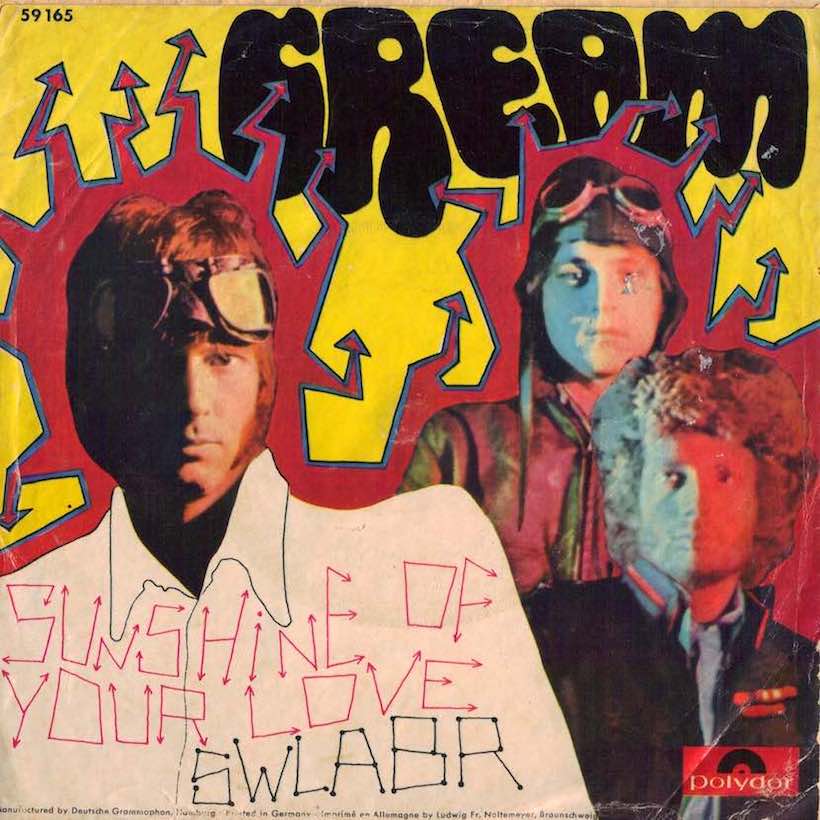
One of the most famous riffs in rock history. The lyrics was written by Pete Brown, a beat poet who was friends with Ginger Baker and Jack Bruce. He also wrote lyrics for “I Feel Free” and “White Room.” Eric Clapton and Jack Bruce wrote the music.
The song peaked at #5 in the Billboard 100 in 1968.
When Cream broke up, Jimi Hendrix played this song on the Lulu show for a farewell to Cream.
Cream played this at the Rock and Roll Hall of Fame on January 12, 1993, when they reunited for their induction. To that point, the only other time the band got back together was at Eric Clapton’s wedding in 1979. Paul McCartney, George Harrison, and Ringo Starr also played together at that wedding.
From Songfacts
Pete Brown wrote the opening line after being up all night working with Bruce and watching the sun come up. In a Songfacts interview, he told the tale: “We had been working all night and had gotten some stuff done. We had very little time to write for Cream, but we happened to have some spare time and Jack came up with the riff. He was playing a stand-up – he still had his stand-up bass, because he’d been a jazz musician. He was playing stand-up bass, and he said, ‘What about this then?’ and played the famous riff. I looked out the window and wrote down, ‘It’s getting near dawn.’ That’s how it happened. It’s actually all true, really, all real stuff.”
Jack Bruce’s bass line carries the song. He got the idea for it after going to a Jimi Hendrix concert. When Kees van Wee interviewed Bruce in 2003 for the Dutch magazine Heaven, Kees asked him which of his many songs epitomizes Jack Bruce the most. At first he was in doubt whether he should answer “Pieces Of Mind” or “Keep On Wondering,” but then he changed his mind and opted for “Sunshine Of Your Love.” Because, said Bruce, “It’s based on a bass riff. And when you enter a music shop this is the song that kids always play to try out a guitar.”
Tom Dowd, who worked with most of the artists for Atlantic Records at the time, engineered the Disreali Gears album. Dowd was renowned for his technical genius, but also for his ability to relate to musicians and put them at ease.
When Cream recorded this song, it wasn’t working. In the documentary Tom Dowd And The Language Of Music, he explained: “There just wasn’t this common ground that they had on so many of the other songs. I said, ‘Have you ever seen an American Western where the Indian beat – the downbeat – is the beat? Why don’t you play that one. Ginger went inside and they started to run the song again. When they started playing that way, all of the parts came together and they were elated.”
According to Rolling Stone magazine’s Top 500 songs issue, Jack Bruce knew the song would do well. “Both Booker T. Jones and Otis Redding heard it at Atlantic Studios and told me it was going to be a smash,” he recalled.
One man who was not impressed was Ahmet Ertegun, who was head of the group’s label. When Bruce revealed the song at the sessions, Ertegun declared it “psychedelic hogwash.” Ertegun constantly tried to promote Eric Clapton as the band’s leader, and also didn’t believe the bassist should be a lead singer. He only relented and agreed to champion this song after Booker T. Jones came by and expressed his approval.
This is one of Eric Clapton’s favorites from this days with Cream; he played it at most of his solo shows throughout his career. When Cream played some reunion concerts in 2005, they played the song as their encore.
Jimi Hendrix covered this at some of his concerts, unaware that he was the inspiration for the bass line.
Hendrix did an impromptu performance of the song when he appeared on Happening for Lulu, BBC TV show in England hosted by the prim and proper “To Sir With Love” singer. After playing part of his scheduled song “Hey Joe,” Hendrix stopped the performance and said, “We’d like to stop playing this rubbish and dedicate a song to the Cream, regardless of what kind of group they may be in. We dedicate this to Eric Clapton, Ginger Baker and Jack Bruce.”
This version appears on the Experience Hendrix 2CD/3LP The BBC Sessions towards the end of Disc 2/Side 6 on the LP. An instrumental version appears on the 2010 Valleys of Neptune album, which was recorded by Hendrix at London’s Olympic Studios on February 16, 1969.
Hendrix engineer and producer Eddie Kramer recalled to Toronto’s The Globe and Mail: “Jimi loved Cream, he loved Eric Clapton. It was a fabulous song, he loved to play it, and he would just rip into it whenever the mood hit him.”
This was Cream’s biggest hit. It was their first to do better in the US than in the UK, as they started to catch on in America. In the US, this first charted in February 1968 at #36. In August, after the album came out, it re-entered the chart and went to #5.
Clapton’s guitar solo is based on the ’50s song “Blue Moon.”
Excepting “Strange Brew,” the Disraeli Gears album was recorded in just three days, as the band had to return to England because their work visas were expiring. Engineer Tom Dowd recalls the sessions coming to an abrupt end when a limo driver showed up to take the musicians to the airport. Dowd was tasked with mixing the album in their absence.
Jack Bruce released a new version on his 2001 album Shadows In The Air. Clapton played on it along with Latin percussionists from New York City, which gave it a Salsa sound.
In The Breakfast Club (1985), John Bender (Judd Nelson) tries to liven up Saturday detention by mimicking the riff on air guitar.
Sunshine of Your Love
It’s getting near dawn, When lights close their tired eyes I’ll soon be with you my love, To give you my dawn surprise I’ll be with you darling soon, I’ll be with you when the stars start falling
[Chorus:] I’ve been waiting so long To be where I’m going In the sunshine of your love
I’m with you my love, The light’s shining through on you Yes, I’m with you my love, It’s the morning and just we two I’ll stay with you darling now, I’ll stay with you till my seas are dried up
[Chorus]
I’m with you my love, The light’s shining through on you. Yes, I’m with you my love, It’s the morning and just we two. I’ll stay with you darling now, I’ll stay with you till my seas are dried up
I’ve been waiting so long I’ve been waiting so long I’ve been waiting so long To be where I’m going In the sunshine of your love
In the 1980s I had a Lovin’ Spoonful Greatest hits on vinyl made by a small Nashville record company my friend worked at called Gusto Records. After listening to their many hits…this is the one that I zeroed in on. They had bigger hits but this is one of my favorite songs by the Lovin’ Spoonful.
John Sebastion sings it so desperately and sincere that it hooked me.
John Sebastian wrote this ballad for Francis Ford Coppola’s You’re A Big Boy Now, a coming-of-age film. Sebastian was responsible for the whole soundtrack but was tasked to write this specific song for an important love scene. He started thinking about all the songs that dealt with lonely musicians on the road and decided to flip the concept and write about a guy waiting for his girlfriend to come home.
Unfortunately, the movie was largely ignored. The song was mostly forgotten until Sebastian revived it during his performance at Woodstock in 1969.
The song peaked at #15 in the Billboard 100 and #44 in the UK in 1967.
From Songfacts
“From the singer’s perspective, the verses are pleas for a partner to spend a few minutes talking before leaving,” Sebastian explained to Marc Myers for the book Anatomy of a Song. “What made the song interesting is that you never knew if the other person was actually there listening or was already gone.”
After hitching a ride with the helicopter carrying The Incredible String Band’s equipment, Sebastian arrived at the Woodstock festival thinking he’d just be a spectator. But an early afternoon downpour flooded the stage and it needed to be cleared of water before Santana’s amps could be set up. Michael Lang, the concert’s producer, asked Sebastian to fill in. He took the stage in a tie-dyed white denim outfit and sang five songs, the fourth being “Darling Be Home Soon.” He recalled: “The audience didn’t identify the song with the movie, since most probably hadn’t seen it. Instead, they sort of quieted down and took it in as a love song. My job wasn’t to incite but to mellow everyone out until the stage was swept. When I finished, the applause from so many people was loud and wide, and knocked the wind out of me. The feeling was delicious.”
The Lovin’ Spoonful recorded this with a studio orchestra in just one day. The next morning, however, Sebastian was horrified to learn his vocal take had accidentally been erased and had to be re-recorded. “I did that right away, with the wound still fresh,” he said. “What you hear on the record is me, a half hour after learning that my original vocal track had been erased. You can even hear my voice quiver a little at the end. That was me thinking about the vocal we lost and wanting to kill someone.”
Zal Yanovsky, the band’s lead guitarist, hated the song. He thought it was too sappy and accused Sebastian of losing his rock edge. During one live performance, Zal can be seen clownishly mocking the frontman as he sings the heartfelt lyrics.
This was used on the CBS crime drama Cold Case in the 2010 episode “Free Love.”
Several artists have covered this, including Bobby Darin, Joe Cocker, Slade, The Association, and Bruce Hornsby.
Darling Be Home Soon
Come And talk of all the things we did today Here And laugh about our funny little ways While we have a few minutes to breathe Then I know that it’s time you must leave
But, darling, be home soon I couldn’t bear to wait an extra minute if you dawdled My darling, be home soon It’s not just these few hours, but I’ve been waiting since I toddled For the great relief of having you to talk to
And now A quarter of my life is almost past I think I’ve come to see myself at last And I see that the time spent confused Was the time that I spent without you And I feel myself in bloom
So, darling, be home soon I couldn’t bear to wait an extra minute if you dawdled My darling, be home soon It’s not just these few hours, but I’ve been waiting since I toddled For the great relief of having you to talk to
So, darling My darling, be home soon I couldn’t bear to wait an extra minute if you dawdled My darling, be home soon It’s not just these few hours, but I’ve been waiting since I toddled For the great relief of having you to talk to
Go And beat your crazy head against the sky Try And see beyond the houses and your eyes It’s okay to shoot the moon
Darling be home soon I couldn’t bear to wait an extra minute if you dawdled My darling, be home soon It’s not just these few hours, but I’ve been waiting since I toddled For the great relief of having you to talk to
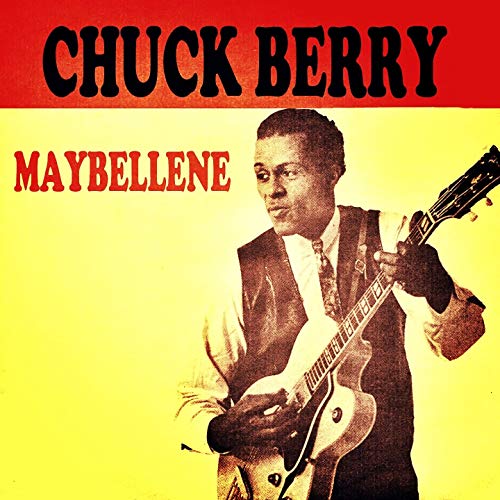
Chuck Berry was THE first guitar hero in Rock and Roll. He was also rock’s first poet. This song evolved out of “Ida Red,” a hillbilly song by Bob Wills and The Texas Playboys from the early ’50s. Berry heard that song on the Country radio station KMOX in St. Louis but didn’t know who recorded it.
Not only is the music great with the steady beat… but those lyrics. The motor cooled down the heat went down, And that’s when I heard that highway sound, the Cadillac a-sittin’ like a ton of lead, a hundred and ten half a mile ahead, the Cadillac lookin’ like it’s sittin’ still, and I caught Mabellene at the top of the hill
You can see what is happening in the song in your head with no problem… no MTV story video needed. He was one of the best descriptive lyricist rock and roll has ever had.
The song made it to #5 in the Billboard Pop Chart in 1955.
From Songfacts
Berry had never recorded, but when he went to Chicago to see Muddy Waters perform, he stayed in town to pitch himself to Leonard Chess of Chess Records, who asked him to come back the next week with some original songs. Berry returned with his bandmates Johnnie Johnson (piano) and Eddie Hardy (drums), and a demo reel with four songs, including “Ida Mae.” That’s the one Leonard Chess liked best, but he asked Berry to change so there wouldn’t be any confusion with “Ida Red” and to fend off any copyright claims. Berry changed the lyrics, turning it into a song about fast cars – one of his favorite topics. It was the first song the band recorded, and it proved a challenge: they recorded 36 takes.
This song tells the story of a girl who keeps cheating on her man. Various cars appear in the lyrics; Berry sings about chasing Maybellene in his V8 Ford while she drag races a man in a Cadillac with her Coupe de Ville.
There are a few different stories floating around about how the song got its name. Berry has said that Maybellene was the name of a cow in child’s nursery rhyme, but Johnnie Johnson recalled that there was a box of Maybellene mascara in the office, which gave Leonard Chess the idea for the title.
Chess Records gave the disc jockey Alan Freed a cowriting credit on this song (and also some cash) in exchange for playing it on the radio. Deals like this led to the Payola scandals, which led to rules prohibiting record companies from paying DJs to play their songs. Marshall Chess, the son of Chess founder Leonard Chess, recalled to The Independent newspaper May 27, 2008: “He [Freed] played the hell out of Chuck’s first record, ‘Maybellene’, because of that. My father says he made the deal, and by the time he got to Pittsburgh, which was half a day’s drive away, my uncle back at home was screaming, ‘What’s happening? We’re getting all these calls for thousands of records!'”
Deals like this were perfectly legal and fairly common at the time, but when the government took action in 1959, Freed refused to admit to taking Payola, insisting he was acting as a consultant to the music industry. Holding steadfast to this position, the radio and TV stations he worked for fired him, and his career never recovered. In contrast, Dick Clark admitted to taking cash and gifts, and simply stopped doing so when it was declared illegal. He was able to grow his media empire considerably after the scandal.
Berry was 29 years old when he recorded this song, but he knew that his audience was teenagers, so he wrote the song to appeal to that crowd – the ones fascinated with cars and experiencing young love. Berry also took care to sing it as clearly as possible so it would have more crossover appeal with a white audience. His strategy worked: the song went to #1 on the R&B chart and also made #5 on the Pop chart.
Chuck Berry was a rock and roll original, but he didn’t consider this a rock song. Said Berry: “‘Maybellene’ was very much a country song, with country lyrics. Maybe a little faster but basically it was country.”
Soon after this was released, Elvis Presley started performing it at some of his live appearances. Many other artists also recognized its propulsive appeal and covered the song. British acts – notably The Beatles and The Rolling Stones – often recorded Berry’s songs, but the UK act that grabbed this one was Gerry and the Pacemakers, who included it on their 1963 debut album How Do You Like It?
Other artists to cover the song include George Jones, The Searchers, Jerry Lee Lewis and Foghat.
The B-Side of the single was a slow blues song called “Wee Wee Hours.”
One-third of the composing credit went to Russ Fratto for the sole purpose of making sure that Berry got more royalties than Alan Freed (Fratto was a local DJ who was a close friend of Berry’s). He agreed to give Berry his share. In those days, it was common to give Freed a composer credit in exchange for airplay on his show. Freed would get royalties, and the song would become a hit.
A version by Johnny Rivers reached #12 in the US in 1964.
Later in 1955, Fats Domino released his own song with a three-syllable girl in the title: “I Can’t Go On (Rosalie).”
Berry died in 2017, the same year Fats Domino passed away. Jon Batiste and Gary Clark, Jr. paid tribute at the Grammy Awards in 2018 by performing “Maybellene” and “Ain’t That A Shame.”
Maybellene
Maybellene, why can’t you be true Oh Maybellene, why can’t you be true You’ve started back doin’ the things you used to do
As I was motivatin’ over the hill I saw Mabellene in a Coup de Ville A Cadillac arollin’ on the open road Nothin’ will outrun my V8 Ford The Cadillac doin’ about ninety-five She’s bumper to bumper, rollin’ side by side Maybellene Why can’t you be true Oh Maybellene, why can’t you be true You’ve started back doin’ the things you used to do
The Cadillac pulled up ahead of the Ford The Ford got hot and wouldn’t do no more It then got cloudy and started to rain I tooted my horn for a passin’ lane The rainwater blowin’ all under my hood I know that I was doin’ my motor good Maybellene Why can’t you be true Oh Maybellene, why can’t you be true You’ve started back doin’ the things you used to do
Oh, Maybellene Why can’t you be true Oh Maybellene, why can’t you be true You’ve started back doin’ the things you used to do
The motor cooled down the heat went down And that’s when I heard that highway sound The Cadillac a sittin’ like a ton of lead A hundred and ten half a mile ahead The Cadillac lookin’ like it’s sittin’ still And I caught Mabellene at the top of the hill Maybellene Why can’t you be true Oh Maybellene, why can’t you be true You’ve started back doin’ the things you used to do
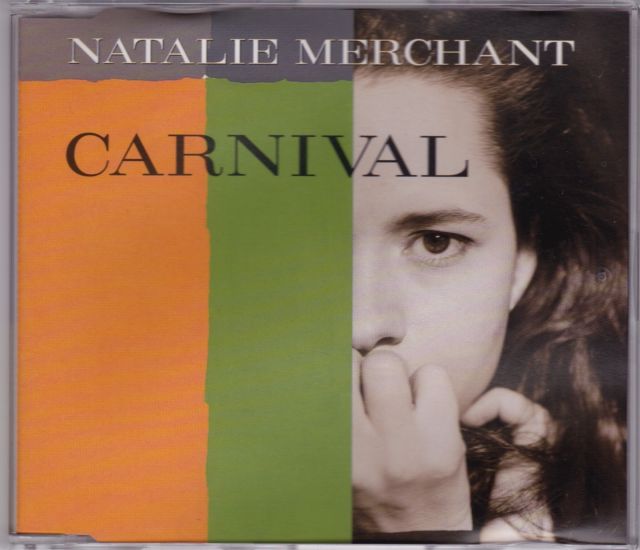
This song peaked at #10 in the Billboard 100 in 1995. This remains Natalie’s highest-charted single thus far. This track from her first album Tigerlily and is what she calls her “New York song,” as it’s written about New York City.
Tigerlily peaked at #13 in 1995 in the Billboard Album Chart.
This is somewhat creepy… This song was played at the funeral of serial killer Aileen Wuornos as part of her final request. She had listened to the song and the entire album Tigerlily continually while on death row. When confronted with this, Natalie was initially shocked but gave permission to use the song in the documentary Aileen: Life and Death of a Serial Killer, saying that “It’s very odd to think of the places my music can go once it leaves my hands. If it gave her some solace, I have to be grateful.” Wuornos was also the subject of the film Monster.
From Songfacts
Merchant grew up in rural Jamestown, New York, which is in the western part of the state south of Buffalo. That’s where she formed 10,000 Maniacs in 1981, a group she was with until 1993 when she left to go solo.
Merchant explained in a VH1 Storytellers appearance: “‘Carnival’ really evokes for me what it’s like to walk down any avenue in the City. I grew up in the country, so the nearest thing I ever experienced to walking down the street in New York before I was 16 and I came here for the first time was a carnival – the Stockton Gala Days actually. I’d never seen people walking down the street eating before – that was a bizarre experience. We in the country sit down to take our meals – that just blew me away.
Something else I’d never seen before were the gentlemen with the two-sided placards that hand out invitations to peep shows, but I never seemed to get one – they always picked the guys around me. It’s an amazing city, but what I love about it even more than places like Los Angeles is that everybody at sometime has to deal with other people. It’s not a car culture here. I like that: people have to rub against each other. I like to take the subway, I like to study people’s faces, try to imagine their stories. In the song, I see the city as a stage, as a spectacle, as a carnival, and as a madhouse, because sometimes it is that, it’s a totally insane place to live. When I was 16 and I visited for the first time, I said, ‘I’m going to live here someday.’ You’ve got to be careful what you wish for because sometimes it comes true.”
Merchant performed this song, along with “Wonder,” on an episode of Saturday Night Live hosted by David Schwimmer in 1995.
Carnival
Well, I’ve walked these streets A virtual stage, it seemed to me Makeup on their faces Actors took their places next to me
Well, I’ve walked these streets In a carnival, of sights to see All the cheap thrill seekers vendors and the dealers They crowded around me
Have I been blind have I been lost Inside myself and my own mind Hypnotized, mesmerized by what my eyes have seen?
Well, I’ve walked these streets In a spectacle of wealth and poverty In the diamond markets the scarlet welcome carpet That they just rolled out for me
And I’ve walked these streets In the madhouse asylum they can be Where a wild-eyed misfit prophet On a traffic island stopped and he raved of saving me
Have I been blind, have I been lost Inside myself and my own mind Hypnotized, mesmerized by what my eyes have seen
Have I been wrong, have I been wise To shut my eyes and play along Hypnotized, paralyzed by what my eyes have found By what my eyes have seen What they have seen?
Have I been blind Have I been lost Have I been wrong Have I been wise Have I been strong Have I been hypnotized, mesmerized by what my eyes have found In that great street carnival
Have I been blind Have I been lost Have I been wrong Have I been wise Have I been strong Have I been hypnotized, mesmerized by what my eyes have found In that great street carnival
I always liked this song because I could/can relate to it. I grew up in a small town where everyone knew everyone else. It had its drawbacks but was a great place to grow up.
Mellencamp wrote this about his experiences growing up in the small town of Seymour, Indiana. The media portrayed Mellencamp as the champion of small-town America when the song was released. While he has remained true to his roots and often returns to Seymour, he claims he was simply writing about his life, and not trying to make a statement.
The song is on what I always thought was his best album Scarecrow. Small Town peaked at #6 in the Billboard 100 in 1985. Scarecrow peaked at #2 in the same year in the Billboard Album Chart.
From Songfacts
The music Mellencamp listened to growing up in the ’60s was a huge influence on his work, and he often put bits of classics songs from that era in his tracks. On the bridge of “Small Town,” you can hear the riff from The Supremes song “Back in My Arms Again.”
Mellencamp believes this was a hit because it makes people feel good. He thinks many of his songs don’t do well because they make people confront problems, like the plight of American farmers.
Mellencamp would sometimes add the line “My wife was 13 years old growing up in a small town when I wrote this song,” referring to his wife, the model Elaine Irwin, who is 17 years younger. The couple split up in 2010.
Mellencamp wrote this song after having a number of conversations with folks from New York who seemed to think he – and everyone else from the middle of the country – was a rube. “I wanted to write a song that said, ‘you don’t have to live in New York or Los Angeles to live a full life,'” he told Rolling Stone in 2013. “I was never one of those guys that grew up and thought, ‘I need to get out of here.’ It never dawned on me. I just valued having a family and staying close to friends.”
Small Town
Well I was born in a small town And I live in a small town Probably die in a small town Oh, those small communities
All my friends are so small town My parents live in the same small town My job is so small town Provides little opportunity
Educated in a small town Taught the fear of Jesus in a small town Used to daydream in that small town Another boring romantic that’s me
But I’ve seen it all in a small town Had myself a ball in a small town Married an L.A. doll and brought her to this small town Now she’s small town just like me
No I cannot forget where it is that I come from I cannot forget the people who love me Yeah, I can be myself here in this small town And people let me be just what I want to be
Got nothing against a big town Still hayseed enough to say Look who’s in the big town But my bed is in a small town Oh, and that’s good enough for me
Well I was born in a small town And I can breathe in a small town Gonna die in this small town And that’s probably where they’ll bury me
This power pop band out of Charlotte, North Carolina sounded as close to Merseybeat music as you could get especially in the 80s. They formed in 1978 and are still together to this day! No need to state who their inspiration was…
They are yet another example that critical success doesn’t always translate to commercial success. This seems to be the fate of many power pop bands which I don’t understand. It makes me respect Tom Petty and the Cars much more than I already did.
The Spongetones have now released 9 LPs / CDs as well as been on a great number of compilations CDs. Plus there are solo CDs. If you’re in the Charlotte area, you’ll find that they are revered as local Rock Heroes
The A.V. Club (an entertainment website) says that “She Goes Out With Everybody” is the best Merseybeat song ever written and recorded by an American band.
She Goes Out With Everybody
She was a middle child of three
Squeezed and pushed from her family
She needed more than they could give
It takes much more than bread to live
She needed more than I could give
She goes out
(To get her fill)
She goes out
(Against her will)
She goes out
(To score a thrill)
She goes out with everybody
She goes out
(The walls have ears)
She goes out
(The walls have eyes)
She goes out
(The walls can tell)
She goes out with everybody
Became a woman at sixteen
To her that is what love means
She just got burned her first time
Bit his hook and she took his line
Think that she will end the next time
She goes out
(To get her fill)
She goes out
(Against her will)
She goes out
(To score a thrill)
She goes out with everybody
She goes out
(The walls have ears)
She goes out
(The walls have eyes)
She goes out
(The walls can tell)
She goes out with everybody
When she calls me
What do I say?
When she calls me
What do I say?
She’s a mother now with two of her own
Even with them she’s still alone
They need her more than she can give
It takes much more than bread to live
She will want more than they can give
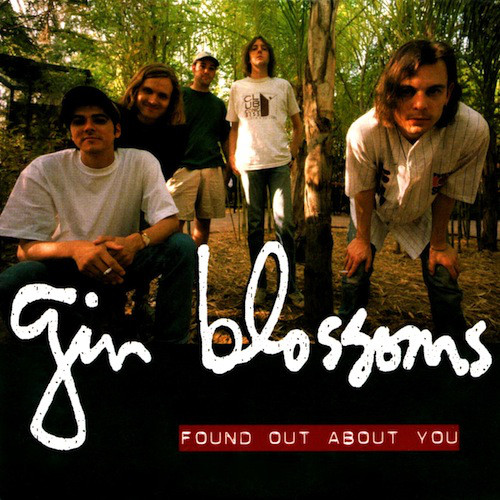
This was written by guitarist Doug Hopkins. He had problems with mental health and alcohol abuse and was fired from the band before this was released. He committed suicide on December 5, 1993. This song peaked at #25 in the Billboard 100 in 1994.
Gin Blossoms broke up in early 1997 but reunited in 2002. They still perform to this day but with some personnel changes. The band had a total of 4 songs in the Billboard 100 with 1 top ten hit… Follow You Down/Til I Hear It From You.
From Songfacts
The song is based on a compilation of episodes with several of Hopkins’ girlfriends: “I heard about nights out in the school yard. I found out about you.” – This has a double meaning. He found out about a girlfriend meeting another guy in a schoolyard and it is also where he and another girl swung on the swings and talked finding out about each other. “Street lights blink on through the car window. I get the time too often on A.M. radio.” – The group members hung around together and this particular line refers to a night when the girl from the swings was with Doug and Robin was driving. They were doing a lot of partying and were listening to the radio when the announcer said the time.
Found Out About You
All last summer in case you don’t recall I was your and you were mine forget it all Is there a line that I could write Sad enough to make you cry All the lines you wrote to me were lies The months roll past the love that you struck dead Did you love me? Only in my head. Things you said and did to me Seemed to come so easily The love I thought I’d won you give for free
Whispers at the bus stop Well I heard about nights at the school yard I found out about you
Rumours follow everywhere you go And when you left I was last to know You’re famous now and there’s no doubt In all the places you hang out They know your name and know what you’re about
Whispers at the bus stop I heard about nights out in the school yard I found out about you I found out about you
Street lights blink on through the car window I get the time too often on AM radio You know it’s all I think about I write your name drive past your house Your boyfriend’s over I watch your lights go out
Whispers at the bus stop I heard about nights out in the school yard I found out about you
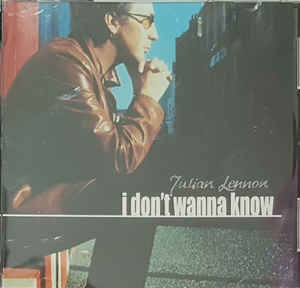
This is probably the song that a lot of Beatles fans have been waiting for me to do.
This song was on the Photograph Smile album that was released in 1998. Personally, I like this song and Day after Day better than anything in his career. The song didn’t chart in the US but it did receive some airplay.
The video Julian made was a fun parody of the Beatles…as “The Butlers.” Julian did the song in a Beatle style and turned it into a homage to them
Julian Lennon:
This is probably the song that a lot of Beatles fans have been waiting for me to do. People are always asking when am I going to do something more towards the Beatles style. And so I thought, why not? In a sense it’s a homage, but the sentiment and lyrics are serious. It actually came about from walking around in France and there was a shop with an English newspaper. I thought, ‘Oh get the paper, catch up on the rest of the world,’ and then I thought, ‘I don’t wanna know.’ It turned into a relationship song.
I Don’t Wanna Wanna Know
I don’t wanna know what’s going on And I don’t wanna know what’s right or wrong And I don’t wanna know who’s bed you’re in And I don’t wanna know just where you’ve been.
Oh baby, you were never really good for me
Just maybe, you’re a stranger to reality And baby, don’t you know you haven’t got a clue ‘cos lately, I don’t know what to do.
I don’t wanna know what’s going on And I don’t wanna know what’s right or wrong And I don’t wanna know who’s bed you’re in And I don’t wanna know just where you’ve been.
Oh baby, you said you’re changing for the better now Just maybe, you’re not as strong as you thought somehow And baby, you know you’re heading down a one way track And baby, I won’t bring you back.
Well, you said you were looking for a better way But you just keep coming back To a place you can never seem to get away That will always hold you back…
Oh baby, you said you’d rather be a daddy’s girl, But lately, you’re try’n a fight against the whole wide world Just maybe, you’ve found a love that you can hold on to And baby, I pray for you.
I don’t wanna know what’s going on And I don’t wanna know what’s right or wrong And I don’t wanna know who’s bed you’re in And I don’t wanna know just where you’ve been…
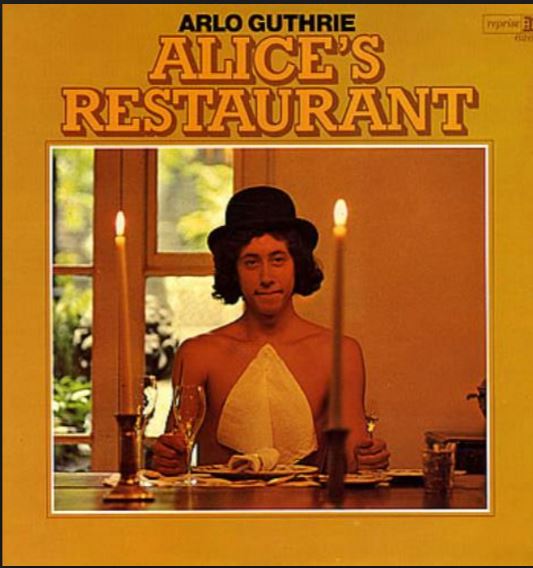
It’s not Thanksgiving without listening to this 1967 song. This song did not chart but he did have another version that did chart…it was called Alice’s Rock and Roll Restaurant that peaked at #97 in the Billboard 100.
Many radio stations play this on Thanksgiving. This is usually the only time they play it, since the song is over 18-minutes long.
There have been mixed reviews about the movie that was made…I’ve always found it enjoyable. It’s not going to be confused with Gone With The Wind but it’s a fun period movie.
In 1991, Arlo bought the church where this took place and set up “The Guthrie Center,” where he runs programs for kids who have been abused.
Below the song facts are Alice’s Rock and Roll Restaurant and Alice’s Restaurant Massacree.
Running 18 minutes and 34 seconds, this song is based on a true story that happened on Thanksgiving Day, 1965. Arlo was 18, and along with his friend Rick Robbins, drove to Stockbridge, Massachusetts to have Thanksgiving dinner with Alice and Ray Brock. Alice and Ray lived in a church – the former Trinity Church on Division Street in Stockbridge – and were used to inviting people into their home. Arlo and Rick had been traveling together, Arlo working his way up in folk singing and Rick tagging along. A number of people, Arlo and Rick included, were considered members of the family, so they were not guests in the usual sense. When Ray woke up the next morning, he said to them, “Let’s clean up the church and get all this crap out of here, for God’s sake. This place is a mess,” and Rick said, “Sure.” Arlo and Rick swept up and loaded all the crap into a VW microbus and went out to the dump, which was closed. They started driving around until Arlo remembered a side road in Stockbridge up on Prospect Hill by the Indian Hill Music Camp which he attended one summer, so they drove up there and dumped the garbage.A little later, the phone rang, and it was Stockbridge police chief William J. Obanhein. “I found an envelope with the name Brock on it,” Chief Obanhein said. The truth came out, and soon the boys found themselves in Obanhein’s police car. They went up to Prospect Hill, and Obie took some pictures. On the back, he marked them, “PROSPECT HILL RUBBISH DUMPING FILE UNDER GUTHRIE AND ROBBINS 11/26/65.” He took the kids to jail.The kids went in, pleaded, “Guilty, Your Honor,” was fined $25 each and ordered to retrieve the rubbish. Then they all went back to the church and started to write “Alice’s Restaurant” together. “We were sitting around after dinner and wrote half the song,” Alice recalls, “and the other half, the draft part, Arlo wrote.”
Guthrie, the son of legendary folk singer Woody Guthrie, greatly exaggerated the part about getting arrested for comic effect. In the song, he is taken away in handcuffs and put in a cell with hardened criminals.
In the song, Guthrie avoids the draft and did not have to serve in Vietnam because of his littering arrest. In reality, he was eligible but wasn’t drafted because his number didn’t come up.
Guthrie performed this song for the first time on July 16, 1967, at the Newport Folk Festival.
This reflected the attitude of many young people in America at the time. It was considered an antiwar song, but unlike most protest songs, it used humor to speak out against authority.
After a while, Guthrie stopped playing this at concerts, claiming he forgot the words. As the song approached its 30th anniversary, he started playing it again.
Guthrie made a movie of the same name in 1969 which was based on the song.
Over the years, Guthrie added different words to the song. He recorded a new, longer version in 1995 at The Guthrie Center
Alice’s Restaurant
This song is called Alice’s Restaurant, and it’s about Alice, and the
Restaurant, but Alice’s Restaurant is not the name of the restaurant,
That’s just the name of the song, and that’s why I called the song Alice’s
Restaurant.
You can get anything you want at Alice’s Restaurant
You can get anything you want at Alice’s Restaurant
Walk right in it’s around the back
Just a half a mile from the railroad track
You can get anything you want at Alice’s Restaurant
Now it all started two Thanksgivings ago, was on – two years ago on
Thanksgiving, when my friend and I went up to visit Alice at the
Restaurant, but Alice doesn’t live in the restaurant, she lives in the
Church nearby the restaurant, in the bell-tower, with her husband Ray and
Fasha the dog. And livin’ in the bell tower like that, they got a lot of
Room downstairs where the pews used to be in. Havin’ all that room,
Seein’ as how they took out all the pews, they decided that they didn’t
Have to take out their garbage for a long time.
We got up there, we found all the garbage in there, and we decided it’d be
A friendly gesture for us to take the garbage down to the city dump. So
We took the half a ton of garbage, put it in the back of a red vw
Microbus, took shovels and rakes and implements of destruction and headed
On toward the city dump.
Well we got there and there was a big sign and a chain across across the
Dump saying, “Closed on Thanksgiving.” And we had never heard of a dump
Closed on Thanksgiving before, and with tears in our eyes we drove off
Into the sunset looking for another place to put the garbage.
We didn’t find one. Until we came to a side road, and off the side of the
Side road there was another fifteen foot cliff and at the bottom of the
Cliff there was another pile of garbage. And we decided that one big pile
Is better than two little piles, and rather than bring that one up we
Decided to throw our’s down.
That’s what we did, and drove back to the church, had a thanksgiving
Dinner that couldn’t be beat, went to sleep and didn’t get up until the
Next morning, when we got a phone call from officer Obie. He said, “Kid,
We found your name on an envelope at the bottom of a half a ton of
Garbage, and just wanted to know if you had any information about it. ” And
I said, “Yes, sir, Officer Obie, I cannot tell a lie, I put that envelope
Under that garbage. ”
After speaking to Obie for about forty-five minutes on the telephone we
Finally arrived at the truth of the matter and said that we had to go down
And pick up the garbage, and also had to go down and speak to him at the
Police officer’s station. So we got in the red vw microbus with the
Shovels and rakes and implements of destruction and headed on toward the
Police officer’s station.
Now friends, there was only one or two things that Obie coulda done at
The police station, and the first was he could have given us a medal for
Being so brave and honest on the telephone, which wasn’t very likely, and
We didn’t expect it, and the other thing was he could have bawled us out
And told us never to be seen driving garbage around the vicinity again,
Which is what we expected, but when we got to the police officer’s station
There was a third possibility that we hadn’t even counted upon, and we was
Both immediately arrested. Handcuffed. And I said “Obie, I don’t think I
Can pick up the garbage with these handcuffs on. ” He said, “Shut up, kid.
Get in the back of the patrol car. ”
And that’s what we did, sat in the back of the patrol car and drove to the
Quote Scene of the Crime unquote. I want tell you about the town of
Stockbridge, Massachusets, where this happened here, they got three stop
Signs, two police officers, and one police car, but when we got to the
Scene of the Crime there was five police officers and three police cars,
Being the biggest crime of the last fifty years, and everybody wanted to
Get in the newspaper story about it. And they was using up all kinds of
Cop equipment that they had hanging around the police officer’s station.
They was taking plaster tire tracks, foot prints, dog smelling prints, and
They took twenty seven eight-by-ten colour glossy photographs with circles
And arrows and a paragraph on the back of each one explaining what each
One was to be used as evidence against us. Took pictures of the approach,
The getaway, the northwest corner the southwest corner and that’s not to
Mention the aerial photography.
After the ordeal, we went back to the jail. Obie said he was going to put
Us in the cell. Said, “Kid, I’m going to put you in the cell, I want your
Wallet and your belt. ” And I said, “Obie, I can understand you wanting my
Wallet so I don’t have any money to spend in the cell, but what do you
Want my belt for? ” And he said, “Kid, we don’t want any hangings. ” I
Said, “Obie, did you think I was going to hang myself for littering?”
Obie said he was making sure, and friends Obie was, cause he took out the
Toilet seat so I couldn’t hit myself over the head and drown, and he took
Out the toilet paper so I couldn’t bend the bars roll out the – roll the
Toilet paper out the window, slide down the roll and have an escape. Obie
Was making sure, and it was about four or five hours later that Alice
(remember Alice? It’s a song about Alice), Alice came by and with a few
Nasty words to Obie on the side, bailed us out of jail, and we went back
To the church, had a another thanksgiving dinner that couldn’t be beat,
And didn’t get up until the next morning, when we all had to go to court.
We walked in, sat down, Obie came in with the twenty seven eight-by-ten
Colour glossy pictures with circles and arrows and a paragraph on the back
Of each one, sat down. Man came in said, “All rise.” We all stood up,
And Obie stood up with the twenty seven eight-by-ten colour glossy
Pictures, and the judge walked in sat down with a seeing eye dog, and he
Sat down, we sat down. Obie looked at the seeing eye dog, and then at the
Twenty seven eight-by-ten colour glossy pictures with circles and arrows
And a paragraph on the back of each one, and looked at the seeing eye dog.
And then at twenty seven eight-by-ten colour glossy pictures with circles
And arrows and a paragraph on the back of each one and began to cry,
’cause Obie came to the realization that it was a typical case of American
Blind justice, and there wasn’t nothing he could do about it, and the
Judge wasn’t going to look at the twenty seven eight-by-ten colour glossy
Pictures with the circles and arrows and a paragraph on the back of each
One explaining what each one was to be used as evidence against us. And
We was fined $50 and had to pick up the garbage in the snow, but that’s not
What I came to tell you about.
Came to talk about the draft.
They got a building down New York City, it’s called Whitehall Street,
Where you walk in, you get injected, inspected, detected, infected,
Neglected and selected. I went down to get my physical examination one
Day, and I walked in, I sat down, got good and drunk the night before, so
I looked and felt my best when I went in that morning. ‘Cause I wanted to
Look like the all-American kid from New York City, man I wanted, I wanted
To feel like the all-, I wanted to be the all American kid from New York,
And I walked in, sat down, I was hung down, brung down, hung up, and all
Kinds o’ mean nasty ugly things. And I waked in and sat down and they gave
Me a piece of paper, said, “Kid, see the phsychiatrist, room 604.”
And I went up there, I said, “Shrink, I want to kill. I mean, I wanna, I
Wanna kill. Kill. I wanna, I wanna see, I wanna see blood and gore and
Guts and veins in my teeth. Eat dead burnt bodies. I mean kill, Kill,
Kill, kill. ” And I started jumping up and down yelling, “kill, kill, ” and
He started jumping up and down with me and we was both jumping up and down
Yelling, “KILL, KILL.” And the Sargent came over, pinned a medal on me,
Sent me down the hall, said, “You’re our boy.”
Didn’t feel too good about it.
Proceeded on down the hall gettin more injections, inspections,
Detections, neglections and all kinds of stuff that they was doin’ to me
At the thing there, and I was there for two hours, three hours, four
Hours, I was there for a long time going through all kinds of mean nasty
Ugly things and I was just having a tough time there, and they was
Inspecting, injecting every single part of me, and they was leaving no
Part untouched. Proceeded through, and when I finally came to the see the
Last man, I walked in, walked in sat down after a whole big thing there,
And I walked up and said, “What do you want?” He said, “Kid, we only got
One question. Have you ever been arrested? ”
And I proceeded to tell him the story of the Alice’s Restaurant Massacre,
With full orchestration and five part harmony and stuff like that and all
The phenome… – and he stopped me right there and said, “Kid, did you ever
Go to court? ”
And I proceeded to tell him the story of the twenty seven eight-by-ten
Colour glossy pictures with the circles and arrows and the paragraph on
The back of each one, and he stopped me right there and said, “Kid, I want
You to go and sit down on that bench that says Group W…. Now kid!! ”
And I, I walked over to the, to the bench there, and there is, Group W’s
Where they put you if you may not be moral enough to join the army after
Committing your special crime, and there was all kinds of mean nasty ugly
Looking people on the bench there. Mother rapers. Father stabbers. Father
Rapers! Father rapers sitting right there on the bench next to me! And
They was mean and nasty and ugly and horrible crime-type guys sitting on the
Bench next to me. And the meanest, ugliest, nastiest one, the meanest
Father raper of them all, was coming over to me and he was mean ‘n’ ugly
‘n’ nasty ‘n’ horrible and all kind of things and he sat down next to me
And said, “Kid, whad’ya get?” I said, “I didn’t get nothing, I had to pay
$50 and pick up the garbage. ” He said, “What were you arrested for, kid? ”
And I said, “Littering.” And they all moved away from me on the bench
There, and the hairy eyeball and all kinds of mean nasty things, till I
Said, “And creating a nuisance.” And they all came back, shook my hand,
And we had a great time on the bench, talkin about crime, mother stabbing,
Father raping, all kinds of groovy things that we was talking about on the
Bench. And everything was fine, we was smoking cigarettes and all kinds of
Things, until the Sargeant came over, had some paper in his hand, held it
Up and said.
“Kids, this-piece-of-paper’s-got-47-words-37-sentences-58-words-we-wanna-
Know-details-of-the-crime-time-of-the-crime-and-any-other-kind-of-thing-
You-gotta-say-pertaining-to-and-about-the-crime-I-want-to-know-arresting-
Officer’s-name-and-any-other-kind-of-thing-you-gotta-say”, and talked for
Forty-five minutes and nobody understood a word that he said, but we had
Fun filling out the forms and playing with the pencils on the bench there,
And I filled out the massacre with the four part harmony and wrote it
Down there, just like it was, and everything was fine and I put down the
Pencil and I turned over the piece of paper, and there, there on the
Other side, in the middle of the other side, away from everything else on
The other side, in parentheses, capital letters, quotated, read the
Following words:
(“KID, HAVE YOU REHABILITATED YOURSELF?”)
I went over to the Sargent, said, “Sargeant, you got a lot a damn gall to
Ask me if I’ve rehabilitated myself, I mean, I mean, I mean that just, I’m
Sittin’ here on the bench, I mean I’m sitting here on the Group W bench
’cause you want to know if I’m moral enough join the army, burn women,
Kids, houses and villages after bein’ a litterbug. ” He looked at me and
Said, “Kid, we don’t like your kind, and we’re gonna send you fingerprints
Off to Washington. ”
And friends, somewhere in Washington enshrined in some little folder, is a
study in black and white of my fingerprints. And the only reason I’m
singing you this song now is cause you may know somebody in a similar
situation, or you may be in a similar situation, and if your in a
situation like that there’s only one thing you can do and that’s walk into
The shrink wherever you are, just walk in say “Shrink, You can get
Anything you want, at Alice’s restaurant. “. And walk out. You know, if
One person, just one person does it they may think he’s really sick and
They won’t take him. And if two people, two people do it, in harmony,
They may think they’re both faggots and they won’t take either of them.
And three people do it, three, can you imagine, three people walking in
Singin a bar of Alice’s Restaurant and walking out. They may think it’s an
Organization. And can you, can you imagine fifty people a day, I said
Fifty people a day walking in singing a bar of Alice’s Restaurant and
Walking out. And friends they may think it’s a movement.
And that’s what it is, the Alice’s Restaurant Anti-Massacre Movement, and
All you got to do to join is sing it the next time it comes around on the
Guitar.
With feeling. So we’ll wait for it to come around on the guitar, here and
Sing it when it does. Here it comes.
You can get anything you want, at Alice’s Restaurant
You can get anything you want, at Alice’s Restaurant
Walk right in it’s around the back
Just a half a mile from the railroad track
You can get anything you want, at Alice’s Restaurant
That was horrible. If you want to end war and stuff you got to sing loud.
I’ve been singing this song now for twenty-five minutes. I could sing it
For another twenty-five minutes. I’m not proud… Or tired.
So we’ll wait till it comes around again, and this time with four part
Harmony and feeling.
We’re just waitin’ for it to come around is what we’re doing.
All right now.
You can get anything you want, at Alice’s Restaurant
Excepting Alice
You can get anything you want, at Alice’s Restaurant
Walk right in it’s around the back
Just a half a mile from the railroad track
You can get anything you want, at Alice’s Restaurant







 PowerPop... An Eclectic Collection of Pop Culture