This song was the title track of Georges 1987’s superb album. Song starts off with Harrison and Clapton trading licks and George matches him with his slide guitar. George was not a virtuoso type of guitar player but he was one of the best slide guitarists in the business. Guitar players are still trying to get his tone.
George wasn’t a self-indulgent guitar player…he always played for the song and always gave the song what it needed.
I love the blues-tone that Jeff Lynne got out of this production. He emphasized the bass drum and the bass to make it sound grounded.
Although the album was titled Cloud Nine, Harrison decided to use the numeric “9” in the song’s title to avoid confusion with the Temptations’ 1968 hit song “Cloud Nine.”
The song wasn’t released as a single but it’s a great-sounding song. This album marked a huge comeback for George. This album peaked at #8 in the Billboard 100, #5 in Canada, and #10 in the UK in 1988.
After this album, George formed the Travelin Wilburys.
Cloud 9
Have my love It fits you like a glove Join my dream, tell me yes Bail out should there be a mess The pieces you don’t need are mine
Take my time I’ll show you cloud nine Take my smile and my heart They were yours from the start The pieces to omit are mine
Have my love Use it while it does you good Share my highs but the times That it hurts pay no mind The pieces you don’t need are mine
I’ll see you there on cloud nine
Take my hope Maybe even share a joke If there’s good to be shown You may make it all your own And if you want to quit that’s fine While you’re out looking for cloud nine
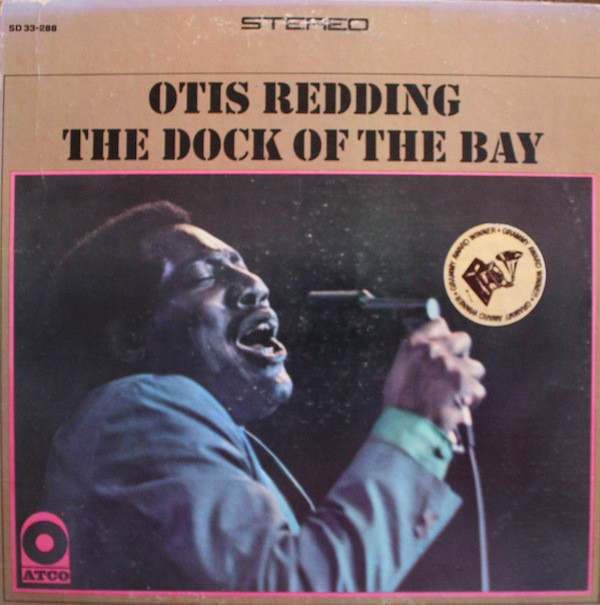
The song is a true classic. Stax guitarist Steve Cropper wrote this with Redding. Cropper produced the album when Redding died, including this track with various songs Redding had recorded the last few years.
Redding died in a plane crash on December 10, 1967, a month before this song was released (January 8, 1968) and three days after he recorded it. It was by far his biggest hit and was also the first-ever posthumous #1 single in the US.
Stax Records chief Jim Stewart did not want the song released because it was unlike his other music. Redding and Cropper both insisted that it would be his first #1 single. Stewart relented when he heard the finished master recording put together by Cropper after Redding’s death.
The music licensing company BMI named this as the sixth-most performed song of the 20th century, with around 6 million performances.
The song peaked at #1 in the Billboard 100, #7 in Canada, #3 in the UK, and #3 in New Zealand in 1968.
Steve Cropper:“Otis was one of those kind of guys who had 100 ideas. Anytime he came in to record he always had 10 or 15 different intros or titles, or whatever. He had been at San Francisco playing The Fillmore, and he was staying at a boathouse (in Sausalito, across the bay from San Francisco), which is where he got the idea of the ship coming in. That’s about all he had: ‘I watch the ships come in and I watch them roll away again.’ I took that and finished the lyrics.
If you listen to the songs I wrote with Otis, most of the lyrics are about him. He didn’t usually write about himself, but I did. ‘Mr. Pitiful,’ ‘Sad Song Fa-Fa,’ they were about Otis’ life. ‘Dock Of The Bay’ was exactly that: ‘I left my home in Georgia, headed for the Frisco Bay’ was all about him going out to San Francisco to perform.”
From Songfacts
Redding ended up sitting on a dock on the San Francisco Bay thanks to Bill Graham, who ran the Fillmore West Auditorium. Redding played three shows there, December 20-22, 1966. Graham gave Redding a choice: he could stay at a hotel, or at a boathouse in nearby Sausalito. Redding liked the outdoors, so he chose the boathouse.
Redding was the star recording artist for Stax Records, a Memphis label that made classic soul music. The death of Redding was a big blow to the label, and while it certainly had an impact on their demise in the ’70s, there were other factors as well, including financial mismanagement and a change in musical tastes. In 2001, construction started on a soul music museum where the studios once stood, and it opened in 2003. To learn more about the museum and the Stax legacy, check out Stax Today.
The end of this song contains perhaps the most famous whistling in music history. It wasn’t planned, but when Steve Cropper and Stax engineer Ronnie Capone heard it, they knew it had to stay. Cropper explained on his website: “If you’re an Otis Redding fan you’d know that he’s probably the world’s greatest at ad-libbing at the end of a song. Sometimes you could go another minute or two with Otis Redding’s ad-libs – they were so spontaneous and felt so great. And this particular song I think baffled Otis a little bit because of the tempo and the mood, so when we got down to the end of it he really didn’t have anything to ad-lib with, and he just started whistling. That just sparked Ronnie Capone and myself off, and almost immediately we said, ‘Hey man, that’s great, leave that in there.’ It sure is a cool melody to go out with.”
Beach sound effects (waves, seagulls, etc.), were dubbed in after the recording. Steve Cropper explained why: “I played acoustic guitar on the session and there are some outtakes on the record where you can hear Otis clowning around with seagulls – he was always kind of a funny jokester in the studio and he was going ‘caw, caw, caw.’ That was where I got the idea of getting the seagull sounds. I went over to the soundtrack library at Pepper Records – a jingle company – and I got one of their sound effect records. I got the seagulls and the waves and I made a little tape loop on a two-track machine. I ran that as I mixed the record – I would bring them up and down in the holds. And I overdubbed the guitar. We were cutting on 4-track in those days – we had moved up from mono and stereo and up to big ol’ 4-tracks, so we had a lot of tracks to work with. So we had 6-tracks because I had the 2-track going on one side with seagulls and one side with waves. I got that record mixed and got it off to Atlantic and it came out.”
He added: “The licks that I overdubbed on ‘Dock Of The Bay,’ I don’t know if there was anything really special about them except that that was probably as high a position as I’ve ever played those licks when I did it. I was trying to get something that felt like seagulls – that real high thing. So, I was playing some high licks that were not necessarily imitating seagulls but the thought of seagulls being really high. I was trying to get something a little moody like that.”
Redding recorded this with Booker T. & the MG’s, the house band for Stax Records. They played with all the Stax artists, including Wilson Pickett, Sam & Dave, and Albert King, and had a hit on their own with “Green Onions” in 1962.
Redding died five months before Martin Luther King, Jr. was shot in Memphis, where this was recorded. Amid the angry racial tensions, “Dock of the Bay” stood out as an integrated collaboration in a segregated city; Redding’s co-writer/producer Steve Cropper was white, as was Donald “Duck” Dunn, who played bass on the track.
The plan was to use background singers on this track, possibly the Staple Singers, but when Redding died there was no time for that.
Booker T. & the MG’s were on tour when they found out about Redding’s death. They were in an Indiana airport with their flight delayed because of snow when one of their members called the Stax office and got the horrific news. When they returned to Memphis, Steve Cropper mixed the song for release. He said it was “maybe the toughest thing I’ve ever done.” Redding’s body had not even been recovered when Cropper finished the song.
Redding started to compose this song while he was recovering from surgery removing polyps from his vocal cords. The doctors told him not to sing or talk for six weeks after the operation.
Under pressure from the record company, Steve Cropper rushed to get this song finished as soon as word got out that Redding had died. “That’s just the way record companies operate,” he said. “They actually had me go in and try to finish the song up – they had not even found Otis’ body yet, which was a very difficult time for me, but somehow I got through it.”
The hit potential was obvious when this song was being recorded. Cropper explained: “Really being different from most Otis Redding songs, it was a little more middle-of-the-road tempo-wise. It wasn’t a ballad and it wasn’t an uptempo, hard rock, dancing kind of thing that he was known for. It was more laid back, and we had been looking for a crossover song – a song that leaves the R&B charts and crosses over to the pop charts – and in this song we knew we had it. It was just something we had a feeling about. We listened to it and went, ‘This is it!’ We just knew beyond a doubt that this was the song. This was a hit.”
During the Vietnam War, this was very popular with American troops fighting there, as the song portrayed quite the opposite of their reality. Accordingly, it was used in two 1987 films that take place during the war: Platoon and Hamburger Hill.
This won 1968 Grammy Awards for Best Rhythm & Blues Performance, plus Best Rhythm & Blues Song for writers Otis Redding and Steve Cropper.
If you equate the beach and bird noises to putting stickers on a Picasso, there are two very good outtakes of the song available on the Otis Redding collection Remember Me
that are free of the overdubs. Stax Records had recently purchased a 4-track recorder, which made it easy to add the extra sounds.
Dock of the Bay
Sittin’ in the mornin’ sun I’ll be sittin’ when the evenin’ comes Watching the ships roll in Then I watch ’em roll away again, yeah I’m sittin’ on the dock of the bay Watchin’ the tide roll away, ooh I’m just sittin’ on the dock of the bay Wastin’ time
I left my home in Georgia Headed for the Frisco Bay ‘Cause I’ve had nothin’ to live for It look like nothin’s gonna come my way So I’m just gon’ sitt on the dock of the bay Watchin’ the tide roll away, ooh I’m sittin’ on the dock of the bay Wastin’ time
Look like nothing’s gonna change Everything, still remains the same I can’t do what ten people tell me to do So I guess I’ll remain the same, yes
Sittin’ here restin’ my bones And this loneliness won’t leave me alone, listen Two thousand miles, I roam Just to make this dock my home Now I’m just gon’ sit, at the dock of the bay Watchin’ the tide roll away, ooh yeah Sittin’ on the dock of the bay Wastin’ time
I’ve told this story before but I bought LA Woman at a family’s yard sale in the 80s for 10 cents I believe…it was in mint condition. I went through a Doors phase that a lot of teens go through. I never liked all they had but I do like a lot of their music. This song was love at first listen. This and the debut album are my favorite Doors’ albums.
Morrison could be a handful at times for the band. His singing always sounded ominous to me…like something was about to happen. The guitar riff in this song is light but very catchy and the song will stick with you.
Hyacinthus was a young love of the Greek God Apollo. Apollo accidentally killed him, and from his blood sprang the hyacinth, a plant with a fragrant cluster of flowers.
The line, “I see the bathroom is clear” could refer to the bathroom in the studio where the song “L.A. Woman” was recorded. At the time, Jim Morrison insisted on recording the vocal track remotely from the bathroom rather than in the studio with the rest of the band.
The song was written at guitarist Robby Krieger’s house, which inspired some of Morrison’s lyrics with its flowers (hyacinths) and cats (“lions”).
Hyacinth House
What are they doing in the Hyacinth House? What are they doing in the Hyacinth House? To please the lions in this day
I need a brand new friend who doesn’t bother me I need a brand new friend who doesn’t trouble me I need someone and who doesn’t need me
I see the bathroom is clear I think that somebody’s near I’m sure that someone is following me, oh yeah
Why did you throw the Jack of Hearts away? Why did you throw the Jack of Hearts away? It was the only card in the deck that I had left to play
And I’ll say it again, I need a brand new friend And I’ll say it again, I need a brand new friend And I’ll say it again, I need a brand new friend, the end
Keith Richards once said about the Black Crowes…” they have me down pretty well.” The riff in this song was played in open G tuning. Many musicians have played in that tuning but Keith Richards made a career out of it. Songs like Start Me Up, Can You Hear Me Knocking, etc… were wrote in that tuning and has a certain sound that you can only get with that.
Rich Robinson the guitar player and brother Chris the singer wrote this song and it does have a Stones feel to it.
The Black Crowes album Shake Your Money Maker was released in 1990. This album shocked me when I heard it. After longing for something with that 70’s tone…here it was with this new band. I always thought they sounded like The Stones/Faces musically with a Rod Stewart type lead singer.
Jealous Again was the first single off of the album. It only peaked at #75 in the Billboard 100 in 1990. After this single they released “Hard To Handle” and it recieved much more airplay.
Jealous Again
Cheat the odds that made you Brave to try to gamble at times Well I feel like dirty laundry Sending sickness on down the line Tell you why
‘Cause I’m jealous, jealous again Thought it time I let you in Yeah, I’m jealous, jealous again Got no time, baby
Always drunk on Sunday Try’n to feel like I’m at home Smell the gasoline burning Boys out feeling nervous and cold
[Repeat 1st Chorus]
Stop, understand me I ain’t afraid of losing face Stop, understand me I ain’t afraid of ever losing faith in you
Never felt like smiling Sugar wanna’ kill me yet Find me loose lipped and laughing Singing songs ain’t got no regrets
[Repeat 1st and 2nd Chorus]
Don’t you think I want to Don’t you think I would Don’t you think I’d tell you baby If I only could Am I acting crazy Am I just too proud Am I just plain lazy Am I, Am I, Am I, ever
John Mellencamp took a three-chord pattern that is used many times in rock and roll (Cherry, Cherry is one) and turned it into Rock in the USA. The song worked well…in the middle of the eighties, he turned this very 60’s sounding song into a big hit. The song peaked at #2 in the Billboard 100 and #7 in Canada in 1986.
Mellencamp name-drops several artists, particularly Frankie Lyman, Bobby Fuller, Mitch Ryder, Jackie Wilson, Shangra La’s, Young Rascals, Martha Reeves and James Brown. These artists were Mellencamp’s influences while growing up.
This song was on the Scarecrow album. To prepare for this album Mellencamp had a great idea. He had his band run through 60’s rock songs for a month. They learned them inside and out and applied the feel on the new songs they were working on the album.
Larry Crane the guitarist: “We got a bunch of those tapes you see advertised on TV with all the old songs on them, and God, we learned everything.”
Rolling Stone Magazine’s “100 Best Albums of the Eighties,” ranked Scarecrow at #95… that surprises me that it’s that low on the list. In my opinion, this album was the peak of his career.
From Songfacts
“R.O.C.K. in the U.S.A.” is subtitled “A Salute to ’60s Rock,” and despite Mellencamp’s feeling that “I don’t think people are getting the idea of what the song’s about, so I must’ve not done a very good job,” the song became a big hit. It tells the story of how rock and roll emerged in America, and how those (now infamous) musicians that were not afraid to take personal risks for the sake of their music became a strong influence on the next generation, including Mellencamp, who sings: “[They] Filled our head full of dreams, turned the world upside down.”
Growing up, Mellencamp listened to AM radio at a time when the same station would play a mix of styles, exposing him to rock, folk, soul and R&B at an early age.
John Mellencamp released “R.O.C.K. in the U.S.A.” in 1985 on his eighth album Scarecrow. The album peaked at #2 in the US, with three Top 10 hit singles, this being the biggest. The overall theme of the album is the decay of societal foundations in rural America, but this song is a departure from that theme. Far from satirical, Mellencamp intends to portray a mournful U.S.A. that has been slowly eaten out from inside by the industries that substitute greed for the American Dream, but “R.O.C.K. in the U.S.A” was so against the grain of this album’s emotional profile that Mellencamp almost excluded it from the album.
Mellencamp’s interest in recreating the sounds of the heyday of rock & roll has spanned his entire career; in 2009 he recorded songs for the 2010 album No Better than This at Sun Studios (in the footsteps of Elvis) and other historical locations. The recording techniques used for this album are purposefully raw in an attempt to reconnect with his roots, a reflection of Mellencamp’s ideology of “Real music, for real people!”
In this way, Mellencamp was paying homage, but he was also paying his dues. For example, the late Bobby Fuller’s mention on a Top 10 song, and a platinum album, was enough to revive flagging interest in the artist (as well as get Mellencamp a credit on a Bobby Fuller Four Best-Of album). Said Mellencamp: “When I played in Albuquerque, I think it was, his [Fuller’s] mom and some of his family came down to see me play. They acted like I gave them 60 million dollars just for mentioning his name. They gave me his belt that he died in.”
The instrumental break in this song is very clever. When we first hear it, it’s played on an ocarina, which is a small wind instrument of ancient Eastern origins, thought to be 12,000 years old, and often made in the shape of a bird and used to imitate its fluting song. This is a nod to the song “Wild Thing” by The Troggs, which featured an ocarina solo. In Mellencamp’s song, the riff is then played on guitar and later on keyboards, going through various musical forms popular in ’60s rock. In concert, Mellencamp would often bring a fan onstage to dance with him during this section.
In the months prior to recording Scarecrow, Mellencamp’s band worked their way through nearly a hundred cover songs. Mellencamp hoped that through these covers, they would absorb the stylistic essence of the era through osmosis. Mellencamp’s bassist Toby Myers admitted that, “I thought he was giving us busywork, but he wanted us to understand what made those songs tick so we could put some of that grit into his songs.” The band was surprised by the sheer quantity of different styles that characterized the era. “Take an old Rascals song for example,” Mellencamp said. “There’s everything from marching band beats to soul music to country sounds in one song.”
For the Scarecrow album, Mellencamp moved away from the stage-name, John Cougar, which had been given to him by Tony DeFries, his first manager, and became “John Cougar Mellencamp” (he would drop the “cougar” completely by 1989). This was a fortunate move, because 2009 saw the release of the hit sitcom Cougar Town starring Courteney Cox (as the main “cougar”). The ensuing taunts that would have come with the transition of cultural interpretation from a cougar being an imposing catamount to a sexy middle-aged woman might have been enough to revive Mellencamp’s reputation as a hothead prone to bursts of anger in his old age. As if continually being compared to Bruce Springsteen wasn’t enough…
This song forms part of a greater genre of songs that spell out words in the lyrics, like Otis Redding’s song “Respect” (made famous by Aretha Franklin) or “Lola” by the Kinks.
Mellencamp’s title wasn’t too far from Bruce Springsteen’s “Born In The U.S.A.,” released a year earlier. That song was often misinterpreted as a celebration of America, when it was really about the plight of a Vietnam War veteran.
In keeping with ’60s hit single tradition, Mellencamp kept this song under three minutes long – it clocks in at 2:54.
R.O.C.K. in the U.S.A.
They come from the cities And they come from the smaller towns Beat up cars with guitars and drummers Goin crack boom bam
R.O.C.K. in the U.S.A. R.O.C.K. in the U.S.A. R.O.C.K. in the U.S.A., Yeah, Yeah! Rockin’ in the U.S.A.
Said goodbye to their families Said goodbye to their friends With pipe dreams in their heads And very little money in their hands Some are black and some are white Ain’t to proud to sleep on the floor tonight With the blind faith of Jesus you know that they just might, be Rockin’ in the U.S.A. Hey!
Voices from nowhere And voices from the larger towns Filled our head full of dreams Turned the world upside down
There was Frankie Lyman-Bobby Fuller-Mitch Ryder (They were Rockin’) Jackie Wilson-Shangra-las-Young Rascals (They were Rockin’) Spotlight on Martha Reeves Let’s don’t forget James Brown Rockin’ in the U.S.A. Rockin’ in the U.S.A. Hey!
R.O.C.K. in the U.S.A. R.O.C.K. in the U.S.A. R.O.C.K. in the U.S.A., Yeah, Yeah! Rockin’ in the U.S.A.
This song is iconic and known all over the world. I automatically think of motorcycles and bar bands. We played in a few bars that bikers were visitors…this song was a requirement if you wanted to continue breathing.
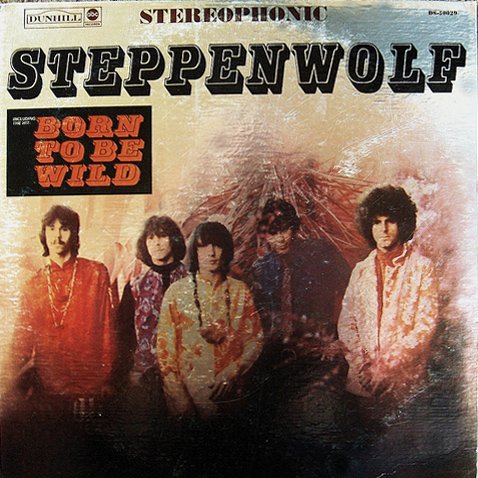
Born To Be Wild has been used in countless amounts of shows and movies…One request to use the song however was turned down in 2004. Paris Hilton wanted to use it as part of her reality show The Simple Life 2. Kay denied it, telling the Toronto Star, “There are certain things even a rock ‘n’ roller will not stoop to.”
After reading that…my respect for John Kay just took a giant leap!
The song was used in the 1969 movie Easy Rider, the counterculture classic. Another Steppenwolf song, “The Pusher,” was also used in the film.
When the movie was in production, this was simply a placeholder. Peter Fonda wanted Crosby, Stills, and Nash to do the soundtrack. It became clear that the song belonged in the movie, and it stayed. Being included in this movie cemented the song’s association with motorcycles… “Teach Your Children” just doesn’t have the same ring, does it?
This was written by Mars Bonfire, which is the stage name of Dennis Edmonton. He wasn’t a member of Steppenwolf, but his brother Jerry was the band’s drummer. Bonfire wrote a few other songs for Steppenwolf as well, including “Ride With Me” and “Tenderness.”
With the line “heavy metal thunder,” this became the first popular song to use the phrase “heavy metal,” which became a term for hard rock. William Burroughs is credited with coining the phrase, as he used it in his 1961 novel The Soft Machine, describing his character Uranian Willy as “the Heavy Metal Kid.”
The song peaked at #2 in the Billboard 100, #1 in Canada, #30 in the UK, and #32 in New Zealand in 1968.
Mars Bonfire (Writer): “I was walking down Hollywood Boulevard one day and saw a poster in a window saying ‘Born to Ride’ with a picture of a motorcycle erupting out of the earth like a volcano with all this fire around it. Around this time I had just purchased my first car, a little secondhand Ford Falcon. So all this came together lyrically: the idea of the motorcycle coming out along with the freedom and joy I felt in having my first car and being able to drive myself around whenever I wanted. ‘Born To Be Wild’ didn’t stand out initially. Even the publishers at Leeds Music didn’t take it as the first or second song I gave them. They got it only because I signed as a staff writer. Luckily, it stood out for Steppenwolf. It’s like a fluke rather than an achievement, though.”
Born To Be Wild
Get your motor runnin’ Head out on the highway Lookin’ for adventure And whatever comes our way Yeah Darlin’ go make it happen Take the world in a love embrace Fire all of your guns at once and Explode into space
I like smoke and lightning Heavy metal thunder Racin’ with the wind And the feelin’ that I’m under Yeah Darlin’ go make it happen Take the world in a love embrace Fire all of your guns at once and Explode into space
Like a true nature’s child We were born, born to be wild We can climb so high I never wanna die
Born to be wild Born to be wild
Get your motor runnin’ Head out on the highway Lookin’ for adventure And whatever comes our way Yeah Darlin’ go make it happen Take the world in a love embrace Fire all of your guns at once and Explode into space
Like a true nature’s child We were born, born to be wild We can climb so high I never wanna die
This post is a small double shot…I included the A-side Easy Livin’ but the one I like the most is the B side Traveler In Time. This wasn’t the original single…it was released a little later.
Sometimes I like going off the beaten path and I’m in the woods with this one. Traveler In Time, I picked up from the BBC TV show Life On Mars from 2006. I’m not a huge fan of progressive rock but the song has a good musical hook and the singer is unreal.
Traveler In Time and Easy Livin’ was on the album Demons and Wizards released in 1971. The album made it to #23 in the Billboard Album Chart, #22 in Canada, and #20 in the UK.
Easy Livin’ peaked at #39 in the Billboard 100 and #27 in Canada in 1972.
Easy Livin’ was the only Uriah Heep song to crack the Top 40 in the United States. It was an even bigger hit in the Netherlands and Finland, two countries that had a large Uriah Heep fanbase.
Traveller In Time
Every day I have to look to the sun To see where it was that I have come from I have a feelin that there must be a time When I’ll get a chance to go home ‘Cause I’m so tired of being here alone But I’m just a traveller in time Trying so hard to pay for my crime
If I could go back the same way I got here And see the people that I once held so near I’d do my best to find an answer for you But first I must wait ’til I’m set free And I don’t know how long that’s gonna be ‘Cause I’m a man with a whole lot on his mind Just out there somewhere travelling in time Travelling in Time I’ve tried for so long to find some way Of helping mankind
Breakdown is one of the first songs that I ever heard by Tom Petty. In my band days, my friend Chris showed me the intro to this on guitar…I still know most of it. The dynamics of this song makes it a great song to hear live.
At first, Mike Campbell’s guitar lick was only used at the end of the song. Dwight Twilley came by the studio when Petty was playing it back and suggested they use it throughout the song. Petty liked the idea and called the band back to the studio in the middle of the night to re-record it.
This was Petty’s first single. When it was first released in January 1977 it went nowhere, but after months of touring, it was re-released in October and it hit. It peaked at #40 in the Billboard 100 and #40 in Canada in 1977.
From Songfacts
Dwight Twilley, who had a hit in 1975 with “I’m On Fire,” was signed to the same label as Petty, and was on the same career path for a while. Petty sang on some of Twilley’s songs, including his 1984 hit “Girls.”
Lyrically more sparse than most Tom Petty & the Heartbreakers tracks, “Breakdown” finds Petty ready to end a union that has become toxic. “Go ahead and give it to me,” he tells her.
When the band first recorded this song, it was 7-minutes long, with an extended guitar solo at the end. The final version clocks in at a tidy 2:43.
This was featured in the 1978 movie FM. About a radio station in California, the movie was the basis for the TV show WKRP in Cincinnati. This was also included on the soundtrack.
Breakdown
It’s alright if you love me It’s alright if you don’t I’m not afraid of you runnin’ away, honey I get the feeling you won’t
You see, there is no sense in pretending Your eyes give you away Something inside you is feeling like I do We said all there is to say
Baby, breakdown, go ahead, give it to me Breakdown, honey, take me through the night (baby, baby, breakdown) Breakdown, now I’m standin’ here, can’t you see? Breakdown, it’s all right It’s all right It’s all right Yeah, it’s all right It’s all right
Breakdown, go ahead, give it to me Breakdown, honey, take me through the night (baby, baby, breakdown) Breakdown, now I’m standin’ here, can’t you see? Breakdown, it’s all right It’s all right It’s all right Yeah, it’s all right
Gotta feelin’ it’s all right Yeah, it’s all right It’s all right Well, is it all right? I wanna hear you in the studio Way back there Is it all right? Is everybody sure it’s all right? Yeah, it’s all right ‘Cause if you leave if you want to Baby, I don’t mind Been standin’, facin’ Livin’ with it every day of my life It’s all right Can walk on out that door, baby It’s all right Baby, breakdown It’s all right And if you want to leave It’s all right I don’t mind It’s all right It’s all right
The Fandango album was my first introduction to ZZ Top. The album was half live and half studio. This one and Tush were my favorites of the album.
This song is a tribute to the “Border Blaster” radio stations in Mexico, specifically the two that were run by the famous disc jockey Wolfman Jack, XERF in Via Acuna, , and XERB, (in Rosarito Beach near Tijuana).
Mexican radio stations did not have to adhere to the power limits of US stations, which gave them the ability to pump their signal well into the States.
This song was on the Fandango album and was not released as a single. The album peaked at #10 in the Billboard Album Chart and #60 in the UK.
The album was helped by the hit single Tush that peaked at #20 on the Billboard 100.
Billy Gibbons:“All Mexican stations’ call letters begin with X. The X stations used to be heard everywhere because of their enormous power. The Mexican government granted licenses with no wattage ceiling. The US, back in the ’20s, established 50,000 watts as the maximum. WLS in Chicago is 50,000 watts, and you can hear it like a police call in Houston. I’m sure 500,000 watts you can pick up here in Canada. You can probably pick up XERF. It was just outrageous. You could pick it up everywhere and we’d go. And it would bury everything else. KDRC in Houston was on a close frequency, and they would get stomped on. They had to move. XERF is 1570 on the dial. I think that remains the most powerful station.”
Dusty Hill: “They’ll sell segments to anybody. There are a lot of preachers on there. I heard them one time selling autographed prayer cloths. They were to put on your radio when you’re listening to these programs. But this one was autographed by Jesus himself. Then you’d hear a 15-minute country western show. Then there’d be a blues show. You could just buy your slot and do whatever. They didn’t have a whole lot of restrictions.”
From Songfacts
Asked if ZZ Top was ever played “on the X,” Gibbons said: “We did, in fact. They do not have a pop music playlist, but the song was brought to the attention of the station owner, who, it turns out, is an attorney in Del Rio who considers the station his favorite toy. He decided to have a 15-minute pop music segment, and we did get played on XERF and then on XERB in Rosarita. They also have XROC in Juarez. So it went full circle. We heard ‘I Heard It in the X’ on the X.”
Members of ZZ Top share the same influences, which helped forge their sound. The first line of this song is a nod to those influences, which they heard on the border blaster stations:
Heard It On The X
Do you remember Back in nineteen sixty-six? Country Jesus, hillbilly blues, That’s where I learned my licks. Oh, from coast to coast and line to line In every county there, I’m talkin’ ’bout that outlaw X Is cuttin’ through the air.
Anywhere, y’all, Everywhere, y’all, I heard it, I heard it, I heard it on the X.
We can all thank Doctor be Who stepped across the line. With lots of watts he took control, The first one of its kind. So listen to your radio Most each and every night ’cause if you don’t I’m sure you won’t Get to feeling right.
Anywhere, y’all, Everywhere, y’all, I heard it, I heard it, I heard it on the X.
Another new old song from the upcoming reissue of Goats Head Soup. This one features Jimmy Page and was probably named after his daughter. It has a very cool groove to it.
The Stones’ Keith Richards has his own recollections on how “Scarlet” took shape and how “we walked in at the end of a Zeppelin session. They were just leaving, and we were booked in next and I believe that Jimmy decided to stay.”
“Scarlet” was a freak accident. “We weren’t actually cutting it as a track,” enthuses Richards in a statement, “it was basically for a demo, a demonstration, you know, just to get the feel of it, but it came out well, with a line up like that, you know, we better use it.‘’
Baby you excite me But you talk too much Won’t stand on a corner Love you more, oh yeah
Scarlet, why you wearing my heart, on your sleeve Where it ain’t supposed to be
Scarlet, why you tearing my heart, all to pieces It ain’t the way it’s supposed to be
Scarlet, why are you keeping my heart, to yourself It ain’t the way it’s supposed to be
Scarlet, Scarlet Ooh yeah!
You don’t have to change your mind And leave this neighbourhood so far behind Honey you don’t have to cry no more When I come a knocking, right at your front door
Scarlet, Scarlet, Scarlet
Scarlet, why you wearing my heart, on your sleeve Where it ain’t supposed to be Scarlet, Scarlet, oh
Scarlet, Scarlet, Scarlet Why you wearing my heart
Scarlet, why you wearing my heart Scarlet, why you wearing my heart Scarlet, why you wearing my heart Scarlet
This was made during a period where Eric was doing some country-inspired songs. I love the intro and the guitar in the song.
The song was written by Eric Clapton, Marcy Levy, and George Terry. This was released as a single with Cocaine as the B side.
Marcy Levy, one of Clapton’s backup singers, wrote this with him and sang on it. Also getting a songwriting credit on this track is George Terry, who also played guitar on the track. Terry was a member of Clapton’s band.
Lay Down Sally is one of Clapton’s biggest American hits. He wrote it in the style of one of his favorite songwriters, the Oklahoma musician J.J. Cale…Clapton said the song was as close as an Englishman could get to being J.J. Cale.
The song peaked at #3 in the Billboard 100, #3 in Canada, and #39 in the UK in 1978. The song was on the album Slowhand.
From Songfacts
In this song, Clapton tries to convince a girl to hang out with him in bed instead of leaving. The song is not typical of Clapton’s work, which is often based on the blues.
“Lay Down Sally” is grammatically incorrect, as it would mean taking Sally and actually placing her horizontally. When asking Sally to join him in bed, Clapton’s correct grammar would be “Lie Down Sally.” He’s in good company: Bob Dylan also ignored this rule of grammar in “Lay Lady Lay.”
Eric Clapton once had his hand slammed in a car door by a member of the band The Blues Project. As told in Al Kooper’s Backstage Passes and Backstabbing Bastards, during the landmark 1967 concert “Murray the K’s Easter Rock Extravaganza,” Clapton, Steve Katz, and Kooper headed out to a local music store between sets and were a little late getting back. Hurrying out of the cab, “Steve was right behind me and as he left the cab he accidentally slammed the door right on Clapton’s hand! Eric began to scream in pain, and Steve turned around, ran back, and opened the door. Miraculously, Eric hadn’t broken any bones or even punctured his skin for that matter. Steve felt like a jerk, however. Can you imagine that kind of guilt?”
This is the first track on the album. Depending on who you ask, “Slowhand” was either a nickname given to Clapton by the group’s manager when he was with The Yardbirds (because of his laid-back guitar style), or derived from what would happen when Clapton would break a string on stage: the audience would do a “slow hand clap” while he fixed it.
Lay Down Sally
There is nothing that is wrong In wanting you to stay here with me I know you’ve got somewhere to go But won’t you make yourself at home and stay with me? And don’t you ever leave
Lay down, Sally, and rest you in my arms Don’t you think you want someone to talk to? Lay down, Sally, no need to leave so soon I’ve been trying all night long just to talk to you
The sun ain’t nearly on the rise And we still got the moon and stars above Underneath the velvet skies Love is all that matters Won’t you stay with me? And don’t you ever leave
Lay down, Sally, and rest you in my arms Don’t you think you want someone to talk to? Lay down, Sally, no need to leave so soon I’ve been trying all night long just to talk to you
I long to see the morning light Coloring your face so dreamily So don’t you go and say goodbye You can lay your worries down and stay with me And don’t you ever leave
Lay down, Sally, and rest you in my arms Don’t you think you want someone to talk to? Lay down, Sally, no need to leave so soon I’ve been trying all night long just to talk to you
Lay down, Sally, and rest you in my arms Don’t you think you want someone to talk to? Lay down, Sally, no need to leave so soon I’ve been trying all night long just to talk to you
When I hear jangly Rickenbacker guitars I’m automatically happy … The Byrds influence everyone from Tom Petty to Cheap Trick to Big Star to new bands now. If I could go back to any era… it would be the mid-sixties. Much of the music we hear today has elements of this period.
Bob Dylan wrote “Mr. Tambourine Man,” which was originally released on his fifth album Bringing It All Back Home in early 1965. His version wasn’t released as a single, but when The Byrds released their cover later in 1965, it was a massive hit.
It peaked at #1 in the Billboard 100, #1 in the UK, and #2 in Canada in 1965. topping the charts in both the US and UK. It’s the only song Dylan ever wrote that went to #1 in America.
Roger Mcguinn said he was trying for a vocal between John Lennon and Bob Dylan.
David Crosby:“He came to hear us in the studio when we were building The Byrds. After the word got out that we gonna do ‘Mr. Tambourine Man’ and we were probably gonna be good, he came there and he heard us playing his song electric, and you could see the gears grinding in his head. It was plain as day. It was like watching a slow-motion lightning bolt.”
From Songfacts
Dylan wrote this on a road trip he took with some friends from New York to San Francisco. They smoked lots of marijuana along the way, replenishing their stash at post offices where they had mailed pot along the way.
The Byrds version is based on Bob Dylan’s demo of the song that he recorded during sessions for his 1964 album Another Side of Bob Dylan (Dylan’s version was not yet released when The Byrds recorded it). It was The Byrds manager Jim Dickson who brought in the demo and asked them to record it – the group refused at first because they thought it didn’t have any hit potential. When The Byrds did record it, they took some lyrics out and added a 12-string guitar lead.
Only three of the five members of the Byrds performed on this song: Roger McGuinn sang lead and played lead guitar; Gene Clark and David Crosby did the vocal harmonies.
Session musicians were brought in to play the other instruments, since the band was just starting out and wasn’t deemed good enough yet by their management. The session musicians who played on this song were the Los Angeles members of what came to be known as “The Wrecking Crew” when drummer Hal Blaine used that term in his 1990 book. This group of about 50 players ended up on many hit songs of the era.
The Byrds who didn’t play on this one were bass player Chris Hillman and drummer Michael Clarke.
This was the Byrds’ first single. In a 1975 interview with Let It Rock, Roger McGuinn explained how the unrefined sound of this song came about. Said McGuinn: “To get that sound, that hit sound, that ‘Mr. Tambourine Man’ sound, we just ran it through the electronics which were available to us at that time, which were mainly compression devices and tape delay, tape-sustain. That’s how we got it, by equalizing it properly and aiming at a specific frequency.
For stereo-buffs out there who noticed that ‘Mr. Tambourine Man’ in stereo isn’t really stereo, by the way, that’s because when Terry Melcher, the producer, first started mixing records he didn’t know how to mix stereo, and so he made all the singles up to ‘Turn Turn Turn’ mono. The label is misrepresentative. See, when Columbia Records signed us, they didn’t know what they had. So they gave production to someone low on the totem-pole-which was Terry Melcher who was Doris Day’s son who was getting a token-job-in-the-mailroom sort of thing. They gave him the Byrds and the Byrds were supposed to flunk the test.”
This was inspired by a folk guitarist named Bruce Langhorne. As Dylan explained: “Bruce was playing with me on a bunch of early records. On one session, [producer] Tom Wilson had asked him to play tambourine. And he had this gigantic tambourine. It was, like, really big. It was as big as a wagon wheel. He was playing and this vision of him playing just stuck in my mind.”
Dylan never told Langhorne about it (Bruce had to read about it in the Biograph album liner notes, like the rest of us). He wrote the song and recorded a version with Rambling Jack Elliot that got to the Byrds (known as the Jet Set at the time) before it was ever put on a record.
Dylan claims that despite popular belief, this was not about drugs: “Drugs never played a part in that song… ‘disappearing through the smoke rings in my mind,’ that’s not drugs; drugs were never that big a thing with me. I could take ’em or leave ’em, never hung me up.” >>
This was the first of many Bob Dylan songs recorded by the Byrds. Others include: “You Ain’t Goin’ Nowhere,” “The Times They Are a-Changin’,” “It’s All Over Now Baby Blue,” and “Chimes of Freedom.”
The production style was based on The Beach Boys song “Don’t Worry Baby,” which was the suggestion of producer Terry Melcher. Bill Pitman, Leon Russell and Hal Blaine had all played on that Beach Boys song, so it wasn’t hard for them to re-create the sound on this track.
This was the first influential folk-rock song. All of the characteristics of that genre are present, including chorus harmonies, a rock rhythm section and lots of thought-provoking lyrics.
This was discussed in the 1995 movie, Dangerous Minds. In the movie, they talked about the underlying drug references this song might entail… Example: “Mr. Tambourine Man”=Drug Dealer; “Play a song for me”=give me a joint. The basis for this theory was that music was heavily censored at that time, so musicians would share their feelings about drugs and unallowed subject material through coded songs. >>
Although the Byrds didn’t write this or play most of the instruments, they would later write the song “Rock N’ Roll Star,” which made fun of The Monkees for not writing their own songs and not playing their own instruments.
In the movie Austin Powers: International Man of Mystery, Austin Powers (Mike Myers) attempts to play the CD of this album on a record player.
While many interpreted the song as a thinly veiled drugs record, McGuinn had other ideas. Having joined the Eastern cult religion Subud just 10 days prior to entering the studio, he saw the song as “a prayer of submission.” McGuinn told The Byrds’ biographer, Johnny Rogan, in 1997: “Underneath the lyrics to ‘Mr. Tambourine Man,’ regardless of what Dylan meant, I was turning it into a prayer. I was singing to God and I was saying that God was the Tambourine Man and I was saying to him, ‘Hey God, take me for a trip and I’ll follow you.'”
Chris Hillman admitted to Mojo that he’s never been a fan of The Byrds’ version. “Even though it opened the floodgates, I never liked that track,” he said. “I loved the song, but I never liked the track – it was too slick. I always wonder what would have happened if we cut it ourselves. But in a business sense Columbia were hedging their bets, because we were a pretty crude sounding band then.”
Bob Dylan didn’t make it to Woodstock, but four of his songs did, including “Mr. Tambourine Man,” which Melanie included in her set on the first day. Joan Baez and The Band both did “I Shall Be Released,” and Joe Cocker sang two Dylan songs: “Just Like A Woman” and “Dear Landlord.”
Roger McGuinn admitted to Uncut magazine he was petrified going into the studio to record “Mr. Tambourine Man.” “I was playing with the big boys, the Wrecking Crew. I was so nervous that Hal Blaine kept saying to me, ‘Settle down kid. Why don’t you go out and have a couple of beers?'”
Mr. Tamourine Man
Hey, Mr. Tambourine man, play a song for me I’m not sleepy and there ain’t no place I’m going to Hey, Mr. Tambourine man, play a song for me In the jingle jangle morning, I’ll come followin’ you
Take me for a trip upon your magic swirling ship All my senses have been stripped And my hands can’t feel to grip and my toes too numb to step Wait only for my boot heels to be wandering
I’m ready to go anywhere, I’m ready for to fade Into my own parade Cast your dancing spell my way I promise to go under it
Hey, Mr. Tambourine man, play a song for me I’m not sleepy and there ain’t no place I’m going to Hey, Mr. Tambourine man, play a song for me In the jingle jangle morning, I’ll come followin’ you
Introgroove did a 50th-anniversary post on the great Cosmo’s Factory album and it got me thinking about this song again. This song has a gospel feel with soul. It’s the closest thing to a love song that John wrote while still with Creedence Clearwater Revival.
It was the B side to “Looking Out My Back Door.” This continued the great double A sided singles that they released.
Lookin’ Out My Back Door/Long As I Can See The Light peaked at #2 in the Billboard 100 and #1 in Canada in 1970.
John Fogerty:“About the loner in me. Wanting to feel understood, needing those at home to shine a light so that I can make my way back.”
Cosmo’s Factory peaked at #1 in the Billboard Album Charts in 1970.
Long As I Can See The Light
Put a candle in the window, ’cause I feel I’ve got to move. Though I’m going, going, I’ll be coming home soon, ‘Long as I can see the light.
Pack my bag and let’s get movin’, ’cause I’m bound to drift a while. When I’m gone, gone, you don’t have to worry long, ‘Long as I can see the light.
Guess I’ve got that old trav’lin’ bone, ’cause this feelin’ won’t leave me alone. But I won’t, won’t be losin’ my way, no, no ‘Long as I can see the light.
Yeah! Yeah! Yeah! Oh, Yeah!
Put a candle in the window, ’cause I feel I’ve got to move. Though I’m going, going, I’ll be coming home soon, Long as I can see the light. Long as I can see the light. Long as I can see the light. Long as I can see the light. Long as I can see the light.
I’ve always liked the flow of the guitar intro in this song. Many of the 1970’s southern rock bands were influenced by Cream, Free, and The Stones but they put their own spin on it.
The song peaked at #34 in the Billboard 100 in 1975.
This song’s chorus was written by Outlaws drummer Monte Yoho, and lead guitarist/singer Hughie Thomasson filled out the rest of the words.
Clive Davis of Arista Records discovered them and signed the group to their first record deal; they became the fledgling label’s first rock band. Their self-titled debut album quickly went gold on the success of hits like “Green Grass and High Tides,” and this song.
Guitar Player Henry Paul:“‘There goes another love song,’ that specific line, ‘Someone’s singing about me again, now I need more than a friend,’ was written by Monte. He was a man of very few words, our drummer. He was a very smart and sharp, witty guy, but he wasn’t the most poetic character. I’m not trying to say that he was a dumb guy, just that his sense of poetry was on the target, but it wasn’t close to the center. But he wrote that, and then Hughie sort of rounded out the song with the verses.”
From Songfacts
Henry Paul, founding member of The Outlaws, says this is another in their repertoire of songs about being on the road: “‘Trying to get back to where I know I belong,’ there we are again, sitting in some stupid Days Inn in Tuscaloosa, Alabama, 1974.” And even though they were doing something they loved, and on the edge of serious success, it didn’t assuage the caged feeling of not being able to see their loved ones. Says Paul, “Even as much as you love your job, there’s things about that lifestyle that’ll make you do things you don’t want to admit that you did. That’s why they throw TVs out of window. That’s why the rock and roll thing is so violent and self-destructive.It’s kind of like being a lab rat stuck in some treadmill hell, that in order to keep your sanity you’ve got to lash out at what’s right immediately there, whether it’s your hotel room or shooting a TV or being Keith Moon over and over again. But that’s where that song came from, and it had a very commercial appeal, and it was a single for us. And although it didn’t chart particularly high, it was obviously and definitely a cornerstone in our musical career.”
There Goes Another Love Song
Sometimes I feel like I’m getting kinda low Thoughts that I’m thinkin’ are the reason So I try to remember without talkin’ to myself Things that I said or maybe things that I felt about you
Sittin’ in a corner of a crowded bar room People all around me and I still feel alone Just when I know I’m gonna break down and cry Someone played a tune that dried the tear from my eye
There goes another love song Someone singin’ about me again There goes another love song Now I need more than a friend
Lonesome and lonely, far from my home Tryin’ to get back to where I know I belong Wishin’ and hopin’ I was already there I just heard a voice whispered in my ear, singin’
There goes another love song Someone singin’ about me again There goes another love song Now I need more than a friend
There goes another love song Someone singin’ about me again There goes another love song Now I need it more than a friend
There goes another love song Someone singin’ about me again There goes another love song Now I need more than a friend
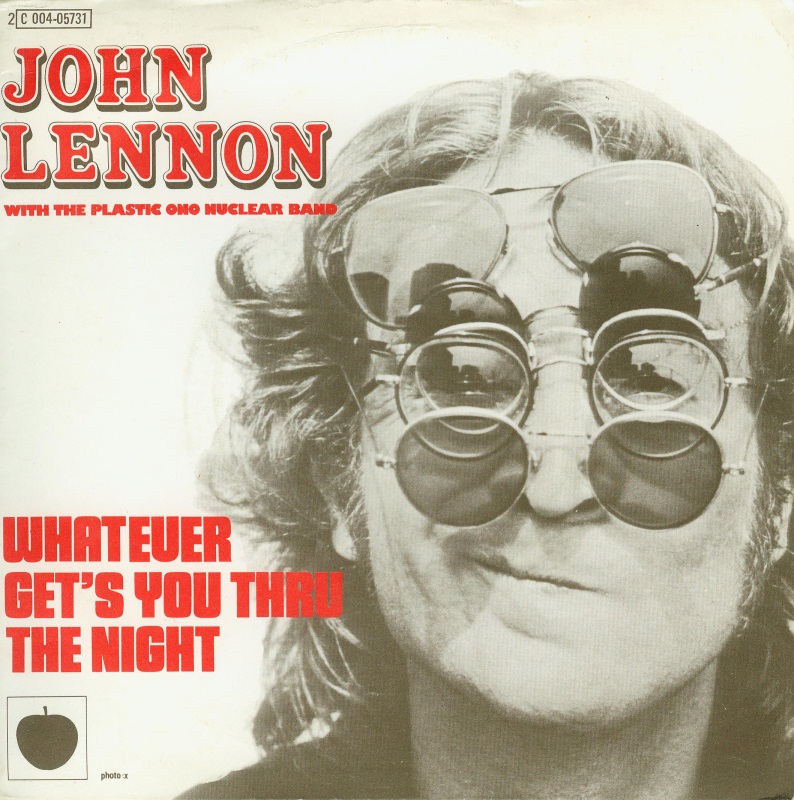
Heard this before I knew who John Lennon was and it is a good song…just not one of his best songs to me. It was his first solo number-one single. Many times the charts are about timing and it was the right time for this one to hit. In the video, you can see John walking around New York interacting with different people
Elton John sang backing vocals and also played piano on this track. He had a bet with Lennon that “Whatever Gets You Thru The Night” song would become a #1 hit. If it did Lennon would have to appear in concert with Elton. Lennon never thought it would be a #1 hit.
When it did reach number 1, Lennon made good on the wager by making a guest appearance at an Elton John concert on Thanksgiving night 1974 at Madison Square Garden in New York City. It turned out to be Lennon’s last live concert performance.
This very upbeat John Lennon song has a simple message…do whatever works for you. It was his first US #1 hit as a solo artist… he had another with “(Just Like) Starting Over,” which topped the chart in 1980 after his death.
John got the phrase by watching late-night TV. He was watching Reverend Ike, a famous black evangelist, who was saying, “Let me tell you guys, it doesn’t matter, it’s whatever gets you through the night.” Lennon loved it, wrote it down, and wrote a song about it.
This song peaked at #1 in the Billboard 100, #2 in Canada, and #36 in the UK. in 1974
From Songfacts
In December 2005, John and Yoko’s personal assistant May Pang told Radio Times: “At night he (John Lennon) loved to channel-surf, and he would pick up phrases from all the shows. One time, he was watching John loved it and said, “I’ve got to write it down or I’ll forget it.” He always kept a pad and pen by the bed. That was the beginning of Whatever Gets You Thru The Night.”
With this song, Lennon became the last of the Beatles to hit #1 US in their respective post-Beatles careers. By this time Paul McCartney had hit #1 three times, and George Harrison and Ringo Starr twice each.
Structurally, this is a rather unusual song: it’s really all chorus, separated by blasts of saxophone. Lennon alters the lines a bit in the various sections though:
Whatever gets you through the night
Whatever gets you through your life
Whatever gets you to the light
Don’t need a sword to cut through flowers
Don’t need a watch to waste your time
Don’t need a gun to blow you mind
These little lyrical alterations keep the song from sounding repetitive, even without verses.
In 1975 Lennon helped out on Elton’s John’s #1 cover of “Lucy In The Sky With Diamonds.” Lennon played guitar on that track and was credited as “Dr. Winston O’Boogie.”
In 1975 Lennon helped out on Elton’s John’s #1 cover of “Lucy In The Sky With Diamonds.” Lennon played guitar on that track and was credited as “Dr. Winston O’Boogie.”
What was it like recording the Walls And Bridges album? When we asked David Thoener, who was an engineer at the sessions, he told us: “It was amazing. Despite all of the personal pain John Lennon was in, (it was during his lost weekend) he was a consummate professional in the studio. Almost as if working kept him sane, through those difficult times. Working with him was quite an experience and something I am very glad to have been part of.”
This hit the top of the US charts, but it fell fast. It spent just three weeks in the Top 10 before dropping from 2-16 in November 1974. In 2004 Fantasia broke this record when after two weeks in the Top 10, “I Believe” dropped from #6-18.
Bobby Keys, who appears on many Rolling Stones recordings, played the tenor saxophone on this track. Ken Ascher played the Clavinet.
Whatever Gets You Thru The Night
Whatever gets you through the night It’s all right, it’s all right It’s your money or your life It’s all right, it’s all right Don’t need a sword to cut through’ flowers Oh no, oh no
Whatever gets you through your life It’s all right, it’s all right Do it wrong, or do it right It’s all right, it’s all right
Don’t need a watch to waste your time Oh no, oh no
Hold me, darlin’, come on, listen to me I won’t do you no harm Trust me, darlin’, come on, listen to me Come on, listen to me; come on, listen, listen
Whatever gets you to the light It’s all right, it’s all right Out of the blue, or out of sight It’s all right, it’s all right Don’t need a gun to blow you mind Oh no, oh no
Hold me, darlin’, come on, listen to me I won’t do you no harm Trust me, darlin’, come on, listen to me Come on, listen to me, come on, listen, listen