Fleetwood Mac – Gold Dust Woman…Drug Reference Week

Rock on gold dust woman
Take your silver spoon
Dig your grave

Stevie Nicks wrote this song and it’s on their most successful album, Rumours. The album was made in turmoil with everyone going through relationship problems and on top of that…drugs were everywhere…hey this was the mid-seventies.

Nicks has never been clear on the meaning, you can make a good case that it is about cocaine, which the band was consuming in quantity during the Rumours sessions.

This song was the B side to You Make Loving Fun in America…and Don’t Stop in the UK.

Stevie Nicks: Gold Dust Woman was a little bit about drugs ~ it was about you know keeping going. It was about cocaine. And, uh, you know after all these years since I haven’t done any cocaine since 1986 I can talk about it now you know. But it was ,ah, at that point ~ it was ~ I don’t think I had ever been so tired in my whole life as I was when we were like – doing that. You know I think it was shocking me ~ the whole rock’n’roll life ~ was really heavy and it was so much work and it was so everyday intense you know. Being in Fleetwood Mac was like being in the army. It was like you have to be there. You have to be there and you have to be there as on time as you can be there. And even if there nothing you have to do, you have to be there. So Gold Dust Woman was really my kind of symbolic look at somebody going through a bad relationship, and doing alot of drugs, and trying to just make it ~ trying to live ~ you know trying to get through it to the next thing.

Cris Morris recording assistant on the album: “Recording ‘Gold Dust Woman’ was one of the great moments because Stevie was very passionate about getting that vocal right. It seemed like it was directed straight at Lindsey and she was letting it all out. She worked right through the night on it, and finally did it after loads of takes. The wailing, the animal sounds and the breaking glass were all added later. Five or six months into it, once John had got his parts down, Lindsey spent weeks in the studio adding guitar parts, and that’s what really gave the album its texture.”

From Songfacts

In Mick Fleetwood’s book My Life and Adventures in Fleetwood Mac, he explains that it took Nicks eight takes to get the vocal right, and they were recorded early in the morning. Fleetwood described Nicks as “hunched over in a chair, alternately choosing from her supply of tissues, a Vicks inhaler, a box of lozenges for her sore throat and a bottle of mineral water.”

Among the artists who have recorded this song: Waylon Jennings, Hole, Sheryl Crow and Sister Hazel.

Lindsay Buckingham played a dobro on this track. The dobro is an acoustic guitar with a single resonator with its concave surface uppermost. The inventor of the resonator guitar, John Dopyera, together with his brothers Rudy, Emile, Robert, and Louis, developed the dobro in 1928. They named it as a contraction of Dopyera Brothers’ coupled with the meaning of “goodness” in their native Slovak language. Gibson acquired exclusive use of the dobro trademark in 1993 and the guitar corporation currently produces several round sound hole models under the dobro name. One of these ornate guitars is featured on the cover of Dire Straits’ Brothers In Arms.

For insight on Buckingham’s performance, we spoke with Jerry Douglas, an esteemed dobro player with 14 Grammy Awards to his credit. Said Douglas: “He’s an electric guitar player so I noticed that technique right away. He’s using it for more of a texture. He’s not going to be a bluegrass dobro player and he’s not trying to be. He’s a great guitar player and I think he chose to use the dobro in that situation for a texture more than for a guitar part. It went deeper than that for him. He needed to set that song apart from the rest of the songs and one of the ways to do it and one of the ways to actually get to the subject matter quicker, change it from the rest of the songs, was to use a different kind of guitar, and the dobro was perfect for that.”


Gold Dust Woman

Rock on gold dust woman
Take your silver spoon
Dig your grave

Heartless challenge
Pick your path and I’ll pray

Wake up in the morning
See your sunrise loves to go down
Lousy lovers pick their prey
But they never cry out loud
Cry out

Did she make you cry
Make you break down
Shatter your illusions of love
And is it over now do you know how
Pick up the pieces and go home.

Rock on ancient queen
Follow those who pale
In your shadow

Rulers make bad lovers
You better put your kingdom up for sale
Up for sale

Well did she make you cry
Make you break down
Shatter your illusions of love
And is it over now, do you know how
Pickup the pieces and go home.

Well did she make you cry
Make you break down
Shatter your illusions of love
And now tell me
Is it over now, do you know how
Pickup the pieces and go home
Go home
Go home

Pale
Shadow
Of a woman
Black widow
Pale
Shadow
Of a dragon
Dust woman

Pale
Shadow
Of a woman
Black widow
Pale
Shadow
She’s a dragon
Gold dust woman
Woman, woman
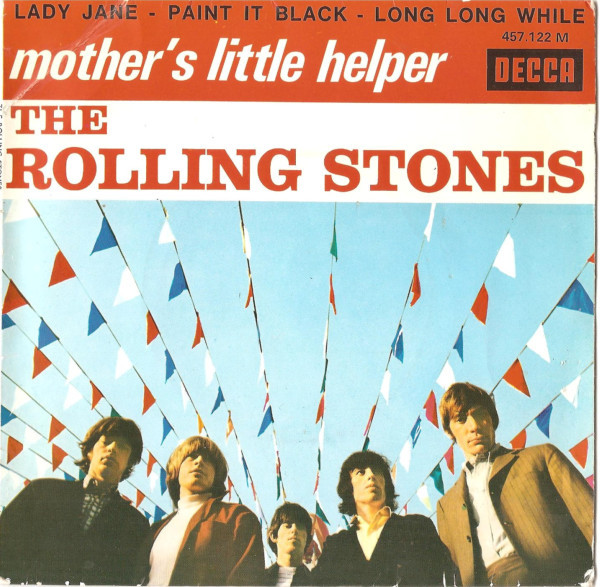
Rolling Stones – Mother’s Little Helper… Drug Reference Week

What a drag it is getting old
Kids are different today, I hear every mother say
Mother needs something today to calm her down
And though she’s not really ill, there’s a little yellow pill

This is one of my favorite periods of the Rolling Stones. You don’t hear this song as much.

Stones guitarist Brian Jones played the sitar on this track… it was one of the first pop songs to use the instrument. The Beatles “Norwegian Wood (This Bird Has Flown),” which came out the year before, was the first.

The Stones missed this experimentation when Brian was gone in my opinion. The song is about house wife’s addictions to Miltown or Valium to help them get through the day. Everybody was pointing their fingers at rock stars because of drugs and the Stones threw it back at them.

The song peaked at #8 in the Billboard 100 and  #14 in Canada in 1966. The song was written by Jagger and Richards.

Mick Jagger: “It’s about drug dependence, but in a sort of like spoofy way. As a songwriter, I didn’t really think about addressing things like that. It was just every day stuff that you I’d observe and write about. It’s what writing is for really. There is a sort of naivety, but there’s also a lot of humor in those songs. They’re a lot based on humor. It was almost like a different band, a different world, a different view when we wrote them.”

Mick Jagger: “I get inspiration from things that are happening around me – everyday life as I see it. People say I’m always singing about pills and breakdowns, therefore I must be an addict – this is ridiculous. Some people are so narrow-minded they won’t admit to themselves that this really does happen to other people beside pop stars.” 

Keith Richards: “The strange guitar sound is a 12-string with a slide on it. It’s played slightly Oriental-ish. The track just needed something to make it twang. Otherwise, the song was quite vaudeville in a way. I wanted to add some nice bite to it. And it was just one of those things where someone walked in and, Look, it’s an electric 12-string. It was some gashed-up job. No name on it. God knows where it came from. Or where it went. But I put it together with a bottleneck. Then we had a riff that tied the whole thing together. And I think we overdubbed onto that. Because I played an acoustic guitar as well.”

From Songfacts

This condemns the many women in England who were abusing prescription drugs, even though The Stones were becoming heavy drug users themselves. The band wanted to make the point that housewives popping pills what not that much different than rock stars taking smack, even though drug laws in England strongly favored the housewives.

This was the first track on Aftermath, the first Stones album with all original songs. Their earlier albums were full of Blues covers.

In the UK, this wasn’t released as a single. In America, it was the group’s eighth Top 10 hit.

The Stones recorded this in Los Angeles in a custom built studio. It had no windows, because The Stones did not want to know if it was day or night.

Stones drummer Charlie Watts said of this song in In the 2003 book According to the Rolling Stones: “We’ve often tried to perform ‘Mother’s Little Helper’ and it’s never been any good, never gelled for some reason – it’s either me not playing it right or Keith not wanting to do it like that. It’s never worked. It’s just one of those songs. We used to try it live but it’s a bloody hard record to play.”


Mother’s Little Helper

What a drag it is getting old

“Kids are different today”
I hear ev’ry mother say
Mother needs something today to calm her down
And though she’s not really ill
There’s a little yellow pill
She goes running for the shelter of a mother’s little helper
And it helps her on her way, gets her through her busy day

“Things are different today”
I hear ev’ry mother say
Cooking fresh food for a husband’s just a drag
So she buys an instant cake and she burns her frozen steak
And goes running for the shelter of a mother’s little helper
And two help her on her way, get her through her busy day

Doctor please, some more of these
Outside the door, she took four more
What a drag it is getting old

“Men just aren’t the same today”
I hear ev’ry mother say
They just don’t appreciate that you get tired
They’re so hard to satisfy, You can tranquilize your mind
So go running for the shelter of a mother’s little helper
And four help you through the night, help to minimize your plight

Doctor please, some more of these
Outside the door, she took four more
What a drag it is getting old

“Life’s just much too hard today”
I hear ev’ry mother say
The pursuit of happiness just seems a bore
And if you take more of those, you will get an overdose
No more running for the shelter of a mother’s little helper
They just helped you on your way, through your busy dying day

Lynyrd Skynyrd – The Needle And The Spoon…Drug Reference Week

This song has a cool walk down intro along with some harmonics. I like the dynamics of the song when it kicks in.

This one has gotten some significant FM play in my region. It was written by Allen Collins and lead singer Ronnie Van Zant…Van Zant was warning about the dangers of hardcore drugs, which the band was just learning about.

The song was on their sophomore offering Second Helping. The album had their biggest hit, Sweet Home Alabama. They released their debut album the year before and their fan base was growing after opening up on The Who’s Quadrophenia tour. The album peaked at #12 in the Billboard Album Chart and #9 in Canada.

In the 2015 edition of Guitar World Magazine, the solo to this song was listed as the #19 best of all time.


The Needle and The Spoon

Thirty days, Lord, and thirty nights
I’m coming home on an airplane flight
Mama waiting at the ticket line
Tell me son, why do you stand there cryin’?

It was the needle and the spoon
And a trip to the moon
Took me away
Took me away

I’ve been feeling so sick inside
Got to get better, Lord, before I die
Some doctors couldn’t help my head, they said
You’d better quit, son, before you’re dead

Quit the needle, quit the spoon
Quit the trip to the moon
They gonna take you away
Lord, they gonna take you away

It was the needle and the spoon

I’ve seen a lot of people who thought they were cool
But then again, Lord, I’ve seen a lot of fools
I hope you people, Lord, can hear what I say
You’ll have your chance to hit it some day

Don’t mess with a needle or a spoon
Or a trip to the moon
They’ll take you away

Lord, their gonna bury you boy
Don’t mess with the needle
Now I know, I know, I know, I know, I know

Rolling Stones – Rip This Joint…Sunday Album Cut

This was recorded during an all-night session at Keith Richards’ rented villa in the South of France. The band rented houses in the area and used Keith’s basement as a studio.

This song was on Exile On Main Street and it’s an incredibly driven song. It comes right at you and never slows down.

Understanding lyrics in Rolling Stones songs has always been a challenge but Mick’s voice is lower than usual in this one. The song contains some obscenities and sexual references, but they are very hard to understand.

But no worries… just sit back and enjoy the ride and this song takes you on one. It also contains references to President Nixon and his wife Pat, but they are almost impossible to understand.

Exile on Main street peaked at #1 in the Billboard 100, Canada, and the UK in 1972.

It’s Sunday…just turn this up to full blast and enjoy it.


From Songfacts

The “Butter Queen” is a reference to a famous groupie known as “Barbara the Butter Queen.” Her real name was Barbara Cope, and she would do her thing when bands came through Dallas. She was very proficient, and had a killer gimmick: she would use a stick of butter when servicing the rock stars and crew. The butter supposedly made her activity smell like movie theater popcorn.

This song was particularly inspirational to Aerosmith’s Steven Tyler. He told Rolling Stone magazine: “When I went to my first rehab, at a place called Hazelden, I brought Exile on Main St. on cassette. I remember waking up the first morning there and realizing I hadn’t been sober once for the past 12 or 15 years, from LSD to heroin and cocaine and acid. The only way I could get a buzz at that point was to listen to ‘Rip This Joint.'”

Rip This Joint

Mama says yes, Papa says no
Make up your mind ’cause I gotta go
We’re gonna raise hell at the Union Hall
Drive myself right over the wall

Rip this joint, gonna save your soul
Round and round and round we go
Roll this joint, gonna get down low
Start my starter, gonna stop the show (Yeah)

Whoa, yeah!
Mister President, Mister Immigration Man
Let me in, sweetie to your fair land
I’m Tampa bound and Memphis too
Short Fat Fanny is on the loose
Dig that sound on the radio
Then slip it right across into Buffalo
Dick and Pat in ole DC
Well they’re gonna hold some shit for me

Ying yang, you’re my thing
Oh, now, baby, won’t you hear me sing
Flip Flop, fit to drop
Come on baby, won’t you let it rock?

Oh yeah! Oh yeah!
From San Jose down to Santa Fe
Kiss me quick, baby, won’tcha make my day
New Orleans with the Dixie Dean
To Dallas, Texas with the Butter Queen

Rip this joint, gonna rip yours too
Some brand new steps and some weight to lose
Gonna roll this joint, gonna get down low
Round and round and round we’ll go
Wham, Bham, Birmingham, Alabam’ don’t give a damn
Little Rock and I’m fit to top
Ah, let it rock

Beatles – Taxman

George steps up to the plate on Revolver and knocks it out of the park. If you think you pay too much tax…The Beatles were in a 95% tax bracket.

At the time, high earners paid exorbitant taxes in England. Many successful entertainers left the country so they could keep more of their money. As a result, The Beatles, as well as The Who and The Rolling Stones, spent a lot of time in America and other parts of Europe as tax exiles.

This is a strong one by George and it was the opener for the album. On the song, it wasn’t George that played the solo…it was Paul. It’s a brilliant small solo and adds a lot to the song. Paul played it with an Indian feel for George.

Revolver is the only album on which Harrison has three songs. On all the others he only has two or fewer. On The White Album he had four, but it was a double album so he was only allotted his usual one track per side.

 George Harrison: “You are so happy that you’ve finally started earning money – and then you find out about tax. In those days we paid nineteen shillings and sixpence out of every pound (there were twenty shillings in the pound), and with supertax and surtax and tax-tax it was ridiculous – a heavy penalty to pay for making money…It was, and still is, typical. Why should this be so? Are we being punished for something we have forgotten to do?…That was the big turn-off for Britain. Anybody who ever made any money moved to America or somewhere else.”

George Harrison: “‘Taxman’ was when I first realized that even though we had started earning money, we were actually giving most of it away in taxes.”


From Songfacts

George Harrison wrote this song. The music was inspired by the theme song for the popular 1960s TV series Batman, which was written and originally recorded by the conductor/trumpeter Neal Hefti, and covered by the surf rock group The Marketts early in 1966 in a version that hit #17 in the US. Harrison was a big fan of the show.

This was the first track on the Revolver album. It was the first song Harrison wrote that was given such prominent position, indicating that he was capable of writing songs as good as Lennon and McCartney’s.

“Mr. Wilson” and “Mr. Heath” are mentioned in the lyrics. They are British Prime Ministers Harold Wilson and Edward Heath, who were being scorned in the song for contributing to English tax laws. Before this song was released, Wilson had presented The Beatles with the award for England’s Show Business Personalities of 1963 at the Variety Club of Great Britain Annual Show Business Awards held on March 19, 1964 in London. 

Over the next few years, George Harrison came to realize that money, when you have lots of it, is a rather ephemeral concept and does not translate to happiness. This played into his spiritual awakening. In 1969, he told BBC Radio: “No matter how much money you’ve got, you can’t be happy anyway. So you have to find your happiness with the problems you have and you have to not worry too much about them.”

The fade-out ending is a reprise of the guitar solo as all completed takes of the song ended with John and Paul singing “Taxman!”

There’s been a lot of confusion over who played lead guitar on this track. Harrison said in his 1977 Crawdaddy interview: “I helped out such a lot in all the arrangements. There were a lot of tracks though where I played bass. Paul played lead guitar on ‘Taxman,’ and he played guitar – a good part – on ‘Drive My Car.”

Jeff Emerick said in his book on recording the Beatles that Harrison just couldn’t get the solo right, so Paul played most of the guitar parts, including the solo. The repeat of the solo at the end of the song was the same “exact” solo by Paul, which Jeff dubbed from the middle of the song to another piece of tape and cut into the fade at the end.

Seth Swirsky, who worked as a staff songwriter before producing the Beatles documentary Beatles Stories, told Songfacts: “I think Paul McCartney was one of the greatest guitar players of the ’60s. Nobody really recognized him as an electric guitar player, or an acoustic guitar player, but his leads on ‘Taxman’ and on different songs that you think George played, they ripped. I think George is great, but when Paul played lead on some songs, they tore. They were just very unique. There’s no one like Paul McCartney in the history of the world.”

The guitar solo at the end is a straight copy of the middle-eight. This same solo was later reused as a tape spool on “Tomorrow Never Knows.” >>

“Weird Al” Yankovic recorded a parody of this song called “Pac-Man” in 1981. It was never officially released on any of his albums (possibly because Pac-Man Fever got there first), but a demo version can be found on Dr. Demento’s Basement Tapes No. 4. The song is very faithful to the Beatles’ original, plus some musical and well-placed Pac-Man sound effects. Sample lyrics:

I used to be a pinball freak
That’s where you’d find me every week
But now it’s Pacman
Yeah it’s the Pacman >>

This wasn’t the last Beatles song to question who else is getting their cash. On their 1969 Abbey Road album, Paul McCartney contributed “You Never Give Me Your Money,” where he takes aim at their unscrupulous business partners.

Blues guitarist Stevie Ray Vaughan covered this song. His version sounds very different, but the lyrics are identical. 

Harrison put some math into the lyrics. In the beginning of the song, he sings, “There’s one for you, 19 for me” before “If 5 percent appears too small.” One of 19 is 5 percent. 

In his 1987 reminiscence “When We Was Fab,” it was clear that the taxation of long ago was still on George Harrison’s mind, as he sang, “Income tax was all we had.”

In 2002, H&R Block used this in commercials for their tax preparation service. The ads aired shortly after Harrison died.

Taxman

Let me tell you how it will be
There’s one for you, nineteen for me
‘Cause I’m the taxman, yeah, I’m the taxman

Should five per cent appear too small
Be thankful I don’t take it all
‘Cause I’m the taxman, yeah I’m the taxman

If you drive a car, I’ll tax the street,
If you try to sit, I’ll tax your seat.
If you get too cold I’ll tax the heat,
If you take a walk, I’ll tax your feet.

Don’t ask me what I want it for
If you don’t want to pay some more
‘Cause I’m the taxman, yeah, I’m the taxman

Now my advice for those who die
Declare the pennies on your eyes
‘Cause I’m the taxman, yeah, I’m the taxman
And you’re working for no one but me.

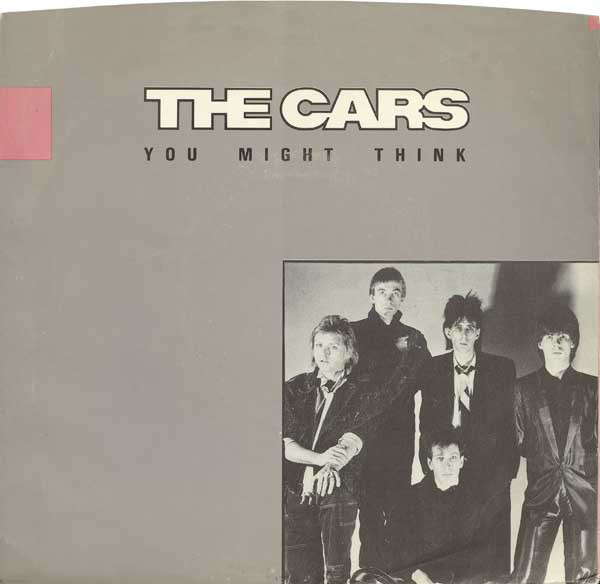
Cars – You Might Think

Another Cars release and another catchy song. This song was released in 1984 on the album Heartbeat City. The song was written by Ric Ocasek. The album was produced by Mutt Lange who was an in-demand producer in the 1980s.

You Might Think peaked at #7 in the Billboard100, #8 in Canada, #88 in the UK, and #27 in New Zealand in 1984.

The album Heartbeat City peaked at #3 in the Billboard Album Charts, #5 in Canada, #25 in the UK, and #1 in New Zealand in 1985.

The video won the first-ever Video of the Year award at MTV’s Video Music Awards. It beat out “Thriller” by Michael Jackson and Herbie Hancock’s “Rockit,” among others.

The video took months to make. The effects seen in the video can be created with a basic program these days, but in 1984 creating and rendering this stuff was extremely tedious and time-consuming.

Jeff Stein directed the video. in 1979 he had directed The Who’s documentary The Kids Are Alright.

From Songfacts

The video was very advanced for the time and was one of the first to use computerized effects. Singer/guitarist Ric Ocasek’s image appeared in various animated scenes – he would show up as a fly, climbing the Empire State Building, just about anywhere to get the attention of the girl. The object of his affection was played by model Susan Gallagher.

Weezer recorded this for the 2011 movie Cars 2 – their version was used in a scene where Lightning McQueen and Mater go to Japan. The actual Cars had reunited by 2011, but apparently weren’t contemporary enough for the kids’ movie.

The antecedent for the video were commercials for the American gossip magazine National Enquirer, which featured goofy cutout animations of the celebrities the magazine would feature. These spots were produced at Charlex studios, so Jeff Stein, who directed the “You Might Think” video, commissioned them to work on it after pitching The Cars on the idea, which was putting the band in pop culture scenarios and having an animated Ric Ocasek stalk the girl. Getting the band on board wasn’t easy. Stein explained in the book I Want My MTV: “I met The Cars and told them, ‘The band’s in the medicine chest, and then on a bar of soap, and Ric’s a fly,’ and one of them said, ‘Why don’t we all just play on a turd in the toilet bowl?’ That was the prevailing attitude.”

Stein was famous for his live videos like what he did with Billy Idol on “Rebel Yell,” but he thought The Cars were a boring live band so he used digital trickery to get around that.

This song was used throughout the CBS TV series BrainDead, which ran for one season in 2016. The show was about ants that take over the brains of politicians. The song played to indicate a character who has been infected.

This was used on the series finale of The Office in 2013. It plays while Erin dances with her biological father at Angela and Dwight’s wedding reception.

You Might Think

You might think I’m crazy
To hang around with you
Maybe you think I’m lucky
To have something to do

But I think that you’re wild
Inside me is some child

You might think I’m foolish
Or maybe it’s untrue
(You might think) you might think I’m crazy
(All I want) but all I want is you

You might think it’s hysterical
But I know when you’re weak
You think you’re in the movies
And everything’s so deep

But I think that you’re wild
When you flash that fragile smile

You might think it’s foolish
What you put me through
(You might think) you might think I’m crazy
(All I want) but all I want is you

And it was hard, so hard to take
There’s no escape without a scrape

You kept it going ’till the sun fell down
You kept it going

Well you might think I’m delirious
The way I run you down
But somewhere sometimes, when you’re curious
I’ll be back around

Oh I think that you’re wild
And so uniquely styled

You might think it’s foolish
This chancy rendezvous
(You might think) you might think I’m crazy
(All I want) but all I want is you
All I want is you
All I want is you

Bruce Springsteen – When You’re Alone

It’s just nobody knows baby where love goes
But when it goes it’s gone gone

I was reading posts a while back and Vinyl Burn reviewed the album Tunnel Of Love. That brought back a lot of memories of that album…and this song. This was the studio follow up to the huge Born in the USA album. Bruce had married actress Julianne Phillips in 1985 and she filed for divorce in 1988…a year after the release of Tunnel of Love. The album reflects some of the turmoil that was going on.

He later toured after the album was released and the E-Street Band backed him up as usual. After the tour, Bruce told the band that he would not need them for the foreseeable future. It wouldn’t be until 10 years later in 1999 that they would regroup and tour again.  

I saw Bruce in 1996 on a solo acoustic tour and he played this song and it was the only song he played off of Tunnel of Love.

The album was released in 1987. Tunnel of Love peaked at #1 in the Billboard Album Chart, #1 in Canada, #1 in the UK. It peaked at #6 in New Zealand.

The song was not released as a single.

When You’re Alone

Times were tough love was not enough
So you said sorry Johnny I’m gone gone gone
You said my act was funny
But we both knew what was missing honey
So you let out on your own
Now that pretty form that you’ve got baby
Will make sure you get along
But you’re gonna find out someday honey

When you’re alone you’re alone
When you’re alone you ain’t nothing but alone

Now I was young and pretty on the mean streets of the city
And I fought to make ’em my home
With just the shirt on my back I left and swore I’d never look back
And man I was gone gone gone
But there’s things that’ll knock you down you don’t even see coming
And send you crawling like a baby back home
You’re gonna find out that day sugar

When you’re alone you’re alone
When you’re alone you ain’t nothing but alone

I knew someday your runnin’ would be through
And you’d think back on me and you
And your love would be strong
You’d forget all the bad and think only of all the laughs that we had
And you’d want to come home
Now it ain’t hard feelings or nothin’ sugar
That ain’t what’s got me singing this song
It’s just nobody knows baby where love goes
But when it goes it’s gone gone

When you’re alone you’re alone
When you’re alone you ain’t nothing but alone

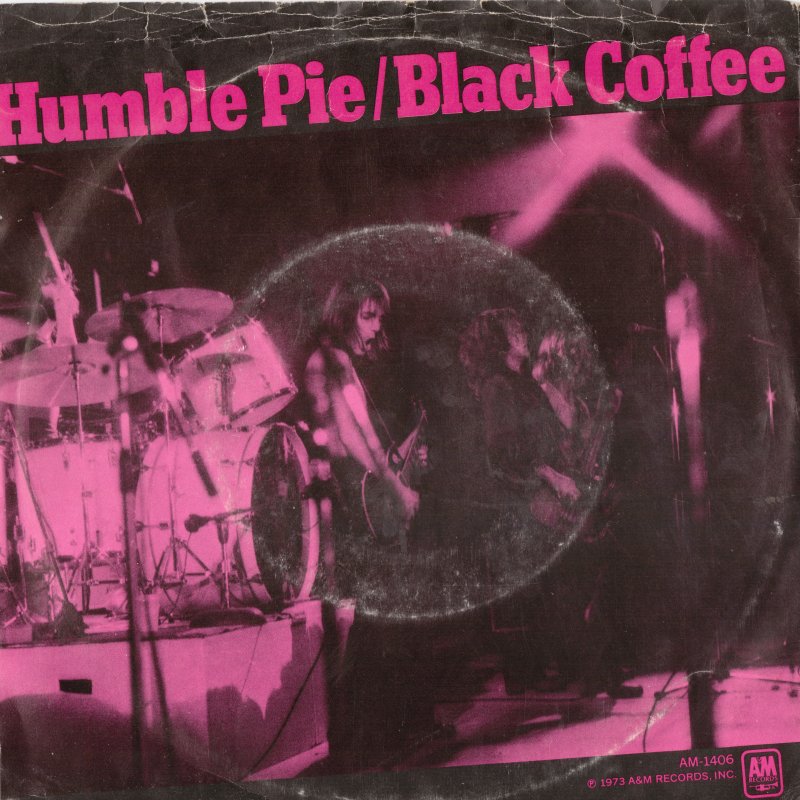
Humble Pie – Black Coffee

Black Coffee was written by Ike and Tina Turner. It originally recorded by R&B duo Ike & Tina Turner for their 1972 album Feel Good.

The Humble Pie version was released in 1973. It was on the double album Eat It that peaked at #13 in the Billboard 100. Each side of this double album is different: Side 1 features Steve Marriott penned rock and roll; Side 2 has classic R&B covers; Side 3 is a collection of acoustic Steve Marriott songs; finally Side 4 features Humble Pie live in concert.

Steve Mariott contacted Venetta Fields and asked her to find two other women to form a trio of backup singers.  Fields chose Clydie King and Billie Barnum. The toured with Humble Pie and they were called the Blackberries.

Steve Marriott: “I just sang it ‘cos I loved the song and it was an interpretation of somebody else’s lyrics. People should have known that I’ve been into black music for years anyway.”

Black Coffee

Black coffee is my name
Black coffee is not a thing
Black coffee, freshly ground and fully packed
Hot black coffee, boys, mmm that’s where it’s at, mean it.

Way back you all know since I don’t know when
See I got hungover before I was 10
You see my skin is white but my soul is black
So hot black coffee, that’s where it’s at.

(Black coffee) That’s what I’m talkin’ about boys
(Black coffee) That’s what I mean
(Black coffee) Ooh you’ve got to feel it in your hand
(Black coffee) Hmm yeah
(Black coffee).

Well you hear that
Some black tea, well it can’t compare with me
Black tea (can’t compare with me) that’s right
Black tea, well it’s as good as, it’s as good as, it’s as good as it can be
But it’s a cup of black coffee that a working man needs to see, yeah.

In America, well it’s the land of the free
You can get what you want if you’ve got some do re me
Well travelling far and I work like a slave
Now I’m independent, and you know I get laid.
I got me a job and I build me a place
I got a spit of black coffee, oh how good it tastes
I said a dime is all it costs in the States
For a cup of black coffee, how good it tastes

(Black coffee) Alright
(Black coffee) Oh
(Black coffee) It’s what I want now, it’s what I need
(Black coffee) To suit my soul, to suit my soul now
(Black coffee) It’s what I want, it’s what I need
(Black coffee) It’s where it’s at, it’s where it’s at
(Black coffee) Oh


https://en.wikipedia.org/wiki/Eat_It_(album)

U2 – Vertigo

Uno, dos, tres, catorce

I remember seeing this in commercials before I heard the song…I knew times were changing. It had been a little while at that time since I really liked a new U2 song…this one I really did.

The song peaked at #31 in the Billboard 100, #2 in Canada, #1 in the UK, and #5 in New Zealand in 2004. It was on the album How to Dismantle an Atomic Bomb and it peaked at #1 in the Billboard Album Charts, Canada, The UK, and New Zealand.

This won three Grammy Awards: Best Rock Song, Best Rock Performance By A Duo Or Group With Vocal and Best Short Form Music Video.

Adam Clayton: “Bono and Edge rewrote it when we started work with Steve Lillywhite. The bass and drums have a little bit of Echo & the Bunnymen in there – a nice wink to where we came from.”


From Songfacts

Vertigo is a sensation of dizziness or a feeling of disorientation. It can be a serious medical condition, but in the context of this song, it seems to be about opening your mind and looking at things in a different way.

This was used in commercials as part of a big promotional deal with Apple. The commercials, where many people first heard the song, promoted Apple’s iPod. Apple also released a special-edition iPod with the signatures of the band members engraved on the back, and made the entire U2 catalog along with special bonus tracks available for download at iTunes for $150.

U2 made many high-profile appearances to promote the album, including performances on Saturday Night Live and the Grammy Awards. In the late ’80s and early ’90s, U2 often stayed away from these kind of appearances to avoid the feeling of commercialism, but by the 2000s, it became clear that these appearances were crucial if U2 was going to continue selling millions of albums and fill arenas.

This song is notorious for its intro, in which Bono says “Uno, dos, tres, catorce,” which is “1, 2, 3, 14” in Spanish. One theory is that Bono was directing listeners to The Bible: 1st Testament, 2nd Book, 3rd Chapter, 14th verse – “And God said unto Moses, I AM THAT I AM: and he said, Thus shalt thou say unto the children of Israel, I AM hath sent me unto you.” Another theory is that he did it because How To Dismantle An Atomic Bomb was U2’s 14th album.

Vertigo is the name of a popular 1958 movie directed by Alfred Hitchcock.

U2 played this when they were inducted into the Rock and Roll Hall of Fame in 2005.

This song was ruthlessly parodied on the South Park episode “More Crap.” The plot of the episode revolved around the character Randy Marsh breaking the world record for largest piece of crap, which was previously held by Bono. Bono is featured throughout the episode trying to beat, and then preserve this record. Almost everywhere he goes (including poor nations in Africa) he sings run around pointing and singing his “yeah, yeah, yeah” outro of “Vertigo.” He also answers his cell phone with the “Hello, hello” part of the chorus. >>

This was originally called “Native Son” and had a very different feel. Adam Clayton explained to Q Magazine November 2004:

Adam Clayton said of this album: “It’s very much a guitar record, ‘Vertigo,’ ‘Love and Peace,’ ‘City of Blinding Lights,’ ‘All Because of You’ – all pretty up, rocky tunes. A lot of them are a kick-back to our very early days, so it’s like with each year we have gathered a little bit more and this is what we are now.”

Vertigo

Unos, dos, tres, catorce
Turn it up loud, captain

Lights go down, it’s dark
The jungle is your head, can’t rule your heart
A feeling’s so much stronger than a thought
Your eyes are wide and though your soul, it can’t be bought
Your mind can wander

Hello, hello (hola)
I’m at a place called Vertigo (¿dónde está?)
It’s everything I wish I didn’t know
Except you give me something
I can feel, feel

The night is full of holes
‘Cause bullets rip the sky of ink with gold
They twinkle as the boys play rock and roll
They know that they can’t dance, at least they know
I can’t stand the beat, I’m asking for the check
Girl with crimson nails has Jesus around her neck
Swinging to the music, swinging to the music (whoa, whoa)
(Whoa, whoa, whoa)

Hello, hello (hola)
I’m at a place called Vertigo (¿dónde está?)
It’s everything I wish I didn’t know
But you give me something
I can feel, feel

Checkmate
Jazz funk
Show made it in, yeah

All of this, all of this can be yours
Just give me what I want and no one gets hurt

Hello, hello (hola)
We’re at a place called Vertigo (¿dónde está?)
Lights go down, and all I know
Is that you give me something
I can feel your love teaching me how
Your love is teaching me how
How to kneel
Kneel

Yeah, yeah, yeah, yeah, yeah, yeah, yeah, yeah

Creedence Clearwater Revival – Travelin’ Band

Seven thirty-seven comin’ out of the sky
Won’t you take me down to Memphis on a midnight ride
I want to move
Playin’ in a travelin’ band

This one is a rocker and doesn’t let up. It came off of perhaps their best album Cosmo’s Factory and was released as a double A-side single with Who’ll Stop The Rain on the other side.

“Travelin’ Band” is very similar in style to the music of Little Richard, which Fogerty saw as a heartfelt tribute to the singer. Specialty Records, which owned Richard’s catalog, saw things differently and sued the band, reaching a settlement to earn some royalties from the song.

After the basic track was cut, John Fogerty went back to the studio and added many of the instrumental parts, including horns and piano, which he played himself.

Travelin’ Band/Who’ll Stop The Rain peaked at #2 in the Billboard 100, #4 in Canada, and #8 in the UK in 1970.

From Songfacts

Written by lead singer John Fogerty, this song is all about the hectic lifestyle of Creedence Clearwater Revival and their road warrior ways. In 1969, the band toured constantly and played many of the major festivals, including Woodstock. There was a rush of excitement in going from place to place, but as their drummer Doug Clifford explained, their baggage was constantly getting lost (“baggage gone, oh well”) and they spent a lot of time waiting around in the heat during those famous festivals. The traveling got easier for the band when they got their own private plane.

The lawsuit claimed the Little Richard’s “Good Golly Miss Molly” was being copied, but Creedence bass player Stu Cook said he thought it sounded more like “Long Tall Sally.” Cook described the song as a combination of ’50s Rock classics, but not a ripoff of any one song.


Travelin’ Band

Seven thirty seven comin’ out of the sky
Won’t you take me down to Memphis on a midnight ride
I want to move
Playin’ in a travelin’ band
Yeah
Well I’m flyin’ ‘cross the land tryin’ to get a hand
Playin’ in a travelin’ band

Take me to the hotel baggage gone, oh well
Come on, come on won’t you get me to my room
I want to move
Playin’ in a travelin’ band
Yeah
Well I’m flyin’ ‘cross the land, tryin’ to get a hand
Playin’ in a travelin’ band

Listen to the radio talkin’ ’bout the last show
Someone got excited, had to call the state militia
Want to move
Playin’ in a travelin’ band
Yeah
Well, I’m flyin’ ‘cross the land, tryin’ to get a hand
Playin’ in a travelin’ band

Here we come again on a Saturday night
With your fussin’ and your fightin’ won’t you get me to the rhyme
I want to move
Playin’ in a travelin’ band
Yeah
Well, I’m flyin’ ‘cross the land, tryin’ to get a hand
Playin’ in a travelin’ band

Playin’ in a travelin’ band
Won’t you give myself a hand?
Playin’ in a travelin’ band
Well, I’m flyin’ ‘cross the land, tryin’ to get a hand
Playin’ in a travelin’ band

Small Faces – All Or Nothing

The Small Faces were very popular in the UK in the 1960s. Because of management they never toured in America. Their best-known songs are Itchycoo Park and Lazy Sunday in America but had many hits in the UK.

All or Nothing was written by Steve Marriott and Ronnie Lane. The song peaked at #1 in the UK in 1966.

The Small Faces would splinter in 1969 and Steve Marriott would start Humble Pie with Peter Frampton. The Small Faces would welcome Ron Wood and Rod Stewart and become the Faces…Kenney Jones would later replace Keith Moon in the Who.

It was said to be written either about Marriott’s break up with his with ex-fiancée Sue Oliver, or for his first wife who once dated Rod Stewart. It is possible that both these explanations may be true…somehow.

Drummer Kenney Jones: “It was us getting to where we wanted to be musically. It wasn’t as poppy as our previous hits, but still commercial enough and better than anything we’d done before.”

Steve Marriott in 1984: “I think ‘All Or Nothing’ takes a lot of beating. To me, if there’s a song that typifies that era, then that might be it.”


From Songfacts

Not to be confused with a later song of the same title, “All Or Nothing” was recorded by the Small Faces in 1966. In his 2004 autobiography Mr Big, their manager at the time, Don Arden, said this was “top-drawer…[and] still gets played on the radio today”. Arden produced the record. Co-written by guitarist Steve Marriott and bass player Ronnie Lane, it was backed by “Understanding” and was written 

For Marriott it was very much all or nothing; he married three times and appears to have sired at least two children out of wedlock. He died in a fire in April 1991, apparently after lighting a cigarette in bed and falling asleep. Prior to his death, he had taken cocaine as well as Valium and alcohol. 

Here are two quotes about the song from 1000 UK #1 Hits by Jon Kutner and Spencer Leigh.

Kenney Jones recalled to Uncut magazine: “We were on tour and staying in the Station Hotel, Leeds, when Steve suddenly run down the corridor screaming, ‘I’ve got it! I’ve just written our next hit!”‘

Jones based his opening drum fill on the intro of Wilson Pickett’s “In The Midnight Hour.”


All Or Nothing

I thought you’d listen to my reason
But now I see, you don’t hear a thing
Try to make you see, how it’s got to be

Yes it’s all, all or nothing
Yeah yeah, all or nothing
All or nothing, for me

Things could work out
Just like I want them to, yeah
If I could have
The other half of you, yeah
You know I would,
If I only could

Yes it’s yeah, all or nothing
Oh yeah, all or nothing
You’ll hear my children say,
All or nothing, for me

I didn’t tell you no lies
So don’t you sit there and cry girl
Yeah, all or nothing
Oh yeah, all or nothing

Do you know what I mean
You got to, got to, go to keep on trying, yeah
All or nothing, mm yeah
All or nothing, to keep on working on to me
All or nothing for me, for me, for me

Come on children, yeah
All or nothing, yeah,yeah, yeah, yeah
All or nothing, I kept on singing to myself
All or nothing, yeah for me, yeah

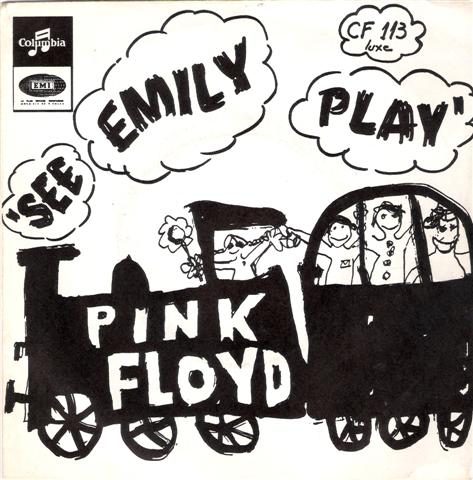
Pink Floyd – See Emily Play

Recently I’ve been listening to some early Pink Floyd. This was quite a bit different from their more famous 70s-80s output. I like what I’ve heard so far from the Syd Barret days.

Syd Barrett wrote this…he was one of the band’s original members and the group’s leader. He became very unpredictable, sometimes refusing to play at shows.

Barrett claimed “Emily” was a girl he saw when he woke up one night after sleeping in the woods after a gig. It is unclear if she was a real person or a drug-induced hallucination.

David Gilmour was asked by the members of Pink Floyd to join the band to supplement the guitar work of the increasingly erratic Syd Barrett. For a brief time, Syd and David were both members of Pink Floyd at the same time. When Barrett’s mental breakdown made it impossible for him to continue with the group, Gilmour became a permanent, contributing member in time for their second album, 1968’s A Saucerful of Secrets. Syd Barrett contributed one track to that album, his last with Pink Floyd. Syd departed the band soon after that.

The song peaked at #6 in the UK, #134 in Billboard, and #25 in Germany in 1967.

From Songfacts

This was Pink Floyd’s second single. Their first was “Arnold Layne.”

Barrett did the slide guitar work on this song with a Zippo lighter (he used it as a slide, not to set the guitar on fire). 

The original title was “Games For May.” They performed it live a few times before changing it.

This is an example of the psychedelic sound Pink Floyd was known for. Over the next few years, they tried to lose the psychedelic image because they wanted people to know there was much more to their music.

This was included on the 2001 Pink Floyd retrospective album, Echoes. The tracks flow seamlessly together.

The song was inspired in part by 15-year-old schoolgirl Emily Young, who was the daughter of Wayland Young, 2nd Baron Kennet. She recalled to Mojo:

“On Friday night at the Saints Hall, the regular band was the Pink Floyd Sound. I was more into R&B, so their dreamy hippie thing wasn’t exactly my cup of tea, but it was interesting. And the light show was wonderful, and I liked to get stoned and dance. After playing, we’d sit around on grey sofas and pass around joints. I was quite pretty and word got out that I was a lord’s daughter, and apparently the guys in the band called me the ‘psychedelic schoolgirl.'”

“See Emily Play” began life as a Syd Barrett song written for Pink Floyd’s concert-cum-happening Games For May at the Queen Elizabeth Hall on May 12, 1967. Emily missed the event but someone told her all about it. She recalled: “I thought, gosh, that’s nice, a song with my name, but I didn’t think it was about me. And I don’t think it was now because Syd and me didn’t have a love affair and he didn’t really know me. It could have been some other girl who played a part in his dream. It could have been Jenny, but Emily scanned better.”

See Emily Play

Emily tries but misunderstands, ah ooh
She’s often inclined to borrow somebody’s dreams till tomorrow
There is no other day
Let’s try it another way

You’ll lose your mind and play
Free games for May
See Emily play

Soon after dark Emily cries, ah ooh
Gazing through trees in sorrow hardly a sound till tomorrow
There is no other day
Let’s try it another way
You’ll lose your mind and play

Free games for May
See Emily play

Put on a gown that touches the ground, ah ooh
Float on a river forever and ever, Emily (Emily)

There is no other day
Let’s try it another way
You’ll lose your mind and play
Free games for May
See Emily play

Iggy Pop – Real Wild Child (Wild One)

This is probably the first song I remember by Iggy Pop back in the 80s.

This song was originally recorded by Australian rocker Johnny O’Keefe with The Deejays in 1958 as “Wild One.” Deejays saxophonists Johnny Greenan and Dave Owens drafted the song over drinks after a particularly wild concert and Johnny O’Keefe later chipped in.

The song was an immediate hit and made Johnny O’Keefe the first Australian rocker to reach the national charts.  Iggy Pop covered it for his Blah Blah Blah album. Released as a single, it became his only UK Top 10 hit.

The song peaked at #1 in New Zealand, #10 in the UK, #65 in Canada, and #27 in the Mainstream Rock Billboard Charts.

The album Blah Blah Blah peaked at #75 in the Billboard Album Charts, #61 in Canada, #43 in the UK, and #19 in New Zealand in 1986.


From Songfacts

Johnny O’Keefe (1935-1978) was a pioneering Australian Rock singer whose career began in the 1950s and ended with his early death in the late 1970s of barbiturate poisoning. Often referred to by his nickname, “The Wild One,” O’Keefe was the first Australian Rock star.

The lyrics are about youngsters wanting to be cool and wild.

In Australia this has been used as the theme music for the ABC’s all-night music video show Rage for over 20 years.

Iggy Pop’s version has featured in the movies Adventures in Babysitting (1987) and Problem Child 2 (1991).

A cover by Christopher Otcasek featured in Pretty Woman (1989). Other cover versions include “Real Wild Child” by Joan Jett and The Blackhearts (1993), “Wild One” by Status Quo (2003) and Christian pop band Everlife’s “Real Wild Child,” which appears as the theme song in Disney’s The Wild (2006). >>

This is Kesha’s favorite song. She told Spinmagazine: “It’s the last song I play before I walk onstage and the first song I play when I get off stage. It always gets me going.”

Real Wild Child (Wild One)

Well I’m just outta school
Like I’m real real cool
Gotta dance like a fool
Got the message that I gotta be
A wild one
Ooh yeah I’m a wild one

Gotta break it loose
Gonna keep ’em movin’ wild
Gonna keep a swingin’ baby
I’m a real wild child

Gonna met all muh friends
Gonna have our self a ball
Gonna tell my friends
Gonna tell them all
That I’m a wild one
Ooh yeah I’m a wild one

Gotta break it loose
Gonna keep ’em movin’ wild
Gonna keep a swingin’ baby
I’m a real wild child

I’m a real wild one
An’ I like a wild fun
In a world gone crazy
Everything seems hazy
I’m a wild one
Ooh yeah I’m a wild one

Gotta break it loose
Gonna keep ’em movin’ wild
Gonna keep a swingin’ baby
I’m a real wild child

I’m a wild one
I’m a wild one
I’m a wild one
Oh baby
I’m a wild one

Gotta break it loose
Gonna keep ’em movin’ wild
Gonna keep a swingin’ baby
I’m a real wild child


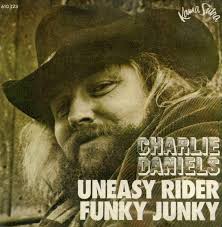
Charlie Daniels (1936-2020) – Uneasy Rider

I said would you believe this man has gone as far
As tearin’ Wallace stickers off the bumpers of cars
And he voted for George McGovern for president

Charlie Daniels passed away on Monday, July 6, 2020. I wrote this up the next day but forgot to post it. He was a country music legend. While I wasn’t a huge fan he was part of my childhood. He was an incredible musician…he played with Dylan, George Harrison, and many other greats… along with having a very successful career himself. The man at 83 had booked a tour this year but it was canceled of course.

Charlie had more serious hits than this… This is a novelty song and not a great representation…it’s spoken word country…but it’s one that is a little different because it captures the time.

I first heard this song in the mid-seventies. It brings back a lot of memories for me as a kid. I thought it was extremely funny although I knew nothing about McGovern, Wallace, John Birch, Tokin’ on a number, or much of anything. I did know what mag wheels and a peace sign was so that was a start. The song is about a long-haired guy that walks into a redneck bar to use a phone. He ends up playing on the conspiracy-minded rednecks there to get free…

I remember we would see hippies (or anyone) harrassed on television shows…My dad would always take their side. “Why are they bothering them…it’s just hair! (as my mom would shake her head) If I was 20 I would grow my hair out”…and he eventually did when he got old. My dad taught me a lot about equality…and to treat everyone the same…no one is better no one is worse.

This song peaked at #9 in the Billboard 100 in 1973. He would go on to have 9 songs in the Billboard 100 and two top 10 hits.

In the country charts, he would have 33 songs in the top 100 and three top ten hits.

Charlie Daniels: “I used to do a little bit of record producing. I used to produce a group called the Youngbloods that were headquartered in San Francisco. And we were doing a live album, and we did part of it at the Fillmore East and West, and we did part of what used to be called a rock festival, in Baton Rouge, Louisiana. It was one of those big three-day affairs where everybody in the world played. And that day I think it was the Youngbloods and the Grateful Dead and the Jefferson Airplane, and I don’t know who else.

And all these people were there at the motel. And they were these long-haired hippie-type people. The movie Easy Rider had not been out very long, and here we were sitting in Baton Rouge, Louisiana, with all these long-haired people, and I think a lot of them had the impression that if they were to get two blocks away, that somebody was going to run out with a pair of shears and cut their hair and threaten their life. I was born in the South, and to me this attitude was just kind of funny, and that’s where the idea came from. I just took a guy and put him in a fictitious situation, and extricated him. But of course there’s no truth to it other than just being around people that kind of had a fear of redneck bars.”

Daniels says the line in the song, “I just reached out and kicked ole Green Teeth right in the knee,”  “He had tartar on his teeth, and they actually turn green if they don’t get it off. I don’t think he practiced very good dental hygiene. And that’s where that came from; he had little spots of green on his teeth.” Daniels did not, however, kick him. “Maybe I should have,” he says, “but I didn’t kick him.”

Uneasy Rider

I was takin’ a trip out to LA,
Toolin’ along in my Chevrolet
Tokin’ on a number and diggin’ on the radio

Just as I cross the Mississippi line
I heard that highway start to whine
And I knew that left rear tire was about to go

Well the spare was flat and I got uptight
‘Cause there wasn’t a fillin’ station in sight
So I just limped down the shoulder on the rim

I went as far as I could and when I stopped the car
It was right in front of this little bar
A kind of a redneck lookin’ joint called the Dew Drop Inn

Well I stuffed my hair up under my hat
And told the bartender that I had a flat
And would he be kind enough to give me change for a one

There was one thing I was sure proud to see
There wasn’t a soul in the place except for him an’ me
And he just looked disgusted an’ pointed toward the telephone

I called up the station down the road a ways
And he said he wasn’t very busy today
And he could have somebody there in just ’bout ten minutes or so

He said now you just stay right where yer at and I didn’t bother
Tellin’ the durn fool
I sure as hell didn’t have anyplace else to go

I just ordered up a beer and sat down at the bar
When some guy walked in an’ said who owns this car
With the peace sign the mag wheels and four on the floor

Well he looked at me and I damn near died
And I decided that I’d just wait outside
So I laid a dollar on the bar and headed for the door

Just when I thought I’d get outta there with my skin
These five big dudes come strollin’ in
With this one old drunk chick and some fella with green teeth

And I was almost to the door when the biggest one
Said you tip your hat to this lady son
An’ when I did all that hair fell out from underneath

Now the last thing I wanted was to get into a fight
In Jackson Mississippi on a Saturday night
‘Specially when there was three of them and only one of me

Well they all started laughin’ and I felt kinda sick
And I knew I’d better think of somethin’ pretty quick
So I just reached out an’ kicked ol’ green-teeth right in the knee

He let out a yell that’d curl your hair
But before he could move I grabbed me a chair
And said watch him folks ’cause he’s a thoroughly dangerous man

Well you may not know it but this man’s a spy
He’s an undercover agent for the FBI
And he’s been sent down here to infiltrate the Ku Klux Klan

He was still bent over holdin’ on to his knee
But everyone else was lookin’ and listenin’ to me
And I laid it on thicker and heavier as I went

I said would you believe this man has gone as far
As tearin’ Wallace stickers off the bumpers of cars
And he voted for George McGovern for president

Well he’s a friend of them long-haired hippie type pinko fags
I betcha he’s even got a Commie flag
Tacked up on the wall inside of his garage

He’s a snake in the grass I tell ya guys
He may look dumb but that’s just a disguise
He’s a mastermind in the ways of espionage

They all started lookin’ real suspicious at him
And he jumped up an’ said just wait a minute Jim
You know he’s lyin’ I’ve been livin’ here all of my life

I’m a faithful follower of Brother John Birch
And I belong to the Antioch Baptist Church
And I ain’t even got a garage you can call home and ask my wife

Then he started sayin’ somethin’ ’bout the way I was dressed
But I didn’t wait around to hear the rest
I was too busy movin’ and hopin’ I didn’t run outta luck

And when I hit the ground I was makin’ tracks
And they were just takin’ my car down off the jacks
So I threw the man a twenty an’ jumped in an’ fired that mother up

Mario Andretti would of sure been proud
Of the way I was movin’ when I passed that crowd
Comin’ out the door and headin’ toward me in a trot

An’ I guess I shoulda gone ahead and run
But somehow I couldn’t resist the fun
Of chasin’ them just once around the parkin’ lot

Well they’re headin’ for their car but I hit the gas
And spun around and headed them off at the pass
Well I was slingin’ gravel and puttin’ a ton of dust in the air

Well I had them all out there steppin’ an’ a fetchin’
Like their heads were on fire and their asses was catchin’
But I figured I oughta go ahead and split before the cops got there

When I hit the road I was really wheelin’
Had gravel flyin’ and rubber squeelin’
An’ I didn’t slow down ’til I was almost to Arkansas

I think I’m gonna re-route my trip
I wonder if anybody think I’d flipped
If I went to LA via Omaha!

Linda Ronstadt – You’re No Good

Great song by the one and only Linda Ronstadt. “You’re No Good” was written by Clint Ballard, Jr., who also wrote songs for Connie Francis and The Hollies.

This song had been around for a while before Linda Ronstadt took it to the top of the chart. It was originally recorded by Dee Dee Warwick in 1963. Her version stalled at #117.

The song was on the album Heart Like A Wheel produced by Peter Asher and it peaked at #1 in the Billboard Album Chart and #7 in Canada.

Heart Like a Wheel became Ronstadt’s first album to hit the top spot on the Billboard Top 200 album chart and spent four weeks at number 1 on the Billboard Country Album chart in early 1975.

The song peaked at #1 in the Billboard 100, #7 in Canada, and #24 in New Zealand in 1975.

Linda Ronstadt:  “I thought the production on ‘You’re No Good’ was very good but [that] I didn’t sing it very well. As a song it was just an afterthought. It’s not the kind of song I got a lot of satisfaction out of singing.”


From Songfacts

One of the most blatant and memorable songs in the “no-good man” milieu,

Betty Everett had more success with her version, which went to #51 in 1964. First released on her 1963 album of the same name, Everett recorded the song at Chess Records in Chicago, with Maurice White on drums (White, who later formed Earth, Wind & Fire, was a staff drummer at Chess early in his career). Everett was a former gospel singer who, like Ronstadt, had a very powerful voice. Her next single, “The Shoop Shoop Song (It’s In His Kiss),” became her biggest hit.

The song made one more chart appearance in 1964 when the British male band Swinging Blue Jeans switched the gender and took the song to #97 in the US and #3 in the UK, where it became the best-known rendition of the song.

A decade later, Ronstadt started performing the song and recorded it with her producer Peter Asher. Released as a single from her fifth album, the song was a huge breakthrough for Ronstadt, whose chart success to this point was sporadic (her biggest hit to then: “Long, Long Time” at #25). She became one of the biggest stars of the ’70s, known for her musical versatility and impressive vocal range. Most of her hits were cover songs, including the follow-up, “When Will I Be Loved,” originally recorded by the Everly Brothers.

This song makes it quite clear that the lowdown guy is no good, but in the second verse, Ronstadt turns it around, as she’s done some bad things herself and deserves some comeuppance:

I broke a heart that’s gentle and true
Well I broke a heart over someone like you
I’ll beg his forgiveness on bended knee
I wouldn’t blame him if he said to me
You’re no good

By the third verse, she’s back to bashing the guy:

I’m telling you now baby and I’m going my way
Forget about you baby ’cause I’m leaving to stay

Heart Like A Wheel was the first album Peter Asher produced for Ronstadt, and the results were spectacular. With his duo Peter & Gordon, Asher had a #1 hit in 1964 with “A World Without Love,” and later became head of A&R at The Beatles’ Apple Records, where he began a longstanding relationship with James Taylor.

In a Songfacts interview with Asher, he explained that getting the most out of Ronstadt meant listening to her and honoring her ideas. “I may have listened to her with a bit more attentiveness than others had in the past,” he said. “There was, particularly back in that era, an element of, ‘Don’t you worry your pretty little head about that, I know what’s best.’ Linda knew a lot and was not given credit for it.”

Van Halen recorded this for their second album. It was one of many successful cover songs by the group; Others include Roy Orbison’s “Pretty Woman,” The Kinks’ “You Really Got Me,” and Martha & the Vandellas’ “Dancing in the Street.” This is the only cover on the album. Between 1978-1983, Van Halen released an album a year. Since they toured constantly, including cover songs on the albums helped ease the songwriting burden.

You’re No Good

Feeling better now that we’re through
Feeling better ’cause I’m over you
I learned my lesson, it left a scar
Now I see how you really are

You’re no good
You’re no good
You’re no good
Baby you’re no good

I’m gonna say it again
You’re no good
You’re no good
You’re no good
Baby you’re no good

I broke a heart that’s gentle and true
Well I broke a heart over someone like you
I’ll beg his forgiveness on bended knee
I wouldn’t blame him if he said to me

You’re no good
You’re no good
You’re no good
Baby you’re no good

I’m gonna say it again
You’re no good
You’re no good
You’re no good
Baby you’re no good

I’m telling you now baby and I’m going my way
Forget about you baby ’cause I’m leaving to stay
You’re no good
You’re no good
You’re no good
Baby you’re no good

I’m gonna say it again
You’re no good
You’re no good
You’re no good
Baby you’re no good
Oh, oh no
You’re no good
You’re no good
You’re no good
Baby you’re no good


https://en.wikipedia.org/wiki/Heart_Like_a_Wheel