This is officially a country record but with pop leanings. Whatever it is…it still stands up and is really good. I heard this song when it came out and bought the album. The band touches different genres on this album. The song does remind me a little of Dwight Yoakam.
The Mavericks are a country band that combine Tex-Mex, neotraditional country music, Latin, and rockabilly influences. The Mavericks were founded in 1989 in Miami, Florida.
“What a Crying Shame” was also used as the title of their third studio album. It was released in 1994 with songs like “O What a Thrill,” “Here Goes My Heart,” “I Should Have Been True,” and “All That Heaven Will Allow” (a Springsteen cover).
The song peaked at #25 in the Country US Hot Country Songs and #6 in the Canadian Country Charts 1993.
What A Crying Shame
Wasn’t I good to you Didn’t I show it And if I ever hurt you I didn’t know it
If you think I don’t care Then you’re mistaken My love was always there But now my heart’s breakin’
(Oh) baby oh what a crying shame To let it all slip away And call it yesterday Oh baby my life would be so blue My heart would break in two Oh what a crying shame
‘Cause I believed in you From the beginning I thought our love was true But now it’s all ending
(Oh) baby oh what a crying shame To let it all slip away And call it yesterday Oh baby my life would be so blue My heart would break in two Oh what a crying shame
(Oh) baby oh what a crying shame To let it all slip away And call it yesterday Oh baby my life would be so blue My heart would break in two Oh what a crying shame Oh what a crying shame Oh what a crying shame Oh what a crying shame Oh what a crying shame
Procol Harum wrote and performed one of my favorite songs of all time…A Whiter Shade of Pale. The band formed in 1967 partly out of a band called The Paramounts.
Conquistador was on their self titled debut album. It was released as a single in 1967 but the studio version was not a hit.
This became a hit when Procol Harum recorded it live with the Edmonton Symphony Orchestra on November 18, 1971. It was released in 1972 on the aptly titled album Procol Harum Live with the Edmonton Symphony Orchestra.
The song peaked at#16 in the Billboard 100 and #7 in Canada in 1972.
Conquistador – a conqueror, especially one of the Spanish conquerors of Mexico and Peru in the 16th century.
Gary Brooker: “I would say something off of the Edmonton Symphony Live album. I don’t mind which one, really. But it always gives one a great deal of pleasure if you know that when you sing live, that you sing as well or better than you did in the studio. And, of course, when you get excited, when you’re playing on stage, a bit more adrenaline, it always fits well in with the feeling. When we played in Edmonton with the Edmonton Symphony Orchestra that first time, it was a very inspiring evening, and there was a lot of good music going on from everybody, and the vocals had to get over it all.”
From Songfacts
Procol Harum’s lyricist Keith Reid told us the story behind this song: “Gary Brooker and I, before we formed Procol Harum, when we were just working together as songwriters and getting into it, we had this regular deal where he lived about 40 miles from London near the ocean, and I’d jump on a train once a week and go visit him. He’d have a bunch of my lyrics and he’d play me whatever he had been working on. This particular time, though, I’d got down there and he’d been working on a tune. He said, ‘What does this sound like to you?’ And I said, ‘Oh, conquistador.’ It had a little bit of a Spanish flavor to it. I went into another room and started writing the words there and then. 99 out of 100 of those Procol Harum songs were written the words first, and then were set to music. But that particular one, the words hadn’t existed before he had the musical idea.”
Conquistadors were Spanish soldiers who set out to conquer the Americas after their discovery by Christopher Columbus in 1492.
Conquistador
Conquistador your stallion stands in need of company And like some angel’s haloed brow You reek of purity
I see your armor plated breast Has long since lost its sheen And in your death masked face There are no signs which can be seen
And though I hoped for something to find I could see no maze to unwind
Conquistador a vulture sits, upon your silver sheath And in your rusty scabbard now, the sand has taken seed And though your jewel-encrusted blade Has not been plundered still The sea has washed across your face And taken of its fill
And though I hoped for something to find I could see no maze to unwind And though I hoped for something to find I could see no maze to unwind
Conquistador there is no time, I must pay my respect And though I came to jeer at you I leave now with regret And as the gloom begins to fall I see there is no, only all And though you came with sword held high You did not conquer, only die
And though I hoped for something to find I could see no maze to unwind And though I hoped for something to find I could see no maze to unwind
And though I hoped for something to find I could see no maze to unwind
Shake the hand that shook the hand of P.T. Barnum and Charlie Chan
I love that line. This song has a cool simple guitar riff that starts it off into the Grateful Dead’s familiar shuffle beat. It’s a song that is commercial sounding and I don’t understand why it didn’t dent the charts. It’s a straight ahead rocker that has a great hook.
The song was released as a single with “Loose Lucy” as the B-side in 1974. It was on the album From The Mars Hotel. The album did peak at #16 in the Billboard Album Charts.
“U.S. Blues” grew out of a 1972 Grateful Dead song “One More Saturday Night.” Robert Hunter, the Dead’s lyricist wrote the words and Jerry Garcia wrote the music. They had a great writing partnership.
The song changed a lot through Hunter’s many rewrites. At some points it was a forceful anti-military song, but the final result isn’t so serious. It’s a fun song that the Dead frequently played live.
P.T. Barnum and Charlie Chan are mentioned in the lyric.
P.T. Barnum – (1810-1891), showman, author. Born in Connecticut, Barnum began his career as showman in 1835 when he bought and exhibited slave who claimed to be 161 years old and the nurse of George Washington. Seven years later he opened his American Museum, in New York City, exhibiting the Fiji Mermaid (half monkey, half fish), General Tom Thumb (a midget less than three feet tall), and the original Siamese Twins, Chang and Eng. He also arranged the American tour of Jenny Lind, known as the Swedish Nightingale. After serving as mayor of Bridgeport and as a member of the Connecticut legislature, he organized “The Greatest Show on Earth,” a circus that opened in Brooklyn, New York, in 1871. A merger in 1881 created Barnum and Bailey’s.”
Charlie Chan – He is a fictional character…a pudgy, wise, smiling Chinese detective living in Hawaii who appears in a number of stores by Earl Derr Diggers. Chan has a large and constantly growing family–a son in the latter tales begins to learn the sleuthing business from his father–and Charlie is given to philosophical reflections, many of them supposedly culled from Chinese sages. … Chan first appeared in The House Without a Key (1925), later in other novels, in the movies, and in many radio sketches.”
From Songfacts
Dead co-founder Bob Weir told Dupree’s Diamond News in their 18th issue (May 1991) that the song wasn’t meant to be favorable of Uncle Sam and American culture. “We have our pantheon, and one of the figures in the pantheon is Uncle Sam. He’s sort of like the godfather figure of American culture. So we actually have a fair bit of respect for him. And he comes around in different guises, you know – in our little region, he comes around as a skeleton, but he’s still wearing the same hat.”
“Uncle Sam,” who appears in the line, “I’m Uncle Sam, how do you do?” refers to a mythological character representing the United States government. The character first arose during the war of 1812. Uncle Sam appears in many contexts of varying seriousness, but one of the most consistent is as a military recruiter. During World War II it was common to see posters with Uncle Sam’s visage and the words “I Want You for U.S. Army.”
The lyric “blue suede shoes” in the first line refers to the song of the same name.
US Blues
Red and white, blue suede shoes, I’m Uncle Sam, how do you do? Gimme five, I’m still alive, ain’t no luck, I learned to duck. Check my pulse, it don’t change. Stay seventy-two come shine or rain. Wave the flag, pop the bag, rock the boat, skin the goat. Wave that flag, wave it wide and high.
Summertime done, come and gone, my, oh, my. I’m Uncle Sam, that’s who I am; Been hidin’ out in a rock and roll band. Shake the hand that shook the hand of P.T. Barnum and Charlie Chan. Shine your shoes, light your fuse. Can you use them ol’ U.S. Blues? I’ll drink your health, share your wealth, run your life, steal your wife. Wave that flag, wave it wide and high.
Summertime done, come and gone, my, oh, my. Back to back chicken shack. Son of a gun, better change your act. We’re all confused, what’s to lose? You can call this all the United States Blues. Wave that flag, wave it wide and high. Summertime done, come and gone, my, oh, my.
The song was credited to Keith Moon, Towser and Jason; the latter two “composers” being Pete Townshend and John Entwistle’s actual pet dogs.
I know this instrumental mostly for the drumming..and for vocals by…you guessed it… Towser and Jason…Pete and John’s dogs. This was the B side to Pinball Wizard in some countries. When they flipped the single about the deaf, dumb, and blind kid…they would hear this odd instrumental.
I found an a few Neil Peart questions answers and I thought I would post it along with this song.
Neil Peart: I told you what a big Who fan I was. When that song first started, I didn’t recognize it. It’s been probably 20 years since I’ve heard it. I thought, “Who’s around that can play like that?” I was really knocked out. Then the answer became clear. Of course. It was Keith Moon.
Question: He wrote the song.
Neil Peart: Yeah, well…. (laughs). It’s one of the craziest songs known to man. So that doesn’t surprise me.
Question: If he was just hitting the scene today, do you think he could get away with playing like that? Would there be a venue for his style of playing?
Neil Peart: Yeah. He proved it later on with the Who’s Next album, for instance, where he had to play with sequencers. He was playing to true metronomic time, but he was able to average himself over it. In the same terms that we were just discussing, he could play all around that metronomic time and still be bound by it.
Chad Smith (Red Hot Chili Peppers):I got the partying from Keith Moon. As you can see, there are ghosts. Keith Moon was the first guy I ever heard who incorporated such wild abandon. He had such personality, and it came out more in his playing than almost any other musician. No one else played like that. He was the first one I heard incorporate crashes in the middle of his fills. Live At Leeds and Quadrophenia are my favorite Who records. I don’t play anything like Moon, but what really moved me was that he always sounded like he was having so much fun playing the drums.
Roger Taylor (Queen Drummer): Keith Moon was great. In the early days, he was absolutely brilliant. He had a totally unique style; he didn’t owe anyone anything. The first time I saw him perform was with the Who in ’64 or ’65. It was just great. The Who was an outrageous band—real energy, real art. I loved them
Neil Peart:I think (Gene Krupa’s) rock ‘n’ roll heir was probably Keith Moon. In fact, I see a lot of direct similarities between their playing styles, even though Keith Moon showed even more abandon and was more sloppy. But he was a drummer who really captured my imagination because he was so free and so exciting because of his freedom. It opened me up.
At the same yard sale that I purchased LA Woman by the Doors for 10 cents I got a Chuck Berry’s Greatest Hits album for the same price. That is when I became a huge Chuck Berry fan. This song in particular (no pun intended) caught my attention.
“No Particular Place To Go” was written at a time when Chuck Berry had literally no place to go… He was in prison…he also wrote Nadine in there. He was convicted in late 1961 of violating the Mann Act. Berry served one and one-half years in prison, from February 1962 to October 1963.
When he returned he was now facing the British invasion with the Beatles and the other bands out of England.
This song was released on his album St. Louis to Liverpool album in 1964. Music critic Dave Marsh named it “one of the greatest rock & roll records ever made.” The album peaked at #124 in the Billboard Album Charts. The album included You Never Can Tell and Promised Land.
No Particular Place to Go peaked at #10 in the Billboard 100, #6 in Canada, #3 in the UK, and #2 in New Zealand in 1964.
From Songfacts
Chuck first saw the inside of a slammer back in the 1940s due to a youthful folly, but it is fair to say that since then his encounters with the law have been more low key and if anything somewhat contrived.
Although this song didn’t enrage Mrs. Whitehouse like his later, number one hit, in which he offered to show us his ding-a-ling, it is fairly laden with innuendo, although of the tragic kind, because herein, our hero is unable to unfasten his safety belt.
“No Particular Place To Go” was released in May 1964 backed by the instrumental “Liverpool Drive”, and is instantly recognizable as a Berry composition with his distinctive, clean cut guitar style.
No Particular Place To Go
Riding along in my automobile My baby beside me at the wheel I stole a kiss at the turn of a mile My curiosity running wild Crusin’ and playin’ the radio With no particular place to go
Riding along in my automobile I’s anxious to tell her the way I feel So I told her softly and sincere And she leaned and whispered in my ear Cuddlin’ more and drivin’ slow With no particular place to go
No particular place to go So we parked way out on ko-ko-mo The night was young and the moon was gold So we both decided to take a stroll Can you image the way I felt I couldn’t unfasten her safety belt
Riding along in my calaboose Still trying to get her belt a-loose All the way home I held a grudge For the safety belt that wouldn’t budge Crusin’ and playing the radio With no particular place go
When I think of certain some songs I can still see their label spinning while on the turntable. Many singles came in nice picture sleeves and they were cool…but I also liked the record company label art. When I see one and I automatically think of certain artists.
No, they are not in the same league as album cover art but they do bring back a lot of memories. The labels I remember the most are Dial, Capitol, Apple, Motown, Tamla, Epic, MCA, and Elektra but it’s the smaller record labels that had some cool designs like Kama-Sutra, Capricorn, Roulette and Hot Wax.
Here are a few that I remembered and the more I looked the more I found that I remembered.
Paul is great at combining songs together. These three different songs blended together.
The song was recorded in two parts, in different sessions. The first two were taped in Lagos while the third section was recorded in October 1973 at AIR Studios in London. Paul was robbed at knife point in Lagos, Nigeria and they took the tapes that he had at the time. They were never recovered and Paul figured they recorded over them.
The song was off the album Band On The Run which was I think Paul’s best solo album. The album peaked at #1 in the Billboard 100, Canada, and the UK in 1974.
McCartney drew inspiration out of something George Harrison said in a lengthy Apple Board meeting “If we ever get out of this house” which Paul changed to “here” and put it in the song.
The song peaked at #1 in the Billboard 100, #1 in Canada, and the #3 in the UK.
I’ve read about other possible inspirations for the song other than the George Harrison line.
One source said it was about a metaphorical prison we all find ourselves in at times.
The other was bands like the Wings were running trying to escape the law because of pot convictions. Paul said: “We were being outlawed for pot … And our argument on [‘Band on the Run’] was ‘Don’t put us on the wrong side … We’re not criminals, we don’t want to be. So I just made up a story about people breaking out of prison.’”
Paul McCartney:It was symbolic: “If we ever get out of here … All I need is a pint a day” … [In the Beatles] we’d started off as just kids really, who loved our music and wanted to earn a bob or two so we could get a guitar and get a nice car. It was very simple ambitions at first. But then, you know, as it went on it became business meetings and all of that … So there was a feeling of “if we ever get out of here”, yeah. And I did
From Songfacts
Shortly after the Band On The Run album was released, McCartney told Melody Maker: “The basic idea about the band on the run is a kind of prison escape. At the beginning of the album the guy is stuck inside four walls, and eventually breaks out. There is a thread, but it’s not a concept album.”
McCartney recorded the album in Lagos, Nigeria along with his wife Linda and guitarist Denny Laine. The other Wings decided not to make the trip, which worked out fine in the end: McCartney considers the album his best post-Beatles work. He told Word in 2005: “I was on drums and guitar a lot, mainly because the drummer decided to leave the group the night before and one of the guitar players decided not to come! So we got that solo element into an otherwise ‘produced’ album.”
Paul was asked if this was a reference to Wings escaping from the shadow of The Beatles…he replied “Sort of – yeah. I think most bands on tour are on the run.”
This song was used to nice effect in the movie The Killing Fields, where a young woman with a transistor radio listens to this in the wake of a brutal US bombing of a Cambodian village when suspected rebels are being rounded up and shot. The song exemplified the contrast between the sort of druggy, frivolous Pop culture of the 1970s West and the stark realities of the Third World at the same time.
Paul McCartney explained the song’s meaning to The Mail on Sunday’s Event magazine: “I wrote it as a story to sum up the transition from captivity to freedom. When the tempo changes at (sings), ‘The rain exploded with a mighty crash,’ I do that in my concert and that always feels like a freeing moment.”
Band on the Run
Stuck inside these four walls, Sent inside forever, Never seeing no one Nice again like you, Mama you, mama you.
If I ever get out of here, Thought of giving it all away To a registered charity. All I need is a pint a day If I ever get outta here If we ever get outta of here
Well, the rain exploded with a mighty crash As we fell into the sun, And the first one said to the second one there I hope you’re having fun.
Band on the run, band on the run. And the jailer man and sailor Sam Were searching every one For the band on the run, Band on the run Band on the run, Band on the run.
Well, the undertaker drew a heavy sigh Seeing no one else had come, And a bell was ringing in the village square For the rabbits on the run.
Band on the run, Band on the run. And the jailer man and sailor Sam Were searching every one For the band on the run, Band on the run
Yeah the band on the run, Band on the run Band on the run Band on the run
Well, the night was falling as the desert world Began to settle down. In the town they’re searching for us everywhere But we never will be found.
Band on the run, Band on the run. And the county judge who held a grudge Will search for evermore For the band on the run, Band on the run Band on the run Band on the run
David Bowie wrote this after seeing the 1968 Stanley Kubrick movie 2001: A Space Odyssey. Space Oddity is a play on the phrase “Space Odyssey.”
Space Oddity was released in 1969. It peaked at #5 in the UK but only #124 in the Billboard Charts. The song was released as a single but also on the UK David Bowie album.
In 1972, the album was re-titled Space Oddity and re-issued in the US after Bowie achieved modest success in America with the singles “Changes” (#66) and “The Jean Genie” (#71). The newly released “Space Oddity” single made #15, becoming Bowie’s first US Top 40.
In 1980, Bowie released a follow-up to this called “Ashes To Ashes,” where Major Tom once again makes contact with Earth. He says he is happy in space, but Ground Control comes to the conclusion that he is a junkie.
As it says in the Bowie quote below…British TV picked up on the song during the moon landing. There was a fear that if the missions in space didn’t go well, this song would suddenly become inappropriate.
David Bowie:“In England, it was always presumed that it was written about the space landing, because it kind of came to prominence around the same time. But it actually wasn’t. It was written because of going to see the film 2001, which I found amazing. I was out of my gourd anyway, I was very stoned when I went to see it, several times, and it was really a revelation to me. It got the song flowing. It was picked up by the British television, and used as the background music for the landing itself. I’m sure they really weren’t listening to the lyric at all (laughs). It wasn’t a pleasant thing to juxtapose against a moon landing. Of course, I was overjoyed that they did. Obviously, some BBC official said, ‘Oh, right then, that space song, Major Tom, blah blah blah, that’ll be great.’ ‘Um, but he gets stranded in space, sir.’ Nobody had the heart to tell the producer that.”
From Songfacts
This was originally released in 1969 on Bowie’s self-titled album and timed to coincide with the moon landing. Released as a single, the song made #5 in the UK, becoming his first chart hit in that territory. In America, the single found a very small audience and bubbled under at #124 in August 1969.
In 1975, back in the UK, the song was once again released, this time on a single which also contained the songs “Changes” and “Velvet Goldmine.” Promoted as “3 Tracks for the Price of 2,” the single leapt to the top of the charts, earning Bowie his first #1 in the UK.
In 1983, the German electro musician Peter Schilling released a sequel to “Space Oddity” called “Major Tom (I’m Coming Home).” Set to a techno beat, it tells the story of Major Tom in space. That song reached #14 in the US, outcharting Bowie’s original.
In 2003, K.I.A. released another sequel called “Mrs. Major Tom,” which is told from the point of view of Major Tom’s wife.
In the line, “And the papers want to know whose shirt you wear,” ‘whose shirt you wear’ is English slang for ‘what football team are you a fan of?’. The thinking here being that if you can make it into space then your opinions on football matter. (Note to Americans- in this case, by “football” we mean “soccer.”)
An early version of this song is performed by David Bowie in Love You Till Tuesday, a promotional film made in 1969 which was designed to showcase the talents of Bowie. You can watch it here.
Three different videos were made of this song by three different directors. The first, directed by Malcolm J. Thomson, shows Bowie as an astronaut and appears in his 1969 promotional film Love You Till Tuesday.
The next one came in 1972 when Mick Rock directed Bowie singing the song with an acoustic guitar surrounded by mission control imagery. Rock, who was primarily a still photographer, was doing a lot of Bowie’s videos around this time; he also shot “Life On Mars?” and “The Jean Genie.”
The third version Bowie filmed with David Mallet in 1979 for air on the New Year’s Eve show The Will Kenny Everett Ever Make It To 1980?, which Mallet directed. Bowie recorded a new version of the song for this version with Hans Zimmer on piano.
Nita Benn’s handclaps can be heard on this recording. She is the daughter-in-law of the British socialist politician Tony Benn and the mother of Emily Benn, who at the age of 17 became the youngest ever person chosen to fight an election when she was selected in 2007 as the Labour candidate for East Worthing and Shoreham.
This was originally written by Bowie as a guitar song. It was the producer Gus Dudgeon who turned it into an epic.
Session musician Herbie Flowers (“Walk On The Wild Side,” “Diamond Dogs”) played bass on this track. He recalled his experience working on this to Uncut magazine June 2008: “The first time I played with Bowie was on the session for ‘Space Oddity.’ Dear Gus (Dudgeon) was quaking in his boots. It might have been the first thing he ever produced. ‘Space Oddity’ was this strange hybrid song. (Keyboardist) Rick Wakeman went out to buy a little Stylophone for seven shillings from a small shop on the corner where Trident Studios was. With that and all the string arrangements, it’s like a semi-orchestral piece.”
Jimmy Page told Uncut magazine June 2008: “I played on his records, did you know that? His very early records when he was Davy Jones & The Lower Third. The Shel Talmy records. I can think of two individual sessions that I did with him. He said in some interview that on one of those sessions I showed him these chords, which he used in ‘Space Oddity’ – but he said, ‘Don’t tell Jim, he might sue me.’ Ha ha!”
In 2009, a sound-a-like version was used in commercials for Lincoln automobiles. This version was by the American singer-songwriter Cat Power, the stage name of Charlyn “Chan” Marshall.
The session players on the song were Rick Wakeman (mellotron), Mick Wayne (guitar), Herbie Flowers (bass) and Terry Cox (drums), plus string musicians. They were paid just over £9 each.
Bowie’s birth name was David Jones. He changed his name before the movie came out, but the name he picked is similar to the main character in the film: Dave Bowman. There was speculation that he got the name from the book The Sentinel, which the movie is based on, but Bowie has claimed that his moniker came from the Bowie knife.
In 1969, this song was awarded the coveted Ivor Novello Award alongside Peter Sarstedt’s “Where Do You Go To (My Lovely)?”
The Canadian astronaut Chris Hadfield recorded this song during his stay at the International Space Station in 2013, using a guitar that stays on the station. The female singer/songwriter Emm Gryner, who was part of Bowie’s live band in 1999-2000, put the song together, adding additional tracks and incorporating space station sounds that Hadfield had posted to his Soundclound account. A video was compiled using footage of Hadfield performing the song in space, complete with shots of planet Earth, his floating acoustic guitar, and a weightless Hadfield. The sublime compilation was posted on May 12, 2013; it quickly racked up millions of views on YouTube and got the attention of Bowie, who posted about it on his social media accounts, calling it “quite possibly the most poignant version of the song ever created.”
Hadfield changed a few of the lyrics – he left out the part where Major Tom loses contact and drifts away.
Releasing a cover song recorded in space poses myriad legal challenges, since jurisdiction is unclear. The original agreement was for one year, so the video was removed on May 13, 2014. By this time, Hadfield was back on Earth and worked to negotiate a new deal with the song’s publishers. In November 2014, an agreement was reached and the video went back up.
When Bowie was recording the song, he decided that he wanted real strings and Mellotron together. However, the musicians struggled to play the electronic keyboard instrument. It was Tony Visconti who suggested Rick Wakeman as somebody who could keep the Mellotron in tune. Wakeman recalled to Uncut:
“David said, ‘Get him.’ I was rehearsing with a 17-piece band in Reading, so I drove up. It was a doddle to do, to be honest. I loved the song, and I’m also credit has to go to David and Tony as I don’t think anyone else at that particular time would have heard Mellotron on that piece, where it came in. There would have been other things more obvious to do. It was clever.”
Space Oddity
Ground Control to Major Tom Ground Control to Major Tom Take your protein pills and put your helmet on
Ground Control to Major Tom (ten, nine, eight, seven, six) Commencing countdown, engines on (five, four, three, two) Check ignition and may God’s love be with you (one, liftoff)
This is Ground Control to Major Tom You’ve really made the grade And the papers want to know whose shirts you wear Now it’s time to leave the capsule if you dare
“This is Major Tom to Ground Control I’m stepping through the door And I’m floating in a most peculiar way And the stars look very different today
For here Am I sitting in a tin can Far above the world Planet Earth is blue And there’s nothing I can do
Though I’m past one hundred thousand miles I’m feeling very still And I think my spaceship knows which way to go Tell my wife I love her very much, she knows”
Ground Control to Major Tom Your circuit’s dead, there’s something wrong Can you hear me, Major Tom? Can you hear me, Major Tom? Can you hear me, Major Tom? Can you hear
Here am I floating ’round a tin can Far above the Moon Planet Earth is blue And there’s nothing I can do
Keith would sometimes call out for this song in Who concerts. The reason for that would be because he sings parts of the song along with Roger. Keith lays on the cockney voice well in this song and talks/sings it.
The song was on Quadrophenia released in 1973. The album peaked at #2 in the Billboard Album Charts, #2 in the UK, and #2 in Canada.
After the song was dropped from the set…either Keith or the crowd would request it much to Townshend’s chagrin at times.
The album was a concept album about the mod culture in the UK in the early 60s that features a character named Jimmy.
Pete Townshend:He meets an old Ace Face who’s now a bellhop at the very hotel the Mods tore up. And he looks on Jimmy with a mixture of pity and contempt, really, and tells him, in effect, ‘Look, my job is shit and my life is a tragedy. But you – look at you, you’re dead!’
From Songfacts
This is Keith Moon’s song on Quadrophenia, which centers on a character with four personalities, each one representing a different member of The Who. “Bell Boy” is about the main character Jimmy meeting an old mod “Ace Face,” or leader. However, he finds out that the Ace Face has given up music, and now he works at a hotel (as a bell boy) that a mod gang happened to destroy a few years back. Keith Moon does some of the vocals on the song.
Keith Moon’s drumming is prominent on this track. Ron Nevison, the engineer on Quadrophenia, told Songfacts what it was like recording him. “The biggest problem with Keith on the drums was finding a place to put the microphones,” he said. “He had so many drums – two hi-hats, two kick drums, six or eight tom-toms – it was challenging just to get in there to get the snare drum covered.”
Bell Boy
The beach is a place where a man can feel He’s the only soul in the world that’s real Well I see a face coming through the haze I remember him from those crazy days Crazy days, crazy days
Ain’t you the guy who used to set the paces Riding up in front of a hundred faces I don’t suppose you would remember me But I used to follow you back in sixty-three
I’ve got a good job, and I’m newly born You should see me dressed up in my uniform I work in hotel, all gilt and flash Remember the place where the doors were smashed?
Bell Boy, I got to get running now Bell Boy, keep my lip buttoned down Bell Boy, carry this baggage out Bell Boy, always running at someone’s pleading heel You know how I feel Always running at someone’s heel
Some nights I still sleep on the beach Remember when stars were in reach I wander in early to work Spend my day licking boots for my perks
A beach is a place where a man can feel He’s the only soul in the world that’s real
Well I see a face coming through the haze I remember him from those crazy days (crazy days, crazy days, crazy days, crazy days)
Ain’t you the guy who used to set the paces Riding up in front of a hundred faces I don’t suppose you would remember me But I used to follow you back in sixty-three
People often change But when I look in your eyes You could learn a lot from A job like mine The secret to me It ain’t flown on a flag I carry it behind This pretty little badge What says
Bell Boy I got to get running now Bell Boy, keep my lip buttoned down Bell Boy, carry the bloody baggage out Bell Boy, always running at someone’s heel You know how I feel Always running at someone’s heel
This is one of McCartney’s best written songs. Like a lot of other great songs it builds… from McCartney’s lone voice and piano to a giant sing a long at the end. Hey Jude is one of the most famous songs in rock history.
This was their debut single for their new record company Apple. The A side was Hey Jude and the B side was Revolution. That is a great way to start. This was one of the best double A side singles ever.
The song was not on an album at the time. Hey Jude peaked at #1 in the Billboard 100, UK, Canada, and New Zealand in 1968.
Paul McCartney wrote this as “Hey Jules,” a song meant to comfort John Lennon’s 5-year-old son Julian as John and Cynthia were getting a divorce. The change to “Jude” was inspired by the character “Jud” in the musical Oklahoma! Paul went to visit Cynthia and Julian when the divorce was happening and he composed most of it then.
John wanted Revolution released as a single right away but when he heard this song he agreed to have Revolution as the B side.
It was the Beatles longest single, running 7:11. George Martin was afraid radio stations would not play it but John said ‘They will if it’s us.” When this became a hit, stations learned that listeners would stick around if they liked the song, which paved the way for long songs like “American Pie” and “Layla.”Disc jockeys loved it…they got a break.
The Beatles filmed a promotional video for this song, which was directed by Michael Lindsay-Hogg who directed Let It Be. He had the Beatles sing the song (the music was on a backing track) in front of an audience of about 100 people, who sang it with them. This was the closest the Beatles had come to a live performance since they had stopped touring two years earlier.
The clip first aired on the UK program The David Frost Show in 1968, and was quickly picked up by other shows, giving the song a big promotional push.
Paul McCartney:“I thought, as a friend of the family, I would motor out to Weybridge (John’s former home with Cynthia) and tell them that everything was all right: to try and cheer them up, basically, and see how they were. I had about an hour’s drive. I would always turn the radio off and try and make up songs, just in case…I starting singing: ‘Hey Jules – don’t make it bad, take a sad song, and make it better…’ It was optimistic, a hopeful message for Julian: ‘Come on, man, your parents got divorced. I know you’re not happy, but you’ll be OK.’ I eventually changed ‘Jules’ to ‘Jude.’ One of the characters in ‘Oklahoma’ is called Jude, and I like the name.”
Cynthia Lennon: “During the divorce proceedings, I was truly surprised when, one afternoon, Paul arrived on his own. I was touched by his obvious concern for our welfare and even more moved when he presented me with a single red rose accompanied by a jokey remark about our future. ‘How about it, Cyn? How about you and me getting married?’ We both laughed at the thought of the world’s reaction to an announcement like that being let loose. On his journey down to visit Julian and I, Paul composed the beautiful song ‘Hey Jude.’ He said it was for Julian. I will never forget Paul’s gesture of care and concern in coming to see us. It made me feel important and loved, as opposed to feeling discarded and obsolete.”
Paul McCartney:“I finished it all up in Cavendish (Paul’s home) and I was in the music room upstairs when John and Yoko came to visit and they were right behind me over my right shoulder, standing up, listening to it as I played it to them, and when I got to the line ‘The movement you need is on your shoulder,’ I looked over my shoulder and I said, ‘I’ll change that, it’s a bit crummy. I was just blocking it out,’ and John said, ‘You won’t, you know. That’s the best line in it!’ That’s collaboration. When someone’s that firm about a line that you’re going to junk, and he says, ‘No, keep it in.’
John Lennon:“He said it was written about Julian…but I always heard it as a song to me. If you think about it, Yoko’s just come into the picture. He’s saying: ‘Hey, Jude – hey, John.’ I know I’m sounding like one of those fans who reads things into it, but you can hear it as a song to me. The words ‘go out and get her’ – subconsciously he was saying, ‘Go ahead, leave me.’ But on a conscious level, he didn’t want me to go ahead. The angel inside him was saying, ‘Bless you.’ The devil in him didn’t like it at all, because he didn’t want to lose his partner.”
John Lennon:“Well, when Paul first played ‘Hey Jude’ to me…I took it very personally. ‘Ah, it’s me,’ I said, ‘it’s me.” He said, ‘No, it’s me!’ I said, ‘Check, we’re going through the same bit.’ So we all are. Whoever is going through a bit with us is going through it. That’s the groove.”
From Songfacts
This was named as the song most often referred to in literature in a list compiled by culture interpretation website Small Demons. Amongst the 55 books the site says it’s mentioned in are Stephen King’s Wolves of the Calla (“Why do people over here sing Hey Jude? I don’t know”) and Toni Morrison’s Paradise (“Soane had been horrified – and he drove off accompanying Hey Jude on his radio”).
Elvis Presley’s “Heartbreak Hotel” was runner-up on the list and Led Zeppelin’s “Stairway To Heaven” came in third place
In 1987 Julian ran into Paul in New York City when they were staying at the same hotel and he finally heard Paul tell him the story of the song firsthand. He admitted to Paul that growing up, he’d always felt closer to him than to his own father. In Steve Turner’s book The Stories Behind Every Beatles Song, Julian said: “Paul told me he’d been thinking about my circumstances, about what I was going through and what I’d have to go through. Paul and I used to hang out quite a bit – more than Dad and I did… There seem to be far more pictures of me and Paul playing at that age than me and Dad. I’ve never really wanted to know the truth of how Dad was and how he was with me. There was some very negative stuff – like when he said that I’d come out of a whisky bottle on a Saturday night. That’s tough to deal with. You think, where’s the love in that? It surprises me whenever I hear the song. It’s strange to think someone has written a song about you. It still touches me.”
The Beatles inner circle was shifting when Paul McCartney wrote this song. John Lennon had recently taken up with Yoko and cast off his first wife, Cynthia; McCartney had broken off his engagement with his longtime girlfriend Jane Asher. He was the only Beatle to reach out to Cynthia and Julian at this time.
The drive to the Lennon home in Surrey was one of reflection for McCartney, who thought about Julian and how difficult life could be as a child of divorce. He wrote the line, “Don’t make it bad, take a sad song and make it better” thinking about how he could encourage the boy.
Paul was conditioned to think up songs on this trip, as he used to drive to the home for songwriting sessions with John – there were instruments and recording equipment in the attic.
In a 2018 interview with GQ, Paul McCartney talked about how he came up with the idea for this song: “John and his wife Cynthia had divorced, and I felt a bit sorry for their son, who was now a child of a divorce. I was driving out to see the son and Cynthia one day and I was thinking about the boy whose name was Julian – Julian Lennon, and I started this idea, ‘Hey Jules, don’t make it bad, it’s gonna be OK.’ It was like a reassurance song.
So that was the idea that I got driving out to see them. I saw them and then I came back and worked on the song some more. But I like that name, Jude.”
This was the first song released on Apple Records, the record label owned by The Beatles. It was recorded at Trident Studios, London, on July 31 and August 1, 1968 with a 36 piece orchestra. Orchestra members clapped and sang on the fadeout – they earned double their normal rate for their efforts.
Paul McCartney on his songwriting partnership with John Lennon in Observer Music Monthly October 2007: “I have fond flashbacks of John writing – he’d scribble it down real quick, desperate to get back to the guitar. But I knew at that moment that this was going to be a good collaboration. Like when I did ‘Hey Jude.’ I was going through it for him and Yoko when I was living in London. I had a music room at the top of the house and I was playing ‘Hey Jude’ when I got to the line ‘The movement you need is on your shoulder’ and I turned round to John and said: ‘I’ll fix that if you want.’ And he said: ‘You won’t, you know, that’s a great line, that’s the best line in it.’ Now that’s the other side of a great collaborator – don’t touch it, man, that’s OK.”
This song hit #1 in at least 12 countries and by the end of 1968 had sold more than 5 million copies. It eventually sold over 10 million copies in the United States, becoming the fourth-biggest selling Beatles single there. Factoring in the price of records in 1968 vs. 1964, when the top-seller “I Want To Hold Your Hand” was released, “Hey Jude” might be the biggest earner.
When McCartney played this song for John Lennon and Yoko Ono, John interpreted it as being about him; he heard the line “You were made to go out and get her” as Paul imploring him to leave his first wife and go after Yoko (“I always heard it as a song to me,” said Lennon). This was one of Lennon’s more narcissistic moments, as he failed to grasp that the song was written for his son.
This was going to be the B-side to “Revolution,” but it ended up the other way around. It is a testament to this song that it pushed “Revolution” to the other side of the record.
George Harrison wanted to play a guitar riff after the vocal phrases, but Paul wouldn’t let him. Things got tense between them around this time as McCartney got very particular about how Harrison played on songs he wrote.
Julian Lennon didn’t find out that this song was written for him until he was a teenager. It was around this time that he reconnected with his dad, whom he would visit in New York from time to time until his death.
In terms of songcraft, this is one of the most studied Beatles songs. It starts with a vocal – Paul’s voice singing “Hey” – then the piano comes in (an F chord). The song gradually builds, with McCartney alone playing on the first verse, then the sounds of George Harrison’s guitar, Ringo’s tambourine, and harmony vocals by George and John. The drums enter about 50 seconds in, and the song builds from there, reaching a peak of intensity with McCartney delivering the “better… better… better” line punctuated by a Little Richard-style scream, then the famous singalong resolution.
The “na na na” fadeout takes four minutes. The chorus is repeated 19 times.
“Jude” is the German word for “Jew,” but nobody in the Beatles camp knew that. In 1967 and 1968, the group owned a retail store on Baker Street in London called the Apple Boutique, which they closed around the time this song was released. On the shuttered building, an employee scrawled the words “Revolution” and “Hey Jude” to promote the new Beatles single. Without proper context, this proved offensive to Jewish residents, who read it as hateful graffiti.
Wilson Pickett recorded this shortly after The Beatles did. His version hit #16 UK and #23 US and provided the name for his album. Duane Allman played on it and got a huge career boost when the song became a hit. He spent the next year as a session guitarist for many famous singers and then formed The Allman Brothers, who are considered the greatest Southern Rock band of all time.
Thanks to the communal nature of this song, it is sometimes used to pay tribute to those who have passed. When Paul McCartney and Ringo Starr appeared on the 2014 CBS special The Night That Changed America: A Grammy Salute to the Beatles, Paul dedicated the song John Lennon and George Harrison. Musicians who performed earlier in the show joined on stage for the ending, which closed the telecast.
In America, an album called Hey Jude (originally titled “The Beatles Again”) was released in 1970 containing this and several other Beatles songs that were released as singles or B-sides. The album has not appeared as a CD because Apple Records made the decision to copy only the British LP releases onto CD. In the ’60s the American record company managed to get extra LPs off the British releases by cutting down the number of tracks, then putting them out with singles and B-sides as additional albums.
As discussed in the DVD Composing the Beatles Songbook, while Paul wrote this song for Julian, in a lot of ways McCartney wrote this song about his brand-new relationship with Linda Eastman.
After the “Oh” in the crescendo, McCartney sings “YEAH!” in a non-falsetto voice. The note he hits is F Natural above male High C, a very difficult note for a male to hit in a non-falsetto voice.
The original 1968 version was recorded in mono, and many listeners find it far superior to the stereo remake from 1970, which is much more heavily produced.
On The Beatles Anthology 3, there is a version of this song with an introduction spoken by John and Paul: “From the heart of the black country: When I was a robber in Boston place You gathered round me with your fine embrace.”
“Boston place” (mentioned by Paul) is a small London street where The Beatles’ company Apple had just installed an electronics laboratory. In a more familiar scene, Boston Street was that street in which The Beatles ran for the title sequence of their film A Hard Day’s Night. John spoke of the “Black Country,” which was the name of the old smokestack industrial region in the middle of England.
Richie Havens played this at Woodstock when he opened the festival in 1969.
If you listen at about 2:55, you hear a sound from John Lennon while Paul keeps singing. It sounds like “Ohh!” at first, but it is really him saying “…chord!” You can barely hear it, but if you listen really closely, you can hear him say “Got the wrong CHORD.” He says “chord” much louder than the other words. And about two or three counts later, you can hear McCartney say “F**king hell.”
The song debuted at #10 in the Hot 100, and in doing so it made history by becoming the first ever single to reach the top 10 in its first week on the chart.
When the Beatles music was made available for download for the first time – on iTunes November 16, 2010 – “Hey Jude” was the most downloaded Beatles song that day.
McCartney played this at the 2005 Live8 concert in London. He started with “The Long and Winding Road” and flowed it into the end of “Hey Jude,” which closed out the Live8 concert.
Paul McCartney played this at the 2005 Super Bowl halftime show. He performed the year after Janet Jackson’s breast was exposed on stage, causing an uproar. McCartney was deemed a safe and reliable choice for a nudity-free performance.
Sesame Street did a parody of this (and tribute to healthy eating) called “Hey Food.”
With hundreds of crowd favorites to choose from in his catalog, Paul McCartney mixes up his setlists when he plays live, but this one always seems to stick. “I’ll switch up the songs, but I’ve got to do ‘Hey Jude’ because it is such fun and it’s great handing that over to the audience,” he told GQ. The greatest thing is, you feel this sense of community, and in these times when it’s a little dark and people are separated by politics and stuff, it’s so fantastic to see them all come together singing the end of ‘Hey Jude.’ I’m very happy about that, so I keep it in the show.”
This appears frequently throughout Stephen King’s The Dark Tower series, including the first installment, The Gunslinger (1982). The fantasy western is set in a parallel universe where a lone gunslinger is on a quest for revenge. King explained the significance of the song in a 1988 interview with The Guardian: “I see the gunslinger’s world as sort of a post-radiation world where everybody’s history has gotten clobbered and about the only thing anybody remembers anymore is the chorus to ‘Hey, Jude.'”
Hey Jude
Hey Jude, don’t make it bad Take a sad song and make it better Remember to let her into your heart Then you can start to make it better
Hey Jude, don’t be afraid You were made to go out and get her The minute you let her under your skin Then you begin to make it better
And anytime you feel the pain Hey Jude, refrain Don’t carry the world upon your shoulders For well you know that it’s a fool Who plays it cool By making his world a little colder Na-na-na, na, na Na-na-na, na
Hey Jude, don’t let me down You have found her, now go and get her (let it out and let it in) Remember to let her into your heart (hey Jude) Then you can start to make it better
So let it out and let it in Hey Jude, begin You’re waiting for someone to perform with And don’t you know that it’s just you Hey Jude, you’ll do The movement you need is on your shoulder Na-na-na, na, na Na-na-na, na, yeah
Hey Jude, don’t make it bad Take a sad song and make it better Remember to let her under your skin Then you’ll begin to make it better Better better better better better, ah!
Na, na, na, na-na-na na (yeah! Yeah, yeah, yeah, yeah, yeah, yeah) Na-na-na na, hey Jude Na, na, na, na-na-na na Na-na-na na, hey Jude Na, na, na, na-na-na na Na-na-na na, hey Jude Na, na, na, na-na-na na Na-na-na na, hey Jude (Jude Jude, Judy Judy Judy Judy, ow wow!) Na, na, na, na-na-na na (my, my, my) Na-na-na na, hey Jude (Jude, Jude, Jude, Jude, Jude) Na, na, na, na-na-na na (yeah, yeah, yeah) Na-na-na na, hey Jude (yeah, you know you can make it, Jude, Jude, you’re not gonna break it) Na, na, na, na-na-na na (don’t make it bad, Jude, take a sad song and make it better) Na-na-na na, hey Jude (oh Jude, Jude, hey Jude, wa!) Na, na, na, na-na-na na (oh Jude) Na-na-na na, hey Jude (hey, hey, hey, hey) Na, na, na, na-na-na na (hey, hey) Na-na-na na, hey Jude (now, Jude, Jude, Jude, Jude, Jude) Na, na, na, na-na-na na (Jude, yeah, yeah, yeah, yeah) Na-na-na na, hey Jude Na, na, na, na-na-na na Na-na-na na, hey Jude (na-na-na-na-na-na-na-na-na) Na, na, na, na-na-na na Na-na-na na, hey Jude Na, na, na, na-na-na na Na-na-na na, hey Jude Na, na, na, na-na-na na (yeah, make it, Jude) Na-na-na na, hey Jude (yeah yeah yeah yeah yeah! Yeah! Yeah! Yeah! Yeah!) Na, na, na, na-na-na na (yeah, yeah yeah, yeah! Yeah! Yeah!) Na-na-na na, hey Jude Na, na, na, na-na-na na Na-na-na na, hey Jude Na, na, na, na-na-na na Na-na-na na, hey Jude Na, na, na, na-na-na na Na-na-na na, hey Jude
Bowie wrote this with the intention of giving it to Elvis Presley, but he reportedly refused the song. Elvis died two years later.
I’m a fan of Bowie but I do favor his seventies releases the most. Like Bob Dylan and Neil Young, Bowie could shed a persona and adopt another …and do it well. His persona on this was The Thin White Duke.
Bowie performed Golden Years on Soul Train. Soul Train was a big deal to Bowie because he grew up listening to many of the American R&B who appeared on the show. He reportedly got a little drunk beforehand to take the edge off…footage does appear to show him stumbling over his lyrics.
The song was on the album Station to Station that peaked at #3 in the Billboard 100, #5 in the UK, and #2 in Canada in 1976.
Golden Years peaked at #10 in the Billboard 100, #17 in Canada, and #8 in 1976.
From Songfacts
Angela Bowie claims this was written for her. Bowie does appear to be addressing someone specific in this song, encouraging them to revel in their “golden years”: “Don’t let me hear you say life’s taking you nowhere, angel, come get up my baby, look at that sky, life’s begun, nights are warm and the days are young.”
Bowie made an appearance on Soul Train singing (actually, lip synching) “Golden Years” and “Fame” on November 4, 1975. Few white performers had appeared on the show, but host Don Cornelius gave him a warm welcome, introducing him as “one of the world’s most popular and important music personalities.”
Producer, Harry Maslin, said he achieved the “round” quality of the backing voices by using an old RCA microphone.
Station to Station saw Bowie adopt The Thin White Duke persona. Dressed in a white shirt, black trousers and waistcoat, The Thin White Duke was described by Bowie as “a nasty character indeed.” Throughout this period, Bowie was consuming a large amount of cocaine, which added to the alienated feel of the character.
Golden Years
Golden years, gold whop whop whop Golden years, gold whop whop whop Golden years, gold whop whop whop
Don’t let me hear you say life’s taking you nowhere, angel Come get up my baby Look at that sky, life’s begun Nights are warm and the days are young Come get up my baby
There’s my baby, lost that’s all Once I’m begging you save her little soul Golden years, gold whop whop whop Come get up my baby
Last night they loved you, opening doors and pulling some strings, angel Come get up my baby In walked luck and you looked in time Never look back, walk tall, act fine Come get up my baby
I’ll stick with you baby for a thousand years Nothing’s gonna touch you in these golden years, gold Golden years, gold whop whop whop Come get up my baby
Some of these days, and it won’t be long Gonna drive back down where you once belonged In the back of a dream car twenty foot long Don’t cry my sweet, don’t break my heart Doing all right, but you gotta get smart Wish upon, wish upon, day upon day, I believe oh Lord I believe all the way Come get up my baby
Run for the shadows, run for the shadows Run for the shadows in these golden years
There’s my baby, lost that’s all Once I’m begging you save her little soul Golden years, gold whop whop whop Come get up my baby
Don’t let me hear you say life’s taking you nowhere, angel Come get up my baby Run for the shadows, run for the shadows Run for the shadows in these golden years
I’ll stick with you baby for a thousand years Nothing’s gonna touch you in these golden years, gold
Golden years, gold whop whop whop Golden years, gold whop whop whop Golden years, gold whop whop whop Golden years, gold whop whop whop Golden years, gold whop whop whop Golden years, gold whop whop whop Golden years, gold whop whop whop Golden years, gold whop whop whop Golden years, gold whop whop whop Golden years, gold whop whop whop
There are two stories on where the phrase came from…Doris Troy said that Stephen Stills’ girlfriend was in America while he was in London. Stills was at a party in London and feeling lonesome and started to talk with Doris. Troy said “Love the one you’re with, Sugar!” Stills loved the expression and asked if she minded if he used it in a song. She agreed.
Another version of the story is Billy Preston always said the phrase “If you can’t be with the one you love, love the one you’re with” and Stills asked him if he could use it and Billy agreed…either way Stephen had the biggest solo hit of his career out of it.
The song peaked at #14 in the Billboard 100, #6 in Canada, and #37 in the UK in 1971.
John Sebastian, Rita Coolidge, Priscilla Jones, David Crosby and Graham Nash provided the backing vocals on this track.
From Songfacts
An Isley Brothers cover in 1971 (#18 US) transformed this from a song with a free love ethos into one about a Higher Love. Other notable versions include ones by Aretha Franklin on her 1971 Live At Filmore West album, British pop act Bucks Fizz, who peaked at #47 in 1986 with their cover and UK Pop Idol winner Will Young on his 2003 album Friday’s Child.
Photographer Henry Diltz, who photographed the album sleeve for Stephen Stills, wrote in his California Dreaming: Memories And Visions Of LA 1966-1975 about the story behind the LP cover: “After Deja Vu, CSN went on a bit of a hiatus and Stephen invited me to join him in Colorado. Gold Hill was way up in the Colorado mountains. While we were there Stephen received word that Jimi Hendrix had passed away so everybody was very sad. We sat up the whole night talking, telling stories and remembering him. When dawn came up the next morning it had snowed overnight and everything was blanketed in white. I grabbed my camera and Stephen grabbed his guitar, we ran outside and I started taking pictures of him sitting on a chair in the middle of the snow. Some time later this (session) was chosen for his first album cover.”
In the 2012 movie Prometheus, which is set in the year 2093, the spaceship’s captain, portrayed by Idris Elba, sings a bit of this song after revealing that the accordion he had been playing once belonged to Stephen Stills.
Love The One You’re With
If you’re down and confused And you don’t remember who you’re talking to, Concentration slips away Cause you’re baby is so far away
[Chorus] Well there’s a rose in the fisted glove And the eagle flies with the dove And if you can’t be with the one you love honey Love the one you’re with, Love the one you’re with, Love the one you’re with, Love the one you’re with.
Don’t be angry, don’t be sad Don’t sit crying over good times you’ve had There’s a girl right next to you And she’s just waiting for something to do
[Chorus]
Love the one you’re with,Love the one you’re with, Love the one you’re with,Love the one you’re with,
Turn your heartache right into joy Cause she’s a girl and you’re a boy Get it together, make it nice You ain’t gonna need anymore advice
Thank you to everyone who tuned in all week to read about these songs…I really appreciate it.
It’s possibly the most popular rock song of all time. Stairway To Heaven wasn’t a chart hit at the time because it was never released as a single to the general public. Radio stations did received promotional singles which quickly became collector’s items. Zeppelin refused to let it be edited down for a single release.
This song was the absolute peak of Led Zeppelin. It was the crown jewel in their catalog. They would have some great albums and songs after this but this is what they were all about. The light/heavy format is what they worked for…and Zeppelin reached it’s perfection with Stairway To Heaven.
The song gradually builds from a lonely guitar and organ to the full band and then explodes along with a perfect solo from Jimmy Page…then the song ends quietly with Robert. Although I’ve heard it many times I always look forward to one part…”If there’s a bustle in your hedgerow” and that is John Bonham’s cue to makes his entrance. That part is magical to me.
Robert Plant wrote the lyrics and he has said that he drew inspiration from the works of the Scottish writer Lewis Spence, notably from his book Magic Arts in Celtic Britain.
The song eventually picked up a lot of controversy through the years. In the 80s it was rumored that the band had hidden messages in the song. Someone decided to play it backwards and probably because of Pages infatuation with Aleister Crowley, found satanic messages. Who would even think of playing a record backwards?
The song was on their album Led Zeppelin IV and the album peaked at #2 in the Billboard Album Charts, #1 in Canada, and #1 in the UK.
Robert Plant: “I was holding a pencil and paper, and for some reason I was in a very bad mood. Then all of a sudden my hand was writing out the words, ‘There’s a lady who’s sure all that glitters is gold/And she’s buying a stairway to heaven.’ I just sat there and looked at the words and then I almost leapt out of my seat.”
Robert Plant (about the backward masking):“‘Stairway To Heaven’ was written with every best intention, and as far as reversing tapes and putting messages on the end, that’s not my idea of making music. It’s really sad. The first time I heard it was early in the morning when I was living at home, and I heard it on a news program. I was absolutely drained all day. I walked around, and I couldn’t actually believe, I couldn’t take people seriously who could come up with sketches like that. There are a lot of people who are making money there, and if that’s the way they need to do it, then do it without my lyrics. I cherish them far too much.”
Jimmy Page:To me, I thought ‘Stairway’ crystallized the essence of the band. It had everything there and showed the band at its best… as a band, as a unit. Not talking about solos or anything, it had everything there. We were careful never to release it as a single. It was a milestone for us. Every musician wants to do something of lasting quality, something which will hold up for a long time and I guess we did it with ‘Stairway.’ Townshend probably thought that he got it with Tommy. I don’t know whether I have the ability to come up with more. I have to do a lot of hard work before I can get anywhere near those stages of consistent, total brilliance.”
Andy Johns (sound engineer): “This song arrived completed. The arrangements had been done before the band entered the studio. We recorded the main tracks upstairs, in Island, with Jimmy on acoustic guitar, John Paul on a Hohner electric upright piano, and Bonham behind his kit. I tried to have a left hand sound coming out of the Hohner piano, in order to have something to re-record afterwards. As soon as we added the bass parts and Page started recording the overdubs, we could already tell it would be awesome. I knew it was a really special track and I was proud to take part in it. I didn’t have the least idea, however, that it would become a f–king hymn for three generations of kids!”
From Songfacts
On Tuesday November 13, 2007, Led Zeppelin’s entire back catalog was made available as legal digital downloads, making all of their tracks eligible for the UK singles chart. As a result, at the end of that week the original version of “Stairway To Heaven” arrived in the UK singles charts for the first time. Previously, three covers had charted: the multinational studio band Far Corporation reached #8 with their version in 1985, then reggae tribute act Dread Zeppelin crawled to #62 in 1991 and finally Rolf Harris’ reworking outdid the other two, peaking at #7 in 1993.
Robert Plant spent much of the ’70s answering questions about the lyrics he wrote for “Stairway.” When asked why the song was so popular, he said it could be its “abstraction,” adding, “Depending on what day it is, I still interpret the song a different way – and I wrote the lyrics.”
The lyrics take some pretty wild turns, but the beginning of the song is about a woman who accumulates money, only to find out the hard way her life had no meaning and will not get her into heaven. This is the only part Plant would really explain, as he said it was “a woman getting everything she wanted without giving anything back.”
Led Zeppelin started planning “Stairway” in early 1970 when they decided to create a new, epic song to replace “Dazed And Confused” as the centerpiece of their concerts. Jimmy Page would work on the song in an 8-track studio he had installed in his boathouse, trying out different sections on guitar. By April, he was telling journalists that their new song might be 15-minutes long, and described it as something that would “build towards a climax” with John Bonham’s drums not coming in for some time. In October 1970, after about 18 months of near constant touring, the song took shape. Page and Plant explained that they started working on it at a 250-year-old Welsh cottage called Bron-yr-Aur, where they wrote the songs for Led Zeppelin III. Page sometimes told a story of the pair sitting by a fire at the cabin as they composed it, a tale that gives the song a mystical origin story, as there could have been spirits at play within those walls.
Page told a different story under oath: When he was called to the stand in 2016 as part of a plagiarism trial over this song, he said that he wrote the music on his own and first played it for his bandmates at Headley Grange in Liphook Road, Headley, Hampshire, where they recorded it using a mobile studio owned by The Rolling Stones. Plant corroborated the story in his testimony.
Headley Grange may not be as enchanting as Bron-yr-Aur, but the place had some character: It was a huge, old, dusty mansion with no electricity but great acoustics. Bands would go there to get some privacy and focus on songwriting, as the biggest distractions were the sheep and other wildlife.
This is rumored to contain backward satanic messages, as if Led Zeppelin sold their souls to the devil in exchange for “Stairway To Heaven.” Supporting this theory is the fact that Jimmy Page bought Aleister Crowley’s house in Scotland, known as Boleskine House. In his books, Crowley advocated that his followers learn to read and speak backwards.
This runs 8:03, but still became one of the most-played songs on American radio, proving that people wouldn’t tune out just because a song was long. It was a perfect fit for FM radio, which was a newer format challenging the established AM with better sound quality and more variety. “Stairway” fit nicely into what was called the “Album Oriented Rock” (AOR) format, and later became a staple of Classic Rock. By most measures, it is the most-played song in the history of American FM radio. It has also sold more sheet music than any other rock song – about 10,000 to 15,000 copies a year, and more than one million total.
Jimmy Page has a strong affinity for this song, and felt Robert Plant’s lyrics were his best yet. He had him write all of Zeppelin’s lyrics from then on.
This was the only song whose lyrics were printed on the album’s inner sleeve.
Many novice guitarists try to learn this song, and most end up messing it up. In the movie Wayne’s World, it is banned in the guitar shop where Wayne (Mike Myers) starts playing it. If you saw the movie in theaters, you heard Wayne play the first few notes of the song before being scolded and pointed to a sign that says “NO Stairway To Heaven” (Wayne: “No Stairway. Denied.”). Because of legal issues – apparently even a few notes of “Stairway To Heaven” have to be cleared, and good luck with that – the video and TV releases of the movie were changed so Wayne plays something incomprehensible. This novice guitar Stairway cliché later showed up on an episode of South Park when the character Towelie tries to play the song in a talent show and screws it up.
Zeppelin bass player John Paul Jones decided not to use a bass on this because it sounded like a folk song. Instead, he added a string section, keyboards and flutes. He also played wooden recorders that were used on the intro. Bonham’s drums do not come in until 4:18.
Robert Plant is a great admirer of all things mystic, the old English legends and lore and the writings of the Celts. He was immersed in the books Magic Arts in Celtic Britain by Lewis Spence and The Lord Of The Rings by J.R.R. Tolkien. The Tolkien inspiration can be heard in the phrase, “In my thoughts I have seen rings of smoke through the trees,” which could be a reference to the smoke rings blown by the wizard Gandalf. There is also a correlation between the lady in the song and the character from the book, Lady Galadriel, the Queen of Elves who lives in the golden forest of Lothlorien. In the book, all that glittered around her was in fact gold, as the leaves of the trees in the forest of Lothlorien were golden.
Dolly Parton covered this on her 2002 album Halos and Horns – Robert Plant said he liked her version. Other artists to cover this include U2, Jimmy Castor, Frank Zappa, The Foo Fighters, Dave Matthews Band, Sisters of Mercy, Ann and Nancy Wilson of Heart, Zakk Wylde, Elkie Brooks, Pardon Me Boys, White Flag, Jana, Great White, Stanley Jordan, Far Corporation, Dixie Power Trio, Justin Hayward, Leningrad Cowboys, Dread Zeppelin, Tiny Tim, piano virtuoso Richard Abel, and Monte Montgomery. Neil Sedaka had an unrelated Top 10 hit with the same title in 1960.
Many critics trashed this song when it came out: Lester Bangs described it as “a thicket of misbegotten mush, and the British music magazine Sounds said it induced “first boredom and then catatonia.”
Led Zeppelin played this for the first time in Belfast on March 5, 1971 – Northern Ireland was a war zone at the time and there was rioting in nearby streets. John Paul Jones said in an audio documentary that when they played it, the audience was not that impressed. They wanted to hear something they knew – like “Whole Lotta Love.”
The song got a better reception when the band started the US leg of their tour. In an excerpt from Led Zeppelin; The Definitive Biography by Ritchie Yorke, Jimmy Page said of playing the song at an August 1971 show at the Los Angeles Forum: “I’m not saying the whole audience gave us a standing ovation – but there was this sizable standing ovation there. And I thought, ‘This is incredible because no one’s heard this number yet. This is the first time hearing it!’ It obviously touched them, so I knew there was something with that one.”
Jimmy Page considers this a masterpiece, but Robert Plant does not share his fondness for the song. Plant has referred to it as a “wedding song” and insists that his favorite Led Zeppelin song is “Kashmir.” After the band broke up, Plant refused to sing it except on rare occasions, including Live Aid.
Clarifying his position in a 2018 interview with Dan Rather, Plant said: “It belongs to a particular time. If I had been involved in the instrumentation I would feel that it’s a magnificent piece of music that has its own character and personality. It even speeds up in a similar way to some pieces of more highbrow music. But my contribution was to write lyrics and to sing a song about fate and something very British, almost abstract, but coming out of the mind of a 23-year-old guy. It landed in the years of the era of 23-year-old guys.”
This was the last song the remaining members of Led Zeppelin performed when they reunited for Live Aid in 1985. Bob Geldof organized the event, and did his best to get many famous bands to play even if they had broken up. Unlike The Who, Geldof had an easy time convincing Plant, Page, and Jones to play the show. They played the Philadelphia stage with Tony Thompson and Phil Collins sitting in on drums.
The acoustic, fingerpicking intro is very similar to the song “Taurus” from the band Spirit, who toured with Led Zeppelin when they first played the US. “Taurus” is a guitar instrumental written by the group’s guitarist, Randy California, and included on their debut album in 1968. It was part of the band’s set and Jimmy Page admitted that he owned the album.
Randy California never took any legal action against Led Zeppelin or sought compensation from them. A mercurial man who drowned in 1997 at age 45, he was described by his bandmate Mark Andes as “kind of a pathetic, tortured genius.”
The “Stairway” connection is just a small piece of the Spirit story. California was a guitar prodigy who at age 15 joined Jimi Hendrix in the group Jimmy James And The Blue Flames. Three months later, Hendrix went to England. He wanted to take California with him, but Randy’s age made it impossible.
Randy played with future Steely Dan founder Walter Becker in the Long Island band Tangerine Puppets, then moved to Los Angeles, where he formed Spirit with three friends and his stepfather, Ed Cassidy, who played drums. They got some gigs at the Whisky a Go Go, and Lou Adler signed them to his label, Ode Records. Their first album was a modest success that mustered one minor hit: “Mechanical World.” Written by band members Mark Andes and Jay Ferguson, it stalled at #123 US. California set out to write a hit for their second album, The Family That Plays Together (1969), and came up with “I Got A Line On You,” which made #25.
It would be their biggest hit. The band declined an invitation to Woodstock and fractured in 1972, with California’s already volatile mental health ravaged by drug use. The band reunited from time to time, but never got their due. By the time of California’s death, few remembered “Taurus” and its connection to “Stairway To Heaven,” but in 1999, Songfacts went online and the discussion was revived.
In 2002, a former music journalist named Michael Skidmore came into control of California’s estate, and 2014 he began proceedings against Led Zeppelin. In 2016, Jimmy Page testified in the case and said that the first time he heard of the controversy when a few years earlier when his son-in-law told him that a debate had been brewing online. Page insisted he had never heard “Taurus” before, and that it was “totally alien” to him.
The jury didn’t buy the argument that Page never heard “Taurus,” but still ruled in favor of Led Zeppelin, deciding that the chord progression in “Taurus” was common to many other songs dating back decades, and therefore, in the public domain. In 2018, the case was sent back to trial on appeal, but the ruling was upheld two years later. Here’s a timeline of the case.
Pat Boone released an unlikely cover on his album In a In a Metal Mood. Boone wanted to see how it would turn out as a jazz waltz, and opened and closed the song with soft flute playing. In a subtle reference to his Christian faith, Boone changed the line “All in one is all and all” to “Three in one is all and all” – a reference to the Christian Trinity (the Father, Son, Holy Spirit).
Before recording the song, he scanned it for devilish references. “I kept looking for allusions to witchcraft or drugs,” he said in a Songfacts interview. “And even though there were strange images, like ‘in the hedgerows’ and all these things, there were no specific mentions of Jimmy Page’s involvement in witchcraft or anything like that.”
Another notable cover was by an Australian performer called Rolf Harris, who used a wobbleboard (piece of quite floppy wood, held at both sides, arched slightly and wobbled so the arch would continually invert) and changed the line “And it makes me wonder” to “Does it make you wonder.”
In the ’90s, Australian TV host Andrew Denton had a show on which various artists were asked to perform their version of this song. Their versions were released on an album called The Money or the Gun: Stairways to Heaven. Artists performing it included Australian Doors Show, The Beatnix, Kate Ceberano and the Ministry of Fun, Robyne Dunn, Etcetera Theatre Company, The Fargone Beauties, Sandra Hahn and Michael Turkic, Rolf Harris, Pardon Me Boys, Neil Pepper, The Rock Lobsters, Leonard Teale, Toys Went Berserk, Vegimite Reggae, The Whipper Snappers, and John Paul Young. In reply to Rolf Harris’ version, Page and Plant performed his song “Sun Arise” at the end of another Denton TV show.
In January 1990, this song was added to the Muzak playlist in a solo harp version. Unlike the original, the Muzak version, arranged and recorded to provide an “uplifting, productive atmosphere” and “counteract the worker-fatigue curve in the office environment,” did not do so well, as even this sanitized version drew a lot of attention to the song, thus undermining the intention of the Muzak programming.
The band performed this at the Atlantic Records 40th anniversary concert in 1988 with Jason Bonham sitting in on drums for his late father. Plant did not want to play it, but was convinced at the last minute. It was sloppy and Plant forgot some of the words. This was not the case when Jason joined them again in 2007 for a benefit show to raise money for the Ahmet Ertegun education fund. They performed this song and 15 others, earning rave reviews from fans and critics.
Zeppelin’s longest ever performance of this song was their last gig in Berlin in 1980. It clocked in around 15 minutes long.
Gordon Roy of Wishaw, Scotland had all of the lyrics to this song tattooed on his back. He did it as a tribute to a friend who died in a car accident.
In the late ’90s, the radio trade magazine Monday Morning Replay reported that “Stairway” was still played 4,203 times a year by the 67 largest AOR (album-oriented rock) radio stations in the US. ASCAP, the American Society of Composers, Authors and Publishers, refuses to release exact figures on how many times it has been played since its release, but figure that on each AOR station in America, the song was played five times a day during its first three months of existence; twice a day for the next nine months; once a day for the next four years; and two to three times a week for the next 15 years. There are roughly 600 AOR and Classic Rock stations in the US, which means that “Stairway” has been broadcast a minimum of 2,874 times. At 8 minutes per spin, roughly 23 million minutes – almost 44 years – have been devoted to the song. So far.
On January 23, 1991, under the direction of owner and general manager John Sebastian, the radio station KLSK (104.1 FM) in Albuquerque, New Mexico played this song over and over for 24 hours, confounding listeners who weren’t used to hearing Led Zeppelin on the station. The song played over 200 times, with many listeners tuning in to find out when it would end. It turned out to be publicity stunt, as the station was switching to a Classic Rock format.
Explaining his guitar setup for the solo, Jimmy Page told Guitar Player magazine in 1977: “I was using the Supro amp for the first album, and I still use it. The ‘Stairway to Heaven’ solo was done when I pulled out the Telecaster, which I hadn’t used for a long time, plugged it into the Supro, and away it went again. That’s a different sound entirely from the rest of the first album. It was a good, versatile setup.”
The Foo Fighters did a mock cover of this song, and their version was to say that nobody should try to cover the song because they will screw it up. Dave Grohl intentionally carried the intro on way too long, asked his drummer and audience for lyrics, and when it came time for the guitar solo, he sang Jimmy Page’s part. This was done purely as a joke, and to tell people not to cover the song, as Grohl is a huge Zeppelin fan, and lists Zeppelin’s John Bonham as a major influence.
Rolling Stone magazine asked Jimmy Page how much of the guitar solo was composed before he recorded it. He replied: “It wasn’t structured at all [laughs]. I had a start. I knew where and how I was going to begin. And I just did it. There was an amplifier [in the studio] that I was trying out. It sounded good, so I thought, “OK, take a deep breath, and play.” I did three takes and chose one of them. They were all different. The solo sounds constructed – and it is, sort of, but purely of the moment. For me, a solo is something where you just fly, but within the context of the song.”
Mary J. Blige recorded this in 2010 backed by Travis Barker, Randy Jackson, Steve Vai and Orianthi. Blige told MTV: “Once you get lost in the rock-and-roll moment of it, all you can do is scream to the top of your lungs or go as low as you need to go. It’s not a head thing – it’s a spirit thing.” She added: “I am a Led Zeppelin fan. I’ve listened to their music since I was a child, and it’s always moved me, especially ‘Stairway To Heaven.’ I make songs my own by going deep inside myself and translating them to ‘what would Mary do.'” The song is included as a bonus track on the UK re-issue of her album Stronger With Each Tear and made available for download. Blige performed the song on the April 21, 2010 episode of American Idol.
In solo work or with other groups, Jimmy Page would not let anyone but Robert Plant sing this, but he did play it as an instrumental on occasion.
The ending of this song is distinctive in that is closes out with just Robert Plant’s voice. According to Jimmy Page, he wrote a guitar part to end the song, but decided to leave it off since the vocal at the end had such an impact.
Jimmy Page often called “In The Light” from Physical Graffiti a follow-up to this song.
Regarding the composition of the track, Jimmy Page told Rolling Stone: “I was trying things at home, shunting this piece up with that piece. I had the idea of the verses, the link into the solo and the last part. It was this idea of something that would keep building and building.”
Stairway To Heaven
There’s a lady who’s sure All that glitters is gold And she’s buying a stairway to heaven When she gets there she knows If the stores are all closed With a word she can get what she came for Oh oh oh oh and she’s buying a stairway to heaven
There’s a sign on the wall But she wants to be sure ‘Cause you know sometimes words have two meanings In a tree by the brook There’s a songbird who sings Sometimes all of our thoughts are misgiving
Ooh, it makes me wonder Ooh, it makes me wonder
There’s a feeling I get When I look to the west And my spirit is crying for leaving In my thoughts I have seen Rings of smoke through the trees And the voices of those who standing looking
Ooh, it makes me wonder Ooh, it really makes me wonder
And it’s whispered that soon, If we all call the tune Then the piper will lead us to reason And a new day will dawn For those who stand long And the forests will echo with laughter
If there’s a bustle in your hedgerow Don’t be alarmed now It’s just a spring clean for the May queen Yes, there are two paths you can go by But in the long run There’s still time to change the road you’re on And it makes me wonder
Your head is humming and it won’t go In case you don’t know The piper’s calling you to join him Dear lady, can you hear the wind blow And did you know Your stairway lies on the whispering wind
And as we wind on down the road Our shadows taller than our soul There walks a lady we all know Who shines white light and wants to show How everything still turns to gold And if you listen very hard The tune will come to you at last When all are one and one is all To be a rock and not to roll And she’s buying the stairway to heaven
There is one more song coming after Free Bird…and we will finish this up.
When I was playing in clubs and bars we played mostly British rock. We didn’t know many Lynyrd Skynyrd songs. There would always be one drunk jackass person in the back that yelled “Free Bird”…it never failed! I have to admit it was funny the first few times. The song is a classic. It is one of rock’s anthems.
Like the others this week it builds up and it does have an electrifying solo to close it out. I’ve heard this live before and it is one of the great live songs you can hear.
The song was usually dedicated to Duane Allman and he died in 1971, two years before “Free Bird” was released. The song was written long before his death. The double guitar solo at the end is the same style as many early Allman Brothers songs.
Free Bird was on their debut album Pronounced Leh-nerd Skin-nerd…They gave it the title because well… they knew people would not be able to pronounce their name. The album was a very solid album and it peaked at #27 in the Billboard Album Chart, #47 in Canada, and #44 in the UK in 1973. They would soon open up for The Who on their Quadrophenia tour and that helped build their audience.
This song began as a ballad without the guitar solos at the end, and Lynyrd Skynyrd recorded it that way for the first time in 1972. Guitarist Allen Collins had been working on the song on and off for the previous two years. Collins wrote the music long before Ronnie Van Zant came up with lyrics for it. Van Zant finally got inspired one night and had Collins and Gary Rossington play it over and over until he wrote the words.
At the time of recording, the song was only 7 1/2 minutes long, but throughout the next year, Collins continued to refine the song until it was recorded for the final cut of the Pronounced album in 1973. It ended up 9:08 minutes long.
MCA did not want this on the album. They thought it was too long and that no radio station would play it. Even the band never thought it was going to be a hit.
The song was released as a single in 1974 and peaked at #19 in the Billboard 100 adn #58 in Canada. In 1976, a live version was released from the One More For the Road live album. It peaked at #38 in the Billboard 100 and #48 in Canada.
From Songfacts
Frontman Johnny Van Zant discussed this song in a track-by-track commentary to promote the band’s 2010 CD/DVD Live From Freedom Hall. He said: “For years Skynyrd has always closed the show with that song and the song has different meanings for different people. This kid was telling me that they used it for their graduation song and not too long ago somebody told me that they used it at a funeral. And really it’s a love song, its one of the few that Lynyrd Skynyrd’s ever had. It’s about a guy and a girl. Of course at the end it was dedicated to Duane Allman from the band Allman Brothers because it goes into the guitar part. If you can get through that one you’ve had a good night at a Skynyrd show.”
The lyrics are about a man explaining to a girl why he can’t settle down and make a commitment. The opening lines, “If I leave here tomorrow, would you still remember me?” were inspired by Allen Collins’ girlfriend Kathy, who had asked him this very question during a fight.
The album version runs 9:08, with the last lyric uttered at 4:55 (“fly high, free bird, yeah”). Those last four minutes comprise perhaps the most famous instrumental passage in rock history. Skynyrd had three guitarists: Allen Collins, Ed King and Gary Rossington, allowing them to jam for extended periods long after most songs would peter out.
After the 1977 plane crash that killed lead singer Ronnie Van Zant, his brother, Johnny, took his place. Performing the song was very emotional for Johnny, and for a while, he wouldn’t sing it – the band played it as an instrumental and the crowd would sing the words.
This is a classic rock anthem. Shouting it out as a request at concerts became a rock and roll joke, and every now and then a musician will actually play it. The 2007 Mitch Myers book The Boy Who Cried Freebird: Rock & Roll Fables and Sonic Storytelling explores this subject in a work of fiction about the first person ever to shout “Free Bird” at a concert.
In places, the high-pitched guitar mimics a bird flying free. This is something Duane Allman did on the 1970 Derek & the Dominos track “Layla,” where at the end he plays the “crying bird.” In that song, it signifies Layla’s untamed spirit. In “Free Bird,” the guy is the elusive one, refusing to be caged by intimacy.
Like “Free Bird,” “Layla” loses most of its mojo when cut down for single release. The full version of that song runs 7:10, with the radio edit truncated to 2:43.
Skynyrd always plays this as the last song at their shows.
In the US, this wasn’t released as a single until a year after the album came out. By that time, “Sweet Home Alabama” had already been released, and the single version of “Free Bird” was edited down. The long version from the album has always been more popular.
This Southern Rock classic was produced by a northerner: Al Kooper, who discovered the band a year earlier when they were playing a gig in Atlanta. Kooper, a founding member of Blood, Sweat & Tears, is from Brooklyn, New York, but he gelled with Skynyrd, crafting their sound for wide appeal without diluting it. He produced their next two albums as well.
Despite having three guitarists, “Free Bird” opens with an organ as the lead instrument, giving the guitars more impact when they arrive. In early versions of the song, this section was done on piano, but Al Kooper convinced the band that organ was the way to go. He played the instrument on the track, credited on the album as “Roosevelt Gook.” Kooper had the bona fides to pull it off: he came up with the organ section on Bob Dylan’s “Like a Rolling Stone.”
Ronnie Van Zant thought at first that this song “had too many chords to write lyrics for.” Skynyrd guitarist Gary Rossington commented in an interview with Blender magazine, “But after a few months, we were sitting around, and he asked Allen to play those chords again. After about 20 minutes, Ronnie started singing, ‘If I leave here tomorrow,’ and it fit great. It wasn’t anything heavy, just a love song about leavin’ town, time to move on. Al put the organ on the front, which was a very good idea. He also helped me get the sound of the delayed slide guitar that I play – it’s actually me playing the same thing twice, recording one on top of the other, so it sounds kind of slurry, echoey.”
In 1988, the group Will To Power went to #1 in America with a mellow medley of this song and Peter Frampton’s “Baby, I Love Your Way.” The official title of that track is “Baby, I Love Your Way/Freebird Medley (Free Baby).”
While the lyrics contain the phrase “free as a bird,” the title itself (“Free Bird”) is used just once, right before the guitar solos begin: “Won’t you fly high, free bird.”
Free Bird
If I leave here tomorrow Would you still remember me? For I must be travelin’ on now ‘Cause there’s too many places I’ve got to see
But if I stay here with you, girl Things just couldn’t be the same ‘Cause I’m as free as a bird now And this bird you cannot change Oh oh oh oh oh oh And the bird you cannot change And this bird you cannot change Lord knows, I can’t change
Bye-bye baby, it’s been sweet love, yeah yeah Though this feelin’ I can’t change Please don’t take it so badly ‘Cause Lord knows, I’m to blame
If I stay here with you girl Things just couldn’t be the same ‘Cause I’m as free as a bird now And this bird you cannot change Oh oh oh oh oh oh And the bird you cannot change And this bird you cannot change
Lord knows, I can’t change Lord help me, I can’t change Lord, I can’t change Won’t you fly high, free bird yeah
This made a huge comeback courtesy of Waynes World in 1991. In the eighties my buddies would pile into my Mustang and turn this song up to 11. We loved to see people’s reactions…so when I saw it in Wayne’s World…. in their car I had to laugh…but we didn’t have a Pacer though.
So many overdubs took place that the tape was virtually a transparent. All the oxide had been rubbed off. They hurriedly made a copy so they could preserve what they had already. They were working with a 24 track machine but they still had to bounce tracks. They used `180 overdubs… The song took 3 weeks to record. The song was on A Night At The Opera album.
The song reminds me of Good Vibrations and A Day In The Life…short melodies combined together to make one whole. The song was so different in 1975 and it’s so different today…it still holds up.
The song peaked at #1 in the UK in 1975…#9 in the Billboard 100, #1 in Canada, and #1 in New Zealand in 1976.
With Wayne’s World help it re-charted. #1 in the UK in 1991. #2 in the Billboard 100, #18 in Canada, and #16 in New Zealand in 1992.
Again because of the movie it re-charted… #33 in the Billboard 100, #25 in Canada, #45 in the UK, and #20 in New Zealand in 2018-19.
Bohemian Rhapsody” had reached the Top 40 in three different decades (’70s, ’90s and ’10s).
The video was directed by Bruce Gowers, the video was shot in three hours for £3,500 at the band’s rehearsal space. Gowers got the gig because he was one of the few people who had experience working on music videos…he ran a camera on a few Beatles promotional clips, including the one for “Paperback Writer.”
Brian May:“That was a great moment, but the biggest thrill for us was actually creating the music in the first place. I remember Freddie coming in with loads of bits of paper from his dad’s work, like Post-it notes, and pounding on the piano. He played the piano like most people play the drums. And this song he had was full of gaps where he explained that something operatic would happen here and so on. He’d worked out the harmonies in his head.”
From Songfacts
Freddie Mercury wrote the lyrics, and there has been a lot of speculation as to their meaning. Many of the words appear in the Qu’ran. “Bismillah” is one of these and it literally means “In the name of Allah.” The word “Scaramouch” means “A stock character that appears as a boastful coward.” “Beelzebub” is one of the many names given to The Devil.
Mercury’s parents were deeply involved in Zoroastrianism, and these Arabic words do have a meaning in that religion. His family grew up in Zanzibar, but was forced out by government upheaval in 1964 and they moved to England. Some of the lyrics could be about leaving his homeland behind. Guitarist Brian May seemed to suggest this when he said in an interview about the song: “Freddie was a very complex person: flippant and funny on the surface, but he concealed insecurities and problems in squaring up his life with his childhood. He never explained the lyrics, but I think he put a lot of himself into that song.”
Another explanation is not to do with Mercury’s childhood, but his sexuality – it was around this time that he was starting to come to terms with his bisexuality, and his relationship with Mary Austin was falling apart.
Whatever the meaning is, we may never know – Mercury himself remained tight-lipped, and the band agreed not to reveal anything about the meaning. Mercury himself stated, “It’s one of those songs which has such a fantasy feel about it. I think people should just listen to it, think about it, and then make up their own minds as to what it says to them.” He also claimed that the lyrics were nothing more than “Random rhyming nonsense” when asked about it by his friend Kenny Everett, who was a London DJ.
The band were always keen to let listeners interpret their music in a personal way to them, rather than impose their own meaning on songs, and May stated that the band agreed to keep the personal meaning behind the song private out of respect for Mercury.
Mercury may have written “Galileo” into the lyrics for the benefit of Brian May, who is an astronomy buff and in 2007 earned a PhD in astrophysics. Galileo is a famous astronomer known for being the first to use a refracting telescope.
The backing track came together quickly, but Queen spent days overdubbing the vocals in the studio using a 24-track tape machine. The analog recording technology was taxed by the song’s multitracked scaramouches and fandangos: by the time they were done, about 180 tracks were layered together and “bounced” down into sub-mixes. Brian May recalled in various interviews being able to see through the tape as it was worn so thin with overdubs. Producer Roy Thomas Baker also recalls Mercury coming into the studio proclaiming, “oh, I’ve got a few more ‘Galileos’ dear!” as overdub after overdub piled up.
Was Freddie Mercury coming out as gay in this song? Lesley-Ann Jones, author of the biography Mercury, thinks so.
Jones says that when she posed the question to Mercury in 1986, the singer didn’t give a straight answer, and that he was always very vague about the song’s meaning, admitting only that it was “about relationships.” (Mercury’s family religion, Zoroastrianism, doesn’t accept homosexuality, and he made efforts to conceal his sexual orientation, possibly so as not to offend his family.)
After Mercury’s death, Jones says she spent time with his lover, Jim Hutton, who told her that the song was, in fact, Mercury’s confession that he was gay. Mercury’s good friend Tim Rice agreed, and offered some lyrical analysis to support the theory:
“Mama, I just killed a man” – He’s killed the old Freddie he was trying to be. The former image.
“Put a gun against his head, pulled my trigger, now he’s dead” – He’s dead, the straight person he was originally. He’s destroyed the man he was trying to be, and now this is him, trying to live with the new Freddie.
“I see a little silhouetto of a man” – That’s him, still being haunted by what he’s done and what he is.
Queen made a video for the song to air on Top Of The Pops, a popular British music show, because the song was too complex to perform live – or more accurately, to be mimed live – on TOTP. Also, the band would be busy on tour during the single’s release and thus unable to appear.
The video turned out to be a masterstroke, providing far more promotional punch than a one-off live appearance. Top Of The Pops ran it for months, helping keep the song atop the charts. This started a trend in the UK of making videos for songs to air in place of live performances.
When the American network MTV launched in 1981, most of their videos came from British artists for this reason. In the December 12, 2004 issue of the Observer newspaper, Roger Taylor explained: “We did everything we possibly could to avoid appearing in Top Of The Pops. It was one, the most boring day known to man, and two, it’s all about not actually playing – pretending to sing, pretending to play. We came up with the video concept to avoid playing on Top Of The Pops.”
The group had previously appeared on the show twice, to promote the “Seven Seas of Rhye” and “Killer Queen” singles.
The video was very innovative, the first where the visual images took precedence over the song. The look, with the four band members peering up into the shadows, was based on their 1974 Queen II album cover, which was shot by Mick Rock, who got the idea from a publicity photo of Marlene Dietrich striking a similar pose in the movie Shanghai Express. (Rock told Songfacts: “I showed it to Freddie and said, ‘Freddie, you could be Marlene Dietrich! How do you fancy that?’ And he loved it.”)
The two big effects used in the video were the multiple images that appear in the “thunderbolts and lightning section,” which were created by putting a prism in front of the camera lens, and the feedback effect where the image of the singer travels to infinity, which was done by pointing a camera at a monitor (like audio feedback, this is something you usually tried to avoid, but when harnessed for artistic purposes, was quite effective). At the time, the video looked high-tech and futuristic. It was also the first music “video” in the sense that it was shot on video instead of film.
This was Queen’s first Top 10 hit in the US, peaking at #9 on April 24, 1976. In the UK, where Queen was already established, it went to #1 on November 29, 1975 and stayed for nine weeks, a record at the time.
This got a whole new audience when it was used in the 1992 movie Wayne’s World, starring Mike Myers and Dana Carvey. In the film, Wayne and his friends lip-synch to it in his car (the Mirth Mobile), spasmodically head-bobbing at the guitar solo. As a result of the movie, it was re-released as a single in the US and charted at #2 (“Jump” by Kris Kross kept it out of #1).
In America, this marked a turning point in Queen’s legacy. The band’s 1982 album Hot Space contained a side of disco-tinged tracks at a time when disco was anathema to rock fans. The album had disappointing sales in the US, and also cost Queen in credibility. Their tour to support the album would be Freddie Mercury’s last with Queen in America, and the band was largely forgotten there for the rest of the decade. When Wayne’s World revived “Bohemian Rhapsody,” American listeners remembered how cool Queen really was, and they the ringing endorsement from Wayne and Garth to back them up.
At 5:55, this was a very long song for radio consumption. Queen’s manager at the time, John Reid, played it to another artist he managed, Elton John, who promptly declared: “are you mad? You’ll never get that on the radio!”
According to Brian May, record company management kept pleading with the group to cut the single down, but Freddie Mercury refused. It got a big bump when Mercury’s friend Kenny Everett played it on his Capital Radio broadcast before the song was released (courtesy of a copy Mercury gave him). This helped the single jump to #1 in the UK shortly after it was released.
There was a single version released only in France on a 7″, cut down to 3:18, edited by John Deacon, but beyond the initial pressing of this French single, the only version recognized is the album version, at 5:55. This little-heard French single started right at the piano intro, and edited out the operetta part. Brian May admitted that there may have been additional parts for the song on Freddie’s notes, but they were apparently never recorded.
In 1991, this was re-released in the UK shortly after Freddie Mercury’s death. It again went to #1, with proceeds going to the Terrence Higgins Trust, which Mercury supported.
Elton John performed this with Axl Rose at the 1992 “Concert For Life,” held in London at Wembley Stadium. It was a tribute to Freddie Mercury, who died of AIDS the year before. In 2001, Elton John got together with Eminem, who like Axl Rose, was often accused of being intolerant and homophobic. They performed Eminem’s “Stan” at the Grammys.
When this was re-released in the US, proceeds from the single went to the Magic Johnson AIDS Foundation. Johnson and Freddie Mercury were two of the first celebrities to get AIDS. Rock Hudson, who succumbed to the disease on October 2, 1985, was another.
Thanks to this track, A Night At The Opera was the most expensive album ever made at the time. They used 6 different studios to record it. Queen did not use any synthesizers on the album, which is something they were very proud of.
In an interview with Brian May and Roger Taylor on the Queen Videos Greatest Hits DVD, Brian said: “What is Bohemian Rhapsody about, well I don’t think we’ll ever know and if I knew I probably wouldn’t want to tell you anyway, because I certainly don’t tell people what my songs are about. I find that it destroys them in a way because the great thing about about a great song is that you relate it to your own personal experiences in your own life. I think that Freddie was certainly battling with problems in his personal life, which he might have decided to put into the song himself. He was certainly looking at re-creating himself. But I don’t think at that point in time it was the best thing to do so he actually decided to do it later. I think it’s best to leave it with a question mark in the air.” >>
A Night At The Opera was re-released as an audio DVD in 2002 with the original video included on the disc. Commentary from the DVD reveals that this song had started taking shape in the song “My Fairy King” on Queen’s debut album. >>
In 2002, this came in #1 in a poll by Guinness World Records as Britain’s favorite single of all time. John Lennon’s “Imagine” was #2, followed by The Beatles’ “Hey Jude.”
The name “Bohemian” in the song title seems to refer not to the region in the Czech republic, but to a group of artists and musicians living roughly 100 years ago, known for defying convention and living with disregard for standards. A “Rhapsody” is a piece of Classical music with distinct sections that is played as one movement. Rhapsodies often have themes.
Roger Taylor (from 1000 UK #1 Hits by Jon Kutner and Spencer Leigh): “Record companies both sides of the Atlantic tried to cut the song, they said it was too long and wouldn’t work. We thought, ‘Well we could cut it, but it wouldn’t make any sense,’ it doesn’t make much sense now and it would make even less sense then: you would miss all the different moods of the song. So we said no. It’ll either fly or it won’t. Freddie had the bare bones of the song, even the composite harmonies, written on telephone books and bits of paper, so it was quite hard to keep track of what was going on.” Kutner and Leigh’s book also states that, the recording included 180 overdubs, the operatic parts took over 70 hours to complete and the piano Freddie played was the same one used by Paul McCartney on “Hey Jude.”
Ironically, the song that knocked this off the #1 chart position in the UK was “Mama Mia” by Abba. The words “Mama mia” are repeated in this in the line “Oh mama mia, mama mia, mama mia let me go.” >>
The story told in this song is remarkably similar to that in Albert Camus’ book The Stranger. Both tell of a young man who kills, and not only can he not explain why he did it, he can’t even articulate any feelings about it. >>
You can make the case that the song title is actually a parody, and a clever one at that. There is a rhapsody by the composer Franz Liszt called “Hungarian Rhapsody,” and “Bohemia” is a kingdom that is near Hungary and was part of the Austro-Hungarian Empire. Furthermore, “Bohemian” is an adjective for something unusual or against convention, and the song is just that.
So, “Bohemian Rhapsody” could be a clever title that not only parodies a famous work but also describes the song. In a nod to the Liszt composition, Queen would go on to release a live DVD/CD package in 2012 titled “Hungarian Rhapsody,” featuring their famous shows behind the Iron Curtain in Budapest on the Magic tour in 1986.
This song was covered by Constantine M. (featuring the cast of We Will Rock You) and also by The Flaming Lips for the 2005 Queen Tribute album Killer Queen. Another popular cover is by Grey DeLisle, who did it as an acoustic ballad for her album Iron Flowers.
Queen fans, and also Brian May, often colloquially refer to the song as “Bo Rhap” (or “Bo Rap”).
The name “Bohemian Rhapsody” makes many appearances in popular culture:
Session 14 of the popular anime series Cowboy Bebop is named “Bohemian Rhapsody.”
The Jones Soda Company has a drink named “Bohemian Raspberry” in honor of this song.
In one of the episodes of the TV miniseries Dinotopia, a character cheats on a poem project by using the first part of the song as his entire project. The inhabitants, having never heard the song before, are amazed at the sound of it.
Neil Gaiman and Terry Pratchett used some of the lyrics in their book Good Omens. The main character (Crowley) plays it in his car all the time. They also refer to other Queen songs, but mostly “Bohemian Rhapsody.”
The Mexican group Molotov sampled the chorus for their Spanish-language rap version of this song called “Rap, Soda and Bohemias.” It appears on their 1998 album Molomix.
In 2009, The Muppets Studio released a video featuring the Muppets performing this song. It was first web video for The Muppets, and it was extremely popular: the video was viewed over 7 million times the first week it was up. The furry ones changed the song a bit, omitting the lyrics that begin, “Mama, just killed a man” with Animal screaming “Mama!”
In an interview with Q magazine March 2011, Roger Taylor was asked if this seemed like a peculiar song when Mercury first suggested it? He replied: “No, I loved it. The first bit that he played to me was the verse. ‘Mama, just killed a man, dah-dah-la-dah-daah, gun against his…’ All that. I thought, ‘That’s great, that’s a hit.’ It was, in my head, a simpler entity then; I didn’t know it was going to have a wall of mock Gilbert and Sullivan stuff, you know, some of which was written on the fly. Freddie would write these huge blocks of mass harmonies in the backs of phone books.”
The song is one of Freddie Mercury’s great mysteries – according to everyone in the band, only he knew truly how it would come together, and according to some sources, its genesis could have come many years earlier. Chris Smith, the keyboard player in Mercury’s first band Smile, claimed that Freddie would play several piano compositions at rehearsals, including one called “The Cowboy Song,” which started with the line, “mama, just killed a man.”
In sharp contrast to the rest of the song’s recording and composition, Brian May’s signature solo before the opera section was recorded on only one track, with no overdubbing. He stated that he wanted to play “a little tune that would be a counterpart to the main melody; I didn’t just want to play the melody.”
It is one of his finest examples of creating a solo in his mind before playing it on guitar; something he did many times throughout Queen’s career. His reasoning was always that “the fingers tend to be predictable unless being led by the brain.”
Weird Al Yankovic took the entire song and sung it to a polka tune, called simply “Bohemian Polka,” which is on his 1993 album Alapalooza. >>
Panic! At The Disco covered the song in 2016 for the Suicide Squad soundtrack, having previously played Queen’s epic tune during their live shows. Frontman Brendon Urie told Beats 1’s Zane Lowe:
“I know right that’s a monster to tackle but it was so much fun. I love that song so much. We’ve been playing it live for a few years and it just made so much sense to try it.
It really just gave me a bigger respect for how that song was written. I mean the song was there, all the pieces were there. It was just figuring out each harmony piece by piece. But man, what a monster of a vocal song. It’s so crazy there’s just like thirty-four vocals stacked on top of each other. It’s incredible. I know right that’s a monster to tackle but it was so much fun. I love that song so much. We’ve been playing it live for a few years and it just made so much sense to try it.”
Panic! at the Disco’s cover peaked at #64 on the Hot 100. It was the fourth version to reach the chart following Queen’s original, The Braids from the High School High movie soundtrack (#42, 1996), and the Cast of Glee (#84, 2010).
In the 2018 film Bohemian Rhapsody, Rami Malek stars as Freddie Mercury. In May, the trailer was released, showing some scenes where the song is discussed, including a part where they record “the operatic section.” There is also this exchange:
Record company executive: “It goes on forever! It’s six bloody minutes!”
Mercury: “I pity your wife if you think six minutes is forever.”
That record company executive is played by Mike Myers, who revived the song in Wayne’s World.
The song made its third visit to the top 40 of the Hot 100 in November 2018 when it zoomed in at #33 following the release of the Bohemian Rhapsody soundtrack. , something only Prince has done before, with “1999.”
Thanks to the film Bohemian Rhapsody, Queen had a big role at the 2019 Oscars ceremony. The band (with Adam Lambert on vocals) opened the show, performing “We Will Rock You” and “We Are The Champions”; Mike Myers and Dana Carvey introduced a tribute to the film with their scene from Wayne’s World. The film was nominated for five awards, winning four: Leading Actor (Rami Malek), Film Editing, Sound Editing and Sound Mixing. It lost Best Picture to Green Book.
Bohemian Rhapsody
Is this the real life? Is this just fantasy? Caught in a landslide No escape from reality Open your eyes Look up to the skies and see I’m just a poor boy, I need no sympathy Because I’m easy come, easy go A little high, little low Anyway the wind blows, doesn’t really matter to me, to me
Mama, just killed a man Put a gun against his head Pulled my trigger, now he’s dead Mama, life had just begun But now I’ve gone and thrown it all away Mama, ooh Didn’t mean to make you cry If I’m not back again this time tomorrow Carry on, carry on, as if nothing really matters
Too late, my time has come Sends shivers down my spine Body’s aching all the time Goodbye everybody I’ve got to go Gotta leave you all behind and face the truth Mama, ooh (anyway the wind blows) I don’t want to die I sometimes wish I’d never been born at all
I see a little silhouetto of a man Scaramouch, scaramouch will you do the fandango Thunderbolt and lightning very very frightening me Gallileo, Gallileo Gallileo, Gallileo Gallileo Figaro, magnifico
I’m just a poor boy and nobody loves me He’s just a poor boy from a poor family Spare him his life from this monstrosity
Easy come easy go, will you let me go Bismillah! No we will not let you go, let him go Bismillah! We will not let you go, let him go Bismillah! We will not let you go, let me go Will not let you go, let me go (never) Never, never, never, never, never let me go No, no, no, no, no, no, no Oh mama mia, mama mia, mama mia let me go Beelzebub has a devil put aside for me For me For me
So you think you can stone me and spit in my eye So you think you can love me and leave me to die Oh, baby, can’t do this to me, baby Just gotta get out, just gotta get right outta here
Ooh yeah, ooh yeah
Nothing really matters Anyone can see Nothing really matters nothing really matters to me




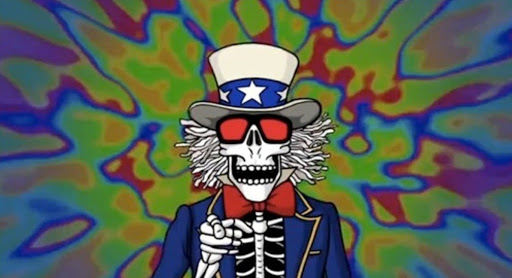

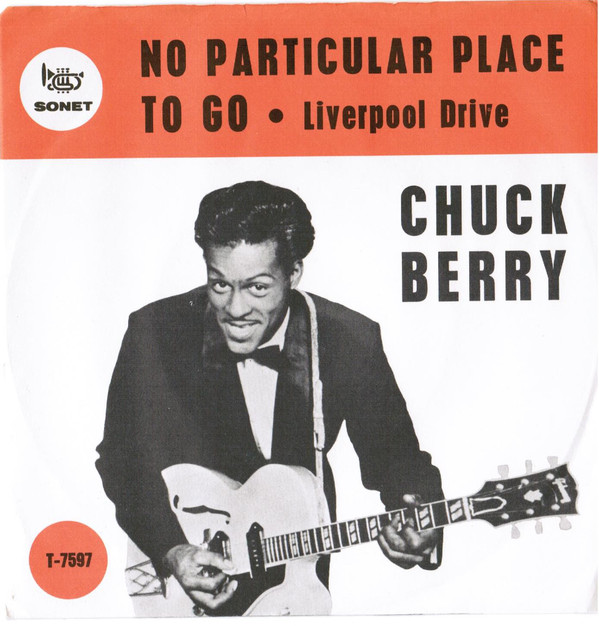

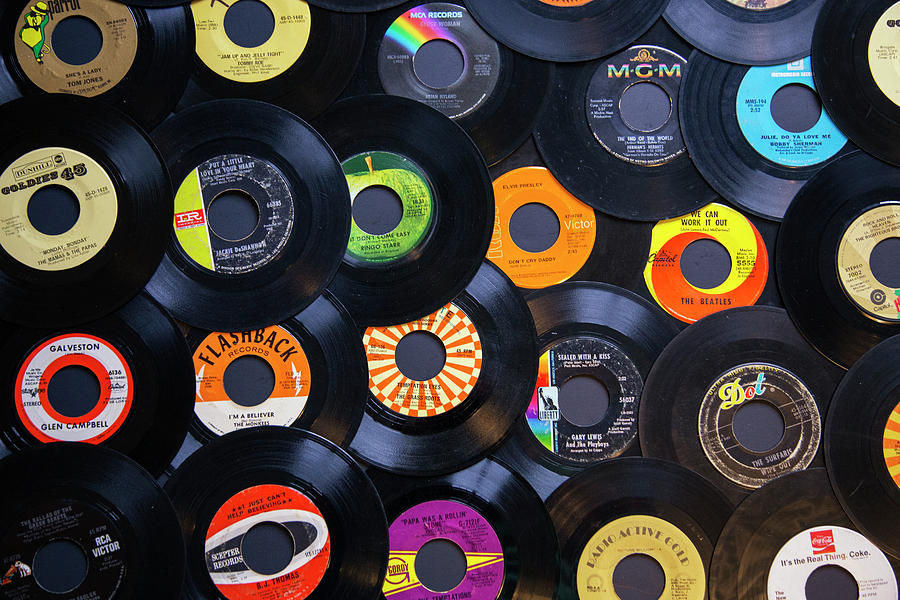
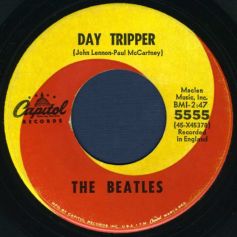
:format(jpeg):mode_rgb():quality(40)/discogs-images/R-1630707-1569522580-3314.jpeg.jpg)

:format(jpeg):mode_rgb():quality(40)/discogs-images/R-1550824-1406772648-2825.jpeg.jpg)
:format(jpeg):mode_rgb():quality(90)/discogs-images/R-654962-1546864346-8294.jpeg.jpg)


:format(jpeg):mode_rgb():quality(90)/discogs-images/R-972316-1463964205-5928.jpeg.jpg)
:format(jpeg):mode_rgb():quality(40)/discogs-images/R-10113446-1491842522-4112.jpeg.jpg)





:format(jpeg):mode_rgb():quality(90)/discogs-images/R-5093184-1442775004-8811.jpeg.jpg)




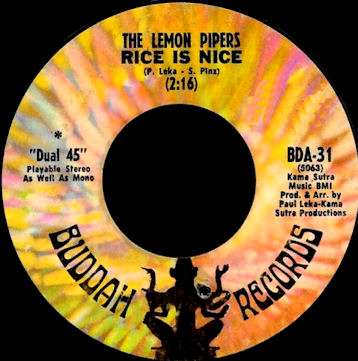

:format(jpeg):mode_rgb():quality(40)/discogs-images/R-2908891-1306825245.jpeg.jpg)
:format(jpeg):mode_rgb():quality(40)/discogs-images/R-4492986-1366467862-7173.jpeg.jpg)

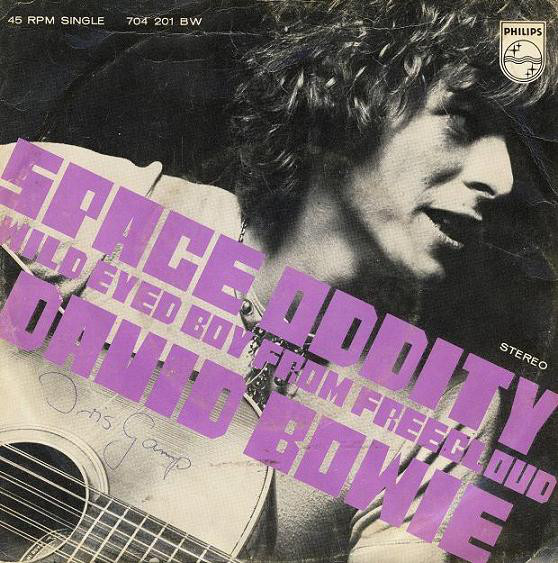
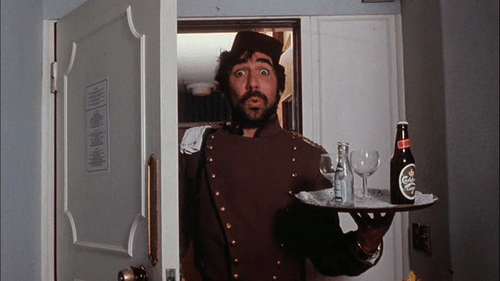


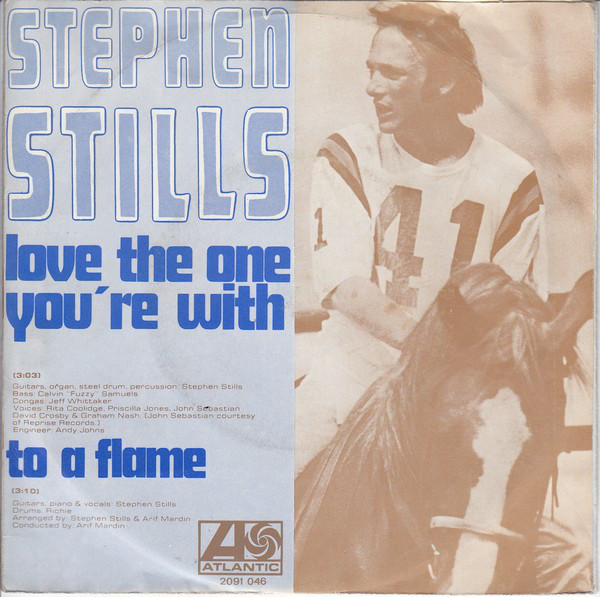


 PowerPop... An Eclectic Collection of Pop Culture