I just read a Joplin book and anyone who follows me knows what that means…a few Janis Joplin posts are coming.
She wasn’t here to be conventional or a cookie-cutter person. She was here to blaze a path and leave her mark…and she did just that.
I owned the album Pearl a long time ago and loved it. Through the years I also got her greatest hits and was wrapped up in those songs. I had forgotten about this funky song…and I use funky in the best way. It reaffirmed what a singer should be about to me…giving 100 percent of yourself every time out there.
On her last album, she was produced by Paul Rothchild who wanted Janis to use less of her brash voice to give more. He also worked on her dynamics which worked perfectly with this album and song. She was working with her 3rd band in two years…and this one was the best one no doubt. I liked Big Brother but she HAD to scream to get over those loud guitars. She was taking more of an R&B/soul/funk/blues/rock approach unlike her strictly rock/blues approach with Big Brother. She had more nuances on this album and her voice never sounded better.
Half Moon was written by John Hall and his first wife, the former Johanna Schier. It was picked as the B-side to Me and Bobby McGee. At the time, John was a struggling musician and Johanna was a writer for The Village Voice. Johanna was assigned an interview with Joplin, who suggested the couple write a song for her. Joplin wanted Johanna to write a song about how she was feeling about a man she met in Rio Janeiro and was planning to marry in the future after he finished what he was doing.
It was the first song they wrote together, and a huge break for the couple, who were able to buy a house and a sailboat with the royalties. John Hall got a lot of credibility in the rock realm from co-writing it, and his career took off. A few years later, he formed the group Orleans, which had hits with two songs he wrote: “Still The One” and “Dance With Me.”
I never realized what it meant when I heard people say…”the artist always gives everything of themselves” until I saw clips of Joplin, Springsteen, and Hendrix. They go out on a limb on stage and risk a train wreck to give you that raw excitement. In today’s world of pre-packaged high-priced Las Vegas style shows…you get a slick show with dancers (I never understood that) without a bit of soul. Sure…the live acts sound exactly like their records and that can be tedious after a while. Some love that…and more power to them but I like the emotional roller coaster journey you take with an artist like Joplin…and she gives you that feeling on studio albums also.
The amazing thing about Pearl is that all of the vocals were called “scratch” takes…meant to be redone later on. She was planning to replace all of her vocals…she went all out anyway so I don’t see how she could have improved on them. Funny thing about the album…the original producer was no other than Todd Rundgren…Janis got rid of him right off the bat because she could not relate to him. Paul Rothchild (Door’s producer) took over and just fell for Janis’s voice and Janis.
I included a live version she did a few months before her death on the Dick Cavett show. When she grabs that mic…there is no doubt who is in charge. There is no screaming in this…just pure soul/blues singing…I love the high notes and dynamics…and she just plain kicked ass on this song.
Pearl peaked at #1 on the Billboard Album Charts, #1 in Canada, and #20 in the UK in 1971.
John Hall:“It was numerological and astrological in nature. And it also had an alliterative repetition that was kind of captivating. It wasn’t rhyming, exactly, but it was an internal rhyme, perhaps you could say. It’s a device that poets use and that songwriters use to not just have the end of lines rhyme or the end of verses rhyme, but to have sort of a foreshadowing of that and words inside each line.”
Half Moon
Half moon, night time sky
Seven stars, heaven’s eyes
Seven songs on seven seas
Just to bring all your sweet love home to me
Hey, you fill me like the mountains
Yeah, yeah, yeah, yeah
You fill me like the sea, Lord
Not coming past but still at last
Your love brings life to me
Your love brings life to me, hey
Rings of cloud and arms aflame
Wings rise up to call your name
Sun rolls high, Lord, it burns the ground
Just to tell about the first good man I found
Yeah, you fill me like the mountains
Yeah, yeah, yeah, yeah
You fill me like the sea, Lord
Not coming past but still at last
Your love brings life to me
Your love brings life to me
Oh, oh, oh, oh, oh, oh yeah
Half moon on night time sky
Seven stars, heaven’s eyes
Seven songs on seven seas
Just to bring all your sweet love home to me
Hey baby, you fill me like the mountains
Yeah, yeah, yeah, yeah
You fill me like the sea, Lord
Not coming past honey still at last
Lord, you fill me like the mountains
Yeah, yeah, yeah, yeah
You fill me like the sea, Lord
Not coming past but still at last
Hey, you fill me like the mountains
Yeah, yeah, yeah, yeah
You fill me like the sea, oh Lord
You’re not coming past, honey, still at last
Your love brings life to me
Your love brings life to me
Your love, la la la la la, la
Won’t you bring life to me
I said you’re gonna ride around
When I’m on a little home babe
Bring it on home, you bring it on home
Bring it on home, bring it on home
I said your love brings life to me, yeah
This was one of the great songs on Sticky Fingers…which has been called their greatest album alongside Exile on Main Street.
Mick Taylor wrote this track with Jagger, believing he’d receive his due acknowledgment, but it was ultimately credited to the Jagger/Richards duo. It was the type of slight that the guitarist took in his stride in the early days but, would grow into a larger issue in the coming years.
The Black Crowes were influenced by this song heavily on their track Sister Luck… they captured the same feel. I thought of this song because of a blogger friend (Jeremy James). He doesn’t blog much any more but has a cool youtube channel. He shows how to play this slide solo. He analyzes guitar effects, and equipment, and shows how to play different songs on guitar….check him out.
Sticky Fingers was the first album The Stones recorded on their own label and the first in which Mick Taylor played guitar on nearly all the tracks. The album peaked at #1 in the Billboard Album Charts, and #1 in Canada, and #1 in the UK in 1971. They had a lot of competition that year with The Who’s Who’s Next and Led Zeppelin IV.
On December 2, 1969, the band had begun work on what would be their first album of the 1970s, and the one upon which so much of their myth and mystique would be built.
At the Muscle Shoals Sound Studio in Sheffield, Alabama, they cut three tracks Brown Sugar, Wild Horses, and You Gotta Move in three days, all of which would subsequently appear on the band’s ninth LP, Sticky Fingers. They did this before they played at the disaster that was known as Altamont…where Meredith Hunter lost his life…on December 6, 1969.
Sway
Did you ever wake up to find A day that broke up your mind Destroyed your notion of circular time
It’s just that demon life has got you in its sway It’s just that demon life has got you in its sway
Ain’t flinging tears out on the dusty ground For all my friends out on the burial ground Can’t stand the feeling getting so brought down
It’s just that demon life has got me in its sway It’s just that demon life has got me in its sway
There must be ways to find out Love is the way they say is really strutting out
Hey, hey, hey now One day I woke up to find Right in the bed next to mine Someone that broke me up with a corner of her smile, yeah
It’s just that demon life has got me in its sway It’s just that demon life has got me in its sway
It’s just that demon life has got me in its sway It’s just that demon life has got me
I want to thank Lisa from Tao-Talk for publishing this post on March 19, 2023. Every March she does a Women Music March with a post on a female artist every day. Please go visit her site and see the artists she has featured this month.
On stage, I make love to 25,000 different people, then I go home alone… Janis Joplin
When I think of female artists…Janis Joplin is the first one that comes to my mind. My top two female singers are Aretha Franklin and Janis Joplin. Both are legends and both unique.
I cannot express how much I love this woman. She had the most powerful voice I have ever heard. She could sing with beauty, grit, and she could sing with a sound like Southern Comfort pouring through razor blades. There was soul, confidence, strength, and vulnerability in her voice that came through in every song. She was one of the authentic singers. You can hear the pain in Billie Holiday’s and Bessie Smith’s voice…you can hear pain in Janis, yes it was a different kind but pain all the same. It all started with a Janis Joplin greatest hits album I got when I was 11 and the love affair has never ended.
You really can’t compare her to her female contemporaries. She was not like Joni Mitchell, Linda Ronstadt, Mama Cass, or even Grace Slick. Janis hit you between the eyes and never looked back. Sweet ballads were not her style, but she could do them. She could hold her own against anyone…she had more in common with Robert Plant than the other female singers. She was also a kind thoughtful lady.
Bessie Smith died in 1937 but a headstone was never bought for her. In August 1970, just two months before Joplin’s own death, she and Juanita Green, who worked in Smith’s house when she was younger and went on to become the president of the North Philadelphia chapter of the NAACP, pitched money to buy a proper headstone for Smith. For the epitaph, they chose the following line: “The Greatest Blues Singer in the World Will Never Stop Singing.”
Her childhood was spent in Port Arthur, Texas. Janis’ mother was a businesswoman, and her father was an engineer, and as the oldest child, she was given all the care she needed but soon discovered that she was different. Being different in Texas at that time was not good.
In high school she was groped and bullied by many of the football team including Jimmy Johnson the football player, coach, and now analyst for Fox Sports. He and his teammates spread rumors that she’d slept with their friends because she “looked and acted weird.” He was a star linebacker on the football team. He said, “Janis looked and acted so weird that when we were around her, mostly in the hallways at school, we would give her a hard time…she ran with the beatnik crowd.” He continued to occasionally degrade her after she died.
She would go to college in Austin Texas, but Austin wasn’t “weird” yet at the time. Alpha Phi Omega sponsored its “Ugliest Man on Campus” contest as part of an effort to raise money for charities. Fraternities would nominate one of their members and dress them up in old clothes and they would be voted on. Someone nominated Janis and it hurt her bad. Joplin’s mother, Dorothy Joplin, admitted that her daughter wrote an “anguished letter laying out all the gory details of how the contest had affected her.”
She moved from Texas to San Francisco and became part of the San Francisco music scene with the Grateful Dead, Jefferson Airplane, Moby Grape, and Quicksilver Messenger Service. Her influences were Billy Holiday, Bessie Smith. Big Mama Thornton, Odetta, and Leadbelly.
She played with Big Brother and the Holding Company who were as raw as you could get, and they played at the Monterrey Pop festival and broke through. She went solo with a couple of backing bands… The Kozmic Blues Band and the Full Tilt Boogie Band. She later played at Woodstock and traveled in a train to concerts all around Canada with the Grateful Dead and other artists that can be seen in the movie The Festival Express.
There are few artists who give everything they have all the time. Bruce Springsteen is one…Janis was one. On film it comes through…she gave everything she had and more. The last recording, she made was a fun birthday message to John Lennon.
Her nickname was Pearl and that was the name of her last album. Her last album is a classic. Janis with the help of the producer Paul Rothchild learned how to control her voice and not belt everything out. He wanted her to have a voice when she turned 30. It worked…it was her most successful album. It showed how great of a voice she had…she wasn’t just a screamer.
Janis would not make 30…she will be 27 for eternity. She died on October 4, 1970, from a heroin overdose after working on her album. She left $2,500 for her wake…. 200 guests were invited with invitations that read…” Drinks are on Pearl.” The guests showed up with the Grateful Dead (as she had requested in her will) as the house band. Her body was cremated, and the ashes scattered from an airplane near Stinson Beach.
I only wished she could have survived and been alive today. Much like Jimi Hendrix, I hate to think what we missed out on.
She was the ultimate take me as I am person.
Discography
Studio Albums solo and with Big Brother: 4
Live Albums: 7 (after her death)
Compilation Albums: 14
Singles solo and with Big Brother: 13
Filmography from Wiki
Monterey Pop (1968)
Petulia (1968)
Janis Joplin Live in Frankfurt (1969)
Janis (1974)
Janis: The Way She Was (1974)
Comin’ Home (1988)
Woodstock – The Lost Performances (1991)
Woodstock: 3 Days of Peace & Music (Director’s Cut) (1994)
Festival Express (2003)
Nine Hundred Nights (2004)
The Dick Cavett Show: Rock Icons (2005) Shout Factory
Rockin’ at the Red Dog: The Dawn of Psychedelic Rock (2005)
This is Tom Jones (2007) 1969 appearance on TV show
Woodstock: 3 Days of Peace & Music (Director’s Cut) 40th Anniversary Edition (2009)
Janis Joplin with Big Brother: Ball and Chain (DVD) Charly (2009)
Janis: Little Girl Blue (2015)
Things to Share
The quantity and more importantly the quality of her work was incredible in a short window of time. In 1995, Joplin was inducted into the Rock and Roll Hall of Fame. In 2005, she received a Grammy Lifetime Achievement Award. In November 2009, the Rock and Roll Hall of Fame and Museum honored her as part of its annual American Music Masters Series. In 2014 there was also a commemorative Janis Joplin stamp issued by the US Postal Service.
I’ll close this with a couple of short stories. Janis did not suffer fools gladly. At a party Jim Morrison was getting drunk and became obnoxious, rude, and violent. Morrison saw that Joplin was there and started to hit on her. Joplin had admired Morrison but not on this night. By this point, she shot him down at every turn and eventually tried to leave with Paul Rothschild (her producer) and nearly got away before Jim, wobbling along, followed her to her car and reached in, grabbing Janis by her hair in an attempt to pull her out. BAD move Jim… Janis then took her bottle of Southern Comfort and cracked him over the head with it, immediately knocking the Lizard King out cold. Now normally, this would have been the end of things…but the next day at rehearsal, Jim was absolutely smitten with Janis, begging Paul Rothschild to give him her phone number…he didn’t get it.
Her road manager John Cooke was the son of Masterpiece Theater host Alistair Cooke and the great grand-nephew of poet Ralph Waldo Emerson.
Janis also punched Jerry Lee Lewis when Lewis told Laura Joplin (Janis’s sister) something offensive. She had to be pulled off him.
This is her on the Dick Cavett show and it says a lot about her. This was in 1969, before the Morrison party.
I was going to post this song a few weeks ago but I posted The Poacher instead by Ronnie Lane. Either way, we all win with those two songs. As with The Poacher…Ronnie Lane wrote and did the vocals for this song. It’s a gorgeous song and is one of the Faces best known songs.
This song was on the album that I would say ranks in the Hall Of Fame for names… A Nod Is As Good As a Wink… to a Blind Horse. It doesn’t get much better than that. The album was released in 1971. Debris is said to be about his East End working class roots. The album also contained their biggest hit…Stay With Me. The album peaked at #6 on the Billboard Album Charts, #5 in Canada, and #2 in the UK in 1971.
Lane didn’t seem the kind of person who wanted just fame…or for that matter money. He pretty much proved that when he left the Faces two years later to start a solo career that toured under a big top travelling around not meeting expenses most of the time.
Ronnie started his own folk-country band named “Slim Chance” and released a surprise hit single “Come On” in 1973 and it went to #11 in the UK. Ronnie had a unique idea of touring. His tour was called “The Passing Show” which toured the countryside with a circus tent and included a ringmaster and clowns.
Lane had been ripped off along along with the other Small Faces so he wasn’t drawing money from those old records. Pete Townshend tried to talk him out of quitting the Faces because as Pete told him…you are on the verge of making good royalties and money from the Face’s concerts will set you up for life. He ignored Pete and followed his heart. Lane had a lot of great music in him though and those albums with Slim Chance and Rough Mix with Pete Townshend are great.
Lane diagnosed with was Multiple Sclerosis around 1976.
In 1983 Ronnie called some of his musician friends to do some charity concerts for the Research for Multiple Sclerosis. They were known as the ARMS (Action into Research for Multiple Sclerosis) Charity Concerts. Musicians such as Eric Clapton, Jeff Beck, Jimmy Page, Steve Winwood, Bill Wyman, Charlie Watts, and more came out to support Ronnie.
Ronnie Lane died of Pneumonia while in the final stages of Multiple Sclerosis in 1997
Debris
Two, three, four
I left you on the debris
At the Sunday morning market
You were sorting through the odds and ends
You was looking for a bargain
I heard your footsteps at the front door
And that old familiar love song
‘Cause you knew you’d find me waiting there
At the top of the stairs
I went there and back
Just to see how far it was
And you, you tried to tell me
But I had to learn for myself
There’s more trouble at the depot
With the general workers union
And you said, “They’ll never change a thing
Well, they won’t fight and they’re not working”
Oh, you was my hero
How you are my good friend
I’ve been there and back
And I know how far it is
But I left you on the debris
Now we both know you got no money
And I wonder what you would have done
Without me hanging around
On March 9th of this year Dave at A Sound Day published this post I wrote for his Turntable Talk series. Dave stated:Let’s look at an artist whose debut really impressed you. It can be one that just knocked you out first time you heard it when it was brand new, or one you went back & discovered later.
I went through some debut albums before I came to this. I already wrote up Big Star’s debut for another blogger but the other that came to mind was The Cars. For me, that was their best album although they had some great albums later. I then thought of Jimi’s debut…and that was that. There is more than one version of Jimi Hendrix’s debut album released. I will go by the one I first owned when I was around 11…the US version.
I think about 1967 and what people must have thought when they heard this strange new artist. It must have sounded like an alien coming down from another planet. Being at the ripe old age of 4 months old…I don’t quite remember it. His guitar playing was first felt by other guitarists. Eric Clapton, Jeff Beck, Pete Townshend, and the other huge guitarists back at that time. They were shocked when they saw him perform on stage. He was “found” by Animals bassist turned manager Chas Chandler in New York. He took Jimi to England and formed a band around him…it didn’t take long after that.
Jimi’s debut album was released on May 12, 1967. The tracklist is incredible. A lineup of songs that still get played over 50 years later on the radio. To make it even stronger…Hendrix wrote all of the songs but one…Hey Joe, his breakout hit in the UK.
The album had many now-rock classics. They were not rock songs easily accessible to the audience as other performers. He mixed experimental technics along with well-written and performed songs. Before Zeppelin came along, Hendrix gave rock its sonic boom. The album peaked at #5 on The Billboard Album Charts, #15 in Canada, and #2 on the UK Charts in 1967.
I’ve never heard a guitar player take the guitar to a far-off place like Hendrix. It wasn’t just his playing which was some of the best…it was his vision and the sounds he got out of the guitar that was so amazing. Every guitar player that came after him would get unfairly compared. He wasn’t just a guitar player though…he was a singer/songwriter who created 3 classic rock albums that still are revered. He was the complete package…not a traditional voice, but he got his point across and wrote his songs to fit him…and it worked.
He also evidently had a huge backlog of recordings and live concerts that keep being released. The man must have recorded in his sleep.
The “new” Jimi Hendrix tag has been unfairly placed on many guitar players. From Stevie Ray Vaughn to Eddie Van Halen, many more faded out. Hendrix would mess with this guitar…changing pickups and recording techniques. He had a sound all his own…when you hear a Hendrix record you know it’s him by just his guitar playing. Now when I listen to him…I hear the guitar players that followed…from the finger tap from Eddie to the straight-in-your-face riffs of Stevie Ray Vaughn…Jimi had done it all before.
Like Janis Joplin and Bruce Springsteen…they would let themselves go on stage. They would take it as far as they could and if they messed up…they messed up but the fans got to see an electrifying performance. When Joplin and Hendrix left us…they left a huge hole in rock performers and when both were peaking in making albums. Both Hendrix and Joplin left and their last studio albums peaked at #1. Jimi’s came two years before his death and Janis just a few days after she passed.
Dave is closing out Beatles Week in style with a George Harrison masterpiece.
Dave grew up in Canada, now resides in Texas and has been passionate about music for as long as he can remember. Unfortunately, a brief foray into buying keyboards during his high school years didn’t equate to making music people were passionate about doing anything with but avoiding! He writes a daily music blog, A Sound Day, looking at memorable music events from album releases to artist birthdays to important concerts and more. You can find Dave at https://soundday.wordpress.com.
Thanks Max, for inviting me to take part in this! And a good topic too.
When asked to write about a Beatles song, I didn’t take long to make my pick. There’s just something about “Something” that moves me like no other…Beatles track. Yet getting to that point has been a long road. Maybe a long and winding one, even.
A little back history about myself. I was born in the ’60s but by the time I was cognizant of it really, let alone had my own little transistor radio to listen to it, The Beatles were done. Wings or solo Ringo, John or George were more relevant to me at the time. But my mom and older brother liked the Beatles and in fact, one of my early memories was hearing Sgt .Pepper Lonely Heart’s Club Band on our big old console in the living room, liking the music and loving the colorful cover. As a kid, I liked the simple pop hooks of Ringo and Paul, post-Beatles, songs like “You’re Sixteen”, “Helen Wheels” and “My Love.” I knew a lot of Beatles songs, either from AM radio or my family playing them on the stereo, and liked quite a lot of it but it was hard for me to grasp how influential or flat out great they had been.
As I hit my teens, was buying my own records and listening to FM radio, my appreciation of them grew. I had a used copy of Revolver, though I can’t remember why I specifically bought that one. A good album, absolutely, but never my favorite of theirs. I probably found it cheap in a used store or flea market. Around that time, I was growing to favor John. “Norwegian Wood “ and “Dear Prudence” were high on my list of Beatles songs and by the time I was getting to like his solo work as much as say, Paul’s 1980 rolled around and well, I think we all know what the end of that story was. As was the case with most people, my estimation of him rose rapidly and I listened to his work more, began to love songs like “Mind Games” and “#9 Dream” that I’d missed, or nearly so when they had first come out. I loved his work for peace and outspokenness and was oblivious to the shortcomings in his character. All the while though, George was just on the periphery of my musical awareness. Sure, “My Sweet Lord” was nice, and I was one of the minority who in ’79 bought and loved the “Blow Away” single, but he was really the “quiet Beatle” to me. Nearly invisible. Really, the thing I might have been most impressed with at that point was his work funding Monty Python films, since like most boys hitting puberty, I laughed my head off at things like the “Lumberjack Song” and killer rabbits.
That changed a little in ’88 when he had his comeback album, Cloud Nine. By that time too, the Beatles were finally putting out CDs of their old catalog and I’d decided, hey, they had a lot of good tunes, I should be getting some in my collection. I bought several of the ’60s works on CD and really that’s where my true appreciation for them began. That and noticing a good portion of the bands I thought were really good at the time – say Crowded House, Aztec Camera, Squeeze for instance – were almost universally described as “Beatle-esque.”
Anyhow, then and still to this day, Sgt. Pepper... has been my favorite Beatles work, but it is a close contest. Not surprisingly then, for years if anyone asked me for my favorite Beatles song, it was “A Day in the Life”. A song like no other, with its time changes, Paul and John changing off vocals, that almighty, seemingly endless piano chord to end it, the bizarre lyrics that actually made some sense when you read of their inspirations. It still is a great song and high on my list.
But just as the Beatles changed and matured during their career, so too have I. And as the band matured, George started to take his place at the front. He brought a new sense of spirituality, and experimentalism to them, opened them up to what we’d now call “World Music”, the sounds of the Far East. Being able to incorporate that into a pop-rock setting was revolutionary and quite a challenge I’m sure. But it worked! And as I matured, I grew more and more appreciative of George’s songwriting as well as his quiet sense of peacefulness. “Something” is the epitome of that to me. And to his ex-bandmates it would seem.
Early on, George was a guitarist and nothing much more to them. Maybe his first hint of potential greatness was on Rubber Soul when he wrote and sang “If I needed someone.” A pretty good song, and presumably John and Paul agreed since they let him put three onto the next record, Revolver, including “Taxman”, one of their many “hits” that never hit the charts because it wasn’t out as a single. A decent little snarky rock tune but probably not on anyone’s list of “best ever.” The first real taste of his brilliance was still a couple of years away, and their self-titled double album. “While My Guitar Gently Weeps” was to me the standout on the album and really showed his talent as a songwriter…not to mention nearly got Eric Clapton in the band. Let It Be was recorded next (but released last) and though he did “For You Blue” on it, as we saw in Get Back, he was distant from the band by then and briefly quit. It was becoming clear he’d outgrown the limitations he felt were imposed on him by the two main men who clearly wanted most of the spotlight.
Which leads us to Abbey Road. Their swansong, even if it did arrive in stores months before Let it Be. I gather by then they knew it was time to call it a day but leave fans with one more worth remembering. And they did just that. In particular George. He contributed – i’ll say it – the two best songs on it, “Here Comes the Sun” and “Something.”
Here Comes the Sun” is a pretty incredible, happy-sounding song in which he introduced a synthesizer to the band and wrote a tune in seemingly impossible time signatures (changing rapidly from 4/4 to 11/8 to 7/8 and so on). It ranks high on my Beatles list too, but the crowning achievement was “Something.”
Pattie Boyd must have been “something” too. We know he wrote the song for her, his wife, and a couple of years later, his buddy Eric Clapton wrote “Layla” for her. In time he won her away from Harrison, and somehow they all remained friends. George was more tolerant than I would have been, I can tell you that. Maybe all the time with the Indian gurus really made him a better person.
Anyway, to me, “Something” is just about a perfect pop song. It’s beautifully written and immaculately played, and the lyrics are outstanding. If you’ve never been so in love, in the beginning, that the lines don’t make sense, well, I hope you’ll experience that head over heels feeling, combined with just a touch of anxiety over fear of losing it (“you’re asking me will my love grow/I don’t know/ I DON’T KNOW”). George demonstrates his love for Pattie and his slide guitar prowess all the while Ringo drums along exquisitely. The more I listen to Starr, the more I appreciate his talent. He plays for the song, not to take over the song. Then there are the under-stated strings, completing the song nicely. I think George Martin’s introducing strings to middle-era Beatles songs was one of the more under-rated things about them; how many rock & roll bands before 1965 would have thought to bring in violins and cellos? Now, it’s commonplace. There’s not really a point wrong with “Something” and it does it all in barely three minutes. Each time I listen to it, I seem to pick up on some tiny new detail I’d missed before that makes me appreciate it more.
Of course, my opinion was backed by many others. Frank Sinatra began singing it in his shows right away and called it “the greatest love song of the past 50 years”… and he knew a thing of two about love songs! (Unfortunately, he mistakenly told his audiences Lennon & McCartney wrote it.) Later Elton John would say it was “one of the best love songs ever –ever – written…it’s the song I’ve been chasing for the last 35 years!” And Ringo piped in that it and “While My Guitar Gently Weeps” were “two of the finest love songs ever written” and put Harrison on a par with John and Paul. Critics tended to agree. The NME in Britain called it a “real quality hunk of pop” while Rolling Stone applauded its “excellent drum work, dead catchy guitar line, perfectly subdued stings and an unusually nice melody.” Add in great vocals and there’s not much missing there.
Happily, it was eaten up by the fans. It came out with “Come Together” as a single, but in most lands was considered the A-side. It hit #1 in Australia, Canada, New Zealand, and of course the U.S. where it became their 18th #1 song…which happened to surpass the number Elvis Presley had. However, it was the first #1 song credited to George…not surprising because somehow, it was the first Beatles single he wrote or sang! And that’s saying “something” – when a guy can create songs this good and somehow be seen by the band as a third-stringer… wow. No wonder we’re still talking about them a half century later.
I was really happy when I asked Halffastcycling to do this and he accepted. I really appreciate his comments on songs that not everyone is going to know like Little Feat and other bands that didn’t live in the top 20. So thank you and go visit his site!
He started the blog halffastcycling.club to chronicle a coast-to-coast bike trip. Recently retired from a series of careers (in co-ops, plumbing, and health care), I spend my time riding my bike (once across the continent wasn’t enough so I quit working to do it again), paddling, writing about bikes and whatever pops into my head, and sitting on the front porch in a rocking chair. I’m old enough that I remember this music when it was new, not from oldies stations. The first hit records I remember hearing were by Little Richard (78 RPM). (I have older siblings.) My intro to live music (besides high school dances) was through BB King (followed quickly by Willie Dixon, Muddy Waters, Luther Allison, Bonnie Raitt, Pete Seeger, and the Grateful Dead, among others). I wrote a high school term paper on the Beatles (after reading the new Hunter Davies bio in 1968) and got a D.
Beatlemania
It was the 1963-64 school year and the fifth grade talent show was fast approaching. Being only a spectator was not an option. Everyone had to have an act, a talent to display.
My friend Max at Powerpop has declared “Beatles Week” and invited others to write about “a favorite Beatle song”. (In another part of the same post he invites folks to write about “their favorite Beatles song”, an important distinction in my eyes. Who can have a single favorite from their catalog? I’ve written about the my problem of declaring favorites before.)
A classmate approached me about joining an act with a couple of friends. When I asked about the act he was very secretive. He couldn’t tell me what the act was until I agreed to be in it. Once he told me, I couldn’t back out. Note I called him a “classmate”, not a “friend”. I didn’t trust him enough to go along blindly with this. Besides, I already had my act together. What was my act? I have no idea. What was their act? That still sticks in my mind 60 years later.
Four guys took the stage. Each had a rag mop on his head, dyed black and trimmed just so. Three of them held brooms – no mere air guitar for them. The fourth was, of course, Ringo. They lip-synched to “I Want to Hold Your Hand”. It wasn’t my favorite Beatles song even then. I bought the single of “She Loves You” but I didn’t buy “I Want to Hold Your Hand”. It seemed like the sort of song that reinforced parental stereotypes about pop music (and “She loves you, yeah, yeah, yeah” didn’t?) with its simplistic lyrics about holding hands.
Four guys took the stage. Each had a rag mop on his head, dyed black and trimmed just so. Three of them held brooms – no mere air guitar for them. The fourth was, of course, Ringo. They lip-synched to “I Want to Hold Your Hand”. It wasn’t my favorite Beatles song even then. I bought the single of “She Loves You” but I didn’t buy “I Want to Hold Your Hand”. It seemed like the sort of song that reinforced parental stereotypes about pop music (and “She loves you, yeah, yeah, yeah” didn’t?) with its simplistic lyrics about holding hands.
(Image from WebRestaurantStore)
On February 9, 1964, the US saw The Beatles in person for the first time, on The Ed Sullivan Show. Those of us in the know had seen them a month before on grainy, low fidelity video on Jack Paar.
They had appeared in an NBC News story on November 18, 1963. The news was more about Beatlemania than about the music, though they did acknowledge that The Beatles wrote some of their own songs. Early coverage of the band was more from a sense of amusement at the phenomenon of those crazy teenagers than it was about the music.
“I Want to Hold Your Hand” was not received with universal acclaim in the US. “Esquire‘s music critic David Newman wrote, ‘Terrible awful. …It’s the bunk. The Beatles are indistinguishable from a hundred other similar loud and twanging rock-and-roll groups. They aren’t talented singers (as Elvis was), they aren’t fun (as Elvis was), they aren’t anything.’[34]”
On the other hand, it did reach #1 in most western countries (stalling at #6 in Belgium and Finland). In the US it was replaced at #1 by “She Loves You”. In the UK, the order was reversed. It was subsequently released in German as “Komm, gib mir diene Hand” – that version also received US airplay.
Contrast Newman with Rob Sheffield’s assessment in the Rolling Stone Album Guide (40 years later): “Just check out ‘I Want to Hold Your Hand,’ which explodes out of the speakers with the most passionate singing, drumming, lyrics, guitars, and girl-crazy howls ever – it’s no insult to the Beatles to say they never topped this song because nobody else has either … It’s the most joyous three minutes in the history of human noise.[40]”
So what made them such a big deal? We were used to “singing groups” lip-synching their latest single on American Bandstand, complete with orchestration and fadeout. These were actual musicians. They played and sang at the same time. Of course, they weren’t the first, but it was still somewhat unusual in the pop music world. And they wrote their own songs. Sure, they covered American R&B (“Twist and Shout”, “Roll Over Beethoven”) and even show tunes (“A Taste of Honey”, “Til There Was You”) but the list of hit songs (and great songs) they wrote is too long to recount here. Some singers can produce great harmonies in a studio with multiple takes and overdubs, but The Beatles sounded great live in an era without monitors (and with fans screaming loudly enough that they might not have heard themselves even with monitors).
I went to a summer camp that had a carnival with games. One game involved headphones through which a few notes of a Beatles tune were played. Your challenge was speed in identifying the song. How many notes did you need? Hw quickly could you answer? With what other band would you play that game?
“I Want to Hold Your Hand” is far from the best Beatles song, it’s not my favorite Beatles song, and it wasn’t even the first Beatles song. But it was the only one that dominated the fifth grade talent show at Winnequah School and made 4 boys instantly popular. I was not one of them.
We have two more posts and we will wrap this up Wednesday.
Here is my good friend Keith from https://nostalgicitalian.com/ giving some love to Ringo. Keith and I have emailed and talked on the phone for a few years now. I like asking him questions about his radio DJ days and life…Keith is a great guy. Go visit his site!
The Starr of the Beatles
I was approached by my blogger buddy, Max, from the PowerPop Blog recently and asked to contribute something for his “Beatles Week” feature. In truth, it will probably go longer than a week as there are many talented writers participating with me. I think his original thought was to have each of us write about a favorite Beatles song, but then he allowed us to pursue something “Beatle themed.”
I think I have mentioned in the past that it would be extremely difficult for me to pick one favorite Beatles song. There are just too many great ones to choose from. I could spend hours talking about the fantastic harmonies of the group or the amazing songwriting contributions of Lennon and McCartney. I could also examine the way George Harrison’s guitar playing matured as the group got older. Instead, I chose to focus on the Beatle that I connected with as a young fan discovering the band – Ringo Starr.
As a kid, I discovered the Beatles through their cartoon series (as well as albums that my dad had). While the boys didn’t voice the characters themselves, it featured many of their songs and put them in silly situations. Ringo always seemed to be the goofball and I guess I found him to be the funniest.
As I began to buy Beatles albums on my own, I often found that the “Ringo” cut of each album tended to really stand out as a favorite. Let me be clear, it is not that I disliked the other guys, the opposite was true. I loved them! However, the “Ringo” cut just really had a different sound to it.
As many know, Ringo was not the original drummer for the band. Pete Best was the guy. The rumors were that he was pretty good looking and a fan favorite, so they got rid of him. How true that is, I don’t know. The boys recruited Ringo from another band (Rory Storm and the Hurricanes). Once the group got their recording contract and started sessions with George Martin, Ringo was dissed a bit. Martin felt that he was not a good enough drummer to do studio work. Eventually, Martin came around and not only was he in the recording sessions, he occasionally got to sing on a song or two.
In total, Ringo Starr sang lead vocals on 11 Beatles songs. The first was “Boys,” which was a cover of a Shirelles song. The song was one that the Beatles had been playing in their live shows for some time. Pete Best used to sing it in shows. Ringo knew the song and had performed it many times with his previous group. When the band was in the studio cutting the 1963 album “Please Please Me” he sang it in one take.
The group had been playing “Boys” for years before it was ever recorded. It was the only song that Ringo sang lead on and his loyal fans wanted to hear more. John, Paul, and George were getting tired of the song and when it was time to record their second album, Lennon and McCartney worked together to write a song for Ringo that would replace “Boys.” The song would be “I Wanna Be Your Man.”
Before they went into the studio, another British group approached Lennon and McCartney and asked if they had a song that they might record. They decided to give them “I Wanna Be Your Man.” That song became the first “hit” for Mick Jagger and The Rolling Stones!
Carl Perkins was responsible for Ringo’s next two vocal songs. First, was “Matchbox” which Perkins had a hit with in 1957. This song (and his next vocal) was responsible for the association of Ringo with rockabilly/country music. Word is that Perkins was in the studio while the Beatles recorded his songs.
For the 1964 album “Beatles For Sale,” Ringo contributed the lead vocal to Perkins’ “Honey Don’t.” Carl Perkins influenced a lot of Liverpool bands and Ringo was playing this one in his prior group before joining the Beatles. It was another song that Pete Best sang lead on in early live performances. John Lennon began singing it after Best left, but the band agreed that it was a perfect Ringo song for the album.
Ringo had decided that he wanted to have a bit more input in the songs that he was to sing. During the recording sessions for “Help” in 1965, he came upon the Buck Owens song “Act Naturally.” He brought it to the band and said he felt it would be a great song for him. They all agreed and cut it. This would mark the first Beatles cover song that they had not already been playing at live shows.
Ringo, while not best known for his song writing, did write a few for the band. By this time, John, Paul and George were all churning out songs. The three seemed to be doing everything and Ringo felt like he was being left out and maybe even someone who could easily be replaced. He went to the group and voiced his concerns. This led to his first song writing credit on a Beatles song. The song was What Goes On. The song was not all Ringo, as it was actually a song that John had originally written and Ringo tweaked and contributed to.
Yellow Submarine appeared on the 1966 Revolver album. It was a big song for Ringo as it went to #1 in the UK and #2 in the US. In Alan Clayson’s book, “Ringo Starr: Straight Man or Joker,” he says that the song was “conceived as a song that would appeal primarily to children, while recalling the band’s roots in Liverpool.” The song was written mostly by Paul McCartney and it is said that Donovan also helped (while being uncredited).
If you had to pick a “signature” song for Ringo, it would be “With a Little Help from My Friends.” The song is the second track on the Sgt. Pepper Album. The album itself was sort of a concept album where the band is playing … well, another band. In the album’s opening track, the character of Billy Shears is introduced. Even Ringo has stated that for the cut he is “taking on” the character of Shears to sing the song. The song was one that was written specifically for Ringo by John and Paul.
Ringo’s next vocal feature was one that he wrote. “Don’t Pass Me By” was one that came to him while sitting at the piano. He claims to only know a few chords on the piano and guitar. He says that while he plays around, if a melody comes to him or some words, he just keeps playing around. This is supposedly how “Don’t Pass Me By” came to be. There is some confusion as to when exactly the song was written, and while it may have been written as early as 1964, it was never recorded and released until 1968 on the White Album.
Alan Clayson says in his book that Ringo had unknowingly plagiarized music from a Jerry Lee Lewis song. It was only when George Martin was experimenting with different effects and orchestration that the song was able to be released (now sounding very musically different from it’s original version).
The song “Good Night” from the White Album was written by John Lennon. He wrote it for his five year old son, Julian. Lennon was very insistent that the song be sung by Ringo. What is interesting is that Ringo is the only Beatle who performs on the song. The music is provided by classical session musicians under the direction of producer George Martin.
Ringo’s last songwriting credit for the band appears on the 1969 album, Abbey Road. Many compare “Octopus’s Garden” to “Yellow Submarine.” Other’s compare it to an amazing and peaceful under-the sea world. This song, however, was written by Ringo at a time when things were less than peaceful with the group.
The story goes that Ringo was so angry that he walked out of a recording session because he was angry at Paul McCartney. Paul had reportedly been making comments about Ringo’s drumming, and so he left. He spent time relaxing on the Italian island of Sardinia. While there, he became fascinated by the ocean and sea life. This led to him writing the song.
When Ringo returned to the Abbey Road studios, he found that the rest of the band had decorated his drum set with flowers and found a gift from John, Paul and George as an apology. He showed the song to them and George Harrison worked with him to get the song ready to record.
This post is by John from https://thesoundofonehandtyping.com . John’s blog has different subjects and he will post songs that I had completely forgot about. I like talking guitars with John also…He is an internet disc jockey, lover of old TV (especially the commercials), inveterate wise guy.
The Beatles released the EP Long Tall Sally in the UK in 1964. It had one Lennon-McCartney original, “I Call Your Name,” and three covers, Little Richard’s “Long Tall Sally” from 1956, Larry Williams’s “Slow Down” from 1958, and Carl Perkins’s “Matchbox” from 1957. Capitol Records, who was the distributor for Beatles music in the US and Canada, took “Long Tall Sally” and “I Call Your Name” and put them on The Beatles’ Second Album, then took “Matchbox” and “Slow Down” and put them on the album Something New with the songs from A Hard Day’s Night and a couple of other songs. Capitol issued “Matchbox” and “Slow Down” as a single in late August 1964.
The single didn’t do as well as most Beatles singles that year: “Matchbox” (which appeared as “Match Box” on the single and its sleeve) only reached #17 in the US and Canada, while “Slow Down” came in at #24. It’s really a lost single, issued when music from A Hard Day’s Night was on everyone’s mind. Naturally, it was my favorite record for a very long time.
“Match Box” was the A side of the record. The Beatles were great fans of Carl Perkins, particularly George Harrison, who learned many of Perkins’s solos while he learned the guitar, and Ringo Starr, who sang two of the three Perkins songs the Fab Four covered (“Honey Don’t” was the other). Coming in at just under two minutes, it was rock ‘n’ roll, Fab Four style.
What I especially like about this:
That opening. You have two bars of George doing that figure around the A chord before everyone else comes in. That gets your toes tappin’ and your butt shakin’…
The utter simplicity. Three chords: A7, D7, E7, all played in first position. It doesn’t get much simpler than that.
The solo. Like so many of George’s solos, simple and to the point, played on his Gretsch Country Gentleman.
George Martin’s piano. Just enough that you know it’s there. He added it several days after The Beatles recorded the song, but it sounds like he was in the studio with them.
Ringo’s vocal. Don’t ever tell me that Ringo can’t sing. He has a little trouble with the lyrics, but who cares?
The end. That last chord, an A 6/9, wraps everything up perfectly.
The flip side, “Slow Down,” is just as noteworthy. Larry Williams was an R&B singer and pianist whose songs The Beatles often covered, including this song, “Dizzy Miss Lizzie,” and “Bad Boy.”
Could I say the same things about this song as I did about “Match Box”? Almost. John did the vocal on this track, but the opening of the song, highlighted by George Martin’s piano, is just as memorable, it’s another three-chord song, George’s solo is, again, to the point, and you have that same 6/9 chord ending this one. Two solid sides of rock ‘n’ roll, Fab Four style.
Maybe the most perfect thing about these sides is that they aren’t perfect. George’s pick hand gets ahead of his fret hand on both solos, and the double-tracked vocal by John on “Slow Down” seems to have a few extra voices in it. They don’t make the record a bad one. If anything, hearing them screw up just underlines how much they’re enjoying themselves. That’s what makes this such a great record.
Liam Sullivan is a Dad, archivist, choral singer, and tour guide living his best life in Boston, MA. You can read his thoughts on books, movies, music, and more at Panorama of the Mountains https://othemts.wordpress.com.
“Got to Get You Into My Life” is a song by The Beatles that was a top ten hit when I was a small child. Except that The Beatles broke up more than 3 years before I was even born. How could this be? It was a mystery to me for a long time. I didn’t even know it was a song by The Beatles until I was a teenager in the 1980s. It puzzled me how I could remember “Got to Get You Into My Life” being in heavy rotation with the songs I heard played on the radio in my dad’s Chevy Nova back in the mid-70s.
I won’t keep you in suspense as long as I was. It turns out that Capitol Records, The Beatles label in the United States, released “Got to Get You Into My Life” as a single on May 31, 1976. Despite being a ten-year-old song at that point, it did well on the charts, peaking at #7 on the Billboard Hot 100 in the week of July 24, 1976. It would be The Beatles last Top Ten hit until “Free As A Bird” in 1995.
The single was released to promote a compilation album that Capitol Records was promoting called Rock ‘n’ Roll Music. The collection of 28 rockers culled from The Beatles’ previous releases was clearly Capitol looking to make some money off of a beloved band that wasn’t making any new music. It sold well, reaching number 2 on the Billboard album charts, ironically held out of the top spot by Paul McCartney’s Wings at the Speed of Sound.
The album cover for Rock ‘n’ Roll Music was designed to tap into the Fifties nostalgia craze of the 1970s with images of a jukebox, cars with big fins, and Marilyn Monroe. The Beatles, notably were a Sixties band, but the title track is a cover of a Chuck Berry song from the Fifties, so there’s a tenuous connection. The Fifties nostalgia probably was kicked off by the doo wop cover act Sha Na Na performing at Woodstock in 1969 (the group would get a TV show that started in 1977. I loved Bowser). The Broadway musical Grease (1972), the movie American Graffiti(1973), and the TV sitcom Happy Days (debuted in 1974), all continued this trend. Even John Lennon got into the act with his 1974 album Rock ‘N’ Roll, a collection of covers of Lennon’s favorite songs from his youth.
But “Got to Get You Into My Life” is not a Fifties song. It’s a Sixties song that became a hit in the Seventies partly because it really sounds like the soul and funk music that was dominating the charts at the time. Does it not sound like it totally fits in with the Number One song of week of July 24, 1976, “Kiss and Say Goodbye” by The Manhattans (who despite their name were a New Jersey band who played Philadelphia soul). Even better evidence that an old Beatles’ album track somehow captured the zeitgeist of Seventies funk and soul is that the Chicago R&B band released a cover of the song in July 1978 (their version peaked at #9 on the Hot 100).
But let’s go back to the Sixties, when the Beatles recorded the song. The lineup for The Beatles recording the song was Paul McCartney on lead vocal and bass, John Lennon on rhythm guitar, George Harrison on lead guitar, and Ringo star on drums and tambourine. Producer George Martin also added organ. But if you’re going to record an homage to Motown and Memphis soul, you’re going to need horns. So a quintet of guest artists were brought in.
Eddie Thornton – trumpet. The Jamaican-born Thornton, known by the nickname Tan Tan, is likely the first Black guest musician on a Beatles recording since The Beatles didn’t have many guest artists prior to recording Revolver.
Ian Hamer – trumpet. Hamer had a jazz artists who had a long career as a Liverpool big band leader.
Les Condon – trumpet. The London-born Condon was a modern jazz pioneer who played with many of the top UK and American jazz acts.
Alan Branscombe – tenor saxophone. Merseyside-born Branscombe was a sideman to numerous jazz band leaders over a four decade career.
Peter Coe – tenor saxophone. Coe was more of a pop musician and had previously played with the British R&B band Georgie Fame and the Blue Flames, contributing a sax solo to their UK #1 hit “Yeh Yeh.”
Having discussed many aspects of the song, let us finish with the lyrics. It is a love song, of course. Right? Well, according to McCartney “It’s actually an ode to pot.” Legendarily, the Beatles were introduced to marijuana by Bob Dylan when they met in 1964, and the band grew to incorporate the drug into their creative process leading to this love song to pot. Personally, I’m going to forget that I learned that because while I’ve never used marijuana, I have been in love. The lyrics of this song so perfectly capture that feeling of meeting an intoxicating person (or plant) and connecting with them so fully that you just want to spend every moment you can with them. Surely this is what Paul McCartney would feel when he met Linda Eastman in 1967. In fact, they are famous for spending “every single day” of their lives together until Linda’s death in 1998. You can read the full lyrics and decide for yourself if this is a love song, a drug song, or (most likely) both.
I want to welcome my friend Jim to Beatles week. Jim’s site is https://jimadamsauthordotcom.wordpress.com . I hope you can check it out. He has music and other subjects and…when I have a question about The Grateful Dead…Jim is THE man I go to. He tackles one of the most unorthodox songs of the Beatles today…or anyone for that matter. He also has Song Lyric Sunday that is fun to participate in…and I have on a few occasions. Take it away Jim…
Beatles in Animal Costumes
In their made for 1967 TV movie “Magical Mystery Tour”, The Beatles wore animal costumes for the ‘I Am The Walrus’ segment of the film. John is the walrus, Paul is the hippo, George is the rabbit and Ringo is the chicken. It is the third film that starred the band and depicts a group of people on a coach tour who experience strange happenings caused by magicians. The premise was inspired by Ken Kesey’s Furthur adventures with the Merry Pranksters and the then-popular coach trips from Liverpool to see the Blackpool Lights. ‘I Am the Walrus’ didn’t make much of an impact on the charts in the United States as the single only hit #56 on the Billboard Hot 100 and it stayed on the chart for just four weeks. It didn’t even make the charts in the United Kingdom. This was released as the B-side to Paul McCartney’s song ‘Hello Goodbye’, but John thought his song was better and that it should have been the A side. This song probably can probably only be understood by people that have taken an LSD trip, as it is considered to be the strangest song that the Beatles ever recorded. It is way over-analyzed, but I think it is a fun song, so I am going to write about it today for Max’s Beatles Week.
This song is said to be John’s answer to Bob Dylan being able to get away with murder using absurd, obscure, ambiguous lyrics as his style of songwriting. Previously the Beatles wouldn’t have used words because they didn’t make sense, or what we thought was sense, but Dylan taught them a lot in this respect. Lennon told Playboy years later that “I can write that crap too,” which is a reference to the nonsense lyrics in this song. John said, “The first line was written on one acid trip one weekend. The second line was written on the next acid trip the next weekend, and it was filled in after I met Yoko.” I think it is best to discuss this sing one verse at a time, so that is what I will do.
I am he as you are he as you are me
And we are all together
See how they run like pigs from a gun
See how they fly
I’m crying
The first line in this song comes from the song ‘Marching To Pretoria’ which many kids sang in music class and this may be an update of an 1865 American Civil War marching song ‘Marching Through Georgia’ by Henry Clay Work. The Weavers had a hit with this song in the early ‘60s and this song is
about the Boer War in South Africa which occurred during the 1890’s. John Lennon describes policemen as pigs and says that they duck for cover whenever there is a shootout or gun-fight. The Beatles had been doing a lot of crying around this time since their manager Brian Epstein had recently died. ‘l Am The Walrus’ was the first song The Beatles recorded after Epstein’s death which happened four days earlier.
Sitting on a corn flake
Waiting for the van to come
Corporation T-shirt, stupid bloody Tuesday
Man you’ve been a naughty boy
You let your face grow long
John Harvey Kellogg invented Cornflakes in 1878 in the hope that plain food which was specifically created to be bland, boring and flavorless would help people to stop masturbating. Kellogg was a Seventh-day Adventist and he was allegedly against every idea of fun and he believed that sex and masturbation were unhealthy for the body and mind. I imaging that John thought it would be fun to view sitting on a cornflake as a sexual act. John never wrote about a van in this song, as he said, “Sitting on a cornflake, waiting for the man to come.” This line was miswritten by Hunter Davies (the Beatles’ biographer) who thought John said “van to come”, and John liked that better so he decided to use it. “Bloody” is a mild profanity in British dialect. “Stupid bloody Tuesday” would mean you’re having a bad Tuesday, and complaining about it. Lennon thought it was ironic that people would wear the logos of corporations, because he viewed them as heartless oppressors of the masses. “Bloody Tuesday” may also refer to massacre that occurred in South Africa in 1946 when striking gold mine workers, marching peacefully, were fired on by police. Much of this song is abstracted from Lennon’s childhood memories, and this is something he would have heard about. John made a comment on the norms of “proper” behavior. Growing your face long references growing a beard, an act which was considered by many to be a sign of rebelliousness. Advice books that came out in the 1960s illustrated how men should dress right, explaining that they should conform to the dress code without explaining how or why such a code came into existence. These books explained why men should not wear facial hair of any kind, particularly beards, because men who are clean-shaven have a better chance of getting a job, and being widely and readily accepted in business.
I am the egg man
They are the egg men
I am the walrus
Goo goo g’joob
Lewis Carroll wrote The Walrus and the Carpenter which is recited by those fat twins, Tweedledee and Tweedledum, to Alice in ‘Through the Looking-Glass’ and Humpty Dumpty is also in that novel, so that may be what John Lennon is singing about when he mentions the eggman. In this book Humpty Dumpty appears as an egg, although the original Humpty Dumpty was a cannon. The eggman was a nickname given to Eric Burdon the Animals’ singer by John Lennon, because he had a raw egg paraphilia fetish. Burdon achieved this dubious distinction after he told Lennon about this wild time that he had with his Jamaican girlfriend Sylvia. He said that he was up early one morning cooking breakfast, naked except for his socks, and she slid up beside him and slipped an amyl nitrate popper inhalant drug used to enhance sexual pleasure under his nose. As the fumes produced a sensation of excitement in his brain he slid to the kitchen floor, and she grabbed an egg which she cracked into the pit of his belly. The white and yellow of the egg ran down his naked front and Sylvia showed him one Jamaican trick after another, which I won’t get into any further, although Lennon was thoroughly amused at this story.
The Walrus and the Carpenter poem describes how a carpenter and walrus gain the trust of a group of oysters only to betray the oysters and eat them. Upon hearing the poem Alice attempts to make sense of the characters actions. Alice first says that she likes the Walrus best because he expressed sorry for the poor oysters. Tweedledee says, “He ate more than the Carpenter.” The walrus held his handkerchief in front, so that the Carpenter couldn’t count how many he took. Alice thought that was mean, so she changed her mind and said, “I like the Carpenter best, if he didn’t eat so many as the Walrus.” Lennon like Alice expressed dismay upon belatedly realizing that the walrus was a villain in the poem. John didn’t catch the true meaning that Lewis Carroll was trying to express about the capitalist and social system and later, when he went back and looked at it, he realized that the walrus was the bad guy in the story and the carpenter was the good guy. He thought he picked the wrong guy and that he should have said, “I am the carpenter.” But that would never have turned out to be as good. It is written that Lennon got the line “Goo Goo Ga Joob” from the 1939 novel Finnegans Wake by James Joyce. However, the closest approximation in Joyce is “googoo goosth”, which doesn’t quite have the same ring to it. “Goo goo ga job” is supposedly the final words that Humpty Dumpty said before he fell off the wall and died.
Mr. City policeman sitting
Pretty little policemen in a row
See how they fly like Lucy in the sky
See how they run
I’m crying
I’m crying, I’m crying, I’m crying
Journalist and writer Hunter Davies, who had recently been commissioned to write The Beatles’ authorized biography was at John’s house in Weybridge, and they were swimming in his pool, when several streets away, they both head this police siren going and this prompted Lennon to write the line, “Sitting pretty, like a policeman”, which later turned into “Mister city police-man sitting” to the insistent rhythm of a police siren. John wrote the lyrics for this song by putting a sheet of paper into his typewriter and adding a line whenever the spirit moved him and when these fragments managed to fit, he had ‘I Am the Walrus’. John makes a reference to his trippy song, ‘Lucy In The Sky With Diamonds’ after saying see how they fly. It seems like John may be describing an accident that he witnessed where where cops are dispatched, in a 911 context and cars were flying around, while the beat cops are running, and end up standing around, in a row, not needed in the capacity of that they turned out. “See how they run” could be a reference to Three Blind Mice. This also ties into the earlier reference of policemen that were described as pigs. The British saying “keep a stiff upper lip”, means that men should show restraint and avoid expressing their emotions and even when they are sad, they should not cry. Lennon defies this by publicly announcing that he’s crying and this appears at the end of a few verses.
Yellow matter custard
Dripping from a dead dog’s eye
Crabalocker fishwife, pornographic priestess
Boy, you’ve been a naughty girl
You let your knickers down
In 1967, a student from Quarry Bank High School (Lennon’s alma mater) sent John Lennon a letter telling him his teacher was conducting a class analyzing the Beatles’ songs. Lennon decided to take out his revenge on this letter and that motivated John to write a song that was beyond analysis for the simple reason that John didn’t want it to make any sense at all. The whole purpose of the song, according to John, was to confuse, befuddle, and mess with the Beatles experts. John asked his old school friend Pete Shotton if he remembered that nursery rhyme that they used to sing. Shotton gave them this rhyme, which Lennon incorporated into the song, “Yellow matter custard, green slop pie, all mixed together with a dead dog’s eye. Slap it on a butty, ten foot thick, then wash it all down with a cup of cold sick.” John incorporated all of this total nonsense into this song and said, “Let the fuckers’ figure that one out.” “Crabalocker” has no meaning, but Fishwives were known to be very tough, as they were the ones who stormed the Bastille on Paris. The BBC banned this for the lines “pornographic priestess” and “let your knickers down.” The naughty girl parallels the naughty boy, and John may have been commenting on the norms of “proper” behavior again here. Proper men were supposed to shave and not supposed to show their feelings, and proper women were not supposed to expose themselves in public.
Sitting in an English garden
Waiting for the sun
If the sun don’t come you get a tan
From standing in the English rain
Lennon is joking about the wet British weather, as people in the UK are often trapped in their homes, because it’s too wet to go anywhere.
I am the egg man (How do you do sir?)
They are the egg men (The man maintains a fortune)
I am the walrus
Goo goo g’joob, goo goo goo g’joob
During mixing, John was fiddling with a radio that happened to be broadcasting a production of Shakespeare’s King Lear. John decided to incorporate it into the song, although it is barely audible on the record. There’s a small sound that appears to be the first indication of the play before the 5th verse but it’s almost undistinguishable, and the production will be picked up again by the end of the song. During this chorus, the portions inside parentheses were added to the lyrics coming from Act 4, scene 6 from a conversation between Gloucester and Edgar
Expert, texpert choking smokers
Don’t you think the joker laughs at you (Ho ho ho, hee hee hee, hah hah hah)
See how they smile like pigs in a sty
See how they snide
I’m crying
Lennon was a chain smoker his entire adult life, in spite of trying to quit. Lennon wanted to discuss the absurdities of society, and people smoking themselves to death. Lennon is talking directly to those people who were over-analyzing the Beatles songs, by calling them texperts, as they though they knew what his lyrics were about. Lennon knew that they would be wasting their time with this song, so he mocked them saying “Don’t you think the joker laughs at you.” George Martin created an arrangement of eight violins and four cellos, three French horns, and a contrabass clarinet for the orchestra. He hired the Mike Sammes singers a 16-voice choir of professional studio vocalists made up of 8 males and 8 females, known for their work on Disney films and TV themes. They sang the “Ho-ho-ho, hee-hee-hee, ha-ha-ha”, “oompah, oompah, stick it up your jumper!”, “everybody’s got one”, as well as making laughing sounds, snorts and a series of shrill whooping noises. Nothing like this had ever been heard on a popular music recording. A pig’s home is called a “sty” and people think that John was inspired to add this line from by George Orwell’s Animal Farm.
Semolina Pilchard
Climbing up the Eiffel tower
Elementary penguin singing Hare Krishna
Man, you should have seen them kicking Edgar Allen Poe
Semolina is a kind of wheat paste and a pilchard is small fish. Scotland Yard had a famous drug squad detective who built his drug squad career targeting musicians, including Mick Jagger, Brian Jones, Eric Clapton and Donovan named Detective Sergeant Norman Pilcher, and although it is not exactly the same, it has been speculated that is where “Semolina Pilchard” comes from. He wanted the publicity that came from busting rock stars and I guess John figured that he would go out of his way to do this, even if it meant climbing up the Eiffel tower. The Beat poet Allen Ginsberg started incorporating chanting the Hare Krishna mantra into his religious practice in the mid-1960s. John viewed Ginsberg as being a fake, because he was putting all of his faith in one idol going on about Hare Krishna. The words, “Elementary penguin” meant that it’s naive to just go around chanting Hare Krishna all the time. Ginsberg was influenced by Edgar Allen Poe. As he mentioned him in his poems, and in his writing about poetry. Lennon took a jab at Ginsberg because of the way Ginsberg approached the work of Poe. Lennon saw himself as the real deal, much like Poe was, but he felt that Ginsberg was faking it, and not doing Poe’s work the justice it deserved.
Umpa, umpa, stick it up your jumper (jooba, jooba)
Umpa, umpa, stick it up your jumper
Everybody’s got one (umpa, umpa)
Everybody’s got one (stick it up your jumper)
Everybody’s got one (umpa, umpa)
Everybody’s got one (stick it up your jumper)
Everybody’s got one (umpa, umpa)
Everybody’s got one (stick it up your jumper)
Everybody’s got one (umpa, umpa)
Everybody’s got one (stick it up your jumper)
Everybody’s got one (umpa, umpa)
Everybody’s got one (stick it up your jumper)
Everybody’s got one (umpa, umpa)
This phrase dates back to the Victorian prime of the British music hall tradition. It was used both literally, as a way to hold packages when you walked along, and as a slightly politer version of the American “stick it up your ass”. ‘Umpa Umpa (Stick It Up Your Jumper)’ was first recorded by comedy duo The Two Leslies in 1935, but was made very famous by Jimmy Edwards’ recording in 1950. The chorus has been a popular playground chant ever since. Some people thought they were chanting “Smoke pot, smoke pot, everybody smoke pot.” Lennon, one of rock’s best vocalists, was always frustrated by the sound of his voice, so for this song, he asked engineer Geoff Emerick to make his voice sound like it was coming from the moon. As always, Emerick turned Lennon’s strange request into the perfect effect. Emerick recorded Lennon’s vocals using a low-fidelity talkback microphone which helped create one of rock music’s first distorted lead vocals.
‘l Am The Walrus’ was incredibly complex, ultimately taking 25 takes to complete. On one of the earlier takes, Lennon was playing an electronic keyboard and he was making a lot of mistakes. Ringo was having trouble keeping a steady tempo, as emotions were high due to Epstein’s recent death and George Martin was getting frustrated. McCartney jumped into action and saved the day by playing tambourine next to Ringo, acting as a human click track to keep Ringo in sync with Lennon’s keyboard.
I am he as you are he as you are me
And we are all together
See how they run like pigs from a gun
See how they fly
I’m crying
Sitting on a corn flake
Waiting for the van to come
Corporation T-shirt, stupid bloody Tuesday
Man you’ve been a naughty boy
You let your face grow long
I am the egg man
They are the egg men
I am the walrus
Goo goo g’joob
Mr. City policeman sitting
Pretty little policemen in a row
See how they fly like Lucy in the sky
See how they run
I’m crying
I’m crying, I’m crying, I’m crying
Yellow matter custard
Dripping from a dead dog’s eye
Crabalocker fishwife, pornographic priestess
Boy, you’ve been a naughty girl
You let your knickers down
I am the egg man
They are the egg men
I am the walrus
Goo goo g’joob
Sitting in an English garden
Waiting for the sun
If the sun don’t come you get a tan
From standing in the English rain
I am the egg man (How do you do sir?)
They are the egg men (The man maintains a fortune)
I am the walrus
Goo goo g’joob, goo goo goo g’joob
Expert, texpert choking smokers
Don’t you think the joker laughs at you (Ho ho ho, hee hee hee, hah hah hah)
See how they smile like pigs in a sty
See how they snide
I’m crying
Semolina Pilchard
Climbing up the Eiffel tower
Elementary penguin singing Hare Krishna
Man, you should have seen them kicking Edgar Allen Poe
I am the egg man
They are the egg men
I am the walrus
Goo goo g’joob, goo goo goo g’joob
Goo goo g’joob, goo goo goo g’joob, goo goo
Umpa, umpa, stick it up your jumper (jooba, jooba)
Umpa, umpa, stick it up your jumper
Everybody’s got one (umpa, umpa)
Everybody’s got one (stick it up your jumper)
Everybody’s got one (umpa, umpa)
Everybody’s got one (stick it up your jumper)
Everybody’s got one (umpa, umpa)
Everybody’s got one (stick it up your jumper)
Everybody’s got one (umpa, umpa)
Everybody’s got one (stick it up your jumper)
Everybody’s got one (umpa, umpa)
Everybody’s got one (stick it up your jumper)
Everybody’s got one (umpa, umpa)
I met Deke when I published a Georgia Satellites song and fellow blogger Graham told me about Deke after he posted a Satellites song a little earlier. Since then Deke has me listening to all sorts of things I wouldn’t have dreamed of before. Go visit his WordPress site. He also has a youtube channel to visit. I can tell you from experience…it’s worth subscribing to the youtube channel. Ok Deke…take it away…
Thanks to Max for the invite. My name is Derek but all my pals call me deKe and I have been blogging at WordPress for almost 10 years now. As many know I’m a huge fan of hard rock as my blog tends not to deviate from that style lol. I also have a Youtube page titled The Distortion Den that takes up a fair bit of time (but in a good way mind you) where I have had the fortunate pleasure of talking to friends, musicians and book authors.
Recently along with a pal from Moncton named Jex we have started a show called Retro ThrowDown (on Youtube) where we pit two rock albums against each other and rate each one out of a score of 10. We don’t discuss beforehand with each other what we were thinking on each album. That’s the charm and oh we keep these shows around the 30 minute mark so they are action packed!
I will be the first to admit I’m no way the biggest Beatles fan in the world but I like their music as they were innovators and it really wasn’t into the back half of the 80s when the catalog of Beatles music started coming out on CD that I started picking away at getting their music.
My contribution to Max’s Beatles week is the time Nike ran their TV ad with Revolution being the music to it.
Why well for me, it was the power of that Nike ad that made me want to start getting some more Beatles music.
I didn’t care for the running shoe part, I wanted the song which was, of course, the John Lennon powered Revolution!
So along with my good pal T-Bone, I came across one of those mixed Beatles tapes as there were many on the market and I believe it was called Rock N Roll Volume 1 that had Revolution on it along with a few other Beatles standards.
I purchased it on cassette tape for the sole purpose of cranking Revolution in T-Bones car.
Man I still recall at one point as (now remember we’re talking the summer of 87) we were cruising the streets of Thunder Bay windows down cranking Revolution over and over like no one’s business and I’m sure we lost some hearing along the way as that stereo in T-Bones car could crank out the decibels.
One of the moments that is etched in my brain forever is we were sitting at a red light on that warm summer evening the windows down and the warm summertime air blowing our mullets around and as I looked over to my right was an older dude and his female companion (older by that I mean me and T-bone were 21 years old at the time whereas the fellow and his lady friend were probably our ages now).
I will always remember sitting at that red light and the dude looking over at us and giving us the thumbs up! That for me was like winning Olympic Gold lol. Maybe that guy thought “hey, look at these young punks digging on the Beatles or maybe he thought we were posers because of the commercial)
Whatever way that guy was thinking it was one of those fun moments and the power of a song connected at that red light!
Revolution to this day is still my favourite Lennon song. Love that it’s just the four of them laying it down with basically just drums, bass vocals, and guitar.
At the time when the Nike commercial aired The surviving Beatles sued Nike for 15 million which was crazy considering Michael Jackson owned the Beatles catalog which we all know drove McCartney nuts.
But if anything I have to give Nike credit as they did a really cool commercial for it all in black n white and even had John McEnroe and Micheal Jordan in it as well.
The commercial made me seek out and buy the song, not the running shoe!
Christian and I share a lot of the same musical tastes. It’s odd because neither one of us grew up with The Beatles or that great 60s generation. We both grew up in the 80s but share a lot of the same likes. He has a very informative site that is a must if you are a music fan. Go see him at https://christiansmusicmusings.wordpress.com/
My Favorite Beatles Tune
The Beatles are my all-time favorite band, so rejecting an invitation to write about my most beloved song or something else about the four lads from Liverpool simply wasn’t a possibility. I chose the first option. Thanks for the generous offer, Max!
So, what’s my favorite Beatles tune? That’s easy – all of them, except perhaps for number 9, number 9, number 9…Well, that doesn’t reduce the choices by much. Seriously, with so many great Beatles songs, it’s hard to pick just one!
My first Beatles album was a compilation, Beatles 20 Golden Hits, released by Odeon in 1979. Below is an image of the track list.
While each of the above songs is great and would deserve a dedicated post, the album doesn’t include the tune I decided to highlight. If you follow my blog or know my music taste otherwise, by now, you may be thinking I’m going to pick another song The Beatles recorded after they stopped touring.
Perhaps gems like A Day In the Life, Strawberry Fields Forever or I Am the Walrus come to mind. In fact, I previously said if I could pick only one, it would be A Day In The Life. The truth is with so many great tunes to choose from, it also depends on my mood and the day of the week.
That said, one song I’ve really come to love only within the past five years was recorded by The Beatles while they still were a touring band: If I Needed Someone, one of George Harrison’s earlier tunes that made it on a Beatles album: Rubber Soul, except for North America where it was included on Yesterday and Today, the record that became infamous because of its initial cover showing The Beatles in butcher outfits with mutilated baby dolls.
According to his 1980 autobiography I, Me, Mine, as cited by Wikipedia, Harrison apparently didn’t feel If I Needed Someone was anything special. He compared it to “a million other songs” that are based on a guitarist’s finger movements around the D major chord.
True, it’s a fairly simple song. And yet I totally love it!
Music doesn’t have to be complicated to be great. In this case, a major reason why I dig this tune as much as I do is Harrison’s use of a Rickenbacker 360/12, a 12-string electric guitar that sounds like magic to my ears. Of course, when you hear Rickenbacker, one of the first artists who come to mind is Rickenbacker maestro Roger McGuinn who adopted the Rickenbacker 360/12 to create the Byrds’ signature jingle-jangle guitar sound.
There is an interesting background story. The inspiration to McGuinn to use the Rickenbacker 360/12 came after he had seen Harrison play that guitar in the Beatles film A Hard Day’s Night. Harrison’s If I Needed Someone, in turn, was influenced by the guitar sound McGuinn had perfectionated, especially on the Byrds’ rendition of Pete Seeger’sThe Bells of Rhymney. The rhythm was based on the drum part in She Don’t Care About Time, a tune by Gene Clark, the Byrds’ main early songwriter.
“George Harrison wrote that song after hearing the Byrds’ recording of “Bells of Rhymney”, McGuinn told Christianity Today magazine, as documented by Songfacts. “He gave a copy of his new recording to Derek Taylor, the Beatles’ former press officer, who flew to Los Angeles and brought it to my house. He said George wanted me to know that he had written the song based on the rising and falling notes of my electric Rickenbacker 12-string guitar introduction. It was a great honor to have in some small way influenced our heroes the Beatles.”
Apart from the signature guitar sound of the Byrds, If I Needed Someone also is viewed as reflecting Harrison’s then-developing interest in Indian classical music by the use of drone over the main musical phrase and its partly so-called Mixolydian harmony. I’m basing this on Wikipedia and frankly don’t fully understand it.
Harrison wrote the song for English model Pattie Boyd whom he married in January 1966. There has been some discussion over the ambivalent tone of the lyrics. Does a guy who sings, “If I needed someone to love you’re the one that I’d be thinking of” really sound like he’s madly in love with the girl and wants to marry her? Or how about “Carve your number on my wall and maybe you will get a call from me” – “maybe” neither sounds very committed nor romantic, at least not in my book!
If I Needed Someone has been covered by various other artists. First out of the gate were The Hollies who released the tune as a single on December 3, 1965, the same day Rubber Soul appeared in the UK. Their rendition, which Harrison evidently didn’t like, peaked at no. 20 on the UK Official Singles Chart. Various other versions were recorded in 1966 by American bands Stained Glass, The Kingsmen and The Cryan’ Shames, as well as South African jazz trumpet player Hugh Masekela. Among additional covers that appeared later is a brilliant rendition by Mr. Rickenbacker maestro himself from 2004.
The Beatles – If I Needed Someone
The Byrds – The Bells Of Rhymney
The Byrds – She Don’t Care About Time
Roger McGuinn – If I Needed Someone
If Needed Someone
If I needed someone to love
You’re the one that I’d be thinking of
If I needed someone
If I had some more time to spend
Then I guess I’d be with you, my friend
If I needed someone
Had you come some other day
Then it might not have been like this
But you see now I’m too much in love
Carve your number on my wall
And maybe you will get a call from me
If I needed someone
Ah, ah, ah, ah
If I had some more time to spend
Then I guess I’d be with you, my friend
If I needed someone
Had you come some other day
Then it might not have been like this
But you see now I’m too much in love
Carve your number on my wall
And maybe you will get a call from me
If I needed someone
Ah, ah
Colin Jackson and Paul Fitzpatrick who both run Once Upon A Time In The 70’s grew up in Bearsden, a northern suburb of Glasgow, Scotland. They were school friends from the age of five until in 1974, aged sixteen, Paul left school to starta career working with fashion and sportswear brands. Their paths would not cross again for forty-four years, during which time Colin pursued a career in Banking.
First off thank you to Max for inviting us to contribute to his great blog.
His choice of topic – ‘Choose your favourite Beatle song’, sounded like fun until I tried to narrow it down to just one!
You may have noticed that there’s a trend nay a feeding frenzy of corporations acquiring the rights to the song catalogues of heritage artists.
The life’s work of Bruce Springsteen was snapped up recently for $550 million, a record amount, beating the $350 million paid to Dylan for his catalogue in 2020.
In contrast, the estimated worth of the Beatles back catalogue is valued conservatively at $2 billion, although it’s unlikely to happen anytime soon as the ownership is acrimoniously shared between McCartney and Universal Music.
So, while it’s remarkable that a band who were at their peak seven decades ago are still recognised as the most treasured asset in popular music, it’s probably no great surprise, even if you aren’t the worlds biggest Beatles fan.
I guess that’s what happens when you are the most influential band of the 20th (and 21st) century, with an unrivalled catalogue of songs, hailed by critics and peers alike (if you discount Keith Richards!).
Choosing a favourite Beatles song is no easy feat then, firstly, there are so many to choose from, secondly, it depends what kind of Beatles mood you’re in…
A McCartney mood? Maybe a melodic “Hey Jude” or something more poppy like “Penny Lane”?
Or
A Lennon mood? Something psychedelic like a “Day in the Life” or perhaps a bit more soulful like “Don’t Let Me Down”?
To be honest I found it an impossible task, a Sophie’s choice, so I gave up and approached it from a different angle….
What is my favourite Beatles song that they never released (at their peak).
Now that narrowed it down a tad, and for me there was only one winner –
“Come and Get it” by Badfinger.
I was eleven when Badfinger released it as a single on December 5th 1969, so of course I had no idea that there was any sort of Beatles connection – written & produced by McCartney, released on Apple records, etc.
I just thought it was a fantastic pop song, the kind you can’t get out of your head, the kind you hear other people singing or whistling along to, so uncomplicated with the piano intro and the catchy chorus – two and a half minutes of musical joy.
It’s probably no surprise to learn that the prolific Macca completed his Beatles version in under 60 minutes on arriving an hour early for a recording session for Abbey Road. Most people would probably have read the paper or had a cup of tea to kill a bit of time, but Paul thought he’d use the time to knock out a classic pop song.
The Beatles – Come and Get it
McCartney has subsequently said that Lennon who was present, failed to engage or leave the control room to contribute a harmony vocal. Paul took this as a sign of indifference to his song, so instead of featuring on Abbey Road as Paul intended, it was offered to Badfinger, who recorded it nine days later.
In his book Revolution in the Head, Ian MacDonald speculates that McCartney’s decision to gift this obvious hit to someone other than the Beatles may have been a loaded gesture, although he denied that there was any hidden meaning in the songs title…. mmm!
Despite the fact that Badfinger’s interpretation is an exact take of McCartney’s demo (as per Paul’s instructions) it’s still my favourite version, due chiefly to the harmonised vocals – if only Lennon had shifted his arse out of that control room!
Randy has been writing a blog about Cover Songs, music genres and artists since early 2018. He moved to WordPress in February of 2022 and has found a welcome community of music enthusiasts. You can read about the origins of Rock and Roll, Blues, R&B and Country Music. There are Cover Song and Chart statistics as well, all with a focus on the 1950’s, 60’s and 70’s at MostlyMusicCovers.com.
The Beatles
When Max asked us to write about our favorite song, I’m sure the other writers have the same dilemma as most fans would, how do I pick just one? As I am a bit flummoxed on a choice, I’m “taking the easy way out”. Instead of a single song, and being a cover song guy, I am seizing this opportunity to speak about songs recorded by The Beatles in those early years that were not original songs. In other words, songs they covered by other Artists.
Before I get to that, I had assumed that all the ‘original’ songs they recorded, were written/credited to John and Paul or George or Ringo. However, the very first song they recorded for their debut single was written by someone else. Mitch Murray, who became a much acclaimed songwriter/performer/producer wrote a great little song that George Martin thought was perfect for The Beatles first single. It was called “How Do You Do It” and they recorded it on September 4, 1962. The Beatles members never really liked the song and made several changes, much to the chagrin of Mitch Murray. After some debate, Martin agreed with the boys who thought that “Love Me Do”, recorded during the same session was a better pick. It really was the boys first choice for the ‘A’ side all along, perhaps leading to what some describe as a “lack luster” effort on the recording.
How different would the story be if they had picked that song? If you recognized the title you may know that “How Do You Do It” was next recorded by Gerry and The Pacemakers. Released in March of 1963 it became a smash #1 hit in the UK and reached #9 on the Hot 100 in the US. Calling the Pacemakers version, a ‘cover’ is more of technical debate as The Beatles recording was never put on an album and, in deference to Gerry and The Pacemakers or as Paul McCartney once said due to “peer pressure” that’s why they never released it as a single. It first appears on The Beatles Anthology 1 in 1995.
The next thing I looked at, again with a focus on the early days, what were the very first cover songs they released? Setting aside things done/credited as The Quarrymen or with Tony Sheridan etc., there are 25 songs that appeared on various albums. Of which some are stand alone singles. Some of these songs I thought (and maybe some of you did as well) were Beatles originals. I was too young to comprehend much when The Beatles first released songs in North America/Canada. I always was a big fan, and I began taking a keen interest in cover songs in my twenties. The best example would be thinking for the longest time that “Twist and Shout” from their first album was an original song. You likely saw that Max just posted about it recently.
We all know that some of the Albums released outside of the UK came out on different labels, dates, with different titles, and often the track listing had changed as well. Also, the 45’s/singles differed in the same way. So, for my point of reference, and the standard usage, for the most part I will use the UK releases. For that I turned to The Beatles Bible website and Secondhandsong.com.
Please, Please Me was released March 22, 1963. It turns out all the covers (6) on that album were recorded on the same day, February 11, 1963. In addition to “Twist and Shout” (1961) by The Top Notes (Russell/Medley), the cover songs were “Anna (Go to Him)” written and first performed by Arthur Alexander (1962), “Chains” written by Gerry Goffin and Carole King, first released by The Cookies (October 1962), but it was first recorded by The Everly Brothers on July 11, 1962, but not released until 1984. “Boys” was written by Luther Dixon and Wes Farrell and sung by The Shirelles (1960), also by The Shirelles (1961) was “Baby It’s You” written by Burt Bacharach, Luther Dixon, and Mack David (Hal’s brother if you’re keeping score). Then we have “A Taste of Honey” written by Ric Marlow and Bobby Scott for the play of the same name. The first stage performance was by Billy Dee Williams in 1960, his vocal recording was released in December of 1961. Bobby Scott released the instrumental in October of 1960.
Those above songs are the first covers on their first album, but the first single cover version they released was (sort of) on Sincere Good Wishes for Christmas and the New Year on December 6, 1963. The songs were officially listed as “Good King Wenceslas” and “Rudolph the Red Nosed Reindeer”. But they didn’t really sing the songs, however they had to credit the songs they referenced for copyright reasons while kibitzing with their fans. The disc contains spoken word messages of thanks from each of them and some goofing around as well. I think “Ricky, the Red Nosed Reindeer” was the spoof version they sang. It was sent to official Fan Club members as a thank you gift. So technically recorded as ‘cover songs’ but not much of the actual songs.
The first real single cover song that I could find where they credited it to just The Beatles was “Ain’t She Sweet” released on the ‘A’ side of a 45 r.p.m. disc May 19, 1964, on Polydor Records. The label reads The Beatles, Vocals: John Lennon, Recorded in Hamburg 1961. The song was written by Milton Ager, Jack Yellen and first released in 1927 by Lou Gold with The Melody Man – Vocal Chorus by Murray Amster. The song was recorded some 60 times before The Beatles release and twice that since.
Why this song? It was popular at the time and had been recorded by several artists in the late 50’s and early 60’s such as Rockabilly legend Gene Vincent in 1957. Max and any other Beatles experts may correct me on the following… I know Vincent was once on the same bill as The Beatles when he was in Europe, a bit of speculation on my part but perhaps his rendition was the inspiration? I think more likely, there was a popular blues singer at that time in the UK, Duffy Power released the song in 1959 so that may have been it as well. Apparently, it was a regular song from their live sets in Hamburg, Germany. It was recorded there in 1961 when Pete Best was the drummer. So, not the final Fab Four. This version appears on Anthology 1 but is credited as The Beat Brothers. By the time it was put out in 1964 of course Ringo was the drummer, they would re-record the song in 1969 and it appears on Anthology 3.
On the ‘B’ side of the single and listed as “Take Out Some Insurance on Me, Baby” (1959) written by Charles Singleton and Wally Hall. It was not the only song by Jimmy Reed that The Beatles would sing but I believe the only one recorded. This was also in Hamburg in 1961. The label on the ‘B’ side reads The Beatles with Tony Sheridan.
The first cover version as single released with Ringo on the skins (I believe) was “Dizzy Miss Lizzy”. Originally written and performed by Larry Williams in 1958. This song was released as the ‘A’ side of a 45 r.p.m. disc in 1965 on Parlophone Records. On the ‘B’ side was “Bad Boy” but apparently in some markets the B side was a song you may have heard of called “Yesterday”. The song appears on the 1965 album Help! and Live at the BBC.


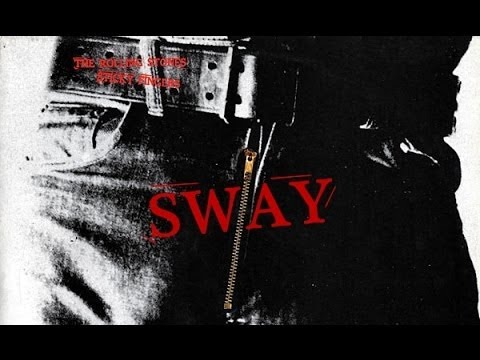

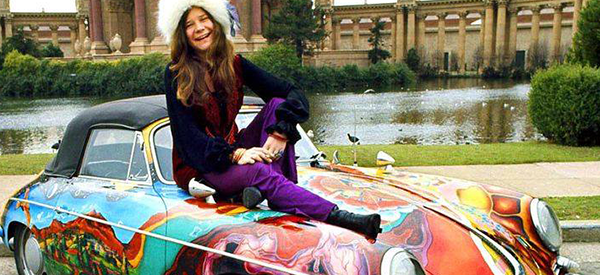

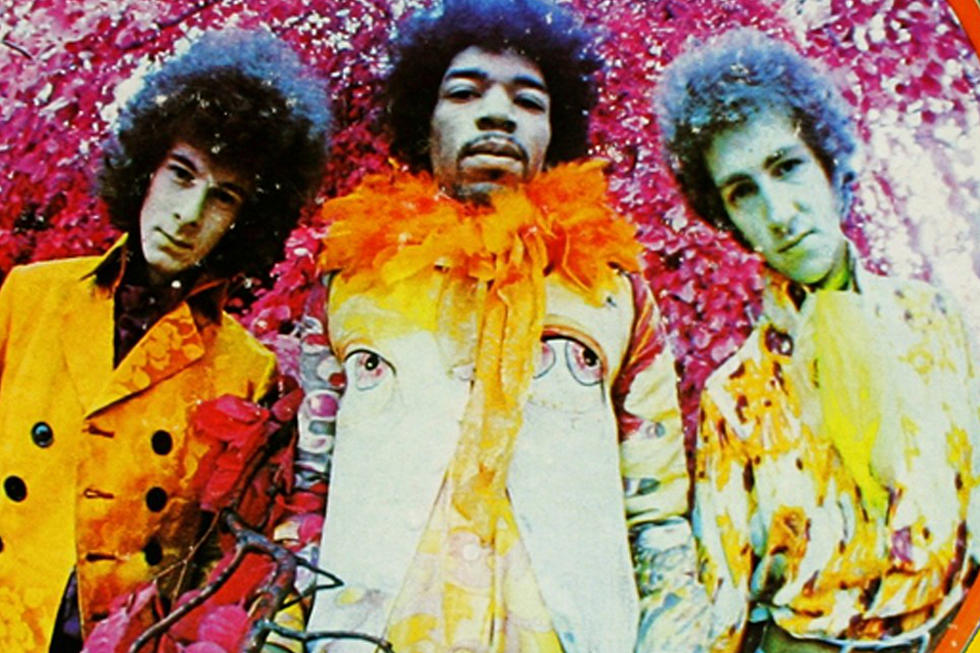
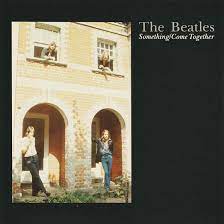
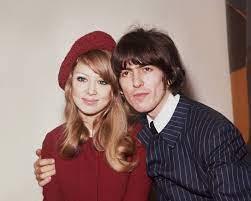
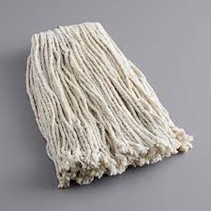


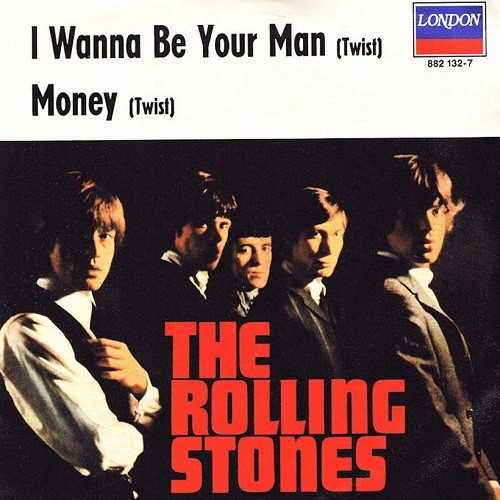


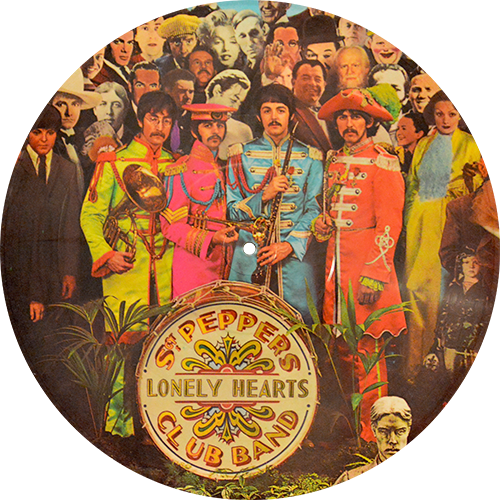


 when I was a small child. Except that The Beatles broke up more than 3 years before I was even born. How could this be? It was a mystery to me for a long time. I didn’t even know it was a song by The Beatles until I was a teenager in the 1980s. It puzzled me how I could remember “Got to Get You Into My Life” being in heavy rotation with the songs I heard played on the radio in my dad’s Chevy Nova back in the mid-70s.
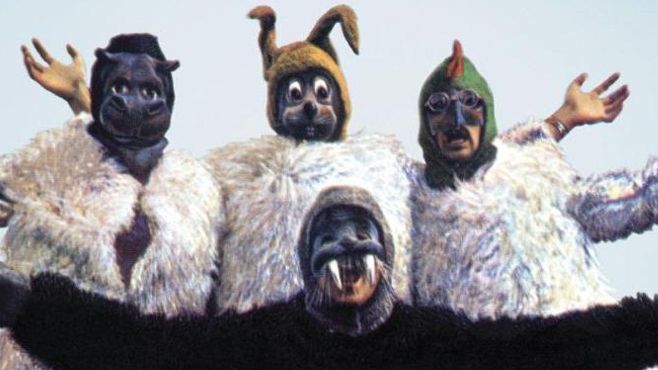


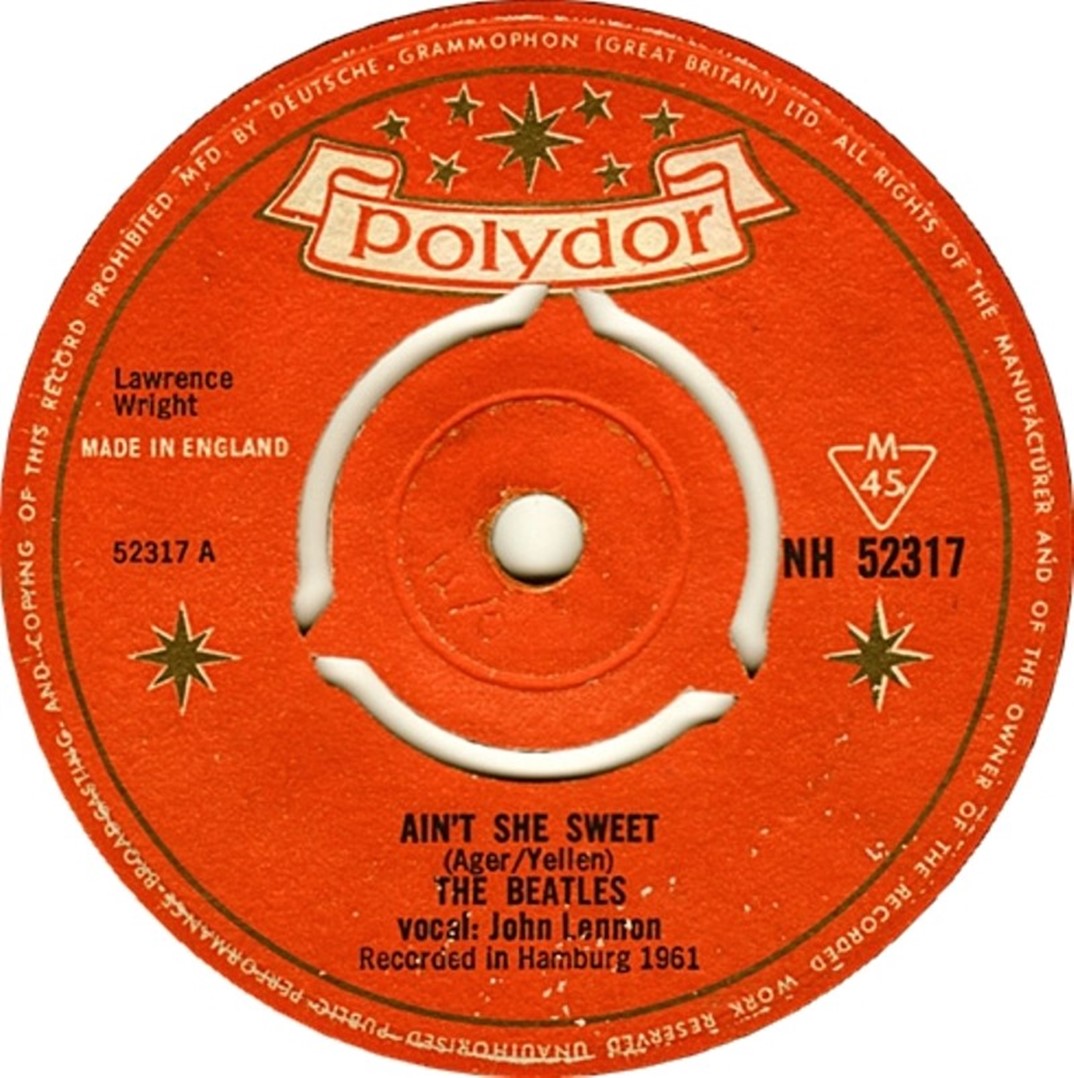
 PowerPop... An Eclectic Collection of Pop Culture