Not the most well-known song by the Stones but a lot of American’s owned it. I bought the single Satisfaction in 1979 and flipped it over and found this oddly named likable song. This was the American B side to Satisfaction. Not exactly Day Tripper/We Can Work It Out but a likable single all the same. The song was released in 1965.
The Stones recorded this in Chess studios in Chicago.
The song is about George Sherlock who was the London Records promotions man who accompanied the Stones to California. This was their response to having basically a chaperone.
Well, I’m waiting at the bus stop in downtown L.A.
But I’d much rather be on a boardwalk on Broadway
Well, I’m sitting here thinkin’ just how sharp I am
I’m an under assistant west coast promo man
Well, I promo groups when they come into town
Well they laugh at my toupee, they’re sure to put me down
Well, I’m sitting here thinking just how sharp I am
Yeah, I’m sitting here thinking just how sharp I am
I’m a necessary talent behind every rock and roll band
Yeah, I’m sharp
I’m really, really sharp
I sure do earn my pay
Sitting on the beach every day, yeah
I’m real real sharp, yes I am
I got a Corvette and a seersucker suit
Yes, I have
Here comes the bus, uh oh
I thought I had a dime
Where’s my dime
I know I have a dime somewhere
I’m pretty sure
On August 15, 1965 The Beatles played to the largest audience to that point of any rock band. 55,600 fans were in Shea Stadium ready to be entertained by the Beatles.
Looking at the equipment they had…it had to be hard to hear anything. They used 100 Watt Vox amps. They are great amps but they used the house PA in a baseball stadium. I’ve played much smaller outside events with more powerful equipment and most importantly a better PA…but it didn’t matter at the time though as Ringo said:
“We always used to use the house PA,” added Starr. “That was good enough for us, even at Shea Stadium. I never felt people came to hear our show — I felt they came to see us. From the count-in on the first number, the volume of screams drowned everything else out.”
The fans turned Beatle concerts…and especially this one into an event more than a concert. The Beatles were very aware of the magnitude of this concert. ABC filmed the concert and it became a documentary. The looks on the Beatles faces were “Can you believe this?” and they seem to really enjoy this concert. The screams come through when you watch the documentary. They drown out everything. Luckily they plugged the recording equipment into the soundboard so at least you can hear them.
During the closing song, “I’m Down” John was playing the organ and you can tell he was having a great time. He was playing this his arms and cracking up George as well. John once told Sid Berstein who promoted the concert “You know, Sid, that concert in 1965 at Shea Stadium … I saw the top of the mountain on that unforgettable night.'”
The Shea Stadium total was an attendance record that lasted until Led Zeppelin played to 56,800 in Tampa in 1973. That record was soon broken by The Who. The difference being by then the rock crowd had grown up and so had the equipment.
The 12 song Beatles setlist that lasted a whole 30 minutes.
Twist and Shout
She’s a Woman
I Feel Fine
Dizzy Miss Lizzy
Ticket to Ride
Everybody’s Tryin’ to Be My Baby
Can’t Buy Me Love
Baby’s in Black
Act Naturally
A Hard Day’s Night
Help!
I’m Down
Like so many of The Beatles achievements…They were pioneers.
With a line like “You Ain’t Worth The Salt In My Tears” in a song…how could you not listen? This song was released in 1983 and reached #36 on the Billboard Charts. I liked the song because it had a catchy guitar riff which stood out at the time with all the synth music going on.
Martin Briley is a talented musician… below is from Wikipedia
Briley has received orchestral commissions, and has written songs for such artists as Céline Dion, *NSYNC, Dream, Michael Bolton, Mietta, Kenny Loggins, Pat Benatar, Jessica Andrews, Five Star, Jeff Healey, Rebecca St. James, Nana Mouskouri, Willie Nile, Gregg Allman, Night Ranger, David Hasselhoff, Patrick Swayze, Michael Monroe, Chastity Bono, Peter Tork, Nikki Webster, Hope Partlow, Natascha Sohl, Ballas Hough, Phil Stacey, Orianthi, The Maine and Barry Manilow.
Salt In My Tears
I never did it, no, I won’t admit it
Why should I lie for you anymore
You never loved me
You pushed and shoved me
I see the woman I never saw
I saw you laugh when the knife was twisted
It still hurts but the pain has shifted
I’m looking back at the time that drifted by
But I won’t cry for the wasted years
Cause you ain’t worth the salt in my tears
Feeling neglected, used and rejected
You need a shoulder to lean upon
Baby you picked him, found your next victim
Don’t worry, someone will come along
I broke the spell that you kept me under
I had enough of the rain and thunder
I lost track of the time and I wonder why
But I won’t cry for the wasted years
Cause you ain’t worth the salt in my tears
I’ll sit around and drink a few more beers
Until the memory just disappears
Cause you ain’t worth the salt in my tears
I saw you laugh when the knife was twisted
It still hurts but the pain has shifted
I’m looking back at the time that drifted by
But I won’t cry for the wasted years
Cause you ain’t worth the salt in my tears
I’ve always liked the Clash. Love the London Calling album and really started to listen to them when Combat Rock came out. I’ve never known much about them. This was the first song I ever knew by the Clash when I heard it on the radio in 1980.
They started off as a punk band but The Clash, unlike some other Punk bands, could really play and sing well…and above all else write some great songs. This song was written by
The song was released in 1979 and reached #23 on the Billboard Charts. It is listed by Rolling Stone Magazine at 298 in the top 500 songs of all time. Train in Vain was written by Mick Jones and Joe Strummer.
On the original vinyl copy of the album “Train Is Vain” isn’t listed on the tracklisting on the sleeve. The story is that the song was recorded for an NME promotional flexi-disc once the London Calling sessions were done, and the flexi-disc idea then fell through, leaving the song with no home. The band hastily tacked the song onto the end of the album just before vinyl pressing, but the sleeve had already been designed and there was no time to add it to the tracklisting. The only clue of it’s existence is in the run-out groove on Side 4, where the name is carved into the vinyl. On all subsequent releases (including the CD copy) “Train In Vain” is included on the tracklisting on the sleeve.
A song by a British band called The La’s. A very good pop song that has no verses…it just repeats the chorus four different ways four different times. The song peaked at #49 on the 1991 Billboard Chart and #13 on the UK charts in 1990.
It was written by the singer Lee Mavers and recorded in 1988 and remixed and released again in 1990.
Many people think the song was about heroin. Paul Hemmings an ex-guitarist for the band denies that rumor. Either way, it is a perfectly constructed pop song.
It’s been covered by a lot of artists but probably most successfully by Sixpence None the Richer. I’ve always liked The La’s version the best.
“There She Goes”
There she goes There she goes again Racing through my brain And I just can’t contain This feeling that remainsThere she blows (there she blows again) There she blows again (there she blows again) Pulsing through my vein (there she blows again) And I just can’t contain This feeling that remainsThere she goes There she goes again She calls my name Pulls my train No one else could heal my pain But I just can’t contain This feeling that remains
There she goes There she goes again Chasing down my lane And I just can’t contain This feeling that remains
There she goes (there she goes again) There she goes (there she goes again) There she goes (there she goes again)
Buddy Holly’s music is still relevant almost sixty years after he passed away in 1959. He didn’t have a big voice like Elvis, Little Richard or some of his peers but he wrote and crafted beautiful melodies for his voice to weave through.
I consider him the beginning of power pop. His Fender playing a clean jangling melody. Songs like Maybe Baby, Peggy Sue, and Words of Love influenced future artists like The Beatles, Hollies, Bob Dylan, and the list is endless. He wrote his own songs and is still influencing artists today with a career that only lasted 18 months.
You can hear Buddy in everyone from Marshall Crenshaw, The Byrds, Tom Petty to Nick Lowe. His songs have been covered by The Beatles (Words of Love), Linda Ronstadt (That’ll Be The Day), and The Rolling Stones (Not Fade Away).
Not only was he a great songwriter but also a great producer and he would have only gotten better. Unlike a lot of his fifties counterparts, I really believe that Buddy Holly would have fit in the music scene post Beatles. I think his best songs were in front of him. Most of his music transcends the fifties and would have fit nicely in the sixties.
His voice was also important. The inflection in his voice was part of his style and the whole package. He could make it rough with Oh Boy or sweet with Everyday. He was never a sex symbol like Elvis… people related to this tall skinny guy with glasses. You didn’t have to look like Elvis or be wild like Jerry Lee Lewis to make it.
Sometimes I forget how big of an influence he left until I start listening to him again and hear the artists that followed him.
John Lennon on Buddy Holly
“Buddy Holly was the first one that we were really aware of in England who could play and sing at the same time – not just strum, but actually play the licks”
Paul McCartney on Buddy Holly
“I still like Buddy’s vocal style. And his writing. One of the main things about The Beatles is that we started out writing our own material. People these days take it for granted that you do, but nobody used to then. John, I started to write because of Buddy Holly. It was like, ‘Wow! He writes and is a musician'”
Bob Dylan on Buddy told to Robert Shelton
“Buddy Holly was a poet” “Way ahead of his time.”
Bob Dylan Accepting a Grammy for Album of the Year for “Time Out Of Mind” in 1998,
“And I just want to say that when I was sixteen or seventeen years old, I went to see Buddy Holly play at Duluth National Guard Armory and I was three feet away from him…and he looked at me. And I just have some sort of feeling that he was — I don’t know how or why — but I know he was with us all the time we were making this record in some kind of way.”
This 1970 George Harrison song is off of the great album “All Things Must Pass.” It is often overlooked but its one of my favorite George Harrison songs. George wrote it in 1966 but it didn’t see daylight until 1970. He brought it up on the Let It Be sessions but he later said that John Lennon rejected it. That I don’t understand…I Me Mine was passed but not this one? I like “I Me Mine” but not like this one. Maybe George did more work on it afterward or it was the length of the song.
It resembles Hey Jude in its structure. It was the B side to My Sweet Lord which went to #1 on the charts. In Canada, this song was the preferred song and it went to #1 in Canada.
No one benefitted from the break up of the Beatles like George. He had so many songs that we had written and could not get enough of them on Beatles albums, understandably so with Lennon and McCartney. He released a 3 album set called “All Things Must Pass” in 1970.
George began recording this Isn’t It A Pity on June 2, 1970. Phil Spector produced it using his trademark Wall of Sound with heavy reverb. On the remastered version, the reverb is toned down a little.
This is from Timothy White’s interview with George Harrison that appeared in the Dec. 30, 2000, issue of Billboard:
Had you intended songs like “Isn’t It A Pity” to be things just for you?
No, I mean, this is the funny thing: imagine if the Beatles had gone on and on. Well, the songs on “All Things Must Pass,” maybe some of them I would probably only just got ’round to do now, you know, with my quota that I was allowed [laughs]. “Isn’t It A Pity” would just have been a Beatles song, wouldn’t it? And now that could be said for each one of us. “Imagine” would have been a Beatles song, but it was with John’s songs. It just happened that the Beatles finished.
What was the inspiration for “Isn’t It A Pity”?
It’s just an observation of how society and myself were or are. We take each other for granted — and forget to give back. That was really all it was about.
It’s like “love lost and love gained between 16- and 20-year-olds.” But I must explain: Once, at the time I was at Warner Bros. and I wrote that song “Blood From A Clone” [on the 1981 “Somewhere In England” album], that was when they were having all these surveys out on the street to find out what was a hit record. And apparently, as I was told, a hit record is something that is about “love gained or lost between 14- and 19-year-olds,” or something really dumb like that.
So that’s why I wrote “Isn’t Is A Pity” [laughs]; I thought, ‘Oh, I’ll get in on that!”
“Isn’t It A Pity”
Isn’t it a pity Now, isn’t it a shame How we break each other’s hearts And cause each other pain How we take each other’s love Without thinking anymore Forgetting to give back Isn’t it a pitySome things take so long But how do I explain When not too many people Can see we’re all the same And because of all their tears Their eyes can’t hope to see The beauty that surrounds them Isn’t it a pity
Isn’t it a pity Isn’t is a shame How we break each other’s hearts And cause each other pain How we take each other’s love Without thinking anymore Forgetting to give back Isn’t it a pity
Forgetting to give back Isn’t it a pity Forgetting to give back Now, isn’t it a pity
[6 times, fade the 6th:] What a pity What a pity, pity, pity What a pity What a pity, pity, pity
I heard this song and liked it right away. Jimmy Buffett did a cover but I prefer John’s rawer version. It came out in 2003 on the album “Beneath This Gruff Exterior” which peaked at #73 on the Billboard Album Charts. John’s reputation has always been better than his chart success but other artists have covered his songs with great chart success…Bonnie Raitt being one.
John mentions “Wes and Jimmy” and that would be Jazz musicians Wes Montgomery and Jimmy Smith.
Personally, I like John’s voice and I usually like his version of his songs.
“Window On The World”
A broken promise i kept too long A greasy shade and a curtain drawn A broken glass and a heart gone wrong That’s my window on the worldA cup of coffee in a shaky hand Wakin’ up in a foreign land Tryin’ to act like i got somethin’ planned That’s my window on the world
[Chorus 1:] That’s my window on the world Could you stand a little closer, girl Don’t let mama cut those curfs That’s my window on the world
In broad daylight that circus tent pulled up stakes I don’t know where it went A close dark room with a busted vent That’s my window on the world
I think about you when i’m countin’ sheep I think about you, then i can’t sleep I think that ocean is just so deep That’s my window on the world
[Chorus 2:] That’s my window on the world Could you stand a little closer, girl The queen of Sheba meets the duke of earle That’s my window on the world
Down on indiana avenue Wes and jimmy, man they played the blues I guess they were only passin’ through That’s my window on the world
[Chorus 1:] That’s my window on the world Could you stand a little closer, girl Don’t let mama cut those curfs That’s my window on the world
[Chorus 2:] That’s my window on the world Could you stand a little closer, girl The queen of Sheba meets the duke of earle That’s my window on the world
I first read about this concert-festival in a Grateful Dead biography… There is not much video footage from the concert. I never could understand why this concert didn’t hold up in history like some others like The Atlanta Pop festival and others. I’m not saying it should have been remembered like Woodstock because it’s cultural impact was like no others…but this drew more than any other festival including Woodstock.
An estimated 600,000 people came to this concert on July 28, 1973, in Watkins Glen N.Y. 45 years ago. Maybe the reason it is not as remembered is that only three bands performed…but the three bands were giant bands in their prime. The Grateful Dead, The Allman Brothers, and The Band.
From the bands themselves, almost all agree the sound check on Friday was better than the concerts.
Perspective about the concert by a member from each band.
Robbie Robertson from his book Testimony
Then we got a request from Bill Graham, who was putting together a show “just up the highway from us” at the Watkins Glen Raceway. We’d be performing with the Allman Brothers and the Grateful Dead. Playing some gigs could help us get “back on the stick,” as they say. We went up to Watkins Glen the day before the show for the sound check. Bill Graham said that the Dead would go on first and play for three or four hours—that was part of their thing, giving the audience their money’s worth. “Until the drugs wear off,” said Bill, laughing. We’d go on in the late afternoon, and the Allmans would take over at sundown. As we were leaving the sound check, it looked like cars were heading toward the racetrack from every direction. Bill said he expected maybe a hundred thousand or more. When we came back the next day, we couldn’t believe our eyes. Hundreds of thousands of people had showed up, and more just kept coming and coming. The crowds mowed down the high chain-link fences around the racetrack and filled the area as far as the eye could see. Bill was running around trying to make people pay admission, but the mobs were out of control. When it came time for the Band to take the stage, it started pouring. As we waited, hoping it was going to let up, Bill came over. “They’ve determined there are 650,000 people here. It’s the biggest concert in history.” The news was somewhere between an incredible accomplishment and a huge disaster. The rain started letting up, and Garth played some churchy, rainy-day keyboard sounds out over the crowd. When it was safe to go on, we decided to start our set with Chuck Berry’s “Back to Memphis.” And wouldn’t you know, as Levon sang that baby, the sun came out.
Gregg Allman from My Cross to Bear
Right before Brothers and Sisters came out, we played the festival at Watkins Glen with the Band and the Grateful Dead, in front of six hundred thousand people—the biggest show in history to that point. People always talk about Woodstock. Watkins Glen was like three Woodstocks. I think actually it might’ve been a little too big. They should have had people all the way around the raceway, and maybe had the stage in the center revolving real slowly, do a revolution in a minute. That’s not that complicated. A show like Watkins Glen was uncomfortable, because you know that you’re getting the show across to this many people, but you still got two times that many behind them. You could finish a song, take your guitar off, put it in the case, and latch it up before the last guy heard the last note. Sound ain’t all that fast, not compared to light.
When you’re playing in that situation, you’re kind of thinking about the end. Not that you’re wishing it to be over, but you can’t even hear yourself—that was back before we had the in-ear monitors. Everything was so loud. You just walk out there and start to wince before you even start playing. It’s hard to get any kind of coziness, any kind of feel with the audience. I guess there’s something about that many people seeing you all at once that’s real nice, but it’s just too much. You’re just like a little squeak in the middle of a bomb going off. But it was interesting, and it was a pretty fun day. People were OD’ing all over the place. And of course, Uncle Bill was there, which cured everything. It was exciting to be there and see it—and to be able to make ’em stand up, now that was something else.
Bill Kreutzmann from Deal
We made some questionable business decisions and we couldn’t sell records, but we sure could sell tickets. We sold around 150,000 tickets for a single show at a racetrack in Watkins Glen, New York, on July, 28, 1973. Yes, and more than 600,000 people ended up coming out for it. The lineup was just us, the Allman Brothers, and the Band. That show, called the Summer Jam at Watkins Glen, made it into the Guinness Book of World Records for what, at the time, was the largest audience ever assembled at a rock concert. In fact, that record may still hold today, at least in the U.S., and some have even proposed that it was the largest gathering in American history. Originally, the bill was supposed to just be the Dead and the Allmans, but our respective camps fought with the promoter over which band would get headliner status. The solution was that both bands would co-headline and they’d add a third, “support” act. The friendly (“-ish”) competition between us and the Allman Brothers carried through to the event itself. And yet, the memory that I’m most fond of and hold most dear from that whole weekend was jamming backstage with Jaimoe, one of the Allman’s drummers. We were just sitting in the dressing room, banging out rhythms, and that was a lot of fun for me. Jaimoe backed Otis Redding and Sam & Dave before becoming a founding member of the Allman Brothers, where he remains to this day. He’s a soulful drummer and just an incredible guy who is impossible not to like. As for the show itself, it is a well-known fact that the Grateful Dead always blew the big ones. Watkins Glen was no exception. However, we still got a great night of music out of it—the night before. The show took place on a Saturday, but by Friday afternoon there were already about 90,000 people in front of the stage. I’ve heard others place that number closer to 200,000. Either way, the audience was already many times the size of any of our regular shows, and the show was still a full day away. The only duty we had on Friday was to do a soundcheck, and even that was somewhat optional. The Band soundchecked a couple of songs. The Allman Brothers soundchecked for a bit. Then, perhaps spurred on by our friendly rivalry, we decided to one-up both bands by turning our soundcheck into a full-on, two-set show. Naturally, without any of the pressure of the “official show” the next day, we really let loose and played a good one. There was an eighteen-minute free-form jam that eventually made it onto So Many Roads, one of our archival box sets. It’s good music, all right, and it still holds its own. On the day of the actual show, we had to fly into the venue via helicopter because the roads were all backed up, like what happened at Woodstock. People left their cars on the side of the road and walked for miles to the gig. I remember looking down from the helicopter and seeing the most incredible impressionist painting, a Monet of heads, shoulders, tie-dyes, baseball caps, and backpacks, packed front to back. You couldn’t see the ground for the crowd. To this day, I’ve never seen anything else like that. Nowadays at large music events and festivals, they have golf carts for artists and crews to get around, but back then they used little motor scooters. Early, during the day of our supposed “soundcheck,” I commandeered one of these scooters and, because the venue was an actual racetrack, I decided to do a lap. This was before the gates were opened. The scooter went maybe fifteen or eighteen miles an hour, something stupid like that, and it took forever just to do one lap. But I did it. And that’s when I first started to get a feel for the scale of the event and just how large it was. During the Summer Jam itself, I watched the other bands play and I honestly thought the Allman Brothers played better on the big day than we did. As for the Band, well, they always sounded great.
If you have read this long…below is some crowd video and a little of the music.
This is my first attempt at a list. I have picked what I think were the top 20 double A-Sided singles in pop/ rock. I feel good until number 5…after that it gets hard. When I made the list I wasn’t counting how many copies they sold or just chart history. I tried to put their importance in history into account. and my preference…which of course means nothing but it’s fun…
Beatles – Strawberry Fields/Penny Lane The number 1 position is the only position that didn’t give me any trouble…
Beatles – Hey Jude/Revolution – What a single this is… Two of the Beatles best- known songs together for their first Apple release. A great way to start the Apple label.
Rolling Stones – Honky Tonk Women/You Can’t Always Get What You Want The Stones released this in 1969 and Honky Tonk Women when to number 1
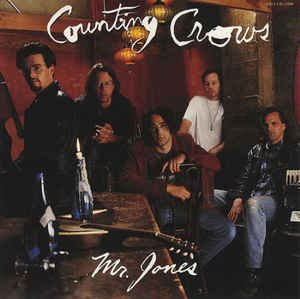
Elvis – Don’t Be Cruel/Hound DogThis is cool fifties Elvis and untouchable. This record influenced young rockers all over the world.
Beatles – Something/Come Together George finally gets an A side and he runs with it and you have Come Together as the B side.
Rolling Stones – Ruby Tuesday / Let’s Spend the Night TogetherNo Chicago blues here but beautifully crafted pop.
Creedence Clearwater Revival – Proud Mary/Born On The Bayou This was the major breakthrough single for CCR and they kept coming.
The Band – Up On Cripple Creek/The Night They Drove Old Dixie Down The quality of this single is outstanding. Neither was a top 20 hit but they are still played to this day.
Beatles – Paperback Writer/Rain The bass jumps out at you on these recordings. Paul plays a Rickenbacker and boosted the level in the studio
Creedence Clearwater Revival – Down on the Corner / Fortunate Son Fortunate Son was John Fogerty’s angriest song and it made his feelings known.
Beatles – I Want to Hold Your Hand/I Saw Her Standing There The single that broke the Beatles in America. I like some of the other Beatle singles more but this one was huge and maybe the most important of their career.
Chuck Berry – Johnny B. Goode/Around and Around Johnny B. Goode is the song ever bar band is required to know. The guitar riff is eternal.
Rolling Stones – Bitch/Brown Sugar If I had to explain to an alien what Rock and Roll was all about without talking…I would hand them a picture of Keith Richards and a copy of Brown Sugar.
Creedence Clearwater Revival – Travelin’ Band / Who’ll Stop the Rain After playing Woodstock John went home and wrote Who’ll Stop the Rain
Sam Cooke – Shake/A Change Is Gonna Come A Change Is Gonna Come speaks for itself. What a beautiful song.
Queen – We Are The Champions/We Will Rock You Two of Rocks biggest anthems was released in 1977 and you could not go anywhere without hearing both
Beach Boys – Wouldn’t It Be Nice / God Only Knows God Only Knows is one of the most beautiful sounding songs ever.
Buddy Holly – Peggy Sue / Everyday Peggy Sue is probably the song Buddy is most remembered for…Everyday is a great song in itself… Buddy was a huge influence on The Beatles.
Beach Boys – I Get Around/Don’t Worry Baby I Get Around went to number 1 but Don’t Worry Baby is the reason this song is on the list.
Elvis Presley – Mystery Train / I Forgot to Remember to Forget Two classics by Elvis. Mystery Train’s guitar sound is just haunting.
Honorable Mentions
Creedence Clearwater Revival – Up Around the Bend / Run Through the Jungle
Ricky Nelson – Travelin’ Man / Hello Mary Lou
Creedence Clearwater Revival – Bad Moon Rising / Lodi
Chuck Berry – Sweet Little Sixteen / Reelin’ and Rocking
Jimi Hendrix – Purple Haze / The Wind Cries Mary
Sam Cooke – Bring It on Home to Me / Having a Party
Ritchie Valens – Donna / La Bamba
John Fogerty – Rock and Roll Girls / Centerfield
Sly & the Family Stone – Stand! / I Want to Take You Higher
I thought about what would be the most recognizable riffs in rock music. This doesn’t mean I like these the best… I’m sure I missed many more. They are in no particular order.
Smoke On The Water – Probably the most well-known riff of Rock and Roll. I’ve heard so many beginning guitar players butcher this one… and I was one of them at one time.
Satisfaction – This helped start Keith Richards on his way to becoming The Human Riff. The intro is immediately recognizable.
Daytripper – John Lennon was no slouch creating memorable riffs. I Feel Fine, Yer Blues and Daytripper…My personal favourite is And Your Bird Can See
Black Dog – To my surprise, this riff was not Jimmy Page…it was written by the very underrated John Paul Jones
You Really Got Me – As soon as that early raw distorted guitar starts you know the very English Ray Davies is about to sing.
Another One Bites the Dust – It’s a Bass intro that won’t leave your head. When it came out I could not go anywhere without hearing someone hum, whistle, or sing it…it is infectious
Purple Haze – Jimi’s intro that shot him in the stratosphere.
Wild Thing and Louie Louie – Same three-chord pattern but you know what they are right away.
Baba O’ Riley – As soon as you hear the first 2 seconds…you know what it is.
Back in Black – AC/DC using the same chords over and over to great effect.
Honourable Mention… Hard Days Night, Can’t Explain, Sunshine of Your Love, Sweet Home Alabama.
I could listen to this song on a tape loop forever and ever. This song came out in 1967 on the Traffic album “Mr. Fantasy.” It was written by Jim Capaldi, Steve Winwood and Chris Wood.
Jim Capaldi on writing the lyrics for Dear Mr Fantasy
“It was the summer of 1967, and we were all living in this cottage in Berkshire. We were one of the first English bands to live together like that. We thought we’d try it and see if anything came of it. I remember the day very clearly: A bunch of friends came over early in the day and we had quite a party. It was sunny and the corn was coming up nicely around the cottage, and we were quite enjoying ourselves if you know what I mean. As things finally wound down in the evening, I was sitting around just doodling, as I would often do, drawing this character. It was this little fellow with a spiked sun hat. He was holding some puppeteer’s strings, and the puppet hands on the end of the strings were playing a guitar. Under that, I just scribbled some words: ‘Dear Mr. Fantasy,’ play us a tune, something to make us all happy’ and on a bit. It was nice, but I didn’t think much of it; certainly, it wasn’t intended to be a song.
“I crashed out eventually, but I remember hearing Steve and Chris playing around after. The next day, I woke up and found that they’d written a song around the words and drawing I’d done. I was completely knocked out by it. Chris wrote that great bass line. We added some more words later and worked out a bigger arrangement, too. Those were very happy days for Traffic.”
“Dear Mr. Fantasy”
Dear Mister Fantasy play us a tune
Something to make us all happy
Do anything take us out of this gloom
Sing a song, play guitar, make it snappy
You are the one who can make us all laugh
But doing that you break out in tears
Please don’t be sad if it was a straight mind you had
We wouldn’t have known you all these yearsDear Mister Fantasy play us a tune
Something to make us all happy
Do anything take us out of this gloom
Sing a song, play guitar, make it snappy
You are the one who can make us all laugh
But doing that you break out in tears
Please don’t be sad if it was a straight mind you had
We wouldn’t have known you all these years
Dear Mister Fantasy play us a tune
Something to make us all happy
Do anything take us out of this gloom
Sing a song, play guitar, make it snappy
You are the one who can make us all laugh
But doing that you break out in tears
Please don’t be sad if it was a straight mind you had
We wouldn’t have known you all these years
This is another song I discovered watching Life On Mars. I never heard of the song much less Lindisfarne. It’s a feel-good, quirky song with bright harmonies. It was released in 1971 and went to number 5 in the UK.
The song was written by Lindisfarne member Rod Clements and sung by Ray Jackson. Some say the song parallels Mr Tamborine Man by Bob Dylan. I love finding “new” old music to listen to. Life On Mars provided me with a lot of music I never heard.
The mandolin solo in Maggie May by Rod Stewart was played by Ray Jackson. On the “Every Picture Tells A Story”album liner notes, it is stated that “The mandolin is played by the mandolin player in Lindisfarne. The name slips my mind.”
Meet Me On The Corner
Hey mister dream seller Where have you been. Tell me have you dreams I can see? I came along, just to bring you this song, Can you spare one dream for me?
You wont have met me, And you’ll soon forget. So don’t mind me tugging at your sleeve. I’m asking you, If I can fix a rendezvous, For your dreams are all I believe.
[Chorus] Meet me on the corner, When the lights are coming on, And I’ll be there. I promise I’ll be there. Down the empty streets, We’ll disappear into the dawn, If you have dreams enough to share.
Lay down your bundles, Of rags and reminders, And spread your wears on the ground. Well I’ve got time, If you’re dealing mine, I’m just hanging around.
[Chorus]
Hey mister dream seller, Where have you been. Tell me have you dreams I can see? I came along, just to bring you this song, Can you spare one dream for me?
Some songs you don’t expect to hear a cover of…this is one of them.
I bought this single in 1976 in a local record store we had in our small town called Sounds and Scenes (long gone but I love the name). I liked the song Good Vibrations and didn’t know at the time who did the original version.
He did an album called Faithful, full of covers and he performed them to the letter. I’ve listened to them and they are close but this one is really on it. He did Rain, Strawberry Fields, If Six Was Nine, and Bob Dylan’s Most Likely You Go Your Way And I’ll Go Mine.
Todd Rundgren is very talented and I’m a fan of him and he did a great duplicate version of this song. My question now is why? He got so close…you have to wonder why he did it in the first place. But…who am I to question Todd Rundgren?
I usually don’t like when an artist covers a song and they change it so much you cannot tell what the song is… not a problem with this one…but I do like for an artist to put something of him or herself in it…Todd does exactly what he says in the album name… he was very faithful to these songs.
I got this album in 1986 and have never stopped listening to it. This is one of my favorite Springsteen’s albums. It was his debut album in 1973 and there is not a song on it I don’t’ like… It’s not very polished but that is ok. The songs have a stream of conscious feel to them. The album was critically praised but did not have huge sales.
The most famous song on the album is “Blinded By The Light” which was covered later by Manfred Mann Earth’s Band that peaked at #1 in 1977. They also covered another song off the album called “Spirit of the Night” which peaked at #20 in 1977.
Personally, I like Bruce’s versions of both songs much more. “It’s Hard to be a Saint in the City” is another great track and one of the most powerful songs he ever wrote. “Does This Bus Stop At 82nd Street?” is a journey through an enjoyable play of words. It was written about a bus journey to a girlfriend’s house. Here is a sample of a verse
“Wizard imps and sweat sock pimps Interstellar mongrel nymphs Rex said that lady left him limp Love’s like that (sure it is) Queen of diamonds, ace of spades Newly discovered lovers of the Everglades They take out a full-page ad in the trades To announce their arrival And Mary Lou, she found out how to cope She rides to heaven on a gyroscope The Daily News asks her for the dope She said, “Man, the dope’s that there’s still hope”
I hear Dylan and a Van Morrison influence in Bruce’s first album. It is rough and raw but worth the price of admission. My personal favorite is “Spirit of the Night.” This song hints at some of the characters and places that start populating Bruce’s musical world.
The song Growin’ Up is a complex and honest look at growing up and rebellion. Some lyrics…
“I took month-long vacations in the stratosphere, and you know it’s really hard to hold your breath
I swear I lost everything I ever loved or feared, I was the cosmic kid in full costume dress
Well, my feet they finally took root in the earth, but I got me a nice little place in the stars
And I swear I found the key to the universe in the engine of an old parked car
I hid in the mother breast of the crowd, but when they said, “Pull down,” I pulled up
Ooh…growin’ up
Ooh…growin’ up”
This is a crazy good debut album. I like it a little better than his second album “The Wild, the Innocent & the E Street Shuffle” but both albums were building up to everything crystallizing in his third…Born to Run.
Track Listing
Blinded By The Light
Growin’ Up
Mary Queen Of Arkansas
Does This Bus Stop At 82nd Street?
Lost In The Flood
The Angel
For You
Spirit In The Night
It’s Hard To Be A Saint In The City
Spirit of the Night
Crazy Janey and her mission man were back in the alley trading hands
‘Long came Wild Billy with his friend G-Man all duded up for Saturday night
Well, Billy slammed on his coaster brakes and said, “Anybody wanna go on up to Greasy Lake?
It’s about a mile down on the dark side of route eighty-eight, I got a bottle of rose so let’s try it
We’ll pick up Hazy Davy and Killer Joe and I’ll take you all out to where the gypsy angels go
They’re built like light
Ooh, and they dance like spirits in the night” (all night)
In the night (all night)
Oh, you don’t know what they can do to you
Spirits in the night (all night)
Oh, in the night (all night)
Stand right up now and let it shoot through you
Well now Wild young Billy was a crazy cat and he shook some dust out of his coonskin cap
He said, “Trust some of this, it’ll show you where you’re at, or at least it’ll help you really feel it”
Well, by the time we made it up to Greasy Lake I had my head out the window and Janey’s fingers were in the cake
I think I really dug her ’cause I was too loose to fake
I said, “I’m hurt,” she said, “Honey, let me heal it”
And we danced all night to a soul fairy band
And she kissed me just right like only a lonely angel can
She felt so nice, just as soft as a spirit in the night (all night)
In the night (all night)
Oh, Janey don’t know what she do to you
Like a spirit in the night (all night)
All night (all night)
Stand right up and I let her shoot through me
Now the night was bright and the stars threw light on Billy and Davy
Dancing in the moonlight
They were down near the water in a stone mud fight
Killer Joe gone passed out on the lawn
Well now Hazy Davy got really hurt, he ran into the lake in just his socks and a shirt
Me and Crazy Janey was making love in the dirt, singing our birthday songs
Janey said it was time to go
So we closed our eyes and said goodbye to gypsy angel row, felt so right
Together we moved like spirits in the night (all night)
In the night (all night)
Oh, you don’t know what they can do to you
Them spirits in the night (all night)
All night (all night)
Oh, stand right up and let it shoot through you
Like a spirit in the night (all night)
All night (all night)
All night, ooh, ooh, man, all night
The night
Be-da-ba the night
In the night