The band was founded in 1967 and after recruiting vocalist Mariska Veres they soon became huge. With their single “Venus” they became the first Dutch band ever to reach the first spot on the American Billboard Hot 100. The band had a series of subsequent hits but decided to call it a day in 1974.
Their influence reached well beyond their generation: even bands like Nirvana and The Prodigy used Shocking Blue’s “Love Buzz”. Shocking Blue released this song on the group’s 1969 album, At Home.
Krist Novoselic of Nirvana was once quoted referring to Shocking Blue’s Klaasje van der Wal as “a bass god.”
The song was covered by Nirvana, released as their debut single in 1988.
Love Buzz
Would you believe me when I tell you You’re the king of my dreams? Please don’t deceive me when I hurt you; It just ain’t the way it seems.
Can’t you hear my love buzz? Can’t you hear my love buzz? Can’t you hear my love buzz?
I need you like a desert needs rain; I would rather like to die. Darling I hurt when I do not see you, So spread your wings and fly.
Can’t you hear my love buzz? Can’t you hear my love buzz? Can’t you hear my love buzz?
Would you believe me when I tell you You’re the king of my dreams? Please don’t deceive me when I hurt you; It just ain’t the way it seems.
Can’t you hear my love buzz? Can’t you hear my love buzz? Can’t you hear my love buzz?
I need you like a desert needs rain; I would rather like to die. Darling I hurt when I don’t see you, So spread your wings and fly.
Can’t you hear my love buzz? Can’t you hear my love buzz? Can’t you hear my love buzz?
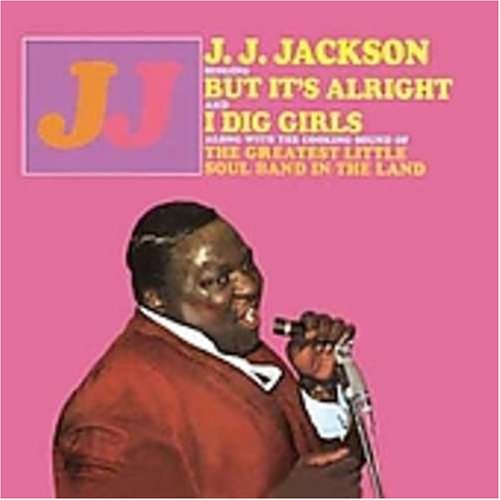
This is a song I’ve heard forever but never knew who sang it. J.J. Jackson wrote this song with Pierre Tubbs and released it in 1966. It peaked at #22 in the Billboard 100 and #4 on the R&B Singles Charts.
It’s a great R&B/Rock blast and J.J. gives a great performance with his vocals and the guitar riff is as catchy as you can get without being corny.
J. J. (not to be confused with the MTV VJay JJ Jackson) was a songwriter, arranger, and singer. He wrote his own music and worked with a number of artists, including The Shangri-Las, Jack McDuff, Jimmy Witherspoon, and Mary Wells, in the early to mid-’60s. He was a one-hit wonder on his own but it’s a great song.
But It’s Alright
You don’t know how I feel You’ll never know how I feel When I needed you to come around You always try to bring me down Oh, but I know, girl, believe me when I say that You are surely, surely gonna pay, girl But it’s all right all right girl You can hurt me but it’s all right Hey now, one day ah, you will see You’ll never find a guy like me Who’ll love you right both day and night You’ll never have to worry ’cause it’s all uptight Oh, but I’m tellin’ you girl and I know it’s true That I was made to love only you But it’s all right, all right girl You can hurt me, but it’s all right Go on, yeah
Oh, oh, yeah My my my baby, wow, yeah! But it’s all right all right girl Hey, say it’s all right all right girl Now there’s one thing I want to say, hey, yeah You’ll meet a guy who’ll make you pay He’ll treat you bad and make you sad And you will lose the love you had Oh, but I hate to say I told you so, but Baby, you gotta gotta reap what you sow But it’s all right all right girl You are payin’ now, but it’s all right So goodbye, now, goodbye, girl You’re payin’ now, say bye-bye You hurt me once, you hurt me twice Oh, but-a baby, that don’t cut no ice Hey, goodbye, baby
I’m sounding like one of those AM radio shows…It’s going to be a Shocking Blue weekend! I’ll post some more of their songs Saturday and Sunday. This song has an unusual chorus but it is very catchy.
Shocking Blue was a Dutch rock band formed in The Hague in 1967. They were known for the song Venus which reached #1 in the Billboard 100 in 1970. “Never Marry a Railroad Man” sold over a million records and became a top-ten hit in several countries around the world.
The song is not well known in America but is a great little song. The singer was Mariska Veres who sounded a bit like Grace Slick but with a maybe stronger voice. I found this group a few years ago while listening to Venus and explored their other releases. They did have more songs than Venus that were good.
Mariska was born in Hague, Holland.. Mariska, half-Hungarian and half-German, had often sung with her father, Lajos Veres, who played violin in a gypsy orchestra. She recorded the solo singles called “Topkapi”(1965) and “Dag en nacht” (1967) and had gained experience singing with different groups before she joined Shocking Blue. How did she meet Shocking Blue?
In 1968 Shocking Blue’s manager and music publisher attended a party celebrating the success of Golden Earring’s first number one song in Holland. A band known as the Bumble Bees, fronted by the strong and striking female singer, performed at the party, and the two men thought she would be a perfect addition to Shocking Blue. Robbie van Leeuwen, leader and founder of Shocking Blue, was immediately impressed by her vocal style, quite different from most local singers of the day. When Mariska was asked to join the Shocking Blue, she requested that they (the band members) would not start any relationships with her except professional one. She replaced de Wilde as a lead singer and, no doubt, became the eye- and ear-catching attraction of the band; her soul-tingled voice gave the music a distinct R&B sound. Mariska obviously was an attraction for many fans of SB. It’s easy to imagine how many men and boys had fallen in love with Mariska, with her mystic aura, enigmatic smile, and long black hair (which was, sadly to say, a wig). People, mostly men of course, saw her a sex-symbol, which she was, but she could never cope with it. It was a disappointment for many of her fans when in the late seventies she got rid of her sexy image starting to wear long dresses and relatively short haircut. In spite of her fantastic look Mariska was a pretty shy, a little naive person. She could not really deal with the snobbish Robbie (guitar player): once he shouted at her, she started to cry and phoned her mother, who in return called their manager. Sounds silly, but Mariska was surely not the wild woman everybody thought she was. Mariska also was “famous” for her lifestyle: she never smoked and she did not like alcohol. During those days of “sex, drugs, and rock and roll”, when SB toured the world, Mariska’s most favorite drink was tea.
After Shocking Blue disbanded Mariska started her solo career, which was not successful. She recorded a dozen of solo singles but the singles did not score well although most of them sounded (and still sound) great. Probably, she was not motivated enough, lacked a good manager, and luck was not on her side. In 1978 Mariska was featured in a single “Neon City” recorded by Mistral (Robbie’s group at that time). In 1979 Robbie was planning to reunite the group. They even recorded a single called “Louise” as a part of their come back project, but for some reasons this was cancelled and “Louise” was never released. Robbie van Leeuwen said in an interview that Mariska was the only reason the come back was off, but never said why. Probably, Mariska was just fed up with all the attention and was just overworked. Maybe because of this she does not like to recall the 70’s. In the late 80’s she performed with her group “Veres”. In the early 90’s she appeared on stage with The Clarks, and, in my opinion, their performances together were great. Mariska also sang with several jazz musicians, and even recorded CD with four jazz musicians in 1993 (Mariska Veres Shocking Jazz Quintet). In the fall of 1993 she founded a new band and, with Robbie’s permission, called it Shocking Blue. They recorded a single “Body And Soul” (1994), which was produced by Robbie.
Never Marry A Railroad Man
Have you been broken-hearted once or twice If it’s yes how did you feel at his first lies If it’s no you need this good advice
Never marry a Railroad man
He loves you every now and then His heart is at his new train. No, no, no Don’t fall in love with a Railroad man If you do forget him if you can You’re better off without him ah
Have you ever been restless in your bed And so lonely that your eyes became wet Let me tell you then one thing
The tone of this guitar gets to me every time. This song was the follow up to the #1 Venus and this made it to #43 in the Billboard 100. They are known as a one-hit-wonder but the truth is they had other hits all over the world just not in Billboard.
This song was written by guitarist Robbie van Leeuwen who most all of Shocking Blue’s successful songs. The band formed in 1967 and broke up in 1974. They did regroup a few times in the 80s but never had the success of this period.
The members in this period were Mariska Veres vocals, Robbie van Leeuwen guitarist, Klaasje van der Wal bass guitar and Cor van der Beek drums.
Mighty Joe
Be careful girls For Mighty Joe Be careful! He teaches you all that don’t know He makes you cry Before it’s through
And I bet you like it too Did you hear about Mighty Joe? Did you hear about Mighty Joe? Beware Beware when he is around Mighty Joe with the bass voice!
Mighty Joe was here last year I tell you! Just like you I had no fear I fell for him Baby
And then he made of me a woman Sweet Sweet Sweet thing Sweet Sweet Sweet thing I love you Yes I love you I love you so bad
He took my heart and in a sense
I swear he ain’t got no sense When I said yeah He’s gone to town I warn you He will let you down Did you hear about Mighty Joe? Did you hear about Mighty Joe? Beware Beware when he is around Mighty Joe with the bass voice!
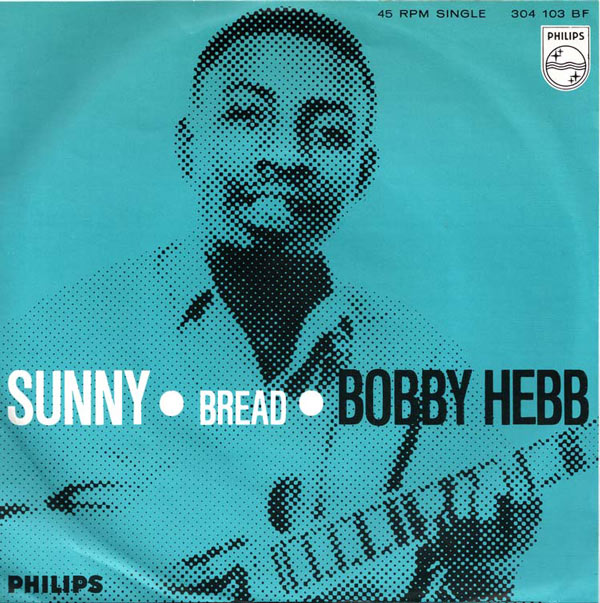
A truly beautiful inspirational song. This song was written by Bobby Hebb and released in 1966. Sunny peaked at #2 in the Billboard 100, #32 in the UK, and #2 in Canada.
His brother Hal Hebb (also a musician), was stabbed to death in a Nashville nightclub on November 23, 1963 – the day after John F. Kennedy was assassinated. Bobby wrote this song 48 hours after the two terrible events. Bobby explained that the song brought him balance and hope for a brighter future – a message that connected with many listeners. He said he preferred a “sunny” disposition over a “lousy” disposition following the murder of his brother.
Hebb recorded this with producer Joe Renzetti, who used a number of New York studio musicians to serve as the backing band. The team of Ashford & Simpson (Nick Ashford and Valerie Simpson) sang backup along with Melba Moore.
Hebb opened for The Beatles on their last tour, which took place in America and ran from August 12-29, 1966.
Hebb died in 2010 at age 72. The Associated Press also reported that he became one of the first black artists ever to appear on the Grand Ole Opry. At the time of Hebb’s death, “Sunny” was listed as the 18th most performed song in the BMI catalog.
From Songfacts
This soul standard speaks of an uplifting love that brings comfort through the pain. Unlike many songs with this message, “Sunny” is very ambiguous – it could apply to a man, woman, parent, child, lover or friend. It could even be about God, as some have speculated.
In 2006, an electronic group called Torpedo Boyz released a song called “Trust, Integrity & Pure Love” in which they included audio of Hebb describing the genesis of this song, which he attributed to a flash of inspiration. Said Hebb: “I was working at Brandy’s, a bar and restaurant in New York City on 84th close to Second Avenue. I was under the influence of Tennessee Sipping Whiskey, highly under the influence. As a matter of fact I was so under the influence that I was afraid to try to go to sleep. And I looked up and I saw a purple sky. I had my guitar in my hand, and without touching a pencil, I started writing it. And that’s how the song was born. I hit the nail right on the head.”
Frank Sinatra, James Brown, Stevie Wonder, Marvin Gaye and hundreds of other artists have covered this song. Cher recorded it in the ’60s as a tribute to her partner, Sonny Bono. Hebb’s original though, is the only version to chart in America. Across Europe, a 1976 dance version by Boney M. was a huge hit, going to #3 UK and #1 in Germany, Austria and the Netherlands.
This has been used in commercials for McDonald’s, T J Maxx, Volkswagon, Indeed and a number of other companies looking for uplifting songs to associate with their product.
“Sunny” was hot on the charts at the time, peaking at #2 on August 29. The Beatles last show was in San Francisco, where Hebb somewhat ironically performed “Sunny” on a typically foggy evening.
Among the artists to cover this song are Classics IV, who released their version in 1969. A year earlier, they had a hit with “Stormy,” which seemed like an answer song to “Sunny.”
The album cover was a photo of a beautiful woman, encouraging the interpretation that Sunny was a girl.
Sunny
Sunny, yesterday my life was filled with rain. Sunny, you smiled at me and really eased the pain. The dark days are gone, and the bright days are here, My Sunny one shines so sincere. Sunny one so true, I love you.
Sunny, thank you for the sunshine bouquet. Sunny, thank you for the love you brought my way. You gave to me your all and all. Now I feel ten feet tall. Sunny one so true, I love you.
Sunny, thank you for the truth you let me see. Sunny, thank you for the facts from A to C. My life was torn like a wind-blown sand, And the rock was formed when you held my hand. Sunny one so true, I love you.
Sunny, thank you for the smile upon your face. Sunny, thank you for the gleam that shows its grace. You’re my spark of nature’s fire, You’re my sweet complete desire. Sunny one so true, I love you.
I remember back in 1981 when the Stones were touring across America. This song was released from the tour with a great version of Twenty Flight Rock. I bought the singles Going to a Go-Go and this one, the live album (Still Life) and then I saw the video Let’s Spend The Night Together. It was going to be the LAST tour of the Stones…uh yeah
The song was written by Jerry Ragovoy (using the pseudonym “Norman Meade”). The song was originally released by the Stones in 1964 and it peaked at #6 in the Billboard 100. This is one of the very few songs that I prefer the live version to the studio version in 1964.
Keith Richards said of this song: “In America we were basically known for heavy, slowish kind of ballads. ‘Time Is On My Side,’ ‘Tell Me,’ ‘Heart of Stone,’ that was what we were known for. Strangely enough that was our thing. Every single was a slow song. Who would believe it? You’d think they’d be clamoring for out-and-out rock and roll, but no, it was the soul ballads that happened for us in America.”
From Songfacts
This song was originally recorded by the jazz trombonist Kai Winding and his Orchestra on the Verve Records label in October 1963. His version was mostly instrumental with just the lyric “time is on my side” sung by the background trio of Cissy Houston, Dionne Warwick and Dee Dee Warwick.
The first fully vocal version was recorded by the New Orleans soul singer Irma Thomas; her version was released as the B-side of “Anyone Who Knows What Love Is (Will Understand)” in June 1964. The Rolling Stones released their version of the song in the US on September 26, 1964, and it became their first Top 10 hit in America. Thomas’ version contains a spoken part in the middle that the Stones left out.
The lyrics were most likely written by Jimmy Norman, who was a member of The Coasters. The songwriting credit is unclear, and usually lists Jerry Ragovoy, who wrote “Piece Of My Heart” and “Try” for Janis Joplin, as the only writer, sometimes as “Norman Meade,” which he used as a pseudonym. Thomas’ original single lists the credit as “J. Norman – N. Meade.” Ragovoy, who also produced the song for Thomas, died in 2011 at age 80.
In this song, Mick Jagger has lost his girl, but he knows it’s just a matter of time until he returns. After all, he’s got “the real love, the kind that you need.”
This was one of two songs The Stones performed on their first Ed Sullivan Show appearance, October 25, 1964. The other was “Around And Around,” a Chuck Berry cover.
That February, The Beatles made their historic debut on Sullivan to crowd hysteria. The Stones hadn’t yet developed a fan base in America, but the teenage girls in the audience still went crazy. The appearance earned them lots of attention and helped send “Time Is On My Side” up the chart – it reached #6 on December 5.
The Stones returned to the show five more times, always earning a wildly enthusiastic greeting from the crowd. On their fifth appearance, they capitulated to Sullivan by changing “Let’s Spend The Night Together” to “Let’s Spend Some Time Together.”
The Rolling Stones released two versions of this song. The US single was recorded in England and is slower, with a gospel organ. The British version was recorded at Chess studios in Chicago.
This song played a key role in the suspense thriller Fallen with Denzel Washington and John Goodman.
Time Is On My Side
Time is on my side, yes it is. Time is on my side, yes it is. Now you all were saying that you want to be free But you’ll come runnin’ back (I said you would baby), You’ll come runnin’ back (like I told you so many times before), You’ll come runnin’ back to me.
Time is on my side, yes it is. Time is on my side, yes it is. You’re searching for good times but just wait and see, You’ll come runnin’ back (I said you would darling), You’ll come runnin back (Spent the rest of life with ya baby), You’ll come runnin’ back to me.
Go ahead baby, go ahead, go ahead and light up the town! And baby, do anything your heart desires Remember, I’ll always be around. And I know, I know like I told you so many times before You’re gonna come back, Yeah you’re going to come back baby Knockin’, knockin’ right on my door.
Time is on my side, yes it is. Time is on my side, yes it is. ‘Cause I got the real love, the kind that you need. You’ll come runnin’ back (I knew you would one day), You’ll come runnin’ back (Baby I told you before), You’ll come runnin’ back to me.
Time, time, time is on my side, yes it is. Time, time, time is on my side, yes it is. Time, time, time is on my side
It’s been a while…I thought I would open the joint back up today. This is the only hit of Badfinger I haven’t posted on. It’s a softball to me because it was the first song I noticed by them and probably a song that a lot of people will answer “Beatles” when asked who did it.
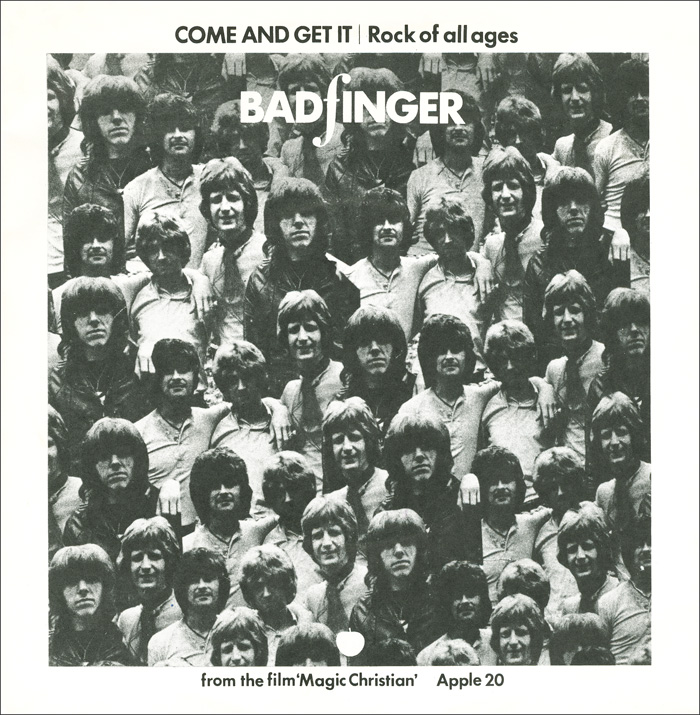
Paul McCartney wrote this song and made a demo (below) of it for a movie that Ringo was in called The Magic Christian. He gave the demo to Badfinger and told them not to change a thing. They all tried singing it but it fit bass player Tom Evans the best for the lead.
It must have been an embarrassment of riches to be able to hand a hit off to an unknown Apple band at the time. This song was Badfinger’s first top ten hit in America. It peaked at #7 in the Billboard 100 in 1970.
Paul wrote this incredibly catchy song for Badfinger and this set their reputation as “Beatle ish” that they tried to run away from later on.
From Songfacts
Paul McCartney wrote this for the 1969 movie The Magic Christian, starring Peter Sellers and Ringo Starr.
This was Badfinger’s first hit single. They were one of the first groups to sign with Apple Records, which is The Beatles’ label.
Badfinger had a few other hits in the early ’70s, but in 1974 Warner Brothers Records, which signed them when Apple folded, sued the band and kept them from recording. One member of the group killed himself a year later, and another committed suicide in 1983.
Paul McCartney recorded the demo of this, and he played all the instruments himself. This was done prior to a Beatles recording session at Abbey Road studios. Paul’s demo sounds exactly like Badfinger’s recording, which he produced. In The Beatles Anthology book, Paul mentions that Badfinger wanted to do the song more in their own style, but he insisted they do it the same as on his demo. He told them that he knew this would be a hit song as long as they played it just as he had.
Paul McCartney’s demo of the song
Come and Get It
If you want it, here it is, come and get it Mm mm mm mm, make your mind up fast If you want it, any time, I can give it
But you’d better hurry ’cause it may not last Did I hear you say that there must be a catch? Will you walk away from a fool and his money?
If you want it, here it is, come and get it But you’d better hurry ’cause it’s goin’ fast If you want it, here it is, come and get it Mm mm mm mm, make your mind up fast
If you want it, any time, I can give it But you’d better hurry ’cause it may not last
Did I hear you say that there must be a catch? Will you walk away from a fool and his money? Sonny!
If you want it, here it is, come and get it But you’d better hurry ’cause it’s goin’ fast You’d better hurry ’cause it’s goin’ fast
Ooh, ooh, ooh, ooh, ooh Fool and his money Sonny!
If you want it, here it is, come and get it But you’d better hurry ’cause it’s goin’ fast You’d better hurry ’cause it’s goin’ fast You’d better hurry ’cause it’s goin’ fast.
Who has asked about me… I’ve had kidney stone problems since last week. A trip to the ER on Friday and operation on Saturday… They put a stent in my kidney to make sure there is no more blockage but it is causing me 24/7 nausea….but no pain anyway… I’m hoping to be back as soon as possible and posting again. The stent is coming out Monday. I haven’t been able to work this week.
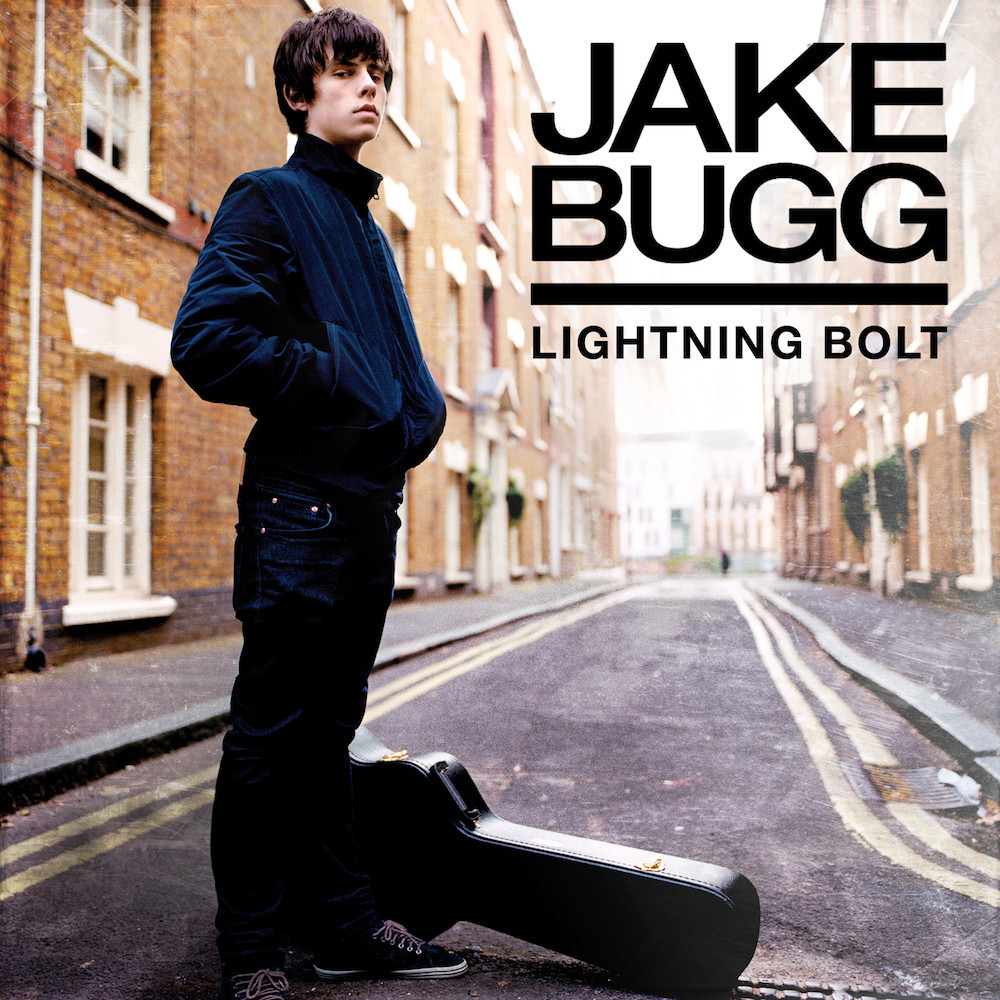
The song peaked at #26 in the US Adult Alternative Songs Billboard, #15 in the UK in 2013. The song was on his self-titled debut album. Jake is an artist that could have debuted in the 60s and 70s and fit in perfectly. I saw him in 2017 and the audience was a mixture of young and old.
Jake was 19 when this song was released. he said: “Before age 12, I had no interest in music,” “Then, me uncle came around with a guitar and showed me basic chords. I started listening to Jimi Hendrix and it just blew me away.
“It was also disheartening. I mean, when you listen to Jimi Hendrix for the first time, you think, ‘How am I going to be able to play like that?’
He started to write songs at 14. Along with Hendrix, he counts the Beatles among his earliest musical influence “They’re a starting point for anyone, I should think. Then, I traced things back to Buddy Holly and Elvis, just discovering all those great records.”
From Songfacts
This gritty stroll through the streets of Bugg’s hometown of Clifton, Nottingham, was released as the third single from his debut album. He penned the tune with long-time Snow Patrol collaborator, Iain Archer. Bugg recalled to The Daily Telegraph: “When I was writing with Iain, we had a fag, a cup of tea, a bit of a play. The way I see it, it’s jamming.”
The song’s Michael Holyk directed video was shot in Amsterdam, The Netherlands.
The song featured in an American a commercial for Gatorade sports drinks that aired during the 2013 NBA championships.
Lightning Bolt
Morning, it’s another pure grey morning Don’t know what the day is holding When I get uptight And I walk right into the path of a lightning bolt
Sirens of an ambulance comes howling Right through the center of town and No one blinks an eye And I look up to the sky for the path of a lighting bolt
Met her as the angels parted for her But she only brought me torture But that’s what happens When it’s you who’s standing in the path of a lightning bolt
Everyone I see just wants to walk with gritted teeth But I just stand by and I wait my time They say you gotta tow the line they want the water not the wine But when I see the signs I jump on that lightning bolt
And chances, people tell you not to take chances When they tell you there aren’t any answers And I was starting to agree But I awoke suddenly in the path of a lightning bolt
Fortune, people talking all about fortune Do you make it or does it just call you In the blinking of an eye Just another passerby in the path of a lightning bolt
Everyone I see just wants to walk with gritted teeth But I just stand by and I wait my time They say you gotta tow the line they want the water not the wine But when I see the signs I jump on that lightning bolt
It was silent, I was lying back gazing skyward When the moment got shattered I remembered what she said And then she fled in the path of a lightning bolt
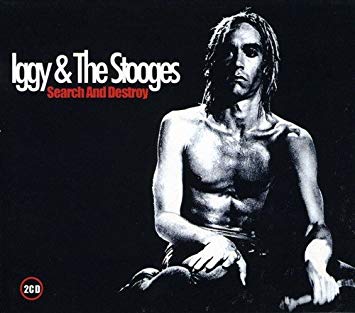
Someone gave me the Stooges “Raw Power” album in the early eighties. I liked what I heard especially Search and Destroy. It’s punkish, loud, and raw. I was reacquainted with the song last year when I was watching The Wire. It didn’t chart but the album peaked at #182 in the Billboard Album Charts in 1973.
The Stooges were a band formed in Ann Arbor, Michigan in 1967.
Their influence was larger than their record sales. Kurt Cobain was a fan and their songs have been covered by The Red Hot Chili Peppers, The Sex Pistols, and Sonic Youth. In 2004, Rolling Stone ranked the Stooges No. 78 on their list of 100 of the most influential artists of the past 50 years.
Iggy Pop on Search and Destroy:
“The lyrics, I just sorta took out of Time magazine, the concept of search and destroy. I used to read Time obsessively because they were the representatives of the ultimate establishment to me. They were giving the party line that represented the power people and the powers that be. So I kinda liked to look in there and see what they were talking about, and then I’d use that inventory in other ways. That’s what I was doing in that song.”
“And the thing about ‘forgotten boy’ was basically a way to express my disgust. It’s kinda like the kid in Catcher In The Rye – once you find out how the people at the top of politics or at the top of the music industry or at the top of anything, how they begin to overvalue things and think that they can push any s–t down the throats of the youth, and they just don’t care if it’s something that kids would like or not. They just don’t f–kin’ care.”
From Songfacts
“Search and Destroy” was written by Stooges’ frontman Iggy Pop and lead guitarist James Williamson. The name of the song comes from a Time magazine article Iggy Pop saw about the Vietnam War. The lyrics are rife with references to the war, including napalm, nuclear bombs, fire fights, and radiation. The title refers to a military tactic used by the US military in the Vietnam War: to seek out the enemy, destroy them, and withdraw.
In our 2013 interview with guitarist James Williamson, he talked about the songwriting process: “Well, I had come up with kind of that ‘bum bum bum bum bum bum bum’ a little bit, but it was more in regard to imitating a machine gun if you will. Because this is the era of the Vietnam War. And so we were kind of screwing around with that, and that’s where that figure comes from. Then the rest of the song was around that. But I think the beginning, the ‘bum bum bum bum bum bum bum, bum bum bum bum bum bum bum,’ that part was the thing that really kicked off that song.”
Iggy Pop recalled to Clash Magazine the making of the song: “The funny part about it was until I convinced him to step back a little and ease up on the thing, what James brought in was four times as fast and twice as heavy! (Laughs) It was two of the parts in the song, the two fastest parts – there are four basic building blocks – and when he did it there were just the two, and when he did it they just went over and over, faster and faster. I sort of said, ‘Look, can we make a new part that’s just like part two but in half time?’ So he went, ‘Okay’, and that became our chorus. Then I asked him for something which you’ll never hear on another Stooges record, something that approximates what professional songwriters call a ‘pre-chorus’.
That’s the part where I’m singing ‘Love in the middle of a firefight’ and after that, the buildup where I say “Somebody’s got to save my soul / Baby penetrate my mind” – that’s a pre-chorus where you actually downshift and then you heighten the tension through building the chords so that there is a release. So that was about the closest I got to getting any of these guys to Rock School. (Laughs) That one has more typical song writing structure in it, which is probably why it gets the most attention.”
This song and its album Raw Power have won a litany of awards. Rolling Stone ranked this song #468 on their 500 Greatest Songs of All Time, VH1 ranked it 49th in their Best Hard Rock songs of All Time, and a 1970s Punk magazine based in San Francisco named themselves after it.
Henry Rollins (frontman for Black Flag) has the title of this song tattooed on his back!
Meanwhile, the album Raw Power has had a huge influence. The late Kurt Cobain (Nirvana), Morrissey and Johnny Marr (The Smiths) have all said that this is their favorite album of all time. Steve Jones (Sex Pistols) said that he cut his guitar-playing teeth on this album. Rolling Stone, again, ranked Raw Power #125 on their 500 Greatest Albums of All Time. Bruce Dickinson (Iron Maiden) executive-produced the 1997 Columbia Records remix.
In spite of all these honors, the original album and singles released from same did poorly in sales and the singles failed to chart, while the album itself barely scratched the Billboard Pop Albums chart at #182. This almost puts The Stooges in Velvet Underground territory when it comes to bands that initially flopped before becoming celebrated heroes worshiped by just about anybody in the music world. In fact, John Cale (Velvet Underground bassist) produced The Stooges’ first self-titled album.
Pop expanded to Q Magazine May 2010 on how the lyrical content was an attack on musical industry bigwigs: “Something I was trying to say through those words at the time was I had the impression that music as a branch of the entertainment industry was becoming an old cheese. It was about a bunch of people at the top manipulating certain institutional positions with the smug confidence that ‘kids’ at the bottom would swallow whatever they put out. They thought they could sell s–t if there was money in it but they’d forgotten about the simple truth that any kid can see.”
Bands and artists which have covered this song include: Cursed, Def Leppard, Red Hot Chili Peppers, EMF, the Sex Pistols, Sid Vicious, Samiam, The Dead Boys, Rocket From The Tombs, The Dictators, Shotgun Messiah, Verdana, Peaches, The Hives, Emanuel, Radio Birdman, Adult Crash, Turbonegro, and You Am I.
Listen with headphones, and you might pick up the sound of swords clashing in the background. Pop explained in a 1999 interview with The Wire: “I originally wanted was to get the sound of stomping boots, but we would have had to hire a drill team and that became problematic, so we tried having a sword fight to get a clanking sound instead.”
Iggy Pop has expressed his pride in the song: “The part of myself I like best is the guy who would dare to sing a song like ‘Search And Destroy’ in the era I did, in 1969, so soon after ‘California Dreamin’; who said, Stick your flower power up your ass ‘cos you’re not sincere about it. Yeah, that’s a side of myself I admire.” (Sounds, 1986)
This was used in a popular 1996 Nike commercial which included the line, “Look out honey, ’cause I’m using technology,” repurposing it to indicate innovations in sneakers rather than warfare. Audi did the same thing when they used the song in 2017 commercials for their A4.
Search and Destroy
I’m a streetwalking cheetah with a heart full of napalm I’m a runaway son of the nuclear A-bomb I am the world’s forgotten boy The one who searches and destroys Honey gotta help me please Somebody gotta save my soul Baby, detonate for me Oh
Look out honey, ’cause I’m using technology Ain’t got time to make no apology Soul radiation in the dead of night Love in the middle of a fire fight Honey, gotta strike me blind Somebody gotta save my soul Baby, penetrate my mind
And I’m the world’s forgotten boy The one who’s searchin’, searchin’ to destroy And honey I’m the world’s forgotten boy The one who’s searchin’, only to destroy, hey
Look out honey, ’cause I’m using technology Ain’t got time to make no apology Soul radiation in the dead of night Love in the middle of a fire fight Honey, gotta strike me blind Somebody gotta save my soul Baby, penetrate my mind
And I’m the world’s forgotten boy The one who’s searchin’, searchin’ to destroy And honey I’m the world’s forgotten boy The one who’s searchin’, only to destroy, hey
Forgotten boy, forgotten boy Forgotten boy said, hey, forgotten boy, said Hey, hey, hey, hey, hey, hey, hey
I’ve posted many of Harrison’s songs but I avoided this one because it is so well known… but after hearing it yesterday I couldn’t resist anymore. The opening chords with the slide part is perfect. The song was/is hugely popular and peaked at #1 as My Sweet Lord/Isn’t It A Pity in the Billboard 100, #1 in the UK, #1 in Canada, #1 in New Zealand.
After Harrison died, this was re-released in the UK, where it once again went to #1. Proceeds from the single went to the Material World Charitable Foundation, which Harrison started in 1973 to support charities that work with children and the poor.
It came off the album “All Things Must Pass” which was a triple album and suddenly George was the Beatle that was finally heard and on top of the world…and it is arguably the best album by an ex-Beatle.
In 1971, Harrison was accused of copying its melody from the Chiffons’ 1963 song “He’s So Fine.” Eventually, the United States district court ruled that Harrison was guilty of subconscious plagiarism, and Harrison developed an extreme paranoia about songwriting for many years. Later on, George would write and record “This Song” as a response to what happened.
Harrison did a parody of this along with the “Pirate Song” with Monty Python…video is below.
From Songfacts
This was Harrison’s first single as a solo artist, and it was his biggest hit. The song is about the Eastern religions he was studying.
Highly unusual for a hit song, Harrison repeats part of a Hindu mantra in the lyric when he sings, “Hare Krishna… Krishna, Krishna.” When set to music, this mantra is typically part of a chant, that acts as a call to the Lord. Harrison interposes it with a Christian call to faith: “Hallelujah” – he was pointing out that “Hallelujah and Hare Krishna are quite the same thing.”
In the documentary The Material World, Harrison explains: “First, it’s simple. The thing about a mantra, you see… mantras are, well, they call it a mystical sound vibration encased in a syllable. It has this power within it. It’s just hypnotic.”
In 1971, Bright Tunes Music sued Harrison because this sounded too much like the 1963 Chiffons hit “He’s So Fine.” Bright Tunes was controlled by The Tokens, who set it up when they formed the production company that recorded “He’s So Fine” – they owned the publishing rights to the song.
During the convoluted court case, Harrison explained how he composed the song: He said that in December 1969, he was playing a show in Copenhagen, Denmark, with the group Delaney and Bonnie, whose piano player was Billy Preston (who contributed to some Beatles recordings). Harrison said that he started writing the song after a press conference when he slipped away and started playing some guitar chords around the words “Hallelujah” and “Hare Krishna.” He then brought the song to the band, who helped him work it out as he came up with lyrics. When he returned to London, Harrison worked on Billy Preston’s album Encouraging Words. They recorded the song for the album, which was released on Apple Records later in 1970, and Harrison filed a copyright application for the melody, words and harmony of the song. Preston’s version remained an album cut, and it was Harrison’s single that was the huge hit and provoked the lawsuit, which was filed on February 10, 1971, while the song was still on the chart.
In further testimony, Harrison claimed he got the idea for “My Sweet Lord” from The Edwin Hawkins Singers’ “Oh Happy Day,” not “He’s So Fine.”
When the case was filed, Harrison’s manager was Allen Klein, who negotiated with Bright Tunes on his behalf. The case was delayed when Bright Tunes went into receivership, and was not heard until 1976. In the meantime, Harrison and Klein parted ways in bitter fashion, and Klein began consulting Bright Tunes. Harrison offered to settle the case for $148,000 in January 1976, but the offer was rejected and the case brought to court.
The trial took place February 23-25, with various expert witnesses testifying. The key to the case was the musical pattern of the two songs, which were both based on two musical motifs: “G-E-D” and “G-A-C-A-C.” “He’s So Fine” repeated both motifs four times, “My Sweet Lord” repeated the first motif four times and the second motif three times. Harrison couldn’t identify any other songs that used this exact pattern, and the court ruled that “the two songs are virtually identical.” And while the judge felt that Harrison did not intentionally copy “My Sweet Lord,” that was not a defense – thus Harrison was on the hook writing a similar song without knowing it. Harrison was found guilty of “subconscious plagiarism” in a verdict handed down on August 31, 1976.
Assessing damages in the case, the judge determined that “My Sweet Lord” represented 70% of the airplay of the All Things Must Pass album, and came up with a total award of about $1.6 million. However, in 1978 Allen Klein’s company ABKCO purchased Bright Tunes for $587,000, which prompted Harrison to sue. In 1981, a judge decided that Klein should not profit from the judgment, and was entitled to only the $587,000 he paid for the company – all further proceeds from the case had to be remitted back to Harrison. The case dragged on until at least 1993, when various administrative matters were finally settled.
The case was a burden for Harrison, who says he tried to settle but kept getting dragged back to court by Bright Tunes. After losing the lawsuit, he became more disenfranchised with the music industry, and took some time off from recording – after his 1976 album Thirty Three & 1/3, he didn’t release another until his self-titled album in 1979. He told Rolling Stone, “It’s difficult to just start writing again after you’ve been through that. Even now when I put the radio on, every tune I hear sounds like something else.”
This was recorded at Abbey Road studios using the same equipment The Beatles used. There were some familiar faces at the sessions who had contributed to Beatles albums, including John Lennon, Yoko Ono, Billy Preston and Eric Clapton. Bobby Whitlock was friends with Harrison and Clapton, and played keyboards on the album. When we spoke with Whitlock, he shared his thoughts:
“That whole session was great. George Harrison, what a wonderful man. All the time that I ever knew him, which was from 1969 to his passing, he was a wonderful man. He included everyone on everything he did because there was enough for all.”
Whitlock adds, “All during the sessions, the door would pop open and in would spring three or four or five Hare Krishnas in their white robes and shaved heads with a pony tail coming out the top. They were all painted up, throwing rose petals and distributing peanut butter cookies.” (For more on these sessions, check out our full Bobby Whitlock interview)
This was the first #1 hit for any Beatle after the band broke up. Harrison was the first Beatle to release a solo album. He came out with Wonderwall Music, a soundtrack to the movie Wonderwall, in 1968.
When this song was released, the phrase “Hare Krishna” was associated with a religious group called the International Society for Krishna Consciousness, whose members would often approach passengers in airports, seeking donations and trying to solicit members. Individuals in this group became popularly known as “Hare Krishnas,” with a generally negative connotation.
Artists who record chant music often face a negative reaction from listeners who don’t understand the mantras. When we spoke with Krishna Das, the leading American chant musician, he explained: “‘My Sweet Lord’ is very clear and very beautiful, but the problem is that English has been appropriated by Western religion and it’s very hard to talk about spiritual things in a song that doesn’t get too ‘organized religion-y,’ you know? And then you get a lot of people who have a negative reaction to that as well. You can get a lot of negativity from the organized religion people. Like, ‘This isn’t our Jesus. This isn’t the way it is.'”
Phil Spector produced this and sang backup. With the blessing of Harrison and John Lennon (and over the objections of Paul McCartney), Spector produced the last Beatles album, Let It Be.
In an interview with Howard Stern, Peter Frampton verified that he played lead guitar on “My Sweet Lord.” According to Frampton, Harrison was a fan of his and invited him to the studio, where he handed Frampton his legendary Les Paul. Frampton assumed he was going to play rhythm, but Harrison said he wanted him to play lead, so Frampton did. Frampton wasn’t officially credited for this (just as Eric Clapton wasn’t credited on “While My Guitar Gently Weeps”), but rumors circulated for years.
Harrison released a new version, “My Sweet Lord 2000,” when he reissued All Things Must Pass.
Producer Phil Spector thought “My Sweet Lord” was the commercial hit of the album, and everyone else resisted him on that. According to Phil, George and others worried about how the public might react to the religious overtones and the Hare Krishna influence.
George Harrison parodied “My Sweet Lord” during Eric Idle’s Rutland Weekend Television Christmas special on December 26, 1975, turning it into “The Pirate Song.” >>
Artists to cover this song include Aretha Franklin, Johnny Mathis, Richie Havens, Nina Simone, Peggy Lee and Julio Iglesias. The Chiffons also covered the song in 1975 amidst the plagiarism lawsuit over their song “He’s So Fine.”
The guitar riff on America’s 1975 #1 hit “Sister Golden Hair” was inspired by this track. That song was produced by George Martin, who worked on most of The Beatles albums.
Gerry Beckley, who wrote “Sister Golden Hair” and sang lead, said in his Songfacts interview: “I very openly tip my hat there to ‘My Sweet Lord’ and George Harrison. I was such a fan of all The Beatles but we knew George quite well and I just thought that was such a wonderful intro.”
U2 performed this as a tribute at their show in Atlanta on November 30, 2001, the night after Harrison died.
George Harrison and Monty Python.
My Sweet Lord
My sweet Lord Hm, my Lord Hm, my Lord
I really want to see you Really want to be with you Really want to see you Lord But it takes so long, my Lord
My sweet Lord Hm, my Lord Hm, my Lord
I really want to know you Really want to go with you Really want to show you Lord That it won’t take long, my Lord (hallelujah)
My sweet Lord (hallelujah) Hm, my Lord (hallelujah) My sweet Lord (hallelujah)
I really want to see you Really want to see you Really want to see you, Lord Really want to see you, Lord But it takes so long, my Lord (hallelujah)
My sweet Lord (hallelujah) Hm, my Lord (hallelujah) My, my, my Lord (hallelujah)
I really want to know you (hallelujah) Really want to go with you (hallelujah) Really want to show you Lord (aaah) That it won’t take long, my Lord (hallelujah)
Hmm (hallelujah) My sweet Lord (hallelujah) My, my, Lord (hallelujah)
Hm, my Lord (hare krishna) My, my, my Lord (hare krishna) Oh hm, my sweet Lord (krishna, krishna) Oh-uuh-uh (hare hare)
Now, I really want to see you (hare rama) Really want to be with you (hare rama) Really want to see you Lord (aaah) But it takes so long, my Lord (hallelujah)
Hm, my Lord (hallelujah) My, my, my Lord (hare krishna) My sweet Lord (hare krishna) My sweet Lord (krishna krishna) My Lord (hare hare) Hm, hm (Gurur Brahma) Hm, hm (Gurur Vishnu) Hm, hm (Gurur Devo) Hm, hm (Maheshwara) My sweet Lord (Gurur Sakshaat) My sweet Lord (Parabrahma) My, my, my Lord (Tasmayi Shree) My, my, my, my Lord (Guruve Namah) My sweet Lord (Hare Rama)
(hare krishna) My sweet Lord (hare krishna) My sweet Lord (krishna krishna) My Lord (hare hare)
Maybe Baby” was was written by Buddy Holly and the producer Norman Petty and recorded by Holly and the Crickets in 1957. The song peaked at #17 in the US Charts, #4 in the UK, and #8 in Canada in 1958.
In 1957 they recorded this song in the Officers Club at Tinker Air Force Base in Oklahoma City. The Crickets were scheduled to perform at the Oklahoma City Municipal Auditorium on Sept. 29 as one of the acts with the Show of Stars ’57.
I’ve always looked at Buddy Holly as one of the founding members of power pop.
From Songfacts
This was recorded Sept, 1957 at Tinker Air Force Base in Oklahoma. Background vocals were added later at Petty Studios in Clovis, NM.
Charles Hardin and Norman Petty wrote this. Hardin is Buddy Holly (real name Charles Hardin Holley) and Petty was his producer and manager. Holly’s first 2 singles flopped, but he had a string of hits after he started working with Petty.
This was credited to The Crickets, who were Holly’s band. Holly had a deal with Decca Records where some songs were released under his name and others credited to the band.
Decca is a name the company made up. It was chosen because it was easy to say and pronounced the same way in any language.
The album The Buddy Holly Story is a compilation of his songs that was released a few weeks after he died in a plane crash.
Maybe Baby
Maybe baby, I’ll have you Maybe baby, you’ll be true Maybe baby, I’ll have you for me (all for me)
It’s funny honey, you don’t care You never listen, to my prayer Maybe baby, you will love me some day (someday)
Well, you are the one that makes me glad And you are the one that makes me sad When some day, you’ll want me Well, I’ll be there, wait and see
Maybe baby, I’ll have you Maybe baby, you’ll be true Maybe baby, I’ll have you for me (all for me)
When I first heard it I loved the feel of this song. When Bruce started to sing Crazy Janey and her mission man, Were back in the alley tradin’ hands, ‘Long came Wild Billy with his friend G-Man, All duded up for Saturday night…I knew it was a winner.
Manfred Mann’s Earth Band covered this and it peaked at #40 in the Billboard 100 a few months after they peaked at #1 with Springsteen’s Blinded By The Light. Bruce’s version didn’t chart but I do like both songs better than their more successful covers.
This one is from Bruce’s great debut album Greetings from Ashbury Park released in 1973. For anyone first getting into Springsteen, I would recommend this one with the more obvious ones. This is an earlier post I had of the album. I had the album and cassette that I wore out in my car.
On a personal note. The band I was in many years ago covered this song at a club and I saw a guy standing on a chair with a lit lighter in his hand during this song. He came up and thanked us over and over for playing it… He was from Philadelphia and had seen Springsteen 17 times at that point.
From Songfacts
Greasy Lake is a lake near Howel NJ. It gets its name from the idea that homeless people living around the lake used it for bathing, washing dishes, etc. The homeless people were known as “Gypsy Angels” or the “Spirits In The Night.”
Part of Springsteen’s first album, it was a #40 US hit for Manfred Mann’s Earth Band when they covered it in 1977. They also covered “Blinded By The Light” and “For You” from Greetings From Asbury Park, N.J.
Springsteen wrote this after Columbia Records rejected his first attempt at an album, telling him to make some songs that could be played on the radio. He came up with this and “Blinded By The Light.”
This was Springsteen’s second single. It was released only in the US and did not chart.
The lyrics refer to “Route 88,” a road that runs through Ocean County, New Jersey. Springsteen would later sing about “Highway 9” in “Born To Run.”
Along with “Blinded By The Light,” this was one of 2 songs on Greetings From Asbury Park, N.J. featuring Clarence Clemons on saxophone. Springsteen’s band didn’t have a name when this was recorded. By his next album, they were The E Street Band – named after the street where they used to rehearse.
This has been a popular live song throughout Springsteen’s career. He still occasionally plays it live.
The version on Live 1975-1985 was recorded at The Roxy in 1978.
Spirit in the Night
Crazy Janey and her mission man Were back in the alley tradin’ hands ‘Long came Wild Billy with his friend G-Man All duded up for Saturday night Well, Billy slammed on his coaster brakes And said, “Anybody want to go on up to Greasy Lake? It’s about a mile down on the dark side of Route 88 I got a bottle of rosé so let’s try it We’ll pick up Hazy Davy and Killer Joe And I’ll take you all out to where the gypsy angels go They’re build like light And they dance like spirits in the night (all night), in the night (all night) Oh, you don’t know what they can do to you Spirits in the night (all night), in the night (all night) Stand up right now and let them shoot through you”
Well now, Wild Billy was a crazy cat And he shook some dust out of his coonskin cap He said, “Trust some of this, it’ll show you where you’re at Or at least it’ll help you really feel it” By the time we made it up to Greasy Lake I had my head out the window and Janey’s fingers were in the cake I think I really dug her ’cause I was too loose to fake I said, “I’m hurt.” She said, “Honey, let me heal it” And we danced all night to a soul fairy band And she kissed me just right, like only a lonely angel can She felt so nice Just as soft as a spirit in the night (all night), in the night (all night) Janey don’t know what she do to you Spirit in the night (all night), in the night (all night) Stand right up and let her shoot through me
Now, the night was bright and the stars threw light On Billy and Davy dancin’ in the moonlight They were down near the water in a stone mud fight Killer Joe gone passed out on the lawn Well now, Hazy Davy got really hurt He ran into the lake in just his socks and his shirt Me and Crazy Janey was makin’ love in the dirt Singin’ our birthday songs Janey said it was time to go So we closed our eyes and said goodbye to Gypsy Angel Row Felt so right Together we moved like spirits in the night (all night), in the night (all night)…
This was the last song Bob Marley performed live. He sang it from a stool at a show in Pittsburgh on September 23, 1980. He had cancer and it near the end. He would die on May 11, 1981.
It was released in 1973 on the Wailers album Burnin’. It’s a great song to start taking action to avoid oppression. Marley wrote it with Peter Tosh, and the song was influenced by their upbringing in Jamaica, where they had to fight for respect and acceptance for their Rastafarian religion.
From Songfacts
The music is based on the song “Slippin’ Into Darkness” by the band War. Marley was friends with members of the band, and encouraged them to come to Jamaica.
The Burnin’ album, where this song first appeared, was released by Marley’s group The Wailers. In 1974, The Wailers broke up but Marley continued to tour and record as “Bob Marley & The Wailers,” even though he was the only original Wailer in the group.
Mick Jagger says that this is his favorite reggae song. The Rolling Stones frontman met Marley at the studio when Marley was working on his 1973 Catch a Fire album. The Stones would later dip their toes in the genre, covering the reggae song “Cherry Oh Baby” on their 1976 album Black And Blue.
This was the last song Marley performed; he sang it from a stool at a show in Pittsburgh on September 23, 1980. Marley’s cancer had spread to his brain and it was surprising he could perform at all, but he did a 20-song set that night, closing with a 6-minute rendition of “Get Up, Stand Up,” and collapsing soon after the show. He would die on May 11, 1981.
Get Up, Stand Up
Get up, stand up, stand up for your rights! Get up, stand up, stand up for your rights! Get up, stand up, stand up for your rights! Get up, stand up, don’t give up the fight!
Preacher man, don’t tell me Heaven is under the earth I know you don’t know What life is really worth It’s not all that glitters is gold ‘Alf the story has never been told So now you see the light, eh! Stand up for your rights. Come on!
Get up, stand up, stand up for your rights! Get up, stand up, don’t give up the fight! Get up, stand up, stand up for your rights! Get up, stand up, don’t give up the fight!
Most people think, Great God will come from the skies Take away everything And make everybody feel high But if you know what life is worth You will look for yours on earth And now you see the light You stand up for your rights. Jah!
Get up, stand up! (Jah, Jah!) Stand up for your rights! (Oh-hoo!) Get up, stand up! (Get up, stand up!) Don’t give up the fight! (Life is your right!) Get up, stand up! (So we can’t give up the fight!) Stand up for your rights! (Lord, Lord!) Get up, stand up! (Keep on struggling on!) Don’t give up the fight! (Yeah!)
We sick an’ tired of-a your ism-skism game Dyin’ ‘n’ goin’ to heaven in-a Jesus’ name, Lord We know when we understand Almighty God is a living man You can fool some people sometimes But you can’t fool all the people all the time So now we see the light (What you gonna do?) We gonna stand up for our rights! (Yeah, yeah, yeah!)
So you better Get up, stand up! (In the morning! Git it up!) Stand up for your rights! (Stand up for our rights!) Get up, stand up! Don’t give up the fight! (Don’t give it up, don’t give it up!) Get up, stand up! (Get up, stand up!) Stand up for your rights! (Get up, stand up!) Get up, stand up! Don’t give up the fight! (Get up, stand up!) Get up, stand up! Stand up for your rights! Get up, stand up! Don’t give up the fight!
Educated fools, From uneducated schools, Pimping people is the rule, Polluted water in the pool, And Nixon talking about don’t worry, worry, worry, worry
I’m saying goodbye to Richard Milhous Nixon with this one. I hope you have enjoyed the songs that referenced the former President. The comments were great so I thank all of you.
(Don’t Worry) If There’s a Hell Below, We’re All Going to Go” was released in November 1970 as the first, and only charting single off of Curtis’ debut album Curtis, it being his first solo charting single. The song peaked at #29 in 1971 in the Billboard 100. It also peaked at #3 in the Billboard Hot Soul Singles chart.
The song was about racial relations and the situation in America’s inner cities. He’d already steered The Impressions toward funkier, more conscious material. As a solo artist, he wanted to make a fresh impression beyond The Impressions. This song certainly did that. Much like John Lennon, he didn’t hold back.
On August 13, 1990, a lighting rig fell on him while he was onstage in New York, crushing three vertebrae and rendering him a quadriplegic for the remainder of his life. He managed to make one last album, two years before his death on December 26, 1999; titled New World Order
(Don’t Worry) If There Is A Hell Below, We Are All Going To Go
Sisters, brothers and the whities
Blacks and the crackers
Police and their backers
They’re all political actors
Hurry
People running from their worries
While the judge and the juries
Dictate the law that’s partly flaw
Cat calling, love balling, fussing and cussing
Top billing now is killing
For peace no-one is willing
Kind of make you get that feeling
Everybody smoke, smoke, smoke, smoke, smoke
Use the pill and the dope, dope, dope, dope, dope
Educated fools
From uneducated schools
Pimping people is the rule
Polluted water in the pool
And Nixon talking about don’t worry, worry, worry, worry
He says don’t worry, worry, worry, worry
He says don’t worry, worry, worry, worry
He says don’t worry, worry, worry, worry
But they don’t know
There can be no show
And if there’s a hell below
We’re all gonna go, go, go, go, go
Everybody’s praying
And everybody’s saying
But when come time to do
Everybody’s laying
Just talking about don’t worry, worry, worry, worry
They say don’t worry, worry, worry, worry
They say don’t worry, worry, worry, worry
They say don’t worry, worry, worry, worry



 performed at the party, and the two men thought she would be a perfect addition to Shocking Blue. Robbie van Leeuwen, leader and founder of Shocking Blue, was immediately impressed by her vocal style, quite different from most local singers of the day. When Mariska was asked to join the Shocking Blue, she requested that they (the band members) would not start any relationships with her except professional one. She replaced de Wilde as a lead singer and, no doubt, became the eye- and ear-catching attraction of the band; her soul-tingled voice gave the music a distinct R&B sound.
 She recorded a dozen of solo singles but the singles did not score well although most of them sounded (and still sound) great. Probably, she was not motivated enough, lacked a good manager, and luck was not on her side. In 1978 Mariska was featured in a single “Neon City” recorded by Mistral (Robbie’s group at that time). In 1979 Robbie was planning to reunite the group. They even recorded a single called “Louise” as a part of their come back project, but for some reasons this was cancelled and “Louise” was never released. Robbie van Leeuwen said in an interview that Mariska was the only reason the come back was off, but never said why. Probably, Mariska was just fed up with all the attention and was just overworked. Maybe because of this she does not like to recall the 70’s. In the late 80’s she performed with her group “Veres”. In the early 90’s she appeared on stage with The Clarks, and, in my opinion, their performances together were great. Mariska also sang with several jazz musicians, and even recorded CD with four jazz musicians in 1993 (Mariska Veres Shocking Jazz Quintet). In the fall of 1993 she founded a new band and, with Robbie’s permission, called it Shocking Blue. They recorded a single “Body And Soul” (1994), which was produced by Robbie.



 PowerPop... An Eclectic Collection of Pop Culture