This song was released in 1966 and it appears on The Who’s debut album My Generation. The song peaked at #41 in the UK but didn’t make it into the top 100 in the US. This song, along with My Generation, became anthems for The Who, as well as for the Mod movement in England.
Pete Townshend said this about it in 2000: When I wrote this song I was nothing but a kid, trying to work out right and wrong through all the things I did. I was kind of practicing with my life. I was kind of taking chances in a marriage with my wife. I took some stuff and I drank some booze. There was almost nothing that I didn’t try to use. And somehow I’m alright
I first heard this on Meaty Beaty Big and Bouncy a compilation album of the band’s singles… In the UK it was more of a greatest hits LP…in America, while a few were known…most never charted.
One of my favorite albums by the Who.
From Songfacts
The song was written by Pete Townshend as a tribute to the Mods, who were trendy and often rebellious British youth.
Check out Keith Moon’s drumming on this song – he used his cymbals and toms to emphasize the vocal lines, crashing down at the end of lyrical lines. This was one of his innovations with The Who.
A 1979 rockumentary concerning the Who shares the same title.
This song has been covered by both Goldfinger and Green Day.
The Offspring song The Kids Aren’t Alright is a reference to this
The Kids Are Alright
I don’t mind other guys dancing with my girl That’s fine, I know them all pretty well But I know sometimes I must get out in the light Better leave her behind with the kids, they’re alright The kids are alright
Sometimes, I feel I gotta get away Bells chime, I know I gotta get away And I know if I don’t, I’ll go out of my mind Better leave her behind with the kids, they’re alright The kids are alright
I know if I go, things would be a lot better for her I had things planned, but her folks wouldn’t let her
I don’t mind other guys dancing with my girl That’s fine, I know them all pretty well But I know sometimes I must get out in the light Better leave her behind with the kids, they’re alright The kids are alright
Sometimes, I feel I gotta get away Bells chime, I know I gotta get away And I know if I don’t, I’ll go out of my mind Better leave her behind with the kids, they’re alright The kids are alright, the kids are alright, the kids are alright
Jim…https://wordpress.com/read/feeds/64726988 asked me to contribute a song to a song lyric Sunday. This weekend I had some time so I told Jim I would be happy to contribute a song. The theme is Wedding/Marry/Diamond/Ring/Cake so I thought of this Elvis song.
The song peaked at #2 in the Billboard 100 in 1958. The song was written by Bert Carroll and Russell Moody and released April. 1, 1958. This was at the period where everything Elvis touched turned to gold. I remember going to my cousin’s home and listening to an Elvis compilation of his 50s songs in the mid-70s when I was around 8-9. This song and All Shook Up, Hound Dog, Don’t Be Cruel and many more.
Elvis recorded this song on February 1, 1958, at Radio Recorders, Hollywood, California. The musicians were Guitar: Scotty Moore, Tiny Timbrell, Elvis Presley. Bass: Bill Black. Drums: D.J. Fontana. Piano: Dudley Brooks. Vocals: The Jordanaires.
In this song, Presley wants his girlfriend to wear his ring around her neck. Of course, the ring would be on a chain…as was the custom in the 1950s to signify they are going steady. Hope you enjoyed the song and have a great Sunday.
Wear My Ring Around Your Neck
Won’t you wear my ring around your neck To tell the world I’m yours, by heck Let them see your love for me And let them see by the ring around your neck
Won’t you wear my ring around your neck To tell the world I’m yours, by heck Let them know I love you so And let them no by the ring around your neck
They say that goin’ steady is not the proper thing They say that we’re too young to know the meaning of a ring I only know that I love you and that you love me too So, darling, please do what I ask of you
Won’t you wear my ring around your neck To tell the world I’m yours, by heck Let them see your love for me And let them see by the ring around your neck
Let them know I love you so And let them know by the ring around your neck
If you were a kid in the mid-seventies…on Saturday morning you were happily blitzed by a morning of cartoons. When I did a post on Underdog last weekend I was asked about Hong Kong Phooey…he was voiced by the great Scatman Caruthers. It was produced by Hanna-Barbera in 1974 for ABC. Around this time Martial Arts were extremely popular and this cartoon played on that.
Hong Kong Phooey’s secret identity is that of Penrod “Penry” Pooch the Police janitor. Penry works with Sgt. Flint and police dispatcher Rosemary. Hong Kong Phooey thinks his martial arts skills catch the bad guys…but it’s usually always Spot the Cat.
To my surprise…Hanna-Barbera only made 16 episodes and kept running them forever. I watched this in 1974 through 1976 as it was part of the magical seventies Saturday morning programming.
When I played the Moondance album for the first few times I would replay this opening track for at least 3-4 times. The song reminded me of when I grew up. It focuses on life’s little pleasures… A trip to the fair and fishing with your friend… A cool drink of water from a clear mountain stream… A ride in the back of a pickup…Van said this about the song:
I suppose I was about twelve years old. We used to go to a place called Ballystockart to fish. We stopped in the village on the way up to this place and I went to this little stone house, and there was an old man there with dark weather-beaten skin, and we asked him if he had any water. He gave us some water which he said he’d got from the stream. We drank some and everything seemed to stop for me. Time stood still. For five minutes everything was really quiet and I was in this ‘other dimension’. That’s what the song is about.
This is just one of the many great songs on this album. Some critics have said that Moondance is one of the best albums of all time. What got my attention were the lyrics, clear sound, and down to earth feel…and of course Van’s voice.
Moondance
Half a mile from the county fair And the rain came pourin’ down Me and Billy standin’ there With a silver half a crown
Hands are full of a fishin’ rod And the tackle on our backs We just stood there gettin’ wet With our backs against the fence
Oh, the water Oh, the water Oh, the water Hope it don’t rain all day
And it stoned me to my soul Stoned me just like Jelly Roll And it stoned me And it stoned me to my soul Stoned me just like goin’ home And it stoned me
Then the rain let up and the sun came up And we were gettin’ dry Almost let a pick-up truck nearly pass us by So we jumped right in and the driver grinned
And he dropped us up the road Yeah, we looked at the swim and we jumped right in Not to mention fishing poles
Oh, the water Oh, the water Oh, the water Let it run all over me
And it stoned me to my soul Stoned me just like Jelly Roll And it stoned me And it stoned me to my soul Stoned me just like goin’ home And it stoned me
On the way back home we sang a song But our throats were getting dry Then we saw the man from across the road With the sunshine in his eyes
Well he lived all alone in his own little home With a great big gallon jar There were bottles too, one for me and you And he said Hey! There you are
Oh, the water Oh, the water Oh, the water Get it myself from the mountain stream
And it stoned me to my soul Stoned me just like Jelly Roll And it stoned me And it stoned me to my soul Stoned me just like goin’ home And it stoned me
And it stoned me to my soul Stoned me just like Jelly Roll And it stoned me And it stoned me to my soul Stoned me just like goin’ home And it stoned me
When asked what my favorite Beatle song is…It usually depends on what Beatle mood I’m in…early, middle or late…but this one is always near the top.
The beginning of this song was based on two stories John Lennon read about in the Daily Mail newspaper. Guinness heir Tara Browne dying when he smashed his Lotus into a parked van, and an article in the UK Daily Express in early 1967 which told of how the Blackburn Roads Surveyor had counted 4000 holes in the roads of Blackburn and commented that the volume of material needed to fill them in was enough to fill the Albert Hall.
McCartney contributed the line “I’d love to turn you on.” This was a drug reference, but the BBC banned it because of another section, which they assumed was about marijuana…that guaranteed it would be huge.
George Martin once said he got chills listening to John’s voice in this song. I can relate to that.
A 41-piece orchestra played on this song. The musicians were told to attend the session dressed formally. When they got there, they were presented with party novelties (false noses, party hats, gorilla-paw glove) to wear, which made it clear this was not going to be a typical session. The orchestra was conducted by Paul McCartney, who told them to start with the lowest note of their instruments and gradually play to the highest. >>
This was recorded in three sessions: First the basic track, then the orchestra, then the last note was dubbed in.
Regarding the article about Tara Browne, John Lennon stated: “I didn’t copy the accident. Tara didn’t blow his mind out. But it was in my mind when I was writing that verse.” At the time, Paul didn’t realize the reference was to Tara. He thought it was about a “stoned politician.” The article regarding the “4000 holes in Blackburn, Lancashire” was taken from the UK Daily Express, January 17, 1967 in a column called “Far And Near.”
John’s friend Terry Doran was the one who completed John’s line, “Now they know how many holes it takes to fill…” Terry told him “fill the Albert Hall, John.”
The ban was finally lifted when author David Storey picked it as one of his Desert Island Discs.
Speaking with GQ in 2018, Paul McCartney explained this song’s origin story: “‘A Day In The Life’ was a song that John had started. He had the first verse, and this often happened: one of us would have a little bit of an idea and instead of sitting down and sweating it, we’d just bring it to the other one and kind of finish it together, because you could ping-pong – you’d get an idea. So he had the first verse: ‘I read the news today oh boy,’ and we sat in my music room in London and just started playing around with it, got a second verse, and then we got to what was going to lead into the middle. We kind of looked at each other and knew we were being a little bit edgy where we ‘I’d love to turn you on.’ We knew that would have an effect.
It worked. And then we put on another section I had: ‘Woke up, fell out of bed, dragged a comb across my head.’ Then we finished the song up and did a big sort of epic recording of it with a big full orchestra and everything. And then did that crescendo thing in the middle of it with the orchestra, which was an idea I’d had because I’d been talking to people and reading about avant-garde music, tonal stuff and crazy ideas. I came up with this idea. I said to the orchestra, ‘You should start, all of you.’ And they sat all looking at me puzzled. We’ve got a real symphony orchestra in London who are used to playing Beethoven, and here’s me, this crazy guy out of a group and I’m saying, ‘Everyone start on the lowest note your instrument can play and work your way up to the highest at your own pace.’ That was too puzzling for them, and orchestras don’t like that kind of thing. They like it written down and they like to know exactly what they’re supposed to do. So George Martin, the producer, said to the people, ‘You should leave this note and this point in the song, and then you should go to this note and this note,’ and he left the random thing, so that’s why it sounds like a chaotic sort of swirl. That was an idea based on the avant-garde stuff I was into at the time.”
The final chord was produced by all four Beatles and George Martin banging on three pianos simultaneously. As the sound diminished, the engineer boosted to faders. The resulting note lasts 42 seconds; the studio air conditioners can be heard toward the end as the faders were pushed to the limit to record it.
The rising orchestra-glissando and the thundering sound are reminiscent of “Entry of the Gods into Valhalla” from Richard Wagner’s opera “Das Rheingold,” where after the rising glissando, Thor beats with his hammer. George Martin said in his 1979 book All You Need is Ears that the glissando was Lennon’s idea. After Lennon’s death, Martin seems to have changed his mind. In his 1995 book Summer of Love: The Making of Sgt. Pepper, he states that the rising orchestra-glissando was McCartney’s idea. >>
This being the last song on the album, The Beatles found an interesting way to close it out. After the final note, Lennon had producer George Martin dub in a high pitched tone, which most humans can’t hear, but drives dogs crazy. This was followed by a loop of incomprehensible studio noise, along with Paul McCartney saying, “Never could see any other way,” all spliced together. It was put there so vinyl copies would play this continuously in the run-out groove, sounding like something went horribly wrong with the record. Another good reason to own vinyl.
In 2004, McCartney did an interview with the Daily Mirror newspaper where he said he was doing cocaine around this time along with marijuana. “I’d been introduced to it, and at first it seemed OK, like anything that’s new and stimulating,” he said. “When you start working your way through it, you start thinking, ‘This is not so cool and idea,’ especially when you start getting those terrible comedowns.”
The movie reference in the lyrics (“I saw a film today, oh boy. The English Army had just won the war”) is to a film John Lennon acted in called How I Won The War.
McCartney’s middle section (woke up, got out of bed…) was intended for another song.
The Beatles started this with the working title “In The Life of…”
This is a rare Beatles song with a title that is not part of the lyrics. Another one is “Yer Blues.”
That’s Mal Evans doing the counting during the first transition from John to Paul. He set the alarm clock (heard on the recording) to go off at the end of his 24-bar count. Evans also helped with the composition of a couple of songs on the Sgt. Pepper album. Although he never received composer’s credit, the Beatles did pay his estate a lump sum in the 1990s for his contributions. Evans died January 5, 1976 after a misunderstanding with the police.
George Martin (from Q Magazine, July 2007): “John’s voice – which he hated – was the kind of thing that would send shivers down your spine. If you hear those opening chords with the guitar and piano, and then his voice comes in, ‘I heard the news today, oh boy’ It’s just so evocative of that time. He always played his songs to me on the guitar and I would sit on a stool as he strummed. The orchestral section was Paul’s idea. We put two pieces of songs together that weren’t connected in any way. Then we had that 24-bars-of-nothing in between. I had to write a score, but in the climax, I gave each instrument different little waypoints at each bar, so they would know roughly where they should be when they were sliding up. Just so they didn’t reach the climax too quickly. With ‘A Day In The Life,’ I wondered whether we were losing our audience and I was scared. But I stopped being scared when I played it to the head of Capitol Records in America and he was gob smacked. He said, That’s fantastic. And of course, it was.”
In the original take, the 41-piece orchestra was not used. Instead, Lennon had roadie Mal Evans count to 21 in a very trippy manner and set off an alarm clock after the 21 counts. This version is on the second Anthology CD, and is very different than the one on Sgt. Pepper.
David Crosby was at Abbey Road studios when The Beatles were recording this. In an interview with Filter magazine, he said: “I was, as near as I know, the first human being besides them and George Martin and the engineers to hear ‘A Day In The Life.’ I was high as a kite – so high I was hunting geese with a rake. They sat me down; they had huge speakers like coffins with wheels on that they rolled up on either side of the stool. By the time it got the end of that piano chord, man my brains were on the floor.”
The orchestral bit was used in the Yellow Submarine movie. Photos of different geographical areas were shown as The Beatles were apparently traveling in the submarine to try and find Pepperland.
When asked by Rolling Stone magazine what songs of his dad’s constantly surprise him, Sean Lennon said: “I’ve listened so much to that stuff that there are very few surprises. But I do think ‘A Day In The Life’ is always inspiring.”
The American rock band Hawthorne Heights originally named themselves A Day in the Life after this song. In 2003, lead vocalist/rhythm guitarist JT Woodruff changed it to their current name.
On June 18, 2010 John Lennon’s handwritten lyric sheet for this song featuring corrections and alternate crossed-out lines was auctioned at New York Sotheby’s. It was sold for $1.2 million to an anonymous American buyer.
This was rated the greatest ever Beatles song in a special collector’s edition issue by The Beatles: 100 Greatest Songs. The list was compiled to coincide with the 40th anniversary of the Fab Four’s final studio album, Let It Be.
There is term for the techniques The Beatles used in arranging the final chords of this song: Deceptive Cadence. Glen Burtnik, who was a member of Styx and was also in a popular Beatles tribute band, told us: “It’s an instance where the listener assumes the next chord, or melody note, will go somewhere it doesn’t. Even though all the indications lead you to expecting a certain outcome, the writer/arranger intentionally surprises you by going someplace else musically. Not sure it’s simple to understand, as you’re conditioned to being used to the outcome.”
Peter Asher, who worked for The Beatles at Apple Records and produced the biggest hits of James Taylor and Linda Ronstadt, considers this the greatest Beatles song from a production standpoint. “‘A Day In The Life’ certainly combined Beatle ideas and George Martin ideas very effectively,” he told Songfacts.
Keith Richards named his second son Tara after Tara Brown, the Guinness heir who smashes his car in Lennon’s first verse. Richard’s son was premature and died soon after birth.
A Day In The Life
I read the news today oh boy About a lucky man who made the grade And though the news was rather sad Well I just had to laugh
I saw the photograph He blew his mind out in a car He didn’t notice that the lights had changed A crowd of people stood and stared They’d seen his face before Nobody was really sure If he was from the House of Lords
I saw a film today oh boy The English army had just won the war A crowd of people turned away But I just had to look Having read the book I’d love to turn you on
Woke up, fell out of bed Dragged a comb across my head Found my way downstairs and drank a cup And looking up I noticed I was late Found my coat and grabbed my hat Made the bus in seconds flat Found my way upstairs and had a smoke Somebody spoke and I went into a dream
I read the news today oh boy Four thousand holes in Blackburn, Lancashire And though the holes were rather small They had to count them all Now they know how many holes it takes to fill the Albert Hall I’d love to turn you on
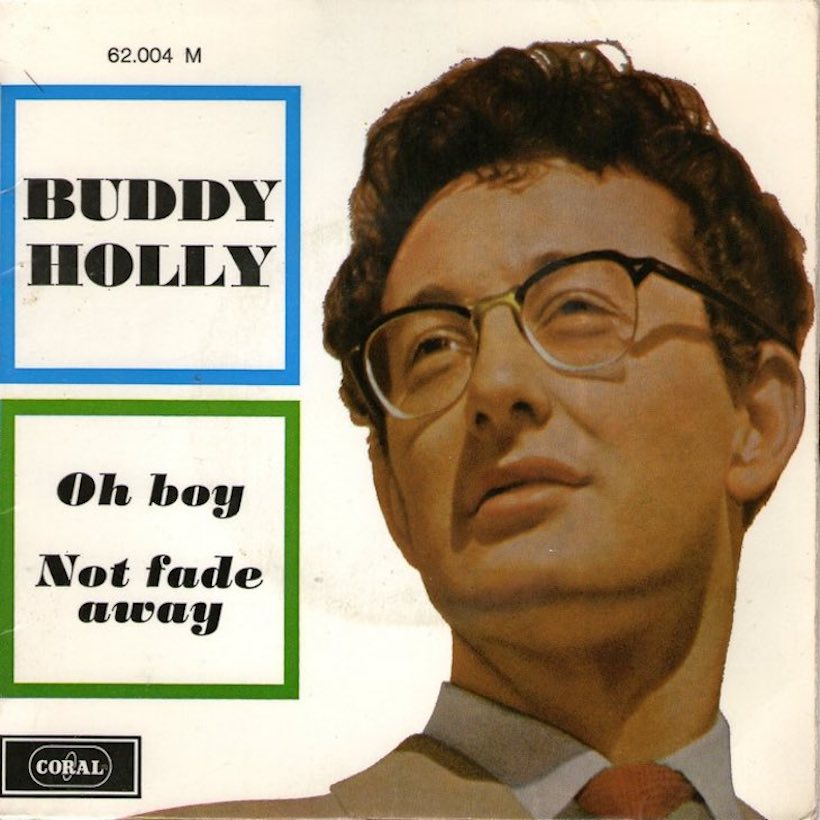
This was recorded June 29-July 1, 1957 at Petty Studios in Clovis, New Mexico. Oh Boy was written by Sunny West, Bill Tilghman, and Norman Petty. Norman was Holly’s producer and owned the studio where this was recorded.
This song played live is very powerful along with Buddy’s other songs. In the 90s I saw a musical play called Buddy that was touring the country. In the musical, there was just “Buddy”, a bass player and a drummer and the songs exploded off the stage. Buddy arranged these songs to sound so big with just a few instruments.
This rocker is a simple song but there is so much going on in the background. From the Crickets backups to the pounding drums of Jerry Allison. Buddy’s Strat comes through clear as he plays against the drums.
The song peaked at #19 in the US Hot 100 and #3 in the UK. This song was paired with the “b” side Not Fade Away…which later became very popular when the Rolling Stones covered it in 1964.
From Songfacts
Background vocals were added later by The Picks (Bill & John Pickering, Bob Lapham).
This was released as a single with “Not Fade Away” as the B-side. While this song did fade away, the B-side has become one of Holly’s well-known songs. It got a boost when it was covered by The Rolling Stones in 1964.
This was credited to The Crickets, who were Holly’s band.
Holly and The Crickets performed this on their second and final Ed Sullivan Show appearance on January 26, 1958. Sullivan was not happy with the song selection, as he considered it too raunchy, but Holly insisted on performing it. Possibly in retaliation, Sullivan introduced him as “Buddy Hollet,” and Holly can be seen trying to turn up his guitar, which had been set too low. While most musical guests were given 2 songs, Holly got just the one.
Buick spun this into the jingle “Oh, Buick!” for a 1987 commercial.
Oh Boy
All of my love All of my kissin’ You don’t know what you’ve been a-missin’ Oh boy, when you’re with me Oh boy, the world can see That you, were meant, for me
All of my life I’ve been a-waitin’ Tonight there’ll be no, hesitatin’ Oh boy, when you’re with me Oh boy, the world can see That you, were meant, for me
Stars appear and shadows a-falling You can hear my heart a-calling A little bit a-lovin’ makes everything right And I’m gonna see my baby tonight
All of my love All of my kissin’ You don’t know what you’ve been a-missin’ Oh boy, when you’re with me Oh boy, the world can see That you, were meant, for me
All of my love All of my kissin’ You don’t know what you’ve been a-missin’ Oh boy, when you’re with me Oh boy, the world can see That you, were meant, for me
All of my life I’ve been a-waitin’ Tonight there’ll be no, hesitatin’ Oh boy, when you’re with me Oh boy, the world can see That you, were meant, for me
Stars appear and shadows a-falling You can hear my heart a-calling A little bit a-lovin’ makes everything right I’m gonna see my baby tonight
All of my love All of my kissin’ You don’t know what you’ve been a-missin’ Oh boy, when you’re with me Oh boy, the world can see That you, were meant, for me
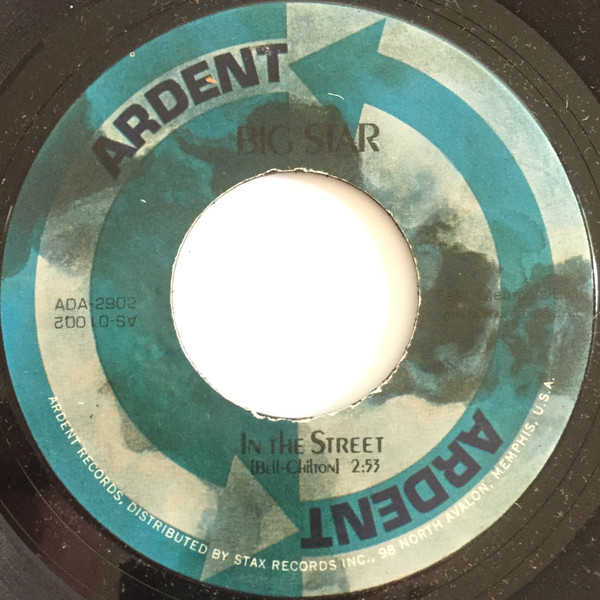
Most people today know this song as the theme to That 70s Show. They never used Big Star’s version for some reason. Todd Griffin covered it the first season and by the second season, Cheap Trick’s version was used. Big Star’s drummer Jody Stephens said, “I don’t know if the general population even knows that Big Star had anything to do with it.” …that is unfortunately true. The general population doesn’t know Big Star which is a crime.
The song was on their great debut album named #1 Record which was released in August of 1972. Billboard went as far as to say, “Every cut could be a single”…On the picture above it says “Distributed by Stax Records”…unfortunately it WASN’T… They did a tour and no one could find the album because many record stores didn’t have it. Stax was not equipped to distribute rock records.
By the second album, this was going to be resolved. Columbia was gonna distribute Stax, and then they would have got Big Star into big-box retail outlets. But what happened was Clive Davis, who’s huge in the music world, was the one who brokered that deal… and then he was fired. So the whole thing fell apart after that. America lost out on one of the best bands it ever produced. I would recommend to anyone the documentary on Big Star called…Big Star: Nothing Can Hurt Me
The song has a great riff and wonderful teenage seventies lyrics.
From Songfacts
Stephens played in a band called Golden Smog with Jeff Tweedy, and when Tweedy’s band Wilco came to Memphis, Jody sat in with the group. “We played ‘In The Street’ together – I sat in on drums and Glenn Kotche played the cowbell part and John Stirratt sang lead,” he recounts. “My wife was in the audience and she said when we started playing ‘In The Street,’ somebody sitting in back of her said, ‘Why are they playing That ’70s Show song?'”
In what he described as “ironic” in a 2000 Rolling Stone interview, Alex Chilton received $70 in royalty payments every time That ’70s Show was broadcast.
Cheap Trick’s cover features the lyrics “We’re all all right,” an allusion to their 1978 hit “Surrender” from the album Heaven Tonight. Perhaps a chirpy re-interpretation to suit a primetime network sitcom, the inclusion undermines the ambiguity of the original, which evokes adolescent boredom without either romanticizing or condemning it.
This ambiguity is perfectly encapsulated in the lyric, “wish we had a joint so bad” (also absent from the theme tune, although pot smoking was a recurring theme on the show), the double meaning of which can be read as meaning the protagonist’s craving to get high or for a place to go with his friends. There is certainly a theme of being disposed that runs throughout the deceptively simple lyrics, which is juxtaposed with the major key Power-Pop music.
Chilton has said that along with “When My Baby’s Beside Me,” “In The Street” is the best song he ever wrote
In The Street
Hanging out, down the street The same old thing we did last week Not a thing to do But talk to you
Steal your car, and bring it down Pick me up, we’ll drive around Wish we had A joint so bad
Pass the street light Out past midnight
Hanging out, down the street The same old thing we did last week Not a thing to do But talk to you
Every Friday I’m going to attempt to live up to the blog’s name and post a few powerpop songs…by known and unknown artists. So get ready for jangly guitars, harmonizing vocals, and more pop hooks than you can shake a stick at.
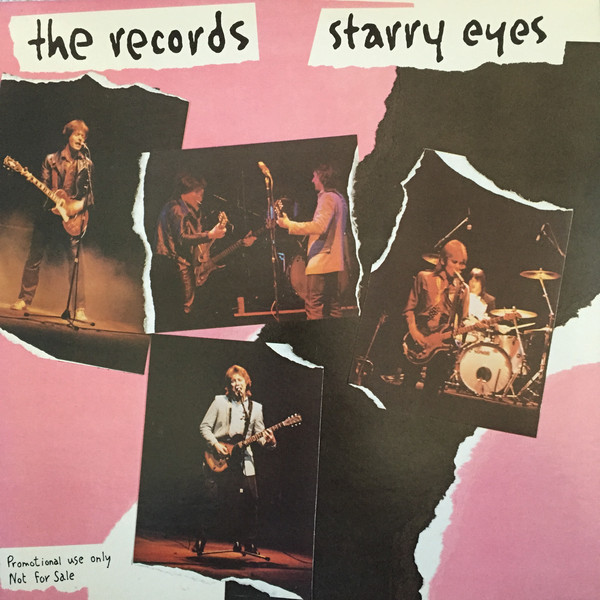
The Records were an English powerpop band formed in 1978. This song peaked at #59 in the Billboard 100 in 1979. The song was off their debut album Shades in Bed. The band included John Wicks – rhythm guitar, vocals, Huw Gower – lead guitar, vocals, Phil Brown – bass guitar, vocals, and Will Birch – drums, vocals.
Starry Nights would end up being their best-known song. Robert John “Mutt” Lange produced this album for the Records. The Records split up in 1982 but John Wicks went on to success working with other artists. The songs of Wicks and his lyricist partner, Will Birch, have been recorded by The Searchers, Mary Chapin Carpenter, Too Much Joy, Michael Monroe, and numerous other artists…a great powerpop song.
Better quality version below
Starry Eyes
While you were off in France, we were stranded in the British Isles Left to fall apart amongst your passports and your files We never asked for miracles, but they were our concern Did you really think we’d sit it out and wait for your return?
I don’t want to argue, I ain’t gonna budge Won’t you take this number down Before you call up the judge? I don’t want to argue, there’s nothing to say Get me out of your starry eyes and be on your way
While you were on the beach Were you dreaming all about your share? Planning to invest it all to cover wear and tear? We paid for all the phone calls, the money’s off the shelf Don’t you know that while you’re gone away I’ve got to help myself?
I don’t want to argue, I ain’t gonna budge Won’t you take this number down Before you call up the judge? I don’t want to argue, there’s nothing to say Get me out of your starry eyes and be on your way
While you were in the pool We were meeting with the boys upstairs Talking to the money men and carrying out affairs We had no time for cocktails or working up a tan The boys have all been spoken to The writ has hit the fan
So I don’t want to argue, I ain’t gonna budge Won’t you take this number down Before you call up the judge? ‘Cause I don’t want to argue, there’s nothing to say Get me out of your starry eyes and be on your way
No I don’t want to argue, there’s nothing to say Just get me out of your starry eyes and be on your way You get me out of your starry eyes and be on your way
I had this single as a kid. I had a cool cousin who had a lot of records in the sixties and she gave many to me when she found out I liked sixties bands.
The song was written by the band as a protest against their record company White Whale. Lead singer Howard Kaylan: It was never intended to be a straight-forward song. It was meant as an anti-love letter to White Whale (their record company), who were constantly on our backs to bring them another ‘Happy Together.’ So I gave them a very skewed version. Not only with the chords changed, but with all these bizarre words. It was my feeling that they would listen to how strange and stupid the song was and leave us alone. But they didn’t get the joke. They thought it sounded good. Truthfully, though, the production on ‘Elenore’ WAS so damn good. Lyrically or not, the sound of the thing was so positive that it worked. It certainly surprised me.”
The song peaked at #6 in the Billboard 100 in 1968. I have always liked the Turtles. They never took themselves seriously and they had a good time in the sixties and were quite successful.
From Songfacts
The line, “You’re my pride and joy etcetera” ends the main chorus of this song. This was a dig at their record label, White Whale, who had been hounding them for another “Happy Together,” which was The Turtles’ big hit in 1967. They quickly threw together this overly-clichéd song (“Gee I think you’re swell”) and it proceeded to be another smash despite their best effort at sabotage. In the liner notes of The Turtles’ Anthology Solid Zinc, Howard Kaylan of The Turtles explained: “Elenore was a parody of ‘Happy Together.’
Many of The Turtles’ hits were composed by other writers, but this one they wrote themselves. The whole band was given writer credit: Howard Kaylan, Mark Volman, Al Nichols, Jim Pons and John Barbata.
Elenore
You got a thing about you I just can’t live without you I really want you Elenore near me Your looks intoxicate me Even though your folks hate me There’s no one like you Elenore really
Elenore gee I think you’re swell And you really do me well You’re my pride and joy et cetera Elenore can I take the time To ask you to speak your mind Tell me that you love me better
I really think you’re groovy Let’s go out to a movie What do ya say now, Elenore can we? They’ll turn the lights way down low Maybe we won’t watch the show I think I love you, Elenore, love me
Elenore, gee I think you’re swell And you really do me well You’re my pride and joy, et cetera Elenore, can I take the time To ask you to speak your mind? Tell me that you love me better
One more time!
Elenore, gee I think you’re swell, ah-hah Elenore, gee I think you’re swell, ah-hah-hah
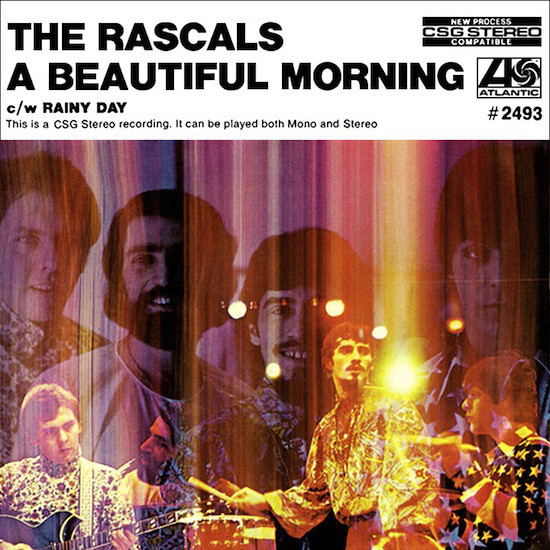
This was the first of the group’s singles to be credited to “The Rascals,” the original name of the group, rather than “The Young Rascals” which their producer had them take in order to avoid confusion from listeners with another group “The Harmonica Rascals.”
This song peaked at #3 in the Billboard 100 in 1968. Beautiful Morning was written by Felix Cavaliere and Eddie Brigati. The Rascals don’t get talked about as much as some of their peers… which is a shame…they were a great singles band. The band had 18 songs in the Billboard 100, 3 number 1 hits and 6 top ten hits. The Rascals were inducted into the Rock and Roll Hall of Fame on May 6, 1997.
From Songfacts
Written by band members Felix Cavaliere and Eddie Brigati, this is an upbeat, optimistic song similar in theme to their 1967 hit “Groovin’.” While the late ’60s were a tumultuous time in America and a lot of the music dealt with social and political issues of the time, The Rascals provided hopeful songs that were a welcome relief for many listeners.
Beautiful Morning
It’s a beautiful mornin’, ah I think I’ll go outside a while And just smile Just take in some clean fresh air, boy! Ain’t no sense in stayin’ inside If the weather’s fine, and you got the time It’s your chance to wake up and plan another brand new day Either way It’s a beautiful mornin’, ah Each bird keeps singin’ his own song So long! I’ve got to be on my way now Ain’t no fun just hangin’ around I’ve got to cover ground; you couldn’t keep me down It just ain’t no good if the sun shines When you’re still inside Shouldn’t hide, still inside, shouldn’t hide Ah, oh! (Shouldn’t hide) Ah, ah, oh
(Doo, doo-wa) (Doo, doo-wa)
There will be children with robins and flowers Sunshine caresses each new waking hour Seems to me that the people keep seeing More and more each day; gotta say, lead the way It’s okay, Wednesday, Thursday, it’s okay (Ah) Monday, Wednesday, Friday, weekday, ah, ah, oh
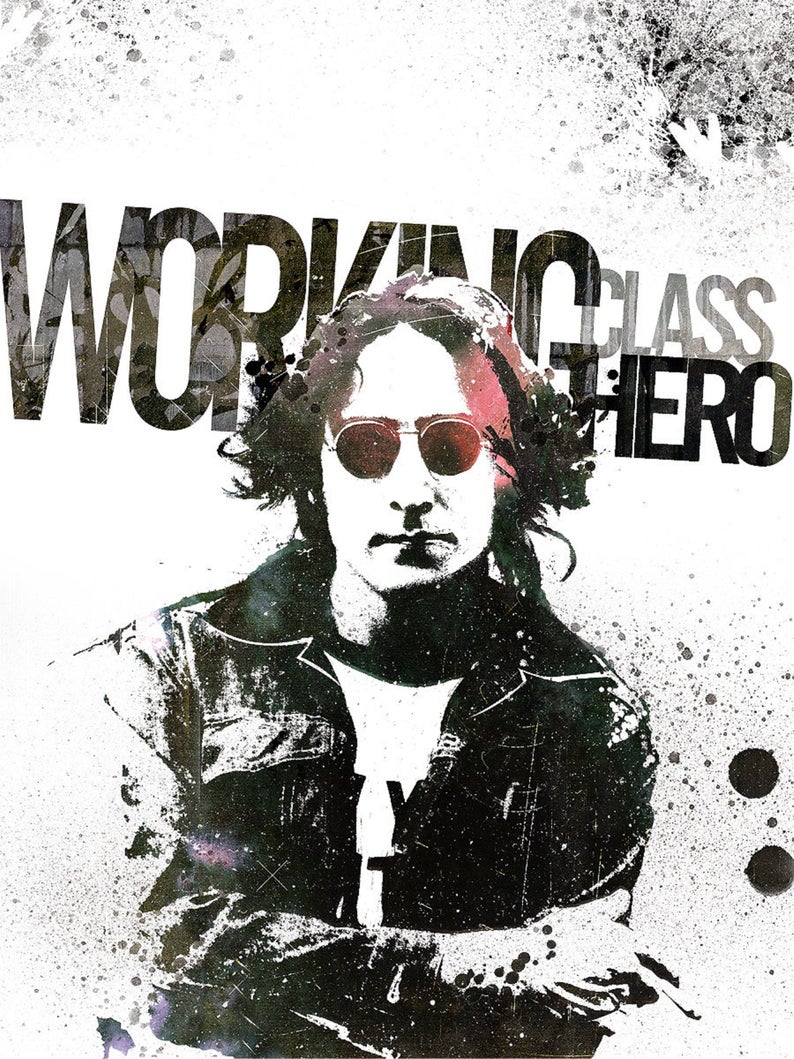
This song was a favorite of mine of John Lennon when I was younger. He took some flak about this one and Imagine when it came to being a Working Class Hero and having all of his possessions. His answer was
“What would you suggest I do? Give everything away and walk the streets? The Buddhist says, “Get rid of the possessions of the mind.” Walking away from all the money would not accomplish that. It’s like the Beatles. I couldn’t walk away from the Beatles. That’s one possession that’s still tagging along, right?”
When I was 18 this song was a powerful one to listen to…It still is…For me, the song was about the differences between the social classes. How some could be exploited and how people use ideologies to justify manipulating people. The song was on John’s debut album John Lennon/Plastic Ono Band.
Boston’s WBCN banned the song for its use of the word “f_ _king”.In Australia, the album was released with the expletive removed from the song and the lyrics censored on the inner sleeve.
From Songfacts
This song caused a fair amount of controversy for John Lennon, as his detractors pointed out that he was raised in an upper-middle-class home by his aunt and had no right to call himself a working-class hero. In an interview with Rolling Stone just three days before his death, Lennon explained: “The thing about the ‘Working Class Hero’ song that nobody ever got right was that it was supposed to be sardonic – it had nothing to do with socialism, it had to do with ‘If you want to go through that trip, you’ll get up to where I am, and this is what you’ll be.’ Because I’ve been successful as an artist, and have been happy and unhappy, and I’ve been unknown in Liverpool or Hamburg and been happy and unhappy.”
The final take as it appears on the album is actually a composite of two different performances done at two different studios. If you listen carefully (it might require headphones) you can clearly hear the sound of the guitar and vocals change where the edit was made about halfway through the song.
The word f–king appears twice in the lyrics. On the printed lyrics that came with the album, the word was obscured.
Why did Lennon curse in the song? Yoko Ono explained in a 1998 interview with Uncut: “He told me, ‘That’s part of being working class. It won’t be working class if what you say is all very clean and very proper.”
The line, “If you want to be like the folks on the hill” is a reference to the Beatles song “The Fool On The Hill.”
Green Day recorded this for the benefit album Instant Karma: The Amnesty International Campaign to Save Darfur, and they also performed the song on the 2007 season finale of American Idol. In their version, the last two lines are from the original John Lennon song – John sings them.
Lennon told the January 1971 edition of Rolling Stone about this song: “I think its concept is revolutionary, and I hope it’s for workers and not for tarts and fags. I hope it’s what “Give Peace A Chance” was about, but I don’t know. On the other hand, it might just be ignored. I think it’s for the people like me who are working class – whatever, upper or lower – who are supposed to be processed into the middle classes, through the machinery, that’s all. It’s my experience, and I hope it’s just a warning to people. I’m saying it’s a revolutionary song; not the song itself but that it’s a song for the revolution.”
This song seemed to resist all Lennon’s efforts to record a satisfactory vocal. Tape op Andy Stephens recalled to Uncut magazine August 2010 that he watched the former Beatle obsess about it day after day, singing “an endless number of takes… well over 100.. Probably 120, 130.”
Stephens added that Lennon became more frustrated as each take passed. “If the mix in his headphones wasn’t exactly what he wanted, he would take them off and slam them into the wall,” he recalled. “he wouldn’t say, ‘Can I have a bit more guitar?’ He would literally rip the cans off his head and smash them into the wall, then walk out of the studio.”
Working Class Hero
As soon as you’re born they make you feel small By giving you no time instead of it all Till the pain is so big you feel nothing at all A working class hero is something to be A working class hero is something to be
They hurt you at home and they hit you at school They hate you if you’re clever and they despise a fool Till you’re so f_ _king crazy you can’t follow their rules A working class hero is something to be A working class hero is something to be
When they’ve tortured and scared you for twenty-odd years Then they expect you to pick a career When you can’t really function you’re so full of fear A working class hero is something to be A working class hero is something to be
Keep you doped with religion and sex and TV And you think you’re so clever and classless and free But you’re still f_ _king peasants as far as I can see A working class hero is something to be A working class hero is something to be
There’s room at the top they’re telling you still But first you must learn how to smile as you kill If you want to be like the folks on the hill
A working class hero is something to be A working class hero is something to be If you want to be a hero well just follow me If you want to be a hero well just follow me
This song is awash in sixties influence…which isn’t surprising by Oasis. It caught my attention in the 90s seeing that it had a mod mid-sixties influence. The song peaked at #8 in the Billboard 100 and #2 in the UK in 1996.
This song was supposedly about Noel Gallagher’s then-girlfriend Meg Mathews, who is compared with a schoolboy’s wall to which posters of footballers and Popstars are attached. He said: “It’s about my girlfriend. She was out of work, and that, a bit down on her luck, so it’s just saying, ‘Cheer up and f—in get on with it.'” Noel later married then divorced Meg Mathews.
Noel also said… “The meaning of that song was taken away from me by the media who jumped on it. And how do you tell your Mrs. it’s not about her once she’s read it is? It’s about an imaginary friend who’s going to come and save you from yourself.”
From Songfacts
The music is based on Wonderwall Music, an instrumental album George Harrison wrote for the movie Wonderwall in 1968. This was the first solo album released by any of The Beatles.
The concept of the “Wonderwall” is based on a ’60s film called Wonderwall – from Psychedelia to Surrealism, starring Jane Birkin. She lives next door to a man who becomes fascinated with her,so he slowly makes holes in his wall so he can watch her through it. This is the “Wonderwall.” Warning: this movie is supposedly terrible.
In 2002, the British army produced a recruitment video that used this under footage of soldiers conducting exercises. The producers of the video didn’t realize they needed permission to use the song, and when Oasis denied, they had to recall all the videos.
The album is the second-best-selling in British history. The best selling album in UK history is Sgt. Pepper’s Lonely Hearts Club Band by The Beatles.
This was the first single Oasis released in the US, and is their biggest hit in that country. >>
Initially, Noel wanted to sing this song, but he gave his brother Liam Gallagher the choice, and Noel ended up singing “Don’t Look Back In Anger.”
What sounds like a cello was played on a Mellotron tape-playback keyboard, although the video features shows someone playing the cello.
At live shows Noel plays his acoustic guitar on a Fender Telecaster. It’s one of the few songs where he uses a Fender guitar rather than a Gibson.
The opening track of (What’s the Story) Morning Glory is the track “Hello,” which starts off with the opening riff of “Wonderwall” playing extremely quietly; this stops once the guitar noise comes in.
The original title was “Wishing Stone.”
In an interview conducted in Australia around the time of the release of Be Here Now, when asked which 3 songs he would like to be remembered for, Noel immediately responded with “Live Forever” and “Wonderwall” and then proceeded to list several others, including “Champagne Supernova,” “Magic Pie” and “Cigarettes & Alcohol.”
At the very end of the song, the intro to “Supersonic” can be faintly heard being played on acoustic guitar.
Radiohead recorded a bootleg cover of the song in which Thom Yorke sings many incorrect lyrics and cuts out mid-chorus when a background voice says, “Is this abysmal or what? It’s always good to make fun of Oasis.”
This was prevented from reaching #1 in the UK by Robson & Jerome’s Double A-side, “I Believe”and “Up On The Roof.”
The song’s music promo won the Best Video at the 1996 Brit Awards.
Jay-Z opened his set at the Glastonbury Festival in 2008 by singing a few minutes of this song – quite poorly. The famous UK festival was known for rock acts, so having Jay-Z perform stirred things up. After Noel Gallagher made public remarks taking issue with a rapper’s invitation to the festival, Jay responded with the on-stage mockery of “Wonderwall.”
The It’s a Shame About Ray episode of the HBO series Girls closed with Lena Dunham’s character Hannah singing this song in her bathtub, followed by a segue into Oasis’ original version. The day after its original broadcast on February 2, 2013, the tune re-entered Billboard’s Rock Digital Songs at #50.
This was voted #1 on the state-funded Triple J youth network’s “Hottest 100” countdown of the best songs released between Jan. 1, 1993, and Dec. 31, 2012. The White Stripes’ “Seven Nation Army” was runner-up. More than 940,000 votes were cast for the poll, which was held to celebrate two decades of Triple J’s Hottest 100 countdown. “Wonderwall” previously topped the annual “Hottest 100” in 1995, a time when Oasis were at the peak of their powers.
Noel on the song’s drum placement (The Art of Noise: Conversations with Great Songwriters by Daniel Rachel): “I write songs purely for feel. Like the drums coming in on ‘Wonderwall’: people were going, ‘Why have they come in there, it’s an eighth of a bar too early?’ ‘What’s an eighth of a bar?’ I struggle to understand people’s perceptions. It comes in there because to me that’s where it sounds right to. ‘That’s wrong.’ I’m like, ‘Wrong to who? How can it be wrong?'”
This topped a 2016 survey commissioned by the website Sunfly Karaoke ahead of Father’s Day to find the favorite karaoke songs of dads around the UK. The song narrowly beat Blur’s “Parklife,” which came second in the poll.
Ryan Adams covered the song for his 2004 Love is Hell album. His version was supposed to be an inside joke with his then girlfriend, with whom he would debate the merits of Oasis vs Blur, but Adams managed to put a much darker spin on the song. He told Uncut:
“It occurred to me that I was singing it from the perspective of someone in danger of committing suicide. That’s not what I was thinking about when I first did it, but it did have a different meaning. It’s someone saying, you’re my last hope.
But in the second verse, that hope it’s not happening, and I’m singing like that person would sing if that’s the last thing they’re ever going to sing. That’s how I feel in that moment. It’s not a perversion to tap into these those things. I can let my body sing this way and let my mind go there, and I can feel all those things because they’ve been real things in my life at some point.”
Wonderwall
Today is gonna be the day That they’re gonna throw it back to you By now you should’ve somehow Realized what you gotta do I don’t believe that anybody Feels the way I do, about you now
Back beat, the word was on the street That the fire in your heart is out I’m sure you’ve heard it all before But you never really had a doubt I don’t believe that anybody Feels the way I do about you now
And all the roads we have to walk are winding And all the lights that lead us there are blinding There are many things that I Would like to say to you but I don’t know how
Because maybe, you’re gonna be the one that saves me And after all, you’re my wonderwall
Today was gonna be the day But they’ll never throw it back to you By now you should’ve somehow Realized what you’re not to do I don’t believe that anybody Feels the way I do, about you now
And all the roads that lead you there are winding And all the lights that light the way are blinding There are many things that I Would like to say to you but I don’t know how
I said maybe, you’re gonna be the one that saves me And after all, you’re my wonderwall
I said maybe, you’re gonna be the one that saves me And after all, you’re my wonderwall
I said maybe, you’re gonna be the one that saves me You’re gonna be the one that saves me You’re gonna be the one that saves me
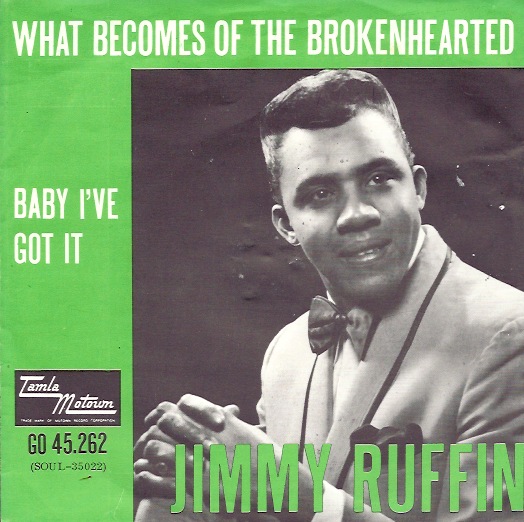
Jimmy Ruffin was the brother of then Temptation David Ruffin. This was written by Motown writers Jimmy Dean, Paul Riser, and William Witherspoon. They wrote it for The Detroit Spinners, but Ruffin convinced the Motown writers to let him try it, and they liked what they heard.
I think Motown has been the soundtrack to more breakups than anyone else. This song peaked at #7 in the Billboard 100 in 1966. The great Smokey Robinson produced this track. He worked on many Motown classics as an artist, writer, and producer. This would be Jimmy’s biggest hit of his career.
From Songfacts
Many Motown songs deal with heartbreak, but this one is especially bleak. The poor guy has recently joined the ranks of the brokenhearted, and he’s not sure what happens next. He knows he can’t take the pain much longer, but keeps coming up empty in his search.
Originally, this contained a spoken intro:
A world filled with love is a wonderful sight
Being in love is one’s heart’s delight
But that look of love isn’t on my face
That enchanted feeling has been replaced
It was cut out before the song was released, but the version with the intro did appear on a British compilation which also included Ruffin’s version of the song in Italian (“Se Decidi Cosi”).
Other Motown acts to record this song include Diana Ross and The Supremes, who did a cover of this for their album Let the Sunshine In, and The Contours, who did it at a faster tempo. Both of these versions contain the spoken intro.
In the UK, this charted at #10 when it was first released in 1966, but make #4 when it was re-released in 1974.
Dave Stewart (not the one from Eurythmics) released a keyboard-driven version of this song in 1980 with Colin Blunstone of The Zombies on vocals. This rendition, which had Amanda Parsons and Jakko on backing vocals, made #13 UK.
The British duo Robson & Jerome took this song to #1 in the UK when they released it as a single along with covers of “Saturday Night At The Movies” and “You’ll Never Walk Alone.”
Vonda Shepard recorded this for an episode of the TV series Ally McBeal.
The Isley Brothers recorded a version entitled “Smile” that is the same exact backing track with different lyrics and phrasing. It can be found on the Motown Sings Motown Treasures album.
Paul Young recorded this for the 1991 movie Fried Green Tomatoes. His version went to #1 on the US Adult Contemporary charts and made #22 on the Hot 100 (the only version besides Ruffin’s to make this chart).
On an episode of the TV series JAG, Col. MacKenzie plays the song on a jukebox in a bar, lamenting her breakup with Mick, the Australian naval officer. Mac, Bud (who was having romantic issues with Harriet) and Lt. Rabb (who just broke up with girl friend) are all sitting at the bar singing along with the song unaware of the others’ romantic issues.
The theme song from the 1992 Whitney Houston film The Bodyguard was Dolly Parton’s “I Will Always Love You,” but according to her leading man Kevin Costner speaking at her funeral in February 2012, the first choice was this song, which ended up being used in Fried Green Tomatoes (the Paul Young version).
What Becomes of the Broken Hearted
A world filled with love is a wonderful sight Being in love is what’s heart’s delight But that look of love isn’t on my face That enchanted feeling has been replaced As I walk this land of broken dreams I have visions of many things But happiness is just an illusion Filled with sadness and confusion What becomes of the broken-hearted Who had love that’s now departed? I know I’ve got to find Some kind of peace of mind Maybe, The fruits of love grow all around But for me they come a tumblin’ down Everyday heartaches grow a little stronger I can’t stand this pain much longer I walk in shadows, searching for light Cold and alone, no comfort in sight Hoping and prayin’ for someone who care Always movin’ and goin’ nowhere What becomes of the broken-hearted Who had love that’s now departed? I know I’ve got to find Some kind of peace of mind Help me, please I’m searching though I don’t succeed But someone look There’s a growing need Oh, he is lost, there’s no place for beginning All that’s left is an unhappy ending Now what becomes of the broken-hearted Who had love that’s now departed? I know I’ve got to find Some kind of peace of mind I’ll be searching everywhere Just to find someone to care I’ll be looking everyday I know I’ve got to find a way Nothing’s gonna stop me now I’ll find a way somehow I’ll be searching everywhere
If you get really bored…I’ve attempted to make an index/menu for the blog above with “All Songs from A-Z”, “TV Shows and Commercials”, and “Books and Documentaries”… I will be adding more categories as I go along. If you try it and something doesn’t work just shoot me a comment…thanks
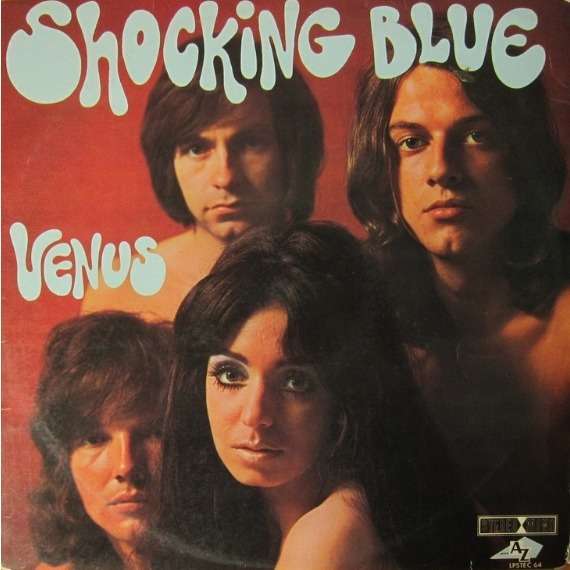
The Shocking Blue weekend is coming to a close with their biggest hit… Venus. I want to thank everyone for the positive feedback on this forgotten band over the weekend. I like some of their other songs more than this one but it is a good song.
This is one of the first songs I remember hearing. I like Shocking Blue because of their powerful lead singer Mariska Veres and the songwriting of Robbie van Leeuwen. This was their huge #1 hit Venus and it peaked at #1 in the Billboard 100 in 1970.
The group’s guitarist Robbie Van Leeuwen wrote this song. The group is from The Netherlands, which led to an interesting translation problem when Shocking Blue lead singer Mariska Veres sang the English lyrics.
Van Leeuwen wrote the first line down incorrectly what was supposed to be “A goddess on the mountain top” he wrote as “A goddness (I checked and she does say goddness) on the mountain top,” and that’s exactly how Veres sang it. the result was a #1 hit with a misspoken first line thanks to a typo.
“Venus” made Number 3 in Holland, but significantly topped the charts in several countries, including Belgium, France, Italy, Spain, and Germany. The record came to the attention of a newly formed American record label, Colossus. The label’s head, Jerry Ross, signed Shocking Blue to his label and was rewarded when “Venus” hit the top there in February of 1970. Needless to say the group was hugely successful at home and had some fifty hits in Holland while their records also sold well in France and Japan.
Shocking Blue’s follow-up to “Venus”, “Mighty Joe“, made Number 1 in Holland and charted almost everywhere as its predecessor had. “Never Marry a Railroad Man” also hit top of the Holland rock chart. They continued to chart with songs like “Hello Darkness”, “Shocking You”, “Long Lonesome Road”, “Blossom Lady”, and “Inkpot”, but neither of these songs reached higher than 43rd place in the American chart.
Shocking Blue successfully combined Beat and R&B with psychedelic elements of the time like Indian sitar and odd production techniques. Robbie didn’t mind if the band included a few covers, as it took the pressure off him to constantly come up with new material. “We wrote a lot of our own stuff and the radio DJs preferred us to do original songs, but we had so many albums to do the band had to fill in with a few covers. It was quite exhausting writing all the lyrics and song myself”.
For several months in 1970-1971 Leo van de Ketterij(guitar) played with the group.
Mariska, Robbie, Cor and Klaasje stayed together for three years while they toured the world, visiting such distant lands as Japan, Indonesia, Hong Kong, and South America. Traveling facilities were primitive compared to the sort of luxury top groups expect today, and Shocking Blue had to cover vast distances cramped together in an uncomfortable station wagon. “We never expected to be so busy”, recalls Robbie. “The whole touring business just became too tough for me.”
From Songfacts
The female vocal trio Bananarama recorded this in 1986. It was one of the first songs they started performing when they formed the band in 1979, but they wanted to record original songs first so they would be taken seriously.
Their version was produced by the team of Stock, Aitken and Waterman, who worked on hits by Rick Astley (“Never Gonna Give You Up”), Dead or Alive (“You Spin Me Round (Like A Record)”) and Kylie Minogue (“I Should Be So Lucky”).
The distinctive guitar riff was taken from The Who’s “Pinball Wizard.”
This was produced by Jerry Ross, who also produced another Dutch group, Tee Set, who performed “Ma Belle Amie”. Ross also produced an album of orchestral arrangements of his (primarily) Dutch stable of hits, under the name Jerry Ross Symposium.
In the US, both this and the Bananarama cover version reached #1, making it one of the few songs to do so. Strangely, in the UK both Shocking Blue and Bananarama reached #8 with “Venus” and both spent 13 weeks on the chart with the song.
On an episode of the MTV cartoon Beavis And Butthead, Butthead makes up his own lyrics to this but gets frustrated when he can’t think of anything that rhymes with “Venus.”
In Shocking Blue’s home country, this never made it to #1. After its success in the States, the song was re-released but climbed no further that #3 on the Dutch pop chart.
In 1959, Frankie Avalon had a US #1 hit with the same title. There were two other instances of different songs with identical titles reaching #1 on the Billboard charts. “My Love” was #1 for Petula Clark in 1966 and another “My Love” turned the trick for McCartney & Wings in 1973. Then “Best Of My Love” topped the charts for the Eagles in 1973 and a different song of the same title was #1 for The Emotions in 1977.
In the 1988 Full House episode “But Seriously Folks,” DJ and Kimmy, influenced by Bananarama, start a band and attempt to learn “Venus.”
Venus
A goddess on a mountain top Burning like a silver flame A summit of beauty and love And Venus was her name.
She’s got it, Yeah baby, she’s got it. I’m your Venus, I’m your fire at your desire.
Her weapons were her crystal eyes Making every man mad, Black as the dark night she was Got what no one else had.
She’s got it, Yeah baby, she’s got it I’m your Venus, I’m your fire at your desire.
This was a cover by Shocking Blue of the Mel Tillis and Webb Pierce song. Mel Tillis claims he wrote the song by himself but gave Pierce credit in trade of some boots that Webb Pierce owned. Mel Tillis later said that “Them old boots cost me over eight hundred thousand dollars in royalties.”
Web Pierce took the song to #2 in the Billboard Country Charts and #24 in the Billboard 100 in 1959. Mel Tillis took the song to #1 in the Billboard Country Charts and #1 in the Candian Country Charts in 1972.
Shocking Blue did a good job of the cover. A Dutch group doing country…pretty interesting.
Shocking Blue covered the song in 1972 and it was on the Inkpot album. The album has three cover songs included because guitarist and main songwriter Robbie van Leeuwen had written 3 albums in two years.
The Mel Tillis version
I Ain’t Never
Well, I ain’t never, I ain’t never Seen nobody like you, No, no, no, never, ever, ever Seen nobody like you.
You call me up and say you’ll meet me at nine, I have to hurry, hurry but I’m fair on time. I walk right up and knock on your door, The landlord said he ain’t here no more.
But I never, oh darling, never See nobody like you, But I love you, yeah, I love you, I love you just the same.
Well, I ain’t never, I ain’t never Seen nobody like you, No, no, no, never, ever, ever Seen nobody like you.
You tell me sweet things that you don’t mean, You got me a-living in a horny dream. You make me do things I don’t wanna do, All friends are saying what’s a-wrong with you?
I ain’t never, oh darling, never Seen nobody like you, Oh, but I’ve loved you, yeah, I’ve loved you, I’ve loved you just the same.









 Road”, “Blossom Lady”, and “Inkpot”, but neither of these songs reached higher than 43rd place in the American chart.
 years while they toured the world, visiting such distant lands as Japan, Indonesia, Hong Kong, and South America. Traveling facilities were primitive compared to the sort of luxury top groups expect today, and Shocking Blue had to cover vast distances cramped together in an uncomfortable station wagon. “We never expected to be so busy”, recalls Robbie. “The whole touring business just became too tough for me.”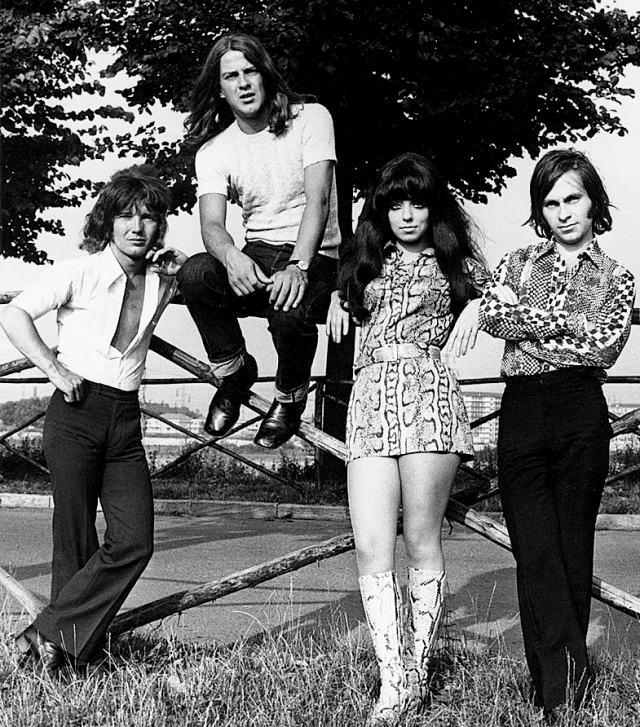
 PowerPop... An Eclectic Collection of Pop Culture