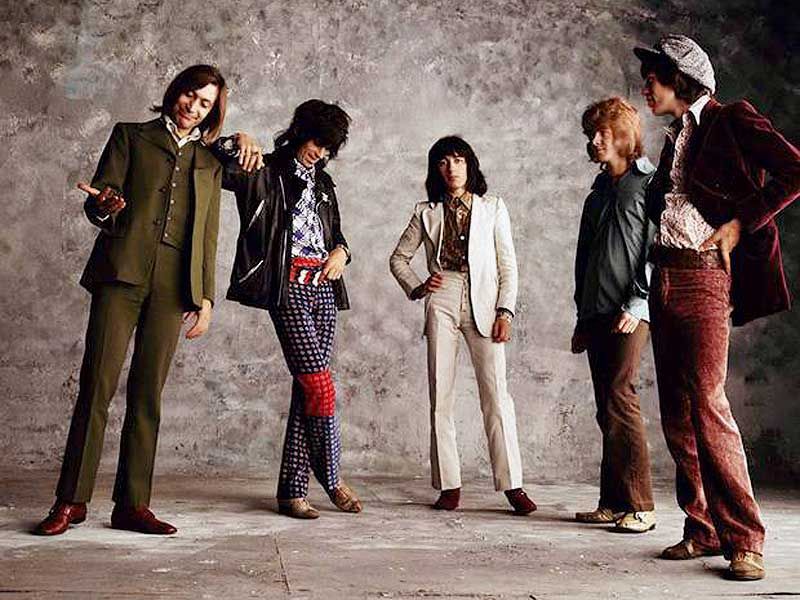
The Shivvers – No Substitutes —-Powerpop Friday

I’ve listened to a lot of this band’s music. I haven’t heard a bad song. They were named “Milwaukee’s Best Band” by the Milwaukee Journal in 1982. The Shivvers were a band fronted by Jill Kossoris in the late seventies to early eighties that played power pop. I’m amazed that they didn’t catch on with a big label. Some reviewers have compared them to Blondie and the Raspberries.

They made recordings but never could get signed to a record deal. The band broke up in the early eighties and went their separate ways. Interest in the band started to build on the internet and in 2003, the Hyped to Death label issued the Shivvers retrospective Til the Word Gets Out. This song was recorded in 1979.

Another album with their songs was Lost Hits from Milwaukee’s First Family of Power Pop: 1979-82

I’ll feature them again soon with another song.

Songs That Were Banned: Neil Young – This Note’s For You

This video was banned by MTV because they feared it would upset their sponsors. So, being Neil being Neil…wrote a letter to MTV that stated:

MTV, you spineless twerps.
You refuse to play “This Note’s For You” because you’re afraid to offend your sponsors.
What does the “M” in MTV stand for: music or money?
Long live rock and roll.

This parody of commercial rock was banned by MTV for its critique of the music industry’s cozy relationship with corporate America. The song and video mocked advertisements and did not shy away from dropping company names– the title itself is a jab at Budweiser’s ad campaign of “This Bud’s For You.” The song also made fun of pop artists such as Michael Jackson and Whitney Houston. Jackson’s legal threats prompted MTV to ban the video. They changed their minds when the song became a hit on Canada’s MuchMusic channel…the same as the BBC did with My Generation when it became a hit.

He has stuck to his policy of refusing to license his music out for commercials, let alone appear in them himself.

Now the music business…if there is still a music business…promotes their music being in commercials to expand their audience.


From Songfacts

This song is Neil Young’s critique of artists who “sell out” and allow their songs to be used in commercials, something he has never done. The title is a play on Budweiser’s venerable ad campaign, “This Bud’s For You.” In addition to Bud, Young mentions Coke, Pepsi, and Miller in the lyric.

Artists like Young and Bruce Springsteen have never let their songs be used in commercials, feeling it cheapens their artistic integrity. Many other artists, like The Who and The Rolling Stones, have made lots of money by letting companies use their songs. Some classic rock artists like John Mellencamp resisted for years, but allowed their songs to be used for commercial purposes when they realized it was the best way to get them exposure. A band with a particularly interesting take on the subject is Devo, who feel it is part of their art.

The line, “I got the real thing, baby,” is a reference to the Coke slogan, “It’s the Real Thing,” which was introduced in 1969.

The line, “Ain’t singin’ for Spuds” refers to Spuds MacKenzie, the spokesdog for Bud Light. Introduced in 1987, Spuds was a bull terrier who appeared in their ad campaigns until 1989. Billed as “the original party animal,” Spuds became wildly popular and boosted sales of Bud Light significantly.

Directed by Julien Temple, the video is a parody of various ad campaigns. The opening noir is a sendup of the Michelob campaign that starred “practicing alcoholic” Eric Clapton. Michael Jackson, who was ripe for parody at the time, shows up in impersonator form for the line “ain’t singing for Pepsi” – later in the video his hair catches fire as it did when Jackson was shooting a commercial for the sugary beverage in 1984. Whitney Houston, who shilled for Diet Coke, gets a lookalike for the line “ain’t singing for Coke.”

Next up for mockery are the Calvin Klein “Obsession” commercials, one of the most memorable and baffling campaign’s of the ’80s. There were no rock stars associated with this one, but The Rolling Stones did have a tour sponsored by Jovan. Young’s video turns it into “Concession,” with a dialogue break in the style of the ads:

“Members of the jury, this man is on trial for his smell.”
“Forgive me, but I am prettier than all of you.”
“Liar, give me back my shoes.”

A faux-Spuds MacKenzie also shows up to mock Budweiser.

At the end of the clip, Young turns his beer around to reveal his own slogan: “Sponsored by Nobody.”

There was lots of raunchy debauchery on MTV around this time, but they had a strict policy against product placement, refusing to air videos where products were mentioned by name. This was designed to protect their advertisers and make their commercials more valuable (why would Pepsi buy airtime when they could put a can in a Duran Duran video?). Citing this policy, MTV banned the video, which generated a great deal of controversy and also proved Young’s point about corporate interests infiltrating music. The ban happened in early July 1988; Young sent an open letter to MTV stating:

Forced to admit they were refusing to air an excellent video to protect their sponsors, MTV went into damage control mode and agreed to air the video. They made it into an event, debuting the video on August 21 as part of a 30-minute special about the controversy. Then they awarded it Video of the Year at the 1989 MTV Video Music Awards. Young showed up to accept it.

Young discussed his reasons for accepting the award despite it being originally banned in an interview with Village Voice Rock and Roll Quarterly: “I dunno – must be the Perry Como in me. I could do the hard-line Marlon Brando thing, not accept the award, give it to the Indians. But that’s almost the predictable thing to do. You can’t get money to make videos if MTV won’t play them. In accepting the award I thought I’d be able to make more videos and get ’em played.”

MTV at the time was about as permissive as the cable landscape got – at least in terms of bawdy behavior. That’s why it was surprising anytime they deemed something not suitable for air. In 1992, Paul McCartney recorded a concert for MTV for their Up Close series, but the network edited out his song “Big Boys Bickering,” which was about politics and the environment. MTV claimed that the song was excised because of curse words in the lyrics, although it would have been easy enough to bleep them.

This wasn’t the first single from the album: “Ten Men Workin'” was. That song made inroads on rock radio and reached #6 on Billboard’s Album Rock Tracks chart in May 1988. “This Note’s For You,” predictably, had a harder time getting airplay because of the product mentions. It garnered the most attention during the video controversy, but still only reached #19 on that chart as radio stations continued to shy away from it.

This is the title track to the only album Young recorded with The Bluenotes as his backup band, members of which included Chad Cromwell on drums and Frank Sampedro on keyboards and a six-piece horn section. Befitting their name, This Note’s For You is a blues album.

This was released as a single with the A-side a live version recorded at The Palace in Los Angeles on April 14, 1988 and the B-side a studio cut from the album.

This Note’s For You

Don’t want no cash
Don’t need no money
Ain’t got no stash
This note’s for you.

Ain’t singin’ for Pepsi
Ain’t singin’ for Coke
I don’t sing for nobody
Makes me look like a joke
This note’s for you.

Ain’t singin’ for Miller
Don’t sing for Bud
I won’t sing for politicians
Ain’t singin’ for Spuds
This note’s for you.

Don’t need no cash
Don’t want no money
Ain’t got no stash
This note’s for you.

I’ve got the real thing
I got the real thing, baby
I got the real thing
Yeah, alright.

Songs That Were Banned: Loretta Lynn – The Pill

There’s a gonna be some changes made, Right here on nursery hill, You’ve set this chicken your last time, ‘Cause now I’ve got the pill

By the time Loretta Lynn recorded “The Pill” in 1975, the birth control pill had been on the US market for over a decade, but the conservative country music scene still wasn’t ready for a song celebrating the use of contraception. Many country stations pulled the song from their playlists and it stalled at #5 in the Billboard Album Chart. But controversy breeds curiosity and curiosity boost record sales, so the song became Lynn’s highest-charting solo single on the pop chart at #70 in the Billboard 100.

Loretta Lynn: “If I’d had the pill back when I was havin’ babies I’d have taken ’em like popcorn. The pill is good for people. I wouldn’t trade my kids for anyones. But I wouldn’t necessarily have had six and I sure would have spaced ’em better.”

“The Pill”, written by Lorene Allen, Don McHan, T. D. Bayless, and Loretta Lynn.

From Songfacts

 The singer couldn’t understand what the fuss was all about. In our interview with Loretta Lynn, she explained: “I didn’t understand that, because everybody was taking the pill. I didn’t have the money to take it when they put it out, but I couldn’t understand why they were raising such a fuss over taking the pill.”

Although it was written by a team of songwriters, Lorene Allen, Don McHan, and T. D. Bayless, Lynn could certainly relate to the narrator who is sick of having babies left and right and is “makin’ up for all those years, since I’ve got the pill.” By the time she was 19, Lynn had three children and would give birth to three more, including a set of twins, just as the pill was gaining traction by 1964. 

Doctors were grateful to Lynn as the song introduced the availability of the pill to women living in rural areas.

Unbeknownst to Lynn at the time, she was almost banned from singing this at the Grand Ole Opry. She recalled in an interview with Playgirl Magazine: “You know I sung it three times at the Grand Ole Opry one night, and I found out a week later that the Grand Ole Opry had a three-hour meeting, and they weren’t going to let me [sing it]… If they hadn’t let me sing the song, I’d have told them to shove the Grand Ole Opry!”

Lynn performed this on Dolly Parton’s variety show, Dolly, in 1988, and on Roseanne Barr’s talk show, The Roseanne Show, in 1998.

This is the first popular English-language song about birth control.

The Pill

You wined me and dined me
When I was your girl
Promised if I’d be your wife
You’d show me the world
But all I’ve seen of this old world
Is a bed and a doctor bill
I’m tearin’ down your brooder house
‘Cause now I’ve got the pill
All these years I’ve stayed at home
While you had all your fun
And every year that’s gone by
Another babys come
There’s a gonna be some changes made
Right here on nursery hill
You’ve set this chicken your last time
‘Cause now I’ve got the pill

This old maternity dress I’ve got
Is goin’ in the garbage
The clothes I’m wearin’ from now on
Won’t take up so much yardage
Miniskirts, hot pants and a few little fancy frills
Yeah I’m makin’ up for all those years
Since I’ve got the pill

I’m tired of all your crowin’
How you and your hens play
While holdin’ a couple in my arms
Another’s on the way
This chicken’s done tore up her nest
And I’m ready to make a deal
And ya can’t afford to turn it down
‘Cause you know I’ve got the pill

This incubator is overused
Because you’ve kept it filled
The feelin’ good comes easy now
Since I’ve got the pill
It’s gettin’ dark it’s roostin’ time
Tonight’s too good to be real
Oh but daddy don’t you worry none
‘Cause mama’s got the pill
Oh daddy don’t you worry none
‘Cause mama’s got the pill

Songs That Were Banned: The Kinks – Lola

This song faced censorship on less common ground than most. I would have thought the subject line would have caused problems…but no. The original studio recording contained the word “Coca-Cola” in the lyrics, which violated BBC Radio’s policy against product placement.

The songwriter, Ray Davies, was forced to interrupt the Kinks’ American tour so he could change the lyric to “cherry cola” for the single’s release. He made a 6,000 mile round trip flight from New York to London and back just for this purpose.

The song peaked at #9 in the Billboard 100, #2 in the UK, #1 in New Zealand and #2 in the UK in 1970.

Ray Davies: “‘Lola’ was a love song, and the person they fall in love with is a transvestite. It’s not their fault – they didn’t know – but you know it’s not going to last. It was based on a story about my manager.”

“The subject matter was concealed,” It’s a crafty way of writing. I say, ‘She woke up next to me,’ and people think it’s a woman. The story unfolds better than if the song were called ‘I Dated a Drag Queen.'”


From Songfacts

This song is about a guy who meets a girl (Lola) in a club who takes him home and rocks his world. The twist comes when we find out that Lola is a man.

As stated in The Kinks: The Official Biography, Ray Davies wrote the lyrics after their manager got drunk at a club and started dancing with what he thought was a woman. Toward the end of the night, his stubble started showing, but their manager was too tanked to notice.

Ray Davies revealed to Q magazine in a 2016 interview: “The song came out of an experience in a club in Paris. I was dancing with this beautiful blonde, then we went out into the daylight and I saw her stubble. “

He added; “So I drew on that but colored it in, made it more interesting lyrically.”

The Kinks came up with the riff after messing around with open strings on guitars. The group’s guitarist, Dave Davies, contended that he deserved a songwriting credit on the track, leading to additional friction with his brother Ray, who got the sole composer credit.

This revived the career of The Kinks, at least in America where their popularity was fading. Their previous Top 40 in the States was “Sunny Afternoon” in 1966.

Ray Davies said: “I wrote Lola to be a great record, not a great song. Something that people could recognize in the first five seconds. Even the chorus, my two-year-old daughter sang it back to me. I thought, ‘This must catch on.'”

The line “You drink champagne and it tastes just like cherry cola” was recorded as “it tastes just like Coca-Cola.” The British Broadcasting Company (BBC) refused to play it because of the commercial reference, so Ray Davies flew from New York to London to change the lyric and get the song on the air.

There was speculation, fueled by a 2004 piece in Rolling Stone magazine, that this song was inspired by the famous transgender actress Candy Darling, who Kinks lead singer Ray Davies allegedly dated for a brief time. This is the same Candy mentioned in Lou Reed’s “Walk On The Wild Side” (“Candy came from out on the island, in the backroom she was everybody’s darling”)

The Kinks’ fans were not the type of people who would relate to a transvestite, but they loved this. It opened the door for artists like Lou Reed and David Bowie to explore homosexuality in songs that straight people liked too.

Weird Al Yankovic recorded a parody of this song entitled “Yoda” (based on the Star Wars movies) for his 1985 album Dare to Be Stupid

Ray Davies used his National Steel resonator guitar for the first time on this song. He recalled to Uncut: “On ‘Lola’ I wanted an intro similar to what we used on Dedicated Follower Of Fashion, which was two Fender acoustic guitars and Dave’s electric guitar so I went down to Shaftesbury Avenue and bought a Martin guitar, and this National guitar that I got for £80, then double-tracked the Martin, and double-tracked the National – that’s what got that sound.”

The Kinks probably weren’t familiar with it, but an American song published in 1918 also mentions Lola and Coca-Cola. In “Ev’ry Day’ll Be Sunday When The Town Goes Dry,” we hear the line, “At the table with Lola they will serve us Coca-Cola.”

Ray Davies told interviewer Daniel Rachel (The Art of Noise: Conversations with Great Songwriters) that he didn’t initially show the lyrics to the band. “We just rehearsed it with the la-la la-la Lo-la chorus which came first. I had a one-year-old daughter at the time and she was singing along to it.”

Lola is mentioned in the 1981 Kinks song “Destroyer,” which begins: “Met a girl called Lola and I took her back to my place.”

Lola

I met her in a club down in old Soho
Where you drink champagne and it tastes just like
Cherry Cola
C-O-L-A Cola
She walked up to me and she asked me to dance
I asked her her name and in a dark brown voice she said, “Lola”
L-O-L-A Lola, lo lo lo lo Lola

Well, I’m not the world’s most physical guy
But when she squeezed me tight she nearly broke my spine
Oh my Lola, lo lo lo lo Lola
Well, I’m not dumb but I can’t understand
Why she walked like a woman but talked like a man
Oh my Lola, lo lo lo lo Lola, lo lo lo lo Lola

Well, we drank champagne and danced all night
Under electric candlelight
She picked me up and sat me on her knee
She said, “Little boy, won’t you come home with me?”
Well, I’m not the world’s most passionate guy
But when I looked in her eyes
Well, I almost fell for my Lola
Lo lo lo lo Lola, lo lo lo lo Lola
Lola, lo lo lo lo Lola, lo lo lo lo Lola

I pushed her away
I walked to the door
I fell to the floor
I got down on my knees
Then I looked at her, and she at me
Well, that’s the way that I want it to stay
And I always want it to be that way for my Lola
Lo lo lo lo Lola
Girls will be boys, and boys will be girls
It’s a mixed up, muddled up, shook up world
Except for Lola
Lo lo lo lo Lola

Well, I’d left home just a week before
And I’d never ever kissed a woman before
But Lola smiled and took me by the hand
She said, “Little boy, gonna make you a man”
Well, I’m not the world’s most masculine man
But I know what I am and I’m glad I’m a man
And so is Lola
Lo lo lo lo Lola, lo lo lo lo Lola

Lola, lo lo lo lo Lola, lo lo lo lo Lola

Songs That Were Banned: The Who – My Generation

This week I’ll feature songs that have been banned from the radio for one reason or another for a time. I will just feature pre-9-11 songs because after 2001 practically every song was banned for a little while.

My Generation featured the chorus “Hope I Die Before I Get Old” but that was ok…It was the vocals that resembled stuttering; afraid to offend people with actual stuttering problems, the BBC prohibited the song from receiving airplay. Later, when the song proved to be a huge hit, they allowed it.

The best part of this song for me was John Entwistle’s bass solo. You just didn’t hear many bass solos at that time. John Entwistle “I bought this Danelectro bass and it had these tiny, thin wire-wound strings on. They were so thin, they sounded just like a piano, an unbelievably clear sound. The only thing was that you couldn’t buy these strings. When we recorded ‘My Generation,’ I ended up with three of these Danelectros just for the strings. The last one I had, the string busted before we actually got into the studio to re-record it, so I did it on a Fender Jazz in the end with tape-wound La Bella strings.”

Pete wrote this song for British mods at the time who didn’t think older people understood what was going on. The song peaked at #74 in the Billboard 100, #2 in the UK, and #3 in Canada in 1966.

Pete Townshend was asked if the line still resonated with him. “I think it does,”  “The line actually came from a time when I was living in a really wealthy district of London, just by accident. I didn’t really understand quite where I was living at the time. And I was treated very strangely on the street, in an imperious way by a lot of people, and it was that that I didn’t like. I didn’t like being confronted with money and the class system and power. I didn’t like being in a corner shop in Belgravia and some woman in a fur coat pushing me out of the way because she was richer. And I didn’t know how to deal with that. I could’ve, I suppose, insisted on my rights and not written the song. But I was a tucked-up little kid and so I wrote the song.”


From Songfacts

Roger Daltrey sang the lead vocals with a stutter, which was very unusual. After recording two takes of the song normally, The Who’s manager, Kit Lambert, suggested to Daltrey that he stutter to sound like a British kid on speed. Daltrey recalled to Uncut magazine October 2001: “I have got a stutter. I control it much better now but not in those days. When we were in the studio doing ‘My Generation’, Kit Lambert came up to me and said ‘STUTTER!’ I said ‘What?’ He said ‘Stutter the words – it makes it sound like you’re pilled’ And I said, ‘Oh… like I am!’ And that’s how it happened. It was always in there, it was always suggested with the ‘f-f-fade’ but the rest of it was improvised.”

Pete Townshend wrote this on a train ride from London to Southampton on May 19, 1965 – his 20th birthday. In a 1987 Rolling Stone magazine interview, Townshend explained: “‘My Generation’ was very much about trying to find a place in society. I was very, very lost. The band was young then. It was believed that its career would be incredibly brief.” 

Back in 1967, Pete Townshend called this song, “The only really successful social comment I’ve ever made.” Talking about the meaning, he explained it as “some pilled-up mod dancing around, trying to explain to you why he’s such a groovy guy, but he can’t because he’s so stoned he can hardly talk.”

This contains the famous line, “I hope I die before I get old.” The Who drummer Keith Moon did, dying of a drug overdose in 1978 at age 32. The rest of the band found themselves still playing the song 50 years later, giving that line more than a hint of irony.

A Singapore magazine called BigO is named for the famous line in this song – it’s an acronym for “Before I Get Old.”

This song went through various stages as they tried to perfect it. It began as a slow song with a blues feel, and at one point had hand claps and multiple key changes. The final product was at a much faster tempo than the song was conceived; it was Kit Lambert’s idea to speed it up.

This is the highest charting Who song in the UK, but it never cracked the Top 40 in America, where they were less known. In the UK, the album was also called My Generation, but in America it was titled The Who Sing My Generation.

Entwistle was the least visible member of the band, and his bass solos on this song threw off directors when The Who would perform the song on TV shows. When it got to his part, the cameras would often go to Pete Townshend, and his fingers wouldn’t be moving. Entwistle played the solos using a pick, since their manager Kit Lambert didn’t think fingers recorded well. Most of Entwistle’s next recordings were done with fingers.

The BBC refused to play this at first because they did not want to offend people with stutters. When it became a huge hit, they played it.

In 1965, Roger Daltrey stood by this song’s lyric and claimed he would kill himself before reaching 30 because he didn’t want to get old. When he did get older, he answered the inevitable questions about the “hope I die before I get old” line by explaining that it is about an attitude, not a physical age.

On September 17, 1967, The Who performed this song on The Smothers Brothers Comedy Hour. Keith Moon set his drums to explode after the performance, but the technical crew had already done so. The resulting explosion burned Pete Townshend’s hair and permanently damaged his hearing.

Also of note during this performance was Moon’s total disregard for the illusion of live performance. The band was playing along to a recorded track (common practice on the show), and while his bandmates synched their movements to the music, Moon made no effort to keep time, even knocking his cymbal over at one point.

Shel Talmy, who produced this track, was fired the next year. Talmy filed a lawsuit and won extensive royalties from future albums.

The ending of this song is electric mayhem, with Keith Moon pounding anything he can find on his drum kit and Townshend flipping his pickups on an off, something he also did on the album opener “Out in the Street.” Townshend and Daltrey go back and forth on the vocals, intentionally stomping on each other to add to the chaos.

This was covered by Iron Maiden, who was usually the Who’s polar opposite both musically and lyrically. One connection they share is the BBC-TV series Top of the Pops. Performances on the show were customarily lip-synched, but The Who performed live on the show in 1972. In 1980, Iron Maiden also performed live, and was the first band to do so since The Who. Maiden put their version of “My Generation” on the B-side to the single for “Lord of the Flies.” 

The Who played this during their set at Woodstock, which didn’t begin until 5:00 a.m. on the second day. The group turned in a solid performance, but they weren’t pleased with the scheduling and weren’t feeling the peace and love – at one point an activist named Abbie Hoffman came on stage uninvited and was forcibly ejected by Pete Townshend.

Green Day recorded this for their 1992 album Kerplunk!

When the teen pop singer Hilary Duff covered this as a B-side for her 2005 single “Someone’s Watching Over Me,” she made the curious decision to rewrite some of the lyrics. “I hope I don’t die before I get old,” doesn’t really have the same rock ‘n’ roll attitude as Townshend’s original words, and her rendition caused some consternation among Who fans.

This song fits nicely into the “primal rock” genre, which covers tunes that are raucous, rebellious, unusual, and also celebratory. Roger Reale, who was in one of these primal rock bands with Mick Ronson, explains the impact of the song:

“‘My Generation’ had no lead guitar, but a lead part played on the bass. It also had a bass breakdown, and unless you listened to a lot of jazz, there were no bass breakdowns in pop music. I remember playing the end of that track over and over and over again, because you could hear the feedback of the guitar, which was so exciting to listen to. In those days, you weren’t supposed to have an outro that was pure noise.”

My Generation

People try to put us d-down (talkin’ ’bout my generation)
Just because we get around (talkin’ ’bout my generation)
Things they do look awful c-c-cold (talkin’ ’bout my generation)
I hope I die before I get old (talkin’ ’bout my generation)

This is my generation
This is my generation, baby

Why don’t you all f-fade away (talkin’ ’bout my generation)
Don’t try to dig what we all s-s-s-say (talkin’ ’bout my generation)
I’m not trying to ’cause a big s-s-sensation (talkin’ ’bout my generation)
I’m just talkin’ ’bout my g-g-g-generation (talkin’ ’bout my generation)

My generation
This is my generation, baby

Why don’t you all f-fade away (talkin’ ’bout my generation)
And don’t try to d-dig what we all s-s-say (talkin’ ’bout my generation)
I’m not trying to ’cause a b-big s-s-sensation (talkin’ ’bout my generation)
I’m just talkin’ ’bout my g-g-generation (talkin’ ’bout my generation)

This is my generation
This is my generation, baby
My my my generation

People try to put us d-down (talkin’ ’bout my generation)
Just because we g-g-get around (talkin’ ’bout my generation)
Things they do look awful c-c-cold (talkin’ ’bout my generation)
Yeah, I hope I die before I get old (talkin’ ’bout my generation)

This is my generation
This is my generation, baby
My my my generation

(Talkin’ ’bout my generation)
(Talkin’ ’bout my generation) this is my generation

Classic TV Episodes: Fawlty Towers – The Germans

One of my favorite shows and episodes. There were only 12 episodes made…two seasons with six episodes each. Instead of milking it dry they stopped at 12 because John Cleese and wife Connie Booth didn’t think they could write anymore up to the standards they set. This is the episode most mentioned when the show comes up.

I have watched this episode countless times and it never gets old.

Listen, don’t mention the war. I mentioned it once, but I think I got away with it all right.

I was just doing it, you stupid woman. I just put it down, to come here and be reminded by you to do what I’m already doin’. I mean, what is the point in reminding me to do what I’m already doing? I mean, what is the bloody point? I’m doing it, aren’t I?

Ah, wonderful! WUNDERBAR! Ahh! Please allow me to introduce myself, I am the owner of Fawlty Towers. And may I welcome your war… your war… you wall… you all… you all, and hope that your stay will be a happy one. Now, would you like to eat first, or would you like a drink before the war… AHH! Er… trespassers will be tied up with piano wire… SORRY, SORRY!

Fawlty Towers: The Germans

The Characters: Basil Fawlty, Sybil Fawlty, Manuel, Polly Sherman, Major Gowen, Mrs. Wilson, Miss Agatha Tibbs, Miss Ursula Gatsby, Doctor, and Mr. and Mrs. Sharp

With Sybil in hospital for a few days to have an operation for an ingrown toenail, Basil is left on his own at the hotel to cope with a group of German tourists and the need for the regular semi-annual fire drill. He’s not having much success with either. The guests confuse the burglar alarm with the fire alarm and when Manuel does start a fire in the kitchen, no one pays attention. Basil suffers a rather severe blow to the head leading him to insult his German guests by making constant references to the war.


https://www.imdb.com/title/tt0578590/


Bob Dylan – Froggie Went A-Courtin’

I am amazed at how many covers there are to this song. I remember Kermit the Frog singing it long ago. I didn’t know whether to use Bob Dylan’s or others for today. Jimmie Rodgers did a great version of Froggie Went A-Courtin’.

It is on the  Dylan album Good as I Been to You that was released in 1992.

Who covered it? Here is a partial list: Jimmie Rodgers, Paul McCartney, Bruce Springsteen, Woody Guthrie, Elvis Presley, Tex Ritter, and Blind Willie McTell.

There is a reference in the Stationer’s Register of 1580 to “A Moste Strange Weddinge of the Frogge and the Mouse.” The oldest known musical version is in Thomas Ravenscroft’s Melismata in 1611.

This great old story song has quite a history. Some people claim that it goes back 400 years to England and that the frog is actually a French Duke while the mouse is Queen Elizabeth I. It has been popular in America since colonial times, and it seems to change a little with each person who performs it.

Alternative names for the song per Wiki

  • “A Frog He Would a-Wooing Go”
  • “Crambone”
  • “Die Padda wou gaan opsit” (Afrikaans version in South Africa)
  • “Frog in the Well”
  • “Froggie Went a-Courtin'”
  • “Froggy Would a-Wooing Go”
  • “The Frog’s Wooing”
  • “A Frog Went a-Walkin'”
  • “King Kong Kitchie Kitchie Ki-Me-O”
  • “There Lived a Puddie in the Well”
  • “There Was a Puggie in a Well”
  • “Y Broga Bach” (Welsh)
  • “Yo para ser feliz quiero un camión”

Thanks to Observationblogger for helping me to think of this song again.

Froggie Went A-Courtin’

1. Frog went a-courtin’, and he did ride, Uh-huh,
Frog went a-courtin’, and he did ride, Uh-huh,
Frog went a-courtin’, and he did ride.
With a sword and a pistol by his side, Uh-huh.

2. Well he rode up to Miss Mousey’s door, Uh-huh,
Well he rode up to Miss Mousey’s door, Uh-huh,
Well he rode up to Miss Mousey’s door.
Gave three loud raps and a very big roar, Uh-huh.

3. Said, “Miss Mouse, are you within?” Uh-huh,
Said he, “Miss Mouse, are you within?” Uh-huh,
Said, “Miss Mouse, are you within?”
“Yes, kind sir, I sit and spin,” Uh-huh.

4. He took Miss Mousey on his knee, Uh-huh,
Took Miss Mousey on his knee, Uh-huh,
Took Miss Mousey on his knee.
Said, “Miss Mousey, will you marry me?” Uh-huh.

5. “Without my uncle Rat’s consent, Uh-huh
“Without my uncle Rat’s consent, Uh-huh
“Without my uncle Rat’s consent.
I wouldn’t marry the president, Uh-huh

6. Uncle Rat laughed and he shook his fat sides, Uh-huh,
Uncle Rat laughed and he shook his fat sides, Uh-huh,
Uncle Rat laughed and he shook his fat sides,.
To think his niece would be a bride, Uh-huh.

7. Uncle Rat went runnin’ downtown, Uh-huh,
Uncle Rat went runnin’ downtown, Uh-huh,
Uncle Rat went runnin’ downtown.
To buy his niece a wedding gown, Uh-huh

8. Where shall the wedding supper be? Uh-huh,
Where shall the wedding supper be? Uh-huh,
Where shall the wedding supper be?
Way down yonder in a hollow tree, Uh-huh

9. What should the wedding supper be? Uh-huh,
What should the wedding supper be? Uh-huh,
What should the wedding supper be?
Fried mosquito in a black-eye pea, Uh-huh.

10. Well, first to come in was a flyin’ moth, Uh-huh,
First to come in was a flyin’ moth, Uh-huh,
First to come in was a flyin’ moth.
She laid out the table cloth, Uh-huh.

11. Next to come in was a juney bug, Uh-huh,
Next to come in was a juney bug, Uh-huh,
Next to come in was a juney bug.
She brought the water jug, Uh-huh.

12. Next to come in was a bumbley bee, Uh-huh
Next to come in was a bumbley bee, Uh-huh
Next to come in was a bumbley bee.
Sat mosquito on his knee, Uh-huh.

13. Next to come in was a broken black flea, Uh-huh,
Next to come in was a broken black flea, Uh-huh,
Next to come in was a broken black flea.
Danced a jig with the bumbley bee, Uh-huh.

14. Next to come in was Mrs. Cow, Uh-huh,
Next to come in was Mrs. Cow, Uh-huh,
Next to come in was Mrs. Cow.
She tried to dance but she didn’t know how, Uh-huh.

15. Next to come in was a little black tick, Uh-huh,
Next to come in was a little black tick, Uh-huh,
Next to come in was a little black tick.
She ate so much she made us sick, Uh-huh.

16. Next to come in was a big black snake, Uh-huh,
Next to come in was a big black snake, Uh-huh,
Next to come in was a big black snake.
Ate up all of the wedding cake, Uh-huh.

17. Next to come was the old gray cat, Uh-huh,
Next to come was the old gray cat, Uh-huh,
Next to come was the old gray cat.
Swallowed the mouse and ate up the rat, Uh-huh.

18. Mr. Frog went a-hoppin’ up over the brook, Uh-huh,
Mr. Frog went a-hoppin’ up over the brook, Uh-huh,
Mr. Frog went a-hoppin’ up over the brook.
A lily-white duck come and swallowed him up, Uh-huh.

19. A little piece of cornbread layin’ on a shelf, Uh-huh,
A little piece of cornbread layin’ on a shelf, Uh-huh,
A little piece of cornbread layin’ on a shelf.
If you want anymore, you can sing it yourself, Uh-huh.

Gerry Rafferty – Right Down the Line

Right Down The Line is a beautiful song that gets lost in the large shadow cast by the preceding single “Baker Street.” It’s a rare love song that works without coming off as overly sentimental. I’m not saying it’s better than Baker Street… but it is an underappreciated gem.

This was the follow-up single to the great song Baker Street in 1978. The song peaked at #12  in the Billboard 100, #1 US Billboard Adult Contemporary and #5 in Canada. The song came off his great City to City album which peaked at #1 on the Billboard Album Chart.


Right Down The Line

You know I need your love
You’ve got that hold over me
Long as I’ve got your love
You know that I’ll never leave
When I wanted you to share my life
I had no doubt in my mind
And it’s been you woman
Right down the line

I know how much I lean on you
Only you can see
The changes that I’ve been through
Have left a mark on me
You’ve been as constant as a Northern Star
The brightest light that shines
It’s been you, woman, right down the line

I just want to say this is my way
Of tellin’ you everything
I could never say before
Yeah this is my way of tellin’ you
That every day I’m lovin’ you so much more
‘Cause you believed in me through my darkest night
Put somethin’ better inside of me
You brought me into the light
Threw away all those crazy dreams
I put them all behind
And it was you woman
Right down the line

I just want to say this is my way of tellin’ you everything
I could never say before
Yeah this is my way of tellin’ you
Everything I could never say before
Yeah this is my way of tellin’ you
That every day I’m lovin’ you so much more

If I should doubt myself, if I’m losing ground
I won’t turn to someone else
They’d only let me down
When I wanted you to share my life
I had no doubt in my mind
And it’s been you woman
Right down the line

Sheryl Crow – My Favorite Mistake

This song has a dirty sounding guitar intro and Sheryl’s voice drives it along.

This is rumored to be about Eric Clapton, who Crow dated for a while. She has said it is not about one person in particular, but a composite of guys she went out with who wasn’t good for her. Clapton appears on her 1999 album Sheryl Crow and Friends.

Crow has said that it is definitely not about Clapton…she has said: “I can’t look at that relationship as a mistake.”

The song peaked at #20 in the Billboard 100 in 1998. It was on her album The Globe Sessions which peaked at #5 in 1998 in the Billboard Album Charts.

From Songfacts

Like Carly Simon, Crow dated many high-profile guys, making the song rife for speculation. Among her paramours: Kid Rock, Lance Armstrong, Jakob Dylan, and Owen Wilson.

In a 2015 interview, we asked Jeff Trott, Crow’s frequent songwriting collaborator and guitarist, to weigh in on the mystery. He said:

“I’ve never ever talked to Sheryl about it – never, ever. One of these days, I’m just going to like throw it out there. Everyone just assumed it was Eric Clapton, but I thought it could be Jakob Dylan from The Wallflowers. The Wallflowers supported Sheryl Crow when I was in her touring band.

But she dated Eric Clapton for a little while, for about six months … But he was really into Sheryl, big time. I thought for sure they were going to get married. I think the real deal is that he really wanted to have a very traditional marriage, meaning that Sheryl would take care of things, in a traditional housewife role. At the time, this was like when she was pretty much peaking and playing everywhere, and she would’ve had to give that up.” (Here’s the complete interview with Jeff Trott.)

The video is pretty straightforward, with Crow miming and vamping to the song in an unadorned room. It was directed by Samuel Bayer, who used the sepia look and film transitions that show up in a lot of his work.

My Favorite Mistake

I woke up and called this morning
The tone of your voice was a warning
That you don’t care for me anymore

I made up the bed we sleep in
I looked at the clock when you creep in
It’s six AM and I’m alone

Did you know when you go it’s the perfect ending
To the bad day I was just beginning
When you go all I know is you’re my favorite mistake

Your friends act sorry for me
They watch you pretend to adore me
But I’m no fool to this game

Now here comes your secret lover
She’ll be unlike any other
Until your guilt goes up in flames.

Did you know when you go it’s the perfect ending
To the bad day I’d gotten used to spending
When you go all I know is you’re my favorite mistake
You’re my favorite mistake

Well maybe nothing lasts forever
Even when you stay together
I don’t need forever after, but it’s your laughter won’t let me go
So I’m holding on this way

Did you know could you tell you were the only one
That I ever loved?
Now everything’s so wrong
Did you see me walking by, did it ever make you cry?

Now you’re my favorite mistake
Yeah you’re my favorite mistake
You’re my favorite mistake

Loaded Dice – Come Take Me Tonight —-Powerpop Friday

Loaded Dice were a hard-working power pop band that was touted as being the next big thing from Perth Australia.

Formed in 1974, they started out as covers band primarily playing 60’s beat music. They went through a few line-up changes.  They started to build a fan base but when they moved to Sydney it was hard to get the local crowds interested and it wasn’t long until they disbanded in the mid-eighties and returned home…

They did make an album called “No Sweat” and released a few singles. I like the simple guitar riff in this song…simple but effective. They had a cool sound and it’s too bad they couldn’t go further. They released this song and and album in 1979.

Sorry…couldn’t find any lyrics


20/20 – Yellow Pills —-Powerpop Friday

20/20 was a band based out of Hollywood California. They were active from 1977 to 1983 and reunited during the mid-1990s to the late 1990s. This song was released as a single in 1979 as the B side to Tell Me Why (Can’t Understand You). The song was on their self titled album.

Everybody’s feeling groovy
Everybody’s got tight pants on
Everybody’s feels like they were
Just made by the Creator

I have to say that it is original.

From AllMusic

One of the key bands in the Los Angeles power pop explosion of the late 1970s and early ‘80s, 20/20 never quite scored a hit single, but they were a powerful draw on the West Coast in their heyday, and their signature song, “Yellow Pills,” became a cult favorite, covered by a number of later power pop acts and providing a noted pop fanzine with its name. 20/20 was founded by Steve Allen and Ron Flynt, two friends from Tulsa, Oklahoma who met when they were in grade school and discovered they both loved rock & roll, particularly British Invasion sounds (the Beatles and the Rolling Stones in particular) and classic pop.

Scott Weiland of Stone Temple Pilots also did a version of this song.


Yellow Pills

One, two…
One, two, three, four…

Everybody’s feeling groovy
Everybody’s got tight pants on
Everybody’s feels like they were
Just made by the Creator

So come take a walk down my street
With your head up by the phone lines
You can see the world if you want to
Give it a try
Open your eyes
When you bring oh oh oh
My yellow pills
My yellow pills

Take a look around my street
Everybody’s got their new wheels
But they’re stuck in a jam on the freeway
And they glad they got their yellow pills

Just look at the happy faces
Plugged into the tape machine
Acting like they’re drivin’ to heaven
Turn left at Vine, I’ll meet you at 9:00
When you bring oh oh oh
My yellow pills
My yellow pills

I always believe in your lies
They make me feel so alive
But I don’t have to be real

‘Cause everybody’s feeling groovy
Everybody’s cut their hair short
Everybody’s feels like they were
Just made by the Creator

So come take a walk down my street
With your head up by the phone lines
You can see the world if you want to
Give it a try
Open your eyes
When you bring oh oh oh
My yellow pills
My yellow pills


Cheap Trick – She’s Tight —-Powerpop Friday

We had fun with this song in high school. I’m surprised it only peaked at #65 in 1982 because it got a lot of airplay and MTV exposure. The song was on the album One On One and it peaked at #39 in the Billboard Album chart in 1982. I liked the album and it had my favorite Cheap Trick song…If You Want My Love.

Cheap Trick does what Cheap Trick does best in this song. They give us a great edge with the guitar with Beatles type harmonies. The song was written by Rick Nielson as were most of their songs. I only got to see them in concert once but it was worth it. They didn’t take themselves seriously and had a good time as did everyone else.

She’s Tight

When I’m down I make a call.
Got the number written on the wall.
First it’s busy then I try again.
Oh, who’s she talking to, could it be him?

I got the number and it starts to ring.
I get excited and I start to dream.
I start to fantasize of memory lane.
Then she answers and she says right way.
She says I’m home on my own, home all alone.
So I got off the phone.

(She’s tight.) She’s ahead of her time.
(She’s tight.) She’s one of a kind.
(She’s tight.) She’s a talented girl.
(She’s tight.) She’s got her head down tight.

I have something got to say to you.
Amnesia and my train of thought.
On the tip, tip of my tongue.
I had a vision when I was young.

You floated in, we floated up.
Through the window and down the hall.
I had a smoke and went upstairs.
Turned the door and opened the key. She spoke…
I’m on my own, home all alone.
So I got off the phone.

(She’s tight.) She’s ahead of her time.
(She’s tight.) She’s one of a kind.
(She’s tight.) She’s a talented girl.
(She’s tight.) She’s got her head down tight.

(She’s tight.) She’s giving me the go.
(She’s tight.) She’s giving me the high sign.
(She’s tight.) We’ll turn off the lights.
(She’s tight.) Pull down the shades.
(She’s nice, she’s tight.) Turn on the cam’ra.
(She’s nice, she’s tight.) And getting ready for action.

Turn off the radio.
Turn on the video.

Sheryl Crow – If It Makes You Happy

I was an instant fan when I first heard Sheryl Crow. During the nineties, there were many pop-oriented females that I listened to (Sarah Mclaughlin is one)…and ones that I didn’t at all (her last name rhymes with “tears” “beers” “fears”) but Sheryl was different. She was more in the rock and roll genre. I saw her open up for the Rolling Stones at Vanderbilt’s Stadium and she sounded great.

I have always liked her lyrics…she has fun with them and always kept them interesting. I’ll be posting more Sheryl songs this weekend.

This song peaked at #10 on the Billboard 100, #9 in the UK, #1 in Canada, and #12 in New Zealand in 1997.

It was on her self titled second studio album.

From Songfacts

This song describes a person who seems depressed or upset no matter what happens. According to Crow, the inspiration for the song was her feelings after the massive success of her first album, as her record label and the media put pressure on her to follow it up.

This won the Grammy award for Best Female Rock Vocal Performance. 

On her VH1 Storytellers appearance in 1998, Sheryl Crow said this was initially a country song, but she turned it into a rock song so she could get more exposure. 

The Australian lensman Keir McFarlane directed the video, which portrays Crow as an angry museum exhibit (10 years before the movie Night at the Museum). McFarlane also did the video for Tom Petty’s “Mary Jane’s Last Dance.”

In 2011 Crow teamed up with chef Chuck White to write a cookbook called If It Makes You Healthy.

Crow was a huge fan of Tom Petty and said that this song was in some ways inspired by the way he played.

If It Makes You Happy

I belong, a long way from here
I put on a poncho and played for mosquitoes
And drank ’till I was thirsty again
We went searching, through thrift store jungles

Found Geronimo’s rifle, Marilyn’s shampoo
And Benny Goodman’s cursive pen
Well, okay, I made this up
I promise you I’d never give up

If it makes you happy
It can’t be that bad
If it makes you happy
Then why the hell are you so sad?

Get down, real low down
You listen to Coltrane, derail your own train
Well, who hasn’t been there before?

I come ’round, around the hard way
Bring you comics in bed
Scrape the mold off the bread
And serve you french toast again
Okay, I still get stoned
I’m not the kind of girl you’d take home

If it makes you happy
It can’t be that bad
If it makes you happy
Then why the hell are you so sad?

If it makes you happy
It can’t be that bad
If it makes you happy
Then why the hell are you so sad?

We’ve been far, far away from here
I put on a poncho and played for mosquitoes
And everywhere in between
Well, okay, we get along
So what if right now, everything’s wrong?

If it makes you happy
It can’t be that bad
If it makes you happy
Then why the hell are you so sad?

If it makes you happy
It can’t be that bad
If it makes you happy
Then why the hell are you so sad?

Lovin’ Spoonful – Nashville Cats

In 1966, Bob Dylan did something extraordinary when he went to Nashville to record an album. He left his band behind, in order to record with session players known as the Nashville Cats. That album he made was a masterpiece, ‘Blonde on Blonde”.

John Sebastian apparently held Nashville musicians in high esteem. According to one account, the song developed after the Lovin’ Spoonful was in Nashville for a concert, and while sitting at a bar, were blown away by the guitar playing of Danny Gatton. Sebastian wrote the song and it peaked at #8 in the Billboard 100 in 1967.

John Sebastian on writing the song…it is a bit long but interesting:

It happened to me quite by accident. First of all I was a tremendous fan of the music coming out of Nashville and the south at that time. Sometimes it was Memphis or Muscle Shoals but I didn’t know that, I was just responding to the music. I knew that when you cut records here, you could finish an album in a day in a half! But the ‘Spoonful played in Nashville in ’65 or so. We finished our show at the Fairgrounds Auditorium–the biggest thing in town. We felt pretty good about it and went back to the Holiday Inn and to the beer bar in the basement and get some beers and this guy comes in–goes and sits in the corner. There wasn’t even a stage. He pulls out a guitar and he is absolutely stunning. He starts off with something Chet Aktins-y and then he starts to get these bends and pedal steel tones and then multiple bends and then more jazz chords. Now we’re in “hillbilly jazz.” By the time this guy finished, me and (Lovin’ Spoonfuls) Zal Yanovsky we went up to our room. In those days, the ‘Spoonful were still sharing rooms, and we sit on the edge of our beds and go ‘How could this be?’ We are playing the big joint in town and this guy is in a beer bar. He can play rings around us. How does this work? Are we just four guys with long hair? It was years before we figured out that the kid had been a young Danny Gatton making spare change. But it traumatized us for a while.

The song actually was written a couple of weeks after our Nashville encounter. I was in Long Island somewhere. I saw an album cover –years later–Zal and I were in a record store–and I go “Oh my God, this is the guy from the beer bar.” Danny Gatton fans have sent me a stack of his cds and I can’t understand how he did the first damn thing (laughs).


From Songfacts

This song is a celebration of the remarkable musicianship of Nashville, Tennessee guitar pickers who have been “Playin’ since they’s babies.” John Sebastian held for the Nashville musicians in very high esteem.

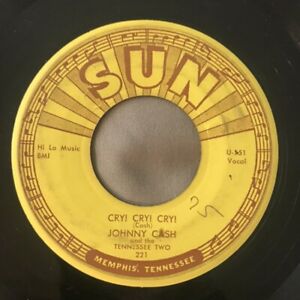
The lyrics refer to the Sun Records company. While Sun was best known for first recording Elvis Presley, it also released songs by Johnny Cash, Jerry Lee Lewis and Roy Orbison

Nashville Cats

[Chorus]
Nashville cats, play clean as country water
Nashville cats, play wild as mountain dew
Nashville cats, been playin’ since they’s babies
Nashville cats, get work before they’re two

Well, there’s thirteen hundred and fifty two
Guitar pickers in Nashville
And they can pick more notes than the number of ants
On a Tennessee ant hill
Yeah, there’s thirteen hundred and fifty two
Guitar cases in Nashville
And any one that unpacks ‘is guitar could play
Twice as better than I will

Yeah, I was just thirteen, you might say I was a
Musical proverbial knee-high
When I heard a couple new-sounding tunes on the tubes
And they blasted me sky-high
And the record man said every one is a yellow sun
Record from Nashville
And up north there ain’t nobody buys them
And I said, “But I Will”

And it was

[Chorus]

Well, there’s sixteen thousand eight hundred ‘n’ twenty one
Mothers from Nashville
All their friends play music, and they ain’t uptight
If one of the kids will
Because it’s custom made for any mothers son
To be a guitar picker in Nashville
And I sure am glad I got a chance to say a word about
The music and the mothers from Nashville

[Chorus]

Kick it


Beatles – I Want You (She’s So Heavy)

This song fits in well with the harder blues that was going on at this time. It’s really heavy for a Beatles song or any song. Many guitars were layered at the end when it abruptly stops. It took me a few listens to warm up to it but when I did…I really liked it. John’s guitar echoing the vocal and Paul’s adventurous bass playing on this recording is great.

The song is a simple love song from John to Yoko. Totally opposite of his wordplay songs of the past, in this one he is straight forward. He got right to the point…his quote on this song was “When you’re drowning, you don’t say ‘I would be incredibly pleased if someone would have the foresight to notice me drowning and come and help me,’ you just scream”  

This was the first song worked on for their last recorded album Abbey Road…and the last one mixed. They started it at Trident Studios…not Abbey Road. This song shows just how good of musicians they were in 1969. This song is not an easy song and certainly took a lot of work to meld together. Different time signatures and John’s singing and playing… it syncs up well on the verses.

Billy Preston played organ on this song.

George Harrison: “This is very heavy,” “This is good because it’s really basically a bit like a blues. The riff that he sings and plays is really a very basic blues-type thing. But again, it’s very original to a John-type song. And the middle bit is great. John has an amazing thing with his timing. He always comes across with sort of different timing things.

From Songfacts

John Lennon wrote this about Yoko Ono – the couple were married in March 1969, about six months before the Abbey Road album was released. Lennon was experimenting with a heavy blues sound, so the song has few lyrics and long stretches of repeated chords. “Every time I pick up the guitar I sing about Yoko and that’s how I’m influenced,” Lennon said at the time. 

Taken on its own, the lyric is very basic, repeating just a few simple lines like:

I want you so bad
It’s driving me mad

Soon after Abbey Road was released, a news magazine show called 24 Hours read the lyrics out loud, taking a derisive tone. Lennon replied: “To me that’s a damn sight better lyric than ‘Walrus’ or ‘Eleanor Rigby’ because its progression to me. And if I want to write songs with no words or one word… maybe that’s Yoko’s influence.”

The rhythm was based on Mel Torme’s song “Coming Home Baby.”

With the exception of “Revolution 9,” this was The Beatles longest song.

John Lennon sang this monofonic, as some of the troubadours sang in the Middle Ages: There is no chord behind the melody, but an instrument follows the singer’s melody. The song ends with an orchestra arrangement, which was Lennon’s idea, and is very much similar to the end of “Entry of the Gods into Valhalla” in “Das Rheingold” by Richard Wagner. 

George Harrison played a Moog synthesizer on this track. It is one of the first uses of the instrument, which was custom-made for Harrison.

The guitars were overdubbed many times to get a layered sound.

This song contains an accidental background lyric. On stereo, play the song at 4:30 and listen very closely to the left speaker. In the bass break after John’s scream, you can faintly hear someone say, “What was that about!?” presumably in response to the scream.

I Want You (She’s So Heavy)

I want you
I want you so bad
I want you
I want you so bad
It’s driving me mad
It’s driving me mad

I want you
I want you so bad, babe
I want you
I want you so bad
It’s driving me mad
It’s driving me mad

I want you
I want you so bad
I want you
I want you so bad
It’s driving me mad
It’s driving me mad

I want you
I want you so bad, babe
I want you
I want you so bad
It’s driving me mad
It’s driving me mad

She’s so heavy
Heavy, heavy, heavy, heavy

I want you
I want you so bad
I want you
I want you so bad
It’s driving me mad
It’s driving me mad

I want you
I want you so bad, babe
I want you
You know I want you so bad
It’s driving me mad
It’s driving me mad

Yeah, she’s so