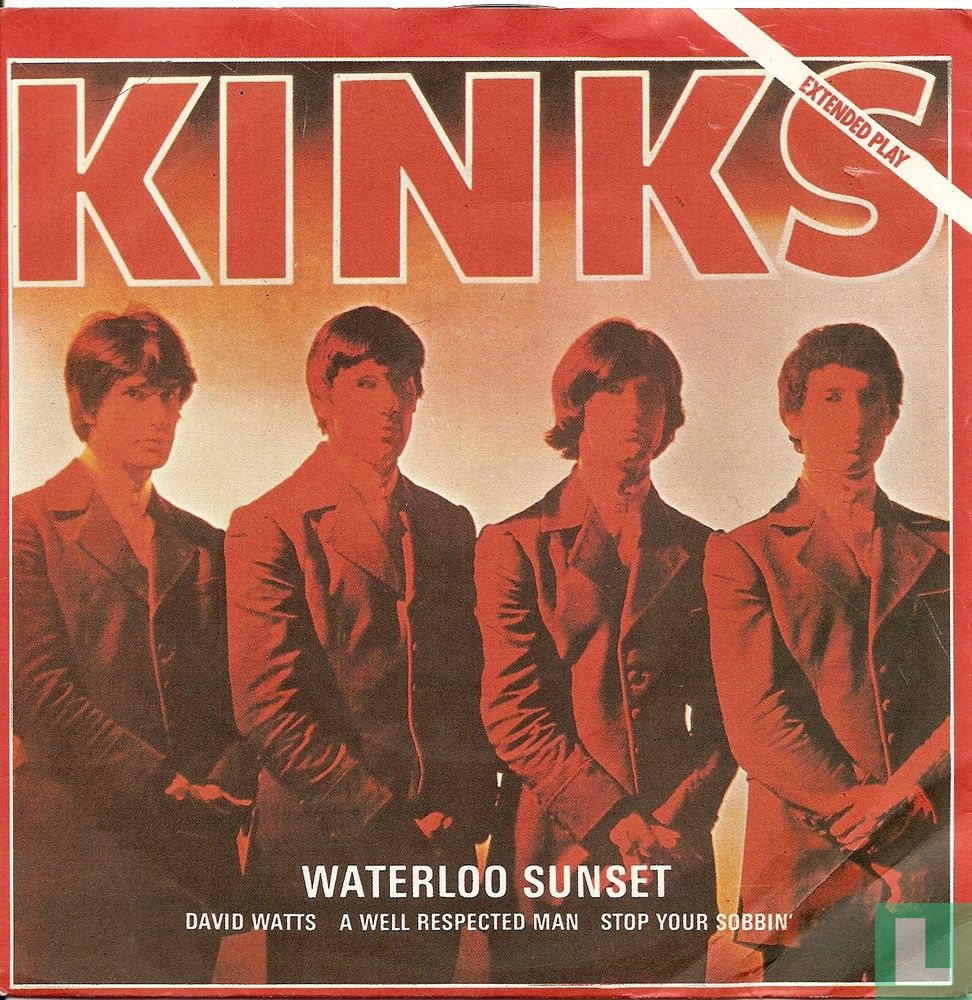
This year contained the Summer of Love and psychedelia was everywhere. This year alone had many of my favorite songs I still listen to. I want to start with a song that I think is one of the best of the sixties. The Kinks Waterloo Sunset.
People ask me my favorite Beatles song all of the time. Usually, I say A Day In The Life but this one comes really close. The Beatles released Sgt Peppers this year but also released one of…if not the best single ever with Strawberry Fields/Penny Lane. Strawberry Fields was credited to Lennon/McCartney but Lennon is said to have written most of it.
Speaking of favorites…this is one of my top songs from the 60s and ever. Procol Harum with a Whiter Shade Of Pale. Gary Brooker and Keith Reid were credited with writing the song but Matthew Fisher the former keyboard player in the band sued for partial writing credit and won on July 24, 2008. Now the song’s writing credit is Reid-Brooker-Fisher. Gary Brooker and Fisher wrote the music and Reid wrote the lyrics. This was the first song Procol Harum recorded.
Another landmark song…The Doors in Light My Fire. The organ intro to this song by Ray Manzarek is one of the most iconic intros in rock. I first heard this song as a kid and automatically loved it. It is the song that the Doors are most known for. I like the album version that is longer and has more of a solo.
The four band members were credited for writing this song Jim Morrison, Robby Krieger, John Densmore, and Ray Manzarek.
This one is a no-brainer…the one and only Aretha Franklin with Respect…and I have plenty of it for her. It was written by the great Otis Redding.
This is a fun song. Now its popularity has risen to an all-time high with the 2008 Marvel movie Ironman. I know most serious movie fans are not big fans of the Marvel movies. I fit in there also because I don’t like watching a lot of CGI. As a music fan though, I’m glad they are sharing 60s and 70s music to a new generation.
Another song that the riff is easy for beginning guitar players to learn how to play. It was one of the first ones I learned. This was the biggest US hit for Black Sabbath. It got very little radio play but developed a cult following, which led to enough sales to give it a chart position.
Iron Man peaked at #52 in 1971 on the Billboard 100 and #68 in Canada. The song was written by all of the members of the band. It was on the album Paranoid released in 1970. The album peaked at #12 on the Billboard Album Charts, #20 in Canada, and #1 in the UK Album Charts.
They did something smart as far as singles. They followed the Led Zeppelin way of doing it. In the UK they didn’t release this as a single because they had released Paranoid the year before. People would show up in the UK wanting to hear one song…Paranoid… so they limited their single releases there.
Black Sabbath Bass guitar player Geezer Butler: “I was walking down the street one day and thought… ‘what if there were a bloody great bloke made out of metal walking about?”‘
There is debate on how Ozzy got his voice distorted in the intro. Some say he got that by singing from behind a metal fan. Others say it was him singing through a VCS-3 Synthesizer…they came out in 1969. Another rumor was a processor called a ring modulator (effects box) ran through a tremolo. Why don’t they just ask Ozzy? Uh…ok never mind! just kidding.
This is the only Black Sabbath album that I owned. I always liked it… Paranoid, War Pigs, Iron Man, and Hand of Doom I liked. One cool fact I read is Frank Zappa surprised Black Sabbath by covering this song because he knew they were in the audience.
Here is a partial list of artists who have covered this song from Songfacts: Marilyn Manson, Alice in Chains, Butthole Surfers, Add N To (X), Busta Rhymes, Therapy, NOFX, Auburn U. Band, Sir Mix-A-Lot, Tim McCarthy, Heavy Voltage, DYS, Tanzwut, EMO, Amoco Renegades, Dead Alewives, Replacements, The Cardigans, The Mats, and Offspring.
Tony Iommi: “A lot of the words in the songs – a lot of the moods of the songs – are aggressive, especially in the early days – Satanic, if you like… That was the way it felt, so that was the way we played. But it got out of hand. With Paranoid in England, for instance. There was a girl (Hillary Pollard) found dead – a nurse she was: dead in her room with our album on the turntable going round. And it was taken to court saying that it was because of the album that she was depressed and killed herself, which was totally ridiculous, I think.”
Geezer Butler: “If the moral majority don’t understand it they’ll try to put it down, or get other people to read all sorts of things into it… The moral majority sort of people picked up on the Satanic part of it. I mean, most of it was about stopping wars and that side of it, and some science fiction stuff. There wasn’t that much Satanic stuff, and what there was it wasn’t exactly for the devil or anything like that; it was just around at the time and we just brought it to people’s attention.”
Iron Man
I am iron man
Has he lost his mind? Can he see or is he blind? Can he walk at all Or if he moves will he fall?
Is he alive or dead? Has he thoughts within his head? We’ll just pass him there Why should we even care?
He was turned to steel In the great magnetic field Where he traveled time For the future of mankind
Nobody wants him He just stares at the world Planning his vengeance That he will soon unfold
Now the time is here For iron man to spread fear Vengeance from the grave Kills the people he once saved
Nobody wants him They just turn their heads Nobody helps him Now he has his revenge
Heavy boots of lead Fills his victims full of dread Running as fast as they can Iron man lives again
I wrote this for Dave’s site when he asked a group of bloggers to pick a song that signifies “summer” to you. Now summer is starting to wind down…I thought I would post this one.
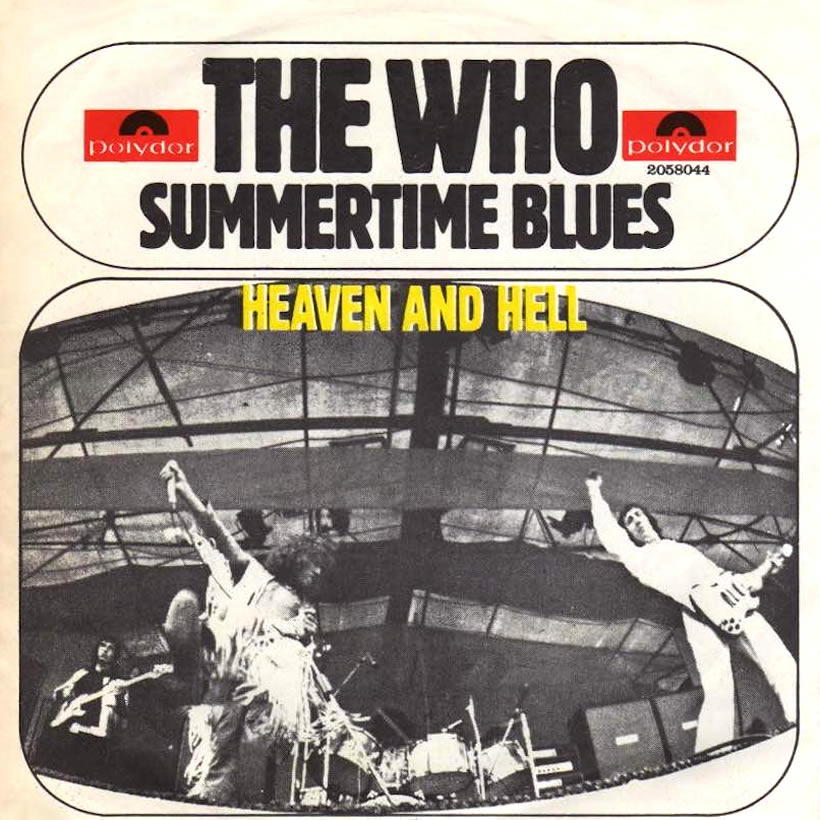
I first heard this song by The Who. The Who’s version is a good one for bar bands to play but it’s hard to keep it under control in a bar setting. It must be loud before it works…although it’s fun to see some patrons with their hands over their ears…it’s best to limit that.
Eddie Cochran wrote Summertime Blues with his friend Jerry Capehart and released it in 1958. Capehart helped Cochran get a record deal. Capehart said: “There had been a lot of songs about summer, but none about the hardships of summer.” With that idea and a guitar lick from Cochran, they wrote the song in 45 minutes.”
The song was going to be a B side of the Cochran single “Love Again” written by Sharon Sheeley. The record company wisely made the decision to make Summertime Blues the A side. In 1960 Sheeley was his girlfriend and was in the car that crashed killing Cochran. She died in 2002 five days after having a cerebral hemorrhage.
I like the Cochran version…and the Who version…and they are completely different. I’ve always loved the way The Who covered Summertime Blues. If I had a time machine… The Who would be a stop to see them live at this time. The version they released in 1970 was on their album Live At Leeds…a great rock live album. The song peaked at #27 on the Billboard 100, #8 in Canada, and #38 in the UK in 1970.
Live at Leeds would be my pick for the best rock live album ever. The album peaked at #4 on the Billboard 100, #2 in Canada, and #3 in the UK. It’s raw, raucous, and in your face…in other words, a great rock song!
Summertime Blues
Well, I’m a gonna raise a fuss, I’m a gonna raise a holler
I’ve been working all summer just to try and earn a dollar
Well, I went to the boss, said I got a date
The boss said “No Dice, son, you gotta work late”
Sometimes I wonder, what am I gonna do
There ain’t no cure for the summertime blues
Well, my mom and poppa told me, “Son you gotta earn some money
If you want to use the car to go out next Sunday”
Well, I didn’t go to work, I told the boss I was sick
He said “You can’t use the car cause you didn’t work a lick”
Sometimes I wonder, what am I gonna do
There ain’t no cure for the summertime blues
Gonna take two weeks, gonna have a fine vacation
Gonna take my problems to the United Nations
Well, I went to my congressman, he said, quote
“I’d like to help you son but you’re too young to vote”
Sometimes I wonder, what am I gonna do
There ain’t no cure for the summertime blues
Let’s drink to the hard-working people Let’s drink to the lowly of birth Raise your glass to the good and the evil Let’s drink to the salt of the earth
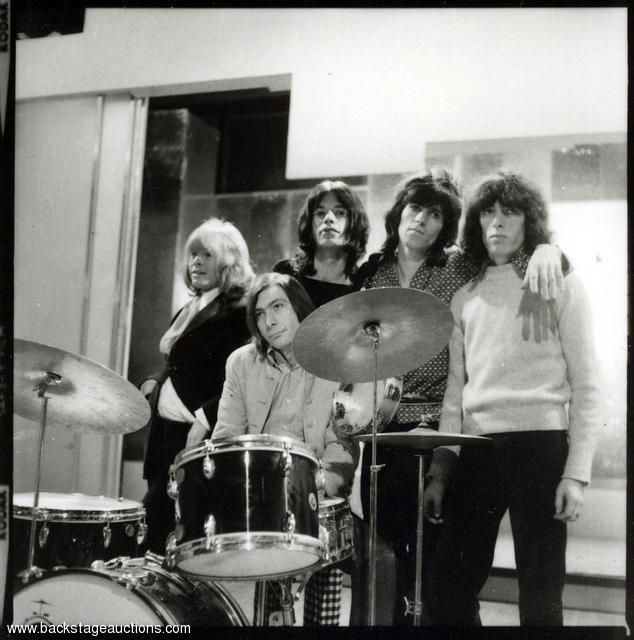
This song is on my favorite Rolling Stones album, Beggars Banquet. There is not a bad song on the LP. This one and Prodigal Son I always liked. The album peaked at #5 on the Billboard Album Charts, #3 in the UK, and #3 in Canada in 1969.
I played this album to death. As with most Stones albums, you get what you get…rock, blues, and a little country thrown in the mix. I got this album when I was 12 and it opened my eyes wide to the Stones…much more than a collection of their hits would ever do.
This album is not considered up there with Sticky Fingers or Exile On Main Street but I have the strongest connection to it. I’ve always related Beggars Banquetto the White Album. They were both released in 1968 and were raw and honest. No studio trickery to either…a big departure from the psychedelic era of 1967 for both bands. I think the Stones and Beatles also owe a nod to The Band’s rootsy music (Music From Big Pink) which was influencing everyone around this time.
I learned that a greatest hits package from The Beatles and Rolling Stones was NOT enough. Those two bands taught me to buy albums and not just rely on the “hits” which even at that time were worn out. You never got the really good songs that lay hidden like this one. The two well-known songs off of the album were great like Sympathy for the Devil and Street Fighting Man but I liked some of the others just as much. Now with certain artists…yes, a Greatest Hits package is fine but not with the Beatles, Stones, Who, Kinks, Bob Dylan, Van Morrison, and a few more.
I don’t think Jimmy Miller gets enough credit for their sound. That is not a knock against the Stones but the Miller-produced albums are special. He produced them during their 5 album stretch golden period. Keith and Mick Jagger both sing on this with the Los Angeles Watts Street Gospel Choir singing background…Nicky Hopkins is on piano. It was written by Keith Richards and Mick Jagger.
The title refers to the working class…they are “The salt of the Earth.” Jagger later said: “The song is total cynicism. I’m saying those people haven’t any power and they never will have.”
Speaking of albums. My friend Paul has a massive site with album reviews called The Punk Panther Music Reviews. I can almost promise you he will have what you are looking for.
Also, Graham has a wide selection of albums that he reviewed…it’s called Aphoristic Album Reviews. When I want to see album reviews I go to those two sites. I hardly ever do album reviews because frankly, I’m not that good at it but I still try once in a while.
Salt Of The Earth
Let’s drink to the hard working people Let’s drink to the lowly of birth Raise your glass to the good and the evil Let’s drink to the salt of the earth
Say a prayer for the common foot soldier Spare a thought for his back breaking work Say a prayer for his wife and his children Who burn the fires and who still till the earth
And when I search a faceless crowd A swirling mass of gray and Black and white They don’t look real to me In fact, they look so strange
Raise your glass to the hard working people Let’s drink to the uncounted heads Let’s think of the wavering millions Who need leaders but get gamblers instead
Spare a thought for the stay-at-home voter His empty eyes gaze at strange beauty shows And a parade of the gray suited grafters A choice of cancer or polio
And when I look in the faceless crowd A swirling mass of grays and Black and white They don’t look real to me Or don’t they look so strange
Let’s drink to the hard working people Let’s think of the lowly of birth Spare a thought for the rag taggy people Let’s drink to the salt of the earth
Let’s drink to the hard working people Let’s drink to the salt of the earth Let’s drink to the two thousand million Let’s think of the humble of birth
This may be the best year ever in pop music. So many choices but as Ricky Nelson said “You Can’t Please Everyone…” so here it goes.
There are so many Beatles songs this year like Day Tripper, Eleanor Rigby, Paperback Writer, and more. My two favorite Beatles songs of this year would be And Your Bird Can Sing and this one…the B side to Paperback Writer…Rain. The bass in this song is incredible. The song was credited to Lennon/McCartney but it’s more of a Lennon song.
Now we have The Beatles arch-rivals…just kidding. Actually, they were friends who worked together and made sure their releases didn’t overlap each other. The Rolling Stones in Paint It Black. Personally, I like this one better than Satisfaction. Paint It Black was written by Mick Jagger and Keith Richards.
Wild Thing…you make my heart sing. That’s all that needs to be said by this band. They were not a one-hit wonder though. I’ve been a fan of The Troggs since I bought their single as a kid in the late seventies. Their hits included Wild Thing, With a Girl Like You, and the song that has been covered many times…Love Is All Around. They were punk rock before punk rock. The song was written by Chip Taylor.
Let’s go to the American band The Lovin Spoonful who scored huge with this single. The song was written by John Sebastian, Mark Sebastian, and Steve Boone.
This man would change rock guitar forever and some still consider him the best. Hey Joe was released in December of 1966. The Jimi Hendrix Experience was making its debut. The song’s songwriting credits have been disputed. Here is what Wiki said: Public Domain (1st pressing), Dino Valenti a.k.a. Chet Powers (2nd & 3rd pressings), and Billy Roberts (copyrighted)
A very radio-friendly song by Rush. When I was a teen many local bands covered Rush…usually terrible, but they gave it a try. When I first heard this song…right away I made a connection to another older song written by Paul Simon. Sound of Silence has the lyrics:
And the sign said, “The words of the prophets Are written on the subway walls And tenement halls
Spirit of the Radio has:
For the words of the profits Were written on the studio wall Concert hall
Other than that…the songs have no other connection but I can’t help but think that Peart made that connection with Sound of Silence. That’s one of the reasons I liked it…plus the musical break during that time of the song. It gave the song a huge dynamic.
I always liked the intro by Alex Lifeson, who doesn’t get the credit he deserves compared to Lee and Peart. He is not doing a Van Halen finger tapping or hammer on… during that intro…he is actually picking those notes.
With the lyric “Sound of Salesmen” Peart would listen to bands they were opening for every night saying THIS was the city they loved the most… wherever they were… every night it was the same disingenuous spiel. One of the bands Peart was talking about was KISS who would market anything. Rush did open for KISS many times in the 1970s.
The song was on the Permanent Waves album released on January 18, 1980. The album peaked at #3 in Canada, #4 on the Billboard Album Charts, and #3 in the UK.
The song peaked at #22 in Canada, #51 on the Billboard 100, and #13 in the UK in 1980.
The song is Rush’s only entry on The Rock and Roll Hall of Fame’s 500 Songs that Shaped Rock and Roll. Rush wasn’t inducted into the Hall until 2013; they were first eligible in 1999.
Neil Peart: “‘The Spirit Of Radio’ was actually written as a tribute to all that was good about radio, celebrating my appreciation of magical moments I’d had since childhood, of hearing ‘the right song at the right time.’ However, [the song’s] celebration of the ideals of radio necessarily seemed like an attack on the reality – on the formulaic, mercenary programming of most radio stations, with music the last of anyone’s concerns. And yes, it was really ironic that such a song became popular on radio, though it was a kind of litmus test. Some radio guys who ‘got it’ could hear the song and think, ‘That’s the way it ought to be,’ while others – the shallow, swaggering salesmen-of-the-air – could be oblivious to the song’s meaning and proudly applaud themselves, ‘That’s about me!’
From Songfacts: Rush released a new animated video for the song on June 12, 2020 in celebration of the 40th anniversary of Permanent Waves. The conceptual clip references milestones and influential broadcasters in FM rock radio history, including an homage to the pioneering Italian radio inventor Guglielmo Marconi. It closes with a personal tribute to the late Rush drummer Neil Peart, who died in January 2020. Fantoons.tv created the visual along with producer Linda Otero and directors David Calcano and Alberto Hadyar.
The Spirit of Radio
Begin the day with a friendly voice
A companion, unobtrusive
Plays that song that’s so elusive
And the magic music makes your morning mood
Off on your way hit the open road
There is magic at your fingers
For the spirit ever lingers
Undemanding contact in your happy solitude
Invisible airwaves crackle with life
Bright antennae bristle with the energy
Emotional feedback on a timeless wavelength
Bearing a gift beyond price almost free
All this machinery making modern music
Can still be open-hearted
Not so coldly charted it’s really just a question
Of your honesty, yeah, your honesty
One likes to believe in the freedom of music
But glittering prizes and endless compromises
Shatter the illusion of integrity, yeah
Invisible airwaves crackle with life
Bright antennae bristle with the energy
Emotional feedback on a timeless wavelength
Bearing a gift beyond price almost free
For the words of the profits
Were written on the studio wall
Concert hall
And echoes with the sound of salesmen
Of salesmen, of salesmen
If you want to see where we are…and you missed a few…HERE is a list of the episodes in my index located at the top of my blog.
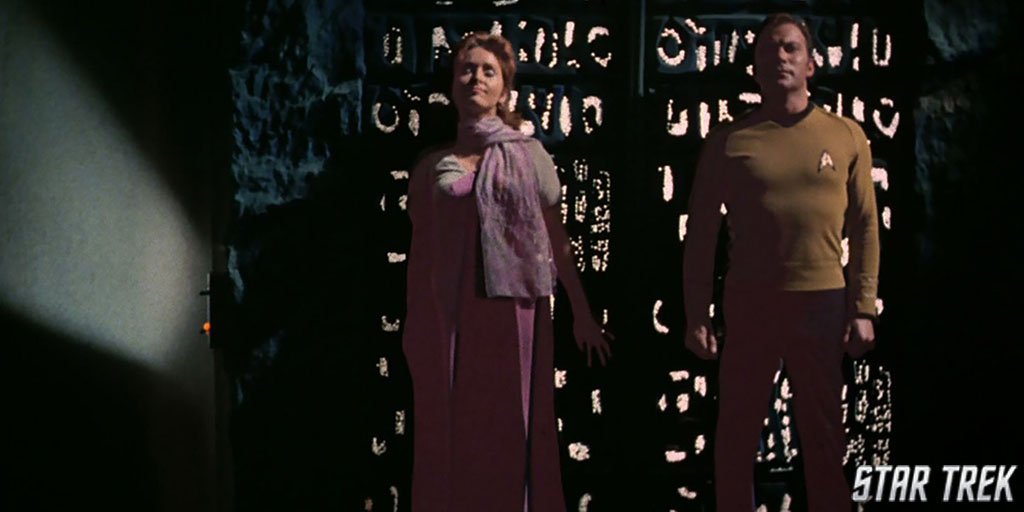
This show was written by Gene Roddenberry and Arthur Singer
This is IT! The last episode of the last season. Because the original series was canceled instead of coming to a natural end, and the idea of a series finale was not as popular in the 1960s, “Turnabout Intruder” was close to a normal episode and did not have the “finale” touches. The remastered version of “Turnabout Intruder” ended with the Enterprise flying toward a colorful nebula, to artistically signify the episode as being the last of the original series.
First of all, I want to thank all of you for reading all of these posts or just dropping back by once in a while. I know I narrow my audience doing these television shows so I am so thankful that some of you who really never watched it jumped in and I hope some of you come away watching a few of them. Some of you like Lisa, Obbverse, and Liam re-watched the shows as we went along and I thank you for it and the rest that did.
This episode is basically “Freaky Friday” in space.
Kirk’s body gets kidnapped by his former lover Janice Lester (played by Sandra Smith) who has gone jealously insane over the fact that Starfleet apparently doesn’t allow women captains (Roddenberry regretted this in the script). While the script may have been intended as a social commentary on the 1960s, it doesn’t quite work for a Star Trek series that was supposedly set in the 23rd century.
Surely by then, women would have risen up the ranks to become captains of starships! While it seems implausible that Kirk would allow his body to be kidnapped on Camus II by an alien device, this cannot be dismissed outright. As Spock rightly notes, the Enterprise has been to many new places and witnessed many strange events. Moreover, Kirk was once cloned in ‘What Are Little Girls Made of?’ and even split into two in ‘The Enemy Within.’
I think Shatner does a fair acting job in this one. He is much more emotional because Lester is in his body. I think this one is an average episode of the third season. Not one of the greats but not bad.
From IMDB:
William Shatner had a severe case of ‘flu’ during filming of this episode. At one point, he had to lift Sandra Smith in his arms, carry her to a couch and put her on it: during the first take, he got as far as the couch and dropped her. Fortunately, it was well padded, and Smith bounced several times; according to Joanie Winston, who was visiting the set, Shatner looked down at Smith and said, “You know I love you, baby, but you’ve got to lose about six inches off that ass.”
Leonard Nimoy is the only actor to appear in every episode of the series. William Shatner appeared in every episode with the exception of the first pilot, The Cage (1966).
Gene Roddenberry regretted the line about the Federation supposedly not allowing female captains, as he felt it was sexist.
The transposition sequence was the last footage shot for The Original Series.
This episode is subtly referenced in Legacy (1990). Jean-Luc Picard mentions that they are bypassing an archaeological survey on Camus II, the same planet that this episode begins on. This was mentioned because, with the airing of its 80th episode “Legacy”, Star Trek: The Next Generation officially became longer than TOS.
Leonard Nimoy (Spock) and Majel Barrett (Nurse Christine Chapel and Number One) are the only actors to appear in both the series finale and the first pilot The Cage (1966).
Nurse Chapel’s (Majel Barrett) hair color is brown for this episode, not its usual blonde color.
This episode was originally scheduled for broadcast on March 28, 1969. Special network coverage of the death of Dwight D. Eisenhower pre-empted it, and it didn’t air until June 3.
Lieutenant Galloway reappears in this episode, despite being killed by Ronald Tracey in The Omega Glory (1968). He was credited as Galloway (misspelled as “Galoway”) even though actor David L. Ross had been recast as Lieutenant Johnson in Day of the Dove (1968) after the character of Galloway was killed off.
Although this was the last episode of the Original Series to be filmed and aired, this episode has a lower stardate than the previous episode, All Our Yesterdays (1969).
The production crew nicknamed this episode “Captain Kirk: Space Queen”.
Though her voice is muffled, Dr. Lester protests to Dr. Coleman, “Go to Hell!” a rare case of a “swear” sneaking past the network censors.
According to Harry Landers, he was very fatigued during this episode because he had just had his upper right lung removed due to an infection. He wanted to turn the role down but did it as a favor to producer Fred Freiberger.
After two years on the series, Roger Holloway finally gets to speak dialogue, all of two words. His character’s name (Lemli) was the same as William Shatner’s license plate at the time, a mixture of his daughters’ (Leslie, Melanie, Lisabeth) names.
Summary
On the planet Camus II, Kirk meets his old flame, Janice Lester, who is supposedly dying of radiation poisoning. She is a woman scorned and is out to get her revenge on Kirk with whom she was in love many years ago. She has discovered an alien process that will allow her to transfer her essence into Kirk’s body and vice versa. Returning to the Enterprise in Kirk’s body, she now has command of the Enterprise. Kirk on the other hand is now in Lester’s body and can get no one to believe that he is really Kirk. It soon becomes obvious that Lester is incapable of command, leading Spock to accept that she has, in fact, taken over Kirk’s body.
THANKS AGAIN! One final message…Live Long and Prosper.
CAST
William Shatner … Captain James Tiberius ‘Jim’ Kirk Leonard Nimoy … Mister Spock DeForest Kelley … Dr. McCoy Sandra Smith … Janice Lester Harry Landers … Dr. Coleman James Doohan … Scott George Takei … Sulu Walter Koenig … Chekov Majel Barrett … Nurse Chapel Barbara Baldavin … Communications Officer David L. Ross … Lt. Galoway John Boyer … Guard Tom Anfinsen … Medical Technician (uncredited) Bill Blackburn … Lieutenant Hadley (uncredited) James Drake … Security Guard (uncredited) Roger Holloway … Lt. Lemli (uncredited)
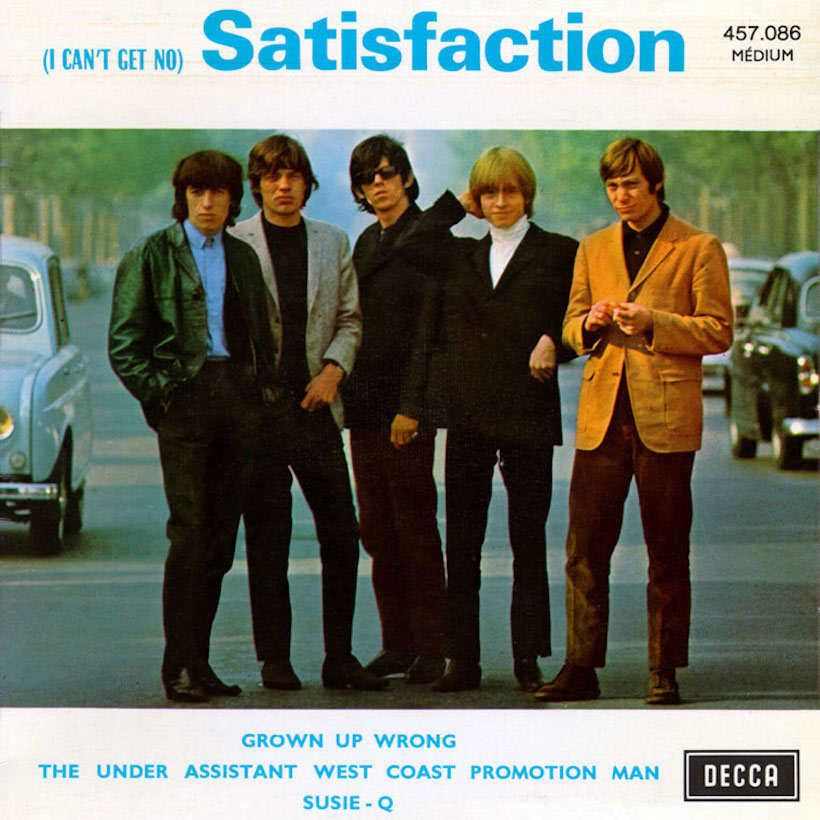
All of these songs are stone-cold classics. The first two are probably the best-known in their catalog by their respective artist…and that statement is saying a lot. These are in no order but we will kick it off with the song that Keith Richards wrote the riff in bed and then turned over and went to sleep. Luckily he had his tape recorder running and the next morning he listened to his riff and him snoring for hours. The Rolling Stones‘s Satisfaction.
Bob Dylan has his mega vindictive hit Like A Rolling Stone. It’s been voted in some polls as the best rock single ever. I picked a live version backed by the future Band at the Royal Albert Hall the following year.
The Beatles released their second soundtrack album in 1965. The album would bridge Beatlemania to Mid Beatles. It was one of John Lennon’s personal favorite songs he wrote. How they did those great backup vocals without proper monitors is beyond me.
The Who released My Generation in 1965. It wasn’t a top seller in America but it would become one of their best-known songs. They would release brilliant singles throughout the 60s and then help to invent arena rock in the 70s. A band we will be hearing more from.
This fifth spot was hard. I’m being open and honest…it was between Smokey Robinson and the Miracles and The Byrds. This whole thing is based on what I like the most…well, I like Tracks of My Tears and Mr. Tambourine Man around the same. I’m going to include Smokey coming up.
I loved those glasses that Mcguinn wore so much that in 1987 I tracked a pair down. No, they were not easy to find in the eighties. Parachute pants? One white glove? Hair spray? yes…but not the out-of-style small rectangle glasses.
If want to see where we are…and you missed a few…HERE is a list of the episodes in my index located at the top of my blog.
This show was written by Gene Roddenberry, Jean Lisette Aroeste, and Arthur H. Singer
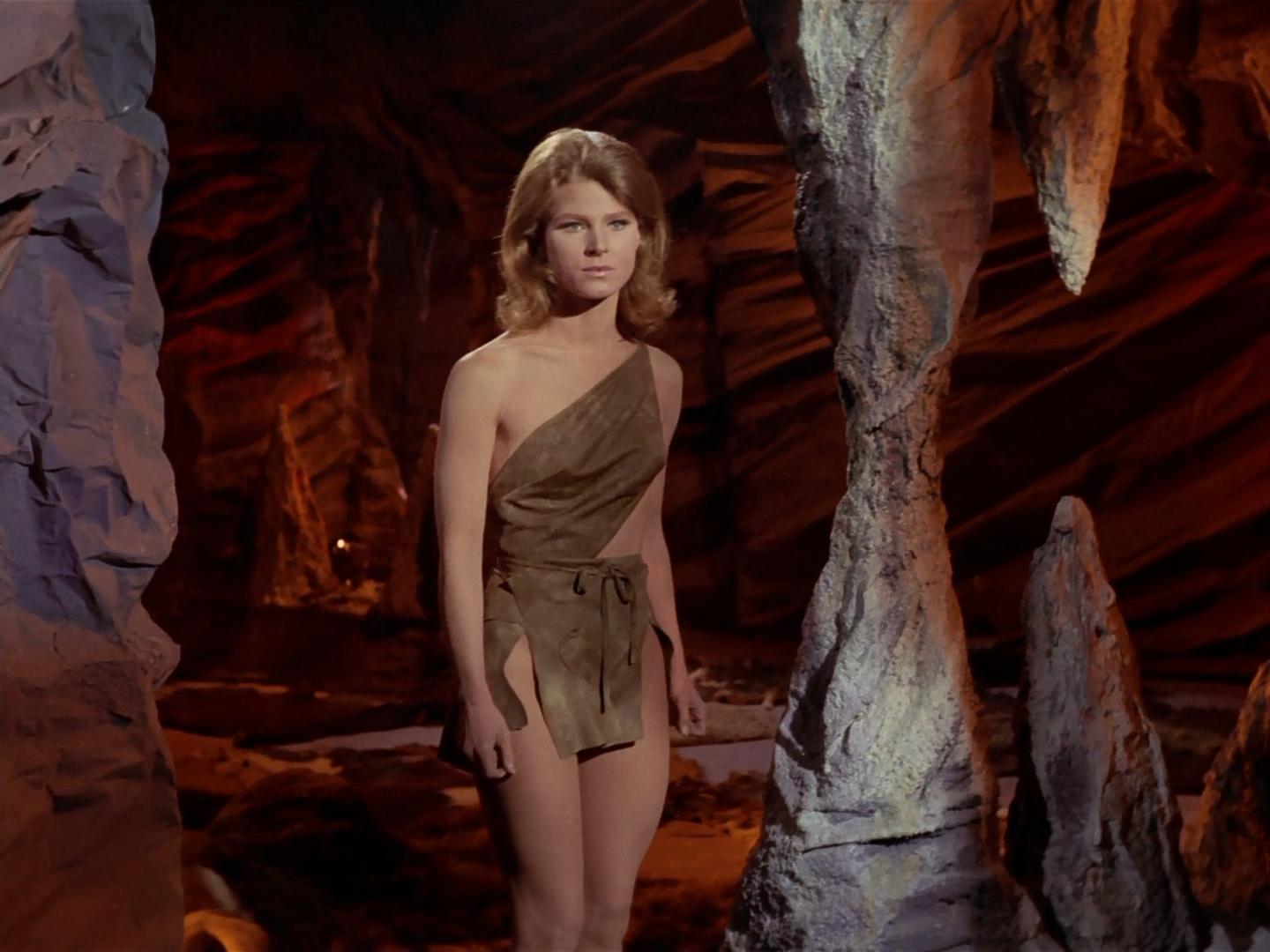
Only one more episode after this one. This is one that you see Spock fall for a lady named Zarabeth who is played beautifully by Mariette Hartley. You see Spock revert back to the time before Vulcan developed the logical way of life. Personally, I think Spock could have been happy there in the cold with Zarabeth…I know I would! This is one of my favorite episodes of the third season. They don’t spend hardly any time in the Enterprise.
Kirk and crew land on a lonely planet where the sun is about to explode. They intend to evacuate the inhabitants but find the place deserted except for Mr. Atoz who operates some sort of high-tech library. Despite trying to get a straight answer from him about everyone’s whereabouts, Atoz is indifferent to their questions and insists they must quickly ‘make a selection while there is still time. The reason for the short time is a star is about to nova, and the three arrive on the planet, hoping to help evacuate the population
They have no idea what he’s talking about but wander about looking at the hand mirror-like disks on the viewers and they see images of the planet’s past. Then, while a disk is in the viewer, Kirk runs through the doorway and is magically transported back in time to what on Earth would look like the time of Louis XIV (the 1660s). When McCoy and Spock follow, a different disk is in the viewer and they are sent to an ice-age hell. All too late they realize that the library is a time travel machine and repository.
While Kirk’s visit is pretty short and not all that exciting, Spock and McCoy’s is much more eventful, as Spock falls head over heels for Mariette Hartley–who was sent to this awful place as a punishment. The scenes with Spock are exceptionally interesting and very atypical of the normally logical Vulcan. McCoy almost freezes to death but Spock looks after him but that doesn’t mean we don’t get some verbal jabs from each of them to each other.
One of the best episodes of the 3rd season in my opinion. I do like Time Travel also so that played a part.
From IMDB:
The name of the librarian Mr. Atoz is a play on the phrase “A to Z”. Author Jean Lisette Aroeste was a UCLA librarian at the time she wrote this script.
Sulu, Uhura, and Chekov do not appear in this episode. Scotty does not appear on screen but has several voice-over lines. In no other episode are only three regular members of the crew seen in person.
The title is taken from “Macbeth” by William Shakespeare, Act 5, Scene 5: The title character speaks “Tomorrow and tomorrow and tomorrow, / Creeps in this petty pace from day to day / To the last syllable of recorded time, / And all our yesterdays have lighted fools / The way to dusty death.”
The name of the device, the Atavachron, is quite a descriptive one. “Atavus” is Latin for “… (an) ancestor or ancestral type from which a character is assumed to be inherited”, and “chron” is from the Greek “chronos” (“time”), so, an Atavachron is a device which can send you to an ancestral place of any time period.
According to the stardate, this episode is chronologically the last of the series, even though its production number and air date are earlier than Turnabout Intruder (1969). This is therefore the last voyage of the USS Enterprise in the original series. This is also the last time-travel episode of the original series.
Part of the set depicting the surface of the ice age planet where Spock and McCoy are transported was recycled from the MGM film Ice Station Zebra (1968), made the previous year.
There is no footage aboard the Enterprise in this story. Only three crew members (Kirk, Spock & McCoy) are seen and only one stock footage shot of the exterior is used. This was a deliberate attempt to cut costs and to film this episode quickly by using a minimal number of sets. Sets from previous episodes were reused as well.
The Atavachron computer used by Mr. Atoz is the same one as used by Gary Seven in Assignment: Earth (1968).
Mariette Hartley (Zarabeth) was not allowed to show her belly-button in this episode, despite the appearances of other women’s navels in previous episodes. To comment on this censorship, Gene Roddenberry gave Hartley’s character two navels in his pilot Genesis II (1973), stating that “the network owed me one.”
There were two highly successful sequel books, “Yesterday’s Son” and “Time for Yesterday”, both by A.C. Crispin.
The stock footage showing the endless snow fields on the disc McCoy watches was also used as the surface of Exo III in What Are Little Girls Made Of? (1966).
The sound effect used for the Atavachron is the experimental time code broadcast by radio stations WWV and WWVH in the 1960s. A time code seems appropriate for a time machine.
Summary
Kirk, Spock, and McCoy beam down to the planet Sarpeidon to learn what has happened to its population. The planet, which will be completely destroyed when its sun goes supernova in a few hours’ time, once had a thriving population but has now been reduced to one person, the librarian Mr. Atoz. It would appear that the planet’s entire population has gone back in time to a period of their choice in the planet’s history. When the three crewmen unknowingly have gone through the time portal, Kirk ends up in a society similar to 17th-century Earth while McCoy and Spock end up in a frozen ice age. With Kirk arrested and accused of witchcraft and the others having to survive the harsh Arctic-like climate, they have only a short time to find their way back and return to the Enterprise before the planet explodes. For Mr. Spock, he finds a time from before the existence of Vulcan and he’s regressing to an emotional state.
CAST
William Shatner … Captain James Tiberius ‘Jim’ Kirk Leonard Nimoy … Mister Spock DeForest Kelley … Dr. McCoy Mariette Hartley … Zarabeth Ian Wolfe … Mr. Atoz Kermit Murdock … The Prosecutor Ed Bakey … The First Fop James Doohan … Scott (voice) Anna Karen … Woman Albert Cavens … Second Fop (as Al Cavens) Stan Barrett … The Jailor Johnny Haymer … The Constable
You are the sunshine of my life That’s why I’ll always be around
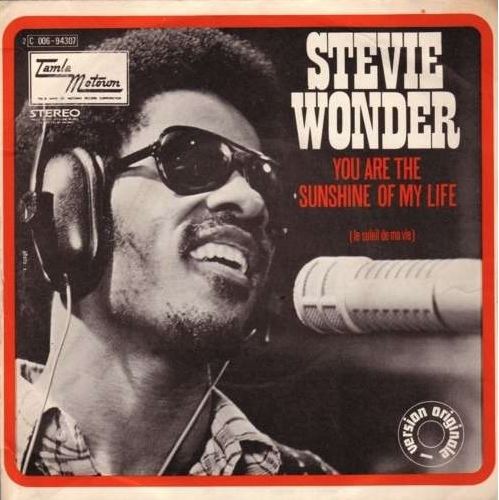
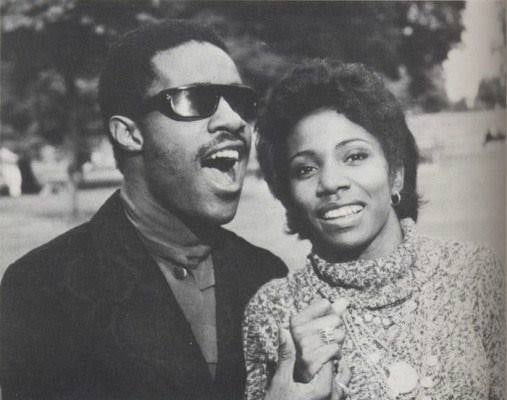
Stevie Wonder… had such a long career before he was even 18. He wrote this for his wife Syreeta Wright whom Wonder married in 1970.
Wright was from Detroit, an aspiring ballet dancer who didn’t have the money to pursue her passion and who ended up working as a receptionist at Motown in 1965. Eventually, Wright started singing on demos for Motown singers, and the label released a single of hers in 1968 under the name Rita Wright. When Diana Ross left the Supremes, Berry Gordy thought about installing Wright as her replacement but it didn’t happen.
in 1968 Syreeta Wright met Stevie Wonder. In 1969, they started dating, and they also started working together. In 1970, they got married, when Wright was 24 and Wonder was 20. By that time, they were already writing partners. Together, Wright and Wonder helped write the Spinners’ “It’s A Shame” and Wonder’s own “Signed, Sealed, Delivered I’m Yours”
In 1972 they broke up. Wonder also produced the album Syreeta…Wright’s first album. He also recorded this song that year. It was no doubt who it was about. It was on the great album Talking Book. Just as he was singing this beautiful song they were breaking up. She would go on to record more music and one song with Billy Preston. She passed away in 2004 at the age of 58.
Some sources list the couple’s divorce as happening in 1972, but Wright, who died in 2004, claimed they were married until 1975. The marriage was difficult and exacerbated by their working relationship, which Wright found stifling. “I was always living in his shadow.”
He recorded this at Electric Lady Studios in New York City. It was recorded off the cuff and his band fell right in. The album Talking Book peaked at #3 on the Billboard Album Charts, #12 in Canada,#16 in the UK in 1972.
You Are The Sunshine Of My Life peaked at #1 in the Billboard 100, #5 in Canada, #8 in New Zealand, and #7 in the UK. The first single off the album was Superstition…how is this for a follow-up!
This song won Wonder the 1973 Grammy Award for Best Male Pop Vocal Performance.
You Are The Sunshine Of My Life
You are the sunshine of my life That’s why I’ll always be around You are the apple of my eye Forever you’ll stay in my heart
I feel like this is the beginning Though I’ve loved you for a million years And if I thought our love was ending I’d find myself drowning in my own tears, whoa, oh, oh
You are the sunshine of my life, yeah That’s why I’ll always stay around, mmm, mmm, yeah, yeah You are the apple of my eye Forever you’ll stay in my heart
You must have known that I was lonely Because you came to my rescue And I know that this must be heaven How could so much love be inside of you? Whoa, whoa
You are the sunshine of my life, yeah That’s why I’ll always stay around, mmm (baby) You are the apple of my eye Forever you’ll stay in my heart, yeah
You are the sunshine of my life, baby That’s why I’ll always stay around
If you want to see where we are…and you missed a few…HERE is a list of the episodes in my index located at the top of my blog.
This show was written by Gene Roddenberry, Arthur Heinemann, and Arthur H. Singer
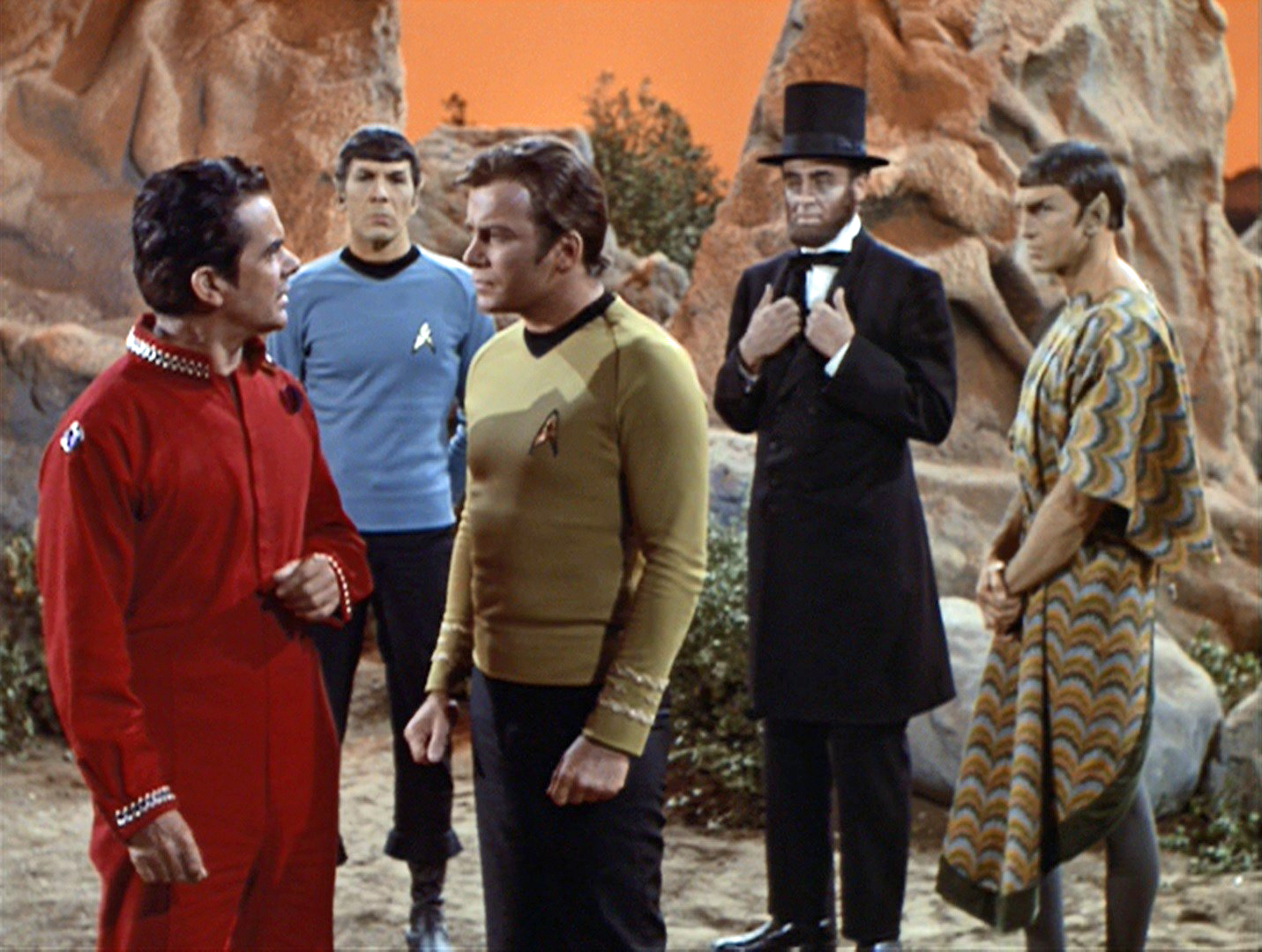
This is a bizarre episode…even for Star Trek. I like the episode more than some Trek fans. When you see Abraham Lincoln materialize in space and talk to you…you know you are in for a different kind of episode. I will say this… it works because of the actor playing Lincoln… he is exactly what I would picture Lincoln.
The Enterprise crew once again encounters highly advanced/highly evolved aliens, who, in this case, wish to study the concepts of good and evil and use crew members as pawns in their inquiries. This episode, a morality tale, borrows elements from some of the better episodes of the past.
Apparently Lincoln (Lee Bergere) was a boyhood hero to Captain Kirk, while everyone on the planet Vulcan revered the legendary Surak (Barry Atwater). The two heroes are teamed up with Kirk and Spock to do physical battle with the galaxy’s most notorious outlaws, with a mute Genghis Khan representing ancient Earth history. This, all in the name of defining good versus evil, life versus death
I simply love the improbable idea of a stunning recreation of Abraham Lincoln and “father of Vulcan civilization/peace/logic”, Surak from the minds of Kirk and Spock (it is established how much admiration and respect Kirk and Spock have for these historical figures) forced into combat with evil historical figures representing the worst kind of lot as rock beings on a planet primarily of lava want to study good vs. evil and judge the results.
From IMDB:
This is the final episode of the series to feature the entire ensemble cast of Kirk, Spock, McCoy, Scotty, Uhura, Sulu, and Chekov. This episode also marks the final appearance of Nichelle Nichols (Uhura) in the series.
This marks the second time TOS encounters a silicon-based life form. The first time is in The Devil in the Dark (1967). Janos Prohaska played both lifeforms, with Bart La Rue supplying the Excalbian’s voice.
Lincoln tells Kirk, “There is no honorable way to kill, no gentle way to destroy. There is nothing good in war, except its ending.” This speech, written by the Star Trek screen writers, has become so popular that some people mistakenly believe it to be something the real Abraham Lincoln said.
“The Savage Curtain” introduces Klingon founding father Kahless and Vulcan founding father Surak to the Star Trek universe. Kahless’ history played an important role in several episodes of Star Trek: The Next Generation (1987) and Star Trek: Deep Space Nine (1993) (where he is regarded as a force for good, contrary to the sentiments expressed here), and Surak’s history was crucial to the final season of Star Trek: Enterprise (2001) which also gave a little bit of backstory to Colonel Phillip F. Green. Zora of Tiburon is the only “historic” figure introduced here who was not further developed in a later Star Trek series.
Colonel Green’s uniform was recycled into the spacesuit worn by Mork in his appearances on Happy Days (1974) and Mork & Mindy (1978).
Tiburon, homeland of the cruel scientist Zora, is named after the Spanish word for shark, and was also the homeland of Doctor Sevrin, the villain-of-the-week of The Way to Eden (1969).
The first choice for the role of Lincoln was Mark Lenard, best known for playing Sarek, but prior commitments prohibited him from taking the part.
The characters of Zora and Genghis Khan have no lines. This is probably due to budget constraints, as actors with speaking parts were paid significantly more than background actors.
The war that included Colonel Phillip Green’s atrocities was later decided to be World War III in the mid-21st century, which served as an important macguffin in later Trek productions such as Encounter at Farpoint (1987), Star Trek: First Contact (1996), and a number of Star Trek: Enterprise (2001) episodes.
This is the second and final mention in a TOS episode that it may be possible to separate the nacelles from the ship, in this case by specifically jettisoning them.
A Star Trek trading card set gave Colonel Green’s full name as Edward Featherstone Green, but this was superseded by the last few episodes of Star Trek: Enterprise (2001) where he was spoken of as Phillip Green.
Kahless is seen here in the Klingon style typical of TOS. It would seem to contradict the explanation given in Divergence (2005) for the change in physical appearance of the Klingons, since Kahless lived long before those events. However, since the image of Kahless was drawn from Kirk’s and Spock’s minds, not from “fact”, this is not necessarily a contradiction.
The appearances of Kahless and Surak mark the final respective appearances of a Klingon and (full) Vulcan in The Original Series.
The budget cuts imposed by the network for series three are noticeable here. Although, at first glance, this appeared to have a number of guest actors, at least two of them were actor/stunt performers with no lines of dialogue. The planet surface was the Desilu set with fiber-glass rocks that had been used in previous stories or borrowed from the recently canceled CBS show Lost in Space (1965), Genghis Khan’s outfit had been used at least once previously, in The Omega Glory (1968), and Kahless’ Klingon outfit had also been used previously. Note that both Kirk and Spock materialize on the planet surface without their tricorders or phasers, meaning that money could be saved by not requiring any additional visual effects. Also, many of the planet surface props, such as spears, had been used previously. In fact, the only significant spend was on commissioning the molten rock creature costume (which was connected to a smoke machine).
This episode marks the final appearance of dress uniforms in the original series.
Scott’s kilt is the 1826 Scott black and white tartan, which “..was produced for his own use by Sir Walter Scott in 1822, and that he wore it in private, in the form of a Lowland shepherd’s plaid.” In Scotland, the patterns are referred to as ‘tartan’ as opposed to ‘plaid’ preferred in America. The one exception is the design known, in Scotland, as Shepherd’s Plaid.
William Shatner struggled to keep weight off during the show’s run and found the pounds piling on as filming dragged on over the course of a season. His weight gain is particularly noticeable in this story in comparison to episodes earlier in season three.
In the teaser, McCoy says, “There is no intelligent life here.”, and is quickly proven wrong. This is the only time anybody actually says this oft-quoted phrase on the original Star Trek series.
This is one of three productions in which Genghis Khan and Abraham Lincoln appear together as characters, in spite of the fact that Lincoln was born 582 years after the Khan’s death. The others are Bill & Ted’s Excellent Adventure (1989) and Clone High (2002).
Summary
When someone purporting to be Abraham Lincoln asks them to beam down to the planet below, Kirk and Spock agree to join him. Soon Surak, the greatest Vulcan of all time, is with them. They are told by a rock-like creature that they are there to do battle against four of history’s most evil characters. The rock creature’s society does not understand the concepts of good and evil and the battle between the two groups will determine which has the greatest merit. They are free to use any materials available to them on the planet and Kirk soon realizes that there are weapons to be made.
CAST
William Shatner … Captain James Tiberius ‘Jim’ Kirk Leonard Nimoy … Mister Spock DeForest Kelley … Dr. McCoy Lee Bergere … Lincoln Barry Atwater … Surak Phillip Pine … Col. Green James Doohan … Scott George Takei … Sulu Nichelle Nichols … Uhura Walter Koenig … Chekov Arell Blanton … Chief Security Guard Carol Daniels … Zora (as Carol Daniels DeMent) Bob Herron … Kahless (as Robert Herron) Nathan Jung … Ghengis Khan Bill Blackburn … Lieutenant Hadley (uncredited) Roger Holloway … Lt. Lemli (uncredited) Bart La Rue … Yarnek (voice) (uncredited) Janos Prohaska … Yarnek (uncredited)
If you want to see where we are…and you missed a few…HERE is a list of the episodes in my index located at the top of my blog.
This show was written by Gene Roddenberry, Margaret Armen, and David Gerrold
The Enterprise arrives at the planet Ardana to obtain Zenite, a rare mineral that they need to combat a botanical plague on another world. Kirk and Spock beam down but find themselves caught in the middle of a class struggle between the intellectual rulers dwelling in a city in the clouds, sustained by some anti-gravity technology, and Troglytes, the miners who mostly dwell in the caves on the surface of the planet, where such items like Zenite are obtained.
This is essentially a reworking of the worker class story penned by H.G. Wells in his famous novel The Time Machine. Extrapolating from such a premise of basic inequality, where-in the elites get all the benefits through the sweat of the workers.
It proposes that, sometime in the past, one race experienced an extreme branching-off separation into two, though, scientifically, they are still all the same race. Kirk and Spock see them as the same, simply a division of the rich vs. the poor, but the egotistical intellectuals of Stratos, the hovering city, have come to see themselves, over the centuries, as a different, superior race.
I liked seeing Spock liked by Droxine. She didn’t know it was a dead end but it’s nice seeing Spock, McCoy, or Scotty be involved instead of Kirk every now and then. Over all a good solid episode.
SPOILERS
The ending was left open…will the Cloud Minders and Troglytes get along?
From IMDB:
The rest chamber on Stratos is furnished with the iconic “Ribbon Chair” by french modernist designer Pierre Paulin, upholstered here in day-glow orange.
This was one of the first TV roles for football star Fred Williamson, who later became a prolific film actor.
According to John M. Dwyer (on the TOS season 2 DVD special features), the metal artwork and sculptures that appear throughout the city were mostly parts of metal furniture, like tables, etc. that he had rented from “a guy up in Topanga Canyon”, minus the glass tops, and much care had to be taken to return them in their original condition.
It is interesting that Jeff Corey was cast as Plasus, the leader of the privileged people on Stratos. For a number of years he had been blacklisted from working for allegedly being a Communist.
The phrase “For what purpose?” is uttered several times by several characters, in different contexts.
The story line is similar to Metropolis (1927) about a two class society where the upper class lives in the utopian city Stratos in the sky, enjoying their privileged life, while the cave-dwelling Troglytes’ only existence is working in the mines for the pleasure of a few – which is a key philosophical topic about ‘the needs of the many outweigh the needs of the few’ in the Star Trek universe.
When Kirk, Spock, and McCoy explain the benefits of the filter masks to Plasus, they do so from a monitor in the transporter room. This is the first and only time in the series we see a visual communication take place here.
The mine “entrance” is the same set piece that was used for the entrance to the defense computer cave in That Which Survives (1969).
The script was written by David Gerrold, one of four writers of Star Trek who had no prior TV writing credits. The other three were Jean Lisette Aroeste (‘Is There in Truth No Beauty?’, ‘All Our Yesterdays’), Judy Burns (‘The Tholian Web’) and Joyce Muskat (‘The Empath’).
Just before leaving Stratos, Captain Kirk suggests to Plasus that the Federation Bureau of Industrialization (FBI) might be of assistance to mediate the difficulties with the Troglytes.
This takes place in 2269.
Jeff Corey and DeForest Kelley appeared together in Canon City (1948).
The name Droxine supposedly means awareness, audacity and gentleness.
Jeff Corey, who played Plasus, was also a director and teacher. In fact, he was one of Leonard Nimoy’s acting instructors.
Summary
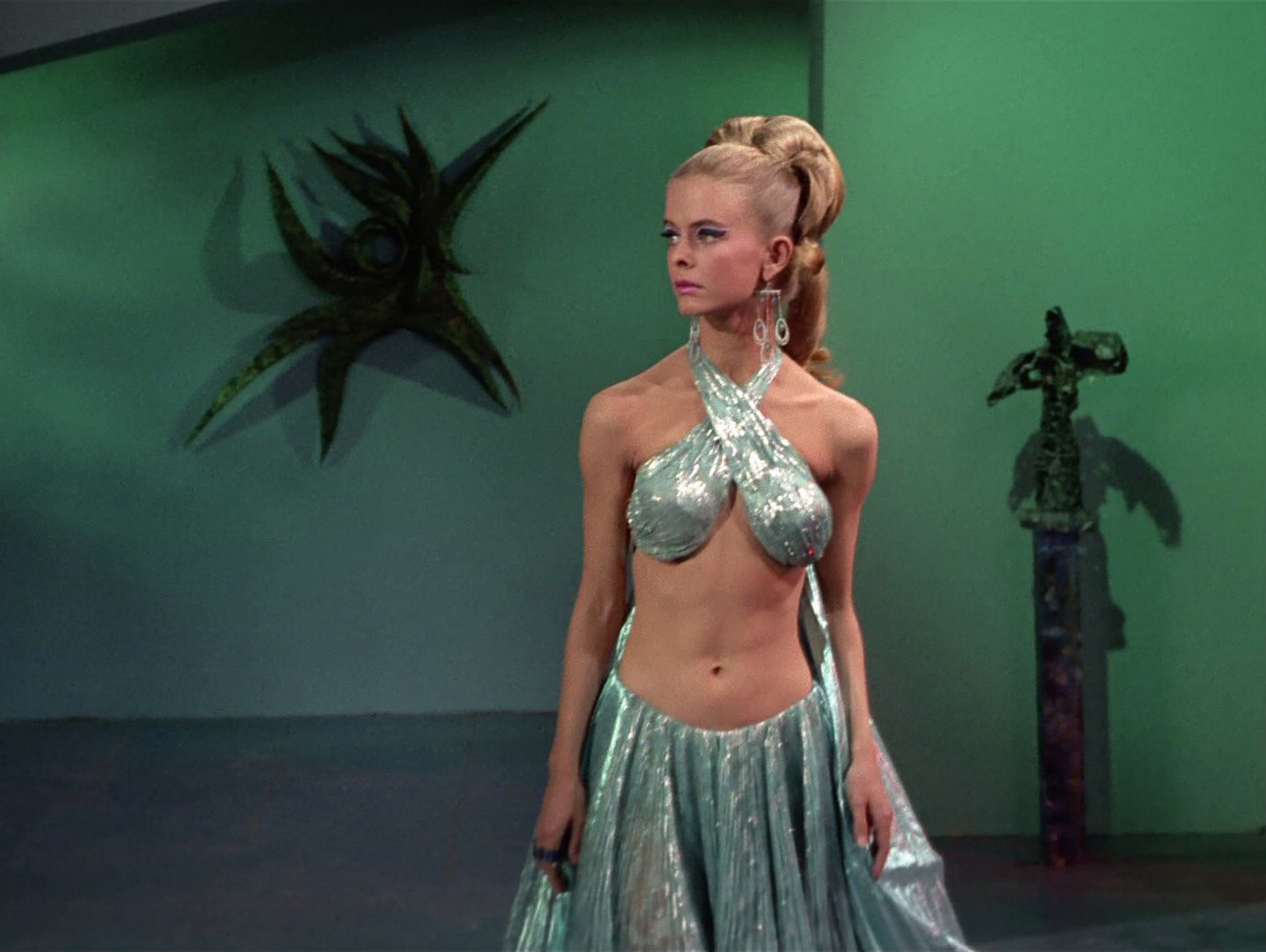
Kirk and the Enterprise arrive at the planet Ardana to collect a supply of Zenite, needed to combat a botanical plague. The Stratosians live in a city literally in the clouds, far above the planet. They are highly intelligent and devote most of their time to art and intellectual pursuits. On the planet however live the Troglites, a primitive people who work in the mines. The Stratosians face a rebellion from the planet’s populace by a group of Troglites known as the Disruptors. In the city above, one particular Stratosian, the beautiful Droxine, takes a particular interest in Mr. Spock. Kirk soon realizes that the Disruptors may have legitimate complaints and is forced to deal with them when they steal the Zenite shipment. They also discover there may be an explanation for the Troglites’ limited intellectual capacity.
CAST
William Shatner … Captain James Tiberius ‘Jim’ Kirk Leonard Nimoy … Mister Spock DeForest Kelley … Dr. McCoy Jeff Corey … Plasus Diana Ewing … Droxine Charlene Polite … Vanna James Doohan … Scott Nichelle Nichols … Uhura Kirk Raymond … Cloud Guard #1 (as Kirk Raymone) Jimmy Fields … Cloud Guard #2 Ed Long … Midro Fred Williamson … Anka Garth Pillsbury … Prisoner Harv Selsby … Guard Bill Blackburn … Lieutenant Hadley (archive footage) (uncredited) Louie Elias … Troglyte #1 (uncredited) Dick Geary … Cloud City Sentinel #1 (uncredited) Jay D. Jones … Prisoner #2 (uncredited) Bob Miles … Cloud City Sentinel #2 (uncredited) Marvin Walters … Troglyte #2 (uncredited)
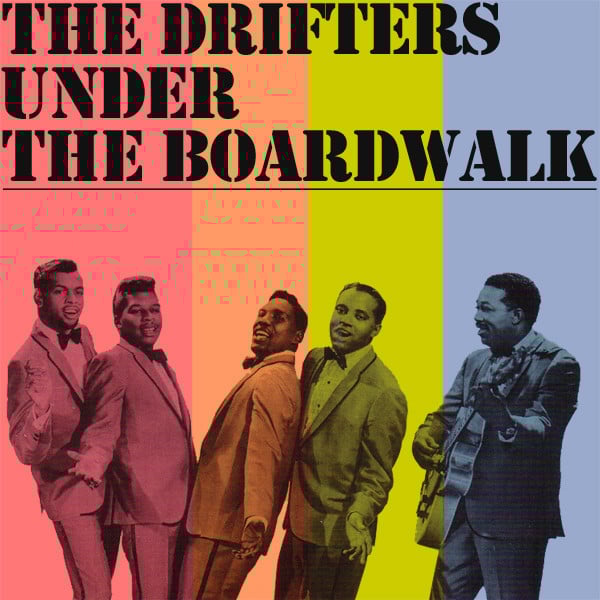
This song sets a mood when you hear it. I remember this song growing up and when I bought a Rolling Stones cheap greatest hits somewhere on cassette…this song was on it. They did a good version of it but it’s hard to beat the Drifters. In 1985 I was graduating and our band was recruited for a 1950s-era type of play by the drama teacher. Now, every time I hear 50s-sounding music…it takes me back to the mid-80s. This song has a 50s sound to it but was from 1964.
Under The Boardwalk was written by Arthur Resnick and Kenny Young. Resnick also wrote “Good Lovin'” for The Rascals and Kenny Young wrote some for the British Invasion band Herman’s Hermits. After Jerry Wexler, who was the head of Atlantic Records, heard it…he thought it would be perfect for the Drifters…which it was, and especially lead singer Rudy Lewis.
The band was set to record this on May 20, 1964, but lead singer Lewis was found dead that morning of either a drug overdose or a heart attack. He was only 27 years old. The singer he replaced earlier was Ben E King…the singer of Stand By Me.
The session was rescheduled for the next day, and Johnny Moore was called in to replace Lewis. Moore was with The Drifters in 1958 when their manager fired everyone in the band and brought in new members. He was a convenient replacement for Lewis and stayed on as their main vocalist.
The song was produced by Bert Berns. He was a busy man back then writing songs for many artists including Them featuring Van Morrison, Twist and Shout for the Isley Brothers, and Everybody Needs Somebody to Love by Soloman Burke just to mention a few.
Under The Boardwalk peaked at #4 on the Billboard 100, #5 in Canada, #6 in New Zealand, and #45 in the UK in 1964. It would be the Drifter’s last top ten hit on the Billboard 100 but they would hit in the R&B and UK charts.
Under The Boardwalk
Oh, when the sun beats down and burns the tar up on the roof
And your shoes get so hot you wish your tired feet were fireproof
Under the boardwalk, down by the sea, yeah
On a blanket with my baby is where I’ll be
(Under the boardwalk) Out of the sun
(Under the boardwalk) We’ll be havin’ some fun
(Under the boardwalk) People walking above
(Under the boardwalk) We’ll be making love
Under the boardwalk, boardwalk
From the park you hear the happy sound of a carousel
Mm-mm, you can almost taste the hot dogs and french fries they sell
Under the boardwalk, down by the sea, yeah
On a blanket with my baby is where I’ll be
(Under the boardwalk) Out of the sun
(Under the boardwalk) We’ll be havin’ some fun
(Under the boardwalk) People walking above
(Under the boardwalk) We’ll be making love
Under the boardwalk, boardwalk
Oh, under the boardwalk, down by the sea, yeah
On a blanket with my baby is where I’ll be
(Under the boardwalk) Out of the sun
(Under the boardwalk) We’ll be havin’ some fun
(Under the boardwalk) People walking above
(Under the boardwalk) We’ll be falling in love
Under the boardwalk, boardwalk
There are so many songs I had to leave off…I could have filled up 50 slots. This is the year music exploded into what developed into modern rock. The British were coming, they came, and they conquered. On February 9, 1964, the world changed. We all know the song that hit first… I Want To Hold Your Hand. If you want to know about that one…here is a link to the good article that halffastcyclingclub wrote for The Beatles week that I had.
I’m going to start off with the B side of that single…one of the best B sides ever. It’s a fairly well-known song also. Let’s start off with the John Lennon and Paul McCartney song I Saw Her Standing There. After this year…the world would never be the same.
The English bands started to come over after the door was kicked in by The Beatles. One of the rawest and roughest was The Animals. They do their take on this classic traditional song and it has become the standard version that most people remember and it’s been covered by artists including Woody Guthrie in the 1940s.
A garage-sounding song and a future look at punk music. The Kinks made themselves known with this raw edgy hit.
The Dave Clark Five knocked the Beatles out of the number one position on the UK charts with Glad All Over. It was written by Dave Clark and Mike Smith.
Let’s end with an American band that had been charting since 1962 but now they were getting huge. The Beach Boys with Don’t Worry Baby. This is a masterpiece of a song. One of my all-time favorites. It’s up there with God Only Knows by them also. Brian Wilson wrote this tremendous song. I bumped another great song for this…I Get Around…but I just had to. Do you agree?
If you want to see where we are…and you missed a few…HERE is a list of the episodes in my index located at the top of my blog.
This show was written by Gene Roddenberry, Arthur Heinemann, and D.C. Fontana
Not a strong episode or particularly a good one. This is one of the weakest episodes of the series. Now if you are looking for a product of it’s times episode…this is the one for you! Interstellar Hippies + Enterprise is basically what it is.
The Enterprise intercepts a stolen spacecraft as it heads into Romulan space. Those aboard are flying it in such a reckless manner that it explodes just as they are beamed out. Once aboard the Enterprise, we see that they are a bunch of space hippies. They intend to set up a new colony on Eden; a perfect planet they believe they will find. Kirk is unimpressed and plans to take them to the nearest star base…the only reason they aren’t thrown in the brig is that one of them is the son of an ambassador.
They soon start causing trouble; trying to incite younger crew members to join them and generally being obstructive. Spock seems to have an understanding with them and agrees to use the ship’s computer to help them find the planet they seek. The group is given medical scans which reveal that its leader Dr Sevrin is the carrier of a deadly disease; he is quarantined but soon after his followers release him and take over auxiliary control. From here they shut off bridge controls and take the Enterprise to their Eden in Romulan territory.
The planet, while as beautiful as all of them imagined, also has a very deadly side.
From IMDB:
Uhura does not appear in this episode. Lieutenant Palmer, who fills in, makes her second and final TOS appearance after The Doomsday Machine (1967).
The space hippie protest “Herbert, Herbert, Herbert!” is a gag, referring to both Star Trek four time director Herb Wallerstein, and long time Executive in Charge of Production Herbert F. Solow. (Spock tells Kirk that the reference to Herbert is “somewhat uncomplimentary” and that “Herbert was a minor official, notorious for his rigid and limited patterns of thought.”)
For the scene in which Spock plays his Vulcan harp for Adam (the last time he plays the instrument on the series), the background music for Uhura’s song from Charlie X (1966) is recycled.
James Doohan (Scotty) stated that this was his least favorite episode.
Charles Napier wrote some of the songs Adam sings.
Walter Koenig was highly critical of the writing for “The Way to Eden”. In particular he felt Chekov was written as too authoritative, rigid and by the book, a complete contrast from his usual and intended characterization.
Dr. Sevrin is based on Timothy Leary, a controversial psychology professor who advocated LSD as a therapeutic drug.
This episode was originally entitled “Joanna.” The character of Irina was originally to be Joanna McCoy, daughter of Dr. McCoy, and love interest for Captain Kirk, but that original script was rejected. The character of Joanna was planned to later appear in the fourth season, but Star Trek was canceled at the end of the third season.
In this episode, for the first time, Chekov’s first and middle names are spoken/revealed, Pavel Andreivich.
In some scenes, William Shatner can be seen to be wearing a corset.
Nurse Chapel’s collapse, as well as the collapse of other crew members in the corridor, is reused footage from Spock’s Brain (1968). This is why the lights go out in sickbay during that shot, while they are functioning normally elsewhere on the ship.
Dr. McCoy does have a number of salt shakers in his arsenal of “medical equipment” (as well as boat anchors) but the spinning hand scanner was a special prop made by the prop department to go with the medical tricorder. It did nothing but spin.
A brief shot of the surface of Eden is reused footage of the lakeside from Shore Leave (1966). A shot of the surface of Gamma Trianguli VI from The Apple (1967) is also recycled and used in the same scene.
Star Trek V: The Final Frontier (1989) recycles many elements of “The Way to Eden,” including Spock’s desire to find Eden.
Skip Homeier also starred in Patterns of Force (1968) as Melakon.
In the original version of the episode, the spacecraft Aurora is a Tholian ship with AMT model kit nacelles added to it. It is shown in the preview trailer without the nacelles. For the remastered version, a new design was created.
Summary
The Enterprise intercepts a stolen spacecraft heading directly for Romulan space. Its occupants are six space-age hippies who refuse to accept authority and are unconventional in their thinking. Led by the renowned Dr. Sevrin, they are in search of paradise – the mythical planet Eden. Kirk cannot relate but Spock does and agrees to help locate the planet. Spock also concludes that Sevrin is insane. For Chekov, it’s a chance to re-unite with Irina, with whom he was in love while they were students at the Academy. When the travelers manage to take control of the Enterprise, they realize their dream and arrive on Eden, which has surprises of its own.
CAST
William Shatner … Captain James Tiberius ‘Jim’ Kirk Leonard Nimoy … Mister Spock DeForest Kelley … Dr. McCoy Skip Homeier … Sevrin Charles Napier … Adam Mary Linda Rapelye … Irina (as Mary-Linda Rapelye) James Doohan … Scott Walter Koenig … Chekov George Takei … Sulu Majel Barrett … Nurse Chapel Victor Brandt … Tongo Rad Elizabeth Rogers … Lt. Palmer Deborah Downey … Girl #1 Phyllis Douglas … Girl #2













 PowerPop... An Eclectic Collection of Pop Culture