Max Picks …songs from 1973

1973

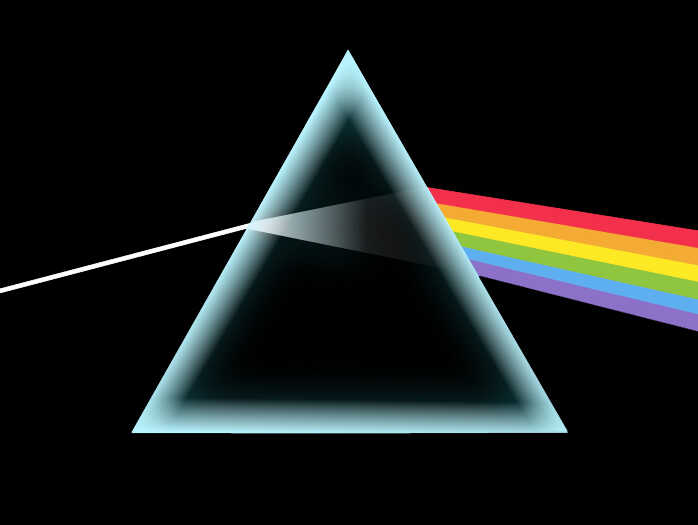
Pink Floyd released one of the biggest albums of all time…Dark Side of the Moon.

Roger Waters put together the cash register tape loop that plays throughout the song. It also contains the sounds of tearing paper and bags of coins being thrown into an industrial food-mixing bowl. The intro was recorded by capturing the sounds of an old cash register on tape and meticulously splicing and cutting the tape in a rhythmic pattern to make the “cash register loop” effect. Waters also wrote the song.

Like many of their songs, this was not released as a single in the UK, where singles were perceived as a sellout…but it was released as a single in America in 1973

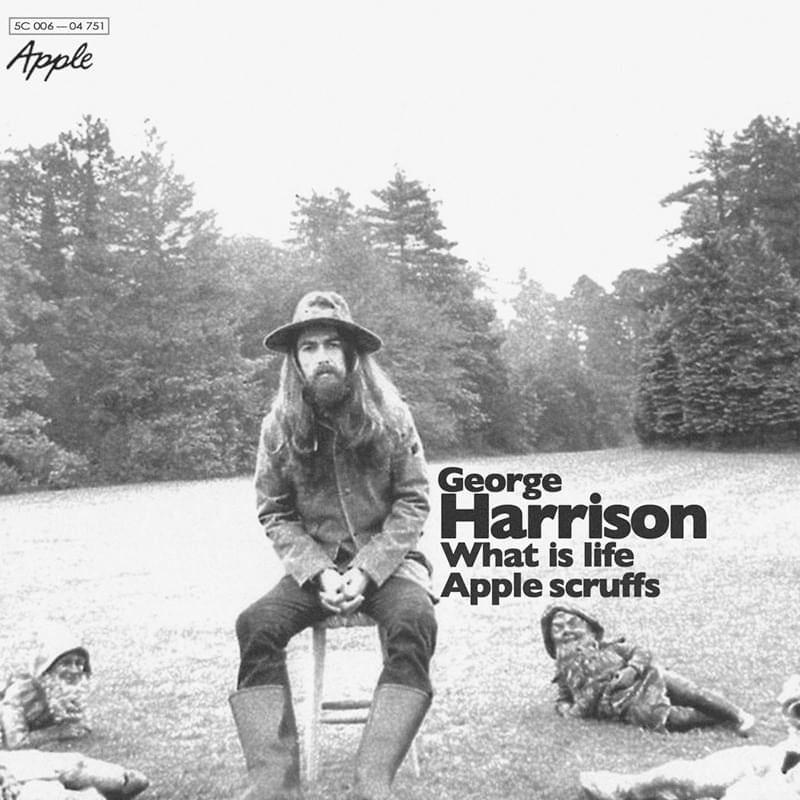
Another positive song that was written by George Harrison. “Give Me Love (Give Me Peace on Earth)” replaced Wings’ “My Love” at number 1 on the Hot 100 singles chart…For the week ending 30 June that year, the Harrison and McCartney songs were ranked numbers 1 and 2 respectively.

This song was based on a true story that happened to the band. Smoke On The Water took inspiration from a fire in the Casino at Montreux, Switzerland on December 4, 1971. Deep Purple was going to start recording their Machine Head album there right after a Frank Zappa concert, but someone fired a flare gun at the ceiling during Zappa’s show, which set the place on fire when Deep Purple was watching. It was released in May of 1973.

Music stores would not be the same without this song. It was written by Ritchie Blackmore, Ian Gillan, Roger Glover, Jon Lord, and Ian Paice.

Allman Brothers released this song in August of 1973. It was the band’s biggest hit that almost didn’t get released. The band thought it was too country and almost didn’t release it. This one was written by Dickey Betts.

My sister had a Jim Croce greatest hits album and I played it non-stop. This one is easy for kids to remember. This song has been played to death but I still love it. This one remains one of the most remembered songs from the early seventies. Jim Croce wrote this one.

Redbone – Come and Get Your Love

This song was a part of my childhood growing up. I never knew much about them but when I was 7 (1974)…my sister was watching Midnight Special and to see them…you didn’t forget. Then in 2014, the Marvel film Guardians of the Galaxy came out and the song was part of my son’s childhood. It is a very good pop song from the 1970s. They were the first Native American band to have a top 5 hit.

Native American brothers Patrick and Candido “Lolly” Vasquez-Vegas were born in Coalinga, California. The brothers played with Oscar Peterson at the Monterey Jazz and Pop Festival before relocating to Los Angeles in 1963. They were serious musicians. They started to play around on the Vegas Strip.

They opened for Lenny Bruce, as well as Richard Pryor while writing and playing on records by Tina Turner, Sonny & Cher, James Brown, Little Richard, and Elvis ( on the soundtrack to the film “Kissin’ Cousins”), among other recording artists.

Jimi Hendrix saw them play and was knocked out. Jimi stated that Lolly Vegas was the best guitarist he had ever heard and suggested that they create a band. Knowing they were Native Americans, Jimi suggested a name that reflected their roots. The name that Jimi suggested was “Redbone”, a Cajun term for a mixed-race person.

The Vegas brothers met guitarist Tony Bellamy, and collaborated on the Jim Ford album “Harlan County”. The trio hired drummer Pete DePoe and signed with Epic Records in 1969.

Come and Get Your Love peaked at #5 on the Billboard 100 and #25 in Canada in 1974. The song has recently gained a new following by being on the “Guardians of the Galaxy” soundtrack. The band was not a one-hit wonder though. They had one other top 40 hit called The Witch Queen of New Orleans.

Come and Get Your Love

Hail (hail)
What’s the matter with your head, yeah
Hail (hail)
What’s the matter with your mind
And your sign an-a, oh-oh-oh
Hail (hail)
Nothin’ the matter with your head
Baby find it, come on and find it
Hail, with it baby
Cause you’re fine
And you’re mine, and you look so divine

Come and get your love

Hail (hail)
What’s the matter with you feel right
Don’t you feel right baby
Hail, oh yeah
Get it from the mainline, all right
I said-a find it, find it
Go on and love it if you like it, yeah
Hail (hail)
It’s your business if you want some, take some
Get it together baby

Come and get your love

Come and get your love
Come and get your love, now

Come and get your love
Come and get your love, now

Come and get your love
Come and get your love, now

Come and get your love
Come and get your love, now

Come and get your love

Hail (hail)
What’s the matter with you feel right
Don’t you feel right baby
Hail (hail), all right
Get it from the main vine, all right

La, la, la, la, la, la, la, la. la, la
Come and get your love
La, la, la, la, la, la, la, la, la. woohoo
Come and get your love
La, la, la, la, la, la, la, la. la, la
Come and get your love
La, na, na, na, na, na, da, boom
Come and get your love
La, da boom, boom, boom, ta, daba, boom, boom
Come and get your love
La, la, la, la, la, la

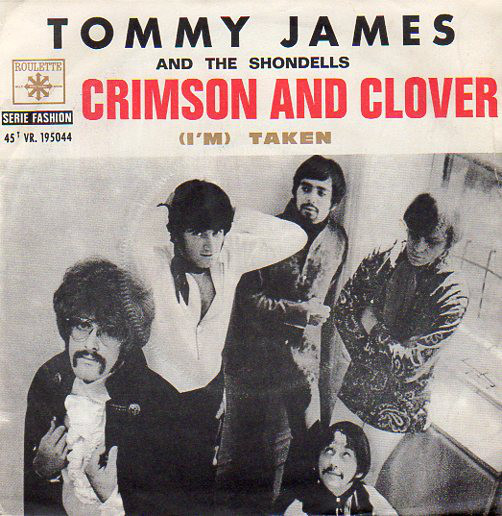
Tommy James and The Shondells – Crimson And Clover

I grew up with this single…I’ll never forget the orange Roulette Label going round and round. It’s a mystical and magical song to me. I fell in love with the tremolo effect that is throughout the entire song.

The song peaked at #1 on the Billboard 100, #1 in Canada, and #1 in New Zealand, in 1968. I still am shocked that it either wasn’t released in the UK or it just failed to chart there. Joan Jett’s version peaked at only #60 in the UK. My friend at the UK Number Ones blog and I talked about it. Their song Mony Mony peaked at #1 in the UK earlier…maybe that was enough for them.

On this song…Tommy James is playing all the instruments except drums and they were played by Pete Lucia. James and Lucia wrote the song.

Bo Gentry was writing most of their hits until this point. He didn’t feel like he was getting paid enough from Roulette Records (which was partly run by the mob) so he quit. Tommy James was told that he better get someone to write songs for him or his career would sink since Bo Gentry refused. The record executives told him that he could not write a hit song and to find someone. Tommy James showed them all… he and his drummer wrote this massive hit song.

Around this time James got involved with politician Hubert Humphrey and they were trying to turn from a singles band to an album band. This song helped them. Below is a very long quote by Tommy James about that time. It does say a lot about the business in the late sixties.

Tommy James: “They were just two of my favorite words that came together. Actually, it was one morning as I was getting up out of bed, and it just came to me, those two words. And it sounded so poetic. I had no idea what it meant, or if it meant anything. They were just two of my favorite words. And Mike Vale and I – bass player – actually wrote another song called ‘Crimson and Clover.’ And it just wasn’t quite there. And I ended up writing ‘Crimson and Clover’ with my drummer, Pete Lucia, who has since passed away.”

Tommy James: ‘Crimson and Clover’ was so very important to us because it allowed us to make that move from AM Top 40 to album rock. I don’t think there’s any other song that we’ve ever worked on, any other record that we made, that would have done that for us quite that way. And it came out at such a perfect moment because we had been out with Hubert Humphrey on the presidential campaign for several months in 1968. And we met up with him right after the convention. The convention where all the kids got beat up. And we met up with him the following week in Wheeling, West Virginia, and of course we didn’t know where all the rallies were gonna be, like the convention. What have we gotten ourselves into? We had been asked to join him. And this really was the first time, I think, a rock act and a politician ever teamed up. But it was an incredible experience.

But when we left in August, all the big acts were singles acts. It was the Association, it was Gary Puckett, it was the Buckinghams, the Rascals, us, I’m leaving several people out. But the point was that it was almost all singles. In 90 days, when we got back, it was all albums. It was Led Zeppelin, Crosby, Stills and Nash, Blood, Sweat and Tears, Joe Cocker, Neil Young. And there was this mass extinction of all of these other acts.

It was just incredible. Most people don’t realize that that was sort of the dividing line where so many of these acts never had hit records again. And we realized while we were out on the campaign that if our career was gonna continue, we had to make a move. We had to sell albums, which is something Roulette had never really done. The album, up to that point, had been whatever wasn’t the single. And then it was usually named the single, which I thought was a great idea. Morris (Levy) usually would name the album the same title as the single, so it would get kind of a head start. But the point was we knew we had to sell albums. Also that year the industry went from 4-track to 24-track in about the same period of time. So if we were gonna sell albums, we had to completely reinvent ourselves. And so it was a very dramatic moment. And the record we just happened to be working on at that moment, at the end of the campaign, was ‘Crimson and Clover.'”

Crimson and Clover

Ah, now I don’t hardly know her
But I think I could love her
Crimson and clover

Ah when she comes walking over
Now I’ve been waitin’ to show her
Crimson and clover over and over

Yeah, my, my such a sweet thing
I wanna do everything
What a beautiful feeling
Crimson and clover over and over

Crimson and clover over and over

Max Picks …songs from 1972

1972

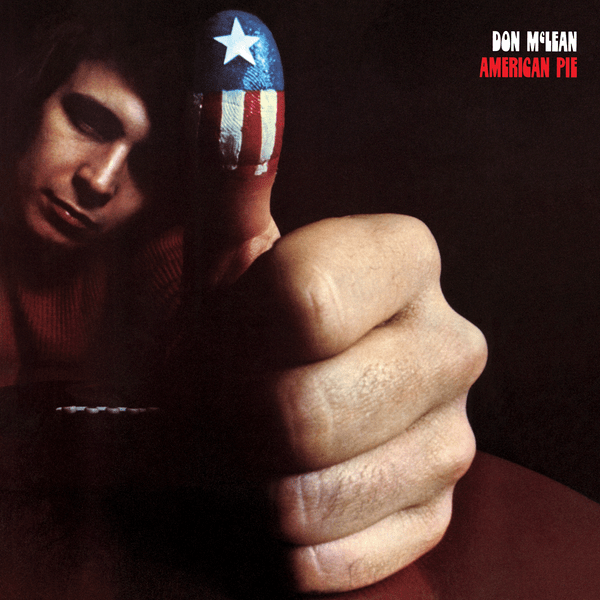
Everyone…I messed up last week. While making these, I go to Wiki’s Billboard Year-End Hot 100 Singles to go over some of the singles and then… I look at album cuts. Well, I didn’t check to see when American Pie was released…it was released in late 1971…but I would never have left that one off…ever. So forgive me…I won’t do this again…but I am leading off with it. It did its damage on the charts in 1972…so this one time I’m breaking my rule. It’s too important of a song.

American Pie… by Don Mclean. Where do I begin with this one? The song has so many references that it acts as a pop culture index itself. We do know the song was inspired by Buddy Holly’s death… What does it all mean? While being interviewed in 1991, McLean was asked for probably the 1000th time “What does the song ‘American Pie’ mean to you?,” to which he answered, “It means never having to work again for the rest of my life.” Now that is a great and honest answer by Mclean.

The holy trinity of power pop for me is…Badfinger, Big Star, and The Raspberries…those were the 70s  pioneers. Badfinger was the most successful out of the three…hit wise anyway. You can hear later bands like Cheap Trick, The Posies, Teenage Fanclub, Matthew Sweet,  and even KISS get something from each three.

This is my personal number 1 Power Pop song of all time. Baby Blue was written by Pete Ham.

He was playing in a Rock and Roll revival show in 1971 at Madison Square Gardens with other artists such as Chuck Berry, Bo Diddley, and Bobby Rydell. Ricky Nelson was releasing new music and he did not look the way he did in the 50s. He had long hair and dressed modern. He started off with some of his old songs the fans responded enthusiastically but then he played “Country Honk” a country version of the Rolling Stones “Honky Tonk Women.” That is when it went south.

Arlo Guthrie seems like the most laid-back guy in the world. His father was the great singer-songwriter, Woody Guthrie. Arlo wrote some very good songs but he didn’t write this one. The City of New Orleans was written by Steve Goodman. Steve did a great job writing this song. Its structure and imagery are fantastic.

After seeing the screenplay, Mayfield jumped into this movie project and was given complete creative freedom. He wrote the songs to suit the scenes, but he made sure they could stand on their own, telling the stories even without the visuals. “Superfly” works very well outside of the film. It was written by Curtis Mayfield. I saw this on the big screen a few years ago.

Stuart Sutcliffe – The Forgotten Artist

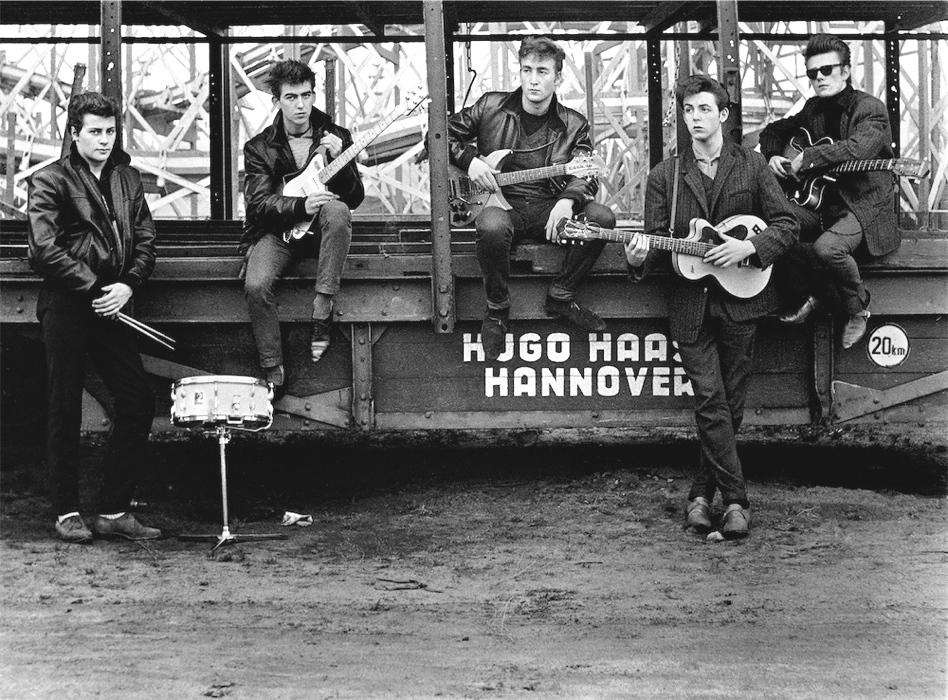
In May of 1960, Stuart Sutcliffe was a brilliant young artist with a bright career ahead of him when he sold one of his paintings and his friend John Lennon talked him into buying a bass. He didn’t know how to play bass but was taught by John, Paul, and George because like George said…it was better to have a bass player that couldn’t play than no bass player at all.

StuSutcliffe

Stuart Sutcliffe 1960

Stuart did learn to play bass and had a lot of stage time in Hamburg. He was never a great bass player but good enough to hold the position down. Stuart and John came up with the band name Beatles. Stuart wanted it to be Beatals but John stuck with Beatles. He quit art college to go on tour with The Silver Beatles to help back up a performer named Johnny Gentle in Scotland. After that they went to Hamburg and that changed their career. John also quit art college but he didn’t have the talent that Stuart did. 

After a year or so he wasn’t at the other Beatles level and Paul never let him forget it. Paul was jealous of Stuart because of him being so close to Lennon. George also was a little jealous but not like Paul. John was basically hero-worshiped by Paul and George. In Hamburg, Paul said something about his girlfriend Astrid and tiny Stuart tackled Paul while they were on stage…they rolled around a bit and then it was finally over. Paul still talks about how he feels bad for the way he treated him.

He probably would have never got to their level musically because although he was good friends with John… his heart was in art not music. He was with them from May 1960 to August of 1961. 

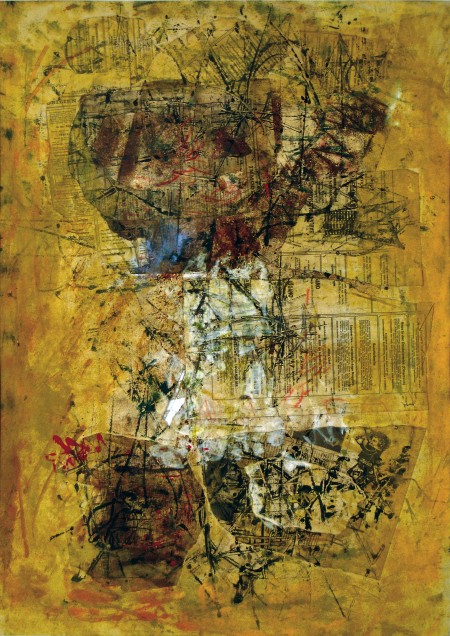
Many art experts say Stuart would have been a major artist had he lived… with or without the Beatle connection. He was indeed a sought-after artist when he quit the Beatles. He was the James Dean of the Beatles…He was the Artist…the Stylish one who attracted new friends in Germany that forever changed the Beatles. Some pictures of him make him look ahead of his time.

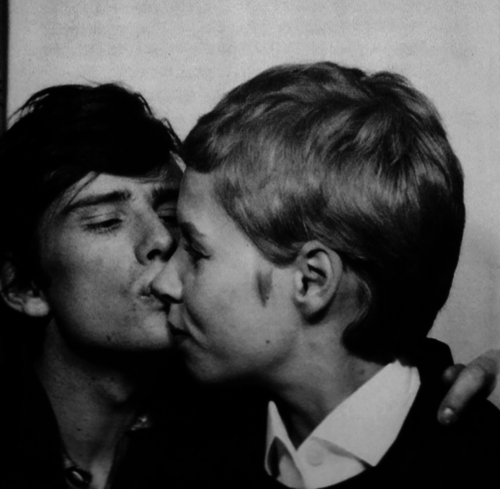
While playing in Hamburg Germany he met Astrid Kirchherr who would become the love of his life. Astrid would take some of the most famous early photographs of the Beatles.

astrid beatles.JPG

Astrid’s soon-to-be ex-boyfriend Klaus Voormann would befriend the Beatles and later designed the Revolver cover and play bass for John, George, and Ringo at different times in their career. Jürgen Vollmer, a photographer in the circle of Astrid’s friends would end up cutting John and Paul’s hair into the famous haircut …after Astrid had already cut Stuart’s hair in that fashion first. Stuart was of course laughed at by the rest until they got theirs cut. Pete Best refused and did his own thing. 

Stuart’s influence went beyond playing bass. Without Stuart, things may have turned out differently for The Beatles.

Stuart finally quit The Beatles to concentrate on art and to marry Astrid. He got a scholarship while living with Astrid in Germany, at the Hamburg College of Art in 1961. He produced a lot of paintings in the last year of his life. He started to lose weight, got terrible headaches, and had trouble walking. He kept going to college and kept painting in Astrid’s attic. They wanted to marry in May but on April 10, 1962, he had a ruptured aneurysm and passed away on the way to the hospital in Astrid’s arms.

If Stuart had lived he would have almost certainly stayed in the Beatles circle although not playing…he may have been remembered more as an artist than a one-time bassist of the Beatles that happened to be an artist. 

For the Beatles part…he was a major influence in coming up with the name, helped bring on the haircuts, and gave them a more sophisticated style other than leather jackets and boots. 

John Lennon would remember his friend in his song “In My Life.”

George Harrison: “He wasn’t really a very good musician. In fact, he wasn’t a musician at all until we talked him into buying a bass, we taught him to play 12-bars, like ‘Thirty Days’ by Chuck Berry. That was the first thing he ever learnt. He picked up a few things and he practiced a bit until he could get through a couple of other tunes as well. It was a bit ropey, but it didn’t matter at that time because he looked so cool. We never had many gigs in Liverpool before we went to Hamburg, anyway.”
John Lennon: “I looked up to Stu. I depended on him to tell me the truth, Stu would tell me if something was good and I’d believe him. We were awful to him sometimes. I used to explain afterwards that we didn’t dislike him, really.”

More about Stuart and his Art…thank you for reading this. 

http://www.anothermag.com/art-photography/8556/a-five-point-guide-to-the-art-and-style-of-stuart-sutcliffe

astrid stu.png

stu1.jpg

stu 2.jpg

Stu 3.jpg

Canned Heat – Going Up Country

I wasn’t there but this song equals Woodstock to me. Every time I hear this song I think of a field full of hippies with bubbles. Alan “Blind Owl” Wilson wrote this song based on an old blues song called Bull Doze Blues. It peaked at #11 in the Billboard 100 and #5 in Canada in 1969.

Alan Wilson moved to Los Angeles and met Bob “The Bear” Hite and in 1965 started Canned Heat. The group took their name from “Canned Heat Blues,” an obscure 1928 track by bluesman Tommy Johnson that described the drug high achieved through drinking the household product Sterno.

In 1967, after appearing at the Monterey Pop Festival, Canned Heat signed with Liberty Records. They made a self-titled album that year and it peaked at #76 on the Billboard Charts. In 1968 they released “Boogie with Canned Heat” which made it to number 16. They followed that album with “Living the Blues”(#18) and in 1969 released the album Hallelujah(#37).

Their appearance at Woodstock raised their stock higher. They had two hit singles both sung by Alan Wilson, this song released in 1968, and  On The Road Again released in 1969. Alan wasn’t the regular lead singer of Canned Heat but he did sing the two best-known singles by them. They were both written by him and based on old blues songs. His unusual voice came from him trying to mimic the voice of old blues singers. Bob Hite was the lead singer of the band.

Alan Wilson is a forgotten figure who was a gifted musician. He died in 1970 under strange circumstances outdoors in a sleeping bag near his band’s lead singer’s (Bob Hite) house. He was dead at the age of 27. Jimi Hendrix would die in a couple of weeks and Janis Joplin would follow a month later…all of them were age 27.

Going Up Country was heavily influenced by an old and obscure Blues song called “Bull Doze Blues” by Henry Thomas. The song caught on in the summer of 1969 and was very popular among Hippies who appreciated the nature theme.

Going Up Country

I’m goin’ up the country, baby don’t you want to go?
I’m goin’ to some place, I’ve never been before
I’m goin’ I’m goin’ where the water tastes like wine
I’m goin’ where the water tastes like wine
We can jump in the water, stay drunk all the time
I’m gonna leave this city, got to get away
All this fussin’ and fightin’ man, you know I sure can’t stay
So baby pack your leavin’ trunk
You know we’ve got to leave today
Just exactly where we’re goin’ I cannot say
But we might even leave the U.S.A.
It’s a brand new game, that I want to play

No use in your runnin’, or screamin’ and cryin’
‘Cause you got a home as long as I’ve got mine

Max Picks …songs from 1971

1971

This year may be the best ever for albums. You had Who’s Next (My number one), Led Zeppelin IV, Marvin Gaye’s What’s Goin On, and so much more.

We will start off with what I think is the greatest rock song ever played in a concert environment. I’ve seen The Who play Won’t Get Fooled Again twice and of all the concerts I’ve gone to… I’ve never heard anything this powerful live.

Roger Daltrey’s Scream is considered one of the best on any rock song. It was quite convincing…so convincing that the rest of the band, lunching nearby, thought Daltrey was brawling with the engineer.

Now let’s visit Led Zeppelin and they released IV or Zoso a few weeks after The Who released Who’s Next. Stairway To Heaven…this song is considered by some as the best song in rock history. The song was written by Jimmy Page and Robert Plant.

Marvin Gaye released this great song and it came off the album of the same name. A powerful song from a powerful performer. The song was written by Al Cleveland, Renaldo Benson, and Marvin Gaye.

The Moody Blues released the album Every Good Boy Deserves Favour and this song was on it. It may be my favorite song by them. Story In Your Eyes.

Great melody in this song. I bought the album Every Good Boy Deserves Favour just because of this song and I ended up liking the album a lot. The song peaked at #23 on the Billboard 100 in 1971. The song was written by Justin Hayward.

This is almost a perfect song…by the one and only Janis Joplin. There are few artists who give everything they have all the time. Bruce Springsteen is one…Janis was one. On film it comes through…she gives everything she has and more. It was written by Kris Kristofferson and Fred Foster.

She would die on October 4, 1970. Her nickname was Pearl and that was the name of her last album. She left $2,500 for her wake…. 200 guests were invited with invitations that read…”Drinks are on Pearl”…

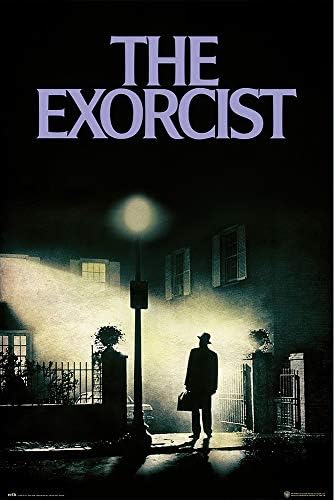
The Exorcist

My son bought us tickets to see The Exorcist in Clarksville, Tennessee last Sunday. The original movie was playing there. I saw it in 2000 when it was re-released and I was ready to watch it again on the big screen. 

Seeing this on the big screen changes everything. William Friedkin, the director, managed to keep the dread atmosphere all the way through the movie and never let up. Friedkin worked on this film for the re-release and the colors pop out at you. He just passed away on August 7, 2023. If you get a chance to see it and this doesn’t upset you…do it. The book was written by William Peter Blatty.

At one time I considered this a horror movie but I’ve changed my mind about that. How can I put it in the same category as slasher movies or some of the stupid horror movies? This is a classic movie with horror elements and should be treated as such. Is it scary? Oh yes, it is…in fact, it’s the only movie to really scare and spook me but I would not belittle it by putting it in with some of those movies. That is not a knock on those other horror movies that have their place…but this one is playing in a different league. What makes it so effective is it feels so real. This is not set in Salem or ancient times but in modern times. A normal 12-year-old girl gets possessed…something that feels tangible. 

A few years ago I wrote on the cultural impact of this movie. This time I just want to talk about the characters of the movie. It’s unbelievable how many other movies have stolen bits and pieces of this or the whole thing. A lot of copycat movies came out like The Omen (which is really good), Beyond The Door (a low-budget one that I liked), and more. 

The characters in The Exorcist are all vital and necessary. There are no wasted moments in the film. I first saw it when I was around 15-16 on a VHS copy and for days I would look around corners. In 2000 I was an adult but it still got to me then. What impresses me about the movie are the characters. Father Damien Karras (Jason Miller) and Father Lankester Merrin (Max Van Sydow) finally converge near the end of the movie.

The acting of Jason Miller who plays Father Karras is outstanding especially since this was his first role. Father Karras is a guilt-ridden man who is losing his faith. All of this plays a part in his transformation to help with the Exorcism. Miller was first a playwright and a good one and this started his acting career. Max Von Sydow was only 44 while playing an old Father Merrin and like Blair…if it wasn’t convincing the movie would not have worked. 

Chris MacNeil (Ellen Burstyn) and Regan MacNeil play mother and daughter and are at the story’s center. Both do a great job and of course, Linda Blair was very convincing because if not…the movie would have died on the vine. Ellen Burstyn ties the movie together with her portrayal of Regan’s mom. 

Another character who felt real was Father Dyer who was played by the real Father William O’Malley…he had the experience. Also, Lt William Kinderman (Lee J. Cobb) is super as the Police Detective. He is such a real sort of character that you have known some Kindermans in your life. You can see him softening people up to get information from them in a wise old man way. 

It’s worth mentioning 90-year-old Vasiliki Maliaros who played Father Karras’ mother. It was her only acting role. William Friedkin saw her in a cafe and cast her.

Exorcist3

No character is used too much or too little and its pacing is perfect. One of my favorite scenes of all time is in this movie. When Father Merrin pulls up in the taxi and walks in the fog with light coming from a street light and the house. You can take away a lot from the ending and it’s all subjective but for me, it’s good conquering evil…you may have a different thought.

The original trailer…it was ultimately banned by film executives over concerns it was too disturbing for audiences.

Temptations – I Can’t Get Next To You

Back when I was dating…Whenever I broke up with a girl…I would drag the Temptation’s greatest hits out. I would play them for at least two weeks and wallow in self-pity…just a phase I had to go through. After that, I was ready for the next one.

In the mid-eighties, they came to Nashville when the theme park Opryland was still open. They had a theater inside the part but it was sold out. No problem…I had a friend who worked there and we borrowed his sister’s work ID that worked there also. All you had to do was flash the card really quickly so they never saw that I wasn’t a Sarah. He took me the back way and we snuck into the theater and saw the Temptations. I’m not proud of it…but I did get to see the Temptations. It was the only concert that I never got a ticket stub from.

The song was off on their album Puzzle People. which peaked at #5 on the Billboard Album Charts, #1 on the R&B Charts, #8 in Canada, and #20 in the UK in 1969.  The Punk Panther reviewed this and some of their other albums. On this one, he said: First off I Can’t Get Next To You has a super intro in the opening door and “wait a minute” vocal before it kicks into a magnificent piece of lively, funky, punchy Motown pop.

The song was written by Barrett Strong and Norman Whitfield.  They also wrote Cloud Nine for the group. I like how all 5 Temptations trade verses on this song…everyone got a turn. I also like the party atmosphere of the song.

The song peaked at #1 on the Billboard 100, #1 on the Billboard R&B Charts, #11 in Canada, and #13 in the UK in 1969.  It knocked off “Sugar, Sugar” by the Archies and was replaced by “Suspicious Minds” by Elvis Presley.

There have been numerous covers of the song. Other versions include those by The Osmonds, Al Green, Savoy Brown, The Jess Roden Band, Annie Lennox, Toto, and David Cassidy.

I Can’t Get Next To You

Hold it, everybody
Hold it, hold it, listen

I can turn the gray sky blue
I can make it rain whenever I want it to
Oh, I can build a castle from a single grain of sand
I can make a ship sail, huh, on dry land

But my life is incomplete and I’m so blue
‘Cause I can’t get next to you (I can’t get next to you, babe)
Next to you (I can’t get next to you)
I just can’t get next you (I can’t get next to you, babe)
(I can’t get next to you)

I can fly like a bird in the sky
Hey, and I can buy anything that money can buy
Oh, I can turn a river into a raging fire
I can live forever if I so desire

Unimportant are all the things I can do
‘Cause I can’t get next to you (I can’t get next to you, babe)
No matter what I do (I can’t get next to you)
Uh-yah

Ooh
Ooh
Chicka boom, chicka boom
Chicka boom, boom, boom

I can turn back the hands of time, you better believe I can
I can make the seasons change just by waving my hand
Oh, I can change anything from old to new
The things I want to do the most, I’m unable to do

Unhappy am I with all the powers I possess
‘Cause, girl, you’re the key to my happiness
And I, oh I can’t get next to you

Girl, you’re blowing my mind
‘Cause I can’t get (next to you)
Can’t you see these tears I’m crying?
I can’t get (next to you)
Girl, it’s you that I need
I gotta get (next to you)
Can’t you see these tears I’m crying?
I can’t get (next to you)
I, I, I, I, I can’t get (next to you)
I, I, I, I, I can’t get, now (next to you)
Girl, you’re blowing my mind
‘Cause I can’t get…

Kinks – All Day and All of the Night

Happy Monday everyone…if that is possible. I hope you all had a good weekend.

This simple riff is raw and cutting like Louie, Louie, and Wild Thing…and became a staple of garage bands forever.

The sound of the guitar was revolutionary. Dave Davies got the dirty guitar sound by slashing the speaker cone on his amplifier with a razor blade. The vibration of the fabric produced an effect known as “fuzz,” which became common as various electronic devices were invented to distort the sound. At the time, none of these devices were available to Dave, so Davies would mistreat his amp to get the desired sound, often kicking it.

The song peaked at #7 on the Billboard 100, #4 in Canada, #5 in New Zealand, and #2 in the UK in 1964. It’s punk…raw rock and roll to the core. The guitar was really distorted and hard for the time.

The record executives in their wisdom didn’t like this song when they heard it. They said the guitar sounded like a barking dog. Later on, the Doors would borrow this melody for Hello I Love You.

One of my favorite things about these early Kinks singles is Dave Davies’s solos. They were always driving and exciting…and yes Dave played on this song, not studio musician Jimmy Page.

The Kinks would revisit this melody with the song “Destroyer” off of the “Give The People What They Want” album.

James Hetfield from Metallica: “schooled on early riff-rock by this man [Ray Davies] and his band – The Kinks”.

Ray Davies:“I cranked up my guitar more than on ‘You Really Got Me’, when we went into the studio, everybody knew what they were doing. I think we did it in three takes… the first time the band heard it was when I ran through it with them at the soundcheck, afterwards we drove back down to London, got up in the morning, and finished the song by midday”.

Ray Davies getting the truth out…this is what he said about the rumor of Jimmy Page playing on this record: “I remember Page coming to one of our sessions when we were recording ‘All Day And All Of The Night.’ We had to record that song at 10 o’clock in the morning because we had a gig that night. It was done in three hours. Page was doing a session in the other studio, and he came in to hear Dave’s solo, and he laughed and he snickered. And now he says that he played it! So I think he’s an asshole, and he can put all the curses he wants on me because I know I’m right and he’s wrong.”

Ray Davies: ” I was a rebellious, angry kid anyway, but that had a profound effect on me. I was full of rage.” That anger was coupled with the frustration that The Kinks song ‘You Really Got Me’ just wasn’t translating in a studio setting. “I could easily have slashed my wrists,” but I had a little green amplifier, an Elpico, that was sounding crap. I thought, ‘I’ll teach it’ – and slashed the speaker cone. It changed the sound of my guitar. Then, when I wired that amp up to another, a Vox AC30, it made it a lot, lot louder”.

Dave Davies: “A little later, I was very depressed and fooling around with a razor blade. I could easily have slashed my wrists, but I had a little green amplifier, an Elpico, that was sounding crap. I thought, “I’ll teach it” – and slashed the speaker cone. It changed the sound of my guitar. Then, when I wired that amp up to another, a Vox AC30, it made it a lot, lot louder.“

All Day and All of the Night

I’m not content to be with you in the daytime
Girl I want to be with you all of the time
The only time I feel alright is by your side
Girl I want to be with you all of the time
All day and all of the night

I believe that you and me last forever
Oh yeah, all day and nighttime yours, leave me never
The only time I feel alright is by your side
Girl I want to be with you all of the time
All day and all of the night
Oh, come on

I believe that you and me last forever
Oh yeah, all day and nighttime yours, leave me never
The only time I feel alright is by your side
Girl I want to be with you all of the time
All day and all of the night
All day and all of the night-time
All day and all of the night

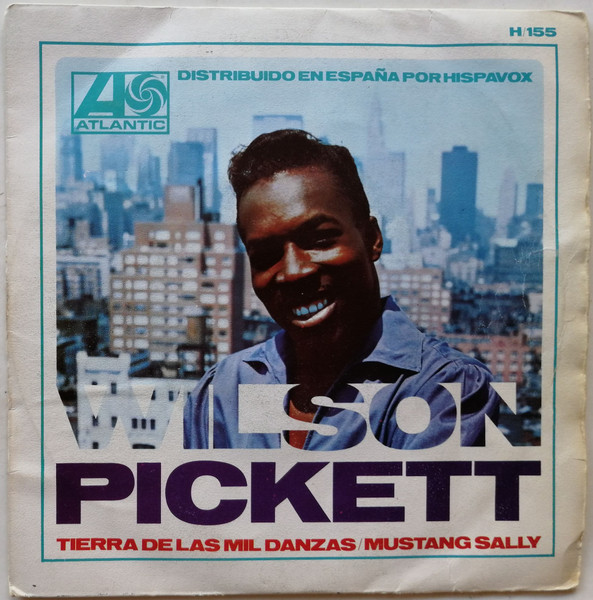
Wilson Pickett – Mustang Sally

Motown and Stax were vital to the 1960s and 70s. This is just my opinion… but Motown had more hits but Stax had an edge that was hard to beat. I always thought their music had more of a groove to it.

This is a song that our band never officially learned…it’s one of those songs where if you have played for a few years…you just know by instinct. We did this one from a request and also Midnight Hour we would play loud and intense.

The music is in groove mode, but Pickett’s explosive voice drives it home. Mustang Sally was recorded at FAME studios in Muscle Shoals, Alabama. The studio had a unique sound plus some of the best musicians anywhere. It started to get the attention of Atlantic Records and they sent Pickett to record there. Later on, a guitar player known as Duane Allman would end up as a studio musician and talked Pickett into recording Hey Jude.

As soon as they finished this take… the tape flew off the reel and broke into pieces everywhere. Producer Tom Dowd cleared the room and told everyone to return in half an hour. Dowd pieced the tape back together and saved what became one of the coolest songs of the decade.

It was written by Mark Rice. In 1950, he moved with his family to Detroit, where he graduated from high school. After he served in the Army, he joined a group called The Falcons. He soon began singing with the Falcons, whose other members included Wilson Pickett, Joe Stubbs, and Eddie Floyd. But he would find real fame as a songwriter.

“Mustang Sally” began as “Mustang Mama,” which he was inspired to write by the newly introduced Ford Mustang sports car. It was Aretha Franklin, the pianist on Rice’s demo of the song, who persuaded him to rename it.

He recorded “Mustang Sally” as Sir Mack Rice in 1965, and it peaked at #15 on the Billboard R&B chart. Rice did a nice job but the song needed Wilson Pickett’s powerful voice.

Pickett’s version peaked at #23 on the Billboard 100, #6 on the R&B Charts, #28 in the UK, and #4 in Canada.

Mustang Sally

Mustang Sally, huh, huh, guess you better slow your Mustang down
Oh Lord, what I said now?
Mustang Sally, now baby, oh Lord, guess you better slow your Mustang down
Huh oh yeaah
You been running all over the town now
Oh! I guess I’ll have to put your flat feet on the ground
Huh, what I said now?

Listen
All you want to do is ride around Sally, ride, Sally, ride
All you want to do is ride around Sally, ride, Sally, ride. Huh
All you want to do is ride around Sally, ride, Sally, ride

One of these early mornings, baby, you gonna be wiping your weeping eyes
Huh, what I said now?

Look it here.
I bought you a brand new mustang nineteen sixty five. Huh
Now you come around signifying a woman, you don’t wanna let me ride
Mustang Sally, now baby, oh Lord, guess you better slow that mustang down
Huh, oh Lord. Look here
You been running all over the town
Oh! I got to put your flat feet on the ground. Huh, What I said now?

Let me say it one more time ya’ll
All you want to do is ride around Sally, ride, Sally, ride

Stranglers – Peaches

When I started to play bass I played loud…super loud. Sometimes I would do things on bass and people would be looking at our guitar player Ron thinking he did it. My bass always had some distortion…one of the reasons was it was a hollow body bass played loud…it would give feedback and distort a little. That is why when I first heard this song I liked it.

The Stranglers were labeled a punk band but it’s obvious they were better musically than their peers and they were able to keep that rawness.

The bass starts this song off and it is a great sound.  It features the bass of J.J. Burnel taking no prisoners. Peaches was released in 1977 as a single from their debut studio album, “Rattus Norvegicus”. The song was written by the band’s lead singer and guitarist, Hugh Cornwell, and according to him, the inspiration for the song came from an incident he witnessed while touring in Belgium.

He saw this group of guys ogling a girl in a cafe saying hey….come and have a look at those peaches! It turned out that the peaches they were referring to were the khaki shorts she was wearing.  Cornwell has stated that the song is essentially a critique of the voyeuristic male gazes and objectification of women.

In 2019, the song was included in the Rock and Roll Hall of Fame’s “The Songs That Shaped Rock and Roll” exhibit, solidifying its place in music history. The song is credited to Jean Jacques Burnel, Hugh Cornwell, Dave Greenfield, and Jet Black. The song peaked at #8 in the UK in 1977. The album peaked at #4 in the UK.

JJ Burnel: “In the very early days, in order to earn a bit of money, we had a little PA, and one day we were signed to a black label called Safari, which was more or less a reggae label. We hadn’t released anything. But the owner phoned us up one day and said, ‘Look, do you want a few pounds to augment your PA to a sound system?’ Well, we didn’t know what ‘sound system’ was.

So we turned up in part of London and we were the only white guys there. We stuck our PA to their sound system, and there was an awful lot of grass going about. We were kind of excluded from the line of grass. And lo and behold, I discovered sound systems, which were I suppose an early form of rap. You’d have a toaster: a black guy talking sort of stream of consciousness over mainly a bass and drums backing rhythm. Reggae. It was all reggae. What you might know as ‘dub.’ So you have a delay on the snare or something, there’d be a lot of separation and mainly bass speakers throughout the total.

So we stayed there for the whole gig. And at the end of it, I was hooked on the idea that the bass should be the most dominant feature. So I went back to where we were living and that night, came up with the three notes which constitute ‘Peaches.’ And of course, I wanted to make a reggae song out of it. But we didn’t quite get the snare in the right beat. But never mind. We Strangle-fied it. We interpreted a reggae theme in The Stranglers way, which became ‘Peaches.'”

Peaches

Strolling along minding my own business
Well there goes a girl and a half
She’s got me going up and down

Walking on the beaches looking at the peaches

Well I got the notion girl that you got some suntan lotion in that bottle of yours
Spread it all over my peelin’ skin, baby
That feels real good
All this skirt lappin’ up the sun
Lap me up
Why don’t you come on and lap me up?

Walking on the beaches looking at the peaches

Well, there goes another one just lying down on the sand dunes
I’d better go take a swim and see if I can cool down a little bit
‘Cause you and me, woman
We got a lotta things on our minds (you know what I mean)

Walking on the beaches looking at the peaches

Will you just take a look over there (where?) (there)
Is she tryin’ to get outta that Clitares?
Liberation for women
That’s what I preach (preacher man)

Walking on the beaches looking at the peaches

Oh shit!
There goes the charabang
Looks like I’m gonna be stuck here the whole summer
Well, what a bummer
I can think of a lot worse places to be
Like down in the streets
Or down in the sewer
Or even on the end of a skewer

Down on the beaches, just looking at the peaches
Down on the beaches, just looking at brown bodies
Down on the beaches, just looking at all the shot glasses
Down on the beaches, just looking at all the peaches
Down on the beaches
Mmm-hmm, mmm-hmm, mmm-hmm, mmm-hmm
Mmm-hmm
Mmm-hmm
Mmm-hmm, mmm-hmm, mmm-hmm, mmm-hmm

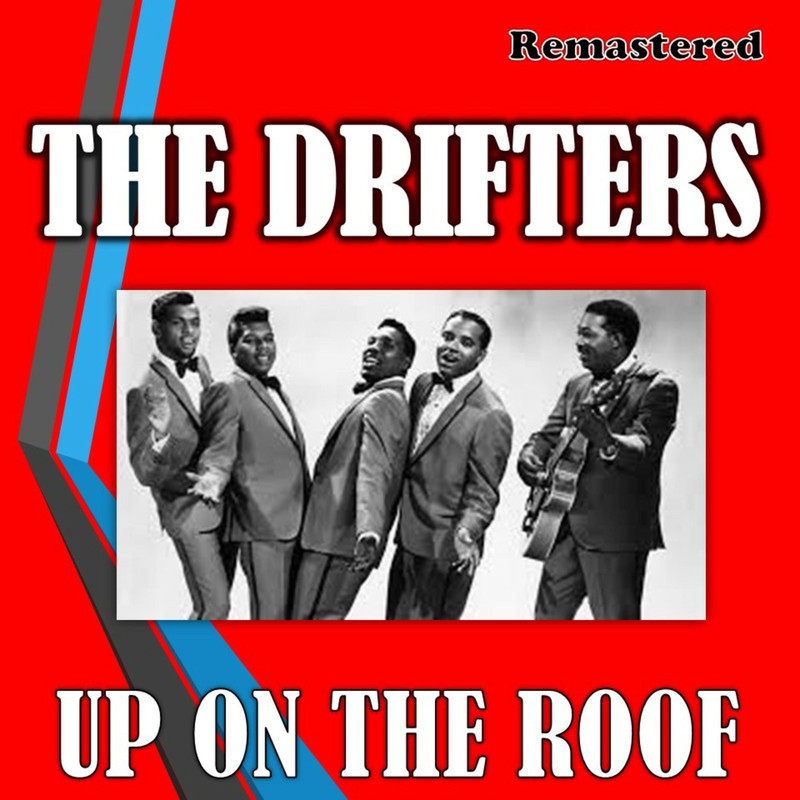
Drifters – Up On The Roof

It’s one of those songs that relax you while listening and just get lost in.  What a mood it gives you. There are worse places to be than on a roof with peace and quiet.

This song was first recorded by Little Eva but then owned by The Drifters. The song was written by  Gerry Goffin and Carole King. King would later revisit this song on her album Writer in 1970. The lead singer for The Drifters on this song was Rudy Lewis. The Drifters would have a lot of hits in the 50s and 60s. Save The Last Dance For Me, Under The Boardwalk, There Goes My Baby, On Broadway, and many more.

The Drifters were formed in 1953 by George Treadwell and Clyde McPhatter.  George Treadwell managed the group and laid the foundation of what would give them a distinctive sound.  Clyde McPhatter was the lead singer of the group that also saw numerous members over the years but two others stood out above the rest.  Johnny Moore and Ben E King. Rudy Lewis was also an outstanding singer but he died in 1964.

They took their gospel background and channeled it into wonderful R&B arrangements. This song peaked at #5 on the Billboard 100 and #4 on the R&B Charts in 1962.

They were elected into the Rock and Roll Hall of Fame in 1988…up on the roof indeed.

Up On The Roof

When this old world starts getting me down
And people are just too much for me to face
I climb way up to the top of the stairs
And all my cares just drift right into space

On the roof, it’s peaceful as can be
And there the world below can’t bother me
Let me tell you now

When I come home feelin’ tired and beat
I go up where the air is fresh and sweet (up on the roof)
I get away from the hustling crowd
And all that rat race noise down in the street (up on the roof)

On the roof, the only place I know
Where you just have to wish to make it so
Let’s go up on the roof (up on the roof)

At night the stars put on a show for free
And darling, you can share it all with me
I keep a-tellin’ you

Right smack dab in the middle of town
I’ve found a paradise that’s trouble proof (up on the roof)
And if this world starts getting you down
There’s room enough for two

Up on the roof (up on the roof)
Oh, come on, baby (up on the roof)
Oh, come on, honey (up on the roof)
Everything is all right (up on the roof)

Max Picks …songs from 1970

1970

The Beatles officially broke up in April of 1970…I hate leaving the 60s behind. The seventies was the time of my childhood at the age of 3 through 13. My music tastes were formed in this decade by listening to…well mostly the 60s.

So let’s get started with The Grateful Dead. They released two of their most popular albums this year… Workingman’s Dead and American Beauty. Two excellent albums and it was hard to pick a song off of them…but this one does quite nicely. It was written by Jerry Garcia and Robert Hunter.

It’s George Harrison time again. When the Beatles broke up, no one knew what to expect from him. Well…George delivered a knockout punch with his album All Things Must Pass. At that time he was outselling John and Paul and just about everyone else. George wrote this song.

This was the opening track on the A Question Of Balance album by the Moody Blues, and at one point it was going to be the title track. The song was recorded several months earlier than the other tracks on the album and its title was shortened from “Question Of Balance” to “Question.”

When I was younger I started with this album and owned everything up until Long Distance Voyager. Their early seventies output is my favorite period but I liked their entire catalog as a whole. It was written by Justin Hayward.

This is what I wrote in my post on this song a while back...”The bass in this song punches you like a heavy-weight fighter and will roll you like wholesale carpet…the timing is absolutely perfect. I hear some Otis and Wilson Pickett in this song and it will make you move.” Huh…I still agree with me!

Groove Me has been a favorite of mine for so long. King Floyd takes almost a full minute to build up to the chorus and it’s well worth the wait when he kicks it in. Thank you King Floyd for writing this song.

This song by Simon and Garfunkel has become a standard. Bridge Over Troubled Water along with Georgia On My Mind was my mom’s favorite song…so I couldn’t leave it off. It was written by Paul Simon.

Bessie Smith – Baby Won’t You Please Come Home 

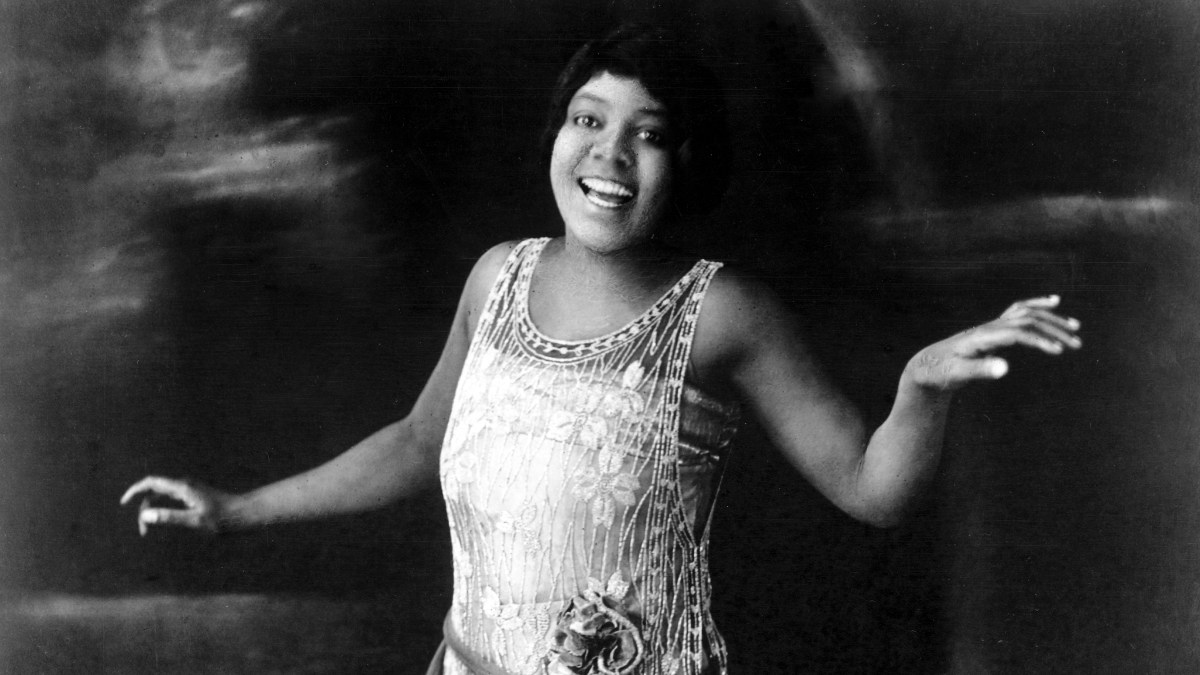
When I heard this woman sing…I was shocked. Listen to the purity of her voice…she still amazes me. We cannot forget the pioneers of any genre. Artists like Mahalia Jackson, Janis Joplin, and Norah Jones have all given Bessie Smith credit as their inspiration.

It seems like the female singers I like the most have a growl to their voices. That includes Janis Joplin, Aretha Franklin, Willie Mae Thorton, and yes Bessie Smith.

Within 10 months of signing Smith, the Columbia label sold two million records. Over the next four years, her sales reached six million. But she sang a wider repertoire than most, in her traveling tent show, on theatrical tours, and, later, in jazz clubs. The blues made Smith the highest-paid black entertainer of her era, but she was just as adept at singing show tunes and more popular Tin Pan Alley songs, which became the basis of many early jazz standards. Those record sales don’t sound as high now but remember this was in the 1920s!

This song came out in 1923 and peaked at #6 on the Billboard 100… I just looked it up…Billboard first published a chart in 1894.

Whenever I hear Bessie Smith I hear pain and greatness all at once. I’ve written about her song No One Loves You When You’re Down And Out and I’ve been revisiting her lately. This song was written by Charles Warfield and Clarence Williams in 1919. It’s been covered by Louie Prima and Frank Sinatra.

I got into Bessie Smith from listening to Janis Joplin and reading about her. Bessie’s voice sends chills up my spine…that is my litmus test. This particular song grabs me because of Smith’s voice and the recording vibe. She sings it, means it, and she damn well lived it. The sound of the record and her voice is just unbeatable. Yes, we have digital now but digital could not give you this sound.

Smith took care of her own…she moved her sister and other family to live near her in Philadelphia and supported them financially when they squandered her money.

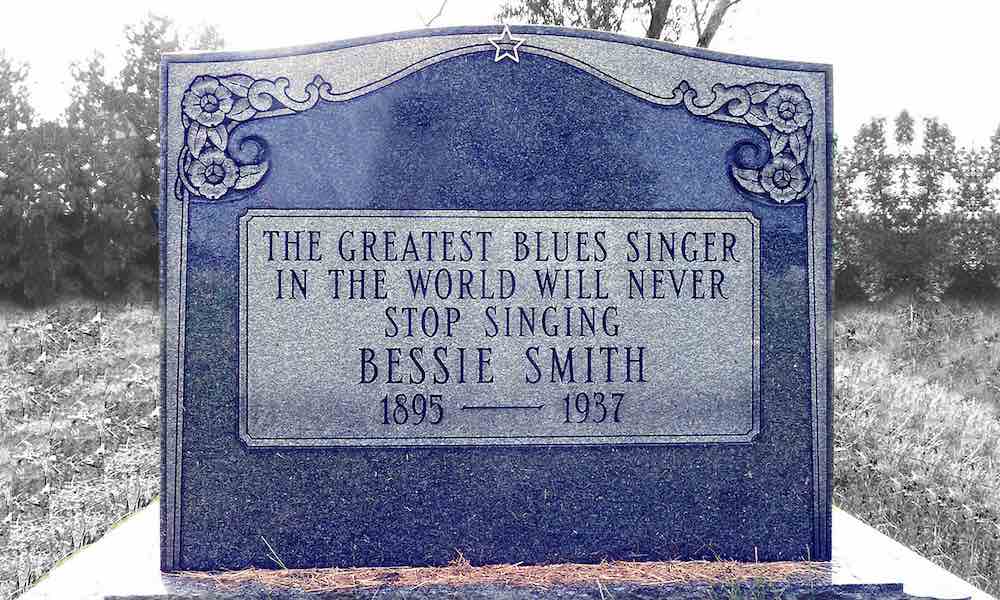
She died from injuries in a car accident in 1937, having not recorded a song in years, more than 5,000 people attended her funeral. Her grave had no headstone.  There was money for a headstone apparently, but her estranged husband spent it on something or someone else.

Bessie Smith grave

Janis Joplin helped buy Smith’s headstone in 1971…two weeks before her own untimely death. But the real story was the other person who helped buy the stone. That was Juanita Green… a little girl whom Smith once told to give up singing and stay in school.

Louis Armstrong: “I say, ‘Look here Bessie, you got change for a hundred? And she say, ‘Sure my man.’ She raised up her dress standing and there was, like, [you know,] how a carpenter keeps his nails? Man, so much money in the apron under her skirt that killed me.”

Danny Barker a New Orleans musician: “If you have a church background, like people who came from the South as I did, you would recognize a similarity between what she was doing and what those preachers and evangelists from there did, and how they moved people … Bessie did the same thing on stage.”

Baby Won’t You Please Come Home

I’ve got the blues, I feel so lonely
I’ll give the world if I could only
Make you understand
It surely would be grand

I’m gonna telephone my baby
Ask him won’t you please come home
‘Cause when you’re gone
I’m worried all day long

Baby won’t you please come home
I have tried in vain
Evermore to call your name
When you left you broke my heart
That will never make us part
Every hour in the day
You will hear me say
Baby won’t you please come home, I mean
Baby won’t you please come home

Baby won’t you please come home
‘Cause your mama’s all alone
I have tried in vain
Nevermore to call your name
When you left you broke my heart
That will never make us part
Landlord gettin’ worse
I’ve got to move May the first
Baby won’t you please come home, I need money
Baby won’t you please come home