Roy Orbison – Crying

When I played music as I was younger our singer could sing Journey songs and AC/DC songs (from both singers) but when it came to Orbison…a totally different story. Mark is a very good singer but he balked at Roy Orbison. He told me that couldn’t happen…at least not in the way Roy did it. 

Not only did the man have a once in a generation voice he was also known to be an extremely nice and good guy. He went through so many tragedies in his short life. He lived around 30 minutes from me but I never got to catch him in concert or just seeing him. 

There was a quote that Tom Petty gave…that when he joined the Wilburys he called his mom and told her “Mom, I’m in a band with Roy Orbison!” Not Mom I’m in a band with Bob Dylan or a Beatle George Harrison…no it was Roy. That voice was golden and magical but he paid for his success dearly as you will read below.

 In 1957, Orbison married his sweetheart, Claudette Frady. She was 17 at the time and he was 21. As the young couple’s romance was soon thrust into jeopardy given Orbison’s rapid rise to fame, cracks began to appear. In November 1964, Orbison divorced Claudette over her alleged infidelities. However, within ten months, the pair had reconciled their differences and were once more in a loving relationship. They had three children.

It started on June 6, 1966, when Claudette and Roy were riding motorcycles. Claudette hit the door of a pickup truck and was killed instantly. Orbison poured himself into his work after that. He wrote and toured but was out of step with the mid to late-sixties music.  It was in Birmingham, England in September 1968 when catastrophe struck once more. News reached Orbison that a fire had broken out at his home in Tennessee and that his two eldest sons had tragically passed away. His younger child went to live with his grandparents.

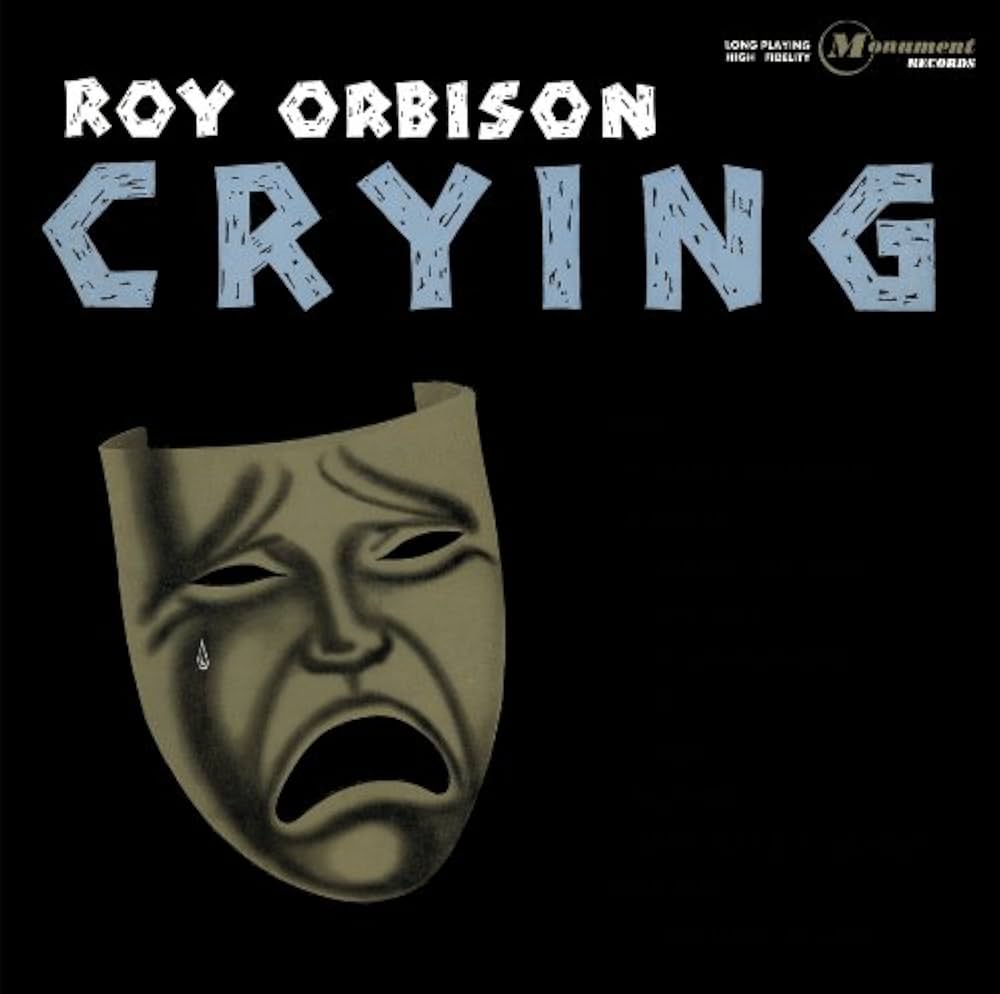
This song was written by Orbison and Joe Melson and released in 1961. It was a smash here, peaking at #2 on the Billboard 100, #3 in Canada, #11, and #25 in the UK. It would hit again in 1980-81, with Don Mclean covering it. It peaked at #5 on the Billboard 100, #1 on the Canadian Country Charts, #7 in Canada, #11 in New Zealand, and #1 in the UK. 

 Roy Orbison died suddenly on December 6, 1988, in Hendersonville Tennessee. His new album Mystery Girl would be released around a month and a half after Roy passed. The album was hugely successful peaking at #5 in America and #4 in Canada.

Crying

I was alright for a while, I could smile for a whileThen I saw you last night, you held my hand so tightWhen you stopped to say, “Hello”You wished me well, you couldn’t tell

That I’d been crying over youCrying over you then you said, “So long”Left me standing all aloneAlone and crying,

Crying, crying, cryingIt’s hard to understandThat the touch of your handCan start me crying

I thought that I was over youBut it’s true, so trueI love you even more than I did beforeBut darling what can I do?For you don’t love me and I’ll always be

Crying over youCrying over youYes, now you’re goneAnd from this moment onI’ll be crying, crying, crying, crying,Crying, crying, over you

Willie Nelson – Whiskey River

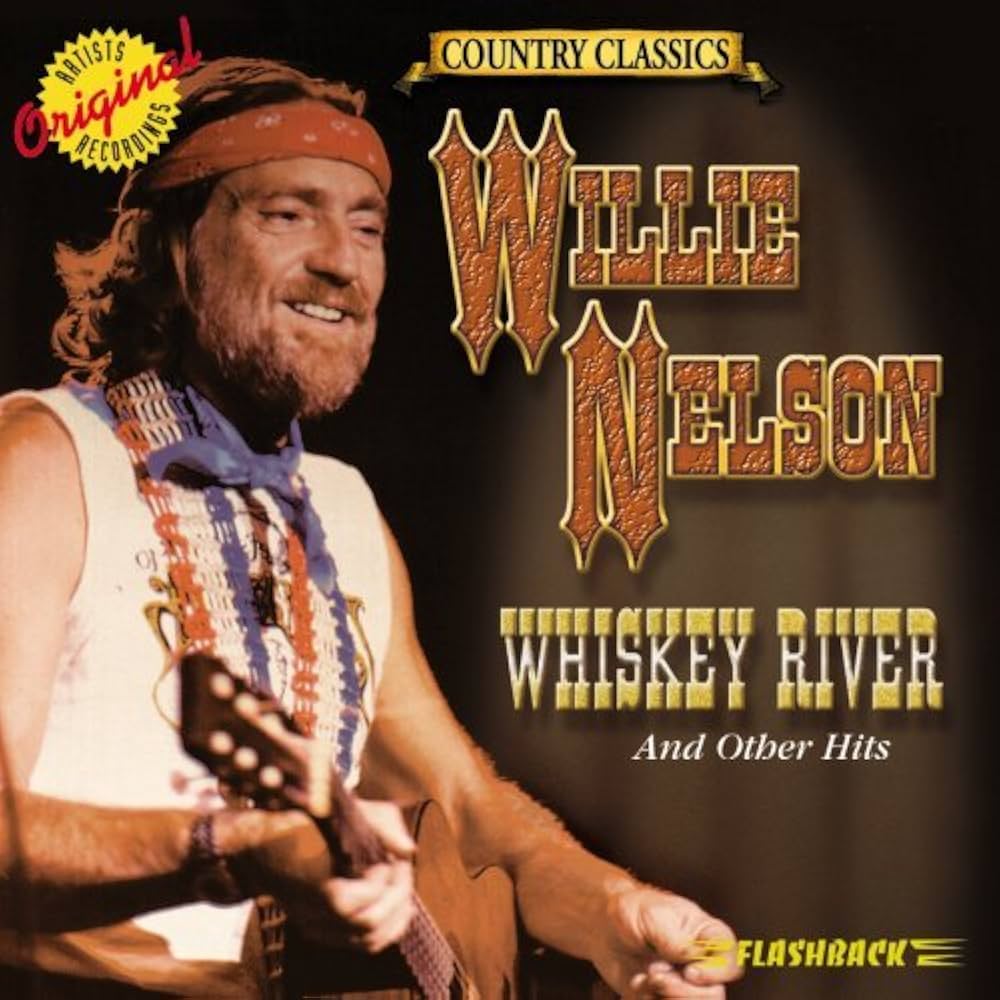
After watching that Maria Muldaur video last week with Leon and Willie included…I wanted to listen to some of Nelson’s songs this past week. This one I remember as a kid. This song was on the album Shotgun Willie. It was a turning point for Willie Nelson…he left Nashville’s mainstream country for the Country Outlaw scene. 

I remember Outlaw Country back when I was a kid. Waylon Jennings, Kris Kristofferson, Charlie Daniels, Johnny Cash, and Willie Nelson are who I remember the most. It was a no-frills version of country music. This was not as polished as what you heard on country radio. It had an authentic and raw sound that people were happy to hear. 

I always thought they brought the Rock image element and feel into country music with these artists. Many of them would have songs that crossed over to the pop charts like Waylon, Willie, and Kristofferson. 

Willie is an American icon, reaching people like Johnny Cash did in country music and beyond. He crosses genres quite well with his music and laid-back image. I also love his guitar Trigger. That guitar is an N-20 Martin. He bought the guitar in 1969 when someone stepped on his Baldwin Guitar. He had the pickups on the Baldwin moved to the Martin. Willie came to love the guitar, he said: “One of the secrets to my sound is almost beyond explanation. My battered old Martin guitar, Trigger, has the greatest tone I’ve ever heard from a guitar. … If I picked up the finest guitar made this year and tried to play my solos exactly the way you heard them on the radio or even at last night’s show, I’d always be a copy of myself and we’d all end up bored. But if I play an instrument that is now a part of me, and do it according to the way that feels right for me … I’ll always be an original”

Shotgun Willie marked a huge departure from Nelson’s previous work. Out came the Willie Nelson that we now know. His look and music changed. 

The song was originally written by Johnny Bush and Paul Stroud in 1972. Willie’s version would always be the definite version of the song. If you listen to Bush’s version compared to Willies…you will quickly see the difference between mainstream country and Outlaw country. This song did well for Nelson…it peaked at #12 on the Billboard Country Charts and #3 on the Canadian RPM Country Tracks charts. Bush was happy about Willie covering it…they were friends and Willie took the song to a huge audience. Outlaw country artists sought more creative control over their music, production, and image… breaking away from the Nashville establishment.

The late Toby Keith with “I’ll Never Smoke Weed With Willie Again” and yes it was a true story. 

Whiskey River

Whiskey River take my mindDon’t let her mem’ry torture meWhiskey River don’t run dryYou’re all I’ve got, take care of me

Whiskey River take my mindDon’t let her mem’ry torture meWhiskey River don’t run dryYou’re all I’ve got, take care of me

I’m drowning in a whiskey riverBathing my mem’ried mind in the wetness of its soulFeeling the amber current flowin’ from my mindAnd warm an empty heart you left so cold

Whiskey River take my mindDon’t let her mem’ry torture meWhiskey River don’t run dryYou’re all I’ve got, take care of me

I’m drowning in a whiskey riverBathing my mem’ried mind in the wetness of its soulFeeling the amber current flowin’ from my mindAnd warm an empty heart you left so cold

Whiskey River take my mindDon’t let her mem’ry torture meWhiskey River don’t run dryYou’re all I’ve got, take care of me

Elvis Presley – Blue Moon Of Kentucky

How I love this song. I’ve heard it so many times and now I think of Planes, Trains, and Automobiles when Martin and Candy are singing it in a burntout car they were driving. 

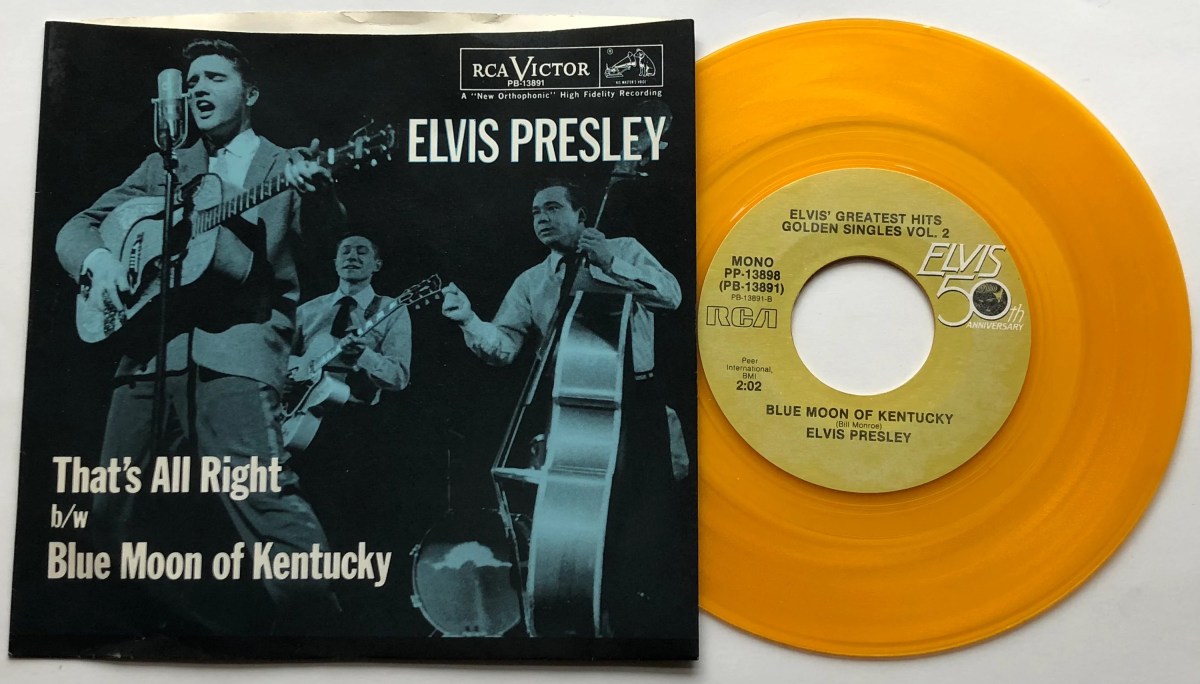
Elvis Presley recorded this song as the B-side to That’s All Right in 1954, marking his debut single with Sun Records. It was recorded during his second session with the label on July 6, 1954. Elvis, guitarist Scotty Moore, and bassist Bill Black reimagined the song in a faster, upbeat, rockabilly style. This transformation gave the song a fresh, raw feel that differed greatly from its bluegrass origins.

Presley’s recording became the best-known version of the song and is an early example of what was to become known as Rockabilly, a combination of Blues and Country together with an uptempo beat. The single was very popular locally, helping to build Elvis’s reputation in the Memphis area and laying the groundwork for his later success. DJ’s have said they would play the single multiple times over and over again when it was released. 

Bill Monroe wrote this song in 1946 and recorded the first version playing mandolin backed by his band, the Blue Grass Boys. After the Presley version was released, Monroe recut the song and added both styles to it.

Elvis Presley got an invite to the Grand Ole Opry soon after this, and he was fearful of Monroe’s reaction to his version of the song. He sought out the older Opry star backstage and apologized to him for taking such liberties. Monroe reacted with generosity. Monroe later admitted Presley’s version of “Blue Moon of Kentucky” gave him very big songwriter royalty checks. This song is very important in history… celebrated as a groundbreaking moment where country music met rock and roll with a resounding success. 

The state of Kentucky made this their official bluegrass song. Now let’s listen to the song and listen to the flip side performed by Elvis fan Paul. 

Paul McCartney recorded the Arthur Crudup blues classic, That’s All Right, Mama, with Elvis Presley’s original band members, Scotty Moore (guitar) and DJ Fontana (drums). 

Blue Moon of Kentucky

Blue moon, blue moon, blue moon,
keep shining bright.
Blue moon, keep on shining bright,
You’re gonna bring me back my baby tonight,
Blue moon, keep shining bright.

I said blue moon of Kentucky
keep on shining,
Shine on the one that’s gone and left me blue.
I said blue moon of Kentucky
keep on shining,
Shine on the one that’s gone and left me blue.

Well, it was on one moonlight night,
Stars shining bright,
Wish blown high
Love said good-bye.

Blue moon of Kentucky
Keep on shining.
Shine on the one that’s gone and left me blue.

Well, I said blue moon of Kentucky
Just keep on shining.
Shine on the one that’s gone and left me blue. 
I said blue moon of Kentucky
keep on shining.
Shine on the one that’s gone and left me blue.

Well, it was on one moonlight night,
Stars shining bright,
Wish blown high
Love said good-bye.

Blue moon of Kentucky
Keep on shining.
Shine on the one that’s gone and left me blue.

Maryann Price – Sweetheart (Waitress in a Donut Shop)

If that title looks familiar, we covered Maria Muldaur yesterday with her album Waitress in a Donut Shop. This is where Muldaur got the name for it. She released it a year after this version by Dan Hicks and His Hot Licks. Dan didn’t sing this but Maryann Price did. Her voice is very unique when she gets going. She doesn’t sound like everyone else.

Because of Christian, Randy, and CB, I have been really connecting with the jazz songs they have posted in the past and talked about. This is why I still blog because I love expanding my musical range and tastes. I will have to admit…as much as I like Maria Muldaur’s version of it…this version swings a little more.

I knew nothing about her until in the past few weeks when CB told me about Dan Hicks and his band The Hot Licks. She can easily cross genres and do about anything from Jazz to Pop to Swing. She has worked in many bands from Dan Hicks and The Hot Licks, Asleep At The Wheel, The Kinks, and more. I like her because she is different and caught my attention. Let’s find out a little about her.

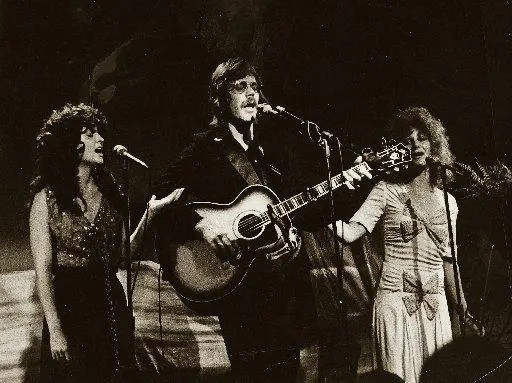
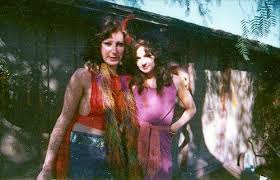
At the age of 17, she was singing commercial jingles in her hometown of Baltimore. She moved on to sing jazz in Las Vegas and then moved to San Francisco in 1969. She soon joined Dan Hicks and The Hot Licks and along with Naomi Ruth Eisenberg (“The Lickettes”) as singers. 

The Licketts
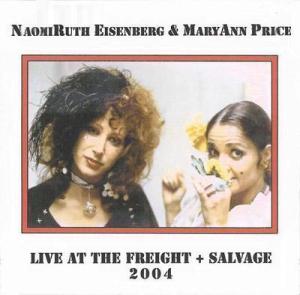
Naomi Ruth Eisenberg and Maryann Price

In 1973 the band broke up and when they did…Ray Davies pounced on that opportunity. Davies asked her to come to England and record with the band. She stayed with the Kink’s for a year, touring extensively and recording…she sang on the album Preservation Act 2. When that was finished she returned to America and formed the Girtones with former Dan Hicks and The Hot Licks guitarist John Girton. In 1980 she joined the Texas band Asleep At The Wheel. 
 She has since gone on to a successful solo career based in Austin, Texas, and also reunited with Naomi Ruth Eisenberg for a live album in 2004 called Live At The Freight + Salvage.

Now back to the song at hand. This was on the Dan Hicks and His Hot Licks album Last Train To Hicksville released in 1973. I’ve been listening to this album on Saturday and it’s a combination of all kinds of music with Dan and the Licketts singing. I hear swing, jazz, pop, and more. The musicianship on this album is top-notch. The song was written by the songwriter Ken Burgan. Maryann is still going strong in Austin Texas.

Sweetheart (Waitress in a Donut Shop)

Sweetheart, but it doesn’t beat for meIt beats softly in love but not for meSweet lips I know I’ll never kissYou’re what I’m afraid I must miss

I’m a waitress in the donut shopI see him on his morning stopHe talks of love but he’s thinking of his sweetheartShe gives him a rough time

He gives me his dime and then partsSoft sighs, soft and pretty moansIn dreams I can make you my own

I’m a waitress in the donut shopI see him on his morning stopHe talks of love but he’s talking about his sweetheartShe gives him a rough time

He gives me his dime and then partsSoft sighs, soft and pretty moansIn dreams I can make you my ownIn dreams I can make you my own

Dan Hicks – I Scare Myself

A while back CB introduced me to Dan Hicks. The first thing I noticed about Dan was that he was countryish but not a standard country artist at all. He had this Country, Jazz, Bluegrass, Folk, and more thrown in there going on. I did notice he was off-centered compared to other artists. I’m thinking of a Zappa and Beefheart kind of artist with different influences.  He is one of the most fascinating artists I’ve run across. He also injected a great sense of humor in some of his songs. 

Dan HIcks was from Arkansas but his family moved to California when he was a child. He got interested in music and started off as a drummer. He transitioned to playing guitar and singing, and then he shifted toward folk and country music. He liked a little of everything from swing jazz to Western swing to folk music.

In 1965, Hicks joined The Charlatans (not the English Band), one of the pioneering bands in the San Francisco psychedelic rock scene. Though the group never achieved big commercial success, they helped create the counterculture sound. Hicks’ time with The Charlatans was short, as he eventually left to pursue his own musical direction.

In 1967 he formed Dan Hicks and His Hot Licks. Ironic that the band didn’t use a drummer. The Hot Licks broke up in 1973, but Hicks continued to perform as a solo artist and reformed the group several times in later years.

This song was on his 1972 album Striking It Rich along with another song at the bottom of the post called Moody Richard (The Innocent Bystander). He has released 16 albums between 1969 and 2013. He passed away on February 6, 2016, from liver cancer, leaving behind a legacy of musical innovation and humor that continues to resonate with fans and musicians alike.

He didn’t avoid mainstream completely. I did find a spot he did on the Flip Wilson Show. He was also an actor at times as well as he appeared in a few movies and television shows. 

I Scare Myself

I scare myself
When I’m without you
I scare myself
The moments that you’re gone
I scare myself
When I let my thoughts run

And when they’re runnin’
I keep thinking of you
And when they’re runnin’
What can I do?

I scare myself
And I don’t mean lightly
I scare myself
It can get frightenin’
I scare myself
To think what I could do
I scare myself
It’s some kinda voodoo

And with that voodoo
I keep thinking of you
And with that voodoo
What can I do?
See pop shows near Nashville
Get tickets as low as $86

You might also like
The Laughing Song
Dan Hicks & The Hot Licks
Lovin’ in My Baby’s Eyes
Taj Mahal
’Long Come A Viper
Dan Hicks & The Hot Licks

But it’s oh so, so, so different
When we’re together
And I’m oh so so much calmer, I feel bettеr
For the stars have crossed our paths forеver
And the sooner that you realize it, the better

Then I’ll be with you
And I won’t scare myself
And I’ll know what to do
And I won’t scare myself
And then I’ll think of you
And I won’t scare myself
And then my thoughts’ll run
And I won’t scare myself

Then I’ll be with you
And I won’t scare myself
And I’ll know what to do
And I won’t scare myself
And I’ll think of you
And I won’t scare myself
And my thoughts will run
And I won’t scare myself…

Guy Clark – L.A. Freeway

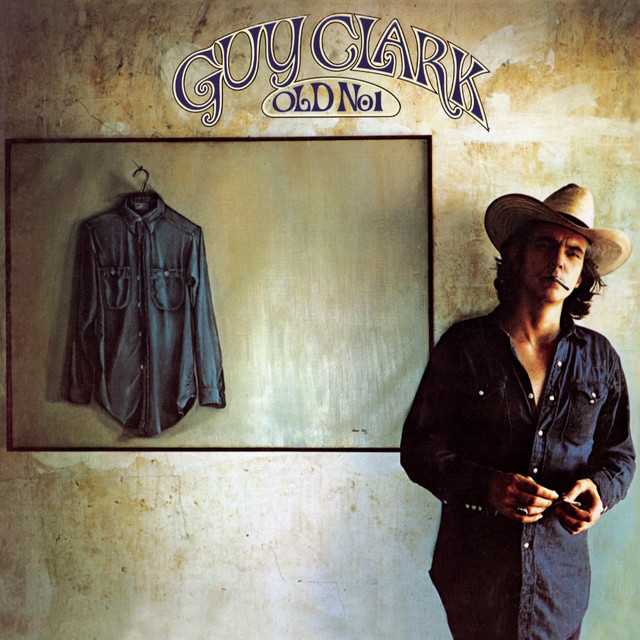
In the past couple of years, I’ve been listening to more and more of the Texas style singer/songwriters and I can’t get enough. I keep looking for more but there are a few I always come back to…Guy Clark, Townes Van Zant, Jerry Jeff Walker, and Steve Earle.  In 1975 Guy Clark released this song on his first album Old No. 1 and eventually released 13 studio albums. 

In the 1960s, Guy Clark tried his luck in the California music scene. He also built and repaired guitars and had a shop in San Francisco in 1969. In 1971 he was signed as a songwriter by Sunbury Music in Los Angeles, he decided to relocate to the company’s Nashville office in 1971. His arrival helped usher in a migration of new songwriting talent to the city.

Clark wrote this song while living in Los Angeles in the late 1960s. He and his wife, Susanna Clark, lived in a small, rundown apartment, and they felt out of place in the city. They wanted to leave Los Angeles and return to Texas, where he felt more at home.

The idea for the song reportedly came to Clark while he was driving on the freeway, scribbling lyrics on a paper bag. The line “pack up all your dishes, make note of all good wishes” showed his desire to escape the chaotic nature of L.A. at the time.

Jerry Jeff Walker was the first to record the song on his self-titled album in 1972. Walker’s version of this song peaked at #98 on the Billboard 100 so Walker popularized it. 

L.A. Freeway

Pack up all your dishesMake note of all good wishesAnd say goodbye to the landlord for meThat son of a bitch has always bored me

Throw out them LA papersAnd that mouldy box of vanilla wafersAdios to all this concreteGonna get me some dirt road back streets

If I can just get off ofI’ll be down the road in a cloud of smokeTo some land I ain’t bought, bought, bought

And it’s, here’s to you old skinny DennisThe only one I think I will missI can hear that old bass singingSweet and low, like a gift you’re bringing

Play it for me one more time, nowGot to give it all you we can nowI believe every thing you’re sayingAnd just to keep on, keep on playing

If I can just get off of this L.A. freewayWithout gettin’ killed or caughtI’ll be down the road in a cloud of smokeTo some land I ain’t bought, bought, bought

And you put the pink card in the mailboxLeave the key in the front door lockThey’ll find it likely as notI’m sure there’s somethin’ we have forgot

Oh Susanna, don’t you cry, babyLove’s a gift that’s surely handmadeWe got somethin’ to believe inDon’t you think it’s time we’re leavin’?

If I can just get off of this LA freewayWithout gettin’ killed or caughtI’ll be down the road in a cloud of smokeTo some land I ain’t bought, bought, bought

If I can just get off of this LA freewayWithout gettin’ killed or caughtDown the road in a cloud of smokeTo some land I ain’t bought

So pack up all your dishesMake note of all good wishesAnd say goodbye to the landlord for meThat son of a bitch has always bored me

Eilen Jewell – You Wanna Give Me A Lift

I always like hearing good country music and I like older music a lot…this is a fantastic cover. Eilen Jewell covers the song while keeping the original feel but injecting some great guitar shine in this. It has an undercurrent of rockabilly mixed with country. I can’t stress enough how she can shed one style and walk into another. 

Eilen Jewell combines Americana, country, folk, blues, and rockabilly in her music. Her influences included Bob Dylan, Lucinda Williams, and Billie Holiday. She released her debut album in 2006 called Boundary County. Her second album, Letters from Sinners & Strangers (2007), brought her wider recognition. She has made an incredible 13 albums since 2006. 

This song was off her 2010 album Butcher Holler: A Tribute to Loretta Lynn. The album has 12 Lynn songs and Jewell hits the mark with the album. Now lets switch gears here…Jewell made a blues album in 2017 called Down Hearted Blues. What a change, she has a great ability to slip into one style and the next. I’ll have one from this album at the bottom of the post. 

Loretta Lynn and her sister Peggy Sue Wells wrote this song. She recorded it in 1969 at the Brandley’s Barn studio in Mount Juliet Tennessee. The song peaked at #6 on the Billboard Country Charts and #4 on the Canadian Country Charts in 1970. As my readers know, I adore this woman and she was one of the most important songwriters of the 20th century. 

Eileen Jewel on Loretta Lynn: At first it was really just her voice when I heard Honky Tonk Girl for the first time in a cafe in Boston. I just froze when I heard that., I just thought that’s the voice for me, that’s the essence of classic country. Then, the more I got to listen to her stuff, the more I noticed that she wrote so fearlessly. She just kept rocking the boat and was a genius, sassy songwriter.


This song is on her blues album Down Hearted Blues. 

You Wanna Give Me A Lift

Well, I’m game for just about anything
But the game you’ve named I ain’t gonna play
You say you take a little drink and we’ll go for a ride on a star
You wanna give me a lift but this ol’ gal ain’t a goin’ that far

That happy pill you’re takin’ you say is a little weak
And you wanna give me one so you say I won’t go to sleep
Well your hands’re a gettin’ friendly but I know exactly where they are
You wanna give me a lift but this ol’ gal ain’t a goin’ that far

You wanna give me a lift but this ol’ gal ain’t a goin’ that far
I’m a little bit warm but that don’t mean I’m on fire
You wanna take me for a ride in the back seat of your car
You wanna give me a lift but this ol’ gal ain’t a goin’ that far

You wanna give me a lift but this ol’ gal ain’t a goin’ that far
I’m a little bit warm but that don’t mean I’m on fire
You wanna take me for a ride in the back seat of your car
You wanna give me a lift but this ol’ gal ain’t a goin’ that far

You wanna give me a lift but this ol’ gal ain’t a goin’ that far…


Carlene Carter – Every Little Thing

Thank you run-sew-read for making a comment and including this song. I have had this one in the draft section for a year. I started to really pay attention to Carter in the late 80s and early 90s. 

I first heard her album C’est C Bon and it was alright but it had a pure 80s pop sound. By the time the ’90s came around, I could hear a change and I liked it. I heard a little more of her country roots plus a bit of pop in the best way possible. 

Carlene Carter was the daughter of June Carter Cash and her first husband Carl Smith. She later married Nick Lowe. She grew up as part of the Carter Family legacy which strongly influenced her musical style, blending traditional country with contemporary pop.

Every Little Thing was released in 1993 as the lead single from Carlene Carter’s album Little Love Letters. It was produced by Howie Epstein and released by Giant Records. The song peaked at #3 on the Billboard US Hot Country Songs and #3 on the Canada Country Charts. 

The song was on her Little Love Letters album released in 1993. It peaked at #35 on the Billboard Country Charts and  #2 on the Canadian Country Charts. 

Every Little Thing

I hear songs on the radioThey might be fast or they might be slowBut every song they play’s got me thinkin’ ’bout youI see a fella walkin’ down the streetHe looks at me and he smiles real sweetBut he don’t matter to me‘Cause I’m thinkin’ ’bout you

Every little dream I dream about youEvery little thought I think about youDrives me crazy when you go awayI oughta keep you locked up at homeAnd like a wild horse I want to break youI love you so much I hate youEvery little thing reminds me of youHoney when you leave me here all alone

My tongue gets tied when I try to talkMy knees get weak when I start to walkSo I might as well stay home and keep thinkin’ ’bout you“the young and the restless” on my tv setThat’s just like us when we first metAnd when they start to kissin’Got me thinking bout you

Every little dream I dream about youEvery little thought I think about youDrives me crazy when you go awayI oughta keep you locked up at homeAnd like a wild horse I want to break youI love you so much I hate youEvery little thing reminds me of youHoney when you leave me here all alone

Every little dream I dream about youEvery little thought I think about youDrives me crazy when you go awayI oughta keep you locked up at homeAnd like a wild horse I want to break youI love you so much I hate youEvery little thing reminds me of youHoney when you leave me here all alone

Kris Kristofferson – Sunday Mornin’ Comin’ Down

I first heard Kristofferson as a kid with Why Me on the radio during the seventies. I also remember him on SNL with his then-wife Rita Coolidge. You could tell Kris had been having some fun but it sounded good. Then I found Janis Joplin’s Me and Bobby McGee and I found out that Kris wrote that song…I became a fan. Plus he was one of the Outlaws in country music that I really liked. 

In the sixties, Kris was working as a janitor in Nashville while living in a run-down tenant house. He was also a janitor at Columbia Records at the same time. This might seem normal for a songwriter who was trying to make a mark but the man had something else as well. He was a Rhodes Scholar who studied at Oxford University earning a master’s degree in English language. He also served as a captain in the U.S. Army, where he became a helicopter pilot, in addition to having completed U.S. Army Ranger School. The guy was highly talented and very smart.

He befriended Johnny’s wife, June Carter. June liked Kristofferson, and would often sneak demo tapes of his songs in her purse to bring home to Johnny. At night, she’d play the tapes for him in their bedroom above Old Hickory Lake in Tennessee. Every night Cash would listen and throw them out the bedroom window into the lake below. 

There are many stories about how Johnny got the song…but this is the version that Johnny told. At the time, Kristofferson was also working part-time as a helicopter pilot for the Army Reserve. On a routine flight training mission, Kristofferson veered off his course and headed for Cash’s home. After landing the chopper on Cash’s lawn, he walked up to the home with the demo of “Sunday Morning Coming Down” in hand. Cash said he heard the chopper land and walked out to find Kristofferson walking up to him.

“As I approached, out stepped Kris Kristofferson, with a beer in one hand and a tape in the other,” Cash said. “I stopped, dumbfounded. He grabbed my hand, put the tape in it, grinned and got back into the helicopter and was gone, a bit wobbly, but almost straight up, then out high above the lake where all his songs lay on the bottom. He disappeared through the clouds. I looked at the tape of “Sunday Morning Coming Down” and “Me And Bobby McGee.”

The first version of this song was not by Johnny Cash. Ray Stevens did the first version of the song. Ray’s version peaked at #55 on the Country Charts in 1969. Johnny Cash did the most successful version releasing it in 1970. The song peaked at #1 on the Billboard Country Charts, #1 on the Canada Country Charts, and #30 in Canada on the RPM charts. 

Kris passed away on September 28, 2024. 

Sunday Mornin’ Comin’Down

Well I woke up Sunday morning,
With no way to hold my head, that didn’t hurt
And the beer I had for breakfast,
Wasn’t bad so I had one more, for dessert
Then I fumbled through my closet,
For my clothes and found my cleanest dirty shirt
And I shaved my face and combed my hair,
And stumbled down the stairs to meet the day

I’d smoked my brain the night before on cigarettes and songs
That I’d been pickin’
But I lit my first, and watched a small kid cussin’ at a can
That he was kickin’
Then I crossed the empty street and caught the Sunday smell
Of someone fryin’chickin
And it took me back to somethin’ that I had lost somehow,
Somewhere along the way

[Chorus]
On the Sunday morning sidewalk, wishin’ Lord that I was stoned
Cause there is something in a Sunday, makes a body feel alone
And there is nothing short of die’n, half a lonesome as the sound
On the sleepin’ city sidewalks, Sunday morning coming down

In the park I saw a daddy,
With ‘w(?)’ laughin’ little girl who he was swingin’
And I stopped beside a Sunday school,
And listened to a song that they were singin’
Then I headed back for home and somewhere far away
A lonely bell was ringin’
And it echoed through the canyons like the disappearing dreams
Of yesterday

[Chorus]
On the Sunday morning sidewalk, wishing Lord that I was stoned
Cause there is something in a Sunday, make a body feel alone
And there is nothing short of die’n, half a lonesome as the sound
On the sleepin’ city sidewalks, Sunday morning coming do

Bill Haley – Crazy Man, Crazy

In my first 6 years of blogging, I posted one Bill Haley song. Now in the past 5-6 months, this makes my 3rd. That’s what happens when Max reads books.

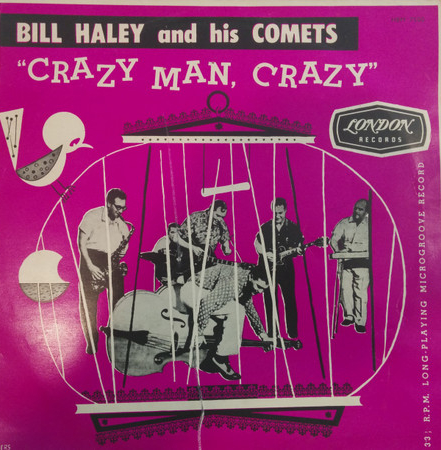
If there was ever a fifties phrase…this is it. This song was released in 1953…two years before the popularity of Rock Around The Clock. It was Haley’s first time in the top twenty. He said he got this phrase from a teenager when he asked her if she liked what she heard in rock and roll.

The song has that western swing/big band sound to it…but also had its toe in the rock and roll water. This song peaked at #12 on the Hot 100 and #66 on the R&B Charts in 1953.

Haley always dreamed of fame but he was extremely private. Those two things don’t go together well. He turned down opportunities to make himself more known time after time. He originally said no to having Rock Around The Clock in a movie. He had to be talked into it. Coke also offered him 250,000 dollars (2,667,967.13 now) to appear in a few advertisements when he and the Comets needed the money….he again said no. All in all, he was unable to capitalize on his popularity like his peers were able to do.

Things started to fall apart in the late ‘50s, mostly due to mismanagement and Bill’s loyalty to friends from the neighborhood who were way over their heads in business affairs.

He has a lot to be remembered for…he joined Country, Big Band,  and R&B and called it “Country Jive.” He remained popular in the UK. His last tour there in 1979  included an appearance before the Queen on the Royal Variety Performance.

The B-Side… What’cha Gonna Do?

Crazy Man, Crazy

Crazy man crazyCrazy man crazyCrazy man crazyOh, man, that music’s gone, goneSaid crazy man crazyCrazy man crazyCrazy man crazyOh, man, that music’s gone, gone

When I go out and I want a treatI find me a band with a solid beatTake my chick and we dance aboutWhen they start rockin’, boy, we start to shout, we shout

Crazy man crazyCrazy man crazyCrazy man crazyMan, that music’s gone, goneGo, go, go everybodyGo, go, go everybodyGo, go, go everybodyGo, go, go, go, go, go, go

Crazy man crazyCrazy man crazyCrazy man crazyMan, that music’s gone, goneSaid crazy man crazyCrazy man crazyCrazy man crazyMan, that music’s gone, gone

They play it soft, they play it strongThey play it wild and they play it longThey just keep playin’ ’til the break of dayTo keep them rockin’ all you gotta say is

Crazy man crazyCrazy man crazyCrazy man crazyMan, that music’s gone, goneGo, go, go everybodyGo, go, go everybodyGo, go, go everybodyGo, go, go, go, go, go, go

Butch Hancock – To Each His Own

After listening to the Flatlanders…I’ve listened to Joe Ely and Johnnie Dale Gilmore but never Butch Hancock. I was struck by his voice and was reminded a little of Dylan, Prine, Buddy Holly, and a little of Steve Earle at times.

In the early 1970s, Hancock co-founded The Flatlanders with fellow Lubbock musicians Joe Ely and Jimmie Dale Gilmore. The group initially struggled to find commercial success but later became famous within the Americana and alternative country scenes. Hancock has been a very good songwriter. Artists who covered him include Willie Nelson, Joe Ely, Jimmie Dale Gilmore, The Texas Tornados, Emmylou Harris, Jerry Jeff Walker, and more.

This song was on the album Eat Away The Night which was released in 1994. He has released 12 albums since 1978. This man is worth checking out. He will never make the top 40 but he has some quality songs that are worth hearing. This song has his voice and also a twangy guitar that sold it for me.

As I’ve been perusing his catalog…I’ve noticed a lot of storytelling, a sense of humor, good lyrics plus that voice.  The album’s sound is powered by a classic rock ‘n’ roll combination of a Hammond B-3 organ, electric guitars, an acoustic, harmonica, and steel guitar at the edges for country and folk flavorings.

The title song closes the album, and I will include that above To Each His Own. Eats Away the Night sounds like something a musician would play at four in the morning after a six-hour gig. A quiet, restrained, and thoughtful tune to settle down with. A good way to end a night of music-making and an album. It’s almost a solo performance, with only a slide guitar accompanying Hancock’s voice and guitar.

Here is a link to the complete album.

To Each His Own

Down in the pit of my stomach
I knew it couldn’t last…
It left me just as fast…
I tried to blame it on the moon above…
As I walked the beach alone
But all I heard were these few words…
To each his own

Down in the heart of the matter…
I first lost touch with you…
But for rosy and her constant chatter…
There was not much i could do
The world I tried to reach with her…
You can only reach alone
I even heard rose say to herself…
To each his own…

I’ve seen survival’s violent side…
I’ve seen some beast of prey…
Bring down some beasts of burden…
That just got in their way…
Some tore the hide…some chewed the
Flesh…right down to the bone
Some stopped there but some kept going…
To each his own…

I’ve run these things around my mind…
I’ve run ’em through my heart
In the mighty dream of life, i seem…
To play the strangest part
If I’m buried when I die…
Carve this on my stone…
Take a little here and leave a little there but
give…to each his own…

Merle Haggard – Sing Me Back Home

One of the many Haggard songs that my dad would play. This one along with a song called Sam Hill I heard a lot when I was a child. Sing Me Back Home was released in 1967, and it became one of Haggard’s most enduring hits.

Most people know that he spent his early adulthood behind bars for a failed attempt at robbery. While in San Quentin State Prison, Haggard wrote many songs while dreaming of freedom and life beyond the bars of a cell.

Sing Me Back Home was inspired by his fellow inmates James Rabbit and Caryl Chessman. Rabbit was executed in 1961 for killing a California Highway Patrolman, and Chessman was the first modern American executed for a non-lethal kidnapping.

Haggard and James Rabbit hatched a plan one night to escape (they would hide inside a desk he was building in the prison furniture factory), though at the last moment, Rabbit advised Haggard not to take part in the plan. Rabbit escaped, was recaptured, killed an officer, and was brought back to San Quentin to be executed. It was the first of many events to change something in Haggard’s criminal ways.

It is an incredibly sad song and you get it with the first two lines of the song. The warden led a prisoner down the hallway to his doom, I stood up to say goodbye like all the rest.  The song was on his Sing Me Back Home album released in 1968. The album peaked at #1 on the Billboard Country Album Charts. The song peaked at #1 on the Billboard Country Charts and #7 on the Canadian Country Charts.

Merle Haggard: “Something happened to me there, I came to the fork in the road and took it, you might say. And I kind of started back in the other direction, trying to make something out of myself rather than to dig myself in a deeper hole.”

Sing Me Back Home

The warden led a prisoner down the hallway to his doomI stood up to say goodbye like all the restAnd I heard him tell the warden just before he reached my cellLet my guitar playing friend, do my request

Let him sing me back home with a song I used to hearMake my old memories come aliveTake me away and turn back the yearsSing me back home before I die

I recall last Sunday morning a choir from ‘cross the streetCame to sing a few old gospel songsAnd I heard him tell the singersThere’s a song my mama sangCan I hear once before we move along?

Sing me back home, the song my mama sangMake my old memories come aliveTake me away and turn back the yearsSing me back home before I die

Sing me back home before I die

….

Flatlanders – Dallas

Well Dallas is a rich man with a death wish in his eyes

What a find this was for me. When CB recommended Joe Ely a while back, I found that he played in this band from 1972 until now. Their music is not the tears in my beer Nashville country music that you heard at the time and sometimes now. I would call it Americana…they have developed a big following following over the years. Comparing their music to country music at the time…this sounds like it came from a different planet.

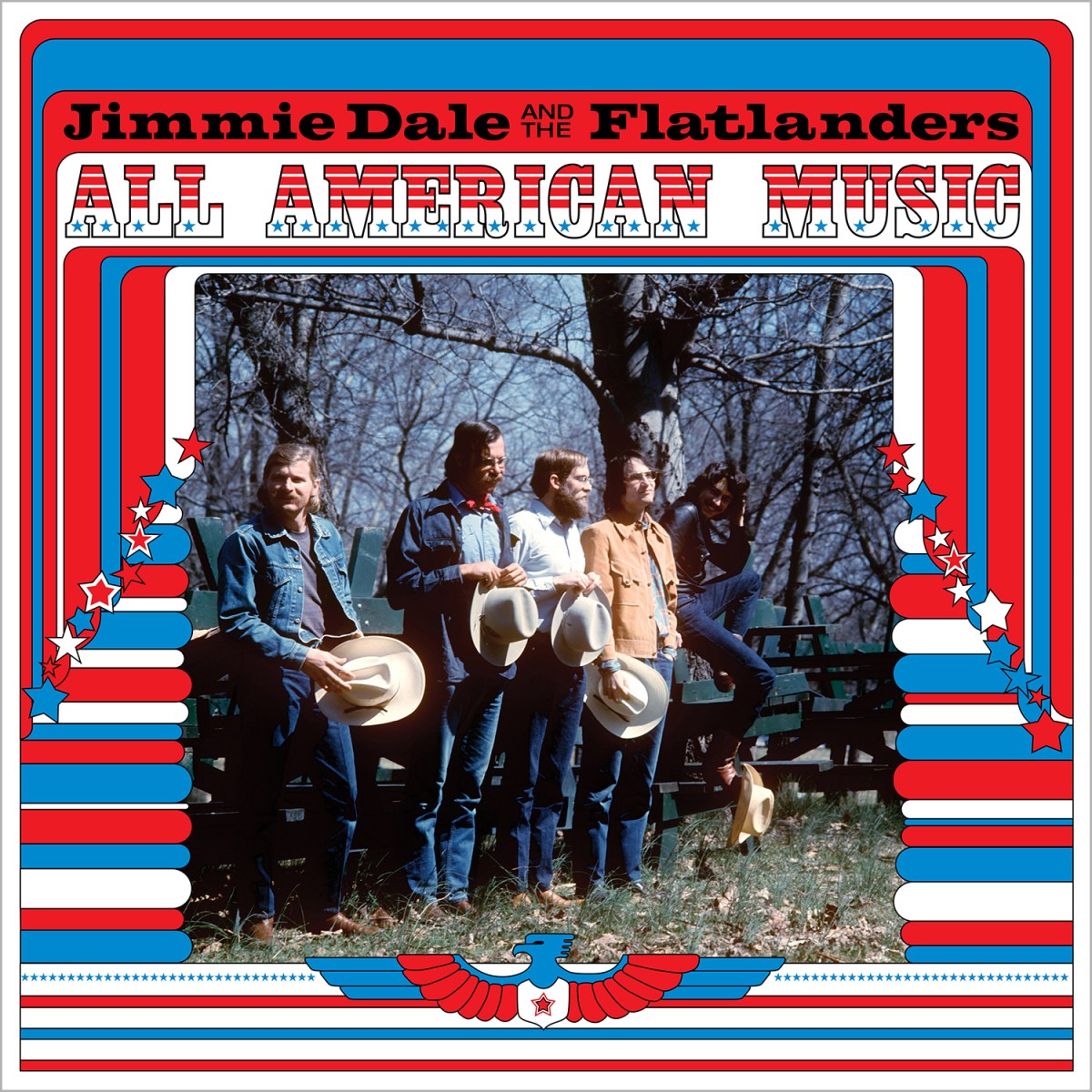
They were formed in 1972 by three singer-songwriters: Jimmie Dale Gilmore, Joe Ely, and Butch Hancock. The band was born out of the music scene in Lubbock, Texas, where all three members grew up. They recorded their first album, All American Music in Nashville. Initially, the album was released only as an 8-track tape by Plantation Records, with the title “Jimmie Dale and the Flatlanders.” This limited release received little attention at the time, and the band members soon went their separate ways to pursue solo careers.

They then released an album in 1980 called One More Road. Their debut album was re-released in 1990 as More a Legend Than A Band after all of them had some success during their solo careers. They have released 9 albums including a live album in 2004 from 1972 to 2021. Their last album was released in 2021 called Treasure Of Love. They started to chart in the music charts in the 2000s.

Dallas was on their debut album All American Music released in 1972. This song was written by Jimmie Dale Gilmore. The track has a cool tool/instrument on it that always interested me…Steve Wesson is playing a saw on this. Take a listen to this and I included a much more recent live cut from Austin City Limits.

In 2016 The Flatlanders were voted into the Austin Music Awards Hall of Fame.

Jimmie Dale Gilmore: “The hook line of the song occurred to me while I was actually flying into Dallas, the line just presented itself to me. I had all those mixed feelings about the city and the song just came gradually. I’ve never felt that I’ve got it down right though. I’ve always been a perfectionist about that song. Joe also recorded it several times before he got the version that they put on the Musta Notta Gotta Lotta album. I’ve had a strange relationship with the song. I’ve had periods when I wish I’d never written it, then I’ve rediscovered it, looking at it through different eyes.”

Jimmie Dale Gilmore: “It so happened that in 1970 we all happened to be back in Lubbock, I had been in Austin working with a band called the Hub City Movers. Joe had been traveling in Europe and Butch had been in San Francisco. We just coincidentally moved back to Lubbock at the same time and started playing together. There was no design to put a band together as such but the chemistry was so great that it just took on a life of its own. We all had a common love of folk music, country and country blues-but then we also loved the Beatles. We had very eclectic taste. There was great radio in Lubbock at that time especially the border stations at night. We listened to it all.”

Joe Ely on the album:  “It’s pretty crude but there’s a certain flavor about the record. It had an eerie, lonesome sound which reflected our roots in Lubbock and the wind, the dust and the environment.”

Music Critic Robert Christgau: In 1972, Joe Ely, Butch Hancock, and leader Jimmie Dale Gilmore–drumless psychedelic cowboys returned to Lubbock from Europe and San Francisco and Austin–recorded in Nashville for Shelby Singleton, and even an eccentric like the owner of the Sun catalogue and “Harper Valley P.T.A.” must have considered them weird. With a musical saw for theremin effects, their wide-open spaceyness was released eight-track only, and soon a subway troubadour and an architect and a disciple of Guru Mararaji had disappeared back into the diaspora. In cowpunk/neofolk/psychedelic-revival retrospect, they’re neotraditionalists who find small comfort in the past, responding guilelessly and unnostalgically to the facts of displacement in a global village that includes among its precincts the high Texas plains. They’re at home. And they’re lost anyway. A-

Dallas

Did you ever see Dallas from a DC-9 at night?
Well Dallas is a jewel, oh yeah, Dallas is a beautiful sight
And Dallas is a jungle but Dallas gives a beautiful light
Did you ever see Dallas from a DC-9 at night?

Well, Dallas is a woman who will walk on you when you’re down
But when you are up, she’s the kind you want to take around
But Dallas ain’t a woman to help you get your feet on the ground
And Dallas is a woman who will walk on you when you’re down

Well, I came into Dallas with the bright lights on my mind,
But I came into Dallas with a dollar and a dime

Well Dallas is a rich man with a death wish in his eyes
A steel and concrete soul with a warm hearted love disguise
A rich man who tends to believe in his own lies
Yeah Dallas is a rich man with a death wish in his eyes

Well, I came into Dallas with the bright lights on my mind,
But I came into Dallas with a dollar and a dime

Did you ever see Dallas from a DC-9 at night?
Well Dallas is a jewel, oh yeah, Dallas is a beautiful sight
And Dallas is a jungle but Dallas gives a beautiful light
Did you ever see Dallas from a DC-9 at night?

George Jones – The Race Is On

I first heard this song through Jason and the Scorchers giving it a high-octane slant. On my Car Songs post the other day Lisa recommended this one and instead of waiting to include it in part 3…I thought I would write a post on it.

When I think of George Jones I think of the voice. I would be lying if I didn’t also say that I think of the lawnmower story and some of the stories that I heard from some session musicians. My guitar tech had many come in his shop and they would tell stories about the country stars. They always spoke highly of George Jones, adding he was down-to-earth and a good guy. He could be a lot of fun and wild…and match his rock counterparts.

It has often been said that he had the purest country voice ever. Frank Sinatra called Jones “The second-best singer in America.” When Keith Richards (who is a huge Jones fan) heard this, he asked…who’s the first Frank?

Don Rollins, a Nashville songwriter, wrote The Race Is On with a cool twist, comparing the end of a romantic relationship to a horse race.

The song was a huge hit in Country Music. It peaked at #3 on the Billboard Country Charts in 1964.

Keith Richards on recording a duet with George Jones: There was another wonderful expedition to record a duet with George Jones at the Bradley Barn sessions, “Say It’s Not You,” a song that Gram Parsons had turned me on to. George was a great guy to work with, especially when he had the hairdo going. Incredible singer. There’s a quote from Frank Sinatra, who says, “Second-best singer in this country is George Jones.” Who’s the first, Frank? We were waiting and waiting for George, for a couple of hours, I think. By then I’m behind the bar making drinks, not remembering that George is supposed to be on the wagon and not knowing why he was so late. I’ve been late many times and so no big deal. And when he turns up, the pompadour hairdo is perfect. It’s such a fascinating thing. You can’t take your eyes off it. And in a fifty-mile-an-hour wind it would still have been perfect. I found out later that he’d been driving around because he was a bit nervous about working with me. He’d been doing some reading up and was uncertain of meeting me.

George Jones on Keith Richards: “I’ll be honest with you: I love Keith Richards more than anything as a person. He’s a character – just fun to be around.” 

Dolly Parton: Anyone who knows or cares anything about real country music will agree that George Jones is the voice of it.

The Race Is On

I feel tears wellin’ upCold and deep insideLike my heart’s sprung a big breakAnd a stab of loneliness sharp and painfulThat I may never shakeNow, you might say that I was takin’ it hardSince you wrote me off with a callBut don’t you wager that I’ll hide the sorrowWhen I may break right down and bawl

Now the race is onAnd here comes pride up the backstretchHeartaches are goin’ to the insideMy tears are holdin’ backThey’re tryin’ not to fallMy heart’s out of the runnin’True love’s scratched for another’s sakeThe race is on and it looks like heartacheAnd the winner loses all

One day I ventured in loveNever once suspectin’What the final result would beHow I lived in fear of wakin’ up each mornin’And findin’ that you’re gone from meThere’s ache and pain in my heartFor today was the one I hated to faceSomebody new came up to win herAnd I came out in second place

Now the race is onAnd here comes pride up the backstretchHeartaches are goin’ to the insideMy tears are holdin’ backThey’re tryin’ not to fallMy heart’s out of the runnin’True love’s scratched for another’s sakeThe race is on and it looks like heartachesAnd the winner loses all

Marty Stuart – Hummingbyrd

I’m a fan of Marty Stuart and the guitarist to this song is dedicated. As you see in the title…it was written by Stuart in tribute to Byrds member Clarence White. The song is an instrumental from his 2010 album Ghost Train: The Studio B Sessions. It was recorded at the historic RCA Studio B in Nashville. The song reminds me a little of the Buck Owens song Buckaroo.

Marty Stuart is one of the best guitarists I’ve ever seen live. He showed up before Bob Dylan went on stage and Bob asked him to play with him. Not to play for a song or two…but for the complete show…that is how good this man is. He has been around since the 70s playing music. One of his big influences was Clarence White of The Byrds and Kentucky Colonels. This song managed to win a Grammy. He has been nominated 15 times and won 5 altogether.

Clarence White
Clarence White

He played with artists such as The Everly Brothers, Joe Cocker, Ricky Nelson,  the Monkees, Randy Newman, Gene Clark, Linda Ronstadt, Arlo Guthrie, Jackson Browne, and many more.

He is perhaps best known for developing and using the B-Bender guitar, which he co-invented with fellow musician Gene Parsons. This device allowed him to bend the B-string up a whole tone, enabling pedal steel-like sounds on the guitar. This innovation became a hallmark of his playing style and significantly influenced country rock guitarists. To make it bend…you gently push the guitar down on the strap and it will bend the string. When Marty Stuart first listened to Sweetheart of the Rodeo he wanted to know who played the steel guitar on some of the songs…it ended up being White playing the B-Bender.

Marty Stuart bought this guitar from White’s family. He gave them a blank check and told them to fill in the amount within reason. He then told them if it wasn’t within reason he would get a loan. They filled it in with $1495.00 which was way below price…even in 1980. The guitar had the first B-Bender so it was historical just for that. Marty played the guitar on this album with and uses it regularly.

Tragically, Clarence White’s life was cut short when he was killed by a drunk driver on July 15, 1973, at the age of 29. He and his brother Roland White were loading equipment in their car and a drunk driver killed Clarence but Roland survived. Roland just passed away in 2022 at the age of 83. Marty met Clarence once and played with his brother a lot.

I was talking to obbverse the other day about including more technical guitar talk. I hope it doesn’t bore you reading but I won’t have that much…but in this post, I thought it was necessary.

One short story about what Marty Stuart found in Clarence’s guitar. Once he got it he started to clean it and took it apart. He found something that he thought he knew what it was…but he sent it to a lab…and it was an acid blotter that Clarence had tucked away.

The story of how Stuart bought Clarence White’s guitar…it’s very interesting and shows the kind of person Marty Stuart is. It’s only six minutes and thirty five seconds long.

I included this video to show you what a B-Bender does. I’ve thought about adding one to my telecaster. They also have one called a “hip shooter” as it’s not as invasive on the telecaster as this version.

No lyrics…sit back and enjoy