He Likes It! Hey Mikey!

Hello everyone! 

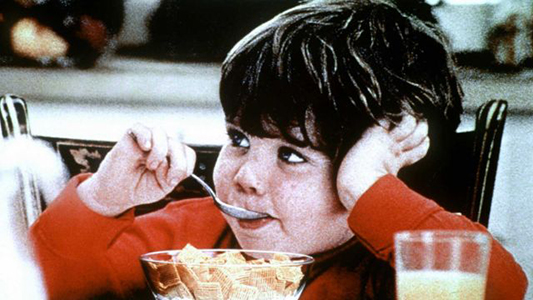
I ordinarily don’t like commercials. I do like it when they try to be at least entertaining… This commercial has stayed in pop culture for over 50 years now. The commercial was created by the Doyle Dane Bernbach (DDB) advertising agency. This Life cereal commercial appeared in 1972 and ran until 1984. It was one of the longest-running commercials in history. 

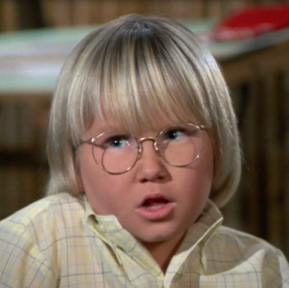
I grew up watching Mikey’s brothers trying to get their brother who hates everything to eat the supposedly healthy Life Cereal. The phrase “Hey Mikey!” entered pop culture as a phrase used for unexpected approval of something.

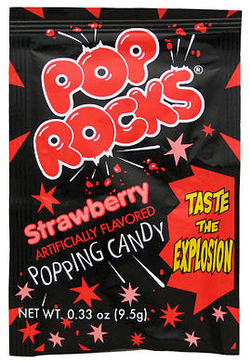
Mikey was portrayed by John Gilchrist, and he is alive now and doing fine despite the urban legend that he died. A false rumor spread in the 1980s that John Gilchrist (Mikey) had died from eating Pop Rocks and drinking soda. This was completely untrue. He was alive and well.

Yes, word got around that the kid who played Mikey bought the farm by eating “pop rocks” and drinking soda. His stomach then exploded because of the lethal combination. A friend of his family actually called his mother in tears, saying she was so sorry about the loss of her son…when in reality he just got home from school.
PopRocks.jpg CokeTheRealThing.jpg

What is interesting about the commercial is that the two kids playing his brothers are John Gilchrist’s brothers in real life.

John today is Director of Media Sales at MSG Network and is living a happy life with his wife and kids…and yes he still enjoys Life Cereal.

Lite-Brite

One of my favorite toys growing up. To this day I like collecting vintage lighting fixtures like soft drink clocks or signs probably because of this toy. They came with designs that you could use to create different cartoons and clowns but I never used those. I liked to create my own masterpieces.

This toy allowed you to be creative in a very different way. It brought out the artistic side in you. You could design different things and it would light up your room in the dark with colors. Lite-Brite was invented by Joseph M. Burck, a senior designer at Chicago toy and game design company Marvin Glass and Associates. The company licensed Lite-Brite to Hasbro, which officially launched it in 1967. It became a staple toy in the 1970s. 

Of course…when I got older I would make crude messages on the Lite Brite for friends. Lite-Brite is recognized as one of the greatest toys of all time by the Toy Hall of Fame. It has become part of our pop culture. 

Lite Brite commercial from the 1970s. Did you have one growing up? 

Hey Kid, Catch Commercial

If I had to name my favorite commercials, it would be a really short list. This Mean Joe Greene and Kid commercial would top the shortlist, though. People talk about famous Super Bowl commercials. This one is probably remembered the most. I loved it as a kid…watching Mean Joe Greene, who just by name alone would scare you…but to see him as a kind person giving a kid a jersey? It made me root for the Steelers at the time…although I pulled for the Rams in the Super Bowl…that didn’t help. 

This ad debuted on October 1, 1979. It showed an injured Mean Joe headed for the locker room to encounter a star-struck kid (Tommy Okon) who offered Mean Joe a coke. Greene eventually took the coke and while limping away pitched his jersey to the kid.

The commercial spot aired repeatedly through Superbowl XIV where the Steelers beat the Rams 31-19. It took 3 days to film the commercial and Joe ended up drinking around 18 cokes to finish it.

When Greene found out Tommy Okon didn’t get to keep the jersey from the commercial, he mailed him an autographed jersey for Christmas. This says a lot about Greene’s character. Why didn’t the commercial people let the kid keep the jersey? 

Coke looked at Roger Staubach, Tony Dorsett, Ed “Too Tall” Jones, and teammate Jack Lambert but Joe Greene won out. The right man got the job. The commercial helped to soften Joe Greene’s reputation. Before it aired, Greene said people were intimidated by him. This is a quote from Greene. “I was suddenly approachable, little kids were no longer afraid of me, and older people – both women and men – would come up and offer me a Coke.”

It was directed by Roger Mosconi, and produced by McCann Erickson for Coca-Cola. Tommy Okon was a nine-year-old child actor at the time. It was later remade multiple times, including versions featuring soccer star Zico in Brazil and other athletes worldwide.

Greene was injured at the time of filming. His limping in the commercial wasn’t entirely an act…he had been dealing with real knee pain. Between that and all the soda he drank, he later joked that it was one of the toughest things he had done in his career.

It also should be said how popular the Steelers were in the 1970s. They were the first team to win 4 Super Bowls and were without a defeat. They had one of the best defenses ever, and their offense was run by Terry Bradshaw. By this time, the team was aging, and they would win their 3rd Super Bowl against the Rams a few months after the commercial was filmed. They are considered one of the greatest teams in the NFL ever. Greene was nearing the end of his career. He was drafted in 1969 and would retire in 1981. 

Reunion 36 years later. 

The Iron Eyes Cody Commercials

People start pollution. People can stop it.

Maybe the most famous tear in pop culture is Iron Eyes Cody, an actor in Native American clothing who shows us the tragedy of littering. He debuted Earth Day, April 22, 1971, at the close of a public service advertisement for the anti-litter organization Keep America Beautiful.

The ad contributed to increased environmental consciousness in the U.S., particularly during the 1970s. The commercials helped spur the passage of anti-littering laws and programs such as The Clean Water Act (1972),  The Resource Conservation and Recovery Act (1976), and the creation of recycling initiatives in cities nationwide.

At the time of the commercial’s debut, the counterculture was starting to embrace Native American Culture. Iron Eyes Cody could be seen in printed ads, television, and billboards. He was known by the press as the “Crying Indian.”

Born on April 3, 1904, as Espera Oscar de Corti, Cody’s parents were both Sicilian immigrants (Antonio de Corti and his wife, Francesca Salpietra). He grew up in Gueydan, Vermilion Parish, Louisiana, where his parents ran a grocery store.

He portrayed Indians in television shows and movies dating back to 1926. His last appearance was in the 1970s spoof movie The Spirit of 76 released in 1990. He played the role on-screen as well as off…He would deny he wasn’t Native American as late as 1996 and until he passed away in 1999 at the age of 94.

Real or not he did have an effect on me…To a young kid, this hit home. I remember this commercial rather well and there is another anti-littering commercial that I remember. Only people in Tennessee would probably remember it was called “Tennessee Trash.” I have it below the Iron Eye’s Cody video.

The ad remains one of the most memorable and emotionally impactful of all commercials to be made. 

The below commercial in 1976 was so popular that they remade it twenty-two years later. I have to say the song will stay in your head. It was filmed on an unopened stretch of I-24 at the time. The theme was sung by country singer-songwriter Ed Bruce and features Irving Kane as the ultimate litterbug.

Purina Chuckwagon Commercials

I loved these commercials when I was a kid. I wasn’t allowed to have a dog in the house (which is probably why I’ve had three Saint Bernard house dogs). Some poor dog would be bewildered by a miniature chuck wagon, then scurries through the home and into the kitchen cabinet or tv after it.

In 1967, Purina launched “Chuck Wagon” as their latest dog food innovation. Packaged as dry dog food, adding warm water would rehydrate the serving to some extent, as well as cause the meal to produce its own gravy

The commercials had a Western theme, playing into Chuck Wagon’s branding as a hearty, wholesome meal for dogs. The animated mini chuck wagon would appear from unexpected places—such as behind a cabinet door, under a table, or from inside a dog food bag…creating a playful and imaginative effect. I can’t tell you how much this worked during that time period. 

In some shots, stop-motion animation was used, where the wagon was moved frame by frame to give the illusion of self-propelled motion. In other cases, puppetry techniques such as invisible wires or rods helped guide the wagon across the floor.

Now… this was hard to believe but in 1983 Atari released a video game based on this commercial called “Chase the Chuckwagon.

Image result for atari Chase the Chuck Wagon


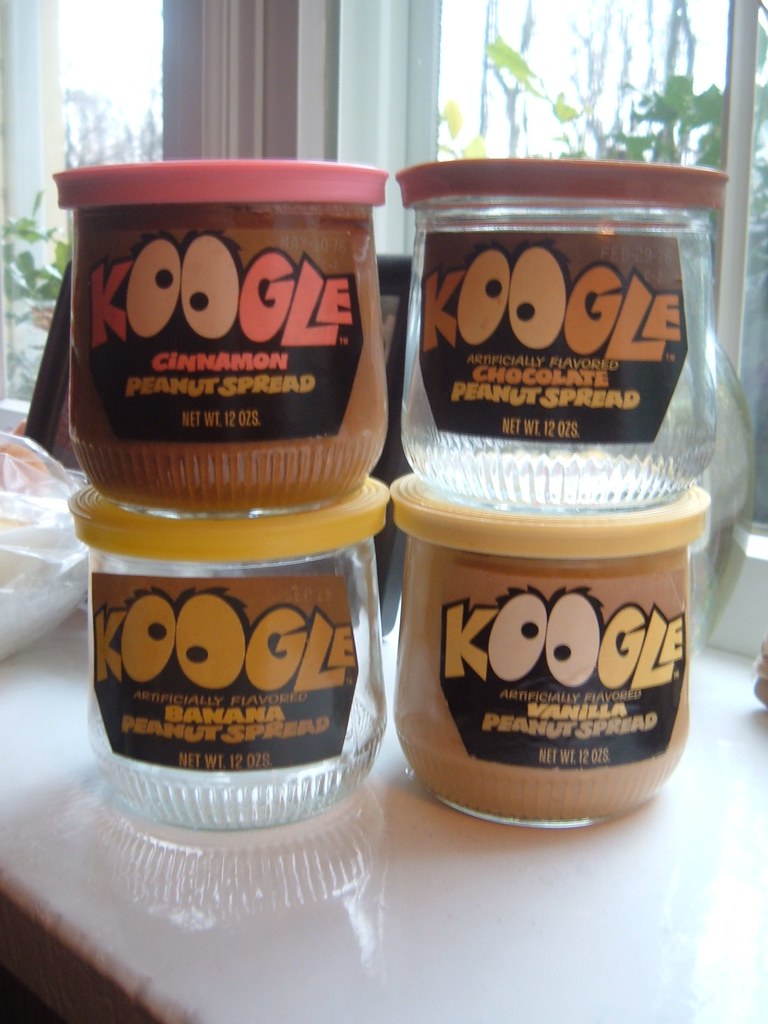
Koogle Peanut Butter Spread

This is one thing I really miss from the seventies. I have tried other peanut butters, but nothing tastes as good as this and nothing compares. It came in different flavors… cinnamon, banana (my favorite), chocolate, and vanilla.

Kraft released this product back in 1971…I did write Kraft asking to bring it back, but alas…no no response. I remember it disappearing around 1976-77.

I’m not on Facebook, but I’m glad someone is putting it to good use…A Bring Back Koogle Page!

https://www.facebook.com/pg/Bring-back-Koogle-115272848524699/about/

Koogle was an innovative, flavor-forward peanut snack that captured kid-friendly attention with its sweetness and slick texture. But its indulgent ingredients and premium price turned off parents seeking healthier, more economical options. Although it vanished by the late ’70s, its quirky charm, kooky mascot, and googly-eyed jars remain a beloved part of snack-food history.

It’s kind of amazing how a product that only lasted maybe seven years still sparks that kind of fondness decades later. That’s the power of taste and memory wrapped together, flavored peanut butter as a time machine.

If Kraft ever brought it back (with a slightly more health-conscious recipe), you just know the nostalgia shelves at Target would sell out in an afternoon.

Hold the Pickles, Hold the Lettuce

Hold the pickles, hold the lettuce
Special orders, don’t upset us
All we ask is that you let us serve it your way
Have it your way

Ah, a company that cares! Burger King ran this commercial around 1974. Battling McDonald’s with the “Have it your way” campaign in 1973, Burger King put their service in the spotlight with the jingle, “Hold the pickle, hold the lettuce. Special orders don’t upset us.” The campaign increased ad awareness by 50%. The Little King was retired, and “Have it your way” was adapted to target children with ad efforts tagged “All kids are different” and “Pickle-less Nicholas.”

Image result for Pickleless Nicholas

In 1976-77, Burger King changed advertising agents and went with “America loves burgers, and we’re America’s Burger King.” In 1982, they launched a “burger wars” effort with the slogan “Battle of the burgers,” comparing the Whopper with those of McDonald’s and Wendy’s.

The jingle’s upbeat, friendly tone made it feel like Burger King employees were singing just for you. It also helped that the melody was incredibly catchy—it got stuck in your head and stayed there.

Even decades later, people who grew up in the ’70s and ’80s can instantly recall that tune. In fact, when Burger King revived “Have It Your Way” in later years, they leaned heavily on nostalgia for that original “Hold the pickles…” jingle.

Anyway…I wish they would bring back those uniforms.

Clairol Herbal Essence Shampoo Commercial

I don’t know if this is an iconic commercial of the time but it got my attention as a kid. I love the animation on it. I remember the green bottle of this shampoo and also “Gee Your Hair Smells Terrific” and I would mix them all together…I wasted a lot of shampoo but I was clean!

Clairol launched Herbal Essence in 1972 as “the most beautiful shampoo experience on Earth.” Most people remember the original green bottle, featuring a woman with long flowing hair surrounded by nature.  The ad claimed the shampoo also contained scents of juniper, birch leaves, cinchona, melissa, and mountain gentian.

The scent of the shampoo changed when Proctor and Gamble bought Clairol in 2001 from Clairol who had owned it since the 50s.

https://www.youtube.com/watch?v=89_CtYEE2k4

Please Don’t’ Squeeze The Charmin

In 1978 Mr. Whipple was named the third-best-known American — just behind former President Nixon and Billy Graham.

From 1964 to 1985, and over the course of more than 500 different TV commercials we saw Mr. Whipple lecture shoppers on squeezing the Charmin. Mr. Whipple was really neurotic with the Charmin.

Dick Wilson was a character actor who got the role as Mr. Whipple and turned “Please don’t squeeze the Charmin” into a national catchphrase as exasperated shopkeeper Mr. Whipple in the Charmin TV commercial campaign that ran for more than two decades

The character of Mr. Whipple was created by an advertising executive, John Chervokas. He is credited with developing the character, his persona, and his most memorable catchphrase, “Please don’t squeeze the Charmin!”

Procter & Gamble eventually replaced the Whipple ads with cartoon bears. When Mr. Whipple returned in 1999, he was shown coming out of retirement against the advice of his buddies for one more chance to peddle Charmin.

Dick Wilson passed away at 91 in 2007.

Oscar Mayer Little Fisherman Commercial

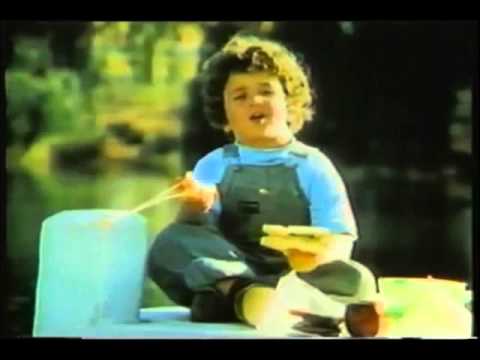
Andy Lambros filmed the Oscar Mayer bologna commercial, “The Little Fisherman,” that made him a commercial icon. Andy said: “It only took me an hour to learn the song because my two (older) sisters helped me.”

This Oscar Mayer commercial first aired in 1974 and aired continually for at least a decade after that.

Originally the plan was to recruit dozens of kids who would each sing a little bit of the song. The idea was that it would show how everyone loved Oscar Mayer bologna, and they filmed that for the commercial. The film crew had a few minutes of daylight left and asked if there was anyone there who could sing the song from start to finish. Andy Lambros said he could and did…and that’s why he asks, “How’s that?” at the end. When they were reviewing the footage, they knew that was the commercial they needed to use.

After this happened they started to add ad-libs in more commercials.


My Bologna has a first name,
It’s O-S-C-A-R.
My bologna has a second name,
It’s M-A-Y-E-R.
Oh I love to eat it everyday,
And if you ask me why I’ll say,
Cause’ Oscar Mayer has a way with B-O-L-O-G-N-A!!!!

When Waterbeds were cool

I had a waterbed in the early 80s as a young teen. I always liked it and thought it was comfortable. Two things I didn’t like about it was… if there was a leak you would not know until 2:30 am and on a school night…always. If the heater was either turned down or went out…you would wake up as a human popsicle at…you guessed it… 2:30 am. Nothing ever happened to it at noon on a Saturday.

in the early 1800s. Scottish physician Dr. Neil Arnott devised a water-filled bed to prevent bedsores in invalids.

In 1873, Sir James Paget, of St. Bartholomew Hospital in London, presented the waterbed designed by Dr. Arnott as a treatment and prevention of ulcers, a common condition at this time. Paget found that waterbeds allowed for even pressure distribution over the entire body. The only problem was that you could not regulate the water temperature.

In 1968 Charles Hall presented the waterbed as his Master’s Thesis project to his San Francisco State University design class. While showcasing their work, students rotated through workshops to see each other’s inventions. Once they reached Hall’s project – a vinyl mattress filled with heated water – the class never left. “Everybody just ended up frolicking on the waterbed,” Hall recalls.

Hall’s first waterbed mattress was called ‘the Pleasure Pit’ and it quickly gained popularity with the hippie culture of the 1960’s and 1970’s.

Time Magazine in 1971 about waterbeds. “Playboy Tycoon Hugh Hefner has one–king-size, of course, and covered with Tasmanian opossum. The growing number of manufacturers and distributors, with such appropriate names as Aquarius Products, the Water Works, Innerspace Environments, Joyapeutic Aqua Beds and the Wet Dream, can hardly meet the demand. They have sold more than 15,000 since August.”

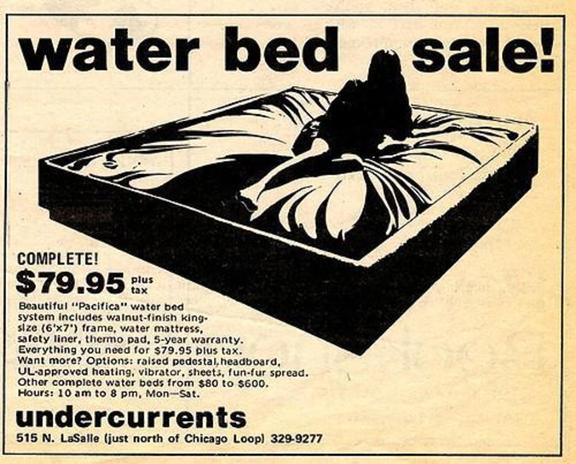
Sex always sells… one ad stated. “Two things are better on a waterbed. One of them is sleep.” and “She’ll admire you for your car, she’ll respect you for your position, but she’ll love you for your waterbed.”

waterbedad.jpg

By the 80s waterbeds were in the suburbs and gaining in popularity. In 1987, waterbeds had achieved their peak, representing 22 percent of all U.S. mattress sales.

At the end of the 1980s waterbed sales fell off. Some say it was because they were too connected to the 70s that had fallen out of favor (the horror!)… but most think it was because of the maintenance and pain in setting them up and moving them. Also, you had to make sure your floor was braced enough to have one depending on the size and weight of it.

Today you can still buy them but most are designed thinner to hold less water in rolls instead of sleeping on a lake beneath you.

I had mine until I was 20 with plenty of patches but it still held water and me… but I left it behind when I moved.

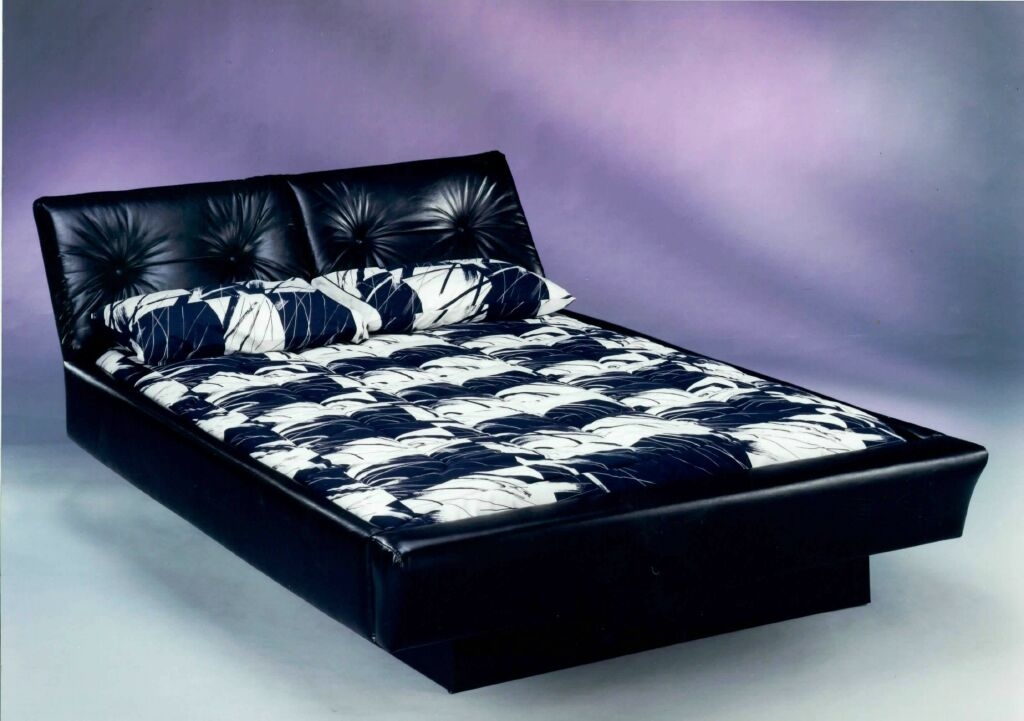
This egg-shaped one below I would gladly take home now

waterbedegg.jpg

COME NOW! TO THE WATERBED WAREHOUSE!

Keith Moon talks about a waterbed

https://en.wikipedia.org/wiki/Waterbed

Big Wheel

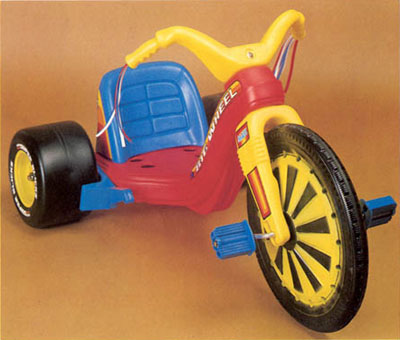
Now, this was cool. I had a few friends with one but it was one thing I could not get. We lived on a dirt road with a gravel driveway. Big Wheels didn’t really work on gravel and dirt too well. I loved the pull-up brake you could engage on one wheel while you were coming to a stop and spin around.

You were low to the ground and with a good hill, you could really go. If it rained you would pedal that plastic wheel and go nowhere until you caught some traction.

The Big Wheel was developed by Louis Marx and Company in 1969. The toy was hugely popular in the 70s and 80s because of its low cost and partly because consumer groups said it was a safer alternative to the traditional tricycle or bicycle.

Different versions came out as it was copied by other companies. The Green Machine made by Huffy was a version of the Big Wheel.

Image result for 1978 green machine

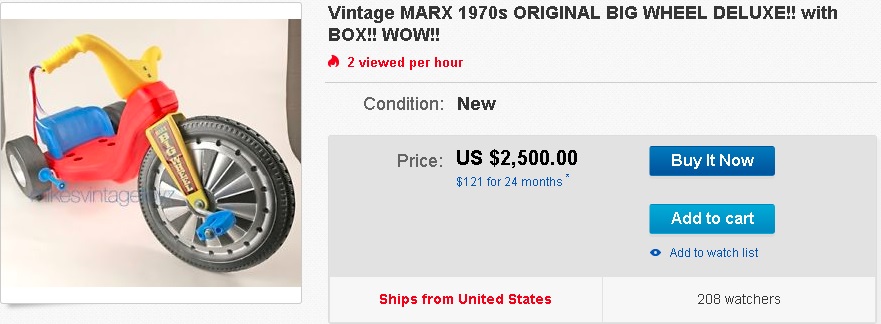
Just in case you want to own an iconic 1970s Big Wheel…not just a Big Wheel but a Big Wheel Deluxe with the box…no problem just shell out $2,500.

ebaybigwheel.jpg

https://www.youtube.com/watch?v=6AFw4wH2Mko

Lite-Brite

One of my favorite toys growing up. To this day I like collecting any vintage lighting fixture like soft drink clocks or signs probably because of this toy. They came with designs that you could use to create different cartoons and clowns but I never used those. I liked to create my own masterpieces.

This toy allowed you to be creative in a very different way. It brought out the artistic side in you. You could design different things and it would light up your room in the dark with colors.

Lite-Brite was invented by Joseph M. Burck, a senior designer at Chicago toy and game design company Marvin Glass and Associates.

Of course…when I got older I would make crude messages on the Lite Brite for friends.

Lite Brite commercial from the 1970s.

70s Saturday Mornings – Big John, Little John

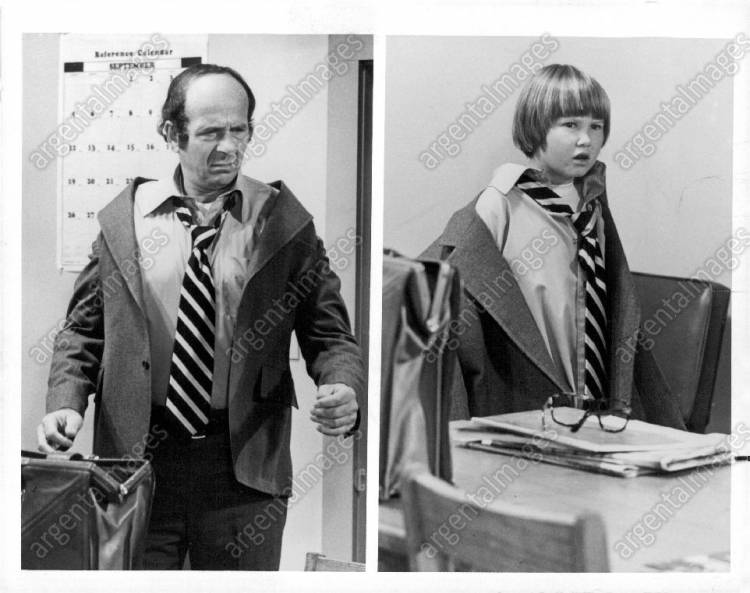
After taking a sip from a fountain of youth, John Martin changed from a 45-year-old school teacher to a 12-year-old. Because he only took a sip, the change was not permanent but the change was reoccurring and Martin had no control as to when the change would occur.

John’s secret was only know to his immediate family and to explain the appearance of the 12-year-old John, they claimed he was their nephew. Throughout the series, John tried to find a cure for his predicament, but he was unsuccessful in his attempts. (http://www.70slivekidvid.com/bjlj.htm)

The show also featured Joyce Bulifant who appeared on Matchgame many times. I’ve only met a handful of people who actually remember the show.

This Saturday morning series was only on for one season 1976. It only lasted for 13 episodes. I liked the fountain of youth stories (especially now!) and I really liked the show at 9 years old. It starred Herb Edelman as Big John and Robbie Rist as Little John. Robbie Rist was the infamous cousin Oliver in the Brady Bunch. Robbie looked like a miniature John Denver to me… and grew up to be a musician…and actor.

Robbie Rist                             John Denver

robbierist.jpgjohndenver.jpg

Below the Big John, Little John intro video… is a tv commercial from the same time that shows my favorite EVER peanut butter spread…Koogle…I loved the Banana flavor.


Koogle Peanut Butter spread…I wish they would bring it back…probably was the worst thing for you but it was so good. I loved the banana flavor.

Tootsie Roll Pop Commercial

The commercial came out in 1968 – 1970 and I still see it every once in a while. The spot leaves us with a puzzling question…How many licks does it take to get to the Tootsie Roll center of a Tootsie Pop?

The original commercial was 60 seconds long and that one is not seen as much…it was edited down to 15 seconds and all we see is the boy and  Mr. Owl…but the original had more….here is the script…

Boy: Mr. Cow…
Mr. Cow: Yeeeeesss?
Boy: How many licks does it take to get to the Tootsie Roll center of a Tootsie Pop?
Mr. Cow: I don’t know, I always end up biting. Ask Mr. Fox, for he’s much clever than I.
Boy: Mr. Fox, how many licks does it take to get to the Tootsie Roll center of a Tootsie Pop?
Mr. Fox: Why don’t you ask Mr. Turtle, for he’s been around a lot longer than I? Me, hee hee hee, I bite.
Boy: Mr. Turtle, how many licks does it take to get to the Tootsie Roll center of a Tootsie Pop?
Mr. Turtle: I’ve never even made it without biting. Ask Mr. Owl, for he is the wisest of us all.
Boy: Mr. Owl, how many licks does it take to get to the Tootsie Roll center of a Tootsie Pop?
Mr. Owl: A good question. Let’s find out. A One… A.two-HOO…A three…
(crunch sound effect)
Mr. Owl: A Three!
Boy: If there’s anything I can’t stand, it’s a smart owl.
Narrator: How many licks does it take to get to the Tootsie Roll center of a Tootsie Pop?
(crunch sound effect)
Narrator: The world may never know.

After the commercial, Mr. Owl became the mascot for Tootsie Roll Pops, appearing in marketing campaigns and on the packaging.

Researchers at New York University and Florida State University conducted a study in 2015 to find out how many times one would need to lick a Tootsie Pop to reach the center. Their findings revealed that 997 licks are needed to get there… Mr. Owl was off by 994!
However…many other colleges tested it with different results…I guess we will never know the answer…and I thought Bigfoot was hard to prove. 

The original 60 second commercial with Mr. Cow, Mr, Fox, Mr. Turtle, and Mr. Owl.

My favorite Tootsie Roll commercial was this one from 1977

The world looks mighty good to me

Cause Tootsie Rolls are all I see

Whatever it is I think I see

Becomes a Tootsie Roll to me

Tootsie Roll, how I love your chocolatey chew

Tootsie Roll, I think I’m in love with you

Whatever it is I think I see  Becomes a Tootsie Roll to me