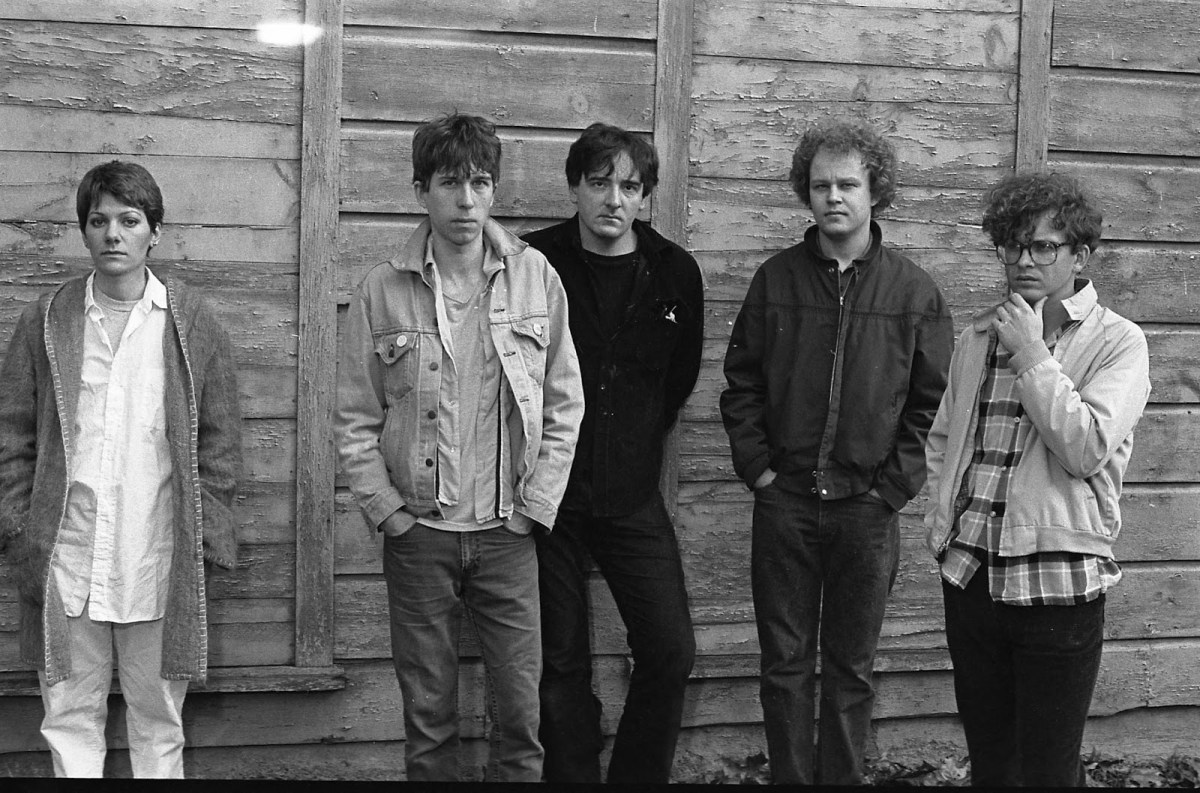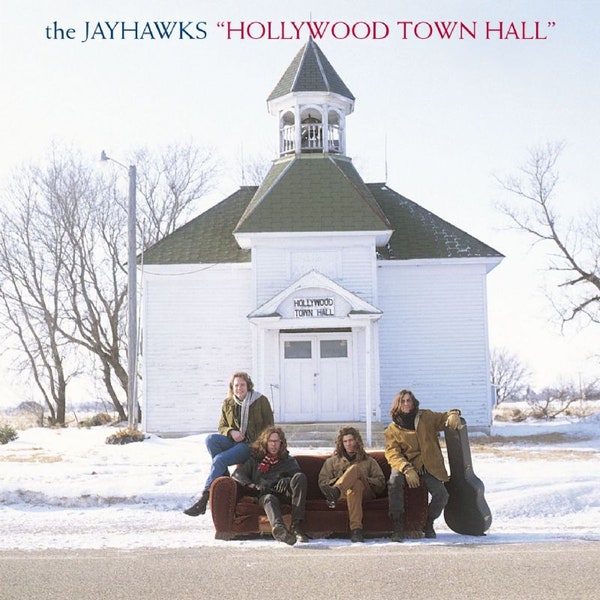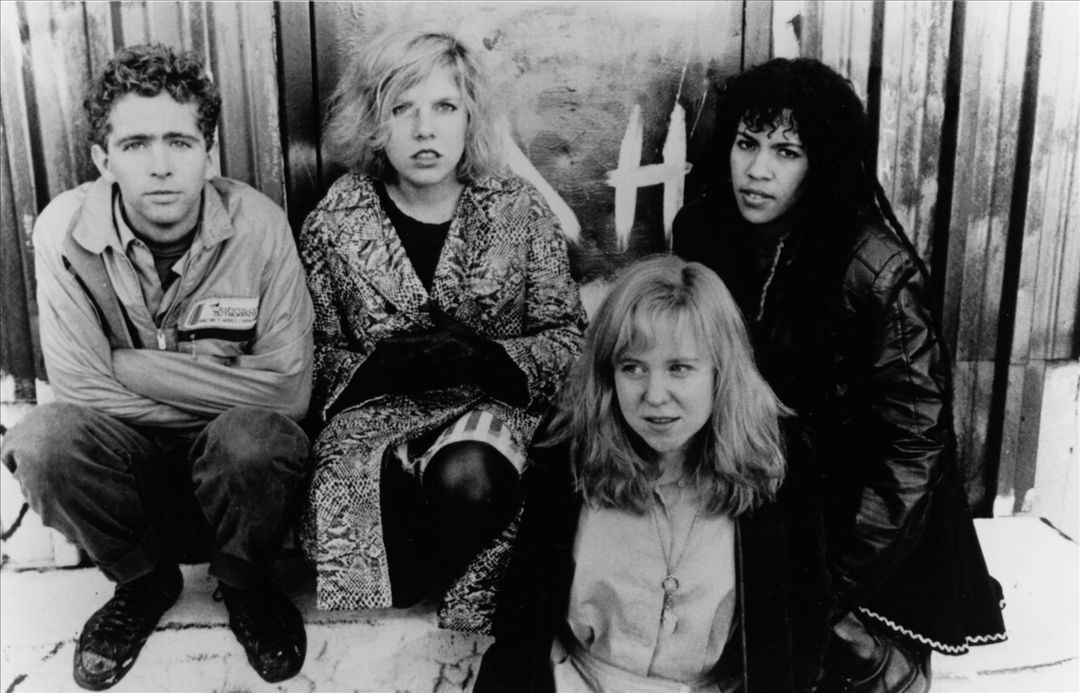
A nice guitar riff to start this song off by Throwing Muses.
The band was formed in 1981 by step-sisters Kristin Hersh (vocals/guitar) and Tanya Donelly (guitar/vocals), who were both at high school at the time. Initially called Kristin Hersh And The Muses, the line-up was completed by bassist Leslie Langstons and drummer David Narcizo.
They lived close to Providence, Boston and New York and so they could play a club quite often in both places. They had a lot of colleges and some local newspapers, magazines, and radio stations to promote them.
They were the first American band signed to the British 4AD label. An eclectic blend of jerky guitar pop and songwriter Kristin Hersh’s eccentric vocals, the early work by Throwing Muses was quite different than their peers. A year later 4AD would sign Pixies based in part on the band’s connection to Throwing Muses, and by the mid-1990s much of the label’s roster was made up of American bands.
This song was on their self-titled album Throwing Muses in 1986. The song was written by guitar player and singer Kristin Hersh. She wrote every song on the album except one.
Their latest album Sun Racket was released on Fire Records on September 4, 2020.
Kristin Hersh: “We didn’t mean to ever be strange. I guess we were because everybody says we were,” “It’s almost like speaking your own language. I find we kept people out of our world by doing that.”
Hate My Way
I could be a smack freak And hate society I could hate God And blame Dad I might be in a Holocaust Hate Hitler Might not have a child And hate school I could be a sad lover And hate death I could be a neuro And hate sweat No I hate my way
I make you in to a song I can’t rise above the church I’m caught in a jungle Vines tangle my hands I’m always so hot and it’s hot in here I say it’s all right
My pillow screams too But so does my kitchen And water And my shoes And the road
I have a gun in my head I’m invisible I can’t find the ice
A slug I’m TV I hate
A boy, he was tangled in his bike forever A girl was missing two fingers Gerry Ann was confused Mr. Huberty Had a gun in his head
So I sit up late in the morning And ask myself again How do they kill children? And why do I wanna die? They can no longer move I can no longer be still
We are gonna lighten up today with a song from Mojo Nixon. Hope all of you are doing well on this holiday weekend… look around…Elvis is everywhere.
I was commenting with Paul and he brought up Mojo Nixon and it’s probably been since the 1980s that I heard him. A popular Nashville rock station WKDF in the 80s would play this song and a few more by Mojo.
Mojo Nixon (Neill Kirby McMillan, Jr) started in the early eighties and he teamed up with Skid Roper (Richard Banke). Mojo and Skip Roper wrote this song.
This song was released in 1987 and it was on his album Bo-Day-Shus!!!. Mojo has some fun music. I forgot about his songs until Paul pointed me toward him again and they came back to me. I’ll post one tomorrow also.
Nixon announced that he retired from the music business in 2004, playing his last live show in Austin, Texas. In 2009 he announced his “unretirement” and for a short time let anyone download his albums for free with this statement:
Can’t wait for Washington to fix the economy. We must take bold action now. If I make the new album free and my entire catalog free it will stimulate the economy. It might even over-stimulate the economy. History has shown than when people listen to my music, money tends to flow to bartenders, race tracks, late night greasy spoons, bail bondsman, go kart tracks, tractor pulls, football games, peep shows and several black market vices. My music causes itches that it usually takes some money to scratch
Elvis Is Everywhere
When I look out into your eyes out there When I look out into your faces You know what I see? I see a little bit of Elvis In each and every one of you out there
Lemme tell ya… Weeeeeeeeeellllllll… Elvis is everywhere Elvis is everything Elvis is everybody Elvis is still the king
Man o man What I want you to see Is that the big E’s Inside of you and me
Elvis is everywhere, man! He’s in everything He’s in everybody…
Elvis is in your jeans He’s in your cheesburgers Elvis is in Nutty Buddies! Elvis is in your mom!
He’s in everybody He’s in the young, the old The fat, the skinny The white, the black The brown and the blue People got Elvis in ’em too
Elvis is in everybody out there Everybody’s got Elvis in them! Everybody except one person that is… Yeah, one person! The evil opposite of Elvis The Anti-Elvis
Anti-Elvis got no Elvis in ’em Lemme tell ya
Michael J. Fox has no Elvis in him
And Elvis is in Joan Rivers But he’s trying to get out, man! He’s trying to get out! Listen up Joanie Baby!
Elvis is everywhere Elvis is everything Elvis is everybody Elvis is still the king
Man o man What I want you to see Is that the big E’s Inside of you and me
Man, there’s a lot of unexplained phenomenon Out there in the world Lot of things people say What the heck’s going on?
Let me tell ya!
Who built the pyramids? ELVIS! Who built Stonehenge? ELVIS!
Yeah, man you see guys Walking down the street Pushing shopping carts And you think they’re talking to allah They’re talking to themself Man, no they’re talking to ELVIS! ELVIS! ELVIS!
You know whats going on in that Bermuda Triangle? Down in the Bermuda Traingle Elvis needs boats Elvis needs boats Elvis Elvis Elvis Elvis Elvis Elvis
First of all…Happy 4th of July to those that celebrate it! I also want to thank CB for bringing this song up last year on July 4th. I have posted the X version as well as Dave Alvin’s (who wrote the song) solo version of this song…I also threw in a live version from the Blasters.
This song was released in 1987 on X’s See How We Are album. The album peaked at #107 in the Billboard Album Charts.
This was written by the guitarist Dave Alvin, who had recently replaced Billy Zoom in X. Alvin still had ties with his former band, the Blasters, when he wrote the song, and in early 1986 he recorded the song with the group, with Nick Lowe producing. The sessions when downhill when Lowe decided that Dave should sing the song, not the group’s lead singer, his older brother Phil Alvin. The Blasters album was never released, and it ended up being an X song, with their vocalist John Doe singing it.
Nick Lowe told Dave Alvin something in these sessions that was interesting and career changing. Dave Alvin wrote the song but didn’t think he could sing it but Nick wanted him to. Lowe told him “I can’t sing either, but I’ve somehow made a living doing it.”
Lately I’ve been listening to a lot of Blaster’s music. Dave Alvin seems to cover everything from blues, rock, rockabilly, country, Americana and more. Here is a quote from him
I’ve always considered myself as basically a blues guy
but I don’t want to limit myself to what some people define as
blues. The “blues form” and the “blues scale” is a constant
in just about all American folk and roots music as well as jazz
and pop. Because of that, I can hear the blues in country music
as well as in the loud garage band down the block.
As a songwriter, if I feel like writing a polka one day,
I’ll write a polka. If I feel like writing a country song
or a rockabilly song, then I’ll do it. It’s hard enough
writing songs to have to bother yourself with somebody’s
categories.
Dave Alvin: “I wrote a long poem is how it really started,” Alvin said in the Zoo Bar’s upstairs dressing room before his latest show there last month. “It’s based on a true story in my life, back when I was a fry cook in Downey (California). Everything in the song is true,” “There was this little cul-de-sac and there were all these beat-up duplexes. We lived in the upstairs duplex. She didn’t want smoking in the place, so I’d sit on the top of the stairs and just stare at the cul-de-sac.”
“I was just trying to capture that moment. This is long before I even thought of being a songwriter. I was 21, 22 and I looked at the Mexican kids shooting fireworks and I looked at everything and I thought, ‘This is a song.’ Eight years later, I finally wrote it.”
From Songfacts
Alvin wrote a third verse, but decided the song had more impact without it, as it leaves the ending up to the listener. He told us: “When X wanted to record the song and we recorded a couple of demos for Elektra, one of the producers, who is a notable musician who shall remain nameless, said, ‘I’m not getting enough. It needs more.’ So, I thought, well, maybe I should pull that third verse back into it? But then I thought, no, it’s getting the point across. They’re either breaking up or they’re staying together.'”
This song is beloved by the band’s fans and has grown in popularity, but it was never a hit. A victim of timing, the late ’80s found X out-of-favor at radio stations, as anything perceived as “Punk” had a hard time getting airplay (Billy Idol excepted). A few years later, Nirvana knocked down that wall, but it was too late for “4th Of July.”
Live Blasters
Dave Alvin’s version
X 4th of July
4th of July
She’s waitin’ for me When I get home from work Oh, but things ain’t just the same She turns out the light And cries in the dark Won’t answer when I call her name
On the stairs I smoke a Cigarette alone Mexican kids are shootin’ Fireworks below Hey baby, it’s the Fourth of July Hey baby, it’s the Fourth of July
She gives me her cheek When I want her lips But I don’t have the strength to go On the lost side of town In a dark apartment We gave up trying so long ago
On the stairs I smoke a Cigarette alone Mexican kids are shootin’ Fireworks below Hey baby, it’s the Fourth of July Hey baby, it’s the Fourth of July
What ever happened I Apologize So dry your tears and baby Walk outside, it’s the Fourth of July
On the stairs I smoke a Cigarette alone Mexican kids are shootin’ Fireworks below Hey baby, it’s the Fourth of July Hey baby, Baby take a walk outside
Power pop was well and alive during the 1990s. I remember this song in the early 90s but I never caught who did it. I heard it on our local alternate channel Lightning 100.
This band was from Scotland and they formed in Bellshill near Glasgow in 1989. They were influenced by Big Star, Badfinger, and the Byrds. They signed to the indie label Creation Records in Britain.
This song was off of their 3rd album Bandwagonesque and it was released in 1991. This was their breakthrough album in the US where it was distributed by Geffen Records. The album was voted album of the year by Spin magazine beating out Nevermind by Nirvana. Some critics called this album Big Star’s 4th because of the influence.
The album had several Top 20 hits on Billboard’s Modern Rock Tracks chart, including Star Sign, The Concept, and this song What You Do to Me. They played this song on Saturday Night Live on April 27, 1992.
Singer guitarist Norman Blake wrong this song.
The song peaked at #31 in the UK and #19 on the US Alternate Charts in 1991. The album peaked at #22 in the UK and #137 in the Billboard Album Charts. The album was #1 in the Billboard Heatseeker Album Charts.
From Wiki: The cover is designed by Sharon Fitzgerald. When Kiss member Gene Simmons, who had trademarked the logo of a moneybag with dollar symbol, was made aware of the record he sent a letter to Geffen Records, who in turn gave in and sent Simmons a cheque, according to Simmons’s book Sex Money Kiss.
The band is still together and has released a total of 11 studio albums.
What You Do To Me
What you do to me… I know, I can’t believe There’s something about you Got me down on my knees.
What you do to me… What you do to me… What you do to me… What you do to me…
What you do to me… I know, I can’t believe There’s something about you Got me down on my knees.
What you do to me… What you do to me… What you do to me… What you do to me…
After hearing the song and seeing the video you would think 1965 NOT 1985. I would have loved to hear this in the eighties. This I could have gotten into a lot.
They debuted in March 1984 and released a series of independent records on Sydney’s Citadel Records. Each release made it to number one on the Australian alternative charts.
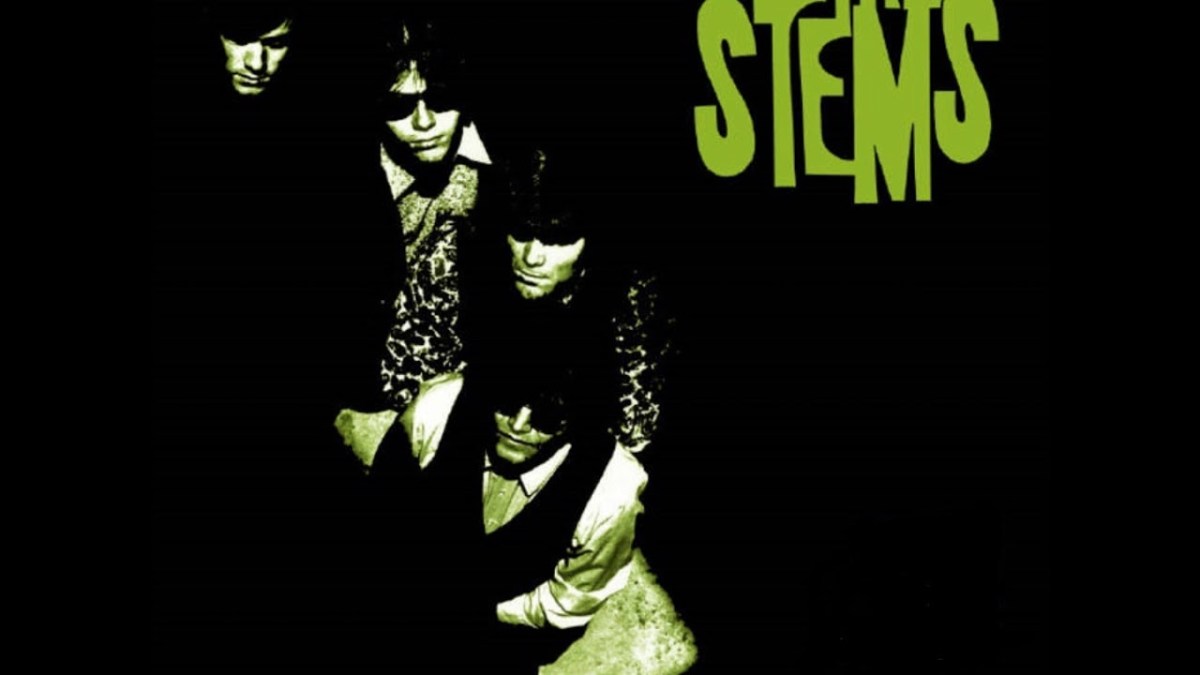
The Stems were a garage punk band formed in Perth, Western Australia in late 1983. They were hugely popular in Australia. They released this song in 1985 with a song “Cant Resist” as the B side. They would release 7 singles, 2 albums, and 2 EP’s between 1985-1987.
They broke up in 1987. Guitarist Dom Mariani explained: “I was not very happy with the way things were going towards the end of The Stems. We got quite big, and there are the usual problems that happen with that. People tend to drift apart, there are internal conflicts, egos going wild, and bad management was probably the major factor that contributed to The Stems breakup.”
The Stems regrouped in 2003 and played to packed houses across Australia and Europe. They disbanded again in 2009 and regrouped in 2013 and still play from time to time.
Tears Me In Two
All those things that you never said All those words going through my head Time after time I let her cry I laughed and I laughed And she waved goodbye
She waved goodbye She waved goodbye She waved goodbye She waved goodbye I said my prayers and shed my tears All my dreams have become my fears I wrote her letters that I could not send My memories are my only friend
She waved goodbye She waved goodbye She waved goodbye She waved goodbye Everyone thinks that I am crazy I can’t stand the things that they say Think that I’ve been oh-so-cruel Commit me with lies I did not do I didn’t do them You know I didn’t do them Don’t tell me that I did them You know I didn’t do them I didn’t do them
I couldn’t stand it for a second more I turn it down for, I want love for Why can’t my heart leave me be Tears me in two, can’t you see I can’t stand it for a second more I turn it down for, I want love for Why can’t my heart leave me be Tears me in two ways, can’t you see Tears me in two ways Come on baby Take an look down there Tears me in two ways
I posted a song called Watusi Rodeo by Guadalcanal Diary a while back and I got a great response. I’ve been listening to these guys and it gets better and better. This band had a sophisticated and spiritual bent to the band’s lyrics.
This song is off of the EP Watusi Rodeo released in 1983. The songwriting in this band was a step above many of their peers…clever lyrics with a mixture of jangle and country. When you start listening to this band later on you can see a lot of eclecticism as they could bounce from one style to another.
They did get picked up by a major label after this release. Their LP Jamboree released in 1986 was on Elektra. They unsuccessfully attempted a commercial breakthrough, adopting the style of a country-rock band with some religious sentiment.
Jeff Walls and singer Murray Attaway were friends in high school in Marietta, Ga., just outside of Atlanta. Along with bassist Rhett Crowe and drummer John Poe, they formed Guadalcanal Diary.
In 2011, Guadalcanal Diary briefly reunited to play Athfest, and celebrated their 30th anniversary there. Jeff Walls died, May 29, 2019, of a rare pulmonary disease.
Trail Of Tears
The Sun hangs low in the Western sky I bow my head and remember now Someone’s lips pressed close to mine Her cool hand upon my brow
Hell burns hot for a killer ‘s heart A shallow grave in an unmarked plot Crack of gunfire in the dark Hand in hand we’ll walk at daybreak
One wore black One wore black One wore black
The trail of tears is winding on Many pass along the road Dusty soldiers march along As they file one by one
One wore black One wore black One wore black
Trail of tears is winding on Frightened soldier run no more Arm and arm with lovers gone No one passes on the road
Two girls wait at the railroad track For their soldiers to come back Knowing this will be their last One wore blue and one wore black
This is a perfect song to remember alternative radio with today. This is Paul Westerberg’s tribute to college radio in the 1980s. Of all the bands I’ve covered on Mondays…this band is my favorite of them all. They were more straight rock and roll with some quirks thrown in for good measure.
Left of the Dial celebrates the spirit of the eighties American indie rock scene and was a tribute to the tiny watt college stations populating the far end of the FM radio band—many let the Replacements crash after shows at campuses. Westerberg had said that is where they got most of their airtime…“We ended up going to college in an odd kind of way.”
The song is also about Westerberg’s infatuation with Lynn Blakey, singer-guitarist for North Carolina’s Let’s Active. They’d met when the bands shared a bill at San Francisco’s I-Beam in the fall of 1983. “He followed me around and bummed cigarettes off me,” recalled Blakey. The following night, after a show in Berkeley, the two spent hours walking together. They would exchange calls and letters as Blakey moved to Athens, Georgia, where she joined Michael Stipe’s sister Lynda in the band Oh-OK.
“I figured the only way I’d hear her voice was with her band on the radio . . . on a college station,” said Westerberg. “And one night we were passing through a town somewhere, and she was doing an interview on the radio. I heard her voice for the first time in six months for about a minute. Then the station faded out.” The moment provided the song’s lyric “If I don’t see ya, in a long, long while / I’ll try to find you / Left of the dial.”
The song was on the album Tim and it was released in 1985.
Left of the Dial
Read about your band in some local page Didn’t mention your name, didn’t mention your name The sweet Georgia breezes, safe, cool and warm I headed up north, you headed north
On and on and on and on What side are you on? On and on and on and on What side are you on?
Weary voice that’s laughin’, on the radio once We sounded drunk, never made it on Passin’ through and it’s late, the station started to fade Picked another one up in the very next state
On and on and on and on What side are you on? On and on and on and on and
Pretty girl keep growin’ up, playin’ make-up, wearin’ guitar Growin’ old in a bar, ya grow old in a bar Headed out to San Francisco, definitely not L.A. Didn’t mention your name, didn’t mention your name
And if I don’t see ya, in a long, long while I’ll try to find you Left of the dial Left of the dial Left of the dial Left of the dial Left of the dial Left of the dial Left of the dial Left of the dial
The Creeps sound like they came from the garages in the sixties but it was the 1980s. I love the sound they got on this record.
This song is off of their debut album “Enjoy The Creeps” and it was released in 1986. Critics have said that they never did translate the excitement of their live show to records but this one is good. They released it on a small label named Tracks on Wax which was a Swedish Garage Rock-label in the 80s.
They formed in Sweden in 1985. They were influenced heavily by the Animals and Yardbirds, Robert Jelinek (vocals, guitar), Hans Ingemansson (Hammond organ), Anders Olsson (bass) and Patrick Olson (drums). Whenever I think of music from Sweden I think of Abba…this is not Abba by any stretch of the imagination.
Their third album, Blue Tomato, was released in 1990. It contained their most popular song, ‘Ooh I Like It’, and it became a major Swedish hit and was eventually voted Best Song Of The Year by MTV viewers in 1990.
Down at the Nightclub was written by guitarist Robert Jelinek.
After a few years the band dropped the dirty sound of their debut album and went more for an 80s funk dance sound.
The band broke up in 1997.
Down At The Nightclub
All right We’re going down to the nightclub baby Where the fashion lights are all so gay And the music’s so loud I tell you we’re the in-crowd We’re the grooviest gang around
I got a battering ram in my head The room is turning in a blue green red And the lights sure blows my mind and I might get this time Down at the nightclub
That girl’s dancing in her miniskirt The way she moves now she gives me the hurt Gonna move up to her, let my backbone slip I’m gonna take her on a magic trip
I got a battering ram in my head The room is turning in a blue green red And the lights sure blows my mind and I might get this time Down at the nightclub
First time I heard this song I loved it. I hear a strong Hollies and Beatles influence in this. This XTC spinoff band was a great idea and should have gotten airplay here. This is by far my favorite power pop song I’ve feature on Fridays in the past 5 months.
This album was released on April Fools Day 1985 through Virgin Records. It was publicized as a long-lost collection of recordings by a late 1960s group. Under the name The Dukes of Stratosphear, XTC members Andy Partridge, Colin Moulding, Dave Gregory, and and Dave’s brother Ian Gregory paid tribute to such acts as The Beatles, The Hollies, The Yardbirds, and The Beach Boys to name a few. They produced two albums: 1985’s album 25 O’Clock and 1987’s Psonic Psunspot.
Each musician adopted a pseudonym: “Sir John Johns” (Partridge) “Lord Cornelius Plum” (Dave), “The Red Curtain” (Colin Moulding) and “E.I.E.I. Owen” (Ian). The band dressed themselves in Paisley outfits for the sessions and lit scented candles.
Despite the great songs, the Dukes never made the charts. In the UK, the records outsold XTC’s then current albums The Big Express (1984) and Skylarking (1986).
It’s possible that XTC would not have survived beyond the ’80s without this fun side-project according to former XTC guitar player David Gregory as tensions were high recording The Big Express and Skylarking.
David Gregory:That so many others found it amusing and entertaining simply adds to the joy we derived from its creation.
Andy Partridge talking to producer Steve Nye: “Ooh, I’m a bit funny about how this came out, Steve, because it sounds a bit Beatles-esque to me, and I don’t want people to think I’m copying the Beatles.” He said, “Who gives a fuck? That’s how you’ve written it—just do it!’ … I realised that I should not be ashamed about digging them up, and getting them wrong, and using them as my template. … from that moment onward, I started to recognise that those songwriters—the Ray Davieses, the Lennons and McCartneys, the Brian Wilsons—had gone into my head really deeply
Vanishing Girl
Someone’s knocking in the Distance But I’m deaf and blind She’s not expected home this evening So I leave the world behind
for the Vanishing Girl The Vanishing Girl Yes she’d give you a twirl But she vanishes from my world
So burn my letters and you’d better leave Just one pint a day The whole street’s talking about my White shirts looking so grey
People gossip on the doorstep Think they know the score She’s giving him the runaround The man from number four
Has a Vanishing Girl a Vanishing Girl Yes she’d give you a twirl But she vanishes from my world
Yes the paint is peeling and my Garden is overgrown I got no enthusiasm to even answer the phone When she’s here it makes up for the time she’s
not and it’s all forgotten But when she goes I’m putting on the pose for the Vanishing Girl
I didn’t hear this song until I heard it on car commercial. It took me a while to track it down. This band was on the alternative club circuit in the early 80s. Their name was not inspired by William Faulkner’s 1935 novel of the same name as some believe. They were inspired by traffic cones… as simple as that. Bassist Michael Lachowski has said “we chose Pylon because it is severe, industrial, monolithic, functional.”
They were four art students at the University of Georgia in Athens in 1979. Guitarist Randall Bewley and bass guitarist Michael Lachowski began playing music and attempting to form a band in 1978. Neither one of them knew how to play but they started to learn. Drummer Curtis Crowe and vocalist Vanessa Briscoe soon joined.
This song was released in 1979 as a single with “Dub” on the B side.
Mills has said the REM song A Month of Sundays was inspired by them… “I was thinking Pylon when I wrote it, so it’s my tribute to Randy Bewley.” Richard Bewley was Pylon’s guitar player.
They would go on to open for bands like REM, U2, and the B-52s,
When Rolling Stone named R.E.M. “America’s Best Band” in December 1987, R.E.M. drummer Bill Berry said, “We’re not the best rock ‘n’ roll band in America”, declaring that Pylon was instead the best.
The band broke up in 1983 deciding to end it while it was still fun.
Vanessa Briscoe on the breakup in 1983: Let’s just quit while we’re having fun.’ That was kind of the idea in the first place. We were just going to perform as long as it was fun. So we broke up and it was a decision we all made together. We accomplished what we set out to do… It’s not that we are miserable, it’s just that we’ve seen all we’re going to see and don’t want to put any more time into it”
They reformed in 1990 when a complication album came out of their music from 1979-1983.
Cool
Pure form Real gone Like wild Good vibes
Everything is cool
There are these forms I like to watch There are these shapes which talk to me
I love forms, and forms love me The more you look, the more you see
When I heard the organ in this song it hooked me. I haven’t posted much of Costello partly because like the Replacements…I got sidetracked in the late 80s away from him and since I started blogging I’m rediscovering him again.
I was 10 years old walking in our old drug store and I heard this artist I never heard before over the speakers…the song they were playing was Alison. The drug store sold records also and they had Elvis’s debut album propped up for viewing. The name threw me because this “Elvis” was a small skinny guy with glasses…that is when I found his music.
Radio Radio was made more famous by the Saturday Night Life performance.
Radio Radio was released as a single in 1978 and peaked at #29 in the UK. It was on the US version of the album This Year’s Model and it peaked at #30 in the Billboard Album Charts, #21 in Canada, and #4 in the UK.
Costello was slated to play his current UK single “Less Than Zero,” on Saturday Night Live in 1977. Costello launched into a few bars of “Less Than Zero,” but then turned to his band and told them to stop. He then apologized to the live audience, saying, “I’m sorry, ladies and gentlemen, but there’s no reason to do this song here,” and broke into a full rendition of “Radio Radio,” which had not yet been released.
Lorne Michaels…the God of Saturday Night Live was not pleased.
Costello was banned from Saturday Night Live. It has been said that the corporate brass at NBC (which owned radio properties) objected to the lyrics of “Radio Radio,” but others say it was because Costello went off-script, which was a no no to Lorne Michaels. That was one rule Michaels wanted the cast to know…they were not the Carol Burnett show and they were not to go off script or laugh.
Costello later claimed he was inspired by Jimi Hendrix, who in 1969 stopped a performance of “Hey Joe” on the show Happening for Lulu and launched into the Cream song “Sunshine Of Your Love,” earning him a ban from the BBC.
On Saturday Night Live’s 25th anniversary show in 1999, Costello parodied the incident when he interrupted the Beastie Boys while they were playing “Sabotage,” leading them in a full version of “Radio Radio.”
Elvis Costello:“Before I got into show business, I thought radio was great, So I wrote a song about celebrating it – the thrill of listening to it late at night. This was my imaginary song about radio before I found out how foul and twisted it was.”
From Songfacts
In this song, Costello is protesting the commercialization of late 1970s FM radio. Radio stations would become more and more consolidated over the years, and their playlists tightened up considerably. Eventually, deregulation led to a few companies owning the majority of American radio stations, which led to automated stations. Tom Petty sang about this on his 2002 track “The Last DJ.”
This song is a takedown of radio, but it started out as a loving tribute. Costello wrote the first version of the song as “Radio Soul” when he was in a band called Flip City. They recorded a demo in 1974, but the song was never released.
In “Radio Soul,” Costello sings lovingly about radio, without any trace of vitriol:
I could sail away to the songs that play upon that radio soul
Radio soul
It’s a sound salvation
When he reworked the song in 1977, he changed the title and completely flipped the meaning, reflecting his newfound take on the topic.
On December 17, 1977, Elvis Costello & the Attractions appeared on Saturday Night Live as last minute replacements for the Sex Pistols, whose various criminal records had made getting visas in time difficult.
Costello’s ban was lifted in 1989 when he returned as musical guest, performing “Veronica” and “Let Him Dangle” without incident. His 1977 act of defiance became part of Saturday Night Live lore, and is often recounted in retrospectives of the show’s history.
Bruce Springsteen was an influence on this song, musically and lyrically. The Springsteen ethos is more apparent in the “Radio Soul” version, with the theme of escaping to a better place through the power of music.
In the ’10s, Costello started performing the “Radio Soul” version of this song, explaining that it resonates with him far more than “Radio Radio.” He has clearly mellowed out.
Costello performed the early version of this song, “Radio Soul,” at the Apple iTunes Radio announcement event on September 10, 2013. Introducing the song, he explained that radio was very important to him, since his father was singer for a radio dance band.
The 1999 SNL return and parody of the original event.
The 1977 SNL infamous appearance
Radio Radio
I was tuning in the shine on the late night dial Doing anything my radio advised With every one of those late night stations Playing songs bringing tears to my eyes I was seriously thinking about hiding the receiver When the switch broke ’cause it’s old They’re saying things that I can hardly believe They really think we’re getting out of control
Radio is a sound salvation Radio is cleaning up the nation They say you better listen to the voice of reason But they don’t give you any choice ’cause they think that it’s treason So you had better do as you are told You better listen to the radio
I wanna bite the hand that feeds me I wanna bite that hand so badly I want to make them wish they’d never seen me
Some of my friends sit around every evening And they worry about the times ahead But everybody else is overwhelmed by indifference And the promise of an early bed You either shut up or get cut up, they don’t wanna hear about it It’s only inches on the reel-to-reel And the radio is in the hands of such a lot of fools Tryin’ to anesthetize the way that you feel
Radio is a sound salvation Radio is cleaning up the nation They say you better listen to the voice of reason But they don’t give you any choice ’cause they think that it’s treason So you had better do as you are told You better listen to the radio
Wonderful radio Marvelous radio Wonderful radio Radio, radio Radio, radio Radio, radio Radio, radio Radio, radio Radio, radio Radio, radio Radio, radio
I got into XTC late into the game. I didn’t get to know them until they released I’m The Man Who Murdered Love. I liked this song right away because it has a nice power pop sound. The drums stand out on this song.
This song was XTC’s breakthrough single released in 1979. It was written by bassist Colin Moulding, who shared vocal and songwriting duties with guitarist Andy Partridge. It was on the third, breakthrough, album Drums And Wires.
The album peaked at #174 in the Billboard album charts, #15 in Canada, #34 in the UK, and #12 in New Zealand.
Making Plans For Nigel peaked at #12 in Canada, #17 in the UK, and #29 in New Zealand.
The lyrics are told from the point of view of parents who are certain that their son Nigel is happy in his work, affirming that his future in British Steel “is as good as sealed”, and that he “likes to speak and loves to be spoken to”. As a response to the song, British Steel reportedly gathered four Sheffield employees
named Nigel to talk about job satisfaction for the trade publication Steel News.
From Wiki: The first 20,000 pressings of the single came in a fold-out cover that created a fully playable gameboard of “Chutes and Ladders” adapted to details of Nigel’s “miserable life”, including the purchase of a scooter, job interviews, a holiday in Spain and an engagement to “a very nice girl.” There were two versions of the gameboard, one to be played by Nigel and the other to be played by his parents. As credited on the back cover, the illustrator was Steve Shotter and sleeve design was by Cooke Key.
Colin Moulding:
“Partly biographical, this one. My dad prompted me to write it. He wanted a university future for me and was very overpowering in trying to persuade me to get my hair cut and stay on at school. It got to the point where he almost tried to drag me down the barber’s shop by my hair. I know the song tells of a slightly different situation, but it all boils down to the same thing – parental domination.”
There were no Nigels at school. I wasn’t bullied, but I think I had a natural empathy for people that were. ‘Nigel’ was my song for the bullied, I suppose.
“British Steel was just a bit of naughtiness. What I hadn’t bargained on was the union boss later ringing me up and asking me to join the cause! I had the devil of a job to convince him it was an organization I chose at random.”
Andy Partridge:“Quite early on it had been decided that Making Plans For Nigel was going to be the single. We spent five times longer messing with that song than any of my tracks. At one point I was fuming because my songs were being ignored.”
From Songfacts
The Rembrandts, Primus and Robbie Williams all covered this.
This was covered by Nouvelle Vague, a bossa group, and included on a chillout compilation album known as Breakfast Club: Milan.
Andy Partridge told Uncut: “The things that sound like sheets of metal being struck, that’s a white noise patch on a monophonic Korg synth we had. We decided to do it with this industrial sound and glories, so it hinted that British Steel, which is where Nigel works.”
Making Plans For Nigel
We’re only making plans for Nigel We only want what’s best for him We’re only making plans for Nigel Nigel just needs this helping hand
And if young Nigel says he’s happy He must be happy He must be happy in his work We’re only making plans for Nigel
He has his future in a British steel We’re only making plans for Nigel Nigel’s whole future is as good as sealed And if young Nigel says he’s happy
He must be happy He must be happy in his work Nigel is not outspoken But he likes to speak
And loves to be spoken to Nigel is happy in his work We’re only making plans for Nigel
I’ve been listening to this band for the last few days…they combine country with jangle pop on a lot their songs. This band came from Marietta, Georgia, a suburb of Atlanta, but they were often billed as being from Athens, Georgia and was lumped in with the other Athens acts.
The band formed in 1981 and disbanded in 1989. They reformed in 1997, but never recorded any new material. After going on hiatus in 2000, Guadalcanal Diary temporarily reunited for a second time in 2011 for Athfest, where they celebrated their 30th anniversary.
Still in high school, singer/guitarists Murray Attaway and Jeff Walls became musical partners when they joined the punk band Strictly American. Electing to strike out on their own, they formed Emergency Broadcast System. Walls was teaching Rhett Crowe bass at the time and she was asked to join the band. Crowe accepted the offer and quickly suggested a name change to Guadalcanal Diary (based on the 1940s movie).
Though he had no experience on the instrument (having previously played bass), Walls friend John Poe was added as drummer.
The band quickly became staples on the Athens and Atlanta club circuit, signed by Danny Brown’s Atlanta-based dB Records.
Watusi Rodeo was on Guadalcanal Diary’s debut album called Walking In The Shadow of The Big Man released in 1984. They were constantly being overshadowed by the successes other mid-’80s alternative jangle rock bands.
Watusi Rodeo
Come along with me to the Congo land Got a zebra by the tail and a python in my hand Once my home was a Texas plain But now I swing a lasso on an alien terrain
Hottentots and pygmies know where to go Everybody’s heading for the Watusi Rodeo
Cowboys are putting up a big fence around A sacred elephant burial ground Native women stomping up a flurry in the mud Villagers are looking for some cowboy blood
I guess they didn’t like them hats we made ’em wear They don’t look right on the native hair Don’t they know that it’s all for show All for showing at the Watusi Rodeo
Monkeys in the trees just thumbing their nose At the bull riders riding on rhinos Warriors standing with spears in the hands Wondering what’s next from a crazy white man
Natives are restless under these Stetsons What are these cowboys doing in the Congo Look like cows but they’re water buffaloes Ropin and a ridin in the Watusi Rodeo
Oh they look like cows but they’re water buffaloes Everybody’s heading for the Watusi Rodeo
Such a great band but such a frustrating story. Robyn Hitchcock remarked, “Big Star is like a letter that was mailed in 1972 but didn’t arrive until 1985.” That is a great way to explain them. They made three of the best albums of the decade that were not heard until much later. When they were finally discovered they influenced many artists such as The Replacements, REM, Cheap Trick, Matthew Sweet, and more. The last time I checked it was on Netflix…watch this documentary.
When these musicians and critics talk about Big Star…they talk about them like people talk about The Beatles, Rolling Stones, The Who, and The Kinks. In this documentary you have Cheap Trick, REM, Mitch Easter, Robyn Hitchcock, and others talking about the band.
The first album got great reviews…you couldn’t ask for better. When the label called radio stations trying to get them to play it…the stations would say it’s not selling. When someone actually heard the songs on the radio, they couldn’t find the record to buy it. This was basically the same story with all of the albums.
Distribution problems and just bad timing. Stax didn’t do a good job of distribution…they made a deal with Columbia before the second album to distribute the album…problem solved right? Nope, Clive Davis who made the deal was then fired at Columbia. The deal fell through and then Stax disintegrated.
Chris Bell who was key in creating the sound the band had quit after the first album. He came back but then quit again. Chris had depression problems and wanted badly to do something on his own. Alex Chilton continued and finished the second and third album with a new bass player on the third album.
After that, it follows Chris and Alex’s career to the end of both. It also covers Jim Dickinson’s role on the third experimental album. Family members, fans, and rock writers also share their love of Big Star and memories of the band members.
In May of 1973 Ardent Studios where Big Star recorded invited 100 rock writers down to Memphis to hear Big Star live. They all loved Big Star and it went over great…but that wasn’t the band’s problem…it was the business side. What would have happened if they would have signed with a label more suited to them?
Before watching this documentary, a couple of years back I didn’t realize Chris Bell was so instrumental in developing their sound. I knew it wasn’t the Alex Chilton band, but Chris was invaluable and started the ball rolling. All 4 members did contribute writing and singing but Chilton and Bell were the Lennon and McCartney of the group.
It’s a great documentary about a great band that had the talent, but fate wasn’t on their side.
There is the often-used Peter Buck quote that everyone who bought the first Velvet Underground album went out and started a band…the same is true with this band.
My recommendation? Watch it…NOW
Cast
Billy Altman … Self – Writer
Jon Auer … Self
Lester Bangs … Self (archive footage)
Chris Bell … Self (archive footage)
David Bell … Self – Chris Bell’s Brother
Norman Blake … Self
The Box Tops … Themselves (archive footage)
Panther Burns … Themselves (archive footage)
Cheap Trick … Themselves
Stephanie Chernikowski … Self – Photographer
Alex Chilton … Self (archive footage)
Rick Clark … Self – Writer and Musician
Stephen Ira Cohen … Self – U.S. Congressman (archive footage) (as Steve Cohen)
The Cramps … Themselves (archive footage)
John Dando … Self – Band Manager, Ardent Studios 1972-1975
Luther Dickinson … Self
Mary Lindsay Dickinson … Self
Steven Drozd … Self
Van Duren … Self – Musician
Mitch Easter … Self – Musician and Producer
Bruce Eaton … Self (voice) (archive footage)
William Eggleston … Self
Tav Falco … Self
John Fry … Self – Founder, Ardent Studios
John Hampton … Self – Engineer, Ardent Studios
Douglas Hart … Self – Bass, The Jesus and Mary Chain
Robyn Hitchcock … Self
Andy Hummel … Self (archive footage)
Ross Johnson … Self – Writer and Musician
Ira Kaplan … Self
Lenny Kaye … Self – Writer and Musician
John King … Self – Promotions, Ardent Studios 1972-1975
Curt Kirkwood … Self
John Lightman … Self
Carole Manning … Self – Ardent Studios 1972-1975
Mike Mills … Self
The Replacements The Replacements … Themselves (archive footage)
Steve Rhea … Self – Promotions, Ardent Studios 1972-1975
Will Rigby … Self – musician
Richard Rosebrough … Self – Engineer, Ardent Studios 1972-1975
Kliph Scurlock … Self
Tom Sheehan … Self – Photographer
Chris Stamey … Self – Musician and Producer
Big Star … Themselves
Jody Stephens … Self
Sara Stewart … Self – Chris Bell’s Sister
Michael Stipe … Self
Ken Stringfellow … Self
Matthew Sweet … Self
Alexis Taylor … Self
Marge Thrasher … Self – Hostess of Straight Talk (archive footage)
Jon Tiven … Self
Pete Tomlinson … Self – Writer
Jaan Uhelszki … Self – Writer (as Jaan Uhelzski)
Terry Edwards … Conductor, London (uncredited)
Love the sound of this song. It sounds like it could have come out of any decade. The guitar fills are wonderful. It’s a shame they didn’t have success in America but they were played on college radio stations.
Lloyd Cole wrote the lyrics and music to this song. He would write all the lyrics on the album and on a few songs would get some help with the music.
Perfect Skin was off of the album Rattlesnakes which peaked at #13 in the UK and New Zealand in 1984. The song peaked at #26 in the UK. NME included the album in its Top 100 Albums of All Time list, and the title track was later covered by the American singer Tori Amos.
The Welsh band Manic Street Preachers included the album amongst their top ten list.
They were active from 1984 through 1989 and released three albums and all of them made the top twenty in the UK. They had formed in Glasgow, Scotland in 1982…they broke up in 1989. Cole embarked on a solo career but the band reformed briefly in 2004 to perform a 20th anniversary mini-tour of the UK.
Lloyd Cole:Perfect Skin’s Louise wasn’t real, though. I’d read about Bob Dylan seducing women by writing songs for them, so I was showing off with words: “She’s got cheekbones like geometry and eyes like sin and she’s sexually enlightened by Cosmopolitan.” When I sing that live now, I go: “Who isn’t?”
Between 1983 and 84, we went from being a wimpy band who sounded like the Style Council to more of a rock band. When I wrote Are You Ready to Be Heartbroken? it made us realise what we could do. I took a Portastudio to my room in Glasgow Golf Club, where my parents worked and lived, and wrote Perfect Skin and Forest Fire. Not one song on Rattlesnakes was more than a year old when it was recorded.
Perfect Skin
I choose my friends only far too well I’m up on the pavement They’re all down in the cellar With their government grants and my IQ They brought me down to size Academia blues
Louise is a girl I know her well She’s up on the pavement Yes, she’s a weather girl And I’m staying up here so I may be undone She’s inappropriate but then she’s much more fun and
When she smiles my way My eyes go out in vain She’s got perfect skin
Shame on you, got no sense of grace Shame on me Just in case I might Come to a conclusion other than that which is absolutely necessary And that’s perfect skin
Louise is the girl with the perfect skin She says, “Turn on the light otherwise it can’t be seen” She’s got cheekbones like geometry and eyes like sin And she’s sexually enlightened by Cosmopolitan and
When she smiles my way My eyes go out in vain For her perfect skin Yeah, that’s perfect skin
She takes me down to the basement To look at her slides Of her family life Pretty weird at times At the age of ten she looked like Greta Garbo and I loved her then But how was she to know that
When she smiles my way My eyes go out in vain She’s got perfect skin
Up eight flights of stairs to her basement flat Pretty confused, huh? Being shipped around like that Seems to climb so high Now we’re down so low Strikes me the moral of the song Must be: there never has been one