This song has a cool groove to it. A little gospel touch at first and then Dave Alvin’s guitar lifts it up and is quite loud in the mix which is fantastic.
The Blasters never had mainstream success…but popular radio back in the 80s would have been greatly improved by these guys. The band has a cult following and during the 80s they had critical acclaim and recorded for Warners, but no big hits.
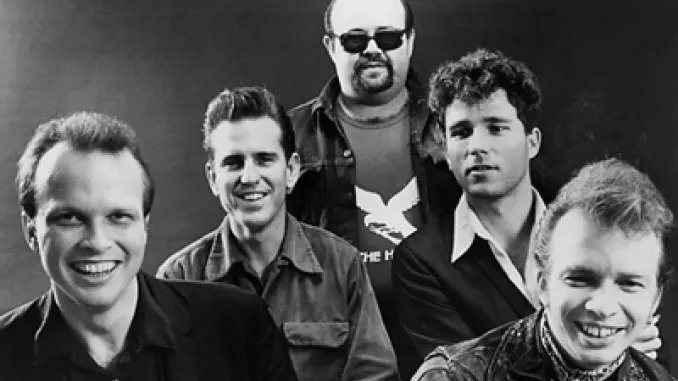
The Blasters are a rock and roll band formed in 1979 in Downey, California, by brothers Phil Alvin (vocals and guitar) and Dave Alvin (guitar), with bass guitarist John Bazz and drummer Bill Bateman.
This song was on their fourth album which was Hard Line which was released in 1985. This is it was written by Phil Alvin who was the guitarist, singer, and main songwriter for the band. The band produced a range of “rockabilly, country, blues, and New Orleans roadhouse R&B.” This album peaked at #86 on the Billboard Album Charts.
I’ve said this before but some rockabilly bands, or roots rock bands, sound like they came in on a nostalgia wave from the 1950s. There is nothing wrong with that but…not the Blasters. They sounded contemporary in the 80s even in the middle of an era where production was at its height and overkill. Their music still sounds timeless now…years after it was released and you can’t peg it to a decade.
The Blasters promoted the album heavily and did a bunch of radio concerts and TV appearances including their third appearance on American Bandstand, a taped concert for MTV, and Farm Aid. In the summer a full concert was taped while on their European tour for a show called Rockaplast. The concert was aired only in Europe and was an outstanding performance.
Dave Alvin left right after the release of this album.
Dave Alvin:“The night that Gene Taylor (piano player) left the Blasters was this gig in Montreal (Nov. 1985) and it was maybe the worst gig that I ever played. It was obvious that this wasn’t working anymore. The Thunderbirds had opened up the show and Gene just walked off stage at the end of the night and went right out the back door and got on the Thunderbirds bus and left. That night I decided I’m quitting. Everybody was so pissed off at each other. I flew to New York the next morning to do a Knitters gig at Irving Plaza and when I got to the gig, John said, ‘Billy’s (Zoom of X) leaving the band, you want to join?’ I said ‘Yeah!!’ without hesitation. Once I became a member of X, the Knitters became X.”
Trouble Bound
I’m old enough to know the score
But I’m young enough to want more more more
They say it means nothing all said and done
But that’s alright, I’m just here for the fun
And I don’t think twice
When the sun goes down
I’m trouble bound
There’s a demon deep inside of me
Sometimes I let the old boy run free
Trying to make a living during the day
Deep in the night I throw it all away
But I don’t think twice
When the sun goes down
I’m trouble bound
You see that girl lookin’ fine fine fine
I’m gonna throw her a good time line
If she bitеs I’ll reel her in
But if she don’t I’ll throw my line again
I’m old еnough to know the score
But I’m young enough to want more more more
And I don’t think twice
When the sun goes down
I’m trouble bound
You see that girl lookin’ fine fine fine
I’m gonna throw her a good time line
If she bites I’ll reel her in
But if she don’t I’ll throw my line again
This old world is a tired place
The same sad story on every face
Trying to make a living during the day
Deep in the night I throw it all away
And I don’t think twice
When the sun goes down
I’m trouble bound
Boys, we got a man with a dog collar on Maybe we ought to throw old Spike a bone?
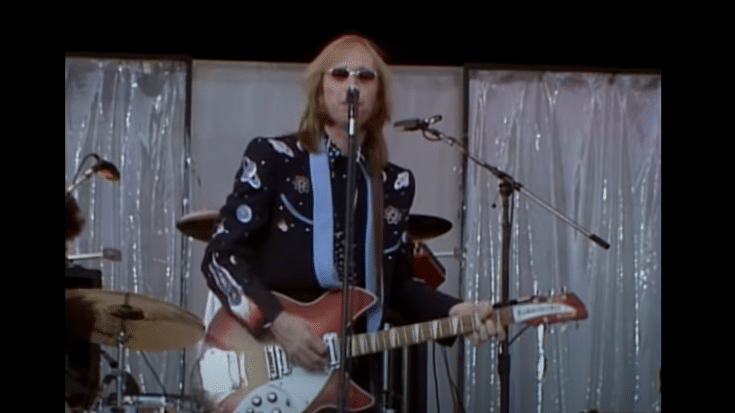
This song is not the best song that Petty ever recorded… but it’s fun and I like it. He has a little of a Booker T. and the MG’s vibe going on in the intro.
In the mid-eighties, we would cruise around in my Toyota Celica with a massive sound system and this is one of the songs we would play. The song was on Petty’s Southern Accents album. Tom Petty said it was about: “a really kind of ignorant redneck guy who is kind of shaken up when he sees a punk rocker.”
Southern Accents was his sixth studio album and it was released in 1985. He damaged his hand while making this album. He was frustrated with the song Rebels and listened to the song that the band and he were working on and realized…the demo he made was better. In a fit of frustration, Petty hit the wall a little too hard and severely damaged his bones and tendons. He said: “all of a sudden, I got Mickey Mouse’s hand. I get to the hospital, and it’s so bad that other doctors are being called in like, ‘hey, get a load of this’. I had to be given electro-shock therapy. The electrodes would force my hand to shut because the hand didn’t want to close because it hurt so bad.”
The album was not easy to make. When guitarist Mike Campbell came and played him his progression for a song…Petty scrapped it for something else. Later on, he would regret that decision because the progression turned out to be Boys of Summer which would become a massive hit for Don Henley.
Petty had wanted to make an album about the South because he was from Florida. That went out the window when he got to the studio but still did incorporate some into the songs. The album didn’t end up like Petty intended but he became really proud of the album because of all the hardships involved in making it.
The album peaked at #7 in the Billboard Album Charts, #16 in Canada (from what I found), #23 in the UK, and #25 in New Zealand in 1985.
Spike
Look out, another one, just like the other ones
Another bad-ass, another troublemaker
I’m scared, ain’t you boys scared?
I wonder if he’s gonna show us what bad is?
Boys, we got a man with a dog collar on
Maybe we ought to throw old Spike a bone?
Make me say
Here’s another misfit, another Jimmy Dean
Bet he’s got a motorbike, what do y’all think?
Bet if we be good we get a ride on it
If he ain’t too mad about the future
Maybe we ought to help him see
The future ain’t what it used to be
Listen
Hey Spike, what do you like?
Hey Spike, what do you like?
Oh, I say
Hey Spike, what do you like?
Hey Spike, you’re scaring my wife
Hey Spike, tell us about life
Could you tell me about life?
I might need need a dog collar too, boy
He might make me say say
I might say, might say
I’ve been listening to a lot of Graham Parker since last May when I posted his debut album Howlin’ Wind. If I had to compare him with someone…it would be Elvis Costello and Joe Jackson but with a touch of Van Morrison and The Band sprinkled in here and there.
In an interview, Parker revealed that the inspiration for the song came from his own personal experience. He was deeply in love with his wife at the time and wanted to express his love for her through his music. The song was written in just 20 minutes. He said he wanted to emulate Smokey Robinson on this song.
The song was released in 1985 and is the only Parker song to get into the Billboard Top 40. The song was on the album Steady Nerves. Parker wanted William Whittman as producer but his record company Electra did not like that choice. They went into the studio just to do a few tracks as a test and they sent Electra this track…and they approved Whittman.
Whittman was no slouch… As a producer and engineer his credits include Cyndi Lauper, Joan Osborne, The Hooters, and The Outfield. He also played bass in the Cyndi Lauper Band, recording and touring internationally, and also serves as the Musical Director.
The song has a nice feel to it. It’s been covered by David Bowie and Elvis Costello just to name a few.
The song peaked at #39 on the Billboard 100 and #94 in Canada in 1985. Graham Parker didn’t use Rumour as his backing band on this one. His backing band on this album included Brinsley Schwarz, George Small, Kevin Jenkins, Mike Braun, and Huw Gower.
Wake Up (Next To You)
I can’t have no objection to the world outside
I don’t have no complaints against life’s one way ride
I know I’m sleeping with an angel and this devil’s in luck
Wake up, wake up, wake up, wake up, wake up
I’ve been dreaming for too long
I guess something’s always wrong unless I
Wake up next to you
I wanna wake up next to you
The summer’s left a spell on us, magic and gold
The tarmac’s cracked and shimmering up on the road
I know I’m walking with an angel down a hot avenue
Wake up, wake up, wake up, wake up, wake up
I’ve been dreaming for too long
I guess something’s always wrong unless I
Wake up next to you, I wanna wake up
Wake up next to you
You know what I’m gonna do
I’m gonna pick up the telephone right now
And I’m gonna call Information
And I’ll say to them
“Where is she right now?
‘Cause I want her and I need her”
And I wanna hear her say
“Hey, baby, wake up”
Wake up next to you, I’m wanna wake up
Wake up next to you
Where is she right now?
‘Cause I want her and I need her
And I wanna hear her say
Wake up, wake up, wake up
Gonna wake up, wake up, wake up
Gonna wake up, wake up, wake up
Gonna wake up, wake up, wake up
When I first heard the song the first thing I thought of…love that guitar tone! Some people have falsely said it was about Lennon’s murder but it was already written by then.
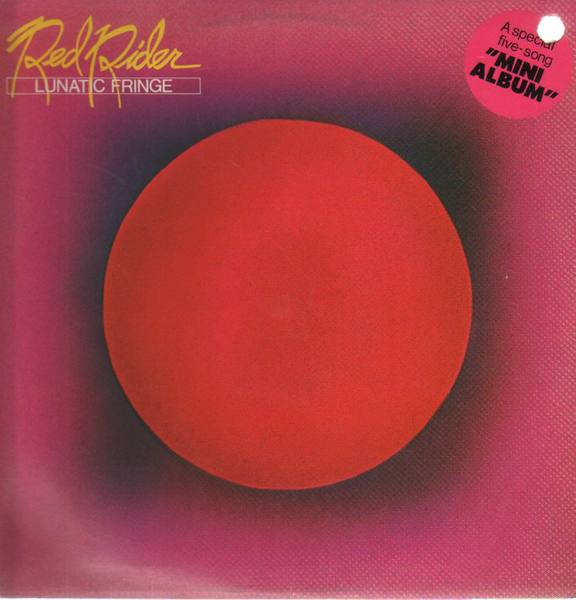
Red Rider was a Canadian band that had a lot of success in Canada but this song is their best-known song in the United States. They were known as Red Rider and later Tom Cochrane and Red Rider. They lasted until 1990 and reformed in 2002 and are still together with three original members including Cochrane.
This song was released in 1981. It starts off very ominous until a great-sounding guitar comes in and plays the main riff. The demo of this song was recorded on the night John Lennon was murdered.
Cochrane said the record company stated it wasn’t commercial enough but Lennon’s death made him want to release it all the more because Lennon echoed the song’s meaning. “It just hit me like a ton of bricks and I thought, here’s a guy that always wore his heart on his sleeve. For better, for worse, these lyrics are going to stand. I didn’t think the song would see the light of day because it was just so different, so unique. I’m very proud of this song. It’s probably one of the more unique pieces of music I’ve ever written.”
Tom Cochrane said he wrote this song about the oppression of people. He was inspired by a book about Raoul Wallenberg who rescued Jewish people from the Holocaust during the Second World War.
The song peaked at #11 on the U.S. Billboard Mainstream Rock Tracks in 1981.
Tom Cochrane: “Everybody was saying, ‘What are these lyrics? These are way too heavy for rock and roll. Why don’t you just get down to writing a pop song? Just write some pop lyrics and let’s get on with it.’ And I thought, ‘No, this is important to say.’ The song speaks out against racism, it speaks out against a number of things, and it topically is current today, I suppose, as it was back then in some ways. It’s about being vigilant, about our freedom.”
“Lunatic Fringe”
Lunatic fringe
I know you’re out there
You’re in hiding
And you hold your meetings
I can hear you coming
I know what you’re after
We’re wise to you this time (wise to you this time)
We won’t let you kill the laughterOh oh oh
Oh oh oh
Oh oh oh
Lunatic fringe
In the twilight’s last gleaming
But this is open season
But you won’t get too far
‘Cause you’ve got to blame someone
For your own confusion
We’re on guard this time (on guard this time)
Against your final solution
Oh no
Oh oh oh
Oh oh oh
Oh oh oh
We can hear you coming (we can hear you coming)
No, you’re not going to win this time (not gonna win)
We can hear the footsteps (we can hear the footsteps)
Hey, out along the walkway (out along the walkway)
Lunatic fringe
We all know you’re out there
Can you feel the resistance
Can you feel the thunder
After Mellencamp hit with the song Hurt So Good and Jack and Diane…the rest of the 80s he took advantage of the opportunity that he got. The radio constantly played him and to be truthful…I took him for granted. Next album…more hits…it just seemed natural. He is one of the very few artists I liked in the 80s that was constantly in the top 20. This song grew on me as time went by.
John Mellencamp was releasing quality songs in the eighties that were timeless. This song was on his album The Lonesome Jubilee which was released in 1987. When he wrote this he was tremendously popular but he had some downs in his personal life. His uncle and grandfather had recently died, and many of his friends were getting divorced. He made the statement “It’s horrible to think you’ve gotta be a miserable son of a bitch to write a good song, but I guess that’s kind of the way it works sometimes.”
The song peaked at #9 on the Billboard 100, #3 in Canada, #16 in New Zealand, and #86 in the UK….the heartland rockers didn’t translate as well in the UK at the time. That includes Petty, Mellencamp, and even Springsteen.
The video was shot outside of a house on a dirt road in Savannah, Georgia. Mellencamp wanted to show poverty in America to go along with the social commentary in the song, and also explore racism – the extras in the video are black. His next video – for “Hard Times For An Honest Man” – was also shot in Savannah.
Paper In Fire
She had a dream
And boy it was a good one
So she chased after her dream
With much desire
But when she get too close
To her expectations
Well the dream burned up
Like paper in fire
Paper in fire
Stinking up the ashtrays
Paper in fire
Smoking up the alleyways
Who’s to say the way
A man should spend his days
Do you let them smolder
Like paper in fire
He wanted love
With no involvement
So he chased the wind
That’s all his silly life required
And the days of vanity
Went on forever
And he saw his days burn up
Like paper in fire
Paper in fire
Stinking up the ashtrays
Paper in fire
Smoking up the alleyways
Who’s to say the way
A man should spend his days
Do you let them smolder
Like paper in fire
There’s a good life
Right across the green fields
And each generation
Stares at it from afar
But we keep no check
On our appetites
So the green fields turn to brown
Like paper in fire
Paper in fire
Stinking up the ashtrays
Paper in fire
Smoking up the alleyways
Who’s to say the way
A man should spend his days
Do you let them smolder
Like paper in fire
Buck Owens made the Bakersville sound popular and it’s one of my favorite types of country. My friend deKE mentioned this one on a list and again I’m surprised I haven’t posted it already. Yoakam and Steve Earle came out at around the same time and they were not like everyone else (George Jones has a funny quote about that at the bottom of the page). They were a breath of fresh air in country music and they crossed over genres as well.
It was released in 1986 and was the second single off of his debut album Guitars, Cadillacs, Etc., Etc. This song was written by Dwight Yoakam. Pete Anderson (producer) was a huge help in the making of the album. He provided some ideas music-wise, played the guitar, and even sang background vocals.
The two of them were surprised that the album had as much success as it did. Country music at the time was geared more toward country-pop and Dwight wrote these honky tonk type songs that weren’t popular at the time.
It originally came out as a six-track EP in 1984 on a small label. Warner Brothers were listening as he made it into a full album and it was released in 1986. The album peaked at #1 on the Billboard Country Charts, #61 on the Billboard Album Charts. The song Guitars, Cadillacs peaked at #4 on the Billboard Country Charts, and #2 on the Canadian Country Charts in 1986.
Rolling Stone magazine ranked this song as number 94 in their list of the 100 greatest country songs.
Dwight Yoakam: “We were reinterpreting the Bakersfield ‘shuffle sound’ of Buck Owens and what he was doing with that terse kind of shuffle.”
Pete Anderson:“I was a guitar player for hire in the early ’80s in Los Angeles, and I played mostly country music. I played some blues gigs and kind of roots rock Americana gigs. He needed a guitar player to play a gig, and we played together. He was playing some of his original songs and I got to hear the songs and said..Man, these are really good songs.”
George Jones:‘We spent all these years trying not to be called hillbillies, and Dwight Yoakam and Steve Earle fucked it up in one day.'”
Guitars, Cadillacs
Girl you taught me how to hurt real bad and cry myself to sleep
And showed me how this town can shatter dreams
Another lesson ’bout a naive fool who came to Babylon
And found out that the pie don’t taste so sweet
Now it’s guitars, Cadillacs, hillbilly music
Lonely, lonely streets that I call home
Yeah, my guitars, Cadillacs, hillbilly music
It’s the only thing that keeps me hangin’ on
Ain’t no glamour in this tinseled land of lost and wasted lives
Painful scars are all that’s left of me
Oh, but thank you girl for teachin’ me brand new ways to be cruel
If I can find my mind now I guess I’ll just leave
And it’s guitars, Cadillacs, hillbilly music
Lonely, lonely streets that I call home
Yeah, my guitars, Cadillacs, hillbilly music
It’s the only thing that keeps me hangin’ on
Oh it’s guitars, Cadillacs, hillbilly music
Lonely, lonely streets that I call home
Yeah, my guitars, Cadillacs, hillbilly music
It’s the only thing that keeps me hangin’ on
It’s the only thing that keeps me hangin’ on
It’s the only thing that keeps me hangin’ on
After the country post on Saturday…I looked through a lot of lists you all made. I listened…I want to thank Lisa for bringing this one up. It’s high time I did a post on Townes Van Zant. He was one of the best songwriters of the 20th Century.
What a songwriter Towns Van Zandt was…this song is probably best known for the Merle Haggard and Willie Nelson cover in 1983. The song peaked at #1 on the Country Billboard Charts and #1 on the Canadian Country Charts in 1983.
Willie Nelson has said that his and Merles duet album was almost complete but it lacked THAT song to put it over the top. Nelson said his daughter Lana suggested to him to listen to Pancho and Lefty by Townes Van Zandt. Willie then asked Townes what the song was about…and Townes said he didn’t know. Nelson then cut the track with his band. Willie and Merle had never heard that song before.
Nelson recorded it that night with his band and had to go and drag a sleepy Haggard (who was sleeping on his bus) to do the vocal part. The vocals were recorded in one take that night. They made a video of it and invited Townes to be in it. He was in the video as one of the Mexican Federales.
The royalties from this song helped Van Zandt through the years. He told a story of getting pulled over by a couple of policemen. His car sticker was out of date so he got into the police car and they asked him what he does for a living. He said he was a songwriter and the policemen shook their heads. He then told them that he wrote “Pancho and Lefty” and their eyes lit up and they started to grin. Pancho and Lefty were the policemen’s police radio code names. They let Townes go after that.
Van Zandt did not like fame or what came attached to it. It’s been reported that he turned down opportunities to write with Bob Dylan. He respected Dylan a great deal but it was the celebrity part he didn’t want. He never ended up on a major label through his career…by choice. Steve Earle counted Townes Van Zandt as his mentor, and the two formed a close bond in the years since their initial encounter in 1978.
Unfortunately, Earle also adopted Van Zandt’s drug and alcohol habits. So bad, in fact, that Van Zandt actually visited Earle during a rare moment in which Townes was sober. Earle told him “I must be in trouble if they’re sending you.” Earle eventually named his son after Townes… Justin Townes Earle.
The original song was on Van Zandt’s 1972 album The Late Great Townes Van Zandt.
For Willie’s Big 60 show, Bob Dylan and Willie Nelson sang Pancho and Lefty. Bob covered the song sporadically in concert during the 90’s. In 2004, Rolling Stone ranked “Pancho and Lefty” 41st on its list of the “100 Greatest Country Songs of All Time.
Townes Van Zandt on being invited to be in the video: “It was real nice they invited me,”they didn’t have to invite me and I made I think $100 dollars a day. I was the captain of the federales. And plus I got to ride a horse. I always like that. It took four and a half days and that video was four and a half minutes long…The money goes by a strange life, or elsewhere. I mean it doesn’t come to me. But money’s not the question. I would like if I could write a song that would somehow turn one five-year-old girl around to do right. Then I’ve done good. That’s what I care about.”
Townes Van Zandt: “I realize that I wrote it, but it’s hard to take credit for the writing, because it came from out of the blue. It came through me and it’s a real nice song, and I think, I’ve finally found out what it’s about. I’ve always wondered what it’s about. I kinda always knew it wasn’t about Pancho Villa, and then somebody told me that Pancho Villa had a buddy whose name in Spanish meant ‘Lefty.’ But in the song, my song, Pancho gets hung. ‘They only let him hang around out of kindness I suppose’ and the real Pancho Villa was assassinated.”
Pancho and Lefty
Living on the road my friend,
Is gonna keep you free and clean
Now you wear your skin like iron,
Your breath as hard as kerosene.
You weren’t your mama’s only boy,
But her favorite one it seems
She began to cry when you said goodbye,
And sank into your dreams.
Pancho was a bandit boy,
His horse was fast as polished steel
He wore his gun outside his pants
For all the honest world to feel.
Pancho met his match you know
On the deserts down in Mexico
Nobody heard his dying words,
Ah but that’s the way it goes.
All the Federales say
They could have had him any day
They only let him slip away
Out of kindness, I suppose.
Lefty, he can’t sing the blues
All night long like he used to.
The dust that Pancho bit down south
Ended up in Lefty’s mouth
The day they laid poor Pancho low,
Lefty split for Ohio
Where he got the bread to go,
There ain’t nobody knows
The poets tell how Pancho fell,
And Lefty’s living in cheap hotels
The desert’s quiet, Cleveland’s cold,
And so the story ends we’re told
Pancho needs your prayers it’s true,
But save a few for Lefty too
He only did what he had to do,
And now he’s growing old
You can feel the punishment, but you can’t commit the sin
You can probably count how many 80s ballads I like on one hand but… I liked this ballad when I heard it in the mid-80s. I could relate to it at the time and still can. The song was a hit, but Jones got a chilly reception from his American record company. He was told “I think it’s a B side” by an executive. It taught Jones to listen to himself and not the higher-ups.
There were two versions of this song. The original one was stripped down but the second had Phil Collins drumming and doing backups. I think it was a requirement in the 1980s to have Phil Collins on your record. This song was his biggest hit in the United States.
The song peaked at #4 on the Billboard 100, #12 in Canada, and #16 in the UK Charts in 1986. Howard Jones had 5 top twenty songs and 2 top ten songs in the 1980s. Altogether he had 11 songs in the top 100.
Howard Jones: “Well, I think we can all relate to the main theme of the song. But I was in San Francisco, and I was doing a promotion with the local record company guy, and we were crossing the street to go to the radio station, and he said to me, ‘Howard, what do you think of all the amazing women here in San Francisco?’ And I said, ‘Yeah, they’re great, they’re fantastic.’ And he said, ‘Well, you can look at the menu, but you don’t have to eat.’ And I’ve never actually heard anybody say that before. And so that was it, a good spark for a huge idea coming for a song.”
Howard Jones: “It was originally on the Dream Into Action album, and it’s quite stripped down. And I always thought I could probably get more out of the song. It was suggested I work with Phil, and I’d worked with Phil on the Prince’s Trust concerts here in England. And I’ve been in a band and so I knew Phil. So it was really great working with him. But I’ll tell you what, the fans all like the original version best.” I think it’s because it’s less slick and it’s got more emotion in it. Personally, I prefer the Phil Collins version. But I understand why they like the first one. On this tour when we’re playing the song, I play the original version. I don’t do the second one.”
The original version
No One Is To Blame
You can look at the menu, but you just can’t eat
You can feel the cushion, but you can’t have a seat
You can dip your foot in the pool, but you can’t have a swim
You can feel the punishment, but you can’t commit the sin
And you want her, and she wants you
We want everyone
And you want her and she wants you
No one, no one, no one ever is to blame
You can build a mansion, but you just can’t live in it
You’re the fastest runner but you’re not allowed to win
Some break the rules, and let you cut the cost
The insecurity is the thing that won’t get lost
And you want her, and she wants you
We want everyone
And you want her and she wants you
No one, no one, no one ever is to blame
You can see the summit but you can’t reach it
It’s the last piece of the puzzle but you just can’t make it fit
Doctor says you’re cured but you still feel the pain
Aspirations in the clouds but your hopes go down the drain
And you want her, and she wants you
We want everyone
And you want her and she wants you
No one, no one, no one ever is to blame
A very radio-friendly song by Rush. When I was a teen many local bands covered Rush…usually terrible, but they gave it a try. When I first heard this song…right away I made a connection to another older song written by Paul Simon. Sound of Silence has the lyrics:
And the sign said, “The words of the prophets Are written on the subway walls And tenement halls
Spirit of the Radio has:
For the words of the profits Were written on the studio wall Concert hall
Other than that…the songs have no other connection but I can’t help but think that Peart made that connection with Sound of Silence. That’s one of the reasons I liked it…plus the musical break during that time of the song. It gave the song a huge dynamic.
I always liked the intro by Alex Lifeson, who doesn’t get the credit he deserves compared to Lee and Peart. He is not doing a Van Halen finger tapping or hammer on… during that intro…he is actually picking those notes.
With the lyric “Sound of Salesmen” Peart would listen to bands they were opening for every night saying THIS was the city they loved the most… wherever they were… every night it was the same disingenuous spiel. One of the bands Peart was talking about was KISS who would market anything. Rush did open for KISS many times in the 1970s.
The song was on the Permanent Waves album released on January 18, 1980. The album peaked at #3 in Canada, #4 on the Billboard Album Charts, and #3 in the UK.
The song peaked at #22 in Canada, #51 on the Billboard 100, and #13 in the UK in 1980.
The song is Rush’s only entry on The Rock and Roll Hall of Fame’s 500 Songs that Shaped Rock and Roll. Rush wasn’t inducted into the Hall until 2013; they were first eligible in 1999.
Neil Peart: “‘The Spirit Of Radio’ was actually written as a tribute to all that was good about radio, celebrating my appreciation of magical moments I’d had since childhood, of hearing ‘the right song at the right time.’ However, [the song’s] celebration of the ideals of radio necessarily seemed like an attack on the reality – on the formulaic, mercenary programming of most radio stations, with music the last of anyone’s concerns. And yes, it was really ironic that such a song became popular on radio, though it was a kind of litmus test. Some radio guys who ‘got it’ could hear the song and think, ‘That’s the way it ought to be,’ while others – the shallow, swaggering salesmen-of-the-air – could be oblivious to the song’s meaning and proudly applaud themselves, ‘That’s about me!’
From Songfacts: Rush released a new animated video for the song on June 12, 2020 in celebration of the 40th anniversary of Permanent Waves. The conceptual clip references milestones and influential broadcasters in FM rock radio history, including an homage to the pioneering Italian radio inventor Guglielmo Marconi. It closes with a personal tribute to the late Rush drummer Neil Peart, who died in January 2020. Fantoons.tv created the visual along with producer Linda Otero and directors David Calcano and Alberto Hadyar.
The Spirit of Radio
Begin the day with a friendly voice
A companion, unobtrusive
Plays that song that’s so elusive
And the magic music makes your morning mood
Off on your way hit the open road
There is magic at your fingers
For the spirit ever lingers
Undemanding contact in your happy solitude
Invisible airwaves crackle with life
Bright antennae bristle with the energy
Emotional feedback on a timeless wavelength
Bearing a gift beyond price almost free
All this machinery making modern music
Can still be open-hearted
Not so coldly charted it’s really just a question
Of your honesty, yeah, your honesty
One likes to believe in the freedom of music
But glittering prizes and endless compromises
Shatter the illusion of integrity, yeah
Invisible airwaves crackle with life
Bright antennae bristle with the energy
Emotional feedback on a timeless wavelength
Bearing a gift beyond price almost free
For the words of the profits
Were written on the studio wall
Concert hall
And echoes with the sound of salesmen
Of salesmen, of salesmen
Jason & The Scorchers had a cult following in Nashville and around parts of the world in the 80s and got some airplay on MTV at the time…they were led by frontman Jason Ringenberg and they released a couple of EPs before releasing their debut album Lost & Found in 1985. They were classified at one time as alt-country but I would add rock/punk/rockabilly in there also.
I first heard them do a live version of “The Race Is On”…the old George Jones song and it won me over. They were really a big deal in the southeast in the middle eighties and should have spread more. Their music seemed to have a kinship to the Georgia Satellites but they were a little more country. Seeing them live is an event…Jason is all over the stage.
The band was formed in 1981. They were together through the 80s till the drummer Perry Baggs was diagnosed with diabetes and could not finish a 1990 tour. They have regrouped since then off and on and altogether have released 15 albums with the last one being in 2010. In 2012 Perry Baggs passed away because of diabetes.
They played a mixture between country and rock and fell into the cracks. They seemed to rock for country and too country for rock. Live they were unbeatable.
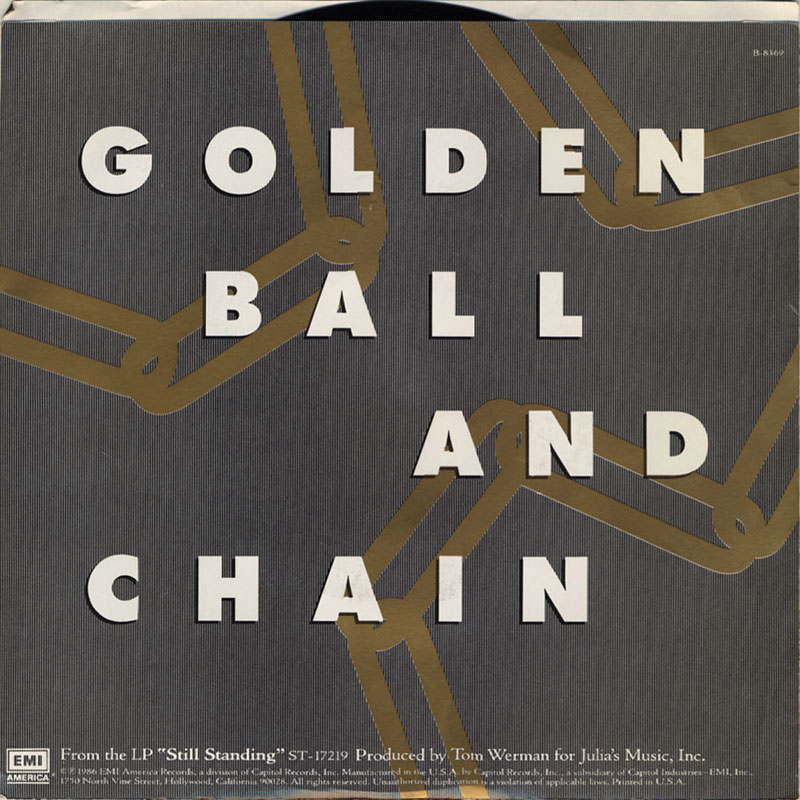
One of the things that made the band different is Jason wanted to sound country but guitar player Warner Hodges wanted to sound like AC/DC…that interplay made them unique. This song was off of their 1986 album Still Standing. The album peaked at #91 on the Billboard Album chart in 1987.
Golden Ball and Chain (written by Ringenberg) peaked at #16 in the Billboard Rock Mainstream Songs.
Golden Ball and Chain
“Oh hello there” you coughed and smiled Your hair messed up enough, a little wild You said, “I’m sorry but it’s all a waste Not a whole meal just a little taste”
Now you’ve nothing left to fight and gain Another line another carved link of your name On the golden ball and chain
L.A. it calls and London grooms the star Get on the phone to find out who you are But happiness was a dying trend You say you saw that train around the bend
That was carrying its weight in pain The engine straining on the full weight of your name And the golden ball and chain
You saw it then, you saw the sign A drowning sailor in a jug of wine First it was her, but now it’s you No psychoanalyst is there to tell you what to do
So now you whimper like a helpless child You broke when they quit saying you were wild But your tears they are like grass in sand They speak to no one, they give no command
No there’s nothing left to cleanse the stain Another line another carved link of your name On the golden ball and chain
Pure rock and roll from the 1980s. One of the few who was producing raw rock at that time. I love the riff that Bob Stinson played in this song. Paul Westerberg remembered: “Bob started on the wrong note so he bent it [up] to make it fit.”
Let It Be was the third full album by the band’s original lineup: lead singer and songwriter Paul Westerberg, guitarist Bob Stinson, bassist Tommy Stinson, and drummer Chris Mars.
This was their last album on the small label Twin Tone Records and one of their best. The name of the album was Let It Be and it has a typical Replacements story. In the spring of 1984 the band was en route to a gig in Madison when inspiration struck. “We were riding around . . . kicking around silly album names and we thought, ‘The next song that comes on the radio, we’ll name it after that,’” said Westerberg.
Just then…the sound of Paul McCartney’s voice came out through the speakers: “When I find myself in times of trouble . . . ” It was fate… Let It Be would be the title of The Replacements’ new album.
This song is credited to all of the members of the band.
Paul Westerberg: We were supposed to stop, and I guess somebody didn’t stop, so we said, ‘Take it down to hell after the lead’—we weren’t sure what to do, you can hear me yell, ‘C!’ and everybody ended back on the C chord. It was a lucky guess. Then Chris started slowing it down. He was thinking, Aw, fuck this, let’s end it. Then we picked it back up. Later we overdubbed the piano and finger snaps.“Bob started on the wrong note so he bent it [up] to make it fit.”
Favorite Thing
Yeah!
Yeah, kid, it’s a really hip With plenty of flash and you know it Yeah, dad, you’re rocking real bad Don’t break your neck when you fall down laughing Donna, wanna, Donna
Yeah, I know I look like hell I smoke and I drink and I’m feeling swell Yeah, I hear you think it’s weird But I don’t give a single shit
Yeah, man, it’s a-hip, you know what I’m saying It’s a-hip, you know what I’m saying And I hear it My heart aches, it’s a-looking for a dolly Looking for a dolly, can’t you hear it Want to be something, want to be anything
Yeah, I know I feel this way But I ain’t gonna never change Yeah, I hear, I think, I know Rock don’t give a shit, you know
You’re my favorite thing You’re my favorite thing Bar nothing
You’re my favorite thing You’re my favorite thing You’re my favorite thing You’re my, you’re my, you’re my, you’re my Thing, thing, Thing, thing, Thing, thing, once in a while Thing, thing, Thing, thing, Thing, thing, once in a while Thing, thing, thing Thing, thing, thing Thing, thing, once in a while
Working Girl will probably not be remembered by everyone but it was a good song. Its video pushed the idea of the song…a layabout musician who was mooching off of his girlfriend so he didn’t have to get a real job himself.
This song was released in 1981 and got some MTV play. I was at my cousin’s house when I first heard it and I liked it right away. When the chorus kicks in it’s bright and a great hook. The Members started as a punk band from England.
The song is not one I heard on the radio much back then…mostly just the video. Working Girl peaked at #34 on the Billboard Mainstream Charts and #41 on the UK Indie Chart.
The band broke formed in 1976 with lead singer Nicky Tesco (real name Nick Lightowlers), Gary Baker (guitar), and Steve Morley (bass guitar), initially with Steve Maycock then Clive Parker (drums). Morley and Parker were later replaced by Chris Payne and Adrian Lillywhite.
The band broke up in 1983 when Tesco left the band after a tour of the U.S. The original lineup was reformed in 2008. After releasing only 3 albums during their original run… they released 8 albums including the greatest hits and live album between 2010 thru 2021. Tesco passed away in 2022.
Working Girl
See her laughing, talking as she’s walking to the factory She don’t look that much But I tell you, she’s a ticket to the easy life for me
If she works nine to five Sure to keep my love alive If she works nine to five That’s okay with me
Hey, I’m in love with the working girl Hey, I’m in love with the working girl
I walk up to her Tell her how we must have been made for each other And I’d take her home Why, I’d even take her ’round for tea with my mother
Then she can go out to work and I’d Lie around the house in the dirt and She could go out to work Bring her money home for me
Hey, I’m in love with the working girl Hey, I’m in love with the working girl
(Working girl) We got a love so pure (Working girl) She pays the rent (Working girl) Once in a lifetime chance in her (Working girl) Must be heaven-sent
Hey, I’m in love with the working girl Hey, I’m in love with the working girl
We go out at night She can buy all the drinks with the money she’s earned I dazzle her with science And grace her with all this truth and knowledge I’ve learned
Then we can come back to her place I’d put on my “hate to borrow money” face We get a cab to her place She’d do alright by me
Hey, I’m in love with the working girl Hey, I’m in love with the working girl Hey, I’m in love with the working girl Hey, I’m in love with the working girl
Hey, I’m in love with the working girl Hey, I’m in love with the working girl Hey, I’m in love with the working girl Hey, I’m in love with the working girl
I’ve been listening to Garland Jeffreys since last week or so. He has performed some very quality covers. Today I have two of them. I’ve been presenting music covers on Tuesdays for a few months. I’ll still have them every once in a while… until then go to my friend Randy’s site…he specializes in them and has a wealth of information.
Jeffreys covered this song in 1980 and it charted at #66 on the Billboard 100. I didn’t think I’d ever heard him before but I was wrong. When heard his version of this song not long ago… I seem to remember it in the 80s. It was probably the first time I had heard the song by anyone. I remember him on a show singing it.
The original release contained an EP called Escapades. He had a tremendous band backing him. Jeffreys had members of the E-Street Band AND Graham Parker’s band Rumour on the album.
Allmusic review by Mark Deming said: The guitar-fueled cover of “96 Tears” pushed Escape Artist into the charts and made it Jeffreys’ first real hit in the United States, but there isn’t a single tune on this album that doesn’t sound great and have something to say; with the possible exception of Ghost Writer, this is Garland Jeffreys’ finest hour.
This classic sixties song was originally by “? and the Mysterians.” It was written by “?,” the band’s frontman who wanted to be anonymous (he’s listed on the composer credits as (Rudy Martinez). At one point he referred to the individual band members only by three-letter names (at one point, the band was known as XYZ). The mystery helped market the group, who wore dark glasses to add to the intrigue. The song peaked at #1 on the Billboard 100 and #37 in the UK in 1966. They were an American garage rock band of Mexican origins from Bay City and Saginaw in Michigan who were initially active between 1962 and 1969.
I’m also including his cover of…a 2017 rendition of Waiting For The Man by his friend Lou Reed.
96 Tears
Too many teardrops For one heart to be crying Too many teardrops For one heart to carry on You’re way on top now Since you left me You’re always laughing Way down at me But watch out now I’m gonna get there We’ll be together For just a little while And then I’m gonna Put you way down here And you’ll start crying Ninety-six tears Cry, cry And when the sun comes up I’ll be on top You’ll be way down there Looking up And I might wave Come up here But I don’t see you Waving now I’m way down here Wondering how I’m gonna get you But I know now I’ll just cry, cry
I’ll just cry Too many teardrops For one heart to be crying Too many teardrops For one heart to carry on You’re gonna cry ninety-six tears You’re gonna cry ninety-six tears You’re gonna cry, cry, cry, cry now You’re gonna cry, cry, cry, cry Ninety-six tears Come on and lemme Hear you cry, now Ninety-six tears, woo I wanna hear you cry Night and day, yeah All night long Uh, ninety-six tears Cry, cry, cry Come on, baby Let me hear you cry now All night long Uh, ninety-six tears Yeah, come on now Uh, ninety-six tears
CB (Cincinnati Babyhead) and I have got together again and worked on this post. When CB sent me the link to “Wild In The Streets” I was sold, hooked, and happy. The more I listened to Jeffreys music the more it affected me like Bruce Springsteen and Van Morrison did when I first heard them. Jeffreys’ music found a spot in me where Morrison and Springsteen lives. It’s deep, sprawling, and meaningful. Not many artists affect me like this. Like Big Star, The Replacements, and others…this man should be known to more people.
This post is a sample platter…I kept it relatively short so you can enjoy the songs. I’ll be covering more Garland Jeffreys coming up in the next few weeks to give more information rather than cramming everything in one post.
Jeffreys is a Brooklyn, N.Y.-born singer/songwriter who has released 15 studio albums in his 53-year career. His mixed heritage Puerto Rican and African-American is mirrored in his music, which embraces rock, soul, R&B, and reggae. He began his career performing solo in Manhattan clubs in 1966 after attending college at Syracuse University as an art major, where he became friends with Lou Reed. He then spent some time in Italy studying art before he came back to further his education at New York’s Institute of Fine Arts.
In 1969 he formed a band called Grinder’s Switch, they released just one album Garland Jeffreys & Grinder’s Switch. Members of that band played on the debut album of John Cale of the Velvet Underground. Jeffreys wrote a song for the album called Fairweather Friend and did backup vocals for it. In 1973 he released his first album entitled Garland Jeffreys.
Springsteen opened for Jeffreys at the Cafe Au Go Go back in 1972. They’ve stayed in touch ever since. Jeffreys appears on Light of Day, a great Springsteen tribute album, performing “Streets of Philadelphia” with just as much emotion as its author. He was friends with peers like Lou Reed, Bob Marley, John Lennon, and Joe Strummer, explored in both original songs (“Reggae on Broadway”) and a pair of choice covers (“I’m Waiting for the Man,” “Help”).
One thing I found is he really connected with baseball. His album One Eyed Jack has him on the front cover when he was a young kid in a baseball uniform and his childhood idol Jackie Robinson was on the back. Some of his credits list baseball players from Bobby Bonds to Brian Doyle.
Let us start off with the first song that CB sent me that won me over within a few seconds. It’s as New York as Martin Scorsese, Springsteen, The Yankees, The Statue of Liberty, and subways. It was released in 1973 as a single and was included in the 1977 album Ghost Writer… it is called Wild In The Streets. It’s naked, raw, and genuine…just like Jeffreys.
35 Millimeter Dreams is a song off of the 1977 album Ghost Writer. This one is catchy and it’s too bad it didn’t catch on when released as a single.
Hail Hail Rock and Roll…CB did a take on Hail Hail Rock and Roll. Some of his take: A little tribute to Rock n Roll by one of the best guys out there. This song gets into your blood. Garland knows his stuff. CB has been thinking about this rock and roll thing lately. All the music and pioneers that have contributed to this thing he loves so much. This song more than touches on a lot of those thoughts and feelings.
It was released in 1983 on the album Don’t Call Me Buckwheat.
Roller Coaster Town was released in 2011 on the album The King Of In Between. The album made numerous annual Best Of lists with NPR naming it a “best of the year so far” and Rolling Stone calling it one of the Best Under The Radar Albums of 2011.
City Kids is off the American Boy and Girl album released in 1979. Here is what CB says about the album: “This is NY music from Jeffrey’s experience. He’s lived it. Another one of those “How come artists that never made it bigger?” He is a NY poet. Songs got into me, moved me. What can I say? Springsteen’s ‘Wild Innocent’ vibe. This is his world like Scorsese’s. Close to the streets. When he sings ‘City Kids’ I’m gone with him. Sends a few shivers. Love the feel. Cousin to ”Jungleland’ by Bruce. ‘Matador’ is just beautiful. Sung in his distinctive voice. Hit the romantic side of CB.”
I want to thank Dave from A Sound Day. Dave will explain what is happening in the first paragraph. I’ve always wanted to do a post on Husker Du but didn’t know where to start. So Dave wrote this post and I wrote a post for him on The Replacements that he is posting today. The two bands are from the same music scene in Minneapolis and knew each other well.
“Not long after Athens and sometime before Seattle, the epicenter of the American underground rock scene was Minneapolis.” So wrote Magnet magazine. That time was the mid-to-late-’80s, and at the forefront of that was two angry bands – Husker Du and the Replacements. Both had huge cult followings and flirted with bigtime success but neither really broke through in a big way. But each influenced later bands and are widely respected. Now the odd thing is my friend Max and I have some similar musical tastes but each of us like one of those bands and are close to oblivious to the other. So he suggested we write a little for each other’s sites about “our” bands. For me, that was Husker Du.
I’m guessing there’s a good chance that you’ve heard of Husker Du. But a much more limited chance you’ve heard them or know their music. That’s understandable. At home in the U.S., they’ve never had a top 40 single nor a platinum album. But they paved the way for bands you might have heard of, like Nirvana, Soundgarden and the Foo Fighters.
First the name. Husker Du is actually Norwegian for “Do you remember?” and it was the name of a board game and also a European TV game show. Someone in the band knew of it and inserted it into one of their songs in progress as a kind of placeholder for lyrics and it ended up sticking as the band name. They added “umlauts” – those dots – over the “u”s in the name to make it seem more menacing.
They were a power trio, formed in 1979 by guitarist/singer Bob Mould , bassist Greg Norton and his mustache, and drummer/singer Grant Hart. With a similar origin to R.E.M., they formed by way of a mix of college students and record stores. R.E.M.’s college guys met Peter Buck in a record store; Husker Du had Bob Mould who was a college student who hung around a record store in the Twin cities where Grant Hart worked and Greg Norton (a friend of Hart’s at the time) hung around. Appropriately, Peter Buck was a fan of Husker Du’s and noted “I played with Husker Du several times and hung out with them.” When they started the band they were all 20 or younger.
Husker Du was initially loud, fast, angry, and rather anti-social. And did I mention very loud? “Fueled by testosterone, alcohol, boredom, anger at the government…” Mould would later say. Probably a lot of amphetamines or speed too, he might have added. Anyone who’s ever had the misfortu… err, “opportunity”… to be around fans of thrash metal or hardcore punk knows there is no shortage at all of bands who can turn the amps up to 11, shout nonsensical lyrics, and generally rage noisily like a late night thunderstorm. Ones that can do that while actually making music, songs that have melody and make sense, are much rarer. And that’s what Husker Du did. I think Max here once made a great point – he liked Howard Jones because you could strip away the production and layered synthesizers of his ’80s new wave and you’d still be left with real songs that had merit. So too Husker; many of their songs could be taken down to an acoustic guitar and singer and still hold their own as real songs. That was part of their appeal to me.
They played almost nightly in the early-’80s and soon got signed to the small, indie SST label owned by underground punkers Black Flag. They put out their first record in 1982. By 1984, they’d grown tired of conventional thrash music and according to Mould wanted to do something new that “is going to be beyond the whole idea of ‘punk rock’ or whatever.” The result was Zen Arcade, a record Rolling Stone declared “the closest hardcore will ever get to opera” and then New Day Rising and Flip Your Wig and its single “Makes no sense at All.” The album hit #1 on the influential CMJ record chart – sort of a college rock list in the States – and on the British indie charts and the single #2 on the Indie rock charts over there. But big-time success eluded them, even when they showed their sense of humor and did a cover of “Love is All Around”, parodying the opening of another Minneapolis landmark, the Mary Tyler Moore Show. What it did though was start a bidding war for their services among the major labels. They ended up signing with Warner Bros. in late ’85, the first real truly alt-rock band to do so, because Warner agreed to give them creative freedom and the ability to produce their own records. This played a part in R.E.M.’s decision to choose Warner a couple of years later also and probably changed the way many “underground” bands looked at the huge multi-nats thereafter. Some fans accused them of selling out, but the group felt they had hit a “ceiling” with SST; they couldn’t press enough records to meet demand nor promote their acts to get them radio play or prestige billing in concert. Even though they didn’t hit the mega-stardom levels some thought, it was a good move for Husker Du. Grant Hart had to get a loan at his mom’s credit union to pay for the first HD record. But, as Mould would point out Warner “always paid on time” and after signing with them “we all bought houses. Modest houses.”
Their first WB album was Candy Apple Grey, which had the single “Don’t Want to Know If You’re Lonely”. It got good reviews and sold better than the predecessors (which were rumored to have sold in the neighborhood of 5000 copies in the U.S., in some cases) . It got them more notice on college stations and even occasionally on MTV. But to me, their crowning achievement was Warehouse : Stories and Songs, which came out in 1987. It was a sprawling 20-song double LP (but single CD), and like their others self-produced and recorded in Minnesota.
It was a continuing evolution for them. As Allmusic put it, in their review which gave it a perfect 5-stars, it was “cleaner and more produced” than anything they’d done before but “they never sound like they are selling out.” It was also the one that the alt-rock station that I listened to much of the time in the late-’80s, CFNY Toronto, latched onto. It blew me away. There was a lot of mainstream “heavy metal” around, or its imitation, at the time from Motley Crue to Bon Jovi, but nothing on air sounded like these short, high-powered, angst-filled rockers that would leave the guitars and amps of a Def Leppard or Posion shaking in their boots. But they were strangely likable too. Clearly, they’d heard a Beatles or Byrds or Fleetwood Mac record in their time and they carried over a bit of that melodic craftmanship.
Eleven of the 20 were written by Bob Mould, and the other nine, Grant Hart. Which points to an underlying issue – the band was breaking up by then, mostly due to personality problems. Norton had just gotten married and the band’s manager commit suicide. But Mould and Hart had grown to despise each other. They were competitive and jealous (each wanted more of the writing credits than the other) of one another. Both were gay, which was unusual in that style of music but would be no issue except it was also widely rumored, but never confirmed, that they had been a couple who’d broken up by Warehouse. Mould has said “I’ve never talked about Grant’s situation and I never will. I think that’s personal.” More widely confirmed is that they were going in different directions in lifestyle. Mould was quitting drugs and had all but given up drinking, meanwhile, Hart was battling heroin addiction with limited success and refusing to go to the rehab his bandmates wanted him to attend. This made him less than reliable as a player in gigs. In the end, the band cut short their tour for this album and officially broke up in early-’88.
But they left us with this opus. Agreed, a bit overblown (Mould has said since it should have been a single LP instead) with some fantastic, angsty rock tunes like “Bed of Nails”, “She Floated Away”, a Grant Hart tune allmusic calls a “sea shanty” that always appealed to me and the very-near hit “Could You Be the One?”. That two-and-a-half-minute bit of Flying V guitar angst and nervousness over a relationship’s direction jumped out of the speakers at me and got a good amount of play on both MTV and Canada’s Much Music, as well as influencing later videos by their use of colored screens and so forth.
The album only barely hit the British top 100 and peaked at #117 on Billboard at home but remains one of the best ’80s guitar-rock albums and one that caught some other musicians’ ears. Kurt Cobain listed them as one of his favorite bands and his one-time bandmate, Dave Grohl? Well, he says “I was a huge Husker Du fan and obviously Bob Mould’s music has influenced the way I write music and play guitar. A lot of what I do comes from Bob.”
Bob Mould has been the one who has carried on and had success in music post-Husker. He briefly had the underrated power pop band Sugar (hmm, another topic for Power Pop blog, Max?) and has put out numerous solo albums ranging from acoustic guitar balladry to electronica to raging neo-punk. Definitely, a career worth looking into now and again. Greg Norton quit to become a restauranteur and chef, while Hart played in some indie bands and segued into visual arts quite a bit before sadly passing away of cancer and hepatitis in 2017.
Thanks, Max for letting me drone on and talk a bit about an American band I think deserves more attention than they got.









 PowerPop... An Eclectic Collection of Pop Culture