The slide guitar sounds familiar because George Harrison produced this and played slide on it. The year before, Badfinger played on Harrison’s first solo album, All Things Must Pass. Leon Russell played piano on this recording. It was mixed by Todd Rundgren. It’s a beautiful song about longing.
They were signed to the Beatle’s Apple Records which was a blessing and a curse. It got them noticed with initial excitement but also hindered their development for their own sound.
This is one of their best-known songs. This is their highest charting song and it peaked at #4 in the Billboard 100, #2 in Canada, and #10 in the UK Charts in 1972. The song was off of the Straight Up album that peaked at #31 in the Billboard album charts.
From Songfacts
Badfinger guitarist Peter Ham wrote this. A few years later, after a dispute with their record label over missing money, Ham committed suicide.
This sounds a lot like The Beatles. Badfinger was one of the first bands to sign with The Beatles’ label, Apple Records. As a result, they got to know The Beatles quite well and picked up on their sound. Badfinger signed with Warner Brothers when Apple Records folded.
This song appeared on the Fox television show The Simpsons, in the episode “Eternal Moonshine of the Simpson Mind” (Episode 9, Season 19) in which Homer tries to recollect events that happened from the night before. It had a very high rating on Fox, and is considered by fans to be as good as the original seasons episodes.
Day After Day
I remember finding out about you
Every day, my mind is all around you
Looking out from my lonely room, day after day
Bring it home, baby, make it soon
I give my love to you
I remember holding you while you sleep
Every day, I feel the tears that you weep
Looking out of my lonely gloom, day after day
Bring it home, baby, make it soon
I give my love to you
Looking out of my lonely room, day after day
Bring it home, baby, make it soon
I give my love to you
I remember finding out about you
Every day, my mind is all around you
Looking out of my lonely gloom, day after day
Bring it home, baby, make it soon
I give my love to you.
The first chords come in and start the powerful riff. I love the way Bruce phrases the lyrics with an urgency to be heard. As soon as I heard lyrics
I don’t give a damn For just the in-betweens Honey I want the heart, I want the soul I want control right now
I was hooked. Springsteen was one artist who lived up to the “new Dylan” title that was given to him by the press. They are quite different artists but Springsteen managed to live up to the hype.
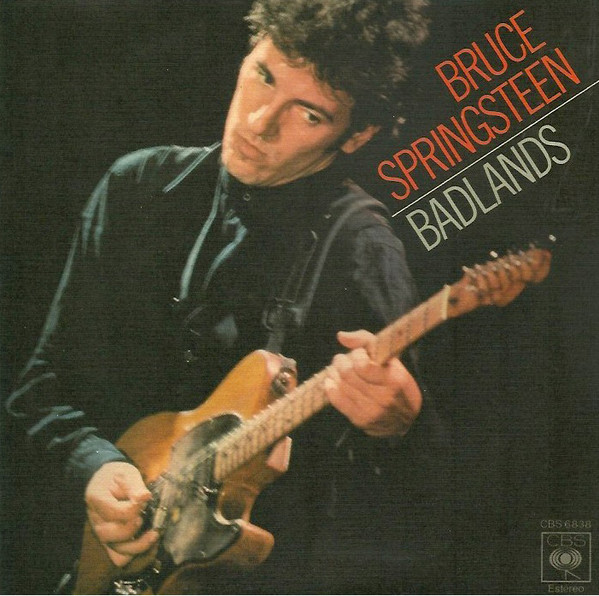
This was the second single off Darkness On The Edge Of Town, the first album Springsteen released after a legal battle with his first manager, Mike Appel, kept him from recording for almost 3 years. The first single was #33 Prove It All Night.
The title came from a 1973 movie of the same name starring Martin Sheen and Sissy Spacek. Springsteen got the idea from a poster in the theater lobby. Springsteen did not see the movie until after he wrote this.
The song peaked at #42 in the Billboard 100 in 1978.
From Songfacts
This was more mature songwriting from Springsteen, as much of Darkness On The Edge Of Town reflects the characters of his previous album, Born To Run, getting older and more pessimistic.
“Badlands” was considered for the name of the album. Around this time, Springsteen would come up with titles and try to come up with deserving songs for them. He told Rolling Stone in 2010: “Badlands, that’s a great title, but It would be easy to blow it. But I kept writing and I kept writing and I kept writing and writing until I had a song that I felt deserved that title.”
This is a concert favorite. It was featured on Springsteen’s 1999 reunion tour with The E Street Band, and on many of their subsequent tours.
Badlands is a US national park in South Dakota. It is famous for striking scenery and expansive prairie land.
The version on Live 1975-1985 was recorded in Arizona the night after Ronald Reagan was elected president. Bruce introduced the song by saying: “I don’t know what you guys thought of what happened last night, but I thought it was pretty terrifying.” Reagan would later misinterpret “Born In The U.S.A.” in a 1984 campaign speech.
Bill Murray and Paul Shaffer chose to open the 25th Anniversary Show of Saturday Night Live with this song, as sung by Murray’s character of Nick the Lounge Singer. According to the book Live From New York, they chose this song because Murray and Shaffer felt that there was a certain lyric in the song that best described their experience of growing up in life and in show business on Saturday Night Live in the ’70s. Murray was quoted as saying performing the harmony with Paul was one of the high points of his entire career.
Badlands
Lights out tonight Trouble in the heartland Got a head-on collision Smashin’ in my guts man I’m caught in a crossfire That I don’t understand I don’t give a damn For the same old played out scenes I don’t give a damn For just the in-betweens Honey I want the heart, I want the soul I want control right now Talk about a dream Try to make it real You wake up in the night With a fear so real Spend your life waiting For a moment that just don’t come Well don’t waste your time waiting
Badlands, you gotta live it every day Let the broken hearts stand As the price you’ve gotta pay We’ll keep pushin’ till it’s understood And these badlands start treating us good
Workin’ in the fields Til you get your back burned Workin’ ‘neath the wheel Till you get your facts learned Baby got my facts Learned real good right now Poor man want to be rich Rich man want to be king And a king ain’t satisfied Till he rules everything I want to go out tonight I want to find out what I got
I believe in the love that you gave me I believe in the hope that can save me I believe in the faith And I pray that some day it may raise me Above these badlands
Badlands, you gotta live it every day Let the broken hearts stand As the price you’ve gotta pay We’ll keep pushin’ till it’s understood And these badlands start treating us good
For the ones who had a notion A notion deep inside That it ain’t no sin to be glad you’re alive I want to find one face that ain’t looking through me I want to find one place I want to spit in the face of these badlands
Badlands, you gotta live it every day Let the broken hearts stand As the price you’ve gotta pay We’ll keep pushin’ till it’s understood And these badlands start treating us good
This song gets overlooked at times. It’s a simple song but a good pop song. I do remember hearing this on the radio quite a bit when it was released. The song was on the album George Harrison (#14) and it peaked at #16 in the Billboard 100, #51 in the UK, and #7 in Canada. This song stood out a little in this disco and punk era.
Steve Winwood is providing backup vocals and playing a PolyMoog synthesizer. The song was included in the Eric Idle film “Nuns on the Run” released in 1990.
In 2010, AOL radio listeners chose the track as one of the “10 Best George Harrison Songs”, appearing at number 2 on the list, behind “My Sweet Lord”… I don’t agree with the AOL listeners as being number 2 but I do like the song.
The original video is below…the duck baffles me but I just enjoy it.
Blow Away
Day turned black, sky ripped apart Rained for a year ’til it dampened my heart Cracks and leaks The floorboards caught rot About to go down I’d almost forgot.
All I got to do is to love you All I got to be is, be happy All it’s got to take is some warmth to make it Blow away, blow away, blow away.
Sky cleared up, day turned to bright Closing both eyes now the head filled with light Hard to remember what a state I was in Instant amnesia Yang to the yin.
All I got to do is to love you All I got to be is, be happy All it’s got to take is some warmth to make it Blow away, blow away, blow away.
Wind blew in, cloud was dispersed Rainbows appearing, the pressures were burst Breezes a-singing, now feeling good The moment had passed Like I knew that it should.
All I got to do is to love you All I got to be is, be happy All it’s got to take is some warmth to make it Blow away, blow away, blow away.
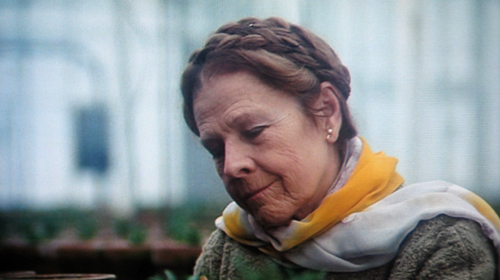
Probably the most well-known role she played was the character of Maude in Harold and Maude. She is also remembered as Minnie Castevet in Rosemary’s Baby. Ruth Gordon was also a member of the Algonquin Round Table. She was a brilliant writer and actress. She was a stage actress mostly until the 1940s when she started to appear in films. She went back to the stage until the 60s where she started to be in films up to her death.
Ruth was born in 1896 in Wollaston, Massachusetts. She was a very successful writer and actress.
In 1915 she made her Broadway debut in Peter Pan in the role of Nibs. Her performance endeared her to the New York critic Alexander Woollcott, who introduced her to the famous Algonquin Round Table, a group that included George S. Kaufman, Robert Benchley, Edna Ferber, Alice Duer Miller, Heywood Broun, Dorothy Parker, and Harpo Marx.
Throughout the next three decades, Ruth appeared in several plays by playwrights such as Henrik Ibsen, Anton Chekhov, and Booth Tarkington. She enjoyed her greatest stage triumph in a 1936 production of The Country-Wife at London’s Old Vic.
She married screenwriter and director Garson Kanin in 1942. Ruth and Garson collaborated on many plays and screenplays together.
She appeared in a handful of films during the early 1940s, including Abe Lincoln in Illinois (1940), Dr. Ehrlich’s Magic Bullet (1940), Two-Faced Woman (1941; Greta Garbo’s final film), Edge of Darkness (1942), and Action in the North Atlantic (1943). She then returned to the stage and did not appear in another film for 22 years.
She came back to film in1965 with Inside Daisy Clover ( best-supporting-actress Oscar nomination). She won an Oscar for her supporting role in Rosemary’s Baby (1968), and she developed a strong cult following with her offbeat characters in Where’s Poppa (1970) and Harold and Maude (1971). She appeared in many television programs and made-for-TV movies during the 1960s and ’70s and won an Emmy in 1979 for her role on an episode of the popular sitcom Taxi. Gordon and Kanin also collaborated on one more writing project, the TV movie Hardhat and Legs (1980).
Ruth Gordon died on August 28, 1985, and Garson Kanin died on March 13, 1999.
The name NERF actually comes from drag racing. In the late ‘60s, foam-covered bars sometimes called “nerf bars” were put on the front of the trucks that pushed racers to the starting line. This prevented damage to cars.
I had many Nerf Footballs and small Nerf basketballs growing up and they were always fun to bonk someone in the head.
In 1968 Reyn Guyer who invented Twister helped invent the Nerf Ball. He was testing a new caveman game with colleagues. The prototype included a bunch of foam-rubber rocks that, the men soon discovered, were more fun to throw at one another than use in the game. He then thought (and probably saved a lot of broken lamps…and spankings) they could be used as balls and played within a home.
In 1969 Reyn tried to sell the idea to Milton Bradley but they didn’t want it, but Parker Brothers did. The first Nerf product as a 4-inch polyurethane foam ball. They marketed it as “world’s first official indoor ball” and soon they had blasters, footballs (Fred Cox, kicker for the Vikings actually invented the Nerf Football), basketballs, living room baseball and a line of Nerf products.
Parker Brothers handed the company off to Kenner Products, a sister company, in 1991, when Hasbro acquired the Nerf line. Throughout the 1990s and early 2000s, the Nerf brand served under the subsidiaries OddzOn and Larami before Hasbro took full control of the brand.
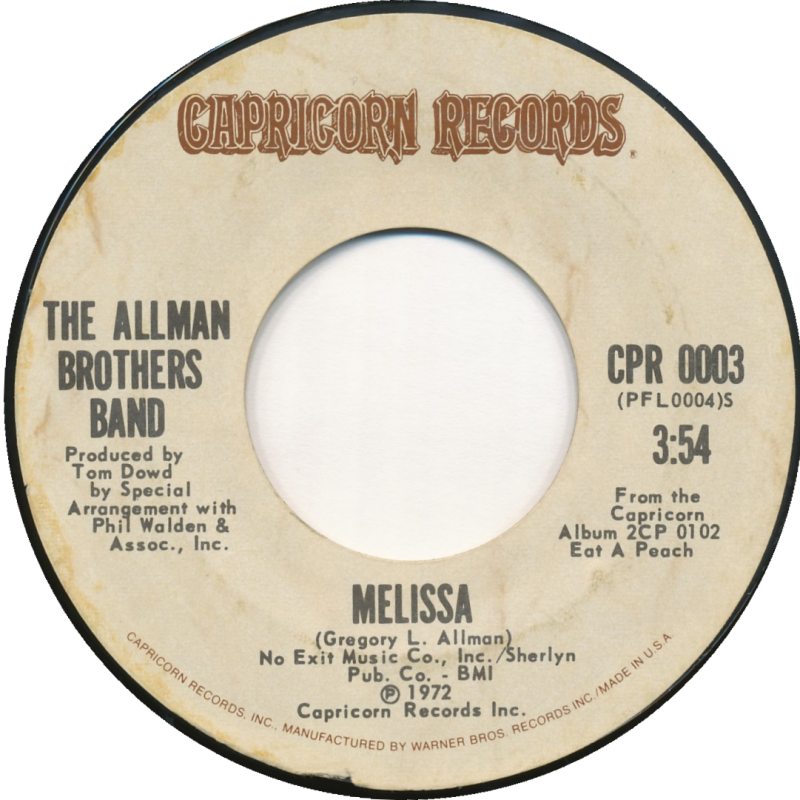
This was Duane Allman’s favorite song that his brother Gregg wrote….but it was also one of the first songs the band recorded without Duane Allman, who died in a motorcycle accident about four months before it was released. Eat A Peach was dedicated to Duane. At Duane Allman’s funeral in 1971, Gregg Allman played this song on one of Duane’s old guitars. At the service, Gregg said, “This was my brother’s favorite song that I ever wrote.”
The song peaked at #86 in the Billboard 100 in 1972. The song didn’t chart too well but it remains a staple of classic radio.
Gregg actually taught Duane how to play the guitar, who quickly became a virtuoso. They played together until 1969 when Duane assembled what would become the Allman Brothers Band. Gregg was reluctant to sign on having already been accepted into college to be a dental surgeon. He soon did and they played together until Duane’s death in 1971.
From Songfacts
Gregg Allman spoke at length about this song in an interview with the San Luis Obispo (California) Tribune on November 30, 2006: “I wrote that song in 1967 in a place called the Evergreen Hotel in Pensacola, Florida. By that time I got so sick of playing other people’s material that I just sat down and said, ‘OK, here we go. One, two, three – we’re going to try to write songs.’ And about 200 songs later – much garbage to take out – I wrote this song called ‘Melissa.’ And I had everything but the title. I thought (referring to lyrics): ‘But back home, we always run… to sweet Barbara’ – no. Diane…? We always run… to sweet Bertha.’ No, so I just kind of put it away for a while.
So one night I was in the grocery store – it was my turn to go get the tea, the coffee, the sugar and all that other s–t… and there was this Spanish lady there and she had this little toddler with her – this little girl. And I’m sitting there, getting a few things and what have you. And this little girl takes off, running down the aisle. And the lady yells, Oh, Melissa! Melissa, come back, Melissa!’ And I went, ‘Oh – that’s it.’ I forgot about half the stuff I went for, I went back home and, man, it was finished, only I couldn’t really tell if it was worth a damn or not because I’d written so many bad ones. So I didn’t really show it to anybody for about a year. And then I was the last one to get to Jacksonville – I was the last one to join the band that became the Allman Brothers. And my brother sometimes late at night after dinner, he’d say, ‘Man, go get your guitar and play me that song – that song about that girl.’ And I’d play it for him every now and then.
After my brother’s accident, we had three vinyl sides done of Peach, so I thought well we’ll do that, and then on the way down there I wrote “Ain’t Wastin’ Time No More.” I wrote that for my brother. We were all in pretty bad shape. I had just gotten back from Jamaica and I was weighing at about 156, 6-foot-1-and-a-half – I was pretty skinny. So we went back down there, got in the studio and finished the record. And the damn thing shipped gold.”
This was first recorded in 1968 by the 31st Of February, one of Gregg and Duane Allman’s first bands. Duane’s version of this with the 31st Of February is the first recording of him playing the bottleneck slide guitar, a technique he became famous for.
Steve Alaimo, who was operating the studio where The Allman Brothers recorded this song, received a songwriting credit on this track along with Gregg Allman. Alaimo had a few Hot 100 entries as a singer in the ’60s and early ’70s before moving into production work.
The part of the song that begins: “Crossroads, will you ever let him go” is probably a reference to Robert Johnson, a blues legend who supposedly went to a crossroads and sold his soul to the devil.
Gregg Allman told Esquire in 2013 that thanks to ready access to biphetamines, he had been awake for about two days when he wrote this song. He was working like crazy on another song, but when he played it for his brother, Duane said, “What you have here is a new set of lyrics to an obscure Rolling Stones song.” Said Gregg: “That’s discouraging as s–t, right there. And just as I was about to say f–k it, I wrote ‘Melissa.'”
The Allman Brothers performed this on the last episode of the syndicated Dennis Miller Show on July 25, 1992.
This was used in a commercial television advertisement campaign for Cingular/AT&T Wireless.
Melissa
Crossroads, seem to come and go, yeah The gypsy flies from coast to coast Knowing many, loving none Bearing sorrow, having fun But, back home he’ll always run To sweet Melissa Mmm, hmm
Freight train, each car looks the same, all the same And no one knows the gypsy’s name And no one hears his lonely sighs There are no blankets where he lies Lord, in his deepest dreams the gypsy flies With sweet Melissa Mm, hmm
Again, the mornin’s come Again, he’s on the run A sunbeam’s shinin’ through his hair Fear not to have a care Well, pick up your gear and gypsy roll on Roll on
Crossroads, will you ever let him go? Lord, Lord Or will you hide the dead man’s ghost? Or will he lie, beneath the clay? Or will his spirit float away? But, I know that he won’t stay Without Melissa Yes, I know that he won’t stay, yeah Without Melissa Lord, Lord, it’s all the same
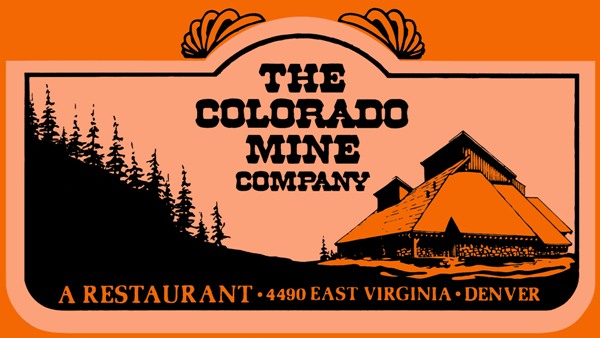
Supposedly on February 1, 1976, Elvis Presley boarded his private jet (The Lisa Marie) from Graceland to Denver for one reason…a Fool’s Gold Loaf sandwich. He flew some buddies he was entertaining to the Colorado Mine Company restaurant who served these 50 dollar sandwichs. They actually only landed at the airport and were met by the owners of the restaurant with Nick Andurlakis the cook with 22 of these sandwiches to be consumed on the plane. Nick and the pilots were invited to stay and dine with Elvis…After the meal was finished…Elvis and his friends flew back to Graceland.
The Colorado Mine Company is now sadly closed but Nick Andurlakis now owns a restaurant called Nick’s Cafe and still sells these to anyone brave enough to try. … better have some cholesterol pills and a couple of defibrillators would not hurt.
Here are the ingredients and instructions if you dare. Nick has said…make these at your own risk. One should feed 8-10 people and a bite or two would not hurt… but again supposedly, Elvis could knock one down by himself…
2 T margarine 1 loaf French white bread 1 lb / 450 g bacon slices 1 jar of smooth peanut butter 1 jar of grape jelly
Preheat the oven to 350F/180C. Spread the margarine generously all over all sides of the loaf. Place it on a baking sheet in the oven.
Meanwhile, fry the bacon in a bit of oil until it is crisp and drain it thoroughly on paper towels.
Remove the loaf from the oven when it is evenly browned, after approximately 15 minutes. Slice the loaf lengthwise and hollow out the interior, leaving as much bread along the walls as desired. Slather a thick layer of peanut butter in the cavity of the loaf and follow with another thick layer of grape jelly. Use lots of both.
Arrange the bacon slices inside the cavity, or, if desired, layer the bacon slivers between the peanut butter and jelly. Close the loaf, slice and eat.
Here is much more about the event… “Thank You Very Much”
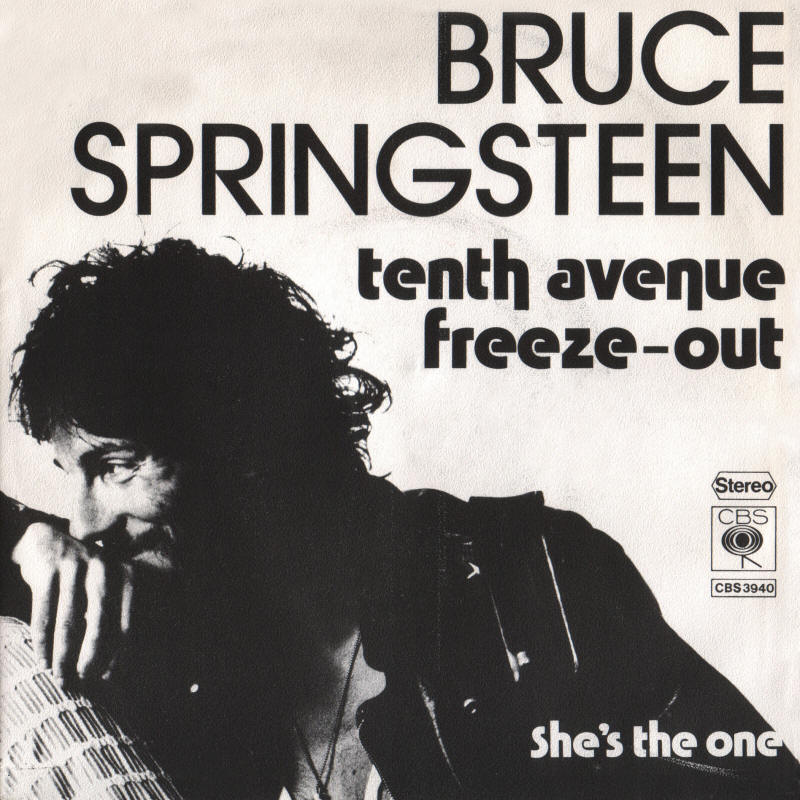
A great song with an R&B feel to it. Little Steven directed the horn section. Bruce sings it like it’s his last day on earth…like many of his other songs. Tenth Avenue runs through E Street in Belmar, New Jersey. The band got their name from the street, which is where they used to rehearse. Springsteen, however, has said that he has no idea what a “Tenth Avenue Freeze-out” is.
The song peaked at #83 in the Billboard 100 in 1976. It was off the Born To Run album that propelled him to stardom.
The “Big Man” in the third verse is Clarence Clemons…the saxophone player. Springsteen met him when Clemons came into a club in Asbury Park, N.J., where Bruce was playing. It was a stormy night, and the door flew off the hinges when Clemons opened it. Springsteen would talk about how he “Literally blew the door off the place.”
In Clemons’ autobiography Big Man: Real Life and Tall Tales, he explained: “It was one of those nor’easters – cold, raining, lightning and thunder. Now, this is God’s honest truth. I open the door to the club and a gust of wind blew the door right out of my hand and down the street. So here I am, a big black guy, in Asbury Park, with lightning flashing behind me. I said to Bruce, ‘I want to sit in.’ He says, ‘Sure, anything you want.'”
From Songfacts
This tells the story of the E Street Band coming together. On Springsteen’s first album in 1973, he didn’t use a lot of backup musicians, but on his next one The E Street band was crucial to the sound. Later on, Springsteen released the albums Nebraska and The Ghost Of Tom Joad without the band, but they didn’t sell nearly as well as the ones they played on.
Clemons was working as a social worker at the time and playing in a Jersey Shore bar band when he got his big break with Bruce.
At many of their early shows, this was the first song in the set.
Springsteen used this to introduce the band on the 1999 E Street Band Reunion tour. He would explain what each member brought to the group (Roy Bittan – Foundation, Little Steven – Soul, etc.), ending with Clemons. Some nights the band members did short solos as they were introduced.
“Bad Scooter” in the opening line, “Teardrops on the city Bad Scooter searching for his groove” is Springsteen. Note the initials are the same.
While touring with “the other band” during his 1992/93 tour promoting the Human Touch and Lucky Town albums, Springsteen sometimes brought out Clarence “Big Man” Clemons to play his usual sax part in this song. When introduced, the crowd always gave the big man a huge ovation. >>
After imploring the audience to put down the guacamole dip and chicken fingers (we were actually eating chicken wings, but anyway…) Springsteen played this as the first song of his performance at halftime of the 2009 Super Bowl between the Cardinals and Steelers.
Tenth Avenue Freeze Out
Tear drops on the city, Bad Scooter searching for his groove Seem like the whole world walking pretty and you can’t find the room to move Well, everybody better move over, that’s all ‘Cause I’m running on the bad side and I got my back to the wall Tenth Avenue freeze-out Tenth Avenue freeze-out
Well, I was stranded in the jungle trying to take in all the heat they was giving The night is dark but the sidewalk’s bright and lined with the light of the living From a tenement window a transistor blasts Turn around the corner, things got real quiet real fast I walked into a Tenth Avenue freeze-out Tenth Avenue freeze-out
And I’m all alone, I’m all alone (And kid, you better get the picture) And I’m on my own, I’m on my own And I can’t go home
When the change was made uptown and the Big Man joined the band From the coastline to the city, all the little pretties raise their hands I’m gonna sit back right easy and laugh When Scooter and the Big Man bust this city in half With the Tenth Avenue freeze-out Tenth Avenue freeze-out Tenth Avenue freeze-out Tenth Avenue freeze I’m talking ’bout a Tenth Oh, nothing but a Tenth I’m talking ’bout a Tenth I’m talking bout a Tenth, Tenth, Tenth, Tenth, Tenth, Tenth, Tenth, Tenth Tenth, Tenth, Tenth, Tenth, Tenth, I’m talking ’bout a Tenth Avenue freeze-out…
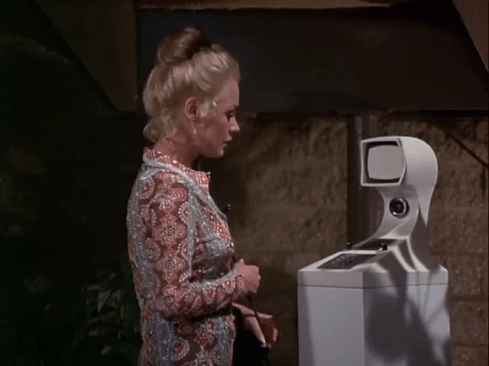
I was watching this Night Gallery episode (Tell David) from 1971 a few months ago and was surprised at some things they showed. It was about a woman who got lost in the rain and ended up at a stranger’s home. She went in to use the phone and the house was in the future…Actually in the future. There is a twist but that doesn’t matter.
A few things caught my attention. I started to research it and Me-TV had a page dedicated to it. Almost looks like Rod Serling knew something…or the set designers did…
One was a video phone…reminded me of Skype.
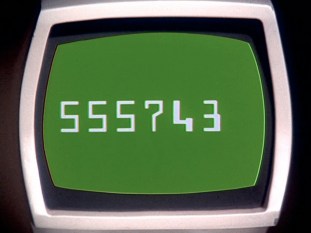
Her dialing a number
Techno Music
GPS or Google Maps
Non-Tar Cigarettes… Current Vape?
From IMDB
“Tell David…” is an odd episode. A woman loses her way, trying to find her house, and ends up getting help from some odd people. They have technology beyond that which she is used to. David, the young man (who has the same name as her little boy) is a master at repairing devices she’s never seen. When she returns to her husband, he is dressed as a monster and nags at her and chases her. It is obvious that this is the way he sees her. She is monumentally jealous. She comes to realize that she has an opportunity to change her history, to prevent herself from doing a deadly thing. As it goes along, it becomes nonsensical. It also gets caught in the problems with the mutation of time.
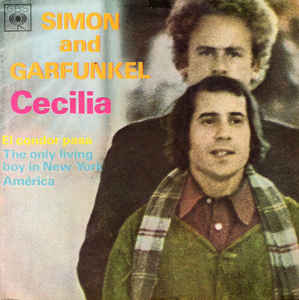
One of the many songs on the greatest hits album. If I remember right it closed out the second side on the album. The main thing I remember about this song is the rhythm track. Cecilia was originally on the Bridge Over Troubled Water album. The song peaked at #4 in the Billboard 100 and #2 in Canada in 1970.
The greatest hits came out in 1972 and in 2003, the album was ranked number 293 on Rolling Stone magazine’s list of the 500 greatest albums of all time.
From Songfacts
This song is about a guy who had a girlfriend, but then she broke up with him. Like it says in one of the verses, “I got up to wash my face, when I come back to bed someone’s taken my place.” But later on they get back together – “Jubilation, she loves me again.”
No too much should be read into the lyrics of this song. As Paul Simon explained in an interview with Rolling Stone: “Every day I’d come back from the studio, working on whatever we were working on, and I’d play this pounding thing. So then I said, ‘Let’s make a record out of that.’ So we copied it over and extended it double the amount, so now we have three minutes of track, and the track is great. So now I pick up the guitar and I start to go, ‘Well, this will be like the guitar part’ – dung chicka dung chicka dung, and lyrics were virtually the first lines I said: ‘You’re breakin’ my heart, I’m down on my knees.’ They’re not lines at all, but it was right for that song, and I like that. It was like a little piece of magical fluff, but it works.” >>
In the Catholic church, Cecilia is the patron saint of musicians. In this context, the song can be interpreted as the singer asking for musical guidance, possibly to help writing a song. Paul Simon says he can’t remember the specific inspiration when he was writing the song, but he knew Cecilia is the goddess of music. >>
According to the liner notes to Paul Simon’s Anthology album, the strange sounding rhythm to this particular track was Paul and Art slapping their thighs, while Paul’s brother Eddie thumped a piano bench and a friend named Stewie Scharff strummed a guitar with its strings slackened to the point of atonality. This all happened at a house Paul and Art were living in on Blue Jay Way in the summer of 1969, not long after the Charles Manson murders took place at the nearby home of the actress Sharon Tate. After they started the pounding and came up with the rhythm, they got out their Sony reel-to-reel tape recorder and made the recording. There was a 1:15 section that Simon thought was great, so they looped it in the studio, which wasn’t easy in 1969 – you had to actually cut out the tape and put it on the recorder in a loop. Their producer Roy Halee added some reverb, and they had their basic backing track from this home recording.
Worked into the mix is the sound of drumsticks falling on the parquet floor of the Columbia Records studio in Los Angeles. Simon also played a bit of xylophone that was heavily processed and added to the track. They had a lot of fun recording it and were enjoying various experiments in sound.
When the Bridge Over Troubled Water album was finished, Paul Simon, Art Garfunkel and Roy Halee all thought this would be the first single, as catchy, upbeat songs were typically chosen to introduce a new album. Columbia Records president Clive Davis decided that the powerful, plaintive title track needed to be the album’s calling card, so he bucked convention and released that one as the first single instead. It was a shrewd move: “Bridge Over Troubled Water” went to #1 for six weeks a propelled the album to the top as well – it spent a total of 10 weeks at #1. “Cecilia” was issued as the second single.
In 1996 Suggs, the lead singer for Madness, teamed up with vocal duo Louchie Lou and Michie One to record a cover that peaked at #4 in the UK. This is the only time the song reached the Top 75 in Britain as surprisingly Simon & Garfunkel’s original 1970 single failed to chart there.
The Swedish pop group Ace Of Base recorded a song called “Cecilia” on their 1998 album Flowers that was based on the character in this song.
Cecilia
Cecilia, you’re breaking my heart You’re shaking my confidence daily Oh, Cecilia, I’m down on my knees I’m begging you please to come home
Cecilia, you’re breaking my heart You’re shaking my confidence daily Oh, Cecilia, I’m down on my knees I’m begging you please to come home Come on home
Making love in the afternoon with Cecilia Up in my bedroom (making love) I got up to wash my face When I come back to bed someone’s taken my place
Cecilia, you’re breaking my heart You’re shaking my confidence daily Oh, Cecilia, I’m down on my knees I’m begging you please to come home Come on home
Ba-ba-ba-ba-ba-ba-ba, ba-ba-ba-ba-ba-ba
Jubilation She loves me again I fall on the floor and I’m laughing
Jubilation She loves me again I fall on the floor and I’m laughing
On August 2, 1979, I remember the news that afternoon at 6 saying that a plane crash happened in Canton Ohio and Thurman Munson was dead. It was shocking because he was only 32 years old and catcher for the Yankees.
While I was watching the 77 and 78 World Series there was one player I dreaded seeing at-bat with men on…, not Reggie Jackson…it was Thurman Munson. He is the only then Yankee player that I liked and respected.
Thurman is more remembered today for how his life ended than being a very good baseball player. He didn’t look like a prototypical Yankee. He was short and squatty with a sometimes difficult personality. He never did hit with a lot of power, the most home runs he ever hit in a season was 20. He ended up with a career batting average of .292 and an OBP of .346…very good for a catcher in that time period or now.
He was born in Canton Ohio in 1947 and grew up in a dysfunctional family. He kept progressing at baseball and attended Kent State. He was drafted with the 4th pick of the draft by the Yankees in 1968. He played with the Yankees from 1969 – 1979. Munson won Rookie of the Year in 1970. He was a 7-time All-Star and an MVP in 1976. Thurman hurt his shoulder in the mid-seventies and had problems throwing the ball to second but he played through it all.
He had a rivalry with Carlton Fisk with the Red Sox and was fun to watch play. He was grumpy with reporters but good with kids and teammates. Former GM Gabe Paul said, “Thurman Munson is a nice guy who doesn’t want anyone to know it.”
He missed his family and wanted to be at home. He learned to fly and bought a prop plane so he could go home every night after a game. He kept progressing from plane to plane until he bought a Cessna $1.4 million twin-engine jet. He was practicing takeoffs and landings that day and came in and clipped some trees. He had three passengers, David Hall, and Jerry Anderson.
The plane caught fire as soon as it landed. Munson was conscious but had suffered serious spinal damage and couldn’t move. Anderson and Hall tried to pull Thurman to safety but the main door was jammed. Munson’s legs were trapped inside the crushed fuselage and wouldn’t budge. By the time the two men burst through the emergency exit, the smoke had consumed the entire plane. Hall and Anderson jumped out of the jet barely surviving. Thurman was dead at 32.
At the time I thought Thurman would be in the Hall of Fame. His numbers at the time of his death were comparable to Carlton Fisk. Munson appeared on the ballot in 1981, two years after a plane crash ended his life, and never got more than 15.5% of the vote.
Here is a list of his accomplishments from Wiki…but remember he was passed in many categories after he died.
Most of the Sweet’s singles sounded like different bands were on each one. They changed their styles quite a bit. Little Willy was their most successful single and it peaked at #3 in the Billboard 100, #1 in Canada, and #4 in the UK.
This song is a catchy pop song and they would soon move to Ballroom Blitz, Fox On The Run, and Love is Like Oxygen.
From Songfacts
This song was written by Nicky Chinn and Mike Chapman – neither of whom were members of Sweet. Instead, Chinn and Chapman were a major force in the British pop music industry in the 1970s. Just as in the US, Leiber and Stoller became known for “the Brill Building sound,” Chinn and Chapman in the UK became known as the “Chinnichap” sound. They produced songs for Suzi Quatro, and British bands Smokie, Mud, Racey, and The Arrows. Chapman would later produce albums for Blondie and The Knack, and along with Holly Knight, wrote Pat Benatar’s hit “Love Is A Battlefield.”
“Little Willy” was Sweet’s biggest US hit, peaking the charts at #3 when it was re-released in 1973. It was a non-album single, but went gold in the US and UK all by itself anyway. Critics in the UK dismissed the song as “bubblegum” and referred to the lyrics as “nursery porn.” Sweet wanted to shed their bubblegum/ glam-rock image and become more hardcore, so they later turned to writing their own songs.
Putting this song together, Chinn and Chapman used a pounding drum beat popularized by Slade and producer Mike Leander. They mixed in the riff from the Who song “I Can’t Explain,” and added the exceptionally catchy chorus, which dug into your ear and wouldn’t let go. The song didn’t tell any kind of story – just that Willy won’t go home – but listeners didn’t care and with Glam Rock, the lyrics weren’t supposed to make sense anyway.
Little Willy
North side , east side Little Willy, Willy wears the crown, he’s the king around town Dancing, glancing Willy drives them silly with his star shoe shimmy shuffle down
Way past one, and feeling allright ‘Cause with little Willy round they can last all night Hey down, stay down, stay down down ‘Cause little Willy, Willy won’t go home
But you can’t push Willy round Willy won’t go, try tellin’ everybody but, oh no Little Willy, Willy won’t go home Up town, down town
Little Willy, Willy drives them wild with his run-around style Inside, outside Willy sends them silly with his star-shine shimmy shuffle smile Mama done chase Willy down through the hall
But laugh, Willy laugh, he don’t care at all Hey down, stay down, stay down, down ‘Cause little Willy, Willy won’t go home But you can’t push Willy round
Willy won’t go, try tellin’ everybody but, oh no Little Willy, Willy won’t go home Little Willy, Willy won’t Willy won’t, Willy won’t
Little Willy, Willy won’t Willy won’t, Willy won’t Little Willy, Willy won’t Willy won’t, Willy won’t
Little Willy, Willy won’t Willy won’t, Willy won’t Little Willy, Willy won’t go home But you can’t push Willy round
Willy won’t go, try tellin’ everybody but, oh no Little Willy, Willy won’t go home Little Willy, Willy won’t go home But you can’t push Willy round
Willy won’t go, try tellin’ everybody but, oh no Little Willy, Willy won’t go home
Growing up in Tennessee I was and still am a huge baseball fan. My father grew up liking the underdog Dodgers with Jackie Robinson when they played in Brooklyn while his brothers were Yankee fans. In 1977 I started to watch baseball and through my father connected with the Dodgers. He was more of a college football fan (Tennesse loves football) but I never got his passion for that. I watched some baseball before 77 but I was totally lost in it from then on.
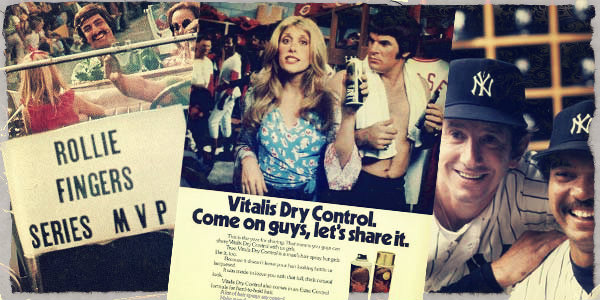
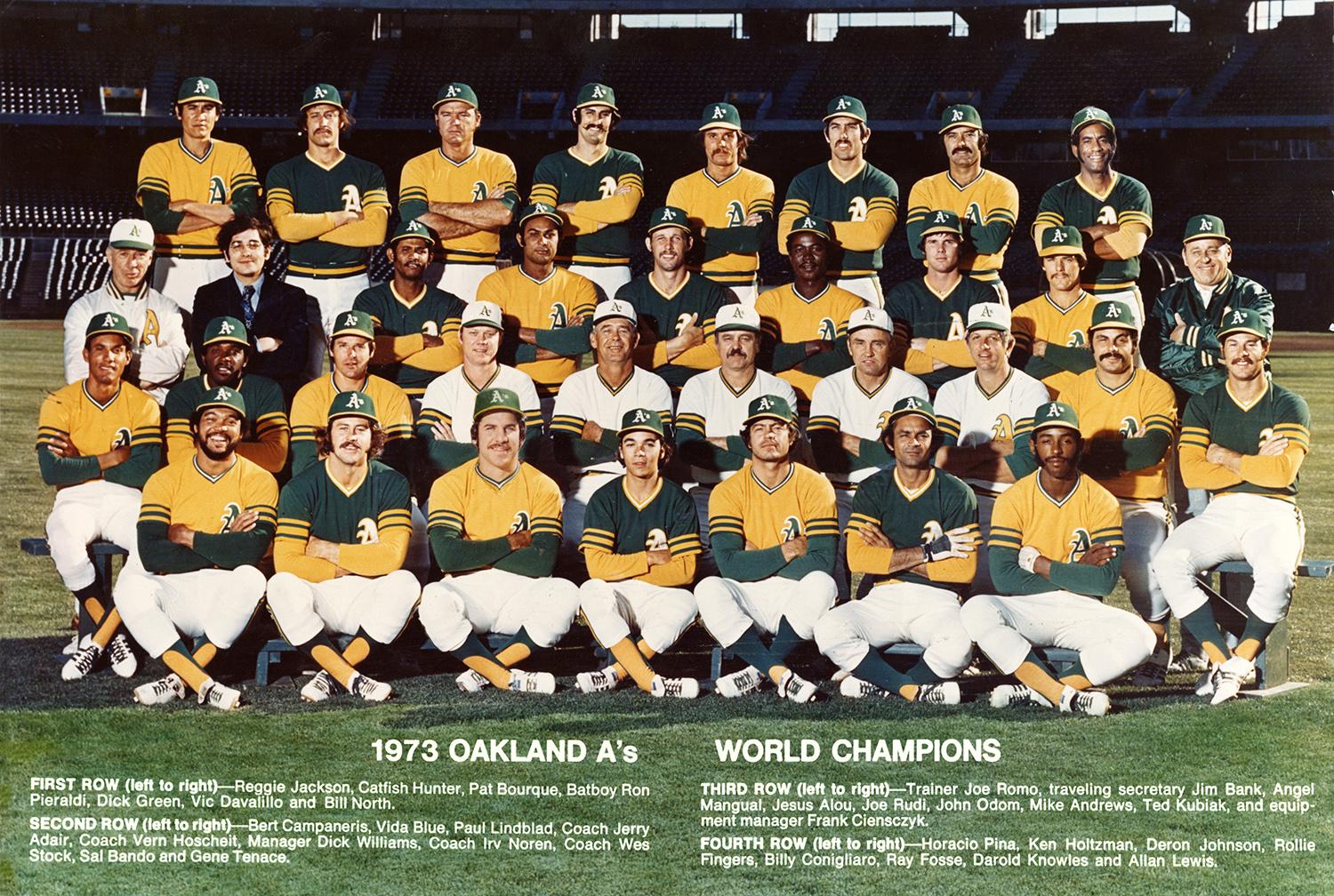
Watching the 70s baseball was a special event. The hair, mustaches, and every color of uniform were interesting. For some reason, the Oakland A’s uniforms were my favorite.
I’ve always liked the individualism of baseball. No rigid measurements in baseball parks like football or other sports. Every park is a unique home. There were cookie cutter (multi-purpose) parks with astroturf like Cincinnati and Pittsburgh. The 8th wonder of the world Astrodome in Houston. A very old Tiger Stadium in Detroit. The pavilion and palm tree Dodger Stadium. The ivy-walled Wrigley field in Chicago and the oh so green Fenway Park.
Baseball wasn’t as accessible then as it is now. You had to wait for the Saturday game of the week and Monday night baseball. That made it more special. There were certain teams they showed more than others. I was lucky, the Dodgers were one of the teams. I remember a lot of Pirates, Reds, Yankees, Red Sox, and Dodger games because they all were very good.
I remember the players of that time so well. Thurman Munson (the only then Yankee I liked), Al Hrabosky (The Mad Hungarian), Dave Parker (He looked like the biggest man ever), Luis Tiant, Oscar Gamble (the cool hair), Bill Lee, Willie Stargell, Greg Luzinski, Gary Maddox, Mike Schmidt, George Foster (who I met a few years ago), Joe Morgan (who I liked better as a player than announcer), Catfish Hunter.
I could probably still mimic most of the players batting stances now.
Some of the managers were just as popular as the players for different reasons. Earl Weaver (one of the pioneers of sabermetrics), Billy Martin (could make about any team win…for a short time), and Sparky Anderson.
Some events I remember are Disco Demolition Night in Chicago (exploding disco records) and 10 cent beer night (that turned into a riot in Cleveland…who would have guessed that?).
My favorite player… Hands down Ron Cey. Steve Garvey was the marquee name of the Dodgers but Ron Cey would come through in the clutch and had a better batting eye than Garvey. I played 3rd base in little league and on up because of Cey. His nickname was “The Penguin” because he ran like one. I tried running like that until the coach asked me what was wrong with me…he thought I was hurt.
When the Dodgers traded Cey to Chicago it broke my heart. He went on to do good with the Cubs but to this day I don’t understand that trade.
I still watch baseball and don’t miss a box score and it is still a game full of characters…maybe not as colorful now.
Rod Stewart has covered many songs in his career. I’ve always liked this version of the song. It was written by Cat Stevens in 1967. The song peaked at #21 in the Billboard 100, #11 in Canada, and #1 in the UK in 1977. Stewart recorded the song at Muscle Shoals Sound Studio in Sheffield, Alabama, United States, and it appeared on his 1976 album A Night on the Town. It was released as a double A-side single with “I Don’t Want to Talk About It”.
Rod Stewart had a total of 52 songs in the Billboard 100, 16 top 10 hits, and 4 number 1’s.
From Songfacts
This was written by Cat Stevens. It was a hit for P.P. Arnold in Britain in 1967, reaching #18 in the charts. Stevens, who included it on his debut album New Masters later in 1967, never released his version as a single, as he felt Arnold’s rendition was definitive.
P.P. Arnold is a female singer from America who got her start as one of Ike & Tina Turner’s backup performers (an Ikette). After two years with Ike & Tina, she moved to London and got a record deal with Immediate Records. Cat Stevens was also part of the London music scene at the time, and his song found it’s way to Arnold, who recorded it for her first album.
Arnold, who was in an abusive marriage as a teenager, felt it was a perfect song for her. “It encapsulated everything that I was at the time,” she said. “Having the courage to get out of that [abusive relationship] and create a life for me and my kids. What a blessing.”
In 1968, Arnold scored another UK hit when her cover of “Angel of the Morning” went to #29.
This is about a guy who has met a girl he wants to start a relationship with. In the song, he is explaining the hurt he feels because of his first love, and how it is keeping him from diving into this potential new relationship.
In America, the first version to chart was by Keith Hampshire, who took it to #70 in 1973. Rod Stewart covered it in 1976, taking it to #21 US and #1 UK; Sheryl Crow released her version in 2003, which made #14 in the US and #37 in the UK.
The First Cut is the Deepest
I would have given you all of my heart But there’s someone who’s torn it apart And she’s taken just all that I had But if you want I’ll try to love again Baby I’ll try to love again but I know
The first cut is the deepest Baby I know the first cut is the deepest But when it come to being lucky she’s cursed When it come to loving me she’s the worst I still want you by my side Just to help me dry the tears that I’ve cried And I’m sure going to give you a try And if you want I’ll try to love again Baby I’ll try to love again but I know
The first cut is the deepest Baby I know the first cut is the deepest But when it come to being lucky she’s cursed When it come to loving me she’s the worst
I still want you by my side Just to help me dry the tears that I’ve cried But I’m sure gonna give you a try ‘Cause if you want I’ll try to love again Baby I’ll try to love again but I know
Wooh The first cut is the deepest Baby I know the first cut is the deepest When it come to being lucky she’s cursed When it come to loving me she’s the worst
The Ramones were no frills and to the point. No long solos or instrumental breaks. Just 2-minute rock songs full of energy. This was the song that helped launch the Ramones.
The song never charted but is probably their best-known song because of the many movies, tv shows, and commercials it’s been in. The song was mainly written by drummer Tommy Ramone, while bassist Dee Dee Ramone came up with the title (the song was originally called “Animal Hop”). Dee Dee also changed one line: the original third verse had the line “shouting in the back now”, but Dee Dee changed it to “shoot ’em in the back now”.
From Songfacts
The Ramones had a very sparse budget at the time: The entire album cost just $6,400 to make.
This song has been used in a number of movies and TV series, including The Simpsons (the 2007 “Treehouse of Horror” episode), and the 2006 Entourage episode “I Wanna Be Sedated,” revolving around a Ramones documentary.
In the 2001 movie Jimmy Neutron: Boy Genius, it was used in a scene where Jimmy and his friends go on a rampage of fun. Some other uses:
Fear No Evil (1981) National Lampoon’s Vacation (1983) Sugar & Spice (2001) Shattered Glass (2003) The King of Queens (2004) Date Night (2010) The Crazy Ones (2013) Parenthood (2014) Spider-Man: Homecoming (2017)
The New York Yankees baseball team often plays this when one of their big hitters is coming to the plate. Johnny Ramone was a huge fan of the Yankees.
Green Day performed this at the 2002 ceremonies when The Ramones were inducted into the Rock and Roll Hall of Fame.
In 1991, this song piqued the interest of Budweiser, which used it in a commercial for their beer (without the “Shoot ’em in the back” line). There was no debate in the Ramones camp over whether to authorize it: they were all happy to get the money and exposure. In 2003, the song found its way into another commercial, this time for AT&T Wireless. It was later used in commercials for Diet Pepsi, Coppertone and Taco Bell.
Rob Zombie covered this song on the album A Tribute To Ramones (We’re A Happy Family).
Fellow first-wave punk band The Clash covered this song live on tour in 1978, often as a medley with their own song “Police and Thieves.”













 PowerPop... An Eclectic Collection of Pop Culture