You go and see Pete Townshend to watch him windmill his guitar and jump about. Not on this song…you hear Pete happily playing on a banjo…and that is a great thing. He also slips in the accordion for good measure. This is not The Who’s best song but it’s happy and catchy. It’s also the first Who song I remember hearing without knowing much about them. My sister surprisingly had this single…a bright spot among the many bad ones she owned.
This song was on the album The Who By Numbers released in 1975 and peaked at #8. Squeeze Box made it to #16 in the Billboard 100 in 1976.
Townshend wrote all of the songs and they were deeply personal. He had just turned 30 and he was beginning to question his place in Rock and Roll. A question he would wrestle with a few more years.
Squeeze Box was originally intended for a Who television special planned in 1974. In the planned performance of the song, the members of the band were to be surrounded by 100 topless women playing accordions
Pete Townsend: “It’s not about a woman’s breasts, vaginal walls, or anything else of the ilk.”
Roger Daltrey:“What’s great about ‘Squeeze Box’ is that it’s so refreshingly simple, an incredible catchy song. A good jolly. I’ve never had a problem with that song because it doesn’t pretend to be anything other than what it is and I love it for that. Live audiences love it. Nothing wrong with a bit of ‘in-and-out’, mate!”
From Songfacts
“Squeeze Box” is a slang term for an accordion, but it is also slang for the vagina. The band just wanted to see if they could get away with singing about the joys of explicit sex.
In the liner notes to Pete Townshend’s compilation album Scoop, he wrote that he recorded the song for fun one day when he had bought himself an accordion. The accordion gave the song a polka-esque rhythm and the lyrics were “intended as a poorly aimed dirty joke.” Townshend had no thought of it ever becoming a hit.
The song is about an accordion (sort of), but there is hardly any of the instrument in the song. You can hear some in the section about 90 seconds in that goes, “squeeze me, come on and squeeze me,” but the subsequent instrumental section is mostly banjo. Pete Townshend played both instruments.
Squeeze Box
Mama’s got a squeeze box She wears on her chest And when daddy comes home He never gets no rest ‘Cause she’s playing all night And the music’s all right Mama’s got a squeeze box Daddy never sleeps at night
Well the kids don’t eat And the dog can’t sleep There’s no escape from the music In the whole damn street ‘Cause she’s playing all night And the music’s all right Mama’s got a squeeze box Daddy never sleeps at night
She goes in and out and in And out and in and out and in and out She’s playing all night And the music’s all right Mama’s got a squeeze box Daddy never sleeps at night
She goes, squeeze me, come on and squeeze me Come on and tease me like you do I’m so in love with you Mama’s got a squeeze box Daddy never sleeps at night
She goes in and out and in and out And in and out and in and out ‘Cause she’s playing all night And the music’s all right Mama’s got a squeeze box Daddy never sleeps at night
One quick story before the song. When I was 6 years old my dad, mom, sister. and I piled into the car and we all traveled to the carnival. I was so excited…too excited. I was in the backseat and stuck my head out the driver’s side window. My dad was not paying attention…can you see this coming? My dad started to roll the window up and could not understand why it was stuck. My neck was in it and Dad was trying to roll up harder. By this time I could not breathe, my face was turning red, and I was flopping around like a mouse in a trap…my mom yelled at my dad…MAX IS IN THE WINDOW… what? my dad asked…then my mom and sister screamed…MAX IS IN THE WINDOW…in unison no less. I can still hear him….Son…why the hell did you have your head handing out the window? Uh Dad…I wanted out to go to the carnival.
I loved carnivals growing up. At night they were magical with the lights, sounds, and smells.
This song was on The Band’s fourth studio album Cahoots. The song was written by Rick Danko, Levon Helm, and Robbie Robertson. The song peaked at #72 in the Billboard 100 in 1972. The album Cahoots peaked at #21 in the Billboard Album Charts in the same year.
The Band had a new studio in Bearsville NY to experiment in during the early ’70s. It was opened by their manager Albert Grossman but Robbie Robertson commented that it left them a bit cold. They are also going through drug problems with three members at the time of recording.
Rick Danko in 1993: “I think we shipped a million copies of that second album,” “And that changed a lot of people’s lives — in particular, the Band’s. After that, we were only getting together once a year, for a couple of months, to record. It was like we were too decadent to play.”
Life Is A Carnival
You can walk on the water Drown in the sand You can fly off a mountaintop If anybody can
Run away, run away (run away, run away) It’s the restless age Look away, look away (look away, look away) You can turn the page
Hey, buddy, would you like to buy a watch real cheap? Here on the street I got six on each arm And two more ’round my feet
Life is a carnival Believe it or not Life is a carnival Two bits a shot
Saw a man with a jinx In the third degree From trying to deal with people People, you can’t see
Take away, take away (take away, take away) This house of mirrors Give away, give away (give away, give away) All the souvenirs
We’re all in the same boat ready to float Off the edge of the world The flat old world The street is a sideshow From the peddler to the corner girl
Life is a carnival It’s in the book Life is a carnival Take another look
Hey, buddy, would you like to buy a watch real cheap? Here on the street I got six on each arm And two more ’round my feet
Life is a carnival Believe it or not Life is a carnival Two bits a shot
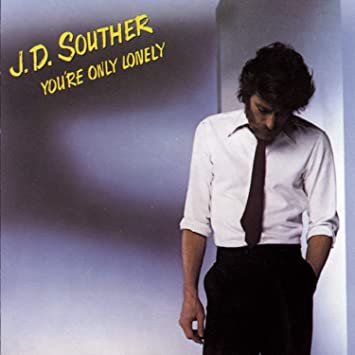
This song has always stuck with me. I have a special place for it. J.D. Souther was influenced by the Roy Orbinson song Only The Lonely. This title fits some today in what all of us are going through. You know sometimes when you say “all of us” you mean maybe your state, district, or country…but now it truly means all of us.
J.D. Souther collaborated on many of The Eagles’ hits, including New Kid in Town. J.D. Souther had some talented friends. In the early days of his career, Souther shared an apartment with future Eagles member Glenn Frey in Los Angeles. Downstairs was Jackson Browne. Don Henley, Bonnie Raitt and many others from that scene hung around, too.
“You’re Only Lonely” was originally released in 1979, and was No. 1 on Billboard’s Adult Contemporary chart. It peaked at #7 in the Billboard 100.
J.D. Souther talks about how Linda Ronstadt gave him good advice: “Very pointedly, she said, ‘Don’t try to rewrite the songs.’ I mean, she encouraged me to do the record because I defer to her advice quite often,” Souther says. “She really has just practically infallible taste in songs. She’s got what jazz players call ‘big ears.’ So I just kind of sat back and approached it as though the songs had been chosen for me by someone else.
From Songfacts
A #1 Adult Contemporary hit for 5 weeks, Souther told us that Roy Orbison, who had a hit with “Only The Lonely,” was a big influence on this song. Said Souther: “I was a little kid when I first heard Roy Orbison, but he was magic. He’s the guy that you turned out the lights and listened to his records by yourself – or with a girl – because he was just completely other-worldly. He had sarcastic and adventurous songs and great arrangements, and then that beautiful, almost operatic voice. Beautiful, natural deep echo on it. He is one of half a dozen or so rockabilly musicians that I really loved. When I was in junior high school was the first time I really started listening to that.
But then I started playing drums all the time, and I got so fascinated with jazz, I didn’t really think much about singing or making rock and roll records for quite a few years. The first song I ever heard called ‘Only the Lonely’ was this song that Frank Sinatra sang. It’s a Johnny Mercer song; it’s on a Sinatra album called Songs for Only the Lonely. There are a lot of songs with that name. But the beat that I used for ‘You’re Only Lonely’ is that rockabilly beat. That sort of break in it was taken from another Roy Orbison record called ‘I’m Hurtin” that I really love.”
When You’re Only Lonely
When the world is ready to fall on your little shoulders And, when you’re feeling lonely and small, You need somebody there to hold you; You can call out my name
When you’re only lonely; Now, don’t you ever be ashamed; You’re only lonely.
When you need somebody around on the nights that try you I was there when you were a queen And I’ll be the last one there beside you; So you can call out my name
When you’re only lonely; Now, don’t you ever be ashamed; You’re only lonely. (You’re only lonely) (You’re only lonely) (You’re only lonely)
Ooh, When the world is ready to fall on your little shoulders And, when you’re feeling lonely and small, You need somebody there to hold you; So don’t you ever be ashamed When you’re only lonely; You can call out my name
When you’re only lonely; (You’re only lonely) When you’re only lonely; (You’re only lonely) Ooh, it’s no crime, Darlin’, we got lots of time, Woh, woh, (You’re only lonely) Woh, woh, woh, (You’re only lonely) No there’s nothing wrong with you, Darlin, I get lonely too. (You’re only lonely)(You’re only lonely) So, if you need me, (You’re only lonely) All you’ve gotta do is call me Well, you’re only lonely (You’re only lonely)(You’re only lonely) Ooh, ooh, (You’re only lonely)
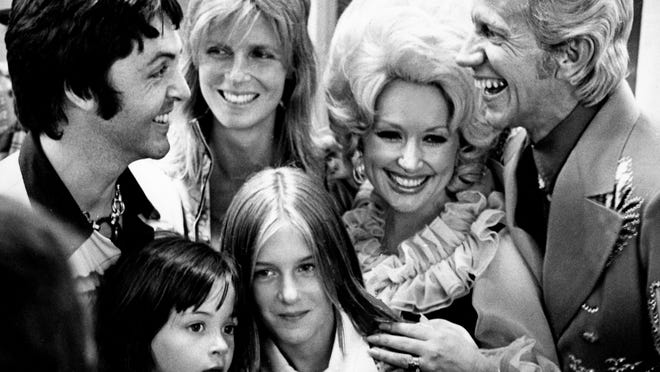
Back in the early seventies, there was a line between rock and country. Now that line is blurred quite a bit but when Paul came to Nashville…it was a huge deal here. Some country artists wondered why a Beatle was coming here.
People here still talk about this visit to the city. I was only 7 and it was one year before I got into the Beatles. I faintly remember the newscasts. On June 6, 1974, Paul arrived and said he chose Nashville for his month’s stay as a rehearsal base for an upcoming tour. He also planned to enjoy himself while here, socializing with the community and horseback riding.
Paul said: “I rather fancy the place,” “It’s a musical center. I’ve just heard so much about it that I wanted to see for myself.”
He recorded songs, went to the Grand Ole Opry, met Porter Waggner and Dolly Parton, ate some Kentucky Fried Chicken, and visited Printers Alley. Paul and Linda lived on a farm in Lebanon that Curly Putman Jr rented…that is where the title Juniors Farm came from. Putman was a songwriter who wrote some huge songs like The Green Green Grass of Home, He Stopped Loving Her Today, D-I-V-O-R-C-E, and many more.
I have a cousin that lives down the road from the farm Paul and Linda stayed at…he got this shot but it’s a little dark. They added some columns since 1974.
As his time in Tennessee came to a close, McCartney told a group of local reporters that he hoped to mount a U.S. tour the following year and that if it happened, Music City would definitely be on the itinerary.
McCartney didn’t come back until 36 years later in 2010 and I finally got to see him.
I thought I would continue the theme that many of us are going through. Hopefully, we have our family around to be alone with…or if you are by yourself do something that makes you happy….but don’t linger on this song long…it is damn depressing.
I remember this mostly in the eighties when I worked at a printing place and listened to the oldies channel…99.6 in Nashville.
This song peaked at #1 in the Billboard 100, #1 in Canada, #2 in New Zealand, and #3 in the UK in 1972.
I do respect Gilbert for this quote: ‘Alone Again (Naturally)’ has no comic purpose at all, and it is not a song that people can dismiss like ‘Get Down’ or ‘Clair.’ Because it means so much to some people, I will not allow it to be used for karaoke or commercials.”
One of the most depressing songs ever written, “Alone Again (Naturally)” tells a rather sad tale of a lonely, suicidal man being left at the altar and then telling the listener about the death of his parents. The song connected with listeners on various levels: the downtrodden could commiserate with the singer, and the lucky ones who were not in this position were reminded of their good fortune.
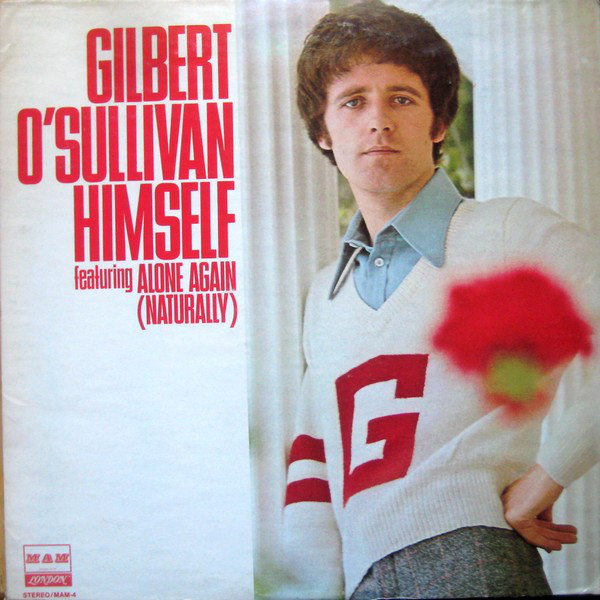
This was Irish-born singer Gilbert O’Sullivan’s only American #1. It sold 2 million copies, spent six weeks at the summit in America and earned him three Grammy Award nominations (Best Male Pop Vocal Performance, Song of the Year, and Record of the Year). It was the second best-selling single of the year in America behind Don McLean’s “American Pie.”
Gilbert O’Sullivan has denied that this song is autobiographical or about the death of his father when he was 11. O’Sullivan said: “Everyone wants to know if it’s an autobiographical song, based on my father’s early death. Well, the fact of the matter is, I didn’t know my father very well, and he wasn’t a good father anyway. He didn’t treat my mother very well.”
O’Sullivan charted in UK with “Nothing Rhymed” from his first album, but didn’t make in impact in America until “Alone Again (Naturally)” was released as the first single from his second album. In the first half of the ’70s, O’Sullivan enjoyed a succession of hits in the UK, including two #1s that show his considerable range as a songwriter. The first was “Clair,” inspired by Clair Mills, the 3-year-old daughter of his manager Gordon Mills, whom O’Sullivan baby-sat. The second was “Get Down,” which shows off his soulful side. O’Sullivan was the first Irish-born recording artist with two UK #1 hits.
In a Songfacts interview with O’Sullivan, he explained how this song came together. “‘Alone Again’ was written with two other songs in a writing period when I was 22 years of age. I had been a postal clerk in London, so I was only able to write after work in the evening. When Gordon Mills managed me – he managed Tom Jones and Engelbert Humperdinck – when he took me on, he allowed me to quit my job and move into a bungalow that he owned where I could write every day. So, therefore, I was in a writing mode, and ‘Alone Again’ was just one of the songs I’d written. I was really pleased with it, happy with it, but I didn’t see it as being any more special than other songs. Suffice it to say, I was happy.”
The guitar solo was performed by Big Jim Sullivan, one of the most prolific session guitarists in the UK. He used a guitar with nylon strings to get the distinctive sound.
At the end of the 1980s this was used as the opening theme song and “Get Down” the closing theme song of Masion Ikkoku, a Japanese animated series. They were used without authorization, which caused some controversy at the time. However the net result was that a new Japanese generation discovered Gilbert’s music and his popularity grew in Japan. Some of his 1990s albums have only been released in Japan, where he has continued to enjoy some success.
In 1982 O’Sullivan took his former manager Gordon Mills to court over his original contract, ultimately winning back the master tapes to his recordings as well as the copyrights to his songs. Nine years later in 1991, O’Sullivan went to court again to sue the rapper Biz Markie, who used an unauthorized sample from this song in his track “Alone Again,” which appeared on Markie’s third album, I Need A Haircut. The judge made a landmark ruling in O’Sullivan’s favor that the rapper’s unauthorized sample was in fact theft. From this point on, artists had to clear samples or be subject to costly lawsuits.
O’Sullivan talked about the case in 2010 at a screening for the movie Out On His Own: Gilbert O’Sullivan. He said Biz Markie’s record company approached him about sampling the song, and O’Sullivan asked to hear it before granting permission. “Then we discovered that he was a comic rapper,” said Gilbert. “And the one thing I am very guarded about is protecting songs and in particular I’ll go to my grave in defending the song to make sure it is never used in the comic scenario which is offensive to those people who bought it for the right reasons. And so therefore we refused. But being the kind of people that they were, they decided to use it anyway so we had to go to court.”
O’Sullivan won’t let this song be used in commercials, but he often authorizes it for movies and TV shows, which typically use it for comic effect. Movies to use it include:
Gloria Bell (2018) Napoleon Dynamite (2012) Skylab (2011) Megamind (2010) Ice Age: Dawn of the Dinosaurs (2009) Stuart Little 2 (2002) Osmosis Jones (2001) The Virgin Suicides (1999)
O’Sullivan had an unusual image in the early ’70s, performing in an outfit of pants and a flat cap. With his pudding-bowl haircut, he resembled a Depression-era street urchin. Around the time of the release of “Alone Again (Naturally),” he switched his outfit in favor of an endless series of collegiate-styled sweaters embossed with the letter “G.”
Sugar Ray borrowed the line “my mother, god rest her soul” for their 1997 hit “Fly.”
At least 100 artists have covered this song, including Anita Bryant, Sarah Vaughan, Johnny Mathis, Shirley Bassey and Neil Diamond. Pet Shop Boys did a version with Elton John, and Diana Krall and Michael Bublé recorded it together for Krall’s 2015 album Wallflower.
Alone Again (Naturally)
In a little while from now If I’m not feeling any less sour I promise myself to treat myself And visit a nearby tower And climbing to the top Will throw myself off In an effort to Make it clear to whoever Wants to know what it’s like When you’re shattered
Left standing in the lurch at a church Were people saying, My God, that’s tough She stood him up No point in us remaining We may as well go home As I did on my own Alone again, naturally To think that only yesterday
I was cheerful, bright and gay Looking forward to who wouldn’t do The role I was about to play But as if to knock me down Reality came around And without so much as a mere touch Cut me into little pieces Leaving me to doubt Talk about, God in His mercy
Oh, if he really does exist Why did he desert me In my hour of need I truly am indeed Alone again, naturally It seems to me that There are more hearts broken in the world That can’t be mended
Left unattended What do we do What do we do Alone again, naturally Looking back over the years And whatever else that appears I remember I cried when my father died Never wishing to hide the tears
And at sixty-five years old My mother, God rest her soul Couldn’t understand why the only man She had ever loved had been taken Leaving her to start With a heart so badly broken Despite encouragement from me
No words were ever And when she passed away I cried and cried all day Alone again, naturally Alone again, naturally
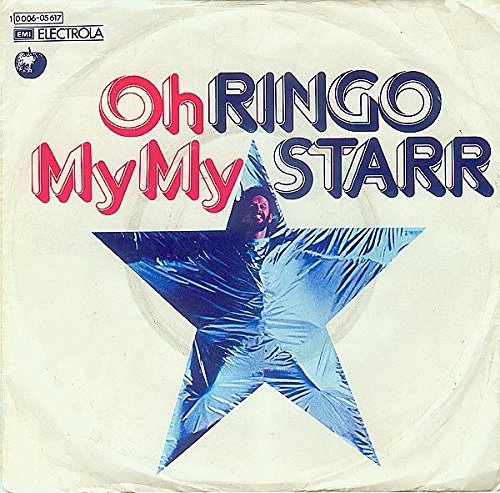
I had this single as a kid from a cousin. The song was off of the 1973 Ringo album that was his most successful album. Three of his former bandmates helped contribute to this album. It contained Photograph, You’re Sixteen, and this one that were hit.
Lennon jokingly sent a telegram to Ringo after the success of this album and said: “Congratulations. How dare you? And please write me a hit song.”
The song peaked at #5 in 1974 in the Billboard 100.
Oh My My
One, two, three, four!
I phoned up my doctor to see what’s the matter, He said, “come on over.” I said, “do i have to?” My knees started shakin’, my wrist started achin’ When my doctor said to me:
“oh my my, oh my my, can you boogie, can you slide? Oh my my, oh my my, you can boogie if you try. Oh my my, oh my my, it’s guaranteed to keep you alive.”
The head nurse she blew in, just like a tornado, When they started dancin’, i jumped off the table. I felt myself healin’ and as i was leavin’, This is what they said to me:
“oh my my, oh my my, can you boogie, can you slide? Oh my my, oh my my, you can boogie if you try. Oh my my, oh my my, it’s guaranteed to keep you alive.”
(oh – yeah hey! All right! Oh! Yeah! Yeah! Yeah! Yeah! Yeah! All right now! Ooh!)
Now if you should slow down and you’re feelin’ low down, Don’t call up your doctor, just grab you a partner. It’s what you’ve been missin’, i’ve got your prescription, That boogie woogie remedy.
“Oh my my, oh my my, you can boogie, you can slide? Oh my my, oh my my, we can boogie ’til we die. Oh my my, oh my my, it’s guaranteed to keep you alive, alright.”
“oh my my, oh my my, watch me boogie, watch me slide, Oh my my, (ow!) Oh my my, born to boogie, born to slide. (can you boogie?) Oh my my, oh my my, oo-wee, boogie, oo-wee, aye. (can you boogie?) Oh my my, oh my my, play that boogie, play that slide. (can you boogie?) Oh my my, oh my my, love that boogie, love that slide. (can you boogie?) Oh my my, oh my my, oh, my boogie, oh, my slide. (can you boogie?) Oh my my, oh my my, come on, baby, come on now. (can you boogie) Oh my my, oh my my, come on, baby, i’m willing to die. (can you boogie?) Oh my my, oh my my, come on, baby, come on, try. (can you boogie?) Oh my my, oh my my.”
I was riding with my uncle in the summer of 1975 going to Florida to see relatives. I remember this song was big that summer and I heard it quite a few times all the way down there.
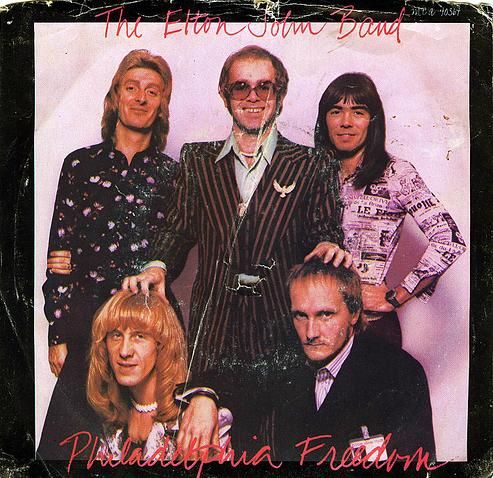
Elton owned the early to mid-seventies. this song peaked at # in the Billboard 100, #1 in Canada, #2 in New Zealand, #12 in the UK in 1975.
Elton had an interesting B-side on this single. The B-side was a live duet of The Beatles hit “I Saw Her Standing There” that Elton recorded with his friend John Lennon. Elton had previously sung on Lennon’s “Whatever Gets You Through The Night” and also released a version of “Lucy In The Sky With Diamonds,” which was written by Lennon.
Elton John: “In America, I’ve got ‘Philadelphia Freedom’ going up the charts again. I wish the bloody thing would piss off. I can see why people get sick and tired of me. In America, I get sick and tired of hearing myself on AM radio. It’s embarrassing.”
From Songfacts
Bernie Taupin wrote the lyrics to most of Elton John’s songs, but Elton would occasionally suggest titles. Elton requested a song with the title “Philadelphia Freedom” in honor of his friend, the tennis player Billie Jean King. At the time, there was a professional tennis league in America called World Team Tennis, and in 1974 King coached a team called the Philadelphia Freedoms, becoming one of the first women ever to coach men. Taupin had no obligation to write lyrics about King, and he didn’t – the song was inspired by the Philadelphia Soul sound of groups like The O’Jays and Melvin & The Blue Notes, and also the American bicentennial; in 1976 the US celebrated 200 years of independence.
Elton John and Billie Jean King became good friends after meeting at a party. Elton tried to attend as many of her matches as he could, and he promised King a song after she gave him a customized track suit. Elton and Billie Jean King would become icons of the gay and lesbian community, but at the time, they were both still in the closet, since athletes and entertainers faced a backlash if they revealed their homosexuality. Elton was often answering questions about why he hadn’t settled down with a girl, and King avoided the subject as best she could, but was forced to come out in 1981 when a former lover sued her for palimony. King was married to a man up until her outing, and Elton was married to a woman from 1984-1988.
On the single, it said this song was dedicated to “B.J.K.” (Billie Jean King) and “The Soulful Sounds Of Philadelphia.”
This song was a huge hit in America, following up another #1 single from Elton John, his cover of “Lucy In The Sky With Diamonds.” Elton dominated the charts at this time, but it didn’t always make him happy, as he felt he was being overexposed.
Running 5:21, this was one of the longest dance hits of the ’70s. A few months earlier, a national radio programer declared that he would no longer play any Elton John song over 4 minutes long because they were screwing up his playlists (Program directors liked short songs because they could play more of them. Elton’s opuses like “Daniel” and “Funeral For A Friend” had a way of screwing up the “14 Hits In A Row” format). Elton knew this would be a hit, and was happy to screw the programmer by making it long, knowing he would have to play it anyway.
Elton said this was “one of the only times I tried to deliberately write a hit single.”
On May 17, 1975, Elton become one of the first white performers to appear on the TV show Soul Train, which was an honor for him. He performed this song and “Bennie And The Jets.”
Depending on where he was performing, Elton would sometimes alter the lyrics of the song, swapping “Philadelphia” for his present location. He would only do it if he could make it fit, so “Cincinnati Freedom” was a go, but Cleveland didn’t get customized.
Philadelphia Freedom
I used to be a rolling stone you know If a cause was right I’d leave to find the answer on the road I used to be a heart beating for someone But the times have changed The less I say the more my work gets done
‘Cause I live and breathe this Philadelphia freedom From the day that I was born I’ve waved the flag Philadelphia freedom took me knee high to a man, yeah Gave me a piece of mama, daddy never had
Oh Philadelphia freedom, shine on me, I love you Shine the light, through the eyes of the ones left behind Shine the light, shine the light Shine the light, won’t you shine the light Philadelphia freedom, I love-ve-ve you, yes I do
If you choose to you can live your life alone Some people choose the city (some people the city) Some others choose the good old family home (some others choose a good old) I like living easy without family ties (living easy) Till the whippoorwill of freedom zapped me Right between the eyes
‘Cause I live and breathe this Philadelphia freedom From the day that I was born I’ve waved the flag Philadelphia freedom took me knee high to a man Mm mm, gave me a piece of mama, daddy never had
Oh Philadelphia freedom, shine on me, I love you Shine the light, through the eyes of the ones left behind Shine the light, shine the light Shine the light, won’t you shine the light Philadelphia freedom, I love-ve-ve you, yes I do
Oh, Philadelphia freedom, shine on me, I love you Shine the light, through the eyes of the ones left behind Shine the light, shine the light Shine the light, won’t you shine the light Philadelphia freedom, I love-ve-ve, You know I love-ve-ve , you know I love-ve-ve you Yes I do, Philadelphia freedom I love-ve-ve you Yes I do, Philadelphia freedom You know that I love-ve-ve you Yes I do, Philadelphia freedom Don’t you know that I love-ve-ve you Yes I do, Philadelphia freedom Don’t you know that I love-ve-ve you Yes I do, Philadelphia freedom
Love the beginning riff in this song. This song was the B side to Run Through The Jungle.
It was written by lead singer and guitarist John Fogerty, this is a very upbeat Creedence Clearwater Revival, giving a hint that, as bad as things were in the early ’70s, there might be some hope for the future: Things would improve “Around The Bend.” Bass player Stu Cook described the song as “Kind of the opposite of ‘Run Through The Jungle.'”
This song required a bit of translation for British audiences. In England, if you go “around the bend” it means you go crazy. Then the band toured the UK, they had to explain to the British press that the song was not about dementia or mental problems.
The song peaked at #4 in the Billboard 100, #1 in Canada, #1 in New Zealand, and #3 in the UK in 1970.
From Songfacts
In his memoir Fortunate Son: My Life, My Music, John Fogerty said that this song came to him when he was riding his motorcycle through the California hills.
Movies this song has appeared in include Michael (1996), Remember the Titans (2000) and Invincible (2006). It was also used in a 2008 episode of the TV show My Name Is Earl.
Elton John covered this song shortly after it was released, and his version appears on several compilation albums. Hanoi Rocks recorded it for their 1984 Two Steps From The Move album.
In 2016, Wrangler used this in a commercial for their jeans, surprising after John Fogerty lashed out at the company when they used “Fortunate Son” in ads without his permission beginning in 2000. Fogerty doesn’t control the rights to the songs he wrote for CCR, so they can be used without his consent.
Up Around The Bend
There’s a place up ahead and I’m goin’ Just as fast as my feet can fly Come away, come away if you’re goin’ Leave the sinkin’ ship behind
Come on the risin’ wind, We’re goin’ up around the bend
Oh
Bring a song and a smile for the banjo Better get while the gettin’s good Hitch a ride to the end of the highway Where the neon’s turn to wood
Come on the risin’ wind, We’re goin’ up around the bend
Oh
You can ponder perpetual motion, Fix your mind on a crystal day, Always time for a good conversation, There’s an ear for what you say
Come on the risin’ wind, We’re goin’ up around the bend.
Yeah
Oh
Catch a ride to the end of the highway And we’ll meet by the big red tree, There’s a place up ahead and I’m goin’ Come along, come along with me
Come on the risin’ wind, We’re goin’ up around the bend
Yeah
Do do do do Do do do do Do do do do Do do do do yeah Do do do do Do do do do
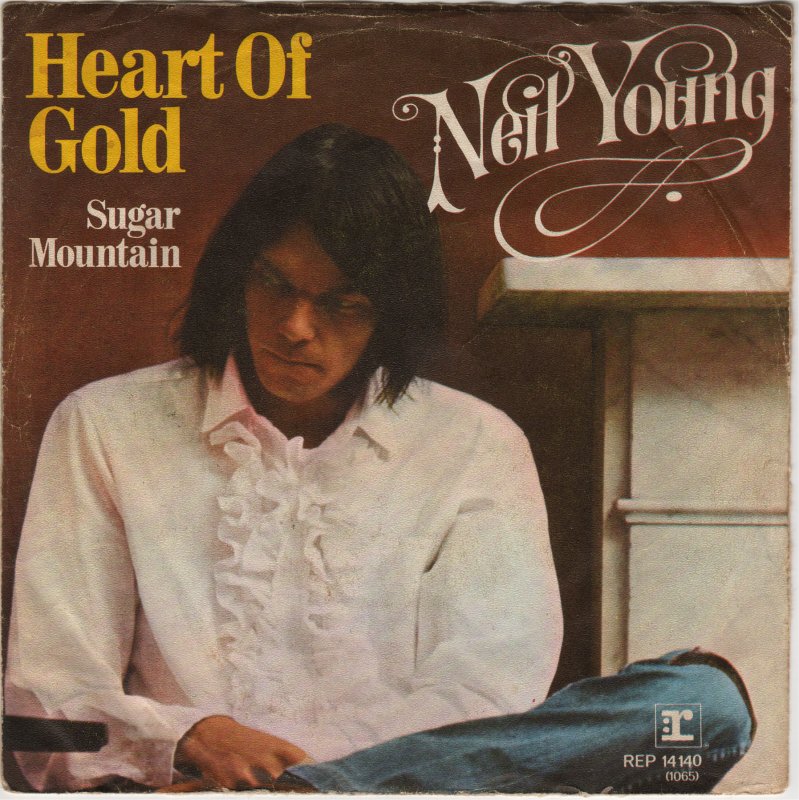
James Taylor and Linda Ronstadt sang backup on this song. They don’t come in until the end of the song. Like Young, Taylor and Ronstadt were in town to appear on The Johnny Cash Show (the song’s producer Elliot Mazer had produced Ronstadt’s 1970 Silk Purse album). Young convinced them to lend their voices to this track, and they came in the day after the rest of the song was completed.
This song was recorded in Nashville in just two takes. The musicians were not familiar with Young or the song. This spontaneity created just the right feel for the track…something that would have never come about through additional tweaking. This style of recording, where top-tier studio musicians are asked to give total focus to a take with little instruction, is something Bob Dylan often did.
By far, this was the biggest hit for Young as a solo artist, Peaking at #1 on the Billboard 100 in 1972…the Harvest album peaked at #1 a week earlier,
Linda Ronstadt: “We were sat on the couch in the control room, but I had to get up on my knees to be on the same level as James because he’s so tall. Then we sang all night, the highest notes I could sing. It was so hard, but nobody minded. It was dawn when we walked out of the studio.”
From Songfacts
With a straightforward metaphor and complete lack of pathos, this is not a typical Neil Young song. It finds him mining for a “heart of gold,” which depending on your perspective, is either a touching and heartfelt sentiment, or a mawkish platitude. Rolling Stone took the churlish view, complaining that the album evoked “superstardom’s weariest clichés.” The listening public and Young’s fans were far more accepting, and the song became his biggest hit.
Young wrote this in 1971 after he suffered a back injury that made it difficult for him to play the electric guitar, so on the Harvest tracks he played acoustic. Despite the injury, Young was in good spirits (possibly thanks to the painkillers), which is reflected in this song. The next few years were more challenging for Young, as he suffered a series of setbacks: His son Zeke was born with cerebral palsy, his friend Danny Whitten died, and he split with his girlfriend, Carrie Snodgress. His next three albums, which became known as “The Ditch Trilogy,” expressed these dark times in stark contrast to “Heart of Gold.”
This song was recorded at the first sessions for the Harvest album, which took place on Saturday, February 6, 1971 and were set up the night before.
Neil Young was in Nashville to record a performance for The Johnny Cash Show along with Tony Joe White, James Taylor and Linda Ronstadt. Elliot Mazer, a producer who owned nearby Quadrafonic Studios, set up a dinner party on February 5, inviting the show’s guests and about 50 other people. Mazer was friends with Young’s manager Elliot Roberts, who introduced the two at the gathering. Young and Mazer quickly hit it off when Neil learned that Elliot has produced a band called Area Code 615. Young asked if he could set up a session the next day, and Mazer complied.
Nashville has an abundance of studio musicians, but getting them to work on a Saturday could be a challenge. Mazur was able to get one member of Area Code 615: Drummer Kenny Buttrey. The other musicians he found were guitarist Teddy Irwin, bass player Tim Drummond, and pedal steel player Ben Keith. All were seasoned pros.
Keith, who had never heard of Neil Young, recalls showing up late and sitting down to play right away. He says they recorded five songs before they stopped for introductions.
A very influential musician, he was never too concerned about making hit records. His next-highest Hot 100 entry was his next single, “Old Man,” which reached #31.
At the time, Taylor and Young were huge stars, but Ronstadt had yet to land a big hit. Her talent was obvious to those around her, but poor song selection and promotion kept her from the top ranks. Young exposed her to arena crowds when he brought her along as the opening act on his Time Fades Away tour in early 1973, but it was another two years before she landed that elusive hit, going to #1 with “You’re No Good.”
In the liner notes to his Decade collection, Young said: “This song put me in the middle of the road. Traveling there soon became a bore so I headed for the ditch.”
This statement reflected Young’s aversion to fame, and was not meant to demean the song. In a later interview with NME, he clarified: “I think Harvest is probably the finest record I’ve made.”
Before separating them into two songs, Young wrote this together with “A Man Needs A Maid” as a piano piece – he described it as “like a medley.”
This was the song that tweaked Bob Dylan; Young had made no secret that he idolized Dylan, but when Dylan heard “Heart of Gold” he thought this was going too far. As quoted in Neil Young: Long May You Run: The Illustrated History, Dylan complained, “I used to hate it when it came on the radio. I always liked Neil Young, but it bothered me every time I listened to “Heart of Gold.” I’d say, that’s me. If it sounds like me, it should as well be me.”
“Heart Of Gold” is the name of the spaceship stolen by Zaphod Beeblebrox in Douglas Adams’ book, The Hitchhiker’s Guide to the Galaxy.
Young became the first Canadian to have a #1 album in the US when Harvest topped the Billboard 200 for two weeks in April 1972.
This song appears in the 1984 film Iceman, and on the soundtrack of the 2010 movie Eat Pray Love.
Lady Gaga references this in her song “You and I.” The line goes, “On my birthday you sung me ‘Heart of Gold,’ with a guitar humming and no clothes.”
In 2005, the CBC Radio One series 50 Tracks: The Canadian Version declared “Heart of Gold” to be the third best Canadian song of all time.
Stryper frontman Michael Sweet covered this for his 2014 I’m Not Your Suicide album. He also recorded a second duet version with country artist Electra Mustaine, who is the daughter of Megadeth frontman Dave Mustaine.
Young revived the guitar riff for this song on CSN&Y’s “Slowpoke” in 1999.
Young has made it clear that the musicians who played on his tracks had a lot to do with their success. In an interview with the Musicians Hall of Fame, he said that “Heart of Gold” would not have been a hit without drummer Kenny Buttrey.
Tori Amos covered this on her 2001 album Strange Little Girls. She was trying to demonstrate how men and women hear different meaning in the same songs.
Heart of Gold
I want to live I want to give I’ve been a miner for a heart of gold. It’s these expressions I never give that keep me searching for a heart of gold and I’m getting old.
I’ve been to Hollywood I’ve been to Redwood I crossed the ocean for a heart of gold I’ve been in my mind, it’s such a fine line, that keeps me searching for a heart of gold and I’m getting old.
Oi, oi, oi Oi, oi, oi Oi, oi, oi Oi, oi, oi Oi, oi, oi
Let’s wake up everyone on this Monday morning with this raw guitar lick by AC/DC. If you are living in an apartment complex or you want to surprise your significant other…all of a sudden just turn this baby up loud! Her/Him and your neighbors will later shake your hand, pat your back, and thank you for your fine selection on this beautiful Monday morning!
Well…no… probably not…but they would not get six feet near you right now at this time we live in…so that gives you time to run! What a way to start the morning!
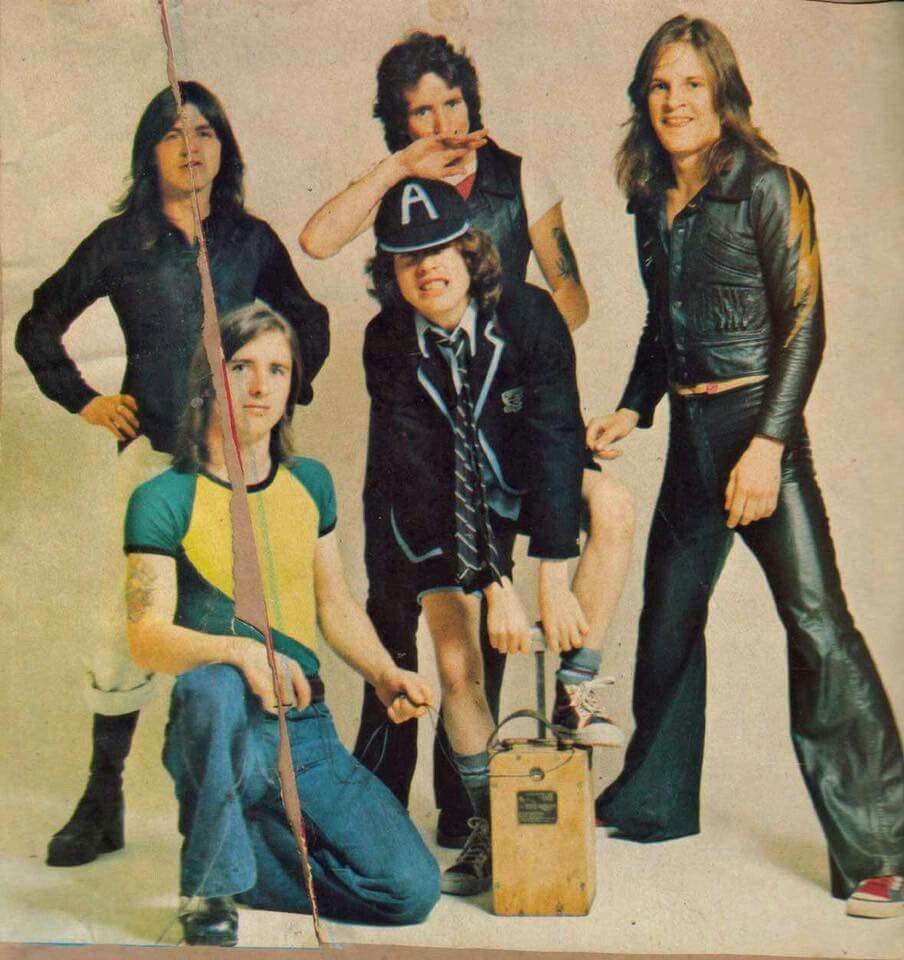
This was one of AC/DC’s first singles with Bon Scott on lead vocals. Originally a roadie, he took over lead vocals when their first singer, Dave Evans, didn’t show up for a gig.
This was originally released in 1975 in AC/DC’s home country Australia on their second album, which was also called T.N.T.
Their first two Australian releases were combined to form High Voltage, which was released worldwide. The album fared well in Europe but met stiff resistance in America where Rolling Stone Magazine in their infinite wisdom called it an “all-time low” for hard rock in their scathing review.
The album High Voltage didn’t chart in America until 1982 at #146 in the Billboard 100.
From Songfacts
AC/DC found a good way to capture the energy of their live shows for the High Voltage album: they went into the studio and recorded right after gigs. The result was a very raw, but energetic sound, smoothed out with production by Harry Vanda and George Young (brother of Angus and Malcolm), who were members of the group The Easybeats, best known for their hit “Friday On My Mind.”
T.N.T. stands for Trinitrotoluene, an explosive compound. It was popularized in Road Runner cartoons when the Coyote would buy explosive items (from Acme) labeled “T.N.T.” in an attempt to blow up the Road Runner. To this date, the coyote has not been able to harm the Road Runner in any way, and has done much more damage to himself through careless use of Acme products.
T.N.T
Oi, oi, oi Oi, oi, oi Oi, oi, oi Oi, oi, oi Oi, oi, oi
See me ride out of the sunset On your color TV screen Out for all that I can get If you know what I mean Women to the left of me And women to the right Ain’t got no gun Ain’t got no knife Don’t you start no fight
‘Cause I’m T.N.T. I’m dynamite T.N.T. and I’ll win the fight T.N.T. I’m a power load T.N.T. watch me explode
I’m dirty, mean and mighty unclean I’m a wanted man Public enemy number one Understand So lock up your daughter Lock up your wife Lock up your back door And run for your life The man is back in town Don’t you mess me ’round
‘Cause I’m T.N.T. I’m dynamite T.N.T. and I’ll win the fight T.N.T. I’m a power load T.N.T. watch me explode
Anyone who knows me knows I’m not a big Journey fan. However, I do like some of their earlier music before Jonathan Cain joined and took Gregg Rolie’s place. That is when they turned into a giant radio commercial juggernaut with the album Escape.
This band was huge in my generation. I just never got into them like my school peers…but those earlier songs I liked.
Journey had songs such as Lovin, Touchin, Squeezing, Wheel in the Sky, Anytime, and this one that I really liked. Their first three albums had a prog-rock sound and didn’t contain any chart hits. The three singles from Infinity reached the lower half of the Hot 100.
This song peaked at #68 in the Billboard 100 in 1978.
From Songfacts
This is about San Francisco, the “City by the bay.” Journey formed there and became popular in that area before hitting it big. If you haven’t seen a sunset in San Francisco you don’t know what you’re missing.
This was one of the first Journey songs featuring lead singer Steve Perry. He was accepted into the band after the group’s manager listened to his audition tape for only 15 seconds.
Even though this is about San Francisco, it was written in Los Angeles, where the band had relocated. Steve Perry explained in an interview with Joe Benson of Arrow 93.1 FM: “I had the song written in Los Angeles almost completely except for the bridge and it was written about Los Angeles. It was ‘when the lights go down in the city and the sun shines on LA.’ I didn’t like the way it sounded at the time. And so I just had it sitting back in the corner. Then life changed my plans once again, and I was now facing joining Journey. I love San Francisco, the bay and the whole thing. ‘The bay’ fit so nice, ‘When the lights go down in the city and the sun shines on the bay.’ It was one of those early morning going across the bridge things when the sun was coming up and the lights were going down. It was perfect.”
Perry finished writing the song with Journey guitarist Neal Schon, who says they “banged it out in about 20 minutes.”
All three songs grew in popularity over the years, with “Lights” and “Wheel In The Sky” played at just about every Journey concert.
Infinity was the last album with drummer Aynsley Dunbar, who was kicked out for “incompatibility” and replaced with Steve Smith.
In 2017, Neal Schon started dedicating this song to Steve Perry at Journey concerts, telling the story of how they wrote it together. This was an olive branch to Perry, who was furious when the band moved on without him in 1999 when he was unable to tour. A reunion seemed inevitable, but Perry never returned to the band.
Lights
When the lights go down in the city And the sun shines on the bay I want to be there in my city Ooh, ooh
So you think you’re lonely Well my friend I’m lonely too I want to go back to my city by the bay Ooh, ooh
It’s sad, oh there’s been mornings Out on the road without you Without your charms, Ooh, my, my, my
It’s all about that opening guitar riff. Another one that every guitar player learns no matter if they play rock or country. I’ve never been a big fan of Black Sabbath but I do like some of the early music.
This was the title track to the second Sabbath album. The band wanted to call the album “War Pigs,” after another song on the set, but the record company made them use “Paranoid” instead because it was less offensive. The album art, however, is a literal interpretation of a “War Pig,” showing a pig with a sword and shield.
The song peaked at #61 in the Billboard 100 in 1971.
Black Sabbath waited two years before releasing another single, “Iron Man.” They did not want to become a “singles band,” with kids coming to their shows just to hear their hits. This also ensured that fans would buy the albums.
From Songfacts
As the title suggests, this song is about a man who is paranoid. The driving guitar and bass create a nervous energy to go along with Ozzy Osbourne’s desperate vocal. Black Sabbath bassist Geezer Butler, who wrote the lyric, explained the song’s meaning to Mojo magazine June 2013: “Basically, it’s just about depression, because I didn’t really know the difference between depression and paranoia. It’s a drug thing; when you’re smoking a joint you get totally paranoid about people, you can’t relate to people. There’s that crossover between the paranoia you get when you’re smoking dope and the depression afterwards.”
Although this was the first Black Sabbath-penned single, the band’s debut single was actually a cover of Crow’s “Evil Woman Don’t Play Your Games With Me” a few months before the “Paranoid” release. “Paranoid” was much more successful. It was released six months after their self-titled first album and had a huge impact in their native UK, going to #4 and becoming one of their signature songs.
The group never charted again in the UK Top 10, but that wasn’t a problem since album and ticket sales more than made up for it. Many UK rock bands, including Led Zeppelin and Pink Floyd, put little emphasis on singles.
Geezer Butler (from Guitar World magazine, March 2004): “A lot of the Paranoid album was written around the time of our first album, Black Sabbath. We recorded the whole thing in about two or three days, live in the studio. The song ‘Paranoid’ was written as an afterthought. We basically needed a 3-minute filler for the album, and Tony came up with the riff. I quickly did the lyrics, and Ozzy was reading them as he was singing.” >>
The word “Paranoid” is never mentioned in the song, but there is no logical title amongst the lyrics.
“The Wizard,” a song from their first album, was used as the B-side of the single.
In the UK, this was re-released in 1980 to capitalize on the success of Black Sabbath: Live At Last, which was released earlier that year. The album was taken from a Sabbath concert in 1975 with the original band members.
Black Sabbath played this in their set at Live Aid in 1985.
Megadeth covered this on the 1994 Black Sabbath tribute album Nativity In Black. Weezer included it on their 2019 covers set The Teal Album.
A surprising number of movies have used this song. Among them:
Sid and Nancy (1986) Dazed and Confused (1993) Private Parts (1997) Any Given Sunday (1999) Almost Famous (2000) Slugs (2004) We Are Marshall (2006) Dark Shadows (2012)
This song is used in two music based video games: Guitar Hero III: Legends of Rock for the Nintendo Wii, Xbox 360, Playstation 2, and Playstation 3, and also in the video game Rock Band for the Xbox 360 and Playstation 3. >>
In Finland, “Paranoid” has the same status as “Freebird” in the US or “Stairway to Heaven” in the UK. Regardless of the band or the type of music they play, someone will often shout “Soittakaa Paranoid!” (Play “Paranoid”).
Tony Iommi recorded Paranoid with a black eye after the band had gotten involved in a brawl with some punks. This incident is also referred to in “Fairies Wear Boots.”
In his book Iron Man: My Journey through Heaven and Hell with Black Sabbath, Iommi said he and Ozzy probably had no idea what the word “paranoid” even meant at that time. They left the lyrics to bassist Geezer Butler; they considered him the intelligent one.
Black Sabbath played (OK, lip-synched) this on Top of the Pops in 1970.
In 2002 Ozzy, Tony Iommi, Phil Collins, and Pino Palladino (of the Who) played this song in Buckingham Palace during the Queen’s Golden Jubilee.
Paranoid
Finished with my woman ’cause she couldn’t help me with my mind People think I’m insane because I am frowning all the time All day long I think of things but nothing seems to satisfy Think I’ll lose my mind if I don’t find something to pacify Can you help me, occupy my brain?
Oh yeah I need someone to show me the things in life that I can’t find I can’t see the things that make true happiness, I must be blind
Make a joke and I will sigh and you will laugh and I will cry Happiness I cannot feel and love to me is so unreal And so as you hear these words telling you now of my state I tell you to enjoy life I wish I could but it’s too late
Jim Croce was the first time I ever heard about a star dying. I heard it on the radio when I was 7. My sister had his greatest hits and I played it non-stop. This one is easy for kids to remember. This song has been played to death and I wasn’t going to post it…but after listening to it I have to admit I was enjoying the song again.
Jim Croce and guitarist Maury Muehleisen died in a plane crash on September 20, 1973. The song peaked at #1 in July of 1973 and was still on the charts when the accident happened.
Jim Croce: This is a song about a guy I was in the army with… It was at Fort Dix, in New Jersey, that I met this guy. He was not made to climb the tree of knowledge, as they say, but he was strong, so nobody’d ever told him what to do, and after about a week down there he said “Later for this” and decided to go home. So he went AWOL—which means to take your own vacation—and he did. But he made the mistake of coming back at the end of the month to get his paycheck. I don’t know if you’ve ever seen handcuffs put on anybody, but it was SNAP and that was the end of it for a good friend of mine, who I wrote this tune about, named Leroy Brown.
“Yeah, I spent about a year and a half driving those $29 cars, so I drove around a lot looking for a universal joint for a ’57 Chevy panel truck or a transmission for a ’51 Dodge. I got to know many junkyards well, and they all have those dogs in them. They all have either an axle tied around their necks or an old lawnmower to keep ’em at least slowed down a bit, so you have a decent chance of getting away from them.”
From Songfacts
Set in the hardscrabble section of Chicago, this song tells the story of Leroy Brown, the “baddest man in the whole damn town.” He’s big and dangerous, loved by the ladies and feared by the men. But one day he picks a battle he can’t win, making a move on the wife of a guy who leaves him looking like a jigsaw puzzle with a some missing pieces.
The story is based on truth, but embellished. Jim’s wife, Ingrid Croce, told Songfacts the story.
Jim Croce joined the US National Guard in 1966, hoping it would keep him from getting sent to Vietnam. He married Ingrid that year, and hoped to continue his education and launch his music career. Unfortunately, Jim was sent for training less then two weeks after their wedding. As Ingrid explained, Jim had no interest in being a soldier and had the distinction of having to repeat basic training. But he did meet a guy who inspired one of his most famous songs.
When Jim Croce would introduce this song, he said there were two people he encountered in the military who inspired this song: a sergeant at Fort Jackson and a private at Fort Dix. The actual Leroy was the sergeant, but it was the private who went AWOL and returned for his paycheck.
Croce had his breakthrough in 1972 with the album You Don’t Mess Around with Jim, which had hit singles in the title track and “Operator (That’s Not the Way It Feels).” “Bad, Bad Leroy Brown” appeared on his next album, Life And Times, and gave him his first #1 hit, topping the Hot 100 on July 21, 1973. On September 30, Croce died in a plane crash at age 30. After his death, “Time In A Bottle,” a track from You Don’t Mess Around with Jim, was released as a single and also went to #1.
The piano riff at the beginning was based on Bobby Darin’s “Queen of the Hop.”
Ingrid runs Croce’s Restaurant & Jazz Bar in San Diego, where she keeps Jim’s legacy alive and hears from many patrons who were touched by Jim’s songs. Says Ingrid: “I have a lot of staff members that come up to me and say, ‘You know what, there’s a guy named Leroy Brown, he kind of looks like the part, and he’s sitting at our bar right now.’ I say, ‘Well, I’ll be glad to come over and say hi.’ There’s so many Leroy Browns who have come up to me and said, ‘I’m sure I’m the one he was talking about.'”
Croce was a peaceful guy, but two of his biggest hits end in violence. In his first single, “You Don’t Mess Around With Jim,” the title character gets it even worse than Leroy, getting “cut in in about a 100 places and shot in a couple more.”
This is sung by a parrot in the 1997 movie Home Alone 3; Shelly Smith covered it for that film’s soundtrack.
Other movies to use the song include Sneakers (1992) and Easy Street (1987). TV series to use it include Psych (“Dis-Lodged” – 2008) and The Wonder Years (“Scenes from a Wedding” – 1992).
This wasn’t the first hit from the ’70s to feature a “Leroy.” In Todd Rundgren’s song “We Gotta Get You A Woman,” the lovelorn character is named Leroy. In real life, he was Paul, but Rundgren couldn’t find a good rhyme for that name.
The song gets a mention in the 1999 episode of Friends, “The One With All the Resolutions,” when Joey walks out Phoebe’s guitar lesson and she yells at him, “Don’t come crying to me when everyone is sick and tired of hearing you play ‘Bad, Bad Leroy Brown.'” Rachel then walks in singing the song.
In 2008, producer Warren Zide (American Pie) bought the movie rights to this song, but nothing became of it. Ingrid Croce said: “We’ve always wanted to do a movie with one of Jim’s character songs – we just want him and his memory and his music to live on. Most importantly, it sounds as if it’s going to be a lot of fun. And Jim liked to have fun.”
Bad Bad Leroy Brown
Well the South side of Chicago Is the baddest part of town And if you go down there You better just beware Of a man named Leroy Brown
Now Leroy more than trouble You see he stand ’bout six foot four All the downtown ladies call him “Treetop Lover” All the men just call him “Sir”
And it’s bad, bad Leroy Brown The baddest man in the whole damned town Badder than old King Kong And meaner than a junkyard dog
Now Leroy he a gambler And he like his fancy clothes And he like to wave his diamond rings In front of everybody’s nose He got a custom Continental He got an Eldorado too He got a thirty two gun in his pocket for fun He got a razor in his shoe
And it’s bad, bad Leroy Brown The baddest man in the whole damned town Badder than old King Kong And meaner than a junkyard dog
Now Friday ’bout a week ago Leroy shootin’ dice And at the edge of the bar Sat a girl named Doris And oo that girl looked nice Well he cast his eyes upon her And the trouble soon began And Leroy Brown learned a lesson ‘Bout messin’ with the wife of a jealous man
And it’s bad, bad Leroy Brown The baddest man in the whole damned town Badder than old King Kong And meaner than a junkyard dog
Well the two men took to fighting And when they pulled them off the floor Leroy looked like a jigsaw puzzle With a couple of pieces gone
And it’s bad, bad Leroy Brown The baddest man in the whole damned town Badder than old King Kong And meaner than a junkyard dog
And it’s bad, bad Leroy Brown The baddest man in the whole damned town Badder than old King Kong And meaner than a junkyard dog
Badder than old King Kong And meaner than a junkyard dog
I’ve always liked this Zevon song. It caught my attention right away in the first verse. Grandpa pissed his pants again He don’t give a damn Brother Billy has both guns drawn He ain’t been right since Vietnam“Sweet Home Alabama”Play that dead band’s song Turn those speakers up full blast Play it all night longYes, it’s crude and this is just the start but the words fit together really well. You then get a reference to the ill-fated southern rock band Lynyrd Skynryd.Plus…good luck finding another song with a reference to brucellosis in it! Not that you asked but here is the definition.Brucellosis – Brucellosis is an infectious disease caused by bacteria. People can get the disease when they are in contact with infected animals or animal products contaminated with the bacteria. Animals that are most commonly infected include sheep, cattle, goats, pigs, and dogs, among others.
Warren Zevon explained that the song was written “really fast” while on marijuana on the synthesizer ostinato. The song is also considered a satire/homage to the dead band’s song (Lynyrd Skynyrd’s “Sweet Home Alabama”). Warren had read a novel around the time the song was written by Newton Thornburg titled Black Angus and got the idea for the line “the cattle all have brucellosis” from it. The song was a common live favorite of Warren’s and made it many setlists subsequent to its release. It is probably the only popular song ever written which contains a reference to brucellosis.
I’ve always liked it because it’s on the strange side and one that only Zevon could have written. The song was on the album Bad Luck Streak in Dancing School. The album peaked at #20 in the Billboard Album Chart in 1980.
Play It All Night Long
Grandpa pissed his pants again He don’t give a damn Brother Billy has both guns drawn He ain’t been right since Vietnam
“Sweet home Alabama” Play that dead band’s song Turn those speakers up full blast Play it all night long
Daddy’s doing Sister Sally Grandma’s dying of cancer now The cattle all have brucellosis We’ll get through somehow
“Sweet Home Alabama” Play that dead band’s song Turn those speakers up full blast Play it all night long
I’m going down to the Dew Drop Inn See if I can drink enough There ain’t much to country living Sweat, piss, jizz and blood
“Sweet Home Alabama” Play that dead band’s song Turn those speakers up full blast Play it all night long
I remember the first time I heard this song. On Radio? On Record? Nope… Alice Cooper performed the song on The Muppet Show in his 1978 season three appearance, doing it as a duet with Beakie, a bird-ish Muppet who was actually the embodiment of Miss Piggy after she was transformed by Cooper.
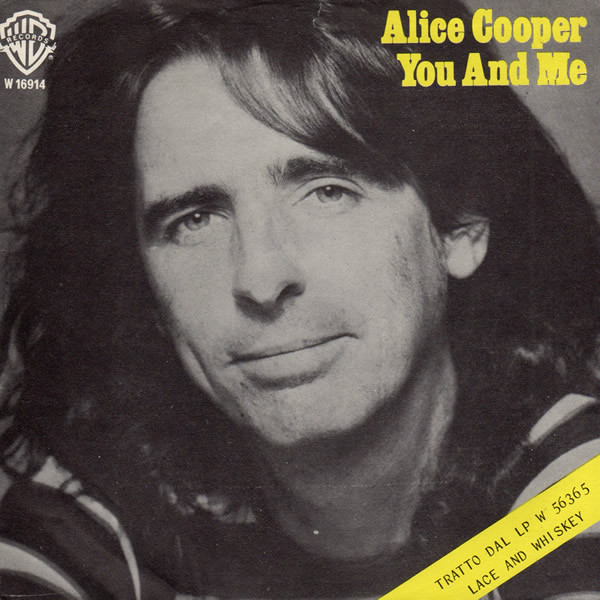
This was the lead single off the 1977 album Lace and Whiskey, which was the shock-rock legend’s third album as a solo artist following the breakup of the original Alice Cooper band in 1974. Cooper decided to change up his sound a bit on this collection and soften his image.
This song was un-Cooper like although a couple of years before he did release a softer ballad Only Women Bleed.
The song peaked at #9 in the Billboard 100 in 1977.
Alice Cooper on his ballads: “I did those songs totally out of spite,” “I kept reading so many interviews and articles that I said I was never considered musical. Best rock show they ever saw, but musically lacking. ‘They aren’t as good as ELP.’ Of course not,” he laughed, “we didn’t want to be.”
Alice and Beakie
From Songfacts
A very romantic soft rock song by the Grandfather of Goth. It is every man’s love song to his significant other – celebrating the everyday pleasures of two people sharing their lives together.
This love ballad was a significant departure from Cooper’s usual dark-themed rockers. It was the last in a trilogy of ballads Cooper recorded, following “Only Women Bleed” and “I Never Cry” He has described this genre as “heavy metal housewife rock.”
This song was written by Cooper and the renowned rock guitarist and songwriter Dick Wagner. During his long and distinguished musical career, Wagner has played lead guitar and written songs for many big-name bands and artists. In addition to Cooper, some of the other notable musical acts he has worked with include KISS, Lou Reed, Peter Gabriel, Tori Amos, Frank Sinatra, Meat Loaf, Etta James, Ringo Starr, Guns N’ Roses, Rod Stewart, Air Supply and Tina Turner. Wagner contributed to several Alice Cooper albums, both as a guitarist and songwriter; he and Cooper usually collaborated on ballads. In addition to “You and Me,” other rock ballads Wagner co-wrote include “I Never Cry” and “Only Women Bleed.”
He considered it a concept album based on a 1940s-era detective he called “Inspector Maurice Escargot.” For his 1977 tour, Cooper divided his show into three sets: Oldies, Hell, and Lace And Whiskey. This third part he performed in his Escargot character.
Lace and Whiskey was produced by Bob Ezrin, who co-wrote most of the album’s tracks with Cooper and Dick Wagner. He also played keyboards on the album. Ezrin is a well-known figure in the music industry, particularly in the rock world. He was one of the most commercially successful producers in the 1970s and has done production work for a slew of top artists and bands, including KISS, Pink Floyd, Lou Reed, Rod Stewart, Jane’s Addiction, Hanoi Rocks, Deftones, Berlin, Nine Inch Nails and Peter Gabriel. Ezrin produced eleven albums for Cooper, including the hugely successful LPs Billion Dollar Babies and School’s Out.
This song climbed to #9 on the US Billboard Hot 100, marking his last Top-10 on the chart until “Poison” in 1989. The song also hit #23 on the Adult Contemporary chart, and # 3 on the singles chart in Australia.
You and Me
When I get home from work, I want to wrap myself around you. I want to take you and squeeze you Till the passion starts to rise.
I want to take you to heaven. That would make my day complete.
[Chorus] But you and me ain’t no movie stars. What we are is what we are. We share a bed, Some lovin’, And TV, yeah. And that’s enough for a workin’ man. What I am is what I am. And I tell you, babe, Well that’s enough for me.
Sometimes when you’re asleep And I’m just starin’ at the ceiling, I want to reach out and touch you, But you just go on dreamin’.
If I could take you to heaven, That would make my day complete.
[Chorus]
You and me ain’t no super stars. What we are is what we are. We share a bed, Some popcorn, And TV, yeah. And that’s enough for a workin’ man. What I am is what I am. And I tell you, babe, You’re just enough for me.
When I get home from work, I want to wrap myself around you. I like to hold you squeeze you Till the passion starts to rise.
I want to take you to heaven. That would make my day complete.










 PowerPop... An Eclectic Collection of Pop Culture