To those that it applies…Happy Independence Day! I’ll have a couple of songs coming up related to Independence Day.
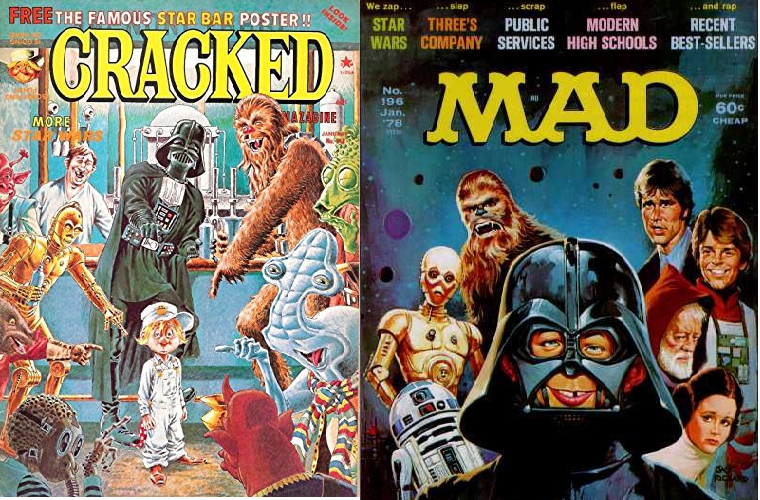
I never got into comic books like Marvel or DC…I would save up my allowance for Cracked and Mad magazine…and records of course. Mad Magazine was by far the most popular out of all of the satire comic magazines. William Gaines was the publisher of Mad magazine and was brilliant.
1952 – Present…now you an only get Mad from Comic Book Shops or order it. The new editions consist of mostly material from their archive.
Cracked was known as the poor man’s Mad but I still liked it and the magazines shared some writers and artists through the years. I bought my first Cracked Magazine when Mad was sold out but I never missed an issue after that.
1958-2007 Now the name is alive on a website but no longer a comic.
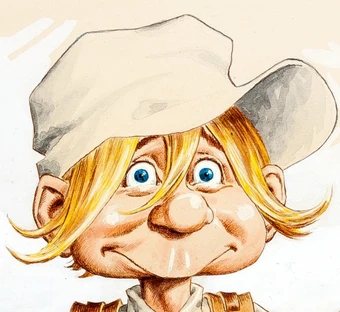
Alfred E Newman and Sylvester P. Smythe
Don Martin was my favorite artist. He was one of Mad’s most famous artists. He was there from 1956 to 1988. He was known as “Mads Maddest Artist” and then moved to Cracked and was jokingly known as “Cracked’s Crackedest Artist.”
Fellow Cracked artist Dan Clowes: “As far as I could tell, he was happy, don’t think he ever seemed to notice that Mad was respected, whereas Cracked was loathed.”
I’ve always liked Lemmy Kilmister. He was a good bass player and very aggressive on vocals. He also gave some of the best interviews I’ve ever heard. He is best known for forming Motörhead in 1975. He joined Hawkwind in 1971.
He also was a roadie for Jimi Hendrix and went frequently to see the Beatles at the Cavern Club before they hit.
Hawkwind was a UK psychedelic heavy metal band…that often sang about science fiction. They were also called a Space Rock Band. They formed in London in 1969 as Group X. They changed their name shortly to Hawkwind Zoo and then Hawkwind. Although this was their only hit, their space-age rock albums sold consistently well throughout the ’70s.
This was by far the biggest hit for Hawkwind, peaking at #3 in the UK and getting played on the TV show Top Of The Pops. Hearing Hawkwind on BBC radio was very strange for many of their fans, as the group was far off-center and notoriously anti-establishment.
Kilmister is singing lead on this track. Lemmy wasn’t the group’s main singer…that was Bob Calvert. Calvert’s attempts to record the vocal didn’t quite make it, so Lemmy did the singing on this one.
A version of the band is still together with Dave Brock as the only original member.
From Songfacts
Hawkwind guitarist Dave Brock wrote the music to this track, and their frontman Bob Calvert composed the lyric. According to Mojo magazine September 2011, Calvert’s lyric was inspired by an Alfred Jarry short story called How To Construct A Time Machine. However, rather than writing about a “cosmic space travel machine” he made it about his new silver racing bike.
“Lemmy had a high voice but it was just very much more powerful, he had a gruffness with it, so we decided to use his vocal,” their manager Doug Smith explained. Calvert, who was hospitalized at the time for manic depression, didn’t find out that his vocal had been replaced until later. When he did, he was not pleased.
Released as a single, the song was recorded live from the Roundtree in London on February 13, 1972. The live performance had vocals by Bob Calvert, but they were replaced by Lemmy’s when the song was mixed and overdubbed at Morgan Studios.
When this song took off, the British music magazine NME put Lemmy on the cover with no sign of his bandmates. This gave the impression that he was the frontman and leader of the band, when really he rarely sang lead and had just joined the outfit.
A self-described “space rock” band from North Carolina named themselves Silver Machine after this song.
Silver Machine
I, I just took a ride in a silver machine And I’m still feeling mean
Do you want to ride See yourself going by The other side of the sky I’ve got a silver machine
It flies Sideways through time It’s an electric line To your zodiac sign
I’ve got a silver machine I’ve got a silver machine I’ve got a silver machine
It flies out of a dream It’s antiseptically clean You’re gonna know where I’ve been
Do you want to ride See yourself going by The other side of the sky I’ve got a silver machine
I said I just took a ride In a silver machine And I’m still feeling mean It flies Sideways through time It’s an electric line To your zodiac sign
I’ve got a silver machine I’ve got a silver machine I’ve got a silver machine I’ve got a silver machine I’ve got a silver machine I’ve got a silver machine I’ve got a silver machine I’ve got a silver machine I’ve got a silver machine I’ve got a silver machine
With ELO and Jeff Lynne, you knew you were getting a quality pop/rock song and it would be very catchy.
Strange Magic was written by ELO frontman Jeff Lynne, “Strange Magic” was on Electric Light Orchestra’s fifth studio album Face the Music.
By this time, the band had toned their orchestral sound to make it brighter and more radio-friendly. The strategy paid off, as this song and “Evil Woman” were both big hits.
The song peaked at #14 in the Billboard 100, #42 in Canada, and #38 in the UK in 1976. The album Face The Music peaked at #8 in the ===Billboard album charts and #35 in Canada.
Jeff wrote the song on various pianos in separate places while on tour in England with the band, presumably during the Eldorado tour.
From Songfacts
The song is about a captivating woman, but “Strange Magic” is also a good description for this song’s sonics. Compressed to a tight 3:27 for the single release (it runs 4:29 on the album), the song packs in an intriguing array of harmonies and hooks while integrating the famous ELO string section. The lyric is suitably trippy, and very repetitious, with the title appearing five times per chorus.
The weepy-sounding guitar lick is provided courtesy of Richard Tandy, who was somehow persuaded to take his hands off his various keyboards to pick up a guitar. Normally, Tandy’s array of Moog synth, clavinet, mellotron, and piano was so omnipresent that it led to the stereotype of prog-rock bands having a stack of keyboards onstage.
Some of you movie-music fans may cringe at this, but this song was also used in the 2007 stage production of Xanadu. Fear not, it was not part of the 1980 film soundtrack, although the soundtrack was the least of that film’s problems… or so we’re told.
The Pan-Pacific Auditorium in Los Angeles, California, doubled as the set of “Xanadu.”
Strange Magic
You’re sailing softly through the sun In a broken stone age dawn You fly so high
I get a strange magic Oh, what a strange magic Oh, it’s a strange magic Got a strange magic Got a strange magic
You’re walking meadows in my mind Making waves across my time Oh no, oh no
I get a strange magic Oh, what a strange magic Oh, it’s a strange magic Got a strange magic Got a strange magic
Oh, I’m never gonna be the same again Now I’ve seen the way it’s got to end Sweet dream, sweet dream
Strange magic Oh, what a strange magic Oh, it’s a strange magic Got a strange magic Got a strange magic
It’s magic, it’s magic, it’s magic Strange magic Oh, what a strange magic Oh, it’s a strange magic Got a strange magic Strange magic Oh, it’s a strange magic Oh, it’s a strange magic
Got a strange magic Strange magic Oh, what a strange magic Oh, it’s a strange magic
Got a strange magic Strange magic You know I got a strange magic Yeah I got a strange magic Strange magic
Driving that train, high on cocaine Casey Jones is ready, watch your speed
As a teenager, this song blasted from the car stereo with the windows down. The rebellion had kicked in and just to sing along with “cocaine” made us all giddy…although none us would have known cocaine if it was in front of us. Great song by the Dead.
The song was on the album Workingman’s Dead released in 1970. With it’s Americana sound…it became with the American Beauty one of their most popular albums. The song was written by Jerry Garcia and Robert Hunter.
“Casey Jones” is very loosely based on the real-life happenings of the heroic engineer Casey Jones, who was the subject of the famous 1902 song “The Ballad Of Casey Jones.” It was doubtful that Jones was high on cocaine when he took over the train, and although his life was ended when he was hit by a train traveling the wrong way, he sacrificed his life so those on board could be saved.
Casey Jones was not released as a single and did not chart. It remains one of their most popular songs known by non-Dead Heads.
The Real CASEY JONES 1864-1900
American folk hero Casey Jones was born John Luther Jones on March 14, 1864, in a rural part of southeastern Missouri. He would work as an engineer on the railroad later in life.
On April 30, 1900, Jones volunteered to work a double shift to cover for a fellow engineer who was ill. He had just completed a run from Canton, Mississippi, to Memphis, Tennessee, and was now faced with the task of returning on board Engine No. 1 headed southbound.
When he pulled out of the Memphis station in the early hours of April 30, the train was running late so he hurried to make up for lost time. As the train rounded a curve near Vaughan, Mississippi, it collided with another train on the tracks, but not before Jones told his fireman to jump to safety. Jones remained on board, supposedly to try to slow the train and save his passengers, and Jones the only person to die in the accident.
Following Jones’s death, Wallace Saunders, an African-American railroad worker in Mississippi, developed a ballad about the fallen engineer that became popular with other men in the railroad yards.
Ask if the song grates his nerves when he hears it…Jerry Garcia: “Sometimes, but that’s what it’s supposed to do. It’s got a split-second little delay, which sounds very mechanical, like a typewriter almost, on the vocal, which is like a little bit jangly, and the whole thing is, I always thought it’s a pretty good musical picture of what cocaine is like. A little bit evil. And hard-edged. And also that sing-songy thing, because that’s what it is, a sing-songy thing, a little melody that gets in your head.”
Grateful Dead lyricist Robert Hunter came up with the line “Drivin’ that train, high on cocaine, Casey Jones you’d better watch your speed,” which he wrote down and put in his pocket. He didn’t think of it as part of a song until he looked at it later and decided to complete the lyrics.
When they put the song together, Hunter looked for ways to omit the word “cocaine,” which at the time was a controversial word for song lyrics (they had taken some heat for using “Goddamn” in “Uncle John’s Band”). Hunter tried some other phrases – “whipping that chain,” “lugging propane” – but couldn’t find an acceptable substitute, so Casey Jones ended up high on cocaine as originally written.
Casey Jones
Driving that train, high on cocaine Casey Jones is ready, watch your speed Trouble ahead, trouble behind And you know that notion just crossed my mind
This old engine makes it on time Leaves central station ’bout a quarter to nine Hits river junction at seventeen to At a quarter to ten you know it’s travelin’ again
Driving that train, high on cocaine Casey Jones is ready, watch your speed Trouble ahead, trouble behind And you know that notion just crossed my mind
Trouble ahead, lady in red Take my advice you’d be better off dead Switchman’s sleeping, train hundred and two is On the wrong track and headed for you
Driving that train, high on cocaine Casey Jones is ready, watch your speed Trouble ahead, trouble behind And you know that notion just crossed my mind
Trouble with you is the trouble with me Got two good eyes but you still don’t see Come round the bend, you know it’s the end The fireman screams and the engine just gleams…
On Sundays, I am going to start posting a good album cut.
When I think of forgotten great album cuts…this one is one of the first songs that come to mind. If you haven’t heard it give it a try. The song has a good riff starting out and the arrangement of the melody is a little different than some of their previous songs. I credit that to new guitarist Steve Gaines… Gaines and Van Zant wrote this song.
Give this song a try…The song takes a while to get going but the melody, guitar work, and the bass are great in this one.
Steve joined the band as a guitarist in 1976. Gaines had an immediate impact, writing or co-writing four of the eight songs on Street Survivors, which was released three days before the group’s plane crashed in Mississippi, killing Gaines, his sister Cassie (a backup singer with the group) and Van Zant.
It is my favorite Lynyrd Skynyrd song hands down. The band never played this live…the original or the new edition.
Street Survivors peaked at #5 in the Billboard Album Charts in 1977.
I Never Dreamed
My daddy told me always be strong son Don’t you ever cry You find the pretty girls, and then you love them And then you say goodbye I never dreamed that you would leave me But now you’re gone I never dreamed that I would miss you Woman won’t you come back home
I never dreamed that you could hurt me And leave me blue I’ve had a thousand, maybe more But never one like you I never dreamed I could feel so empty But now I’m down I never dreamed that I would beg you But woman I need you now
It seems to me, I took your love for granted It feels to me, this time I was wrong, so wrong Oh Lord, how I feel so lonely I said woman, won’t you come back home
I tried to do what my daddy taught me, But I think he knew Someday I would find One woman like you I never dreamed it could feel so good Lord That two could be one I never knew about sweet love So woman won’t you come back home Oh baby won’t you come back home
I don’t really consider The Allman Brothers “southern rock” but they are classified that way. They were cut above their southern brethren at the time. One hearing of At Fillmore East and any doubts go out the window.
I don’t feature many instrumentals but this one is worth it. It was used really well in the movie Field Of Dreams. This song is a great song for traveling.
Jessica is the name of Allman Brothers guitarist Dickey Betts’ daughter. He was working on this song when she crawled into the room and inspired him. Jessica Betts was born May 14, 1972 – she was one year old when her dad wrote the song.
Dickie Betts was trying to compose a song that could be played on the guitar with two fingers in the style of Django Reinhardt, a 1930s Jazz musician Betts admired who lost two fingers in a fire.
Chuck Leavell played piano on this. He was brought in after Duane Allman died to provide another lead instrument. It created a different sound, as the Allmans now had 1 piano and 1 guitar rather than 2 guitars.
Jessica was on the album Brothers and Sisters released in 1973.
The song peaked at #65 in the Billboard 100 and #35 in Canada in 1973.
From Songfacts
Betts had Jessica with Sandy Bluesky, who also inspired one of his famous Allman Borthers songs: he wrote “Blue Sky” for her. The couple were married in 1973.
This is an instrumental song that had little chart success but has endured as a staple of classic rock radio and a favorite among fans.
This is the theme song to the UK TV show Top Gear.
The Allman Brothers performed this on The Late Show with David Letterman on February 29, 1996.
A live recording was included on the album An Evening with the Allman Brothers Band: 2nd Set in 1995. This version won a Grammy Award for Best Rock Instrumental Performance.
When we spoke with Devon Allman, he offered some insight on why songs like this don’t need lyrics. “‘Flor D’Luna’ by Santana, ‘Jessica’ by the Allman Brothers – these songs don’t need words because that lead guitar is doing the talking and the singing. It’s a strong enough melody to stand on its own. Words over that wouldn’t make sense because it’s already doing the speaking.”
And there’s fire on the mountain Lightening in the air Gold in them hills and it’s waiting for me there
This morning there will be 3 southern rock songs. Two well-known and one of my favorite album cuts. I live in the south…so I don’t know if it is a self-conscious thing with me but I don’t feature much southern rock. When some of my classmates were listening to Lynyrd Skynrd, Marshall Tucker, and The Allman Brothers…my feet were stuck firmly in the UK in the 1960’s…and really they never left…I just expanded some.
Now, I see music fans that really get into this music in Germany, UK, and all over the world. It’s made me appreciate what was in my own backyard.
This song sounds older than what it is…The chorus is catchy and is southern as you can get. Since I live in the south I have been bombarded with Southern Rock but I’ve been listening to it recently and have started to enjoy more of it.
This country-rock ballad was written by George McCorkle, guitarist for the Marshall Tucker Band. Set during the California gold rush, it tells the story of a family that sets out from their home in Carolina looking to strike it rich.
The song peaked at #38 in the Billboard 100 and #81 in Canada in 1975.
Many say that Toy Caldwell was the soul of that band. He was a Marine in the 60s and served in Vietnam. After getting injured he was able to go home and started to play music with his high school friends. Toy and his brother helped start Marshall Tucker.
Toy Caldwell played steel guitar on this track, but according to McCorkle, he played it out of tune because he had just recently bought the instrument and didn’t know how to tune it properly.
Toy stayed with Marshall Tucker until he left in 1984. Contributing to him leaving was the fact that his brother… co-founder of the band and bass guitarist Tommy Caldwell, was killed at age 30 in an automobile accident on April 28, 1980. Toy’s other brother Tim Caldwell, who on March 28, 1980, one month prior to Tommy’s death, was killed at age 25 in a collision in South Carolina.
Gregg Allman: When we wanted to get away from our old ladies, we’d head on down to Grant’s Lounge, which was a great place to hang out. We saw a lot of bands, including Marshall Tucker, or Mother Tucker, as we called them. Toy Caldwell was a good friend of mine, but I wouldn’t give you a nickel for the rest of them. Toy Caldwell was Marshall Tucker—he made that band what it was.
This was The Marshall Tucker Band’s second-highest hit, the highest being “Heard It In A Love Song.” It was also one of their only two Top 40 hits.
Fire On The Mountains
Took my family away from our Carolina home Had dreams about the west and started to roam Six long months on a dust covered trail They say heaven’s at the end But so far it’s been hell
And there’s fire on the mountain Lightening in the air Gold in them hills and it’s waiting for me there
We were digging and shifting from five to five Selling everything we found just to stay alive Gold flowed free like the whiskey in the bars Sinning was the big thin Lord And Satan was the star
And there’s fire on the mountain Lightening in the air Gold in them hills and it’s waiting for me there
Dance hall girls were the evening treat Empty cartridges and blood lined the gutters of the street Men were shot down for the sake of fun Or just to hear the noise of their 44 guns
And there’s fire on the mountain Lightening in the air Gold in them hills and it’s waiting for me there
Now my widow, she weeps by my grave Tears flow free for her man she couldn’t save Shot down in cold blood by a gun that carried fame All for a useless and no good worthless claim
And there’s fire on the mountain Lightening in the air Gold in them hills and it’s waiting for me there
Fire on the mountain Lightening in the air Gold in them hills and it’s waiting for me there Waiting for me there
This song came to mind first when I thought about doing songs containing songs that reference money. I couldn’t for the life of me think who did it until John told me Monday. Thanks, John. I’ve heard this used on countless shows and documentaries.
The songwriting/production duo of Kenneth Gamble and Leon Huff co-wrote this song with Anthony Jackson, who also played bass on the track. Gamble and Huff wrote many songs that helped define the Philadelphia Soul sound.
The song peaked at #9 in the Billboard 100, and #29 in Canada in 1974.
For The Love Of Money has become the modern anthem for anyone who’s hustling to make the all mighty dollar. The bass in this song is filtered with a reverse echo…that is what drew me into it. The phrase “For the Love of Money” comes from a well-known Bible verse, 1 Timothy 6:10: “For the love of money is the root of all evil: which while some coveted after, they have erred from the faith, and pierced themselves through with many sorrows.”
From Songfacts
A key contributor to the song was Joe Tarsia, who was the engineer at Sigma. He had just installed an Eventide phaser in the control room, and when Jackson started playing, Tarsia tried recording the bass (with a wah-wah pedal) through the phaser. Gamble loved the effect, which provided a unique sound that made the song stand out on the airwaves.
Tarsia added effects to the background vocals as well, creating a reverse echo where the echo precedes the vocal, something Jimmy Page did on a few Led Zeppelin tracks, including “Whole Lotta Love.”
Often misinterpreted as a song celebrating the accumulation of money, it’s actually one of the more unadorned warnings about the sordid side of the mighty dollar, pointing out the things people will do for it: cheat, lie, even steal from their mother. The song was written at a time when the songwriters Gamble and Huff were reaping the financial rewards of their success, but also reconciling it with their spiritual beliefs (Gamble had recently converted to Islam). The duo often wrote messages into their songs gleaned from their everyday conversations. On this track, they are very clear: “Don’t let money change you.”
With the chorus of “Money, money, money, money,” this has been used in many promos, TV shows and movies where greed or the pursuit of the almighty dollar are concerned.
TV shows to use the song include:
Scandal (“The Other Woman” – 2012) Hawaii Five-0 (“Kuka’awale” – 2015) CSI: Crime Scene Investigation (“Man Up” – 2011) Friends (“The One in Vegas: Part 1” – 1999) The Fresh Prince of Bel-Air (“Winner Takes Off” – 1993) Moonlighting (“Brother, Can You Spare a Blonde?” – 1985)
Movies include:
Deepwater Horizon (2016) Think Like a Man Too (2014) The Honeymooners (2005) All About the Benjamins (2002) Driven (2001) For Richer or Poorer (1997) Sister Act 2: Back in the Habit (1993) Strictly Business (1991) New Jack City (1991) Action Jackson (1988)
There is also a 2012 film called For The Love Of Money that uses the song.
Some people got to have it Some people really need it Listen to me y’all, do things, do things, do bad things with it You want to do things, do things, do things, good things with it Talk about cash money, money Talk about cash money- dollar bills, y’all
For the love of money People will steal from their mother For the love of money People will rob their own brother For the love of money People can’t even walk the street Because they never know who in the world they’re gonna beat For that lean, mean, mean green Almighty dollar, money
For the love of money People will lie, Lord, they will cheat For the love of money People don’t care who they hurt or beat For the love of money A woman will sell her precious body For a small piece of paper it carries a lot of weight Call it lean, mean, mean green
Almighty dollar
I know money is the root of all evil Do funny things to some people Give me a nickel, brother can you spare a dime Money can drive some people out of their minds
Got to have it, I really need it How many things have I heard you say Some people really need it How many things have I heard you say Got to have it, I really need it How many things have I heard you say Lay down, lay down, a woman will lay down For the love of money All for the love of money Don’t let, don’t let, don’t let money rule you For the love of money Money can change people sometimes Don’t let, don’t let, don’t let money fool you Money can fool people sometimes People! Don’t let money, don’t let money change you It will keep on changing, changing up your mind
WordPress decided not to place this in the reader…so I’ll try reposting it. Sorry if you have already seen this one.
This week I’m going to feature songs that cover that certain thing we all need to survive…money…John Lennon might disagree.
As a bass player, it’s nice to hear songs like this where bass plays the main riff. I’m not a huge Pink Floyd fan but I do like some of their songs. Their 60s songs I like best but I grew up with this one.
Roger Waters put together the cash register tape loop that plays throughout the song. It also contains the sounds of tearing paper and bags of coins being thrown into an industrial food-mixing bowl. The intro was recorded by capturing the sounds of an old cash register on tape, and meticulously splicing and cutting the tape in a rhythmic pattern to make the “cash register loop” effect.
Like many of their songs, this was not released as a single in the UK, where singles were perceived as a sellout…but it was released as a single in Anerica in 1973.. It peaked at #13 in the Billboard 100 and #18 in Canada.
The lyrics contain a “no-no” word. “Bulls–t” was left in the original release, but their record company quickly put out a version with the word removed, which became known as the “Bull Blank” version.
From Songfacts
This song is about the bad things money can bring. Ironically, it made Pink Floyd lots of cash, as the album sold over 34 million copies.
This is often misinterpreted as a tribute to money. Many people thought the line “Money, it’s a gas,” meant they considered money a very good thing.
The song begins in an unusual 7/8 time signature, then during the guitar solo the song changes to 4/4, then returns to 7/8 and ends in 4/4 again. When Guitar World February 1993 asked Dave Gilmour where the famous time signature for “Money” came from, the Pink Floyd guitarist replied: “It’s Roger’s riff. Roger came in with the verses and lyrics for ‘Money’ more or less completed. And we just made up middle sections, guitar solos and all that stuff. We also invented some new riffs – we created a 4/4 progression for the guitar solo and made the poor saxophone player play in 7/4. It was my idea to break down and become dry and empty for the second chorus of the solo.”
Roger Waters is the only songwriter credited on this, but the lead vocal is by David Gilmour. Waters provided the basic music and lyrics, while the whole band created the instrumental jam of the song. Gilmour was the one overseeing time change and responsible the acclaimed guitar solo. Rick Wright and Nick Mason.
Many studio effects were used on this song. They were using a new 16-track recorder, which allowed them to layer sounds much easier, but complex studio techniques like this still took a long time to do in 1973, as there weren’t digital recorders and samplers available like we have today. If you wanted to copy and paste something, you had to do it the hard way – with a razor blade and splicing tape.
Bands like The Beatles had used tape loops, but never like this. The tape loop used on this was about 20 feet long, and if you’ve ever seen a reel-to-reel tape machine, you can imagine how hard it was to keep it playing. In order to get the right tension and continuously feed the machine, they set up the loop in a big circle using microphone stands to hold it up. It was fed through the tape machine and played throughout the song.
The album was engineered by famed British producer and studio genius Alan Parsons at Abbey Road Studios, where he also worked with The Beatles. Parsons later started his own band called The Alan Parsons Project and scored a hit in the ’80s with “Eye In The Sky.”
Speaking with Songfacts about the studio habits of The Beatles and Pink Floyd, Parsons said: “They both liked to use the studio to its fullest, and they were always looking for new effects and new sounds. That was the beauty of working with those guys: There were always new horizons to discover in sound.” >>
Along with “Us And Them,” this is one of two songs on the album to use a saxophone, which was played by Dick Parry. The band wanted to experiment with new sounds on these sessions.
As happens throughout Dark Side of the Moon, random voices come in at the end. Waters drew up flashcards with deep philosophical questions on them, then showed them to people around the studio and taped their answers. The ones they liked made the album. Among the people questioned: a doorman, a roadie, and Paul McCartney. Most contributions were not used, but McCartney’s guitarist at the time, Henry McCullough, made the final cut with his answer, “I don’t know; I was really drunk at the time.”
Due to a record company dispute, they had to re-record this for their 1981 greatest hits album, A Collection Of Great Dance Songs (the title is a joke. You can’t dance to Floyd). There are very subtle differences between this version and the original.
If you start the CD on the third roar of the MGM lion, this begins just as the film goes to color in The Wizard Of Oz.
A cultural difference in the song: the reference to the “football team.” In America, the sport is known as soccer.
There is a scene in The Wall where the main character (Pink) is a student in school, and the teacher catches him writing a poem instead of doing the work he was supposed to be doing. The teacher reads the poem out loud, and it is this song. He makes the student look like a fool and everyone in the classroom laughs at him. The teacher then tells him “It’s rubbish laddy, now get back to work!” It probably symbolizes the way that we are raised almost uniform-like throughout our entire lives, starting in school. This is a theme of the movie.
The line, “Money, so they say, is a root of all evil today” is a paraphrase from the New Testament – 1 Timothy 6:10: “For the love of money is a root of all kinds of evil.”
In 2002, a group called The Easy Star All-Stars recorded a reggae version of the album called Dub Side Of The Moon. On this song, the sounds of money were replaced by sounds of someone smoking from a water-based marijuana delivery device (OK, a bong).
A group called Reloaded, made up of former Guns N’ Roses members with Scott Weiland from The Stone Temple Pilots as lead singer, recorded this for the 2003 movie The Italian Job.
This was the first project for the group, which eventually changed its name to Velvet Revolver.
The cash register loop and bass line at the introduction to this song are used in a radio show that plays in the US, The Dave Ramsey Show. The show offers financial advice to struggling people, so the song ties in well. >>
In the documentary The Making of Dark Side of the Moon, it was revealed that Roger Waters wrote this in his garden, and the original demo version was described by him as being “Prissy and very English.” >>
In Quentin Tarantino’s 1992 film Reservoir Dogs, this song was originally intended to be used in a specific opening sequence. However, after hearing the song “Little Green Bag” by the George Baker Selection, Tarantino decided to use it instead because he it gave him an extreme sense of nostalgia. >>
Guitar World asked Gilmour if he was purposely trying to get away from just playing a 12 bar blues on guitar. He replied: “No, I just wanted to make a dramatic effect with the three solos. The first solo is ADT’d – Artificially Double Tracked. I think I did the first two solos on a Fender Stratocaster, but the last one was done on a different guitar – a Lewis, which was made by some guy in Vancouver. It had a whole two octaves on the neck, which meant I could get up to notes that I couldn’t play on a Stratocaster.”
Asked by Uncut in 2015 if there’s a song that reminds him of Roger Waters, David Gilmour replied: “‘Money.’ I’m not talking about the lyric. Just the quirky 7/8 time reminds me of Roger. It’s not a song I would have written. It points itself at Roger.”
Money
Money, get away Get a good job with good pay and you’re okay Money, it’s a gas Grab that cash with both hands and make a stash New car, caviar, four star daydream Think I’ll buy me a football team
Money, get back I’m all right Jack keep your hands off of my stack Money, it’s a hit Don’t give me that do goody good bullshit I’m in the high-fidelity first class traveling set And I think I need a Lear jet
Money, it’s a crime Share it fairly but don’t take a slice of my pie Money, so they say Is the root of all evil today But if you ask for a raise it’s no surprise that they’re Giving none away, away, away
Sorry if you are seeing this twice…I can’t blame WordPress for this…I scheduled it for yesterday…this morning. I’m posting it again.
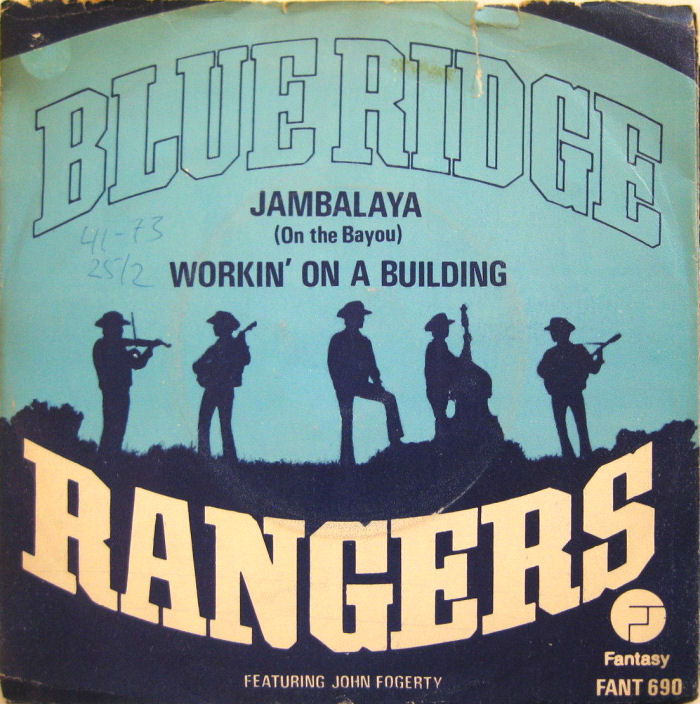
Who are all of those shadows on the cover? That would be the one-man band of John Fogerty who played everything on the album. It was released in 1973.
John wanted to pay tribute to the country artists he admired so he released this album right after CCR broke up. Instead of going about it the traditional country-music way…with a bunch of musicians sitting together in a room and performing the music live as the tapes roll – Fogerty played every single instrument on The Blue Ridge Rangers himself.
Jambalaya is a song written and recorded by country music singer Hank Williams that was first released in 1952. Named for a Creole and Cajun dish, jambalaya, it spawned numerous cover versions.
Jambalaya (On The Bayou)
Goodbye, Joe, me gotta go, me oh my oh. Me gotta go, pole the pirogue down the bayou. My Yvonne, sweetest one, me oh my oh. Son of a gun, gonna have big fun on the bayou.
[CHORUS:] Jambalaya and a crawfish pie and fillet gumbo ‘Cause tonight I’m gonna see my ma cher amio. Pick guitar, fill fruit jar and be gayo, Son of a gun, gonna have big fun on the bayou.
Thibodeaux, Fontaineaux, the place is buzzin’, Kinfolk come to see Yvonne by the dozen. Dress in style, go hog wild, and be gayo. Son of a gun, gonna have big fun on the bayou.
[CHORUS:] Oh, guitar!
[CHORUS]
Oh, Lord! Hang tight, ooh Lord! Ah, take it out. He’s comin’, ah!
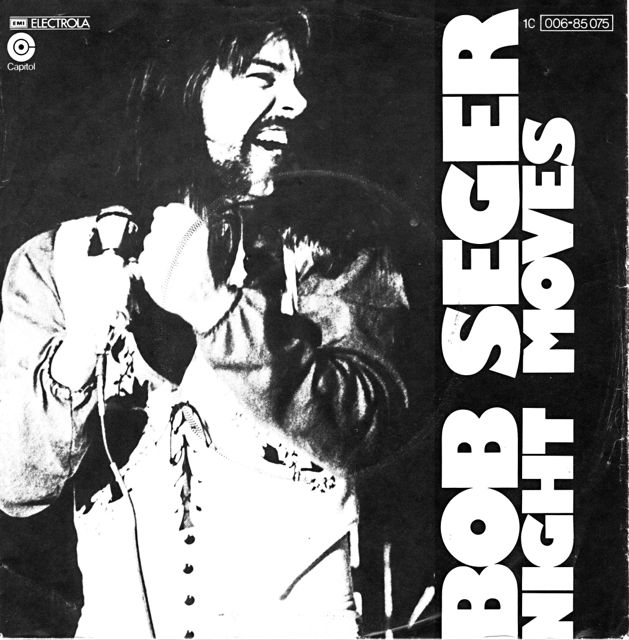
I always liked this song by Seger. This song is a staple on classic radio and I still listen to it when it comes on. Seger has great imagery in this song.
It took Seger around six months to write this song. Along with “Turn The Page,” this was one of just two songs Seger ever wrote on the road.
Night Moves was a breakthrough hit for Seger, introducing the heartland rocker to a much wider audience. He had been very popular in Michigan ever since his first album in 1969… which had the hit Ramblin’ Gamblin’ Man. That song went to #17 on the Hot 100, but over the next few years, he struggled to make a national impact.
A big break came in April 1976 when his label, Capitol, seeing the success of Peter Frampton’s Frampton Comes Alive, issued a Seger live album, Live Bullet, recorded at two of his Detroit concerts in 1975. It quickly found a following and outsold every other Seger album.
Bob was born in Detroit. His father was a bandleader and musician who worked in an auto plant to support his wife and two children. He was the younger of two sons and got less attention from his father.
Bob Seger was inspired by the movie American Graffiti, which was released in 1973 but set in 1962. He said, “I came out of the theater thinking, Hey, I have a story to tell too. Nobody has ever told about how it was to grow up in my neck of the woods.”
Night Moves peaked at #4 in the Billboard 100, #5 in Canada, and #39 in New Zealand.
From Songfacts
This song is about a young couple losing their virginity in the back seat of a Chevy. Seger says the song is autobiographical, but he took some liberties, as their tryst was after high school. The girl he was with had a boyfriend away in the military, and when he came back, she married him, breaking Seger’s heart. Seger says the song represents the freedom and possibility of the high school years.
The phrase “night moves” has a number of meanings, which made it an intriguing song title. It could mean “putting the moves on” a girl in the back seat of a car, but Seger says it also relates to the impromptu parties he and has buddies threw in the fields of Ann Arbor, Michigan, where they would turn on the headlights and dance their “night moves.” They called these gatherings “grassers.”
Four songs on the Night Moves album were recorded at Muscle Shoals Sound Studios in Alabama with the Muscle Shoals Rhythm Section, and another four at Pampa Studios in Detroit with Seger’s Silver Bullet Band. They needed one more for the album, so Seger’s manager booked three days at Nimbus Nine Studios in Toronto with producer Jack Richardson. They quickly recorded three songs that weren’t that memorable. Seger’s guitarist and sax player returned to Detroit, but the rest of the crew kept working on a very stubborn song Seger had been toiling over: “Night Moves.” When it started to come together, Richardson brought in the local guitarist Joe Miquelon and organist Doug Riley to play on the track along with Seger and two members of his band: bass player Chris Campbell and drummer Charlie Allen Martin.
It’s also the only track on Night Moves with female backing vocals, which were provided by Laurel Ward, Rhonda Silver and Sharon Dee Williams, a trio from Montreal that happened to be in town.
The famous bridge in this song, where Seger strips it down and sings “I woke last night to the sound of thunder,” is something he and producer Jack Richardson came up with on the fly in the studio.
Night Moves was released in October 1976, with the title track issued as the lead single. When the Night Moves album entered the chart at #84 on November 13, Live Bullet was hanging around at #159. For the rest of the year and most of 1977, both albums were on the chart. Each ended up selling 5 million copies.
As for the “Night Moves” single, it rose to #4 in March 1977, making the heartland rocker a national name.
On the album, this runs 5:25. The single version was cut down to 3:23, taking out the bridge section where Seger wonders about the thunder and hums a song from 1962.
This reflective track was a change of pace for Seger, whose songs tended to be rockers with lot of live energy. It wasn’t his first slower song though: “Turn The Page” was released in 1972 but got little attention. After “Night Moves” and the next single, “Mainstreet,” took off, many radio stations added “Turn The Page” to their playlists.
According to Seger, he knew he had a hit after he recorded the song. Folks at his record company were also sure of it; Seger recalls the esteemed promotions man at Capitol, Bruce Wendell, telling him, “You’re going to be singing this song for your entire career.”
Like many of Seger’s songs, there is a touch of nostalgia in the lyrics. When he sings, “And it was summertime, sweet summertime, summertime,” he’s not only referring to the time of the year, but to that season of his life as well. In the last verse of the song, when he is reminiscing, he says, “With autumn closing in” and is referring to the autumn of his life, getting older. >>
Rolling Stone magazine named this Single of the Year for 1977.
The tempo changes were inspired by Bruce Springsteen’s “Jungleland.” Seger wrote the song in pieces; he had the first two verses written but was having trouble finishing the song. After hearing “Jungleland,” he realized he could connect the song with two distinct bridges.
When Seger sings the line about how he dressed in high school, “Tight pants, points, hardly renowned,” “Points” refers to small metal objects some teenagers wore on their shoes in the ’60s.
“Night Moves” didn’t get a video when it was first released (it was five years before MTV), but when Seger’s Greatest Hits album was released in 1994, a video was made to promote it. The video borrows heavily from American Graffiti, showing young people at a ’60s drive-in, intercut with shots of Seger singing the song in the projection room. It was directed by Wayne Isham and stared some soon-to-be famous actors, notably Matt LeBlanc, who would later appear on the TV series Friends. His love interest is played by Daphne Zuniga, who was already starring in Melrose Place. Johnny Galecki, who later found fame on Roseanne and The Big Bang Theory, also appears. The video version of the song runs 4:30, splitting the difference between the album version and the single edit.
In the UK, the song charted for the first time (at #45) when it was released as a single along with Seger’s Greatest Hits package.
According to Seger, he and the girl really made it in the backseat of a ’62 Chevy, but it didn’t fit lyrically, so he changed the line to “my ’60 Chevy.” >>
“Night Moves” is also the name of a 1975 movie starring Gene Hackman that is unrelated to the song. Another movie called Night Moves, this one starring Jesse Eisenberg and also unrelated to the song, hit theaters in 2013.
Since this is such a personal song, it has garnered few covers, although Garth Brooks and The Killers have performed it live.
Seger revealed in a radio interview that in the line, “Started humming a song from 1962,” the song he had in mind was “Be My Baby” by the Ronettes (which was actually released in 1963).
Seger credits the Kris Kristofferson-written song “Me And Bobby McGee” for inspiring the narrative songwriting style he employed on this track.
Night Moves
I was a little too tall, could’ve used a few pounds Tight pants points hardly renown She was a black-haired beauty with big dark eyes And points all her own sitting way up high Way up firm and high
Out past the cornfields where the woods got heavy Out in the back seat of my sixty Chevy Workin’ on mysteries without any clues Workin’ on our night moves Trying’ to make some front page drive-in news Workin’ on our night moves In the summertime In the sweet summertime
We weren’t in love, oh no, far from it We weren’t searching for some pie in the sky summit We were just young and restless and bored Living by the sword And we’d steal away every chance we could To the backroom, the alley, the trusty woods I used her she used me, but neither one cared We were getting our share
Workin’ on our night moves Trying to lose the awkward teenage blues Workin’ on out night moves And it was summertime Sweet summertime, summertime
And oh, the wonder Felt the lightning Yeah, and we waited on the thunder Waited on the thunder
I woke last night to the sound of thunder How far-off, I sat and wondered Started humming a song from nineteen-sixty-two Ain’t it funny how the night moves? When you just don’t seem to have as much to lose Strange how the night moves With autumn closing in
Hmm, night moves (Night moves) night moves (Night moves) yeah (Night moves) night moves (Night moves) I remember the night moves (Night moves) ain’t it funny how you remember? (Night moves) funny how you remember (Night moves) I remember, I remember, I remember, I remember (Night moves) oh (Night moves) move away (Night moves) we’re gonna practice, love (Night moves) night moves (Night moves) oh, I remember (Night moves) yeah, yeah, yeah, I remember (Night moves) oh, I remember (Night moves) god, I remember (Night moves) lord, I remember
Oh, woman, oh, yeah, yeah, uh-huh, I remember, I remember
I’m always on the lookout for new old music…I’ve heard this band mentioned by rock stars before like David Bowie…I see why a lot of musicians liked them. They opened up for some huge bands. They were one of the pioneer all-female rock bands.
Fanny was formed in the late sixties in Sacramento by two Filipina sisters, Jean and June Millington. Fanny would be the first all-female band to release an album on a major label (their self-titled debut, on Reprise, 1970) and land four singles in the Billboard Hot 100 and two in the top 40. The band played blues, rock, and some pop.
They never got that one big hit single to break them to the masses. The broke up in 1975 and reunited in 2018 and released an album titled Fanny Walked the Earth.
They really impressed David Bowie…he said in 1999:
“They were one of the finest fucking rock bands of their time,” “They were extraordinary: They wrote everything, they played like motherfuckers, they were just colossal and wonderful, and nobody’s ever mentioned them. They’re as important as anybody else who’s ever been, ever; it just wasn’t their time.”
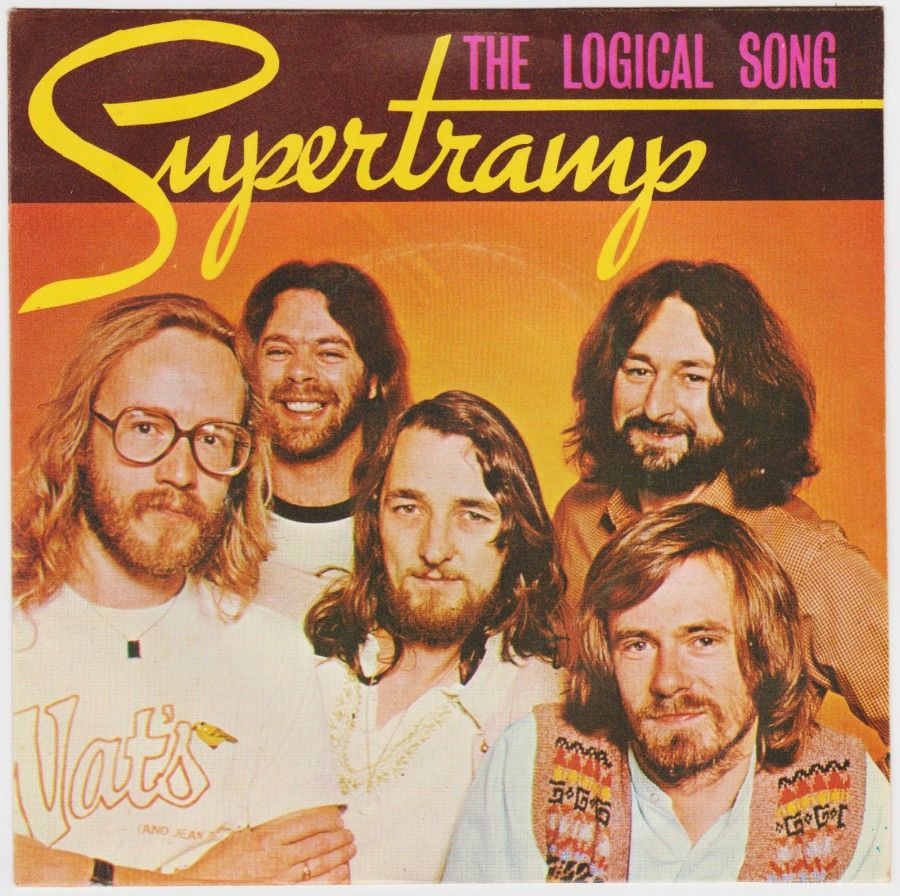
In 1979 the album Breakfast In America was huge. The album had 4 singles in the Billboard 100. The Logical Song was the lead single. It peaked at #4 in the Billboard 100, #1 in Canada, #7 in the UK, and #13 in New Zealand in 1979.
Breakfast In America peaked at #1 in the Billboard Album Charts, #1 in Canada, #1 in New Zealand, and #3 in the UK…and won 2 Grammys.
This was a very personal song for Roger Hodgson would work on the song during soundchecks, and completed it long before bringing it to the band. The lyrics were based on his experience of being sent away to boarding school for ten years.
To accentuate the “d-d-digital” line in the lyrics, the band borrowed a Mattel handheld electronic football game from an engineer named Richard Digby-Smith, who was working next door. This device provided an unusual sounding, layered bleep. The specific sound occurs near the end of the song just after Hodgson sings the word “digital.” The sound itself indicated a player had lost control of the football.
Roger Hodgson: “I had actually finished the words and the arrangement six months before I proposed it to the band for the album… I didn’t think anyone would like it. Interestingly enough this song has the distinction of being one of the most quoted lyrics in schools.”
From Songfacts
The lyrics are about how the innocence and wonder of childhood can quickly give way to worry and cynicism as children are taught to be responsible adults. It makes the point that logic can restrict creativity and passion. Supertramp keyboard player Roger Hodgson, who wrote this song and sang the lead vocals, said in our 2012 interview: “I think it was very relevant when I wrote it, and actually I think it’s even more relevant today. It’s very basically saying that what they teach us in schools is all very fine, but what about what they don’t teach us in schools that creates so much confusion in our being. I mean, they don’t really prepare us for life in terms of teaching us who we are on the inside. They teach us how to function on the outside and to be very intellectual, but they don’t tell us how to act with our intuition or our heart or really give us a real plausible explanation of what life’s about. There’s a huge hole in the education. I remember leaving school at 19, I was totally confused. That song really came out of my confusion, which came down to a basic question: please tell me who I am. I felt very lost. I had to educate myself in that way, and that’s why California was very good for me to kind of re-educate myself, if you like.
But it’s interesting that that song, I hear it all the time, it’s quoted in schools so much. I’ve been told it’s the most-quoted song in school. That may be because it has so many words in it that people like to spell. But I think it also poses that question, and maybe stimulates something with students. I hope so.” (Here’s our full interview with Roger Hodgson.)
Like the Lennon/McCartney partnership, most of Supertramp’s songs are credited to their lead singers Roger Hodgson and Rick Davies, although in many cases one writer was entirely responsible for the song. “The Logical Song” was written by Hodgson, but it shares some themes with a song Davies wrote on Supertramp’s 1974 album Crime of the Century called “School.” Speaking of the connection in 1979 at a time when the songwriters were at odds, Davies said to Melody Maker: “‘School’ was a device, in some ways. I don’t know whether Roger would be able to associate too much with that, although I can see the connection with ‘Logical Song.’ Roger went straight from public school to a rock group, so his personal experience is a bit limited in that area. He’s very public school.”
Hodgson often writes songs by singing over his keyboard riffs. He’ll try different words and phrases to get ideas for his lyrics, which is how the title of this song came about. Said Hodgson: “From singing absolute nonsense, a line will pop up that suddenly makes sense, then another one, and so on. I was doing that when the word ‘logical’, came into my head and I thought, ‘That’s an interesting word’.”
Like another famous song from 1979, “Another Brick In The Wall (part II),” this song rails against English schooling. “What’s missing at school is for me the loudest thing,” Hodgson said. “We are taught to function outwardly, but we are not taught who we are inwardly, and what really the true purpose of life is. The natural awe and wonder, the thirst and enthusiasm and joy of life that young children have, it gets lost. It gets beaten out of them in a way.”
In 1980, Hodgson won the Ivor Novello Award from The British Academy of Composers and Songwriters, who named “The Logical Song” the best song both musically and lyrically of that year.
The German dance music band Scooter did a techno version of “The Logical Song,” which was wildly popular across Europe and hit #2 in the UK. It has been certified gold by the BPI, selling over 400,000 copies and was the 15th best selling single of 2002.
In 2004, a Supertramp tribute band called Logicaltramp formed in the UK. Supertramp members John Helliwell and Roger Hodgson have given the band favorable reviews, and Helliwell has joined them on stage. >>
At a concert appearance, Roger Hodgson said of this song: “I was sent to boarding school for ten years and I definitely emerged from that experience with a lot of questions, like What the hell happened to me? What is life about? And why a lot of the things I had been told didn’t make any sense. ‘Logical Song’ was really a light hearted way of saying something pretty deep. Which is they told me how to conform, to be presentable, to be acceptable and everything but they didn’t tell me who I am or why I m here. So, it s a very profound message and I think it really resonated with a lot of people when it came out.”
The Logical Song
When I was young, it seemed that life was so wonderful A miracle, oh it was beautiful, magical And all the birds in the trees, well they’d be singing so happily Oh joyfully, playfully watching me But then they send me away to teach me how to be sensible Logical, oh responsible, practical And they showed me a world where I could be so dependable Oh clinical, oh intellectual, cynical
There are times when all the world’s asleep The questions run too deep For such a simple man Won’t you please, please tell me what we’ve learned I know it sounds absurd Please tell me who I am
I said, watch what you say or they’ll be calling you a radical Liberal, oh fanatical, criminal Won’t you sign up your name, we’d like to feel you’re acceptable Respectable, oh presentable, a vegetable Oh, take it take it yeah
But at night, when all the world’s asleep The questions run so deep For such a simple man Won’t you please tell me what we’ve learned I know it sounds absurd Please tell me who I am, who I am, who I am, who I am ‘Cause I was feeling so logical D-d-digital One, two, three, five Oh, oh, oh, oh It’s getting unbelievable
This Canadian’s band name is a combination of the members’ last names and Overdrive, the trucker magazine. It’s been said that Randy and Frank were sitting around a table at a Husky Restaurant (which is a big “Truck Stop” chain in Canada) and they were trying to think of a name for the band. Randy was reading the magazine and said as a joke, “We should name ourselves Overdrive.”
Randy Bachman and Fred Turner would often give themselves assignments as motivation to write songs, often writing something in the style of a current hit. This song evolved out of something they wrote for a Ford commercial. In our interview with Randy Bachman, he explained:
The song peaked at #14 in the Billboard 100, #4 in Canada, and #22 in the UK in 1975.
Randy Bachman – “It’s like getting an assignment: write a new commercial for Ford and you’ll get paid $100,000. Well, I’d sit down and I’d write a commercial for Ford, ‘let it roll down the highway.’ Ford never picks it up and I have a song called ‘Roll On Down the Highway.'”
Roll On Down The Highway
We rented a truck and a semi to go Travel down the long and the winding road Look on the map, I think we’ve been there before Close up the doors, let’s roll once more
Cop’s on the corner, look he’s starting to write Well, I don’t need no ticket so I screamed out of sight Drove so fast that my eyes can’t see Look in the mirror, is he still following me?
Let it roll down the highway Let it roll down the highway Roll, roll
Look at the sign, we’re in the wrong place Move out boys and let’s get ready to race Four fifty-four’s coming over the hill The man on patrol is gonna give us a bill
The time’s real short, you know the distance is long I’d like to have a jet but it’s not in the song Climb back in the cab, cross your fingers for luck We gotta keep moving if we’re going to make a buck
Let it roll down the highway Let it roll down the highway Roll
Let it roll Let it roll Let it roll Let it roll
Let it roll down the highway Let it roll down the highway Roll, roll, roll
Down the highway Let it roll down the highway Roll, roll, roll
Let it roll down the highway Let it roll down the highway Roll, roll, roll
I’ve seen Paul in concert twice. Some performers you go and see and you may know a lot of their songs but with Paul…it’s nearly 3 hours of songs that you have heard all of your life.
Paul McCartney was given a copy of the Ian Fleming novel to read and he read the book one Saturday, during a break from sessions for the Red Rose Speedway album before writing the song on the following day.
Live and Let Die was the title song for the eighth James Bond film. It was the first to star Roger Moore as Bond.
George Martin produced this song for Paul, they hadn’t worked together since Abbey Road. The song was nominated for the Academy Award for Best Original Song but lost to Barbra Streisand’s The Way We Were, but George Martin won a Grammy for his work on the song.
“Live and Let Die” was not featured on a McCartney album until the Wings Greatest compilation in 1978.
Live and Let Die peaked at #2 in the Billboard 100, #2 in Canada, #9 in the UK, and #20 in New Zealand.
Denny Seiwell (Wings Drummer) “Everybody thought it was cool that we were doing something for James Bond. I remember what Paul told us – he said a couple weeks before we did the actual recording, he said they wanted him to write the theme to the next James Bond movie, and they sent him the book to read. And we were up at the house one day and he had just read the book the night before, and he sat down at the piano and said, ‘James Bond… James Bond… da-da-dum!’, and he started screwing around at the piano. Within 10 minutes, he had that song written. It was awesome, really. Just to watch him get in there and write the song was really something I’ll remember the rest of my life.”
From Songfacts
The former Beatle recalled the writing of the song in an interview with the October 2010 edition of Mojo magazine: “I got the book and it’s a very fast read. On the Sunday, I sat down and thought, OK, the hardest thing to do here is to work in that title. I mean, later I really pitied who had the job of writing Quantum Of Solace. So I thought, Live And Let Die, OK, really what they mean is live and let live and there’s the switch.
So I came at it from the very obvious angle. I just thought, ‘When you were younger you used to say that, but now you say this.'”
George Martin produced this and arranged the orchestra. Martin produced most of The Beatles work, so this was McCartney’s chance to work with him again.
This was the most successful Bond theme up to that point. Other hits from James Bond movies include “Nobody Does It Better” by Carly Simon (from The Spy Who Loved Me), “For Your Eyes Only” by Sheena Easton, and “A View To A Kill” by Duran Duran.
McCartney performed this on his solo tours in 1989-1990 and 1993.
Live and Let Die
When you were young And your heart was an open book You used to say live and let live You know you did You know you did You know you did But if this ever changin’ world In which we live in Makes you give in and cry Say live and let die (live and let die) Live and let die (live and let die)
What does it matter to ya When you got a job to do you got to do it well You got to give the other fella hell
You used to say live and let live You know you did You know you did You know you did But if this ever changin’ world In which we live in Makes you give in and cry Say live and let die (live and let die) Live and let die (live and let die)









 PowerPop... An Eclectic Collection of Pop Culture