I’ve heard this one since I was a kid, and I’ve always liked it. It just rolls right along.
The song itself grew out of Mason’s acoustic roots, written simply and deliberately, with the melody doing most of the heavy lifting. There was no attempt to modernize it for radio, which ironically is probably why it connected. When the song was released as a single in late 1970, it quickly became Mason’s breakthrough hit. It established him as more than “the guy who left Traffic.”
It was written and recorded by Dave Mason in 1970. It was on his album, Alone Together. The song was his first charting single, and it became a minor hit for him in the U.S. and Canada. Dave Mason played with Traffic; he also played on the Jimi Hendrix song All Along the Watchtower, Beggars Banquet by the Stones, and George Harrison’s All Things Must Pass. The guy got around and was in demand from other artists.
Recording sessions for Alone Together were loose but purposeful. Mason brought in an all-star cast of friends and collaborators, including members of Delaney & Bonnie’s circle, Leon Russell, and Jim Gordon. No one overplayed, no one tried to steal the spotlight. It feels organic because it is, musicians listening to each other instead of competing for space.
The song peaked at #42 on the Billboard 100 in 1970. It was also recorded by Delaney and Bonnie and peaked at #20 in 1971. I grew up hearing both versions of it.
Only You Know And I Know
Only you know and I know
All the lovin’ we’ve got to show
So don’t refuse to believe it
By reading too many meanings
‘Cause you know that I mean what I say
So don’t go, and never take me the wrong way
You know you can’t go on gettin’ your own way
‘Cause if you do, it’s gonna get you someday
We’re both here to be pleasin’
Oh, no, no, not deceivin’
But it’s hard to believe in
Ah yeah, when you’ve been so mistreated
‘Cause you know that I mean what I say
So don’t go, and never take me the wrong way
You know you can’t go on gettin’ your own way
‘Cause if you do, it’s gonna get you someday
If I seem to mislead you
It’s just my craziness comin’ through
But when it comes down to just two
Ah, I ain’t no crazier than you
‘Cause you know that I mean what I say
So don’t go, and never take me the wrong way
You know you can’t go on gettin’ your own way
‘Cause if you do, it’s gonna get you someday
Only you know and I know
Only you know and I know
Only you know and I know, oh yeah
Only you know and I know, oh yeah, get up
This is fast becoming my favorite rock Christmas song second only to John Lennon’s Happy Xmas (War Is Over). This week is going to be Christmas week. I will let up on the weekend but let’s bring in the cheer.
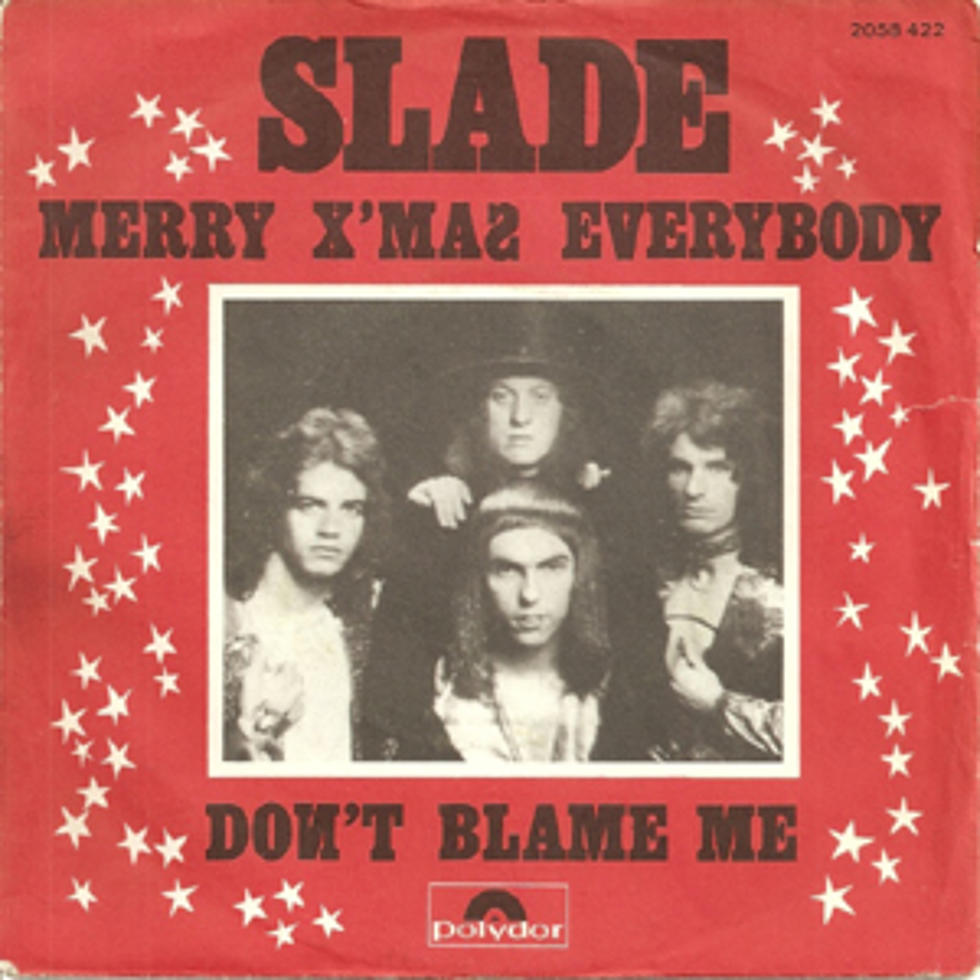
This is a great Christmas song that was released in 1973 and ever since it re-enters the charts every December in the UK. The song never hit in America but it went to #1 in the UK Charts. I first heard it on a Doctor Who episode in the mid-2000s and have liked it ever since.
This was based on a psychedelic song, “My Rocking Chair,” which Noddy Holder wrote in 1967. In 1973 the Slade vocalist decided to convert it into a Christmas song after a night out drinking at a local pub.
He and the band’s bass player and co-writer Jimmy Lea camped out at Noddy’s mother’s house and got down to changing the lyrics to make them more Christmassy. Jimmy Lea incorporated into the verse parts of another song which he was then writing and Noddy re-wrote the words incorporating different aspects of the Christmas holiday season as they came to mind.
This went straight in at #1 in the UK, selling over 300,000 copies on the day of its release, making it at the time the fastest ever selling record in Britain. It eventually became Slade’s best-ever selling single in the UK, selling over a million copies.
In the UK this has become a standard, and it is usually reissued in its original form each Christmas. On several occasions, the song has re-entered the Top 40.
UK copyright collection society and performance rights organization PRS For Music estimated in 2009 that 42 percent of the earth’s population has heard this tune.
The song was written by Noddy Holder and Jim Lea of Slade. It was produced by Chas Chandler formerly of the Animals. The harmonium used on this is the same one that John Lennon used on his Mind Games album, which was being recorded at the studio next door.
Noddy Holder: “I wrote the original verse with the lyrics, ‘Buy me a rocking chair, I’ll watch the world go by. Bring me a mirror, I’ll look you in the eye,’ in 1967 in the aftermath of The Beatles’ Sgt Pepper,” I was being psychedelic. Dave (Hill) wrote another part to the song but it didn’t work so we put it away. Then in 1973 he remembered my verse one day when we were trying to write a Christmas single. We changed the words to, ‘Are you hanging up your stocking on the wall?’ and the rest fell into place.”
Noddy Holder: “As a lad we used to knock sleds with old orange boxes and go tobogganing down this big old quarry in the snow at Christmas. It was the inspiration for the line ‘are you hoping that the snow will start to fall.’”
Merry Christmas Everybody
Are you hanging up a stocking on your wall? It’s the time that every Santa has a ball Does he ride a red nosed reindeer? Does a ‘ton up’ on his sleigh Do the fairies keep him sober for a day?
Chorus: So here it is merry Christmas Everybody’s having fun Look to the future now It’s only just begun
Are you waiting for the family to arrive? Are you sure you got the room to spare inside? Does your granny always tell ya that the old are the best? Then she’s up and rock ‘n’ rollin’ with the rest
Chorus: So here it is merry Christmas Everybody’s having fun Look to the future now It’s only just begun
What will your daddy do When he sees your Mama kissin’ Santa Claus? Ah ah
Are you hanging up a stocking on your wall? Are you hoping that the snow will start to fall? Do you ride on down the hillside in a buggy you have made? When you land upon your head then you’ve been slayed
Chorus (4x) So here it is merry Christmas Everybody’s having fun Look to the future now It’s only just begun
Hope everyone is having a great Christmas Eve. I’ll be late commenting today, but I’ll get on as soon as I can.
Christmas has always meant a lot to me. My mom and dad are gone now but as corny as it sounds… the magic of Christmas stays with me. My son is in Germany with his girlfriend this year, but we will have a good time and I will think back at all of Christmas Eve’s past. Sort of like a good ghost that tells me I have a lot to be thankful for.
Robbie Robertson’s Christmas gift to his new son, Sebastian, during the sessions for the Northern Lights-Southern Cross album… never became a seasonal favorite, but it should have been. It wasn’t released until the Islands album in 1977.
Rick Danko sings this song from a Shepherd’s point of view. It’s pure and down to earth like only the Band can be. No sleigh bells or other Christmas trappings…just pure music. Maybe that is the reason it never got picked up.
Robbie Robertson re-recorded this song after he left the group. And he did the soundtrack for Bill Murray’s Scrooged. That version is very good, but I still like The Bands version much more…it’s hard to beat Rick Danko.
Christmas Must Be Tonight
Come down to the manger, see the little stranger Wrapped in swaddling clothes, the prince of peace Wheels start turning, torches start burning And the old wise men journey from the East
How a little baby boy bring the people so much joy Son of a carpenter, Mary carried the light This must be Christmas, must be tonight
A shepherd on a hillside, where over my flock I bide Oh a cold winter night a band of angels sing In a dream I heard a voice saying “fear not, come rejoice It’s the end of the beginning, praise the new born king”
I saw it with my own eyes, written up in the skies But why a simple herdsmen such as I And then it came to pass, he was born at last Right below the star that shines on high
I’ve always liked story songs, and this one spans a lot of time and ground. The song hits over 9 minutes, but it builds all the way. The bass doesn’t kick in until after the two-minute mark.
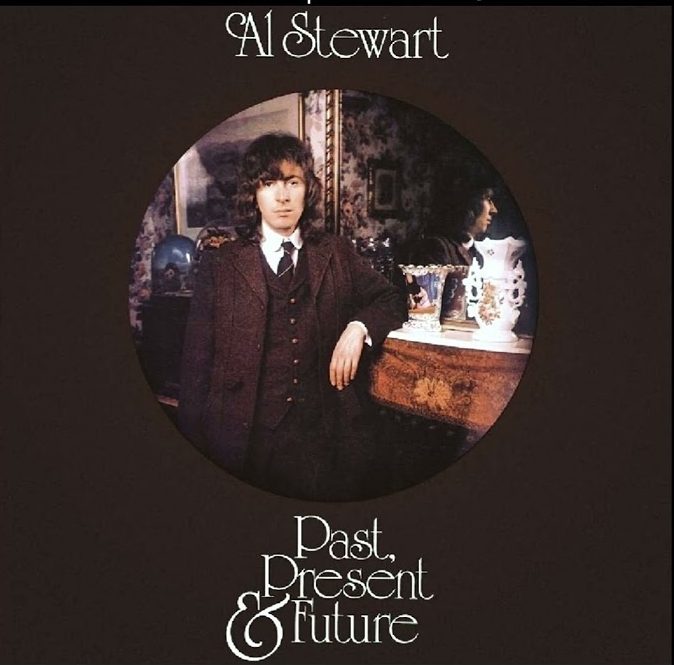
This 1973 song is like a book pulled from a shelf in some old library. Along with a story, you have a great melodic backing. This was Al Stewart before his radio hits, before Year of the Cat made him a star. He was still a cult artist at this point. I was really impressed by the lyrics and music alike. It’s not a song that you play at a party, but one that you listen to.
It was on the album Past, Present, and Future, and it isn’t an easily accessible album, and that is part of the charm. It’s more intellectual, with Stewart going with his passion rather than being commercial. His inspiration for this song came from British scholar Erika Cheetham, who wrote books interpreting Nostradamus’s prophecies.
Stewart sought out Cheetham, and they became friends. Stewart and Cheetham would go over prophecies that Nostradamus made. He included prophecies about historical figures like Napoleon and Hitler in the song. He said that he focused on the idea of prophecy itself, the tension between fate and free will. The sense that history moves in cycles… So yes, it is interesting. I’ve gained a whole new respect for Al Stewart, the songwriter.
All songs on this album have historical themes, each song representing a decade of the 20th century. John Anthony was the producer, and he went for more of an atmospheric sound to go with the lyrics. It worked because the lyrics get center stage, but the music is very strong. Stewart’s fans like this album, and in 2015, he performed the entire album at the Royal Albert Hall.
The album peaked at #133 on the Billboard Album Charts in 1974.
Nostradamus
In the east the wind is blowing the boats across the sea And their sails will fill the morning and their cries ring out to me
Oh, the more it changes, the more it stays the same And the hand just re-arranges the players in the game
Oh, I had a dream It seemed I stood alone And the veil of all the years Goes sinking from my eyes like a stone
A king shall fall and put to death by the English parliament shall be Fire and plague to London come in the year of six and twenties three An emperor of France shall rise who will be born near Italy His rule cost his empire dear, Napoloron his name shall be
From Castile does Franco come and the Government driven out shall be An English king seeks divorce, and from his throne cast down is he One named Hister shall become a captain of Greater Germanie No law does this man observe and bloody his rise and fall shall be
Man, man, your time is sand, your ways are leaves upon the sea I am the eyes of Nostradamus, all your ways are known to me Man, man, your time is sand, your ways are leaves upon the sea I am the eyes of Nostradamus, all your ways are known to me
In the new lands of America three brothers now shall come to power Two alone are born to rule but all must die before their hour Two great men yet brothers not make the north united stand Its power be seen to grow, and fear possess the eastern lands
Three leagues from the gates of Rome a Pope named Pol is doomed to die A great wall that divides a city at this time is cast aside These are the signs I bring to you to show you when the time is nigh
Man, man, your time is sand, your ways are leaves upon the sea I am the eyes of Nostradamus, all your ways are known to me
Man, man, your time is sand, your ways are leaves upon the sea I am the eyes of Nostradamus, all your ways are known to me
This is my first Christmas post of the year. I really miss posting all of the Christmas posts I have, but I’ll get some in before Christmas…not too many though. We have less than a week til Christmas. I’m looking forward to it. I hope all of you are doing well!
This song always brings a smile to my face. Any Kinks Christmas song would have to be different…and this one is.
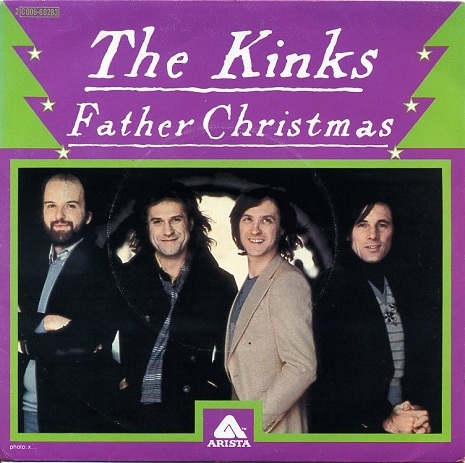
I’ve always liked this raw and rough Christmas song. A writer at the NME wrote, “Successful Xmas songs are more about mood than specifics, but as this is an anti-Christmas song, it’s fine.” This is the kind of song you would expect from Ray Davies. Anti-Christmas or not…it has become a popular classic Christmas song that gets airplay every year.
The single was released during the height of punk rock and certainly exudes a punk attitude. Dave Davies told ABC Radio that he “always thought The Ramones would do a great version of it. I don’t know why they didn’t do it.”… thinking about it…Dave was right…it would have fit them perfectly.
The song was released in 1977 with the B side Prince Of The Punks. The track was included on the Arista compilation Come Dancing with The Kinks and is also available as a bonus track on the CD reissue of the Kinks’ 1978 album Misfits.
In England, Father Christmas is the personification of Christmas, in the same way as Santa Claus is in the United States. Although the characters are now synonymous, historically Father Christmas and Santa Claus have separate entities, stemming from unrelated traditions.
This song is the rare holiday song that actually tells the truth. It jingles, it rocks, and it quietly asks why the season of giving so often feels like a season of needing. Play it loud, pour something strong, and remember that Ray Davies could turn even Christmas into a perfect little slice of real life.
Ray Davies: “When the record came out we were on tour with a very successful band at the time supporting them,” he recalled during an interview with Southern California radio station KSWD. “I went on dressed as Santa at the end of the show to do ‘Father Christmas.’ And the other band found it hard to follow us. The following night with the same band I went to run on but there was a bunch of heavies preventing me from running on stage. And I was protesting. But the people said, ‘The Kinks didn’t do an encore but Santa Claus was there and they were stopping him from going on stage.'”
Father Christmas
When I was small I believed in Santa Claus Though I knew it was my dad And I would hang up my stocking at Christmas Open my presents and I’d be glad
But the last time I played Father Christmas I stood outside a department store A gang of kids came over and mugged me And knocked my reindeer to the floor
They said Father Christmas, give us some money Don’t mess around with those silly toys We’ll beat you up if you don’t hand it over We want your bread so don’t make us annoyed Give all the toys to the little rich boys
Don’t give my brother a Steve Austin outfit Don’t give my sister a cuddly toy We don’t want a jigsaw or monopoly money We only want the real mccoy
Father Christmas, give us some money We’ll beat you up if you make us annoyed Father Christmas, give us some money Don’t mess around with those silly toys
But give my daddy a job ’cause he needs one He’s got lots of mouths to feed But if you’ve got one I’ll have a machine gun So I can scare all the kids on the street
Father Christmas, give us some money We got no time for your silly toys We’ll beat you up if you don’t hand it over Give all the toys to the little rich boys
Have yourself a merry merry Christmas Have yourself a good time But remember the kids who got nothin’ While you’re drinkin’ down your wine
Father Christmas, give us some money We got no time for your silly toys Father Christmas, please hand it over We’ll beat you up so don’t make us annoyed
Father Christmas, give us some money We got no time for your silly toys We’ll beat you up if you don’t hand it over We want your bread so don’t make us annoyed Give all the toys to the little rich boys
This year I won’t be swamping you with many Christmas posts like I usually do, probably a relief to some…But I do really love Christmas. Because of work, I can’t post much through the week, but I’m going to try to get some in next weekend. This was written for Dave’s Turntable Talk, and the subject was What Christmas Means to Me. It was posted last week on his site. For those who didn’t see it…here it is.
I remember Christmas when I was a young kid of around 4-5. We always had our Christmas on Christmas Eve. My family and I would have such a good time. We would start on Christmas Eve and go to my grandparents (my mom’s side) at around 5pm and eat, eat, and did I mention eat? Some of the kids there would get small gifts. Funny thing, though, my father would never go with us. It always puzzled me why he didn’t go and decided to stay at home.
When we got home…Santa Claus would have miraculously already dropped by on Christmas Eve night! When I opened that door…it was a beautiful sight! A tree I had helped decorate with presents underneath. Also, with presents unwrapped and sitting around. The cookies I left out were always half-eaten. I remember in my stockings I would get tangerines and oranges, as well as small gifts and candy. The tangerines were always cold. I just knew they were cold because they came from the North Pole. In different years, I remember the pinball machine, the Star Trek Enterprise bridge area toy, the Evel Knievel stunt motorcycle, albums, a record player, etc. My mom and dad were not rich by any means, and I wonder now how long they saved to give all of this stuff to Tammy (my sister) and me. Dad would be standing there and telling me he met Santa and helped him unload the sleigh. Ah! That was the reason he stayed at home, to help Santa.
Soon after 1975, my mom and dad got divorced. Things changed in my life, and it sucked. I missed my dad being around, but my mom did her very best to be mother and father to my sister and me on an everyday basis. I would see Dad around 3 weeks or so a year. My mom didn’t like it when I went to his house a lot. Not because he was mean, abusive, or anything like that, but because of kidney stones and what he took to relieve the pain, and to excess. He had 70 stones in his life, and when he passed away in 2005, he still had two in him. It was the 1970s, and doctors gave him medicine to get up and to go to sleep, and he would self-medicate at times. He eventually got better and stopped that for the most part, but that was later on in the 1980s. He was never arrested or anything like that, or caused any trouble. He made guitars and musical instruments, and one time drove from Nashville to Los Angeles in 2 days without sleep.
The ONE time a year my entire family was together (every year) was Christmas. Mom and Dad never fought on Christmas (even right after the divorce), and they grew closer each year. Both got married again, but that never affected how they acted. So, to answer the question, Christmas is about family to me, and now, as the years pass, my mom and dad are always near me. That was the only time I saw them all together every year after the divorce. I’m fiercely protective about Christmas to this day. Until dad passed away, every Christmas, he would come down. He only missed one year, and it was because of an ice storm in the early 2000s. When Bailey was born in 2000, we all always had a great time, and it brought back memories of being a kid again. The only Christmas activity I changed was that Bailey had his Christmas on Christmas Day after waking up from Christmas Eve.
I’ve been with Jennifer since 1993, and Bailey came along in 2000. We were together every single Christmas until around 2021 when Bailey went to Germany and be with his girlfriend. I argued with him about it. It’s probably the only argument we ever got into in his adult life. Yeah, I was wrong, but it was the history of it for me. I knew I had to let go…I told him…you could be gone for 364 other days, and I would be fine…but of course I got over it. He has alternated ever since. My sister, her son, his wife, and their children always come down as well.
Funny, my mom and dad almost got back together in the 90s, but my mom started to lose her memory at an early age (high blood pressure and mini strokes in her 40s), and it never happened. Mom and Dad ended up dying within 6 months of each other in 2005 – 2006. To this day, I think of mom and dad while Tammy comes down on Christmas Eve. I know it’s kinda unorthodox on how Christmas is to me, but it’s the truth. And…I wouldn’t trade it for anything in the world…so Merry Christmas to you all…and to mom and dad.
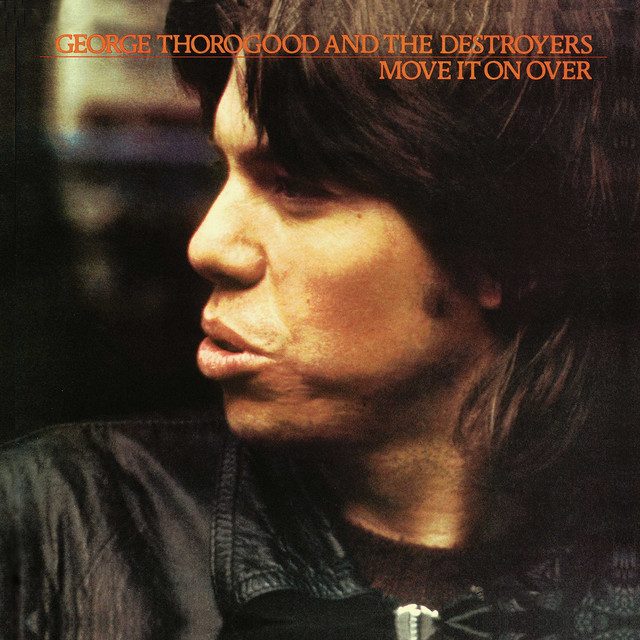
I first heard of George Thorogood when I watched the movie Christine back in the 1980s and the song Bad to the Bone. This song is what a grimy bar (not a dance club) in the 1980s sounded like…trust me. I forgot to thank Matt, who posted this Hank Williams song yesterday.
In this song, George rewires an old Hank Williams song and gives it some kick. It leaves plenty of space for Thorogood’s overdriven slide guitar to bark and growl. The Destroyers keep things locked in, drums steady, bass walking just enough to keep the floor moving. There’s nothing fancy here, and that’s the point. Thorogood has always understood that blues rock works best when it sounds like it could fall apart at any second but never quite does.
In 1978, they were still an underground band, a hard-working bar band with national hopes and a deep love for old blues and boogie records. The album was only their second album, but it’s the record where everything fell into place. It was recorded quickly and cheaply; the album captured the band in near-live form, loud amps, and minimal overdubs. Thorogood had said he wanted energy, and the sessions matched that request.
The song was written by Hank Williams. This song was his first big hit. The song was written by the man himself. He released this song in 1947. Two years later, he received his invitation to join the Grand Ole Opry. This song was the title track for the album, released in 1978. The album peaked at #33 on the Billboard Album Charts, #29 in Canada, and #10 in New Zealand.
Move It On Over
I come in last night about half past ten That baby of mine wouldn’t let me in So move it on over, rock it on over Move over little dog, a mean, old dog is movin’ in
She told me not to mess around But I done let the deal go down Move it on over, rock it on over Move over nice dog, a big, fat dog is movin’ in
She changed the lock on my back door Now my key won’t fit no more Move it on over, rock it on over Move over nice dog, a mean, old dog is movin’ in
She threw me out just as pretty as she pleased Pretty soon I’ve been scratchin’ fleas Move it on over, slide it on over Move over nice dog, a mean, old dog is movin’ in
Yeah, listen to me dog before you start to whine That side’s yours and this side’s mine So move it on over, rock it on over Move over little dog, a big, old dog is movin’ in
Yeah, she changed the lock on my back door Now my key won’t fit no more Move it on over, rock it on over Move over little dog, a big, old dog is movin’ in
Move it on over Move it on over Move it on over, won’tcha rock it on over? Move over cool dog, a hot dog’s movin’ in
If you want to see where we are…HERE is a list of the episodes.
***Since it’s the Christmas season and most people are watching seasonal programs and are rushing around, Kolchak will return on January 9th, 2026! I do apologize for the interruption, but I thought it was best. We only have 8 more to go.***
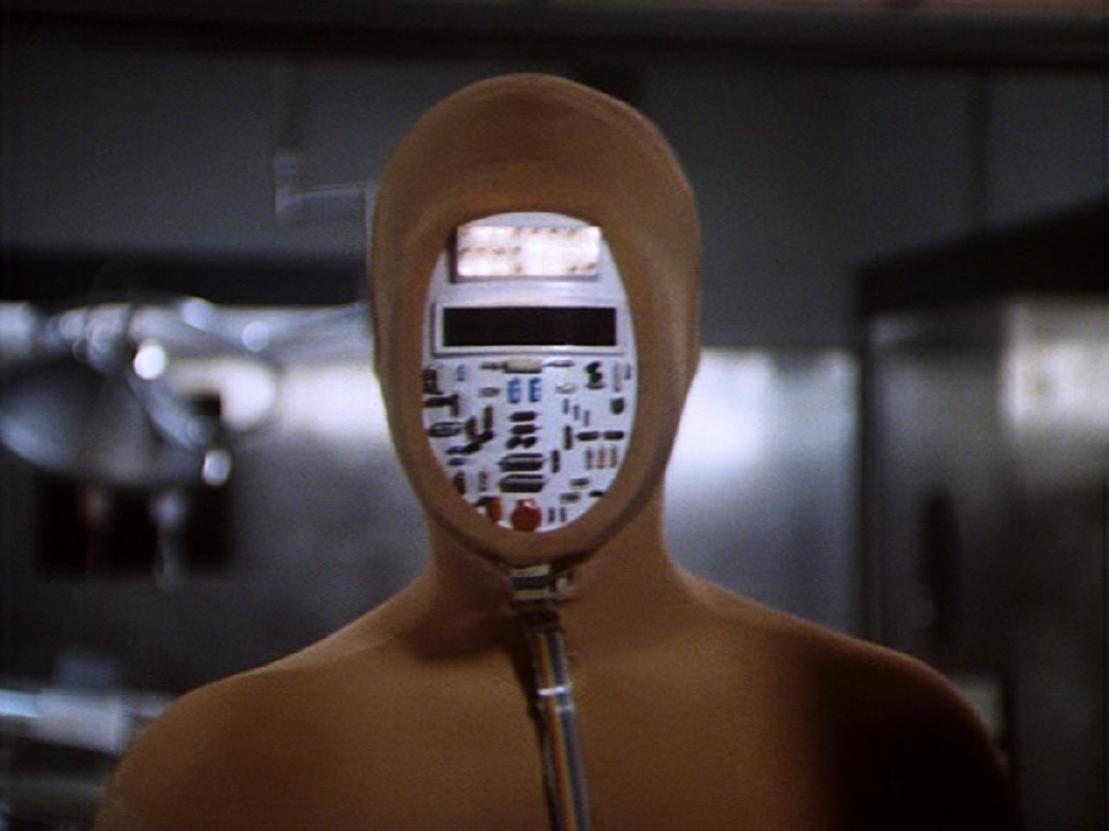
The episode centers on an escaped experimental android named Mr. R.I.N.G. (R.I.N.G. stands for Robomatic Internalized Nerve Ganglia), a government project that went off the rails. Kolchak stumbles onto the story because he missed the day before fishing, so a huge story was given to a co-worker. Kolchak was handed the chore of writing an obituary for a scientist. But of course, he investigated it, and it was a murdered scientist that spiraled into a cover-up with secrecy, classified files, and shredded evidence. The threat here is technology running amok, walking the streets with a purpose no one fully understands. Mr Ring is basically AI before AI. He learns as he goes.
The android itself is unsettling because it isn’t really bad. Unlike the show’s monsters, Mr. R.I.N.G. appears to be struggling to understand its own purpose and emotions. The more Kolchak uncovers, the clearer it becomes that the danger comes from the government forces that created it, not from the robot. This dynamic gives the episode a tragic feel, as though Kolchak is chasing a victim who never asked to be born. Frankenstein comes to mind with this show as well because the “monster” is trying to find itself and is not inherently bad.
It feels close to Westworld, early Terminator, and a touch of The Stepford Wives. Darren McGavin’s performance is especially sharp here, because Kolchak’s sarcasm bounces off humorless officials and tight-lipped agents who refuse to acknowledge anything out of the ordinary. His frustration grows as every lead is buried under regulations. One thing that is different in this episode is that Tony, his boss, is forced to believe in Kolchak this time. The government threatens the newspaper if Tony lets Kolchak continue investigating this.
SPOILERS BELOW
The ending drives home the show’s theme: truth is buried by the system. Mr. R.I.N.G. is erased like a clerical error. Kolchak gets close to exposing everything, only to watch the evidence vanish once again. He is left with nothing except a story no one will print.
Trivia
A little trivia for you, the Tyrell Institute is used as the headquarters in this episode, and a decade later, the name would be used in Blade Runner. Many fans and critics view the Tyrell Institute in Kolchak as a direct precursor or inspiration for the Tyrell Corporation in Blade Runner, sharing themes of artificial life and corporate control over synthetic beings.
I thought I would do something different today. I was reminded of this by the phrase, “it was before my time.” Movies and music fall into this category. I do know people who will not watch movies made “before their time.” I don’t think many of my readers would agree to this statement, but who knows?
I had a co-worker in the early 2000s (Sam) tell me that I shouldn’t like music that was before my time because it was unnatural (yes, he said that). I was first kinda of amused and shocked. I like Sam a lot, and we would talk a lot; he is a smart fellow. However, on this point, I didn’t understand. Why? Is there some unwritten law that I can’t like 1950s or 1960s music up to 1967, when I was born? That cut off some of the best music of the 20th century and beyond.
He grew up in the 80s, as I did, and was probably around 5 or so years younger than me. I’ve seen other people act the same way. If it were before they were born, then they would not give it a second listen. If a movie is black and white, they act as if they are near a radiation leak!
I think the subject centered around how I loved 50s and 60s music and The Beatles, The Who, The Stones, and The Kinks. He said I should be listening to music from my teenage years (well, I WAS…60s music was my soundtrack growing up), but I DID listen to the top 40 when I was a teenager, which, to me, didn’t live up to those bands to any degree or form. Maybe it wasn’t fair to compare Men Without Hats to those 1960s bands. It was hard to stomach some of the ’80s for me, but not all. Now I’m busy catching up on music I missed that wasn’t on Top 40 radio at the time. I did find an oasis in the 80s, alternative music like The Replacements and REM…and the classic bands.
I still want to find other music and movies I like. Why would age have any effect on the music, whether we like it or not? That doesn’t mean I don’t like new music. I have posted newer bands here before who have just released albums. If it’s good, it doesn’t matter what era it came from, at least not to me. Christian, Graham, and Lisa all posted some newer songs that I liked. With movies, yes, I find some I like. I just saw Weapons and loved it, plus there are others.
I’m not putting people down at all who think like that. Hey, if that is what they believe, more power to them. I never believed in criticizing people for their opinions, music, or otherwise. Whatever blows their hair back.
If you want to see where we are…HERE is a list of the episodes.
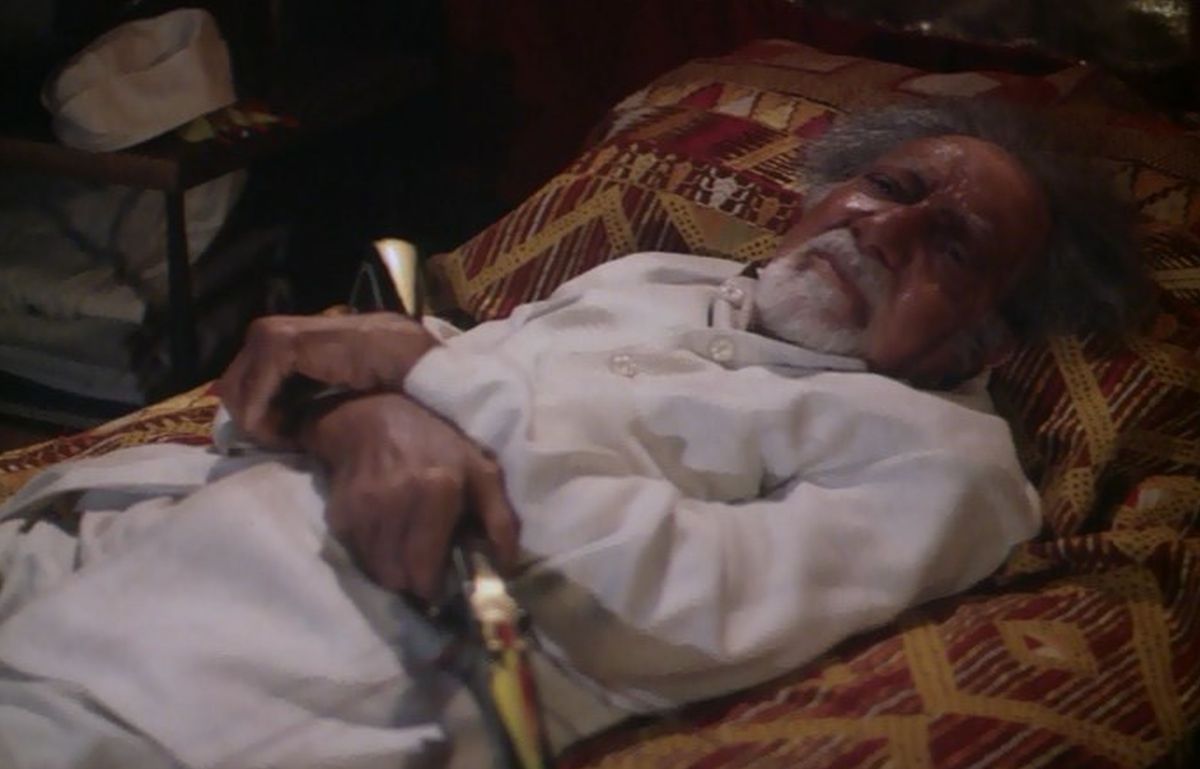
This episode is the most highly rated episode of the series. It is a good episode and will take you down the path where things are not what they seem. The setting is Roosevelt Heights, a Chicago neighborhood largely populated by elderly Jewish residents, and a series of gruesome killings quickly points to something beyond ordinary. Kolchak goes past the police explanations and discovers details about creatures from Indian folklore. It’s a darker, more atmospheric episode, leaning heavily into folklore.
The monster at the heart of the episode is a Raksasha, a shape-shifting demon from Hindu mythology. It doesn’t just kill; it appears to its victims as someone they trust, lowering their guard before striking. That twist gives the story tension, because every familiar face might not be what it seems. The creature’s appearance, when revealed, is not pretty. Kolchak learns the demon has been feeding on residents, and the community tensions spread in the neighborhood it making it easier for the monster. This reminds me of Pennywise from IT, who was also a shapeshifting creature.
As Kolchak digs deeper, he crosses paths with Mr. Furlin and a community group determined to protect their homes from crime, though they don’t realize the real threat isn’t human. When Kolchak finally confronts the Raksasha, the showdown relies on knowledge rather than brute force. I was relieved because I thought he might have made a mistake…But I won’t give that away.
What makes this episode stand out is that it isn’t just about a monster… It’s about a community losing trust in itself. The demon feeds not only on flesh, but on fear and isolation. With its blend of folklore and social tension, it remains one of the most memorable and unsettling episodes in the Kolchak series.
I’ve heard of this guy for so long, associated with Taj Mahal and solo Beatles tracks. He played on over 80 albums of other artists. His guitar playing was top shelf and was truly one of the guitar greats. He doesn’t get the attention he deserves. My admitted lack of knowledge of him led me to think he could only play guitar. Much like last week’s Link Wray post, who I didn’t know could sing, he had a really good voice. I also want to thank Lisa from Tao-Talk for posting a Davis song last Friday.
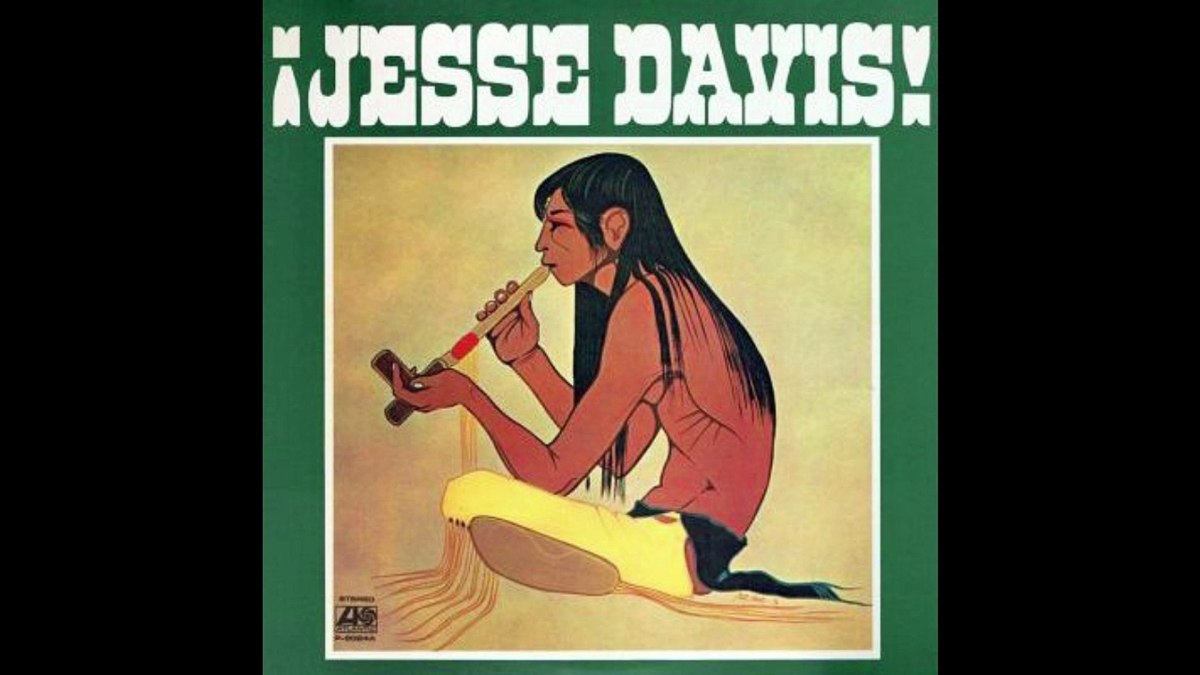
Jesse Ed Davis was Kiowa, Comanche, and Muscogee (Creek) on his father’s side, while his mother was of Kiowa and Cherokee descent with a small strand of European ancestry. In other words, he was overwhelmingly Native American, with family roots braided through several Plains and Southeastern tribes. He grew up connected to that identity, not as a stage costume, but as him. His dad painted the cover for this album.
I started to go through his albums like ¡Jesse Davis!, Ululu, and Keep Me Comin or Keep On Coming. He has a couple more, which I still have to get to. I’m totally impressed by his rootsy music. Again, instead of just picking a song, I wanted to feature the album. There is no #1 hit on the album, nor do I think he was trying for that. Just really good, solid songs.
When Jesse Ed Davis stepped into a studio to record his 1971 debut album ¡Jesse Davis!. He had already carved out a reputation as the guitarist you called when you wanted soul and a heavenly guitar tone, and most importantly, zero ego. He’d played with Taj Mahal, recorded with Gene Clark, and done sessions with everyone from Albert King to Earl Hooker, Jackson Browne, John Lennon, and a ton of other artists. Jesse was the go-to guitarist of the 1970s.
How respected was he? On this album, he had some incredible guests. Eric Clapton, Leon Russell, Gram Parsons, Alan White, and the Gimme Shelter singer Merry Clayton. This album sounds like a loose jam session that worked all the way around. My favorite song on the album is Washita Love Child. It just hit me and has stuck. I found myself hitting the play button again and again. The band around him cooks with an irresistible looseness. You can hear Clapton on his track loud and clear. After researching for this post, I found out it was featured on the TV show Reservation Dogs.
The album works because it stays out of its own way. Lou Adler keeps the production loose and moving. Leon Russell arranged some of the songs and added his unique touch. The songs drift between blues, roots rock, and a kind of West Coast soul. Reno Street Incident floats in like someone cracked open a window at two in the morning. Every Night Is Saturday Night for Me comes alive with Leon’s piano, rolling forward like only Leon can do. And when Gram Parsons or Eric Clapton pop up, they don’t hijack the song; they simply join in.
What really holds everything together is Jesse’s guitar, a voice unto itself. He never shows off, he never “shreds,” he simply plays for the song. His solos feel lived in and warm. He didn’t shout to be heard; he just played. Hearing him play and sing on this album is like slipping into a holey, comfortable favorite shirt.
The album doesn’t scream commercial…it doesn’t scream at all. It’s an album you put on and listen to all the way through, and sit back and enjoy some great music. Jesse Ed Davis passed away in 1988 at the young age of 43.
I added a 10-minute documentary clip.
Washita Love Child
I was born on the bank in the Washitaw river in a Kiowa Comanche teepee
Daddy had a hard time Mama made his eyes shine Lord, it was just us three Well they weaned me riding bareback And I’d tie my hair back And i did that pow wow thang Daddy showed up with his stand up guitar and then we rocked it i believe
I’m a love child and I’m running wild hope it don’t take too long I’m a love you I’m a try to make you happy you got to let me sing my song
Mama said to son Said what about your school books? Baby baby what about the draft? Daddy said honey don’t you worry about this boy he’s headed somewhere Got a guitar and a van to ride
He’s a love child He’s gonna be running wild Hope he don’t take too long He’s gonna love you He’s in love with me too So we got to let him sing his song
Well i got myself together And i’ve been rolling down the road Gonna boogie down down down down If i ever get a chance to boogie woogie you Ha, you can’t sit down
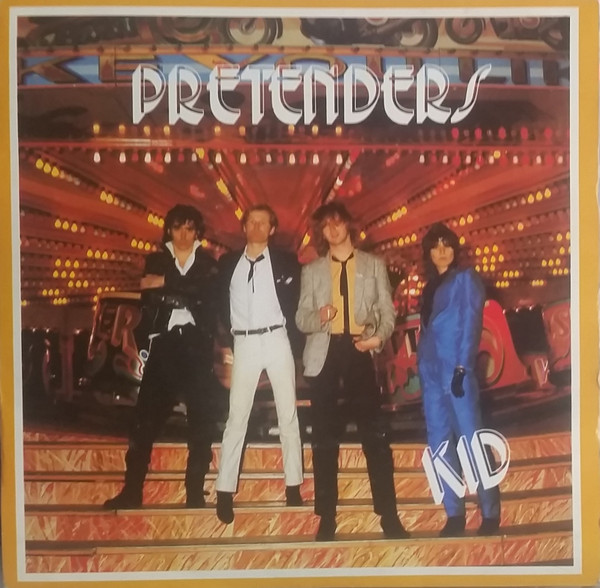
I’ve been a Pretenders fan since I heard Brass in Pocket when it was released. Although I would spend a long time tracking down the name of it. In the 1980s, you could count on them to release something good and not the standard top 40 music. Chrissie Hynde had more grit in her singing than most of her male and female peers. She wasn’t here to sing you a pretty song; she meant business.
The original band was something special. The members were James Honeyman-Scott (lead guitar, backing vocals, keyboards), Pete Farndon (bass guitar, backing vocals), and Martin Chambers (drums, backing vocals, percussion)…and of course Chrissie Hynde. To convince guitarist James Honeyman-Scott to join The Pretenders, Chrissie Hynde hired one of his favorite recording artists, Nick Lowe, to produce the song Stop Your Sobbing, an album cut of The Kinks. Chris Thomas would go on to produce all the other songs on the album.
When the Pretenders burst onto the scene in 1979, they didn’t arrive with punk guitars (although the spirit was there). They were armed with mostly Hynde’s melodic songs. Chrissie Hynde was a new kind of female rock vocalist, vulnerable and dangerous all at once. She was/is a badass but still relatable. This song was the band’s second single in 1979 and was included on their 1980 debut album. It is a great slice of power pop that blends jangly guitars, melodic melancholy. I love James Honeyman-Scott’s intro guitar run; it makes the song for me. It’s very obvious why Chrissie wanted him in the band.
Hynde has stated the song is about a woman who works in “the game” (prostitution) to get by, and her sadness when her child learns the truth about what she does.Following the 1981 Pretenders album Pretenders II, two of the four band members, Pete Farndon and James Honeyman-Scott, died of drug overdoses, leaving just Hynde and drummer Martin Chambers, who remained the mainstays in the band amongst a rotating cast of guitarists and bass players through the 1980s.
The song peaked at #33 in the UK in 1979.
Kid
Kid, what changed your mood? You got all sad, so I feel sad too I think I know Some things you never outgrow
You think it’s wrong I can tell you do How can I explain When you don’t want me to?
Kid, my only kid You look so small, you’ve gone so quiet I know you know what I’m about I won’t deny it
But you forget You don’t understand You’ve turned your head You’ve dropped my hand
All my sorrow All my blues All my sorrow
Shut the light Go away Full of grace You cover your face
Kid, precious kid Your eyes are blue, but you won’t cry, I know Angry tears are too dear You won’t let them go
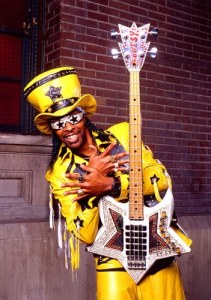
I’ve always liked funk music, but I haven’t heard a lot of it as much as other types of music. Posting the Meters a few weeks ago gave me the urge to listen to more. Where else would I go other than to follow fellow bassist Bootsy Collins? He most certainly brought the funk and runs on the bass that were incredible.
The opening alone feels like a giant neon sign flickering to life: FUNK DELIVERED HERE, with Bootsy Collins’ bass out walking and running amok. George Clinton started this band, but when I hear them, I can’t help but think of Collins. Maybe it’s the bass player in me.
Before the stage costumes, before Bootsy’s star-shaped bass, George Clinton was running a humble doo-wop group out of a New Jersey barbershop. That is where the so-called P-Funk universe first sparked to life. In the late 1950s Clinton worked as a hairdresser in Plainfield, New Jersey, and formed a vocal group called The Parliaments. Inspired by groups like Frankie Lymon & The Teenagers, their sound leaned closer to street-corner harmonies and teenage heartbreak rather than spaced-out funk. They spent their early years cutting singles for small labels, chasing a hit, and stacking harmonies with tight choreography.
Their first real breakthrough came in 1967 with the single “(I Wanna) Testify“, which scraped the charts and gave the group national attention. But success came tangled in bad contracts, which would later force Clinton to get creative with band names. After hearing Psychedelic Soul, Clinton began to shift toward that kind of music in the late 1960s under the name Funkadelic, as he had temporarily lost the rights to the name Parliaments. Funkadelic allowed Clinton to push into psychedelic territory, influenced by Hendrix, Sly Stone, and Cream. The debut Funkadelic album arrived in 1970, and suddenly the group had two separate identities. Later on, after he got the name back, he combined the bands, and they were known as P-Funk.
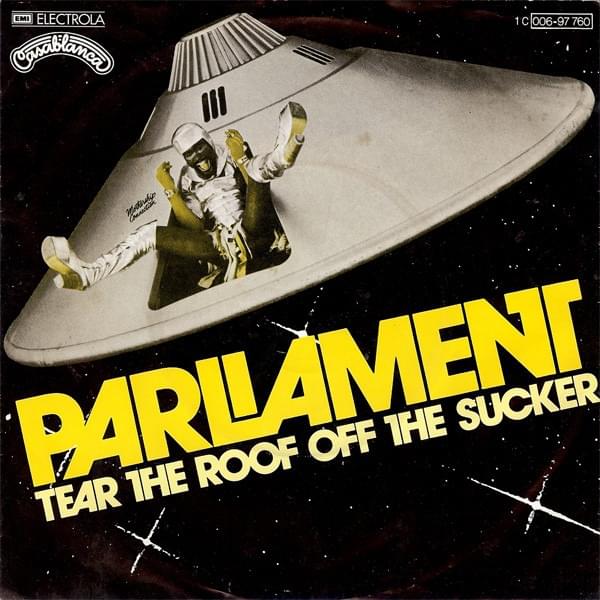
What really sparked this band was former James Brown bass player Bootsy Collins, when he joined in 1972. His brother, guitarist, Phelps “Catfish” Collins, was already in the band. This guy is a fantastic bass player, and there isn’t much better than him. This song became Parliament’s first million-selling single and remains one of the most recognizable funk tracks ever cut. It was played in discos, block parties, roller rinks, sports arenas, on the radio, and later, hip-hop sampling culture.
This album was called The Mothership Connection (Clinton was a huge Star Trek fan) peaked at #13 on the Billboard Album Charts and #4 on the R&B album charts. The song peaked at #15 on the Billboard 100 in 1975.
Give Up The Funk (Tear The Roof Off the Sucker)
Tear the roof off, we’re gonna tear the roof off the mother sucker Tear the roof off the sucker Tear the roof off, we’re gonna tear the roof off the mother sucker Tear the roof off the sucker Tear the roof off, we’re gonna tear the roof off the mother sucker Tear the roof off the sucker Tear the roof off, we’re gonna tear the roof off the mother sucker Tear the roof off the sucker
You’ve got a real type of thing going down, gettin’ down There’s a whole lot of rhythm going round You’ve got a real type of thing going down, gettin’ down There’s a whole lot of rhythm going round
Ow, we want the funk Give up the funk Ow, we need the funk We gotta have that funk Ow, we want the funk Give up the funk Ow, we need the funk We gotta have that funk
You’ve got a real type of thing going down, gettin’ down There’s a whole lot of rhythm going round You’ve got a real type of thing going down, gettin’ down There’s a whole lot of rhythm going round
Ow, we want the funk Give up the funk Ow, we need the funk We gotta have that funk Ow, we want the funk Give up the funk Ow, we need the funk We gotta have that funk
We’re gonna turn this mother out We’re gonna turn this mother out
You’ve got a real type of thing going down, gettin’ down There’s a whole lot of rhythm going round You’ve got a real type of thing going down, gettin’ down There’s a whole lot of rhythm going round You’ve got a real type of thing going down, gettin’ down There’s a whole lot of rhythm going round You’ve got a real type of thing going down, gettin’ down There’s a whole lot of rhythm going round
Ow, we want the funk Give up the funk Ow, we need the funk We gotta have that funk Ow, we want the funk Give up the funk Ow, we need the funk We gotta have that funk
Ow, we want the funk Give up the funk Ow, we need the funk (Let us in, we’ll tear this mother out) We gotta have that funk Ow, we want the funk Give up the funk Ow, we need the funk (Let us in, we’ll tear this mother out) We gotta have that funk
Ow, we want the funk Give up the funk Ow, we need the funk We gotta have that funk Ow, we want the funk Give up the funk Ow, we need the funk We gotta have that funk Ow, we want the funk Give up the funk Ow, we need the funk We gotta have that funk
(We’re gonna turn this mother out) Ow, we want the funk Give up the funk (We’re gonna turn this mother out) Ow, we need the funk We gotta have that funk (We’re gonna turn this mother out) Ow, we want the funk Give up the funk (We’re gonna turn this mother out) Ow, we need the funk We gotta have that funk
Ow, we want the funk Give up the funk Ow, we need the funk (Let us in, we’ll tear this mother out) We gotta have that funk Ow, we want the funk Give up the funk Ow, we need the funk (Let us in, we’ll tear this mother out) We gotta have that funk
We want the funk Give up the funk We need the funk We gotta have that funk We want the funk Give up the funk We need the funk We gotta have that funk We want the funk Give up the funk We need the funk We gotta have that funk
(You’ve got a real type of thing going down, gettin’ down) (There’s a whole lot of rhythm going round) You’ve got a real type of thing going down, gettin’ down There’s a whole lot of rhythm going round You’ve got a real type of thing going down, gettin’ down There’s a whole lot of rhythm going round
Ow, we want the funk Give up the funk Ow, we need the funk (Let us in we’ll tear this mother out)
If you want to see where we are…HERE is a list of the episodes.
Episode 10 is the halfway point! By the time “The Energy Eater” aired, Kolchak: The Night Stalker had already faced vampires, swamp monsters, and ancient spirits, but this one took a turn into urban mythology with a sci-fi twist. The setting is a newly built hospital in Chicago, plagued by strange power failures, mysterious deaths, and collapsing foundations. Kolchak, sensing something supernatural, soon discovers that the hospital was built on the site of an ancient Native American burial ground, never a good idea in 1970s horror or in real life, for that matter.
This episode is not as good as the previous episode, The Spanish Moss Murders, or the next superb one, Horror in the Heights, but it offers something different. What makes this episode different is that for the first and last time, Kolchak has a real team behind him. He has not one but two sidekicks in this episode. It was nice to see Kolchak get support instead of just being thrown out of meetings by the police.
One was a tough but helpful construction boss and Native American shaman Jim Elkhorn (a marvelously warm and engaging performance by B-movie William Smith), who assists Kolchak in combating a powerful ancient Native American spirit called the Matchemonedo (This creature is based on a spirit from Potawatomi lore) that’s terrorizing a newly opened hospital built over its resting place. The other was Nurse Janis Eisen (the beautiful Elaine Giftos, whom I remember from Barney Miller). Both are quality characters, and you can sense their camaraderie.
It’s creepy, clever, and grounded in the struggle between progress and the past. Just another night in Chicago for the reporter who always finds trouble that no one will believe. He’s the only reporter who can connect Indian folklore, power surges, and modern construction mishaps into one believable headline, if only anyone believed him. One scene I really liked is when Kolcahk mentions Matchemonedo to his boss. He was smart enough this time not to explain this because Tony would never believe it. Instead, he said that Matchemondo was a Cuban fighter.
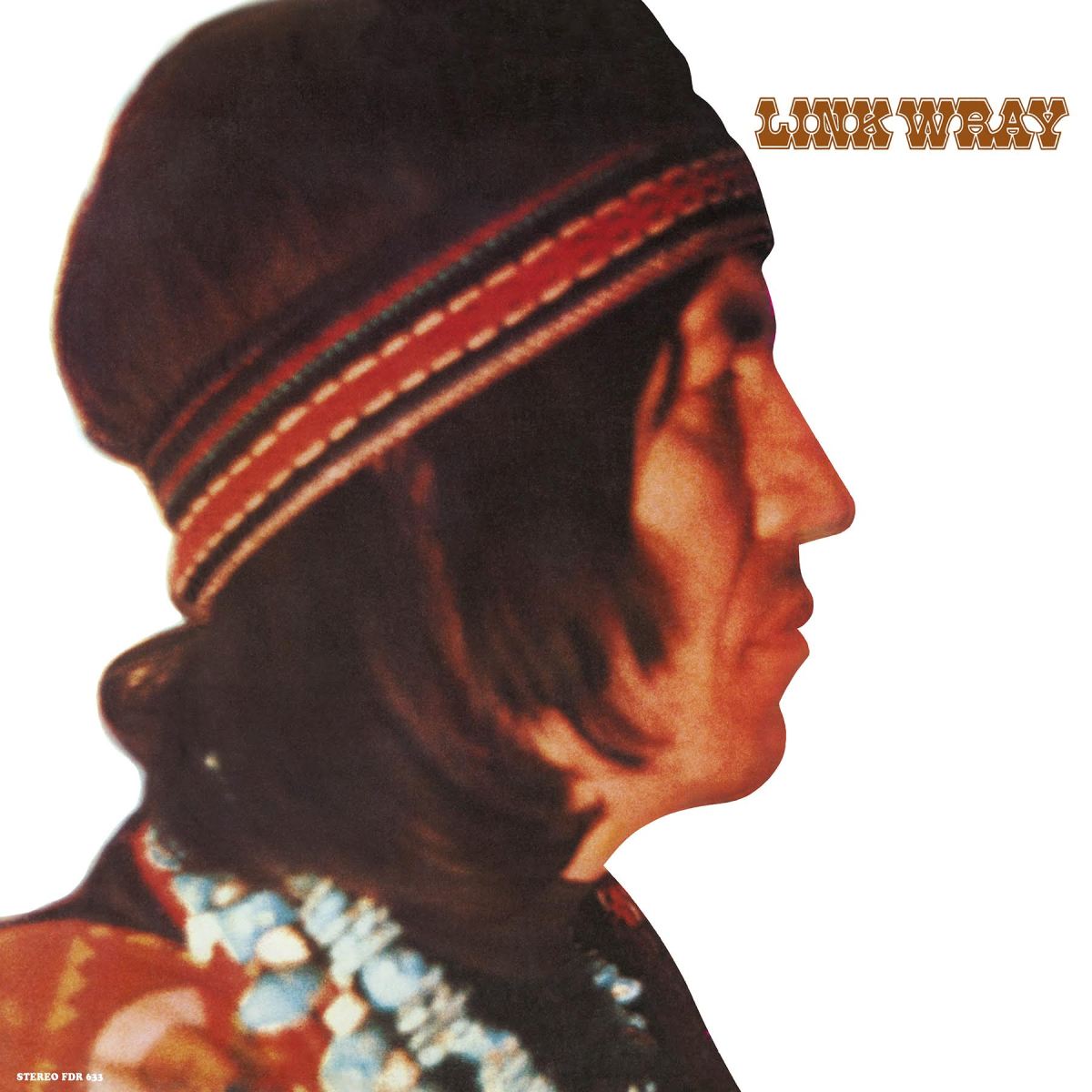
I was really taken aback when I saw this album. I played it, expecting an instrumental, and when I heard a voice, I thought it was a different singer. When I think of Link Wray, I think of Rumble and instrumentals like that. I was surprised when I found this roots album by him, recorded in 1971. I want to thank Lisa for posting something that made me think of this rare Link Wray album.
After serving in the military, Wray contracted tuberculosis and lost a lung, which made singing difficult, and doctors advised him against it. Because of his breathing difficulties, Wray began to focus more on expressive and experimental guitar playing, leading him to become known for his instrumental hits. Wray was a Native American of Shawnee descent. He grew up in North Carolina. Wray later honored his heritage in his music, with songs like Apache and Comanche.
This album was recorded in a converted chicken shack. His brother, Ray Vermon Wray, helped produce it along with Bob Feldman and Steve Verroca. Instead of power chords and a leather jacket, Link traded distortion for Americana, funk, gospel, and storytelling. It was earthy, roots-driven, and deeply personal, almost a different artist altogether from the one I thought I knew. After being freed from label pressures, Link finally made the music he grew up with: gospel from church revivals, Native American rhythms from family heritage, country blues, and Southern soul.
There were still guitars, but now they sat behind the songs instead of smashing through them. Tracks like Fire and Brimstone, Juke Box Mama, and Ice People feel like they were born out of the dirt. The grooves are loose, almost like field recordings. His voice, rarely heard on record before this, carries a soulful and weathered sound. He didn’t sound like a rock guitarist trying to sing; he sounded like a weathered preacher who happened to play guitar.
You hear old-time country on Take Me Home Jesus, boogie on God Out West, and Native rhythms driving Black River Swamp. No other rock guitarist of his generation made anything remotely like this. Only one song retains his old tone, and that’s the intro to Tail Dragger. If anything, it pointed the way decades later for artists like Los Lobos and the entire alt-country movement. If you want to hear some authentic Americana, listen to this album.
Polydor gave the album a shot, but the public wanted Link the guitar guy, not Link the backwoods Americana prophet. Sales were modest, and critics were divided. However, like many records that were too authentic for their time, it grew in legend over time. Today, many fans call the 1971 album his true masterpiece
Black River Swamp
I was born down in the country Down where the cotton grows Turnin’ off the main highway Goin’ down that country road
There’s a place down in the country Where the pine trees grow so tall Walk across that old log bridge Stretching ‘cross Black River Swamp
I can hear them bullfrogs croaking In the blackness of the night Calling me back to my childhood Down here in Black River Swamp
Saw my name carved on a big oak tree Down there by the fishing hole And the smell of old Black River Where the waters are deep and cold
I can hear the hound dogs howlin’ Chasin’ that old fox where I used to roam Down there in the country Callin’ me to Black River Swamp
I can hear them hound dogs howlin’ Chasin’ that old fox where I used to roam Down there in the country Callin’ me to Black River Swamp
I was born in the country Down where the cotton grows Turnin’ off the main highway Goin’ down that country road
There’s a place down in the country Where the pine trees grow so tall Go across that log bridge Stretching ‘cross Black River Swamp





 PowerPop... An Eclectic Collection of Pop Culture