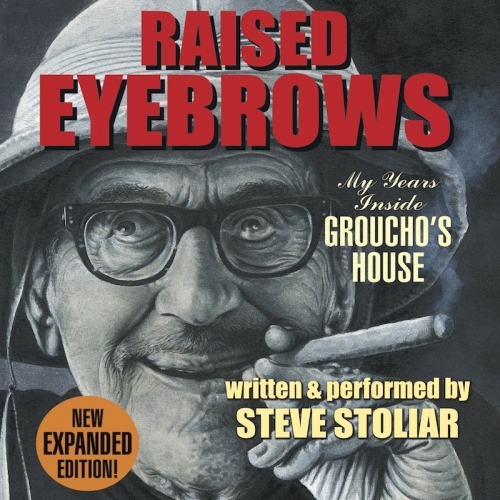
Raised Eyebrows: My Years Inside Groucho’s House

Steve Stoliar wrote this book about being a student at UCLA and working at Groucho Marx’s house starting in 1974. This book is not about the peak years of The Marx Brothers or Groucho…just the opposite. It’s the decline of Groucho Marx’s health and his eventual death.

Steve was in UCLA heading up a petition to get “Animal Crackers” released again to theaters for which he was successful. The Marx Brothers popularity was on the rise again. Groucho traveled to the campus to help out. Groucho’s PA Erin Fleming eventually hired Steve as a secretary and archivist. Steve worked in Groucho’s house for a little over 3 years. He was a huge fan not only of Groucho but of old Hollywood.

The number of famous people who passed through Groucho’s house was incredible. Old Hollywood stars and also new ones at the time. Jack Lemmon, Walter Matthau, Bud Cort (Harold and Maude), Alice Cooper, Dick Cavett, Woody Allen, Mae West, Queen (they are not in the book though), and many writers from the early days of motion pictures.

The sad part of this story is Erin Flemming (no relation to Harpo’s wife Susan Flemming). She was mentally unstable and both helped Groucho and hurt him. She would scream, berate, and push Groucho to make appearances he had no business doing in his condition. She convinced Groucho that his kids were terrible and she actually tried to get him to adopt her as his daughter. She would fire people for any reason and be very unpredictable.

After Groucho passed on it took years before the court case between Erin and Groucho’s son Arthur Marx to settle. Erin ended up losing and she was in and out of mental hospitals and wandering the LA streets for the rest of her life.

Steve slowly builds a friendship with Groucho and many of the celebrities who pass through the house. Steve didn’t seem to embellish anything in the book. There are only a couple of celebrities he said anything bad about. One was Barbara Streisand…which I totally can see after hearing other stories about her. 

As a matter of fact, there’s really only one time that I can recall being officially snubbed at Groucho’s house. It was when Elliott Gould arranged for his ex-wife, Barbra Streisand, to come with him one Sunday afternoon along with their young son, Jason. Streisand never made eye contact with me the whole time she was there nor acknowledged my presence in the room even when I was speaking. It was as though I didn’t exist. Others spoke to me and Streisand made comments to the people around me, but to her I was, apparently, invisible.

Groucho had a number of mini-strokes and year by year he worsened. He would have good days and bad ones but he never lost his wit. Steve was/is a true fan. He relished working there with his hero. Imagine being nineteen years old and working for a celebrity you really admire. That would have been like me working for John Lennon (or Groucho)…which would have been incredible. 

Groucho’s health was fine until around 1972 when he had his first stroke. That is when he started to really age. In the early seventies, he would appear on talk shows with his quick wit and singing songs. After the stroke, you could tell a difference.

Steve was there until the very end and ended up as a television writer and a cartoon voiceover actor.

This is a very interesting book. I will say again that Steve is about as fair as you can get retelling stories. Groucho’s daughters would go on to say that he was very truthful. Some say he was too easy on Erin and some said he was too hard on her… I would say it’s only for Groucho fans but you get a lot of Marx Brothers stories and some information about old Hollywood.

Steve and Groucho
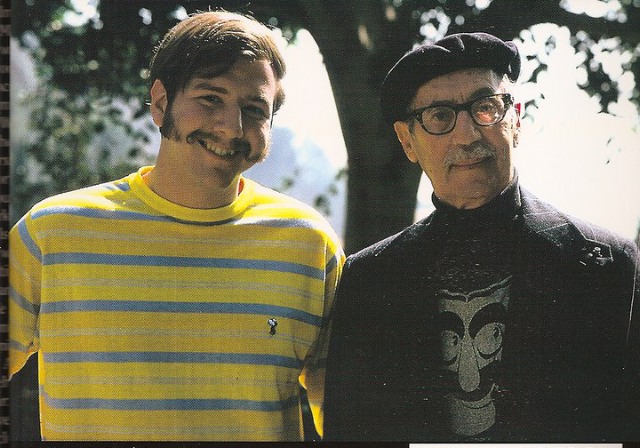
stevegroucho.jpg

Rob Zombie wants to make a movie out of this book. That kind of takes me by surprise…not that a movie could be made…but that Rob Zombie wants to do it.

https://1428elm.com/2018/06/16/waiting-for-groucho-marxs-raised-eyebrows-from-rob-zombie/

As it just so happens, in an interview Zombie mentioned that his favorite book was Raised Eyebrows written by Groucho’s former assistant, Steve Stoliar. It details the last years of the comedian’s life through Stoliar’s eyes.
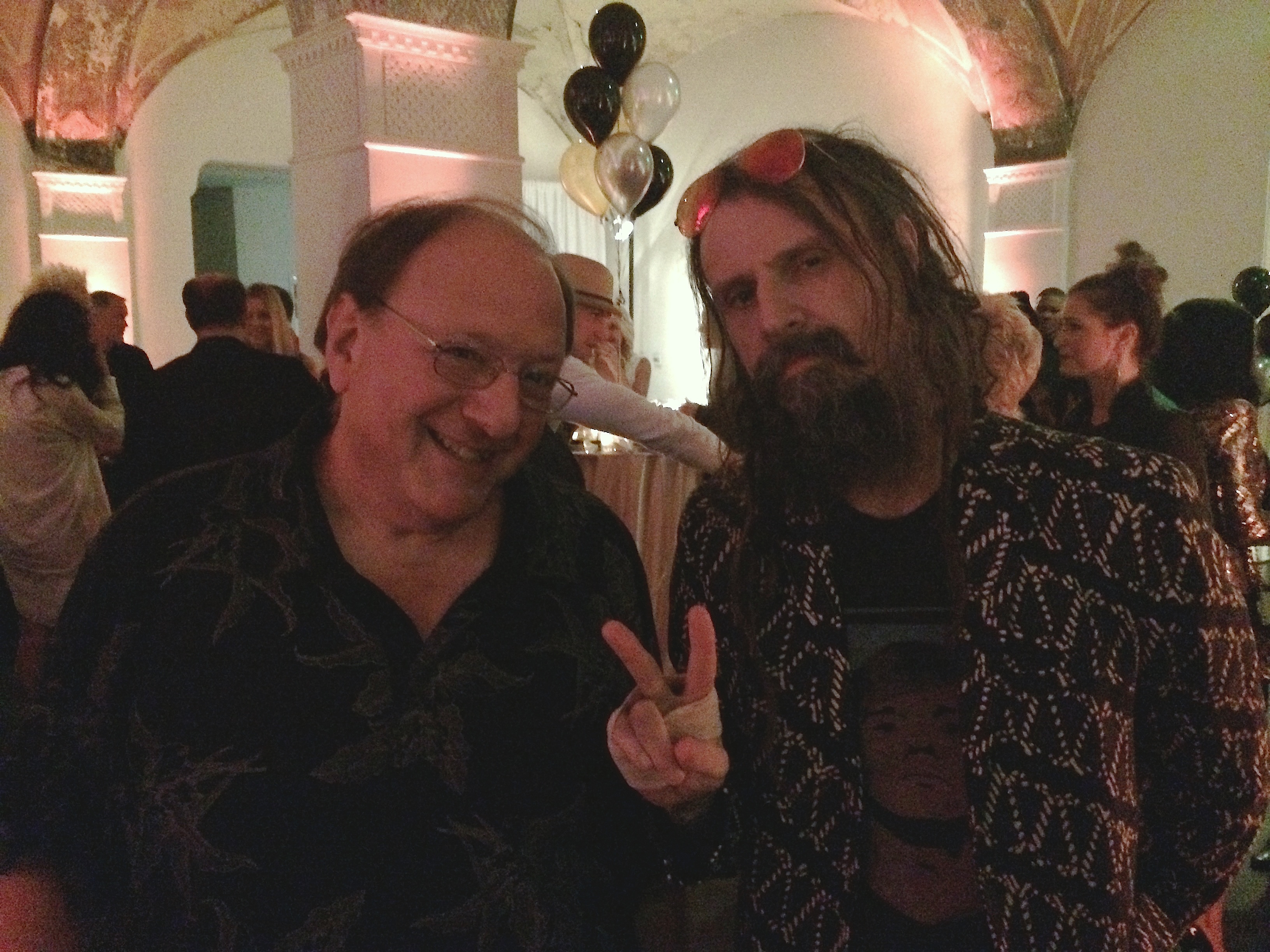
SteveZombie2.jpg

Flatlanders – Tonight I Think I’m Gonna Go Downtown

I first blogged about these guys last year. I keep listening to their music and it’s all very likable. It’s something about this song that I can’t put my finger on that has stuck with me for days. It could be the unique lead vocal or it could be 

Jimmie Dale Gilmore wrote this song with John Reed who was in a band at the time called Frieda and The Firedogs. Gilmore said: “It was inspired by this feeling I had one night having to do with, Well, I just want to go downtown, everybody knows that feeling. I think that’s why that song resonates with people because it kind of conjures an emotion that you can’t quite put your finger on.”

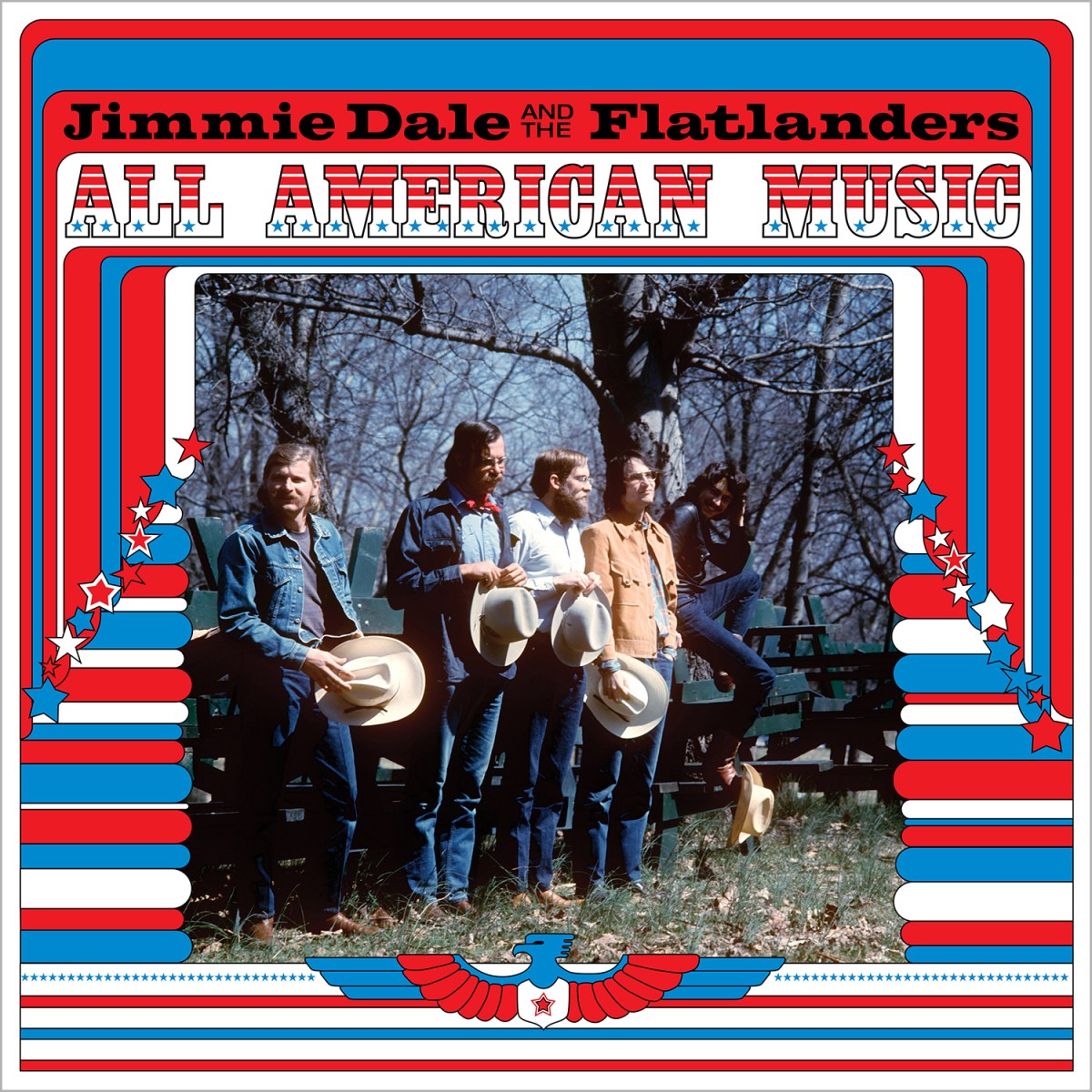
The track is featured on their album All American Music, which was their debut album and a great example of Americana and Texas music. Over the years, the song has been covered by various artists, including Joe Ely in February 1978 and Nanci Griffith in March 1982…Mudhoney also covered it. 

With their All American Music… they issued a few hundred copies on 8-track cassettes. The group broke up the following year but would reform continually. In the 1990s, as Joe Ely, Jimmie Dale Gilmore, and Butch Hancock gained recognition as individual artists, interest in The Flatlanders’ early work grew so this album saw the light of day.

They were formed in 1972 by three singer-songwriters: Jimmie Dale Gilmore, Joe Ely, and Butch Hancock. The band was born out of the music scene in Lubbock, Texas, where all three members grew up. They recorded this album in Nashville. Initially, the album was released only as an 8-track tape by Plantation Records, with the title “Jimmie Dale and the Flatlanders.” This limited release received little attention at the time, and the band members soon went their separate ways to pursue solo careers.

They then released an album in 1980 called One More Road. Their debut album was re-released in 1990 as More a Legend Than A Band after all of them had some success during their solo careers. They have released 9 albums including a live album in 2004 from 1972 to 2021. Their last album was released in 2021 called Treasure Of Love. They started to chart in the music charts in the 2000s.

Hope you are all having a wonderful weekend and I hope you enjoy these songs. 

I’m adding an extra bonus Flatlanders song called Pay The Alligator

I Think I’m Gonna Go Downtown

Tonight I think I’m gonna go downtown.
Tonight I think I’m gonna look around
For something I couldn’t see
When this world was more real to me.
Yeah tonight I think I’m gonna go downtown.

My love, my love has gone away.
My love, my love what can I say.
My love would never see
That this world’s just not real to me
And tonight I think I’m gonna go downtown.

I told my love a thousand times
That I can’t say what’s on my mind,
But she would never see
That this world’s just not real to me
And tonight I think I’m gonna go downtown.

Tonight I think I’m gonna go downtown.
Tonight I think I’m gonna look around
For something I couldn’t see
When this world was more real to me.
Yeah tonight I think I’m gonna go downtown.

Hey Kid, Catch Commercial

If I had to name my favorite commercials, it would be a really short list. This Mean Joe Greene and Kid commercial would top the shortlist, though. People talk about famous Super Bowl commercials. This one is probably remembered the most. I loved it as a kid…watching Mean Joe Greene, who just by name alone would scare you…but to see him as a kind person giving a kid a jersey? It made me root for the Steelers at the time…although I pulled for the Rams in the Super Bowl…that didn’t help. 

This ad debuted on October 1, 1979. It showed an injured Mean Joe headed for the locker room to encounter a star-struck kid (Tommy Okon) who offered Mean Joe a coke. Greene eventually took the coke and while limping away pitched his jersey to the kid.

The commercial spot aired repeatedly through Superbowl XIV where the Steelers beat the Rams 31-19. It took 3 days to film the commercial and Joe ended up drinking around 18 cokes to finish it.

When Greene found out Tommy Okon didn’t get to keep the jersey from the commercial, he mailed him an autographed jersey for Christmas. This says a lot about Greene’s character. Why didn’t the commercial people let the kid keep the jersey? 

Coke looked at Roger Staubach, Tony Dorsett, Ed “Too Tall” Jones, and teammate Jack Lambert but Joe Greene won out. The right man got the job. The commercial helped to soften Joe Greene’s reputation. Before it aired, Greene said people were intimidated by him. This is a quote from Greene. “I was suddenly approachable, little kids were no longer afraid of me, and older people – both women and men – would come up and offer me a Coke.”

It was directed by Roger Mosconi, and produced by McCann Erickson for Coca-Cola. Tommy Okon was a nine-year-old child actor at the time. It was later remade multiple times, including versions featuring soccer star Zico in Brazil and other athletes worldwide.

Greene was injured at the time of filming. His limping in the commercial wasn’t entirely an act…he had been dealing with real knee pain. Between that and all the soda he drank, he later joked that it was one of the toughest things he had done in his career.

It also should be said how popular the Steelers were in the 1970s. They were the first team to win 4 Super Bowls and were without a defeat. They had one of the best defenses ever, and their offense was run by Terry Bradshaw. By this time, the team was aging, and they would win their 3rd Super Bowl against the Rams a few months after the commercial was filmed. They are considered one of the greatest teams in the NFL ever. Greene was nearing the end of his career. He was drafted in 1969 and would retire in 1981. 

Reunion 36 years later. 

Spinners – The Rubberband Man

I was so surprised, I was hypnotized
By the sound this cat’s puttin’ down

I had this single in the late seventies. I bought it at the dime store in a discount rack for 10 cents. I didn’t know what I was buying but it was the best dime I ever spent. The song has had a resurgence in popularity recently with the Guardians of the Galaxy soundtrack. It’s a great piece of 1970s soul music. 

The Rubberband Man peaked at #2 in the Billboard 100, #7 in Canada, and #16 in the UK in 1976. The Spinners had 7 top ten hits and one #1 with Then Came You. Once you hear it…it sticks with you.

The Spinners’ producer, Thom Bell, wrote this song for his son with help from his songwriting partner Linda Creed. Bell wrote theme songs for all of his children, although this is the only one that was ever recorded. “The Fat Man is what it was called at first since his son Mark was rather large, and that’s what his schoolmates called him.

Bell wanted to change the perception of this nickname, so he wrote a song about a big man who could really move. He’s the guy everyone waits for at the party since it can really get going when he arrives.

Thom Bell: “It was written for big people who were hip, to change the whole idea of a person being large being sloppy, slow.”

The Rubberman Man

Hand me down my walkin’ cane
Hand me down my hat
Hurry now and don’t be late
‘Cause we ain’t got time to chat
You and me we’re goin’ out
To catch the latest sounds
Guaranteed to blow your mind
So high you won’t come down

Hey, y’all prepare yourself
For the rubberband man
You never heard a sound
Like the rubberband man
You’re bound to lose control
When the rubberband starts to jam

Oh, Lord this dude is outta sight
Everything he does
Seems to come out right

Once I went to hear them play
At a club outside of town
I was so surprised, I was hypnotized
By the sound this cat’s puttin’ down
When I saw this short fat guy
Stretched a band between his toes
Hey, I laughed so hard ’cause the man got down
When he finally reached his goal

Hey, y’all prepare yourself
For the rubberband man
You never heard a sound
Like the rubberband man
You’re bound to lose control
When the rubberband starts to jam

Got that rubberband
Up on his toes
And then he wriggled it up
All around his nose

Guaranteed to blow your mind
Playin’ all that music, yet keepin’ time
Where in the world did he learn that, oh, Lord
Lord, help him get away

Hey, y’all prepare yourself
For the rubberband man
You never heard a sound
Like the rubberband man
You’re bound to lose control
When the rubberband starts to jam

Rubberband man, rubberband man
How much of this stuff do he think we can stand
So much rhythm, grace and debonair from one man, Lord
And then he had the nerve to wiggle his left toe
To his knee, got the feelin’ in his head, y’all
Ah, come on baby

Hey, y’all prepare yourself
For the rubberband man
You never heard a sound
Like the rubberband man
You’re bound to lose control (and he likes to jam)
When the rubberband starts to jam

Rubberband man starts to jam
Movin’ up and down across the land
Got people all in his ways
Everything about him seems out of place
Just a movin’, just a movin’, just a move-move-movin’
Just a, a rubberband, rubberband man
Just a movin’, just a movin’, just a move-move-movin’
Just a rubberband, rubberband man

Get down
Oh, get down lover
Uh-huh

The Iron Eyes Cody Commercials

People start pollution. People can stop it.

Maybe the most famous tear in pop culture is Iron Eyes Cody, an actor in Native American clothing who shows us the tragedy of littering. He debuted Earth Day, April 22, 1971, at the close of a public service advertisement for the anti-litter organization Keep America Beautiful.

The ad contributed to increased environmental consciousness in the U.S., particularly during the 1970s. The commercials helped spur the passage of anti-littering laws and programs such as The Clean Water Act (1972),  The Resource Conservation and Recovery Act (1976), and the creation of recycling initiatives in cities nationwide.

At the time of the commercial’s debut, the counterculture was starting to embrace Native American Culture. Iron Eyes Cody could be seen in printed ads, television, and billboards. He was known by the press as the “Crying Indian.”

Born on April 3, 1904, as Espera Oscar de Corti, Cody’s parents were both Sicilian immigrants (Antonio de Corti and his wife, Francesca Salpietra). He grew up in Gueydan, Vermilion Parish, Louisiana, where his parents ran a grocery store.

He portrayed Indians in television shows and movies dating back to 1926. His last appearance was in the 1970s spoof movie The Spirit of 76 released in 1990. He played the role on-screen as well as off…He would deny he wasn’t Native American as late as 1996 and until he passed away in 1999 at the age of 94.

Real or not he did have an effect on me…To a young kid, this hit home. I remember this commercial rather well and there is another anti-littering commercial that I remember. Only people in Tennessee would probably remember it was called “Tennessee Trash.” I have it below the Iron Eye’s Cody video.

The ad remains one of the most memorable and emotionally impactful of all commercials to be made. 

The below commercial in 1976 was so popular that they remade it twenty-two years later. I have to say the song will stay in your head. It was filmed on an unopened stretch of I-24 at the time. The theme was sung by country singer-songwriter Ed Bruce and features Irving Kane as the ultimate litterbug.

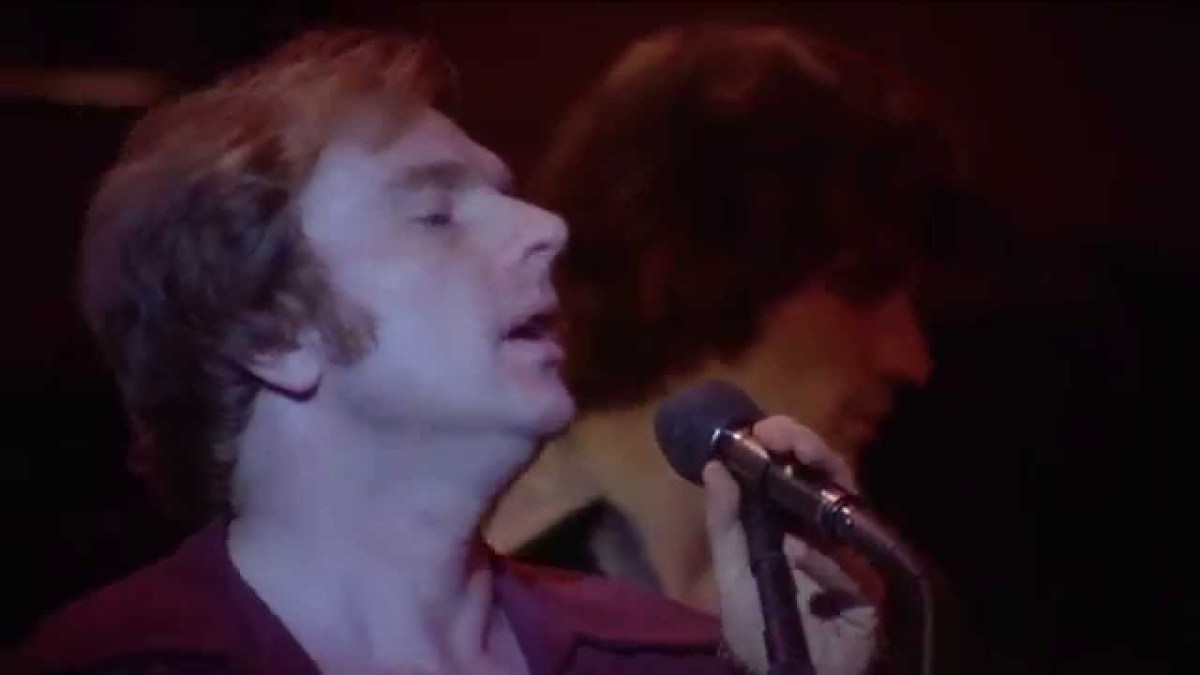
Van Morrison – Caravan

Just a perfect song. I listen to it and can’t believe it wasn’t a hit. When I bought the Moondance album I zeroed in on this song. I then heard Van Morrison on The Last Waltz singing it and it was a clincher.

The performance of this song on the Last Waltz for me may have been the best performance in the film and that says a lot. I’ve seen Van live one time and his voice seemed stronger in person than on record…if that is possible. This song blends folk rock, R&B, and jazz styles perfectly.

The album is one of his great ones. It has some great songs like And It Stoned Me, Moondance, These Dreams of You, Brand New Day, Crazy Love, and Come Running which all sound like they belong on the radio. Morrison’s love of radio influenced this song heavily. 

This was his second album for Warner Brothers following up the critical smash Astral Weeks.  This album peaked at #29 on the Billboard Album Charts, #46 in Canada, #36 in New Zealand, and #32 in the UK in 1970. His albums never charted too high. The highest in the 70s was for Saint Dominic’s Preview at #15 on the Billboard charts in 1972. 

Van MorrisonI could hear the radio like it was in the same room. I don’t know how to explain it. There was some story about an underground passage under the house I was living in, rumors from kids and stuff and I was beginning to think it was true. How can you hear someone’s radio from a mile away, as if it was playing in your own house? So I had to put that into the song, It was a must

Caravan

And the caravan is on it’s way
I can hear the merry gypsies play
Mama mama look at Emma Rose
She’s a-playin with the radio
La, la, la, la…

And the caravan has all my friends
It will stay with me until the end
Gypsy Robin, Sweet Emma Rose
Tell me everything I need to know
La, la, la…

Turn up your radio and let me hear the song
Switch on your electric light
Then we can get down to what is really wrong
I long to hold you tight so I can feel you
Sweet lady of the night I shall reveal you

Turn it up, turn it up, little bit higher radio
Turn it up, turn it up, so you know, radio
La, la, la, la…

And the caravan is painted red and white
That means ev’rybody’s staying overnight
Barefoot gypsy player round the campfire sing and play
And a woman tells us of her ways
La, la, la, la…

Turn up your radio and let me hear the song
Switch on your electric light
Then we can get down to what is really wrong
I long to hold you tight so I can feel you
Sweet lady of the night I shall reveal you
Turn it up, turn it up, little bit higher, radio
Turn it up, that’s enough, so you know it’s got soul
Radio, radio turn it up, hum
La, la, la, la…

Purina Chuckwagon Commercials

I loved these commercials when I was a kid. I wasn’t allowed to have a dog in the house (which is probably why I’ve had three Saint Bernard house dogs). Some poor dog would be bewildered by a miniature chuck wagon, then scurries through the home and into the kitchen cabinet or tv after it.

In 1967, Purina launched “Chuck Wagon” as their latest dog food innovation. Packaged as dry dog food, adding warm water would rehydrate the serving to some extent, as well as cause the meal to produce its own gravy

The commercials had a Western theme, playing into Chuck Wagon’s branding as a hearty, wholesome meal for dogs. The animated mini chuck wagon would appear from unexpected places—such as behind a cabinet door, under a table, or from inside a dog food bag…creating a playful and imaginative effect. I can’t tell you how much this worked during that time period. 

In some shots, stop-motion animation was used, where the wagon was moved frame by frame to give the illusion of self-propelled motion. In other cases, puppetry techniques such as invisible wires or rods helped guide the wagon across the floor.

Now… this was hard to believe but in 1983 Atari released a video game based on this commercial called “Chase the Chuckwagon.

Image result for atari Chase the Chuck Wagon


Magic 8 Ball

I was told as a kid that a Magic 8 Ball could predict the future. I bought it hook line and sinker…I was also told by my older sister (8 years older) that snakes bite the second person in a line while I was merrily leading the way hiking in the woods as a 5-year-old…so I caught on pretty quick after I stepped on a snake…didn’t get bit though…but I never let her forget it.

I bugged my mom till she got me the mysterious Magic 8 Ball. I was amazed at this toy…well it wasn’t a toy to me. I thought this was great. So being 5-6 years old I thought I would put it to use… Oh, Magic 8 Ball should I color in the encyclopedias with my crayons? I shook it up and waited for the triangle to give me the answer… “signs point to yes”…those signs must have pointed in a different direction than my Mom… she wasn’t a fan of the Magic 8 ball after that.

Abe Bookman invented the Magic 8 Ball, a fortune-telling toy currently manufactured by Mattel.

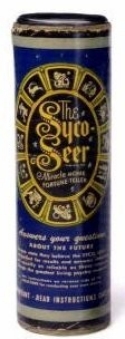
During World War II, a man named Alfred Carter in Cincinnati created a tube-like fortune-telling toy. To help him he got his brother-in-law to help…that would be Abe Bookman. they created a 7″ tube device with glass on both ends with a pair of floating dice with responses. It was sold as the “Syco-Seer: The Miracle Home Fortune Teller.” Their company was called Alabe Crafts.

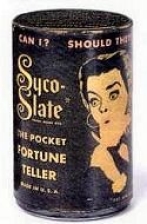
The original Magic 8 Ball was tubular and went by the name Syco-Seer. The Magic 8 Ball above. The Syco-Seer metal cylindar above. The Syco-Slate Pocekt Fortune-Teller at right.

Carter died in 1948 and Bookman revised it into a crystal ball but it still didn’t sell really well. Then the Brunswick Billiards company commissioned Bookman to make them one shaped like an 8 ball as a promotional giveaway.

After the giveaway was finished Bookman kept producing them shaped like an 8 ball.

The Magic 8 Ball that we have known since then has contained a 20-sided polygon inside a hollow plastic ball, floating in a liquid-filled, 3-inch diameter tube. The liquid largely consists of dark blue ink and alcohol. The predictions, yes, no, or non-committal, appear on each triangular face of the polygon.

Bookman marketed it as a conversation piece, a paperweight and then a toy.

Ideal Toys bought Alabe Crafts in 1971. Next, Tyco Toys bought the ball in ’87. Mattel owns it today and sells one million units a year.

Here are the magical statements of the Magic 8 Ball

  • As I see it, yes
  • Ask again later
  • Better not tell you now
  • Cannot predict now
  • Concentrate and ask again
  • Don’t count on it
  • It is certain
  • It is decidedly so
  • Most likely
  • My reply is no
  • My sources say no
  • Outlook good
  • Outlook not so good
  • Reply hazy, try again
  • Signs point to yes
  • Very doubtful
  • Without a doubt
  • Yes
  • Yes, definitely
  • You may rely on it.

Moody Blues – Story in Your Eyes

Great melody in this song. One of the best rock songs of its era. I bought the album Every Good Boy Deserves Favour when I heard this song from Columbia House. I would say that this song made me a Moody Blues Fan. The Moody Blues are sometimes described as a progressive band, but unlike some progressive bands, they kept a good pop/rock sensibility…some have called them an “Art”rock band which fits much better to me. And…the bass in this song is great.

If you were stuck on the orchestral sounds of Days of Future Passed, The Story in Your Eyes might have caught you off guard…in the best way possible. The song was released in 1971 as the lead single from Every Good Boy Deserves Favour, this Justin Hayward-written song is one of the Moody Blues’ most energetic, guitar-driven tracks, proving they could rock with their harder peers.

The album title, Every Good Boy Deserves Favour comes from a mnemonic phrase used to remember the notes on the lines of the treble clef.  E, G, B, D, F, (Every Good Boy Does Fine) from bottom to top. 

The song peaked at #23 on the Billboard 100, and #7 in Canada,  in 1971.

Justin Hayward: “Despite its personal nature, ‘The Story in Your Eyes’ is also kind of about the band, We’re part of the fire that is burning, and from the ashes we can build another day.” “There’s a kind of confession in it, as we were soon about to go through a rather awkward phase.”

Justin Hayward: “The song just sprung out of my acoustic guitar one day while I was at home. I was just playing my Martin D-28…I don’t know for certain if it’s from ’55 or ’57, but it’s been with me since 1969 and the first thing that came to me was the middle-eight section. And from there, the rest of the song came together.” 

“Only a couple of weeks before entering the studio, I had done a version of it with Mike (keyboardist Mike Pinder) at his place, with just me playing the guitar and him working out the piano part for the outro. Mike then did eight or 12 tracks of Mellotron, bouncing from one machine to another. And it only sounded good when he had done it and multitracked it.” 

“When it came time for the electric guitar part, I used a Cherry Red 1963 [Gibson] ES-335 that I’ve had since 1968. The electric guitar that opens the song including feedback that’s in tune to an A note…and goes all the way through the song is the ES-335 direct into the Normal chan

nel of an AC30 Top Boost turned up full. In the solo and at the end, that’s the ES-335 again through a Marshall Reverb-Fuzz Unit.” 


Story in Your Eyes

I’ve been thinking about our fortune
And I’ve decided that we’re really not to blame
For the love that’s deep inside us now, is still the same
And the sound we make together
Is the music to the story in your eyes
It’s been shining down upon you now, I realize

Listen to the tide slowly turning
Wash all our heartaches away
We are part of the fire that is burning
And from the ashes we can build another day
But I’m frightened for your children
And the life that we are living is in vain
And the sunshine we’ve been waiting for
Will turn to rain

When the final line is over
And it’s certain that the curtain’s gonna fall
I can hide inside your sweet sweet love
Forever more

Listen to the tide slowly turning
Wash all our heartaches away
We are part of the fire that is burning
And from the ashes we can build another day
But I’m frightened for your children
And the life that we are living is in vain
And the sunshine we’ve been waiting for
Will turn to rain

Grateful Dead – Fire On The Mountain

I like a couple of Fire on the Mountain songs: The Marshall Tucker Band and this one. They’re two totally different songs, but both are really good. I want to thank Jim for this because he sent me some information about this song in an email. 

Fire on the Mountain’s music was primarily written by one of the Grateful Dead’s drummers, Mickey Hart, with lyrics by the band’s lyricist, Robert Hunter. The song’s groove reflects Hart’s rhythm sensibilities, while Hunter’s lyrics (as with most of his) are open to interpretation and rich with imagery.

The song initially existed as an instrumental titled Happiness is Drumming, which appeared on Mickey Hart’s 1976 solo album, Diga. The instrumental version already contained the core melody.  The song evolved into the version that the Grateful Dead began performing live in 1977 and eventually included on their 1978 album Shakedown Street.

The first time I heard the song was a live video of The Grateful Dead playing in Egypt in 1978. I’ve watched that concert many times, and it’s fantastic. This song was one of the songs that got me into the band. When they played it live, the song was frequently paired with Scarlet Begonias. 

The Dead didn’t always do commercially huge songs but some songs like this one…should have been at least released as a single. 

Robert Hunter: “Written at Mickey Hart’s ranch in heated inspiration as the surrounding hills blazed and the fire approached the recording studio where we were working.”

Fire On The Mountain

Long distance runner, what you standin’ there for?Get up, get out, get out of the doorYou’re playin’ cold music on the barroom floorDrowned in your laughter and dead to the coreThere’s a dragon with matches that’s loose on the townTakes a whole pail of water just to cool him down

Fire! Fire on the mountainFire! Fire on the mountainFire! Fire on the mountainFire! Fire on the mountain

Almost ablaze, still you don’t feel the heatIt takes all you got just to stay on the beatYou say it’s a livin’, we all gotta eatBut you’re here alone, there’s no one to competeIf Mercy’s a business, I wish it for youMore than just ashes when your dreams come true

Fire! Fire on the mountainFire! Fire on the mountainFire! Fire on the mountainFire! Fire on the mountain

Long distance runner, what you holdin’ out for?Caught in slow motion in a dash for the doorThe flame from your stage has now spread to the floorYou gave all you had, why you wanna give more?The more that you give, the more it will takeTo the thin line beyond, which you really can’t fake

Fire! Fire on the mountainFire! Fire on the mountainFire! Fire on the mountainFire! Fire on the mountain

Keep On Truckin’ Poster

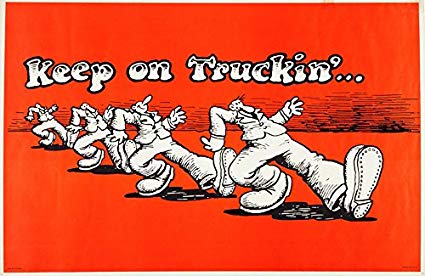
I have this hanging in my music room. I saw it on shirts, bumper stickers, and walls everywhere once upon a time. This phrase was used in a song from the 1930s called “Truckin’ My Blues Away” by Blind Boy Fuller and is the origin of this image.

In the seventies as a kid…I remember this phrase and picture everywhere. I saw bumper stickers, pics in magazines, and on patches for pants. In one local restaurant I went to as a kid they had this poster in the dining room. Fast forward to the 90s and the picture was still there. The place was sold in the 2000s and I tried to get the poster but they threw it away…arghhhh. It would have been cool to have that original one. 

Besides the smiley face…it’s one of the most iconic graphics of the 1970s. It was created by Robert Crumb for Zap Comics in 1968. The image was used many times without his permission for years. It was claimed that the Trademark symbol ™ was not on the original drawing.

Crumb went to court and the court ruled it Public Domain. The decision was later reversed in 1977. He sued many for using it including Amazon 2005. Crumb also came up with Fritz the Cat…

Quotes from Robert Crumb on the drawing.

For a while I was most well known for that [the Janis Joplin album cover, and for “Keep on Truckin’.” That was a drawing that came out of LSD trips, and the words came from a Blind Boy Fuller song from 1935. I drew it in my sketchbook and then for Zap. It sort of caught the popular imagination. It became a horrible popular thing.

Take Keep On Truckin’… for example. Keep on Truckin’… is the curse of my life. This stupid little cartoon caught on hugely. … I didn’t want to turn into a greeting card artist for the counter-culture! I didn’t want to do ‘shtick’—the thing Lenny Bruce warned against. That’s when I started to let out all my perverse sex fantasies. It was the only way out of being “America’s Best Loved Hippie Cartoonist.”

keep.jpg

Who – The Seeker

People tend to hate me
Coz I never smile
As I ransack their homes
They wanna’ shake my hand

Good Who song that was not as well known as some of their others. In 1999 it was featured in the movie “The Limey”. This was The Who’s first single released after Tommy. I first heard it in the early 80s and it helped me become a huge Who fan. 

Like most of Townshend’s songs around this time it was influenced by spiritual teachings and figures such as Meher Baba. It was recorded at IBC Studios in London during the sessions for Who’s Next but wasn’t included on that album. It’s been covered by Rush, The Smithereens, Joe Lynn Turner, Leslie West, and Nick Piunti.

The song was released as a single only at the time. After that, it was on the great album Meaty Beaty Big and Bouncy released in 1971.  It’s one of my favorite compilation albums. That album introduced me to pre-Who’s Next music. This one has a raw power to it and it’s pushed by Pete’s riff and Keith Moon driving the song along.

In 1970 The Seeker peaked at #44 in the Billboard 100, #19 in the UK and #21 in Canada.

Pete Townshend: “It sounded great in the mosquito-ridden swamp I made it up in – Florida at three in the morning, drunk out of my mind. But that’s where the trouble always starts, in the swamp.”

The Seeker

I’ve looked under chairs
I’ve looked under tables
I’ve tried to find the key
To fifty million fables

They call me The Seeker
I’ve been searchin’ low and high
I won’t get to get what I’m after
Till the day I die

I asked Bobby Dylan
I asked the Beatles
I asked Timothy Leary
But he couldn’t help me either

They call me The Seeker
I’ve been searchin’ low and high
I won’t get to get what I’m after
Till the day I die

People tend to hate me
Coz I never smile
As I ransack their homes
They wanna’ shake my hand

Focusing on nowhere
Investigating miles
I’m a seeker
I’m a really desperate man

I wont get to get what I’m after
Till the day I die

I learned how to raise my voice in anger
Yeah but look at my face ain’t this a smile

I’m happy when life’s good and when its bad I cry
I got values but I don’t know how or why

I’m lookin’ for me
You’re lookin’ for you
Were lookin’ at each other and we don’t know what to do

They call me The Seeker
I been searchin’ low and high
I wont get to get what I’m after
Till the day I die

Bigfoot

No, it’s not a new or old rock band. I have posted on many icons and events of the 1960s-1970s but never really concentrated on this big fellow. 

I know as a kid…Bigfoot was part of the culture and kids thought yea…he is real. Native American legends tell of large, hairy human-like creatures that have been part of Indigenous cultures across North America for centuries. Many tribes have their own names and variations of Bigfoot, each with distinct characteristics and significance.

The most famous film clip was the Patterson-Gimlin footage from 1967.

 Jeffery Meldrum is a professor of anatomy and anthropology at Idaho State University, and he’s known for being one of the few academics to openly study Sasquatch. “It’s all so easy to say, ‘Obviously that’s a man in a fur suit.’ Until you see it up against a man in a fur suit.” 

The National Geographic documentary Mystery 360: Bigfoot Revealed, where they went absolutely all-out to try and recreate the Patterson-Gimlin bigfoot with modern technology (suit and all…) but ultimately couldn’t. Before this documentary, everyone assumed there was someone with a gorilla suit. 

No matter how real the subject in the film appears, how much muscle movement you think you see, or how unhuman they claim the gait is, the subject has no corroborating specimen, and can therefore be no more than a question mark. The film has always been, is, and likely always will be an unsettled controversy. 

In 2003 Bob Heironimus, a retired Pepsi bottler from Yakima, Washington came out and said that he played Bigfoot in the film. “It’s time to let this thing go. I’ve been burdened with this for 36 years, seeing the film clip on TV numerous times. Somebody’s making lots of money off this, except for me. But that’s not the issue — the issue is that it’s time to finally let people know the truth.” Heironimus, 63, makes his full “confession,” as he calls it, in a published book by paranormal investigator Greg Long. He also wanted money from the film and filed a suit but it never went anywhere. 


Tom Malone, a lawyer in Minneapolis, on behalf of Bob Gimlin, an associate of the now-dead Bigfoot filmmaker. “I’m authorized to tell you that nobody wore a gorilla suit or monkey suit and that Mr. Gimlin’s position is that it’s absolutely false and untrue.” And the mystery lives on . . .

Many have broken the film down frame by frame and investigating it. It’s really interesting. 

I remember on television that some shows featured Bigfoot. The Six Million Dollar Man featured Bigfoot and don’t think we were all watching at the time. There has been many documentaries on him and movies including Harry And The Hendersons. We cannot forget the monster truck Bigfoot. 

Bigfoot is part of our popular culture and will probably always be but I would guess he peaked in the 1970s. 

The Stabilized Clip


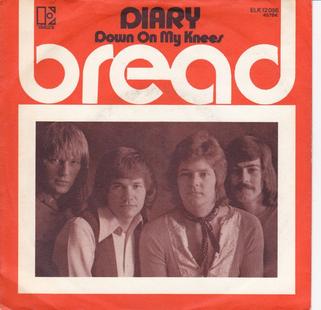
Bread – Down On My Knees

Bread was known as a light pop band in the 1970s. When I heard this I realized they stuck their toe in the power pop water. It sounded familiar when I heard it a few years ago. I then remembered…it was on their 1973 greatest hits album that my sister had.

Band members David Gates and James Griffin wrote this song at the Royal Lancaster Hotel during their first trip to London. Griffin wrote a lot of songs for Bread but the record company always seemed to pick David Gates songs for singles. This song was the B-Side to the song Diary.

The song was off their Baby I’m-A Want You album released in 1972. It was their fourth LP, which proved to be the highest-charting studio album of the band’s career and provided them with four top-40 hits. The hits were “Mother Freedom” – #37 “Baby I’m-a Want You” – #3 “Everything I Own” – #5 “Diary” – #15. That was quite impressive in the 70s when record companies usually didn’t release a lot of singles from an album.  In the 1980s it became commonplace to squeeze as many singles as possible. Bread though…was more of a singles band to begin with.

It was their first album without founding member Robb Royer… Although his departure was due to increasing tensions between him and Gates, Royer continued to write songs with Jimmy Griffin, who remained in the band, hence Royer’s name still turning up in the credits as the co-composer of Dream Lady and Games of Magic. They replaced Royer with studio keyboardist  Larry Knechtel who was a member of the Wrecking Crew.

James Griffin: “The lyric doesn’t make a whole lot of sense to me – I think we were each writing about different things. But the song got a lot of airplay, and people seemed to like it.”

Down On My Knees

I’ve told you before
Don’t you hear what I say?
I won’t take it no more
no more making me stay

Down on my knees
You know I’m down on my knees, yeah
Yes I’ve been down on my knees, but I’m through begging please
I wont get back on my knees, yeah

Nobody knows what your putting me through
Nobody knows if it’s worth it for you
Nobody sees you got me down on my knees, yeah
Well I’ve been down on my knees, well I’m through begging please
don’t put my back on my knees, yeah

You know that I always loved you
Never placed myself above you
Don’t let me go with my ways that I could
Don’t tell me no with my ways that you would

Down on my knees
You’ve brought me down on my knees, yeah
Well I’ve been down on my knees, but I’m through begging please
don’t put me back on my knees, yeah

You know how I always loved you
There’s no time that I have tried to place myself above you

Down on my knees
You know that I’m down on my knees, yeah
Well I’ve been down on my knees, but I’m through beggin’ please
don’t put me back on my knees, yeah
Ya I’ve been down on, but I’m through begging please
don’t put me back on my knees

Paul McCartney – Soily

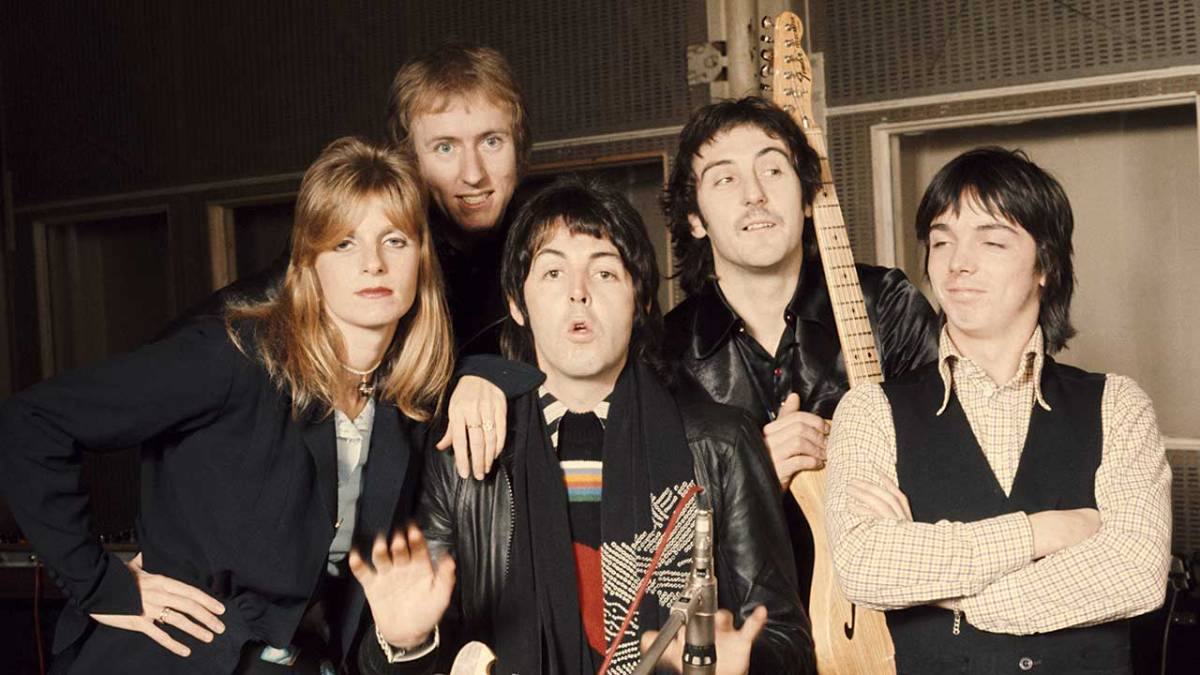
He wrote this song in 1971 and with the Wings they played it live for years. It’s not a love ballad by Paul…it’s a rock song with the same intensity as Juinor’s Farm. In 1974 the Wings recorded an in-studio live version that they were going to release on the album One Hand Clapping. They also shot a video while they were there for a documentary.

The album was shall we say… delayed. It didn’t see the light of day until June 14, 2024…over 50 years after it was recorded. It was recorded right after Band On The Run was released. I like hearing Paul reaching for a distorted guitar in his songs. I wish he would have done more through his career. Paul could write good rock songs such as Juinor’s Farm, Jet, Let Me Roll It, and a few more. 

The video portion didn’t get released until 2010 when it appeared in a box set for Band On The Run. The 4K version hit theaters in September of last year. This song didn’t get released to the public until Wings Over America. It was the B side to Maybe I’m Amazed…both versions of course live. The film was going to be Paul’s way of introducing a new Wings.

Guitar player Henry McCullough and drummer Denny Seiwell had left Wings right before the recording of the Band on the Run album.  New members…guitarist Jimmy McCulloch and drummer Geoff Britton took their spots. They would use this song as an opener through the years and an encore at some shows. It’s a song that is meant to be played live and was never featured on a studio album. 

The One Hand Clapping Album peaked at #10 on the UK Charts and #74 on the Billboard 100 in 2024. 

Jimmy McCulloch was probably the most talented guitar player Paul ever had in Wings. He famously made it when he was 16 with Thunderclap Newman. However, he had a lot of problems. He was somewhat depressed and when he wasn’t he was drinking heavily there were many arguments between the two men and he often would target Linda for her lack of musical talent. It really came to a head around the time of London Town when Jimmy quit.

Paul McCartney:  “Looking back on it [the Wings era], it’s a lot better than I thought, though some of it is just not played as well as The Beatles. My son plays a lot of Wings, so I’m re-listening, and there’s good shit that I’d forgotten about. A lot of the lyrics were off the wall, drug stimulated. Things like ‘Soily – the cat in the satin trousers says its oily’. What was I on? I think the answer is stimulants.”

Soily

One, two
One, two, three, four!

Well, people gathered here tonight
I want you to listen to me
To your left and to your right
We’ve got some pretty soily company

Readers, writers, farmer, priest
Breed controller, born deceased
Indian, lawyer, doctor, dog
And a plumber with a fattened hog

Soily, soily
Well, the cat in the satin trousers said it’s oily
Soily, soily
Well, the cat in the satin trousers said it’s oily
Yes, he did!

Well, come on, baby, that soily song
Soily people
Well, come on, baby that’s fine now
Yeah

Romans, Italians, country men
I want you to listen to me
I’ve said it once and I’ll say it again
We’ve got some pretty soily company

Liars, cheaters, jungle chief
Saint, believer on relief
Action painter, Hitler’s son
And a commie with a tommy-gun

Soily, soily
Well, the cat in the satin trousers said it’s oily
Soily, soily
Well, the cat in the satin trousers said it’s oily
You know he’s right
Yeah, yeah, yeah, yeah, yeah, yeah
Ooh, yeah yeah

Well, come on, baby, that soily song
Soily people
Yeah, come on, baby, that’s going round
Yeah!

People gathered here tonight
I want you to listen to me
To your left and to your right
You’ve got some pretty soily company

Readers, writers, farmer, priest
Saint, believer on relief
Hitler’s painter, action son
And a commie with a tommy-gun

Soily, soily
Well, the cat in the satin trousers said it’s oily
Soily, soily
Yeah, the cat in the satin trousers said it’s oily
Yeah, soily, soily
Well, the cat in the satin trousers said it’s oily, yeah
Soily, soily
Well, the cat in the satin trousers said it’s oily
And you know he’s right
Ooh yeah!