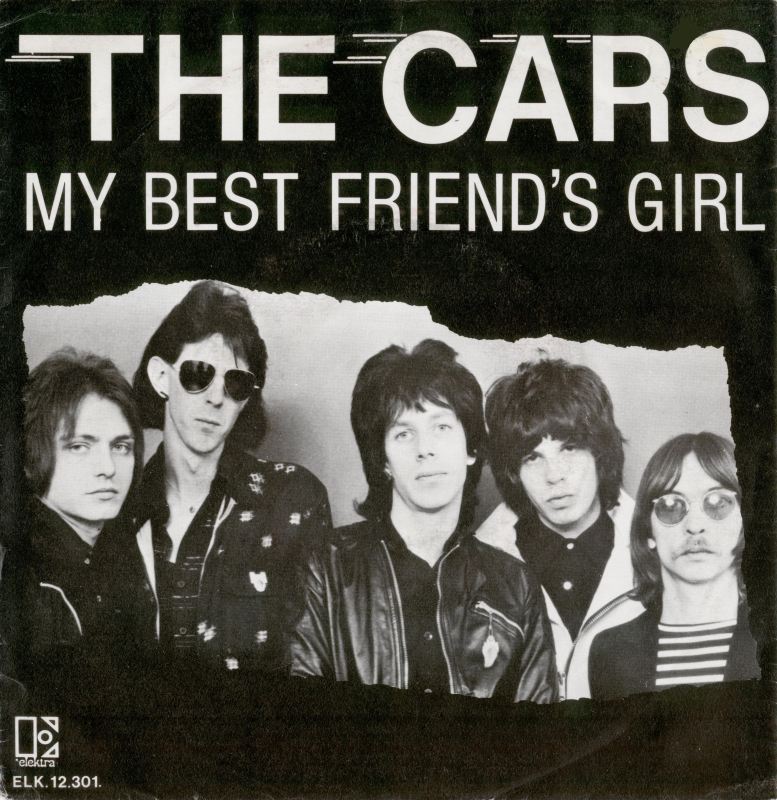
This song is from The Cars’1978 great debut album. This album has been known by fans as their “greatest hits.” It was one of the best debut rock albums ever released. It is a power pop masterpiece. They were all simple songs, but totally effective. The album contained Good Times Roll, My Best Friend’s Girl, Just What I Needed, Moving In Stereo, and Bye Bye Love. All of which still gets played.
This song is full of catchy hooks, but what makes it special to me is guitarist Elliot Easton’s rockabilly licks flowing through it. Ric Ocasek wrote and sang the song, which peaked at #44 in the Billboard 100, #3 in the UK, and #55 in Canada in 1978. Speaking of Elliot Easton, he was their secret weapon. The guy could have made any song catchy by just inserting his guitar licks.
The song sounds both old (Easton’s licks) and modern with Greg Hawke’s synthesizer in the background. Hawke would color a song but hardly ever take it over. It’s been covered by multiple artists, featured in films and TV shows, and still sounds fresh.
The album The Cars peaked at #18 on the Billboard Album Charts, #50 on the Canadian Album Charts, #29 in the UK, and in New Zealand it peaked at #5 in 1978. It seems New Zealand appreciated it much more and realized they were here to stay. They were one of the few power pop bands that had a somewhat long career. The two singers were usually Ric Ocasek (who was also the main songwriter) and bass player Benjamin Orr. Their voices were very similar.
Below, Ocasek explains how he wrote the song.
Ric Ocasek: Nothing in that song happened to me personally. I just figured having a girlfriend stolen was probably something that happened to a lot of people. I wrote the words and music at the same time: “You’re always dancing down the street / with your suede blue eyes / And every new boy that you meet / he doesn’t know the real surprise.” The “suede blue eyes” line was a play on Carl Perkins’s “Blue Suede Shoes.” When I wrote, “You’ve got your nuclear boots / and your drip-dry glove,” I envisioned the boots and gloves as a cool ’50s fashion statement.
As for the last lines—“And when you bite your lip / it’s some reaction to love”—they were an emotional gesture. I was reading a lot of poets then. At some point, I realized my lyrics didn’t include the words “My Best Friend’s Girl.” So I pulled out the lyrics someone had typed up and added a chorus in the margin in pen: “She’s my best friend’s girl / she’s my best friend’s girl / but she used to be mine. I liked the twist. Up until that point, you think the singer stole his best friend’s girl based on how good he feels about her: “When she’s dancing ’neath the starry sky / she’ll make you flip.”
With the last line of the chorus, “But she used to be mine,” you realize the guy didn’t steal his best friend’s girl—his friend stole her away from him.
My Best Friend’s Girl
You’re always dancing down the street With your suede blue eyes And every new boy that you meet He doesn’t know the real surprise Here she comes again When she’s dancing ‘neath the starry sky She’ll make you flip Here she comes again When she’s dancing ‘neath the starry sky You kinda like the way she dips She’s my best friend’s girl She’s my best friend’s girl And she used to be mine You’ve got your nuclear boots And your drip dry glove And when you bite your lip It’s some reaction to love
I was looking through some pub rock bands lately and found this band. It’s such an interesting musical era in the early to mid-seventies with pub rock. I love the stripped-down feel of that music. They almost go back to a ’50s sound. Barrie Masters was their energetic lead singer. He was skinny and hyper with great stage presence. I love the live performances I’ve seen from them. He was all over the place.
This band was between Pub Rock and Punk with a little Power Pop thrown in. They seemed too musical for punk but too edgy for radio, but this one hit the charts. Later on, bands like The Jam, The Undertones, and even early Blondie were picking up the same feel. Do Anything You Wanna Do peaked at #9 in the UK in 1977.
On how they got their name and why they were not Barrie and the Hot Rods, lead singer Barrie Masters said: “Because Barrie and the… would’ve sounded STUPID! The only reason it was Eddie and the Hot Rods… We loved the name when Dave came up with Hot Rods! And then we wanted Something and the Hot Rods. Do you remember those old Cruisin’ albums? The guy in those cars was always called Eddie. That’s how it came about — Eddie and the Hot Rods, and it stuck.”
They formed in 1975 in Southend-on-Sea, Essex, England. They came up in the pub rock scene that rebelled against prog and glam. Bands like Dr. Feelgood, The Count Bishops, and Kilburn and the High Roads were doing away with glitter and mystique, trading them in for raw stripped-down R&B. Between 1976 and ‘79, the band (Barrie Masters, Dave Higgs, Paul Gray and Steve Nichol, later to be joined by Graeme Douglas) released three great albums and toured extensively in the UK, Europe, and America.
By 1980, the constant touring took its toll. Paul Gray and Graeme Douglas left the band and joined The Damned. They released another album after that, but a lack of promotion caused poor sales, and they broke up.
Masters would reform the band multiple times in the decades that followed, keeping the Hot Rods on the pub and festival circuit. Barrie Masters passed away in 2019.
Do Anything You Wanna Do
Gonna break out of the city Leave the people here behind Searching for adventure It’s the type of life to find Tired of doing day jobs With no thanks for what I do I’m sure I must be someone Now I’m gonna find out who
Why don’t you ask them what they expect from you? Why don’t you tell them what you are gonna do? You’ll get so lonely, maybe it’s better that way It ain’t you only, you got something to say Do anything you wanna do Do anything you wanna do
Don’t need no politicians to tell me things I shouldn’t be Neither no opticians to tell me what I oughta see No one tells you nothing even when you know they know But they tell you what you should do They don’t like to see you grow
Why don’t you ask them what they expect from you? Why don’t you tell them what you are gonna do? You’ll get so lonely, maybe it’s better that way It ain’t you only, you got something to say Do anything you wanna do Do anything you wanna do
Gonna break out of the city Leave the people here behind Searching for adventure It’s the type of life to find Tired of doing day jobs With no thanks for what I do I’m sure I must be someone Now I’m gonna find out who
Why don’t you ask them what they expect from you? Why don’t you tell them what you’re gonna do? You’ll get so lonely, maybe it’s better that way It’ain’t you only, you got something to say Do anything you wanna do Do anything you wanna do
I’ve always liked the edge of the James Gang. I like their rawness, and I wish they had stayed together longer. This song, Funk #49, and Midnight Man are the two I remember the best. This is the Joe Walsh period that I personally like the best. They toured a lot at this time, opening for bands like The Who. Keith Moon schooled Walsh on hotel destruction and causing havoc.
The James Gang released the album Thirds in 1971, which yielded this song, their highest-charting single, “Walk Away.” It peaked at #51 in the Billboard 100. The band released a live album James Gang Live In Concert in 1971. Walsh left the group in 1971 to form his own group, Barnstorm. He later joined The Eagles.
The James Gang went through changes over the years after Walsh left. They brought in Tommy Bolin and a new lead singer, but the lineup they will be remembered for is the classic James Gang lineup — Walsh (Guitarist), Peters (Bass Player), and Fox (Drums).
They got together again for the first time to perform for then-President Bill Clinton’s election rally in late 1996. The group also made appearances on The Drew Carey Show during the late 1990s and performed at the Rock and Roll Hall of Fame in Cleveland, Ohio, in February 2001. They have gotten together since and played concerts here and there.
The classic James Gang trio also toured across the country in the summer of 2006, where they were supported by backing vocalists and musicians.
Walk Away
Taking my time Choosin’ my line Tryin’ to decide what to do Looks like my stop Don’t wanna get off Got myself hung up on youSeems to me You don’t want to talk about it Seems to me You just turn your pretty head and walk awayPlaces I’ve known Things that I’m growin’ Don’t taste the same without you I got myself in The worst mess I’ve been And I find myself startin’ ta doubt you
Seems to me Talk all night, here comes the mornin’ Seems to me You just forget what we said And greet the day
Seems to me You don’t wanna talk about it Seems to me You just turn your pretty head and walk away
I’ve got ta cool myself down Stompin’ around Thinkin’ some words I can’t name ya Meet ya half way Got nothin’ to say Still I don’t s’pose I can blame ya
Seems to me You don’t want to talk about it Seems to me You just turn your pretty head and walk away
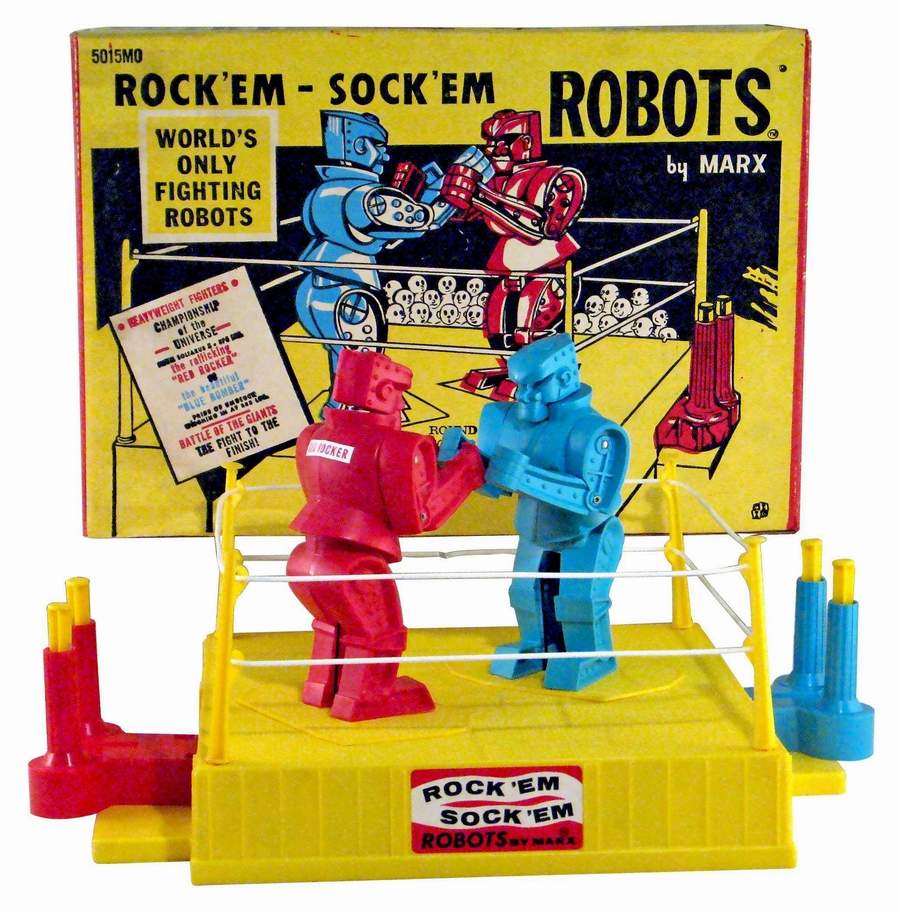
This was maybe the best toy of the 70s in some ways. Loved this game to death. We would play this for hours. Now comes the sad part. When I saw they were making them again around twenty years ago, I had to order them (for my son, of course!). I got it, and it was like Rock ’em Sock ’em Cheap Miniatures. They are small and very cheap now.
Marx released this great toy in 1966, the world’s first boxing robots with “Rock ‘Em Sock ‘Em Robots,” a game designed by Marvin Glass & Associates. At the time, the toy became hugely popular during the 1960s and ‘70s.
You would control the robots by joysticks, and you would counter the other person’s moves by dodging the oncoming punch. You would maneuver your robot and hit the other robot at just the right angle, you’ll be able to “knock his block off!” In other words, the robot’s spring-loaded head is knocked loose and pops up, signaling the end of the “round.”
When that happened, you would just push his spring-loaded head back down and go again. The great thing about the game is you do not need batteries… you just pulled it out of your closet or from underneath your bed and played.
As big a Byrds fan as I am, I’m surprised I’ve never covered Gene Clark. Recently, I’ve started to listen to more of his solo work. Clark was in the Byrds from 1964 to 1966. He was one of the main songwriters of the band, along with Roger McGuinn and David Crosby. He wrote or co-wrote songs such as I’ll Feel A Whole Lot Better, Eight Miles High, She Don’t Care About Time, and more. One of the reasons he quit the band was that he would get physically sick while flying in airplanes.
Aphoristical is one of the few bloggers who talk about him. I can certainly see why now, I went through a lot of his catalog, and it was hard to get it down to one song….so I added two. Great, singing and songwriting. I think he should, at least, get some recognition that past him by during his life. He has Byrds’ jangly music, Americana, Folk, Country, and more.
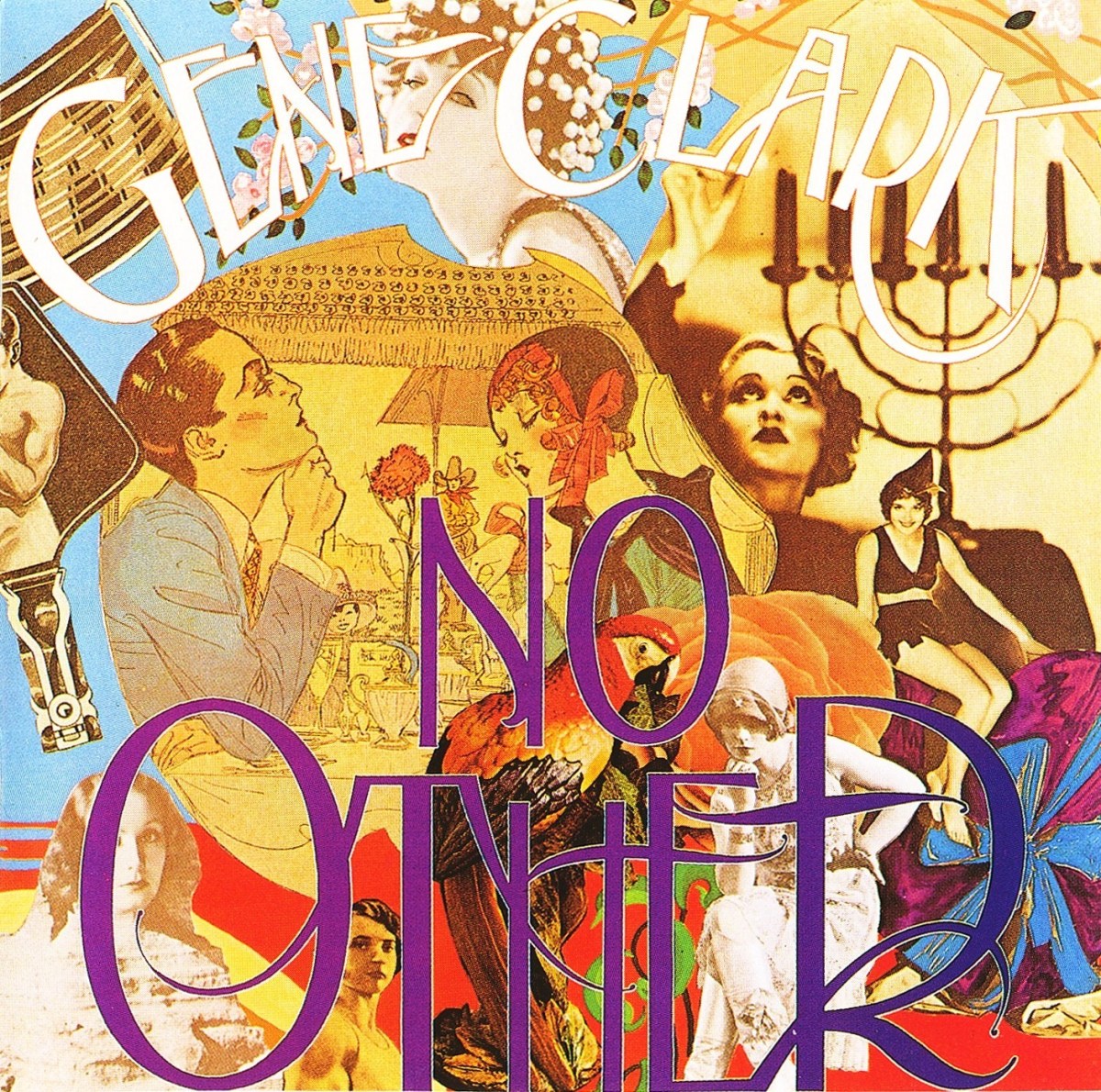
I listened to his album No Other and was floored… It’s great through and through. I have the Spotify link at the bottom, and here is a link for it on YouTube. No Other was the title track from his 1974 album. I don’t talk about albums much, but I would consider this a masterpiece that wasn’t appreciated in its time but gained cult status years later. He blended rock, folk, country, gospel, and even a touch of funk and psychedelia. Jesse Ed Davis and Danny Kortchmar were on guitar, plus Jim Gordon on drums. The artist Beck has sited this album as a huge inspiration.
The other song, the 1970 song One in a Hundred sounds like The Byrds, and there is good reason for that. This was during Clark’s attempt to form a Byrds reunion with original members. All five original Byrds contributed to the track, making it the first time since 1966 that the original lineup recorded together. The song was unreleased for several years, as the reunion project failed without a label’s support. It was finally released on Gene Clark’s 1973 Dutch-only LP Roadmaster. The Byrds did reunite in 1973 but they didn’t match this song.
No Other
All alone you say that you don’t want no other So the Lord is love and love is like no other If the falling tide can turn and then recover All alone we must be part of one another
All alone you say, the power is perfection Is the power of peace or merely the connection To the God of love that powers the protection From the tide of life that flows in each direction
When the stream of changing days Turns around in so many ways Then the pilot of the mind must find The right direction
All alone you say that you don’t want no other So the Lord is love and love is like no other If the falling tide can turn and then recover All alone we must be part of one another
When the stream of changing days Turns around in so many ways Then the pilot of the mind must find The right direction
All alone you say that you don’t want no other All alone you say that you don’t want no other All alone you say that you don’t want no other All alone you say that you don’t want no other
I first learned of Traffic with one of my favorite songs of all time, Dear Mr Fantasy. I remember this one on our rock station in Nashville, WKDF. They would play new rock songs and mix classic ones in as well. I kept up with the newer releases because of that, and heard classic songs I hadn’t heard before. Seems like a winning combination, but that is rare, if not impossible, to find now.
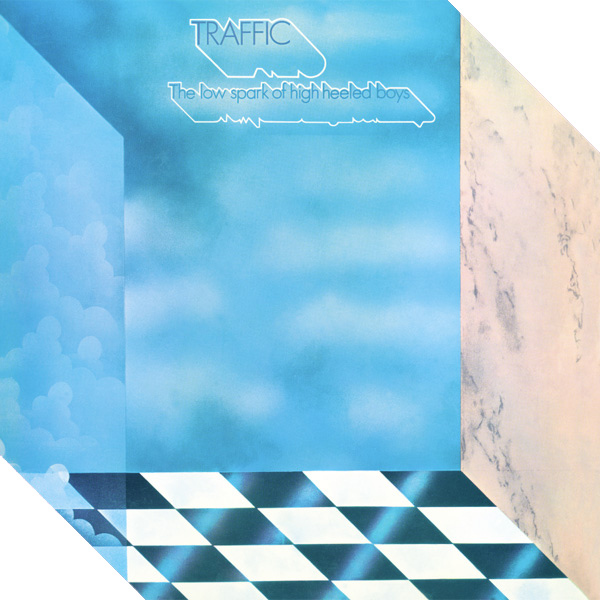
This song is one of those songs you just let play and enjoy every single second of it. It was released in 1971 but was not released as a single…It clocked in at 12 minutes long. Jim Capaldi started writing this in Morocco, where he was getting ready to make a movie called Nevertheless with actor Michael J. Pollard. The film project fell through, but it did lead to one of Traffic’s best-known songs.
Jim Capaldi and Steve Winwood wrote this song. Dave Mason had left the band by this time, but Traffic added some new members for the Low Spark Of High Heeled Boys album, including drummer Jim Gordon from Derek and the Dominos, which allowed Capaldi to focus more on vocals. Original member Chris Wood played the saxophone on this track. The album did much better in the US than in the UK at the time.
The percussionist was Rebop Kwaku Baah, who played on the album and live as well. Later on, Rebop was dismissed from Traffic during the recording sessions for their 1974 album When the Eagle Flies… One problem they had with him was live concerts, according to Steve Winwood: “He insisted on going onstage and singing – and he can’t sing!” He would later be on Winwood’s first solo album in 1977, so he must have given up singing.
Jim Capaldi: “Pollard and I would sit around writing lyrics all day, talking about Bob Dylan and the Band, thinking up ridiculous plots for the movie. Before I left Morocco, Pollard wrote in my book ‘The Low Spark of High Heeled Boys.’ For me, it summed him up. He had this tremendous rebel attitude. He walked around in his cowboy boots, his leather jacket. At the time he was a heavy little dude. It seemed to sum up all the people of that generation who were just rebels. The ‘Low Spark,’ for me, was the spirit, high-spirited. You know, standing on a street corner. The low rider. The ‘Low Spark’ meaning that strong undercurrent at the street level.”
The Low Spark of High Heeled Boys
If you see something that looks like a star And it’s shooting up out of the ground And your head is spinning from a loud guitar And you just can’t escape from the sound Don’t worry too much, it’ll happen to you We were children once, playing with toys And the thing that you’re hearing is only the sound of The low spark of high-heeled boys The percentage you’re paying is too high a price While you’re living beyond all your means And the man in the suit has just bought a new car From the profit he’s made on your dreams But today you just read that the man was shot dead By a gun that didn’t make any noise But it wasn’t the bullet that laid him to rest was The low spark of high-heeled boys If you had just a minute to breathe and they granted you one final wish Would you ask for something like another chance? Or something similar as this? Don’t worry too much It’ll happen to you as sure as your sorrows are joys And the thing that disturbs you is only the sound of The low spark of high-heeled boys If I gave you everything that I owned and asked for nothing in return Would you do the same for me as I would for you? Or take me for a ride, and strip me of everything including my pride But spirit is something that no one destroys And the sound that I’m hearing is only the sound The low spark of high-heeled boys
When I’m reading a music bio, everyone knows what I’m reading by reading my blog. I just finished the Peter Wolf book, and I cannot recommend it enough. I have never posted this song before, and I’m shocked that I haven’t. I’ve always liked this song and was reminded of it when I watched the movie The Wedding Singer. I remember in the 70s listening to J Geils with Must Have Got Lost and Give It To Me on AM radio, and they sounded great.
Of all the songs that I did vocals onstage with…this one has to be the most fun I had with a song. The crowd always roared back in the chorus…you could count on it. I was going to post this on Valentine’s Day, but forgot about it.
The J Geils Band started in 1967. They were originally called The J Geils Blues Band, and Peter Wolf saw them perform and joined with his band’s (The Hallucinations) drummer, Stephen Jo Bladd. A fan named Seth Justman soon joined on keyboards. Wolf and Justman soon became the two prominent songwriters of the band. The members were John Geils guitarist, Peter Wolf lead singer, Seth Justman keyboards, Danny Klein bass player, Richard Salwitz harp, trumpet, and saxophone.
They signed a contract with Atlantic Records that was VERY friendly to Atlantic Records. They started to open up for The Allman Brothers, BB King, The Who, The Stones, The Byrds, and just about everyone on the music scene at the time. They built their live reputation up and had a loyal fanbase. They were constantly touring and were known for high-energy shows and music. Peter Wolf was one of the best, if not the best, frontmen in rock. You also had Richard Salwitz (Magic Dick) playing blues harp, trumpet, and saxophone and gave the band a sound.
By their third album, Bloodshot, released in 1973, scored a hit with Give It To Me and the album peaked at #10 on the Billboard 100 and #17 in Canada. The album that set that album up was Live Full House. That album is one of the best live albums I’ve ever listened to. It was released in 1972 and established their live reputation for the rest of their career. As the decade went on, they did have some hits like my favorite Must Of Got Lost. Their Atlantic record contract was up in 1977.
They signed with EMI, and their commercial fortunes turned around with the new label. Their first album with EMI was Sanctuary, and it had a hit called One Last Kiss. Then came the Love Stinks album, and although there were no top 10 hits, this album had two songs that hit and are still played today: Love Stinks and Come Back hit the top 40, and their audience started to grow.
It was their 10th studio album, Freeze Frame, that blew the lid off. Some songs were the #1 Centerfold, #4 Freeze Frame, top 40 Angel in Blue, and a popular dance track called Flamethrower. Their popularity was at an all-time high. They opened for the Stones’ massive tour that year. They had been headlining since Love Stinks…but then…it was all over.
Peter Wolf didn’t like the way they were going into synth pop and wanted to get back to their roots. They pretty much told him to go his way, and they would go their way. They kept rejecting songs he brought, and many of the songs they rejected ended up on his album Lights Out. Listening to Freeze Frame now…you can hear the R&B in the song Freeze Frame and some of the others.
They decided to make an album called Even While I’m Gettin’ Odd, without Peter, and when I listen to it, I can see why Wolf didn’t want to go that way. They wanted to go much further into the 80s pop production than Freeze-Frame. The punch and live feeling of Freeze-Frame and Love Stinks was gone. The album failed and it would be their last. They have regrouped off and on through the years for live shows but never made another album.
The Love Stinks album was released in 1980 and peaked at #18 on the Billboard Album Charts and #4 in Canada. The title track peaked at #15 in Canada and #38 on the Billboard 100.
Peter Wolf on the breakup: Frank Barsalona, our agent, took me out for dinner after his final meeting with the other band members. In disbelief, he said, “After all these years, the band finally made it. It’s really quite unbelievable. I’ve dealt with the craziest of the crazies; the drugs, the girlfriends, the managers—nothing even comes close to this. Nothing as stupid, as senseless, and as wasteful in what these guys are insisting on doing. So, Peter, let’s start thinking about your solo career.”
Here is a version that I love…a bluegrass rendition of the song by Peter Wolf, and I like it.
Here they are in the Netherlands in 1980, live. Peter Wolf has a black eye and broken ribs after being ambushed in a pub. They headlined the Pinkpop Festival.
Love Stinks
You love her But she loves him And he loves somebody else You just can’t win And so it goes ‘Til the day you die This thing they call love It’s gonna make you cry
I’ve had the blues The reds and the pinks One thing for sure (Love stinks)
Love stinks, yeah, yeah (Love stinks) Love stinks, yeah, yeah (Love stinks) Love stinks, yeah, yeah (Love stinks) Love stinks, yeah, yeah
Two by two, and side by side Love’s gonna find you, yes, it is You just can’t hide You’ll hear it call Your heart will fall Then love will fly It’s gonna soar
I don’t care for any casanova thing All I can say is (Love stinks)
Love stinks, yeah, yeah (Love stinks) Love stinks, yeah, yeah (Love stinks) Love stinks, yeah, yeah (Love stinks) Love stinks, yeah, yeah
I’ve been through diamonds I’ve been through minks I’ve been through it all (Love stinks)
Love stinks, yeah, yeah (Love stinks) Love stinks, yeah, yeah
Love stinks Love stinks, yeah, yeah (Love stinks) Love stinks (love stinks), yeah, yeah (Love stinks)
Love stinks, yeah, yeah (Love stinks) Love stinks, yeah, yeah (Love stinks) Love stinks (love stinks), yeah, yeah (Love stinks) Love stinks (love stinks), yeah, yeah (Love stinks) Love stinks (love stinks)
For the longest time, this is the only song I knew by The Faces. I found out how good they were not just by this one but by their other songs. This is the Rod Stewart I think of when I think of him. Absolutely killer on stage at this time with this band powering it on.
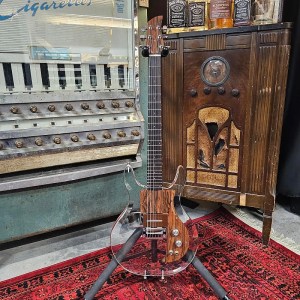
I usually don’t like gimmicky instruments, like in the 1980,s they had guitars with what looked like hockey sticks. I have one of those, and the strings break like crazy. Or the guitars with no headstocks…I hated those. One guitar I did like in the late sixties, early seventies was the one that Ron Wood is playing in the live video clip. The “See-Through” Ampeg Dan Amstrong Guitar. Keith Richards played one as well, and they sound dirty and raunchy. They are now worth 2-6 grand. All of you non-guitar fans…sorry. The one below can be had for $5500.
This song was written by Ronnie Wood and Rod Stewart, which became the Faces’ biggest hit. Stay With Me peaked at #17 in the Billboard 100, #6 in the UK, and #4 in Canada in 1972. I’ve always liked the dirty, filthy sound of the song. It’s not my so called favorite song by them. That would be Ooh La La by the Faces in 1973.
This band was formed from the Small Faces when Steve Marriott quit and Ron Wood and Rod Stewart took his place. Steve was both a great guitarist and even better singer. I remember seeing a clip of the 1993 Brit Awards on some TV show and saw a reunion of the Faces with Bill Wyman of the Stones filling in for Ronnie Lane.
Stay With Me
In the morning Don’t say you love me ‘Cause I’ll only kick you out of the door
I know your name is Rita ‘Cause your perfume smelling sweeter Since when I saw you down on the floor guitar
Won’t need to much persuading I don’t mean to sound degrading But with a face like that You got nothing to laugh about
Red lips hair and fingernails I hear your a mean old Jezebel Lets go up stairs and read my tarot cards
Stay with me Stay with me For tonight you better stay with me
Stay with me Stay with me For tonight you better stay with me
So in the morning Please don’t say you love me ‘Cause you know I’ll only kick you out the door
Yea I’ll pay your cab fare home You can even use my best cologne Just don’t be here in the morning when I wake up
Stay with me Stay with me ‘Cause tonight you better stay with me Sit down, get up, get down
Stay with me Stay with me Cause tonight your going stay with me Hey, whats your name again Oh no, get down
I want to thank Lisa for inviting me to write for herWomen Music March. She posted this on March 20, 2025. She has been doing this for years and it gets better and better. Thanks, Lisa! She has had some great artists this month.
Joe Elliott: “I had no idea who they were, but this four minutes of music, and I was hooked.”
Kathy Valentine: They made 5 records. The Go Gos get a lot of attention for what we did and we only made 3 records.
Earl Slick: It’s always the ones that start it gets f**ked
David Bowie: They were one of the finest fucking rock bands of their time, they were extraordinary: They wrote everything, they played like motherfuckers, they were just colossal and wonderful, and nobody’s ever mentioned them. They’re as important as anybody else who’s ever been, ever; it just wasn’t their time.
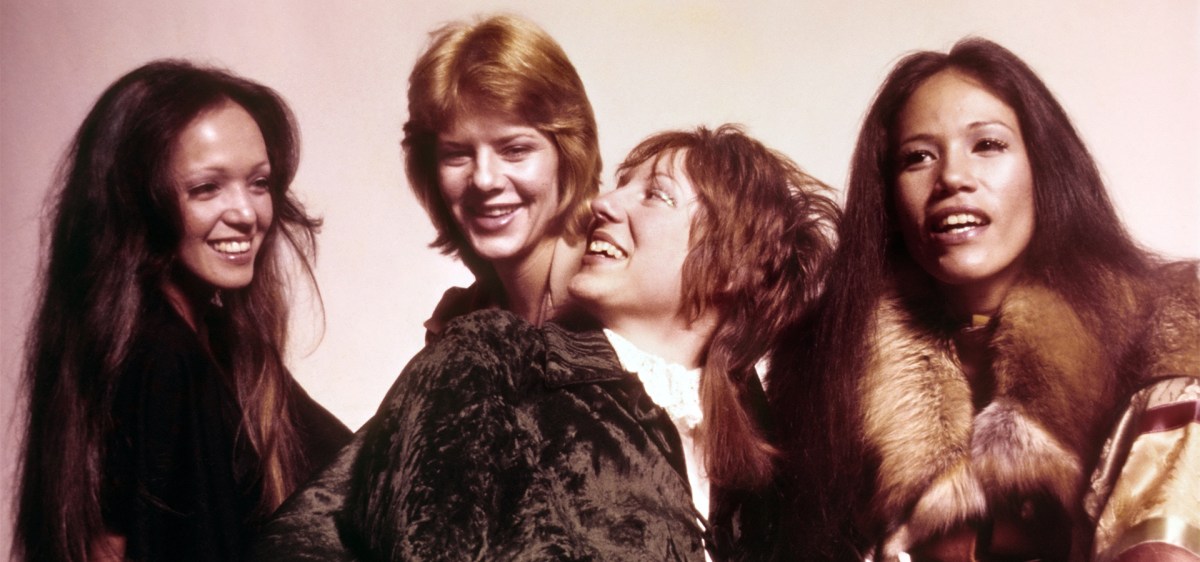
When you hear about an all-female band…the Bangles, Runaways, and Go-Go’s come to mind but this band was completely different. These women rocked…not pop-rock but some hard blues rock. They were pioneers and had a huge impact on those other female bands, and those bands all cited Fanny as an influence.
They had a blues edge about them and weren’t as commercial. They never got that one big hit single to break them to the masses. They had a few songs with a pop flavor that really should have made it, such as All Mine… that would get my vote.
Early Life and Musical Beginnings:
They were formed in the late sixties in Sacramento by two Filipina sisters (their family left the Philippines in 1961 while kids), Jean and June Millington. June Millington was the lead guitar player and her sister Jean was the bass player. They started out in high school with the name The Svelts and then Wild Honey but the band was then renamed Fanny, not with a sexual connotation but to denote a female spirit.
Career
Fanny released their self-titled debut album in 1970, making them one of the first all-female bands to be signed to a major label and record a full album with complete creative control. Their blend of rock, funk, blues, and pop set them apart. They would be the first all-female band to release an album on a major label (Reprise) and land four singles on the Billboard Hot 100 and two in the top 40.
Like any other band, they had to pay their dues. They opened up for artists such as Jethro Tull, Humble Pie, Slade, Leon Russell, Van Morrison, Chuck Berry, Deep Purple, and many more. When you are opening for artists of that caliber, you are very good. Their range was incredible. They played on Barbra Streisand’s 1971 album Barbra Joan Streisand. So they could play almost anything.
They went on to release an album every year from 1970 to 1974, making it 5 studio albums in total in the 1970s, while touring relentlessly. By their third album,m Mother’s Pride, guitarist June Millington quit after it was released because she felt restrained by the band. After some changes, with her sister Jean still playing bass, the band released their last 1970s album, Rock and Roll Survivors. The album contained their highest charting single with Butter Boy, which charted at #29.
Fanny broke up in 1975, reunited in 2018, and released an album titled Fanny Walked the Earth. I simply adore these women because they could keep up with anyone in any field. One night Deep Purple missed a gig and Fanny filled in for them for that night without complaints.
Discography: (wiki)
Studio Albums
Fanny (1970)
Charity Ball (1971) (No. 150)
Fanny Hill (1972) (No. 135)
Mothers Pride (1973)
Rock and Roll Survivors (1974)
Fanny Walked the Earth (2018, as Fanny Walked the Earth)
Live Albums
Fanny Live (1998; recorded 1972) (reissued as Fanny: Live in 1972)
Live on Beat-Club ’71-’72 (2024)
Singles
“Ladies’ Choice” / “New Day” (1970)
“Nowhere to Run” / “One Step at a Time” (1970)
“Changing Horses” / “Conversation with a Cop” (January 1971)
“Charity Ball” / “Place in the Country” (September 1971) (No. 40)
“Ain’t That Peculiar” / “Think About the Children” (March 1972) (No. 85)
In recent years, Fanny has participated in reunion events, introducing their songs to new audiences. These performances have served both as a tribute to their historical impact and as a celebration of their music. They have a documentary out…watch it! It’s called FANNY: The Right To Rock that I placed at the top.
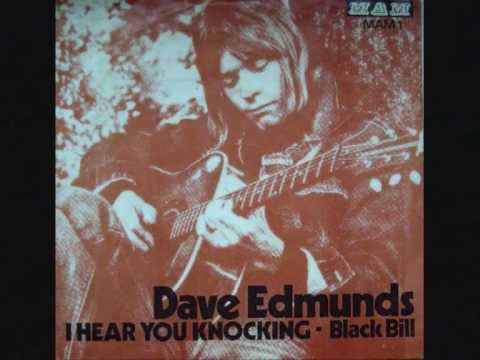
I remember hearing it as a kid, and I loved it as much then as now. Edmunds first heard this song on his car radio back in 1970 while in Britain. He was going to cover Let’s Work Together but it had just been covered by Canned Heat. He heard this song and thought…the backing track to both songs is so close, so he did this one.
I first saw Dave Edmunds in the film Stardust when it was shown as a late-night TV movie. He was part of the fictional Stray Cats in the film with Keith Moon as the drummer. The movie was a sequel to That’ll Be The Day.
This song is stripped-down rock at its best. Dave Edmunds released this song in 1970, and it peaked at #4 on the Billboard 100, #1 in the UK, #3 in Canada, and #3 in New Zealand. It sold over 3 million copies. During the instrumental break, Edmunds paid homage to several recording artists by shouting their names: “Fats Domino, Smiley Lewis, Chuck Berry, Huey Smith.”
Dave had more tracks added to the song, but changed his mind and stripped it down and released it. It was the best decision. It was written by Dave Bartholomew and Earl King and released by Smiley Lewis in 1955, and it went to #2 on the R and B Charts.
I Hear You Knocking
You went away and left me long time ago Now you’re knocking on my door I hear you knocking, but you can’t come in I hear you knocking, go back where you been
I begged you not to go but you said goodbye And now you’re telling me all your lies I hear you knocking, but you can’t come in I hear you knocking, go back where you been, oh yeah
Fats Domino, Smiley Lewis, Chuck Berry, Huey Smith
You better get back to your used-to-be ‘Cause you’re kinda love ain’t good for me I hear you knocking, but you can’t come in I hear you knocking, go back where you been
I told you way back in Fifty-two That I would never go with you I hear you knocking but you can’t come in I hear you knocking, go back where you been
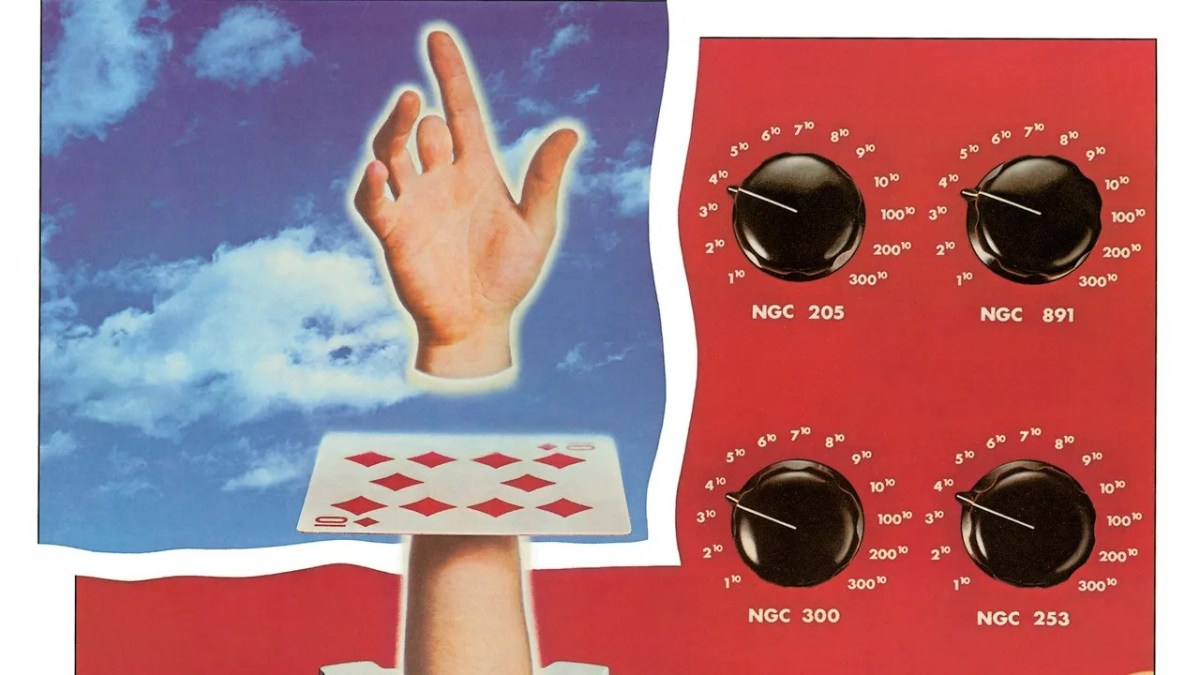
I read the book Deal by Bill Kreutzmann. the drummer for the Grateful Dead. I started listening to Garcia’s debut solo album because of that and ended up liking it. Another song I loved as a kid, Sugaree, came from this album. That song was the first Dead/Garcia song I remember. I remember skating at our local skating rink and the owner must have been a Dead fan…he would play this album at times.
Garcia wanted to see what he could do without the Dead while making this solo album. One of the driving reasons was that he and his wife Mountain Girl wanted a house and the advance from the record company helped them get it. When you listen to the album the songs really flow and seem effortless. I could listen to this music at any time. I don’t have to be in a mood.
The album Garcia peaked at #35 on the Billboard Album Charts. He wanted to play all of the instruments on the album and did except drums. He brought Kreutzmann in to do that job. He also brought roadie Ram Rod (Laurence Shurtliff) in for those sessions, doing roadie work essentially, running errands and moving around the equipment. Kreutzmann and Ram Rod both were listed as “production assistants” in the credits. He paid Ram Rod the same amount that he paid Bill Kreutzmann and that was Garcia’s sense of fairness, which speaks volumes for his character. Although Bill doesn’t really agree with this to this day but sees that as Garcia’s character. Ram Rod ended up as President of Grateful Dead Productions from 1976 to 1995.
Like the Allman Brothers, they formed a family atmosphere with their crew and it extended to their audience. From the early Kool-Aid acid tests to later allowing the audience to tape their shows drew their audience closer. They would later give them their own section to record in…while other bands like Led Zeppelin would send people to bust their tape recorder or head. Garcia commented:Well, my feelings are, the music is for the people…I mean after it leaves our instruments it’s of no value to us, ya know what I mean? it’s like, ya know…what good is it? So it might as well be taped, my feeling is that..and if people enjoy taping it and enjoy having the tapes to listen to, that’s real great. “
They never played the same show twice. They would take songs in different directions and Garcia has said that he couldn’t play something twice the same. He just wasn’t built like that. That made every show unique…not that every show was great. The Dead has admitted they had their share of bad ones.
Bill Kreutzmann Drummer for the Dead:The album, Garcia, was cut at Wally Heider Studios in July 1971 and released by Warner Brothers the following January. There are a lot of songs on there that became Grateful Dead mainstays, in addition to “Deal”—we’re talking about straight-up classics like “Sugaree,” “Loser,” and “The Wheel.” Also, “Bird Song” is on there, which, to this day, is one of my all-time favorite Dead songs and one of my absolute favorite songs to play live (along with “Dark Star” and “The Other One”).
When I want musicians I’m playing with to learn any of those songs, I give them the Garcia versions. They’re just so good. I had a really great time making that album. Dealing exclusively with Jerry was the most effortless thing in the world. I didn’t have to do anything other than be myself. And play.
Cocaine was our special guest throughout those recording sessions, but you’d never be able to tell because everything was very laid back. I have no idea how we were able to do that, because cocaine isn’t exactly known for its relaxing properties. Maybe it was just the dynamic between us that made it all so … easy.
Deal
Since it costs a lot to win And even more to lose You and me bound to spend some time Wondering what to choose
Goes to show, you don’t ever know Watch each card you play and play it slow Wait until that deal come ’round Don’t you let that deal go down, no, no
I been gambling hereabouts For ten good solid years If I told you now all that went down It would burn off both of your ears
Goes to show you don’t ever know Watch each card you play and play it slow Wait until that deal come ’round Don’t you let that deal go down, no, no
Since you poured the wine for me And tightened up my shoes I hate to leave you sittin’ there Composing lonesome blues
Goes to show you don’t ever know Watch each card you play and play it slow Wait until that deal come ’round Don’t you let that deal go down
Wait until that deal come ’round Don’t you let that deal go down Wait until that deal come ’round Don’t you let that deal go down Don’t you let that deal go down Don’t you let that deal go down Oh, no
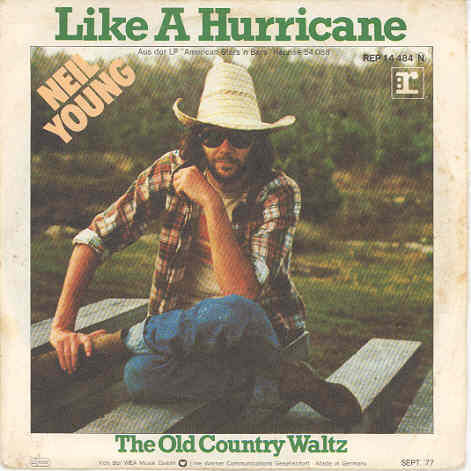
This song is for Song Lyric Sunday for Jim Adams’s blog. This week the theme is to find a song related to a weather condition such as cyclones, floods, hurricanes, rainfall, storms, tornadoes, typhoons, or winds.
I first heard this song in band practice back in the late 80s. The guitar started to play it and I thought it was an original. I told him I loved his song…he said “if only” it was mine! I learned about a lot of songs that way. I don’t know how I missed this one through the years. It’s now one of my favorite Neil Young songs.
Neil Young’s playing style is unique and electrifying. He’s not Clapton, Page, Van Halen, or Hendrix—but they’re not him, either. His approach is all about feeling, and he uses volume and feedback like few others can. Watching him play is thrilling, you always think the wheels are about to come off, but somehow they never do. Together with Crazy Horse, Neil captures the raw spirit of rock better than just about anyone.
Like a Hurricane was on the American Stars ‘n Bars album in 1977. A single version was released that was edited down to under 4 minutes but it only charted in the UK at #48. The album version is the one known now.
Neil’s songs are so well written and detailed but they come out sounding so loose like he is improvising on the spot…cause most of the time while recording he is more interested in getting the right feel than anything technical. it works really well. For me, that is the best way to record and I wish more artists would do this.
Neil Young: “I wrote it on a piece of newspaper in the back of (his friend) Taylor Phelps’s 1950 DeSoto Suburban, a huge car that we all used to go to bars in. As was our habit between bars, we had stopped at Skeggs Point Scenic lookout on Skyline Boulevard up on the mountain to do a few lines of coke; I wrote Hurricane right there in the back of that giant old car. Then when I got home, I played the chords on this old Univox Stringman mounted in an old ornate pump-organ body set up in the living room. I played that damn thing through the night, I finished the melody in five minutes, but I was so jacked I couldn’t stop playing.”
Neil Young: “When ‘Runaway’ goes to ‘I’m a walkin’ in the rain,’ those are the same chords in the bridge of ‘Hurricane’ – ‘You are…’ It opens up. So it’s a minor descending thing that opens up – that’s what they have in common. It’s like ‘Runaway’ with the organ solo going on for 10 minutes.”
Rock Critic Dave Marsh: “an eight-minute tour de force of electric guitar feedback and extended metaphor (Smokey Robinson meets Jimi Hendrix on Bob Dylan’s old block).”
Like a Hurricane
Once I thought I saw you in a crowded hazy bar Dancing on the light from star to star Far across the moonbeam I know that’s who you are I saw your brown eyes turning once to fire
You are like a hurricane There’s calm in your eye And I’m gettin’ blown away To somewhere safer where the feeling stays I want to love you but I’m getting blown away
I am just a dreamer, but you are just a dream You could have been anyone to me Before that moment you touched my lips That perfect feeling when time just slips Away between us on our foggy trip
You are like a hurricane There’s calm in your eye And I’m gettin’ blown away To somewhere safer where the feeling stays I want to love you but I’m getting blown away, blown away
You are just a dreamer, and I am just a dream You could have been anyone to me Before that moment you touched my lips That perfect feeling when time just slips Away between us on our foggy trip
You are like a hurricane There’s calm in your eye And I’m gettin’ blown away To somewhere safer where the feeling stays I want to love you but I’m getting blown away
I’m featuring two songs by two different trios that Jack Bruce was a part of. I’m not speaking just for me when I say this because many bass players would agree… but Jack Bruce was one of the biggest bass influences I had. There were 3 bassists that I wanted to learn from when I was learning to play bass. John Entwistle, Paul McCartney, and Jack Bruce. All three for different reasons.
John for the pure speed and those runs he pulled off that still amaze me to this day. Paul because of the melody he added to the bass in songs. He would be going everywhere but you hear a counter melody underneath it. Jack…he was the one that set me on my way because of Crossroads. He combined John Entwistle and Paul in some ways…plus a little extra. He added a jazz touch that Paul and John didn’t have…that is why he is one of the best. Plus one inspiration for Jack Bruce was that he played cello and attacked the bass in a different way than most of his peers.
After Cream I never knew much about him. We all know about Eric and to a certain extent Ginger Baker but Bruce I had no clue. Between 1969 through 2014 he released 14 solo albums. On top of the solo albums, he played with some bands like the power trio West, Bruce, and Laing or WBL including Leslie West, Jack, and Corky Laing for 3 albums. He also did collaborations with Gary Moore, Frank Zappa, Robin Trower, Tony Williams, Mick Taylor, and even his ex-bandmate Ginger Baker.
The song I’m featuring today was from an album B.L.T.Jack Bruce (bassist), Bill Lordan (drummer), and Robin Trower (guitarist). I saw this album at the Great Escape a lot. That was a used record store that I went to as a teen. As soon as CB sent me the link to this…I knew the album right away. It was made in 1981. The album peaked at #37 on the Billboard Album Charts. It’s a straight-ahead power trio that doesn’t let up. Into Money was written by Robin Trower.
I saw Clapton and Santana in 1990 at the now-demolished amphitheater in Nashville. That summer I also saw Robin Trower and he really impressed me because I got to see him in a club atmosphere and he was spectacular.
The other song (The Docter) I’m featuring is from WBL which features Leslie West, Jack Bruce, and Corky Laing. It was released in 1972 on the album Why Dontcha which peaked at #26 on the Billboard Album Charts. The Doctor was written by West, Bruce, Laing, and Sandra Palmer. It got quite a bit of radio play at the time.
Into Money
You’ve got your house, you’ve got your car You live up on the hill among the stars You say you did what you had to do But was it really worth what they put you through You know these things we believed in It didn’t touch you at all I hate to see you like this baby With your back to the wall
You lost your heart, when you lost your nerve Maybe you lost your grip on that first curve You used to talk about bein’ free Why, you’re so tied up you can’t even breathe
You know these things we believed in They didn’t touch you at all I hate to see you like this baby With your back to the wall Money into money Money into money
Money into money Money into money You’re into money, into money You’re into money, money Into money yeah, yeah Into money Into money, into money, into money yeah, yeah, yeah, yeah Into money
I first heard Badfinger in the late seventies. The song was “Come and Get It,” and I thought it was The Beatles. I gradually learned more about Badfinger, and the more I read the more frustrating it got.
This is a gorgeous song from Badfinger. Pete Ham wrote it, and he sounds a bit like McCartney. The song is about a real band friend who turns into a prostitute (midnight caller) and distances herself from her old friends and her old self. It was on the No Dice album, which peaked at #28 on the Billboard album chart in 1970.
Badfinger was the most successful power pop band of the early seventies. Their power pop brethren Big Star and The Raspberries did not have as many hits and attention as Badfinger had at the time. Big Star had nothing and The Raspberries at least had a top ten hit in Go All The Way and a few more top 40 hits. Badfinger had a total of 4 top-ten Billboard and Canadian hits while having 3 in the UK. Baby Blue only getting to #73 in the UK? Life is NOT fair.
In 1971 Harry Nilsson gave them publicity and a big boost by covering Without You. It was number #1 practically everywhere. I always end up getting pissed off when writing about this band. They released albums after their hits that were never heard because their manager stole their money from escrow from their new record company Warner Bros and they pulled from circulation. Those albums were critically praised and have some of their best songs. I won’t go into what happened to Pete Ham and Tom Evans.
Pete Ham was a top-tier pop/rock writer. They all wrote, but Pete’s songs were the hits and usually stood out more on their albums. He wrote Baby Blue, No Matter What, Day After Day, and Without You which he co-wrote with bassist Tom Evans.
Should this have been a top-ten hit? No, but it’s a catchy heartfelt written song, and being a true story adds more weight to it. They did have songs that should have been released as singles that were not. Many bands out there today are one-hit wonders touring and doing great. Badfinger had 4 huge hits but never got to do a victory lap.
Midnight Caller never charted, but it is one of my favorite Badfinger songs. I also included a live short tv concert by Badfinger. Midnight Caller is not on there but it’s a great show. They open up with Day after Day.
Midnight Caller
Beneath the midnight caller She thinks of paper green You never hear them calling her name They just know where they’ve been
You never hear her holler The tears no longer come She reads her daily book of the past That shows of everyone
Grey years that show in her hair Can’t be, but don’t seem to care She unlocks the door and there’s no one there
She sees a daytime stroller Walk from the night before And though she paints a smile on her face He won’t be back no more
She’s got no saint to follow She’s got no place to go Too proud to ask an old friend for help Too proud to let him know
Grey years that show in her hair Can’t be, but don’t seem to care She knocks the door and there’s no one there
Nobody (nobody), nobody (nobody), nobody’s gonna help you now.
Today I’m having a Badfinger day. Christian got me into a Badfinger mood with his Baby Blue Post. I would suggest you read a more detailed version of their story when you can. Their story will draw you in.
Badfinger was a very talented band that had a gift and curse of sounding like The Beatles. Their songs are remembered today but not the band which is a shame. They made some very good albums and at least one great one. This band’s story is a cautionary tale that other bands must consider. This is what signing with a bad manager can do to you.
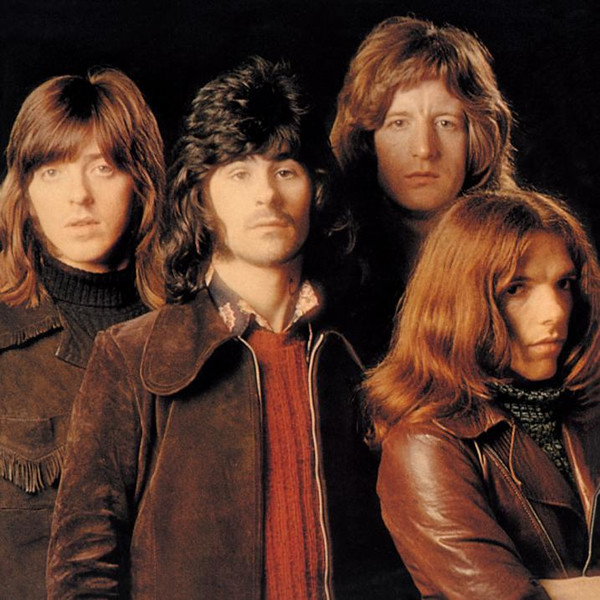
The members were Pete Ham, Tom Evans, Mike Gibbins, and Joey Molland (who replaced Ron Griffiths).
They started out as the Iveys and signed with the Beatle’s new label…Apple. They released Maybe Tomorrow as the Iveys which was a minor hit. After that, they changed their name to Badfinger. Paul McCartney wrote their first big hit single”Come and Get It” and after that, they were writing themselves. The hits kept coming… No Matter What, Baby Blue, and Day after Day. They also wrote Without You…a small blues song that Harry Nilson covered…it became a monster worldwide hit. Mariah Carey also covered it and was again a giant hit.
They signed with a manager named Stan Polley and got a massive contract with Warner Brothers after leaving Apple. Things were looking really good. They had hits but they never made it over the hump in being a big-time group. Warner Brothers could have pushed them over the hump…Polley set up an escrow account for the band with the advance money and the money disappeared.
He told the band that he was planning for their future etc…He put them on a small salary and embezzled the rest. He really swindled them and their royalties for their songs were tied up for decades. The band was basically broke. With all of their self-written hits, they should have been set financially for years.
Pete Ham didn’t have the money to pay his mortgage and with a baby on the way, drunk and depressed at the fatal age (for rock stars) of 27 he hanged himself in his garage in 1975. In 1983, after scrambling for gigs, Tom Evans broke and not able to get to any of the royalties due him from co-writing Without You with Pete…hanged himself also.
Pete was a trusting soul and never would believe Polley was cheating them until the very end. His suicide note read…
“I will not be allowed to love and trust everybody. This is better P.S. Stan Polley is a soulless bastard. I will take him with me.”
They all wrote to some degree but Pete Ham was a great songwriter. He had so much potential. He also was a great guitar player and singer. The other members did write some very good songs but Pete was the special one.
Stan Polley died in 2009… escaping other scandals without punishment.
Their albums were
Magic Christian Music – This was the soundtrack to the movie The Magic Christian. Come and Get It is on this album and a minor hit called Maybe Tomorrow which is a good pop song.
No Dice – No Dice is where Badfinger starts to be themselves. No Matter What and Without You came off of this album. It also has some other great songs… I Can’t Take It, Blodwyn, We’re for the Dark, Better Days, and my favorite of the album and possibly of Badfinger…Midnight Caller.
Straight Up – This is my favorite album by them. It has Baby Blue and Day after Day but a host of other good songs. Take It All, Money, Name of the Game, Suitcase, Sweet Tuesday Morning, and I’d Die Babe. Joey Molland’s songwriting and singing were very good on this album.
Ass – Their last album for Apple Records and the start of the downward spiral. The songs I would recommend are Apple of My Eye and Icicles.
Badfinger – They just signed a new record deal with Warner Brothers and this was the first album. They recorded this album as soon as they finished their previous album Ass for Apple which was too soon. They should have waited a while before recording this album. This album didn’t do well, and one of the reasons is that it was competing with their previous album. They were released within months of each other because Polley wanted something out. The songs I like are I Miss You and Shine On.
Wish You Were Here – The album was released in late 1974 and was pulled in early 1975 before it had time to do anything because of litigation between their manager and the Warner Brothers. It was released and pulled in a matter of weeks. Warner Brothers saw the money was missing and yanked the album off of the shelves. The songs I like are Dennis and Just a Chance. This album should have been a giant hit. It had hit songs on there waiting to be played. Dennis is one of their best songs.
Head First – They recorded this album after Wish You Were Here with Bob Jackson after Joey Molland had quit. The album was stuck in limbo for 26 years never released. It wasn’t released until 2000. I went out and bought this the day it was out at Tower Records when I read they were releasing it. On some songs, you can tell they are having problems with their management. The songs that stand out to me are Lay Me Down, Hey Mr. Manager, Rock N’ Roll Contract, and Keep Believing. A good album and I wish it would have had a chance at the time.
They did make a couple of albums after Pete died called Airwaves and Say No More. The song Lost Inside Your Love is the only song that approaches the Badfinger early quality.
Without Pete, the biggest talent was gone. That is not a knock on the others but he was just that good. Tom Evans was a good singer, songwriter, and musician who worked with Pete well and had a great voice. Joey Molland was a good guitar player, singer, and songwriter. The band didn’t lack talent.
In 1997 a CD was released of Pete Hams demos called 7 Park Avenue. It was various demos from his entire career. A follow-up was released in 1999 called Golders Green. The melodies he had rivaled McCartney. He was an amazing songwriter.
Go out and Google Badfinger and more importantly, listen to them. This band needs to be remembered.
Baby Blue… Maybe the most perfect power pop song ever in my opinion.
No Matter What…around 2:02-2:06…Tommy Evans does a cool backup. Not hard but very effective.








 PowerPop... An Eclectic Collection of Pop Culture