Written by the Motown songwriting team of Eddie Holland, Lamont Dozier and Brian Holland, this was the first Top 10 hit for Martha & the Vandellas, whose lead singer, Martha Reeves, started as a secretary at Motown. Heatwave is a powerful song that has been covered by many artists but this one remains my favorite. This song peaked at #4 in the Billboard 100 and #12 in Canada in 1964.
Martha & the Vandellas became the first Motown group ever to receive a Grammy Award nomination when this song was nominated in 1964 for Best Rhythm & Blues Recording; it lost to Ray Charles’ hit “Busted.”
From Songfacts
“Heat Wave” was the group’s second hit written by Holland-Dozier-Holland, following “Come and Get These Memories.” It was also one of the first songs to create the style of music that would be known as the “Motown Sound.”
In this song, Reeves sings about a guy who turns her on so much that her temperature rises when he’s around. Like many of Motown’s hits, it’s a light and amorous pop song.
Many of the jaunty songs Holland-Dozier-Holland wrote at Motown are underpinned with heartbreaking lyrics, often inspired by real-life breakups. This one is more congruent and less personal. Lamont Dozier explained: “It was summertime and hot and sticky in Detroit. I often sat at the piano and played a warm-up riff to get my day started. This one particular day the heat was over the top and I was watching tv and the weatherman said we had a record-breaking five-day heat wave that was not going to let up. So all this funky riff needed was for me to throw a girl into the mix and this song was born.”
Whoopi Goldberg sang this in the 1992 film Sister Act.
Linda Ronstadt reached US #5 in 1975 with her cover version, which was the first single from her album Prisoner In Disguise. It was a song her band had been pushing her to perform; they finally did at a gig in Long Island when they kept getting called back for encores and ran out of material. Recording it was a challenge; Ronstadt’s producer Peter Asher tried it with a few different sets of musicians before getting the take he liked with Andrew Gold on drums and Ronstadt’s Stone Poneys bandmate Kenny Edwards on bass. Gold then overdubbed guitars, piano and an ARP string synthesizer. Asher added four tracks of hand claps.
Artists who have covered this song include Lou Christie, the Jam, Joan Osborne, the Supremes, and The Who.
Heat Wave
Heat wave Heat wave
Whenever I’m with you Something inside Starts to burn deep And my heart’s filled with fire Could be that I’m very sentimental Or is this just the way love’s supposed to be?
I got a heat wave Burning in my heart I can’t keep from crying Tearing me apart
Sometimes she calls my name Yeah, yeah, yeah, I can’t explain I feel, yeah I feel I feel this burning flame This high blood pressure’s got a hold on me ‘Cause this is the way love’s supposed to be
I got a heat wave Burning in my heart I can’t keep from crying Tearing me apart
Oh yeah Oh yeah
Oh yeah Oh yeah
Just give me another chance This could be a new romance
This one is probably my favorite of the after Army Elvis songs. Colonel Parker had no qualms about pushing Elvis to the middle of the road. This one has some bite and is a great song. Elvis had 7 number 1 hits in the Billboard 100 total…this is his last one in his career. I actually thought he had more but he did place 109 songs in the top 100 and 25 top ten hits. Suspicious Minds peaked at #1 in 1969.
Elvis’ publishing company, along with his manager Colonel Tom Parker, tried to get fifty percent of the publishing rights to this song and threatened to stop the recording if they didn’t. Elvis insisted on recording the song regardless.
This was a big comeback song for Elvis. It was seven years since his last #1 hit.
From Songfacts
Memphis singer Mark James and Chips Moman wrote this. James recorded and released his own version, but it didn’t go anywhere. Memphis Soul producer Chips Moman brought this to Presley in 1969, and Elvis immediately fell in love with it and decided he could turn it into a hit, even though it had flopped for James.
This was recorded between 4-7 in the morning, during the landmark Memphis session that helped Elvis reclaim his title of “The King.”
This song was inducted into the Grammy Hall of Fame in 1999.
Artists to cover this song include Dwight Yoakam, Waylon Jennings, The Heptones, Candi Staton (#31 UK), B.J. Thomas and even The Fine Young Cannibals, whose 1985 version not only hit #8 in the UK, but was bizarrely referenced on the American TV show Psych, when Shawn tells his partner Gus: “Don’t be Fine Young Cannibals cover of ‘Suspicious Minds.’ We’re going to find her.”
In the UK, Elvis had a hit with this song three times. First in 1969 when it was originally released, then in 2001 when a live version recorded at The International Hotel, Las Vegas, in August 1970 was issued and went to #15, then in 2007 when it was re-issued to commemorate the 30th anniversary of Elvis’ death, going to #11.
Dennis Quaid and Elizabeth Mitchell dance to this in the 2000 sci-fi drama Frequency.
According to Elvis’ good friend Marty Lacker, who convinced him to record in Memphis with Chips Moman, the song’s fake ending was a result of tampering by Elvis’ longtime producer Felton Jarvis. “When Chips cut ‘Suspicious Minds’ and mixed it, the fade and bump at the end was not there,” Lacker told Goldmine magazine. “In other words, the song fades out and then it bumps up again. It’s that part where Elvis is just repeating and repeating the last chorus. In my opinion, it might be good for the stage, a dramatic thing, but it’s not good on a record. What happened was Felton Jarvis took the master to Nashville and started fooling with it thinking he could do better. And he couldn’t. He should have left it alone. He added background voices. The voices that Chips put on in Memphis, Mary Green and all those people, they’re fantastic southern sounding R&B-ish singers. Chips used them on a lot of the hits he had.”
Waylon Jennings and Jessi Colter first covered this in 1970 and landed at #25 on the country chart. Their version was re-released to promote the 1976 album Wanted! The Outlaws, the first country album certified Platinum, with more than a million records sold. This time, the single peaked at #2 and earned the couple a Grammy nomination for Best Country Performance by a Duo or Group with Vocal.
Suspicious Minds
We’re caught in a trap I can’t walk out Because I love you too much baby
Why can’t you see What you’re doing to me When you don’t believe a word I say?
We can’t go on together With suspicious minds (suspicious minds) And we can’t build our dreams On suspicious minds
So, if an old friend I know Stops by to say hello Would I still see suspicion in your eyes?
Here we go again Asking where I’ve been You can’t see these tears are real I’m crying (Yes I’m crying)
We can’t go on together With suspicious minds (suspicious minds) And be can’t build our dreams On suspicious minds
Oh let our love survive Or dry the tears from your eyes Let’s don’t let a good thing die When honey, you know I’ve never lied to you Mmm yeah, yeah
We’re caught in a trap I can’t walk out Because I love you too much baby
Why can’t you see What you’re doing to me When you don’t believe a word I say?
Don’t you know I’m caught in a trap I can’t walk out Because I love you too much baby
Don’t you know I’m caught in a trap I can’t walk out Because I love you too much baby
Don’t you know I’m caught in a trap I can’t walk out Because I love you too much baby
Don’t you know I’m caught in a trap I can’t walk out Because I love you too much baby
Don’t you know I’m caught in a trap I can’t walk out Because I love you too much baby
Don’t you know I’m caught in a trap I can’t walk out Because I love you too much baby
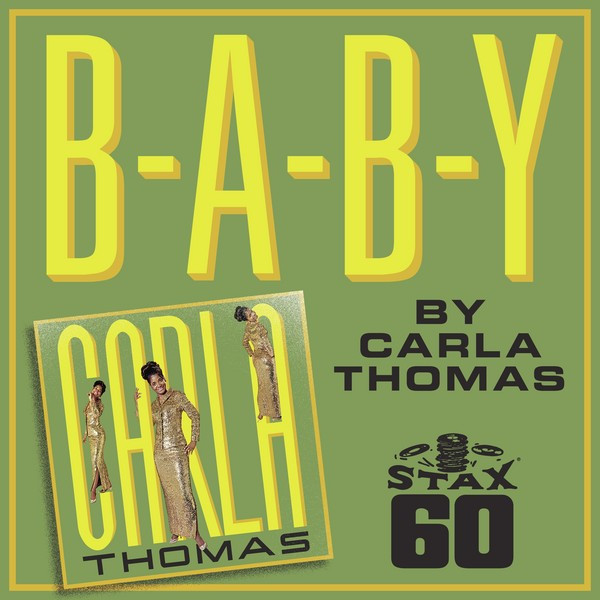
The song peaked at #14 in the Billboard 100 and #3 in the R&B Chart. B-A-B-Y was released on Stax Records in 1966. It was written by Isaac Hayes and David Porter.
Carla had 20 songs in the Billboard 100 with 4 top 40 hits and 1 top ten hit. The song was on the 2017 Baby Driver soundtrack. The song has a great soul sound to it with that Stax feel.
She is called the Queen of Memphis Soul. Carla Venita Thomas was born on December 1, 1942, in the Foote Homes Housing Project in Memphis, Tennessee. She teamed with Stax performer Otis Redding and in March of 1967, they released the album, King & Queen.
B-A-B-Y
Baby, ooh baby I love to call you baby Baby, oh oh baby I love for you to call me baby When you squeeze me real tight You make wrong things right And I can’t stop loving you And I won’t stop calling you Baby, oh baby You look so good to me baby Baby, ooh baby You are so good to me baby Just one look in your eye And my temperature goes sky high I live for you and can’t help it [Lyrics from: https:/lyrics.az/soundtracks/baby-driver/b-a-b-y-by-carla-thomas.html] You know I really don’t want to help it B.A.B.Y. baby B.A.B.Y. baby Whenever the sun don’t shine You go out to light my hind Then I get real close to you And your sweet kisses see me through I said baby, ooh baby You look so good to me baby Baby, ooh baby How I love for you to call me baby When you squeeze me real tight You know you make wrong things right And I can’t stop loving you And I won’t stop calling you B.A.B.Y. baby
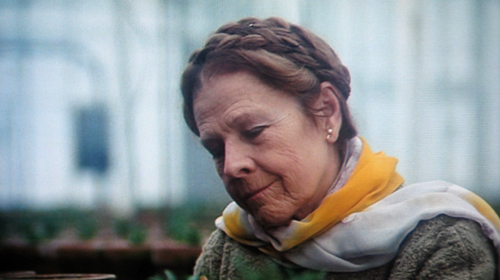
Probably the most well-known role she played was the character of Maude in Harold and Maude. She is also remembered as Minnie Castevet in Rosemary’s Baby. Ruth Gordon was also a member of the Algonquin Round Table. She was a brilliant writer and actress. She was a stage actress mostly until the 1940s when she started to appear in films. She went back to the stage until the 60s where she started to be in films up to her death.
Ruth was born in 1896 in Wollaston, Massachusetts. She was a very successful writer and actress.
In 1915 she made her Broadway debut in Peter Pan in the role of Nibs. Her performance endeared her to the New York critic Alexander Woollcott, who introduced her to the famous Algonquin Round Table, a group that included George S. Kaufman, Robert Benchley, Edna Ferber, Alice Duer Miller, Heywood Broun, Dorothy Parker, and Harpo Marx.
Throughout the next three decades, Ruth appeared in several plays by playwrights such as Henrik Ibsen, Anton Chekhov, and Booth Tarkington. She enjoyed her greatest stage triumph in a 1936 production of The Country-Wife at London’s Old Vic.
She married screenwriter and director Garson Kanin in 1942. Ruth and Garson collaborated on many plays and screenplays together.
She appeared in a handful of films during the early 1940s, including Abe Lincoln in Illinois (1940), Dr. Ehrlich’s Magic Bullet (1940), Two-Faced Woman (1941; Greta Garbo’s final film), Edge of Darkness (1942), and Action in the North Atlantic (1943). She then returned to the stage and did not appear in another film for 22 years.
She came back to film in1965 with Inside Daisy Clover ( best-supporting-actress Oscar nomination). She won an Oscar for her supporting role in Rosemary’s Baby (1968), and she developed a strong cult following with her offbeat characters in Where’s Poppa (1970) and Harold and Maude (1971). She appeared in many television programs and made-for-TV movies during the 1960s and ’70s and won an Emmy in 1979 for her role on an episode of the popular sitcom Taxi. Gordon and Kanin also collaborated on one more writing project, the TV movie Hardhat and Legs (1980).
Ruth Gordon died on August 28, 1985, and Garson Kanin died on March 13, 1999.
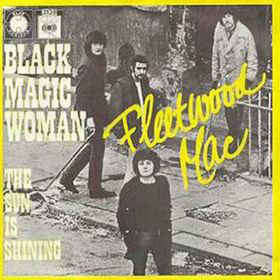
Most people today know the Lindsey Buckingham and Stevie Nicks Fleetwood Mac but the band has a long winding history. The band members at this time in 1968 were Peter Green – Guitar, Mick Fleetwood – Drums, John McVie – Bass, Jeremy Spencer – Guitar and Piano, and Danny Kirwan on guitar. Christine Perfect contributed keyboards from the second album on and then married John McVie and joined in 1970.
Peter Green is a great guitar player, good singer and a very good songwriter. The Peter Green era produced songs such as Oh Well, Albatross, and The Green Manalishi (With the Two Prong Crown).
This was a hit for Santana, and their version was a cover of this Fleetwood Mac song that hit #37 on the UK charts. Peter Green, who was a founding member of Fleetwood Mac, wrote the lyrics. The original’s music sounds very similar to the sound Santana added on his version. Mick Fleetwood once described this as “three minutes of sustain reverb guitar with two exquisite solos from Peter.”
Black Magic Woman
Got a black magic woman Got a black magic woman I’ve got a black magic woman Got me so blind I can’t see That she’s a black magic woman She’s trying to make a devil out of me
Don’t turn your back on me, baby Don’t turn your back on me, baby Yes, don’t turn your back on me, baby Stop messing about with your tricks Don’t turn your back on me, baby You just might pick up my magic sticks
You got your spell on me, baby You got your spell on me, baby Yes, you got your spell on me, baby Turnin’ my heart into stone I need you so bad Magic woman I can’t leave you alone
This song broke it open for the Beatles in the UK. After Love Me Do peaked at #17 in the UK charts…this one shot to #1 in the New Musical Express, Disc and Melody Maker charts in 1963. The song would later peak at #3 in the Billboard 100 in 1964 after Beatlemania had hit.
George Martin never cared much for Love Me Do and told the Beatles that. He did like Please Please Me and thought it had potential if they would increase the tempo. They had played it to him very slow like a Roy Orbison song. They worked on it for the next studio visit and it started to take shape.
The song was a vast improvement over Love Me Do. The quick catchy riff with those harmonies are hard to resist. The climbing “come on come on come on” led to a perfect chorus hook.
John Lennon was partly inspired by a line from a Bing Crosby song that read, “Please lend a little ear to my pleas.” He recalled: “I remember the day I wrote it, I heard Roy Orbison doing “Only The Lonely”, or something. And I was also always intrigued by the words to a Bing Crosby song that went, ‘Please lend a little ear to my pleas’. The double use of the word ‘please’. So it was a combination of Roy Orbison and Bing Crosby.”
From Songfacts
This was The Beatles first single released in America, and getting it issued in the States was a struggle. The Beatles first recorded “Please Please Me” on September 11, 1962. That version was rejected for release. They re-recorded the song on November 26, 1962 and that version was first issued in England on the EMI-owned Parlophone label on January 12, 1963. After EMI’s US affiliate, Capitol Records, rejected the song (and a lot of other early Beatles material), the small, Chicago-based Vee Jay label stepped in and released “Please Please Me” stateside on February 25, 1963 and again on January 30, 1964 and August 10,1964. The only release that charted was the second, when The Beatles finally made a name for themselves in America.
John Lennon, who was a big Roy Orbison fan, wrote this in the style of Orbison’s overly dramatic singing. Beatles producer George Martin suggested it would sound better sped up. In 2006, Martin told The Observer Music Monthly, “The songs the Beatles first gave me were crap. This was 1962 and they played a dreadful version of ‘Please Please Me’ as a Roy Orbison-style ballad. But I signed them because they made me feel good to be with them, and if they could convey that on a stage then everyone in the audience would feel good, too. So I took ‘Love Me Do’ and added some harmonica, but it wasn’t financially rewarding even though Brian Epstein bought about 2,000 copies. Then we worked for ages on their new version of ‘Please Please Me,’ and I said: ‘Gentlemen, you’re going to have your first #1.'”
This was rumored to be about oral sex. The Beatles denied this, since they had a very clean image to maintain at the time. Lennon said of the song: “I was always intrigued by the double use of the word ‘please.'”
Although in the UK this was officially a #2 record, three of the four charts used at the time – Melody Maker, NME and Disc – listed it #1. Only the Record Retailer chart had it at #2.
The group’s name was misspelled “Beattles” on the record label on the first American release of the single.
Typical for the verse in “Please Please Me,” and for many of Lennon’s songs, are the long notes (legato) that are also used in hymns – even sounding a bit like Mendelssohn’s Wedding March in A Midsummer Night’s Dream. When Lennon was a little boy he used to go to church on Sunday. Afterwards he improvised his own counterpoints to the hymns.
The climbing in the melody “Come on, come on…” is similar to parts of two traditional folk songs: “New’s Evens Song” and “Come Fair One.” >>
In the UK, this was re-released in 1983 to coincide with the 20th anniversary of it’s initial release.
The Beatles performed this on their second Ed Sullivan Show appearance in 1964. Sullivan was not a fan of many rock groups, but loved The Beatles and had them on his show whenever he could.
This was the second Beatles single released in England, the first being “Love Me Do.”
An early version of this song with session drummer Andy White playing drums instead of Ringo can be found on Anthology 1.
The Please Please Me album was The Beatles debut long player. When they recorded it at Abbey Studios in London, John Lennon was struggling with a streaming cold and all were tired after a tour supporting Helen Shapiro. However with the help and encouragement of producer George Martin within nine hours and 45 minutes they had recorded their groundbreaking LP.
The album was released to cash in on the success of this single in the UK. It took them about 12 hours to record, and was basically a re-creation of their live show, which was mostly cover songs. The album was released with the text “Please Please Me with Love Me Do and 12 other songs.” >>
The Beatles performed this on Thank Your Lucky Stars on January 19, 1963. It was their first ever UK television appearance.
The British Prime Minister Gordon Brown revealed in an interview on the British TV program GMTV that this was the first record that he ever bought.
George Martin told Music Week magazine that the first time the Beatles played this to him, he wasn’t very impressed. He recalled: “I listened to it and I said: ‘Do you know that’s too bloody boring for words? It’s a dirge. At twice the speed it might sound reasonable.’ They took me at my word. I was joking and they came back and played it to me sped up and put a harmonica on it, and it became their first big hit.”
Lennon was a great fan of Bing Crosby and when in 1978, Yoko gave him a vintage ’50s Wurlitzer jukebox for his birthday he loaded the machine with as many 78-rpm records by the easy-listening vocalist as he could find.
This is Keith Richards’ favorite Beatles song. He told Jimmy Fallon: “I’ve always told McCartney, ‘Please Please Me.’ I just love the chimes, and I was there at the time and it was beautiful. Mind you, there’s plenty of others, but if I’ve got to pick one, ‘Please Please Me’… oh, yeah!”
Lennon-McCartney was the standard alphabetical credit for their Beatles songwriters compositions except on Please Please Me, where for reasons unknown, the names were reversed.
Please Please Me
Last night I said these words to my girl I know you never even try, girl Come on, come on, come on, come on Please, please me, woah yeah, like I please you
You don’t need me to show the way, love Why do I always have to say, love Come on, come on, come on, come on Please, please me, woah yeah, like I please you
I don’t want to sound complaining But you know there’s always rain in my heart I do all the pleasing with you, It’s so hard to reason with you Woah yeah, why do you make me blue?
Last night I said these words to my girl I know you never even try, girl Come on, come on, come on, come on Please, please me, woah yeah, like I please you Woah yeah, like I please you Woah yeah, like I please you
The name NERF actually comes from drag racing. In the late ‘60s, foam-covered bars sometimes called “nerf bars” were put on the front of the trucks that pushed racers to the starting line. This prevented damage to cars.
I had many Nerf Footballs and small Nerf basketballs growing up and they were always fun to bonk someone in the head.
In 1968 Reyn Guyer who invented Twister helped invent the Nerf Ball. He was testing a new caveman game with colleagues. The prototype included a bunch of foam-rubber rocks that, the men soon discovered, were more fun to throw at one another than use in the game. He then thought (and probably saved a lot of broken lamps…and spankings) they could be used as balls and played within a home.
In 1969 Reyn tried to sell the idea to Milton Bradley but they didn’t want it, but Parker Brothers did. The first Nerf product as a 4-inch polyurethane foam ball. They marketed it as “world’s first official indoor ball” and soon they had blasters, footballs (Fred Cox, kicker for the Vikings actually invented the Nerf Football), basketballs, living room baseball and a line of Nerf products.
Parker Brothers handed the company off to Kenner Products, a sister company, in 1991, when Hasbro acquired the Nerf line. Throughout the 1990s and early 2000s, the Nerf brand served under the subsidiaries OddzOn and Larami before Hasbro took full control of the brand.
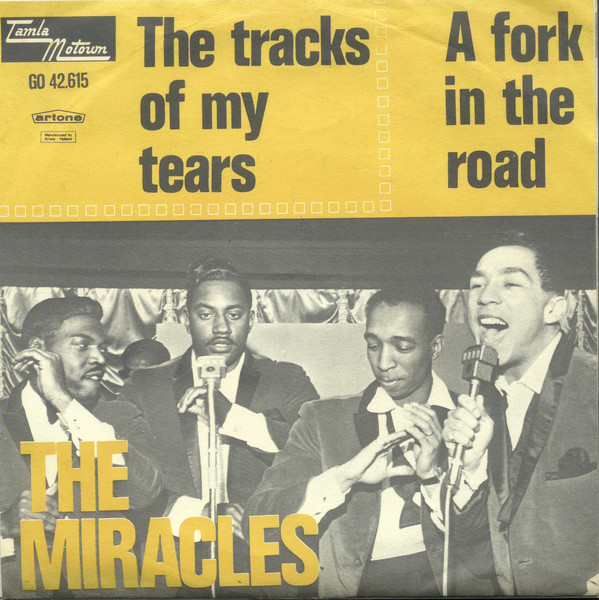
Smokey has one of the smoothest voices I ever heard. On top of that, he is one of the top songwriters of popular music. Bob Dylan called him “America’s greatest living poet.” and John Lennon was heavily influenced by him. The song peaked at #16 (only 16???) in the Billboard 100 and #9 in the UK in 1965.
Miracles members Smokey Robinson, Warren Moore, and Marv Tarplin wrote this song. Robinson penned the lyrics; Tarplin, The Miracles’ guitarist, came up with the riff. Tarplin got the idea for the music after listening to a calypso tune: Harry Belafonte’s “The Banana Boat Song (Day-O).”
From Songfacts
One of the most gut-wrenching songs on record, this one is about a man who tries to hide his pain, but cannot conceal the tracks made by his tears. He has come out of a relationship with the love of his life, and the song is his confession to her that his high spirits are just an act and she’s the only one for him, or perhaps what he wants to tell her but can’t.
Miracles leader Smokey Robinson came up with the concept when he was looking in the mirror one day, and thinking, What if a person would cry so much that you could see tracks of their tears in their face?
Robinson recalled: “‘Tracks of My Tears’ was actually started by Marv Tarplin, who is a young cat who plays guitar for our act. So he had this musical thing [sings melody], you know, and we worked around with it, and worked around, and it became ‘Tracks of My Tears.'”
Robinson had the music Tarplin wrote on a cassette, but it took him about six months to write the lyrics. The words started coming together when he came up with the line, “Take a good look at my face, you see my smile looks out of place.” From there, it was a few days before he got the lines, “If you look closer it’s easy to trace… my tears.”
What to do with those tears was a problem, as he wanted to say something no one has said about tears. In a 2006 interview with NPR, he explained that he finally came up with the image of tears leaving lasting marks, and the song came together. “One day I was listening, and it just came – the tracks of my tears,” said Robinson. “Like footprints on my face. So that was what I wrote about.”
Four different artists have charted with this song in America. Johnny Rivers had the biggest hit, taking it to #10 in 1967. Two of the most acclaimed female vocalists of their time, Aretha Franklin and Linda Ronstadt, also charted covers, Franklin’s making #71 in 1969 and Ronstadt’s going to #25 in 1976.
Other notable versions of this song include renditions by Go West in 1993 and Adam Lambert in 2009.
When he first recorded this song with The Miracles, Robinson left out the last chorus, fading it out on the “I need you, I need you” line. He was convinced to end on the chorus when he played the song at one of the famous Monday morning meetings at Motown, where songs were scrutinized by their team.
Robinson wrote a similar song a few weeks later called “My Girl Has Gone,” which was released as the next Miracles single.
Motown head Berry Gordy has said that this song represents Smokey Robinson’s best work.
The song was popular among American soldiers fighting in the Vietnam War, which is reflected in the 1986 Oliver Stone movie Platoon, where the song is used.
Other films to feature the song include The Big Chill (1983), The Walking Dead (1995) and Bobby (2006). TV series to used the song include The Wonder Years and Wife Swap.
Tracks Of My Tears
People say I’m the life of the party Because I tell a joke or two Although I might be laughing loud and hearty Deep inside I’m blue So take a good look at my face You’ll see my smile looks out of place
If you look closer, it’s easy to trace The tracks of my tears I need you, need you Since you left me if you see me with another girl Seeming like I’m having fun Although she may be cute
She’s just a substitute Because you’re the permanent one So take a good look at my face You’ll see my smile looks out of place If you look closer, it’s easy to trace The tracks of my tears
I need you, need you Outside I’m masquerading Inside my hope is fading Just a clown oh yeah Since you put me down My smile is my make up
I wear since my break up with you So take a good look at my face You’ll see my smile looks out of place If you look closer, it’s easy to trace The tracks of my tears
It took a few listens to this song for me to fully appreciate it. It was not released as a single but it was on the Rubber Soul album in 1965. This song expressed desire and optimism for universal peace and love.
Multi-part vocals over a simple chord structure that sounds so different to what they did the year before. From I Want To Hold Your Hand to The Word shows The Beatles refusing to use a formula and continuing to move forward. They would stick to this pattern and lead the way until the end of the sixties.
Rubber Soul would peak at #1 in the Billboard album charts in 1966.
Paul McCartney said of the song:
“To write a good song with just one note in it – like ‘Long Tall Sally’ – is really very hard. It’s the kind of thing we’ve wanted to do for some time. We get near it in ‘The Word.’
John on the song:
“It sort of dawned on me that love was the answer, when I was younger, on the ‘Rubber Soul’ album. My first expression of it was a song called ‘The Word.’ The word is ‘love.’ ‘In the good and the bad books that I have read,’ whatever, wherever, the word is ‘love.’ It seems like the underlying theme to the universe. Everything that was worthwhile got down to this love, love, love thing. And it is the struggle to love, be loved and express that (just something about love) that’s fantastic. I think that whatever else love is – and it’s many, many things – it is constant. It’s been the same forever. I don’t think it will ever change. Even though I’m not always a loving person, I want to be that, I want to be as loving as possible.”
From Songfacts
This is another brilliant musical innovation from the Rubber Soul album, the first point at which The Beatles shrugged off the “mop tops” image and went for bolder artistic horizons. “The Word” sounds almost like evangelizing; as opposed to a standard boy-girl love song, the lyrics here embrace love as more of a concept, the way the Flower Power movement was thinking about it.
The lyrics of “The Word” also mark an important point at which The Beatles began to realize that they were, in fact, spokespeople for a new generation. Their songs started packing a stronger message, bridging their way to the future when John and George would make their lyrics more political.
Lead vocals on this song were shared by John Lennon, Paul McCartney and George Harrison. Beatles producer George Martin played the harmonium, an organ-like keyboard instrument.
Yoko Ono gave the sheet music of this song as a gift to the composer John Cage, who later published it in his book Notations. Ono studied under Cage, even sharing the occasional stage with him, before she met John Lennon.
Out of all the zillions of times that music fans claim that something was composed on drugs, this is one of the rare times when a performer actually states that they did drugs while creating it. Paul McCartney reported in interviews that they’d blazed some reefer before setting down to do the lyrics, and reports that far from enhancing their ability, it actually got in the way.
In 2002, Joan Jett covered this for the album, It’s All About Eve (Music For The Cure), a charity compilation to support breast cancer research. It was produced by Rob Stevens, who had worked with John Lennon.
Rubber Soul is often cited as the first album issued without the artist’s name on its cover, but that honor really goes to Elvis Presley for his 1959 album For LP Fans Only.
The Word
Say the word and you’ll be free Say the word and be like me Say the word I’m thinking of Have you heard the word is love?
It’s so fine, it’s sunshine It’s the word, love
In the beginning I misunderstood But now I’ve got it, the word is good
Spread the word and you’ll be free Spread the word and be like me Spread the word I’m thinking of Have you heard the word is love?
It’s so fine, it’s sunshine It’s the word, love
Every where I go I hear it said In the good and bad books that I have read
Say the word and you’ll be free Say the word and be like me Say the word I’m thinking of Have you heard the word is love?
It’s so fine, it’s sunshine It’s the word, love
Now that I know what I feel must be right I’m here to show everybody the light
Give the word a chance to say That the word is just the way It’s the word I’m thinking of And the only word is love
It’s so fine, it’s sunshine It’s the word, love
Say the word love Say the word love Say the word love Say the word love
This track was produced by Sam Phillips of Sun Records, the man who signed Elvis Presley. It was recorded at Phillips Recording studio, a newly updated state-of-the-art studio in Memphis TN. Jeff Beck, who is a fan of early rockabilly, said that he introduced the song to the group: “They just heard me play the riff, and they loved it and made up their version of it”
I’ve always liked this version and Beck’s filthy sound he had on his guitar.
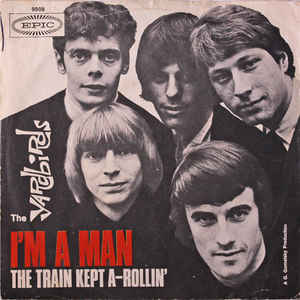
It was written by Tiny Bradshaw, Howard Kay, and Lois Mann, this song was originally performed by Tiny Bradshaw’s Big Band in 1951. Johnny Burnette recorded a rock version in 1956, and The Yardbirds popularized the song with their rendition in 1965.
Aerosmith covered it in 1974, often playing the song as their encore in their early years. In the ’60s, Aerosmith was on the same bill as The Yardbirds for some shows, and former Yardbird Jeff Beck opened some shows for them in the ’70s.
The song didn’t chart in Billboard but was included on the album “Having A Rave Up” in 1965 which peaked at #53.
From Songfacts
This song is about a guy who is blown away by a woman, but he has to act cool to make sure he doesn’t scare her away. The train rolling is in reference to sex.
In the beginning of the song, Jeff Beck used his guitar to create the train whistle sound.
There are two voices singing throughout the song. Both belong to lead singer Keith Relf. In the beginning, they sing different words, but by the end, both sing in unison.
When Jimmy Page joined the band and he was playing lead guitar with Jeff Beck, the Yardbirds appeared in the 1966 Michelangelo Antonioni film Blowup playing a new version of this song re-titled “Stroll On.” The Yardbirds appeared as a band in the film, which is about a London fashion photographer who may have witnessed a murder. It was one of the first major films with a full frontal nudity scene.
In an interview with Q Magazine January 2008, John Paul Jones recalls this was the first ever song he played with Robert Plant, Jimmy Page and John Bonham after joining Led Zeppelin: “I can remember the first song I played with Led Zeppelin in a tiny basement room in Soho in 1968, with wall-to-wall amps. That was ‘Train Kept A-Rollin’,’ the Yardbirds song, which I didn’t know at the time. But I knew immediately, ‘This is fun.”
Train Kept A-Rollin’
I caught the train, I met a dame, She was a hipster, well and a real cool dame, (She was handsome,) She was pretty, from New York City, Well and we trucked on down in that old Fairlane, (Goin’ on,) With a heave, and a ho,
Well, I just couldn’t let her go. (Yes I did,) Get along, sweet little woman, get along, Be on your way, Get along, sweet little woman, get along, Be on your way, With a heave, and a ho, (Love the way you walk,) I just couldn’t let her go. (Yes I do now.)
Well, the train kept a-rollin’, all night long, (Sweet little woman, get along,) The train kept a-rollin’, all night long, ([You’re my queen?]) The train kept a-rollin’, all night long, (Sweet little woman, get along,) The train kept a-rollin’, all night long, (You’re my queen?) With a heave, and a ho, (Love the way you walk,) Well I just couldn’t let her go, (Yes I do.)
We made a stop at Albuquerque, She must have thought I was a real gone jerk, We got out the train in El Paso, Lookin’ so good, Jack, I couldn’t let her go. Get along, sweet little woman, get along, (Oh, right,)
Well, the train kept a-rollin’, all night long, The train kept a-rollin’, all night long, The train kept a-rollin’, all night long, The train kept a-rollin’, all night long, With a heave, and a ho, Well I just couldn’t let her go.
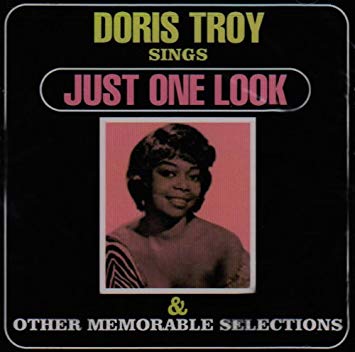
This song has a fifties quality to it. Doris Troy was a true one hit wonder. This is her only top 100 song. It peaked at #10 in the Billboard 100 in 1963. This was just the second Top 10 pop hit that was written and performed by the same woman, following “Gee Whiz (Look At His Eyes)” by Carla Thomas.
She appeared on Pink Floyd’s “Dark Side of the Moon” as a backup singer. In the UK, this was a #2 hit for The Hollies. It has also been covered by Lulu, and Linda Ronstadt, Mark Farner and Anne Murray.
From Songfacts
Doris Troy, born Doris Higginson in New York City, was an R&B singer/songwriter who first recorded as Doris Payne. When she was 16 years old, she got a job at the famous Apollo Theater, which featured many legendary black performers.
In a 1970 interview with Blues & Soul magazine, Troy explained: “I had the uniform and a flashlight and everything, and when I saw them stars up there performing I said to myself ‘that’s where I want to be someday,’ and I started to spend my off-duty hours in this restaurant in New York where out-of-work artists and composers hung out. I’d written ‘Just One Look’ and needed to make a demo. Well the demo got made, and it was the demo that was released. I was performing at the time, but I’d never looked on myself as ready for making hit records. I’d had a previous release out on Everest under the name of Doris Payne, but it didn’t mean a thing.
We’d taken the demo to Atlantic to sell the song, and as soon as they heard it they flipped and said they’d rush release it at once. I was on the road at the time touring with Chuck Jackson who was big then, and since I had no time to go in the studio and re-record it they issued the record straight off the demo-dub I’d had made. Wasn’t that a bitch? Well, the record took off so damn fast that it sold like crazy, and it was really lucky for me to be touring at the same time since Atlantic were able to arrange all sorts of promotional stints and interviews to tie in with the local radio stations where I was visiting.”
Troy wrote the song “How About That,” which hit #33 for Dee Clark in 1960. She worked as a session singer, appearing on recordings by Solomon Burke, Ben E. King, Dee Dee Warwick and The Drifters. “Just One Look” was her only American hit, but “Whatcha Gonna Do About It” nicked the UK charts at #37 in 1964. She moved to England in 1969 and signed with The Beatles’ Apple Records, where she release the Doris Troy album in 1970 before becoming a casualty of the rampant mismanagement at Apple. She resumed work as a session singer, and performed on The Rolling Stones’ “You Can’t Always Get What You Want” and also tracks by Tom Jones and Englebert Humperdinck. She also sang backup on the 1973 Pink Floyd album Dark Side of the Moon. Troy died in 2004 at age 67.
Troy’s version of this song appeared in a popular Pepsi commercial starring supermodel Cindy Crawford. It also appeared in a spot for DirectTV.
This appeared in the films Mermaids (1990), The Flamingo Kid (1984) and Buster (1988).
Just One Look
Just one look and I fell so hard In love with you uh oh uh oh I found out how good it feels To have your love uh oh uh oh Say you will, will be mine Forever and always uh oh uh oh Just one look and I knew That you were my only one uh oh uh oh
I thought I was dreaming but I was wrong Yeah yeah yeah Oh but ah I’m gonna keep on scheming ‘Til I can ah make you, make you my own
So you see I really care Without you I’m nothing uh oh uh oh Just one look and I know I’ll get you someday uh oh uh oh
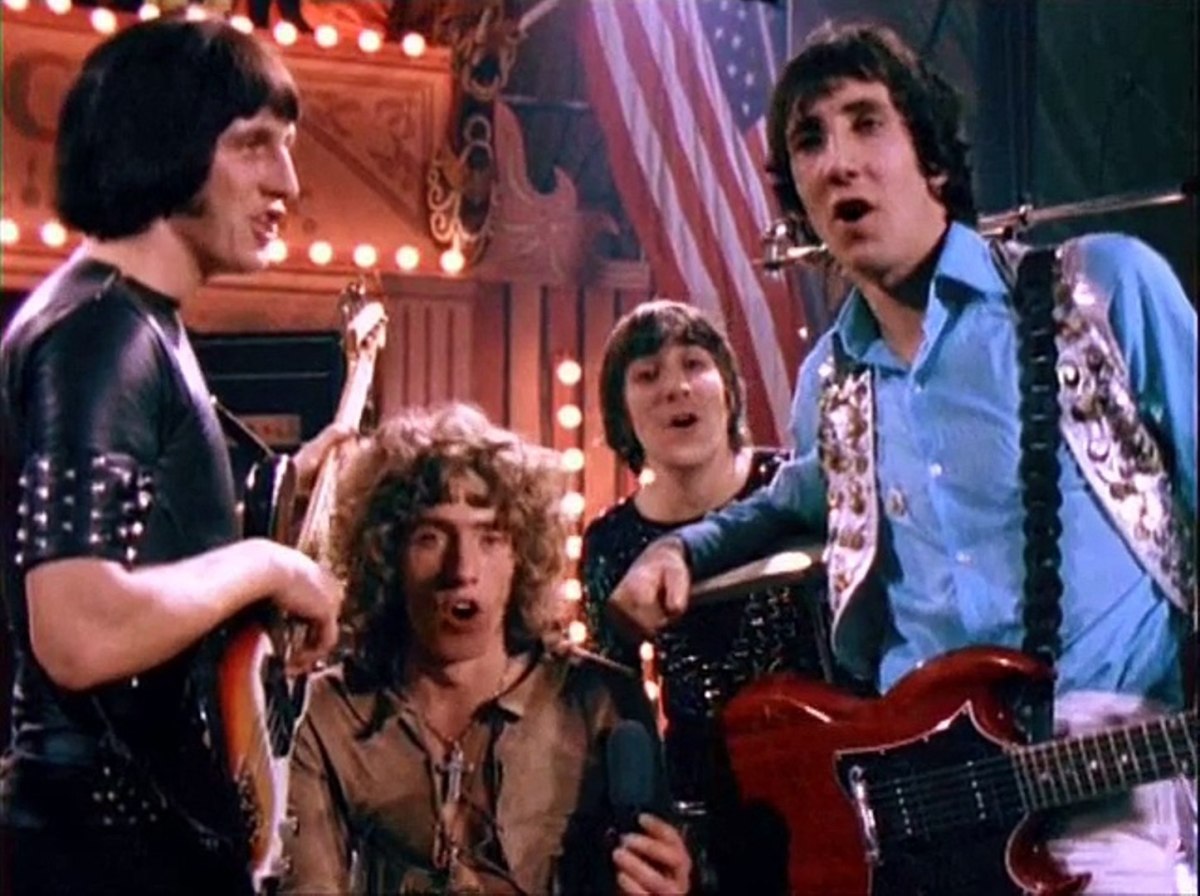
I first saw them perform this on The Kids Are Alright. The performance was electric. I like the studio version but the live versions they push a little harder. The song didn’t chart being so long. The album “A Quick One” peaked at #4 in the UK charts. The hit song of the album was Happy Jack.
The Who had 10 minutes left to fill on the album. Kit Lambert, The Who’s manager, suggested to Pete Townshend that he write “something linear… perhaps a 10-minute song.” Townshend responded by saying that rock songs are “2:50 by tradition!” Lambert then told Townshend that he should write a 10-minute story comprised of 2:50 songs.
The song was a “mini-opera,” paving the way for the other mini-opera “Rael” and eventually full-length rock operas Tommy and Quadrophenia.
From Songfacts
The plot of the story is simple. A girl is sad that her boyfriend is away. Her friends suggest that she take a substitute lover, Ivor The Engine Driver. When the boyfriend returns, she confesses her infidelity and is forgiven.
The Who performed this on the Rolling Stones Rock And Roll Circus, which was going to be a TV special. It never aired on television but it was released on VHS in 1996 and DVD in 2004. The Who’s performance of this was included in The Kids Are Alright, a 1979 film about The Who.
According to legend, Rock And Roll Circus didn’t air because the Rolling Stones felt that they were showed up by The Who. Jethro Tull, Taj Mahal, Marianne Faithful, John Lennon, Eric Clapton, and Mitch Mitchell all appeared on Rock And Roll Circus.
A live version of this song appears on Live At Leeds and the soundtrack for The Kids Are Alright.
The Who wanted to put Cellos on the track but Kit Lambert said they couldn’t afford it. So they sang “cello, cello, cello, cello,” where the Who thought they should go. >>
This was used in the Wes Anderson film Rushmore starring Jason Shwartzman and Bill Murray
A Quick One, While He’s Away
Her man’s been gone For nearly a year He was due home yesterday But he ain’t here
Her man’s been gone For nigh on a year He was due home yesterday But he ain’t here
Down your street your crying is a well-known sound Your street is very well known, right here in town Your town is very famous for the little girl Whose cries can be heard all around the world
Fa la la la la la Fa la la la la Fa la la la la la Fa la la la la
We have a remedy You’ll appreciate No need to be so sad He’s only late
We’ll bring you flowers and things Help pass your time We’ll give him eagle’s wings Then he can fly to you
Fa la la la la la Fa la la la la Fa la la la la la Fa la la la la Fa la la la la la Fa la la la la la
We have a remedy Fa la la la la la la We have a remedy Fa la la la la la la We have a remedy Fa la la la la la la We have a remedy Fa la la la la la la
We have a remedy. We have!
Little girl, why don’t you stop your crying? I’m gonna make you feel all right
My name is Ivor I’m an engine driver
I know him well I know why you feel blue Just ’cause he’s late Don’t mean he’ll never get through
He told me he loves you He ain’t no liar, I ain’t either So let’s have a smile for an old engine driver So let’s have a smile for an old engine driver
Please take a sweet Come take a walk with me We’ll sort it out Back at my place, maybe
It’ll come right You ain’t no fool, I ain’t either So why not be nice to an old engine driver? Better be nice to an old engine driver Better be nice to an old engine driver
We’ll soon be home We’ll soon be home We’ll soon We’ll soon, soon, soon be home
We’ll soon be home We’ll soon be home We’ll soon We’ll soon, soon, soon be home
Come on, old horse
Soon be home Soon be home Soon We’ll soon, soon, soon be home
Bob Dylan wrote this song and it was on his John Wesley Harding album. It was the longest time that I finally started to like Jimi’s version. The song peaked at #20 in the Billboard 100 in 1968. This was Jimi’s only top 40 hit in the Billboard 100.
I do like the simplicity of Bob’s original version also.
Bob said this about Jimi Hendrix in a 2015 speech: “We can’t forget Jimi Hendrix. I actually saw Jimi perform when he was with a band called Jimmy James and the Blue Flames. Something like that. And Jimi didn’t even sing. He was just the guitar player,” Dylan said. “He took some small songs of mine that nobody paid any attention to and brought them up into the outer limits of the stratosphere, turned them all into classics. I have to thank Jimi, too. I wish he was here.”
From Songfacts
This was written and originally recorded by Bob Dylan in 1967, but it was the Jimi Hendrix cover that made the song famous. Many other artists have covered it, including Eric Clapton, Neil Young, U2, Dave Matthews Band and The Grateful Dead. Dylan was so impressed with Jimi’s version that Dylan for years played it the way that Jimi had recorded it.
This was Hendrix’ only Top 40 hit in the US, where his influence far outpaced his popularity. He charted a few times in the UK, where he rose to fame before making a name for himself in America.
This was recorded while Hendrix played with the Jimi Hendrix Experience: Hendrix on guitar, Noel Redding on bass, and Mitch Mitchell on drums. For this song, however, Redding was not on bass; Hendrix did it. Redding was also the guitar player for his band Fat Mattress, which Hendrix referred to as Thin Pillow. Hendrix often felt that Redding did not put his heart into the bass and was concerned that Redding concentrated more on Fat Mattress than he did on the Experience. Things like these led to him being replaced by Billy Cox. >>
The original version of this song is very slow. Jimi Hendrix’ version had a large impact on Dylan which made him make his own version “heavier.”
Hendrix: “All those people who don’t like Bob Dylan’s songs should read his lyrics. They are filled with the joys and sadness of life. I am as Dylan, none of us can sing normally. Sometimes, I play Dylan’s songs and they are so much like me that it seems to me that I wrote them. I have the feeling that Watchtower is a song I could have come up with, but I’m sure I would never have finished it. Thinking about Dylan, I often consider that I’d never be able to write the words he manages to come up with, but I’d like him to help me, because I have loads of songs I can’t finish. I just lay a few words on the paper, and I just can’t go forward. But now things are getting better, I’m a bit more self-confident.” >>
Hendrix had been working on and off with the members of the band Traffic as he recorded Electric Ladyland. Traffic guitarist Dave Mason caught Hendrix at a party and the two discussed Bob Dylan’s newest album, John Wesley Harding, containing “All Along The Watchtower.” Hendrix, long fascinated with Dylan, decided to cover the song on the album. On the resulting track, Mason plays rhythm on a 12-string acoustic guitar.
In our interview with Mason, he explained: “Hendrix just happened to be sitting in one of those semi-private clubs in London. He was there one night just sitting alone, and it was like, “F–k, I’m just going to go over and say hi and talk to him.”
Mason recorded the song himself in the Hendrix arrangement for his 1974 self-titled album. He also made the song a mainstay of his concerts. Mason says it’s a deceptively simple song: “It’s just the same three chords, and they never change.”
This was used in an episode of The Simpsons when Homer’s mother was telling him a story that took place in the ’60s about why she had to leave him.
In a 2008 poll conducted by a panel of experts in the Total Guitar magazine, this was voted the best cover song of all time. The Beatles’ rendition of “Twist and Shout,” first recorded by the Top Notes, came second, followed by the Guns N’ Roses version of the Wings song “Live and Let Die” in third place.
This was used in the 1994 movie Forrest Gump shortly after the title character arrives in Vietnam.
Yes this is Bob’s version…the only one I could find.
All Along The Watchtower
There must be some kind of way outta here Said the joker to the thief There’s too much confusion I can’t get no relief
Business men, they drink my wine Plowman dig my earth None were level on the mind Nobody up at his word Hey, hey
No reason to get excited The thief he kindly spoke There are many here among us Who feel that life is but a joke But, uh, but you and I, we’ve been through that And this is not our fate So let us stop talkin’ falsely now The hour’s getting late, hey
All along the watchtower Princes kept the view While all the women came and went Barefoot servants, too Outside in the cold distance A wildcat did growl Two riders were approaching And the wind began to howl
Thinking of Peter Tork who passed away Thursday at 77. This song would play over the closing credits of their TV show. Peter Tork (Peter Halsten Thorkelson) co-wrote the song with Joey Richards. “For Pete’s Sake” kicked off side two of the Monkees’ third album, 1967’s Headquarters. The song was not released as a single but the album Headquarters (the Monkees played their instruments on this one) and eventually peaked at #1 in the Billboard 100 until Sgt Pepper took over the spot.
The song has a garage band sound and lyrically it’s very 1967…and that is a good thing.
For Pete’s Sake
Love is understanding, Don’t you know that this is true. Love is understanding, It’s in everything we do.
In this generation, In this lovin’ time, In this generation, We will make the world shine.
We were born to love one another This is something we all need. We were born to love one another We must be what we’re goin’ to be And what we have to be is free.
In this generation, In this lovin’ time, In this generation, We will make the world shine.
We were born to love one another This is something we all need. We were born to love one another We must be what we’re goin’ to be And what we have to be is free.
Love is undertanding, we gotta be free Love is undertanding, we gotta be free [Repeat and adlib]
Some TV Themes can be annoying but many can be very catchy. I’m listing my top 10 on two posts. There are so many that narrowing it to ten was almost impossible. I’ve stuck with older ones for the post. I left out cartoons…
5. The Courtship of Eddie’s Father -Harry Nilsson sang this one staring the one and only Bill Bixby.
4. It’s Garry Shandling’s Show – The most brilliant theme…straight to the point.
3. Munsters – Cool sixties guitar driven theme.
2. Welcome Back Kotter – John Sebastian’s song Welcome Back peaked at #1 in 1976.









 PowerPop... An Eclectic Collection of Pop Culture