Scooby Doo Where Are You!

On Saturday morning, September 13, 1969, Scooby-Doo, Where Are You! premiered. This is probably one of the most popular cartoons ever that even spawned a few live-action movies and tons of merchandise. The show went through many stages before it was ready for the public.

In 1968 Fred Silverman envisioned the show as a cross between the popular I Love a Mystery radio serials of the 1940s and the popular early 1960s TV show The Many Loves of Dobie Gillis.

Joe Ruby and Ken Spears, and artist/character designer Iwao Takamoto worked on Silverman’s idea. Their original concept of the show had the title Mysteries Five, and featured five teens (Geoff, Mike, Kelly, Linda, and Linda’s brother “W.W.”) and their dog, Too Much, who were all in a band called “The Mysteries Five” (even the dog; he played the bongos). When “The Mysteries Five” weren’t performing at gigs, they were out solving spooky mysteries involving ghosts, zombies, and other supernatural creatures. Ruby and Spears then had to decide what to make their dog. The dog was going to be a sheepdog but that would conflict with the Archies (who had a sheepdog, Hot Dog, in their band) but then settled on a Great Dane.

The executives felt that the presentation artwork was too frightening for young viewers, and, thought the show would be the same, decided to pass on it.

Ruby and Spears reworked the show to make it more comedic and less frightening. They dropped the rock band element and began to focus more attention on Shaggy and Too Much. According to Ruby and Spears, Silverman was inspired by the ad-lib “doo-be-doo-be-doo” he heard at the end of Frank Sinatra’s interpretation of Bert Kaempfert’s song “Strangers in the Night” on the way out to one of their meetings, and decided to rename the dog “Scooby-Doo” and re-rechristened the show Scooby-Doo, Where are You?… The rest as they say…is history!

Matthew Sweet did a version of the theme that I really like


The original theme song


http://scoobyaddicts.com/History.aspx

Band – Up On Cripple Creek

What a great single this was… Up On Cripple Creek with the B side of The Night They Drove Old Dixie Down. Robbie Robertson wrote this song and it appeared on The Band’s sophomore self-titled album.

This song was their highest-charting Billboard song and it peaked at #25 in 1970.

The Band rented Sammy Davis’s house turning the pool house into a recording studio, nailing baffles all along the outside wall and getting a great sound inside. The album was recorded there except “Up On Cripple Creek”, “Jemima Surrender” and “Whispering Pines” which was recorded at the Hit Factory studio in New York City.

The unusual sound that sounds like a jaw harp was achieved by Hudson with a wah-wah pedal on his clavinet.

The song has a great Americana sound to it. Hard to believe this band was all Canadian except for the southern Levon Helm.

From Songfacts

Guitarist Robbie Robertson wrote this song, which tells a disjointed story about a mountain man and a girl named Bessie. We hear about a trip to the horse races, listening to Spike Jones, and how what really makes him happy is when she “dips her doughnut in my tea.”

Like many songs by The Band, it’s wide open for interpretation. Robertson claims he doesn’t even know what’s going on. “I don’t really write songs with anything other than just a storytelling sense,” he said when asked about the song in Goldmine (August, 1998). “You sit down and write the song, and usually when something happens, you just don’t even know where it came from, or why it came, or anything like that. That’s the best. You know, when something comes out of you that surprises you. And it was one of those. You know, I was just sitting down to see if I could think of anything, and that’s what came out. But it was a fun song to write.”

Drummer Levon Helm sang lead on this track, giving it a very folksy vibe.

The guy in this song is one of the many curious characters Robbie Robertson has conceived. “We’re not dealing with people at the top of the ladder,” he said. “We’re saying what about that house out there in the middle of that field? What does this guy think, with that one light on upstairs, and that truck parked out there? That’s who I’m curious about.”

Robertson is listed as the only songwriter on this track, which is something his bandmates disputed, as they claimed they helped write it. Songwriting credits going to Robertson was a great source of friction in The Band.

That funky sound on “Up On Cripple Creek” was created by keyboardist Garth Hudson, who played a Hohner Clavinet D6 through a Vox Wah Wah pedal.

In The Band’s 2000 Greatest Hits compilation, Levon Helm said, “It took a long time to seep into us. We cut it two or three times, but nobody really liked it. It wasn’t quite enough fun. Finally one night we just got hold of it, doubled up a couple of chorus and harmony parts, and that was it.”

There are Cripple Creeks throughout the United States and Canada, including one in an old mining town in Colorado and another near Hamilton, Ontario. The title may have come from one of these places, but the song doesn’t appear to be set in one specific Cripple Creek.

The B-side of the single was “The Night They Drove Old Dixie Down,” which became a hit for Joan Baez in 1971.

The Band performed this on The Ed Sullivan Show in 1969. It was their only appearance on the show.

The rap duo Gang Starr sampled this on their 1990 track “Beyond Comprehension.”

Up On Cripple Creek

When I get off of this mountain
You know where I want to go
Straight down the Mississippi River
To the Gulf of Mexico

To Lake George, Louisiana
Little Bessie, girl that I once knew
And she told me just to come on by
If there’s anything she could do

Up on Cripple Creek she sends me
If I spring a leak she mends me
I don’t have to speak she defends me
A drunkard’s dream if I ever did see one

Good luck had just stung me
To the race track I did go
She bet on one horse to win
And I bet on another to show

Odds were in my favor
I had him five to one
When that nag came around the track
Sure enough we had won

Up on Cripple Creek she sends me
If I spring a leak she mends me
I don’t have to speak she defends me
A drunkard’s dream if I ever did see one

I took up all of my winnings
And I gave my little Bessie half
And she tore it up and blew it in my face
Just for a laugh

Now there’s one thing in the whole wide world
I sure would like to see
That’s when that little love of mine
Dips her doughnut in my tea

Up on Cripple Creek she sends me
If I spring a leak she mends me
I don’t have to speak she defends me
A drunkard’s dream if I ever did see one

Now me and my mate were back at the shack
We had Spike Jones on the box
She said, “I can’t take the way he sings
But I love to hear him talk”

Now that just gave my heart a fall
To the bottom of my feet
And I swore and I took another pull
My Bessie can’t be beat

Up on Cripple Creek she sends me
If I spring a leak she mends me
I don’t have to speak she defends me
A drunkard’s dream if I ever did see one

As a flood out in California
And up north it’s freezing cold
And this living off the road
Is getting pretty old

So I guess I’ll call up my big mama
Tell her I’ll be rolling in
But you know, deep down, I’m kinda tempted
To go and see my sweet Bessie again

Up on Cripple Creek she sends me
If I spring a leak she mends me
I don’t have to speak she defends me
A drunkard’s dream if I ever did see one

The Who – I Can See For Miles

The sound of this song is amazing…from the drums to the guitar. It was very different than their other singles to this point.

It’s hard to believe that I Can See For Miles was The Who’s only top 10 hit in the Billboard 100. It peaked at #9 in the Billboard 100 and #10 in the UK in 1967. The song was recorded for the band’s 1967 album, The Who Sell Out.[3] It was the only song from the album to be released as a single. The album peaked at #48 in the Billboard Album Charts in 1968.

Pete Townshend considered this some of his best songwriting, calling it “a remarkable song.” He thought it would be a huge hit and was disappointed when it wasn’t.

Pete Townshend talking about this song: “I swoon when I hear the sound,” “The words, which aging senators have called ‘drug oriented,’ are about a jealous man with exceptionally good eyesight. Honest.”

The song is ranked #40 on Dave Marsh’s The 1001 Greatest Singles Ever Made


From Songfacts

Pete Townshend wrote this shortly after meeting his future wife Karen. It was a reminder that even though he was on the road, he could still keep an eye on her from miles away.

The song was inspired by the jealousy and suspicion that would well up inside him when he left to tour, but the song is written in character as a vindictive type who wants to get back at a girl. It’s a little creepy:

Well, here’s a poke at you
You’re gonna choke on it too
You’re gonna lose that smile
Because all the while
I can see for miles and miles

He’s warning her that she can’t get out of his sight.

In real life, Townshend married Karen Astley in 1968. They were together until their divorce in 2009.

Townshend’s guitar was overdubbed in the studio. They rarely played this live because it was impossible to recreate the sound with one guitar.

The Who Sell Out is a concept album that makes fun of radio commercials. Fake ads were inserted between songs on the first side of the album.

The word “Miles” is said 57 times in the song. 

This was covered in a lighter, easygoing, and rather corny manner by Vegas lounge lizard Frankie Randall (who sang the lyric “There’s magic in my eyes” as “There’s magic in your eyes”, thus rather confusing the song’s meaning). It is included on the Golden Throats CD. 

Townshend’s played a one-note guitar solo on this song. According to an interview he conducted with his mate Richard Barnes for the book The Story of Tommy, Townshend did this because he “couldn’t be bothered.” He later admitted that he felt very intimidated at the arrival of Hendrix on the London scene during that time and that he couldn’t ever compete in the guitar solo stakes. 

Paul McCartney set out to write “Helter Skelter” shortly after reading a Pete Townshend interview, which described this track as, “The most raucous rock ‘n’ roll, the dirtiest thing they’d ever done.”

This is the theme song for the TV series CSI: Cyber, which debuted in 2015. It’s the fourth in the CSI franchise, with each series using a Who song as its theme. The song has some relevance to the show content, as the detectives use technology to investigate crimes that could be many miles away.

I Can See For Miles

I know you’ve deceived me, now here’s a surprise
I know that you have ’cause there’s magic in my eyes

I can see for miles and miles and miles and miles and miles
Oh yeah

If you think that I don’t know about the little tricks you’ve played
And never see you when deliberately you put things in my way

Well, here’s a poke at you
You’re gonna choke on it too
You’re gonna lose that smile
Because all the while

I can see for miles and miles
I can see for miles and miles and miles and miles and miles
Oh yeah

You took advantage of my trust in you when I was so far away
I saw you holding lots of other guys and now you’ve got the nerve to say

That you still want me
Well, that’s as may be
But you gotta stand trial
Because all the while

I can see for miles and miles
I can see for miles and miles and miles and miles and miles
Oh yeah

I know you’ve deceived me, now here’s a surprise
I know that you have ’cause there’s magic in my eyes

I can see for miles and miles and miles and miles and miles
Oh yeah

The Eiffel Tower and the Taj Mahal are mine to see on clear days
You thought that I would need a crystal ball to see right through the haze

Well, here’s a poke at you
You’re gonna choke on it too
You’re gonna lose that smile
Because all the while

I can see for miles and miles
I can see for miles and miles and miles and miles and miles
And miles and miles and miles

I can see for miles and miles

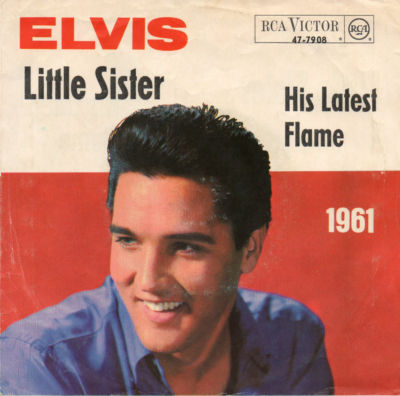
Elvis Presley – Little Sister

This song sounds so good. The mix is great with the bass coming through. Little Sister  was written by the Brill Building songwriters Doc Pomus and Mort Shuman. They also wrote the 1959 hit A Teenager In Love.

The song peaked at #5 in the Billboard 100 and #1 in the UK in 1961. Elvis recorded it at the RCA Nashville, Tennessee, studio in 1961. On the recording besides Elvis, was Scotty Moore (acoustic guitar), Hank Garland (electric guitar), Bob Moore (bass), D.J. Fontana and Buddy Harmon (drums), Floyd Cramer (organ), and The Jordanaires (backing vocals).

Dwight Yokum also does a great cover of this song.


Little Sister

Little sister, don’t you
Kiss me once or twice
Then say it’s very nice
And then you run
Little sister, don’t you
Do what your big sister done

Well, I dated your big sister
And took her to a show
I went for some candy
Along came Jim Dandy
And they snuck right out of the door

Little sister, don’t you
Kiss me once or twice
Then say it’s very nice
And then you run
Little sister, don’t you
Do what your big sister done

Every time I see your sister
Well, she’s got somebody new
She’s mean and she’s evil
Like that old Boll Weevil
Guess I’ll try my luck with you

Little sister, don’t you
Kiss me once or twice
Then say it’s very nice
And then you run
Little sister, don’t you
Do what your big sister done

Well, I used to pull your pigtails
And pinch your turned-up nose
But you been a growin’
And, baby, it’s been showin’
From your head down to your toes

Little sister, don’t you
Kiss me once or twice
Then say it’s very nice
And then you run
Little sister, don’t you
Do what your big sister done
Little sister, don’t you
Do what your big sister done

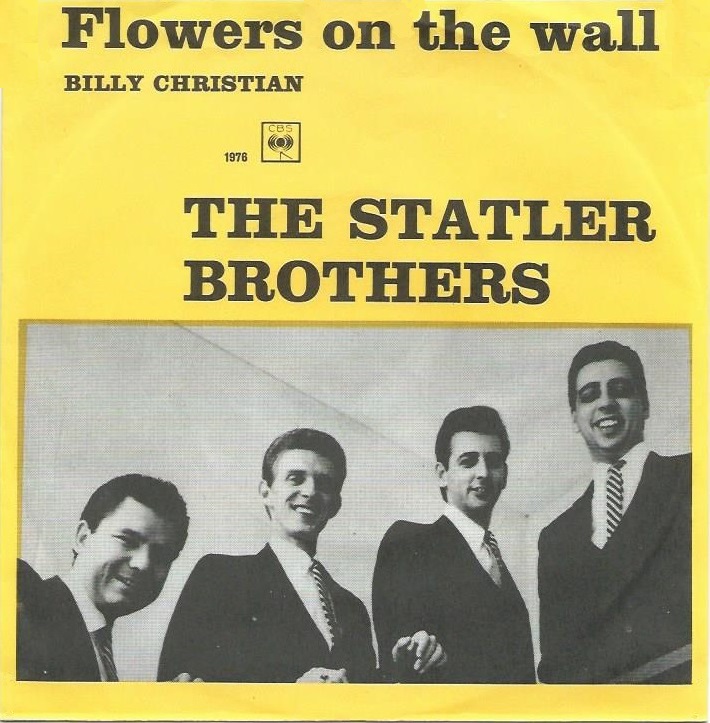
Statler Brothers – Flowers On The Wall

I have heard this called a psychedelic Country song… CMT named it one of the 100 greatest Country songs of all-time. You know when the Muppets cover you…you have a hit. I remember it early on as a kid and in more modern times when Bruce Willis was mouthing the words it in Pulp Fiction.

Lew DeWitt, the original tenor for The Statler Brothers, wrote “Flowers on the Wall. He described it: “We took gospel harmonies and put them over in country music.” However, it did crossover to the pop charts.

Buoyed by interest from the country fans, folk listeners began to demand that rock stations play Flowers On The Wall. In December, the song appeared on Billboard’s Hot 100. Nine weeks later, it had peaked at #4 in the Billboard 100 and #2 in the Billboard Country Charts in 1966.

All together the Statler Brothers had 66 songs in the top 100, 33 in the Top Ten and 4 number 1’s in the Billboard Country Charts. Flowers On The Wall was their only top 10 Billboard 100 hit.

In 1966 it won the Grammy Award for Best Contemporary Performance-Group (Vocal or Instrumental.)

From Songfacts

Written by Statler Brothers singer Lew DeWitt, this song is about a guy who has been left lonely and nearly catatonic by the one he loves. He’s in a pretty bad spot, counting flowers on the wall and playing solitaire with a deck that’s missing a card.

This appears on the soundtrack to the movie Pulp Fiction. Bruce Willis is singing along to the song, which is playing on his car radio, just before he runs over Marsellus Wallace at an intersection. There’s another Bruce Willis connection to the song as well: Willis mentions spending his suspension “Smoking cigarettes and watching Captain Kangaroo” in Die Hard With A Vengeance. 


Flowers On The Wall

I keep hearin’ you’re concerned about my happiness
But all that thought you’re givin’ me is conscience I guess
If I was walkin’ in your shoes, I wouldn’t worry none
While you ‘n’ your friends are worried about me I’m havin’ lots of fun

Countin’ flowers on the wall
That don’t bother me at all
Playin’ solitaire till dawn with a deck of fifty-one
Smokin’ cigarettes and watchin’ Captain Kangaroo
Now don’t tell me I’ve nothin’ to do

Last night I dressed in tails, pretended I was on the town
As long as I can dream it’s hard to slow this swinger down
So please don’t give a thought to me, I’m really doin’ fine
You can always find me here, I’m havin’ quite a time

Countin’ flowers on the wall
That don’t bother me at all
Playin’ solitaire till dawn with a deck of fifty-one
Smokin’ cigarettes and watchin’ Captain Kangaroo
Now don’t tell me I’ve nothin’ to do

It’s good to see you, I must go, I know I look a fright
Anyway my eyes are not accustomed to this light
And my shoes are not accustomed to this hard concrete
So I must go back to my room and make my day complete

Countin’ flowers on the wall
That don’t bother me at all
Playin’ solitaire till dawn with a deck of fifty-one
Smokin’ cigarettes and watchin’ Captain Kangaroo
Now don’t tell me I’ve nothin’ to do

Don’t tell me I’ve nothin’ to do

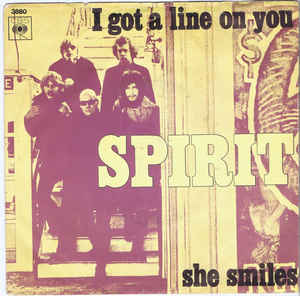
Spirit – I Got A Line On You

I have always liked this song. I saw this song listed in my friend Hanspostcard‘s countdown of the songs of 1969 a few months ago and I have been listening to it ever since.

I Got A Line On You peaked at #25 in 1969. Randy California wrote this song and it was on their second album The Family That Plays Together which peaked at #22 in 1969. Spirit was formed in 1967 in Los Angeles.  Randy California (born as Randy Craig Wolfe)(guitars, vocals), Mark Andes (bass), and Jay Ferguson (vocals, percussion). With the addition of California’s stepfather Ed Cassidy on drums, and keyboard player John Locke.

Jimi Hendrix gave Randy Wolfe the nickname Randy California.


I Got A Line On You

Let me take you, baby, down to the river bed
Got to tell you somethin’, go right to your head
I, I got a line, I got a line on you, babe

Gotta put your arms around me with every bit of your love
If you know what to do, I’ll make love to you
We got the right line to make it through these times

I, I got a line, I got a line on you, babe

I, I got a line, I got a line on you, babe

Now listen, our winter’s almost over
This summer, she’s comin’ on strong
I can love you, love you, love you
Love you all year long

I, I got a line, I got a line on you, babe

I, I got a line, I got a line on you, babe


https://en.wikipedia.org/wiki/Spirit_(band)


Dan Blocker

I didn’t watch Bonanza as much as Gunsmoke as a kid but I knew this guy. He looked so big on the screen and he seemed like a nice and gentle guy. He played Hoss Cartwright and that was an appropriate name for him. Dan’s other claim to fame was that he was the largest baby ever born in Bowie County (14 lbs.), in the town of DeKalb Texas in 1928. While still in school Dan stood six-foot-three and weighed 300 pounds.

His parents, Ora “Shack” Blocker and Mary Arizona Blocker managed to open up a grocery store after the depression in O’Donnell Texas where a young Dan helped out, carrying groceries to customers’ cars. He football skills earned him a scholarship to Sul Ross State University where he played football and studied English.

He appeared in a play Arsenic and Old Lace and was hooked on acting. He fought in the Korean War, where he served with distinction, earning a Purple Heart, among several other medals, citations and awards.

He got bit parts in television and soon landed the Bonanza role which he would forever be known.

On May 13, 1972, Dan entered a Los Angeles hospital for simple gall bladder surgery. A blood clot in his lung changed everything. Dan Blocker died and left a wife and four children. He was on Bonanza for 13 seasons

Dan was part owner of the successful, once popular chain restaurant, Ponderosa/Bonanza Steakhouse… He also owned a race car.

Image result for dan blocker race car

Loretta Lynn – You Ain’t Woman Enough (To Take My Man)

I’ve always liked Loretta Lynn…I’ve met the lady and she was one of the most down to earth people I’ve ever met. I do remember this song being played when I was really young…that title has to get your attention.  Being married to her husband Doolittle (Oliver Vanetta “Doolittle” Lynn), was not an easy task, but he was an influence in all of her songs, including her next single “Don’t Come Home A-Drinkin’ (With Lovin’ on Your Mind),”

Loretta made a comeback in the early 2000’s with Jack White producing Van Lear Rose in 2004.

Loretta had a very successful career. She had 16 number 1 hits,  51 Top Ten hits, and  76 Songs in the top 100 in the country charts. This song peaked at #2 in the Billboard Hot 100 Country Charts in 1966. 

Loretta talked about the inspiration to write this song: “When I wrote ‘You Ain’t Woman Enough (To Take My Man),’ this little woman come backstage, and she said, ‘Loretta, my husband didn’t bring me to the show tonight.’ She said, ‘He’s got a girlfriend, and he brought her. She’s sitting out in that second row with my husband.’ And we kind of pulled the curtain back and looked at him. I looked around at that lady that came backstage, and I said, ‘Honey, she ain’t woman enough to take your man.’ I went in the dressing room right then and wrote that song before the show ever started.”


From Songfacts

The biggest hit of Loretta Lynn’s career to this point, “You Ain’t Woman Enough” went to #2 on the Country charts and the You Ain’t Woman Enough album hit #1. Written by Lynn, it shows her strong side, as she confronts a woman who is going after her man. No wilting flower, Lynn makes it clear that she’s not going to give up on her man – especially to this common floozy. She sings:

Donna Jean Godchaux often performs this song and sang it on stage when she was a vocalist with The Grateful Dead. Another popular cover is by the husband and wife duo Joey + Rory, who released it as a download in 2010. When we spoke with Joey Feek of Joey + Rory, she told us: “I didn’t know a lot of Loretta’s story until later in my young adult life, and then watching Coal Miner’s Daughter and reading the book. Just the strength that she had – she just said what she thought, and she didn’t have anything to hold back. There were parts of it that I just loved, because she was innocent. And on ‘You Ain’t Woman Enough,’ Loretta was raising that flag about supporting her man and standing beside him and fighting for him and everything else. She held that flag way before any other female country artist did. And then we have a song like ‘Cheater,’ and there’s some parallels there. I just love Loretta. You just can’t help but love her, and you hear her talk and she’s honest with every word that she says. She doesn’t hide a thing.”

Lynn says there was a time when a woman went after her husband and she had to put a stop to it. She took this woman to “Fist City.”

You Ain’t Woman Enough (To Take My Man)

You’ve come to tell me something you say I ought to know
That he don’t love me anymore and I’ll have to let him go
You say you’re gonna take him oh but I don’t think you can
‘Cause you ain’t woman enough to take my man

Women like you they’re a dime a dozen you can buy ’em anywhere
For you to get to him I’d have to move over
And I’m gonna stand right here
It’ll be over my dead body so get out while you can
‘Cause you ain’t woman enough to take my man

Sometimes a man start lookin’ at things that he don’t need
He took a second look at you but he’s in love with me
Well I don’t know where they leave you oh but I know where I’ll stand
And you ain’t woman enough to take my man

Women like you they’re a dime a dozen you can buy ’em anywhere
For you to get to him I’d have to move over
And I’m gonna stand right here
It’ll be over my dead body so get out while you can
‘Cause you ain’t woman enough to take my man
No, you ain’t woman enough to take my man

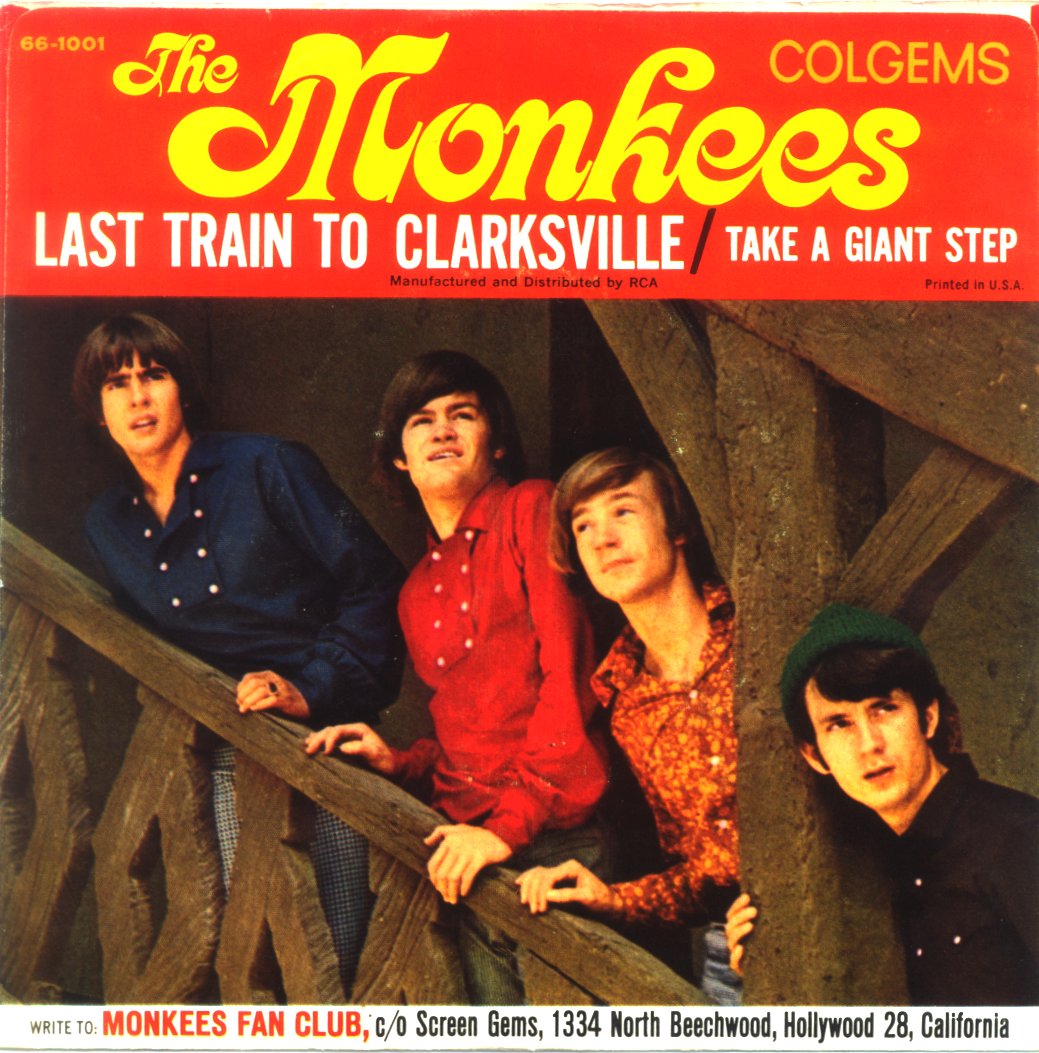
Monkees – Last Train To Clarksville

When I first heard this song as an eight-year-old in 1975 I thought wow…The Monkees are singing about Clarksville Tennessee…right up the road from me! Well no they were not but ignorance is bliss. It ended up fitting Clarksville TN very well because Bobby Hart (co-writer) said the song was written as a protest song against Vietnam but they had to hide that because it was The Monkees.

The song is about a guy who gets drafted and goes to fight in the war. The train is taking him to an army base, and he knows he may die in Vietnam. At the end of the song, he states, “I don’t know if I’m ever coming home.”

Bobby Hart said: “We were just looking for a name that sounded good. There’s a little town in Northern Arizona I used to go through in the summer on the way to Oak Creek Canyon called Clarksdale. We were throwing out names, and when we got to Clarksdale, we thought Clarksville sounded even better. We didn’t know it at the time, [but] there is an Air Force base near the town of Clarksville, Tennessee – which would have fit the bill fine for the storyline. We couldn’t be too direct with The Monkees. We couldn’t really make a protest song out of it – we kind of snuck it in.”

Tommy Boyce and Bobby Hart, a songwriting team came up with many songs for The Monkees. They also wrote songs for Chubby Checker and Jay & the Americans.

The only Monkee to appear on this was Mickey Dolenz singing the lead vocal. The Monkees would get beat down by the music press because they didn’t play their own instruments. Some bands like the Beach Boys used the same session musicians. Peter Tork and Michael Nesmith were good musicians who played long before the Monkees. Later on, they DID play their own instruments starting with their 3rd album Headquarters and still had hits. As far as Rock and Roll Hall Of Fame…they should be inside the Hall. The Monkees influenced many young kids through more than just one generation.

Last Train To Clarksville peaked at #1 on the Billboard 100 in 1966. They followed this up with another number 1 with I’m A Believer.


From Songfacts

Bobby Hart got the idea for the lyrics when he turned on the radio and heard the end of The Beatles “Paperback Writer.” He thought Paul McCartney was singing “Take the last train,” and decided to use the line when he found out McCartney was actually singing “Paperback Writer.” Hart knew that The Monkees TV series was pitched as a music/comedy series in the spirit of The Beatles movie A Hard Day’s Night, so he knew emulating The Beatles would be a winner. To do that, he made sure to put a distinctive guitar riff in this song, and wrote in the “Oh No-No-No, Oh No-No-No” lyrics as a response to the Beatles famous “Yeah Yeah Yeah.”

The only Monkee to appear on this song was Micky Dolenz, who sang lead. The four members of the group were chosen from over 400 applicants to appear on a TV show based on The Beatles movie A Hard Day’s Night. The show was about a fictional band, so the members were chosen more for their looks and acting ability than for their musical talent.

Session musicians played on the Monkees albums, usually some combination of Glen Campbell, Leon Russell, James Burton, David Gates, Carol Kaye, Jim Gordon and Hal Blaine. According to the liner notes on the 1994 reissue of the album, however, members of a group called the Candy Store Prophets did the instrumental backing on this track at a session that took place July 25, 1966 at RCA Victor Studios in Hollywood. The Candy Store Prophets were Tommy Boyce and Bobby Hart’s band, and included Boyce on acoustic guitar, Gerry McGee on electric guitar, Larry Taylor on bass and Billy Lewis on drums. Additional musicians on this track were Wayne Erwin and Louie Shelton on guitar, and Gene Estes on percussion.

Often reported as having played guitar on this track is Jesse Ed Davis, a Native American whose accomplishment included backing George Harrison at the Concert for Bangla Desh and playing the solo on Jackson Browne’s first hit, “Doctor My Eyes.”

This was The Monkees’ first single. It was released shortly after their TV show started on NBC and got a lot of publicity as a result. The Monkees followed it up with another hit, “I’m A Believer,” and had several more chart entries before their show was canceled in 1968. Eventually, the group wrote their own songs and played their own instruments.

When this song was released as a single, it went straight to #1, knocking “96 Tears” by ? & the Mysterians down to #2.

The Monkees took a lot of heat when they became successful recording artists without playing on their songs. Their drummer Micky Dolenz explained in The Wrecking Crew film: “I think there was a lot of resentment in the recording industry that we’d come out of nowhere, left field, and sort of just shot right to the top without having to kind of go through the ropes. The music industry back then was pretty crooked, and some people say even to this day. And I didn’t know at the time anything about the business end of it, but all of the sudden, the radio stations, the rack jobbers, the distributors, all these people that had a lot of power at that time – all of the sudden, they had to start playing the Monkees songs; they had to start racking them, they had to start distributing them. They had no choice. It was just so huge because of the television show. And that’s the first time anything like that had ever happened. And I think that probably created a lot of resentment.”

There is a certain lyrical dissonance in this song, as the upbeat music is contrasted with lyrics about being shipped off to war. Carol Kaye, who played bass on the session, told Songfacts, “The tempo of the tune was a good tempo. And that’s the main thing is to keep that tempo going. Back in the ’60s, you’re playing for people who dance. And if the tempo is 1-2-3-4, that’s a dance tempo. So you’re going to keep the tempo up, that’s important. So no, the mood of the song is not critical if the tempo is high, if the tempo is fast. If it’s slow, yeah, it’s kind of critical, and it depends upon how much is happening in the tune, too.”

One of the key elements of the song came out of sheer exhaustion. Micky Dolenz explains: “We were working 24/7. Normally, you do a TV series – eight, 10 hours a day – and go home. But after filming the show, I would go into the studio and sometimes record two or three lead vocals a night. So, it’s all a bit of a blur. That middle bit, there were words to that. Bobby Hart tells the story that I said, ‘It’s midnight, I have to be on the set at six. I can’t learn to sing that.’ He said, ‘Okay, just go ‘Doo-doo-doo-doo-doo-doo-doo-doo…’ You never know, if I’d sang all those words, it might not have worked.”

Last Train To Clarksville

Take the last train to Clarksville
And I’ll meet you at the station
You can be there by four-thirty
‘Cause I’ve made your reservation, don’t be slow
Oh, no, no, no
Oh, no, no, no

‘Cause I’m leaving in the morning
And I must see you again
We’ll have one more night together
Till the morning brings my train and I must go
Oh, no, no, no
Oh, no, no, no

And I don’t know if I’m ever coming home

Take the last train to Clarksville
I’ll be waiting at the station
We’ll have time for coffee-flavored kisses
And a bit of conversation
Oh, no, no, no
Oh, no, no, no

Take the last train to Clarksville
Now I must hang up the phone
I can’t hear you in this noisy railroad station all alone
I’m feeling low
Oh, no, no, no
Oh, no, no, no

And I don’t know if I’m ever coming home

Oh

Take the last train to Clarksville
And I’ll meet you at the station
You can be here by four-thirty
‘Cause I’ve made your reservation, don’t be slow
Oh, no, no, no
Oh, no, no, no

And I don’t know if I’m ever coming home
Take the last train to Clarksville

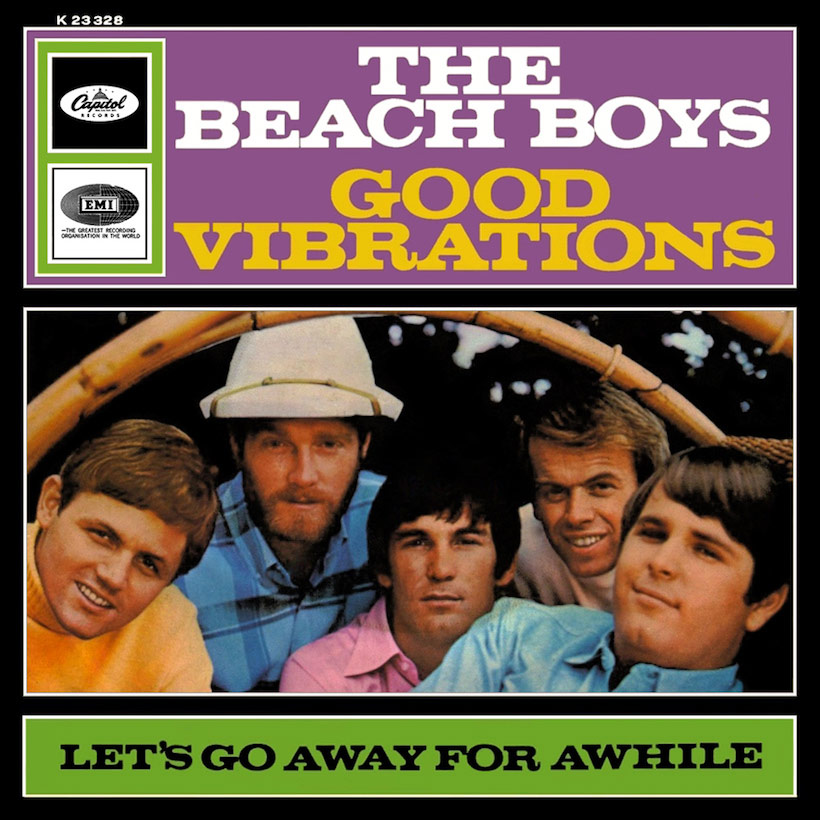
Beach Boys – Good Vibrations

This song is a masterpiece by Brian Wilson.

This was recorded over a two-month period using top Los Angeles session musicians. The Beach Boys didn’t play any instruments on the track. About 90 hours of studio time and 70 hours of tape were used, and at least 12 musicians played on the sessions. It’s hard to know whose performances ended up on the record, but some of the musicians involved were Glen Campbell (lead guitar), Carol Kaye (Electric Bass), Lyle Ritz (Standup Bass), Hal Blaine (drums), Larry Knechtel (organ) and Al de Lory (piano).

Brian Wilson has said that Capital Records thought the song was too long at 3:35 and had psychedelic overtones. Brian had to plead with them to release it. It peaked at #1 on the Billboard 100, #1 in the UK, #2 in Canada, and #1 in New Zealand in 1966. The song was written by Brian Wilson and Mike Love.

Brian Wilson: “My mother used to tell me about vibrations. I didn’t really understand too much of what she meant when I was a boy. It scared me, the word ‘vibrations’ – to think that invisible feelings existed. She also told me about dogs that would bark at some people, but wouldn’t bark at others, and so it came to pass that we talked about good vibrations.”

Ok… A Theremin was used in the song. I was always fascinated by this invention. This unique instrument was invented in 1920 by Russian  Léon Theremin. Jimmy Page would play one in the middle of Led Zeppelin concerts…Before we get to Good Vibrations lets see Léon Theremin play his invention.


From Songfacts

Brian Wilson called this song a “Pocket Symphony,” and experimented with it over the course of 17 recording sessions. At the time, it was the most expensive pop song ever recorded, costing about $50,000 to make.

Brian Wilson worked on this obsessively. At the time, he stayed home and wrote music while the rest of the band toured. Wilson was just starting a very bizarre phase of his life where he would spend long periods in bed and work in a sandbox. During this period, many considered him a genius because of the groundbreaking songs and recording techniques he came up with.

Brian Wilson played bass when the Beach Boys went on the road, but he brought in Carol Kaye to play bass guitar and Lyle Ritz to play upright bass on these sessions. Kaye recalled in a Songfacts interview, “He did the very first take on that with Ray Pohlman at Goldstar and scrapped that. And the other 12 dates I’m playing on – that’s 36 hours – he did not change that bass part all during that time. He changed all the rest of the music, he didn’t change the bass part. This is what he wrote. It was both bass players at that point – I’m playing the upper part and Lyle’s playing the lower part. If you listen to jazz, that’s the feel that he wrote.”

Beach Boys lead singer Mike Love wrote the lyrics for this song, which he told us were “basically a flowery poem.” The song seems to describe a really good acid trip, and while there is nothing specifically in the lyrics about drugs, Love admits that the psychedelic vibe was an influence on his words. Said Love: “It was this flowery power type of thing. Scott McKenzie wrote “If you’re going to San Francisco, be sure to wear some flowers in your hair,” and there were love-ins and all that kind of thing starting to go on.

So the track, the music of ‘Good Vibrations,’ was so unique and so psychedelic in itself. Just the instrumental part of it alone was such a departure from what we have done, like ‘Surfin’ USA’ and ‘California Girls’ and ‘I Get Around’ and ‘Fun, Fun, Fun,’ all of which I had a hand in writing. I wanted to do something that captured this feeling of the track and the times, but also could relate to people. Because I thought that the music was such a departure that who knows how well it would relate to Beach Boys fans at that time.

The one thing that I figured is an absolute perennial is the boy/girl relationship, the attraction between a guy and a girl. So I came up with that hook part at the chorus. It didn’t exist until I came up with that thought. Which is ‘I’m pickin’ up good vibrations, she’s giving me the excitations.’ ‘Excitations’ may or may not be in Webster’s Dictionary, however, it rhymes pretty well with ‘good vibrations.’ It was kind of a flower power poem to suit the times and complement the really amazingly unique track that Cousin Brian came up with.” (Here’s our full Mike Love interview.)

The unusual, high-pitched sound in this song was produced using an electro-theremin, which produces a similar sound to a traditional theremin, an instrument that uses electric current to produce sound (you don’t touch a theremin to play it, but move your hand across the electric field). The theremin was invented in 1919, but was very hard to play, and ended up being used mostly as a sound effects device.

Brian Wilson was familiar with the instrument, as it was used to create eerie sounds in low budget horror movies like The Day the Earth Stood Still and It Came from Outer Space. When he put cellos on “Good Vibrations,” he envisioned an unusual high frequency sound to go along with them, and he thought of the instrument. Wilson couldn’t track down a real theremin, but found an inventor named Paul Tanner who’d been a trombonist with the Glenn Miller Orchestra between 1938-’42. Tanner had developed a similar device with Bob Whitsell called an electro-theremin, which unlike a regular theremin, had no antennas. Tanner was brought in to play the device on the recording.

A huge challenge was re-creating the sound of the theremin for live performances. On the road, they used a modified synthesizer with a ribbon controller that Mike Love would play. In the ’90s, another inventor named Tom Polk created a device called a tannerin, which created a similar sound using a sliding knob and manual volume control. This was much easier to play, and Brian Wilson used it for his 1999 comeback tour.

When Wilson went back to work on the Smile album, he used the tannerin on his new version of “Good Vibrations,” which appeared on the 2004 album. The device was seen at the 2012 Grammy Awards when The Beach Boys performed the song.

Brian Wilson called this song “the summation of my musical vision. A harmonic convergence of imagination and talent, production values and craft, songwriting and spirituality.” He wrote it while on LSD, which explains why the song is the musical embodiment of a spectacular acid trip.

This was recorded in fragments – six different LA studios were used in the recording process, and tape from four of these studios was used in the final cut of the track. It was the first pop song pieced together from parts. In the next few years, The Beatles did a lot of this, as they took various unfinished songs they had written and combined them to make one. >>

Brian Wilson started writing this while recording The Beach Boys’ Pet Sounds album. Once the album was finished, he focused on this song. Wilson was not happy about the poor reviews critics gave Pet Sounds, which today is considered a landmark record, so he worked even harder on this.

Most of The Beach Boys songs featured the vocals of either Mike Love or Brian Wilson, but Carl Wilson was the lead singer on this one. Beach Boy drummer Dennis Wilson was initially tagged to sing the lead vocal but eventually brother Carl was chosen. Dennis claimed to have played the organ on the “na na na na na na” build up. >>

This was the beginning of what was going to be an album called Smile. Wilson recorded the album in about 50 sessions, but it was never released. Considered a “lost album,” Wilson finally finished it in 2004. When he played the album on tour that year, “Good Vibrations” got a rousing response.

This was the last US #1 hit for The Beach Boys until “Kokomo” went to #1 22 years later, setting the record for longest gap between #1 hits on the Hot 100. This record was broken by Cher when “Believe” hit #1 in 1999, 25 years after her previous chart-topper,

In the ’80s, Sunkist used this song in popular commercials for their orange soda (“I’m drinking up good vibrations, Sunkist orange soda taste sensation…”). The vocalist on these spots was Jim Peterik, who was working as a jingle singer at the time but would later form Survivor and co-write all of their hits, including “Eye of the Tiger.” Peterik and Brian Wilson would later cross paths when they worked together on the Beach Boys comeback song “That’s Why God Made the Radio.”

In 2005, a Broadway musical called Good Vibrations opened. The show was based on Beach Boys songs, but failed to find an audience; it closed less than three months later.

Brian Wilson was the only songwriter credited on this track until a 1994 lawsuit awarded Mike Love composer credit for his contributions to the lyrics on this and 34 other Beach Boys songs. Love maintains that Murry Wilson (Brian’s father), handled the publishing details and screwed him out of the songwriting credits.

Todd Rundgren covered this in 1976 on his Faithful album. True to the album’s name, Todd went to great lengths to reproduce every vocal and instrumental aspect of the song (along with several other ’60s hits). Rundgren’s almost-exact copy was a minor hit single on its own, reaching #34 US

Good Vibrations

I-I love the colorful clothes she wears
And the way the sunlight plays upon her hair
I hear the sound of a gentle word
On the wind that lifts her perfume through the air

I’m pickin’ up good vibrations
She’s giving me the excitations (oom bop bop)
I’m pickin’ up good vibrations (good vibrations, oom bop bop)
She’s giving me the excitations (excitations, oom bop bop)
I’m pickin’ up good vibrations (oom bop bop)
She’s giving me the excitations (excitations, oom bop bop)
I’m pickin’ up good vibrations (oom bop bop)
She’s giving me the excitations (excitations)

Close my eyes, she’s somehow closer now
Softly smile, I know she must be kind
When I look in her eyes
She goes with me to a blossom world

I’m pickin’ up good vibrations
She’s giving me excitations (oom bop bop)
I’m pickin’ up good vibrations (good vibrations, oom bop bop)
She’s giving me excitations (excitations, oom bop bop)
Good, good, good, good vibrations (oom bop bop)
She’s giving me excitations (excitations, oom bop bop)
Good, good, good, good vibrations (oom bop bop)
She’s giving me excitations (excitations)

Ah, ah, my my, what elation
I don’t know where but she sends me there
Oh, my my, what a sensation
Oh, my my, what elation
Oh, my my, what

Gotta keep those lovin’ good vibrations a-happenin’ with her
Gotta keep those lovin’ good vibrations a-happenin’

(Ahh)

Good, good, good, good vibrations (oom bop bop)
She’s giving me the excitations (excitations, oom bop bop)
I’m pickin’ up good vibrations

Na na na na na, na na na
Na na na na na, na na na (bop bop-bop-bop-bop, bop)
Do do do do do, do do do (bop bop-bop-bop-bop, bop)

Wacky Races

I would watch this on those magical Saturday mornings when the cartoons last until around noon. Then out the door, I would go but from 7am – noon it was a kids world.

Wacky Races is about a series of car competitions where eleven racers race in different location all over North America. The story revolves around Dick Dastardly and his dog Muttley who is determined to cheat just to win the game but they always lose every time. Wacky Races was produced by Hanna-Barbera and aired from 1968 to 1970.

Inspired by the 1965 film The Great Race the cartoon features eleven teams of racers competing to win the title of “World’s Wackiest Racer.” The roster of competitors included: Dick Dastardly and Muttley, The Slag Brothers, The Gruesome Twosome, Professor Pat Pending, The Red Max, Penelope Pitstop, Sergeant Blast and Private Meekly, The Ant Hill Mob, Lazy Luke, and Blubber Bear, Peter Perfect, and Rufus Ruffcut and Sawtooth.

Image result for wacky races


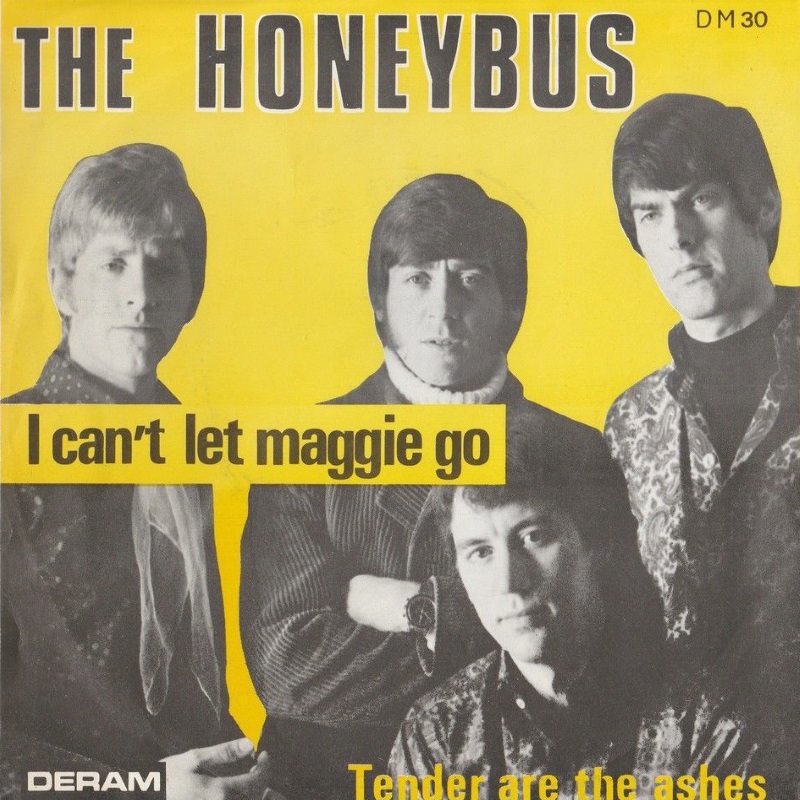
The Honeybus – I Can’t Let Maggie Go

My 19-year-old son came in tonight and said a quick Hi Dad…he then muttered: “I Can’t Let Maggie Go… Honeybus.” I, of course, asked him what the hell he was talking about. He told me it was a song by a band named Honeybus (I thought it was a new band) and to listen to it because he couldn’t get it out of his head. I didn’t ask him where he heard this song but it stuck with me …late 60s light pop.

The band formed in London in 1967. After hitting with this song they were on the front page of music magazines  Disc and Music Echo. The song peaked at #8 in the UK in 1968…but this would be their only hit.

I Can’t Let Maggie Go

She makes me laugh, she makes me cry, with a twinkle of her eye
She flies like a bird in the sky
She flies like a bird and I wish that she was mine
She flies like a bird, oh me, oh my
I see her sigh
Now I know, I can’t let Maggie go

We walk here and we walk there
People stop and people stare
‘Cause she flies like a bird in the sky
She flies like a bird and I wish that she was mine
She flies like a bird, oh me, oh my
I see her sigh
Now I know, I can’t let Maggie go

She flies like a bird in the sky
She flies like a bird and I wish that she was mine
She flies like a bird, oh me, oh my
I see her sigh
Now I know, I can’t let Maggie go

Oh yes, she flies like a bird in the sky
She flies like a bird and I wish that she
was mine (Oh yes, I wish that she was mine)
She flies like a bird, oh me, oh my
I see her sigh
Now I know, I can’t let Maggie go

Nicky Hopkins

I’ve never been a keyboard player…but when I think of keyboardists this man comes to mind. He was one of the busiest session men in the business.

Nicky Hopkins started with Screaming Lord Sutch’s Savages, which also included Jimmy Page… He played with the Cyril Davies All-Stars, one of the first British rhythm & blues bands. Because of illnesses, he started to play on studio sessions. In the studio, he played with the Beatles, Who, Kinks, Rolling Stones and just about everyone else of that era.

He later joined the Jeff Beck Group and was a full member of the Quicksilver Messenger Service.

I’ve read about Nicky from other artists books when I was younger but didn’t know until the internet how many great recordings he played on…Also that he sometimes toured with bands like the Stones on perhaps their greatest tour…the 1972 tour. The first I heard of him was reading he played piano on Revolution by the Beatles.

Here are some other artists talking about Nicky.

Ray Davies: Nicky, unlike lesser musicians, didn’t try to show off; he would only play when necessary. But he had the ability to turn an ordinary track into a gem – slotting in the right chord at the right time or dropping a set of triplets around the back beat, just enough to make you want to dance. On a ballad, he could sense which notes to wrap around the song without being obtrusive. He managed to give “Days,” for instance, a mysterious religious quality without being sentimental or pious.

Pete Townshend: “Nicky was a great talent…He is gone but his wonderful playing will live on and I’m proud that so much of his work will be heard as part of my own. Nicky is a big part of my work and I think of him often.”

Joe Walsh: “We just said, “Hey, we’re not going to tell you what to play! You can play anything you want, dude and it’ll be just fine with us.” Nicky was at his absolute best. He was just playing fantastic and coming up with these parts that just were so special.”

Keith Richards: “What I liked about Nicky is you’d give him a song and he’d develop it, with a couple of passes, into something, almost immediately. He was so easy to work with and he could hang; we’d do sessions for fifteen hours, sometimes two days
and he’d still be there, you know.”

Nicky died in Nashville Tn in 1994 from complications of surgery from Crohn’s Disease.

Below I copied a highlight of his discography.

It’s from the Nicky Hopkins website…It reads like a who’s who in music. These are just some of the albums and singles Nicky played on.

http://www.nickyhopkins.com/?page_id=6

NICKY HOPKINS DISCOGRAPHY HIGHLIGHTS


THE SIXTIES


THE WHO, My Generation, Brunswick/Decca USA
THE KINKS, The Kinks Kontroversy, Pye/Reprise
NICKY HOPKINS, The Revolutionary Piano Of…, CBS
THE KINKS, Face To Face, Pye / Reprise
ROLLING STONES, Between The Buttons, Decca/London
ROLLING STONES, Their Satanic Majesties Request, Decca/London
ROLLING STONES, Beggar’s Banquet, Decca/London
KINKS, Village Green Preservation Society, Pye/Reprise
JEFF BECK GROUP, Truth, Columbia/Epic
THE KINKS, Something Else By The Kinks, Pye/Reprise
DUSTY SPRINGFIELD, Dusty…Definitely, Philips
ROLLING STONES, Let It Bleed, Decca/London
JEFF BECK GROUP, Beck-Ola, Columbia / Epic
STEVE MILLER BAND, Brave New World, Capitol
STEVE MILLER BAND, Your Saving Grace, Capitol
JEFFERSON AIRPLANE, Volunteers, RCA
FAMILY, Entertainment, Reprise
ROY HARPER, Folkjokeopus, Liberty
ELLA FITZGERALD, Ella, Warner Brothers
THE MOVE, The Move, Cube
BILLY NICHOLLS, Would You Believe, Immediate


THE SEVENTIES


STEVE MILLER BAND, Number 5, Capitol
QUICKSILVER MESSENGER SERVICE, Shady Grove, Capitol
VARIOUS, Woodstock, Atlantic
ROLLING STONES, Sticky Fingers, Rolling Stones Records
THE WHO, Who’s Next, Track
NICKY HOPKINS, Jamming With Edward, Rolling Stones Records
JOHN LENNON, Imagine, Apple
ROLLING STONES, Exile On Main Street, Rolling Stones Records
HARRY NILSSON, Son Of Schmilsson, RCA Victor
CARLY SIMON, No Secrets, Elektra
NICKY HOPKINS, The Tin Man Was A Dreamer, CBS
GEORGE HARRISON, Living In The Material World, Apple
RINGO STARR, Ringo, Apple
ROLLING STONES, Goat’s Head Soup, Rolling Stones Records
ANDY WILLIAMS, Solitaire, CBS
JOHN LENNON, Walls & Bridges, Apple
ROLLING STONES, It’s Only Rock’n’Roll, Rolling Stones Records
JOE COCKER, I Can Stand A Little Rain, Fly
PETER FRAMPTON, Something’s Happening, A & M
RINGO STARR, Goodnight Vienna, Apple
MARTHA REEVES, Martha Reeves, MCA
NICKY HOPKINS, No More Changes, Mercury (US)
ART GARFUNKEL, Breakaway, CBS
ROLLING STONES, Black & Blue, Rolling Stones Records
JERRY GARCIA, Reflections, United Artists
ROD STEWART, Footloose And Fancy Free, Warner Brothers
JENNIFER WARNES, Jennifer Warnes, Arista
ROD STEWART, Blondes Have More Fun, Riva
LOWELL GEORGE, Thanks I’ll Eat It Here, Warner Brothers
POINTER SISTERS, Priority, Planet


THE EIGHTIES


ROLLING STONES, Emotional Rescue, Rolling Stones Records
TIM HARDIN, Unforgiven, Arc International
GRAHAM PARKER & THE RUMOUR, The Up Escalator, Stiff
ROLLING STONES, Tattoo You, Rolling Stones Records
NILS LOFGREN, Night Fades Away, MCA/Backstreets
MEATLOAF, Dead Ringer, Cleveland/Epic
GRAHAM PARKER & THE RUMOUR, Another Grey Area, RCA
DUSTY SPRINGFIELD, White Heat, Mercury/Casablanca
KING OF COMEDY, Soundtrack, Warner Brothers
CARL WILSON, Youngblood, Caribou
JULIO IGLESIAS, 1100 Bel Air Place, CBS
BELINDA CARLISLE, Belinda, IRS
ROD STEWART, Rod Stewart/Every Beat Of My Heart, Warner Brothers
PAUL MCCARTNEY, Flowers In The Dirt,Capitol
JACK BRUCE, A Question Of Time, Epic


THE NINETIES


ROGER CHAPMAN, Hybrid & Lowdown, Polydor
GARY MOORE, Still Got The Blues, Virgin
NICKY HOPKINS, The Fugitive (Soundtrack), Toshiba-EMI
NICKY HOPKINS, Patio (Soundtrack), Toshiba-EMI
JAYHAWKS, Hollywood Town Hall, Columbia
JOE SATRIANI, Extremist, Legacy Recordings
SPINAL TAP, Break Like The Wind, MCA
MATTHEW SWEET, Altered Beast, Zoo/BMG
JOE WALSH, Robocop Soundtrack, Rhino/Pyramid
GENE CLARK, Under The Silvery Moon, Delta De Luxe
FRANKIE MILLER, Long Way Home, Jerkin’ Crocus


THE SINGLES


SCREAMING LORD SUTCH, Jack The Ripper/Don’t You Just Know It, Decca
THE WHO, Anyway Anyhow Anywhere , Brunswick
THE KINKS, Till The End Of The Day, Pye/Reprise
CYRIL DAVIES R & B ALL STARS, Country Line Special/Chicago Calling, Pye International/Dot
CLIFF BENNETT & REBEL ROUSERS, My Old Standby (B-Side), Parlophone
RITCHIE BLACKMORE ORCHESTRA, Little Brown Jug/Getaway, Oriole
VASHTI, Some Things Just Stick In Your Mind ,Decca
DAVY JONES & THE LOWER THIRD, You’ve Got A Habit Of Leaving, Parlophone
PRETTY THINGS, Midnight To Six Man, Fontana
THE KINKS, Dedicated Follower Of Fashion, Pye/Reprise
THE KINKS, Sunny Afternoon, Pye/Reprise
DAVID BOWIE, Can’t Help Thinking About Myself, Pye
TWICE AS MUCH, Sittin’ On A Fence/Baby I Want You, Immediate
CAT STEVENS, Matthew And Son/Granny, Deram
ROLLING STONES, We Love You, Decca/London
ROLLING STONES, 2000 Light Years/She’s A Rainbow, Decca/London
NICKY HOPKINS, Mr. Pleasant, Polydor/Decca
THE KINKS, Autumn Almanac, Pye (UK)
DAVE DAVIES, Death Of A Clown, Pye/Reprise
JEFF BECK, Beck’s Bolero, Columbia/Epic
YARDBIRDS, Little Games, Columbia
MARC BOLAN, Jasper C. Debussy, Track
PP ARNOLD, The First Cut Is The Deepest, Immediate
BEATLES, Hey Jude/Revolution (B-side), Apple
ROLLING STONES, Jumpin’ Jack Flash, Decca/London
THE KINKS, Days, Pye/Reprise
DONOVAN, Goo Goo Barabajagal, Epic
SCAFFOLD, Lily The Pink, Parlophone
FATS DOMINO, Have You Seen My Baby, Reprise
JOHN LENNON/PLASTIC ONO BAND, Happy Christmas/War Is Over, Apple
THE WHO, Let’s See Action, Track
ROLLING STONES, Tumbling Dice, Rolling Stones
HARRY NILSSON, Remember Christmas, RCA
ROLLING STONES, Angie, Rolling Stones
GEORGE HARRISON, Give Me Love, Apple
RINGO STARR, Photograph, Apple
RINGO STARR, You’re Sixteen, Apple
JOE COCKER, You Are So Beautiful, A & M
ART GARFUNKEL, I Only Have Eyes For You, Columbia
JULIO IGLESIAS / WILLIE NELSON, To All The Girls I’ve Loved Before, CBS
JOE WALSH / STEVE EARLE, Honey Don’t (Beverley Hillbillies), Fox Records
JOE WALSH / FRANKIE MILLER, Guilty Of The Crime, Pyramid
PAUL MCCARTNEY, Beautiful Night/Same Love, Oobu-Joobu 6




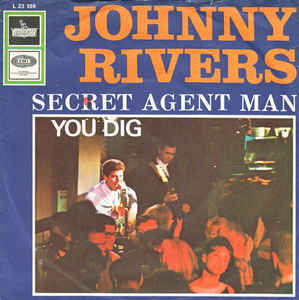
Johnny Rivers – Secret Agent Man

The opening guitar riff is worth the price of admission for the song. It’s one of those riffs you are required to learn by law if you want to be a guitar player. It was written by P. F. Sloan and Steve Barri. I always liked the song but it really made an impression on me when a band named the White Animals played this song when they opened up for the Kinks in the early 80s.

The opening lick was written for a CBS TV Show called Danger Man. After the short theme caught on, they wrote a complete song around it. Sloan said ” When the title of the show was changed to Secret Agent, he says it was a breakthrough. “That changed everything,” “The lyric just came together in no time at all. It just worked immediately.”

The song peaked at #3  in the Billboard 100 in 1966.

From Songfacts

This was the theme for a TV series called Secret Agent, starring Patrick McGoohan. Unlike many TV themes, the song held up on its own with a distinctive dueling guitar sound.

This is an example of “Spy” music. The sound implied action and was associated with James Bond movies.

P.F. Sloan and Steve Barri, who at the time was just starting the band The Grass Roots, wrote this song. Secret Agent was a US adaptation of a hit show in England called Dangerman, and CBS needed a 15-second theme to replace the British version. Sloan wrote of the song (from his website): “Somebody thought I should do a full length instrumental of the song. So I did. Meanwhile, the song was picked by CBS and Johnny Rivers recorded the quick 15-second song for the TV show. The Ventures, the genius guitar instrumental group, heard the demo and recorded and released the song way before Rivers even had a finished song. The publishers asked me to finish the song, Rivers recorded it, not one of his favorite songs back then, but he’s happier with it now.”

Some of the artists to record this song include Hank Williams Jr., Devo and Blues Traveler.

This was used in commercials for Wal-Mart and also for Chase credit cards. Some of the many movies to use the song include Repo Man, Bowfinger, Can’t Buy Me Love, Austin Powers: International Man of Mystery, and Ace Ventura: When Nature Calls.

According to P.F. Sloan, Johnny Rivers didn’t like this song and was content to record just the quick TV version until The Ventures charted with it. Both acts recorded for subsidiaries of Liberty Records, and the label was able to convince Rivers to record it.

Sloan told us in 2014 that Rivers had clearly embraced the song. “I saw him about two months ago and I’ve got to say he did an absolutely killer version,” he said. “Johnny must have sang that song half a million times, and he still sings it with so much gusto, and the audience goes nuts. That’s something great to see.”

The Ventures instrumental version peaked at #54 US on March 26, 1966. Rivers’ version hit its peak on April 23. His rendition is substantially longer, running 3:03 vs. 2:17.

Secret Agent Man

There’s a man who leads a life of danger
To everyone he meets he stays a stranger
With every move he makes another chance he takes
Odds are he won’t live to see tomorrow

Secret agent man, secret agent man
They’ve given you a number, I know they’ve take away your name

Beware of pretty faces that you find
A pretty face can hide an evil mind
Ah, be careful what you say
Or you’ll give yourself away
Odds are you won’t live to see tomorrow

Secret agent man, secret agent man
They’ve given you a number, I know they’ve take away your name

Secret agent man, secret agent man
They’ve given you a number, oh they’ve taken away your name

Swingin’ on the Riviera one day
And then layin’ in the Bombay alley next day
Oh, don’t you let you let the wrong word slip
While kissing persuasive lips
Odds are you won’t live to see tomorrow

Secret agent man, secret agent man
They’ve given you a number, oh they’ve take away your name

Secret agent man

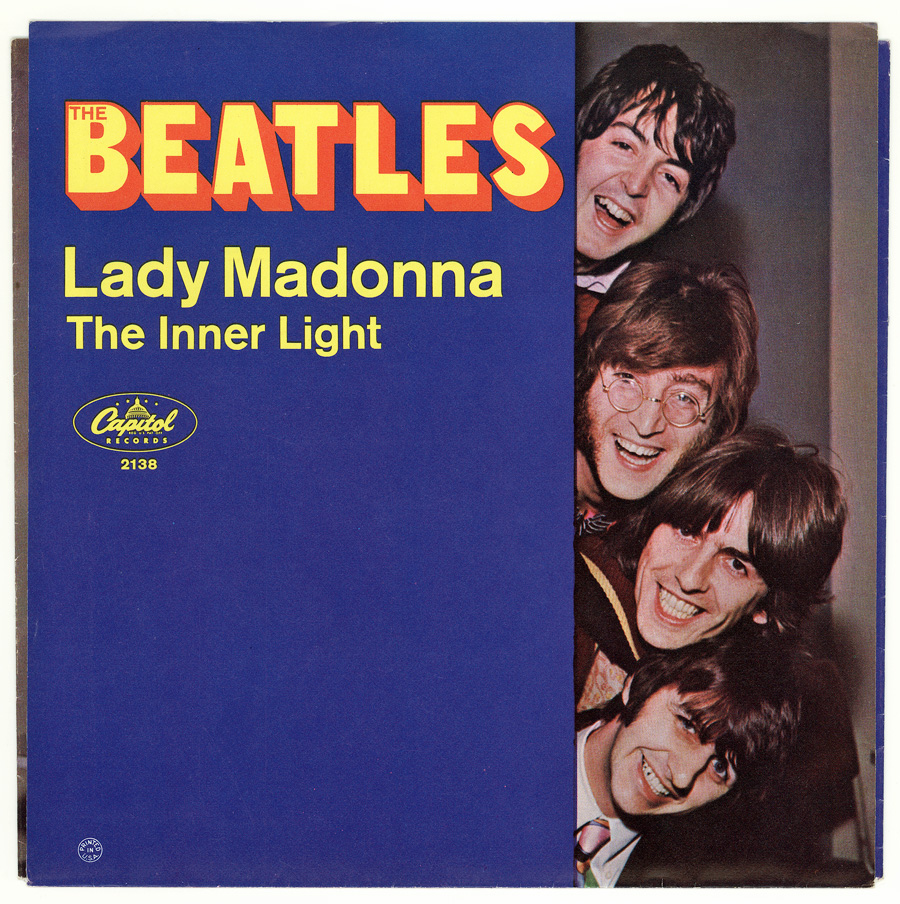
The Beatles – The Inner Light

This song was the B side to Lady Madonna and a terrific song and melody. This is a George Harrison song and has gone largely unnoticed. It was George’s first song to appear on a single.

Harrison recorded the instrumental track for The Inner Light in India in January 1968, during the sessions for his Wonderwall Music soundtrack album. The only Beatles studio recording to be made outside Europe, the song introduced instruments such as sarod, shehnai, and pakhavaj.

George was reluctant to sing it because he was afraid he would not do it justice. Paul told him ‘You must have a go, don’t worry about it, it’s good.” McCartney and Lennon coaxed George into singing it. Two days later, McCartney and Lennon overdubbed backing vocals at the very end of the song, over the words “Do all without doing“.

George said about the song: : “Following John and I’s appearance on ‘The Frost Programme,’ the Sanskrit scholar Juan Mascaro, who was present in the audience, wrote a complimentary letter to me praising ‘Within You Without You.'” Juan’s letter stated: “It is a moving song. May it move the souls of millions.” George continues: “He also sent me a book called ‘Lamps Of Fire,’ suggesting that I wrote a song with the words of “Tao Te Ching.’  The words of ‘The Inner Light’ came from that book, page 66, 48a.”

“The Inner Light” finally appeared on an album called Rarities (released in the UK in 1978 and the US in 1980, and then the Past Masters CDs released in 1987.

Paul McCartney’s quote on the song… Forget the Indian music and listen to the melody. Don’t you think it’s a beautiful melody? It’s really lovely.

From Songfacts

George Harrison wrote this song. It was released as the B-side of “Lady Madonna” and was Harrison’s first song to appear on a single.

All the music was recorded by Indian session musicians at the EMI studios in Bombay, India, while George was working on the soundtrack to the movie Wonderwall.

George Harrison had originally recorded this for the Wonderwall soundtrack in January 1968. When The Beatles got together for recording sessions shortly before their trip to India, John and Paul added harmonies to the final line, “Do all without doing.” 

The lyrics are a translation of a section of the Tao Te Ching. Juan Mascaro, a Sanskrit teacher at Cambridge University, sent the book to George.

This was Harrison’s last Indian-themed Beatles song.

The original release was in mono; a stereo version was mixed in 1970 and used on the Past Masters compilation. The mono mix features an extra Indian instrument in the intro that did not make it to the stereo version.

Jeff Lynne from Electric Light Orchestra performed this at George Harrison’s 2002 memorial show The Concert For George. Lynne was good friends with Harrison and played with him in The Traveling Wilburys.

The Inner Light

Without going out of my door
I can know all things of earth
Without looking out of my window
I could know the ways of heaven
The farther one travels
The less one knows
The less one really knows

Without going out of your door
You can know all things on earth
Without looking out of your window
You could know the ways of heaven
The farther one travels
The less one knows
The less one really knows

Arrive without traveling
See all without looking
Do all without doing