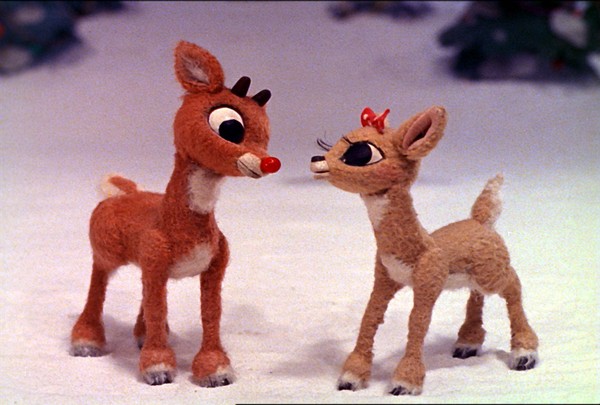
Watching Rudolph the Red-Nosed Reindeer every year is the same as setting up the tree. Every year I would look forward to seeing this along with the others but what a fantastic durable show this has been. When I hear Burl Ives in anything…I think of him as the narrator Sam the Snowman of this program.
The characters are wonderful. Well except those other young reindeer who really come down on Rudolph when his nose lights up.
Hermey the elf who wants to be a dentist Clarice – The reindeer who likes Rudolph just as he is red nose and all. Yukon Cornelius the prospector who loves silver and gold and has a tongue that can find his silver and gold. Abominable Snowman – The bad guy of the show who only needs a dentist to make him a good guy. Head Elf – He leans on Hermey to get his elf self-act together and discourages him from being a dentist…I never liked him too much.
Throughout the special, Yukon Cornelius is seen throwing his pickaxe into the ground, taking it out and licking it. It turns out that he is checking for neither gold nor silver; Yukon was actually searching for an elusive peppermint mine. In a scene right at the end of the special’s original broadcast, deleted the next year to make room for the Misfit Toys’ new scene, Cornelius pulled his pick from the ground, licked it and said, “Peppermint! What I’ve been searching for all my life! I’ve struck it rich! I’ve got me a peppermint mine! Wahoo!” The scene was restored in 1998 and has been reinstated in all the subsequent home video release except for the 2004 DVD release. However, this scene is still cut from recent televised airings.
The Island of Misplaced Toys got to me when I was a kid. I really felt sorry for these lonely toys. King Moonracer was over the island and tried to convinced Rudolph to tell Santa about them so he could pick them up and find kids who would play with them.
The original 1964 airing did not include the closing scene where Santa picks up the misfit toys. That scene was added in 1965, in response to complaints that Santa was not shown fulfilling his promise to include them in his annual delivery.
The stop animation in this works really well.
The songs are really good. Silver and Gold, Holly Jolly Christmas, Jingle Jingle Jingle, We Are Santa’s Elves, There’s Always Tomorrow, We’re a Couple of Misfits and The Most Wonderful Day of the Year.
It’s hard to resist this song. It automatically makes me happy when I hear it. I see Snoopy dancing on Schroeder’s piano.
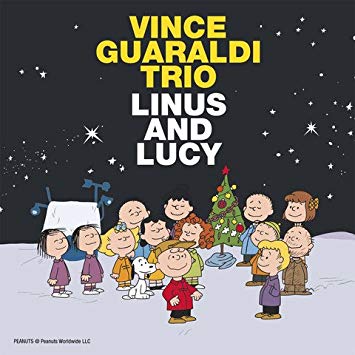
Ironically, just about everyone would call this “the Charlie Brown song” even though it’s actually titled after Linus and Lucy Van Pelt, brother and sister in Charles Schulz’s Peanuts comic strip universe.
The song is most famous for its use in the yearly favorite A Charlie Brown Christmas, which first aired in 1965, but it was written two years earlier for a documentary about Schulz and the Peanuts gang called A Boy Named Charlie Brown, which never aired.
Songfacts
Guaraldi wrote a series of songs for the project, including “Linus and Lucy,” that he recorded with his group, the Vince Guaraldi Trio. Even though A Boy Named Charlie Brown was shelved, the soundtrack was released in 1964, which is where “Linus and Lucy” first appeared.
In 1965, Mendelson put together the first Peanuts TV special, A Charlie Brown Christmas, using many of the same people who worked on the documentary. “Linus and Lucy” formed the score, and a song he wrote with Guaraldi called “Christmas Time Is Here” was included in a key scene.
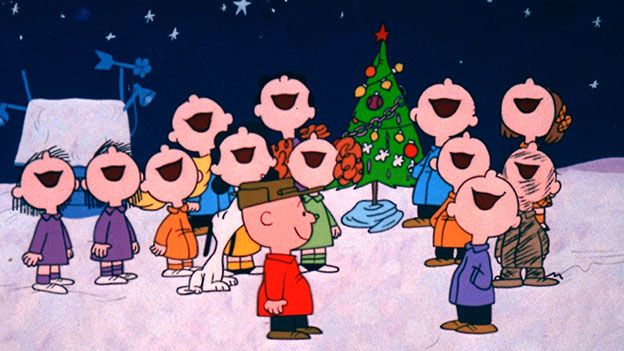
A Charlie Brown Christmas aired on CBS and was a huge hit. It bucked convention, with actual children providing the voices, no laugh track, and an anti-materialism message. The jazz stylings of the music – something that had never been done in a high-profile animated children’s special – went over very well with viewers of all generations, and this song quickly became associated with the Peanuts.
With the exception of a limited 2013 release, this song was never released as a single, although thanks to steady airplay every December, it remains a holiday favorite, eliciting fond memories of the TV special.
The Vince Guaraldi Trio worked on more Peanuts projects and did a reworking of this song on a 1968 album called Oh Good Grief!. In 1976, Guaraldi died from a heart attack at age 47.
Amongst the many honors this tune has enjoyed over the years, it was the wake-up alarm music for the crew of the Space Shuttle Endeavour’s March 2008 mission “STS-123.” That was played on Day 2 of the mission. Since Day 2 is traditionally the day on which the crew does an inspection for launch damage to the ship – a precaution looking back to the 2003 Space Shuttle Columbia’s disaster – the crew could probably appreciate some lighten-up music that day.
The Peanuts were my favorite cartoon growing up and I would never miss their Thanksgiving, Halloween, and Christmas specials. Everyone can relate to Charlie Brown because we lose more than we win in life. He doesn’t get to kick that football, his dog has more things than he does and he is forever trying to get the elusive little redhead girl to notice him.
The Peanuts inhabit a kid’s world where grownups are felt but not heard. At least not in English.
This 1965 special has everything good about them in one show.
The gang is skating and Charlie Brown is telling Linus that despite Christmas being a happy time he is depressed. Linus tells Charlie that is normal and Lucy pipes in with “Of all the Charlie Browns in the world, you’re the Charlie Browniest.” That sums it all up.
Charlie gets to direct the Christmas play and his main job was to get a spectacular Christmas tree under Lucy’s orders. …He picks the only real tree there…more like a branch but he is sure it will do the job. Most of the gang do not agree when he comes back with the tree but Charlie persists. Linus gets up and reads from the Bible and the inflection he lends to the reading is great.
After that, you will need to watch because it will be worth it.
Aluminum Christmas trees were marketed beginning in 1958 and enjoyed fairly strong sales by eliminating pesky needles and tree sap. But the annual airings of A Charlie Brown Christmas swayed public thinking: In the special, Charlie Brown refuses to get a fake tree. Viewers began to do the same, and the product was virtually phased out by 1969. The leftovers are now collector’s items.
Actors and Actresses The early Peanuts specials made use of both untrained kids and professional actors: Peter Robbins (Charlie Brown) and Christopher Shea (Linus) were working child performers, while the rest of the cast consisted of “regular” kids coached by Melendez in the studio. When Schulz told Melendez that Snoopy couldn’t have any lines in the show—he’s a dog, and Schulz’s dogs didn’t talk—the animator decided to bark and chuff into a microphone himself, then speed up the recording to give it a more emotive quality.
I discovered Star Trek in the 1980s. It was one of those marathons that some station ran at the time. What impressed me was those wonderful stories. Some people gripe about the special effects…to me they were fine. They got the point across and that is what counts. William Shatner’s acting is a little different but hey…he is Captain Kirk. Leonard Nimoy was brilliant as the Vulcan Spock.
There are too many good episodes to pick from… the show only had one bad episode that I will not watch again…and that one is Spock’s Brain…Leonard Nimoy didn’t like that one either.
This episode has the beautiful Joan Collins and features time travel which is always a plus.
Capt. Kirk: You were actually enjoying my predicament back there. At times, you seem quite human.
Spock: Captain, I hardly believe that insults are within your prerogative as my commanding officer.
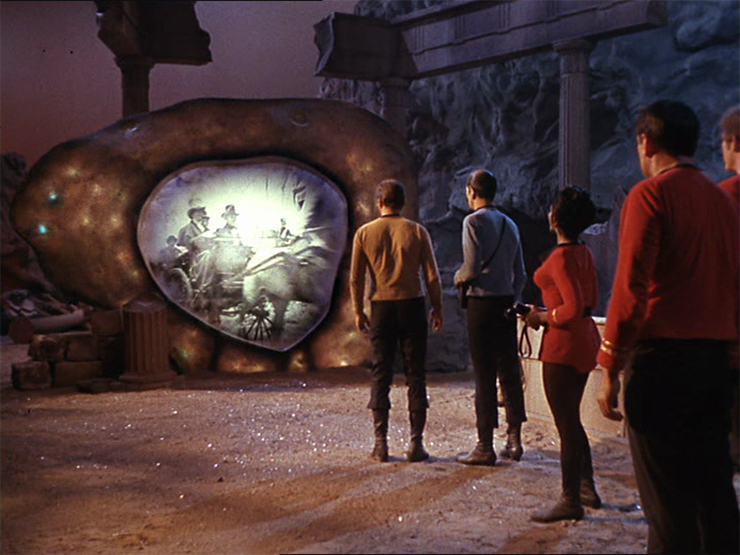
Notice the picture below…the Andy Griffith set was used…you see “Floyds Barber Shop”
Star Trek: The City On The Edge Of Tomorrow
The characters: Spock, Captain Kirk, Edith Keeler, Dr. McCoy, Scottie, Sulu, Uhura, Rodent, Galloway, and The Guardian.
When an accident causes Dr. McCoy to go temporarily insane, he escapes to a strange planet. There, the search party discovers a device left by a superior, vanished civilization, a time portal that plays the history of Earth for them – but then Bones jumps through it into the past, causing a change in history important enough to make the Enterprise vanish. Kirk and Spock, who fortunately made a tricorder recording, must attempt to go through to just before McCoy’s arrival and stop him from changing history in the United States during the Great Depression, where they have no advanced technology available
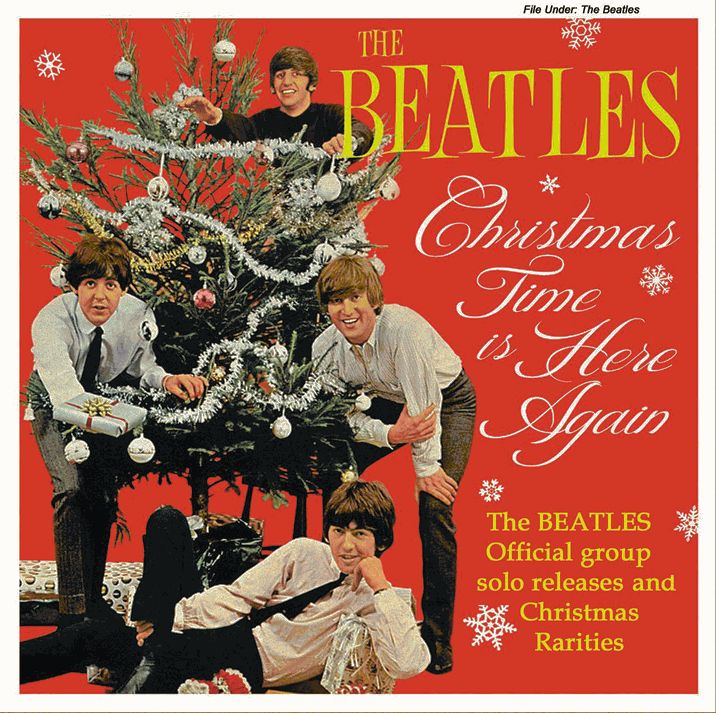
The Beatles recorded this in 1967 and wasn’t released until 1994 paired with “Free As A Bird”. It is a fun Christmas song that will stick in your head. The Beatles did not release a Christmas song commercially… only to their fan club when they were active.
Recorded December 6, 1966, and November 28, 1967, in London, England, this song was never officially released until it appeared as the B-side to “Free As A Bird” in 1994. The original version was distributed to The Beatles fan club in 1967. It’s the only song ever written specifically for the Beatles Fan Club members.
Many upbeat Pop groups of this era like The Beach Boys and The Four Seasons released Christmas songs, but The Beatles never had an official Christmas release.
Christmas Time Is Here Again
Christmas time is here again Christmas time is here again Christmas time is here again Christmas time is here again
Ain’t been round since you know when Christmas time is here again O-U-T spells “out”
Christmas time is here again Christmas time is here again Christmas time is here again Christmas time is here again
Ain’t been round since you know when Christmas time is here again O-U-T spells “out”
Christmas time is here again Christmas time is here again Christmas time is here again Christmas time is here again
Ain’t been round since you know when Christmas time…[music continues and fades to background]
[spoken]
This is Paul McCartney here, I’d just like to wish you everything you wish yourself for Christmas.
This is John Lennon saying on behalf of the Beatles, have a very Happy Christmas and a good New Year.
George Harrison speaking. I’d like to take this opportunity to wish you a very Merry Christmas, listeners everywhere.
This is Ringo Starr and I’d just like to say Merry Christmas and a really Happy New Year to all listeners
[a John Lennon pastiche at this point, very hard to understand]
This song is on the B side of Abbey Road in the medley right after Mean Mr. Mustard.The song was brought up and recorded on a demo for the White Album. John then brought it up for inclusion on Let It Be. After that he made the statement that he would give it to a “Liverpool Folk Singer.”
John contributed Sun King, Mean Mr. Mustard, and Polythene Pam to the medley.
The song was about two people… Pat Hodgett, who was a regular attendee at the Cavern Club when The Beatles played in the early 60’s. It was readily known that Pat was in the habit of eating polythene… The Beatles affectionately referred to her as “Polythene Pat”
John remembering the second girl: So this poet took me to his place, and I had a girl and he had one he wanted me to meet. He said she dressed up in polythene, which she did. In polythene bags. She didn’t wear jackboots and kilts – I just sort of elaborated – and no, she didn’t really look like a man. There was nothing much to it. It was kind of perverted sex in a polythene bag. But it provided something to write a song about.”
The poet’s name was Royston Ellis… The girl in the polythene bag could have been Royston’s girlfriend at the time…remembered as Stephanie.
Paul McCartney: “John, being Royston’s friend, went out to dinner with him and got pissed (drunk) and stuff and they ended up back at his apartment with a girl who dressed herself in polythene for John’s amusement, so it was a little kinky scene…She was a real character.”
From Songfacts
Polythene is a British term for polyethylene, a plastic polymer used in containers, insulation, and packaging. Written by John Lennon, this song has a rather strange background, and fortunately, our Beatles expert Pattie Noah has sorted it out.
Lennon sang this in a thick Liverpool accent. Like the other Beatles, his regular singing voice sounded very American because he grew up listening to US artists.
In the line, “She’s the kind of a girl that makes the News Of The World,” The News Of The World is a tabloid newspaper that specializes in risqué news reporting. Pam must have been a wild girl.
The Beatles recorded this as one song with “She Came In Through the Bathroom Window.”
Originally intended for The White Album, this was used in a suite of songs at the end of Abbey Road.
Polythene Pam
Well, you should see Polythene Pam She’s so good-looking but she looks like a man Well, you should see her in drag dressed in her polythene bag Yes, you should see Polythene Pam Yeah, yeah, yeah
Get a dose of her in jackboots and kilt She’s killer-diller when she’s dressed to the hilt She’s the kind of a girl that makes the “News of the World” Yes, you could say she was attractively built Yeah, yeah, yeah
This short song was on the B Side of Abbey Road in the Medley. I really like Paul McCartney’s fuzz bass on this track. The song is right before “his sister Pam’s” song Polythene Pam which continues the medley.
John Lennon: In Mean Mr Mustard I said ‘his sister Pam’ – originally it was ‘his sister Shirley’ in the lyric. I changed it to Pam to make it sound like it had something to do with Polythene Pam. They are only finished bits of crap that I wrote in India.
John Lennon got the idea for this song from a newspaper article he read about a miser. “Mr. Mustard” was John Mustard, who was described in the story as “an exceptionally mean man.” His wife was divorcing him because, among other things, she couldn’t stand being in the dark all the time – he insisted on keeping the lights off most of the time to save money. The article appeared in the Daily Mirror on June 7, 1967, with the headline, “Scotsman’s Meanness ‘Was Cruel.'”
The article read:
SCOTSMAN’S MEANNESS ‘WAS CRUEL’
“Scotsman John Mustard – an “exceptionally mean man” – gave his wife only £1 in the year before they parted, a Divorce Court judge said yesterday.
Mr. Mustard, a civil servant, was also so mean with lighting and heating that he went far beyond what any wife could be expected to bear, said Mr. Justice Rees.
LIVED IN THE DARK
To save electricity, he would turn off the light while they were listening to the radio, “because it was not necessary to see in order to listen.”
And he would also shave and go to bed in the dark.
The judge said:- “He was at pains to explain that he came from North of the Border, where carefulness was part of the upbringing.”
He added that:- “His conduct affected her health and made life unendurable.”
The judge granted 55-year-old Mrs. Freda Mustard, a deputy head mistress, a decree nisi because of cruelty by Mr. Mustard, who lives at Old Park-View, Enfield.
HE DENIED IT
Mr. Mustard, 65, denied cruelty and alleged that his wife deserted him. The judge rejected that allegation.
The judge said he did not believe that Mr. Mustard was being vicious or unpleasant toward his wife.
But there was “a menacing quality about him to which he wife was particularly sensitive.”
From Songfacts
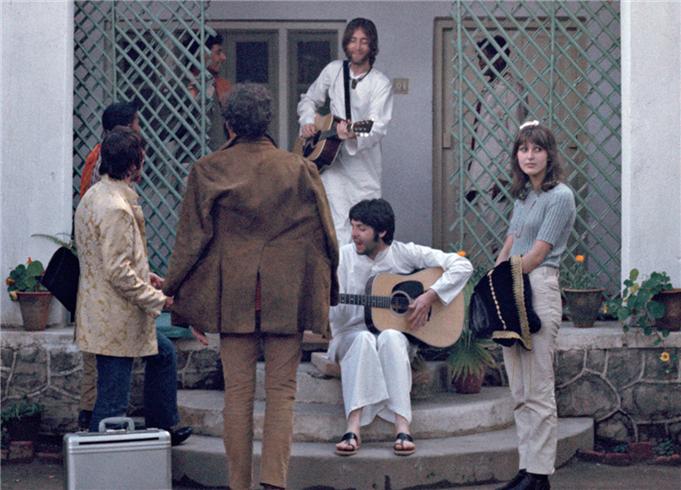
John Lennon wrote most of this when he was in India at the Maharishi’s meditation camp with the other Beatles in 1967. He didn’t think much of the song, calling it and “Polythene Pam” “finished bits of crap that I wrote in India.”
It wasn’t the first time John Lennon was inspired by a newspaper story: some of the lyrics in “A Day In The Life” came from articles he read in the Daily Mail.
The Beatles recorded this as one song with “Sun King.” It’s part of a suite of songs at the end of Abbey Road.
The Beatles considered using this on The White Album, but decided not to.
Mean Mr. Mustard
Mean Mister Mustard sleeps in the park Shaves in the dark trying to save paper Sleeps in a hole in the road Saving up to buy some clothes Keeps a ten-bob note up his nose Such a mean old man Such a mean old man
His sister Pam works in a shop She never stops, she’s a go-getter Takes him out to look at the queen Only place that he’s ever been Always shouts out something obscene Such a dirty old man Dirty old man
A beautiful song that was written by Paul McCartney that was on the White Album. Paul wrote it in India with a little help from Donovan to shape the song. It took 67 takes to get this song. McCartney played acoustic guitar and vocalized the bass (you can hear him going “bom, bom” in parts). John Lennon and Ringo Starr both added percussion using various instruments… George Harrison didn’t play on it at all.
The song would have fit comfortably on earlier Beatle albums. The melody is memorable and I always really liked the short guitar break after the choruses.
Paul McCartney: “I was doing a song, ‘I Will,’ that I had as a melody for quite a long time but I didn’t have lyrics to it. I remember sitting around with Donovan, and maybe a couple of other people. We were just sitting around one evening after our day of meditation and I played him this one and he liked it and we were trying to write some words. We kicked around a few lyrics, something about the moon, but they weren’t very satisfactory and I thought the melody was better than the words so I didn’t use them. I kept searching for better words and I wrote my own set in the end; very simple words, straight love-song words really. I think they’re quite effective. It’s still one of my favorite melodies that I’ve written. You just occasionally get lucky with a melody and it becomes rather complete and I think this is one of them; quite a complete tune.”
I Will
Who knows how long I’ve loved you You know I love you still Will I wait a lonely lifetime If you want me to, I will
For if I ever saw you I didn’t catch your name But it never really mattered I will always feel the same
Love you forever and forever Love you with all my heart Love you whenever we’re together Love you when we’re apart
And when at last I find you Your song will fill the air Sing it loud so I can hear you Make it easy to be near you For the things you do endear you to me You know I will I will
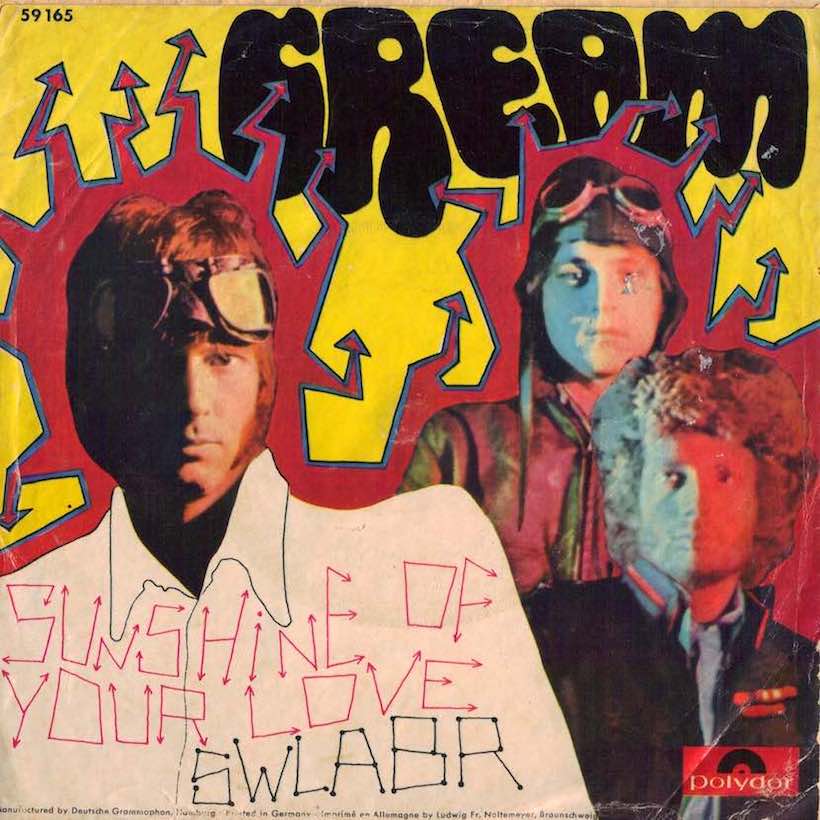
One of the most famous riffs in rock history. The lyrics was written by Pete Brown, a beat poet who was friends with Ginger Baker and Jack Bruce. He also wrote lyrics for “I Feel Free” and “White Room.” Eric Clapton and Jack Bruce wrote the music.
The song peaked at #5 in the Billboard 100 in 1968.
When Cream broke up, Jimi Hendrix played this song on the Lulu show for a farewell to Cream.
Cream played this at the Rock and Roll Hall of Fame on January 12, 1993, when they reunited for their induction. To that point, the only other time the band got back together was at Eric Clapton’s wedding in 1979. Paul McCartney, George Harrison, and Ringo Starr also played together at that wedding.
From Songfacts
Pete Brown wrote the opening line after being up all night working with Bruce and watching the sun come up. In a Songfacts interview, he told the tale: “We had been working all night and had gotten some stuff done. We had very little time to write for Cream, but we happened to have some spare time and Jack came up with the riff. He was playing a stand-up – he still had his stand-up bass, because he’d been a jazz musician. He was playing stand-up bass, and he said, ‘What about this then?’ and played the famous riff. I looked out the window and wrote down, ‘It’s getting near dawn.’ That’s how it happened. It’s actually all true, really, all real stuff.”
Jack Bruce’s bass line carries the song. He got the idea for it after going to a Jimi Hendrix concert. When Kees van Wee interviewed Bruce in 2003 for the Dutch magazine Heaven, Kees asked him which of his many songs epitomizes Jack Bruce the most. At first he was in doubt whether he should answer “Pieces Of Mind” or “Keep On Wondering,” but then he changed his mind and opted for “Sunshine Of Your Love.” Because, said Bruce, “It’s based on a bass riff. And when you enter a music shop this is the song that kids always play to try out a guitar.”
Tom Dowd, who worked with most of the artists for Atlantic Records at the time, engineered the Disreali Gears album. Dowd was renowned for his technical genius, but also for his ability to relate to musicians and put them at ease.
When Cream recorded this song, it wasn’t working. In the documentary Tom Dowd And The Language Of Music, he explained: “There just wasn’t this common ground that they had on so many of the other songs. I said, ‘Have you ever seen an American Western where the Indian beat – the downbeat – is the beat? Why don’t you play that one. Ginger went inside and they started to run the song again. When they started playing that way, all of the parts came together and they were elated.”
According to Rolling Stone magazine’s Top 500 songs issue, Jack Bruce knew the song would do well. “Both Booker T. Jones and Otis Redding heard it at Atlantic Studios and told me it was going to be a smash,” he recalled.
One man who was not impressed was Ahmet Ertegun, who was head of the group’s label. When Bruce revealed the song at the sessions, Ertegun declared it “psychedelic hogwash.” Ertegun constantly tried to promote Eric Clapton as the band’s leader, and also didn’t believe the bassist should be a lead singer. He only relented and agreed to champion this song after Booker T. Jones came by and expressed his approval.
This is one of Eric Clapton’s favorites from this days with Cream; he played it at most of his solo shows throughout his career. When Cream played some reunion concerts in 2005, they played the song as their encore.
Jimi Hendrix covered this at some of his concerts, unaware that he was the inspiration for the bass line.
Hendrix did an impromptu performance of the song when he appeared on Happening for Lulu, BBC TV show in England hosted by the prim and proper “To Sir With Love” singer. After playing part of his scheduled song “Hey Joe,” Hendrix stopped the performance and said, “We’d like to stop playing this rubbish and dedicate a song to the Cream, regardless of what kind of group they may be in. We dedicate this to Eric Clapton, Ginger Baker and Jack Bruce.”
This version appears on the Experience Hendrix 2CD/3LP The BBC Sessions towards the end of Disc 2/Side 6 on the LP. An instrumental version appears on the 2010 Valleys of Neptune album, which was recorded by Hendrix at London’s Olympic Studios on February 16, 1969.
Hendrix engineer and producer Eddie Kramer recalled to Toronto’s The Globe and Mail: “Jimi loved Cream, he loved Eric Clapton. It was a fabulous song, he loved to play it, and he would just rip into it whenever the mood hit him.”
This was Cream’s biggest hit. It was their first to do better in the US than in the UK, as they started to catch on in America. In the US, this first charted in February 1968 at #36. In August, after the album came out, it re-entered the chart and went to #5.
Clapton’s guitar solo is based on the ’50s song “Blue Moon.”
Excepting “Strange Brew,” the Disraeli Gears album was recorded in just three days, as the band had to return to England because their work visas were expiring. Engineer Tom Dowd recalls the sessions coming to an abrupt end when a limo driver showed up to take the musicians to the airport. Dowd was tasked with mixing the album in their absence.
Jack Bruce released a new version on his 2001 album Shadows In The Air. Clapton played on it along with Latin percussionists from New York City, which gave it a Salsa sound.
In The Breakfast Club (1985), John Bender (Judd Nelson) tries to liven up Saturday detention by mimicking the riff on air guitar.
Sunshine of Your Love
It’s getting near dawn, When lights close their tired eyes I’ll soon be with you my love, To give you my dawn surprise I’ll be with you darling soon, I’ll be with you when the stars start falling
[Chorus:] I’ve been waiting so long To be where I’m going In the sunshine of your love
I’m with you my love, The light’s shining through on you Yes, I’m with you my love, It’s the morning and just we two I’ll stay with you darling now, I’ll stay with you till my seas are dried up
[Chorus]
I’m with you my love, The light’s shining through on you. Yes, I’m with you my love, It’s the morning and just we two. I’ll stay with you darling now, I’ll stay with you till my seas are dried up
I’ve been waiting so long I’ve been waiting so long I’ve been waiting so long To be where I’m going In the sunshine of your love
In the 1980s I had a Lovin’ Spoonful Greatest hits on vinyl made by a small Nashville record company my friend worked at called Gusto Records. After listening to their many hits…this is the one that I zeroed in on. They had bigger hits but this is one of my favorite songs by the Lovin’ Spoonful.
John Sebastion sings it so desperately and sincere that it hooked me.
John Sebastian wrote this ballad for Francis Ford Coppola’s You’re A Big Boy Now, a coming-of-age film. Sebastian was responsible for the whole soundtrack but was tasked to write this specific song for an important love scene. He started thinking about all the songs that dealt with lonely musicians on the road and decided to flip the concept and write about a guy waiting for his girlfriend to come home.
Unfortunately, the movie was largely ignored. The song was mostly forgotten until Sebastian revived it during his performance at Woodstock in 1969.
The song peaked at #15 in the Billboard 100 and #44 in the UK in 1967.
From Songfacts
“From the singer’s perspective, the verses are pleas for a partner to spend a few minutes talking before leaving,” Sebastian explained to Marc Myers for the book Anatomy of a Song. “What made the song interesting is that you never knew if the other person was actually there listening or was already gone.”
After hitching a ride with the helicopter carrying The Incredible String Band’s equipment, Sebastian arrived at the Woodstock festival thinking he’d just be a spectator. But an early afternoon downpour flooded the stage and it needed to be cleared of water before Santana’s amps could be set up. Michael Lang, the concert’s producer, asked Sebastian to fill in. He took the stage in a tie-dyed white denim outfit and sang five songs, the fourth being “Darling Be Home Soon.” He recalled: “The audience didn’t identify the song with the movie, since most probably hadn’t seen it. Instead, they sort of quieted down and took it in as a love song. My job wasn’t to incite but to mellow everyone out until the stage was swept. When I finished, the applause from so many people was loud and wide, and knocked the wind out of me. The feeling was delicious.”
The Lovin’ Spoonful recorded this with a studio orchestra in just one day. The next morning, however, Sebastian was horrified to learn his vocal take had accidentally been erased and had to be re-recorded. “I did that right away, with the wound still fresh,” he said. “What you hear on the record is me, a half hour after learning that my original vocal track had been erased. You can even hear my voice quiver a little at the end. That was me thinking about the vocal we lost and wanting to kill someone.”
Zal Yanovsky, the band’s lead guitarist, hated the song. He thought it was too sappy and accused Sebastian of losing his rock edge. During one live performance, Zal can be seen clownishly mocking the frontman as he sings the heartfelt lyrics.
This was used on the CBS crime drama Cold Case in the 2010 episode “Free Love.”
Several artists have covered this, including Bobby Darin, Joe Cocker, Slade, The Association, and Bruce Hornsby.
Darling Be Home Soon
Come And talk of all the things we did today Here And laugh about our funny little ways While we have a few minutes to breathe Then I know that it’s time you must leave
But, darling, be home soon I couldn’t bear to wait an extra minute if you dawdled My darling, be home soon It’s not just these few hours, but I’ve been waiting since I toddled For the great relief of having you to talk to
And now A quarter of my life is almost past I think I’ve come to see myself at last And I see that the time spent confused Was the time that I spent without you And I feel myself in bloom
So, darling, be home soon I couldn’t bear to wait an extra minute if you dawdled My darling, be home soon It’s not just these few hours, but I’ve been waiting since I toddled For the great relief of having you to talk to
So, darling My darling, be home soon I couldn’t bear to wait an extra minute if you dawdled My darling, be home soon It’s not just these few hours, but I’ve been waiting since I toddled For the great relief of having you to talk to
Go And beat your crazy head against the sky Try And see beyond the houses and your eyes It’s okay to shoot the moon
Darling be home soon I couldn’t bear to wait an extra minute if you dawdled My darling, be home soon It’s not just these few hours, but I’ve been waiting since I toddled For the great relief of having you to talk to
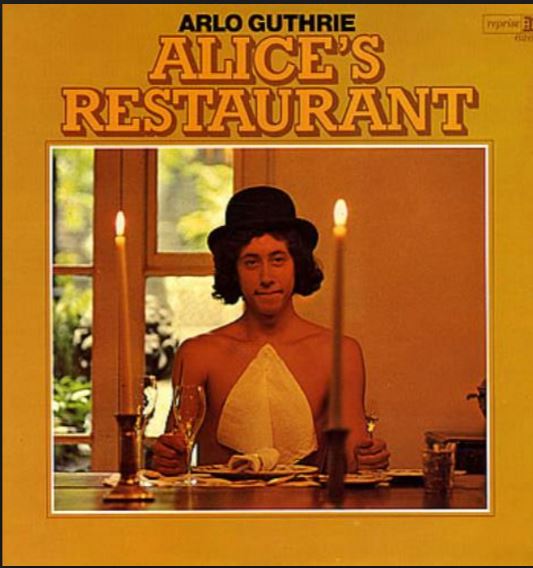
It’s not Thanksgiving without listening to this 1967 song. This song did not chart but he did have another version that did chart…it was called Alice’s Rock and Roll Restaurant that peaked at #97 in the Billboard 100.
Many radio stations play this on Thanksgiving. This is usually the only time they play it, since the song is over 18-minutes long.
There have been mixed reviews about the movie that was made…I’ve always found it enjoyable. It’s not going to be confused with Gone With The Wind but it’s a fun period movie.
In 1991, Arlo bought the church where this took place and set up “The Guthrie Center,” where he runs programs for kids who have been abused.
Below the song facts are Alice’s Rock and Roll Restaurant and Alice’s Restaurant Massacree.
Running 18 minutes and 34 seconds, this song is based on a true story that happened on Thanksgiving Day, 1965. Arlo was 18, and along with his friend Rick Robbins, drove to Stockbridge, Massachusetts to have Thanksgiving dinner with Alice and Ray Brock. Alice and Ray lived in a church – the former Trinity Church on Division Street in Stockbridge – and were used to inviting people into their home. Arlo and Rick had been traveling together, Arlo working his way up in folk singing and Rick tagging along. A number of people, Arlo and Rick included, were considered members of the family, so they were not guests in the usual sense. When Ray woke up the next morning, he said to them, “Let’s clean up the church and get all this crap out of here, for God’s sake. This place is a mess,” and Rick said, “Sure.” Arlo and Rick swept up and loaded all the crap into a VW microbus and went out to the dump, which was closed. They started driving around until Arlo remembered a side road in Stockbridge up on Prospect Hill by the Indian Hill Music Camp which he attended one summer, so they drove up there and dumped the garbage.A little later, the phone rang, and it was Stockbridge police chief William J. Obanhein. “I found an envelope with the name Brock on it,” Chief Obanhein said. The truth came out, and soon the boys found themselves in Obanhein’s police car. They went up to Prospect Hill, and Obie took some pictures. On the back, he marked them, “PROSPECT HILL RUBBISH DUMPING FILE UNDER GUTHRIE AND ROBBINS 11/26/65.” He took the kids to jail.The kids went in, pleaded, “Guilty, Your Honor,” was fined $25 each and ordered to retrieve the rubbish. Then they all went back to the church and started to write “Alice’s Restaurant” together. “We were sitting around after dinner and wrote half the song,” Alice recalls, “and the other half, the draft part, Arlo wrote.”
Guthrie, the son of legendary folk singer Woody Guthrie, greatly exaggerated the part about getting arrested for comic effect. In the song, he is taken away in handcuffs and put in a cell with hardened criminals.
In the song, Guthrie avoids the draft and did not have to serve in Vietnam because of his littering arrest. In reality, he was eligible but wasn’t drafted because his number didn’t come up.
Guthrie performed this song for the first time on July 16, 1967, at the Newport Folk Festival.
This reflected the attitude of many young people in America at the time. It was considered an antiwar song, but unlike most protest songs, it used humor to speak out against authority.
After a while, Guthrie stopped playing this at concerts, claiming he forgot the words. As the song approached its 30th anniversary, he started playing it again.
Guthrie made a movie of the same name in 1969 which was based on the song.
Over the years, Guthrie added different words to the song. He recorded a new, longer version in 1995 at The Guthrie Center
Alice’s Restaurant
This song is called Alice’s Restaurant, and it’s about Alice, and the
Restaurant, but Alice’s Restaurant is not the name of the restaurant,
That’s just the name of the song, and that’s why I called the song Alice’s
Restaurant.
You can get anything you want at Alice’s Restaurant
You can get anything you want at Alice’s Restaurant
Walk right in it’s around the back
Just a half a mile from the railroad track
You can get anything you want at Alice’s Restaurant
Now it all started two Thanksgivings ago, was on – two years ago on
Thanksgiving, when my friend and I went up to visit Alice at the
Restaurant, but Alice doesn’t live in the restaurant, she lives in the
Church nearby the restaurant, in the bell-tower, with her husband Ray and
Fasha the dog. And livin’ in the bell tower like that, they got a lot of
Room downstairs where the pews used to be in. Havin’ all that room,
Seein’ as how they took out all the pews, they decided that they didn’t
Have to take out their garbage for a long time.
We got up there, we found all the garbage in there, and we decided it’d be
A friendly gesture for us to take the garbage down to the city dump. So
We took the half a ton of garbage, put it in the back of a red vw
Microbus, took shovels and rakes and implements of destruction and headed
On toward the city dump.
Well we got there and there was a big sign and a chain across across the
Dump saying, “Closed on Thanksgiving.” And we had never heard of a dump
Closed on Thanksgiving before, and with tears in our eyes we drove off
Into the sunset looking for another place to put the garbage.
We didn’t find one. Until we came to a side road, and off the side of the
Side road there was another fifteen foot cliff and at the bottom of the
Cliff there was another pile of garbage. And we decided that one big pile
Is better than two little piles, and rather than bring that one up we
Decided to throw our’s down.
That’s what we did, and drove back to the church, had a thanksgiving
Dinner that couldn’t be beat, went to sleep and didn’t get up until the
Next morning, when we got a phone call from officer Obie. He said, “Kid,
We found your name on an envelope at the bottom of a half a ton of
Garbage, and just wanted to know if you had any information about it. ” And
I said, “Yes, sir, Officer Obie, I cannot tell a lie, I put that envelope
Under that garbage. ”
After speaking to Obie for about forty-five minutes on the telephone we
Finally arrived at the truth of the matter and said that we had to go down
And pick up the garbage, and also had to go down and speak to him at the
Police officer’s station. So we got in the red vw microbus with the
Shovels and rakes and implements of destruction and headed on toward the
Police officer’s station.
Now friends, there was only one or two things that Obie coulda done at
The police station, and the first was he could have given us a medal for
Being so brave and honest on the telephone, which wasn’t very likely, and
We didn’t expect it, and the other thing was he could have bawled us out
And told us never to be seen driving garbage around the vicinity again,
Which is what we expected, but when we got to the police officer’s station
There was a third possibility that we hadn’t even counted upon, and we was
Both immediately arrested. Handcuffed. And I said “Obie, I don’t think I
Can pick up the garbage with these handcuffs on. ” He said, “Shut up, kid.
Get in the back of the patrol car. ”
And that’s what we did, sat in the back of the patrol car and drove to the
Quote Scene of the Crime unquote. I want tell you about the town of
Stockbridge, Massachusets, where this happened here, they got three stop
Signs, two police officers, and one police car, but when we got to the
Scene of the Crime there was five police officers and three police cars,
Being the biggest crime of the last fifty years, and everybody wanted to
Get in the newspaper story about it. And they was using up all kinds of
Cop equipment that they had hanging around the police officer’s station.
They was taking plaster tire tracks, foot prints, dog smelling prints, and
They took twenty seven eight-by-ten colour glossy photographs with circles
And arrows and a paragraph on the back of each one explaining what each
One was to be used as evidence against us. Took pictures of the approach,
The getaway, the northwest corner the southwest corner and that’s not to
Mention the aerial photography.
After the ordeal, we went back to the jail. Obie said he was going to put
Us in the cell. Said, “Kid, I’m going to put you in the cell, I want your
Wallet and your belt. ” And I said, “Obie, I can understand you wanting my
Wallet so I don’t have any money to spend in the cell, but what do you
Want my belt for? ” And he said, “Kid, we don’t want any hangings. ” I
Said, “Obie, did you think I was going to hang myself for littering?”
Obie said he was making sure, and friends Obie was, cause he took out the
Toilet seat so I couldn’t hit myself over the head and drown, and he took
Out the toilet paper so I couldn’t bend the bars roll out the – roll the
Toilet paper out the window, slide down the roll and have an escape. Obie
Was making sure, and it was about four or five hours later that Alice
(remember Alice? It’s a song about Alice), Alice came by and with a few
Nasty words to Obie on the side, bailed us out of jail, and we went back
To the church, had a another thanksgiving dinner that couldn’t be beat,
And didn’t get up until the next morning, when we all had to go to court.
We walked in, sat down, Obie came in with the twenty seven eight-by-ten
Colour glossy pictures with circles and arrows and a paragraph on the back
Of each one, sat down. Man came in said, “All rise.” We all stood up,
And Obie stood up with the twenty seven eight-by-ten colour glossy
Pictures, and the judge walked in sat down with a seeing eye dog, and he
Sat down, we sat down. Obie looked at the seeing eye dog, and then at the
Twenty seven eight-by-ten colour glossy pictures with circles and arrows
And a paragraph on the back of each one, and looked at the seeing eye dog.
And then at twenty seven eight-by-ten colour glossy pictures with circles
And arrows and a paragraph on the back of each one and began to cry,
’cause Obie came to the realization that it was a typical case of American
Blind justice, and there wasn’t nothing he could do about it, and the
Judge wasn’t going to look at the twenty seven eight-by-ten colour glossy
Pictures with the circles and arrows and a paragraph on the back of each
One explaining what each one was to be used as evidence against us. And
We was fined $50 and had to pick up the garbage in the snow, but that’s not
What I came to tell you about.
Came to talk about the draft.
They got a building down New York City, it’s called Whitehall Street,
Where you walk in, you get injected, inspected, detected, infected,
Neglected and selected. I went down to get my physical examination one
Day, and I walked in, I sat down, got good and drunk the night before, so
I looked and felt my best when I went in that morning. ‘Cause I wanted to
Look like the all-American kid from New York City, man I wanted, I wanted
To feel like the all-, I wanted to be the all American kid from New York,
And I walked in, sat down, I was hung down, brung down, hung up, and all
Kinds o’ mean nasty ugly things. And I waked in and sat down and they gave
Me a piece of paper, said, “Kid, see the phsychiatrist, room 604.”
And I went up there, I said, “Shrink, I want to kill. I mean, I wanna, I
Wanna kill. Kill. I wanna, I wanna see, I wanna see blood and gore and
Guts and veins in my teeth. Eat dead burnt bodies. I mean kill, Kill,
Kill, kill. ” And I started jumping up and down yelling, “kill, kill, ” and
He started jumping up and down with me and we was both jumping up and down
Yelling, “KILL, KILL.” And the Sargent came over, pinned a medal on me,
Sent me down the hall, said, “You’re our boy.”
Didn’t feel too good about it.
Proceeded on down the hall gettin more injections, inspections,
Detections, neglections and all kinds of stuff that they was doin’ to me
At the thing there, and I was there for two hours, three hours, four
Hours, I was there for a long time going through all kinds of mean nasty
Ugly things and I was just having a tough time there, and they was
Inspecting, injecting every single part of me, and they was leaving no
Part untouched. Proceeded through, and when I finally came to the see the
Last man, I walked in, walked in sat down after a whole big thing there,
And I walked up and said, “What do you want?” He said, “Kid, we only got
One question. Have you ever been arrested? ”
And I proceeded to tell him the story of the Alice’s Restaurant Massacre,
With full orchestration and five part harmony and stuff like that and all
The phenome… – and he stopped me right there and said, “Kid, did you ever
Go to court? ”
And I proceeded to tell him the story of the twenty seven eight-by-ten
Colour glossy pictures with the circles and arrows and the paragraph on
The back of each one, and he stopped me right there and said, “Kid, I want
You to go and sit down on that bench that says Group W…. Now kid!! ”
And I, I walked over to the, to the bench there, and there is, Group W’s
Where they put you if you may not be moral enough to join the army after
Committing your special crime, and there was all kinds of mean nasty ugly
Looking people on the bench there. Mother rapers. Father stabbers. Father
Rapers! Father rapers sitting right there on the bench next to me! And
They was mean and nasty and ugly and horrible crime-type guys sitting on the
Bench next to me. And the meanest, ugliest, nastiest one, the meanest
Father raper of them all, was coming over to me and he was mean ‘n’ ugly
‘n’ nasty ‘n’ horrible and all kind of things and he sat down next to me
And said, “Kid, whad’ya get?” I said, “I didn’t get nothing, I had to pay
$50 and pick up the garbage. ” He said, “What were you arrested for, kid? ”
And I said, “Littering.” And they all moved away from me on the bench
There, and the hairy eyeball and all kinds of mean nasty things, till I
Said, “And creating a nuisance.” And they all came back, shook my hand,
And we had a great time on the bench, talkin about crime, mother stabbing,
Father raping, all kinds of groovy things that we was talking about on the
Bench. And everything was fine, we was smoking cigarettes and all kinds of
Things, until the Sargeant came over, had some paper in his hand, held it
Up and said.
“Kids, this-piece-of-paper’s-got-47-words-37-sentences-58-words-we-wanna-
Know-details-of-the-crime-time-of-the-crime-and-any-other-kind-of-thing-
You-gotta-say-pertaining-to-and-about-the-crime-I-want-to-know-arresting-
Officer’s-name-and-any-other-kind-of-thing-you-gotta-say”, and talked for
Forty-five minutes and nobody understood a word that he said, but we had
Fun filling out the forms and playing with the pencils on the bench there,
And I filled out the massacre with the four part harmony and wrote it
Down there, just like it was, and everything was fine and I put down the
Pencil and I turned over the piece of paper, and there, there on the
Other side, in the middle of the other side, away from everything else on
The other side, in parentheses, capital letters, quotated, read the
Following words:
(“KID, HAVE YOU REHABILITATED YOURSELF?”)
I went over to the Sargent, said, “Sargeant, you got a lot a damn gall to
Ask me if I’ve rehabilitated myself, I mean, I mean, I mean that just, I’m
Sittin’ here on the bench, I mean I’m sitting here on the Group W bench
’cause you want to know if I’m moral enough join the army, burn women,
Kids, houses and villages after bein’ a litterbug. ” He looked at me and
Said, “Kid, we don’t like your kind, and we’re gonna send you fingerprints
Off to Washington. ”
And friends, somewhere in Washington enshrined in some little folder, is a
study in black and white of my fingerprints. And the only reason I’m
singing you this song now is cause you may know somebody in a similar
situation, or you may be in a similar situation, and if your in a
situation like that there’s only one thing you can do and that’s walk into
The shrink wherever you are, just walk in say “Shrink, You can get
Anything you want, at Alice’s restaurant. “. And walk out. You know, if
One person, just one person does it they may think he’s really sick and
They won’t take him. And if two people, two people do it, in harmony,
They may think they’re both faggots and they won’t take either of them.
And three people do it, three, can you imagine, three people walking in
Singin a bar of Alice’s Restaurant and walking out. They may think it’s an
Organization. And can you, can you imagine fifty people a day, I said
Fifty people a day walking in singing a bar of Alice’s Restaurant and
Walking out. And friends they may think it’s a movement.
And that’s what it is, the Alice’s Restaurant Anti-Massacre Movement, and
All you got to do to join is sing it the next time it comes around on the
Guitar.
With feeling. So we’ll wait for it to come around on the guitar, here and
Sing it when it does. Here it comes.
You can get anything you want, at Alice’s Restaurant
You can get anything you want, at Alice’s Restaurant
Walk right in it’s around the back
Just a half a mile from the railroad track
You can get anything you want, at Alice’s Restaurant
That was horrible. If you want to end war and stuff you got to sing loud.
I’ve been singing this song now for twenty-five minutes. I could sing it
For another twenty-five minutes. I’m not proud… Or tired.
So we’ll wait till it comes around again, and this time with four part
Harmony and feeling.
We’re just waitin’ for it to come around is what we’re doing.
All right now.
You can get anything you want, at Alice’s Restaurant
Excepting Alice
You can get anything you want, at Alice’s Restaurant
Walk right in it’s around the back
Just a half a mile from the railroad track
You can get anything you want, at Alice’s Restaurant
I saw this man in the seventies on commercials and game shows but never knew his name. He was always funny and caught my attention. Avery was an actor and comedian. He is best remembered as part of the comedy team of Burns and Schreiber, which he formed with Jack Burns. He was a crowd standout with his huge trademark walrus mustache and thick curly black hair.
Jack Burns, Avery’s partner, played Deputy Warren Ferguson on the Andy Griffith Show. Burns was filling a void left by Don Knotts but it didn’t really work.
At their peak, Schreiber and Burns appeared as regulars on the summer replacement musical variety series “Our Place” (1967), then earned the right to front their own summer series with “The Burns and Schreiber Comedy Hour” (1973).
Schreiber is also remembered for his various Doritos corn chip commercial advertisements in various disguises (chef, sultan, pilot), all of them perturbed by people loudly crunching on the popular chip.
Avery appeared in a number of TV series and movies, including “My Mother the Car” and “Days of Our Lives” on television, and the Mel Brooks’ film “Robin Hood: Men in Tights.”He was a regular guest star on the television comedy “Chico and the Man” and was also a frequent guest on the game show “Match Game” and in a first-season episode of “The Muppet Show.” He continued to work in film, television and the Theater until the time of his death in 2002.
This was released as a single in December 1967, the same month Jim Morrison was arrested at a show in New Haven when he delivered an on-stage rant against a police officer who confronted him backstage with a young girl.
This incident, combined with the lyrics of “Love Me Two Times,” scared them away from some family-friendly radio stations that refused to play the song. The song was considered to be somewhat risqué for radio airplay, being banned in New Haven for being “too controversial”.
Robby Krieger credited a rather obscure song for inspiring the guitar lick on this song: “Southbound Train” by John Koerner, whose trio Koerner, Ray & Glover was one of Krieger’s favorite acts.
The song peaked at #25 in the Billboard 100 in 1968.
From Songfacts
Doors guitarist Robby Krieger wrote this song after their keyboard player Ray Manzarek implored the band members to go home and write some songs. Krieger came up with this one “Light My Fire” in about an hour. It was a rare Doors song where lead singer Jim Morrison did not contribute lyrics.
Krieger’s lyrics were inspired by both The Doors going on the road and American soldiers going to Vietnam. The theme is sex as a way to survive in strange times, and the need to be “loved two times” before going away. Keyboard player Ray Manzarek called it, “Robby’s great blues/rock classic about love and loss, or multiple orgasms.”
Through most of the song, Jim Morrison left off the “s” in “two times,” creating a double meaning to the phrase.
This continues the theme on Strange Days of an uncertain future. It continues the story of the estranged lover from “You’re Lost Little Girl.”
Although this was released as a single and became a hit, it was recorded for the first Doors album, but didn’t make the cut. When it came time to record the second Doors album Strange Days, “Love Me Two Times” was ready to go.
Ray Manzarek played a clavinet on this track.
Aerosmith recorded this in 1990 for the Air America soundtrack. In 2000, Robby Krieger and Ray Manzarek added slide guitar and keyboards to the existing recording, which was remixed & included on The Doors tribute album Stoned Immaculate. >>
In 2000, the surviving members of the Doors taped a VH1 Storytellers episode with guest vocalists filling in for Morrison. Pat Monahan from Train sang on this.
Love Me Two Times
Love me two time, baby, love me twice today Love me two time, girl, I’m goin’ away Love me two time girl, one for tomorrow, One just for today Love me two times I’m goin’ away Love me one time, could not speak Love me one time, yeah, my knees got weak Love me two time, girl, lasts me all through the week Love me two times, I’m goin’ away Love me two times, I’m goin’ away Alright, yeah Love me one time, could not speak Love me one time, baby, yeah, my knees got weak Love me two times, girl, lasts me all through the week Love me two times, I’m goin’ away Love me two time, babe Love me twice today Love me two time, babe, ’cause im goin’ away Love me two time, girl, one for tomorrow, One just for today Love me two times, I’m goin’ away Love me two times I’m goin’ away Love me two times I’m goin’ away
This week I’ll feature songs that have been banned from the radio for one reason or another for a time. I will just feature pre-9-11 songs because after 2001 practically every song was banned for a little while.
My Generation featured the chorus “Hope I Die Before I Get Old” but that was ok…It was the vocals that resembled stuttering; afraid to offend people with actual stuttering problems, the BBC prohibited the song from receiving airplay. Later, when the song proved to be a huge hit, they allowed it.
The best part of this song for me was John Entwistle’s bass solo. You just didn’t hear many bass solos at that time. John Entwistle “I bought this Danelectro bass and it had these tiny, thin wire-wound strings on. They were so thin, they sounded just like a piano, an unbelievably clear sound. The only thing was that you couldn’t buy these strings. When we recorded ‘My Generation,’ I ended up with three of these Danelectros just for the strings. The last one I had, the string busted before we actually got into the studio to re-record it, so I did it on a Fender Jazz in the end with tape-wound La Bella strings.”
Pete wrote this song for British mods at the time who didn’t think older people understood what was going on. The song peaked at #74 in the Billboard 100, #2 in the UK, and #3 in Canada in 1966.
Pete Townshend was asked if the line still resonated with him. “I think it does,” “The line actually came from a time when I was living in a really wealthy district of London, just by accident. I didn’t really understand quite where I was living at the time. And I was treated very strangely on the street, in an imperious way by a lot of people, and it was that that I didn’t like. I didn’t like being confronted with money and the class system and power. I didn’t like being in a corner shop in Belgravia and some woman in a fur coat pushing me out of the way because she was richer. And I didn’t know how to deal with that. I could’ve, I suppose, insisted on my rights and not written the song. But I was a tucked-up little kid and so I wrote the song.”
From Songfacts
Roger Daltrey sang the lead vocals with a stutter, which was very unusual. After recording two takes of the song normally, The Who’s manager, Kit Lambert, suggested to Daltrey that he stutter to sound like a British kid on speed. Daltrey recalled to Uncut magazine October 2001: “I have got a stutter. I control it much better now but not in those days. When we were in the studio doing ‘My Generation’, Kit Lambert came up to me and said ‘STUTTER!’ I said ‘What?’ He said ‘Stutter the words – it makes it sound like you’re pilled’ And I said, ‘Oh… like I am!’ And that’s how it happened. It was always in there, it was always suggested with the ‘f-f-fade’ but the rest of it was improvised.”
Pete Townshend wrote this on a train ride from London to Southampton on May 19, 1965 – his 20th birthday. In a 1987 Rolling Stone magazine interview, Townshend explained: “‘My Generation’ was very much about trying to find a place in society. I was very, very lost. The band was young then. It was believed that its career would be incredibly brief.”
Back in 1967, Pete Townshend called this song, “The only really successful social comment I’ve ever made.” Talking about the meaning, he explained it as “some pilled-up mod dancing around, trying to explain to you why he’s such a groovy guy, but he can’t because he’s so stoned he can hardly talk.”
This contains the famous line, “I hope I die before I get old.” The Who drummer Keith Moon did, dying of a drug overdose in 1978 at age 32. The rest of the band found themselves still playing the song 50 years later, giving that line more than a hint of irony.
A Singapore magazine called BigO is named for the famous line in this song – it’s an acronym for “Before I Get Old.”
This song went through various stages as they tried to perfect it. It began as a slow song with a blues feel, and at one point had hand claps and multiple key changes. The final product was at a much faster tempo than the song was conceived; it was Kit Lambert’s idea to speed it up.
This is the highest charting Who song in the UK, but it never cracked the Top 40 in America, where they were less known. In the UK, the album was also called My Generation, but in America it was titled The Who Sing My Generation.
Entwistle was the least visible member of the band, and his bass solos on this song threw off directors when The Who would perform the song on TV shows. When it got to his part, the cameras would often go to Pete Townshend, and his fingers wouldn’t be moving. Entwistle played the solos using a pick, since their manager Kit Lambert didn’t think fingers recorded well. Most of Entwistle’s next recordings were done with fingers.
The BBC refused to play this at first because they did not want to offend people with stutters. When it became a huge hit, they played it.
In 1965, Roger Daltrey stood by this song’s lyric and claimed he would kill himself before reaching 30 because he didn’t want to get old. When he did get older, he answered the inevitable questions about the “hope I die before I get old” line by explaining that it is about an attitude, not a physical age.
On September 17, 1967, The Who performed this song on The Smothers Brothers Comedy Hour. Keith Moon set his drums to explode after the performance, but the technical crew had already done so. The resulting explosion burned Pete Townshend’s hair and permanently damaged his hearing.
Also of note during this performance was Moon’s total disregard for the illusion of live performance. The band was playing along to a recorded track (common practice on the show), and while his bandmates synched their movements to the music, Moon made no effort to keep time, even knocking his cymbal over at one point.
Shel Talmy, who produced this track, was fired the next year. Talmy filed a lawsuit and won extensive royalties from future albums.
The ending of this song is electric mayhem, with Keith Moon pounding anything he can find on his drum kit and Townshend flipping his pickups on an off, something he also did on the album opener “Out in the Street.” Townshend and Daltrey go back and forth on the vocals, intentionally stomping on each other to add to the chaos.
This was covered by Iron Maiden, who was usually the Who’s polar opposite both musically and lyrically. One connection they share is the BBC-TV series Top of the Pops. Performances on the show were customarily lip-synched, but The Who performed live on the show in 1972. In 1980, Iron Maiden also performed live, and was the first band to do so since The Who. Maiden put their version of “My Generation” on the B-side to the single for “Lord of the Flies.”
The Who played this during their set at Woodstock, which didn’t begin until 5:00 a.m. on the second day. The group turned in a solid performance, but they weren’t pleased with the scheduling and weren’t feeling the peace and love – at one point an activist named Abbie Hoffman came on stage uninvited and was forcibly ejected by Pete Townshend.
Green Day recorded this for their 1992 album Kerplunk!.
When the teen pop singer Hilary Duff covered this as a B-side for her 2005 single “Someone’s Watching Over Me,” she made the curious decision to rewrite some of the lyrics. “I hope I don’t die before I get old,” doesn’t really have the same rock ‘n’ roll attitude as Townshend’s original words, and her rendition caused some consternation among Who fans.
This song fits nicely into the “primal rock” genre, which covers tunes that are raucous, rebellious, unusual, and also celebratory. Roger Reale, who was in one of these primal rock bands with Mick Ronson, explains the impact of the song:
“‘My Generation’ had no lead guitar, but a lead part played on the bass. It also had a bass breakdown, and unless you listened to a lot of jazz, there were no bass breakdowns in pop music. I remember playing the end of that track over and over and over again, because you could hear the feedback of the guitar, which was so exciting to listen to. In those days, you weren’t supposed to have an outro that was pure noise.”
My Generation
People try to put us d-down (talkin’ ’bout my generation) Just because we get around (talkin’ ’bout my generation) Things they do look awful c-c-cold (talkin’ ’bout my generation) I hope I die before I get old (talkin’ ’bout my generation)
This is my generation This is my generation, baby
Why don’t you all f-fade away (talkin’ ’bout my generation) Don’t try to dig what we all s-s-s-say (talkin’ ’bout my generation) I’m not trying to ’cause a big s-s-sensation (talkin’ ’bout my generation) I’m just talkin’ ’bout my g-g-g-generation (talkin’ ’bout my generation)
My generation This is my generation, baby
Why don’t you all f-fade away (talkin’ ’bout my generation) And don’t try to d-dig what we all s-s-say (talkin’ ’bout my generation) I’m not trying to ’cause a b-big s-s-sensation (talkin’ ’bout my generation) I’m just talkin’ ’bout my g-g-generation (talkin’ ’bout my generation)
This is my generation This is my generation, baby My my my generation
People try to put us d-down (talkin’ ’bout my generation) Just because we g-g-get around (talkin’ ’bout my generation) Things they do look awful c-c-cold (talkin’ ’bout my generation) Yeah, I hope I die before I get old (talkin’ ’bout my generation)
This is my generation This is my generation, baby My my my generation
(Talkin’ ’bout my generation) (Talkin’ ’bout my generation) (Talkin’ ’bout my generation) (Talkin’ ’bout my generation) (Talkin’ ’bout my generation) this is my generation (Talkin’ ’bout my generation) this is my generation (Talkin’ ’bout my generation) this is my generation (Talkin’ ’bout my generation) this is my generation (Talkin’ ’bout my generation) this is my generation (Talkin’ ’bout my generation) this is my generation (Talkin’ ’bout my generation) this is my generation
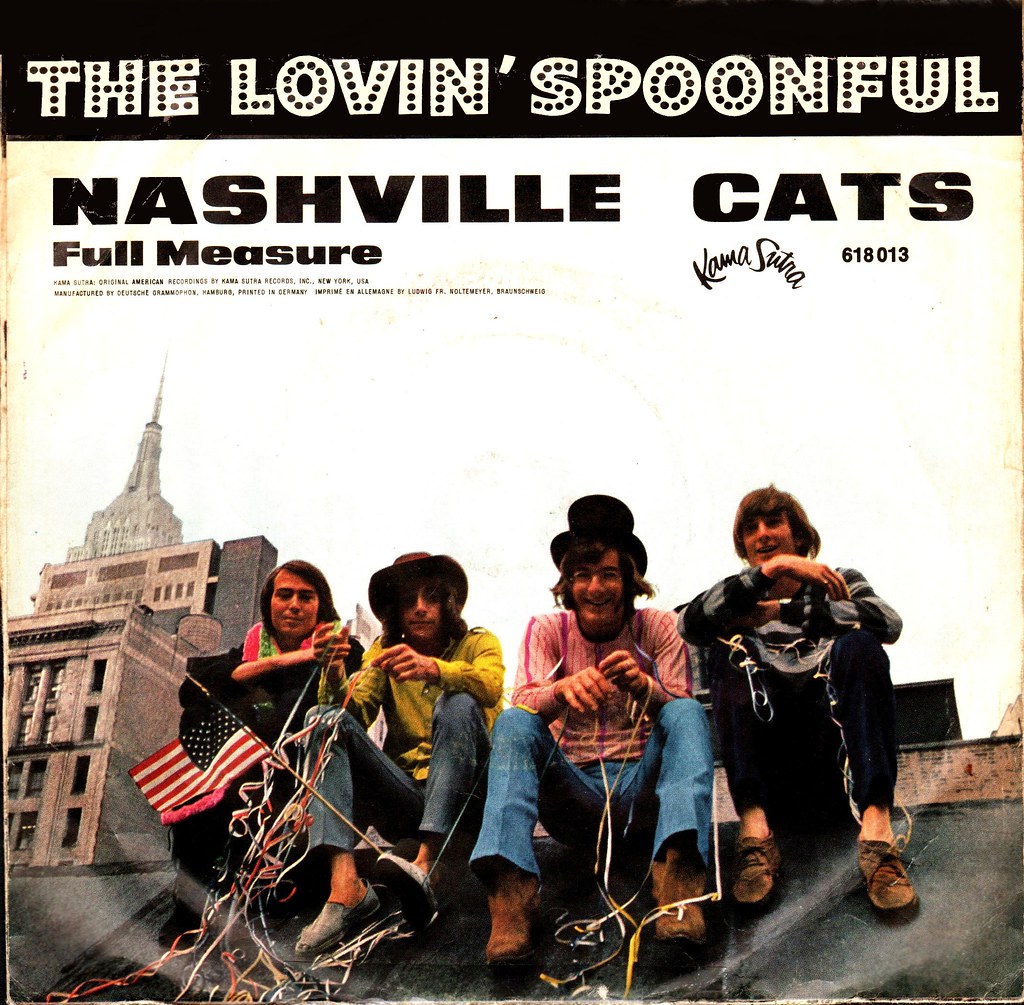
In 1966, Bob Dylan did something extraordinary when he went to Nashville to record an album. He left his band behind, in order to record with session players known as the Nashville Cats. That album he made was a masterpiece, ‘Blonde on Blonde”.
John Sebastian apparently held Nashville musicians in high esteem. According to one account, the song developed after the Lovin’ Spoonful was in Nashville for a concert, and while sitting at a bar, were blown away by the guitar playing of Danny Gatton. Sebastian wrote the song and it peaked at #8 in the Billboard 100 in 1967.
John Sebastian on writing the song…it is a bit long but interesting:
It happened to me quite by accident. First of all I was a tremendous fan of the music coming out of Nashville and the south at that time. Sometimes it was Memphis or Muscle Shoals but I didn’t know that, I was just responding to the music. I knew that when you cut records here, you could finish an album in a day in a half! But the ‘Spoonful played in Nashville in ’65 or so. We finished our show at the Fairgrounds Auditorium–the biggest thing in town. We felt pretty good about it and went back to the Holiday Inn and to the beer bar in the basement and get some beers and this guy comes in–goes and sits in the corner. There wasn’t even a stage. He pulls out a guitar and he is absolutely stunning. He starts off with something Chet Aktins-y and then he starts to get these bends and pedal steel tones and then multiple bends and then more jazz chords. Now we’re in “hillbilly jazz.” By the time this guy finished, me and (Lovin’ Spoonfuls) Zal Yanovsky we went up to our room. In those days, the ‘Spoonful were still sharing rooms, and we sit on the edge of our beds and go ‘How could this be?’ We are playing the big joint in town and this guy is in a beer bar. He can play rings around us. How does this work? Are we just four guys with long hair? It was years before we figured out that the kid had been a young Danny Gatton making spare change. But it traumatized us for a while.
The song actually was written a couple of weeks after our Nashville encounter. I was in Long Island somewhere. I saw an album cover –years later–Zal and I were in a record store–and I go “Oh my God, this is the guy from the beer bar.” Danny Gatton fans have sent me a stack of his cds and I can’t understand how he did the first damn thing (laughs).
From Songfacts
This song is a celebration of the remarkable musicianship of Nashville, Tennessee guitar pickers who have been “Playin’ since they’s babies.” John Sebastian held for the Nashville musicians in very high esteem.
The lyrics refer to the Sun Records company. While Sun was best known for first recording Elvis Presley, it also released songs by Johnny Cash, Jerry Lee Lewis and Roy Orbison
Nashville Cats
[Chorus] Nashville cats, play clean as country water Nashville cats, play wild as mountain dew Nashville cats, been playin’ since they’s babies Nashville cats, get work before they’re two
Well, there’s thirteen hundred and fifty two Guitar pickers in Nashville And they can pick more notes than the number of ants On a Tennessee ant hill Yeah, there’s thirteen hundred and fifty two Guitar cases in Nashville And any one that unpacks ‘is guitar could play Twice as better than I will
Yeah, I was just thirteen, you might say I was a Musical proverbial knee-high When I heard a couple new-sounding tunes on the tubes And they blasted me sky-high And the record man said every one is a yellow sun Record from Nashville And up north there ain’t nobody buys them And I said, “But I Will”
And it was
[Chorus]
Well, there’s sixteen thousand eight hundred ‘n’ twenty one Mothers from Nashville All their friends play music, and they ain’t uptight If one of the kids will Because it’s custom made for any mothers son To be a guitar picker in Nashville And I sure am glad I got a chance to say a word about The music and the mothers from Nashville









 PowerPop... An Eclectic Collection of Pop Culture