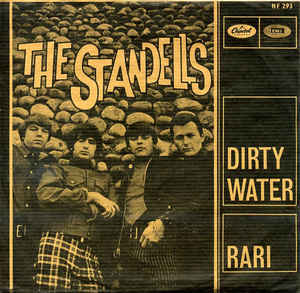
This was a pretty big hit when it was released in 1966, reaching #11 in the Billboard 100. It didn’t gain its mystique until 50 years later when the Boston sports teams adopted it. The Boston Red Sox were the first to use it, playing it after home wins in 1997.
The Celtics basketball team and Bruins hockey team followed suit, making it the song most associated with Boston sports, and thus the city as a whole.
The Standells were an LA garage band… the song was written by their producer, Ed Cobb, a Californian who was once a member of The Four Preps and wrote the song “Tainted Love” recorded by the soul singer Gloria Jones in 1964. Cobb wrote “Dirty Water” on a visit to Boston that turned ugly. “I was with a girl,” he told Blitz magazine. “Two guys tried to mug us, but they ran away. So when I got back to the hotel, I wrote the song.”
From Songfacts
The “Dirty Water” is the notoriously polluted Charles River in Boston, which had become a receptacle for industrial waste. But the song comes off as a celebration of Boston, not an ecological warning:
I love that dirty water
Boston, you’re my home
It may be dirty, but it’s their home and they love it anyway.
The song has become a Boston anthem and a source of pride for the city, but it was written and performed by guys from Los Angeles who didn’t have any good tidings toward the city.
The guy in the song is happy to live in this gritty city among the “fuggers and thieves.” After all, it’s his home.
The line, “Frustrated women have to be in by 12 o’clock” refers to the curfew observed by Boston University co-eds at the time.
Standell’s drummer Dick Dodd, who was once on The Mickey Mouse Club (he claimed to have bought his first snare drum from fellow Mouseketeer Annette Funicello for $20), handled lead vocals on this track. His spoken lines and interjections (“I’m gonna tell you a story…” “Have you heard about the Strangler?”) he made up in the studio.
The Standells hit #43 with their follow-up, “Sometimes Good Guys Don’t Wear White,” but never got any higher on the chart and broke up in 1968. Variations of the group appeared in the ’80s, and when “Dirty Water” became a Boston favorite in the ’00s, they became more visible, showing up to perform the song at sporting events and corporate functions. Dick Dodd, who sang lead on the track, died in 2013.
This song is now considered a classic of the garage rock genre. Garage rock is an undervalued genre of rock. It starts with late ’50s/early ’60s bands like The Wailers, The Kingsmen, The Trashmen (“Surfin’ Bird”), and The Standells. It continues through The Shondells, Shadows of Knight, ? & the Mysterians (“96 Tears”), and Patti Smith. And it comes all the way up to the present time with The Strokes, The White Stripes, The Von Bondies, and The Detroit Cobras. Other genres spun out from garage rock, including surf rock, indie, proto-punk (Hello, Velvet Underground!), and punk rock.
The Standells were pretty happinin’ by 1966 standards. They made appearances in 1960s B-list films such as Get Yourself a College Girl and Riot on Sunset Strip. But that’s not their greatest credit – that would be an appearance in the TV series The Munsters, episode #26 “Far Out Munsters!” In it, The Standells appear as themselves and offer to pay the Munster family a handsome sum to use their house as a recording studio for a week. The Munster family goes to stay at a hotel, but gets homesick for 1313 Mockingbird Lane and comes back early, only to find The Standells throwing a wild party.
This was used in the 2015 episode of The Last Man on Earth, “Alive in Tucson.” It has also appeared in these films:
Fever Pitch (2005) Stateside (2004) The Secret Life of Girls (1999) Edtv (1999) Celtic Pride (1996)
To enhance the Boston theme, a snippet of “Dirty Water” plays in the 2020 Hyundai Sonata Super Bowl commercial, “Smaht Pahk,” where Chris Evans, Rachel Dratch and John Krasinski revert to their Boston accents as Krasinski shows them how to pahk the cah.
Dirty Water
I’m gonna tell you a story I’m gonna tell you about my town I’m gonna tell you a big fat story, baby Aw, it’s all about my town
Yeah, down by the river Down by the banks of the river Charles (Aw, that’s what’s happenin’ baby) That’s where you’ll find me Along with lovers, muggers, and thieves (Aw, but they’re cool people)
Well I love that dirty water Oh, Boston, you’re my home (Oh, you’re the number one place)
Frustrated women (I mean they’re frustrated) Have to be in by twelve o’clock (oh, that’s a shame) But I’m wishin’ and a-hopin’, oh That just once those doors weren’t locked (I like to save time for my baby to walk around)
Well I love that dirty water Oh, Boston, you’re my home (oh, yeah)
Because I love that dirty water Oh, Boston, you’re my home (oh, yeah)
Well, I love that dirty water (I love it, baby) I love that dirty water (I love Boston) I love that dirty water (Have you heard about the strangler?) I love that dirty water (I’m the man, I’m the man) I love that dirty water (Ow) I love that dirty water (Come on, come on)
This song was on Jimi Hendrix’s debut album Are You Experienced released in 1967. The song was written by Hendrix shortly before it was recorded. The guitar and the drum sound is incredible on this one.
The main lyrics in this song (“let me stand next to your fire”) came from a time when the band had just finished a gig in the cold around Christmas, 1966. They went to bass player Noel Redding’s mother’s house in Folkestone, England, and when they got there, Jimi asked Redding’s mother Margaret if he could “stand next to her fire” to warm up. The family dog, a German Shepherd, lay by the fire, which inspired the line, “Move over Rover, and let Jimi take over.”
The song was remixed in stereo for the American release of the album. In 1969, it was released as a stereo single in the UK with the title “Let Me Light Your Fire”
From Songfacts
This lyrical lightning bolt was a breakthrough for Hendrix, who had just started writing songs at the request of his manager Chas Chandler. Writing riffs was easy for him, and it turned out he had a talent for crafting lyrics as well, as he was able to turn a simple line into a fiery tale of lustful passion. (This story is verified in Mat Snow’s Mojo story on Hendrix that ran in the October 2006 issue.)
Hendrix is legendary for theatrics like setting his guitar on fire and playing it with his teeth (not at the same time). This was the song he was (appropriately) playing when he set it on fire for the first time. It happened at a concert in London in March 1967, two months before the Are You Experienced? the album was released. Hendrix was low on the bill (below Engelbert Humperdinck), and looking to garner some media attention. When he ignited his guitar, he created a buzz that grew to a roar as his career took off.
Hendrix set fire to his guitar once again at the Monterey Pop Festival in 1967. At that show, he didn’t do the bit during “Fire,” he did it after playing “Wild Thing.”
The Red Hot Chili Peppers often covered this song in their early years. They decided to play it again at Woodstock ’99 in Rome, New York, but this was a very different festival than the one where Jimi Hendrix performed the song in 1969. The ’99 crowd was violent and unruly; when RHCP launched into this song, they increased their level of mayhem, tearing the place up and setting fires (yes, Rome was burning). >>
Gary Moore covered this on his 1999 release A Different Beat. >>
In the movie Wayne’s World, Wayne falls in love with the bassist from an all-girl band (Tia Carrere) after seeing them cover this song at Gasworks
Fire
Alright, now listen, baby
You don’t care for me I don’-a care about that Gotta new fool, ha! I like it like that I have only one burning desire Let me stand next to your fire Let me stand next to your fire [Repeat 4 times]
Listen here, baby and stop acting so crazy You say your mum ain’t home, it ain’t my concern, Just play with me and you won’t get burned
I have only one itching desire Let me stand next to your fire Let me stand next to your fire [Repeat 4 times]
Oh! Move over, Rover and let Jimi take over Yeah, you know what I’m talking ’bout Yeah, get on with it, baby That’s what I’m talking ’bout Now dig this! Ha! Now listen, baby
You try to gimme your money you better save it, babe Save it for your rainy day
I have only one burning desire Let me stand next to your fire Let me stand next to your fire
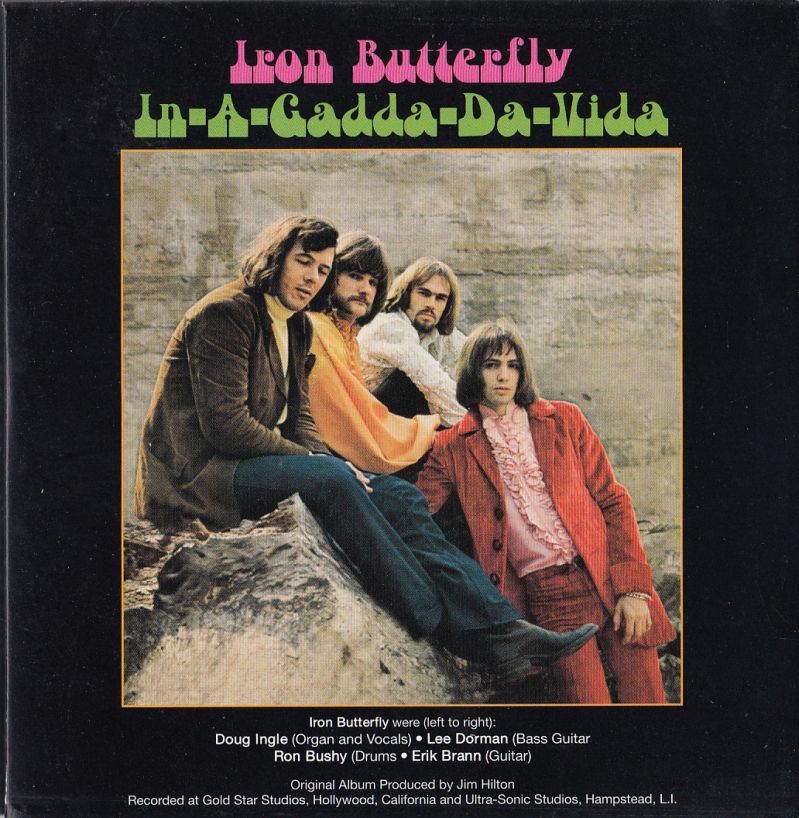
One of the most indulgent rock songs ever. It is 17:05 minutes long and has a grand total of only 30 different words in this song. You might think it has a deep, mystical meaning, but it’s really a translation error.
The title was supposed to be “In The Garden Of Eden.” Someone had written “In-A-Gadda-Da-Vida,” possibly while stoned, on a demo copy. A record company executive saw it and decided to use it as the title.
This was written by Doug Ingle, Iron Butterfly’s vocalist, and keyboard player. His father was a church organist, which influenced the drawn-out organ riffs in this song. When he wrote the song, Doug Ingle didn’t intend for it to be over 17 minutes long, but that’s how it played out. The single was edited down to 2:52, shaving over 14 minutes off the song!
This song reached #30 in the Billboard 100 in 1968.
So… light up some incense (or whatever you want), hang up some beads and turn up In A Gadda Da Vida full blast.
From Songfacts
As for the meaning of the song, it’s just a guy affirming his love for his special girl.
Ron Bushy’s drum solo is not as long as people think; it only runs about 2 1/2 minutes, from 6:30 to a little past 9 minutes. Doug Ingle’s organ solo immediately follows.
The band’s original guitar player quit before this was recorded. He was replaced by Eric Braun, who had only played the guitar for three months.
The title loosely translates as “In The Garden Of Life.”
This was the first hit song that could be classified as “heavy metal.” The phrase was introduced that year in the Steppenwolf song “Born To Be Wild.”
Iron Butterfly would have performed this at Woodstock, but they didn’t make it because they were stuck at the airport.
Hip-hop artist Nas has two different songs that sample “In-A-Gadda-Da-Vida.” The first is “Thief’s Theme” from his 2003 double album Street’s Disciple. The second is the title track of his 2006 album Hip-Hop is Dead. >>
Danny Weiss of Iron Butterfly was recommended to Al Kooper by David Crosby (of Crosby, Stills, & Nash), right when Kooper was forming Blood Sweat & Tears. As given in Backstage Passes and Backstabbing Bastards, “I loved the guitarist, introduced myself, and explained this concept to him. He thought it was a good idea, but insisted that he was committed to the band he was in. His name was Danny Weiss, and his band was Iron Butterfly. He left soon after we met anyway, and joined the great but doomed band Rhinoceros.”
The recording that is heard on the album was done as soundcheck filler for engineer Don Casale while the band waited for the arrival of producer Jim Hilton. However, after the rehearsal was completed it was agreed that the performance was of sufficient quality that another take wasn’t needed.
The song was used in The Simpsons episode “Bart Sells His Soul,” where Bart switches a hymn out for this song and convinces the Reverend Lovejoy it is penned by I. Ron Butterfly. The whole 17-minute version is played by the First Church of Springfield’s exhausted church organist.
In A Gadda Da Vida
In-a-gadda-da-vida honey, Don’tcha know that I love you? In-a-gadda-da-vida baby, Don’tcha know that I’ll always be true?
Oh won’tcha come with me, And take my hand? Oh won’tcha come with me, And walk this land?
Please take my hand… Let me tell ya now. In-a-gadda-da-vida honey, Don’tcha know that I love you?
In-a-gadda-da-vida baby, Don’tcha know that I’ll always be true? Oh won’tcha come with me, And take my hand?
Oh won’tcha come with me, And walk this land? Please take my hand… Let me tell ya.
Two,three,four! In-a-gadda-da-vida honey, Don’tcha know that I love you? In-a-gadda-da-vida baby, Don’tcha know that I’ll always be true?
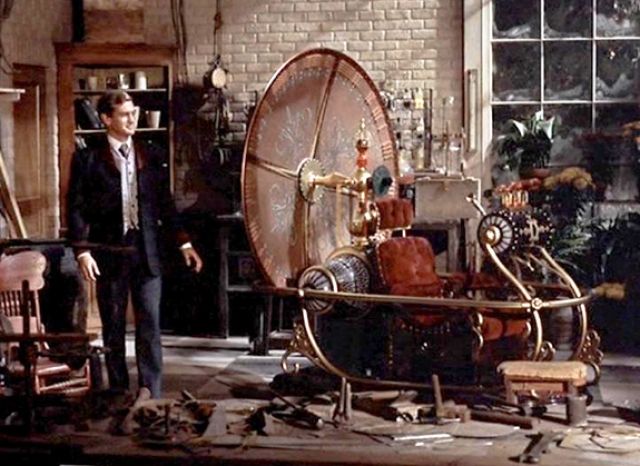
Where is the Time Machine from the Time Machine? I’ve always loved the Time Machine released in 1960. This movie is probably my favorite time travel movie. The prop was perfect that they created for this great movie. The movie was based on the novel by H.G. Wells, it was directed by George Pal, starred Rod Taylor, Alan Young, and Yvette Mimieux, and featured Oscar-winning special effects.
Time Machine prop itself was co-designed by George Pal and MGM art director William Ferrari. Pal incorporated the look of a horse-drawn sleigh, inspired from the winter sleigh rides of his youth.
After the film was completed the Time Machine prop was placed into storage by MGM. In the early 70s MGM held an auction that included the famous Ruby Slippers from The Wizard of Oz and the Time Machine. The Time Machine sold for between eight and ten thousand dollars to the owner of a traveling show.
Film historian Bob Burns tried to buy it at the auction but came up short. Around 5 years later a friend of a friend of Bob’s thought he saw the Time Machine Prop at a thrift shop in Orange California. Bob hurried over and with great excitement checked out the prop. There is was…The Time Machine in a thrift shop. It was not in good shape though. The chair was gone, the pods were broken, but the huge gold disc was in great shape.
When he got home Bob called George Pal (the director) when he got home and told him he had the Time Machine. George had given Bob the blueprints to the machine and Bob used these to restore the machine.
It only took Bob Burns and a crew 4 weeks to restore the machine and it was used in Bob’s annual Halloween show for 1976.
The original Time Machine has made appearances in other productions, including Carl Sagan’s “Cosmos”, “Gremlins, Mike Jittlov’s short “Time Tripper” (1978, and used within his feature film “The Wizard of Speed and Time” in 1989) and the documentary on the making of “The Time Machine” called “The Journey Back” (1993).
Bob Burns owns a ton of movie props. I would LOVE to tour his basement. He also owns the original King Kong.
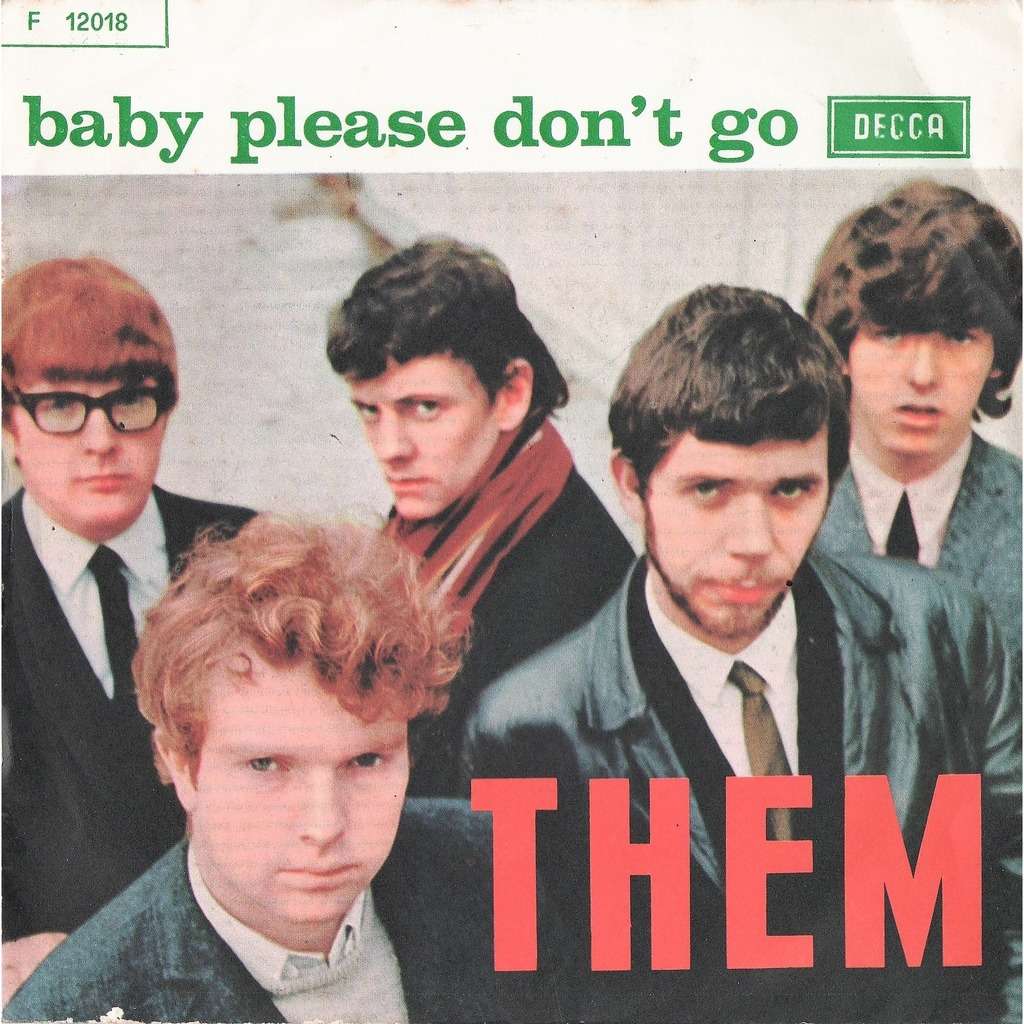
There are many versions of this old blues song but the one I know the best is Them featuring a 19-year-old Van Morrison on lead vocal. This song was the A-side to Gloria when it was released. Gloria ended up being the hit but this one managed to peak at #10 in 1961 and #65 in the UK in 1991.
Morrison based Them’s version on John Lee Hooker’s 1949 arrangement, which he titled “Don’t Go Baby.” He heard the song on Hooker’s 1959 Highway of Blues album.
A pre-Led Zeppelin Jimmy Page, a session musician at the time, played guitar on Them’s version. There’s debate over whether or not he wrote the guitar part or simply played what Them’s Billy Harrison came up with. Whether or not Page is actually the one playing is, itself, debated.
Blues great Big Joe Williams is credited with writing this song, but it was developed from a folk song titled “Long John,” which was recorded in 1934 by John and Alan Lomax for the Library of Congress. That recording captures the song being sung by black prisoners working at Darrington State Prison Farm in Texas. It was a popular tune there because “Long John” was about an escaped prisoner on the run from authorities.
Baby, Please Don’t Go
Baby, please don’t go Baby, please don’t go Baby, please don’t go Down to New Orleans You know I love you so Baby, please don’t go
Baby, your mind done gone Well, your mind done gone Left the county farm You had the shackles on Baby, please don’t go
Before I be your dog Before I be your dog Before I be your dog To git you way down here I make you walk alone Baby, please don’t go Hey
Baby, please don’t go Baby, please don’t go Baby, please don’t go Down to New Orleans You know I love you so Baby, please don’t go
Before I be your dog Before I be your dog Before I be your dog Git you way down here Make you walk alone Baby, please don’t go
Know how I feel right now My baby leavin’, on that midnight train And I’m cryin’
Baby, please don’t go Oh, baby please don’t go Baby, please don’t go Down to New Orleans You know I love you so Baby, please don’t go Let’s go
Before I be your dog Before I be your dog Before I be your dog To git you way down here I make you walk alone Baby, please don’t go, yeah
Peter Jackson combed through 55 hours of video footage to give a broader picture of the Let It Be sessions. A short preview was shown and it showed the Beatles in good spirits…against what we have read about. There was drama, but from what is being said…there was more good than not.
It will be interesting to get more of a broader picture of that time in the Beatles career…right before they made Abbey Road.
I will be there when it’s released. Here are a couple of articles.
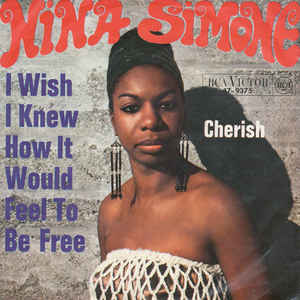
Billy Taylor originally composed this gospel jazz song as I Wish I Knew in 1952. He was spurred to write the tune when his daughter Kim came home from school singing a spiritual.
The song served as an anthem for the Civil Rights Movement in America in the 1960s. Nina’s version was recorded in 1967 on her Silk & Soul album and was widely played.
Silk and Soul peaked at #158 in the Billboard Album Charts.
It’s a beautiful moving song.
From Songfacts
Billy Taylor recorded the tune as an instrumental with a big-band lineup of 19 musicians on November 12, 1963. Taylor’s first recording of the song was done 10 days before President John F. Kennedy was assassinated. Once the lyrics were added, it became an anthem for the 1960s civil rights movement.
The musician’s daughter Kim, who became a law professor in New York, told The Financial Times the story how her father’s instrumental acquired lyrics.
“Dad initially recorded it as an instrumental. But, as I recall, he had written the first verse of the lyrics pretty early on. He got stuck at one point and invited [lyricist] Dick Dallas to collaborate to help him finish the lyrics and that’s when we got the later verses. I’ve always felt that there was a difference between the first verse and the later ones. I think you hear my dad’s voice most clearly in the first verse.”
Nina Simone covered the song in her 1967 album Silk & Soul. The following year, a recording by Solomon Burke reached #68 in the US charts. Other artists that have recorded versions of the tune include John Denver (1969) John Legend & The Roots (2010) and Emeli Sandé (2012).
The tune is widely known in the UK as a piano instrumental version, used for Film…, BBC Television’s long-running late night program about the cinema presented by Barry Norman. The version used by the BBC was recorded in 1967 by Taylor with a trio for his Wish I Knew How It Would Feel to be Free album.
Coca-Cola used the song to soundtrack a feelgood 2004 TV advert featuring Basement Jaxx vocalist Sharlene Hector. The lyrics were changed to the more sentimental, “I wish I could share all the love that’s in my heart.”
I Wish I Knew How It Would Feel To Be Free
I wish I knew how It would feel to be free I wish I could break All the chains holding me I wish I could say
All the things that I should say Say ’em loud say ’em clear For the whole round world to hear I wish I could share All the love that’s in my heart
Remove all the bars That keep us apart I wish you could know What it means to be me Then you’d see and agree That every man should be free
I wish I could give All I’m longin’ to give I wish I could live Like I’m longin’ to live I wish I could do All the things that I can do And though I’m way over due I’d be starting a new
Well I wish I could be Like a bird in the sky How sweet it would be If I found I could fly Oh I’d soar to the sun And look down at the sea
Than I’d sing ’cause I know, yea Then I’d sing ’cause I know, yea Then I’d sing ’cause I know
I’d know how it feels Oh I know how it feels to be free Yea yea! oh, I know how it feels
Yes I know Oh, I know How it feels How it feels To be free
Mac Davis and Billy Strange wrote this for the 1968 Elvis movie Live A Little, Love A Little.
A remix of this song drove it up the UK charts in 2002
This was a fairly obscure Elvis song until it was remixed and released as a single in 2002. The new version went to #1 in the UK, giving Elvis 18 #1 hits there, the most of any artist. Previously, he was tied with The Beatles at 17. Because of rereleases he now has 21 number ones in the UK. The original release went to #69 in the Billboard 100 in 1968. In 2002 the remix version peaked higher at #50 in the Billboard 100.
I usually don’t like remixes like this but I do like this one somewhat.
The distinctive drum part on this song was played by Hal Blaine, who along with Earl Palmer was the top session drummer on the West Coast at the time.
The remix was released shortly before the 25th anniversary of Elvis’ death. It was added as a bonus track to Hits, an album of 30 #1 hits released on the 25th anniversary of his death. The record company was hoping to attract a new generation of Elvis fans the same way The Beatles did when they released their album of #1 hits in 2000.
From Songfacts Davis wrote the original version for Aretha Franklin, but when Billy Strange, who was handling music for the film, approached Davis about contributing a song, he realized that “A Little Less Conversation” fit the scene perfectly, so he reworked it with strange and Elvis sang it for the film.
The remix gained popularity in England when it was used in a Nike World Cup commercial featuring British soccer player Eric Cantona. The remix was done by Dutch DJ Tom Holkenburg, a member of the group Junkie XL. For the remix, the name of the group was changed to JXL because Presley’s estate did not welcome the drug reference. This was the first time an Elvis song was allowed to be remixed.
The official title of the remix is “Elvis vs. JXL – A Little Less Conversation.” Presley’s vocals were left intact.
The original version was used in the 2001 remake of the movie Ocean’s Eleven, starring George Clooney, Brad Pitt, and Julia Roberts.
Elvis’ daughter, Lisa Marie Presley, was born the year this was released.
The remix helped introduce Elvis to a younger generation. The memory of Elvis also got a boost when 8 of his songs were used in the Disney movie Lilo And Stitch around the same time.
Former Vermont governor Howard Dean used this as his campaign song when he ran for the Democratic nomination in 2003. His message was that he was a man of action, not words. Another candidate considered the song, but decided it had too much sexual innuendo.
This is used as the theme song to the television show Las Vegas.
Mitt Romney used this as his campaign song when he ran for president of the United States in 2008. According to Romney staffer Alex Burgos, this song “Underscores Governor Romney’s promise to bring change to a broken Washington. He believes there needs to be more action to address our nation’s challenges, with less talk and partisan bickering.”
A Little Less Conversation
A little less conversation, a little more action, please All this aggravation ain’t satisfactioning me A little more bite and a little less bark A little less fight and a little more spark Close your mouth and open up your heart and, baby, satisfy me Satisfy me, baby
Baby, close your eyes and listen to the music Drifting through a summer breeze It’s a groovy night and I can show you how to use it Come along with me and put your mind at ease A little less conversation, a little more action, please All this aggravation ain’t satisfactioning me A little more bite and a little less bark A little less fight and a little more spark
Close your mouth and open up your heart and, baby, satisfy me (Satisfy me) Satisfy me baby (satisfy me) Come on, baby, I’m tired of talking Grab your coat and let’s start walking Come on, come on (come on, come on) Come on, come on (come on, come on) Come on, come on (come on, come on)
Don’t procrastinate, don’t articulate Girl, it’s getting late, gettin’ upset waitin’ around A little less conversation, a little more action, please All this aggravation ain’t satisfactioning me A little more bite and a little less bark A little less fight and a little more spark Close your mouth and open up your heart and, baby, satisfy me (Satisfy me) Satisfy me baby (satisfy me)
Come on, baby, I’m tired of talking Grab your coat and let’s start walking Come on, come on (come on, come on) Come on, come on (come on, come on) Come on, come on (come on, come on)
Don’t procrastinate, don’t articulate Girl, it’s getting late, gettin’ upset waitin’ around A little less conversation, a little more action, please All this aggravation ain’t satisfactioning me A little more bite and a little less bark A little less fight and a little more spark Close your mouth and open up your heart and, baby, satisfy me (Satisfy me) Satisfy me (satisfy me)
This song had a resurgence in the 90s because of the movie Pulp Fiction. Urge Overkill did a cover that was included in the movie and soundtrack.
Neil Diamond is protective of his songs, initially refused to let Tarantino use it as he hated the violent script. However, he was probably glad he relented as the success of the song put Diamond back on the radar after a period when he wasn’t having hits. Urge Overkill’s version reached #37 in the UK, and Diamond’s back catalog got a huge bump in sales.
Urge Overkill didn’t fare as well. After serving as the opening act for both Nirvana and Pearl Jam, they got a major label deal with Geffen Records and released the album Saturation. Their next album flopped, and they disbanded in 1997. They reformed in 2004 and have performed from time to time.
The song peaked at #10 in the Billboard 100 in 1967. For Urge Overkill it peaked at #59 in the Billboard 100, #37 in the UK, and #19 in New Zealand in 1994.
From Songfacts
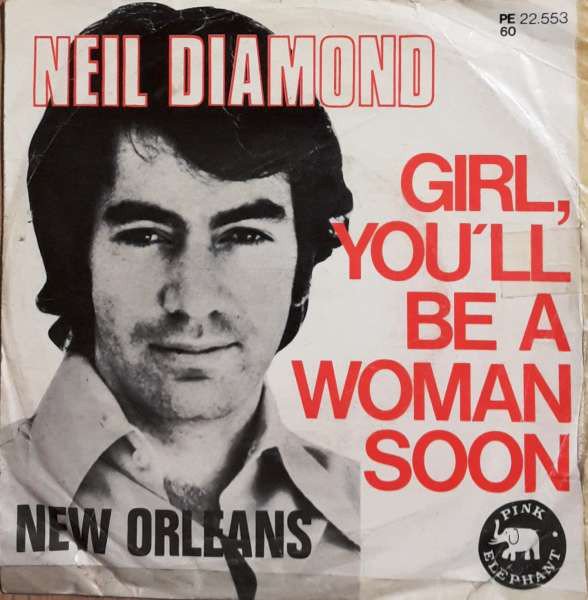
Diamond wrote this one for the ladies, which made up most of his fan base. David Wild wrote in his book He Is…I Say: How I Learned to Stop Worrying and Love Neil Diamond, “When Diamond first recorded the slow, seductively sensitive song in 1967, it solidified his growing connection with his female fan base, many of whom are apparently still following him all these years later, even if they are no longer properly addressed as ‘girl.’ Diamond has said that the song was written for all those teenaged girls who would show up at his earliest tour dates and vocally express their tremendous support.”
In 1994 a cover by alternative rock band Urge Overkill appeared prominently in Quentin Tarantino’s movie Pulp Fiction.
Tarantino recalled to Rolling Stone that he found the Urge Overkill version “on an EP in a little record store in Holland, so I picked it up and thought, ‘Wow, that’s a really cool track.’ And it just kept staying with me and staying with me. So then I worked the scene out with Uma [Thurman] and it ended up working fantastic, it became very iconic.”
Urge Overkill’s Eddie “King” Roeser recalled to Mojo magazine: “We did our version of ‘Girl You’ll Be A Woman Soon’ from memory. The lyrics, I don’t even know if they go that way. It speeds up, the fills are all over the place, it’s out of tune.”
In addition to Pulp Fiction, these movies have used the song:
War Dogs (2016) The Upside of Anger (2005) Sorority Boys (2002)
And these TV series:
Supernatural (“Our Little World” – 2015) Friends (“The One with the Stoned Guy” – 1995) Family Ties (“The Fugitive: Part 1” – 1983)
Girl You’ll Be A Woman Soon
Love you so much, can’t count all the ways I’d die for you girl, and all they can say is “He’s not your kind”
They never get tired of puttin’ me down And I never know when I come around What I’m gonna find Don’t let them make up your mind Don’t you know
Girl, you’ll be a woman soon Please come take my hand Girl, you’ll be a woman soon Soon you’ll need a man
I’ve been misunderstood for all of my life But what they’re sayin’, girl, just cuts like a knife “The boy’s no good”
Well, I finally found what I’ve been looking for But if they get the chance, they’ll end it for sure Sure they would Baby, I’ve done all I could It’s up to you
Girl, you’ll be a woman soon Please come take my hand Girl, you’ll be a woman soon Soon you’ll need a man
Maybe I should clarify the original Lost In Space. Not the movie or the Netflix series…but the original sixties show.
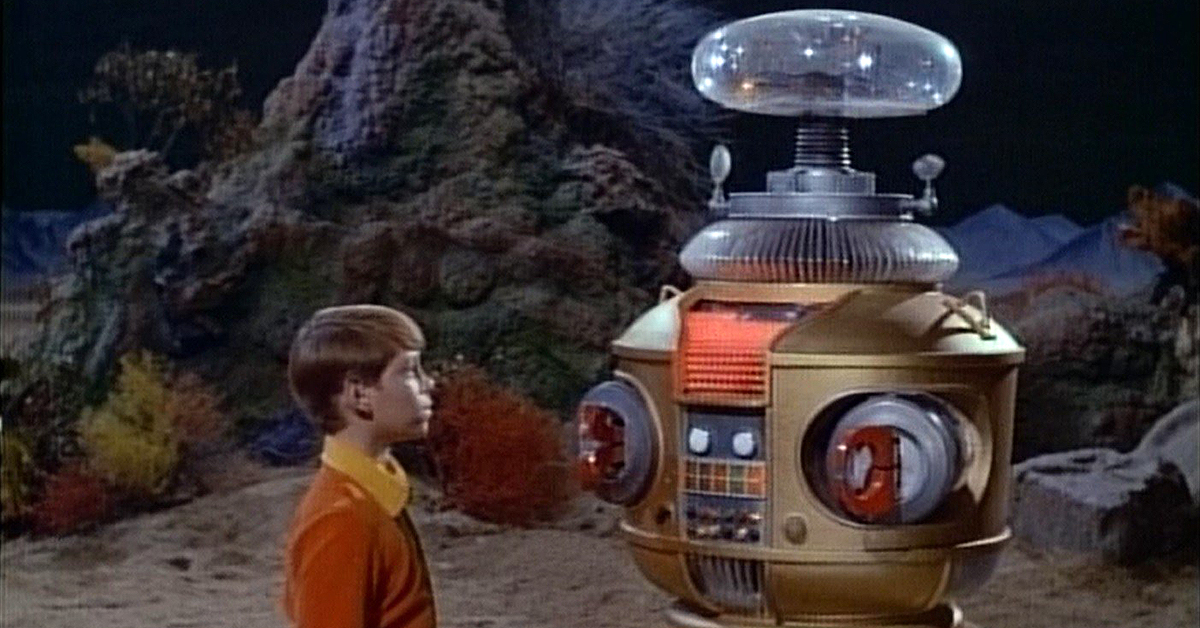
Much to my surprise, this was not Robby the Robot from Forbidden Planet…Robby does appear in a couple of episodes of Lost In Space though. No, the Robot we are looking for was called the B9 Environmental Control Robot, also referred to as the Robot or just Robot, it was a Class M-3 General Utility Non-Theorizing Environmental Robot (G.U.N.T.E.R.) “designed and computerized as a mechanized electronic aid for Earth voyagers engaged in astral expeditions.
There were two robots used in Lost In Space. One for the main robot and the other as a stunt robot. the Robot was designed by Robert Kinoshita (or Robert ‘Bob’ Stewart whom Kinoshita worked under), who also designed Forbidden Planet‘s Robby the Robot. Robby appears in Lost in Space episode #20 “War of the Robots” and in episode #60 “Condemned of Space.”
Both the main robot and stunt robot fell into disrepair after the show went off the air. They were both found and restored to their sixties glory.
The main robot is privately owned by TV and film producer Kevin Burns. The “stunt robot” is in storage at the Science Fiction Museum and Hall of Fame (MoPoP) in Seattle, Washington. Like Robby the Robot, the B-9 Robot prop costume was re-used on at least one other show. On the Saturday morning children’s show Mystery Island, it was modified to create the primary character P.O.P.S. It had different domes, a different color scheme, and an added rectangular skirt of gold-colored tubes covering the rubber bellows legs and base.
I want to thank Lisa from Tao Talk for suggesting this topic for the “Where is?” feature this week. Thanks Lisa!
Robert Kinoshita and his creation…and Robby the Robot
There is a small industry on replicas of this great robot.
Deep Purple would change before too long to their most famous era of the band in the early seventies. Soon singer Rod Evans and bassist Nick Simper would be gone in 1969 and singer Ian Gillian and bassist Roger Glover would be in…and the most famous version of Deep Purple would last from 1969-1973 with reunions in the 80s and 90s.
This was written by Joe South and first recorded by the country singer Billy Joe Royal in 1967. Joe South was a prominent session musician and songwriter; some of his other compositions include “Games People Play” and “Rose Garden.” South also wrote “Down in the Boondocks” for Royal, which was a #9 US hit in 1965.
For Deep Purple, the song peaked at #4 in the Billboard 100 in 1968.
The Deep Purple version was included on their first album and recorded with the band’s original lineup, which didn’t include lead singer Ian Gillan, who joined in 1969, replacing Rod Evans. The song is a fan favorite, but Gillan kept it off the setlists when he was in the band since he wasn’t the original singer.
The band is still touring today without Ritchie Blackmore who quit and Jon Lord who died in 2012.
From Songfacts
After Royal released his version, “Hush” was quickly recorded by many artists in a variety of styles. The song is about a guy who is so crazy in love that he’ll drop everything if he thinks she might be calling his name. Royal’s recording has a definite country feel, while Deep Purple used a heavy rock sound.
Other artists to record the song include Jimmy Frey, The Rubes, Killdozer, Dan Baird, Gotthard and Thin Lizzy. Kula Shaker had the biggest UK hit with their cover going to #2 in 1997.
Joe South adapted the song from an old African American spiritual, which included the line: “Hush I thought I heard Jesus calling my name.”
It was a cohort of producer Joe Meek, Rod Freeman, who taught Deep Purple this song. Keyboardist Jon Lord recalled to Mojo magazine January 2009: “Initially we thought it’s a bit too disco, or whatever the word was then. But Ritchie (Blackmore) said it would work if we toughened it up a bit.”
This song has been in the following films: Apollo 11 (1996), Isn’t She Great (2000), Beyond the Sea (2004), Children of Men (2006).
The UK Charlatans lifted the organ riff on their 1990 UK hit “The Only One I Know” from this song.
This was not a hit in Deep Purple’s native UK, though a re-recording made to celebrate their 20th anniversary reached a measly #62 in 1988.
In 1997 British band Kula Shaker’s cover of this song peaked at #2 in the UK, bettering Deep Purple’s chart position by 60 places. Kula Shaker’s version featured in the 1997 film I Know What You Did Last Summer.
Jon Lord (from Mojo magazine): “The whacka thing on the organ was something I started doing in (his previous band) The Artwoods. I played it almost like a set of conga drums. The rhythm of Hush is like a samba.” When Steve Morse joined Deep Purple on guitar in 1994, he pushed to bring the song back to their live shows, which they did. “We have a big improv section in there and it’s just a great feel from beginning to end for me,” Morse said in our 2014 interview. “And the lyrics are not even lyrics. It’s just ‘Na nana na na na nananana.’ It’s the most basic tune in the world, but to me Deep Purple got on the map as a hard rock band from doing that version of ‘Hush.’ So I love that. And we stretch that out pretty far live.”
In the US, this was released on Tetragrammaton Records, which was co-owned by Bill Cosby.
Hush
Na na na na na na Na na na na na na I got a certain little girl she’s on my mind No doubt about it she looks so fine She’s the best girl that I ever had Sometimes she’s gonna make me feel so bad
Na na na na na na Na na na na na na Hush, hush I thought I heard her calling my name now Hush, hush She broke my heart but I love her just the same now Hush, hush Thought I heard her calling my name now Hush, hush I need her loving and I’m not to blame now
(Love, love) they got it early in the morning (Love, love) they got it late in the evening (Love, love) well, I want that, need it (Love, love) oh, I gotta gotta have it
She’s got loving like quicksand Only took one touch of her hand To blow my mind and I’m in so deep That I can’t eat and I can’t sleep
Na na na na na na Na na na na na na Listen hush, hush Thought I heard her calling my name now Hush, hush She broke my heart but I love her just the same now Hush, hush Thought I heard her calling my name now Hush, hush I need her loving and I’m not to blame now
(Love, love) they got it early in the morning (Love, love) they got it late in the evening (Love, love) well, I want that, need it (Love, love) oh, I gotta gotta have it
Na na na na na na Na na na na na na Na na na na na na
A band called The Pudding heard this song from a Pete Townshend demo that was circulated. The Pudding recorded the first version (see video below), which came and went without much fanfare in 1967…they could have picked a little better name. Their version was a little too smooth for me.
I’ve always liked this song with it’s Bo Diddley rhythm.
The Who’s version came out in the next year in 1968 and peaked at #25 in the Billboard 100, #26 in the UK, #6 in Canada, and #13 in New Zealand.
The song was included on the American album Magic Bus: The Who on Tour although no tracks were live…they were all studio tracks. In the UK it was just released as a single. It would later be included on the great compilation album Meaty Beaty Big and Bouncy in 1971.
Pete Townsend: “When I wrote ‘Magic Bus,’ LSD wasn’t even invented as far as I knew. Drug songs and veiled references to drugs were not part of The Who image. If you were in The Who and took drugs, you said, ‘I take drugs,’ and waited for the fuzz to come. We said it but they never came. We very soon got bored with drugs. No publicity value. Buses, however! Just take another look at Decca’s answer to an overdue Tommy; The Who, Magic Bus, On Tour. Great title, swinging presentation. Also a swindle as far as insinuating that the record was live. Bastards. This record is what that record should have been. It’s The Who at their early best. Merely nippers with big noses and small genitals trying to make the front page of The Daily News.”
Magic Bus
Every day I get in the queue (too much, Magic Bus) To get on the bus that takes me to you (too much, Magic Bus) I’m so nervous, I just sit and smile (too much, Magic Bus) You house is only another mile (too much, Magic Bus)
Thank you, driver, for getting me here (too much, Magic Bus) You’ll be an inspector, have no fear (too much, Magic Bus) I don’t want to cause no fuss (too much, Magic Bus) But can I buy your Magic Bus? (too much, Magic Bus)
(No)
I don’t care how much I pay (too much, Magic Bus) I want to drive my bus to my baby each day (too much, Magic Bus)
I want it, I want it, I want it, I want it (you can’t have it) Thruppence and sixpence every day Just to drive to my baby Thruppence and sixpence each day ‘Cause I drive my baby every way
Magic bus, Magic Bus, Magic Bus Magic bus, Magic Bus, Magic Bus Magic bus, Magic Bus, Magic Bus Magic bus, Magic Bus, Magic Bus
I said, now I’ve got my Magic Bus (too much, Magic Bus) I said, now I’ve got my Magic Bus (too much, Magic Bus) I drive my baby every way (too much, Magic Bus) Each time I go a different way (too much, Magic Bus)
I want it, I want it, I want it, I want it I want it, I want it, I want it, I want it
Every day you’ll see the dust (too much, Magic Bus) As I drive my baby in my Magic Bus (too much, Magic Bus)
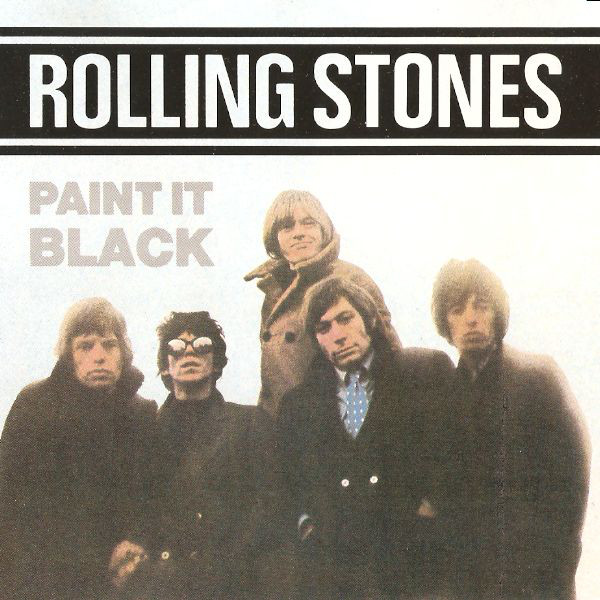
Of all of the Rolling Stones riffs…this one is one of the most memorable. It’s menacing with a dash of eastern influence. Brian Jones plays a sitar on this record. This was one of the Stones best periods. Whatever song they wrote, Jones would play a different instrument to color the song.
The Stones were more adventurous in the mid-sixties. Along with some blues they ventured into pop, rock, and a bit of psychedelia. After Brian left they played mostly blues-rock along with a little reggae-influenced music later on.
The song peaked at #1 in the Billboard 100, #1 in Canada, #1 in the UK, and #4 in New Zealand in 1966.
The Stones former manager Allen Klein owned the publishing rights to this song. In 1965, The Stones hired him and signed a deal they would later regret. With Klein controlling their money, The Stones signed over the publishing rights to all the songs they wrote up to 1969. Every time this is used in a commercial or TV show, Klein’s estate (he died in 2009) gets paid.
From Songfacts
This is written from the viewpoint of a person who is depressed; he wants everything to turn black to match his mood. There was no specific inspiration for the lyrics. When asked at the time why he wrote a song about death, Mick Jagger replied: “I don’t know. It’s been done before. It’s not an original thought by any means. It all depends on how you do it.”
The song seems to be about a lover who died:
“I see a line of cars and they’re all painted black” – The hearse and limos.
“With flowers and my love both never to come back” – The flowers from the funeral and her in the hearse. He talks about his heart being black because of his loss.
“I could not foresee this thing happening to you” – It was an unexpected and sudden death.
“If I look hard enough into the setting sun, my love will laugh with me before the morning comes” – This refers to her in Heaven.
The Rolling Stones wrote this as a much slower, conventional soul song. When Bill Wyman began fooling around on the organ during the session doing a takeoff of their original as a spoof of music played at Jewish weddings. Co-manager Eric Easton (who had been an organist), and Charlie Watts joined in and improvised a double-time drum pattern, echoing the rhythm heard in some Middle Eastern dances. This new more upbeat rhythm was then used in the recording as a counterpoint to the morbid lyrics.
On this track, Stones guitarist Brian Jones played the sitar, which was introduced to pop music by The Beatles on their 1965 song Norwegian Wood (This Bird Has Flown). Jones made good television by balancing the instrument on his lap during appearances.
Keith Richards: “We were in Fiji for about three days. They make sitars and all sorts of Indian stuff. Sitars are made out of watermelons or pumpkins or something smashed so they go hard. They’re very brittle and you have to be careful how you handle them. We had the sitars, we thought we’d try them out in the studio. To get the right sound on ‘Paint It Black’ we found the sitar fitted perfectly. We tried a guitar but you can’t bend it enough.”
This was used as the theme song for Tour Of Duty, a CBS show about the Vietnam War which ran from 1987-1989.
On the single, there is a comma before the word “black” in the title, rendering it, “Paint It, Black.” This of course changes the context, implying that a person named “Black” is being implored to paint. While some fans interpreted this as a statement on race relations, it’s far more likely that the rogue comma was the result of a clerical error, something not uncommon in the ’60s.
Mick Jagger: “That was the time of lots of acid. It has sitars on it. It’s like the beginnings of miserable psychedelia. That’s what the Rolling Stones started – maybe we should have a revival of that.”
U2 did a cover for the 7″ B-side of “Who’s Gonna Ride Your Wild Horses,” and used some of it in live versions of “Bad.” Other artists who have covered the song include Deep Purple, Vanessa Carlton, GOB, Tea Party, Jonny Lang, Face to Face, Earth Crisis, W.A.S.P., Rage, Glenn Tipton, Elliott Smith, Eternal Afflict, Anvil, and Risa Song.
Jack Nitzsche played keyboards. Besides working with The Stones, Nitzsche arranged records for Phil Spector and scored many movies. Nitzsche had an unfortunate moment when he appeared on the TV show Cops after being arrested for waving a gun at a guy who stole his hat. He died of a heart attack in 2000 at age 63.
This is featured in the closing credits of the movie The Devil’s Advocate. It is also heard at the end of Stanley Kubrick’s movie Full Metal Jacket, where it serves as an allegory of the sorrow of the sudden death in the song relating to the emotional death of the men in the film, and of all men in war.
This song was used in the movie Stir Of Echoes with Kevin Bacon. In the movie, Bacon’s character hears the first few chords of it in a memory, but could not think of the song. It drives him crazy through most of the movie.
Talking on his Absolute Radio show, Stones’ co-guitarist Ronnie Wood disclosed that Keith Richards has trouble remembering how to play this song. He revealed, “We always have this moment of hesitation where we don’t know if Keith’s going to get the intro right.”
Keith Richards: “What made ‘Paint It Black’ was Bill Wyman on the organ, because it didn’t sound anything like the finished record until Bill said, ‘You go like this.'”
Ciara recorded a breathy, stirring cover for the 2015 movie, The Last Witch Hunter. The R&B star told Rolling Stone that it was a surprise for her when she got the call from Universal Publishing and Lionsgate to record the tune. “When they asked me to do this, I was like, ‘Absolutely. This would be an honor,'” she said. “I had never thought to cover this song. It was never on my radar to cover it, but when the opportunity came along, I was very thrilled, because I love what the producer Adrianne Gonzales did.”
“The direction that she went in was actually a sound I’ve always wanted to play with, and it just didn’t get any better than being able to cover a Rolling Stones song,” Ciara continued. “I feel like it pushes the edge and the limit for me, in reference to what people probably expect from me. So this was so many cool things in one. It was a huge honor, and then creatively I just got to really have some fun that I don’t usually do in my music.”
This wasn’t the only “black” hit of 1966; the Spanish group Los Bravos went to #4 US and #2 UK with “Black Is Black” that year.
In the two weeks this song was at #1 in June 1966, the #2 song was “Did You Ever Have to Make up Your Mind?” by The Lovin’ Spoonful, an American group that made inroads against the British Invasion bands with relentlessly upbeat pop songs. Their jaunty song about trying to decide between two girls was quite a contrast to “Paint It Black.”
In his 2002 book Rolling with the Stones, Bill Wyman explained that the album was intended to be the soundtrack for the never-filmed movie Back, Behind And In Front. The deal fell through when Mick Jagger met director Nicholas Ray (who directed James Dean in Rebel Without A Cause) and didn’t like him.
Paint It Black
I see a red door and I want it painted black No colors anymore, I want them to turn black I see the girls walk by dressed in their summer clothes I have to turn my head until my darkness goes
I see a line of cars and they’re all painted black With flowers and my love, both never to come back I see people turn their heads and quickly look away Like a newborn baby it just happens ev’ryday
I look inside myself and see my heart is black I see my red door and I must have it painted black Maybe then I’ll fade away and not have to face the facts It’s not easy facing up when your whole world is black
No more will my green sea go turn a deeper blue I could not foresee this thing happening to you If I look hard enough into the setting sun My love will laugh with me before the morning comes
I see a red door and I want it painted black No colors anymore I want them to turn black I see the girls walk by dressed in their summer clothes I have to turn my head until my darkness goes
I want to see your face painted black, black as night, black as coal Don’t want to see the sun, flying high in the sky I want to see it painted, painted, painted, painted black, yea
This is a traditional West Indies tune about a sunken boat. It was adapted in 1951 by Lee Hays of the Weavers (as “The John B Sails”) and revived in 1960 by Lonnie Donegan.
This was the biggest hit from The Beach Boys landmark album Pet Sounds. The album’s origin was basically Brian Wilson, and he got the title when Beach Boy Mike Love suggested the album had Brian’s “pet” sounds or his favorite sounds. To keep the animal theme, Wilson put some barking dogs on the album.
Al Jardine on Pet Sounds: Mike Love was very confused … Mike’s a formula hound – if it doesn’t have a hook in it, if he can’t hear a hook in it, he doesn’t want to know about it. … I wasn’t exactly thrilled with the change, but I grew to really appreciate it as soon as we started to work on it. It wasn’t like anything we’d heard before.”
The song peaked at #3 in the Billboard 100, #2 in Canada, #1 in New Zealand, and #2 in the Uk in 1966.
From Songfacts
The Beach Boys’ folk music buff, Al Jardine, turned Brian Wilson onto the Kingston Trio’s recording of the song. For their updated version, Wilson added elaborate vocals and a 12-string guitar part. He also changed some of the lyrics, including “This is the worst trip since I’ve been born” to “…I’ve ever been on” as a wink to acid culture.
The song was popularized by The Kingston Trio, who adapted it from a version in poet Carl Sandburg’s 1927 songbook The American Songbag. The Kingston Trio’s version stays true to the song’s Calypso roots, and was released on their first album in 1958. Eight years later, The Beach Boys changed the title to “Sloop John B,” and came away with a hit. Their debt to The Kingston Trio goes far beyond this song: The Beach Boys adopted the group’s striped, short-sleeved shirts and wholesome persona as well.
With Wilson at the controls, the album was recorded at United Western Recorders in Los Angeles, in the studio known as “Western 3.” Wilson coaxed a big sound out of the little room, which measured just 14′ x 34′.
Brian Wilson hired 13 musicians to record this song on a midnight – 3 a.m. session on July 12, 1965. The session players packed into United Western Recorders in Los Angeles that night were:
Hal Blaine (drums) Carol Kaye (electric bass) Al De Lory (keyboards) Al Casey (guitar) Lyle Ritz (upright bass) Billy Strange (guitar) Jerry Cole (guitar) Frank Capp (Glockenspiel) Jay Migliori (clarinet) Steve Douglas and Jim Horn (flutes) Jack Nimitz (sax) Charles Britz (engineer)
Billy Strange did some guitar overdubs at another session on December 29, 1965.
According to pop historian Joseph Murrells, this was the Beach Boys’ fastest selling record to date – over 500,000 within two weeks in the US alone.
Sloop John B
We come on the Sloop John B My grandfather and me Around Nassau town we did roam Drinking all night Got into a fight Well I feel so broke up I want to go home
So hoist up the John B’s sail See how the main sail sets Call for the Captain ashore Let me go home, let me go home I want to go home, yeah yeah Well I feel so broke up I want to go home
The first mate he got drunk And broke in the Cap’n’s trunk The constable had to come and take him away Sheriff John Stone Why don’t you leave me alone, yeah yeah Well I feel so broke up, I want to go home
So hoist up the John B’s sail See how the main sail sets Call for the Captain ashore Let me go home, let me go home I want to go home, let me go home Why don’t you let me go home (Hoist up the John B’s sail) Hoist up the John B I feel so broke up I want to go home Let me go home
The poor cook he caught the fits And threw away all my grits And then he took and he ate up all of my corn Let me go home Why don’t they let me go home This is the worst trip I’ve ever been on
So hoist up the John B’s sail See how the main sail sets Call for the Captain ashore Let me go home, let me go home I want to go home, let me go home Why don’t you let me go home
This very well may be the very first Punk record. The simple riff was raw and cutting and like Louie, Louie and Wild Thing…became a staple of garage bands forever. This song was the first hit for The Kinks. Before releasing it, they put out two singles that flopped: a cover of “Long Tall Sally” and a Ray Davis composition called “You Still Want Me.”
The sound of the guitar was revolutionary. Dave Davies got the dirty guitar sound by slashing the speaker cone on his amplifier with a razor blade. The vibration of the fabric produced an effect known as “fuzz,” which became common as various electronic devices were invented to distort the sound. At the time, none of these devices were available to Dave, so Davies would mistreat his amp to get the desired sound, often kicking it.
Ray Davies wrote this with the intention of making it a big crowd-pleaser for their live shows. He was trying to write something similar to “Louie Louie,” which was a big hit for The Kingsmen.
The song peaked at #7 in the Billboard 100 and #1 in the UK in 1964.
From Songfacts
Kinks frontman Ray Davies wrote the lyric to this rambunctious rocker after watching girls dancing in a club. It’s not the most articulate lyric, but that’s the point: The guy in the song is so infatuated, all he can do is mutter at the girl how she’s really got him.
In 2015, he told Rolling Stone: “I just remembered this one girl dancing. Sometimes you’re so overwhelmed by the presence of another person and you can’t put two words together.”
Davies expanded on the song’s inspiration during a 2016 interview with Q magazine: “I was playing a gig at a club in Piccadilly and there was a young girl in the audience who I really liked. She had beautiful lips. Thin, but not skinny. A bit similar to Françoise Hardy. Not long hair, but down to about there (points to shoulders). Long enough to put your hands through… (drifts off, wistfully)… long enough to hold. I wrote ‘You Really Got Me’ for her, even though I never met her.”
According to Dave, the amp slashing happened in his bedroom in North London when he was irate – he had gotten his girlfriend, Sue Sheehan, pregnant, and their parents wanted to keep them from getting married. Instead of doing self harm, he used the blade on the amp to channel his rage. The amp was a cheap unit called an Elpico that had been giving him problems – he decided to teach it a lesson!
In the studio, the wounded Elpico was hooked into a another amp, which Dave recalls as a Vox AC30 and producer Shel Talmy remembers as a Vox AC10. The sound they got changed the course of rock history, becoming the first big hit to use distortion.
Davies and Sheehan stayed apart, but she had the baby, a girl named Tracey who finally met her father until 1993.
If “You Really Got Me” didn’t sell, there was a good chance their record label would have dropped them, but the song gave them the hit they were looking for. Soon they were making TV appearances, gracing magazine covers, and playing on bills with The Beatles as an opening act. They didn’t have an album out when the song took off, so they rushed one out to capitalize on the demand. This first, self-titled album has just five originals, with the rest being R&B covers – standard practice at the time for British Invasion bands.
The Kinks recorded a slower version with a blues feel on their first attempt, but hated the results. Ray Davies thought it came out clean and sterile, when he wanted it to capture the energy of their live shows. Dave Davies’ girlfriend backed them up, saying it didn’t make her want to “drop her knickers.”
The Kinks’ record company had no interest in letting them re-record the song, but due to a technicality in their contract, they were able to withhold the song until they could do it again. At the second session, Dave Davies used his slashed amp and Talmy produced it to get the desired live sound. This is the version that was released. Talmy liked the original: He claimed it would also have been a hit if it was released.
Ray Davies came up with famous riff on the piano at the family home. He played it for Dave, who transposed it to guitar. Their first version was 6-minutes long, but the final single release came in at just 2:20.
The first line was originally “you, you really got me going.” Ray Davies changed it to “girl, you really got me going” at the suggestion of one of their advisers. The idea was to appeal to the teenage girls in their audience.
The final version of the song was recorded in July 1964, with Ray Davies on lead vocals, Dave Davies on guitar, and Pete Quaife on bass.
The Kinks didn’t have a drummer when they first recorded the song a month earlier, so producer Shel Talmy brought in a session musician named Bobby Graham to play. When they recorded it the second time in July, Mick Avory had joined the band as their drummer, but Talmy didn’t trust him and made him play tambourine while Graham played drums. A session musician named Arthur Greenslade played piano, and Jon Lord, years before he became a member of Deep Purple, claimed he played keyboards. Lord recalled with a laugh to The Leicester Mercury in 2000: “All I did was plink, plink, plink. It wasn’t hard.”
Released in the UK on August 4, 1964, “You Really Got Me” climbed to #1 on September 16, where it stayed for two weeks. In America, it was released in September and reached a peak of #7 in November.
Ray Davies is the only songwriter credited on this track, even though his brother Dave came up with the signature guitar sound. This was one of many friction points for the brothers, who are near the top of any list of the most combative siblings in rock. When they recorded the song, Ray was 22 and Dave was 17.
Shel Talmy, who produced this track, came to England from California and brought many American recording techniques with him. To get the loud guitar sound on “You Really Got Me,” he recorded the guitar on two channels, one with distortion, the other without. When combined in the mix, the result was a loud, gritty sound that popped when it came on the radio.
“I was using some techniques I worked out on how to get a raunchier sound with distortion,” Talmy said in a Songfacts interview. “It wasn’t that difficult because I had done it before in America.”
Talmy added: “It helped that Dave was as good as he was, and that he was quite happy to listen.”
Talmy later produced the first album for The Who, My Generation.
It was rumored that Jimmy Page, who was a session musician at the time, played guitar on this track, which the band stridently denied. According to producer Shel Talmy, Page didn’t play on this song but did play rhythm guitar on some album tracks because Ray Davies didn’t want to sing and play guitar at the same time.
Ray Davies took pains to make sure we could understand the words. “I made a conscious effort to make my voice sound pure and I sang the words as clearly as the music would allow,” he said.
A 1978 cover of this song was the first single for Van Halen, who played lots of Kinks songs in their early years doing club shows. Eddie Van Halen spent the next several years developing new guitar riffs, and like Davies, was known to manipulate his equipment to get just the right sound.
The powerful rhythm guitar riff was very influential on other British groups. The Rolling Stones recorded “Satisfaction,” which was driven by the rhythm guitar, a year later.
According to Ray Davies, there was a great deal of jealousy among their peers when The Kinks came up with this song. He said in a 1981 interview with Creem: “There were a lot of groups going around at the time – the Yardbirds, the Kinks, the Rolling Stones – and nobody had really cracked with a sort of R&B #1 record. The songs were always sort of like The Beatles. When we first wanted to do a record, we couldn’t get a recording gig. We were turned down by Decca, Parlophone, EMI and even Brian Epstein came to see us play and turned us down. So I started writing songs like ‘You Really Got Me,’ and I think there was a sheer jealousy that we did it first. Because we weren’t a great group – untidy – and we were considered maybe a bit of a joke. But for some reason, I’d just had dinner, shepherd’s pie, at my sister’s house, and I sat down at the piano and played da, da, da, da, da. The funny thing is it was influenced by Mose Allison more than anybody else. And I think there was a lot of bad feeling. I remember we went to clubs like the Marquee, and those bands wouldn’t talk to us because we did it first.”
The Kinks’ next single was “All Day And All Of The Night,” which was basically a re-write of this song, but was also a hit.
In a Rolling Stone interview, Ray said that they “evolved” the sound by putting knitting needles in the speakers when recording this song. That statement prompted a rebuttal from his brother Dave, who wrote in to explain: “I alone created the guitar sound for the song with my Elpico amp that I bought. I slashed the speaker with a razor blade, which resulted in the ‘You Really Got Me’ tone. There were no knitting needles used in making my guitar sound.”
One of the many things the Davies brothers disagree on is the Van Halen cover. Ray loves it. He told NME it is his favorite Kinks cover. “It was a big hit for them and put them on a career of excess and sent them on the road. So I enjoyed that one.”
Dave Davies is not a fan. He told Rolling Stone: “Our song was working-class people trying to fight back. Their version sounds too easy.”
The Who played this at many of their early concerts. Their first single was “I Can’t Explain,” also produced by Shel Talmy with a sound clearly borrowed from “You Really Got Me,” as Pete Townshend played a dirty guitar riff similar to what Dave Davies’ did.
You Really Got Me
Girl, you really got me goin’ You got me so I don’t know what I’m doin’ now Yeah, you really got me now You got me so I can’t sleep at night
Yeah, you really got me now You got me so I don’t know what I’m doin’ now Oh yeah, you really got me now You got me so I can’t sleep at night
You really got me You really got me You really got me
See, don’t ever set me free I always want to be by your side Girl, you really got me now You got me so I can’t sleep at night
Yeah, you really got me now You got me so I don’t know what I’m doin’ now Oh yeah, you really got me now You got me so I can’t sleep at night
You really got me You really got me You really got me Oh no
See, don’t ever set me free I always want to be by your side Girl, you really got me now You got me so I can’t sleep at night
Yeah, you really got me now You got me so I don’t know what I’m doin’ now Oh yeah, you really got me now You got me so I can’t sleep at night
You really got me You really got me You really got me











 PowerPop... An Eclectic Collection of Pop Culture