Zombies – This Will Be Our Year

I love tradition so here we are again! Happy New Year 2024.

For the past few years, this has been my first post in the New Year. If you have followed me for a while you should know this one.

Next to Auld Lang Syne, this is my favorite New Year’s Song. A favorite of mine from one of my favorite bands. Everyone… I wish you a Happy New Year in 2024.

You didn’t have to read my blog but you did and I really appreciate it…I want to thank all of you for reading and commenting in 2023.

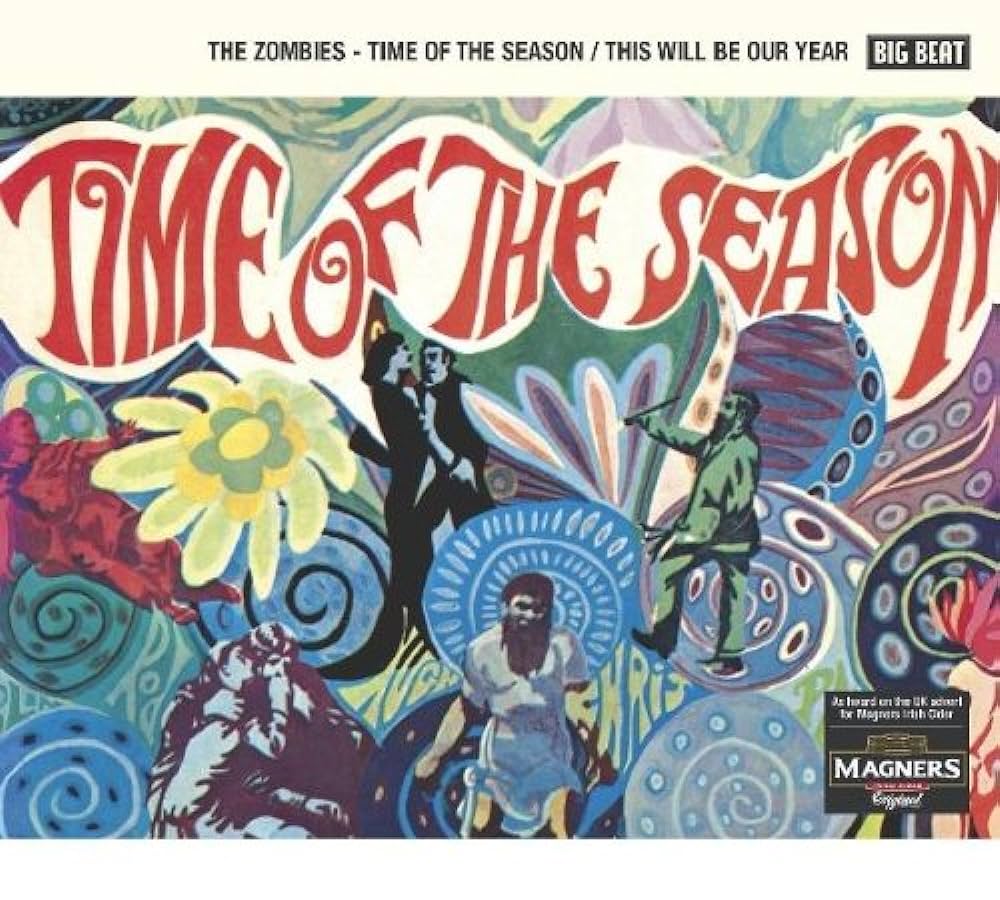
This song sounds like it should have been a hit but it was never pushed as a single at the time. It was the B side to Butcher’s Tale  (Western Front 1914) which is an experimental song and was a big surprise to the band that it was picked as the first single. Both are from the great album Odessey and Oracle in 1968. Several songs on this album could have been in the charts but Time of the Season was the only one that made it and it was a year after the album was released.

Bruce Eder of AllMusic gave the album five stars out of five, calling it “one of the flukiest (and best) albums of the 1960s, and one of the most enduring long-players to come out of the entire British psychedelic boom”.

On recording Odessey and Oracle…Rod Argent:

“We had the chance of going in and putting things down in the way we wanted people to hear them and we had a new studio, we walked in just after The Beatles had walked out [after recording Sgt. Pepper]. We were the next band in. They’d left some of their instruments behind … I used John Lennon’s Mellotron, that’s why it’s all over Odessey and Oracle. We used some of their technological advances … we were using seven tracks, and that meant we could overdub for the first time. And it meant that when I played the piano part I could then overdub a Mellotron part, and it meant we could have a fuller sound on some of the songs and it means that at the moment the tour we’re doing with Odessey and Oracle it means we’re actually reproducing every note on the original record by having extra player with us as well.”

This Will Be A Year

The warmth of your love
Is like the warmth of the sun
And this will be our year
Took a long time to come

Don’t let go of my hand 
Now darkness has gone
And this will be our year 
Took a long time to come

And I won’t forget 
The way you held me up when I was down
And I won’t forget the way you said, 
“Darling I love you”
You gave me faith to go on

Now we’re there and we’ve only just begun
This will be our year
Took a long time to come

The warmth of your smile
Smile for me, little one
And this will be our year
Took a long time to come

You don’t have to worry
All your worried days are gone
This will be our year
Took a long time to come

And I won’t forget 
The way you held me up when I was down
And I won’t forget the way you said, 
“Darling I love you”
You gave me faith to go on

Now we’re there and we’ve only just begun
And this will be our year
Took a long time to come

Yeah we only just begun
Yeah this will be our year
Took a long time to come

Taj Mahal – Leaving Trunk

The harmonica intro to this song is dirty as hell. You can hear the slide cutting in like a knife while the rhythm is chugging along. The song was written by Sleepy John Estes, son of a Tennessee sharecropper and blind in one eye, in 1930. He wrote it as Milk Cow Blues. It was recorded in Memphis with piano, mandolin, and Este’s guitar.

Leaving Trunk was on Taj Mahal’s self-titled debut album released in 1968. Like Ry Cooder two years after…he had a great band backing him up. On slide guitar and harmonica is Taj Mahal. The great Jesse Ed Davis is on slide guitar also on this album as well as Ry Cooder on rhythm guitar.

He covered songs written by Estes, Robert Johnson, himself, Sonny Boy Williamson II, and Blind Willie McTell. Leaving Trunk is a song that has been covered by many artists over the years, and it continues to be a favorite among blues fans. Secondhandsongs.com says it has 39 different versions to date. Everyone from Bob Willis to The Black Keys has covered this song. This album played a big part in influencing Duane Allman with Statesboro Blues.

I’ve listened to this album in the past few days I’ve been off of work. I’ve been rotating this one and the debut album of Ry Cooder. The slide guitar work on this album is blistering. I can’t state the importance of this album enough. I can see why Duane Allman was so inspired by it. I won’t go through the complete story but Duane was sick with a cold and his brother Gregg gave him a bottle of Coricidin and this album for Duane’s birthday. Below Gregg Allman tells it.

Gregg Allman: And then I looked on the table and all these little red pills, the Coricidin pills, were on the table. He had washed the label off that pill bottle, poured all the pills out. He put on that Taj Mahal record, with Jesse Ed Davis playing slide on “Statesboro Blues,” and starting playing along with it. When I’d left those pills by his door, he hadn’t known how to play slide. From the moment that Duane put that Coricidin bottle on his ring finger, he was just a natural.

Looking back on it, I think that learning to play slide was a changing moment in his life, because it was like he was back in his childhood—or maybe not his childhood, because it never seemed to me like Duane was a child, so it was more like going back to his first days of playing the guitar. He took to the slide instantly and mastered it very quickly. He practiced for hours and hours at a time, playing that thing with a passion—just like he did when he first learned to play the guitar.

Leaving Trunk

I went upstairs to pack my leavin’ trunk
I ain’t see no blues, whiskey made me sloppy drunk
I ain’t never seen no whiskey, the blues made me sloppy drunk
I’m going back to Memphis babe, where I’ll have much better luck

Look out mama you know you asked me to be your king
She said, “You kiddin’ man, if you want it, keep it hid
But please don’t let my husband, my main man catch you here
Please don’t let my main man, my husband catch you here”

The blues are mushed up into three different ways
One said, “Go the other”, two said, “Stay”
I woke up this mornin’ with the blues three different ways
You know one say, “Go baby, I want to hang up”
The other two said, “Stay”

Wake up mama, I got something to tell you
You know I’m a man who loves to sing the blues
Now you got to wake up baby, mama now
I got something, I got something to tell you
Well, you know I’m the man, I’m the man
Oh yes, and I love to sing the blues

Come on Davis
Come on, come on

I went upstairs to pack my leavin’ trunk, you know
I ain’t see no blues or whiskey made me sloppy drunk
I never seen no whiskey, the blues made me sloppy drunk
I go home baby and I lay down on the lawn

Jeff Beck – Beck’s Bolero

This song is for Song Lyric Sunday for Jim Adams’s blog. This week’s prompt is Gone But Not Forgotten. We lost Jeff Beck this year and he was a huge loss.

I hardly ever post instrumentals but this one is special. Keith Moon on drums, John Paul Jones on bass, Nicky Hopkins on keyboard, and Jimmy Page,  on 12-string guitar along with Jeff Beck on slide guitar. John Paul Jones said the group that played on Beck’s Bolero was kicking around the idea of touring. They also were thinking about trying to get the Small Faces singer Steve Marriott but his management would not go for that.

Beck’s Bolero was recorded over one day on May 16th, 1966. At this point, Moon was unhappy in The Who, and this impromptu band did initially plan to record and release a full album, but contractual obligations…amongst other things, prevented them from ever doing it.

John Entwistle, who originally agreed to play bass in the session, pulled out at the last minute and was replaced with session ace John Paul Jones. Personally, I’m glad this didn’t gel because The Who would have stopped dead most likely.

When you listen to the song…there isn’t a doubt who was playing drums. Jeff Beck later claimed that Pete Townshend “glared like daggers at me” after he found out about the recording sessions.

Jimmy Page is credited with writing the song but Jeff has said no… that he worked more of it out. Instead of me writing out the differences…I’ll let Beck and Page do it below.

Jimmy Page: “On the ‘Beck’s Bolero’ thing I was working with that, the track was done, and then the producer just disappeared. He was never seen again; he simply didn’t come back. Napier-Bell, he just sort of left me and Jeff to it. Jeff was playing and I was in the box (recording booth). And even though he says he wrote it, I wrote it. I’m playing the electric 12-string on it. Beck’s doing the slide bits, and I’m basically playing around the chords. The idea was built around (classical composer) Maurice Ravel’s ‘Bolero.’ It’s got a lot of drama to it; it came off right. It was a good lineup too, with Keith Moon, and everything.”

Jeff Beck: “No, Page didn’t write that song, we sat down in his front room once, this tiny, pokey room, and he was sitting on the arm of a chair and he started playing that Ravel rhythm. He had a 12-string, and it sounded so full, really fat and heavy. And I just played the melody. And I went home and worked out the other bit [the up-tempo section].”

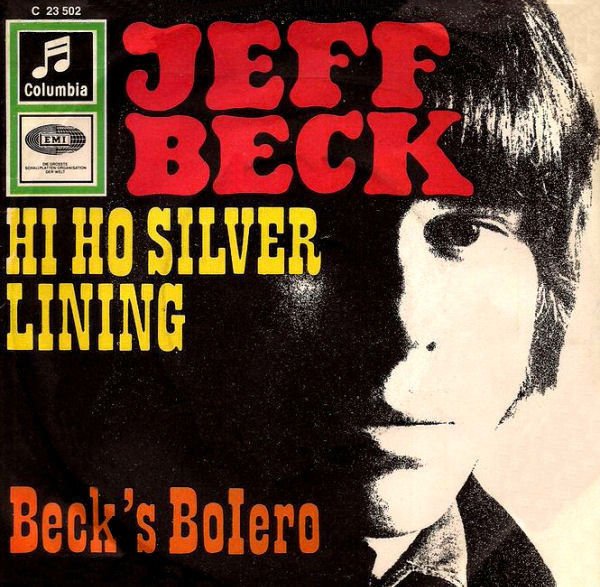
This song was the B side to Hi Ho Silver Lining which peaked at #14 in the UK in 1967. The song was later on Jeff Beck’s Truth album.

Jeff Beck: Me and Jim Page arranged a session with Keith Moon in secret, just to see what would happen. But we had to have something to play in the studio because Keith only had a limited time — he could only give us like three hours before his roadies would start looking for him. So I went over to Jim’s house a few days before the session, and he was strumming away on this 12-string Fender electric that had a really big sound. It was the sound of that Fender 12-string that really inspired the melody. And I don’t care what he says, I invented that melody, such as it is. I know I’m going to get screamed at because in some articles he says he invented it, he wrote it. I say I invented it. This is what it was: He hit these Amaj7 chords and the Fm7 chords, and I just started playing over the top of it. We agreed that we would go in and get Moonie to play a bolero rhythm with it. That’s where it came from, and in three or four takes it was down. John Paul Jones on the bass. In fact, that group could have been a new Led Zeppelin.

Otis Redding and Carla Thomas – New Year’s Resolution

This song is a great way to start a year! Anytime you can hear Otis…you are on the right path! Have a Happy New Year! Get ready for 2024. Their voices sound amazing. They complimented each other very well. I just wished they would have had time to do more.

Stax’s house band, Booker T & the MGs, provides the backing.  Note Booker T’s subtle but effective organ lending the song a spiritual element, while Donald “Duck” Dunn’s bass and Steve Cropper’s tasteful guitar licks ground the track’s rhythm

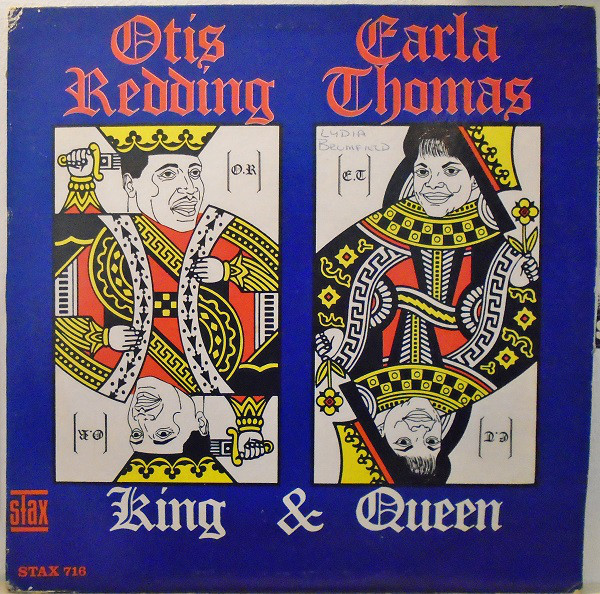
Stax was hoping to replicate the success of Marvin Gaye and Tammi Terrell. Stax paired two of their greatest stars for the 1967 album King & Queen, which produced the hit “Tramp.” The album featured their takes on classics such as “Knock on Wood,” “When Something Is Wrong with My Baby,” “Bring It on Home to Me,” and “It Takes Two”

This song was on the King and Queen album released in 1967. This is the only album they got to make because Otis died in a plane crash on December 10, 1967. Carla Thomas would go on to a successful career with 2 top 20 hits plus many top 20 R&B hits.

I’m adding the song Tramp off of the album. This song peaked at #26 on the Billboard 100, #2 on the R&B Charts, and #1 on the UK R&B Charts in 1967.

New Year’s Resolution

I hope it’s not too late
Just to say that I’m sorry, honey
All I want to do
Is just finish what we started, baby

Let’s turn over a new leave
And baby let’s make promises
That we can keep
And call it a New Year’s resolution, hmmm

Oh, I’m a woman
And woman makes mistakes too
But will you, will you forget the changes
That I put you through

let’s try it again
Just you and me
And, baby, let’s see how happy honey, yeah
That we can be
And call it a New Year’s resolution, yeah, yeah, yeah

Many times we had our ups and downs
And times you needed me I couldn’t be found
I’m sorry
And I’m sorry too
I’ll never, never do it again, no, no, no
So baby before we fall out
Let’s fall on in, yeah, yeah
Oh, and we’re gonna try harder
Not to hurt each other again, oh
Love me baby, huh
Week after week
And baby let’s make promises
That we can keep
And call it a New Year’s resolution, yeah, oh
I know we can do it Carla
I’m gonna keep my promises
I’m gonna hold on that we can do it, baby
Oh, it’s not too late
You’re gonna love me
Nobody else
Oh Otis let’s finish what we started
Talk no mean

Small Faces – Itchycoo Park

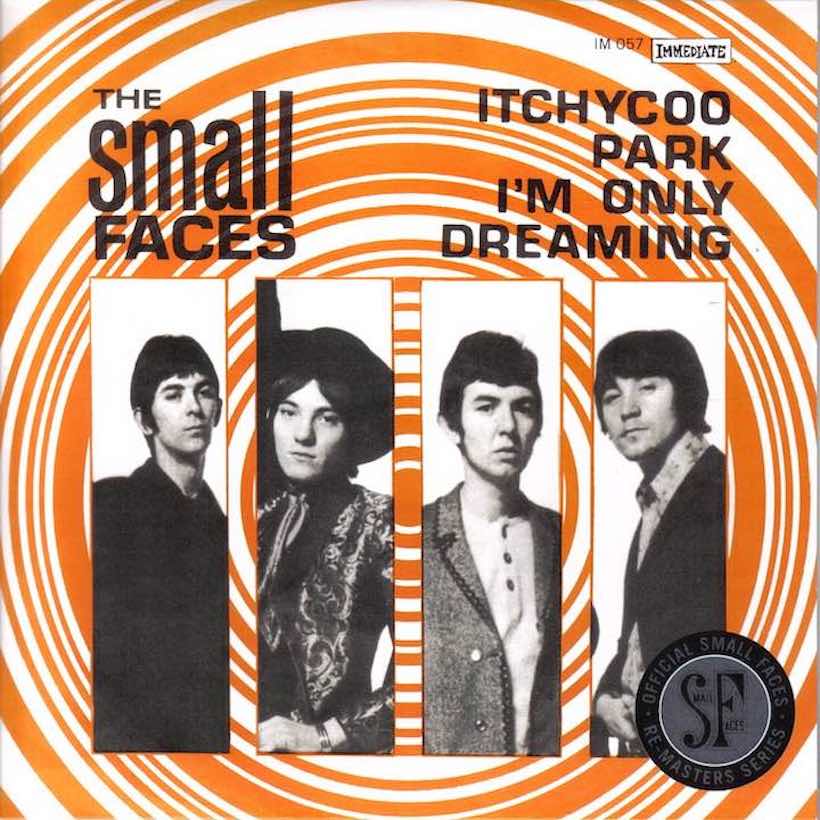
This song was released in 1967 by The Small Faces and it peaked at #16 on the Billboard 100, #1 in Canada, and #3 in the UK. I was born in 1967 and cannot remember a thing but this song makes me feel like I was there. It was written by Ronnie Lane and Steve Marriott. A psychedelic song that hit on both sides of the ocean which was rare for the Small Faces who never toured America.

Ronnie Lane had been reading a leaflet on the virtues of Oxford University which mentioned its dreaming spires. Several sources claim the song’s name is derived from the nickname of Little Ilford Park, on Church Road in the London suburb of Manor Park where Small Faces’ singer and songwriter  Steve Marriott grew up.

The park is Manor Park’s Itchycoo Park (officially Little Ilford Park) in London. An “Itchycoo” is slang for a flower found in the park called a “Stinging Nettle,” which can burn the skin if touched. Ronnie Lane said “It’s a place we used to go to in Ilford years ago. Some bloke we know suggested it to us because it’s full of nettles and you keep scratching.”

Producer Glynn Johns used a new technique of phasing in the drum breaks. He got credit for doing that but it was his assistant that came up with it. The flange effect could be made by placing a finger on the supply reel creating drag, causing the machine to slow down, which increased the delay and lowered the pitch of the notches. The sound could be swept upward by doing the opposite…touching the take-up reel and speeding it up slightly.

Glyn Johns: I have often been given credit for this, but in fact the method used to achieve it was discovered by my assistant at the time, George Chkiantz, who demonstrated it to me as I arrived for the session. I thought it was a fantastic effect and decided to use it on the track we cut that afternoon. This happened to be “Itchycoo Park,” a song about taking LSD, as coincidence would have it, and if you listen you will see why it was so effective.

Glyn Johns: This was one hell of a band. They had a massive amount of energy that was unleashed on their audiences from the minute they hit the stage until they left it. If they had ever made it to America, they would undoubtedly have been as successful as any of the British bands that took it by storm in the sixties. That was not to be, as they broke up in 1969 before ever going there.

Ian McLagan: “I never liked ‘Itchycoo Park’ because me and Ronnie had to sing, ‘It’s all too beautiful,’ and you sing that a few times, and you think… It’s not. The ‘bridge of sighs’ is the one in Cambridge. The ‘dreaming spires’ are a reference to Oxford. Then ‘to Itchycoo Park… That’s where I’ve been,’ Ronnie was saying, ‘I didn’t need rich privilege or education. Found beauty in a nettle patch in the East End of London.”

Itchycoo Park

Over bridge of sighs
To rest my eyes in shades of green

Under dreaming spires
To Itchycoo Park, that’s where I’ve been

(What did you do there?) I got high
(What did you feel there?) well, I cried
(But why the tears there?) tell you why
It’s all too beautiful, it’s all too beautiful

I feel inclined to blow my mind
Get hung up, feed the ducks with a bun
They all come out to groove about
Be nice and have fun in the sun

I’ll tell you what I’ll do (what will you do?) I’d like to go there now with you
You can miss out school (won’t that be cool?) why go to learn the words of fools?

(What will we do there?) we’ll get high
(What will we touch there?) we’ll touch the sky
(But why the tears there?) I’ll tell you why
It’s all too beautiful, it’s all too beautiful

I feel inclined to blow my mind
Get hung up, feed the ducks with a bun
They all come out to groove about
Be nice and have fun in the sun
It’s all too beautiful, it’s all too beautiful
It’s all too beautiful, hah

It’s all too beautiful, it’s all too beautiful

Rolling Stones – Prodigal Son

It’s nice to be back to normal… no holiday is mentioned in this song!

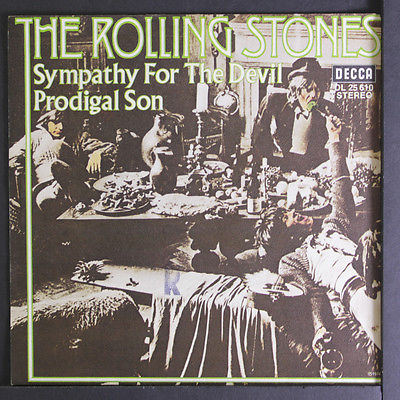
When I bought Beggars Banquet I knew about Sympathy for the Devil and Street Fighting Man… this song drew me into the rest of the album. I love the acoustic blues played by Keith. It sounds old…really old. This album doesn’t have a bad track on it to me.

This sounds like what influenced the Stones in the first place. This album is one of the Stones’ great ones and the first one produced by Jimmy Miller. Prodigal Son has remained one of my favorite Stones tracks.

Beggars Banquet peaked at #5 in the Billboard Album Charts, #3 in the UK, and #3 in Canada in 1969.

This song was written by Robert Wilkins, a reverend who recorded Delta Blues in the 1920s and 1930s. Keith Richards enjoyed Blues music and admired the work of Wilkins in the ’60s, which is how The Stones came across this song. Robert Wilkins’ original version was titled “That’s No Way To Get Along.” The Stones gave their version the title “Prodigal Son.”

The Prodigal Son is a story told in the Bible (Luke 15: 11-32) about a father who has two sons. The younger son asks for his inheritance early and goes off to spend the money on hedonistic pursuits. After wasting all the money, he comes home repentant, and the father welcomes him with a feast in his honor. This doesn’t go over well with the older son, who feels that he should be rewarded for good behavior, but the father stresses the value of forgiveness.

Prodigal Son

Well a poor boy took his father’s bread and started down the road
Started down the road
Took all he had and started down the road
Going out in this world, where God only knows
And that’ll be the way to get along

Well poor boy spent all he had, famine come in the land
Famine come in the land
Spent all he had and famine come in the land
Said, “I believe I’ll go and hire me to some man”
And that’ll be the way I’ll get along

Well, man said, “I’ll give you a job for to feed my swine
For to feed my swine
I’ll give you a job for to feed my swine”
Boy stood there and hung his head and cried
Cause that is no way to get along

Said, “I believe I’ll ride, believe I’ll go back home
Believe I’ll go back home
Believe I’ll ride, believe I’ll go back home
Or down the road as far as I can go”
And that’ll be the way to get along

Well, father said, “See my son coming home to me
Coming home to me”
Father ran and fell down on his knees
Said, “Sing and praise, Lord have mercy on me”
Mercy

Oh poor boy stood there, hung his head and cried
Hung his head and cried
Poor boy stood and hung his head and cried
Said, “Father will you look on me as a child?”
Yeah

Well father said, “Eldest son, kill the fatted calf,
Call the family round
Kill that calf and call the family round
My son was lost but now he is found
Cause that’s the way for us to get along”
Hey

Beatles – Christmas Time Is Here Again

It’s that time of year…and this is one-holiday song that is on my list and not worn out. I first heard this in 1994 when I bought the Beatles Anthology album. I never knew of this song before. This song was never officially released until it appeared as the B-side to “Free As A Bird” in 1994. I’ve posted it every year since I’ve blogged and will continue to do so…it’s repetitive but I like it…it drives home the point.

My friend Dave posted this song in 2021 and he has more info than I do so check it out.

The song is credited to Lennon-McCartney-Harrison-Starkey. The original version was distributed to The Beatles fan club in 1967. It’s the only song written specifically for the Beatles Fan Club members. Along with the Beatles…actor Victor Spinetti and roadie Mal Evans were on the recording.

Between December 1963 and December 1969, they sent out 7 flexi discs that had spoken and musical messages to their official fan clubs in the UK and the US at Christmas time.

The Beatles recorded this in 1967 and wasn’t released until 1994 paired with “Free As A Bird”. It is a fun Christmas song that will stick in your head. The Beatles did not release a Christmas song commercially… only to their fan club when they were active.

Many performers of this era like The Beach Boys and The Four Seasons released Christmas songs, but The Beatles never had an official Christmas release.

Christmas time is here again

Christmas time is here again

Ain’t been round since you know when
Christmas time is here again
O-U-T spells “out”

Christmas time is here again

Ain’t been round since you know when
Christmas time is here again
O-U-T spells “out”

Christmas time is here again

Ain’t been round since you know when
Christmas time…[music continues and fades to background]

[spoken]

This is Paul McCartney here, I’d just like to wish you everything you wish yourself for Christmas.

This is John Lennon saying on behalf of the Beatles, have a very Happy Christmas and a good New Year.

George Harrison speaking. I’d like to take this opportunity to wish you a very Merry Christmas, listeners everywhere.

This is Ringo Starr and I’d just like to say Merry Christmas and a really Happy New Year to all listeners

[a John Lennon pastiche at this point, very hard to understand]

How The Grinch Stole Christmas

You’re a mean one…Mr. Grinch. I first posted this in 2018…It’s not Christmas without the Grinch…

The cartoon was released in 1966 and has been shown every year since. This one along with Rudolph, Charlie Brown, and a few more were a part of Christmas. These specials would prime you for the big day.

One cool thing about the cartoon was that Boris Karloff was the narrator. Thurl Ravenscroft (voice of Tony the Tiger) sang the great song “You’re a Mean One Mr. Grinch. ”

The citizens of Whoville looked and acted like the others of Dr. Suess’s universe. They were all getting ready for Christmas while a certain someone…or thing looked down from Mt. Crumpit. The Grinch has hated Christmas for years and sees the Whovillians getting ready for Christmas and is determined once and for all to put an end to it.

He dresses up as Santa Clause and makes his poor dog Max act as a reindeer to swoop down and steal Christmas. The Grinch sleds down the hill almost killing Max and they soon reach Whoville. He is busted by one kid…Cindy Lou Who, who asks him questions as the Grinch took her family tree. He lies to her and sends her to bed.

In the morning after he has everything including “The Roast Beast,” he listens for the sorrow to begin.

You need to watch the rest or rewatch…

A live-action remake came out in 2000 but I still like this one the best. You cannot replicate Boris Karloff.

The Budget – Coming in at over $300,000, or $2.2 million in today’s dollars, the special’s budget was unheard of at the time for a 26-minute cartoon adaptation. For comparison’s sake, A Charlie Brown Christmas’s budget was reported as $96,000, or roughly $722,000 today (and this was after production had gone $20,000 over the original budget).

You’re a mean one Mr. Grinch The famous voice actor and singer, best known for providing the voice of Kellogg’s Tony the Tiger, wasn’t recognized for his work in How the Grinch Stole Christmas. Because of this, most viewers wrongly assumed that the narrator of the special, Boris Karloff, also sang the piece in question. Upset by this oversight, Geisel personally apologized to Ravenscroft and vowed to make amends. Geisel went on to pen a letter, urging all the major columnists that he knew to help him rectify the mistake by issuing a notice of correction in their publications.

Mr Grinch

You’re a mean one, Mr. Grinch
You really are a heel
You’re as cuddly as a cactus
You’re as charming as an eel
Mr. Grinch
You’re a bad banana with a greasy black peel
You’re a monster, Mr. Grinch
Your heart’s an empty hole
Your brain is full of spiders
You’ve got garlic in your soul, Mr Grinch
I wouldn’t touch you with a
Thirty-nine and a half foot pole

You’re a vile one, Mr. Grinch
You have termites in your smile
You have all the tender sweetness of a seasick crocodile
Mr Grinch
Given the choice between the two of you
I’d take the seasick crocodile

You’re a foul one, Mr. Grinch
You’re a nasty wasty skunk
Your heart is full of unwashed socks
Your soul is full of gunk
Mr Grinch

The three best words that best describe you
Are as follows, and I quote”
Stink
Stank
Stunk

You’re a rotter Mr Grinch
You’re the king of sinful sots
Your heart’s a dead tomato splotched with moldy purple spots
Mr Grinch

Your soul is an appalling dump heap
Overflowing with the most disgraceful
Assortment of deplorable rubbish imaginable
Mangled up in tangled up knots

You nauseate me, Mr Grinch
With a nauseous super nos
You’re a crooked jerky jockey and
You drive a crooked horse
Mr Grinch

You’re a three-decker sauerkraut
And toadstool sandwich
With arsenic sauce

http://mentalfloss.com/article/72593/13-spirited-facts-about-how-grinch-stole-christmas

Frosty The Snowman

“Frosty the Snowman,” debuted in 1969. It was by Rankin/Bass Productions, the same company that produced many holiday specials. Most of us had favorite Christmas specials we would watch. Mine was Rudolph, A Charlie Brown Christmas, The Grinch, and this one…Frosty The Snowman.

Narrated by the legend Jimmy Durante, the special involves a magic hat that transforms a snowman, Frosty, into a living being. The magician who owned the hat wants it back now that he knows it contained actual magic, so the kids had to get together and find a way to bring Frosty to the North Pole to keep him from melting. However, once there, Frosty sacrifices himself to warm up the little girl, Karen, who took him to the North Pole. He melts, but Santa Claus explains that Frosty is made out of special Christmas snow and thus can never truly melt. Frosty then comes back to life and everyone has a Merry Christmas.

The song was written in 1950 by Walter “Jack” Rollins and Steve Nelson. They wrote it for Gene Autry, especially, after Autry had such a huge hit with “Rudolph the Red-Nosed Reindeer” the previous year. It was later recorded by Jimmy Durante as we hear in this wonderful cartoon.

Another animator was Paul Coker Jr. from  Lawrence, Kansas. He not only was  a character designer on this show but he also worked at Mad Magazine. He also designed the “Chesty Lion” for Lawrence High School in Lawerence Kansas. Thank you to long time reader Run-Sew-Read!

This wasn’t the only animation of Frosty…

In 1954, United Productions of America (UPA) brought Frosty to life in a short cartoon that is little more than an animated music video for a jazzy version of the song. It introduced the characters mentioned in the lyrics visually, from Frosty himself to the traffic cop. The three-minute, black-and-white piece quickly became a holiday tradition in various markets, particularly in Chicago, where it’s been broadcast annually on WGN since 1955.

John from The Sound Of One Hand Typing is the one that told me about the older Frosty.

My Musical Guest For Christmas

Dave has asked us…The magic that is Christmas is that you can invite any musician (or person from the music world) to be your guest. Even if they’ve passed away, they can be at your table for a meal and a few stories.  So, who would you invite?  And any little musical gift you hope they might possibly come with?

This was posted on Dave’s (A Sound Day) site on December 14, 2023.

Well, I’m cheating a bit…my Christmas guest left the earth in 1964 and yes, he was a musician…just not a rock musician. He played the harp and played it quite well…his nickname even contained that name…Harpo Marx. But Max…why not a rock musician? If I had to pick a rock musician, it would be one of two people. John Lennon or Keith Moon. I would say Lennon would be my number one choice but I wanted to go a different route.

Why am I picking Harpo? He hung out with the top artists, writers, musicians, and athletes of his time. He was always at peace with himself. He has said he never had a bad night’s sleep. The guy was close to what you see on screen. He had so many stories about his life that just those would keep you entertained. There are more reasons…but here are some of the things he did.

The man was born in 1888 and grew up in New York. He didn’t graduate from high school…no, he jumped out the window of his second-grade classroom and never went back to his teacher Miss Flatto. Did the lack of education stop him in life? No, not at all as you will see.

In 1909 his mother Minnie roped him into appearing on stage with his brothers in a singing play. He was dressed in a duck suit and promptly peed in his pants. “Coney Island, New York. Made my debut at Henderson’s and peed in my pants. I felt shamed and disgraced, but Minnie wouldn’t let me quit the act on any such flimsy pretext. She hung my trousers out to dry in the sea breeze between shows. By the second show, I was much less scared, so enthusiastic in fact that everybody was afraid I might sing. But I didn’t. I just opened my mouth when Groucho did.”

The brothers hit the vaudeville circuit and any rock stars who say their beginning was rough…they don’t know what rough is. The Brothers would stay in boarding houses when possible but sometimes slept in the park. They ate food that was infested with bugs and people treated them terribly because show people were frowned upon at that time. They were in Vaudeville from 1909 to 1924. That was a lot of hard living and the brothers were in their mid-thirties before they hit Broadway.

The review that would change Harpo’s life came in 1924 in their first play (I’ll Say She Is) to make Broadway. The review was written by the author Alexander Woollcott. He wrote glowingly about all the brothers, but Harpo is the one he singled out. Woollcott met Harpo backstage and soon introduced Harpo to some of the most sophisticated writers and artists of that time. Harpo soon became a member of the Algonquin Round Table. That was where witty and cutting remarks flowed like water. Groucho said it was like falling in a den of lions. Some of the regulars were Dorothy Parker, Alexander Woollcott, Heywood Broun, Robert Benchley, Robert Sherwood, George S. Kaufman, Franklin P. Adams, Marc Connelly, Harold Ross, and Russell Crouse. Harpo has said that he was a professional listener. Despite only having a 2nd grade education he could hold his own and was a vivacious reader.

Kaufman would co-write 2 plays for the brothers, The Cocoanuts and Animal Crackers. They were Broadway smashes and soon the brothers would be making movie versions of both. In 1929 they made The Cocoanuts movie in New York while acting in Animal Crackers on Broadway. They would make Animal Crackers next and then move to Hollywood. Their film career lasted from 1929 to 1949 with a movie called Love Happy with Marilyn Monroe. They made 13 in all.

Harpo was a happy bachelor until he met Susan Fleming in 1932 and they were married in 1936. He was very much like his character on the screen except he talked of course. He hung out with royalty, artists, and even toured Russia in 1933 and carried secret papers taped to his leg out of the country for America. He never found out what he risked is life for though. Some FBI agents got the papers as soon as he got to New York.

Harpo and Susan wanted children, so they adopted. Harpo had said he wanted a child in every window when he went to work. So, they adopted 4 kids and from all accounts…was one of the best dads you could possibly get. If he came home late, he would sometimes wake one of his children just to play games with them. None of his kids ever wrote books on how bad he was or ever said anything bad publicly. He did have a set of rules that he went by and had them pinned up. This is them and I had the same rules on our refrigerator when Bailey was small, although a few were altered because we had no pool table or harp.

  1. Life has been created for you to enjoy, but you won’t enjoy it unless you pay for it with some good, hard work. This is one price that will never be marked down.
  2. You can work at whatever you want to as long as you do it as well as you can and clean up afterwards and you’re at the table at mealtime and in bed at bedtime.
  3. Respect what the others do. Respect Dad’s harp, Mom’s paints, Billy’s piano, Alex’s set of tools, Jimmy’s designs, and Minnie’s menagerie.
  4. If anything makes you sore, come out with it. Maybe the rest of us are itching for a fight, too.
  5. If anything strikes you as funny, out with that, too. Let’s all the rest of us have a laugh.
  6. If you have an impulse to do something that you’re not sure is right, go ahead and do it. Take a chance. Chances are, if you don’t you’ll regret it – unless you break the rules about mealtime and bedtime, in which case you’ll sure as hell regret it.
  7. If it’s a question of whether to do what’s fun or what is supposed to be good for you, and nobody is hurt whichever you do, always do what’s fun.
  8. If things get too much for you and you feel the whole world’s against you, go stand on your head. If you can think of anything crazier to do, do it.
  9. Don’t worry about what other people think. The only person in the world important enough to conform to is yourself.
  10. Anybody who mistreats a pet or breaks a pool cue is docked a months pay.

Harpo played in some of the seediest joints you could imagine and had to endure a lot of antisemitism, but he was loved by all around him including children and animals.

His son Bill, who is a talented musician, released a book a few years ago. He said in 1964 that Harpo loved The Beatles when they first arrived. Bill was a professional piano player and he didn’t think The Beatles would last. Harpo told him that he better get used to them because they would be remembered in history because they were starting something new. Bill said six years later he was playing a gig and many of his songs were Beatle songs. He thought… “Dad was right again” while playing Let It Be.

Here is an intro that Harpo wrote to Harpo Speaks…I thought you would enjoy this…he gives a brief story of him.

I’ve played piano in a whorehouse. I’ve smuggled secret papers out of Russia. I’ve spent an evening on the divan with Peggy Hopkins Joyce. I’ve taught a gangster mob how to play Pinchie Winchie. I’ve played croquet with Herbert Bayard Swope while he kept Governor Al Smith waiting on the phone. I’ve gambled with Nick the Greek, sat on the floor with Greta Carbo, sparred with Benny Leonard, horsed around with the Prince of Wales, played Ping-pong with George Gershwin. George Bernard Shaw has asked me for advice. Oscar Levant has played private concerts for me at a buck a throw. I have golfed with Ben Hogan and Sam Snead. I’ve basked on the Riviera with Somerset Maugham and Elsa Maxwell. I’ve been thrown out of the casino at Monte Carlo.
Flush with triumph at the poker table, I’ve challenged Alexander Woollcott to anagrams and Alice Duer Miller to a spelling match. I’ve given lessons to some of the world’s greatest musicians. I’ve been a member of the two most famous Round Tables since the days of King Arthur—sitting with the finest creative minds of the 1920s at the Algonquin in New York, and with Hollywood’s sharpest professional wits at the Hillcrest.
(Later in the book, some of these activities don’t seem quite so impressive when I tell the full story. Like what I was doing on the divan with Peggy Hopkins Joyce. I was reading the funnies to her.)
The truth is, I had no business doing any of these things. I couldn’t read a note of music. I never finished the second grade. But I was having too much fun to recognize myself as an ignorant upstart.
 
 I can’t remember ever having a bad meal. I’ve eaten in William Randolph Hearst’s baronial dining room at San Simeon, at Voisin’s and the Colony, and the finest restaurants in Paris. But the eating place I remember best, out of the days when I was chronically half starved, is a joint that was called Max’s Busy Bee. At the Busy Bee, a salmon sandwich on rye cost three cents per square foot, and for four cents more you could buy a strawberry shortcake smothered with whipped cream and a glass of lemonade. But the absolutely most delicious food I ever ate was prepared by the most inspired chef I ever knew—my father. My father had to be inspired because he had so little to work with.
I can’t remember ever having a poor night’s sleep. I’ve slept in villas at Cannes and Antibes, at Alexander Woollcott’s island hideaway in Vermont, at the mansions of the Vanderbilts and Otto H. Kahn and in the Gloversville, New York, jail. I’ve slept on pool tables, dressing-room tables, piano tops, bathhouse benches, in rag baskets and harp cases, and four abreast in upper berths. I have known the supreme luxury of snoozing in the July sun, on the lawn, while the string of a flying kite tickled the bottom of my feet.

I can’t remember ever seeing a bad show. I’ve seen everything from Coney Island vaudeville to the Art Theatre in Moscow. If I’m trapped in a theatre and a show starts disappointingly, I have a handy way to avoid watching it. I fall asleep.
My only addictions—and I’ve outgrown them all—have been to pocket billiards, croquet, poker, bridge and black jelly beans. I haven’t smoked for twenty years.

The only woman I’ve ever been in love with is still married to me.

My only Alcohol Problem is that I don’t particularly care for the stuff.

Who wouldn’t want to talk to this man? Thank you…and as far as a musical gift… I would love to hear Harpo play either the Harp, or piano, or just tell me Vaudeville stories!

Rudolph The Red Nosed Reindeer

Before I start…I have the complete show and the making of it at the bottom of the post! Just in case you cannot find it anywhere.After this week is over I’ll go back to posting one post a day during the week for the most part…

Watching Rudolph the Red-Nosed Reindeer every year is the same as setting up the tree. Every year I would look forward to seeing this along with the others but what a fantastic durable show this has been. When I hear Burl Ives in anything…I think of him as the narrator Sam the Snowman of this program. Plus the movie means a lot because my mom and I would watch it together and her name was Clarice like Rudolph’s girlfriend.

The characters are wonderful. Well except those other young reindeer who really come down on Rudolph when his nose lights up. There was absolutely NO need for that. cough cough venison cough. (just joking!)

Hermey the elf who wants to be a dentist
Clarice – The reindeer who likes Rudolph just as he is red nose and all.
Yukon Cornelius the prospector who loves silver and gold and has a tongue that can find his silver and gold. I love this guy…all he wants is a peppermint mine!
Abominable Snowman – The bad guy of the show who only needs a dentist to make him a good guy.
Head Elf – He leans on Hermey to get his elf self-act together and discourages him from being a dentist…I never liked him too much.

Throughout the special, Yukon Cornelius throws his pickaxe into the ground, taking it out and licking it. It turns out he is checking for neither gold nor silver… Yukon was searching for an elusive peppermint mine. In a scene right at the end of the special’s original broadcast, deleted the next year to make room for the Misfit Toys’ new scene, Cornelius pulled his pick from the ground, licked it, and said, “Peppermint! What I’ve been searching for all my life! I’ve struck it rich! I’ve got me a peppermint mine! Wahoo!” The scene was restored in 1998 and has been reinstated in all the subsequent home video releases except for the 2004 DVD release. However, this scene is still cut from recent televised airings.

The Island of Misplaced Toys got to me when I was a kid. I really felt sorry for these lonely toys. King Moonracer was over the island and tried to convince Rudolph to tell Santa about them so he could pick them up and find kids who would play with them.

Related image

The original 1964 airing did not include the closing scene where Santa picks up the misfit toys. That scene was added in 1965, in response to complaints that Santa was not shown fulfilling his promise to include them in his annual delivery.

The stop animation in this works really well. I wish they would do more of it today. I truly like it better at times than CGI.

The songs are perfect. Silver and Gold, Holly Jolly Christmas, Jingle Jingle Jingle, We Are Santa’s Elves, There’s Always Tomorrow, We’re a Couple of Misfits and The Most Wonderful Day of the Year.

Below is some trivia from IMDB

In the original TV version of the show, Rudolph, Hermey the elf, and Yukon Cornelius visit the Island of Misfit Toys and promise to help them, but the Misfits are never seen again, only mentioned as Santa’s first stop before he flies off in his sleigh. After it was shown, the producers were inundated with letters from children complaining that nothing had been done to help the Misfit Toys. In response, Rankin-Bass produced a new short scene at the end of the show in which Santa and his reindeer, led by Rudolph, land on the Island and pick up all the toys to find homes for them. This scene became a part of the standard version of the show run during the holidays.

Original puppets of Santa and young Rudolph from the 1964 production went on tour in November 2007. When purchased by their new owner, both were in poor condition – Santa had mold under his beard and half of his mustache was gone, while Rudolph’s nose was gone. The owner took them to stop-motion animation studio Screen Novelties International and restored them “as a labor of love” for expenses only — $4000. The puppets originally cost $5000 each in 1964 dollars.

The Making of Rudolph!

The Complete Show!

https://christmas-specials.fandom.com/wiki/Rudolph_the_Red-Nosed_Reindeer_(Rankin/Bass)

A Charlie Brown Christmas

I watched this on Saturday…gearing up for Christmas…it’s not Christmas without The Peanuts and watching them all dance to “Linus and Lucy.”

The Peanuts were my favorite cartoon growing up and I would never miss their Thanksgiving, Halloween, and Christmas specials. Everyone can relate to Charlie Brown because we all lose more than we win in life. He doesn’t get to kick that football, his dog has more things than he does, and he is forever trying to get the elusive little redhead girl to notice him.

The Peanuts inhabit a kids world where grownups are felt but not heard. At least not in English. I’ve said this before but… Charlie Brown, one day when you grow up… I hope you end up with the little red head girl that you like so much and win just for once…for all of us.

Little Red-Haired Girl | Charlie brown characters, Charlie brown and  snoopy, Charlie brown cartoon

This 1965 special has everything good about them in one show.

The gang is skating and Charlie Brown is telling Linus that despite Christmas being a happy time he is depressed. Linus tells Charlie that is normal and Lucy pipes in with “Of all the Charlie Browns in the world, you’re the Charlie Browniest.” That sums it all up.

Charlie gets to direct the Christmas play and his main job was to get a spectacular Christmas tree under Lucy’s orders. …He picks the only real tree there…more like a branch but he is sure it will do the job. Most of the gang do not agree when he comes back with the tree but Charlie persists. Linus gets up and reads from the Bible and the inflection he lends to the reading is great.

After that, you will need to watch because it will be worth it.

Aluminum Christmas trees were marketed beginning in 1958 and enjoyed fairly strong sales by eliminating pesky needles and tree sap. But the annual airings of A Charlie Brown Christmas swayed public thinking: In the special, Charlie Brown refuses to get a fake tree. Viewers began to do the same, and the product was virtually phased out by 1969. The leftovers are now collector’s items.

Actors and Actresses The early Peanuts specials made use of both untrained kids and professional actors: Peter Robbins (Charlie Brown) and Christopher Shea (Linus) were working child performers, while the rest of the cast consisted of “regular” kids coached by Melendez in the studio. When Schulz told Melendez that Snoopy couldn’t have any lines in the show—he’s a dog, and Schulz’s dogs didn’t talk—the animator decided to bark and chuff into a microphone himself, then speed up the recording to give it a more emotive quality.

Love the Christmas Dance.

Manfred Mann – Do Wah Diddy Diddy

I’ve been blogging since 2017 and someone asked me about this song not long ago. I told them yea…I posted that one. Well, no I didn’t post this one so now is the time. I first heard this over a friend’s house in the 80s…his dad had this song among his singles collection of the early to mid-sixties.

This song was from one of the biggest years in popular music. It was released in 1964 by Manfred Mann. It was written by Jeff Barry and Ellie Greenwich, who were looking to recreate the gibberish gold they struck on The Crystal’s hit “Da Doo Ron Ron.” In the UK they had already had success with 5-4-3-2-1 and Hubble Bubble (Toil and Trouble) but had yet to break through in America. This song did the trick…and well! The original name of the song was Do Wah Diddy…but the band added the extra Diddy to the end.

This was not the original version. That version was The Exciters but it tanked. Actually, it’s a pretty good version…I’ll post it at the bottom as well. Manfred Mann’s version fits well into the British Invasion and this made them known really quick. It peaked at #1 on the Billboard 100, #1 in Canada, #1 in New Zealand, and #1 in the UK. They followed this one up with another hit called Sha La La.

Paul Jones was the lead singer at the time of Manfred Mann. He heard this song by the Exciters and knew it had potential. Most of the group was not very happy with recording this song but finally did it. The band found that touring the US a thoroughly miserable experience, and decided that they weren’t going back again. So, while they would continue to have big hits in Britain for the rest of the decade, they only had a few minor successes in the States.

They would have more success in the 70s with a revamped band named Manfred Mann’s Earth Band.

The original version.

Doo Wah Diddy Diddy

There she was just a-walkin’ down the street, singin’ “Do wah diddy diddy dum diddy do”
Snappin’ her fingers and shufflin’ her feet, singin’ “Do wah diddy diddy dum diddy do”
She looked good (looked good), she looked fine (looked fine)
She looked good, she looked fine and I nearly lost my mind

Before I knew it she was walkin’ next to me, singin’ “Do wah diddy diddy dum diddy do”
Holdin’ my hand just as natural as can be, singin’ “Do wah diddy diddy dum diddy do”
We walked on (walked on) to my door (my door)
We walked on to my door, then we kissed a little more

Whoa-oh, I knew we was falling in love
Yes I did, and so I told her all the things I’d been dreamin’ of

Now we’re together nearly every single day, singin’ “Do wah diddy diddy dum diddy do”
A-we’re so happy and that’s how we’re gonna stay, singin’ “Do wah diddy diddy dum diddy do”
Well, I’m hers (I’m hers), she’s mine (she’s mine)
I’m hers, she’s mine, wedding bells are gonna chime

Whoa-oh, I knew we was falling in love
Yes I did, and so I told her all the things I’d been dreamin’ of

Now we’re together nearly every single day, singin’ “Do wah diddy diddy dum diddy do”
A-we’re so happy and that’s how we’re gonna stay, singin’ “Do wah diddy diddy dum diddy do”
Well, I’m hers (I’m hers), she’s mine (she’s mine)
I’m hers, she’s mine, wedding bells are gonna chime

Whoa-oh-oh-oh, oh yeah
Do wah diddy diddy dum diddy do, we’ll sing it
Do wah diddy diddy dum diddy do, oh yeah, oh, oh yeah
Do wah diddy diddy dum diddy do

Vince Guaraldi Trio – Linus and Lucy

It’s hard to resist this song. It automatically makes me happy when I hear it. I see the Peanuts gang doing their thing.

Peanuts GIFs - Get the best GIF on GIPHY

This song I can hear anytime of the year and be happy. It’s associated with Christmas also…whichever… I never get tired of it.

Here is another post of the song in Hanspostcard’s song draft a few years ago when run-sew-read’s pick was this song.

Ironically, just about everyone would call this “the Charlie Brown song” even though it’s actually titled after Linus and Lucy Van Pelt, brother and sister in Charles Schulz’s Peanuts comic strip universe.

The song is most famous for its use in the yearly favorite A Charlie Brown Christmas, which first aired in 1965, but it was written two years earlier for a documentary about Schulz and the Peanuts gang called A Boy Named Charlie Brown, which never aired.

Producer Lee Mendelson was in charge of the documentary and asked Vince Guaraldi to compose music for it

Guaraldi was huge in the jazz world and won the 1962 Grammy for Best Original Jazz Composition for “Cast Your Fate To The Wind” for his group, the Vince Guaraldi Trio. Mendelson was searching for what kind of music to play for the documentary when he took a taxi cab and “Cast Your Fate To The Wind” was playing as he crossed the Golden Gate bridge. He loved it and his decision was made.

Guaraldi wrote a series of songs for the project, including “Linus and Lucy,” which he recorded with his group, the Vince Guaraldi Trio. Even though A Boy Named Charlie Brown was shelved, the soundtrack was released in 1964, which is where “Linus and Lucy” first appeared.

In 1965, Mendelson put together the first Peanuts TV special, A Charlie Brown Christmas, using many of the same people who worked on the documentary. “Linus and Lucy” formed the score, and a song he wrote with Guaraldi called “Christmas Time Is Here” was included in a key scene.

When A Charlie Brown Christmas debuted in 1965, it quickly turned the Peanuts franchise into a television institution. That first special also shot Guaraldi to greater fame, and he became connected to all subsequent Peanuts shows.

Guaraldi would continue to work on Peanuts films until his death in 1976.

No words…just enjoy

Hollies – On a Carousel

A good pop song by the Hollies. They were known mostly for their harmonies but they were a good band…they had a great guitar player and drummer. Tony Hicks is never mentioned much with the guitar players with the other British Invasion bands but he could hold his own with the others. Bobby Elliot was/is a drummer’s drummer.

The Hollies had great harmonies and also a secret weapon in Tony Hicks as a guitar player. He was and still is outstanding but was never as well known as his later neighbor George Harrison and his other peers.

Tony’s son Paul Hicks was in Dhani Harrison’s band and has worked with Giles Martin on Beatle remastering projects. I have a soft spot for the Hollies. They started in the early sixties and continued through the seventies without Graham Nash who quit the Hollies for what he thought was a hipper band…Crosby, Stills, and Nash. Soon to include the elusive Neil Young.

The song peaked at #11 on the Billboard 100, #7 in Canada, and #4 in the UK in 1967. I included a short video of The Hollies recording the song. While they were recording this The Beatles were in the next studio recording as they both recorded at EMI Studios.

Just a little trivia… The earliest known record of a carousel is a Byzantine etching from 500 AD which shows riders swinging in baskets tied to a central pole.

Graham Nash: We really hit the mark when it came to our next record. Tony, Allan, and I wanted desperately to write a monster A-side. So far, our biggest hits were Graham Gouldman songs, and, hey, you take ’em where you can get ’em. But we thought we were good enough writers to land the big fish. We knew the combination, how to come up with a universal theme, the right type of hook. So we went through a shitload of ideas until inspiration struck. I’m not sure which of the three of us came up with fun fairs. We had all been to them as kids: pulling ducks out of the water, a ring around a bottleneck, winning goldfish. We thought a love affair was pretty much like going round and round and round on a carousel. And before we knew it, the song just took shape. It was all there—the words, the tune, there was no stopping it. And Tony and Bobby wrapped it in an exceptional arrangement.

You ask me, “On a Carousel” was one of the Hollies’ best songs. It’s a pop song with an infectious chorus but flirts with gorgeous shifts in rhythmic texture. The transition to “Horses chasing ’cause they’re racing / So near yet so far-r-r-r-r” features a hook that keeps the melody from becoming predictable. Tony’s barb-like accents that echo the phrase “on a carousel” demonstrate his subtle virtuosity. And the lyric captures the essence of young love without the usual moon-and-June clichés. We knew it was a hit from the get-go.

On A Carousel

Riding along on a carousel, trying to catch up to you
Riding along on a carousel, will I catch up to you?

Horses chasing ’cause they’re racing
So they ain’t so far

On a carousel
On a carousel

Nearer and nearer by changing horses,
Still so far away
People fighting for their places just get in my way
Soon you’ll leave and then I’ll lose you
Still we’re going ’round

On a carousel
On a carousel
‘Round and round and round and round
round and round and round and round with you
Up, down, up, down, up, down, too

As she leaves, she drops the presents that she won before
Pulling ducks out of the water, got the highest score
Now’s my chance and I must take it, a case of do-or-die

On a carousel
On a carousel
‘Round and ’round and ’round and ’round
‘Round and ’round and ’round and ’round with you
Up, down, up, down, up, down, too

Riding along on a carousel, trying to catch up to you
Riding along on a carousel, will I catch up to you?

Now we take our ride together
No more chasing her

On a carousel
On a carousel
On a carousel
On a carousel
On a carousel