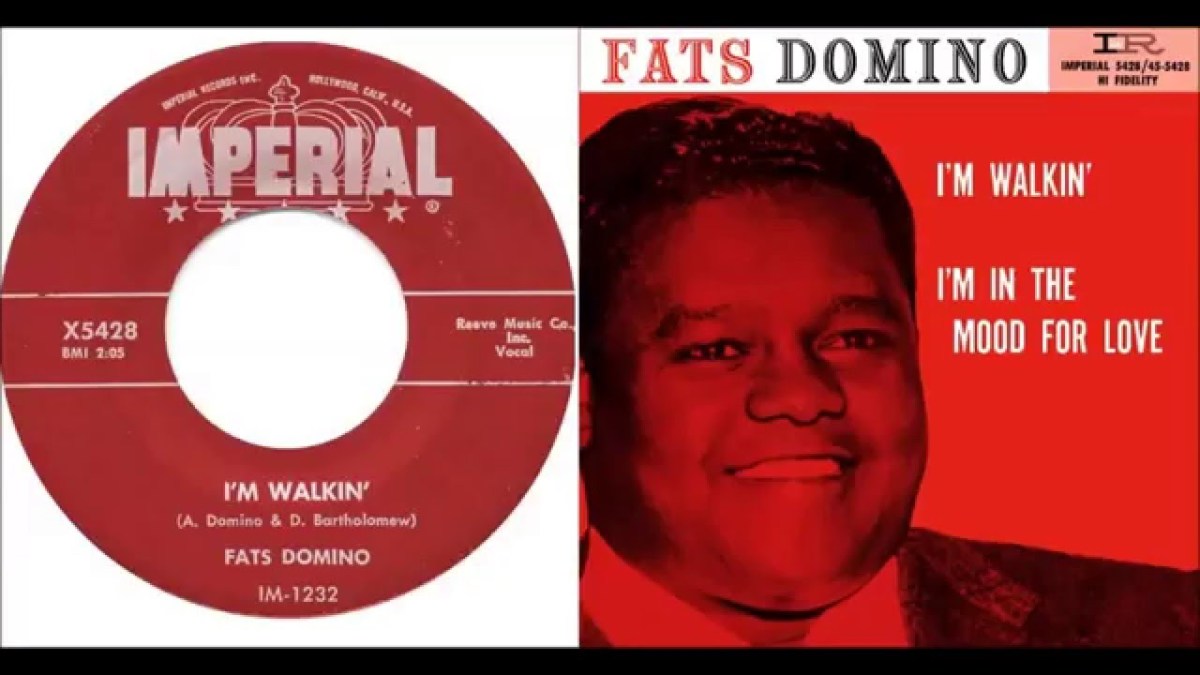
I bought some records at a relative’s yard sale when I was really young. A Chuck Berry album, The Doors LA Woman album, and this single. So for a dollar, I took home a great deal. This one is an excellent song with a beat that won’t leave you.
Antoine “Fats” Domino Jr. was not flashy and wild like some of his 1950s peers such as Elvis, Little Richard, and Jerry Lee Lewis. The first I heard of Fats Domino was on “Happy Days” and the song Blueberry Hill.
Domino was the youngest of eight children in a musical family, he spoke Creole French before learning English. At age 7 his brother-in-law taught him how to play the piano. By the time he was 10, he was already performing as a singer and pianist.
This song was inspired by a comment a fan made to Domino after Domino’s car broke down: “Hey, look at Fats Domino, he’s walking!” Domino then thought to himself, “Yeah, I’m walking,” and wrote the song as he walked.
Domino wrote this song with Dave Bartholomew, a fellow New Orleans musician who did a lot of work arranging and composing songs for him. One thing about the song that just jumps out is the sax solo by Herbert Hardesty. He also played on Ain’t That A Shame.
It peaked at #5 in the Billboard 100 and #19 in the UK in 1957.
Domino received The Lifetime Achievement Grammy, a National Medal of the Arts from President Bill Clinton, and induction into the Rock and Roll Hall of Fame. Fats semi-retired in the 80s and said he would not travel outside of New Orleans.
He lived in New Orleans During Hurricane Katrina, he lost most of his possessions and he and his family were rescued by the Coast Guard. He unselfishly made many personal appearances to raise money for the hurricane relief. His house was hit hard and he lost his National Medal and gold records but George Bush gave him another medal to replace the lost one and the RIAA gave him replacement gold records.
To raise money for repairs for his own home, friends and fellow musicians recorded a tribute album, Goin’ Home: A Tribute to Fats Domino, featuring the likes of Robert Plant, Elton John, and Sir Paul McCartney. He was living in New Orleans at the time of his death on October 24, 2017.
I’m Walkin’
I’m walkin’, yes indeed, and I’m talkin’ ’bout you and me
I’m hopin’ that you’ll come back to me (yes)
I’m lonely as I can be, I’m waitin’ for your company
I’m hopin’ that you’ll come back to me
What ‘ya gonna do when the well runs dry?
You’re gonna run away and hide
I’m gonna run right by your side, for you pretty baby I’ll even die
I’m walkin’, yes indeed, I’m talkin’ ’bout you and me
I’m hopin’ that you’ll come back to me
I’m walkin’, yes indeed, and I’m talkin’ ’bout you and me
I’m hopin’ that you’ll come back to me (yes)
I’m lonely as I can be, I’m waitin’ for your company
I’m hopin’ that you’ll come back to me
What ‘ya gonna do when the well runs dry?
You’re gonna sit right down and cry
What ‘ya gonna do when I say bye-bye?
All you’re gonna do is dry your eye
I’m walkin’, yes indeed, I’m talkin’ ’bout you and me
I’m hopin’ that you’ll come back to me
This will be the last Christmas post of 2023. I’m sure a lot of you are relieved!
This song is not only my favorite Christmas Carol… I think it’s up there with the best songs ever written. I hope everyone has a great Christmas/Holiday this year…not only that but have a Happy New Year in 2024.
There are over 26,000 different versions of “Silent Night” on Spotify, meaning you could listen to a different rendition of the carol every night for 72 years.
Halfway through December 1818, the church organ in St. Nicholas in Oberndorf, 11 miles north of Salzburg in what is now Austria, broke (a popular version of the story claims that mice had eaten out the bellows). The curate, 26-year-old Josef Mohr, realized it couldn’t be repaired in time to provide music on Christmas Eve. He told his troubles to his friend, a headmaster and amateur composer named Franz Gruber, while giving him as a present a poem he had written two years earlier. Gruber was so taken by the rhythm of the poem that he set it to music, and on Christmas Eve there was music after all. Mohr played his guitar while the pair sang the song. It was the first public performance of “Stille Nacht” or as we know it “Silent Night.”
It is believed that Silent Night has been translated into over 300 languages around the world, and it is one of the most popular carols of all time.
From Songfacts
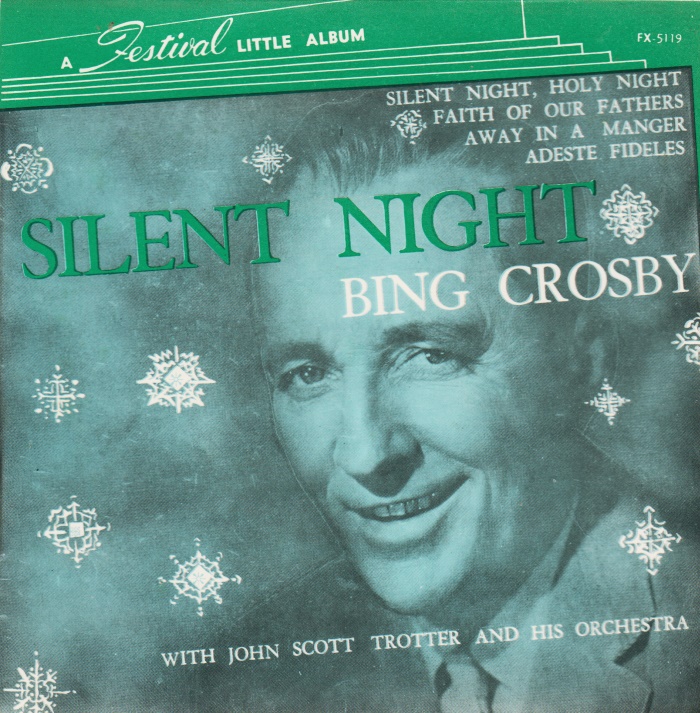
Bing Crosby’s version became his best-seller of the 1930s.
Music licensing company PPL announced in December 2010 that this carol tops the list of Britain’s “most recorded Christmas song of all time.” Said Mike Dalby, Lead Reporting Analyst at PPL: “Silent Night is a beautiful carol which encapsulates the feeling of Christmas entirely. Everyone from punk band The Dickies right through to Sinead O’Connor has recorded it, which exemplifies just how much it resonates with all different types of artists.”
According to PPL, Sinead O’Connor’s 1991 recording was the most popular version of the carol in Britain.
When the organ builder finally did show up to repair the St. Nicholas organ, he was given a copy of the “Silent Night” composition and brought it home. From there, traveling folk singers got a hold of it and began incorporating the carol into their repertoire. It didn’t make its way to America until 1839.
As the song gained traction throughout Europe, Franz Gruber composed several different orchestral arrangements. He donated all profits from the carol to local charities for children and the elderly, and eventually died penniless.
According to Steve Sullivan’s Encyclopedia of Great Popular Song Recordings, Crosby, a devout Catholic, refused to record the religious song, arguing it would be “like cashing in on the church or the Bible.” Crosby met with Father Richard Ranaghan, a priest trying to raise money for overseas missions, and decided to donate the royalties to the cause. But Ranaghan died in a car accident later that year, so the money went to several charities throughout the US and abroad.
This song lends itself to interpretation because the first four bars are all on the same chord. Jim Brickman explains: “There’s room to treat it dynamically in a different way: in the tempo, in the sounds and silences, in the time signature.”
Silent Night
Silent night, holy night.
All is calm, all is bright.
‘Round yon virgin mother and child.
Holy infant so tender and mild.
Sleep in heavenly peace,
Sleep in heavenly peace.
Silent night, holy night.
All is calm, all is bright.
‘Round yon virgin mother and child.
Holy infant so tender and mild.
Sleep in heavenly peace,
Sleep in heavenly peace.
There have been many versions of this great story. I would safely say this is the most popular Christmas story of them all. This is the version that I like the most. The great Alastair Sim plays Ebenezer Scrooge and he is the reason I like this so much. When I think of the Scrooge… I think of him. I like a lot of other renditions of this story but this one is my goto version.
The movie is in black and white which turns some people off but it makes it that much better to me. They do have a color version but trust me…watch the black and white version. It gives the movie a darker feeling.
The effects they use are obviously not CGI but they get the point across well and serve the story. I like the scene where the ghost of Jacob Marley is warning Ebenezer of being greedy…the two were not on the set at the same time…it looked really good for being 1951…or anytime for that matter.
So get some eggnog or hot butter rum and sit back and watch this great movie.
From IMDB…spoilers
Ebenezer Scrooge (Alastair Sim) is a greedy businessman who thinks only of making money. For him, Christmas is, in his own words, a humbug. It has been seven years since his friend and partner, Jacob Marley (Sir Michael Hordern), died and on Christmas Eve. Marley’s ghost tells him he is to be visited during the night by three spirits. The Ghost of Christmas Past (Michael Dolan) revisits some of the main events in Scrooge’s life to date, including his unhappy childhood, his happy apprenticeship to Mr. Fezziwig (Roddy Hughes), who cared for his employees, and the end of his engagement to a pretty young woman due to a growing love of money. The Ghost of Christmas Present (Francis De Wolff) shows him how joyously is nephew Fred (Brian Worth) and his clerk, Bob Cratchit (Mervyn Johns), celebrate Christmas with those they love. The Ghost of Christmas Yet to Come (Czeslaw Konarski) shows him what he will leave behind after he is gone. Scrooge awakens on Christmas morning, a new man intent on doing good and celebrating the season with all of those around him.
Dave has asked us…The magic that is Christmas is that you can invite any musician (or person from the music world) to be your guest. Even if they’ve passed away, they can be at your table for a meal and a few stories. So, who would you invite? And any little musical gift you hope they might possibly come with?
Well, I’m cheating a bit…my Christmas guest left the earth in 1964 and yes, he was a musician…just not a rock musician. He played the harp and played it quite well…his nickname even contained that name…Harpo Marx. But Max…why not a rock musician? If I had to pick a rock musician, it would be one of two people. John Lennon or Keith Moon. I would say Lennon would be my number one choice but I wanted to go a different route.
Why am I picking Harpo? He hung out with the top artists, writers, musicians, and athletes of his time. He was always at peace with himself. He has said he never had a bad night’s sleep. The guy was close to what you see on screen. He had so many stories about his life that just those would keep you entertained. There are more reasons…but here are some of the things he did.
The man was born in 1888 and grew up in New York. He didn’t graduate from high school…no, he jumped out the window of his second-grade classroom and never went back to his teacher Miss Flatto. Did the lack of education stop him in life? No, not at all as you will see.
In 1909 his mother Minnie roped him into appearing on stage with his brothers in a singing play. He was dressed in a duck suit and promptly peed in his pants. “Coney Island, New York. Made my debut at Henderson’s and peed in my pants. I felt shamed and disgraced, but Minnie wouldn’t let me quit the act on any such flimsy pretext. She hung my trousers out to dry in the sea breeze between shows. By the second show, I was much less scared, so enthusiastic in fact that everybody was afraid I might sing. But I didn’t. I just opened my mouth when Groucho did.”
The brothers hit the vaudeville circuit and any rock stars who say their beginning was rough…they don’t know what rough is. The Brothers would stay in boarding houses when possible but sometimes slept in the park. They ate food that was infested with bugs and people treated them terribly because show people were frowned upon at that time. They were in Vaudeville from 1909 to 1924. That was a lot of hard living and the brothers were in their mid-thirties before they hit Broadway.
The review that would change Harpo’s life came in 1924 in their first play (I’ll Say She Is) to make Broadway. The review was written by the author Alexander Woollcott. He wrote glowingly about all the brothers, but Harpo is the one he singled out. Woollcott met Harpo backstage and soon introduced Harpo to some of the most sophisticated writers and artists of that time. Harpo soon became a member of the Algonquin Round Table. That was where witty and cutting remarks flowed like water. Groucho said it was like falling in a den of lions. Some of the regulars were Dorothy Parker, Alexander Woollcott, Heywood Broun, Robert Benchley, Robert Sherwood, George S. Kaufman, Franklin P. Adams, Marc Connelly, Harold Ross, and Russell Crouse. Harpo has said that he was a professional listener. Despite only having a 2nd grade education he could hold his own and was a vivacious reader.
Kaufman would co-write 2 plays for the brothers, The Cocoanuts and Animal Crackers. They were Broadway smashes and soon the brothers would be making movie versions of both. In 1929 they made The Cocoanuts movie in New York while acting in Animal Crackers on Broadway. They would make Animal Crackers next and then move to Hollywood. Their film career lasted from 1929 to 1949 with a movie called Love Happy with Marilyn Monroe. They made 13 in all.
Harpo was a happy bachelor until he met Susan Fleming in 1932 and they were married in 1936. He was very much like his character on the screen except he talked of course. He hung out with royalty, artists, and even toured Russia in 1933 and carried secret papers taped to his leg out of the country for America. He never found out what he risked is life for though. Some FBI agents got the papers as soon as he got to New York.
Harpo and Susan wanted children, so they adopted. Harpo had said he wanted a child in every window when he went to work. So, they adopted 4 kids and from all accounts…was one of the best dads you could possibly get. If he came home late, he would sometimes wake one of his children just to play games with them. None of his kids ever wrote books on how bad he was or ever said anything bad publicly. He did have a set of rules that he went by and had them pinned up. This is them and I had the same rules on our refrigerator when Bailey was small, although a few were altered because we had no pool table or harp.
Life has been created for you to enjoy, but you won’t enjoy it unless you pay for it with some good, hard work. This is one price that will never be marked down.
You can work at whatever you want to as long as you do it as well as you can and clean up afterwards and you’re at the table at mealtime and in bed at bedtime.
Respect what the others do. Respect Dad’s harp, Mom’s paints, Billy’s piano, Alex’s set of tools, Jimmy’s designs, and Minnie’s menagerie.
If anything makes you sore, come out with it. Maybe the rest of us are itching for a fight, too.
If anything strikes you as funny, out with that, too. Let’s all the rest of us have a laugh.
If you have an impulse to do something that you’re not sure is right, go ahead and do it. Take a chance. Chances are, if you don’t you’ll regret it – unless you break the rules about mealtime and bedtime, in which case you’ll sure as hell regret it.
If it’s a question of whether to do what’s fun or what is supposed to be good for you, and nobody is hurt whichever you do, always do what’s fun.
If things get too much for you and you feel the whole world’s against you, go stand on your head. If you can think of anything crazier to do, do it.
Don’t worry about what other people think. The only person in the world important enough to conform to is yourself.
Anybody who mistreats a pet or breaks a pool cue is docked a months pay.
Harpo played in some of the seediest joints you could imagine and had to endure a lot of antisemitism, but he was loved by all around him including children and animals.
His son Bill, who is a talented musician, released a book a few years ago. He said in 1964 that Harpo loved The Beatles when they first arrived. Bill was a professional piano player and he didn’t think The Beatles would last. Harpo told him that he better get used to them because they would be remembered in history because they were starting something new. Bill said six years later he was playing a gig and many of his songs were Beatle songs. He thought… “Dad was right again” while playing Let It Be.
Here is an intro that Harpo wrote to Harpo Speaks…I thought you would enjoy this…he gives a brief story of him.
I’ve played piano in a whorehouse. I’ve smuggled secret papers out of Russia. I’ve spent an evening on the divan with Peggy Hopkins Joyce. I’ve taught a gangster mob how to play Pinchie Winchie. I’ve played croquet with Herbert Bayard Swope while he kept Governor Al Smith waiting on the phone. I’ve gambled with Nick the Greek, sat on the floor with Greta Carbo, sparred with Benny Leonard, horsed around with the Prince of Wales, played Ping-pong with George Gershwin. George Bernard Shaw has asked me for advice. Oscar Levant has played private concerts for me at a buck a throw. I have golfed with Ben Hogan and Sam Snead. I’ve basked on the Riviera with Somerset Maugham and Elsa Maxwell. I’ve been thrown out of the casino at Monte Carlo. Flush with triumph at the poker table, I’ve challenged Alexander Woollcott to anagrams and Alice Duer Miller to a spelling match. I’ve given lessons to some of the world’s greatest musicians. I’ve been a member of the two most famous Round Tables since the days of King Arthur—sitting with the finest creative minds of the 1920s at the Algonquin in New York, and with Hollywood’s sharpest professional wits at the Hillcrest. (Later in the book, some of these activities don’t seem quite so impressive when I tell the full story. Like what I was doing on the divan with Peggy Hopkins Joyce. I was reading the funnies to her.) The truth is, I had no business doing any of these things. I couldn’t read a note of music. I never finished the second grade. But I was having too much fun to recognize myself as an ignorant upstart. I can’t remember ever having a bad meal. I’ve eaten in William Randolph Hearst’s baronial dining room at San Simeon, at Voisin’s and the Colony, and the finest restaurants in Paris. But the eating place I remember best, out of the days when I was chronically half starved, is a joint that was called Max’s Busy Bee. At the Busy Bee, a salmon sandwich on rye cost three cents per square foot, and for four cents more you could buy a strawberry shortcake smothered with whipped cream and a glass of lemonade. But the absolutely most delicious food I ever ate was prepared by the most inspired chef I ever knew—my father. My father had to be inspired because he had so little to work with. I can’t remember ever having a poor night’s sleep. I’ve slept in villas at Cannes and Antibes, at Alexander Woollcott’s island hideaway in Vermont, at the mansions of the Vanderbilts and Otto H. Kahn and in the Gloversville, New York, jail. I’ve slept on pool tables, dressing-room tables, piano tops, bathhouse benches, in rag baskets and harp cases, and four abreast in upper berths. I have known the supreme luxury of snoozing in the July sun, on the lawn, while the string of a flying kite tickled the bottom of my feet.
I can’t remember ever seeing a bad show. I’ve seen everything from Coney Island vaudeville to the Art Theatre in Moscow. If I’m trapped in a theatre and a show starts disappointingly, I have a handy way to avoid watching it. I fall asleep. My only addictions—and I’ve outgrown them all—have been to pocket billiards, croquet, poker, bridge and black jelly beans. I haven’t smoked for twenty years.
The only woman I’ve ever been in love with is still married to me.
My only Alcohol Problem is that I don’t particularly care for the stuff.
Who wouldn’t want to talk to this man? Thank you…and as far as a musical gift… I would love to hear Harpo play either the Harp, or piano, or just tell me Vaudeville stories!
Nice little Christmas song by Chuck Berry… the father of Rock and Roll. The song has a “Carol” vibe to it and that is never a bad thing. It was one of the first rock and roll Christmas songs and it was released in 1958.
Berry based this song on “Rudolph The Red-Nosed Reindeer,” giving Rudolph a bit of an attitude as he delivers the toys. The song is credited to Johnny Marks and Marvin Brodie. Johnny Marks wrote Rudolph the Red Nose Reindeer. Chuck puts his stamp on this song.
The song is sometimes known as “Run Run Rudolph,” which is how it appears on some other covers. Other artists to record the song include Sheryl Crow, Bryan Adams, The Grateful Dead, Jimmy Buffett, Dwight Yoakam, Bon Jovi, and Keith Richards.
The song peaked at #69 in the Billboard 100 in 1958 and has re-charted many times through the years…it peaked at #36 in the Billboard 100 in January of 2020…and I’m sure it is charting now.
The song appeared in a lot of films including Home Alone, Diner, The Santa Clause 2, Cast Away, and Jingle All the Way.
Run Rudolph Run
Out of all the reindeers you know you’re the mastermind Run, run Rudolph, Randalph ain’t too far behind Run, run Rudolph, Santa’s got to make it to town Santa make him hurry, tell him he can take the freeway down Run, run Rudolph ’cause I’m reelin’ like a merry-go-round
Said Santa to a boy child what have you been longing for? All I want for Christmas is a rock and roll electric guitar And then away went Rudolph a whizzing like a shooting star Run, run Rudolph, Santa’s got to make it to town Santa make him hurry, tell him he can take the freeway down Run, run Rudolph, reeling like a merry-go-round
Run, run Rudolph, Santa’s got to make it to town Santa make him hurry, tell him he can take the freeway down Run, run Rudolph, reeling like a merry-go-round
Said Santa to a girl child what would please you most to get? A little baby doll that can cry, sleep, drink and wet And then away went Rudolph a whizzing like a Saber jet Run, run Rudolph, Santa’s got to make it to town Santa make him hurry, tell him he can take the freeway down Run, run Rudolph ’cause I’m reelin’ like a merry-go-round
One of the best riffs in blues or rock. It’s been recycled in so many songs but never loses its bite. This song was a reworking of the Bo Diddley song “I’m A Man.” Great song by the great Muddy Waters.
Muddy recorded several versions of this song through the years. He recorded the original at Chess Records in Chicago in 1955. One of the reasons I love this song so much is because the guitar line is easy to play but very memorable. Waters used the same basic riff on his song “Hoochie Coochie Man.” George Thorogood also used it for his song “Bad To The Bone.”
The song peaked at #51 in the UK in 1988 and #5 in the R&B Charts in 1955.
Muddy Waters originally recorded this in 1955, then re-recorded it in 1977 for his Hard Again album in a version produced by Johnny Winter. The song was written by Muddy Waters, Mel London, and Bo Diddley.
He was born McKinley Morganfield in Rolling Fork, Mississippi, around 1913. Nicknamed “Muddy” as a child, he worked on the huge Stovall cotton plantation before following the northward migration of African Americans to Chicago, where he drove a truck and signed to Chess Records, a tiny blues label run by two émigré Polish brothers, Leonard and Phil Chess. As Muddy Waters, he established himself as a pioneering electric blues musician in the early 1950s.
Mannish Boys
Oh, yeah
Oh, yeah
Everything gonna be alright this mornin’
Now, when I was a young boy
At the age of five
My mother said I was gonna be
The greatest man alive
But now I’m a man
I’m age twenty-one
I want you to believe me, honey
We having lots of fun
I’m a man (yeah)
I spell M
A, child
N
That represent man
No B
O, child
Y
That spell mannish boy
I’m a man
I’m a full-grown man
I’m a man
I’m a rollin’ stone
I’m a man
I’m a hoochie-coochie man
Sittin’ on the outside
Just me and my mate
I’m made to move
Come up two hours late
Wasn’t that a man?
I spell M
A, child
N
That represesnt man
No B
O, child
Y
That spell mannish boy
I’m a man
I’m a full-grown man
I’m a man
I’m a rolllin’ stone
I’m a man
Full-grown man
Oh, well
Oh, well
I’ve never heard a song by Buddy Holly that I didn’t like. Well…All Right was released just a couple of months before Buddy Holly died in that lonely Iowa cornfield. A while back I posted Blind Faith‘s cover of this song. The song is in my top 10 of Buddy Holly’s songs easily.
This song was somehow a B side. In the 50s and 60s many times a B side was a throwaway track. People started to flip the hit singles over and sometimes…sometimes find gold! He had a song called Heartbeat that he thought would be a big hit. I like Heartbeat a lot but I lean more toward Well…All Right. I think Heartbeat sounds like the 50s…but this song sounds fresher.
It’s a quiet song but Holly builds in dynamics for the chorus showing his strength and tenderness on this recording. The construction of the melody and lyrics are outstanding. Its simple instrumentation yet powerful push is what won me over.
Heartbeat only peaked at #82 on the Billboard 100 and #30 on the UK Charts. It’s the flipside that has been remembered. It was written by Buddy Holly, Norman Petty, Jerry Allison, and Joe Mauldin.
What really hurts about Holly’s career is that he was just getting started. He had matured and was experimenting more than his rocking peers. Fortunately for all of us, he left behind a significant musical catalog that still influences new and old artists today.
Well…All Right
Well all right, so I’m being foolish Well all right let people know About the dreams and wishes you wish In the night when lights are low
Well all right, well all right We’ll live and love with all our might Well all right, well all right Our lifetime of love will be all right
Well, all right, so I’m going steady It’s all right when people say That those foolish kids can’t be ready For the love that comes their way
Well all right, well all right We will live and love with all our might Well all right, well all right Our lifetime of love will be all right
Well all right, well all right We’ll live and love with all our might Well all right, well all right Our lifetime love will be all right
Pick up you belongings boys and scatter about We’ve got an off-schedule train comin’ two miles out
Great title for Mr. Chuck Berry. My only complaint about this song is it’s way too short. He borrowed liberally from Johnny B. Good but that is alright…hell it’s his song to borrow from. Just think how many artists have taken this riff, especially the rhythm track, and used it over and over again. The Rolling Stones, Animals, and Beatles owe a large part of their success to this man.
Speaking of the Rolling Stones…they recorded this song live as a B-side in the UK for the single Brown Sugar. It was recorded live in March 1971 at the University of Leeds in England. Right around the time when The Who recorded possibly the best rock live album ever…Live At Leeds. The Stones do a good job on this song…it’s in their wheelhouse completely.
This song is not about teenagers. Chuck wrote this from the perspective of a railroad worker in Alabama. The phrase “Let It Rock” won’t be found in the lyrics. Supposedly the train that is coming is Rock and Roll.
The musicians on this album are Johnnie Johnson on piano, Willie Dixon on double bass, and Fred Below on drums. Johnnie Johnson was one of the best boogie-woogie piano players around at the time.
Johnnie Johnson never got his due for these wonderful riffs that he helped Chuck create. When Keith Richards wanted him to play in Hail Hail Rock and Roll in the mid-80s…he was driving a bus in Saint Louis. Chuck gave his OK and Johnnie was in the band. After he appeared in the movie he worked for the rest of his life as a musician.
This song has been covered by The Connection, The Grateful Dead, Rockpile, The Rolling Stones, Motörhead, Jerry Garcia, Hasil Adkins, Skyhooks, The Yardbirds, Widespread Panic, The MC5, Bob Seger, the Stray Cats, George Thorogood, The Head Cat, Shadows of Knight, John Oates, The Georgia Satellites, and Jeff Lynne to name a few.
The song peaked at #18 on the Billboard R&B Charts and #64 on the Billboard 100 Charts in 1959.
Have a great day and Let It Rock!
Let It Rock
In the heat of the day down in Mobile Alabama
Working on the railroad with the steel driving hammer
I gotta get some money to buy some brand new shoes
Tryin’ to find somebody to take away these blues
“She don’t love me” hear them singing in the sun
Payday’s coming and my work is all done
Well, in the evening when the sun is sinking low
All day I been waiting for the whistle to blow
Sitting in a tee pee built right on the tracks
Rolling them bones until the foreman comes back
Pick up you belongings boys and scatter about
We’ve got an off-schedule train comin’ two miles out
Everybody’s scrambling, running around
Picking up their money, tearing the tee pee down
Foreman wants to panic, ’bout to go insane
Trying to get the workers out the way of the train
Engineer blows the whistle loud and long
Can’t stop the train, have to let it roll on
I’ve always liked Patsy Cline…her voice was so good. Fellow blogger Dana mentioned her name in the comments and I’m surprised I’ve never done a Cline post.
She was born Virginia Patterson Hensley. Known in her youth as “Ginny,” she began to sing with local country bands while a teenager, sometimes accompanying herself on guitar. By the time she had reached her early 20s, Cline was promoting herself as “Patsy” and was on her way toward country music stardom.
This song came out in 1957 but her voice sounds so fresh and vibrant. This was her first hit. It was a big crossover hit after she performed it on the variety show Arthur Godfrey’s Talent Scouts and won that night’s competition.
At only 15 years old, songwriter Alan Block wrote the original version of “Walkin’ After Midnight” in 1954. The song was based on a personal experience of Block’s, in which he found himself taking a solitary midnight stroll through the city streets. Block’s friend Donn Hecht later collaborated with him on the song, and the two fine-tuned its lyrics and melody. It was originally intended for Kay Starr, a pop and jazz singer but she turned it down.
Cline didn’t like the song when she heard it but compromised with the record company (Four Star Records) and she recorded it. It was first released by Lynn Howard and the Accents the year before but wasn’t a hit.
The song peaked at #12 on the Hot 100 and #2 on the Country Charts in 1957.
Walkin’ After Midnight
(Wa-wa-walking, wa-wa-walking)
I go out walkin’ after midnight
Out in the moonlight
Just like we used to do, I’m always walkin’
After midnight, searchin’ for you (wa-wa-walking, wa-wa-walking)
I walk for miles along the highway
Well, that’s just my way
Of sayin’ I love you, I’m always walkin’
After midnight, searchin’ for you (wa-wa-walking, wa-wa-walking)
I stop to see a weepin’ willow
Cryin’ on his pillow
Maybe he’s cryin’ for me
And as the skies turn gloomy
Night winds whisper to me
I’m lonesome as I can be
I go out walkin’ after midnight
Out in the moonlight
Just hopin’ you may be somewhere a-walkin’
After midnight, searchin’ for me (Wa-wa-walking, wa-wa-walking)
I stop to see a weepin’ willow
Cryin’ on his pillow
Maybe he’s cryin’ for me
And as the skies turn gloomy
Night winds whisper to me
I’m lonesome as I can be
I go out walkin’ after midnight
Out in the moonlight
Just hopin’ you may be somewhere a-walkin’
After midnight, searchin’ for me (wa-wa-walking, wa-ooh-ah)
I wrote this for Dave’s site when he asked a group of bloggers to pick a song that signifies “summer” to you. Now summer is starting to wind down…I thought I would post this one.
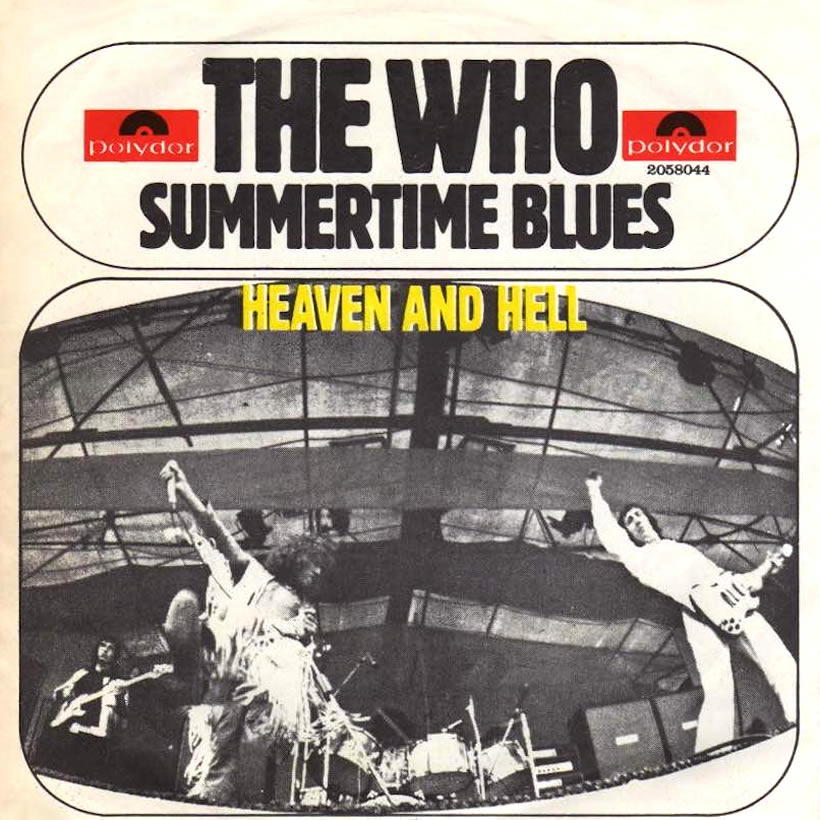
I first heard this song by The Who. The Who’s version is a good one for bar bands to play but it’s hard to keep it under control in a bar setting. It must be loud before it works…although it’s fun to see some patrons with their hands over their ears…it’s best to limit that.
Eddie Cochran wrote Summertime Blues with his friend Jerry Capehart and released it in 1958. Capehart helped Cochran get a record deal. Capehart said: “There had been a lot of songs about summer, but none about the hardships of summer.” With that idea and a guitar lick from Cochran, they wrote the song in 45 minutes.”
The song was going to be a B side of the Cochran single “Love Again” written by Sharon Sheeley. The record company wisely made the decision to make Summertime Blues the A side. In 1960 Sheeley was his girlfriend and was in the car that crashed killing Cochran. She died in 2002 five days after having a cerebral hemorrhage.
I like the Cochran version…and the Who version…and they are completely different. I’ve always loved the way The Who covered Summertime Blues. If I had a time machine… The Who would be a stop to see them live at this time. The version they released in 1970 was on their album Live At Leeds…a great rock live album. The song peaked at #27 on the Billboard 100, #8 in Canada, and #38 in the UK in 1970.
Live at Leeds would be my pick for the best rock live album ever. The album peaked at #4 on the Billboard 100, #2 in Canada, and #3 in the UK. It’s raw, raucous, and in your face…in other words, a great rock song!
Summertime Blues
Well, I’m a gonna raise a fuss, I’m a gonna raise a holler
I’ve been working all summer just to try and earn a dollar
Well, I went to the boss, said I got a date
The boss said “No Dice, son, you gotta work late”
Sometimes I wonder, what am I gonna do
There ain’t no cure for the summertime blues
Well, my mom and poppa told me, “Son you gotta earn some money
If you want to use the car to go out next Sunday”
Well, I didn’t go to work, I told the boss I was sick
He said “You can’t use the car cause you didn’t work a lick”
Sometimes I wonder, what am I gonna do
There ain’t no cure for the summertime blues
Gonna take two weeks, gonna have a fine vacation
Gonna take my problems to the United Nations
Well, I went to my congressman, he said, quote
“I’d like to help you son but you’re too young to vote”
Sometimes I wonder, what am I gonna do
There ain’t no cure for the summertime blues
There are so many songs I had to leave off…I could have filled up 50 slots. This is the year music exploded into what developed into modern rock. The British were coming, they came, and they conquered. On February 9, 1964, the world changed. We all know the song that hit first… I Want To Hold Your Hand. If you want to know about that one…here is a link to the good article that halffastcyclingclub wrote for The Beatles week that I had.
I’m going to start off with the B side of that single…one of the best B sides ever. It’s a fairly well-known song also. Let’s start off with the John Lennon and Paul McCartney song I Saw Her Standing There. After this year…the world would never be the same.
The English bands started to come over after the door was kicked in by The Beatles. One of the rawest and roughest was The Animals. They do their take on this classic traditional song and it has become the standard version that most people remember and it’s been covered by artists including Woody Guthrie in the 1940s.
A garage-sounding song and a future look at punk music. The Kinks made themselves known with this raw edgy hit.
The Dave Clark Five knocked the Beatles out of the number one position on the UK charts with Glad All Over. It was written by Dave Clark and Mike Smith.
Let’s end with an American band that had been charting since 1962 but now they were getting huge. The Beach Boys with Don’t Worry Baby. This is a masterpiece of a song. One of my all-time favorites. It’s up there with God Only Knows by them also. Brian Wilson wrote this tremendous song. I bumped another great song for this…I Get Around…but I just had to. Do you agree?
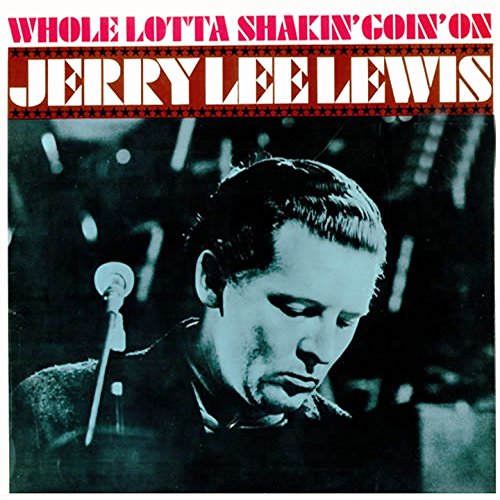
Electric…that is the best way I can describe Jerry Lee Lewis. From those old black and white clips in the fifties, the Killer was doing just that. Using all of his limbs to pulverize the piano. The song peaked at #3 on the Billboard 100, #8 in the UK, and #1 on the Billboard Country Chart in 1957. It is one of the most recognizable songs of the 1950s.
This song was written by Roy Hall (using the pseudonym Sunny David) and Dave “Curly” Williams. Hall was a songwriter/piano player who ran a music venue in Nashville and played in Webb Pierce’s band. Lewis’s version sold over 6 million copies. Roy didn’t get to enjoy the money from the song for too long…he had to sign his royalties away to his ex-wife.
“Whole Lotta Shakin’ Goin’ On” was Lewis’s second single, following “Crazy Arms,” which had failed to chart. But Lewis, well aware of his own talent, was pushed by producer Sam Phillips’s work in Sun Studio and brought “Whole Lotta Shakin’ Goin’ On” into the recording sessions confident that it could be a hit. Recording sessions took place in February 1957, in Sun Studios.
Lewis claimed to have heard the song from the singer Johnny Littlejohn at the Wagon Wheel nightclub in Natchez, Mississippi. He was a force of nature… he transformed the landscape of any song he moves through, and “Whole Lotta Shakin’ Goin’ On” was no different.
This song was the first of Lewis’ four Top 40 hits, which all occurred in a period of about a year and a half… but he had a huge country career starting in the 60s.
Whole Lot of Shakin’ Goin’ On
Come along my baby, whole lotta shakin’ goin’ on
Yes, I said come along my baby, baby you can’t go wrong
We ain’t fakin’, while lotta shakin’ goin’ on
Well, I said come along my baby, we got chicken in the barn
Woo-huh, come along my baby, really got the bull by the horn
We ain’t fakin’, whole lotta shakin’ goin’ on
Well, I said shake, baby, shake
I said shake, baby, shake
I said shake it, baby, shake it
And then shake, baby, shake
Come on over, whole lotta shakin’ goin’ on
Oh, let’s go!
Alright
Well, I said come along my baby, we got chicken in the barn
Whose barn? What barn? My barn
Come along my baby, really got the bull by the horn
We ain’t fakin’, whole lotta shakin’ goin’ on
Easy now
Shake it
Ah, shake it, baby
Yeah
You can shake it one time for me
Ye-ah-ha-ah, I said come on over, baby
Whole lotta shakin’ goin’ on
Now, let’s get down real low one time now
Shake, baby, shake
All you gotta do, honey, is kinda stand in one spot
Wiggle around just a little bit, that’s when you got it, yeah
Come on baby, whole lotta shakin’ goin’ on
Now let’s go one time
Shake it baby, shake, shake it baby, shake
Woo, shake baby, come on babe, shake it, baby, shake
Come on over, whole lotta shakin’ goin’ on
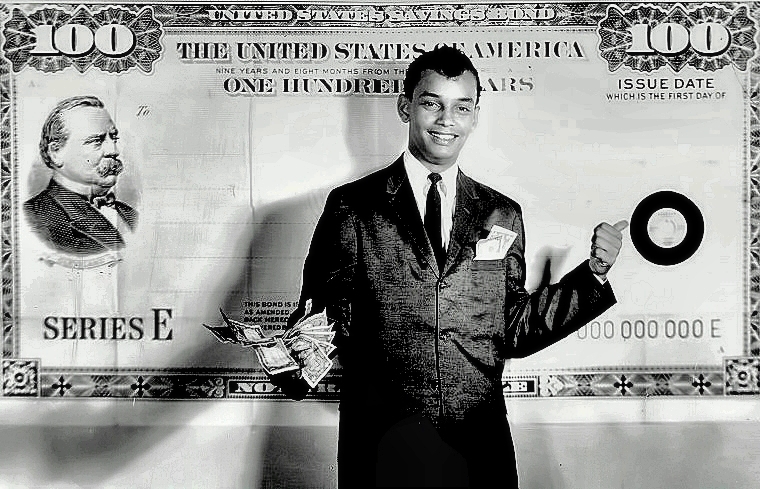
Gary US Bonds song Quarter To Three was a huge hit this year. Bonds’ real name is Gary Anderson. His label boss, Frank Guida, changed it to “U.S. Bonds” for his first single, New Orleans, as a play on the posters asking Americans to “buy U.S. savings bonds.” Pretty clever, but too many people, including many DJs, got it wrong and thought it was the name of a group. His next single, “Quarter To Three,” was initially issued as U.S. Bonds but soon changed to Gary U.S. Bonds, along with his subsequent releases.
Now let’s check in with Del Shannon. He released what is now an iconic song named Runaway. This song was written by Del Shannon and Max Crook.
I want to throw some country in this also with a song that has been remembered along with the artist who did the vocals. Patsy Cline sings I Fall To Pieces. The song was written by Hank Cochran and Harlan Howard.
The Big E makes a wonderful appearance in this post. This was a pure rock and roll song and that was a seldom occurence for Elvis Presley at this point.
Now for the Big O to close this year out. Roy Orbison does Running Scared with his operatic voice. Hearing Orbison’s voice still gives me the chills. was recorded in RCA Studio B in Nashville with the session pros known as “The A-team.” This was the last song that he sang live before his death in 1988.
Here we are in a new decade that will make a huge dent in 20th-century culture. This decade will change the world from the black and white 1950s into technicolor with tragedy, freedom, generation gaps, and thoughts of change that are still felt…both good and bad. Music is filled with safe artists…not many edgy artists like Jerry Lee Lewis and Little Richard. Even Elvis was safe now and he became Cliff Richard a movie star. Rock and Roll had temporarily lost its bite. There was still some great music as we see below.
Let’s start off with those sweet harmonies by the Everly Brothers. Cathy’s Clown which was huge this year. It was written by Don Everly.
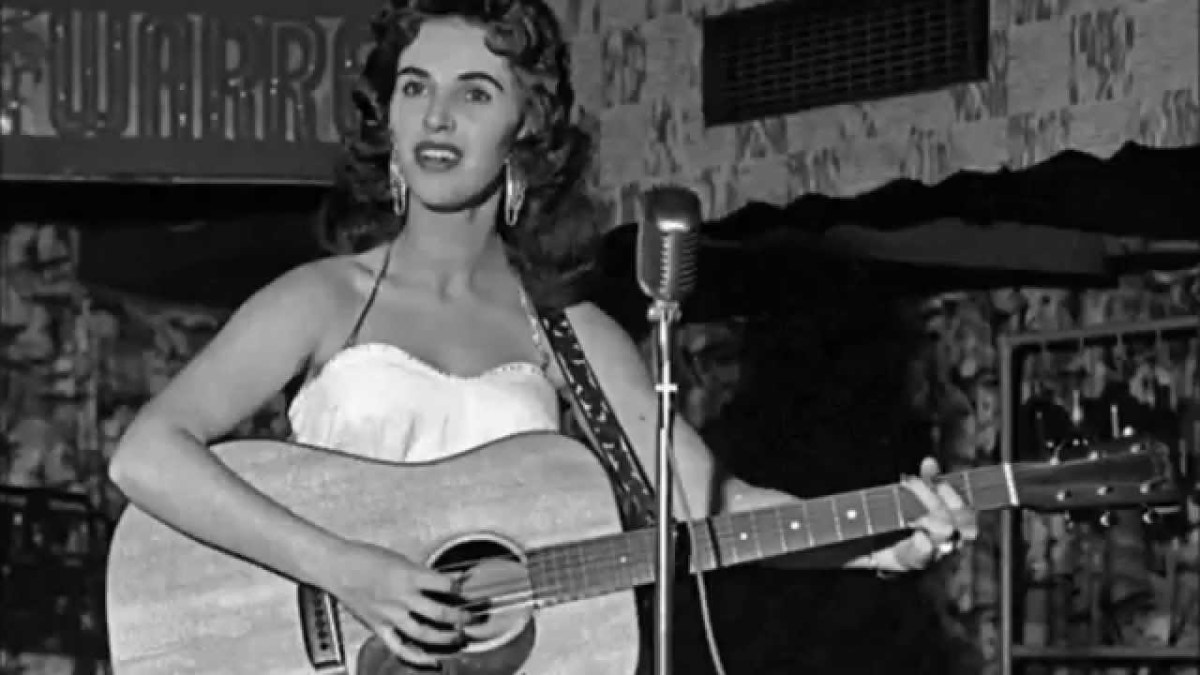
Ok, let’s get a driving voice in this look at 1960. Here is the one and only WandaJackson with Let’s Have A Party. It was written by Jessie Mae Robinson.
Instrumentals were huge through the 1950s and 60s. They gradually wound down through the decades. I’ve always liked instrumentals because it’s not as easy as writing songs with lyrics. It’s almost like a silent movie…you try to get the point across without words… just painting with music. Here is one of the best-known instrumental bands ever…The Ventures with Walk Don’t Run. They also released a version four years later but we will go with the 1960 version. It was written by Johnny Smith. He was a jazz guitarist who wrote this back in 1954. This guitar sound lent itself to beach music that was just around the corner in becoming popular.
Roy Orbison and Joe Melson wrote Only the Lonely, which they tried to sell to Elvis Presley and the Everly Brothers. Both of them turned him down so Orbison did the song himself thank goodness. His voice was truly unique and one of a kind. Here is Roy singing Only The Lonely.
The Shirelles released this song in November of 1960. The song is beautiful and it was written by the husband and wife duo of Gerry Goffin and Carole King.
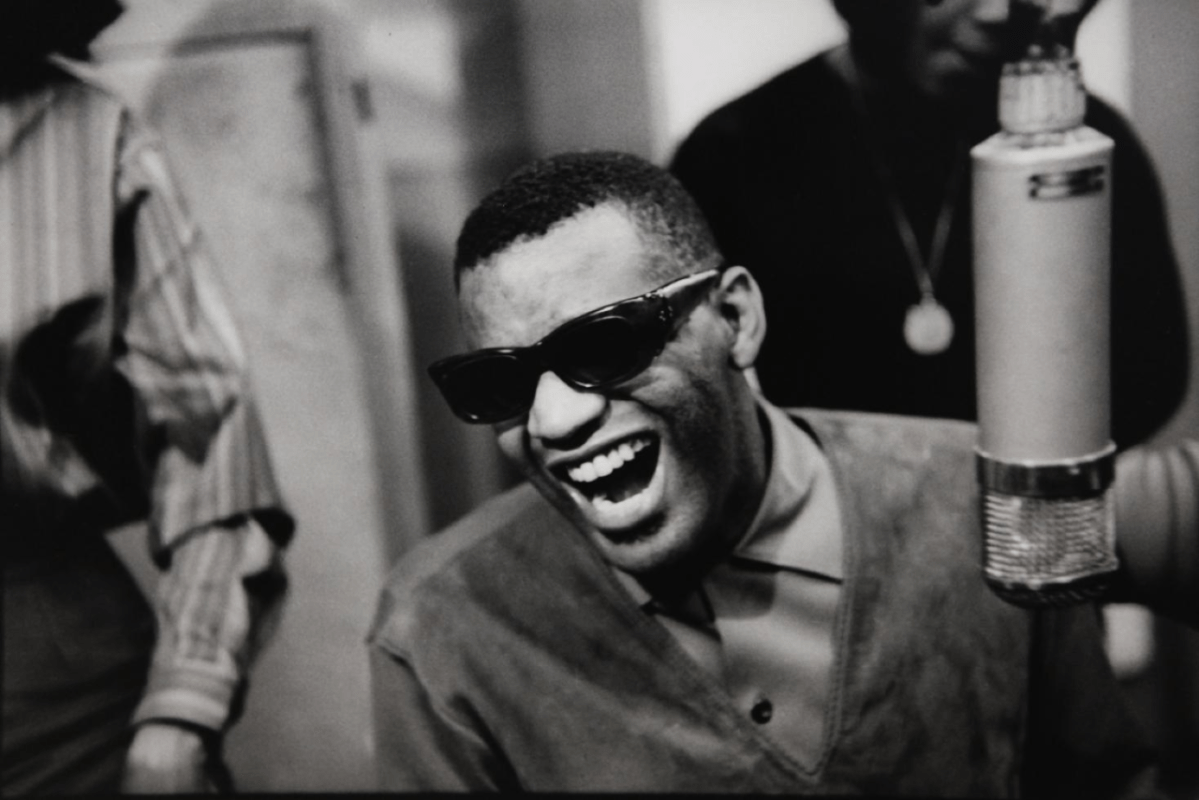
By this time Rock and Roll was not in a good state. Buddy Holly died in February, Jerry Lee Lewis had married his 13-year-old cousin earlier and got the canceled treatment years before it was a phrase, later in this year Chuck Berry would be arrested for the Mann Act, Little Richard was dedicated to the church, and Elvis was in the army in Germany. So you had artists like Anita Bryant, Pat Boone, Fabian, Annette Funicello, Frankie Avalon, and more that I won’t post on the charts. All wasn’t lost though. You did have some great artists left. The one and only Ray Charles is a great place to start in 1959. This is my favorite Ray Charles song…What’d I Say…damn this song is good. It was written by the man himself…Ray Charles.
This is one of if not my favorite instrumentals of all time. Santo and Johnny released this great song called Sleep Walk. Santo Anthony Farina and John Steven Farina were brothers who grew up in Brooklyn. They played a guitar and a steel guitar which was not in many rock/pop bands. I remember this song best from the movie La Bamba in a very emotional scene. Sometimes music can make movies in certain scenes like La Bamba or Goodfellas. The song was written by Santo Farina, Johnny Farina, and Ann Farina.
I first learned about Jackie Wilson through a Van Morrison song titled…Jackie Wilson Said (I’m in Heaven When You Smile). After hearing that song I looked for his music and what an artist! I found many artists by reading about others. Reading about the Beatles took me to Bob Dylan and the tree grew from there. This song was written by Berry Gordy, Roquel “Billy” Davis, and Gwendolyn Gordy.
Fats Domino was one of the old guards still pumping out the hits. This one is called I Want To Walk You Home. Fats wasn’t as flashy as Elvis, Jerry Lee Lewis, or Little Richard but the man could play and sing like no one else. He was steady through the 50s and he did have some success in the 1960s. This song was written by Fats Domino.
I’m cheating a little on this song. It was recorded on December 16, 1958, and was released (and that is what I go by) at the end of December but it’s so close that I’m counting it. It charted in January of 1959 and because of the circumstances, I am posting his great double-A-sided single. At the time of the release… the song Donna was the A-side and La Bamba was the B-side. Ritchie Valens seemed to have a bright future in front of him but was taken from us in the plane crash that took Buddy Holly and The Big Bopper. Donna was written by Ritchie Valens. He wrote the song about Donna Ludwig who was his high school sweetheart. La Bamba was an old Mexican folk song arranged by Ritchie Valens.