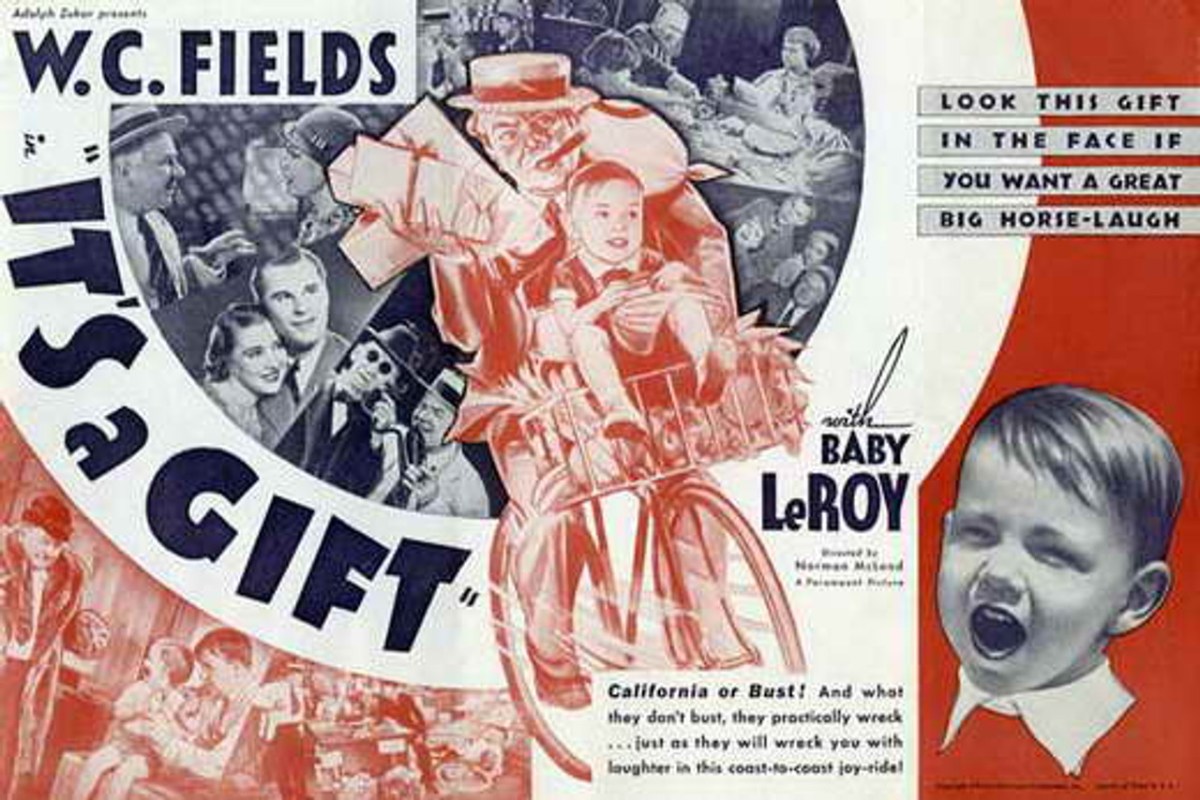
So roll down the window at Max’s Drive-In, grab some popcorn, and toast the man who proved that laughter isn’t always about joy; sometimes, it’s about pain and survival. This was the first W.C. Fields movie I ever watched, years ago, and I wasn’t disappointed. It contains no sentimentality…just one man’s pursuit of peace. In this case, an orange grove he has his eyes on. When people think of W.C. Fields, this is probably not the movie they usually think of first, but to me…it’s brilliant!
Sometimes, you don’t need romance or a difficult plot. It’s WC Fields trying to get a few minutes of peace and quiet. It’s a Gift is one of those hidden little gems, a film that’s basically one long bad day stretched from start to finish.
This film takes place in the middle of the Depression, when a grouchy grocer named Harold Bissonette (that’s “Biss-uh-NAY,” thank you very much) dreamed of escaping his nagging wife, children, and blind customers by buying himself an orange grove in California. Not a mansion, just fruit trees and some peace. But in Fields’ universe, that doesn’t happen. His wife nags, his customers interrupt his naps, and his children treat him like a piece of furniture. It’s a Gift may be ninety years old, but it still feels right.
He plays the definition of the henpecked husband, muttering under his breath. The movie is like a string of brilliant sketches stitched together by pure exasperation. That would be my definition of it. The “porch sleep scene,” where Fields tries to take a nap on his back porch as milkmen, salesmen, and children launch an invasion. The rhythm, the timing, was pure gold.
Then there’s the grocery store scene, the poor man behind the counter trying to deal with the infuriating Mr. Muckle. He is the blind and almost deaf man who wrecks everything he touches. It’s slapstick with a slight mean streak, but Fields plays it straight, and it worked.
This was in the middle of Hollywood’s “screwball comedy” decade, when the big studios were giving audiences zany escapism to forget the Depression. Fields, though, offered something a little more grounded and darker. He wasn’t Cary Grant tripping over furniture in a tux; he was a tired grocer stepping on a roller skate at 6 a.m.
Critics in 1934 didn’t quite know what to do with him. Some thought he was too grumpy. But audiences loved it. The film became one of Paramount’s biggest comedies that year. It’s now considered one of Fields’ great films, alongside The Bank Dick and Never Give a Sucker an Even Break.
I thought I would do something different today. I was reminded of this by the phrase, “it was before my time.” Movies and music fall into this category. I do know people who will not watch movies made “before their time.” I don’t think many of my readers would agree to this statement, but who knows?
I had a co-worker in the early 2000s (Sam) tell me that I shouldn’t like music that was before my time because it was unnatural (yes, he said that). I was first kinda of amused and shocked. I like Sam a lot, and we would talk a lot; he is a smart fellow. However, on this point, I didn’t understand. Why? Is there some unwritten law that I can’t like 1950s or 1960s music up to 1967, when I was born? That cut off some of the best music of the 20th century and beyond.
He grew up in the 80s, as I did, and was probably around 5 or so years younger than me. I’ve seen other people act the same way. If it were before they were born, then they would not give it a second listen. If a movie is black and white, they act as if they are near a radiation leak!
I think the subject centered around how I loved 50s and 60s music and The Beatles, The Who, The Stones, and The Kinks. He said I should be listening to music from my teenage years (well, I WAS…60s music was my soundtrack growing up), but I DID listen to the top 40 when I was a teenager, which, to me, didn’t live up to those bands to any degree or form. Maybe it wasn’t fair to compare Men Without Hats to those 1960s bands. It was hard to stomach some of the ’80s for me, but not all. Now I’m busy catching up on music I missed that wasn’t on Top 40 radio at the time. I did find an oasis in the 80s, alternative music like The Replacements and REM…and the classic bands.
I still want to find other music and movies I like. Why would age have any effect on the music, whether we like it or not? That doesn’t mean I don’t like new music. I have posted newer bands here before who have just released albums. If it’s good, it doesn’t matter what era it came from, at least not to me. Christian, Graham, and Lisa all posted some newer songs that I liked. With movies, yes, I find some I like. I just saw Weapons and loved it, plus there are others.
I’m not putting people down at all who think like that. Hey, if that is what they believe, more power to them. I never believed in criticizing people for their opinions, music, or otherwise. Whatever blows their hair back.
I want to thank a commenter named purplegoatee2684b071ed for recommending this song after reading my Joe Turner post. Just listen to the piano playing of Pete Johnson on this track and Joe Turner’s voice. It would raise the roof off any joint. Knowing it was made in 1938 makes it more special. Pete Johnson and Joe Turner were credited for writing this song.
Pete Johnson had been playing in Kansas City joints with his percussive style, while Joe Turner worked as a bartender and occasional singer. When the two paired up, it was dynamite. Producer John Hammond heard about them and invited the duo to Carnegie Hall for his “Spirituals to Swing” concert in 1938. Joe and Pete’s performance of this song stunned the crowd and announced that the blues and boogie-woogie weren’t just barroom music; they were the foundation of a new kind of American sound.
Listening today, you can hear the roots of countless rock and R&B records hiding within this track. The drive, it’s Little Richard before Little Richard, it’s Jerry Lee Lewis before Jerry Lee Lewis. This 1938 song is a sign that says… rock and roll is on its way. This may not have been a chart single in the way we think of hits today, but its influence rolled (pun intended) across decades.
I’m going to include a live Blasters version because they knew Joe Turner. Dave and Phil Alvin knew and spent time with Big Joe Turner, whom they regarded as a friend and mentor. As teenagers in the 1960s, the brothers followed Turner around the Los Angeles area, going to his gigs and eventually befriending him.
Roll ‘Em Pete
Well, I got a gal, she lives up on the hill Well, I got a gal, she lives up on the hill Well, this woman’s tryin’ to quit me, Lord, but I love her still
She’s got eyes like diamonds, they shine like Klondike gold She’s got eyes like diamonds, they shine like Klondike gold Every time she loves me, she sends my mellow soul
Well, you’re so beautiful, you’ve got to die someday Well, you’re so beautiful, you’ve got to die someday All I want’s a little loving, just before you pass away
Pretty baby, I’m goin’ away and leave you by yourself Pretty baby, I’m goin’ away and leave you by yourself You’ve mistreated me, now you can mistreat somebody else
This very well could be one of those posts that sounded good in thought but not as good in action.
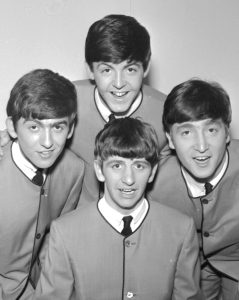
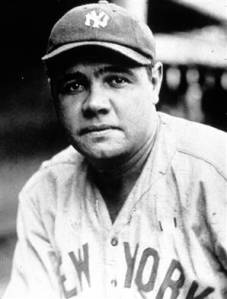
Strange title, huh? Two of my biggest interests growing up were Babe Ruth and The Beatles. An unlikely pair, but they caught my attention and started me down the path of researching and, most importantly, reading. I can be very obsessive about subjects. I probably would be diagnosed with something. When I find out about someone or some event, it’s not enough to know the event, but I want to know why, where, and how. Maybe that is the reason I started to blog. On the blogs, if Dave mentions a music festival that has been long forgotten, I want to know. If Lisa shows a painting on her site, I want to know who did it and what inspired them. When Halffastcyclingclub mentions a little-known artist or song, I want to know more about them.
I always pay attention to the comment section. That is why I blog. When all of you start commenting, I look up the bands you mention. CB, obbverse, M.Y., Warren, Jim, Randy, Matt, Christian, Clive, Phil, Nancy, and Colin (apologies to everyone I left off!) have supplied me with artists that I listen to on a normal basis. Just because I don’t post on them doesn’t mean I don’t listen to that band or artist. It might be months, but they will usually always pop up. Anyway, enough of this boring stuff…on to this other boring stuff. I guess I felt I had to set this up.
When I was a kid, George Herman Ruth was one of my heroes. I’m not a Yankee fan (always have been a Dodger fan); in fact, I usually root against them (especially last November). Those Red Sox and Yankee teams he was on are great to look back on from 1914 through 1935. His stats are unbelievable, and his personality was as big as his home runs. The man would not leave a kid behind waiting for an autograph. He did have bad habits; you could ask any brothel about him if they were still alive.
I parallel my interest in Babe Ruth with my interest in the Beatles. It’s not just the stats of Babe’s career or the popularity of the Beatles. It was never about popularity. No, because I didn’t know how great they were until I started to read about them. It’s an incredible story they both have. To start with little hope of making it in life, hardly at all…much less gaining popularity worldwide… and end up owning the world. Babe came from a poorer background, but the Beatles’ meeting at the right place and time defied the odds. So many things could have happened, but both worked out.
Both were bigger than life. People would travel from miles around to see The Babe hit one out or strike out, and the Beatles drew their share of people as well. They both defined a generation and are still talked about decades and in Babe’s case, a century later. Both are known around the world. You could go almost anywhere in the 20s – 50s and mention Babe Ruth, and they would know exactly who you were talking about. Even now, his name is alive, and the average person has heard of him, and it’s the same with The Beatles.
Maybe that is the reason I’m drawn to Big Star, The Replacements, and other lesser-known artists, and I like to spotlight them. Why did some get so big and others with a lot of talent didn’t? There are similarities between sports and music. Yes, you can be a one-hit wonder in both. The Kingsmen with Louie Louie and Mark Fidrych with one huge season. Both professions can make you a star or a goat. You could get on Bubblegum cards with both as well.
There is one difference between music and baseball/sports. In baseball, if you produce, you WILL get noticed or remembered. You might not be a Hall of Fame player, but you will get remembered by people. In music, you can produce the greatest album or song, but if the record company doesn’t promote you…it doesn’t matter because people won’t hear you. You are judged by the charts, and as we have all seen, sometimes the charts are not always the best. Want proof of that? Look up Chuck Berry’s only number 1 song.
If I had a time machine…I would go back to 1922 and watch Babe Ruth play, and 1961 to see The Beatles play. I would have loved to have sat in the smoky Hamburg club and to go to the Polo Grounds to grab a beer and a dog and watch the Babe.
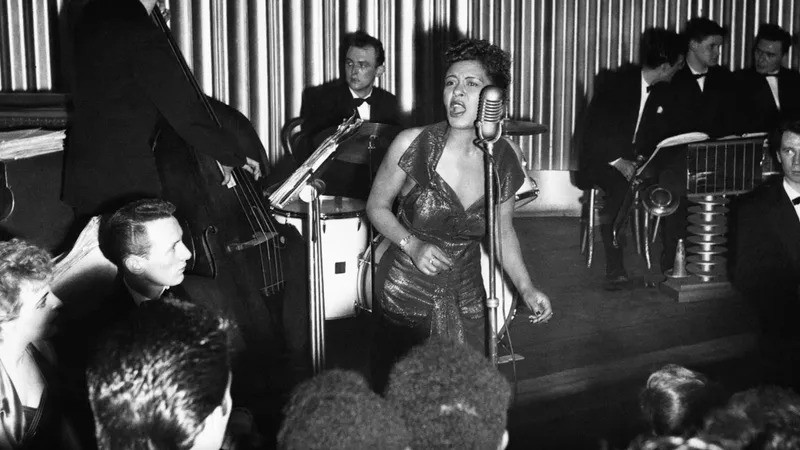
I’m not a huge jazz aficionado, but sometimes it hits the spot. On Christian’s blog on Sundays, he usually features a jazz song on his Sunday Six. I often enjoy that more than the rock songs. I was looking through YouTube, and I instantly fell for this song. I picture a smoky black and white bar at 3am in the 40s or 50s, with Holiday giving her all for each song.
I’ve heard other versions of this song, and some are slick and radio-friendly. Holiday’s is not slick, it’s real and as close to authentic as you can get. What I hear in this song is a weariness in Billie’s voice that feels older than the song itself. She doesn’t belt it, and she doesn’t show off. She just leans into the melody like someone savoring the last dance of the night.
When I listen to her songs, I have a feeling like I’m eavesdropping on something intimate. Only a few singers have made me feel that way; she will always be special. In this song, she gave pain a voice, and it’s still being felt.
This song was released in 1936 and peaked at #11 on the Billboard Hot 100. One stat that I found floored me. Out of the 38 singles she released, 35 of them were in the top 20. It was written by Ralph Rainger and Howard Dietz in 1929. popularized in the revue The Little Show, where it was sung by Libby Holman. It’s been covered 66 times by artists such as Dinah Shore to Hot Sugar Band & Nicolle Rochelle in 2020.
The live version below is near the end of her tragically short life, but like always, she gives her all.
Moanin’ Low
Moanin’ low, my sweet man, I love him so Though he’s mean as can be He’s the kind of man needs the kind of a woman like me
Gonna die if my sweet man should pass me by If I die where’ll he be He’s the kind of a man needs the kind of a woman like me
Don’t know any reason why he treats me so poorly What have I gone and done? Makes me troubles double with his worries When surely, I ain’t deserving of none
Moanin’ low, my sweet man is gonna go When he goes, oh Lordy He’s the kind of a man needs the kind of a woman like me
If I had to rank Marx Brothers movies…this would come in at around 3 or maybe 4. In other words, it’s a great movie. They have 7 movies I would recommend to anyone. This movie was their third movie. The first two were Broadway hit plays. This one is when they left Broadway but some of the same writers wrote for them. They did not try this out in front of audiences.
The brothers were in vaudeville from the early 1900s to 1924 when they finally made it to Broadway in a play called “She Say’s It Is”. Broadway audiences had never seen anything like them. They literally tore up the stage by being so energetic. The brothers’ names were Julius (Groucho), Adolph (Harpo), Leonard (Chick-o), and Herbert (Zeppo). They had another brother who was not in the act Milton (Gummo) but acted at times as their agent.
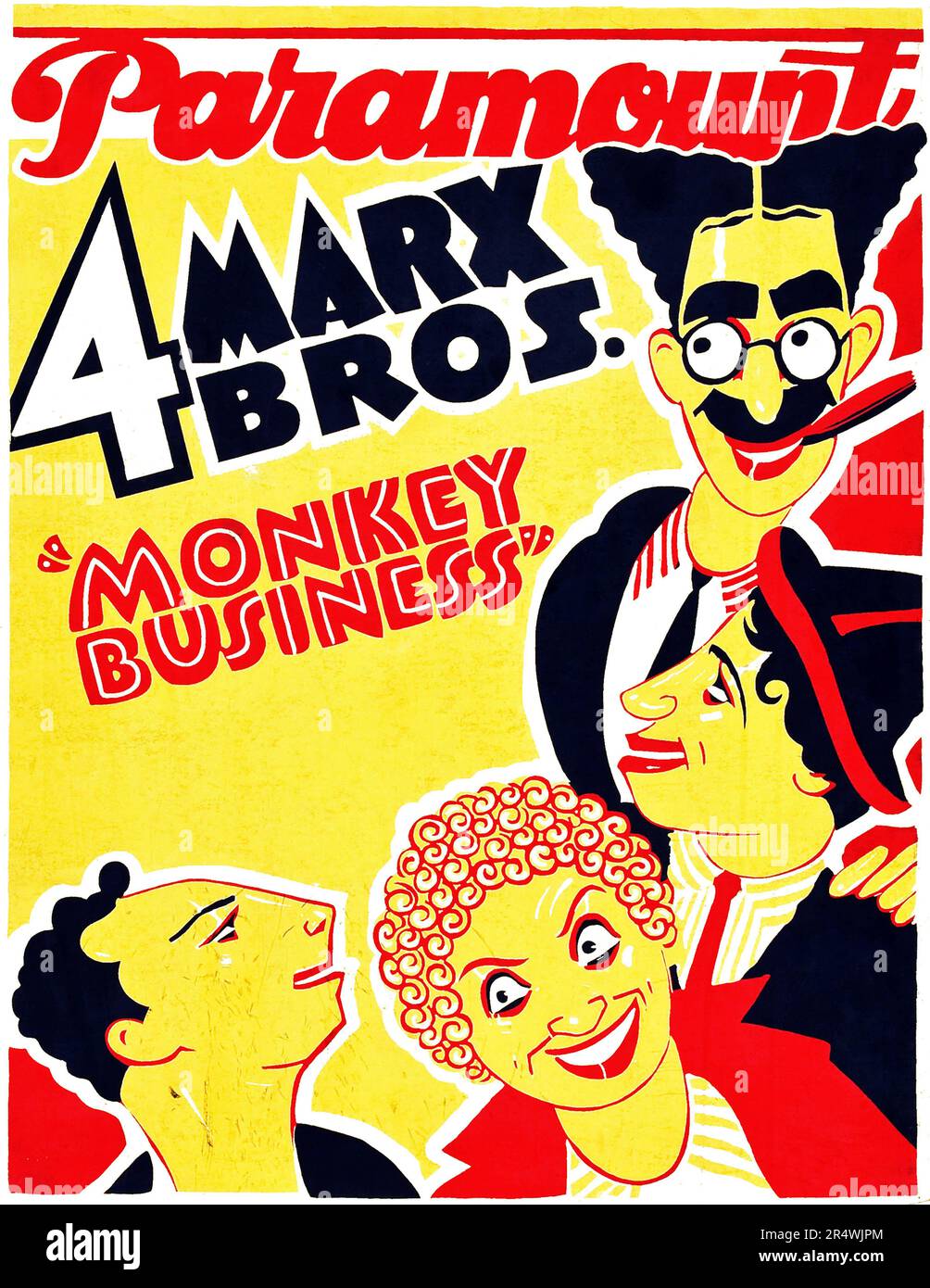
Groucho was always in a power position in the plays and movies. Harpo and Chico would be there to take him down a few notches. Zeppo would be the straight man. Harpo, of course, would play the harp in a musical part, Chico would play the piano and Groucho would sometimes play the guitar…but the comedy is what everyone came to see. They made five movies for Paramount: Coconuts, Animal Crackers, Monkey Business, Horse Feathers and Duck Soup. These movies were anarchist chaos. After 1933 they signed a deal with MGM and their movies were tamed down to have more of a storyline… two of them were great but never matched the wildness of the Paramount movies
Monkey Business is them loose on a ship as stowaways. It was directed by Norman Z. McLeod, and the screenplay was written by S.J. Perelman, Will B. Johnstone, and Arthur Sheekman, who adapted the Marx Brothers’ comedy style to a film format. This movie was not tested in front of audiences like their first two were. It’s them hiding from the ship’s crew and getting involved with gangsters. The Marx Brothers movies are the only movies that I would not worry about the storyline…let them go and do their thing.
One of the most iconic scenes involves the brothers attempting to pass through immigration by impersonating Maurice Chevalier, using a stolen passport, and singing “You Brought a New Kind of Love to Me.”That song was a huge hit back in the late 1920s and early 1930s. The movie was a smash hit with the critics and audiences in 1931.
Below I have the full movie and a fun clip of Groucho’s insults.
This one was released way before Drive-In Movies but yes it was shown as the second feature at many drive-ins in the day…and probably still is!
I loved this movie as a kid. This one along with The Wolfman, Dracula, and the original King Kong. I went to school the next day saying “It’s Alive It’s Alive It’s Alive!” This movie was directed by James Whale and produced by Universal Pictures, is one of the most iconic films in the horror genre and a cornerstone of early Hollywood cinema. Based loosely on Mary Shelley’s 1818 novel Frankenstein or The Modern Prometheus.
I always considered it one of the most iconic films ever made. The story moves fast and there are no slow moments. They said all they needed to say in this movie with an hour and eleven minute run time. Jack Pierce, a legendary makeup artist, created the Monster’s look, which included the now-iconic flat head, heavy brow, bolts in the neck, and large boots. This visual representation of the Monster is what we remember now when Frankenstein gets mentioned in pop culture.
The big guy in this movie is film legend Boris Karloff. This is the film he is best remembered for and the sequels. The role was originally offered to Bela Lugosi but he declined it. Karloff also was in The Mummy in 1932. Frankenstein was frightening and a big reason was his eyes. They were menacing along with his slow movements.
The monster could be gentle but Dr Frankenstein’s assistant Fritz (better known as Igor later on) accidentally drops the normal brain and the brain that the doctor used was an abnormal one. After the monster is alive, Fritz can’t help himself and tortures the poor guy with a torch…big mistake by the late Fritz.
I never had much sympathy for Dracula but for Frankenstein I do. He never asked to be born or reborn. The scene with the little girl showed that the monster had a good side but was also heartbreaking. She showed him flowers and how flowers floated in water. He really enjoyed that but he didn’t know any better and threw the girl in to see her float…she didn’t. After the girl, the village chases the monster down.
Making a human being from spare parts… I’m reminded of a quote from Jurassic Park… Yeah, yeah, but your scientists were so preoccupied with whether or not they could that they didn’t stop to think if they should.
Plot IMDB
Henry Frankenstein is a brilliant scientist who has been conducting experiments on the re-animation of lifeless bodies. He has conducted experiments on small animals and is now ready to create life in a man he has assembled from body parts he has been collecting from various sites such as graveyards or the gallows. His fiancée Elizabeth and friend Victor Moritz are worried about his health as he spends far too many hours in his laboratory on his experiments. He’s successful and the creature he’s made come to life is gentle but clearly afraid of fire. Henry’s father, Baron Frankenstein, brings his son to his senses, and Henry agrees that the monster should be humanely destroyed. Before they can do so, however, the monster escapes, and in its innocence, it kills a little girl. The villagers rise up intent on destroying the murderous creature.
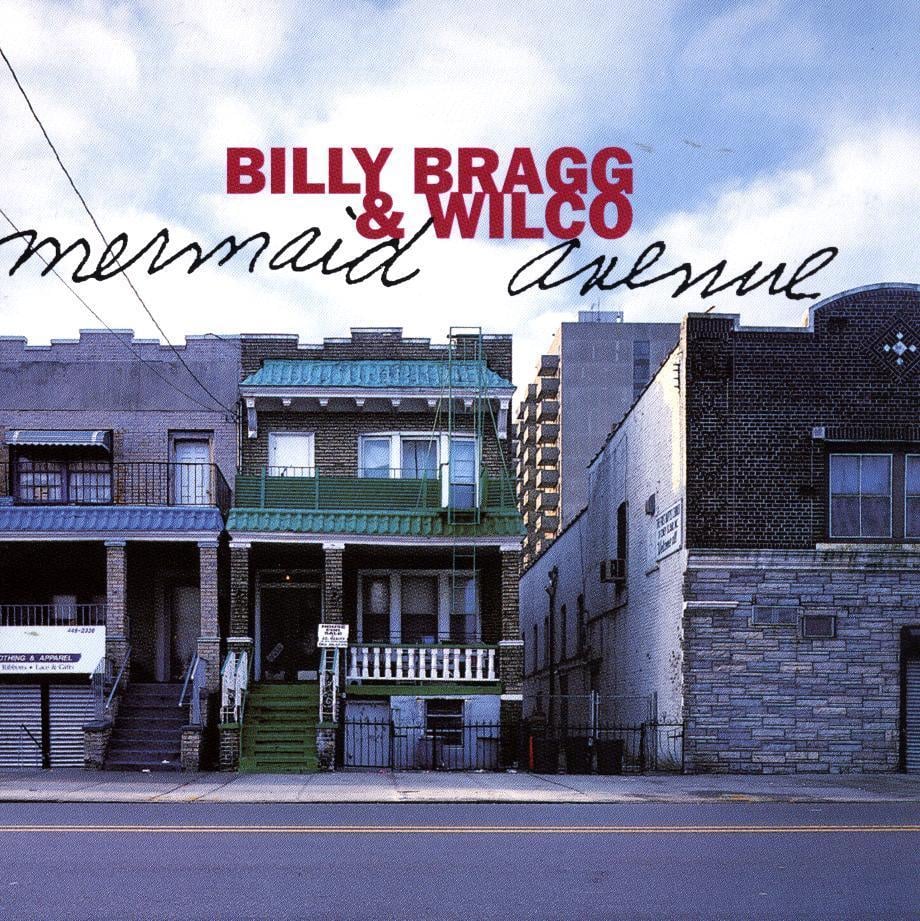
Since I did the Car Songs post and obbverse recommended Black Nova, I’ve been listening to Wilco much more. I first heard of Wilco when I heard the song “Secret of The Sea” which was on the album Mermaid Avenue Volume II. This song was on the first volume.
Mermaid Avenue was a collaborative album by the band Wilco and the British singer-songwriter Billy Bragg. It features previously unpublished lyrics by the legendary folk musician Woody Guthrie. The album was released in 1998 and is named after the street in Coney Island, New York, where Guthrie lived. There were 3 albums in all.
I can’t imagine the pressure Bragg and Wilco felt doing this. Having the legendary Woody Guthrie lyrics in front of you and writing melodies around them. They brought in a new generation of fans to Woody Guthrie. In this song, Jeff Tweedy wrote the music around Guthrie’s lyrics. Many of these lyrics were written in the 1930s – 1940s and finished in 1997.
The project was started by Woody Guthrie’s daughter, Nora Guthrie, who wanted to breathe new life into her father’s huge collection of unpublished lyrics. She invited Billy Bragg to set the lyrics to music, and Bragg, in turn, invited Wilco to join the project. They did a fantastic job on these albums.
The album was well-received by critics, who praised Bragg and Wilco for their ability to honor Guthrie’s legacy while bringing his lyrics into a modern musical context. Mermaid Avenue was nominated for a Grammy Award for Best Contemporary Folk Album.
The album peaked at #34 in the UK and #90 on the Billboard 100 in 1998.
Billy Bragg: I hate to draw comparisons, but it’s what Dylan and the Band were doing in the Basement Tapes. They took those old folk songs, that had deep roots, and they messed around with them and made a great record. We were able to apply that same idea to these songs, although we were perhaps more radical, because we had the whole history of rock music between when Woody wrote the songs, and us, whereas Dylan was quite early on in that tradition. That’s the trick with these Woody Guthrie compilations, is not to be too reverent to the material. Don’t worry about Woody’s words – they’re going to work. Bring yourself in – do what you think he would do. Do what you think you should do. Meet him half way.
There’s a hundred different ways to write a song. And every way is the right way, as long as you end up with a song. Some of those songs that Woody wrote, who knows what tunes he had for them? Maybe we were miles off, maybe we were close, I don’t know. But ultimately it’s what the guy was saying that matters – not the way he was saying it. And what he was saying is preserved. We were fortunate enough to put a frame around his artistic endeavors.
At My Window Sad and Lonely
At my window sad and lonely Oft times do I think of thee Sad and lonely and I wonder Do you ever think of me?
Every day is sad and lonely And every night is sad and blue Do you ever think of me, my darling As you sail that ocean blue?
At my window, sad and lonely I stand and look across the sea And I, sad and lonely wonder Do you ever think of me?
Will you find another sweetheart In some far and distant land? Sad and lonely now I wonder If our boat will ever land
Ships may ply the stormy oceans And planes may fly the stormy sky I’m sad and lonely but remember Oh, I will love you ’til I die
I don’t want no drummer. I set the tempo… Bessie Smith
Lisa published this for me for her yearly Women’s Music March, giving you a female artist every day for March. I want to thank her for that.
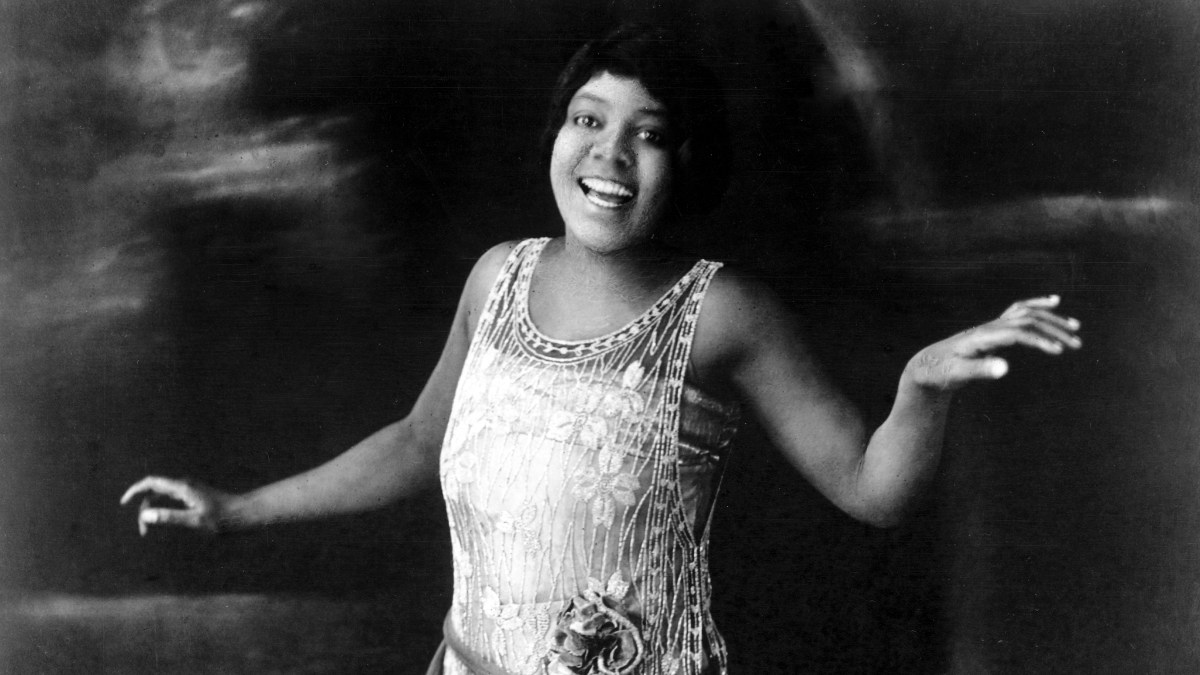
I got into Bessie Smith from listening to Janis Joplin and reading about her. Bessie’s voice sends chills up my spine…that is my litmus test. Whatever she sings…she sings it, means it, she lived it. The sound of the record and her voice is just unbeatable. Yes, we have digital now but digital could not give you this sound. If you are not familiar with her…do yourself a favor and check her out. We cannot forget the pioneers of any genre. Artists like Mahalia Jackson, Janis Joplin, and Norah Jones have all given Bessie Smith credit as their inspiration.
I can imagine Dorothy Parker, Charlie Chaplin, F. Scott Fitzgerald, and Clara Bow all listening to this in the 20s and 30s. Bessie Smith was known as the “Empress of the Blues.”
Early Life:
She was born in Chattanooga, Tennessee, on April 15, 1894. She lost her dad while she was an infant and her mom when she was 7-8 years old. She was raised by her tough older sister. They nearly starved. For money, her sister took in laundry. Bessie would start contributing.
Musical Beginnings:
To help support her orphaned siblings, Bessie began her career as a Chattanooga Street musician and singing at churches, singing in a duo with her brother Andrew to earn money to support their poor family. At age 16 she met a blues singer by the name of Ma Rainey and started to travel with the Rabbit Foot Minstrels, a variety show that toured the south and Midwest. She would send money home to her siblings and became an excellent singer. At age 24 she went solo by touring with other traveling shows. She talked tough and could get rough if you messed with her. She understood blues so well because she was living it.
Bessie signed with Columbia Records in 1923. Within 10 months of signing Smith, the Columbia label sold two million records. Over the next four years, her sales reached six million. But she sang a wider repertoire than most, in her traveling tent show, on theatrical tours, and, later, in jazz clubs. The blues made Smith the highest-paid black entertainer of her era ($2000 a week), but she was just as adept at singing show tunes and more popular Tin Pan Alley songs, which became the basis of many early jazz standards. Those record sales don’t sound as high now but remember this was in the 1920s with only a few marketing tools on hand.
She is credited with recording more than 160 songs between 1923 and 1933. Smith performed on stage throughout the southern United States and recorded with such jazz greats as Benny Goodman, Louis Armstrong, and Coleman Hawkins.
On September 26, 1937, Smith was severely injured in a car accident while traveling from a concert in Memphis to Clarksdale, Mississippi, with her companion Richard Morgan. She was taken to a hospital, where she died. More than 5,000 people attended her funeral. Her grave had no headstone. There wasmoney for a headstone apparently, but her estranged husband spent it on something or someone else.
By the time of her death, Bessie was known around the world appear with the best players of the day at theaters coast to coast. Bessie’s voice and showmanship drove her from poverty to international fame as a singer of blues tunes, many of which she wrote and co-wrote.
Discography:
This is a partial list because they did not have albums at that time. The list of everything she released would take a post by itself.
1923 – Downhearted Blues #1
1923 – Gulf Coast Blues #5
1923 – Aggravatin’ Papa #12
1923 – Baby Won’t You Please Come Home #6
1923 – T’aint Nobody’s Biz-Ness If I Do #9
1925 – The St. Louis Blues #3
1925 – Careless Love Blues #5
1925 – I Ain’t Gonna Play No Second Fiddle #8
1926 – I Ain’t Got Nobody #8
1926 – Lost Your Head Blues #5
1927 – After You’ve Gone #7
1927 – Alexander’s Ragtime Band #17
1928 – A Good Man Is Hard To Fine #13
1928 – Empty Bed Blues #20
1929 – Nobody Knows You When You’re Down and Out #15
Filmography (if any):
Saint Louis Blues 1929
Some things to share:
Janis Joplin helped buy Smith’s headstone in 1971…two weeks before her own untimely death. But the real story was the other person who helped buy the stone. That was Juanita Green… a little girl whom Smith once told to give up singing and stay in school.
Bessie Smith has been inducted into the Grammy Hall of Fame, winning posthumous awards for her 1923 single “Downhearted Blues,” 1925 single “St. Louis Blues” with Louis Armstrong, and a 1928 single “Empty Bed Blues.” Smith has also been honored with a Grammy Lifetime Achievement Award, was inducted into the Rock and Roll Hall of Fame, the Blues Hall of Fame, and the Big Band and Jazz Hall of Fame.
Once I lived the life of a millionaire Spending my money, I didn’t care I carried my friends out for a good time Buying bootleg liquor, champagne, and wine
Then I began to fall so low I didn’t have a friend and no place to go So if I ever get my hand on a dollar again I’m gonna hold on to it ’til them eagles grin
Nobody knows you When you’re down and out In my pocket, not one penny And my friends, I haven’t any
But if I ever get on my feet again Then I’ll meet my long lost friend It’s mighty strange without a doubt Nobody knows you when you’re down and out I mean, when you’re down and out
When you’re down and out, not one penny And my friends, I haven’t any and I felt so low Nobody wants me ’round their door
Without a doubt No man can use you when you’re down and out I mean, when you’re down and out
Dave has asked us…The magic that is Christmas is that you can invite any musician (or person from the music world) to be your guest. Even if they’ve passed away, they can be at your table for a meal and a few stories. So, who would you invite? And any little musical gift you hope they might possibly come with?
Well, I’m cheating a bit…my Christmas guest left the earth in 1964 and yes, he was a musician…just not a rock musician. He played the harp and played it quite well…his nickname even contained that name…Harpo Marx. But Max…why not a rock musician? If I had to pick a rock musician, it would be one of two people. John Lennon or Keith Moon. I would say Lennon would be my number one choice but I wanted to go a different route.
Why am I picking Harpo? He hung out with the top artists, writers, musicians, and athletes of his time. He was always at peace with himself. He has said he never had a bad night’s sleep. The guy was close to what you see on screen. He had so many stories about his life that just those would keep you entertained. There are more reasons…but here are some of the things he did.
The man was born in 1888 and grew up in New York. He didn’t graduate from high school…no, he jumped out the window of his second-grade classroom and never went back to his teacher Miss Flatto. Did the lack of education stop him in life? No, not at all as you will see.
In 1909 his mother Minnie roped him into appearing on stage with his brothers in a singing play. He was dressed in a duck suit and promptly peed in his pants. “Coney Island, New York. Made my debut at Henderson’s and peed in my pants. I felt shamed and disgraced, but Minnie wouldn’t let me quit the act on any such flimsy pretext. She hung my trousers out to dry in the sea breeze between shows. By the second show, I was much less scared, so enthusiastic in fact that everybody was afraid I might sing. But I didn’t. I just opened my mouth when Groucho did.”
The brothers hit the vaudeville circuit and any rock stars who say their beginning was rough…they don’t know what rough is. The Brothers would stay in boarding houses when possible but sometimes slept in the park. They ate food that was infested with bugs and people treated them terribly because show people were frowned upon at that time. They were in Vaudeville from 1909 to 1924. That was a lot of hard living and the brothers were in their mid-thirties before they hit Broadway.
The review that would change Harpo’s life came in 1924 in their first play (I’ll Say She Is) to make Broadway. The review was written by the author Alexander Woollcott. He wrote glowingly about all the brothers, but Harpo is the one he singled out. Woollcott met Harpo backstage and soon introduced Harpo to some of the most sophisticated writers and artists of that time. Harpo soon became a member of the Algonquin Round Table. That was where witty and cutting remarks flowed like water. Groucho said it was like falling in a den of lions. Some of the regulars were Dorothy Parker, Alexander Woollcott, Heywood Broun, Robert Benchley, Robert Sherwood, George S. Kaufman, Franklin P. Adams, Marc Connelly, Harold Ross, and Russell Crouse. Harpo has said that he was a professional listener. Despite only having a 2nd grade education he could hold his own and was a vivacious reader.
Kaufman would co-write 2 plays for the brothers, The Cocoanuts and Animal Crackers. They were Broadway smashes and soon the brothers would be making movie versions of both. In 1929 they made The Cocoanuts movie in New York while acting in Animal Crackers on Broadway. They would make Animal Crackers next and then move to Hollywood. Their film career lasted from 1929 to 1949 with a movie called Love Happy with Marilyn Monroe. They made 13 in all.
Harpo was a happy bachelor until he met Susan Fleming in 1932 and they were married in 1936. He was very much like his character on the screen except he talked of course. He hung out with royalty, artists, and even toured Russia in 1933 and carried secret papers taped to his leg out of the country for America. He never found out what he risked is life for though. Some FBI agents got the papers as soon as he got to New York.
Harpo and Susan wanted children, so they adopted. Harpo had said he wanted a child in every window when he went to work. So, they adopted 4 kids and from all accounts…was one of the best dads you could possibly get. If he came home late, he would sometimes wake one of his children just to play games with them. None of his kids ever wrote books on how bad he was or ever said anything bad publicly. He did have a set of rules that he went by and had them pinned up. This is them and I had the same rules on our refrigerator when Bailey was small, although a few were altered because we had no pool table or harp.
Life has been created for you to enjoy, but you won’t enjoy it unless you pay for it with some good, hard work. This is one price that will never be marked down.
You can work at whatever you want to as long as you do it as well as you can and clean up afterwards and you’re at the table at mealtime and in bed at bedtime.
Respect what the others do. Respect Dad’s harp, Mom’s paints, Billy’s piano, Alex’s set of tools, Jimmy’s designs, and Minnie’s menagerie.
If anything makes you sore, come out with it. Maybe the rest of us are itching for a fight, too.
If anything strikes you as funny, out with that, too. Let’s all the rest of us have a laugh.
If you have an impulse to do something that you’re not sure is right, go ahead and do it. Take a chance. Chances are, if you don’t you’ll regret it – unless you break the rules about mealtime and bedtime, in which case you’ll sure as hell regret it.
If it’s a question of whether to do what’s fun or what is supposed to be good for you, and nobody is hurt whichever you do, always do what’s fun.
If things get too much for you and you feel the whole world’s against you, go stand on your head. If you can think of anything crazier to do, do it.
Don’t worry about what other people think. The only person in the world important enough to conform to is yourself.
Anybody who mistreats a pet or breaks a pool cue is docked a months pay.
Harpo played in some of the seediest joints you could imagine and had to endure a lot of antisemitism, but he was loved by all around him including children and animals.
His son Bill, who is a talented musician, released a book a few years ago. He said in 1964 that Harpo loved The Beatles when they first arrived. Bill was a professional piano player and he didn’t think The Beatles would last. Harpo told him that he better get used to them because they would be remembered in history because they were starting something new. Bill said six years later he was playing a gig and many of his songs were Beatle songs. He thought… “Dad was right again” while playing Let It Be.
Here is an intro that Harpo wrote to Harpo Speaks…I thought you would enjoy this…he gives a brief story of him.
I’ve played piano in a whorehouse. I’ve smuggled secret papers out of Russia. I’ve spent an evening on the divan with Peggy Hopkins Joyce. I’ve taught a gangster mob how to play Pinchie Winchie. I’ve played croquet with Herbert Bayard Swope while he kept Governor Al Smith waiting on the phone. I’ve gambled with Nick the Greek, sat on the floor with Greta Carbo, sparred with Benny Leonard, horsed around with the Prince of Wales, played Ping-pong with George Gershwin. George Bernard Shaw has asked me for advice. Oscar Levant has played private concerts for me at a buck a throw. I have golfed with Ben Hogan and Sam Snead. I’ve basked on the Riviera with Somerset Maugham and Elsa Maxwell. I’ve been thrown out of the casino at Monte Carlo. Flush with triumph at the poker table, I’ve challenged Alexander Woollcott to anagrams and Alice Duer Miller to a spelling match. I’ve given lessons to some of the world’s greatest musicians. I’ve been a member of the two most famous Round Tables since the days of King Arthur—sitting with the finest creative minds of the 1920s at the Algonquin in New York, and with Hollywood’s sharpest professional wits at the Hillcrest. (Later in the book, some of these activities don’t seem quite so impressive when I tell the full story. Like what I was doing on the divan with Peggy Hopkins Joyce. I was reading the funnies to her.) The truth is, I had no business doing any of these things. I couldn’t read a note of music. I never finished the second grade. But I was having too much fun to recognize myself as an ignorant upstart. I can’t remember ever having a bad meal. I’ve eaten in William Randolph Hearst’s baronial dining room at San Simeon, at Voisin’s and the Colony, and the finest restaurants in Paris. But the eating place I remember best, out of the days when I was chronically half starved, is a joint that was called Max’s Busy Bee. At the Busy Bee, a salmon sandwich on rye cost three cents per square foot, and for four cents more you could buy a strawberry shortcake smothered with whipped cream and a glass of lemonade. But the absolutely most delicious food I ever ate was prepared by the most inspired chef I ever knew—my father. My father had to be inspired because he had so little to work with. I can’t remember ever having a poor night’s sleep. I’ve slept in villas at Cannes and Antibes, at Alexander Woollcott’s island hideaway in Vermont, at the mansions of the Vanderbilts and Otto H. Kahn and in the Gloversville, New York, jail. I’ve slept on pool tables, dressing-room tables, piano tops, bathhouse benches, in rag baskets and harp cases, and four abreast in upper berths. I have known the supreme luxury of snoozing in the July sun, on the lawn, while the string of a flying kite tickled the bottom of my feet.
I can’t remember ever seeing a bad show. I’ve seen everything from Coney Island vaudeville to the Art Theatre in Moscow. If I’m trapped in a theatre and a show starts disappointingly, I have a handy way to avoid watching it. I fall asleep. My only addictions—and I’ve outgrown them all—have been to pocket billiards, croquet, poker, bridge and black jelly beans. I haven’t smoked for twenty years.
The only woman I’ve ever been in love with is still married to me.
My only Alcohol Problem is that I don’t particularly care for the stuff.
Who wouldn’t want to talk to this man? Thank you…and as far as a musical gift… I would love to hear Harpo play either the Harp, or piano, or just tell me Vaudeville stories!
“We took some pictures of the native girls; but, they weren’t developed. But, we’re going back again in a coupla weeks.”
What did I do on my summer vacation short blog break? I did some projects around the house and caught some Marx Brothers movies. I did miss blogging and talking to everyone. I thought I would start off a little different…with a movie.
Harpo (Adolph Marx), Groucho (Julius Henry), Chico (Leonard Joseph Marx), and Zeppo Marx (Herbert Manfred Marx). No one was remotely like them and they haven’t been matched. My favorite movie by them is Duck Soup and Horse Feathers but this one is up there. They also had another brother…Milton “Gummo” Marx and helped them outside of being on stage. Harpo later changed his real name from Adolph to Arthur for obvious reasons.
The Brothers made 14 movies in all and 3 hit Broadway Plays (I’ll Say She Is, Cocanuts, and Animal Crackers). The first five remain my favorite. They were totally without rules and they were incredibly irrelevant. Anarchy would be the word…the plot goes out the door but that is alright. After the fifth movie they signed with MGM and their movies had solid plots and were more ordered…but those were without Zeppo. He decided to retire from the screen and became a very successful businessman. I still like the total anarchy of their earlier movies best but I do like the others also.
If you have never seen a Marx Brothers movie, just try one, I would suggest either Duck Soup, Horse Feathers, or Animal Crackers. If you want more of a plot try A Night At The Opera…one of the two Marx Brothers movies that Queen named one of their albums after…the other being A Day At The Races.
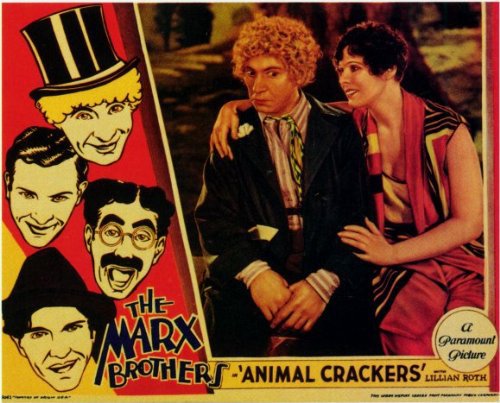
Animal Crackers had a huge revival in the early 70s on college campuses. No one had the rights to show this movie but it was cleared in America in 1974*. Groucho, who was alive then, could not believe they were popular all over again. Lines wrapped around street corners for blocks waiting to see this movie. It was their second movie and it was made in 1930. It wasn’t hard for them to make because they had performed this play on Broadway that was written for them.
All of them have certain traits that are on display. Groucho is the king of the put-downs or the comebacks…you can’t beat him. Harpo was great at pantomime…he should have been in silent movies. Chico was a great piano player and I loved his conversations with Groucho…which is in every Marx Brothers movie. Zeppo…poor Zeppo was the straight-man brother. Most of them say in real life he was the funniest Marx Brother.
The reason Harpo never talked on stage was because of a negative review he received in vaudeville. He also said there was no way he could out-talk Groucho and Chico. Everyone thought Harpo was mute but of course, he could talk fine. His father once won a bet with an audience member when the man bet him that Harpo could not talk.
Another cast member I will mention is Margaret Dumont…she plays Mrs. Rittenhouse…she played the straight person and love interest in many of their movies. There was a great chemistry between her and Groucho. Dumont didn’t have a great sense of humor…she would ask Groucho…was that supposed to be funny? She didn’t understand their humor at all and just played it completely straight.
Animal Crackers was written by George S. Kaufman, Morrie Ryskind, Bert Kalmar, and Harry Ruby. Kaufman was a brilliant writer.
I can only imagine Broadway audiences being introduced to one of their plays. Reviewers say they tore up the stage and people were literally laughing so hard they cried and fell down in the aisle. Animal Crackers would be the last play they made…after this, they moved out to Hollywood to make movies only. Their first two movies look kind of clumsy because “talkies” were just starting to get big and the cameras were huge and hard to move around. They basically filmed the exact play…not live of course but they used many of the play’s cast.
The characters in “Animal Crackers” celebrate the return of world traveler Captain Spaulding (Groucho) while also dealing with the theft of a rare work of art at the home of the wealthy Mrs. Rittenhouse (Dumont), where the party takes place. But once the captain arrives, along with Spaulding’s stenographer Jamison (Zeppo), Signore Ravelli (Chico), and the Professor (Harpo), nothing sane or expected takes place afterward. But really, what do you expect?
If you want a movie to get you out of a funk (like I did) this will do it! If you like movies that you can quote later…this one is for you! Below are some quotes I liked from this movie… but the quotes don’t work on paper as well unless Groucho is delivering them. I’ll start off with the famous one.
“One morning I shot an elephant in my pajamas. How he got in my pajamas, I don’t know.”
“You’re the most beautiful woman I’ve ever seen, which doesn’t say much for you.”
“Why, you’ve got beauty, charm, money! You *have* got money, haven’t you? Because if you haven’t, we can quit right now.”
“I’m sick of these conventional marriages. One woman and one man was good enough for your grandmother, but who wants to marry your grandmother? Nobody, not even your grandfather. Think! Think of the honeymoon! Strictly private. I wouldn’t let another woman in on this. Well, maybe one or two. But, no men! I may not go myself.”
Capt. Spaulding: [to Mrs. Rittenhouse and Mrs. Whitehead] What do you say, girls? What do you say? Are we all going to get married?
Mrs. Whitehead: All of us?
Capt. Spaulding: All of us!
Mrs. Whitehead: But, that’s bigamy!
Capt. Spaulding: Yes, and it’s big of me too.
*In 1957, Paramount forgot to renew the soundtrack rights which reverted back to the authors of the play. (The studio did renew the picture rights, though.) As a result, the film could not legally be seen in the USA until 1974, when Universal, which had since purchased Paramount’s film library, was persuaded by fan requests to re-release it.
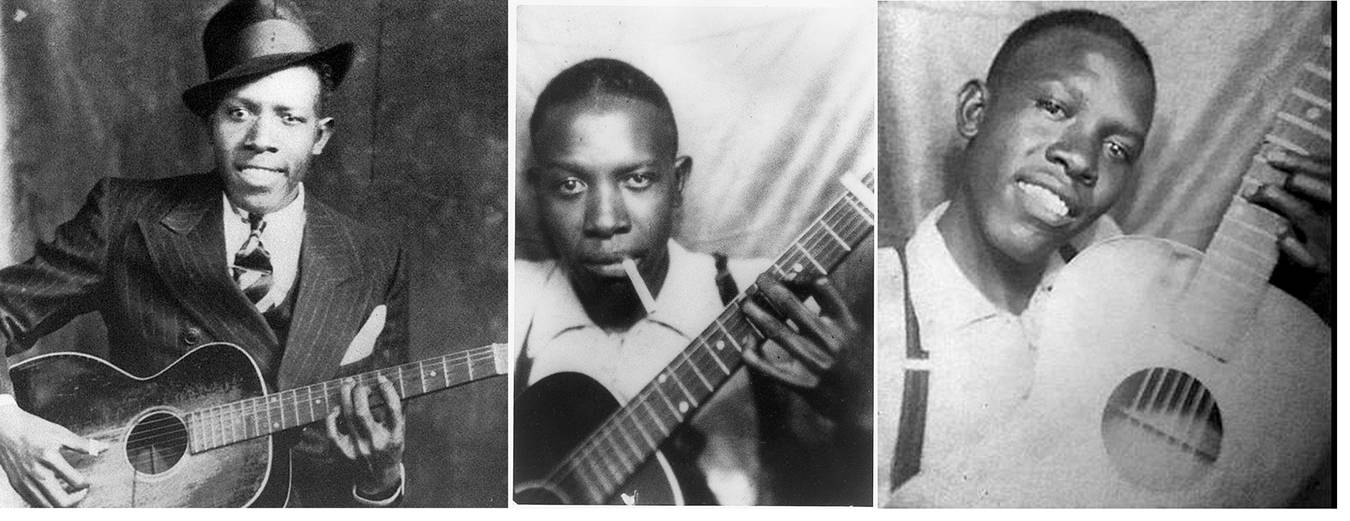
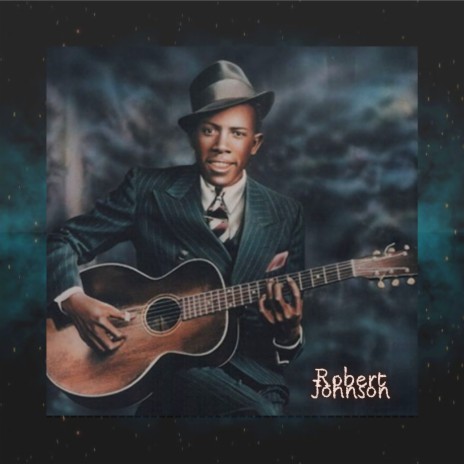
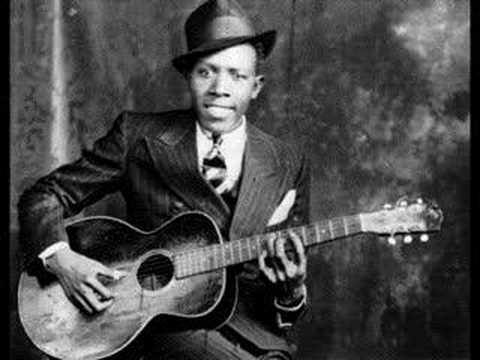
When I hear Robert Johnson…I think of all the myths built around him. Not all are myths though…to hear his guitar on those songs is incredible. He was a man ahead of his time. He is so mysterious…we still only know so much about him. If one song captures the mystery of this legendary bluesman, it is this song… a haunting tale of a man pursued by the devil. Only three confirmed photos of the man are known to exist.
Was Robert Johnson the most influential guitarist in the history of blues and rock? That very possibly could be true. It wasn’t until the 80s that I started to read and hear more about him. Reading interviews with Clapton, Jimmy Page, and others…they all owed a huge debt to Johnson.
My introduction to Robert Johnson came from Eric Clapton while playing with Cream. Johnson was a great blues guitarist who supposedly sold his soul to the devil at the crossroads to be able to play the blues. Some of the songs he wrote played into this myth. He only cut 29 songs that he recorded in a two-year period between 1936 and 1937.
Movies such as the 1980s film Crossroads brought Johnson more fans. Many people have searched for Johnson after listening to artists that were influenced by him. His voice will haunt you after you listen to his recordings. They are pure and timeless.
Son House and Willie Brown
The great bluesman Son House talked about when he and Willie Brown played in different juke joints that Johnson would want to play with them. He said Johnson made a racket with the guitar and everyone wanted him to stop playing. Then one day Johnson left town and came back between 6-8 months later and he had mastered the guitar. That boosted the “selling of his soul to the devil” rumors.
Hellhound On My Trail
I got to keep movin’, I’ve got to keep movin’
Blues fallin’ down like hail, blues fallin’ down like hail
Mm mm mm, blues fallin’ down like hail, blues fallin’ down like hail
And the days keeps on worryin’ me of a hellhound on my trail
Hellhound on my trail, hellhound on my trail
If today was Christmas eve, if today was Christmas eve
And tomorrow was Christmas day
If today was Christmas eve and tomorrow was Christmas day
(Aow, wouldn’t we have a time, baby?)
All I would need, my little sweet rider, just
To pass the time away, huh huh, to pass the time away
You sprinkled hot foot powder, mmm
Mmm, around my door, all around my door
You sprinkled hot foot powder, mmm
All around your daddy’s door, hmm hmm hmm
It keep me with ramblin’ mind, rider
Every old place I go, every old place I go
I can tell, the wind is risin’, the leaves tremblin’ on the tree
Tremblin’ on the tree
I can tell, the wind is risin’, leaves tremblin’ on the tree
All I need’s my little sweet woman
And to keep my company, hmm hmm, hey hey
My company
This is an old Robert Johnson song that I’ve always liked. I learned about this song from a bootleg of Leon Russell, George Harrison, Ringo Starr, and Eric Clapton many years ago. Eric wasn’t in the best of shape when this was recorded during the Bangladesh rehearsals. George takes the solo in this blues song and makes it fit really well. I added this version along with Johnson at the bottom of the post.
Robert Johnson recorded it on November 23, 1936, at the Gunter Hotel in San Antonio, Texas and it was produced by Don Law. Johnson only recorded 29 songs in total with 13 surviving outtakes. In one hotel room, Johnson performed and in a second adjoining room, the recording equipment was housed.
In 1990 the compilation album The Complete Recordings was released and peaked at #80 in the Billboard Album Charts. It also won a Grammy Award in 1991 for “Best Historical Album. This song has had over 100 known cover versions by other artists.
Robert Johnson was a huge influence on guitarists such as Eric Clapton, Jimi Page, Peter Green, Brian Jones, and many more. He sounded different than his peers at the time which could have contributed to him not being better known in the 1930s. His style was ahead of his time and it took til the 1960s for him to catch on. In 1961, King of the Delta Blues Singers was released with 16 of his songs on the album…a generation of musicians was influenced.
Johnson died in 1938 at the age of 27. Some say Johnson had been flirting with a married woman at a dance, and she gave him a bottle of whiskey poisoned by her husband…he died two days after drinking it. That is not known for sure but we will probably never know.
Eric Clapton – His music is like my oldest friend, always in the back of my head and on the horizon. It’s the finest music I’ve ever heard. I’ve always trusted its purity. And I always will.’ I don’t know what more you could say….”
Bob Dylan: If I hadn’t heard the Robert Johnson record when I did, there probably would have been hundreds of lines of mine that would have been shut down—that I wouldn’t have felt free enough or upraised enough to write.
Come On In My Kitchen
You better come on in my kitchen Well, it’s goin’ to be rainin’ outdoors Ah, the woman I love, took from my best friend Some joker got lucky, stole her back again You better come on in my kitchen It’s goin’ to be rainin’ outdoors
Oh, she’s gone, I know she won’t come back I’ve taken the last nickel out of her nation sack You better come on in my kitchen It’s goin’ to be rainin’ outdoors Oh, can’t you hear that wind howl? Oh, can’t you hear that wind would howl? You better come on in my kitchen Well, it’s goin’ to be rainin’ outdoors
When a woman gets in trouble, everybody throws her down
Lookin’ for her good friend, none can be found You better come on in my kitchen
Babe, it’s goin’ to be rainin’ outdoors Wintertime’s comin’, it’s gon’ be slow You can’t make the winter, babe, that’s dry, long, so You better come on in my kitchen, ’cause it’s goin’ to be rainin’ outdoors
I first watched this 1938 movie in the 90s and I still watch it from time to time. Jimmy Stewart and Jean Arthur had great chemistry on screen. The following year they would be in “Mr. Smith Goes To Washington”…another great movie. Capra wanted Jean Arthur in It’s a Wonderful Life but she was committed to a Broadway show.
This movie is about a rich man named Tony Kirby (Jimmy Stewart) who is working reluctantly for his ruthless banker dad. He falls in love with his stenographer Alice (Jean Arthur). The father doesn’t really care but his mother is outraged that he would love someone beneath him. This part of the story you have seen before but it’s when the great Lionel Barrymore who plays Alice’s grandfather Martin Vanderhof enters… the movie gets going.
Martin and his family do exactly what they want, his daughter Penny received a typewriter in the mail by mistake and thinks she is a novelist, Alice’s sister dances every time music is played and a basement full of unemployed older gentlemen who like to invent things…especially firecrackers… It’s a crazy household but they live life and are not bothered by a thing.
This is the opposite of the Kirby family who is uptight, overwhelmed, and disgusted by this family…except Tony of course.
The movie is full of off-the-wall humor and Alice’s family is great. Anyone that comes to the house wants to stay…and sometimes does. The grandfather goes out and finds one person (Mr. Poppins) who invents things but works at a terrible job and Martin invites him to live at the house with his family to be…”a lily of the field” and quit his dreadful job.
Here are some quotes from the meeting
Grandpa Martin Vanderhoff: How would you like to come over to our house and work on your gadgets?
Poppins: Your house? Well I don’t know, thank you.
Grandpa Martin Vanderhoff: Oh go on, you’ll love it. Everybody at over at our place does just what he wants to do.
Poppins: Really?
Grandpa Martin Vanderhoff: Mmm-hmmmm.
Poppins: That must be wonderful. But how would I live?
Grandpa Martin Vanderhoff: The same way we do.
Poppins: The same way? Well, who takes care of you?
Grandpa Martin Vanderhoff: The same One that takes care of the lilies of the field, Mr. Poppins, except that we toil a little, spin a little, have a barrel of fun. If you want to, come on over and become a lily too.
This is a screwball comedy and a good one. Lionel Barrymore is magnificent in this. Just a few years later he would play mean Mr. Potter in It’s a Wonderful Life.
This movie was directed by Frank Capra. Some critics in his day called him “Capra-corn” because of the optimism he showed for the everyday man. I think he was a great director. This is one of his best movies.
It’s a very good movie…any movie with Jimmy Stewart can’t be bad. The comedy holds up today. After the movie, you will want to be a lily of the field.
This movie is based off a play written by the great George Kauffman and Moss Hart.
Was Robert Johnson the most influential guitarist in the history of blues and rock? That very possibly could be true. It wasn’t until the 80s that I started to read and hear more about him. Reading interviews with Clapton, Jimmy Page, and others…they all owed a huge debt to Johnson.
My introduction to Robert Johnson came from Eric Clapton while playing with Cream. Johnson was a great blues guitarist that supposedly sold his soul to the devil at the crossroads to be able to play the blues. Some of the songs he wrote played into this myth. He only cut 29 songs that he recorded in a two-year period between 1936 and 1937.
Movies such as the 1980s film Crossroads brought Johnson many more fans. Many people have searched for Johnson after listening to artists that were influenced by him. His voice will haunt you after you listen to his recordings. His songs are pure and timeless.
With this song…I heard it before I heard Robert Johnson’s version… I knew the Blues Brothers version of it the best. Robert Johnson is listed as the writer but the origins are before that. Scrapper Blackwell’s “Kokomo Blues” and Kokomo Arnold’s “Old Original Kokomo Blues,” both similar to Johnson’s original right down to their “baby don’t you want to go” choruses, were recorded years before Johnson first entered a studio but Johnson owns it.
Now when it’s played in movies or sold on CDs… Stephen LaVere’s family gets half the royalties and Johnson’s the other half. LaVere entered the picture in 1973, persuading Johnson’s elderly half-sister Carrie Thompson to sign a contract ceding him 50 percent of the profits from Johnson’s music. He went out and marketed Johnson’s music and it paid off in millions for both parties.
Sweet Home Chicago
Oh, baby, don’t you want to go?
Oh, baby, don’t you want to go?
Back to the land of California
To my sweet home Chicago
Oh, baby, don’t you want to go?
Oh, baby, don’t you want to go?
Back to the land of California
To my sweet home Chicago
Now one and one is two
Two and two is four
I’m heavy loaded, baby
I’m booked, I gotta go
Crying baby
Honey, don’t you want to go?
Back to the land of California
To my sweet home Chicago
And two and two is four
Four and two is six
You gonna keep monkeyin’ ’round here friend, boy
You’re gonna get you business all in a trick
Crying baby
Honey, don’t you want to go?
Back to the land of California
To my sweet home, Chicago
Now six and two is eight
Eight and two is ten
Friend-boy she trick you one time
She sure gonna do it again
But don’t cry, hey hey!
Baby, don’t you want to go?
Back to the land of California
To my sweet home Chicago
I’m going to California
From there to Des Moines Iowa
Somebody will tell me that you
Need my help someday
Crying, baby
Baby, don’t you want to go?
Back to the land of California
To my sweet home Chicago










 PowerPop... An Eclectic Collection of Pop Culture