Twilight Zone – I Shot an Arrow Into the Air

★★★★  January 15, 1960 Season 1 Episode 15

If you want to see where we are…HERE is a list of the episodes.

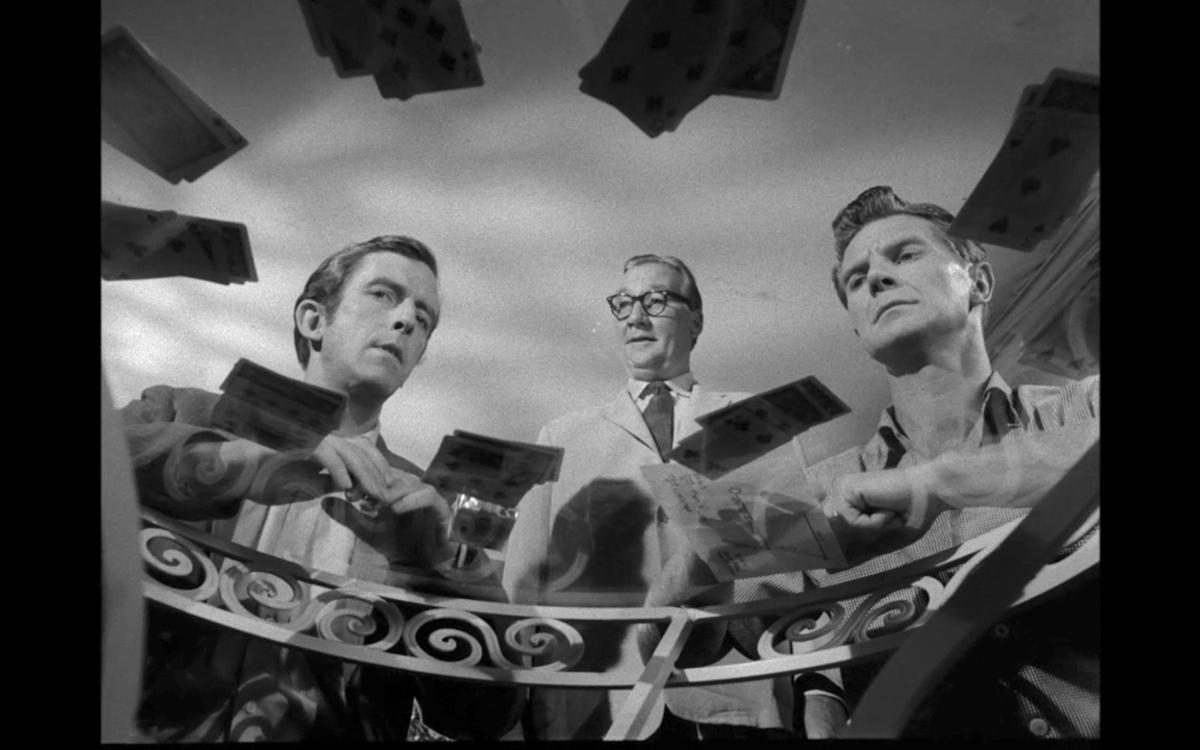
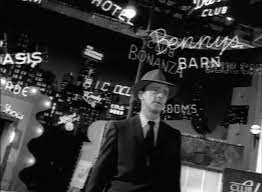
Serling like to show the best and worse of people and this episode has both. Edward Binns plays the honorable Col. Bob Donlin and Dewey Martin  plays the selfish Corey who folds under pressure in the worse way.  A space ship is launched and crashes on what seems an unknown asteroid…survival will be difficult for the 4 survivors of the crash. It’s hot, rocky, and no water in sight. Cory is determined to survive no matter what. It’s a very good episode…I went back between 3 1/2 and 4 but the twist pushes it over the top.

Rod Serling was at a party when he was approached by a woman named Madelon Champion who told Serling a what if story and this was it. Serling gave her $500 dollars on the spot and gave her a co-writing credit.

Rarely did this happen… here is a quote from Rod Serling: I got 15,000 manuscripts in the first five days. Of those 15,000, I and members of my staff read about 140. And 137 of those 140 were wasted paper; hand-scrawled, laboriously written, therapeutic unholy grotesqueries from sick, troubled, deeply disturbed people. Of the three remaining scripts, all of clearly poetic, professional quality, none of them fitted the show.

This is one of only four episodes that Rod Serling did a mid-episode narration

This show was written by Rod Serling and Madelon Champion

Rod Serling’s Opening Narration: 

Her name is the Arrow 1. She represents four and a half years of planning, preparation, and training, and a thousand years of science, mathematics, and the projected dreams and hopes of not only a nation, but a world. She is the first manned aircraft into space and this is the countdown. The last five seconds before man shot an arrow into the air.

Summary

This is the story of a group of spacemen who crash on what they think is an asteroid. Since they are doomed, the Captain tries to keep military protocol. Nevertheless, Cory, one of the men, becomes a survivalist. He becomes selfish and begins to take over. He kills. He steals water. He whines. The story works toward an ironic twist, bringing out the best and the worst in everyone. Patience goes out the window over water. Remember the two men fighting at the conclusion of Von Stroheim’s Greed. There is a bit of this because when our lives are on the line, we often try to hold on to every second we can. Cory can’t see honor or morality or order. It’s just to grasp for that one more drop of precious water.

Rod Serling mid-episode narration 

Now you make tracks, Mr. Corey. You move out and up like some kind of ghostly billyclub was tapping at your ankles and telling you that it was later than you’d think. You scrabble up rock hills and feel hot sand underneath your feet and every now and then, take a look over your shoulder at a giant sun suspended in a dead and motionless sky…like an unblinking eye that probes at the back of your head in a prolonged accusation.

Mr. Corey, last remaining member of a doomed crew, keep moving. Make tracks, Mr. Corey. Push up and push out because if you stop…if you stop, maybe sanity will get you by the throat. Maybe realization will pry open your mind and the horror you left down in the sand will seep in. Yeah, Mr. Corey, yeah, you better keep moving. That’s the order of the moment: keep moving.

Rod Serling’s Closing Narration:

Practical joke perpetrated by Mother Nature and a combination of improbable events. Practical joke wearing the trappings of nightmare, of terror, and desperation. Small, human drama played out in a desert 97 miles from Reno, Nevada, U.S.A., continent of North America, the Earth and, of course, the Twilight Zone.

CAST

Dewey Martin … Corey
Edward Binns … Col. Bob Donlin
Ted Otis … Pierson
Harry Bartell … Langford
Leslie Barrett … Brandt
Boyd Cabeen … Technician (uncredited)
Rod Serling … Narrator (voice) (uncredited)

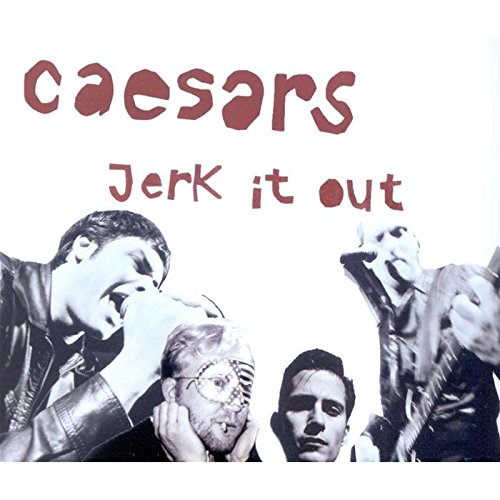
Caesars – Jerk It Out

It sounds like it could have been recorded in 1966 by a garage band in Ohio. This song is a bit unknown but like most songs today you may have heard it on commercials. This song just hits you right away with it’s distorted organ.

What a cool mid-sixties garage sound The Caesars had on this song…I like good riffs…and this one has a great organ hook. I first heard it in the mid-2000s and I’ve loved it ever since. It peaked at #70 in the Billboard 100 in 2005 and #8 in the UK in 2003. I first noticed it on an Ipod commercial and have recommended it to friends.

This was the first hit for The Caesars, who are known as The Caesar’s Palace in their native country of Sweden, and Twelve Caesars throughout the rest of Scandinavia…However due to copyrights from Caesars Palace Casino, they are known as The Caesars throughout the rest of the world.

The band went on hiatus in 2012 but since has reunited. I posted this song when I first started but only had one maybe two readers…I heard it again yesterday and had to repost it.

From Songfacts.

No hidden meaning in this song – it’s just about dancing and getting loose. It received a lot of attention in the United States after it was featured in an iPod ad. The popular iPod ads also helped boost the popularity for songs like “Are You Gonna Be My Girl” by Aussie rock band JET, and “Flathead” by the Scottish band The Fratellis.

According to the band, the title “Jerk It Out” means “to just let out some steam, freak out, let yourself go, get crazy, etc.” The title has a double meaning, as it can easily be taken as being about masturbation. Keeping with the sexual double meanings, the remix of this song was called “Jerk It Harder.”

Jerk It Out

Wind me up
Put me down
Start me off and watch me go
I’ll be runnin’ circles around you sooner than you know
A little off center
And I’m out of tune
Just kickin’ this can along the avenue
But I’m alright

‘Cause it’s easy once you know how it’s done
You can’t stop now
It’s already begun
You feel it runnin’ through your bones
And you jerk it out
And you jerk it out

Shut up
Hush your mouth
Can’t you hear you talk too loud
No can’t hear nothin’ ’cause I got my head up in the clouds
I bite off anything that I can chew
I’m chasing cars up and down the avenue
But that’s okay

‘Cause it’s easy once you know how it’s done
You can’t stop now
It’s already begun
You feel it runnin’ through your bones
And you jerk it out

‘Cause it’s easy once you know how it’s done
You can’t stop now
It’s already begun
You feel it runnin’ through your bones
And you jerk it out
And you jerk it out

And you jerk it out
And you jerk it out
Oh baby don’t you know 
You really gotta jerk it out
When you jerk it out
Oh baby don’t you know 
You really gotta jerk it out
When you jerk it out
Oh baby don’t you know you
You really gotta jerk it out

Twilight Zone – Third From the Sun

★★★★★  January 8, 1960 Season 1 Episode 14

If you want to see where we are…HERE is a list of the episodes.

The first thing about this  episode that catches my eye is the camera work. The angles they used were really interesting and keeps this episode fresh.

I run across people who have never seen the Twilight Zone…there are a few episodes I point them to…this is one of them. This has everything a great episode has… the great casting, story, and the surprise at the end.

This one has one of my very favorite twists at the end. At the time of this episode it had to hit home for many people…The Cold War and fear of nuclear annihilation were ever-present. Fritz Weaver did an amazing job of relating the fear and paranoia of an oncoming disaster.

Edward Andrews played Carling a security officer who is unlikable at first sight. He toys with the two families determined to block their secret plans for an escape. The more I see this episode the more I really dislike this guy…he played the part very well.

Some trivia: The background noises heard aboard the ship in the final scene were later reused in Star Trek. During the closing scene, the main characters are depicted aboard a spaceship, a reuse of the ship created for Forbidden Planet

This show was written by Rod Serling and Richard Matheson

Rod Serling’s Opening Narration: 

Quitting time at the plant. Time for supper now. Time for families. Time for a cool drink on a porch. Time for the quiet rustle of leaf-laden trees that screen out the moon, and underneath it all, behind the eyes of the men, hanging invisible over the summer night, is a horror without words. For this is the stillness before storm. This is the eve of the end.

Summary

William Sturka works as a hydrogen specialist in a highly secure plant. Conditions are tense and there are constant rumors of war. The latest is that it’s going to happen in the next 48 hours. Unbeknownst to his wife Eve and daughter Jody, he and his friend Jerry Riden have been planning an escape of sorts for themselves and their families. Jerry is a test pilot and they plan to steal the government’s latest spacecraft heading off to a planet they believe may sustain life. Their biggest challenge is Carling, a security officer who seems to be onto their plan.

Rod Serling’s Closing Narration:

Behind a tiny ship heading into space is a doomed planet on the verge of suicide. Ahead lies a place called Earth, the third planet from the Sun. And for William Sturka and the men and women with him, it’s the eve of the beginning—in the Twilight Zone.

CAST

Fritz Weaver … William Sturka
Edward Andrews … Carling
Joe Maross … Jerry Riden
Denise Alexander … Jody Sturka
Lori March … Eve Sturka
Jeanne Evans … Ann Riden

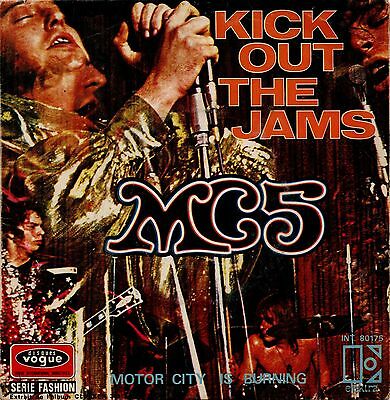
MC5 – Kick Out the Jams

I read about this song long before I actually heard it. It’s loud hard rock right in your face. It’s famous for lead singer Rob Tyner’s uncensored “Kick out the jams motherf***ers” rather than the tamer version that is “Kick out the jams brothers and sisters. ”

They were using the expression for a long time, because they would be critical of other bands that came to Detroit that the MC5 would open for. They’d come into town with a big reputation, and then they’d get up on stage and if they were weak the MC5 would harass them. They would yell at them, ‘Kick out the jams or get off the stage, motherf–ker!’ Finally, one day they used the expression for a title of a song.

Many bands benefit from controversy, but the controversy over this song did not go well for them, and when they pushed it too far, it got them dropped from their label.

Many retailers refused to stock the album, including a local chain called Hudson’s. The band took this as an affront and placed an ad in an underground newspaper called the Fifth Estate that read, “F–k Hudson’s.” Hudson’s responded by threatening to pull all Elektra albums, so in 1969, the label dropped the MC5, recalled the Kick Out The Jams albums still in stores, and replaced them with clean versions.

Atlantic quickly signed the band and teamed them with producer Jon Landau, but their two albums on the label flopped, and by 1973 what was just a few years earlier the most promising band in Detroit was out of action.

“MC5” stands for Motor City Five. The name was derived from The Dave Clark Five, otherwise known as the DC5. The group went through a few managers, including Bruce Burnish, before John Sinclair took them on.

Jeff Buckley who was not known as a loud artist was a huge fan of this song and often performed it at his live shows, injecting a burst of rock into his setlists.

The song peaked at #82 in the Billboard 100 in 1969.

From Songfacts

The signature song of the MC5, “Kick Out The Jams” was also their rallying cry and credo. The phrase was often taken to mean “overcome obstacles,” but it wasn’t written as a song of perseverance.

Along with the rest of the album, this was recorded live at the Grande Ballroom in Detroit on October 30 and 31 (Mischief Night and Halloween), 1968. By this time, the MC5 had gained a fervent live following in the Detroit area, but had not released any material. By the time the album was issued a few months later in early 1969, they had stirred up lots of controversy for their revolutionary stunts and associations: they sometimes brought unloaded rifles on stage, and their manager, John Sinclair, founded the White Panther party, devoted to upending political and cultural norms. The song peaked on the Hot 100 on April 5, 1969; In July, Sinclair was given a 10-year prison sentence for possession of two marijuana cigarettes. He became a cause célèbre, as many rockers voiced support for him. In 1971, John Lennon lionized him in the song “John Sinclair.”

Elektra Records president Jac Holzman is listed as the co-producer on this track along with Bruce Botnick, as they handled the live recording. Botnick was the engineer for The Doors.

This was likely the first rock song on a major label to use the word f–k in the lyrics (it was also printed in the liner notes, written by John Sinclair). It proved very provocative, but also drew attention away from other storylines, like their furious live shows and role in defining the Detroit rock sound.

The entire band was credited as writers on this song, per custom on their first album. Lead singer Rob Tyner, who died of a heart attack in 1991 at age 46, did most of the work on this one. Wayne Kramer told Songfacts:

“We were going through a very creative period. The band had just moved in together for the very first time. There used to be a building in downtown Detroit that was a dentist’s office on the second floor, and we all moved into different rooms in the dentist’s office as our bedrooms. And then downstairs was a storefront. I covered the walls with egg crates and made it a rehearsal studio, so for the first time we could rehearse whenever we wanted to – all day, all night if we wanted to – and we all lived there.

So, it became possible to really develop some songs and some music. And Tyner and I developed a little habit of sitting down at the kitchen table with a couple of joints of reefer, a little amp, my electric guitar. He’d have a notepad, I would just play guitar riffs, and he would listen and say, ‘Wait, wait… play that one again. No, change that a little bit. OK, play that again. Play that four times.’ And then we would start to cobble the songs together. That was where ‘Kick Out The Jams’ was born.”

Rage Against The Machine covered this on their 2000 album Renegades. On August 27, 2008, Rage performed the song with MC5 guitarist Wayne Kramer at the Denver Coliseum during the Democratic National Convention, which was being held nearby. 

This was the first song played on XFM’s launch as a Londonwide commercial station on September 1, 1997. 23 years later, it was the also the final track broadcast by XFM before its re-branding as Radio X on September 21, 2015.

The censored version

The uncensored version

Kick Out The Jams

Kick out the jams motherfuckers !
Yeah! I, I, I, I, I’m gonna
I’m gonna kick ’em out ! Yeah !

Well I feel pretty good
And I guess that I could get crazy now baby
Cause we all got in tune
And when the dressing room got hazy now baby

I know how you want it child
Hot, quick and tight
The girls can’t stand it
When you’re doin’ it right
Let me up on the stand
And let me kick out the jam
Yes, kick out the jams
I want to kick ’em out!

Yes I’m starting to sweat
You know my shirt’s all wet
What a feeling
In the sound that abounds
And resounds and rebounds off the ceiling

You gotta have it baby
You can’t do without
When you get that feeling
You gotta sock ’em out
Put that mike in my hand
And let me kick out the jam
Yes ! Kick out the jams
I want to kick ’em out

So you got to give it up
You know you can’t get enough Miss Mackenzie
Cause it gets in your brain
It drives you insane
Leaping frenzy

The wailin’ guitars girl
The crash of the drums
Make you want to keep-a-rockin’
Till the morning comes

Let me be who I am
And let me kick out the jams
Yes, kick out the jams
I done kicked em out!!!

Chris Bell – Better Save Yourself —- Power Pop Friday

Chris Bell was the founding member and guitarist/singer/songwriter for Big Star. Chris left after the first album never sold.. He played afterwards a little but then went into a huge depression.

This song has a hard trippy edge to it. I love his voice in this one…he sounds like he is on a mission and he was at the time.

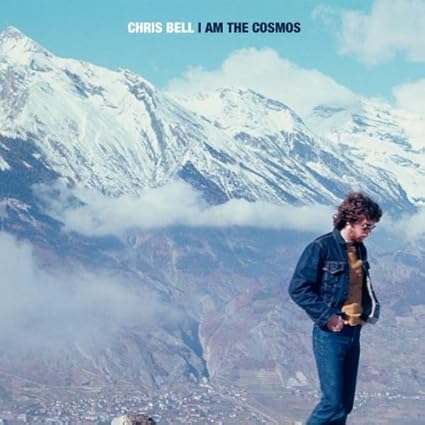
He was doing drugs, drinking, and basically shutting himself off to people. He was this way for months and his brother David took him over to Italy to try to help him. His brother snapped this picture of Chris that was used on his debut album that was released after his death.

I Am The Cosmos (180 Gram Vinyl)

Little by little Chris started to get better and more religious…that helped him cut out the hard drugs. He would battle depression for the rest of his short life but he never got as bad as when he quit Big Star. You can hear the hurt in his voice in this song.

This song is about him finding God.. The lyrics are brutally honest. He did attempt suicide twice and states that in the song. Although this was recorded in the mid-seventies…it wasn’t released until the 90s long after Chris had died in an auto accident.

Better Save Yourself

I walk the streets
I’m all alone
I just can’t think
What I’ve been doing wrong

I know you’re mine
He treats you nice
It’s suicide
I know, I tried it twice

You should’ve given your love to Jesus
It couldn’t do you no harm
Should’ve given your love to Jesus
It wouldn’t do you no harm
You’ve been sitting on your ass
Trying to find some grace
But you better save yourself
If you wanna see his face

I guess there are things
You’d like to know
It’s getting late
And I know you want to go

Slade – Take Me Bak ‘Ome

I love watching old Slade videos on youtube. They were a lot of fun to listen to and watch. They were a hard rocking glam band that somehow never made it in America. Some of their songs did a decade later covered by Quiet Riot. Slade did have a couple of hits in the 80s in America but their golden period was in the early to mid seventies. 

They weren’t the only UK band not to hit big in America. They are joined by T. Rex, The Small Faces, Oasis, and The Jam just to name a few. 

This song peaked at #1 in the UK and #97 in the Billboard 100 in 1972. The song was written by band members Noddy Holder and Jim Lea. 

Jim Lea said he had been working on the song for a few years… he stole a phrase or two from The Beatles Everybody’s Got Something to Hide Except Me and My Monkey and nobody ever noticed.

Their next single Mama Weer All Crazee Now  peaked at #1 in the UK.

Take Me Bak ‘Ome

Came up to you one night noticed the look in your eye,
I saw you was on your own, and it was alright, yeh it was alright.
They said I could call you Sidney, oh I couldn’t make out why,
standing here on your own an’ it was alright, yeh it was alright.

[Chorus]
So won’t you take me back home, a take me back home,
and if we can find plenty to do and that will be alright
yeh it will be alright

O you and your bottle of brandy, both of you smell the same,
you’re still on your feet, still standing so it was alright,
yeh it was alright.
The superman comes to meet you, looks twice the size of me,
I didn’t stay round to say goodnight so it was alright,
yeh it was alright.

[Chorus]

So won’t you take me back home my baby, ah won’t you take me back home yeh
I said take me, take me take, take me back home,
take me take me take, take me back home oh won’t you..

Twilight Zone – The Four of Us Are Dying

★★★ 1/2  January 1, 1960 Season 1 Episode 13

If you want to see where we are…HERE is a list of the episodes.

The first episode of a brand new decade that would see the world change immeasurably.

This episode has a great what if story. What if… you could change your face just by looking at a picture or from memory? Many times in the Twilight Zone these talents are given to people who want more out of life than they have earned. Instead of using this for the good…we have a small time crook trying to take advantage people.

He had his own face and he ended up changing into 3 different faces. He would scanned the paper and changed into people who he could take advantage of their situation. They were going to cast the same actor and use makeup but they decided to cast 4 different actors with same eye color and build.

This show was written by  Rod Serling  and  George Clayton Johnson

Rod Serling’s Opening Narration: 

His name is Arch Hammer, he’s 36 years old. He’s been a salesman, a dispatcher, a truck driver, a con man, a bookie, and a part-time bartender. This is a cheap man, a nickel-and-dime man, with a cheapness that goes past the suit and the shirt; a cheapness of mind, a cheapness of taste, a tawdry little shine on the seat of his conscience, and a dark-room squint at a world whose sunlight has never gotten through to him. But Mr. Hammer has a talent, discovered at a very early age. This much he does have. He can make his face change. He can twitch a muscle, move a jaw, concentrate on the cast of his eyes, and he can change his face. He can change it into anything he wants. Mr. Archie Hammer, jack-of-all-trades, has just checked in at three-eighty a night, with two bags, some newspaper clippings, a most odd talent, and a master plan to destroy some lives.

Summary

Arch Hammer arrives in the city and checks into a seedy hotel. He looks like any other man but looks can be deceiving. Hammer has the ability to change his appearance at whim, a trick he definitely uses to his own advantage. He takes on the appearance of the recently deceased musician Johnny Foster. who died in a car accident. He goes to meet Maggie, a lounge singer who is mourning Foster’s death, and convinces her to run off with him. He then takes on the appearance of Virge Sterig, a gangster whose bullet-riddled body was recently found in the river. He then visits mob boss Penell who double-crossed him to get his share of the money their most recent job. An unplanned change of face doesn’t go over well, however.

Rod Serling’s Closing Narration:

He was Arch Hammer, a cheap little man who just checked in. He was Johnny Foster, who played a trumpet and was loved beyond words. He was Virgil Sterig, with money in his pocket. He was Andy Marshak, who got some of his agony back on a sidewalk in front of a cheap hotel. Hammer, Foster, Sterig, Marshak—and all four of them were dying.

CAST

Harry Townes … Arch Hammer
Phillip Pine … Virge Sterig
Ross Martin … Johnny Foster
Don Gordon … Andy Marshak
Harry Jackson … Trumpeter
Bernard Fein … Penell
Peter Brocco … Mr. Marshak
Milton Frome … Detective
Beverly Garland … Maggie

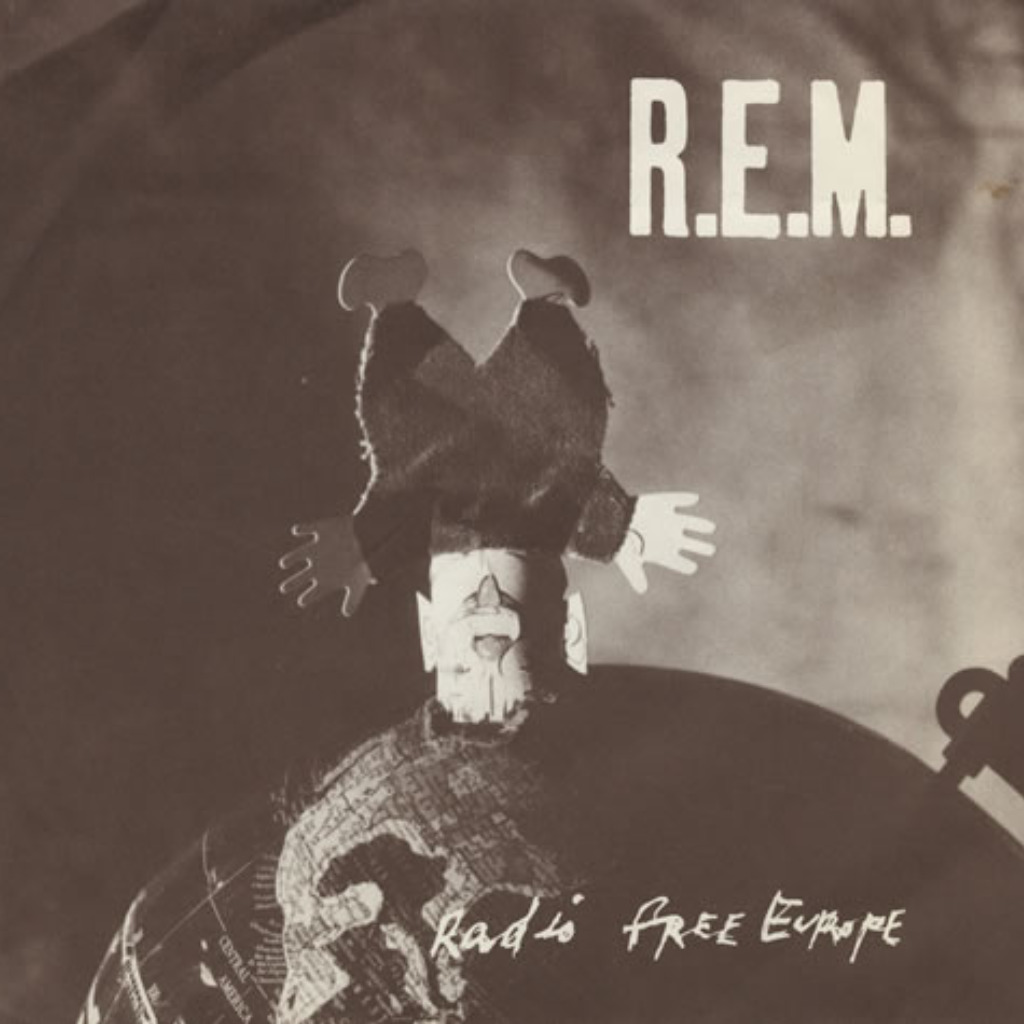
REM – Radio Free Europe

I didn’t first hear this song when it was originally released in 1981. I had a friend who played it to me a few years later after it was re-recorded. It was an important song in REM’s career…it broke them on the charts…not super high but on the charts just the same.

This song was R.E.M.’s first single, released in 1981 on the short-lived independent record label Hib-Tone. The single received critical acclaim, and its success earned the band a record deal with I.R.S. Records. R.E.M. re-recorded the song for their 1983 debut album Murmur.

The re-recording was released by a larger I.R.S. and peaked at #78 in the Billboard 100 and #25 on the Mainstream Rock Chart.

Radio Free Europe is a radio network run by the United States government that broadcasts to Europe and the Middle East. The mission of the broadcasts is to promote democracy and freedom, but R.E.M. makes the point that this can easily cross the line into propaganda.

Drummer Bill Berry: “This song was pivotal to the continuation of our career,”  “Most fans may not realize that for two years before Murmur was released, we barely made financial ends meet by playing tiny clubs around the southeast. Our gasoline budget prevented us from venturing further. Put simply, our existence was impoverished. College radio and major city club scenes embraced this song and expanded our audience to the extent that we moved from small clubs to medium-sized venues and the additional revenue made it possible to logically pursue this wild musical endeavor. I dare not contemplate what our fate would have been had this song not appeared when it did.”

From Songfacts

There was a good reason for Michael Stipe’s infamously indecipherable lyrics on this song: he hadn’t finished them by the time they recorded it. In a 1988 NME interview, Stipe described the lyrical content as “complete babbling.”

R.E.M. lead singer Michael Stipe said in a 1983 interview with Alternative America: “We were all so scared of what the other one would say, that everyone nodded their head in agreement to anything to come up. The earlier songs were incredibly fundamental, real simple, songs that you could write in five minutes. Most of them didn’t have any words. I just got up and howled and hollered a lot.

That’s true. I’ve got to write words for ‘Radio Free Europe,’ because we’re going to re-record that for the album. It still doesn’t have a second or third verse. I think there are actually lyrics to every song on the EP.”

Stipe noted being apparently unaware of his own genius: “The guys always said I do something harmonically here that made them all go ‘whoa,’ because it was so advanced … or something, in the ‘straight off the boat’ part. I wonder if I tricked them by accident? I still have no idea what it is they’re talking about.”

The video for this song, directed by Arthur Pierson, was shot in the famed Paradise Gardens, a folk art sculpture garden crafted by artist Howard Finster in Pennville, Georgia. Finster, a Baptist minister, also painted the album art for R.E.M.’s second album, Reckoning.

This version is the original Hib-Tone version.

Radio Free Europe

Beside yourself if radio’s gonna stay
Reason: it could polish up the gray
Put that, put that, put that up your wall
That this isn’t country at all

Raving station, beside yourself

Keep me out of country and the word
Deal the porch is leading us absurd
Push that, push that, push that to the hull
That this isn’t nothing at all

Straight off the boat
Where to go?

Calling on in transit
Radio Free Europe
Radio

Beside defying’ media too fast
Instead of pushin’ palaces to fall
Put that, put that, put that before all
That this isn’t fortunate at all

Raving station, beside yourself

Calling on in transit
Radio Free Europe
Radio

Decide yourself
Calling on a boat
Media’s too fast

Keep me out of country and the word
Disappointers into us absurd

Straight off the boat
Where to go?

Calling on in transit
Radio Free Europe
Radio Free Europe

Calling on in transit
Radio Free Europe
Radio Free Europe

Replacements – Message to the Boys

Thanks to Aphoristical for pointing me to this song and album. At the end of 2005, years after the band had broken up…Warner Music Group ended up with rights to the Replacements’ Twin/Tone albums, and their entire catalog was finally placed under one roof. They offered Westerberg and Stinson a deal for the band to reunite and record. They wanted to package a “Best Of” album with a few new songs.

They had been feuding with each other off and on since the break up. Westerberg and Stinson ended their feud and agreed to do it. They did not invite Slim Dunlap to participate for some reason. They did however invite drummer Chris Mars to join them. They patched things up with Mars but he was an artist and doing it for a living and didn’t want to play. He did come to the sessions anyway. Drummer  Josh Freese had flown out to play drums. To show you how they operated…here is Westerberg’s thought on that.

“And Chris, he was still a Replacement…The first thing out of his mouth to Josh was something like, ‘Man, you almost played that really good.’ That’s what we missed. You don’t have to play the drums. You can just bring the attitude.”

The band recorded two songs Message to the Boys and Pool and Dive. They appeared on the album Don’t You Know Who I Think I Was? They didn’t end up touring at that time but offers came in year after year and the money offers got bigger.

Westerberg: “The fact that we came up short is the thing that’s kept us interesting. That is part of the attraction. We’ve retained this mystique.”

Paul and Tommy would later reunite again in 2012. Former guitar player Slim Dunlap had a major stroke and they contributed to a benefit album of Slim’s songs along with many artists. In 2013 they started to play live again and eventually toured until 2015 when it ended abruptly.

Paul Westerberg about the reunion in 2006 and missing former member Bob Stinson: “The answer to the million-dollar question is yes, when Bob died, something died in me and Tommy, and we’ve never been the same since,” said Westerberg. “And it’s always been awkward, and it’s always been unsaid and unsayable and strange and weird between us.”

This concludes taking a song off of each album from the Replacements… thanks for following here every Monday. I’ll still post some Replacements here and there.

Message To The Boys

Well I met her in a bar
Like I always say
She was digging Tommy’s cute
Way down in FLA

Wearing that vest with nothing underneath
Looking her best in the Florida heat
Sent a message to the boys
She was wearing that vest with nothing underneath
She be looking her best in the Florida heat, yeah
Sent a message to the boys

Well, she couldn’t cut loose
With her mommy around
So she packed her pretty bags
Went to the run-away town

Used to call me late at night
Said she missed her little maid
I never asked twice how the bills got paid
She sent a message to the boys
Used to call me every night
Said she missed her little maid
Never ever asked twice how the bills got paid
Sent the message to the boys

She sent a message to the boys
She’s gonna be there, if you need her
I can’t forget her and her voice
And her voice

Was a lady to the end
Now to this I can attest
She knew how to move
Yeah, when she rock’n’rolled this

She sent a message to the boys
She’s gonna be there, if you need her
I can’t forget her and her voice

She sent a message to the boys
God, I miss her and her voice
She sent a message to the boys
Oh god, I miss her and her voice

Twilight Zone – What You Need

★★★1/2 December 25, 1959 Season 1 Episode 12

If you want to see where we are…HERE is a list of the episodes.

This is a good solid episode but not a classic. The thing about the Twilight Zone is… even the average episodes (average for the Twilight Zone) can become personal favorites.

An old man (Pedott) with a gift that can give you what you need. It could be cleaning fluid, a bus ticket, or a pair of scissors. You would not believe so, but you would end up needing them. He doesn’t use his gift on anyone but the ones he does bestow things to…they are usually grateful. What you need could be something small or something important to save your life.

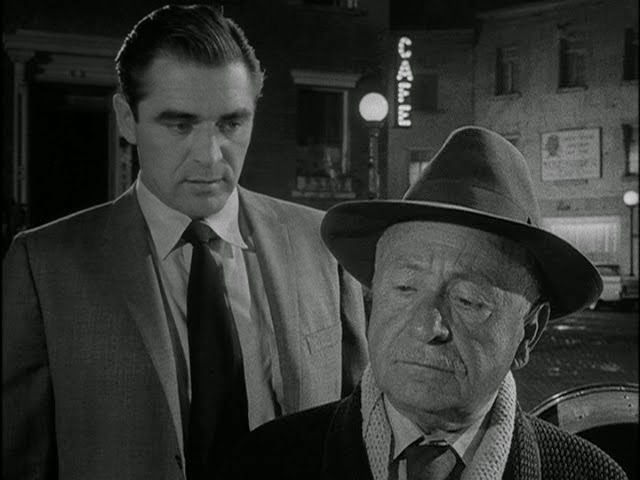
Enter Mr. Fred Renard played by Steve Cochran. He is a nobody…a nothing that wants to be a somebody and not earn it. He sees the old man with a gift and wants everything. Cochran plays this bad guy well. He is a bully and blames the world on his problems.

This show was written by Rod Serling and Henry Kuttner

Rod Serling’s Opening Narration: 

You’re looking at Mr. Fred Renard, who carries on his shoulder a chip the size of the national debt. This is a sour man, a friendless man, a lonely man, a grasping, compulsive, nervous man. This is a man who has lived thirty-six undistinguished, meaningless, pointless, failure-laden years and who at this moment looks for an escape—any escape, any way, anything, anybody—to get out of the rut. And this little old man is just what Mr. Renard is waiting for.

Summary

An old street vendor goes to a bar to sell his wares. However, he foresees what each costumer will need in a short period, selling precisely what they need. After selling in the bar, the crook Fred Renard mocks him and the peddler gives a pair of scissors for him. When Fred arrives at the hotel where he is lodged, his scarf is trapped on the elevator door and he only survives due to the pair of scissors. Now Fred believes that the peddler has a gift and he decides to force the old man to tell him the name of the horse that will win a race. The greedy Fred earns a large amount and seeks out the peddler threatening him again that the old man gives him a pair of shoes to Fred. But who needs the pair of shoes?

Rod Serling’s Closing Narration:

Street scene, night. Traffic accident. Victim named Fred Renard, gentleman with a sour face to whom contentment came with difficulty. Fred Renard, who took all that was needed—in The Twilight Zone.

CAST

Steve Cochran … Fred Renard
Ernest Truex … Pedott
Read Morgan … Lefty
Arlene Martel … Girl in Bar (as Arline Sax)
William Edmonson… Bartender
Doris Karnes … Woman
Fred Kruger … Man on Street
Norman Sturgis … Hotel Clerk

Monkees – Sweet Young Thing

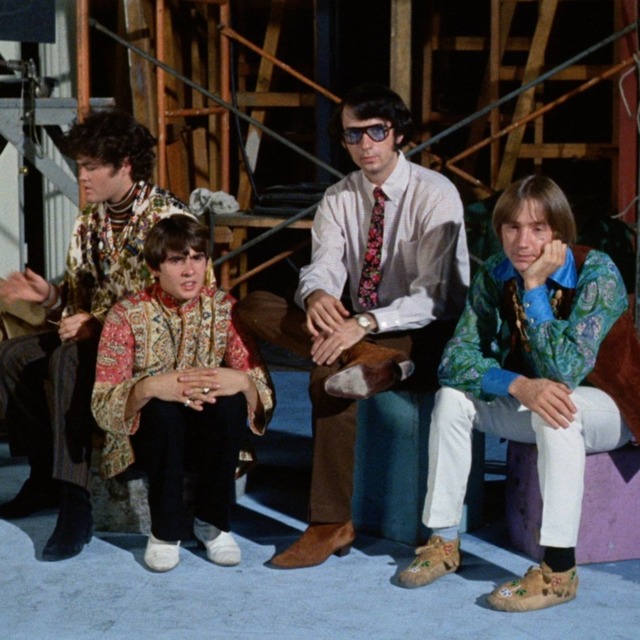
I was 7 and I had just borrowed the Monkees debut album from a cousin. I thought the band was still together and playing in the mid seventies. I had no clue they broke up years before. This is one of the songs I would wear out on the album.

The song stands out from the other songs on the album. This isn’t pop…it’s more like a country driven garage rock band song. I truly think Nesmith would have made it in the music business with or without the Monkees. He would soon write the Stone Poneys hit “Different Drum” that peaked at #13 in the Billboard 100 in 1967. This song was released on the debut album in 1966.

Mike Nesmith made it clear from the beginning he wanted to write songs. Nesmith was a talented songwriter. The shows creator Don Kirshner set him up to write with Carole King and Gerry Goffin. Michael wasn’t ungrateful and he commented that he liked both of them but he didn’t like being forced to write with someone else. Kirshner resented the rejection, feeling that a nobody like Nesmith should have flipped over the opportunity to work with two songwriting legends. In the end, though we did get this song.

Kirshner didn’t like having the band do anything but sing and act in the show. That didn’t last long with Nesmith leading them…by the third album the Monkees were playing their own instruments and writing some songs.

I just listened to it again for the first time in years and every nuance and word came back to me instantly. This was my first “favorite” Monkee song.

This was an album track not released as a single.

Sweet Young Thing

I know that something very strange
Has happened to my brain
I’m either feeling very good
Or else I am insane
The seeds of doubt you’ve planted
Have started to grow wild
And I feel that I must yield before
The wisdom of a child

And it’s love you bring
No that I can’t deny
With your wings
I can learn to fly
Sweet young thing

People try to talk to me
Their words are ugly sounds
But I resist all their attempts
To try and bring me down..
Turned on to the sunset
Like I’ve never been before
How I listen for your footsteps
As you knock upon the door

And it’s love you bring
No that I can’t deny
With your wings
I can learn to fly
Sweet young thing

And it’s love you bring
With dreams of bluer skies
And all these things
When I see it in your eyes
Sweet young thing

Sweet young thing

Twilight Zone – And When the Sky Was Opened

★★★★★ December 11, 1959 Season 1 Episode 11

If you want to see where we are…HERE is a list of the episodes.

This is one of my favorites. Rod Taylor from the Time Machine drives this episode. I won’t give out 5 star ratings on just anything but this one does it for me. Each character goes through the same situation and there is no way they can explain it to anyone else. There is a little…just a little of “It’s A Wonderful Life” in this one. When George Bailey goes to his mother’s door and she said she didn’t know him…because he didn’t exist. What would happen if a friend you have known for years was wiped out of existence in everyone’s memory but yours?

Halfway through, you get an idea of what is going to happen but that doesn’t matter. You can feel the desperation in Lieutenant Colonel Clegg Forbes (Rod Taylor) as he tries to put together what happened to his friend and why no one else knows…and then it starts happening to him. 

  Also (Spoiler!) the character Major William Gart quickly vanished at the end. Rod Serling explained in a lecture that without his fellow astronauts to anchor him to this world, he had no way of holding on. It furthered the idea that Rod Taylor’s Forbes’s denial kept him in the world longer, and having heard the story of Harrington’s disappearance and seeing Forbes taken out, he had no way of denying the possibility.

Look for Miss. Landers (Sue Randall) from Leave it to Beaver as the Nurse.

This show was written by Rod Serling and Richard Matheson

Rod Serling’s Opening Narration: 

Her name: X-20. Her type: an experimental interceptor. Recent history: a crash landing in the Mojave Desert after a thirty-one hour flight nine hundred miles into space. Incidental data: the ship, with the men who flew her, disappeared from the radar screen for twenty-four hours…But the shrouds that cover mysteries are not always made out of a tarpaulin, as this man will soon find out on the other side of a hospital door.

Summary

The X-20 experimental spacecraft recently returned after venturing into a 900 mile orbit around the Earth. At one point, the craft disappeared for about 20 seconds and then suddenly reappeared before crashing in the Mojave desert. One of the crew, Maj. William Gart broke his leg on reentry but is recovering. Another of the astronauts, Lt. Col. Clegg Forbes, visits him but is obviously quite shaken. His recollection is there were 3 astronauts in the craft but the newspaper accounts mention only two. The third was Col. Ed Harrington but Gart says he never heard of him. As Forbes remembers it, he and Harrington went out the night before and Harrington begins to have a sense of not belonging. He then vanishes. As he searches for his friend, he can find no one who ever met the man.

Rod Serling’s Closing Narration:

Once upon a time, there was a man named Harrington, a man named Forbes, a man named Gart. They used to exist, but don’t any longer. Someone – or something – took them somewhere. At least they are no longer a part of the memory of man. And as to the X-20 supposed to be housed here in this hangar, this, too, does not exist. And if any of you have any questions concerning an aircraft and three men who flew her, speak softly of them – and only in – The Twilight Zone.

CAST

Rod Serling … Narrator (voice) (uncredited)
Rod Taylor … Lieutenant Colonel Clegg Forbes
Jim Hutton … Major William Gart (as James Hutton)
Charles Aidman … Colonel Ed Harrington
Maxine Cooper … Amy
Paul Bryar … Bartender
Sue Randall … Nurse
Joe Bassett … Medical Officer
Lisabeth Field … Nurse (uncredited)
Logan Field … Investigator (uncredited)
John Launer … Mr. Harrington (uncredited)
Oliver McGowan … Officer (uncredited)
Gloria Pall … Girl in Bar (uncredited)
Bernard Sell … Bar Patron (uncredited)

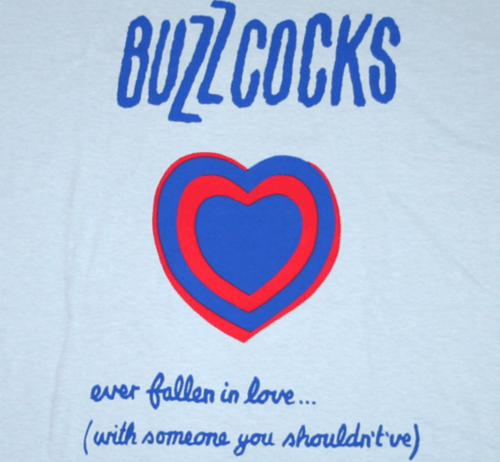
Buzzcocks – Ever Fallen In Love (With Someone You Shouldn’t’ve?)

This song is really catchy and has a punk pop sound. Some times a title is so good that you listen to the song regardless of who it is. This title fits that description and unlike some…it lives up to it.

The song title came from a line Marlon Brando spoke in the 1955 movie, ‘Guys And Dolls’ which Pete Shelley watched in a hotel room while on tour.

The Buzzcocks formed in Bolton, England in 1976 by singer-songwriter-guitarist Pete Shelley and singer-songwriter Howard Devoto.  They chose the name Buzzcocks after reading the headline, “It’s the Buzz, Cock!”, in a review of the TV series Rock Follies in Time Out magazine. The “buzz” is the excitement of playing on stage; “cock” is northern English slang meaning friend.

They released 3 albums and broke up in 1981 after a dispute with their record company. They reunited in 1989 and released 6 more albums. Pete Shelley continued to play with the band until his death of a heart attack in 2018. The band still continues to tour.

The song peaked at #12 in the UK in 1978.

Songwriter Pete Shelley: “The song dates back to November 1977. We were on a roll. It was only six months since we’d finished the first album. Up in Manchester this was what we used to dream of… a whirlwind of tours, interviews, TV. We were living the life. One night in Edinburgh we were in a guest house TV lounge watching the musical Guys and Dolls. This line leaped out – ‘Have you ever fallen in love with someone you shouldn’t have?’ The next day the van stopped outside a post office and I wrote the lyrics there. I did have a certain person in mind, but I’ll save that for my kiss’n’tell. The music just seemed to follow, fully formed.”

“The opening line was originally ‘You piss on my natural emotions,’ but because ‘Orgasm Addict’ hadn’t been getting radio play because of it’s title, I needed something a bit subtler. So I came up with ‘spurn.’ It had the same sort of disregard, but wasn’t so likely to offend!”

The Fine Young Cannibals had a no. 9 UK hit with their cover version, recorded for the soundtrack of the 1986 film Something Wild.

From Songfacts

.In 1987 when Fine Young Cannibals covered this, their more laid back, soulful version peaked at #9 in the UK. They recorded the song after being asked by the director Jonathan Demme to provide him with a song for his upcoming film Something Wild. It is featured on the film’s soundtrack released as “Ever Fallen in Love.”

In the same Uncut interview the song’s producer Martin Rushent recalled: “Pete played me ‘Ever Fallen In Love…’ for the first time and my jaw hit the floor. I felt it was the strongest song that they had written-clever, witty lyrics, great hooklines. I suggested backing vocals-to highlight the chorus and make it even more powerful. No one could hit the high part-so I did it. I’d sung in bands in my youth and I also worked as a backing singer.”

The story of how The Buzzcocks came up with their name: In February 1976 Shelley and guitarist Howard Devoto read an article about a band called the Sex Pistols who had just played in London. “It was a realization of someone else doing what we already wanted to do,” Shelley told Reuters. The pair borrowed a car and drove from Manchester down to London to seek out the Sex Pistols. “We bought a copy of Time Out, which had no mention of them at all,” recalled Shelley. “But in the magazine was a preview for a TV series called Rock Follies. The headline was, ‘It’s the buzz, cock.” And that’s how we got the name.”

Thea Gilmore, Pete Yorn, Will Young, Billy Talent and Anti-Flag are among the acts to cover this song. The New York City band SUSU released their version in 2020 in the midst of the coronavirus pandemic. They explained: “A good cover is hard to find. Turns out this one was a telling tale, a perfect sonic and energetic fit. We were a brand new band, consummated on Valentine’s Day, in the pink of our five-week European honeymoon. We found ourselves leaving behind the tour we had just fallen in love with due to circumstances beyond our control – a pandemic. Proper heartbreak. But we all know the first breakup never sticks.”

Ever Fallen In Love (With Someone You Shouldn’t’ve)

You spurn my natural emotions
You make me feel I’m dirt and I’m hurt
And if I start a commotion
I run the risk of losing you and that’s worse

Ever fallen in love with someone
Ever fallen in love, in love with someone
You shouldn’t have fallen in love with?

I can’t see much of a future
Unless we find out what’s to blame, what a shame
And we won’t be together much longer
Unless we realize that we are the same

Ever fallen in love with someone
Ever fallen in love, in love with someone
You shouldn’t have fallen in love with

You disturb my natural emotions
You make me feel I’m dirt and I’m hurt
And if I start a commotion
I’ll only end up losing you and that’s worse

Ever fallen in love with someone
Ever fallen in love, in love with someone
You shouldn’t have fallen in love with?

Ever fallen in love with someone
Ever fallen in love, in love with someone
You shouldn’t have fallen in love with?

Ever fallen in love with someone
Ever fallen in love, in love with someone
You shouldn’t have fallen in love with?

Fallen in love with
Ever fallen in love with someone
You shouldn’t have fallen in love with?

Modern Times

Hanspostcard is hosting a movie draft from 12 different genres…this is my comedy entry.

This was/ the first feature length Chaplin movie I ever watched. It was his last “silent” movie. The year was 1936 and “talkies” had been around for almost a decade and certainly the most popular movie format in the 1930’s. Chaplin stubbornly decided to carry on with another silent movie and I’m glad he did.

Chaplin was a smart man…he knew the little tramp could not talk on screen…the character was over with if he did…finished. That was part of his mystic. Another reason was the beauty of silent film at the time. He had perfected the art and talkies were full of clumsy lines delivered with immobile cameras and primitive microphones. They were improving but when silent movies ended…an art was lost forever.

Other actors at the time didn’t have the power or clout to try this but it worked brilliantly for Chaplin.  It was one of the top-grossing films of 1936. This after being told no one would want to see a silent movie in 1936…Charlie was once again right.

Chaplin did like the fact that he could insert sound effects into the movie with the technology. He wrote, directed, acted,  produced and also wrote the music for this movie. Modern Times has Chaplin’s finest music score. His most recognizable and commercially viable song, “Smile,” emerged from a melody used by him in this movie.

The film is very relevant today. Charlie takes on the machine age as humans are treated like cattle. Chaplin takes a swipe at  capitalism , industrialization and human exploitation.

The little tramp is finding it difficult to survive in the modern mechanized world. Failing as a worker on a factory assembly line, he gets into a series of adventures and misadventures, which leads him meeting a young recently orphaned “gamine” who ran away rather than end up in an orphanage. They try to survive in the world together, both on the run from the law, although his previous stints behind bars… were to him more appealing than life outside in the cold modern world.

The question becomes… can Charlie and the gamine individually or together  find their place in the modern world with all the odds against them?

Some famous scenes are in this movie. Chaplin in the automatic feeding machine, Chaplin and his boss in the gears of the machinery, and Chaplin going insane trying to tighten bolts on every thing.

It is a great film to start watching Chaplin if you haven’t seen any of his previous movies. One of the many remarkable things about Charlie Chaplin is that his films continue to hold up, to attract, and entertain audiences…you will enjoy this one!

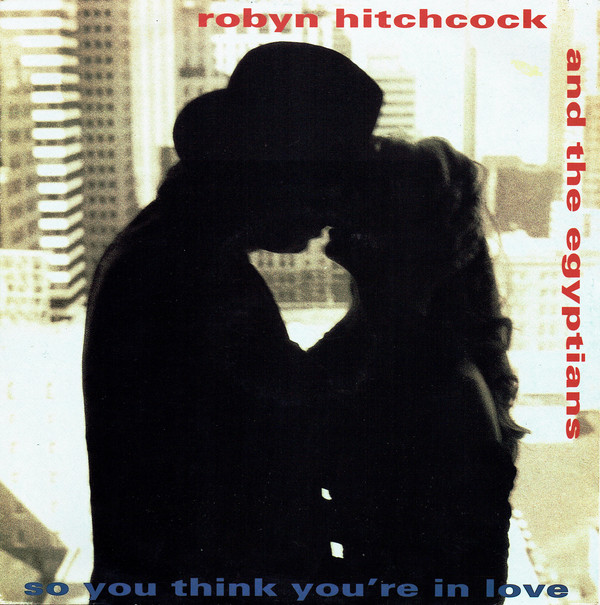
Robyn Hitchcock – So You Think You’re In Love —- Power Pop Friday

Jangly Byrd like guitars attracted me to this and the sixties vibe. Peter Buck helps Robyn out on this song.

Robyn started his career in a 1972 London Art School with a band called The Beetles. In 1976 he started The Soft Boys and they went on to release  A Can of Bees (1979) and Underwater Moonlight (1980). Robyn influence bands such as R.E.M. and The Replacements.

In 1981 released his first solo album Black Snake Diamond Röle. Robyn never had much chart success but continues to influence other artists.

So You Think You’re In Love was on the Perspex Island album that was released in 1991. Robyn describes his songs as ‘paintings you can listen to’. That is a great description.

Robyn released his 21st album in 2017.

So You Think You’re In Love

So you think you’re in love
Yes, you probably are
But you wanna be straight about it
Oh, you wanna be straight about it now

So you think you’re in love
Yes, you probably are
But you wanna be straight about it
Oh, you wanna be straight about it now

Can you imagine what the people say?Can you?
But the silent majority is the crime of the century
You know it

Are you sure that it’s wise?
No, you probably ain’t
You don’t wanna be faint about it
Oh, you shouldn’t be faint about it now

By the look in your eyes
No, you probably ain’t
But you shouldn’t be faint about it
Oh, you gotta be faint about it now

What is love made of?
Nobody knows
What are you afraid of?
Everyone knows
It’s love
It’s love

So you think you’re in love
Yes, you probably are
But you wanna be straight about it
Oh, you gotta be straight about it now

So you think you’re in love
Yes, you probably are
But you wanna be straight about it
Oh, you gotta be straight about it now

So you think you’re in love
Yeah