Power Pop fan, Baseball, Beatles, Alternative music, old movies, and tv show fan. Also anything to do with pop culture in the 60s and 70s... I'm also a songwriter, bass and guitar player. Not the slightest bit interested in politics at all.
On a far distant radio a few days ago I heard It’s Raining Again and then this one. Sometimes I forget how big Supertramp was in the 70s and 80s…especially after this album.
In 1979 the album Breakfast In America was huge. The album had 4 singles in the Billboard 100. The album peaked at #1 in the Billboard Album Charts, #1 in Canada, #1 in New Zealand, and #3 in the UK…and won 2 Grammys.
The title song peaked at #62 in the Billboard 100 and #9 in the UK in 1979.
This album was released in 1979 and it came at the height of new wave and disco. Its domination of the single and album charts, and the airwaves, had to be unexpected by all concerned. Breakfast In America eclipsed anything they had done before and skyrocketed the band into the commercial stratosphere. Supertramp was never a typical chart band or obvious stadium touring giants. After this album, everything changed.
When they came to record the album, all five members had relocated full-time to the West Coast and bought apartments or houses there, and it was decided that the Colorado (Caribou Ranch) studio had been too sterile and so a new headquarters was found for Supertramp and co in Burbank, a home-from-home that was promptly given the name Southcombe. There, throughout 1978, they rehearsed the material and prepared the demos that would eventually be recorded at the Village Recorder studio in Los Angeles.
Roger Hodgson and Davies wrote most of the songs. They sometimes shared credit on songs… but Roger Hodgson wrote this song 8 years earlier. Davies and Rogerson had a disagreement over the first line in the song. Rick Davies didn’t like “Take a look at my girlfriend, she’s the only one I got.” Roger won the battle.
Roger Hodgson:“He never liked the lyric to ‘Breakfast.’ It’s so trite: ‘Take a look at my girlfriend.’ He’s much more into crafting a song. He would have been happier if I’d changed the lyric to either something funnier or more relevant. I tried, but it didn’t work out, so I was stuck with the original.”
Roger Hodgson:“The line ‘playing my jokes upon you,’ I think that kind of sums up the song. It was just mind chatter. Just writing down ideas as they came – fun thoughts all strung together. And I do remember the Beatles had just gone to America, and I was pretty impressed with that. That definitely stimulated my dream of wanting to go to America. And obviously seeing all those gorgeous California girls on the TV and thinking, Wow. That’s the place I want to go.”
Roger Hodgson:“I think I was 17 when I found this wonderful pump organ – a harmonium that you pump with your feet. I found it in this old lady’s house in the countryside near where I lived in England. I bought it for £26, and when I brought it back I proceeded to write all these songs on it: ‘Breakfast In America,’ ‘Two Of Us,’ ‘Soapbox Opera,’ even the beginning of ‘Fool’s Overture’ and ‘Logical Song.’ It’s amazing what this instrument pulled out of me.”
Here is a good live version…you are bloody well right!
Breakfast In America
Take a look at my girlfriend She’s the only one I got Not much of a girlfriend Never seem to get a lot
Take a jumbo across the water Like to see America See the girls in California I’m hoping it’s going to come true But there’s not a lot I can do
Could we have kippers for breakfast Mummy dear, mummy dear They got to have ’em in Texas ‘Cause everyone’s a millionaire
I’m a winner, I’m a sinner Do you want my autograph I’m a loser, what a joker I’m playing my jokes upon you While there’s nothing better to do
Ba-ba-ba-dow, ba-bow-dum-doo-de-dow-de-dow, de Ba-ba-ba-dow, ba-bow-dum-de-doo-de-dow Na na na, nana na na na na
Don’t you look at my girlfriend (girlfriend) She’s the only one I got Not much of a girlfriend (girlfriend) Never seem to get a lot (what’s she got, not a lot)
Take a jumbo cross the water Like to see America See the girls in California I’m hoping it’s going to come true But there’s not a lot I can do
Ba-ba-ba-dow, ba-bow-dum-doo-de-dow-de-dow, de Ba-ba-ba-dow, ba-bow-dum-de-doo-de-dow
When CSI: Crime Scene Investigation (also known as CSI: Las Vegas) turned out to be such a hit when it debuted at the start of the new millennium, its producers said, “Hey! Let’s do a whole lot of them! Same thing, just in different cities!” Or perhaps it was the suits at CBS who said it. Anyway, no doubt they got together and decided that the second show should be set somewhere with a lot of violent crime and a lot of good-looking people (primarily women) running around scantily clad. So, they chose Miami, associated (rightly or wrongly) with illegal trade in both drugs and firearms and with lots of good-looking people running around in swimwear. As an added bonus, Miami is a city with a large Caribbean population, thus bringing that demographic into play.
The result was a show that played heavily on stereotypes and featured much more blood and carnage than its predecessor. Unlike its predecessor, which relied heavily on quirky crimes and equally quirky CSI’s solving them, CSI: Miami relied primarily on stories of gang wars waged by opposing drug kingpins who spent most of their time lounging by their swimming pools, surrounded by pneumatically-gifted and surgically-enhanced women in skimpy swimwear, while their footsoldiers went out and wreaked havoc on each other, and often innocent bystanders. Okay, that’s a bit of an oversimplification, but the longer the show was on the air, the more one-dimensional it became.
The Miami-Dade CSI’s were led by Lt. Horatio Caine, played by NYPD Blue alum David Caruso. David obviously prepared for the part by watching all of the “Dirty Harry” movies and episodes of (the original) Hawaii Five-O, because the character of Caine came off as a cross between Clint Eastwood and Jack Lord, in other words, a laid-back hard ass.
Just as the original CSI had Catherine Willows (Marg Helgenberger) as a counterpart for Gil Grissom (William Petersen), the original plan was to have Caine have a female counterpart as well. After Sela Ward (who eventually joined the cast of CSI:NY) turned that role down, the job was given to Kim Delaney, another NYPD Blue alum. She was gone after ten episodes, officially because there was “no chemistry” between her character and Caine. Rumor had it, however, that Caruso wanted her out.
Assisting Caine was Calleigh Duquesne, a petite, blonde, blue-eyed, and stunningly beautiful young woman played by the equally petite, blonde, blue-eyed, and stunningly beautiful Emily Procter. Calleigh was originally from New Orleans (although she sounded like she was from North Carolina, as is Ms. Procter) and joined the Miami CSI’s as a ballistics expert. The appeal was obvious: a beautiful blonde Southern girl who liked guns. Calleigh’s father was a down-on-his-luck attorney from New Orleans who drank a lot.
Calleigh had an on-again, off-again relationship with fellow CSI Eric Delko, played by Adam Rodriguez. Delko was a dedicated and responsible CSI who was frequently called on to don a scuba suit and look for evidence underwater. Tim Speedle (played by Rory Cochrane), on the other hand, though he was an excellent CSI, was a bit blasé about maintaining his pistol, which eventually led to his death. He was replaced by Ryan Wolfe (played by Jonathan Togo), who was obsessive-compulsive about maintaining his gun (and just about everything else).
Halfway through the series, a second female CSI, Natalia Boa Vista (played by the quite lovely Eva LaRue), was added to the cast to run around with Calleigh to crime scenes dressed as though they were going to a nightclub, in revealing tops, white pants, and high heels. Lt. Frank Tripp (played by Rex Linn) was a semi-regular member of the cast who was finally added to the permanent cast.
The Miami CSI’s were more likely than their Las Vegas counterparts to get involved in doing actual police work. With Caine in particular, you wondered “is this a CSI or a plainclothes cop?” Many of the relationships in the stories were with Caine, either family members such as Yelina Salas (played by Sofia Milos), who was his sister-in-law, and Julia Winston (played by Elizabeth Berkley from Saved By The Bell), who played a woman he had had an affair with, resulting in a son (played by, of all people, Justin Bieber).
For all of its faults (and I’ve barely scratched the surface here), CSI: Miami was fairly well-received, doing fairly well in the ratings and earning its share of awards, and it continues to be popular in syndication. The stories were generally well thought-out, although the execution was at times heavy-handed.
Love this song and movie. Back in 2018 my son and I caught the movie in an Art House movie theatre that is located in Nashville. It was cool seeing this 1972 movie on the big screen. On top of a great movie, we got to hear the Curtis Mayfield soundtrack with surround sound in the theater.
Quinten Tarantino was strongly influenced by this movie for Jackie Brown. The endings are very similar. This song popularized the word “fly,” which means unusual and exceptional, particularly when it comes to fashion.
Curtis Mayfield was working on the songs for the movie while it was shooting, and would often visit the set, bringing in demos so the cast and crew could hear how they would integrate into the film. He even appears in the movie, performing the song “Pusherman” in a bar scene.
After seeing the screenplay, Mayfield jumped into the project and was given complete creative freedom. He wrote the songs to suit the scenes, but he made sure they could stand on their own, telling the stories even without the visuals. “Superfly” works very well outside of the film, as the character Mayfield describes could relate to anyone trying to survive and thrive under difficult situations.
The song peaked at #8 in the Billboard 100 and #5 in the R&B Charts in 1972.
Curtis Mayfield:“It was a glorious moment for our people as blacks, Priest had a mind, he wanted to get out. For once, in spite of what he was doing, he got away. So there came ‘Superfly’ the song. He was trying to get over. We couldn’t be so proud of him dealing coke or using coke, but at least the man had a mind and he wasn’t just some ugly dead something in the streets after it was all over. He got out.”
Superfly
Darkest of night With the moon shining bright There’s a set goin’ strong Lotta things goin’ on The man of the hour Has an air of great power The dudes have envied him for so long
[Chorus] Superfly You’re gonna make your fortune by and by But if you lose, don’t ask no questions why The only game you know is Do or Die Ah-ha-ha
Hard to understand What a hell of a man This cat of the slum Had a mind, wasn’t dumb But a weakness was shown Cause his hustle was wrong His mind was his own But the man lived alone
[Chorus]
The game he plays he plays for keeps Hustlin’ times and ghetto streets Tryin’ to get over (That’s what he tryin’ to do, why’all) Taking all that he can take Gambling with the odds of fate Tryin’ ta get over [Repeat: x4] Woo, Superfly
The aim of his role Was to move a lot of blow Ask him his dream What does it mean? He wouldn’t know “Can’t be like the rest” Is the most he’ll confess But the time’s running out And there’s no happiness
Welcome to the Hanspostcard TV Draft. I hope you will enjoy it! Today’s post was written by Max at https://powerpop.blog
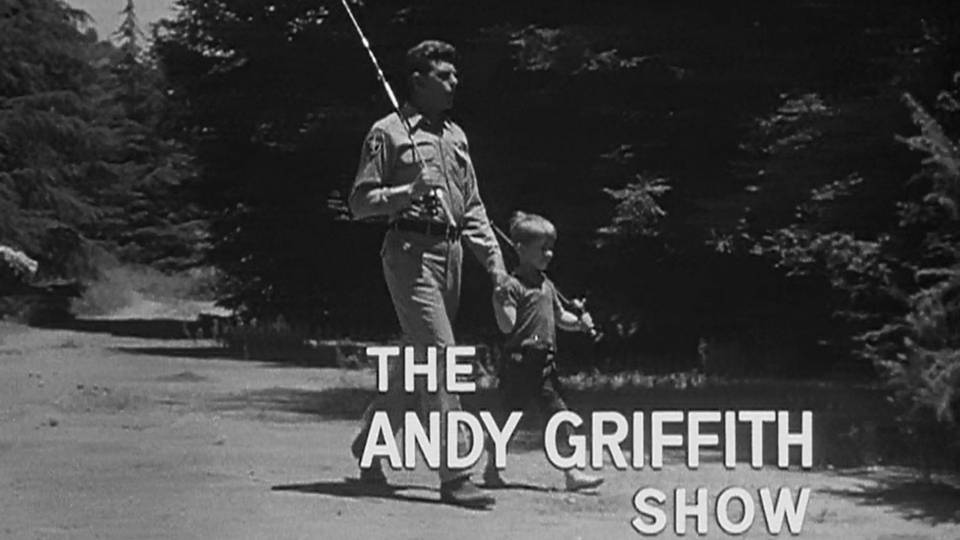
There has been so much written about this show and the writing will never stop. It was a show about the quirky citizens of a fictional town called Mayberry. The Andy Griffith Show is not just another show. The series will be around long after we are gone and still being discovered by future generations.
Some of the love I have for the show is about escapism. The low pressure of living in Mayberry is attractive. A place where you are allowed to live slowly and friends are only a few miles away. Nowadays our lives are so full of technology and rush that it would be tempting to walk through the screen to join Andy and Opie fishing out on Meyers Lake.
Mayberry was based on a small North Carolina town called Mount Airey where Andy grew up. Griffith has also said that although the show was in the sixties, Mayberry had a 1930s-1940s feel to it. When I’m asked where I grew up, I’ll say in a town kind of like Mayberry and they get what I’m saying.
The episode that best explains the show is… Man In A Hurry. A businessman’s car breaks down two miles from Mayberry on a Sunday. He has a business appointment in Charlotte the next morning. He walks to town and finds it deserted until church lets out. The garage is also closed on Sunday. Gomer is working but can only pump gas and Wally refuses to repair the car until Monday. The stranger can’t believe the pace of life in Mayberry and everyone’s lack of urgency. Andy tries to talk him into spending the night and getting the car fixed on Monday… he won’t have any of this non-sense… first but then he slowly realizes what great lives these people lead and ends up staying a little while longer than he could have.
Andy Griffith and Don Knotts were a great comedy team. I wish they would have made a few movies together. Knotts wanted to do that but Griffith always backed away from it. You can put them up there with other great comedy teams. Andy was a great straight man and Don played off of him well.
I’ve seen parents play episodes to their kids for lessons, schools play episodes for students, and heard of preachers writing sermons around episodes. The humor wasn’t dirty but it wasn’t sterile either. Most if not all of the first 5 season episodes are classics. It’s a show that you can catch at any time. During a rainout, between movies, and a binge-watch.
The show offered a little of everything… One of the things I liked was the bluegrass music of The Dillards who appeared on the show as the Darlings. Denver Pyle played Briscoe Darling Jr. and played the jug with the Dillards. They were and STILL are a bluegrass band that tours and releases albums.
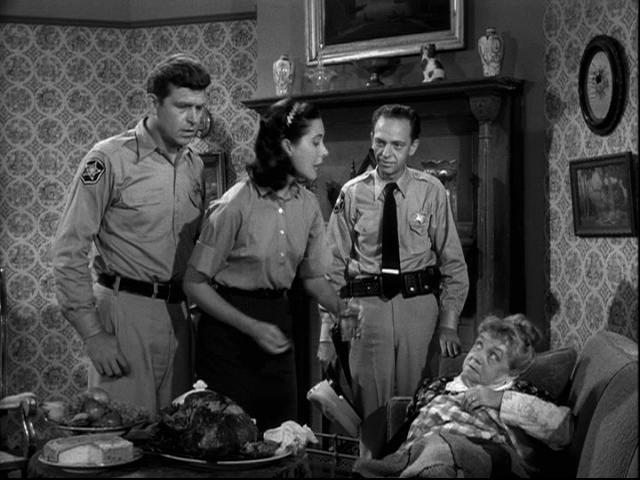
Andy had many girlfriends throughout the show. There was Ellie and she gave Andy all he could handle. Ellie, unfortunately, left after the first season. He saw the county nurse Mary Simpson (My favorite), Peggy McMillian, and then he met Helen Crump. Personally, I never liked Helen as much. Her nickname from some fans was Helen Grump because she could be a grump quite often. Andy ended up marrying Helen in the last season.
Thelma Lou was one of my favorite characters of the show. She put up with Barney’s shenanigans but was always there for him. Barney was foolish for letting her go but they finally got married. It didn’t happen on the show’s original run but they finally tied the knot in the reunion movie.
Then there was Aunt Bee Taylor. She took care of Andy and Opie and made sure they were fed well and came home to a clean house. Aunt Bee had a smile for everyone unless you got on her bad side. She could be stubborn and formidable when angered and she commanded the utmost respect from everyone. She was in a way, everyone’s Aunt.
The two characters from Wally’s gas station were Gomer Pyle and Goober. Goober was a great mechanic and Gomer mostly filled your tank up with a story to go along with it. They were not the sharpest tools in the shed but both had hearts of gold and added to the show’s comedy.
Andy’s son from his only marriage was Opie Taylor. You never found out how Opie’s mother passed away but she did before we got to meet the Taylors. Opie is a super kid and Andy raised him the right way. He is kind and polite and when he does something wrong he usually had the sense to recognize that and correct the problem.
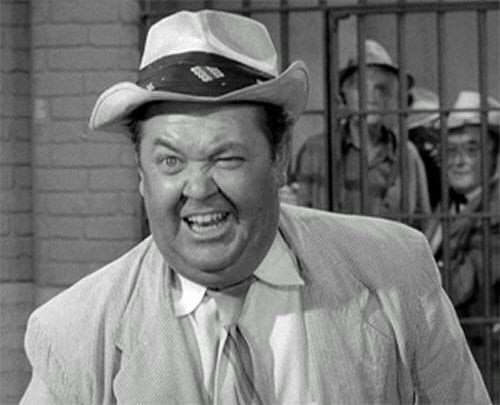
Otis Campbell… Otis was a good guy with only one problem. He was the town drunk. Andy and Barney knew him so well that they let Otis grab the jail key and let himself in when he was a bit intoxicated. During the reunion movie made in the 80s, he had given up the booze and was selling ice cream.
Seasons 1-5 were in Black and White with Don Knotts as Barney Fife. Don’s last season was the 5th season and seasons 6-8 were in color. I have all of the Griffith Show episodes but I will admit…I don’t really watch the color episodes as much as the black and white ones. Yes, there are some good later episodes but it’s Andy. He walks around Mayberry like he is owed money. Andy later admitted on many of the later episodes he was going through the motions.
He started to get a little tenser on screen in the 5th season but Barney was still there and kept things light. In the 6th season with Barney gone, Andy acted impatient with his fellow quirky citizens where at one time he enjoyed them. The show just changed dramatically with color. It remained at number 1 but it just wasn’t the same.
It was one of the most successful television shows ever. The Series went out on top and had a successful spinoff called Mayberry RFD.
In the early 70s Mayberry RFD and other shows such as The Beverly Hillbillies, Green Acres, Mister Ed, Lassie, Petticoat Junction, and Hee Haw were canceled because of the rural purge the network did… everything that had a tree got canceled it seemed. More important shows were coming like All In The Family and others but there was always room for others. In syndication these shows do great.
I love listening to Phil Lynott sing. Thin Lizzy could give you a lot of different-sounding songs. In this song, it sounds like Phil was listening to the Moondance album by Van Morrison.
The record company added the (It’s Caught Me In It’s Spotlight) so people would not confuse this with the old AM hit Dancing In The Moonlight by King Harvest that I’ll be going over this week!
It’s the way Lynott phrased his lyrics that added to the experience. Thin Lizzy also had some great twin harmony lead guitar parts that made their sound. They were unique, to say the least. You had a black Irish bass player fronting a rock band and singing like a cross between fellow Irishman Van Morrison and American Bruce Springsteen. They were not just a hard blues band. They mixed rock, country, blues, Celtic, and a little jazz in the mix.
The band’s name is a play on Tin Lizzie (“Thin” being pronounced “Tin” in an Irish accent). Tin Lizzie is either a reference to a robot character from TheDandy Comic or a nickname for the Model T Ford…
This song was on the Bad Reputation album released in 1977 and was written by Phil Lynott. It peaked #14 in the UK, #84 in Canada, and #4 in Ireland.
The album peaked at #39 in the Billboard Album Charts, #44 in Canada, and #4 in the UK in 1977.
Phil Lynott was the principal songwriter, but he encouraged the rest of the band to contribute their own material.
Scott Gorham (lead guitarist…one of them):“He taught us how to do this thing called ‘song writing.’ And until we got better and better at it and we could actually bring our own songs in, we brought in songs that were either partly finished or just ideas to put on one of his songs. We might bring in a song that was half finished, or a whole song minus the lyrics. And it was always minus the lyrics, because that was Phil Lynott’s domain. We knew that we weren’t ever going to touch or top his lyrics. So you just let him get on with it.”
Later on The Smashing Pumpkins covered “Dancing in the Moonlight (It’s Caught Me in Its Spotlight)” for various live performances.
Phil Lynott’s short life has been memorialized by a life-size bronze statue erected in central Dublin, just outside one of the famed bass player’s favorite pubs.
Thin Lizzy – Dancing in the Moonlight (It’s Caught Me in Its Spotlight)
When I passed you in the doorway You took me with a glance I should have took that last bus home But I asked you for a dance
Now we go steady to the pictures I always get chocolate stains on my pants My father he’s going crazy Say’s I’m living in a trance
But I’m dancing in the moonlight It’s caught me in its spotlight It’s alright, alright Dancing in the moonlight On the long hot summer night
It’s three o’clock in the morning And I’m on the streets again I disobeyed another warning I should have been in by ten
Now I won’t get out until Sunday I’ll have to say I stayed with friends But it’s a habit worth forming If it means to justify the end
Welcome to the Hanspostcard TV Draft. I hope you will enjoy it! Today’s post was written by Dave at https://soundday.wordpress.com/
TV shows are of course, first and foremost entertainment. But once in awhile they rise above just that and can actually create change for the better. Maybe even save lives. Recently, I’ve rediscovered one such show… and a lot of memories from my childhood!
Over-the-air station COZI-TV shows nothing but oldies. It’s the television version of a Golden Oldies radio station. Andy Griffin, Magnum PI, MASH… they’re all there. And recently, a fave of eight, nine-year old me, Emergency.
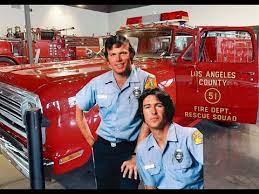
Emergency was the brainchild of Jack Webb, no surprise to those who had watched his earlier show, Adam 12, picked earlier in this by Max. The two had a similar overall feel and they even showed up in cameos on each other’s shows occasionally. While Adam 12 showed the day-to-day routines of two L.A. cops, Emergency dealt with an L.A. fire station, the goings on within it and on their runs. In particular, the show which ran on NBC from 1972-77 (plus six made for TV movies through 1979) focused on two paramedics who although firemen, responded to medical calls and were trained in medical care. Roy Desoto (actor Kevin Tighe) was the blonde, easy-going one while his partner who set many a lady’s heart a-flutter (and would later be immortalized in a Tubes song) was John Gage, played by dark and oft-brooding Randolph Mantooth. The rest of the firemen on their shift at “Station 51”, as well as the doctors and nurses of the local hospital ER were supporting characters. Those included real-life husband and wife Bobby Troup and Julie London, both of whom had music careers as well as acting ones; they portrayed the senior doctor (Dr. Early) and head nurse (Dixie) at the local ER the rescue squad took patients to. The plot outline was not unlike Adam 12, with its two patrol car cop buddies who spend a lot of time discussing life and responding to nuisance calls interspersed with a few high-tension emergency calls.
On Emergency, we follow along with John and Roy as they deal with mundane, everyday issues like John’s insomnia or Roy’s wondering about where to take his kids on holiday, interspersed with a few siren-screaming runs to heart attacks and snakebites, and fewer still infernos to respond to and help people survive. It really gave a feel for what it was like to be responding to a factory on fire, or trying to resuce people stuck in a car that was at the bottom of a cliff, or be surrounded by huge wildfires the whole department was trying to contain. Of course, like Adam 12, it was full of afros, moustaches and conservative morality… youth smoking “grass” laced with pesticides freaked out and confounded doctors with their life-threatening illnesses; doctors jumped in to keep lying parents from their frightened and bruised children while doling out counseling about dealing with stress. (It did, however, coming a bit later than Adam 12, miss out on stripy bell-bottom fashion and bad guys who said things like “you’re a jive cop!” or “say your prayers… I’m gonna send you to pig heaven, copper!”)
Part drama, part light-comedy, mixed with a small amount of action… it’s a far reach from the action shows and movies that are in favor now. But somehow, it worked. We cared about the characters lives… and learned.
Emergency was made by sticklers for detail. Mantooth said “Bob Cinader, who (co) created and produced the show said ‘we’re not going to make anything up. We have to get all the rescues from real fireman’s logs.” Mantooth and Tighe both took real paramedic courses, although they didn’t take the tests to be certified as such, and rode along with real L.A. firemen extensively. The exterior shots used a real L.A. fire station (Station 127 in Carson) and a real hospital nearby. Producers got to borrow an authentic L.A. pumper truck ( the Engine 51 in the show) and apparently, on a few shots forgot to relabel it as such, meaning the eagle-eyed viewer could sometimes see Station 51 responding in a differently-numbered truck. Driven by an actor, Dick Hammer, who played… Dick Hammer. You see, Hammer not only used his real name, he played his own role in real life – he was an actual L.A. fireman, thus having fire training and a license to drive the large vehicles. They opted for realism, which certainly helped us believe the episodes and feel engaged.
Roy and John, the paramedics, went to their medical calls in a modified pickup with all sorts of medical supplies, and radios to the hospital. Since they had medical training, they could undertake medical procedures like give IVs or CPR with the doctor’s instructions over the radio. At the time, the paramedic trucks were new and few and far between, so L.A. couldn’t loan them one. Thus the show got the blueprints and built an authentic replica themselves, and stocked it with the real equipment the true first responders used in the day.
It was interesting. It gave us a look at the ordinary work of fire-fighters and paramedics and some of the crazy calls they had to deal with. And in a small way, it changed the world.
Not only did Emergency pave the way for later, more action-packed shows like E.R. and Station 19, it changed society as well.
ME TV point out that when the show first aired, there were only 12 – one dozen – fire departments with paramedics in the entire country. (I was surprised to read that my particular hometown in Canada was the very first in that country to have paramedics in their fire department, that being in 1971). Then California governor Ronald Reagan had only signed legislation allowing for firemen to be trained as paramedics the previous year and L.A., Seattle and Miami were the only notable large urban areas in the U.S. with them at the time. What’s more, ambulances were largely nothing more than taxis for sick and injured people. The personnel on them did little besides get the patient to doctors and help down the road. By the end of the show in mid-’77, fully half of all Americans were within 10 minutes of responding fully-trained paramedics. Lives were saved…. and one has to imagine that Emergency was behind it. It’s hard to innumerate, but oral history suggests a lot of fire departments and city councils got on board to train their firemen and supply them with medical gear when people started wanting their town to have its own John Gage, Roy Desoto and Squad 51. A University of Baltimore study says “ample evidence suggests a conclusion that the TV show was a primary factor that fueled…paramedic training.” EMS World call Randy Mantooth the “goodwill ambassador” for their profession and point out “for all the popularity of classic shows such as the Honeymooners and Gunsmoke, the number of people they inspired to become bus drivers or sheriffs was probably small.” Not so Emergency. Schools offering the training to be paramedics saw a surge of applicants shortly after the show premiered.
Pretty cool. A little bit campy, a little comic, a little bit educational. Bits of high excitement, and lots of cool retro vehicles and fashions. I still enjoy it. What’s more, it was a show that changed history and made life safer. And still is interesting to watch close to 50 years on. Methinks we’ll never be saying that about the Kardashians.
Just the opening licks to this song hook me for the rest of the way. Southbound was on the number 1 album Brothers and Sisters in 1973.
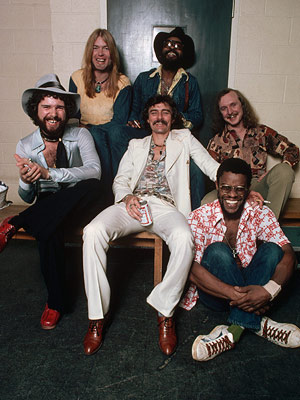
The making of this album was anything but easy. On October 29, 1971, Duane Allman was killed in a motorcycle wreck. He was the undisputed leader of the band and the source of their music. After he died it hit the members hard including his brother Gregg Allman. They all agreed to continue on though. They had just released Live At Fillmore East (selected for preservation in the Library of Congress)…along with Live At Leeds considered the top live rock album of all time.
It was just climbing up the charts and money started for once to roll in for the band. They were working on the follow-up album Eat A Peach when Duane was killed. They regrouped and finished the album. It was a hybrid of studio/live recordings. Dickey Betts the other guitar player took a crash course on slide guitar.
The one member that could not get over Duane’s death was bass player Berry Oakley. He was not just another bass player. His playing reminds me of Paul McCartney in a way because it was so melodic. After Duane died he pretty much gave up and was drinking constantly. The other band members tried to babysit him on tour but nothing worked. Gregg Allman said: Berry didn’t want to die but he didn’t want to live either.
Duane Allman and Berry Oakley
On November 11, 1972, three blocks from where Duane was killed, Berry ran straight into a City Bus with his motorcycle. Some say it was on purpose because there were no skid marks at the scene. Someone took him home after he refused to go to the hospital. Three hours later he was rushed to the hospital, delirious and in pain, and died of cerebral swelling caused by a fractured skull. The Doctors said even if he would have gone straight to the hospital after the accident…he couldn’t have been saved.
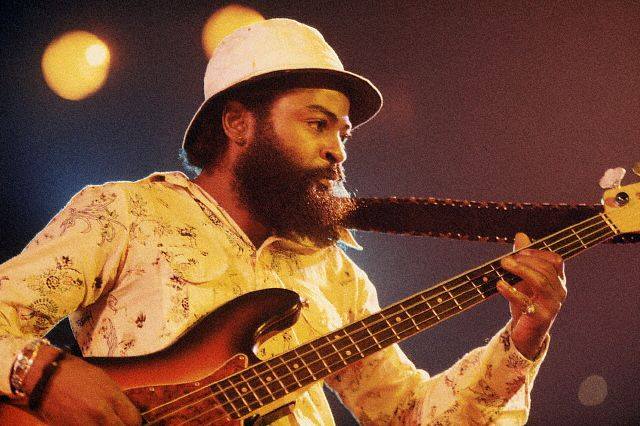
The Allmans again decided to carry on. They didn’t replace Duane at first with another guitar player…they replaced him with a piano player named Chuck Leavell who would later play with the Rolling Stones among others. Oakley was replaced by Lamar Williams, an old friend of drummer Jaimoe. Lamar would die early also in 1983 of lung cancer. His doctors believed that the disease was derived from exposure to Agent Orange during his Vietnam service. The album sessions started in the Autumn of 1972 and Oakley’s bass can be heard on two songs… “Wasted Words” and their huge hit “Ramblin’ Man.”
Lamar Williams
Lamar Williams plays bass on Southbound… Southbound was written by Dickey Betts with Gregg on lead vocals.
Southbound
Well I’m Southbound, Lord I’m comin’ home to you Well I’m Southbound, baby, Lord I’m comin’ home to you I got that old lonesome feelin’ that’s sometimes called the blues Well I been workin’ every night, travelin’ every day Oh, I been workin’ every night, traveling every day Oh you can tell your other man, sweet daddy’s on the way Aww, ya better believe Well I’m Southbound Whoa I’m Southbound Oh you better tell your other man, sweet daddy’s on his way Got your hands full now baby, as soon as I hit that door You’ll have your hands full now woman, just as soon as I hit that door Well I’m gonna make it on up to you for all the things you should have had before Lord, I’m Southbound Oh I’m Southbound, baby Whoa I’m Southbound, yeah baby Well I’m gonna make it on up to you for all the things you should have had before
Welcome to the Hanspostcard TV Draft. I hope you will enjoy it! Today’s post was written by Lisa at https://tao-talk.com/
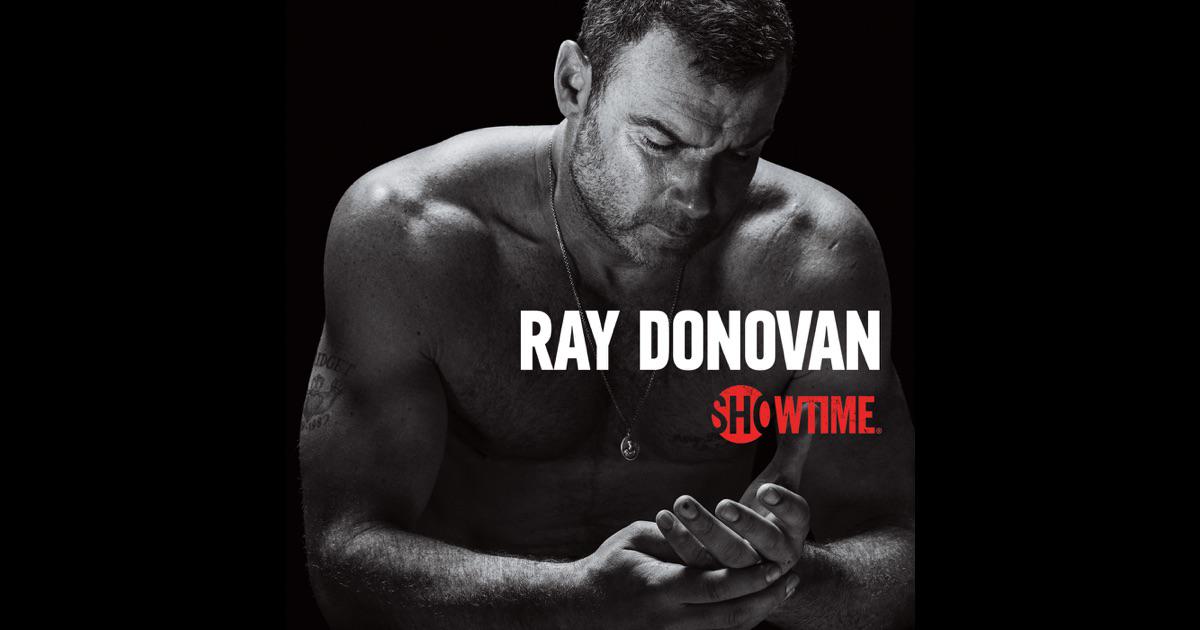
Liev Schreiber as Ray Donovan
Originally on Showtime
7 seasons, from 2013 – 2020 (and a movie in 2022)
82 episodes (12 in each of the first 6 and 10 in the 7th season) Directors: with # of episodes: John Dahl (11,) Tucker Gates (9,) Michael Uppendahl (9,) David Hollander (6,) Allen Coulter (4,) Daniel Attias (4,) Colin Bucksey (4,) Guy Ferland (3,) Joshua Marston (3,) Michael Apted (2,) Lesli Linka Glatter (2,) Phil Abraham (2,) Liev Schreiber (2,) Ed Bianchi (2,) Robert McLachlan (2,) Daisy von Scherler Mayer (2,) Stephen Williams (2,) Zetna Fuentes (2,) and 1 episode each for Daniel Minahan, Jeremy Podeswa, Greg Yaitanes, Tricia Brock, James Whitmore Jr., Carl Franklin, Denise Di Novi, Tarik Saleh, Nick Gomez, Dash Mihok, and Kyra Sedgwick
Genres: drama, crime
Starring The Donovan Family
Liev Schreiber is Ray Donovan, the central character in the series, the planet the rest of the satellites revolve around. Set in L.A., Ray is a fixer to the stars and star makers. Kill your mistress by mistake on a coke binge? No problem. Macho star in love with a trannie? No worries. There is Ray the professional fixer that never fails. Then there is Ray the second oldest brother of a severely dysfunctional family, where he can never seem to do right or fix anything.
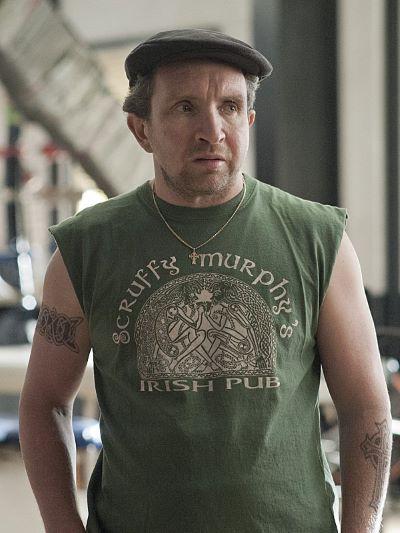
Eddie Marsan as Terry Donovan
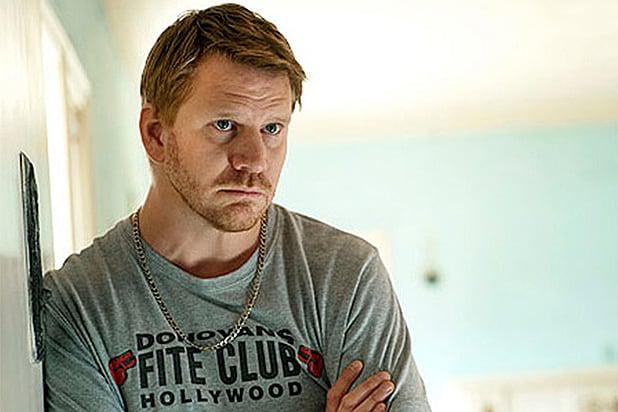
Eddie Marsan is Terry Donovan. Terry is the oldest brother. He manages Donovan’s Fite Club, the family boxing club that always loses money but is a perfect front for Ray’s money laundering (that Terry knows nothing about!) Terry, who was a strong contender to be a top boxer, was put into a mismatch by his father and got a brain injury that has given him palsy in one of his arms. Terry is a serious sort that acts as a mentor/trainer to talented young boxers. He has a pattern of attracting women who, for one reason or another, leave. He has a lot of pent-up anger about a lot of things.
Dash Mihok as Brandon “Bunchy” Donovan
Dash Mihok is Brandon “Bunchy” Donovan. Bunchy was molested for years as a kid by a Catholic Priest and has real intimacy issues because of it. When the series opens, Bunchy is part of a class action suit against the Catholic Church for his childhood sexual abuse. Bunchy also boxed as a kid and may have been hit in the head too many times, leaving a cognitive impairment and some impulsivity issues. Bunchy sleeps at the gym. Terry looks after him.
Pooch Hall as Daryll Donovan
Pooch Hall is Daryll, the Donovan brother from another mother. When the other brothers’ mother was dying of cancer, their dad went and shacked up with Claudette (Sheryl Lee Ralph) and together they had Daryll. When Mickey, their father and the patriarch of the Donovan clan, goes to prison, Claudette hooks up with Alan (Paul Michael Glaser,) a big movie producer, and moves to Palm Springs. As the story opens, Daryll has never met any of his brothers.
Jon Voight as Mickey Donovan
Jon Voight is Mickey Donovan, the patriarch of the family. As the story opens, Mickey is in Walpole doing a 20-year sentence for a murder he didn’t commit. While Mickey has been in prison, Ray has stepped into the patriarch role. Everyone is worried about when Mickey gets out of prison because he is a force of mayhem and chaos, one who is always scheming but one whose schemes always get f*cked up. Unfortunately, those around him are the ones who suffer because of his f*ckups. Mickey is the charismatic flim-flam man who could talk a leopard out of its spots. Ray seems to be the only one who can see Mickey for who and what he is, even when others who have borne the brunt of his mistakes again and again seem to have amnesia. Mickey is a lovable, but toxic, rascal.
Emily Richardson is Bridget, the oldest sibling and only sister of the Donovan brothers. As the story opens, we learn that Bridget committed suicide back in high school. The facts surrounding it are blurry, but over the seasons the pieces are put together.
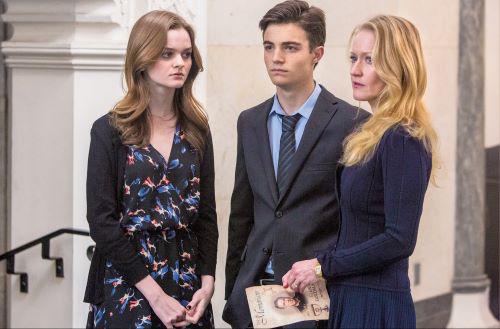
l.-r. Bridget, Conor, and Abby Donovan
Ray’s Family
Paula Malcomson plays Abby, Ray’s attractive, feisty, haranguing wife. Ray is a serial cheater and Abby turns a blind eye to it as much as she can. Ray’s work is his life and he’s away from home more than most. He also has his own private apartment downtown that the family isn’t welcome to visit. Abby has a beautiful home in the burbs of L.A., but often she’s lonely and bored. She’s been with Ray since the beginning, when the two were growing up in Boston. They each know that theirs is a forever relationship. Abby’s a decent mother, but often it seems she is preoccupied by what she feels is Ray’s emotional abandonment and what she doesn’t have, which leaves the kids with their own form of double parental abandonment.
Kerris Dorsey plays Ray’s daughter, Bridget Donovan, named after her long-departed aunt. Bridget is a brainy high school student with the best grades. She has a guitar and writes and sings her own compositions. She’s searching for something to fill the empty spaces in her world and sometimes makes poor choices. She loves her parents but has an uncanny knack of seeing through them, which makes her a little jaded when it comes to them. Ironically, she loves her uncles and her grandpa unconditionally.
Devon Bagby plays Ray’s son, Conor Donovan. Conor is 14 when the story opens. Devon is the typical 14 year-old who likes to play video games. Conor also has a violent streak. He is never one to start a conflict, but you can be sure he will finish it when it comes to bullies. Conor feels like the most alone one in the series. Bridget tries to advise him, as do his uncles and grandpa from time to time, but he doesn’t really seem to connect well with anyone.
Steven Bauer as Avi
Kathering Moennig as Lena
Elliott Gould as Ezra
Ray’s Work World
Katherine Moennig plays Lena, who is often in the office making her magic happen, but she sometimes gets her hands dirty out in the field. Lena is a lesbian who is unlucky in love as it often turns to domestic violence. Her loyalty to Ray is unwavering. He’s a demanding but fair boss who gave her a chance when things were at a low ebb for her.
Steven Bauer plays Avi. Avi used to be in the Israeli Special Forces and is the man you want on the case to adjust/convince/neutralize and clean, as needed, under Ray’s direction. Avi lives at home with his invalid mother. Like Lena, Avi’s loyalty to Ray is unwavering. I think Ray met Avi through his first boss in the series, Ezra.
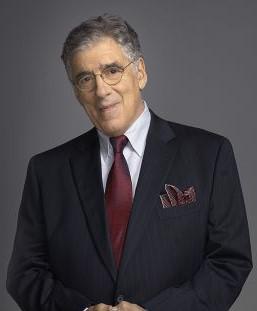
Elliott Gould is Ezra Goldman. Ezra is a potent mogul in L.A. He first met Ray as a young thug when Ezra was on a movie shoot in Boston and saw Ray’s potential. He convinced Ray to move to L.A. and become one of his main fixers. Ray potentially could have other clients he’s a fixer for, but Ezra and his realm keeps him pretty busy.
Guest stars
There are a plethora of stars that traverse the seasons. Usually they last a season, sometimes they carry over into more than one, and sometimes they don’t last but a few episodes. Just a partial list of well-known names: Susan Sarandon, Hank Azaria, Katie Holmes, Ian McShane, Alan Alda, Sherilyn Fenn, Lisa Bonet, Tony Curran, Rosanna Arquette, James Woods, Ted Levine, C. Thomas Howell, Paul Michael Glaser, Brent Spiner, Jake Busey, Ann-Margret, Stacy Keach, Bronson Pinchot, Dabney Coleman, Richard Benjamin, Cheryl Ladd, Diane Ladd.
Aside from them are dozens upon dozens more in the cast.
Non-human Characters ALCOHOL saturates pretty much every scene of Ray Donovan. Thankfully the kids don’t take after their family members. Ray especially drowns himself in it to forget things. Everybody but the kids are guzzling the stuff. Sometimes other mind altering substances like powders show up – especially with Mickey – but mostly it’s the sauce that is the preferred poison.
Sexual addiction is a condition that drives Ray. As the series goes on, Ray’s addiction to alcohol, pain, and sex thread their way through his world. Since Ray is the “strong one” that everyone turns to for this and that, nobody’s really interested in suggesting he seek treatment for any of them, as perhaps their fear is that he won’t be so good at what he does if he stops doing them.
The baseball bat that Ray keeps in his trunk. He doesn’t pull it out very often, but when he does, you know the beat-down about to go down.
Ray with his bat
Linked closely to the baseball bat is violence. Ray will use everything aside from violence to fix work issues, but if those fail, he is ready, willing, and able to use it. He never lays a hand on Abby or the kids, yet he’s gotten into more than one drunken family brawl with his brothers and dad. Ray himself sometimes takes a beating; yet he has a curious relationship with pain. His tolerance for pain is very high. Even if he’s hurting, he shrugs it off, and there is a sense that he may feel that he’s earned his punishments on earth for his many bad acts. This stoic acceptance of physical damage combined with emotional numbness are certainly tied to his Catholic upbringing.
The phone – Ray is always on the phone. You know how they do a body count on John Wick movies? Or how many times Al Swearengen said f*ck in Deadwood? Seriously, someone needs to do a phone count on Ray. In the car, at home, in meetings, anywhere and everywhere.
Donovan’s Fite Club
The boxing club is the one place in the series that truly feels like home base. Lots of the show is filmed at Ray’s family home, but honestly, it never feels homey there. It feels like so many strangers co-exist in it but seldom connect with each other.
The ocean and some homes near the ocean are settings for memorable events.
Synopsis: After reading the above information, you can pretty much guess what happens in Ray Donovan. Problems come up at work and at home; Ray finds a way to fix work problems and a way to deepen family problems. Ray has been a very criminal-minded individual for a very long time; yet at the same time he is passionate about giving his wife and kids every material comfort, price is no object. He seems well-aware how he disappoints them emotionally yet clueless as how to fix it. A crucial piece that has only been touched on so far is Ray’s relationship with his father, Mickey. Where Ray is the expert fixer, Mickey is the expert breaker. Ray hates his father and wishes he would go away, but he always worms his way back into things. Most of the seasons, Ray has a new “boss” that is his primary client, and all of them are high power players in their fields. The first several seasons are set in Los Angeles, so there are lots of directors, producers, actors, movie sets, filming, screenwriters, drugs, kinkiness, etc. going on in the episodes. They say Las Vegas is sin city, but my bet is on L.A. Impressions: I love the show because I love Liev Schreiber as Ray. He’s like an Iron Man Energizer Bunny that never wears down. I like how strong he is. What makes him such a compelling character to me is that, despite his giving his all, rarely does anyone acknowledge or appreciate that fact. In many ways, he’s an object that is being exploited for his workaholic ways and his chronic religion-cultivated toxic guilt. I love watching his face, his expressions, the way he moves, his navigating through all of it like a shark in the water. I also love how Ray’s relationship with each of his family members plays itself out through the seasons, especially the one with Mickey. Jon Voight is exceptionally good as Mickey. Wow! I also like how the creators of the show try to give all family members fresh story lines to work with. Grade: 10 Etc.: from imdb: The necklace Ray Donovan wears carries a Saint Genesius medallion pendant. Saint Genesius is considered the patron saint of actors, lawyers, barristers, clowns, comedians, converts, dancers, people with epilepsy, musicians, printers, stenographers, and victims of torture. Awards: 4 wins and 42 nominations
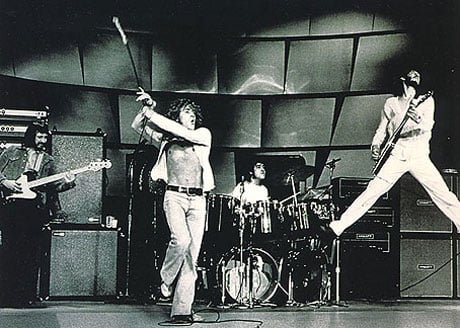
Young Man Blues was written by jazz artist Mose Allison in 1957. Mose’s version is jazzy and smooth. The Who took the song and set it afire with an explosive charge. Mose Allison called The Who’s version The “Command Performance” of his song. That’s a great compliment from the author. Pete was a big fan of Mose Allison. He has said that if he never heard this song he would not have written My Generation.
The Who version has great dynamics. The bass and drums are all over the place and yet perfect. The Who sound like they are driving near a cliff and you know the song is going to fall off but they save it at the last moment time after time. The song was on the Live At Leeds album released in 1970.
The key to this song and most Who songs was the rhythm section. Keith Moon and John Entwistle pushed each other to greatness. The frenetic chaotic bass and drums made it exciting. You had the lead guitar player punching in licks between the lead bass and drums. Later on, when Keith passed away and Kenney Jones took his place…they were not the same. That is nothing against Jones…he was one of the best British drummers at that time but that touch of insanity was gone permanently.
A year or so before John Entwistle died, Roger Daltrey was complaining about John’s volume on stage to Pete. Pete replied that without that volume and John’s style…they are not the Who. That was a true statement. I saw the Who with John and later on without him. It wasn’t the same. Was it a great show without him? Yes, the songs were great but that element of danger was gone. That is what both Keith and John added to the Who.
So I’ll take this note for myself… February 14, 1970… I’ll buy a ticket for Leeds University when I get my time machine working…I’ll take some cotton balls though.
Young Man Blues
Oh well a young man ain’t got nothin’ in the world these days I said a young man ain’t got nothin’ in the world these days
You know in the old days When a young man was a strong man All the people they’d step back When a young man walked by
But you know nowadays It’s the old man, He’s got all the money And a young man ain’t got nothin’ in the world these days I said nothing
Everybody knows that a young man ain’t got nothin’ Everybody! Everybody knows that a young man ain’t got nothin’ He got nothin’ Nothin’
Take it easy on the young man They ain’t got nothin’ in the world these days I said they ain’t got nothin’! They got sweet fuck-all!
Welcome to the Hanspostcard TV Draft. I hope you will enjoy it! Today’s post was written by Paula at http://paulalight.com
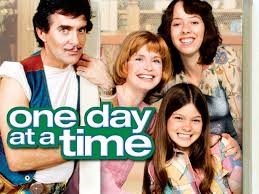
Welcome back to Paula’s Power Pop reviews and a big thanks to Max for putting these rounds together. I am having fun revisiting shows from back when, and one of my favorite shows in high school was One Day at a Time (the original series, not the 2017 reboot). The premiere aired on December 16, 1975, and the show ran nine seasons until May 28, 1984. It actually surprised me to learn that it went on so long ~ I did not catch all the later episodes in the 1980s. ODAAT was hugely popular for years and had a sweet spot in the CBS Sunday night lineup.
The premise of the show is that Ann Romano (played by Bonnie Franklin, RIP) navigates her new life in Indianapolis as a single mom to two teen girls, Barbara Cooper (played by Valerie Bertinelli) and Julie (played by Mackenzie Phillips, who was fired twice and did not appear in later eps). Pat Harrington Jr. (RIP) had a key role as their building superintendent, Dwayne Schneider. Back in the 1970s, Schneider seemed funny to me, but now he seems more like a creepy stalker always hanging around the girls’ apartment. Many things have changed regarding my perspective of the show, including believing that it was the height of romance for Mark (Boyd Gaines) to kidnap Barbara and not let her out of his car on their disastrous first date. Situations like these seem romantic in fiction, when you know the cute guy is a “good guy,” and the couple will up together, but in real life this would be totally cringe if not outright criminal. Anyway, in the 1970s, I identified more with Julie and Barbara, depending on the episode, but now I would identify more with Ann.
The original series focused heavily on second-wave feminism, which occurred during the 1960s to the 1980s. This is when women had achieved basic rights (somewhat), but still had to deal with workplace sexism, relationship roles, sexuality, and gender-based family issues. The show is not heavy-handed about these topics and relies upon on humor to smooth things along. I would say the writing ended up being tame overall, not really tackling big issues in a bold way, unlike, for example, All in the Family (which I will also be reviewing). Ann, Julie, and Barbara engaged in traditional, monogamous relationships with men, including eventual marriages for all three. This is not a criticism, just an observation. I enjoyed the show very much, back in the day.
Some of my favorite eps involve Shelley Fabares, as scheming businesswoman Francine, and of course the eps with the wonderful Howard Hesseman who just passed this January (RIP). He played Mark’s father Sam and became Ann’s love interest/husband (awkward!). One of my favorite episodes overall was “Airport” (S7, E2), where Barbara, Schneider, and Alex (the son of Ann’s boyfriend Nick, played by Glenn Scarpelli and Ron Rifkin, respectively) are all stuck at the airport waiting for Ann, whose flight has been delayed. Each of the three meets someone who seems like a romantic possibility, but none of them work out, so it is much more realistic than most sitcom plotlines. As a sidenote, Nanette Fabray (RIP) plays Ann’s mother Katherine, and she is the aunt of the aforementioned Shelley Fabares. Originally, Nanette’s last name was also spelled “Fabares.”
Whitney Blake and Allan Manings, a husband and wife writing team, created the show, and Norman Lear developed it. Polly Cutler performed the theme song “This Is It,” which played in the opening and closing credits. Jeff and Nancy Barry wrote the song. Bonnie Franklin and Pat Harrington Jr. each won an Emmy in 1984 for their performance in ODAAT, and Alan Rafkin won an Emmy in 1982 for directing the episode titled “Barbara’s Crisis” (S7, E15). Pat also won a Golden Globe in 1981, and Valerie Bertinelli won two Golden Globes, in 1981 and 1982.
~*~
Paula Light is a poet, novelist, flash fiction fan, cupcake connoisseur, mom, grandma, cat mommy, etc. Her blog can be found at http://paulalight.com.
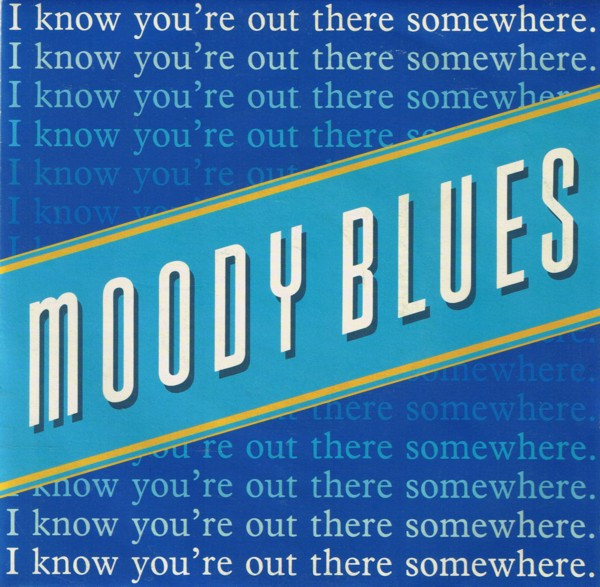
The Moody Blues hit big in the early 80s. I first got into them in the late 70s and I had all of their albums up to Seventh Sojourn. When Long Distance Voyager came out in 1981 a new generation of fans was made.
After I graduated in 85 I heard the single “Your Wildest Dreams” the following year and loved it. I remember the video on MTV and then a few years later in 1988 I heard this song. I could tell by the video alone it was essentially a sequel to Your Wildest Dreams. Guitarist/singer/songwriter Justin Hayward wrote both songs.
Sometimes we kick ourselves over missed opportunities and I do regret not seeing the Moodies live. I never looked at them as prog rock…they were just The Moody Blues…somewhat in a genre by themselves in some ways.
The song peaked at #30 in the Billboard 100, #52 in the UK, #15 in Canada in 1988. This was the band’s last top 40 single in the United States.
Justin Hayward: “I did the keyboard and the guitar and the LinnDrum for ‘Wildest Dreams,’ which was finished first, and for ‘I Know You’re Out There Somewhere’ I decided to use the same keyboard sound and bass sound that I’d got on a Yamaha DX7 and continue that theme. It’s identical tempo and everything.”
Justin Hayward:“I love performing it. Wherever we go, people like it. It wasn’t a massive hit, but people know it. It wasn’t a massive hit because it’s about 6 minutes long and no one did a successful edit on it. That’s probably the one that gives me the most pleasure.”
Since the two songs were connected…here they are.
I Know You’re Out There Somewhere
I know you’re out there somewhere Somewhere, somewhere I know I’ll find you somehow Somehow, somehow And somehow I’ll return again to you
The mist is lifting slowly I can see the way ahead And I’ve left behind the empty streets That once inspired my life And the strength of the emotion Is like thunder in the air ‘Cos the promise that we made each other Haunts me to the end
I know you’re out there somewhere Somewhere, somewhere I know you’re out there somewhere Somewhere you can hear my voice I know I’ll find you somehow Somehow, somehow I know I’ll find you somehow And somehow I’ll return again to you
The secret of your beauty And the mystery of your soul I’ve been searching for in everyone I meet And the times I’ve been mistaken It’s impossible to say And the grass is growing Underneath our feet
I know you’re out there somewhere Somewhere, somewhere I know you’re out there somewhere Somewhere you can hear my voice I know I’ll find you somehow Somehow, somehow I know I’ll find you somehow And somehow I’ll return again to you
[Interlude:] You see I know you’re out there somewhere O yes I know you’re out there somewhere You see I know I’ll find you somehow O yes I know I’ll find you somehow
the words that I remember From my childhood still are true That there’s none so blind As those who will not see And to those who lack the courage And say it’s dangerous to try Well they just don’t know That love eternal will not be denied
I know you’re out there somewhere Somewhere, somewhere I know you’re out there somewhere Somewhere you can hear my voice I know I’ll find you somehow Somehow, somehow I know I’ll find you somehow And somehow I’ll return again to you
Yes I know it’s going to happen I can feel you getting near And soon we’ll be returning To the fountain of our youth And if you wake up wondering In the darkness I’ll be there My arms will close around you And protect you with the truth
I know you’re out there somewhere Somewhere, somewhere I know you’re out there somewhere Somewhere you can hear my voice I know I’ll find you somehow Somehow, somehow I know I’ll find you somehow And somehow I’ll return again to you
Welcome to the Hanspostcard TV Draft. I hope you will enjoy it! Today’s post was written by Keith at https://nostalgicitalian.com/
For this round of the TV Show Draft, I figured I would jump ahead a few years to prove that I watch shows that aired after 1980! There are very few shows that actually make me laugh out loud. For this round, I want to feature one of them – 30 Rock.
The show aired on NBC from 2006-2013 and was created by Tina Fey (who also starred on the show). It was based on many of her experiences while working as a writer on Saturday Night Live (SNL). The show was actually produced by SNL’s Lorne Michaels, and the character of Jack Donaghy is said to be loosely based on Michaels.
The show was nominated for Primetime Emmy Awards every year it was on the air. It won for Outstanding Comedy series in 2007, 2008, and 2009. In 2009, the show was nominated for a whopping 22 Primetime Emmy Awards – the most in a single year for a comedy series. The Associated Press once wrote, “NBC’s Thursday night comedy block – made up of My Name Is Earl, The Office, Scrubs, and 30 Rock – is consistently the best night of prime time viewing for any network!”
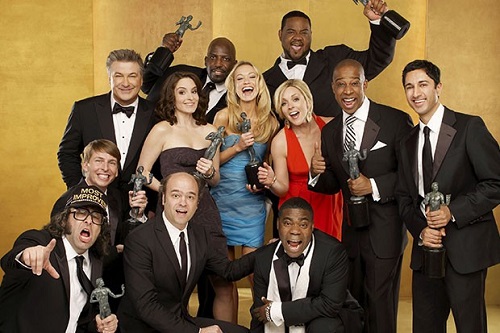
In the first episode of the series, Liz Lemon (Tina Fey) is the head writer for an NBC comedy series, The Girlie Show. It stars her best friend, Jenna Marone (Jane Krakowski). When Jack Donaghy (Alec Baldwin) enters as the new NBC Executive, he begins to revamp things at the network, including The Girlie Show. In the episode, he forces Liz to hire the very unpredictable (and sometimes crazy) Tracy Jordan (Tracy Morgan) as the new star of the show, which will now be called TGS with Tracy Jordan.
A typical episode would feature the rigors of writing a comedy show, the jealousy of Jenna after being forced to share stardom with Tracy, Tracy’s immature behavior, arguments between Jack and Liz, and pokes fun at NBC’s parent company (at the time) General Electric.
As with many of the shows being featured throughout the draft, 30 Rock is one of those shows that features a wonderful ensemble cast – each with their own distinct and unique personality. The blending of these personalities is just one of the many reasons why this show is so funny. Wikipedia has a wonderful description of each cast member (here are a few):
Liz Lemon (Tina Fey) – a “sexually frightened know-it-all” and head writer of TGS
Tracy Jordan (Tracy Morgan) – the loose-cannon, crazy, and unpredictable star of TGS
Jenna Marone (Jane Krakowski) – original star of the Girlie Show, now co-star of TGS. She is Liz’s constantly attention-seeking, arrogant, and clueless best friend.
Kenneth Parcell (Jack McBrayer) – the cheerful, obedient, Southern-born NBC page who “lives for television.”
Jack Donaghy (Alec Baldwin) – the decisive, controlling, suave, and occasionally senseless network executive who constantly interferes with the on goings of TGS.
In the 7 seasons that 30 Rock was on the air, there are thousands of laughs, ridiculous story lines, hundreds of catchphrases, and quirky characters. So what makes it such a funny show? Here are just a few reasons.
Rapid Fire Humor
Today, most comedy shows are designed for a laugh or two. Long build ups with poor payoffs which basically allows the viewer to watch without really having to pay attention. 30 Rock, however, was like watching a stand-up comic. The jokes (and insults) come at you one after another! Those lines are often delivered in a straight manor by the actor. It is reminiscent of the movie Airplane! where the actors are spouting off silly lines with a serious tone and deadpan. I feel like every time I watch an episode, I catch something I miss (just like when I watch Airplane!).
Lots and Lots of Guest Stars and Cameos
I’ve always loved to see actors appear on Saturday Night Live and do some off the wall character. Many of the guest stars on 30 Rock did just that. Some of the stars who appeared over 7 seasons include: Edie Falco, Jennifer Aniston, Selma Hayek, John Lithgow, Megan Mullally, Peter Dinklage, Steve Martin, Julianne Moore, Jon Bon Jovi, Matt Damon, James Franco, Susan Sarandon, Alan Alda, Ice-T, Richard Belzer, Michael Keaton, Paul Giamatti, and Buck Henry!
Other guest stars appeared as themselves – Buzz Aldrin, Oprah Winfrey, Jerry Seinfeld, Condoleezza Rice, and Al Gore, for example. Recurring characters included Chris Parnell as Dr. Leo Spaceman (pronounced “spa-che-man), Jason Sudeikis as one of Liz’s boyfriends, Dean Winters as Liz’s ex-boyfriend, Will Arnett as Devon Banks (a guy out for Jack’s job), Rip Torn as Jack’s boss and mentor, and the great Elaine Stritch as Jack’s mother.
The Running Gagsand Catchprases
Tina Fey loves a good running joke and there were plenty on 30 Rock. Some of them even spilled over into use in pop culture. For example:
“Blergh” is a handy expression you can use when the network won’t let you swear on TV. It is not a coincidence that it is also the brand of furniture from Ikea that Liz Lemon buys! Google trends suggests that 30 Rock pushed the word into the mainstream after it appeared in Season 1’s 2007 episode “Cleveland.” As it often happens with slang, blergh has become so prevalent, people will probably forget where it came from.
“Deal Breaker” is not a new phrase. It has roots dating back to 1979, and it was a Harlen Coben Book title in the 90’s. However, it gained new popularity after 30 Rock used it to describe relationships. Fey’s character write a book the points out all the “deal breakers” in relationships (“He never takes off his socks? Dealbreaker!”)
“I want to go to there” is a phrase that is exclusive to 30 Rock. We even know where it came from: Tina Fey got the odd grammatical construction from her young daughter Alice, and it quickly became one of 30 Rock’s most repeated quotes.
The “EGOT.” In 2008, Tim Long wrote a piece for Vanity Fair about Philip Michael Thomas, who, Long said used to wear a gold medal that simply said “EGOT,” which stood for Emmy, Grammy, Oscar, and Tony,” awards Thomas planned to win in the next five years. The following year on 30 Rock, Tracy Jordan finds a diamond EGOT necklace and sets out to join the elite ranks of such all-around winners. Tracy reached his goal in Season 5, and, thanks to 30 Rock, the EGOT has become a term used in the entertainment biz today.
“Good God” is a phrase that is often used by Jack in various situations. The 30 Rock YouTube page has a video compilation of some of his best “Good God” moments. My favorite was spoken to an ill Liz Lemon after she get’s in Jack’s face and speaks. Jack simply says, “Good God, Lemon. Your breath! When did you find time to eat a diaper you found on the beach?”
So Quotable
30 Rock is one of those shows that you really just have to watch. I find it really hard to describe WHY you should watch it other than the reasons above. Baldwin was simply hilarious on the show, as was Tina Fey. The cast works so well together and the insane situations that are presented are so ridiculous, you can’t NOT watch. There are so many little “toss ins” and “cut aways” involved. A cast member will say something – the camera cuts to a brief scene – and back to where it cut away. Those “toss in” jokes never cease to make me double over in laughter.
At the same time, the writing and deliver of the dialogue is just brilliant. I thought I’d share a few of my favorite lines:
Jack Donaghy
“I’m not a creative type like you, with your work sneakers and left-handedness.”
“What’s wrong, Lemon? When I see you chew your nails like that, it’s either you’re very anxious, or you handled some ham earlier.”
“I only pass gas once a year, for an hour, atop a mountain in Switzerland.”
“Never go with a hippie to a second location.”
“Ambition is the willingness to kill the things you love and eat them to survive. Haven’t you ever read my throw pillow?”
“We all have ways of coping. I use sex and awesomeness.”
“The world is made by those who control their own destiny. It isn’t made by those who don’t do, it’s made by those who do do. Which is what made me the man I am. I do do.”
Liz Lemon
“We have a show tonight. I’ve never missed a show. Not even the time I had that virus they kept saying only raccoons get.”
“Now I’m heading home for a nooner, which is what I call having pancakes for lunch.”
“Why are my arms so weak? It’s like I did that pushup last year for nothing!”
“I also have a lot of imaginary arguments with couples on House Hunters: Why can’t people look past paint color?”
“You can’t solve all your problems by shooting someone or setting a stranger on fire.”
“Fine, I’ll be okay. I got other ideas, like a microbrewery that also serves frozen yogurt. I’mma call it… Microsoft.”
30 ROCK — “A Goon’s Deed in a Weary World” Episode 711 — Pictured: (l-r) Tina Fey as Liz Lemon, Tracy Morgan as Tracy Jordan, Jane Krakowski as Jenna Maroney — (Photo by: Ali Goldstein/NBC/NBCU Photo Bank)
Tracy Jordan and Jenna Marone
Tracy:
“Here’s some advice I wish I woulda got when I was your age: Live every week like it’s Shark Week.”
“I’m not going to rehearse. I’m going to get a sandwich and then eat it on the toilet.”
“I watched Boston Legal 9 times before I realized it wasn’t a new Star Trek.”
“I’m gonna say to you what I say to all my sharks right before they die: Let’s go outside.”
“Liz Lemon, I may hug people too hard and get lost at malls, but I’m not an idiot.”
Jenna:
“We’re actors. If we didn’t exist, how would people know who to vote for?”
“Listen up, fives, a ten is speaking.”
“Your new vibe is a double edged sword, much like the one Mickey Rourke tried to kill me with.”
“Okay I’ll do it, but only for the attention.”
Kenneth Parcell
“But comedy is just as important as drama. People need to laugh, especially in these tough times. And after all, isn’t laughter the best medicine? Except for insulin, Spironolactone, and Bupropion, which I have for you whenever you’re ready, sir.”
“There are only two things I love in this world: everybody and television.”
In Closing
In a 2018 article for Business Insider, 30 Rock was listed as one of the Top 20 shows who have won the most Emmy Awards. It had 16 wins and was nominated 103 times. To me, I’ve never really paid attention to whether or not a show was a big “award winner.” What is important is how it makes me feel. 30 Rock was a show that ALWAYS made me laugh – even the bad episodes had good stuff in them. I could always count on being in a good mood after watching it.
This is a show I wish had lasted longer than 7 seasons …
A wonderful song from the band’s sixth album Don’t Tell A Soul. It was the first album with new guitarist Bob “Slim” Dunlap after Bob Stinson quit. They recorded their previous album Please To Meet Me as a trio with Paul Westerberg, Tommy Stinson, and Chris Mars.
Westerberg has claimed the song’s protagonist was a composite of several people, though one inspiration was his younger sister Mary. She was a Minneapolis budding rock radio deejay, Mary was experiencing the same uncertainties Paul had gone through prior to the Replacements. (In the video showed Mary as both Paul’s shadow and reflection.)
The sound of this album turned some of the older fans off. In order to get more radio play the record company brought in Chris Lord-Alge to mix the album. The album had a lot of those eighties effects used to enhance the music. The result was more of a polished Replacements album.
They would release one more album after this one called All Shook Down in 1990. Chris Mars left the band in 1989 and was replaced in 1990 by Steve Foley. The band toured with Elvis Costello in 1991 and would play their farewell gig in Chicago on July 4, 1991.
In 2012 they would regroup with a different drummer and tour until 2015. They sold out some arenas that held around 14,000 people in 10 minutes in some areas. After they broke up their legend grew and they were heard more than they were when they were together originally. For my money…they were the best pure rock band in the 80s for these ears.
Achin’ To Be
Well she’s kind of like an artist Sittin’ on the floor Never finishes, she abandons Never shows a soul
And she’s kind of like a movie Everyone rushes to see And no one understands it Sittin’ in their seats
She opens her mouth to speak and What comes out’s a mystery Thought about, not understood She’s achin’ to be
Well she dances alone in nightclubs Every other day of the week People look right through her Baby doll, check your cheek
And she’s kind of like a poet Who finds it hard to speak Poems come so slowly Like the colors down a sheet
She opens her mouth to speak and What comes out’s a mystery Thought about, not understood She’s achin’ to be
I’ve been achin’ for a while now, friend I’ve been achin’ hard for years
Well she’s kind of like an artist Who uses paints no more You never show me what you’re doing Never show a soul
Well, I saw one of your pictures There was nothin’ that I could see If no one’s on your canvas Well, I’m achin’ to be
She closes her mouth to speak and Closes her eyes to see Thought about an’ only loved She’s achin’ to be Just like me
I didn’t catch the first season of this show during its original run but, started watching during season two (it was a while before I got to see season one). I was immediately hooked by the quirky interaction between the sisters and their day to day lives in Winnetka, IL and, I was already a Patricia Kalember fan due to the short-lived Kay O’Brien TV show. ~Vic
Created by Ron Cowen and Daniel Lipman, the series begins one year after the death of the family’s father, Dr. Thomas Reed, a workaholic, played in flashbacks by three different actors but, mostly by Peter White. The matriarch of the family is Beatrice (Elizabeth Hoffman), a long-suffering, neglected wife, who turns to alcohol to deal with the doctor’s multiple affairs. She has four daughters:
☆ Alexandra…”Alex” (Swoosie Kurtz), the eldest. She married a plastic surgeon that had affairs on her and she divorced him, retaining some wealth. After battling breast cancer, she became a talk show host. She frequently butts heads her daughter, Reed Halsey (played by three different actresses, most notably Ashley Judd). She eventually remarries.
New grouping with Charley, on the left.
Image Credit: TMDb
☆ Theodora…”Teddy” (Sela Ward), the second daughter. At the beginning of the series, she is returning from California and is shocked to discover that her ex-husband, Mitch, is engaged to her youngest sister, Frankie. She, drunk, temporarily, stops the wedding with a shotgun (she inherited Beatrice’s drinking habits). An artist in school, she becomes a fashion designer, helming three different companies. She goes on to marry twice more…to Det. James Falconer (George Clooney), the cop that investigated her daughter Cat’s rape (he was killed in an explosion) and Dr. Gabriel Sorenson (Stephen Collins), the doctor that saved her life when she was shot in the head.
☆ Georgiana…”Georgie” (Patricia Kalember), the third daughter. She is the stay-at-home mom with the most level head of all the sisters. A part-time real estate agent, she is the one the other sisters come to for guidance. She and her husband, John, have two sons, the youngest surviving leukemia. She carries and gives birth to Thomas George, Frankie & Mitch’s son. After trouble with her first son, she has an affair with her therapist, separates from John, has a second affair with a much younger classmate in college and, eventually returns to John.
☆ Francesca…”Frankie” (Julianne Phillips…Springsteen’s first wife), the fourth daughter. She is a highly paid executive, a workaholic like her father and discovered that she was infertile. Georgie becomes her surrogate for her baby. Her work habits break apart her marriage to Mitch. Afterwards, she quits her job and buys a local diner. She eventually moves to Japan for another job.
☆ Charlotte…”Charley” (a doctor, originally played by Jo Anderson, then Sheila Kelley) as the unknown, fifth, illegitimate daughter that shows up in the fourth season, looking for a bone marrow donation (a shift in the story-line as Julianne Phillips prepared to leave the show). The nicknames are a product of their father wanting boys and never getting one. The four older sisters tagged Charlotte with her own nickname.
Supporting Characters: ★ John Witsig (Garrett M. Brown), Georgie’s husband. ★ Mitch Margolis (Ed Marinaro), Teddy’s high school sweetheart, ex-husband & Frankie’s ex-husband. ★ Catherine “Cat” Margolis (Heather McAdam), Teddy & Mitch’s daughter that goes on to be a cop.
Much of the show is full of flashbacks, particularly the interactions of the sisters growing up.
Ok…we are veering WAYOFF the power-pop/rock path today! I was reading a biography of Pittsburgh Steelers coach Chuck Noll, and it mentioned he would sing this song occasionally. So reading a bio of an American football coach led to this post…you just never know! To paraphrase Bugs Bunny…we are taking that proverbial left turn at Albuquerque.
I got really curious and looked the song up. It’s great…I’ve always liked these old folk songs and bluegrass music because I respect them so much. I’ve played bluegrass with a professional before, and it is some of the hardest music I’ve tried to play. The time signatures are all over the place, and if you haven’t played the music a lot… it can be tricky. It made me a better musician.
I like the music because it’s so rootsy and earthy. I don’t listen to it a lot, but sometimes I will enjoy an hour or so of it. It reminds me of when my dad would go to work in the morning, and sometimes he would have this music on.
Good Ole’Mountain Dew!
This song is an Appalachian folk song that Bascom Lamar Lunsford first wrote in 1928. Lunsford was an attorney; however, he is very fond of folk songs. He once represented a man in court because he was illegally making whiskey called Moonshine. This experience led him to write the song. He ended up selling the song to Scotty Wiseman, and Wiseman changed a few lyrics but remembered Lunsford…he kept the songwriting credit Wiseman-Lunsford.
These songs are special. They were not trying to write hits…they just wanted to tell stories through songs. Instead of newspapers in the backwoods of the Appalachians, you had these songs.
Many artists have covered the song through the years, like Willie Nelson, Glen Campbell, Mother Maybelle Carter, Grandpa Jones, and more.
Willie Nelson released a version in 1981 that peaked at #23 in the Billboard Country Charts and #39 in Canada.
The lyrics never stay completely the same through the versions, but it still works. We will return to our normal programming in the next post!
Mountain Dew
Down the road here from me there’s an old holler tree Where you lay down a dollar or two Go on round the bend come back again There’s a jug full of that good ole mountain dew
Oh they call it that good ole mountain dew And them that refuse it are few I’ll hush up my mug if you’ll fill up my jug With that good ole mountain dew
Now Mr. Roosevelt told ’em just how he felt When he heard that the dry law ‘d gone through If your liquors too red it’ll swell up your head You better stick to that good ole mountain dew
Oh they call it that good ole mountain dew And them that refuse it are few I’ll hush up my mug if you’ll fill up my jug With that good ole mountain dew
The preacher rode by with his head hasted high Said his wife had been down with the flu He thought that I o’rt to sell him a quart Of my good ole mountain dew
Oh they call it that good ole mountain dew And them that refuse it are few I’ll hush up my mug if you’ll fill up my jug With that good ole mountain dew
Well my uncle Snort he’s sawed off and short He measures four feet two But feels like a giant when you give him a pint Of that good old mountain dew
Oh they call it that good ole mountain dew And them that refuse it are few I’ll hush up my mug if you’ll fill up my jug With that good ole mountain dew







![Remembering Allman Brothers Bassist Berry Oakley On The Anniversary Of His Untimely Death [Videos]](https://i0.wp.com/liveforlivemusic.com/wp-content/uploads/2017/11/1236116_10201482958390126_1416300963_n-e1541951801980.jpg?fit=897%2C490&ssl=1)
 Pooch Hall as Daryll Donovan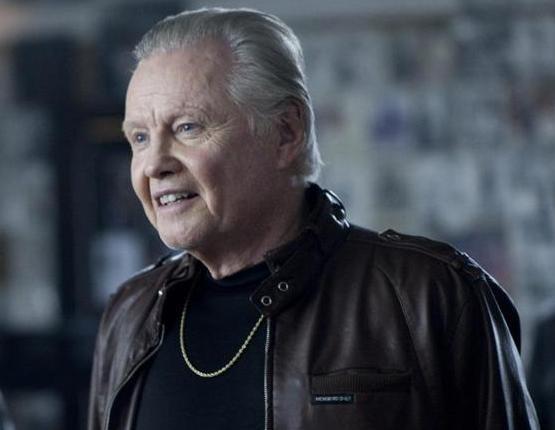


 Ray with his bat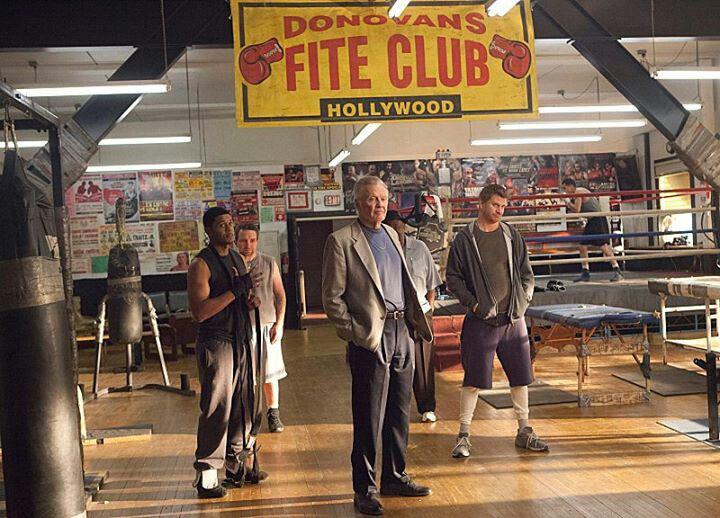



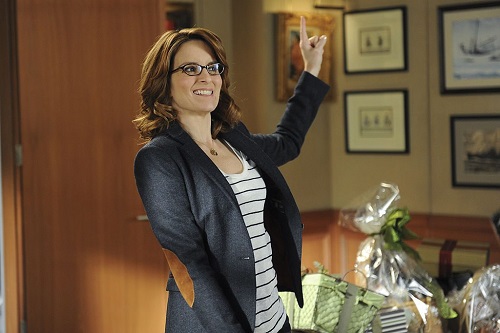 Liz Lemon


 PowerPop... An Eclectic Collection of Pop Culture