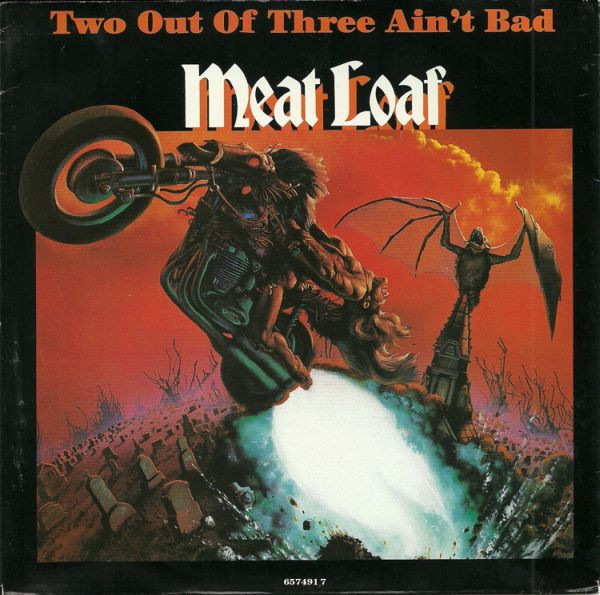
Meatloaf (1947-2022) – Two Out of Three Ain’t Bad

I had this one in my scheduled folder and heard the news this morning.

I grew up listening to AM radio with my sister and you couldn’t help but hear this song. When I found out he passed away at 74 years old I was saddened because he seemed like such a good guy.

He was a staple of late 1970’s radio. I was not the biggest fan but the guy was different and multitalented. I still watch the The Rocky Horror Picture Show once in a while and he is great in that.

He was born Marvin Lee Aday . There are many stories on how he got his nickname. His football coach, his dad, and one story I found…which I don’t believe goes like this. When he was a child, Aday was messing around with some friends, and he bragged that his head was so thick and strong that a Volkswagen could run over it and he’d be fine. Another kid said no way, that his head would “turn into meatloaf.” Supposedly Aday put his head on the ground and was run over but a volkswagon…and nothing happened.

Meatloaf 2016:  “I was born bright red, so the doctor suggested that they should keep me in the hospital for a few days. My dad actually spoke like this…” “’So, uh, I want you to name my son there ― because he looks like nine-and-a-half pounds of ground chuck ― I want you to put a name tag on the front of that plastic crib and it say ‘Meat’ on it.’”

Two Out Of Three Ain’t Bad is a good pop song and I still listen to it. Jim Steinman wrote this song after his friend, the actress Mimi Kennedy, suggested that he write a ballad along the lines of the Elvis Presley song “I Want You, I Need You, I Love You.” She was implying she was implying he write something simple but Steinman, as his other songs show, didn’t work that way.  This is one of the most straightforward Steinman songs that I know about.

Two Out Of Three Ain’t Bad was off of the Bat Out OF Hell album and it was huge. The album peaked at #14 in the Billboard Album Charts, #1 in New Zealand, and #9 in the UK in 1977.

The song peaked at #11 in the Billboard 100, #5 in Canada, #9 in New Zealand, and #32 in the UK.

Todd Rundgren produced the album. On this song, he used the other three members of his band Utopia: Kasim Sulton on bass, Willie Wilcox on drums, and Roger Powell on synthesizer. Rundgren played guitar and also sang backup on this song.

I found a story a few years ago about where he was when JFK was assisinated. He was at Parkland Hospital when JFK arrived. I have the video down below of him telling the story…listen if you have time…it’s very interesting.

From Songfacts

“Two out of three ain’t bad” is a trite cliché often used for comic effect. (“How was your date?” “He was tall, handsome, and incredibly boring.” “Well, two out of three ain’t bad.)

Jim Steinman, who was Meat Loaf’s songwriter, turned the saying into a song about the elusive nature of love. The song begins with Meat Loaf getting kicked to the curb by his girl, presumably because he won’t tell her he loves her. He makes the case that even though he will never love her, he’s good enough, since after all he does want her and need her, and happy endings are only for fairy tales.

We then learn that his commitment issues step from a previous relationship – one with the only woman he will ever love. She once left him with the same explanation: I want you, I need you, but I’ll never love you.

In America, this was the second single released from the Bat Out Of Hell album. The first single, “You Took the Words Right Out of My Mouth,” didn’t chart, but by the time “Two Out of Three” was issued in March 1978, the album was picking up steam and the song rose up the charts, peaking at #11 on July 8.

The single was edited down to 3:58 from the 5:23 album version.

This song got a big boost when Meat Loaf performed it on Saturday Night Live on March 25, 1978.

Two Out Of Three Ain’t Bad

Baby we can talk all night
But that ain’t getting us nowhere
I told you everything I possibly can
There’s nothing left inside of here

And maybe you can cry all night
But that’ll never change the way that I feel
The snow is really piling up outside
I wish you wouldn’t make me leave here

I poured it on and I poured it out
I tried to show you just how much I care
I’m tired of words and I’m too hoarse to shout
But you’ve been cold to me so long
I’m crying icicles instead of tears

And all I can do is keep on telling you
I want you
I need you
But there ain’t no way
I’m ever gonna love you
Now don’t be sad
‘Cause two out of three ain’t bad
Now don’t be sad
‘Cause two out of three ain’t bad

You’ll never find your gold on a sandy beach
You’ll never drill for oil on a city street
I know you’re looking for a ruby
In a mountain of rocks
But there ain’t no Coupe de Ville hiding
At the bottom of a Cracker Jack box

I can’t lie
I can’t tell you that I’m something I’m not
No matter how I try
I’ll never be able to give you something
Something that I just haven’t got

There’s only one girl that I have ever loved
And that was so many years ago
And though I know I’ll never get her out of my heart
She never loved me back, ooh I know
I remember how she left me on a stormy night
She kissed me and got out of our bed
And though I pleaded and I begged her
Not to walk out that door
She packed her bags and turned right away

And she kept on telling me
She kept on telling me
I want you
I need you
But there ain’t no way
I’m ever gonna love you
Now don’t be sad
‘Cause two out of three ain’t bad
I want you
I need you
But there ain’t no way I’m ever gonna love you
Now don’t be sad
‘Cause two out of three ain’t bad
Don’t be sad
‘Cause two out of three ain’t bad

Baby we can talk all night
But that ain’t getting us nowhere
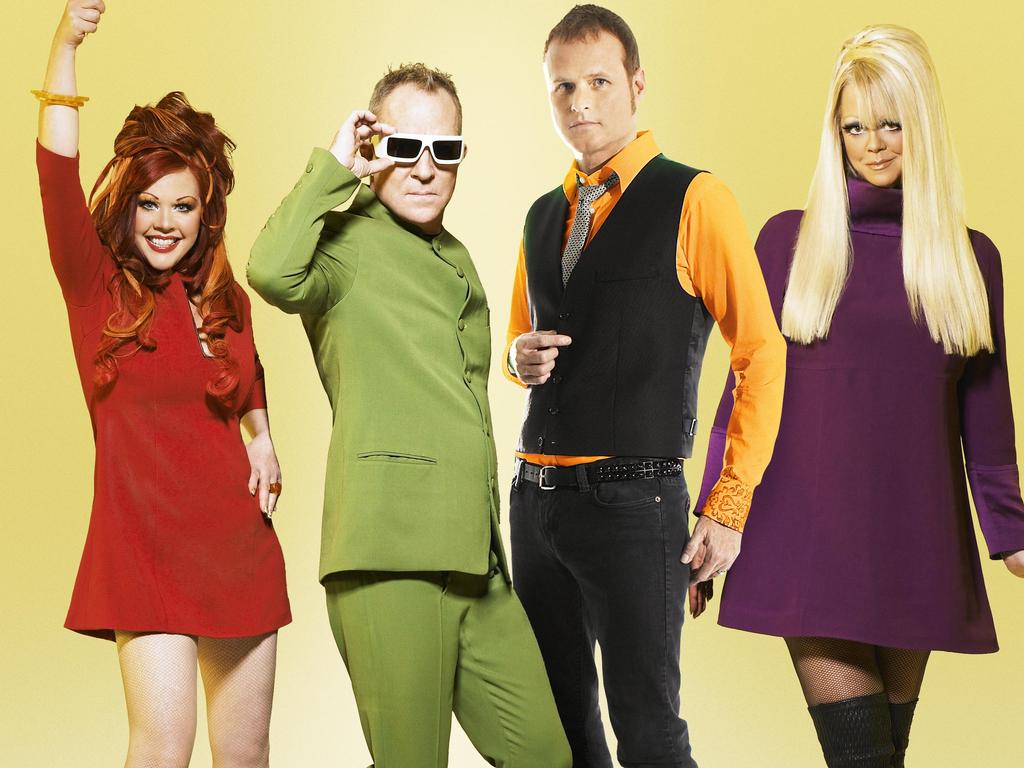
B-52’s – Love Shack

Love or hate this band…the one thing you have to give them is orginality. I can’t listen to them for hours but a song every now and then is great.

Kate Pierson has sai, the actual Love Shack is where she lived in the ’70s… a five-room cabin with a tin roof in Athens, Georgia. The band would sometimes work up songs there, including “Rock Lobster.” It really was set way back in the middle of a field (off of Jefferson River Road), with no plumbing or running water. The shack was later renovated, but in 2004 it burned down.

The band drew inspiration from the club in the movie The Color Purple, and also from a real club outside of Athens, Georgia, called the Hawaiian Ha-Le, where they would hang out.

The line, “The love shack is a little old place where we can get together” originally showed up just once in the song, but producer Don Was convinced the band to repeat that line and it became the hook. Kate Pierson credits Don Was with turning this song into a hit.

It was on the 1989 album Cosmic Thing. The album was a huge hit…because of this song and Roam.

The album peaked at #4 in the Billboard Album Charts, #8 in Canada, #1 in New Zealand, and #8 in the UK.

The song peaked at #3 in the Billboard 100, #5 in Canada, #1 in New Zealand, and #2 in the UK.

This was a global hit, but not in Japan, where a band with the name of an American bomber would  not a good fit to say the least. The band was named after a hairstyle Pierson and Wilson wore, but there was no way to get that message across.

Cindy Wilson: “When you’re jamming, everybody is conjuring up their own images. Sometimes we’re all singing at the same time and later you go back and you hear what you’re doing. I personally was thinking about this bar that was out in the country [the Hawaiian Ha-Le]. It was a really cool place – a run-down love shack kind of thing, but it was a disco. It was a really interesting place.”

Love Shack

If you see a faded sign at the side of the road that says
Fifteen miles to the, love shack, love shack yeah
I’m headin’ down the Atlanta highway
Lookin’ for the love getaway
Headed for the love getaway, love getaway
I got me a car, it’s as big as a whale
And we’re headin’ on down to the love shack
I got me a Chrysler, it seats about twenty
So hurry up and bring your jukebox money

The love shack is a little old place where
We can get together
Love shack baby
A love shack baby
Love shack, baby love shack

Sign says, woo, stay away fools
‘Cause love rules at the love shack
Well it’s set way back in the middle of a field
Just a funky old shack and I gotta get back
Glitter on the mattress
Glitter on the highway
Glitter on the front porch
Glitter on the hallway

The love shack is a little old place where
We can get together
Love shack, baby
Love shack, baby
Love shack, that’s where it’s at

Huggin’ and a-kissin’, dancin’ and a-lovin’
Wearin’ next to nothing ’cause it’s hot as an oven
The whole shack shimmies
Yeah the whole shack shimmies
The whole shack shimmies when everybody’s movin’ around
And around and around and around
Everybody’s movin’, everybody’s groovin’ baby
Folks linin’ up outside just to get down
Everybody’s movin’, everybody’s groovin’ baby
Funky little shack
Funky little shack

Hop in my Chrysler, it’s as big as a whale
And it’s about to set sail
I got me a car, it seats about twenty, so come on
And bring your jukebox money

The love shack is a little old place where
We can get together
Love shack baby
A love shack baby
Love shack, baby love shack
Love shack, baby love shack (oh baby that’s where it’s at)
Love shack, baby love shack (baby that’s where it’s at)

Bang bang bang on the door baby!
Knock a little louder baby!
Bang bang bang on the door baby!
I can’t hear you
Bang bang bang on the door baby!
Knock a little louder sugar!
Bang bang bang on the door baby!
I can’t hear you

Bang bang bang on the door baby, knock a little louder
Bang bang on the door baby, bang bang!
On the door baby, bang bang!
On the door, bang bang!
On the door baby, bang bang!

You’re what?
Tin roof
Rusted!

Love shack, baby love shack!

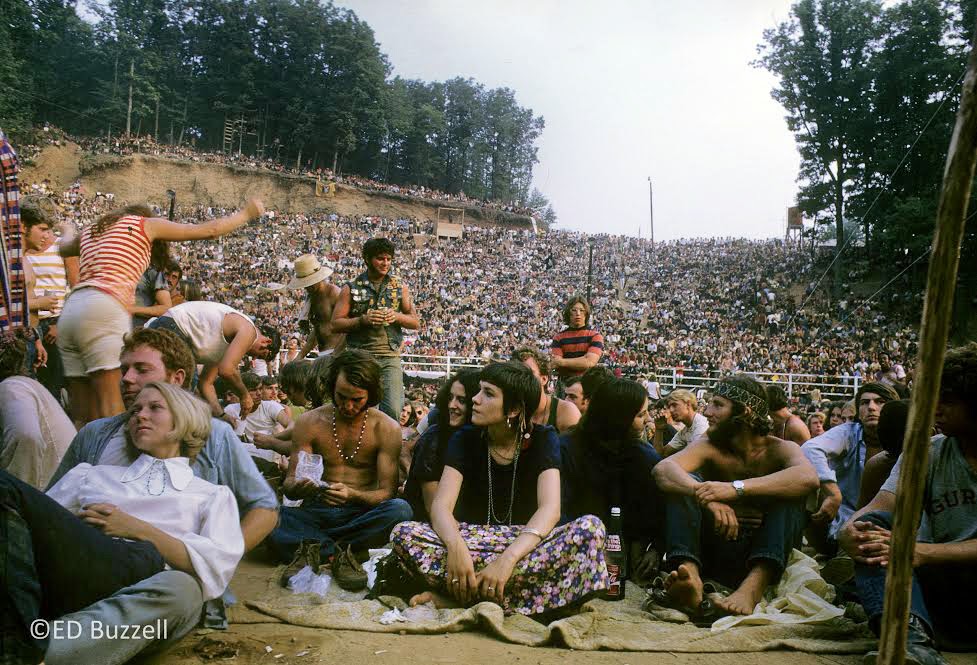
Love Valley Rock Festival…1970

By the summer of 1970, the spirit of Woodstock was still echoing across the American counterculture, and a small mountain town in North Carolina decided it wanted a piece of that magic, or at least its own funky version. Enter: the Love Valley Rock Festival, an improbable blend of peace, pot, rock ‘n’ roll… and cowboys. It went down in July 1970 like a haywire Southern cousin to Woodstock, with more horses, and a whole lotta Allman Brothers.

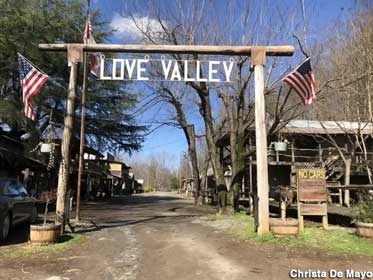
What a festival this was, and what a town it still is. It happened in Love Valley, North Carolina. The headliners were The Allman Brothers, who at that time only had one album out and were largely unknown to the masses. This huge festival was soon known as Woodstock South.  Between 100,000 and 200,000 showed up.

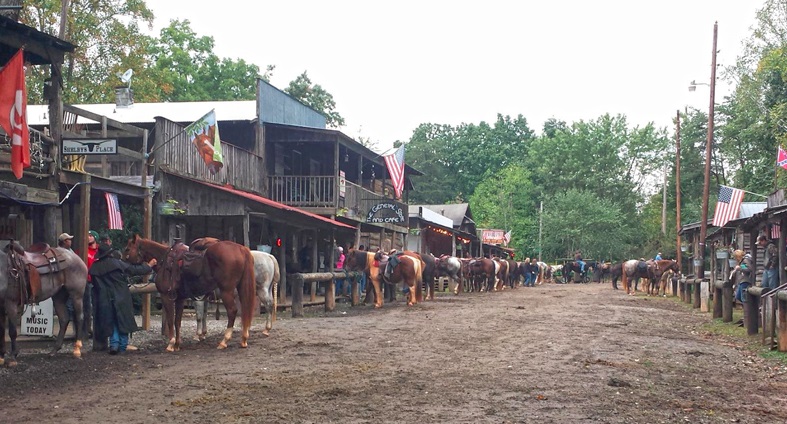
A man named Andy Barker always wanted to live in a western town. At the age of 29, he purchased some land in 1954 and relocated his family there. The land was in Iredell County, and he built the town, which was chartered in 1963. It has a saloon, hitching posts, a small church, and more. No cars are allowed in town…you can walk or ride a horse through.

It’s the place for riding horses, rodeos, and hiking trails with 2000 acres to cover. The population of Love Valley is currently 96. Through the years, it seems to stay around 100.

Love Valley: The Town Where Cars Aren't Allowed, Only HorsesLove Valley, NC - Town With No Cars, Only Horses

In 1969, Andy’s daughter Tonda wanted to go to Woodstock, but he thought she was too young. So he asked her and her 16-year-old brother, Jet Barker, to organize a festive concert in Love Valley. While in college, she had worked with an entertainment coordinator at the college and knew the ropes. She managed to secure the Allman Brothers Band, who at the time were known in the south but that is about it. They also got some more local bands to fill it out…it was a large bill. It took place on Thursday, July 16-18, 1970.

One interesting thing that happened was that the Hell’s Angels and Outlaws showed up to do battle with each other. According to witnesses, Andy Barker stopped them and confiscated a chain and ax from each and told them there would be no trouble here. They seemed to respect this man because after that, the gangs dispersed, and some camped out with no reported trouble. The festival went off without any major hitches.

Tonda: “It was perfect, it was like a dream. We had worked so hard and we could finally just sit down and enjoy it.”

Andy planned to make a documentary of it, but it didn’t happen. All we have to look at is some grainy footage, but that grainy footage shows Duane Allman a year before At Fillmore East was released. They were finishing up their second album, Idlewild South, at this time. Some very nice bootlegs are out there from their multiple sets.

Along with the Allman Brothers, the line up consisted of these bands: Big Brother and the Holding Company (without Janis), Radar, Peace Core, Wet Willie, Johnny Jenkins, Tony Joe White, Hampton Grease Band, Donnydale, Catfish Freedom, Sundown, Chakra, Hot Rain, Kallabash, Warm Stone Blind, Captain John’s Fishmarket. There were over 40 bands over that weekend.

Some, like Wet Willie, would go on to have a few hits. Tony Joe White had a top ten hit with Polk Salad Annie the year before.

The Love Valley Festival doesn’t get the press that Altamont or even Atlanta Pop did. There’s no movie, no official recordings, no box set retrospective. Just faded photos, whispered stories, and a ghost-town memory of the time the South went psychedelic under the watchful eye of a cowboy mayor with a dream.

It’s part of what makes digging through this era so damn fun. Not all the magic happened on the coasts. Sometimes it galloped in on horseback, plugged into a wall of amps, and raised a little hell in the Carolina hills.

Ed Buzzell was a UPI stringer and took these photographs…they are amazing. They don’t show many bands…just the people…you feel like you are there. (Unfortunately, Ed Buzzell or someone else took them down.) If you know where they are now, or if they are anywhere, please let me know in the comments. 

Twilight Zone – The Incredible World Of Horace Ford

★★★1/2 April 18, 1963 Season 4 Episode 15

If you want to see where we are…HERE is a list of the episodes.

Pat Hingle who plays Horace Ford is emotionally little more than an oversized child, lives with his wife Laura and his mother. He spends most of his time reminiscing about what he recalls as an idyllic childhood that was all play and no responsibility. This one is similar to “Walking Distance” but just not as effective…Horace isn’t as mature as the Martin Sloan characer in that episode. He fails to get the viewer’s compassion because of his imaturity. 

When looking back on childhood with rose colored glasses… Horace may get a chance to peel back the nostalgia and find out what really happened in his youth. It does have a good story but some will be put off by the exaggerated aspect of Pat Hingle’s performance. I liked it and the more times I’ve watched this episode the more I appreciated it. 

I have to ask this before I end. Pat Hingle who plays Horace Maxwell Ford…does he not look like Nick Nolte? It’s too bad when Hingle got older he didn’t play Nolte’s dad in a movie. 

The writer to this one is Reginald Rose who wrote the great 12 Angry Men. 

Reginald Rose: What I meant to do with The Incredible World of Horace Ford, was to tell a simple horror story about an everyday man with a somewhat exaggerated but everyday kind of problem and, in so doing, point out that the funny, tender childhood memories we cling to are often distorted and unreal. What happened to Horace when he finally made it back to his childhood was typical of what actually happened to so many of us again and again when we were children. He was ridiculed, rejected, beaten up. These are all familiar experiences to us, yet somehow we tend only to remember, as Horace did, the joys of swiping pomegranates from Ippolitos.

From IMDB:

This was not an original screenplay for The Twilight Zone (1959). It’s a remake of Studio One: The Incredible World of Horace Ford (1955), which was a live TV version starring Art Carney and Jason Robards.

This episode revisits themes used in The Twilight Zone: Walking Distance (1959) and The Twilight Zone: The Trouble with Templeton (1960) – namely, a person’s propensity to romanticize and try to relive a past that may not have been at all as good as they like to remember it.

The blueprints of Harold’s new robot toy are copies of the actual blueprints Bob Kinoshita made for the design of Robbie the Robot in Forbidden Planet.

This show was written by Rod Serling and Reginald Rose

Rod Serling’s Opening Narration: 

Mr. Horace Ford, who has a preoccupation with another time, a time of childhood, a time of growing up, a time of street games, stickball and hide-‘n-go-seek. He has a reluctance to check out a mirror and see the nature of his image: proof positive that the time he dwells in has already passed him by. But in a moment or two he’ll discover that mechanical toys and memories and daydreaming and wishful thinking and all manner of odd and special events can lead one into a special province, uncharted and unmapped, a country of both shadow and substance known as the Twilight Zone.

Summary

Toy designer, Horace Ford’s very enthusiastic about what he does, and his memories of childhood are beginning to become an obsession. But, those childhood moments which brought him great joy aren’t remembered by anytime else – even his mother. She doesn’t recall their time living on Randolph Street as such a great time. Horace goes to visit the old neighborhood, but when he gets there, he seems to have stepped back in time, and the past starts to spill over into the present. He returns to the street several times, and the scene repeats itself. He begins to realise -his childhood wasn’t the wonderful one he remembered

The COMPLETE episode

Rod Serling’s Closing Narration:

Exit Mr. and Mrs. Horace Ford, who have lived through a bizarre moment not to be calibrated on normal clocks or watches. Time has passed, to be sure, but it’s the special time in the special place known as the Twilight Zone.

CAST

Rod Serling…Narrator / Self – Host (uncredited)
Pat Hingle…Horace Maxwell Ford
Nan Martin…Laura Ford
Ruth White…Mrs. Ford
Phillip Pine…Leonard O’Brien
Vaughn Taylor…Mr. Judson
Jerry Davis…Hermie Brandt
Billy Hughes…Kid
Mary Carver…Betty O’Brien
Jim E. Titus…Horace…a boy

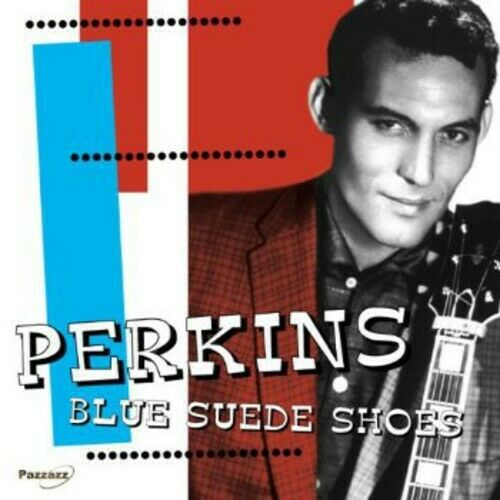
Carl Perkins – Blue Suede Shoes

Well it’s one for the money, two for the show
Three to get ready, now go cat go

This song could be the definition of rock and roll.  One of the many great Sun records that were released. Carl Perkins is a guitar hero to me with his rockabilly style that he never lost. I see why George Harrison and a generation was such a fan of the man. This song is up there with Johnny B Good as a Rock and Roll standard.

This song was written by Carl and it soon became a rock and roll anthem. This is another song that by law…you have to know if you are in a rock band. It’s probably better known by a singer from Memphis…named Elvis. I always favored this version…it has Carl playing guitar and that is all I need.

Carl recorded this in Memphis in 1955 for Sam Phillips at Sun Records. As he was driving to make his first national appearance to promote it on the Perry Como Show, he got into an accident that seriously injured him and killed his brother.  He later said he was 85 miles away from being the first rockabilly on national television.

Perkins never fully recovered, either emotionally or career-wise. With Perkins unable to touring and promote it, Elvis’ cover version became a massive hit. Presley’s copy was done at RCA studios in Nashville. Perkins did have some hits after this but nothing like Blue Suede Shoes. Interestingly enough…Elvis’s version only made it to #20 in the pop charts.

This single was released in 1956. The B side was Honey Don’t. The single peaked at #2 in the US Charts and #1 in the Country charts.

I always wondered about blue suede shoes and what was so special about them. Blue suede shoes were a luxury item in the South…you would only wear them on a special night out. . You had to be careful with them though, since suede isn’t easy to clean.

Perkins never owned a pair, but Johnny Cash told him a story about someone who did. Cash told Perkins a story from his days serving in the Air Force in Germany. Cash’s sergeant…C.V. White. He would wear his military best when he was allowed off base, and at one point said to Cash, “don’t step on my blue suede shoes.” The shoes were really just Air Force-issued black, but white would say, Tonight they’re blue suede!

The story Perkins told is that later on, he was playing at a high school sorority dance when he came across a guy who wasn’t paying much attention to his date, but kept telling everyone not to stop on his “suedes,” meaning his blues suede shoes. At 3 a.m. that night, Perkins woke up and wrote the lyrics based on what happened that night and the story he heard from Cash. He couldn’t find any paper, so he wrote it on a potato sack.

Perkins based the beginning of this song on a nursery rhyme One For The Money: “One for the money, two for the show, three to get ready and four to go.”

Sam Phillips, the owner of Sun Records, came up with the idea of changing the line “Go, man, go” to “Go, cat, go.” He thought the change would make it seem like less of a country song and more of a rocker…it worked!

From Songfacts

Sam Phillips discovered Elvis Presley but sold his contract to RCA for $35,000. The money helped Phillips finance this and other records by artists like Johnny Cash and Roy Orbison, but Elvis became The King. Elvis recorded this later in 1956. His version hit US #20 and UK #9.

This was the only Top 40 hit for Perkins on the pop charts, but his influence reaches much further. He was extremely influential to other artists, including Elvis, The Beatles, and Johnny Cash. Perkins was inducted into the Rock and Roll Hall of Fame in 1987.

The lyrics describe some of the things that Perkins would prefer over getting his shoes scuffed, and the list includes some derelict behavior: stepping on his face, stealing his car, burning down his house and drinking his liquor. Some in the Sinatra-loving older generation were horrified, and used the song to back their case that rock ‘n’ roll was the Devil’s music.

This was the first song to hit the US Pop, Country, and R&B charts at the same time. Released on January 1, 1956, the song made a slow climb up the charts, appearing on all three in May, which is when it reached its peak of #2 on the Pop charts.

In Perkins’ original version of this song, there are two deliberate beats after each of the first two lines: “One for the money… bomp, bomp; two for the show… bomp, bomp.” The Elvis version eliminates the pause between the lines and speeds it up considerably.

Dave Edmunds, who later toured with Perkins, tells a story about recording the song with the rock legend for a segment to air on The South Bank Show, a UK program. According to Edmunds, Perkins played the intro without the beats between lines, insisting that when he recorded it, that was a mistake. Edmunds began pleading with him to do it as he did on that record, but then realized the absurdity of explaining to Carl Perkins how to play “Blue Suede Shoes.”

In later appearances, Perkins did play the song in line with his original recording, often with Edmunds by his side. One of his last appearances was with Edmunds performing the song on The Jay Leno Show in 1997 (Perkins died the next year).

The B-side of the single was “Honey Don’t,” which was covered by The Beatles.

This song was a family affair: Perkins’ brother Jay played rhythm guitar on the track, and his other brother Clayton played bass (W.S. “Fluke” Holland was Perkins’ drummer). Jay died from a brain tumor in 1957, and Clayton took his own life in 1974.

The charting versions of this song in America were by:

Carl Perkins – #2, 1956
Elvis Presley – #20, 1956
Boyd Bennett – #63, 1956
Johnny Rivers – #38, 1973

Pat Boone, Conway Twitty, The Dave Clark Five and Merle Haggard are among the many to record it. A version by Buddy Holly surfaced in 1964 on an album of outtakes called Showcase.

The “better not step on my shoes” trope found its way back to the zeitgeist when Spike Lee included a scene in his 1989 movie Do The Right Thing where a character gets very upset when someone steps on his Air Jordan sneakers.

Perkins, backed by Lee Rocker and Slim Jim Phantom of The Stray Cats, recorded a new version of this song in 1985 for the soundtrack of the movie Porky’s Revenge! The soundtrack was produced by Dave Edmunds, who also got Willie Nelson, Jeff Beck and George Harrison to record songs for it, leading to a gaping disparity in quality between the film and the soundtrack.

Later in the year, Edmunds spearheaded the “Carl Perkins and Friends” concert special, recorded October 21 in London and aired January 1, 1986 on Cinemax. Harrison, Ringo Starr, Eric Clapton and Rosanne Cash were among the “friends.”

The Count performed this song on an episode of Sesame Street. It became a counting exercise (one, two, Blue Suede Shoes).

Blue Suede Shoes

Well it’s one for the money, two for the show
Three to get ready, now go cat go
But don’t you, step on my blue suede shoes
You can do anything but lay off of my blue suede shoes

But you can knock me down, step in my face
Slander my name all over the place
And do anything that you want to do
But uh uh honey lay off of my shoes
And don’t you step on my blue suede shoes
You can do anything but lay off of my blue suede shoes

Oh let’s go cat!

But you can burn my house, steal my car
Drink my liquor from an old fruit jar
Do anything that you want to do
But uh uh honey lay off of them shoes
And don’t you, step on my blue suede shoes
You can do anything but lay off of my blue suede shoes

Rock!

Well it’s one for the money, two for the show
Three to get ready, now go cat go
But don’t you, step on my blue suede shoes
You can do anything but lay off of my blue suede shoes

Well it’s blue, blue, blue suede shoes
Blue, blue, blue suede shoes yeah
Blue, blue, blue suede shoes baby
Blue, blue, blue suede shoes
You can do anything but lay off of my blue suede shoes

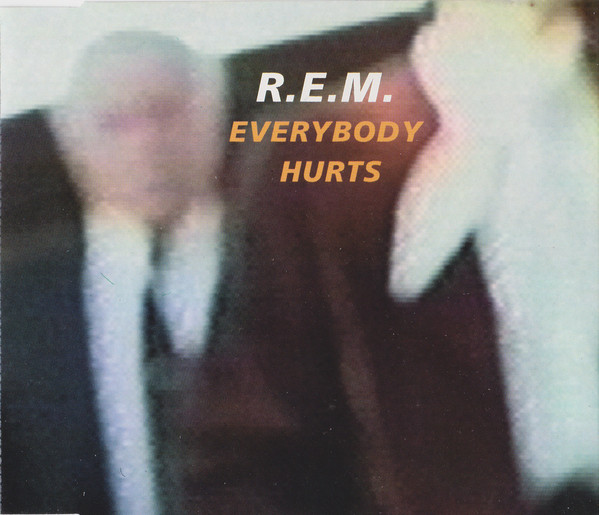
REM – Everybody Hurts

When I heard this song in the 90s…I knew then it was one of those songs that would become an instant classic.

Most of this song was written by R.E.M. drummer Bill Berry. It is an anti-suicide song. Berry wanted to reach out to people who felt they had no hope. He quit the band in 1997 shortly before recording their album Up after an aneurysm. After that album, the band almost broke up, but decided to continue as a trio.

While he wrote this, he did not actually play on it. They used a Univox drum machine. R.E.M. bass player Mike Mills claims he bought Univox drum machine for $20, but it was perfect for the song’s metronome-ish feel.

It was on the album Automatic For The People, considered by some as the best album they ever released. The album peaked at #2 in the Billboard Album Charts, #1 in the UK, #4 in Canada, and #1 in New Zealand.

The album title was inspired by Weaver D’s soul food diner in Athens, Georgia. They had a sign that said “Delicious Fine Foods – Automatic For The People.”

The song peaked at #29 in the Billboard 100, #8 in Canada, #7 in the UK, and #12 in New Zealand in 1993.  I’m shocked now that it wasn’t in the top 10 in Billboard.

The string arrangement was done by no other than Led Zeppelin bassist John Paul Jones.

Michael Stipe: “It saved a few. People have told me. And I love hearing that. That’s for me, that’s my Oscar, that’s my gold on a shelf right there… that something we did impacted someone’s life in such a profound way. That’s a beautiful thing.”

Mike Mills: Mike (Stipe) and I cut it live with this dumb drum machine which is just as wooden as you can get. We wanted to get this flow around that: human and non-human at the same time.”

Peter Buck: The reason the lyrics are so atypically straightforward is because it was aimed at teenagers.

From Songfacts

On many R.E.M. songs, Michael Stipe purposefully sings indecipherably. He sang very clearly on this one though, because he didn’t want his message getting lost. “I don’t remember singing it,” he noted in Part Lies, Part Heart, Part Truth, Part Garbage 1982-2011, “but I still kind of can’t believe my voice is on this recording. It’s very pure. This song instantly belonged to everyone except us, and that honestly means the world to me.”

The Nevada legislature commended R.E.M. for “encouraging the prevention of teen suicides,” noting this song as an example (Nevada has a high rate of teen suicide).

The music video was directed by Jake Scott, son of movie director Ridley Scott, famous for movies like Blade Runner (1982) and Gladiator (2000). Filmed on Interstate 10 in San Antonio, Texas, the clip is set during a traffic jam where people’s thoughts are revealed through subtitles.

The video won four MTV Video Music Awards: Breakthrough Video, Best Direction, Best Editing and Best Cinematography. When it won for Best Direction, Adam Yauch of the Beastie Boys, who were nominated for “Sabotage,” got to the podium before Michael Stipe. Dressed in character as his Swiss alter ego Nathanial Hornblower, he went on a rant, calling it a “farce” before being ushered off.

Disrupting an award for such a somber song is in poor taste, but it was hard to take this awards show seriously. Hosted by Roseanne Barr, it is best remembered for a cringe-worthy kiss between newlyweds Michael Jackson and Lisa Marie Presley. MTV didn’t harbor any resentment: they gave the Beastie Boys the Video Vanguard award in 1998.

This was used on an episode of The Simpsons when Marge is walking in a thunderstorm and thinks she has no friends. 

In February 2010 a charity cover was recorded by a collection of artists, Helping Haiti, to raise money for the victims of the earthquake that devastated the country. It sold over 200,000 copies in its first two days making it one of the quickest selling singles of the 21st century in the United Kingdom. Joseph Kahn directed a music video for the cover that features cameos from the performers and footage from the earthquake’s aftermath. Kahn is known for directing clips for the likes of Eminem, Britney Spears, Lady Gaga, and Taylor Swift.

This topped a poll compiled by PRS For Music, which collects and pays royalties to musicians in the UK, of the songs most likely to make a grown man cry. Second in the list came Eric Clapton’s “Tears In Heaven” followed by Leonard Cohen’s “Hallelujah.” PRS chairman Ellis Rich said: “From this chart, it is clear that a well-written tear-jerker is one that people can relate to and empathise with. It is this lyrical connection that can reach deep down emotionally and move even the strongest of men.”

In a rare authorized comedic use of this song, Mayim Bialik’s character on The Big Bang Theory plays this on the harp when she is upset over being left behind by her two girlfriends, who are shopping for bridesmaids dresses. Her “boyfriend,” played by Jim Parsons, comes by to cheer her up, resulting in an awkward cuddle scene.

Peter Buck likens the vibe of this song to Otis Redding’s “Pain in My Heart.” He wrote in the liner notes for Part Lies, Part Heart, Part Truth, Part Garbage 1982-2011: “I’m not sure if Michael would have copped that reference, but to a lot of our fans it was a Staxxy-type thing.”

This was used in the 1992 film version of Buffy the Vampire Slayer, starring Kristy Swanson, Luke Perry and Rutger Hauer. Speaking of the subsequent TV series, starring Sarah Michelle Gellar, Peter Buck said: “I’ve never watched Buffy the Vampire Slayer, but the idea that high school is a portal to hell seems pretty realistic to me.”

Pink and Kelly Clarkson sang this to open the 2017 American Music Awards. They were introduced by Jamie Foxx, who said the purpose was to “pay respect to all those affected by the events of the past year,” meaning the hurricanes, shootings and hate rallies that took place.

Another comedic use was on The Office in the season 2 episode “The Fire,” where Dwight retreats to his car and blasts the song after Michael takes Ryan’s side in a business discussion.

Everybody Hurts

When your day is long
And the night
The night is yours alone
When you’re sure you’ve had enough
Of this life
Well hang on
Don’t let yourself go
‘Cause everybody cries
And everybody hurts sometimes

Sometimes everything is wrong
Now it’s time to sing along
When your day is night alone (hold on)
(Hold on) if you feel like letting go (hold on)
If you think you’ve had too much
Of this life
Well, hang on

‘Cause everybody hurts
Take comfort in your friends
Everybody hurts
Don’t throw your hand
Oh, no
Don’t throw your hand
If you feel like you’re alone
No, no, no, you’re not alone

If you’re on your own
In this life
The days and nights are long
When you think you’ve had too much
Of this life
To hang on

Well, everybody hurts sometimes
Everybody cries
And everybody hurts sometimes
So, hold on, hold on
Hold on, hold on
Hold on, hold on
Hold on, hold on

Everybody hurts

You are not alone

Twilight Zone – Of Late I Think Of Cliffordville

★★★★ April 11, 1963 Season 4 Episode 14

If you want to see where we are…HERE is a list of the episodes.

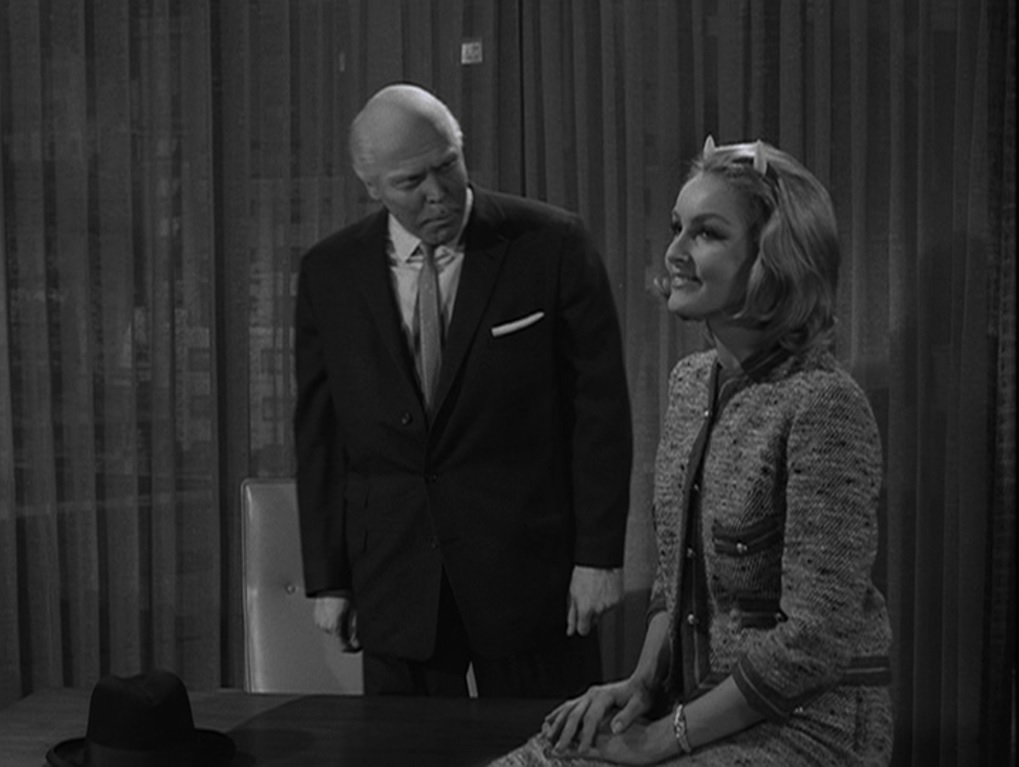
This is a good episode. It has two plot lines that I love…time travel and deals with the Devil. If the devil looked like  Julie Newmar…there would be a lot of deals signed. Albert Salmi as the greedy Feathersmith is fantastic. He is one of my favorite chacter actors of that time. You may recognize John Anderson as Deidrich…he was a character actor until his death in 1992. He had 246 acting credits on various tv shows. 

If you could go back knowing what you know now. Would it be something small or  large you would miss because you were so excited? Chances are yes…and that little something could start a chain reaction…and you might just regret it. 

The special effects in the Twilight Zone are usually great. The only bad thing I can say about them in this one is Salmi’s “old” makeup. I believe though it’s a product of our times. With high definition tv now…you can see it clear but back then on 60’s tv…it was probably fine. This one is marked low in IMDB which I totally disagree with. It does have it’s faults but is an enjoyable episode. 

From IMDB: Ms. Devlin’s Travel Offices are on the 13th floor. This is unusual in the US (and suitable to her nature) as most buildings before the 1980’s skip the 13th floor when numbering floors in their buildings. The number 13 has long been considered unlucky.

Albert Salmi previously appeared in The Twilight Zone: Execution (1960) and The Twilight Zone: A Quality of Mercy (1961), all of which involve time travel. In “Execution” and “Cliffordville” his characters are very unlikable, although that is not the case in “Quality.”

This show was written by Rod Serling and Malcolm Jameson

Rod Serling’s Opening Narration: 

Witness a murder. The killer is Mr. William Feathersmith, a robber baron whose body composition is made up of a refrigeration plant covered by thick skin. In a moment, Mr. Feathersmith will proceed on his daily course of conquest and calumny with yet another business dealing. But this one will be one of those bizarre transactions that take place in an odd marketplace known as the Twilight Zone.

Summary

Rod Serling’s Closing Narration:

Mr. William J. Feathersmith, tycoon, who tried the track one more time and found it muddier than he remembered, proving with at least a degree of conclusiveness that nice guys don’t always finish last, and some people should quit when they’re ahead. Tonight’s tale of iron men and irony, delivered F.O.B. from the Twilight Zone.

CAST

Rod Serling…Narrator / Self – Host (uncredited)
Albert Salmi … Feathersmith
John Anderson … Deidrich
Wright King … Hecate
Guy Raymond … Gibbons
Christine Burke … Joanna
John Harmon … Clark
Hugh Sanders … Cronk
Julie Newmar … Miss Devlin
Mary Jackson … Miss Pepper (uncredited)

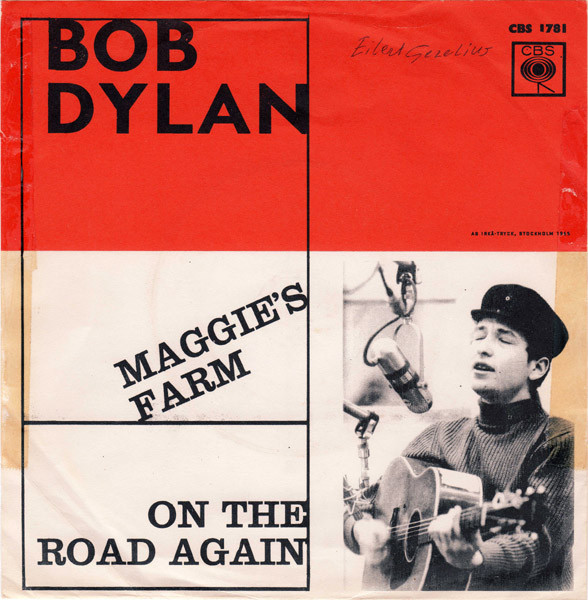
Bob Dylan – Maggie’s Farm

One of the first songs that caught my attention by Bob Dylan. I’ve seen the man live 8 times and this one…he would always play, at least in the first 5 concerts. After that I only heard it once again.

I don’t post many Dylan songs…not because I’m not a huge fan…like I said I’ve seen the man 8 times. If I get a chance, I’ll see him 8 more times.  When you post a Dylan song you almost feel the urge to do an interpretation of the song…I have no interest in doing that.

Some think he was inspired by The Bentley Brothers’ “Penny’s Farm,” a 1920s song about a rural landlord. In “Maggie’s Farm,” Dylan included descriptions of Maggie, her brother, her father, and her mother in successive verses.

The song was famous for the reaction it got at the Newport Jazz Festival when Dylan “went electric” to his die-hard folk fans. This appearance by Dylan is portrayed as one of the most important and controversial events in the history of American rock and roll. When the band came out to play his new songs from Bringing It Back Home album…much of the crowd were not amused. They wanted Bob to only play the acoustic and sing protest songs…but Bob had already started opening the folk-rock door earlier with bands such as The Byrds covering his songs.

Some say that most of the booing was not because of the songs but with different things like the short set, the volume level (you couldn’t hear Dylan sing), and other things.

Bob didn’t really care…or he didn’t show it much. He was going to do what he wanted to do. He continued with a different backing band later…and that band heard boo’s around the world…the backing band turned out to be The Band…then known as The Hawks.

Al Kooper organist: The reason they booed is because he only played for 15 minutes and everybody else played for 45 minutes to an hour, and he was the headliner of the festival. […] The fact that he was playing electric…I don’t know. The Paul Butterfield Blues Band (who had played earlier) had played electric and the crowd didn’t seem too incensed.

Maggies Farm peaked at #22 in the UK in 1965.

From Songfacts

Dylan recorded this at one of his first rock sessions on January 15, 1965. He was backed by two electric guitarists, piano, bass, and drums.

Dylan’s famous (some say infamous) set at the Newport Folk Festival on July 25, 1965 marks the split of Bob Dylan with the folk movement when he decided to play a set with a backing band of electric instruments. The set included three songs: “Maggie’s Farm,” “Like A Rolling Stone,” and “Phantom Engineer.”

 The audience at the festival was clearly angry with Dylan and they expressed their anger with a growing chorus of boos during the 16-minute set.

The band for this set was hastily thrown together. This would indicate that doing an “electric” set wasn’t necessarily part of Dylan’s plans for this festival.

Several members of this band played with the Paul Butterfiled Blues Band, who played for about 45 minutes just before Dylan took the stage. Guitarist Michael Bloomfield, bassist Jerome Arnold and drummer Sam Lay all played with Dylan that evening. Al Kooper, who didn’t play with the Butterfield band but played the instantly recognizable organ line on “Like A rolling Stone” in the studio recording, rounded out the band. Legend has it that Dylan rehearsed all night with this band the day before the performance, but even with that preparation, the performances were weak. That too could have accounted for the boos.

Al Kooper said later in an interview that he thought the booing was caused by a bad sound system, but recordings don’t bear that out.

But the day before during a blues workshop, Alan Lomax, one of the organizers of the festival, was very condescending in introducing the Butterfield Blues Band. Lomax was a blues purist and felt that white boys had no business playing the blues. That led to a physical fight between Lomax and Albert Grossman who managed both Dylan and the Butterfield Blues Band.

Also, in introducing the evening show, Pete Seeger (another organizer of the festival, and another folk music purist,) played the audience a recording of a newborn baby, and said that the final night’s program was a message from everyone to this baby that the world it was being born into was full of hate, hunger, bombs, and injustice, but that the people – the folk – would overcome, and make it a better world.

Overwrought displays like this also may have set Dylan’s teeth on edge. If he was on the fence about doing an electric set, these two events might have convinced him just to get under the skin of these two pompous organizers.

Or maybe the audience was angry with the short set of only three songs. A rain delay pushed some of the afternoon bands into the evening show. So people had been sitting and waiting for Dylan for a while. Peter Yarrow (of Peter Paul and Mary, and another of the Festival’s organizers) persuaded Dylan to return to the stage to sing a few more songs. Dylan borrowed an acoustic guitar (allegedly from Johnny Cash) and opened with “It’s All Over Now, Baby Blue” while he appeared to be regaining his wits after being blindsided by the boos from the audience.

The acoustic set seemed to placate everyone. Dylan then started to strum the chords to “Tambourine Man” but realized he didn’t have a harmonica. He asked for anyone with an E harmonic to throw it up to him. There followed a barrage of incoming harmonicas hitting the stage. Dylan picked one up, thanked the crowd and played on. (This can be seen on the Songfacts.com video of the song.)

The two recordings of Maggie’s Farm presented here – the acoustic studio version, and the video from the Newport Folk Festival – are good examples of how Dylan’s music changed. In 1963, when Dylan released his first successful recordings, he was hailed as one of the most powerful musical voices in America. By 1965, with the growing influence of the Beatles, and the continued musical conservatism of the folk movement as personified by Pete Seeger, the relationship between the folk movement and Dylan became increasingly strained. The final separation came with “Maggie’s Farm” at the Newport Folk Festival of 1965. (Thanks, David Sherman, who teaches the History of Rock and Roll at Excelsior College.) >>

Making his fifth appearance performing on the Grammys, Dylan played this at the 2011 ceremonies backed by The Avett Brothers and Mumford & Sons.

Festival! was a 1967 documentary film about Dylan’s three mid-’60s appearances at the Newport Folk Festival, including his controversial electric set from 1965. Uncut magazine asked the movie’s director, Murray Lerner, what he could hear on stage, after Dylan came on and played “Maggie’s Farm.”

“I heard a combination of boos and applause,” he replied. “And some catcalls. And then when he came back and did the acoustic songs, they got with it again. He was nervous when he came back, there’s no question about it. That was sweat you can see rolling down his face. And on ‘Mr. Tambourine Man,’ asking for a harmonica from the crowd – the fact that he forgot his harmonica.”

Maggie’s Farm

I ain’t gonna work on Maggie’s farm no more
No, I ain’t gonna work on Maggie’s farm no more
Well, I wake in the morning
Fold my hands and pray for rain
I got a head full of ideas
That are drivin’ me insane
It’s a shame the way she makes me scrub the floor
I ain’t gonna work on Maggie’s farm no more

I ain’t gonna work for Maggie’s brother no more
No, I ain’t gonna work for Maggie’s brother no more
Well, he hands you a nickel
He hands you a dime
He asks you with a grin
If you’re havin’ a good time
Then he fines you every time you slam the door
I ain’t gonna work for Maggie’s brother no more

I ain’t gonna work for Maggie’s pa no more
No, I ain’t gonna work for Maggie’s pa no more
Well, he puts his cigar
Out in your face just for kicks
His bedroom window
It is made out of bricks
The National Guard stands around his door
Ah, I ain’t gonna work for Maggie’s pa no more

I ain’t gonna work for Maggie’s ma no more
No, I ain’t gonna work for Maggie’s ma no more
Well, she talks to all the servants
About man and God and law
Everybody says
She’s the brains behind Pa
She’s sixty eight, but she says she’s fifty four
I ain’t gonna work for Maggie’s ma no more

I ain’t gonna work on Maggie’s farm no more
No, I ain’t gonna work on Maggie’s farm no more
Well, I try my best
To be just like I am
But everybody wants you
To be just like them
They sing while you slave and I just get bored
I ain’t gonna work on Maggie’s farm no more

Twilight Zone – The New Exhibit

★★★★★ April 4, 1963 Season 4 Episode 13

If you want to see where we are…HERE is a list of the episodes.

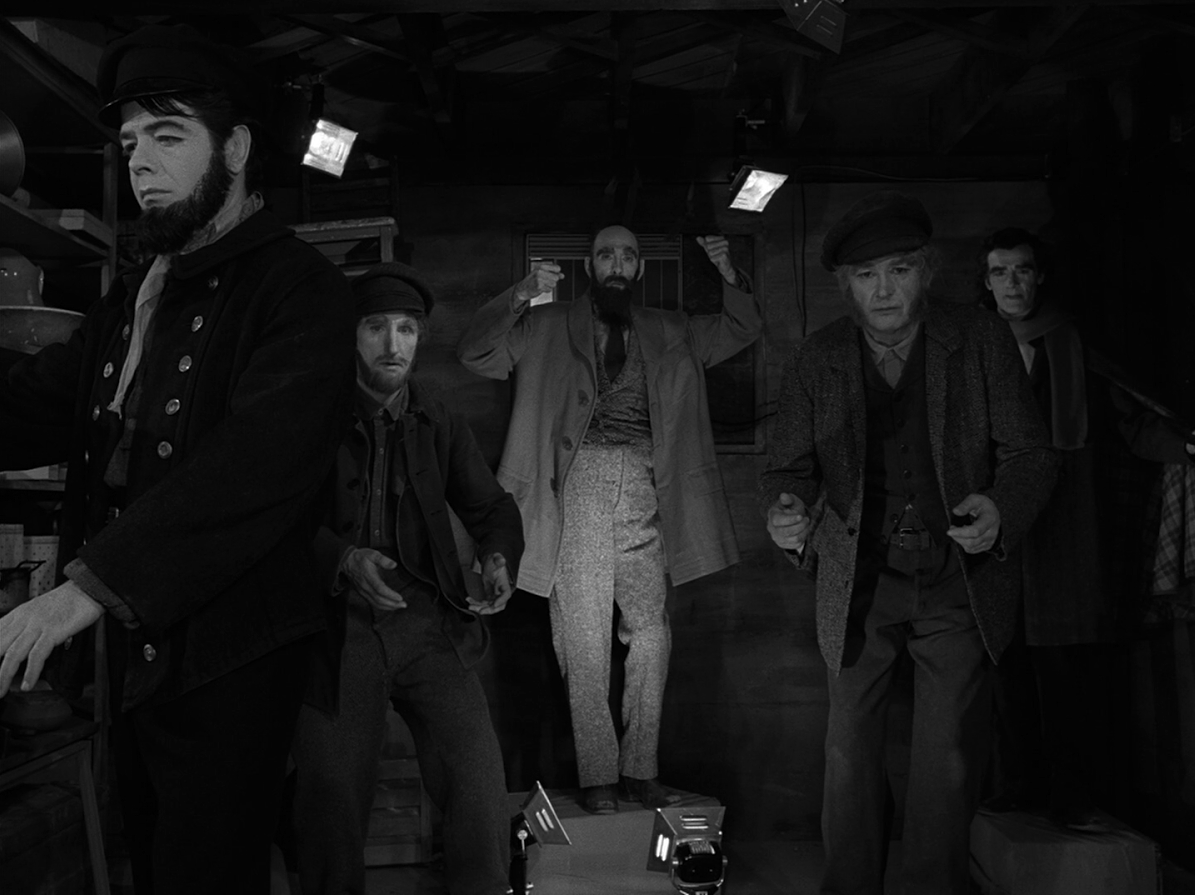
This episode of the Twilight Zone is really good. It has everything…some horror, mystery, and a great twist at the end. It could have been a 50’s type horror movie. You expect Vincent Price to come on at any time. Martin Balsam plays Martin Lombard Senescu and he is fantastic. He is a sympathetic character that loves his job at the wax museum…maybe a little too much. Will Kuluva as Ernest Ferguson plays the owner of the museum who sees the writing on the wall, the museum is not as popular as it was and will have to close. He is a kindly older gentlemen who cares… and gently lets Martin go…but not without granting Martin a favor. 

The pacing in this one is good. They use the hour to breathe life to the characters.  The story builds nicely and there is a good payoff in the end.  

There was a sad story behind the scenes. Charles Beaumont (his real name was Charles Leroy Nutt) was credited as writing this but Jerry Sohl had started ghostwriting for him by this time. Beaumont was only 35 and had been the top writer for Playboy and he wrote some of the very best Twilight Zones. He was probably the best writer the Twilight Zone had besides Rod Serling.

He was starting to forget things and could not concentrate. He was diagnosed with Alzheimers Disease or Picks Disease…they could not know which one until he passed. He passed away at 38 years old in 1967 and his son said he had the body and mind of a 95 year old. 

Jerry Sohl helped him out and split everything 50/50 and did all the writing in his name. He wrote for Hitchcock, Route 66 and Playboy under Beamont’s name. Sohl would write more Twilight Zones but not be credited. They had to keep this a secret because it was against Writers Guild rules.

Sohl’s script went before the cameras virtually unchanged, with no rewrites at all. This was the case with most of the scripts he ghosted. They went right in, and the reason is that Chuck Beaumont scripts were always so great that they didnt have to do anything.

Jerry Sohl on visiting the set:

Here I am standing with Chuck Beaumont, he recalls, and John Brahm, the director, comes up, puts his arm around him with the script that / did and says, Chuck, youve done it again! And here I am, standing right next to Chuck, unable to say a word!

This show was written by Rod Serling, Charles Beaumont, and Jerry Sohl (uncredited)

Rod Serling’s Opening Narration: 

Martin Lombard Senescu, a gentle man, the dedicated curator of murderers’ row in Ferguson’s Wax Museum. He ponders the reasons why ordinary men are driven to commit mass murder. What Mr. Senescu does not know is that the groundwork has already been laid for his own special kind of madness and torment found only in the Twilight Zone.

Summary

Martin Lombard Senescu is a gentle man and the curator of Murderer’s Row in Ferguson’s wax museum. He loves his work and is fascinated by what drives men to commit the crimes that they do. He’s informed by his boss Mr. Ferguson that the property is being sold to developers who will raze the building and erect a supermarket. Martin brings 5 of of wax figures home but after a year his wife is at her wits end. Martin spends all of his time in the basement with his beloved friends and the cost of keeping them is eating into their already limited income. When Martin finds Emma dead in the basement he buries her there. When her brother Dave shows up, he too is apparently killed. After Mr. Ferguson finally finds a buyer for the wax figures, Martin reluctantly agrees to let them go. There is a new addition to the exhibit however.

Rod Serling’s Closing Narration:

The new exhibit became very popular at Marchand’s, but of all the figures none was ever regarded with more dread than that of Martin Lombard Senescu. It was something about the eyes, people said. It’s the look that one often gets after taking a quick walk through the Twilight Zone.

CAST

Rod Serling…Narrator / Self – Host (uncredited)
Martin Balsam …Martin Lombard Senescu
Will Kuluva…Ernest Ferguson
Margaret Field…Emma Senescu (as Maggie Mahoney)
William Mims…Dave
Phil Chambers…Gas Man
Leonard Bremen…Van Man (as Lennie Bremen)
Eddie Barth…Sailor (as Ed Barth)
Craig Curtis…Sailor
Milton Parsons…Henri Desire Landru
David Bond…Jack the Ripper
Bob Mitchell…Albert W. Hicks
Robert McCord…Burke (as Robert L. McCord)
Billy Beck…Hare
Marcel Hillaire…The Guide

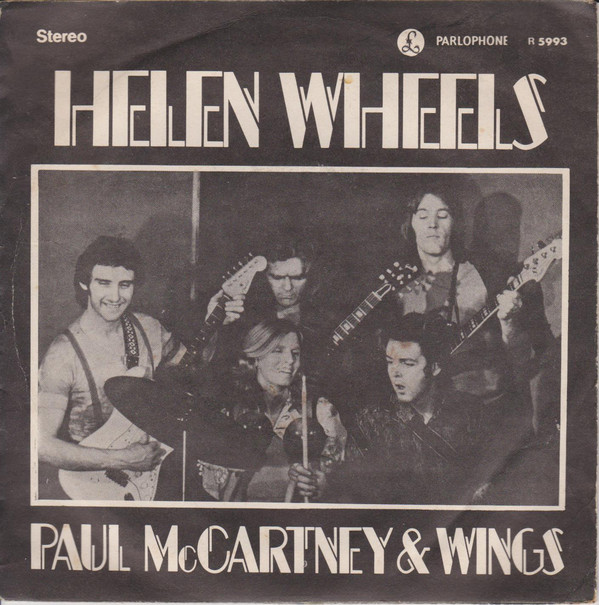
Paul McCartney – Helen Wheels

Great rocker by Paul that was on his most successful album Band On The Run. “Helen Wheels” was Paul’s tongue-in-cheek nickname for his Land Rover vehicle (“Hell-on-Wheels”). Paul originally wanted this song to be a stand-alone single but Capitol overruled him…. and placed it on US versions of the Band On The Run album.

Drummer Denny Seiwell and guitarist Henry McCullough quit Wings right before Paul was heading to Lagos, Nigeria to record this album. Paul only had himself, Linda, and Denny Laine to get it done. He wanted to record outside of the UK and got a list from Capitol of all of ther studio locations. He picked Africa and was accused of going there to expand his music with their percussion and rythms.

They got to Lagos ready to work but it didn’t go well at first. Paul and Linda walked home one night from the studio and were pestered by a group of men in a car, who repeatedly asked if they wanted a lift. After arguing with the men…six of them got out of the car and robbed Paul and Linda by gun point. They ended up handing over over demo tapes, cameras and cash. Al the music and lyrics he had for Band On The Run was gone. He had to reconstruct everything in the Lagos studio.

They went out of their way to avoid an African sound after the mugging and being accused of coming to Lagos to exploit their music. After 6 weeks in Lagos, the album was completed in London.

I do wish Paul would have made more songs like Juinors Farm, Let Me Roll It, and this one. He could do edgy songs when he wanted to.

The song peaked at #10 in the Billboard 100, #4 in Canada, and #12 in the UK in 1973. It was a non-album single in the UK and Europe but included on Band on the Run in America.

The Band on the Run album peaked at #1 in the Billboard Album Charts, Canada, The UK, and #23 in New Zealand in 1973-1974.

Helen Wheels

Said farewell to my last hotel, it never was much kind of abode
Glasgow town never brought me down when I was heading out on the road
Carlisle city never looked so pretty, and the kendal freeway is fast
Slow down driver, wanna stay alive, i wanna make this journey last

Helen! (Helen) Helen Wheels
Ain’t nobody else gonna know the way she feels
Helen! (Helen) Helen Wheels
And they never gonna take her away

M6 south down Liverpool, where they play the west coast sound
Sailor Sam, he came from Birmingham, but he never will be found
Doin’ fine when a London sign, greets me like a long lost friend
Mister motor won’t you check her out, she’s gotta take me back again

Helen! (Helen) Helen Wheels
Ain’t nobody else gonna know the way she feels
Helen! (Helen) Helen Wheels
And they never gonna take her away

Got no time for a rum and lime, i wanna get my right foot down;
Shake some dust off of this old bus, i gotta get her out of town
Spend the day upon the motorway, where the carburettors blast;
Slow down driver, wanna stay alive, i wanna make this journey last

Helen! (Helen) Helen Wheels
Ain’t nobody else gonna know the way she feels
Helen (Helen) Helen Wheels
And they never gonna take her away

Say bye-bye…

Albert King – As The Years Go Passing By

As you probably have seen…I’ve beening listening to some blues lately…this one is great. King’s clean piercing guitar hits the spot.

When Duane Allman was helping Eric Clapton on the Derek and the Dominos album they had Layla’s main track laid out. Duane suggest a new intro…he got that intro from this song that King did and expanded on it. It’s very faint…but Duane saw something in there and made it work. That shows you how some songs influence other artists. Just a riff here or there that they build on.

This is a great song all by itself. It was written by “Deadric Malone”, a pseudonym for Don Robey. It was first recorded by Fention Fenton Robinson and released as a single in 1959.

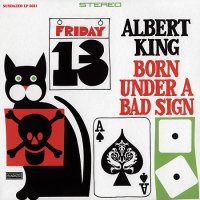
Albert started to record in the 50s and would eventually go to Memphis to join Stax Records in the 60s. In 1967 we would relased the album Born Under A Bad Sign which contained this song. Love that cover design!

The album cover for Born Under a Bad Sign. The cover features a drawing of various objects related to superstition, including: a black cat, snake eyes, an ace of spades, and a calendar displaying the date Friday the 13th.

As The Years Go Passing By

Ah the blues
The ball and chain that is ’round every English musician’s leg
In fact every musician’s leg
Tryin’ to kick it off baby?
No no.
You’ll just never do it
And these are the blues of time
And the blues of a woman
And a man thinkin’ of her
As time goes by

There is nothin’ I can do
If you leave me here to cry
There is nothin’ I can do
If you leave me here to cry
You know my love will follow you baby
Mmm until the day I die

I’ve given you all I own;
That is one thing you cannot deny
Oh I’ve given you all I own;
Baby that is one thing you cannot deny
And my love will follow you baby
Yeah
Till the day this man dies.

I’ve got failure all around me
No matter how hard I try.
I’ve got failure
It’s all around me
No matter how hard I
Try try
You know my ghost will haunt you baby
Until the day you stop down and die
Well you better get up
Right now right now

Well
You think that you have left me behind
And that with your other man you’re safe
And you’re away from me baby but uh
One o’ these days you’re gonna break down and cry
Because there is no escape from this man
Because this man’s love is so strong
He’s gonna haunt you
You know my love will follow you
Mmm until the day I die

There is just one thing I want to tell you before I go
I’m gonna leave it
I’m gonna leave it
Leave it up to you
So long
baby bye-bye
Hey I’m gonna leave it up to you baby
So long
baby bye-bye

Well you know my love will follow you
Mmm ’til the day I die
Till the day I die
Till the day I die
Till the day I die
Till the day I die
Till the day I am dead
Till the day that they rest my head
Till the day I die
Till the day I I I I die
Till the day I die
Till the day I die
Till the day I die
Till the day that you die and I die
Till the day I die
Till the day I die
Till the day I die
Till the day I die
Till the day I die
Till the day I die
Till the day I die
Till the day I die
Till the day I die
Till the day I die

Die
Die
Die
Die

Led Zeppelin – Rock And Roll

The title says it all with this song. It is one of the best Zeppelin pure rock and roll songs. As with most things with Zeppelin the drums made this song…John Bonham was the key element to their songs just as Keith Moon was to The Who. The two drummers helped shape the sound of their respective bands more than most.

This song came about when the band was working on “Four Sticks” at the Headley Grange mansion they had rented in Hampshire, England to record the album. With a pretty much unplayable drum pattern, John Bonham got frustrated with the session, and tensions rose. In a pique of anger, he started playing something completely different: a riff based on the intro to the 1957 Little Richard song “Keep a Knockin.'”

If you want more Led Zeppelin…yesterday Dave from A Sound Day had a post on their first album.

The band was not a singles band in any sense but this one peaked at #47 in the Billboard 100 and #38 in Canada in 1972. They didn’t release singles in the UK in the band’s lifetime.

The album did much better…it peaked at #1 in the Billboard 100, Canada, and the UK in 1971.

1971 was maybe the best year of rock albums ever. A few months before this one…The Who released Who’s Next, The Allman Brothers – At Fillmore East, David Bowie – Hunky Dory, The Stones – Sticky Fingers, Doors – L.A. Woman, Alice Cooper – Killer, and many more.

Jerry Lee Lewis did a cover of this song with Jimmy Page…I like the short opening raw riff Jimmy plays.

Jimmy Page: “We were recording something else when John Bonham started playing the drum intro to ‘Keep a Knockin’ by Little Richard and I immediately started playing the riff for ‘Rock And Roll.’ Instead of laughing it off and going back to the previous song, we kept going. ‘Rock And Roll’ was written in minutes and recorded within an hour.”

Robert Plant: “We just thought rock and roll needed to be taken on again,” “I was finally in a really successful band, and we felt it was time for actually kicking ass. It wasn’t an intellectual thing, ’cause we didn’t have time for that – we just wanted to let it all come flooding out. It was a very animal thing, a hellishly powerful thing, what we were doing.”

From Songfacts

As the title suggests, the song is based on one of the most popular structures in rock and roll; namely, the 12-bar blues progression (in A). The phrase “Rock and Roll” was a term blues musicians used, which meant sex.

Robert Plant wrote the lyrics, which were a response to critics who claimed their previous album, Led Zeppelin III, wasn’t really rock and roll. Led Zeppelin III had more of an acoustic folk sound, and Plant wanted to prove they could still rock out.

Infused with creative energy, they put “Four Sticks” aside and started working on this new song, which they called “It’s Been a Long Time.” Jimmy Page blasted out a guitar part, and the bones of the song were completed in about 30 minutes.

The band often used this either as an encore or to open live shows from 1971-1975.

Ian Stewart, known for his work with The Rolling Stones (he was almost a member of the group, but their manager didn’t think he looked the part), played piano on this track. Stewart was on hand because Led Zeppelin was using the Rolling Stones’ mobile recording unit to record the album, as the Headley Grange mansion didn’t have a studio. Stewart was sent as a technician to assist with recording, but he came in quite handy on “Rock And Roll” when they needed some serious boogie-woogie piano.

Plant, Jimmy Page, and John Paul Jones played this at Live Aid in 1985. It was the first time they played together since the death of John Bonham in 1980. Tony Thompson and Phil Collins sat in for Bonham on drums, which didn’t go over well with Page and Plant. When the band reformed for a benefit show on December 10, 2007, it was with John Bonham’s son Jason on drums. This was the last song they played at the show, which raised money for the Ahmet Ertegun education fund.

Besides Live Aid, the remaining members of Led Zeppelin played this on two other occasions. When Robert Plant’s daughter Carmen turned 21 in 1989, they played it at her birthday party. They also played it at Jason Bonham’s wedding in 1990. Jason is John Bonham’s son, and he sat in on drums on both performances.

This has been covered by many other artists, including Def Leppard and Heart. In 2001, it was recorded by Double Trouble (Stevie Ray Vaughan’s backup band), for their 2001 album Been A Long Time. Susan Tedeschi sang lead on the track.

All four band members got writing credits for this. Many Zeppelin songs are credited only to Page and Plant.

This was the first Led Zeppelin song used in a commercial. Cadillac used it to kick off a new advertising campaign in 2002 with the tagline “Breakthrough.” The company was going for a hip, new image, since their audience was slowly dying off. The spots aired for the first time on the Super Bowl, and sales rose 16% the next year.

The lyric “It’s been a long time since the book of love” is a reference to the Monotones’ 1958 hit “Book Of Love,” which is also referenced in “American Pie.”

Since the death of his father, Jason Bonham has filled in behind the drum set for various Led Zeppelin reunion gigs. He told American Songwriter this is the hardest Zeppelin song to play as, “a lot of people out there try and play it, and really it’s a two-handed shuffle all the way through, playing the sixteenth notes, it’s not just boom bap-boom-bap-boom- bap, it’s boom-boom-bap-bap-boom-boom-bap-bap on the snare and the hi-hat. It’s a hard one to play properly.”

Stevie Nicks added this to her live set in 2001. 

Rock and Roll

It’s been a long time since I rock and rolled
It’s been a long time since I did the stroll
Ooh, let me get it back, let me get it back, let me get it back
Mmm, baby, where I come from

It’s been a long time, been a long time
Been a long, lonely, lonely, lonely, lonely, lonely time
Yes, it has

It’s been a long time since the book of love
I can’t count the tears of a life with no love
Carry me back, carry me back, carry me back
Mmm, baby, where I come from, whoa, whoa, oh

It’s been a long time, been a long time
Been a long, lonely, lonely, lonely, lonely, lonely time

Oh, oh, ahh, ahh

Oh, it seems so long since we walked in the moonlight
Making vows that just couldn’t work right
Ah, yeah, open your arms, open your arms, open your arms
Baby, let my love come running in, yeah

It’s been a long time, been a long time
Been a long, lonely, lonely, lonely, lonely, lonely time

Yeah, hey, yeah, hey

Ooh, yeah, ooh, yeah
It’s been a long time, been a long time
Been a long, lonely, lonely, lonely, lonely, lonely time

Twilight Zone –  I Dream Of Genie

★★1/2 March 21, 1963 Season 4 Episode 12

If you want to see where we are…HERE is a list of the episodes.

This episode is one of the light ones. You will notice the star of this episode right off the bat if you are a fan of the Andy Griffith Show. It’s Howard Morris…who is better known as Earnest T Bass. He does what he can do with the script. It’s slow paced and dull in spots. It does have a good moral to the story and a good twist at the very end…getting there is the challenge in this one. I feel like a broken record in a few of these longer episodes…but the hour works against itself in this one. One thing I will say…Howard Morris and Jack Albertson as the Genie are good in their parts. 

The best moments in I Dream of Genie is when Howard Morris is in the fantasy roles imagining how a wish would turn out if he made it. There are some funny moments but the journey is too long to get there. A thirty minute version of this still wouldn’t save much. 


This show was written by Rod Serling and John Furia

Rod Serling’s Opening Narration: 

Meet Mr. George P. Hanley, a man life treats without deference, honor or success. Waiters serve his soup cold. Elevator operators close doors in his face. Mothers never bother to wait up for the daughters he dates. George is a creature of humble habits and tame dreams. He’s an ordinary man, Mr. Hanley, but at this moment the accidental possessor of a very special gift, the kind of gift that measures men against their dreams, the kind of gift most of us might ask for first and possibly regret to the last, if we, like Mr. George P. Hanley, were about to plunge head-first and unaware into our own personal Twilight Zone.

Summary

A smart aleck genie appears from a lamp to a meek man, George P. Hanley. Hanley is so used to bad luck, he imagines how each of three possible wishes could go very wrong – but the genie will grant him only one wish.


Rod Serling’s Closing Narration:

Mr. George P. Hanley, former vocation; jerk. Present vocation; genie. George P. Hanley, a most ordinary man whom life treated without deference, honor, or success, but a man wise enough to decide on a most extraordinary wish, that makes him the contented, permanent master of his own altruistic Twilight Zone.

CAST

Rod Serling … Narrator / Self – Host (uncredited)
George P. Hanley…Howard Morris
Ann…Patricia Barry
Watson…Loring Smith
Starlet…Joyce Jameson
Genie…Jack Albertson
Roger…Mark Miller[1]
May…Molly Dodd
The P.R. Man/Scientist were played Milton Parsons
Masters…James Millhollin
Sam…Bob Hastings

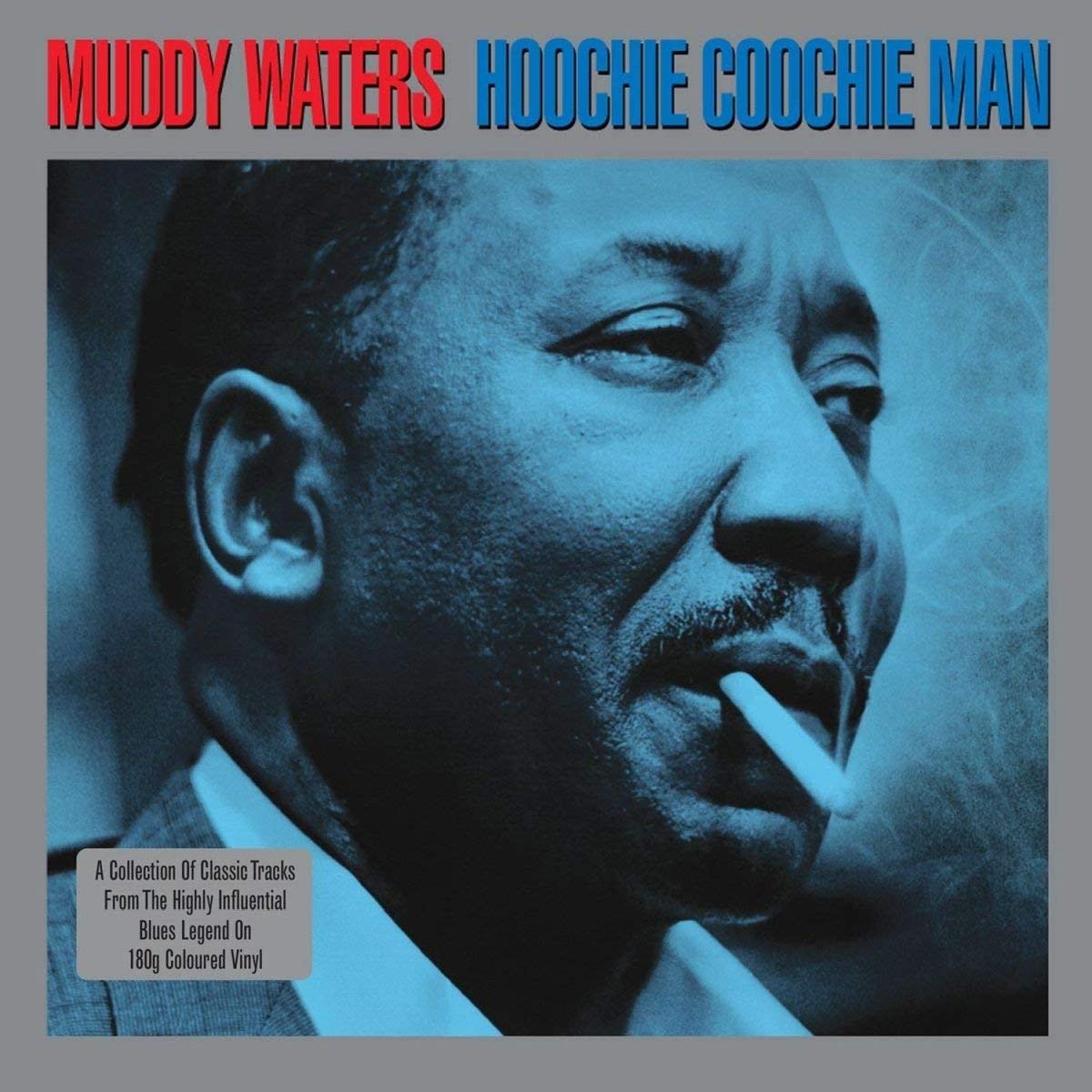
Muddy Waters – Hoochie Coochie Man

What a great song by the one and only Muddy Waters.

The song was written by the great blues writer Willie Dixon. Muddy Waters recorded this song in 1954. Before Waters recorded it, he tested it out at the Chicago blues club Zanzibar. Willie Dixon gave Waters some advice before the band hit it: “Well, just get a little rhythm pattern, do the same thing over again, and keep the words in your mind.”Muddy recorded it a few weeks later with Dixon on bass.

Record label head Leonard Chess went south to bolster sales, and
partner Phil Chess told the magazine that the record had sold an astounding 4,000 copies in a single week. It became Muddy’s top selling single, and spent three months in the national charts, where it peaked at #3 in the R&B charts in 1954.

Willie Dixon would bring Muddy other songs that solidified his hoochie
coochie image: “Just Make Love To Me,” “I’m Ready,” and “Natural Born Lover.”

What a band backing Muddy! The musicans on the recording were Muddy Waters on lead vocals, guitar, Little Walter on harmonica, Otis Spann on piano, Jimmy Rogers on guitar, Willie Dixon on bass and Fred Below on drums.

British blues musician Long John Baldry named his 1964 band Long John Baldry And His Hoochie Coochie Men in honor of this song.

Willie Dixon: “People believe in mystic things. Like people today believe in astrology. That’s been going on for generations, since biblical days. People all over the world believe in it. Even before Jesus was born, according to the Bible. The wise men saw the stars in the East and were able to predict about things. All of these things are mystic. They say, ‘Hoochie coochie people are telling fortunes.’ You know, like the wise men of the East. They call them ‘voodoo men’ or ‘hoochie coochie men.’ They used to call them ‘hoodoo folk’ and ‘two-head people.’ They got many names for everybody.” (this appears in Zollo’s book Songwriters On Songwriting)

Wilie Dixon: “There was quite a few people around singing the blues,” 
“But most of ’em was singing all sad blues. Muddy was giving his blues a little pep, and I began trying to think of things in a peppier form.”

Author/musician Roger Reale: “The stark realism, the drama, and especially the vocal delivery are what do it for me on ‘Hoochie Coochie Man.’ It’s half conversational; Muddy gets your attention without overdoing it. And those lyrics about ‘a gypsy woman’ always felt kind of fascinating.”

Hoochie Coochie Man

Gypsy woman told my momma, before I was born
You got a boy-child comin’, gonna be a son-of-a-gun
Gonna make these pretty women, jump and shout
And the world will only know, a-what it’s all about

Why’know I’m here
Everybody knows I’m here
And I’m the hoochie-coochie man
Everybody knows I’m here

On the seventh hour, of the seventh day,
On the seventh month, the seventh doctor said:
“He’s born for good luck, and I know you see;
Got seven hundred dollars, and don’t you mess with me

Why’know I’m here
Everybody knows I’m here
And I’m the hoochie-coochie man
Everybody knows I’m here

Gypsy woman told my momma
Said “Ooh, what a boy,
He gonna make so many women,
Jump and shout for joy”

Why’know I’m here
Everybody knows I’m here
And I’m the hoochie-coochie man
Everybody knows I’m here

Gypsy woman told my momma, before I was born
You got a boy-child comin’, gonna be a son-of-a-gun
Gonna make these pretty women, jump and shout
And the world will only know, a-what it’s all about

Why’know I’m here
Everybody knows I’m here
And I’m the hoochie-coochie man
Everybody knows I’m here

I got a black cat bone, I got a mojo too
I got John the Conqueror, I’m gonna mess with you
I’m gonna make you, pretty girl, lead me by the hand
Then the world will know, the Hoochie-Coochie Man

Lovin’ Spoonful – Summer In The City

This is one of those transport songs. It takes me to a time when I wasn’t around…the mid sixties…at least my interpretation of it.

They were a great singles band but had a short window. From 1965 to 1967 they had 7 top 10 hits. This single peaked at #1 in the Billboard 100, #1 in Canada, #11 in the UK, and #3 in New Zealand in 1966.

The song was a collaboration between John Sebastian, Steve Boone (bass player), and John Sebastian’s brother Mark. Mark was 15 years old when he wrote a poem that John used as the basis for the song – John especially liked the line that went, But at night there’s a different world.

Steve Boone came up with the middle eight, which John thought sounded like the Gershwin composition “An American in Paris,” where the orchestra implies the sound of traffic and city noises. This gave him the idea of incorporating car horns and other city ambiance into the track

Things started to fall apart due to repercussions from guitarist Zal Yanovsky and bassist Steve Boone’s 1966 pot bust in San Francisco. They were pressured into a deal where they agreed to introduce an undercover cop to partygoers in the city, one of whom got busted. A backlash ensued that damaged their reputation in the counterculture.

In 1967 Zal Yanovsky left the band citing musical differences with John Sebastian. Yanovsky would later become a  Chef in Kingston, Ontario, Canada in his restaruarnt Chez Piggy. His daughter Zoe Yanovsky took over the restaurant after Zal’s death in 2002 and still runs it.

In 1968 Sebastian left for a solo career and the band carried on until 1969 without a significant hit.

The original group (John Sebastian,  Zal Yanovsky, Joe Butler and Steve Boone) reunited briefly in the fall of 1979 for a show at the Concord Hotel in the Catskills for an appearance in the Paul Simon film One Trick Pony.

John Sebastian: “That song that came from an idea my brother Mark had, he had this great chorus, and the release was so big. I had to create some kind of tension at the front end to make it even bigger. That’s where that jagged piano part comes from.”

From Songfacts

This song contrasts what it’s like to live in a large city during the day and during the night. According to the song, it’s difficult to walk around a crowded and hot city during the day, but it’s great at night because you have plenty of opportunities to chase women. This particular city is New York, where the band formed. 

.The band was rather particular about the traffic sounds. Instead of just using what was available on the sound effects records in the studio, they found an old-school radio engineer – a guy who used to create the soundscapes for shows, so if a guy was riding a horse, you’d hear the hooves hitting the ground and the wind whistling by. This guy, whom John Sebastian referred to as a “hilarious old Jewish sound man,” came in with a huge library of street sounds, which the band went through for hours. They wanted the scene to build, so it starts softly (the horn at the beginning comes from a Volkswagen Beetle), and grows to a gridlock nightmare. To close the scene, they used a pneumatic hammer pounding away at the pavement.

This was recorded over two days: At the first session, they put down the instruments: guitar, bass, autoharp, drums, organ, electric piano and percussion. The second session was for vocals and sound effects.

The sound of car horns and traffic was the first time these sounds appeared on a hit song. A year later, Kenny Gamble and Leon Huff used the idea when they produced the Soul Survivors track “Expressway (To Your Heart).”

Appropriately, this song was released in the summer of 1966 – July 4, to be exact. It quickly climbed the chart, reaching #1 on the chart dated August 13, where it stayed for three weeks.

This is used during the looting sequence on The Simpsons episode “Poppa’s Got a Brand New Badge.”

The song served as the theme song for German art-director Wim Wenders’ first film, 1970’s Summer in the City. It plays during an incongruous scene in which the protagonist Hans is seen walking on a brutally cold day, surrounded by snow.

This was used at the beginning of the movie Die Hard: With A Vengeance. The song plays throughout the opening credits, showing different scenes of New York City until a building blows up. 

From 2006-2007, the piano portion was used in various Gatorade ads depicting the history of the sports drink, which was created in 1965.

Summer In The City

Hot town, summer in the city
Back of my neck getting dirty and gritty
Been down, isn’t it a pity?
Doesn’t seem to be a shadow in the city
All around, people looking half dead
Walking on the sidewalk, hotter than a match head

But at night it’s a different world
Go out and find a girl
Come on, come on and dance all night
Despite the heat it’ll be alright

And babe, don’t you know it’s a pity
That the days can’t be like the nights
In the summer, in the city

Cool town, evening in the city
Dressing so fine and looking so pretty
Cool cat, looking for a kitty
Gonna look in every corner of the city
Till I’m wheezing like a bus stop
Running up the stairs, gonna meet you on the rooftop

But at night, it’s a different world
Go out and find a girl
Come on, come on and dance all night
Despite the heat, it’ll be alright

And babe, don’t you know it’s a pity
That the days can’t be like the nights
In the summer, in the city

Hot town, summer in the city
Back of my neck getting dirty and gritty
Been down, isn’t it a pity?
Doesn’t seem to be a shadow in the city
All around, people looking half dead
Walking on the sidewalk, hotter than a match head

But at night, it’s a different world
Go out and find a girl
Come on, come on and dance all night
Despite the heat, it’ll be alright

And babe, don’t you know it’s a pity
That the days can’t be like the nights
In the summer, in the city