Jimi Hendrix, Paul McCartney, Miles Davis, and jazz drummer Tony Williams.
This one would have been interesting. Jimi had sent a telegram to Paul in 1969. The telegram said:
“We are recording and LP together this weekend in NewYork [sic],” “How about coming in to play bass stop call Alvan Douglas 212-5812212. Peace Jimi Hendrix Miles Davis Tony Williams.”
Beatles aide Peter Brown responded the next day say that McCartney was on Holiday and was not expected back until 2 weeks.
Of the ones on this post…this would have been the most musically interesting to me.
Elvis Presley album produced by David Bowie
Dwight Yokum said in an interview that David Bowie told him that in 1977 Elvis heard “Golden Years” on the radio and he called Bowie and asked him to produce his next album. This is a “he said he said” but it would have been a unique combination…but Bowie was no stranger to that.
A Bob Dylan/Beatles/Rolling Stones Super Album
In 1969 Producer Glyn Johns met Bob Dylan and Dylan told Johns that he would like to make an album with the Beatles and Stones. Glyn went back to England very excited and told Keith Richards and George Harrison and they were all for it. Ringo, Charlie, and Bill said they would do it. John didn’t say no but Mick and Paul said absolutely not…leaves you to wonder what it would have sounded like…
Glyn also said “I had it all figured out. We would pool the best material from Mick and Keith, Paul and John, Bob and George, and then select the best rhythm section from the two bands to suit whichever songs we were cutting. Paul and Mick were probably, right, however, I would have given anything to have given it a go.”
XYZ Band
It would have been comprised of ex-Yes bassist and drummer, Chris Squire and Alan White, along with Jimmy Page of Led Zeppelin. XYZ was said to have stood for eX–Yes-&-Zeppelin. They had rehearsals and Robert Plant came to one to give it a try in 1981 but found the music too complex for his liking…he was also getting over the death of their drummer and his friend John Bonham.
This one didn’t excite me as much…now Chris Squire and Page does sound interesting and with Robert’s comment it looks like it was going to be a more Yes progressive path.
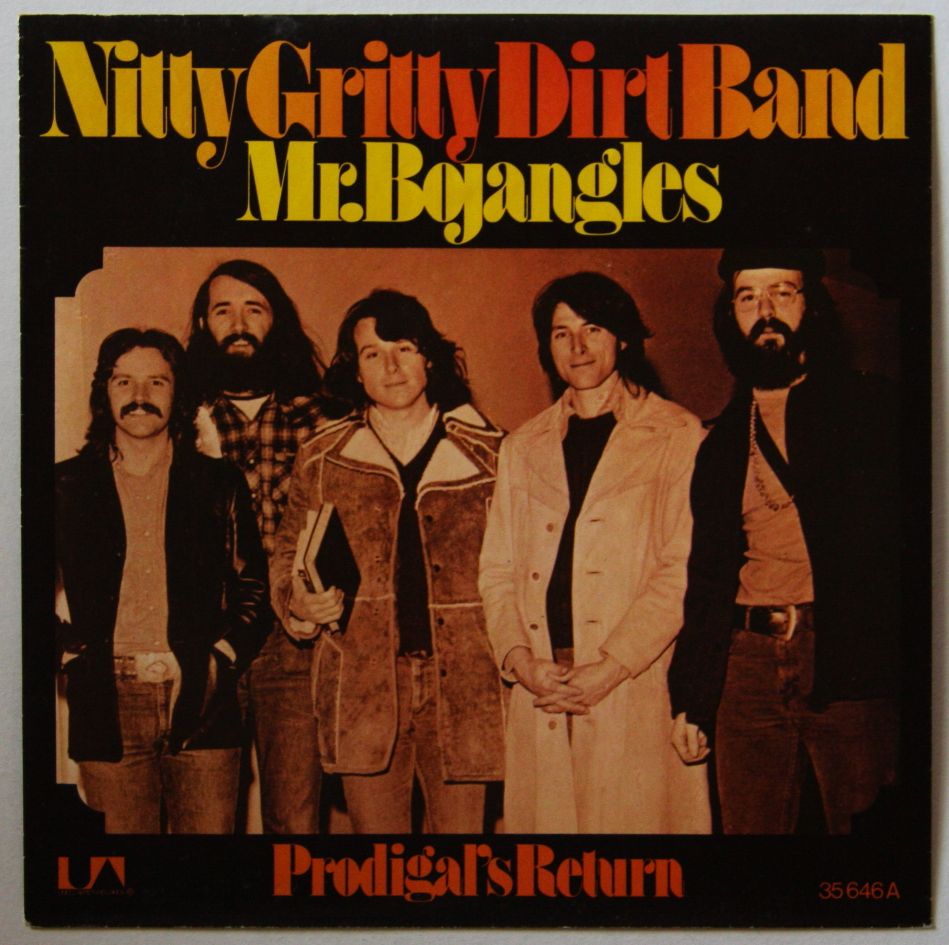
I admit that the part when the dog “up and died” it hits me.”Mr. Bojangles,” written by country music artist Jerry Jeff Walker.
It was based on a homeless man Jerry Walker met in a New Orleans jail. The man referred to himself as “Mr. Bojangles” and regaled Walker with various stories about his life and then created a depressing mood in the cell when he talked about his dog, who had died. When one of the other men requested for someone to cheer everyone up, “Mr. Bojangles” hopped up and performed a tap dance.
“Mr. Bojangles” was the nickname used by Bill Robinson, a black tap dancer who appeared in many movies in the 1930s, including with Shirley Temple in Rebecca of Sunnybrook Farm. After Robinson’s success, many black street dancers became known as “Bojangles.”
The song peaked at #9 in the Billboard 100 and #2 in Canada in 1971.
Some of the many artists to record this song include Bob Dylan, Harry Nilsson, John Denver, Nina Simone, Sammy Davis Jr., and Neil Diamond.
From Songfacts
This was written and originally released by the singer/songwriter Jerry Jeff Walker, who wrote the song in the mid-’60s and recorded it in 1968. Walker left his home in upstate New York and traveled the country playing music. He spent some time in New Orleans, where one day he was a bit tipsy and made a public display trying to convince a young lady that love, at first sight, was real. This landed him in jail, where his cellmate was an older black man who made a living as a street dancer and told Walker all about his life.
In his book Gypsy Songman, Walker tells the story: “One of the guys in the cell jumped up and said, ‘Come on, Bojangles. Give us a little dance.’ ‘Bojangles’ wasn’t so much a name as a category of itinerant street entertainer known back as far as the previous century. The old man said, ‘Yes, Hell yes.’ He jumped up and started clapping a rhythm, and he began to dance. I spent much of that long holiday weekend talking to the old man, hearing about the tough blows life had dealt him, telling him my own dreams.”
Walker moved on to Texas, where he sat down to write: “And here it came, just sort of tumbling out, one straight shot down the length of that yellow pad. On a night when the rest of the country was listening to The Beatles, I was writing a 6/8 waltz about an old man and hope. It was a love song. In a lot of ways, Mr. Bojangles is a composite. He’s a little bit of several people I met for only moments of a passing life. He’s all those I met once and will never see again and will never forget.”
Walker wrote another verse to the song but didn’t perform it because he couldn’t fit it all in. This verse was about the three wives the man in jail told him about.
The Nitty Gritty Dirt Band version starts with a spoken intro called “Uncle Charlie And His Dog Teddy.”
Jerry Jeff Walker told American Songwriter Magazine May/June 1988 that the success of this showed that songs needn’t conform to rules. He explained: “‘Bojangles’ broke all the rules. It was too long, was 6/9 time, about an old drunk and a dead dog. They had so many reasons why it didn’t fit anything. It would have never been a song if I had been living in Nashville and tried to take it through there. I recorded it in New York. I’ve always had my record deals through New York or L.A.”
According to Jerry Jeff Walker’s confrere Todd Snider, Jerry Jeff was known for a time as “Mr. Blowjangles” because of his raging cocaine habit. Todd quotes Jerry Jeff as saying: “A line of cocaine will make a new man out of you – and he’ll want some too.”
Mr. Bojangles
I knew a man, Bojangles and he danced for you In worn out shoes Silver hair, a ragged shirt and baggy pants The old soft shoe He jumped so high He jumped so high Then he’d lightly touch down I met him in a cell in New Orleans, I was Down and out He looked to me to be the eyes of age As he spoke right out He talked of life He talked of life He laughed, clicked his heels and stepped He said his name, Bojangles and he danced a lick Across the cell He grabbed his pants, a better stance Oh, he jumped so high Then he clicked his heels He let go a laugh He let go a laugh Pushed back his clothes all around Mr. Bojangles Mr. Bojangles Mr. Bojangles Dance He danced for those in minstrel shows and county fairs Throughout the south He spoke with tears of fifteen years how his dog and him Traveled about The dog up and died He up and died After twenty years he still grieves He said I dance now at every chance in honky tonks For drinks and tips But most the time I spend behind these county bars He said I drinks a bit He shook his head And as he shook his head I heard someone ask him please Please Mr. Bojangles Mr. Bojangles Mr. Bojangles Dance
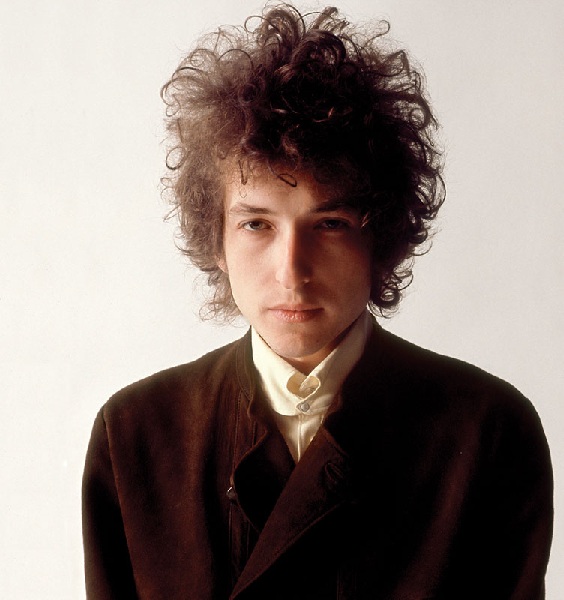
I usually post single releases but this song is one of my favorites of Bob Dylan. I can just read the lyrics of this song and enjoy it. Bob Dylan is the king of song imagery. It was written about his future wife Sara Lownds. It was released in 1965 on the “Bringing It All Back Home” album.
The lyric that hooked me was She knows there’s no success like failure, And that failure’s no success at all. That line is hard to beat.
The song was included on the album Bringing It All Back Home released in 1965. The song was not released as a single but the album peaked at #6 in the Billboard Album Charts.
The title of the song is one of a kind. It’s fun to read people’s interpretations of Dylan’s songs. His songs mean so many different things to people and he is never too open about revealing what they are about.
I found this of someone attempting to mathematically break down the song.
It’s a strange way to title a song, with a slash in the middle. Until you realize that this is not a normal title per se. It’s an equation, like 4/2=2. In mathematics, the forward slash represents “divided by. Four divided by two equals two.
So what’s Love minus zero divided by no limit? Well, no limit equals infinity. It is infinite. Ten divided by infinity would be an infinitely small number. In fact, any finite number divided by infinity would be an infinitely small number.
However, if one’s love is infinite, and you subtract zero from that, the equation now reads “Infinity divided by infinity.” Which equals One. If each human heart is an infinity, it is through love that the two become one.
Love Minus Zero/No Limit
My love she speaks like silence Without ideals or violence She doesn’t have to say she’s faithful Yet she’s true, like ice, like fire People carry roses Make promises by the hours My love she laughs like the flowers Valentines can’t buy her
In the dime stores and bus stations People talk of situations Read books, repeat quotations Draw conclusions on the wall Some speak of the future My love she speaks softly She knows there’s no success like failure And that failure’s no success at all
The cloak and dagger dangles Madams light the candles In ceremonies of the horsemen Even the pawn must hold a grudge Statues made of matchsticks Crumble into one another My love winks, she does not bother She knows too much to argue or to judge
The bridge at midnight trembles The country doctor rambles Bankers’ nieces seek perfection Expecting all the gifts that wise men bring The wind howls like a hammer The night blows cold and rainy My love she’s like some raven At my window with a broken wing
I always think of Goodfellas when I hear this. It is the scene where Ray Liotta takes Lorraine Bracco out to the Copacabana. The song peaked at #6 in the Billboard 100 in 1964.
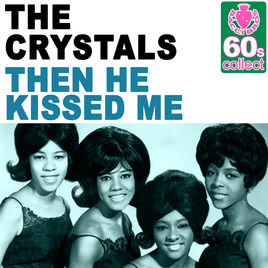
Dolores “La La” Brooks is the only Crystal to perform on this song. Spector recorded the group’s first recordings in New York City, where they were from. When he relocated to Los Angeles, he had a group called The Blossoms (with Darlene Love singing lead) record the songs “He’s A Rebel” and “He’s Sure the Boy I Love,” which he issued as The Crystals.
On all following Crystals recordings, Spector flew Brooks from New York to Los Angeles to perform the lead vocals, but the other Crystals never made the trip, as Spector preferred to use local backup singers.
From Songfacts
By July 1963, Phil Spector had already made the Hot 100 with seven chart hits that he produced. He successfully ended his partnership with Lester Sill and began his marriage to Annette Merar. Shortly after his marriage, Spector traveled to New York looking for a song to follow up on The Crystals success with “Da Doo Ron Ron.” “Then He Kissed Me” was the perfect song for the group and Phil put together one of his most extravagant productions for the record. (Thanks to Kent at Forgotten Hits.)
This was also around the time when the group shrunk from five members to four, losing Mary Thomas, who left to get married.
Phil Spector produced this using his “Wall Of Sound” technique, which meant long hours in the studio for the musicians, as Spector was notoriously stingy allowing breaks. His engineer Larry Levine recalled: “He didn’t want to give them a bathroom break. Not because he wanted to work them to death, but because he didn’t want them to move microphones or bodies or anything. He wanted everything to stay as it was in the studio. But he would work for three hours or more before we ever put anything on tape. And I think the reason was he wanted to tire these great musicians so that they weren’t playing individualistic; they were too tired. And so they just melded into this wall of sound.”
This was written by Jeff Barry and Ellie Greenwich. Phil Spector also received a songwriting credit.
Crystals lead singer La La Brooks was just 15 when she recorded this song. Had she ever been kissed? “Yeah,” she replied when we asked her. “My little boyfriend at 13 years kissed me on my mouth at the door. But not kiss kiss – you know what I’m saying?”
To coax the vocal performance out of La La Brooks, Phil Spector dimmed the lights in the studio and gave her specific instructions. “He said, ‘Think of somebody kissing you,'” Brooks told us. “I was a kid, so I’m not going to think like that. So he would turn off the lights, I would have a little light on my music, on my words, and then he said, ‘Now, concentrate.’ And I said (singing), ‘Well, he walked up to me and he asked me if I wanted to dance.’ He said, ‘That’s the way you do it!’
So I guess he had to train my mind to think that I was talking about a boy. He knew how to get things out of you.”
This was The Crystals’ last US Top 40 hit, as Phil Spector soon lost interest in them and turned his attention to another girl-group called The Ronettes. The song’s first appearance on an album was on a various-artists compilation of Phil Spector’s artists entitled Today’s Hits.
In 1965, the Beach Boys recorded a version titled “Then I Kissed Her,” which reached UK #4.
The flip side of the record was an instrumental called “Brother Julius,” which was named after a hamburger stand near the Gold Star studio where the recording sessions took place. Spector usually put throwaway songs on the B-sides of his singles so the DJs wouldn’t play them instead of the A-sides.
This song opens the 1987 movie Adventures in Babysitting, where Elisabeth Shue dances to it while getting ready for a date. The song was also used in a 2006 episode of The Simpsons called “Marge and Homer Turn a Couple Play.”
Then He Kissed Me
Well, he walked up to me and he asked me if I wanted to dance He looked kinda nice and so I said I might take a chance When he danced he held me tight And when he walked me home that night All the stars were shining bright And then he kissed me
Each time I saw him I couldn’t wait to see him again I wanted to let him know that he was more than a friend I didn’t know just what to do So I whispered I love you He said that he loved me too And then he kissed me
He kissed me in a way that I’ve never been kissed before, He kissed me in a way that I want to be kissed forever more
I knew that he was mine so I gave him all the love that I had And one day he took me home to meet his mon and his dad Then he asked me to be his bride And always be right by his side I felt so happy I almost cried And then he kissed me
Then he asked me to be his bride And always be right by his side I felt so happy I almost cried And then he kissed me And then he kissed me And then he kissed me
How I love this song but…no matter how hard I try I cannot get the movie Blue Velvet out of my head while listening to it. The song helped revive Roy’s career when it appeared in the movie. Here is what Roy said:
Oh God! I was aghast, truly shocked! I remember sneaking into a little cinema in Malibu, where I live, to see it, Some people behind me evidently recognised me because they started laughing when the “In Dreams” sequence came on. But I was shocked, almost mortified, because they were talking about ‘the candy coloured clown’ in relation to doing a dope deal, then Dean Stockwell did that weird miming thing with that lamp. Then they were beating up that young kid! I thought, ‘What in the world? But later, when I was touring, we got the video out and I really got to appreciate not only what David Lynch gave to the song, and what the song in turn gave to the film, but how innovative the movie was, how it really achieved this otherworldy quality that added a whole new dimension to “In Dreams”. I find it hard to verbalise why, but Blue Velvet really succeeded in making my music contemporary again.
Roy Orbison claimed in interviews that the lyrics for this song came to him in a dream he wrote the music once he woke up. The song peaked #7 in the Billboard 100 in 1963. While the song was in the charts Orbison toured Britain with a new unknown group, named the Beatles.
From Songfacts
This song is featured in a key scene in the 1986 film Blue Velvet where Dean Stockwell’s character lip-synchs to the song. Orbison initially rejected director David Lynch’s request to use this song, but later made a video for the track with scenes from the film.
The use of this song in Blue Velvet sparked a career resurgence for Orbison. Because of legal entanglements, he didn’t have access to the master recordings of many of his hits, so after the movie drummed up interest in his work, he set about re-recording his songs for a compilation called In Dreams: The Greatest Hits. When Orbison asked Lynch if he could use footage of the film in a video for the re-recorded “In Dreams,” Lynch not only agreed, but offered to help with the song. With T Bone Burnett producing, Lynch directed Orbison in his performance as he would an actor in a film, and it worked, allowing Orbison to be faithful to the original recording by doing it with no overdubs.
Shortly before he died, Roy Orbison recorded a follow-up to this song called “In The Real World” on his 1989 album Mystery Girl.
In Dreams
A candy-colored clown they call the sandman Tiptoes to my room every night Just to sprinkle star dust and to whisper “Go to sleep, everything is alright”
I close my eyes then I drift away Into the magic night, I softly say A silent prayer like dreamers do Then I fall asleep to dream my dreams of you
In dreams I walk with you In dreams I talk to you In dreams you’re mine all the time We’re together in dreams, in dreams
But just before the dawn I awake and find you gone I can’t help it, I can’t help it if I cry I remember that you said goodbye
Too bad it only seems It only happens in my dreams Only in dreams In beautiful dreams.
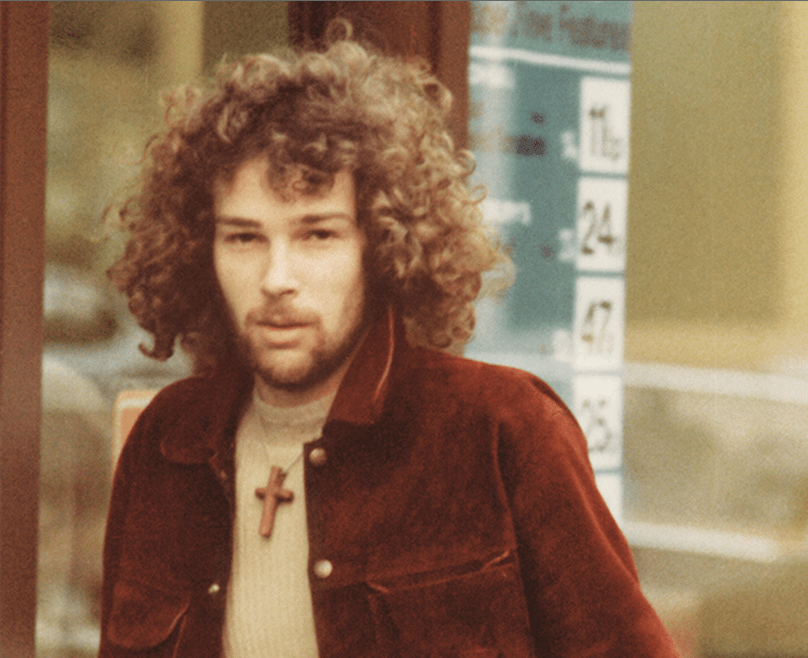
Alex Chilton’s songwriting partner in power-pop legend Big Star, Chris Bell was an overlooked member of an overlooked band. In London, he teamed up with longtime Beatles’ engineer Geoff Emerick at AIR Studios, where the final touches and mix were completed. Bell would spend the next two years engaged in a frustrating attempt to get a record deal in the U.S. and Europe. With those prospects dimming, he eventually abandoned his career and took a job with his family’s fast-food chain back home.
Just another sad story that came from Big Star. In 1978, amid when Big Star started to get a cult following, “Cosmos” was released as a single by fan and fellow musician Chris Stamey, on his tiny North Carolina-based Car label. The song (backed with the “You and Your Sister”) would be the only solo work released during Bell’s life. Just a few months after the record was pressed, Bell would die in a late-night single-car accident near his home in East Memphis on December 27, 1978. He was 27.
The B side…You and Your Sister
I Am The Cosmos
Every night I tell myself, “I am the cosmos, I am the wind” But that don’t get you back again Just when I was starting to feel okay You’re on the phone I never wanna be alone Never wanna be alone I hate to have to take you home Wanted too much to say no, no, Yeah, yeah, yeah Yeah, yeah, yeah Never wanna be alone I hate to have to take you home Want you too much to say no, no Yeah, yeah, yeah Yeah, yeah, yeah My feeling’s always happening Something I couldn’t hide I can’t confide Don’t know what’s going on inside So every night I tell myself “I am the cosmos, I am the wind” But that don’t get you back again I’d really like to see you again I really wanna see you again I’d really like to see you again I really wanna see you again I’d really like to see you again I really wanna see you again I never wanna see you again Really wanna see you again
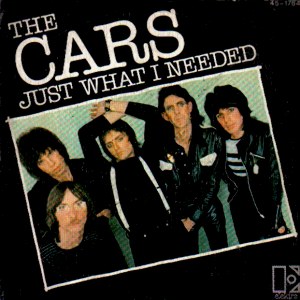
Ric Ocasek wrote this in a basement at a commune in Newton, Massachusetts where he lived. Benjamin Orr the bass player sang it. The 2-track demo recorded by the band became the most-requested song by a local band in the history of WBCN, a popular rock station in Boston.
The song peaked at #27 in the Billboard 100, #17 in the UK, and #35 in Canada in 1978. The song was on their self-titled debut album that peaked at #18 in the Billboard Album charts in 1979. The Cars set the bar high with their debut album with two songs (My Best Friends Girl, Just What I Needed) in the top 40 and one song (Let The Good Times Roll) just missing it at #41. At least 6 out of the 9 songs on the album is still being played on classic radio.
From Songfacts
This established The Cars as one of New Wave’s leading hitmakers and helped get them a deal with Elektra Records.
Lead vocals were by bass player Ben Orr, but it was written by lead singer/guitarist Ric Ocasek. Orr died of Pancreatic cancer in 2000.
This was the group’s first single. The Cars evolved from a trio called Milkwood.
The group’s manager took the Cars’ demo tape to two Boston radio stations and got it regular airplay before the group re-recorded it and released this as a single.
Seven years after it was first released, this made its second appearance on a single – this time as the B-side of the Cars’ last Top 10 hit, “Tonight She Comes.” >>
This song was used in the opening credits of the Oscar-winning film Boys Don’t Cry starring Hillary Swank.
This was used in Circuit City ads when the electronics store used the slogan, “Just What I Needed.”
Just What I Needed
I don’t mind you coming here And wasting all my time ’cause when you’re standing oh so near I kinda lose my mind It’s not the perfume that you wear It’s not the ribbons in your hair I don’t mind you coming here And wasting all my time I don’t mind you hanging out And talking in your sleep It doesn’t matter where you’ve been As long as it was deep You always knew to wear it well You look so fancy I can tell I don’t mind you hanging out And talking in your sleep I guess you’re just what I needed I needed someone to feed I guess you’re just what I needed I needed someone to bleed
When I heard this song for the first time I liked it…the line “If dreams are like movies, then memories are films about ghosts” got my attention. It is a well-written song with great imagery.
The song peaked at #40 in the U.S. Billboard Adult Top 40 in 2000.
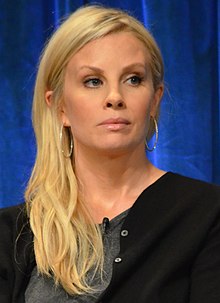
Adam Duritz the songwriter/singer has finally admitted to how he wrote the song Mrs. Potter’s Lullaby. According to an interview he did he admitted he wrote the song about a person who falls in love with an idealized version of someone and not who they actually are. In this particular case, the character falls in love with an actress on a screen, Monica Potter.
From Songfacts
This song deals with memories and hope (both the false ones and all the far-searching dreams). Mrs. Potter is a movie star who Adam Duritz is looking up at, admiring, and wanting her to be a part of his life. This song has a very dreamy feel about it all the way through, as does the video clip. Duritz says he wrote the song after going to a movie and wondering what it would be like to fall in love with a girl on the screen.
Duritz had some particular insights here, as he has dated a litany of actresses, including Mary Louise Parker, Jennifer Aniston, Samantha Mathis and Emmy Rossum.
It was written about Monica Potter from the movies Con Air, Patch Adams and Saw. He says that after he wrote the song, he had dinner with a couple who brought an actress friend along. She and Duritz hit it off, and he invited her to the recording session, where he announced her as “Mrs. Potter.” She went out of town for a few days, during which time Duritz wrote a few songs inspired by their quick separation and long phone calls: “Colorblind,” “Four Days” and “Kid Things.”
When she returned, they started dating. Their producer Dennis Herring had given her a tape from the sessions, which she played for Duritz when he told her that they were having trouble mixing the song. One take on the tape sounded really good, so Adam played that one for the band and used it on the recording. They realized that they had overcomplicated the song, so they stripped it down, working from that one take.
This song runs 7:46, but Adam Duritz tells us that it took him only about 8 hours to write. “It’s a longer song, but it’s one sitting,” he said. “I would always sit in that feeling for a while.”
Mrs. Potter’s Lullaby
Well I woke up in mid-afternoon cause that’s when it all hurts the most I dream I never know anyone at the party and I’m always the host If dreams are like movies, then memories are films about ghosts You can never escape, you can only move south down the coast
Well, I am an idiot walking a tightrope of fortune and fame I am an acrobat swinging trapezes through circles of flame If you’ve never stared off in the distance, then your life is a shame And though I’ll never forget your face, sometimes I can’t remember my name
Hey Mrs. Potter don’t cry Hey Mrs. Potter I know why but Hey Mrs. Potter won’t you talk to me
Well, there’s a piece of Maria in every song that I sing And the price of a memory is the memory of the sorrow it brings And there is always one last light to turn out and one last bell to ring And the last one out of the circus has to lock up everything
Or the elephants will get out and forget to remember what you said And the ghosts of the tilt-a-whirl will linger inside of your head And the ferris wheel junkies will spin them forever instead When I see you a blanket of stars covers me in bed
Hey Mrs. Potter don’t go Hey Mrs. Potter I don’t know but Hey Mrs. Potter won’t you talk to me
All the blue light reflections that color my mind when I sleep And the lovesick rejections that accompany the company I keep All the razor perceptions that cut just a little too deep Hey I can bleed as well as anyone, but I need someone to help me sleep
So I throw my hand into the air and it swims in the beams It’s just a brief interruption of the swirling dust sparkle jet stream Well, I know I don’t know you and you’re probably not what you seem But I’d sure like to find out So why don’t you climb down off that movie screen
Hey Mrs. Potter don’t turn Hey Mrs. Potter I burn for you Hey Mrs. Potter won’t you talk to me
When the last king of Hollywood shatters his glass on the floor and orders another Well, I wonder what he did that for That’s when I know that I have to get out cause I have been there before So I gave up my seat at the bar and I head for the door
We drove out to the desert just to lie down beneath this bowl of stars We stand up at the Palace like it’s the last of the great Pioneertown bars We shout out these songs against the clang of electric guitars You can see a million miles tonight But you can’t get very far
Hey Mrs. Potter I won’t touch and Hey Mrs. Potter it’s not much but Hey Mrs. Potter won’t you talk to me
Whenever I start reading about someone (In this case Elvis Presley) I usually dive deep into them. I’ve watched a few documentaries on youtube and the Comeback Special.
Last week Slightly Charming (I highly recommend checking out her blog) recommended this documentary on Elvis and it is the best one I’ve watched about him. It’s an HBO production with commentary by Priscilla Presley, Bruce Springsteen, Tom Petty, Robbie Robertson, and many others.
It is a two-part documentary around 3 hours long both combined. Much like the Peter Guralnick books I’ve been reading it is very even-handed but it doesn’t pull any punches.
Elvis was an interesting person. A poor southern boy who gained fame and fortune quickly and handled it well considering what he was going through until his mother passed away. After that came the Army stint in Germany and from there while his fortune and fame grew his artistic credibility went down. In the mid-sixties, while The Beatles, Dylan, and the Stones dominated the charts…Elvis, a big influence to all three was stuck in a cycle of bad movies and bad soundtracks that he didn’t want to do.
The documentary goes over Colonel Tom Parker his manager, The infamous Memphis Mafia, Las Vegas, and the failed marriage to Priscilla.
The one thing this film does is concentrate on his music and not the parody he turned into at the end of his life. I found myself rooting for him during the 1968 Comeback Special. He had the spark back again and his voice was the Elvis we heard in the fifties. After the dismal movie soundtracks, he made this great comeback special but then it slowly started to go down. There was still good music to come but the end was in sight.
This great documentary is worth the time to check out.
Just a beautiful song and it’s close to perfect. The song was obviously inspired by Vincent Van Gogh. Underneath the Van Gogh museum in Amsterdam, there is a time capsule that contains the sheet music to this song along with some of Van Gogh’s brushes. This song is often played at the museum.
The song peaked at #12 in the Billboard 100, #1 in the UK, and #3 in Canada. It was on the album American Pie.
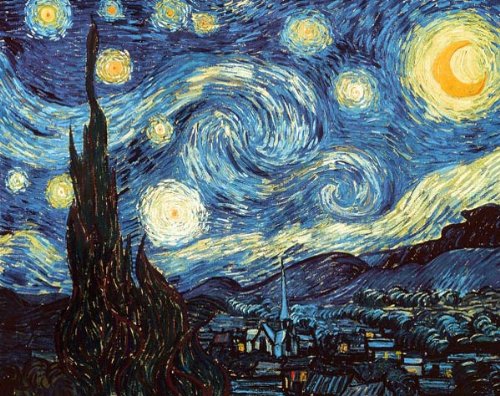
Don McLean: “In the autumn of 1970 I had a job singing in the school system, playing my guitar in classrooms. I was sitting on the veranda one morning, reading a biography of Van Gogh, and suddenly I knew I had to write a song arguing that he wasn’t crazy. He had an illness and so did his brother Theo. This makes it different, in my mind, to the garden variety of ‘crazy’ – because he was rejected by a woman as was commonly thought. So I sat down with a print of Starry Night and wrote the lyrics out on a paper bag.”
McLean was going through a dark period when he wrote this song “I was in a bad marriage that was torturing me. I was tortured. I wasn’t as badly off as Vincent was, but I wasn’t thrilled, let’s put it that way.”
From Songfacts
The words and imagery of this song represent the life, work, and death of Vincent Van Gogh. A Starry Night is one of the Dutch impressionist’s most famous paintings.
The lyrics, “Paint your palette blue and gray” reflect the prominent colors of the painting, and are probably a reference to Vincent’s habit of sucking on or biting his paintbrushes while he worked. The “ragged men in ragged clothes” and “how you tried to set them free” refer to Van Gogh’s humanitarian activities and love of the socially outcast as also reflected in his paintings and drawings. “They would not listen/They did not know how” refers to Van Gogh’s family and some associates who were critical of his kindness to “the wretched.”
“How you suffered for your sanity” refers to the schizophrenic disorder from which Van Gogh suffered.
This song and Van Gogh’s painting reflect what it’s like to be misunderstood. Van Gogh painted “Starry Night” after committing himself to an asylum in 1889. He wrote that night was “more richly colored than the day,” but he couldn’t go outside to see the stars when he was committed, so he painted the night sky from memory.
Talking about the song on the UK show Songbook, McLean said: “It was inspired by a book. And it said that it was written by Vincent’s brother, Theo. And Theo also had this illness, the same one Van Gogh had. So what caused the idea to percolate in my head was, first of all, what a beautiful idea for a piece of music. Secondly, I could set the record straight, basically, he wasn’t crazy. But then I thought, well, how do you do this? Again, I wanted to have each thing be different.
I’m looking through the book and fiddling around and I saw the painting. I said, Wow, just tell the story using the color, the imagery, the movement, everything that’s in the painting. Because that’s him more than he is him.
One thing I want to say is that music is like poetry in so many ways. You have wit and drama and humor and pathos and anger and all of these things create the subtle tools that an artist, a stage artist, a good one, uses. Sadly, this has really gone out of music completely. So it makes someone like me a relic because I am doing things and people like me are doing things that utilize all the classic means of emotional expression.”
There could be some religious meaning in this song. McLean is a practicing Catholic and has written songs like “Jerusalem” and “Sister Fatima” that deal with his faith. The “Starry Night” could mean creation, with many of the other lyrics referring to Jesus. McLean has said that several of the songs on the American Pie album has a religious aspect to them, notably the closing track “Babylon.”
Josh Groban recorded the song for his self-titled debut album, which was released in 2001 when he was just 20 years old.
The British electronic artist Vincent Frank aka Frankmusik (check out “Better Off as Two”) was named after this song.
Irish singer Brian Kennedy sang this song at footballer George Best’s funeral.
According to the movie Tupac, the Resurrection, Gangsta rapper Tupac Shakur was influenced by Don McLean, and this was his favorite song. When he was fatally wounded in a drive-by shooting in 1996, his girlfriend put this tune into a player next to his hospital bed to ensure it was the last thing he heard.
This soundtracked the moment on the “‘Scuse Me While I Miss the Sky” episode of The Simpsons when Lisa becomes interested in astronomy.
Vincent (Starry, Starry Night)
Starry, starry night Paint your palette blue and gray Look out on a summer’s day With eyes that know the darkness in my soul Shadows on the hills Sketch the trees and the daffodils Catch the breeze and the winter chills In colors on the snowy linen land
Now I understand what you tried to say to me And how you suffered for your sanity How you tried to set them free They would not listen, they did not know how Perhaps they’ll listen now
Starry, starry night Flaming flowers that brightly blaze Swirling clouds in violet haze Reflect in Vincent’s eyes of china blue Colors changing hue Morning fields of amber grain Weathered faces lined in pain Are soothed beneath the artist’s loving hand
Now I understand what you tried to say to me And how you suffered for your sanity And how you tried to set them free They would not listen, they did not know how Perhaps they’ll listen now
For they could not love you But still your love was true And when no hope was left inside On that starry, starry night You took your life as lovers often do But I could have told you, Vincent This world was never meant For one as beautiful as you
Starry, starry night Portraits hung in empty halls Frameless heads on nameless walls With eyes that watch the world and can’t forget Like the strangers that you’ve met The ragged men in ragged clothes A silver thorn, a bloody rose Lie crushed and broken on the virgin snow
Now I think I know what you tried to say to me And how you suffered for your sanity And how you tried to set them free They would not listen, they’re not listening still Perhaps they never will
The guitar riff is worth it even if Bowie wouldn’t have sung on it. When I learned this on guitar…though not hard but it sounded great. When I’ve been in bands that played it live it never fails to get a good reaction. The song peaked at #64 in the Billboard 100, #5 in the UK, and #30 in Canada in 1974.
Bowie’s guitarist, Mick Ronson, quit in 1973 in order to pursue a solo career, so Bowie played guitar on this song… Bowie said this: “When I was high school, that was the riff by which all of us young guitarists would prove ourselves in the local music store. It’s a real air guitar thing, isn’t it? I can tell you a very funny story about that. One night, I was in London in a hotel trying to get some sleep. It was quite late, like eleven or twelve at night, and I had some big deal thing on the next day, a TV show or something, and I heard this riff being played really badly from upstairs. I thought, ‘Who the hell is doing this at this time of night?’ On an electric guitar, over and over [sings riff to ‘Rebel Rebel’ in a very hesitant, stop and start way]. So I went upstairs to show the person how to play the thing (laughs). So I bang on the door. The door opens, and I say, ‘Listen if you’re going to play…’ and it was John McEnroe! I kid you not (laughs). It was McEnroe, who saw himself as some sort of rock guitar player at the time. That could only happen in a movie, couldn’t it? McEnroe trying to struggle his way through the ‘Rebel Rebel’ riff.”
From Songfacts
This song is about a boy who rebels against his parents by wearing makeup and tacky women’s clothes. It was a defining song of the “Glam Rock” era. Characterized by feminine clothes and outrageous stage shows, Glam was big in England in the early ’70s. Bowie had the most mainstream success of the glam rockers.
Three years before this was released, Bowie admitted he was bisexual. The announcement seemed to help his career, as he gained more fans and wrote more adventurous songs.
Bowie did an episode of VH1 Storytellers in 1999 where he introduced this song with this yarn:
I can tell you about the time that I first met Marc Bolan who became a very, very good friend of mine. We actually met very early on in the ’60s before either of us were even a tad pole known. We were nothing; we were just two nothing kids with huge ambitions, and we both had the same manager at the time. And we met each other firstly painting the wall of our then manager’s office.
“Hello, who are you?”
“I’m Marc, man.”
“Hello, what do you do?”
“I’m a singer.”
“Oh, yeah, so am I. Are you a Mod?”
“Yeah, I’m King Mod. Your shoes are crap.”
“Well, you’re short.”
So we became really close friends. Marc took me dustbin shopping. At that time Carnaby Street, the fashion district, was going through a period of incredible wealth and rather than replace buttons on their shirts or zippers on their trousers, at the end of the day they’d just throw it all away in the dustbin. So, we used to go up and down Carnaby Street, this is prior to Kings Road, and go through all the dustbins around nine/ten o’clock at night and get our wardrobes together. That’s how life was, you see.
I could also tell you that when we used to play the working men’s clubs up north – very rough district – and I first went out as Ziggy Stardust, I was in the dressing room in one club and I said to the manager: “Could you show me where the lavatory is, please?”
And he said: “Aye, look up that corridor and you see the sink attached to the wall at the end? There you go.”
So, I tottered briefly on my stack-heeled boots and said: “My dear man, I’m not pissing in a sink.”
“He said: “Look son, if it’s good enough for Shirley Bassey, it’s good enough for you.”
Them were the days, I guess.
In 1972, Bowie produced “Walk On The Wild Side” for Lou Reed, which is another song celebrating transgender individuals.
An alternate version appears on Bowie’s compilation album Sound And Vision. On this version, Bowie plays all the instruments, bar the congas, which are played by Geoff MacCormack.
The Diamond Dogs tour was an enormous production. It featured moving bridges, catapults, and a huge diamond that Bowie emerged from.
The album cover was painted by Dutch artist Guy Peellaert. It shows Bowie as a dog in front of a banner that says “The Strangest Living Curiosities.” The cover caused some controversy because the Bowie dog had clearly not been neutered. An alternate cover was released with the appendages airbrushed out. Mick Jagger had shown Bowie artwork that Peellaert had done for the not yet released Rolling Stones album It’s Only Rock And Roll. Bowie quickly got a hold of Peelaert and had him design the cover for Diamond Dogs, which was unleashed to the public prior to the album by The Rolling Stones. Mick Jagger was none too happy about this. David Bowie has this to say about the incident: “Mick was silly. I mean, he should never have shown me anything new. I went over to his house and he had all these Guy Peellaert pictures around and said, ‘What do you think of this guy?’ I told him I thought he was incredible. So I immediately phoned him up. Mick’s learned now, as I’ve said. He will never do that again. You’ve got to be a bastard in this business.”
The lyric, “We like dancing and we look divine,” is a reference to the famous drag queen known as Divine, who starred in many John Waters films, including Pink Flamingos and Hairspray.
The transgender musician Jayne County claims Bowie based this on her song, “Queen Age Baby,” which was recorded a month before “Rebel Rebel.” County told Seconds magazine: “After one of his shows, me and Bowie were chatting. I had just signed to MainMan at the time and had all these great ideas kicking around, and I told David I had the best idea in the world. I told him I wanted to do a whole album of all British Invasion hits. Six months later he comes out with Pin-Ups [Bowie’s cover album]. I was flabbergasted! When I would say anything to anyone, they would just laugh and say I was paranoid. I said, ‘Something’s up here.’ They took me into the studio to record. I recorded ‘Wonder Woman,’ ‘Mexican City,’ ‘Are You Boy Or Are You A Girl?,’ ‘Queen Age Baby,’ all these incredible lyrics I had come up with. So I sent him all of my tapes and not long after that, Sherry is sitting at the house in Connecticut. Bowie called her up and said that he wrote this great song called ‘Rebel Rebel’ and plays her this demo. She listened to it and said, ‘This sounds like one of Wayne’s songs.’ Basically, ‘Queen Age Baby’ is the mother of ‘Rebel Rebel.’ If he had never heard ‘Queen Age Baby,’ he would have never written ‘Rebel Rebel.'”
This song was created in a spate of spontaneous inception. Alan Parker, the guitarist on “1984,” recalled to Uncut magazine: “He (Bowie) said, ‘I’ve got this list and it’s a bit Rolling Stonesy – I just want to piss Mick off a bit.'”
“I spent about three-quarters of an hour to an hour with him working on the guitar riff – he had it almost there, but not quite,” Parker continued. “We got it there, and he said, ‘Oh, we’d better do the middle…’ So he wrote something for the middle, put that in. Then he went off and sorted some lyrics. And that was us done.”
You’ve got your mother in a whirl She’s not sure if you’re a boy or a girl Hey babe, your hair’s alright Hey babe, let’s go out tonight You like me, and I like it all We like dancing and we look divine You love bands when they’re playing hard You want more and you want it fast They put you down, they say I’m wrong You tacky thing, you put them on
Rebel Rebel, you’ve torn your dress Rebel Rebel, your face is a mess Rebel Rebel, how could they know? Hot tramp, I love you so!
Don’t ya? Doo doo doo-doo doo doo doo doo
You’ve got your mother in a whirl ’cause she’s Not sure if you’re a boy or a girl Hey babe, your hair’s alright Hey babe, let’s stay out tonight You like me, and I like it all We like dancing and we look divine You love bands when they’re playing hard You want more and you want it fast They put you down, they say I’m wrong You tacky thing, you put them on
Rebel Rebel, you’ve torn your dress Rebel Rebel, your face is a mess Rebel Rebel, how could they know? Hot tramp, I love you so!
Rebel Rebel, you’ve torn your dress Rebel Rebel, your face is a mess Rebel Rebel, how could they know? Hot tramp, I love you so!
You’ve torn your dress, your face is a mess You can’t get enough, but enough ain’t the test You’ve got your transmission and your live wire You got your cue line and a handful of ludes You wanna be there when they count up the dudes And I love your dress You’re a juvenile success Because your face is a mess So how could they know? I said, how could they know?
So what you wanna know Calamity’s child, chi-chile, chi-chile Where’d you wanna go? What can I do for you? Looks like you’ve been there too ‘Cause you’ve torn your dress And your face is a mess Ooo, your face is a mess Ooo, ooo, so how could they know? Eh, eh, how could they know? Eh, eh
A fun song with a sense of humor. It stays with me on one listen. Apparently, it stayed with others because it peaked at #1 in the Billboard 100 in 1961. Unfortunately, this was Ernie’s only top 40 hit.
This song was written by Allen Toussaint, who was Ernie K-Doe’s producer. Toussaint came up with the song when he was playing piano in his family’s living room, messing around with bits of a song he had heard from the gospel group the Harmonizing Four. Trying to think up lyrics, he came up with the title and quickly fabricated the story about a guy who is put through hell by his mother-in-law.
After researching this song…I found a picture of Ernie and Led Zeppelin in New Orleans.
From Songfacts
K-Doe’s real name: Ernest Kador. Born in 1936, he remained a popular singer and radio personality in New Orleans until his death in 2001. While best known as a singer, K-Doe was also an accomplished drummer.
The song plays on the stereotype of the meddling mother-in-law who feels the man who married her daughter isn’t good enough for her. Most songs of this nature would be labeled “novelty” records, but K-Doe’s sincere delivery kept that tag off the song in most publications.
Toussaint didn’t have a mother-in-law at the time – he was single – but he kept hearing comedians making mother-in-law jokes on TV, so he knew it would get a reaction. Toussaint says that his grandmother was horrified when she heard it, but forgave him later.
The bass singer on this track who repeats the “mother-in-law” refrain was Benny Spellman. The success of this song caused a running argument between K-Doe and bass singer Spellman as to who was responsible for the hit. Spellman prevailed upon Toussaint to write a song for him to record, “Lipstick Traces (on a Cigarette).” When Spellman recorded it, K-Doe sang backup vocals.
Allen Toussaint thought Ernie K-Doe would be a good fit for this song, since Ernie was known as a showman, and for making outrageous self-promotional statements. K-Doe claimed that this song “will last to the end of the Earth, because someone is always going to get married.”
This was by far the biggest hit for K-Doe, whose other chart entries were “Te-Ta-Te-Ta-Ta” (#53, 1961), “I Cried My Last Tear” (#69, 1961), “A Certain Girl” (#71, 1961) and “Popeye Joe” (#99, 1962). His 1970 song “Here Come The Girls!” was sampled by the Sugababes for their 2008 UK hit “Girls.”
In 1994, K-Doe opened a bar and music venue in New Orleans called “The Mother-in-Law Lounge” with his wife Antionette. After Ernie died in 2001, Antionette kept the venue alive, preserving Ernie’s memory with a fully costumed, look-alike mannequin of the singer. The lounge was completely destroyed by Hurricane Katrina in 2005, but reopened a year later. Antionette K-Doe died of a heart attack on February 24, 2009, which was the day of Mardi Gras.
K-Doe claimed that he fished the song out of Allen Toussaint’s trash can and recorded it because he related strongly to its sentiments: his mother-in-law was living in his house at a time of marital turmoil. In our interview with Toussaint, he explained what happened: “I wrote four songs for him to do, because we always recorded four songs at a time, and ‘Mother-In-Law’ was one of them. When I tried it out on him the first time, he began to shout and preach at it and I really didn’t like his approach to it. I thought it was a waste of time to try to get him to do it, so I balled it up and put it in the trash can, like I did with other songs. One of the backup singers, Willie Harper, thought it was just a wonderful song, so he took it out of the trash can and said, ‘K-Doe, why don’t you calm down and listen closer to the way Allen is doing it and try to do it like that? This is a good song.’ So he calmed down and didn’t preach at it, but did it like it finally came out.”
This song was recorded in New Orleans at J&M Studios, which was also where Little Richard and Fats Domino recorded. Allen Toussaint was a regular at the studio, sometimes recording his own material, but usually doing session work.
Mother-In-Law
Mother-in-law (mother-in law), mother-in-law (mother-in-law) The worst person I know, mother-in-law, mother-in-law She worries me so, mother-in-law, mother-in-law If she leaves us alone, we would have a happy home Sent from down below (Mother-in-law) mother-in-law, (mother-in-law), mother-in-law
Sin should be her name, mother-in-law, mother-in-law To me, they’re about the same, mother-in-law, mother-in-law Every time I open my mouth, she steps in, tries to put me out How could she stoop so low? (Mother-in-law), mother-in-law, (mother-in-law), mother-in-law
I come home with my pay, mother-in-law, mother-in-law She asks me what I make, mother-in-law, mother-in-law She thinks her advice is a contribution But if she will leave that will be a solution And don’t come back no more (Mother-in-law), mother-in-law, (mother-in-law), mother-in-law
The song is appropriately named because it’s hard to get it out of your head after you listen to it. The song peaked at #9 in the Billboard 100 in 1975. The song was on the Eldorado album that peaked at #16 in 1975.
Jeff Lynne recalled that he found inspiration for the song in the unfulfilled duties of an everyday guy. “It’s about a guy in a dream who sees this vision of loveliness and wakes up and finds that he’s actually a clerk working in a bank,” he said. “And he hasn’t got any chance of getting her or doing all these wonderful things that he thought he was going to do.”
From Songfacts
This is one of several fan favorites from the Eldorado, considered by many to be Jeff Lynne’s best album. The album cover shows what appears to be the scene from the movie The Wizard Of Oz, as the Wicked Witch tries to snatch Dorothy’s Ruby Red Slippers.
This was Electric Light Orchestra’s first Top 40 hit in the US, however, it did not chart in their native UK, despite their four previous Top 40 hits there.
Jeff Lynne wrote this track. Lynne had previously led The Idle and later co-founded The Move with Roy Wood and Bev Bevan before creating ELO. The album Eldorado sold gold, becoming the sixteenth Best-Selling Album in 1974 in the US.
“Can’t Get It Out Of My Head” was featured on the 1977 soundtrack of the film Joyride.
This song was later covered live by Fountains of Wayne on their 2005 Out of States Plates album and in 2007 by Velvet Revolver on their 2007 set Libertad.
Jeff Lynne revealed during an interview with Uncle Joe Benson on the Ultimate Classic Rock Nights radio show that he wrote the song to prove a point to his dad. He explained that they were arguing about something when his father said, “That’s the trouble with your tunes… They’ve got no bloody tune!'”
So Lynne said to himself, I’ll show you a tune then, and wrote “Can’t Get It Out Of My Head,” “just to show him I could write a tune!”
Can’t Get It Out Of My Head
Midnight, on the water I saw the ocean’s daughter Walking on a wave’s she came Staring as she called my name
And I can’t get it out of my head No, I can’t get it out of my head Now my whole world is gone for dead ‘Cause I can’t get it out of my head
Breakdown on the shoreline Can’t move, it’s an ebbtide Morning, don’t get here tonight Searching for her silver light
And I can’t get it out of my head No, I can’t get it out of my head Now my whole world is gone for dead ‘Cause I can’t get it out of my head, no how?
Bank job in the city Robin Hood and William Tell And Ivanhoe and Lancelot They don’t envy me Sitting ’til the sun goes down In dreams the world keeps going ’round and ’round
And I can’t get it out of my head No, I can’t get it out of my head Now my whole world is gone for dead ‘Cause I can’t get it out of my head
And I can’t get it out of my head No, I can’t get it out of my head Now my whole world is gone for dead ‘Cause I can’t get it out of my head, no how, no now
A song off of Eric Clapton’s classic 461 Ocean Boulevard album. Its a song that doesn’t get a lot of airplay but it’s a good song. Background singers Marcy Levy and Yvonne Elliman join Clapton on the chorus as the song builds. It comes to an instrumental climax at the end.
The album was Clapton’s second album after ending a three-year heroin habit. The album peaked at #1 in the Billboard Album Charts, #1 in Canada, and #3 in the UK in 1974.
From Songfacts
In 1970, Eric Clapton released a song with his group Derek & the Dominos called “Keep On Growing,” where he sang about finding fertile ground for love. In his gentle solo track “Let It Grow,” he stays with the garden theme as a metaphor for love, singing, “Plant your love and let it grow.”
Clapton played the dobro on this track. A dobro is a type of acoustic guitar with a raised bridge and resonator cone which produces a moaning sound.
Yvonne Elliman sang backup. Before joining Clapton’s band in 1974, she played Mary Magdalene in Jesus Christ, Superstar. She had a disco hit in 1978 with “If I Can’t Have You.”
461 Ocean Boulevard is the address of the house in Miami where Clapton and his band lived while they were making the album.
Let It Grow
Standing at the crossroads, trying to read the signs To tell me which way I should go to find the answer, And all the time I know, Plant your love and let it grow
Let it grow, let it grow, Let it blossom, let it flow In the sun, the rain, the snow, Love is lovely, let it grow
Looking for a reason to check out of my mind, Trying hard to get a friend that I can count on, But there’s nothing left to show, Plant your love and let it grow
Let it grow, let it grow, Let it blossom, let it flow In the sun, the rain, the snow, Love is lovely, so let it grow, let it grow
Time is getting shorter and there’s much for you to do Only ask and you will get what you are needing, The rest is up to you Plant your love and let it grow
Let it grow, let it grow, Let it blossom, let it flow In the sun, the rain, the snow, Love is lovely, let it
Let it grow, let it grow, Let it blossom, let it flow In the sun, the rain, the snow, Love is lovely, let it grow
I’ve been reading a biography of Elvis and I recently have been watching a documentary about him. My son told me Saturday he was operating the lights for a play in his High School and wanted me to go. Saturday night I go and the play is a musical called…All Shook Up…set in the fifties using Elvis songs. Everywhere I turn there is Elvis.
No telling how many times I’ve heard this song but I really paid attention to it for the first time. Yes, Elvis had a great voice we know that but this voice is untamed and wild. It has a scratchy, driving, and go for your throat voice that he seemed to lose as he got older (well he did find it on the 68 comeback special) and tried to please too many people. This is rock and roll at it’s purest form…
The song peaked at #1 in the Billboard Hot 100 in 1957 at the time but now it’s not counted as a number 1. I could not understand why it was listed as a #1 record and on the Billboard site, it does not list it as such.
I found this about the change
Billboards latest ruling is based on the fact that the Billboard Hot 100 Chart was first launched on August 4th 1958 and so number one hits counted by other means on differently named charts prior to this date [But still ‘the Billboard chart of the day’] should not be counted.
From Songfacts
This was written by Jerry Leiber and Mike Stoller, who also wrote “Hound Dog,” which became a huge hit when Elvis recorded it. Leiber and Stoller excelled at writing catchy pop songs with elements of blues music. Their songs could be very funny and clever, and often take place in unusual situations. Some of their other hits include “Love Potion #9” and “On Broadway.” Mike Stoller played piano on this track.
This was featured in the Elvis movie of the same name, where Elvis plays a wrongly accused convict who becomes a star when he gets out. The film, which is considered one of the best of his 31 movies, is famous for the scene where Elvis performs this song in an elaborate dance number taking place in prison.
The movie score was the first one that Leiber and Stoller wrote. Stoller recalled to Mojo magazine April 2009: “We flew in to New York from LA, where were living at that time, and we had a hotel suite. We had a piano put in, in case the muse struck us, and Jean Aberbach – he and his brother (Julian) owned Hill & Range Songs and they had to deal with Colonel Parker but created Gladys Music and Elvis Presley Music-handed us a script for a movie. We threw it in the corner with the tourist magazines that you get in hotels. We were having a ball in New York, going to the theatre, going to jazz clubs to hear Miles Davis and Thelonious Monk, doing a lot of drinking. On a Saturday morning- we’d been there about a week – Jean knocked on the door and said, in a very Viennese accent, ‘Vell boys, you vill haf my songs for the movie.’ Jerry said, ‘Don’t worry Jean, you’ll have them’ Jean said, ‘I know.’ And he pushed a big chair in front of the door and sat down and said, ‘ I’m going to take a nap and I’m not leaving until you have my songs.’ So we wrote four songs in about five hours and then were free to go out.”
The four songs the duo composed were “Jailhouse Rock,” “(You’re So Square) Baby I Don’t Care,” “Treat Me Nice” and “I Want to Be Free.”
The movie got its name from this song. When Leiber and Stoller wrote it, the film was titled Ghost of a Chance. The duo had the script and wrote the song for the scene where inmates put on a show in the prison.
After the song was recorded, it was clear that it was going to be a hit, so the movie was renamed Jailhouse Rock. The single was released in September 1957 and reached #1 on October 21. The film was released on November 8.
The line, “Number 47 said to number 3, You’re the cutest jailbird I ever did see,” is a sly reference to prison sex but was not offensive enough to create any controversy over the song.
This was a massive hit. It was #1 on the US pop charts for seven weeks, and also reached #1 on the country and R&B charts. In the UK, it entered the charts at #1, becoming the first song to do so.
“Jailhouse Rock” has one of the most memorable intros in rock history: two guitar chords with snare drum hits. The intro last just six seconds, but the pattern repeats throughout the verses, establishing a firm musical hook that remains the envy of songwriters.
ABC television ran a series of educational cartoons called “Schoolhouse Rock” in the ’70s. Millions of kids learned about grammar, history, and astronomy from them. The title was a play on this song.
Ozzy Osbourne played a heavy metal version in 1987 when he did a tour of prisons.
Sha-Na-Na played this at Woodstock in 1969. Very few of the attendees saw their performance, as they didn’t go on until Monday morning (the event was scheduled to end at midnight on Sunday, but ran long). Jimi Hendrix followed Sha-Na-Na to close out the festival.
January 2005 marked what would have been Elvis Presley’s 70th birthday. In commemoration, Elvis’ record label re-released this in the UK where it went straight to #1, making it the oldest recording ever to top the UK charts. It also became the third single to hit #1 twice in the UK, following “Bohemian Rhapsody” and “My Sweet Lord,” both of which were also posthumous re-releases.
In 2007, Chris Rock performed this on the Movies Rock TV special, where modern pop artists performed classic movie songs. Brown re-created Elvis’ scene from the movie.
The Cramps recorded a version of this on the CD The Last Temptation of Elvis. All profits went to a music therapy charity. >>
On November 4, 1957, this topped both the pop and R&B charts. In an odd twist, the next five positions on both charts were also the same songs: “Wake Up Little Susie” by the Everly Brothers, “You Send Me” by Sam Cooke, “Silhouettes” by the Rays, “Be-Bop Baby” by Ricky Nelson, and “Honeycomb” by Jimmie Rodgers.
This song was covered by the Blues Brothers, and featured at the end of the movie of the same name. The brothers and the band are seen playing this song to their fellow inmates.
Mötley Crüe included a live version recorded at a show in Long Beach, California on their 1987 album Girls, Girls, Girls.
Elvis’ real-life band members DJ Fontana, Scotty Moore and Bill Black played his character’s band in the movie, along with Mike Stoller on piano.
In the Leiber and Stoller autobiography Hound Dog, written with David Ritz, Leiber explained he was originally supposed to play the role in the movie because the casting director thought he looked more like a piano player than Stoller. When Leiber and Elvis both protested, the man insisted, “All he has to do is run his fingers over the keys. Any fool can do that.” But when the first day of filming started, Leiber came down with a toothache and had to visit the dentist, so Stoller stepped in. Because he wasn’t a member of the Screen Actors Guild, he wasn’t allowed any dialogue throughout the movie. He also had to shave his goatee because it was “a scene stealer.”
Ever wonder how this jail party ends? Possibly with the inmates peacefully returning to their cells, but it could also have a more violent conclusion. In the 10cc song “Rubber Bullets,” a #1 UK hit in 1973, they sing about a similar jailhouse party, but theirs ends with riot police taking action.
Jailhouse Rock
The warden threw a party in the county jail The prison band was there and they began to wail The band was jumpin’ and the joint began to swing You should’ve heard them knocked-out jailbirds sing
Let’s rock everybody, let’s rock Everybody in the whole cell block Was dancin’ to the Jailhouse Rock
Spider Murphy played the tenor saxophone Little Joe was blowin’ on the slide trombone The drummer boy from Illinois went crash, boom, bang The whole rhythm section was the Purple Gang
Let’s rock everybody, let’s rock Everybody in the whole cell block Was dancin’ to the Jailhouse Rock
Number forty-seven said to number three “You’re the cutest jailbird I ever did see I sure would be delighted with your company Come on and do the Jailhouse Rock with me”
Let’s rock everybody, let’s rock Everybody in the whole cell block Was dancin’ to the Jailhouse Rock
Sad sack was sittin’ on a block of stone Way over in the corner weepin’ all alone The warden said, “hey, buddy, don’t you be no square If you can’t find a partner, use a wooden chair”
Let’s rock everybody, let’s rock Everybody in the whole cell block Was dancin’ to the Jailhouse Rock
Shifty Henry said to Bugs, “For Heaven’s sake No one’s lookin’ now’s our chance to make a break” Bugsy turned to Shifty and he said, “Nix, Nix I want to stick around a while and get my kicks”
Let’s rock everybody, let’s rock Everybody in the whole cell block Was dancin’ to the Jailhouse Rock
Dancin’ to the Jailhouse Rock Dancin’ to the Jailhouse Rock Dancin’ to the Jailhouse Rock Dancin’ to the Jailhouse Rock Dancin’ to the Jailhouse Rock







 PowerPop... An Eclectic Collection of Pop Culture