When I hear this song, I think of deep winter, which fits perfectly right now. That is when I first heard it, during a cold January. Our drummer turned me on to this song and most of the Stones’ album cuts. I was the Beatles guy, and he was the Stones guy of our band, so our car trips were full of great music picked by either of us.
Keith Richards was not at the recording session for one reason or another. Richard likes the song, though. With Richards gone, Mick Taylor did all the guitar work on the recording, and it’s outstanding as usual for Taylor. Mick Taylor really defined much of their sound through this period. When he left, the sound they had stretched over their golden period of 5 albums was gone. Additionally, producer Jimmy Miller also left, and he had a huge role in the sound.
I’ve looked up what Moonlight Mile, the title, means, and I have found one source that says it means a nighttime cocaine session. I can totally buy that during that time. Others say it was just a song about profound loneliness, weariness, and longing for home while touring. This is one of the Stones’ most human and honest recordings. No blues rewrite, no stadium chorus anthems or big hit. Just fatigue, longing, and the sound of a band that knew when not to overdo it.
The song was on Sticky Fingers, and the album peaked at #1 on the Billboard Album Chart, #1 in the UK, and #1 in Canada in 1971. On an album packed with headlines, this quiet closer is the one I return to when I want to hear who they really were in that moment. Beggars Banquet is my favorite Stones album, but Sticky Fingers is probably their artistic best.
If you want to hear a different version…here is the Grateful Dead’s live version of it in 1976.
Mick Jagger: That’s a dream song. Those kinds of songs with kinds of dreamy sounds are fun to do, but not all the time – it’s nice to come back to reality.”
Mick Jagger: “I also came up with an Oriental-Indian riff on my acoustic guitar. At some point during the tour I played it for Mick Taylor, because I thought he would like it. At that point, I really hadn’t intended on recording the song. Sometimes you don’t want to record what you’re writing. You think, ‘This isn’t worth recording, this is just my doodling.’
“When we finished our European tour in October 1970, we were at Stargroves… We were sitting around one night and I started working on what I had initially written. I felt great. I was in my house again and it was very relaxing. So the song became about that – looking forward to returning from a foreign place while looking out the window of a train and the images of the railway line going by in the moonlight.”
Moonlight Mile
When the wind blows and the rain feels cold
With a head full of snow
With a head full of snow
In the window there’s a face you know
Don’t the nights pass slow
Don’t the nights pass slow
The sound of strangers sending nothing to my mind
Just another mad mad day on the road
I am just living to be lying by your side
But I’m just about a moonlight mile on down the road
Made a rag pile of my shiny clothes
Gonna warm my bones
Gonna warm my bones
I got silence on my radio
Let the air waves flow
Let the air waves flow
Oh I’m sleeping under strange strange skies
Just another mad mad day on the road
My dreams is fading down the railway line
I’m just about a moonlight mile down the road
I’m hiding sister and I’m dreaming
I’m riding down your moonlight mile
I’m hiding baby and I’m dreaming
I’m riding down your moonlight mile
I’m riding down you moonlight mile
Let it go now, come on up babe
Yeah, let it go now
Yeah, flow now baby
Yeah move on now yeah
Yeah, I’m coming home
‘Cause, I’m just about a moonlight mile on down the road
Down the road, down the road
This was one of the great songs on Sticky Fingers…which has been called their greatest album alongside Exile on Main Street.
Mick Taylor wrote this track with Jagger, believing he’d receive his due acknowledgment, but it was ultimately credited to the Jagger/Richards duo. It was the type of slight that the guitarist took in his stride in the early days but, would grow into a larger issue in the coming years.
The Black Crowes were influenced by this song heavily on their track Sister Luck… they captured the same feel. I thought of this song because of a blogger friend (Jeremy James). He doesn’t blog much any more but has a cool youtube channel. He shows how to play this slide solo. He analyzes guitar effects, and equipment, and shows how to play different songs on guitar….check him out.
Sticky Fingers was the first album The Stones recorded on their own label and the first in which Mick Taylor played guitar on nearly all the tracks. The album peaked at #1 in the Billboard Album Charts, and #1 in Canada, and #1 in the UK in 1971. They had a lot of competition that year with The Who’s Who’s Next and Led Zeppelin IV.
On December 2, 1969, the band had begun work on what would be their first album of the 1970s, and the one upon which so much of their myth and mystique would be built.
At the Muscle Shoals Sound Studio in Sheffield, Alabama, they cut three tracks Brown Sugar, Wild Horses, and You Gotta Move in three days, all of which would subsequently appear on the band’s ninth LP, Sticky Fingers. They did this before they played at the disaster that was known as Altamont…where Meredith Hunter lost his life…on December 6, 1969.
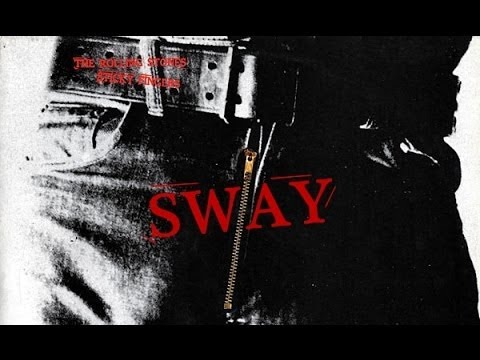
Sway
Did you ever wake up to find A day that broke up your mind Destroyed your notion of circular time
It’s just that demon life has got you in its sway It’s just that demon life has got you in its sway
Ain’t flinging tears out on the dusty ground For all my friends out on the burial ground Can’t stand the feeling getting so brought down
It’s just that demon life has got me in its sway It’s just that demon life has got me in its sway
There must be ways to find out Love is the way they say is really strutting out
Hey, hey, hey now One day I woke up to find Right in the bed next to mine Someone that broke me up with a corner of her smile, yeah
It’s just that demon life has got me in its sway It’s just that demon life has got me in its sway
It’s just that demon life has got me in its sway It’s just that demon life has got me
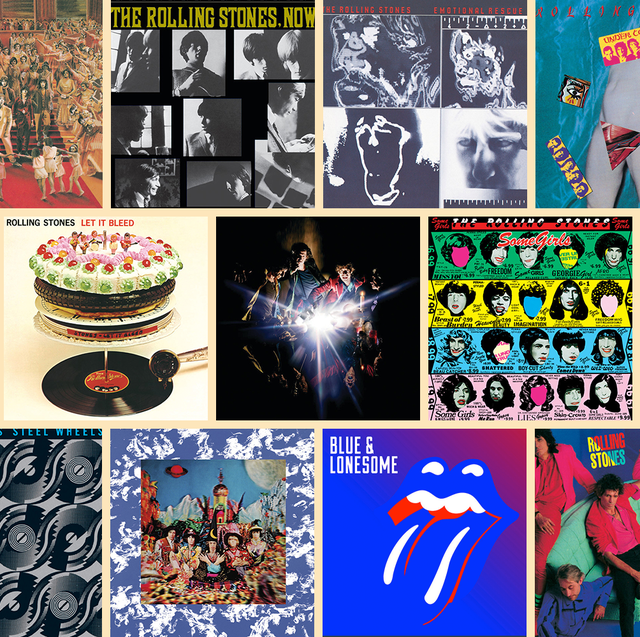
This is an almost impossible task. It is of course subjective. How do you compare Between the Buttons to Some Girls… Steel Wheels to Goats Head Soup? There was such a difference in eras…and in the Stones case decades apart.
When making these lists the question always comes to mind…do I make the list of my favorite albums or what I think artistically their best albums are in history. I’ve just gone with my personal favorite.
1: Beggars Banquet 1968 – This was the second Stones album I ever owned and with songs like Prodigal Son, Jigsaw Puzzle, and the filthy Stray Cat Blues it’s hard to resist. Their rock/blues peak started with this album into a stretch of 5 great albums in a row. The common dominator was producer Jimmy Miller in all 5. This album was the last one to feature Brian Jones.
Favorite song – Stray Cat Blues
2: Sticky Fingers 1971 – Is this the best Stones album artistically? I would have to say yes. There is not a weak track on this album. After reviewing it and comparing it to Exile on Main Street…I have to give it to Sticky Fingers as artistically the best Stones album…but it’s my second. They had a lot of competition that year with The Who Who’s Next and Led Zeppelin IV.
Favorite song – Dead Flowers
3: Let It Bleed 1969 – The first album with Mick Taylor. This was the second album into their gold stretch of 5 great albums. The Mick Taylor years are said by some to be their best albums. I do miss Brian Jones’s coloring of the musical pictures though. They were more flexible with Jones than anyone else but it’s hard to beat Mick Taylor’s fat guitar sound.
Favorite song – Monkey Man
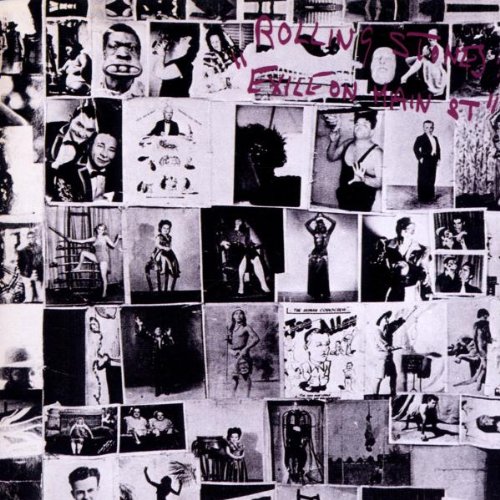
4: Exile On Mainstreet 1972 – This was my favorite Stones album at one time. It was mostly recorded in the Nellcôte in France in a damp basement. It’s one of the greatest double albums ever. Not much I can say about this album that hasn’t already been said.
Favorite Song – tied… Happy and All Down The Line
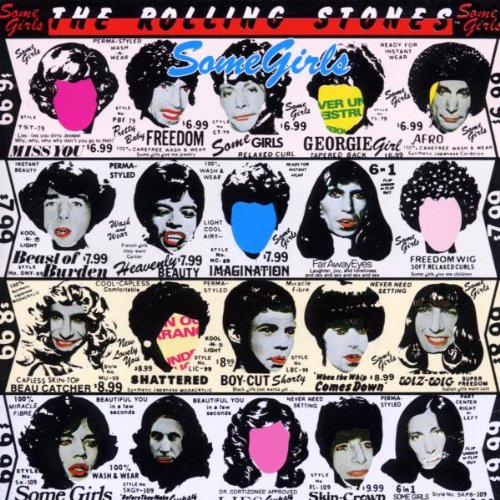
5: Some Girls 1978 – What a filthy-sounding title track and I mean that in the best way. This album was great…personally, I think it’s their last great album…but the next one on the list is close.
Favorite Song – Before They Make Me Run
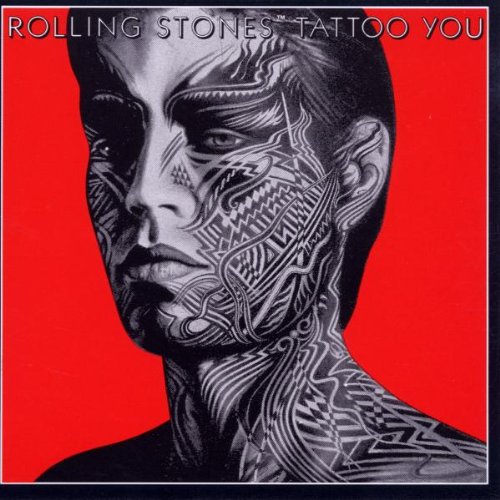
6: Tattoo You 1981 – Over the hill… Geritol-drinking old geezers…those are some of the comments I heard about the Stones while they were 39 and 40! This album was a hodgepodge of outtakes and older songs put together for an album. For me…this was their last brush with greatness. Not that some of the later albums weren’t good…they were but not at this level of good.
Favorite Song – Worried About You
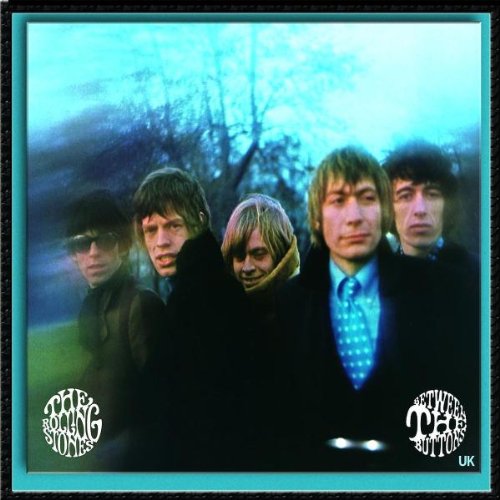
7: Between The Buttons (American Version) 1967 – This was the first Stones album I owned. I had to add a Brian Jones-era album. This period gets overlooked too much. They were adventurous during this period and tried new things…I wish that would have carried over more later on instead of the blues/rock on and on….but they did touch a little funk and reggae later on.
Favorite song – Ruby Tuesday
8: Goats Head Soup 1973 – The new deluxe mix has moved this one up. It was a drop-off from Sticky Fingers and Exile on Mainstreet but they were hard to compete with.
Favorite song – 100 Years Ago
9: Black and Blue 1976- This was not known as a great album and it’s not. You would need a scorecard to see what guitar player they were auditioning on each track. It contains my all-time favorite Rolling Stones song…Memory Motel. They do mix it up with different styles with this one.
Favorite song – Memory Motel
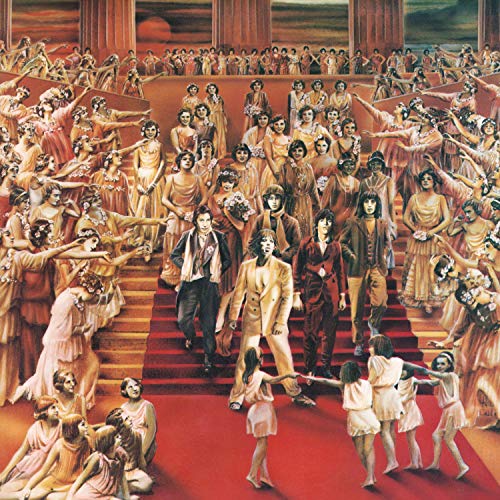
10: It’s Only Rock and Roll 1974 – This was a drop from the previous 5 albums and the last album featuring Mick Taylor. It does contain some good songs like the title track, Ain’t Too Proud To Beg, If You Can’t Rock Me, and others.
Favorite Song – If You Can’t Rock Me
Honorable Mention
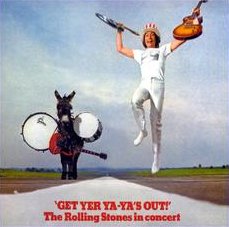
Get Your Ya Ya’s Out 1970 – I didn’t include any live albums but if I did this one would be in there. I also liked Still Life but this one to me is their best by far.
Favorite Song – Jumping Jack Flash
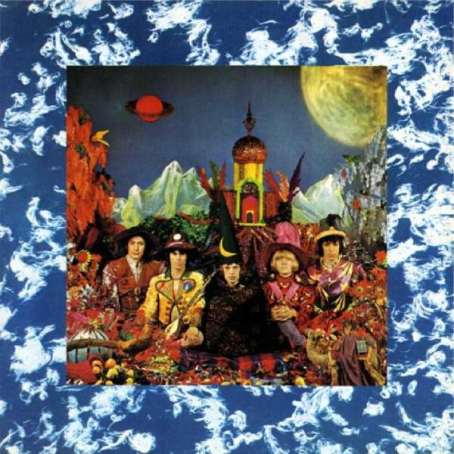
Their Satanic Majesties Request 1967 – I know Stones fans who either hate this album or love it. I like it because they showed some more range in this one. They tried something different after Sgt Pepper was released and some of it works.
Favorite Song – She’s A Rainbow
Steel Wheels 1989 – My favorite album after Tattoo You would be Steel Wheels by far. It contained the songs Mixed Emotions and Rock in a Hard Place. I missed this tour and the last one with Bill Wyman playing bass.
Favorite Song – Sad, Sad, Sad
Below is Happy from the 1972 tour…for my money, they never sounded better. One big reason was Mick Taylor and his Les Paul. Also, I like hearing Keith sing lead and backup…no it’s not perfect but it’s the Stones…no professional backup singers, please.
A dark country blues song by the Stones with help from Marianne Faithfull.
Mick Jagger wrote the music in Rome in 1968. Marianne Faithfull wrote the lyrics, but The Stones did not give her an official songwriting credit until they released it on their 1998 live album No Security. The Stones were very protective about songwriting credits to say the least…they made sure most of their songs were credited to Jagger/Richards.
The Stones recorded this in 1968. Ry Cooder played the bottleneck guitar on this track. He was filling in for the Brian Jones, who died before this song was released. This was the only song on Sticky Fingers that Mick Taylor, who replaced Jones, didn’t play on.
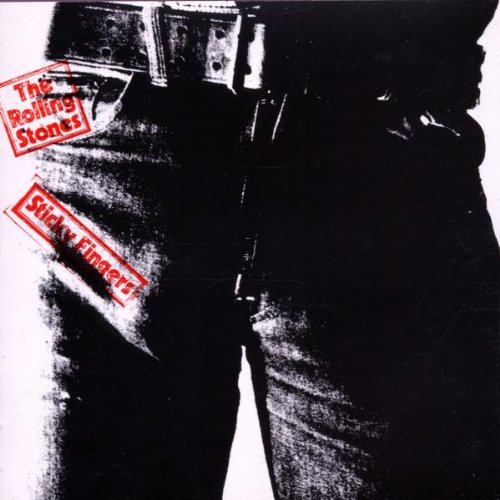
A little trivia on Sticky Fingers… The Sticky Fingers album had an actual zipper on the cover. On many copies, this track was damaged because the zipper pressed into it. To solve the problem, the zipper was opened before the album shipped, this way it just dented the label.
Marianne Faithfull: “I just liked the name, and loved Lou Reed’s work, ‘Sister Ray and ‘Heroin.’ I liked the idea poetically. I thought it was like Baudelaire, but the song doesn’t glamorise anything. It was a really interesting vision.”
From Songfacts
Marianne Faithfull recorded this during The Stones’ Let It Bleed sessions (she was Mick Jagger’s girlfriend at the time). Her version was released in 1969 and tanked. Decca Records pulled it after 2 weeks.
The song is about a man who gets in a car accident and dies in the hospital while asking for morphine.
Faithfull was not a heavy drug user when she wrote the lyrics, but became an addict in 1971, at the same time The Stones’ version was released. She called this her “Frankenstein,” consuming her and leading her into an abyss of drugs. In later years, she was able to break the habit resume a successful career as both a singer and an actress.
Some of the lyrics were inspired by the time Anita Pallenberg, Keith’s girlfriend, was hospitalized and given morphine.
The Stones recorded this in 1968, but their version was not released until 1971.
This was left off the Spanish release of Sticky Fingers because of the explicit content. It was replaced with “Let It Rock.”
This was influenced by the Velvet Underground, who were writing dark songs about drugs, especially heroin.
Not long after writing the song, the lyrics came painfully true to Marianne Faithfull. She recalled to The Guardian: “The story is about a man in a car accident in hospital, who’s very damaged and wants to die. It isn’t exactly what happened to me, but my feelings about it are probably the same. I was hospitalized in Sydney after an attempted suicide after Brian Jones died. It was a terrible time.”
Sister Morphine
Here I lie in my hospital bed Tell me, sister Morphine, when are you coming round again? Oh, I don’t think I can wait that long Oh, you see that I’m not that strong
The scream of the ambulance is sounding in my ears Tell me, sister Morphine, how long have I been lying here? What am I doing in this place? Why does the doctor have no face?
Oh, I can’t crawl across the floor Ah, can’t you see, Sister Morphine, I’m trying to score
Well it just goes to show Things are not what they seem Please, sister Morphine, turn my nightmares into dreams Oh, can’t you see I’m fading fast? And that this shot will be my last
Sweet cousin Cocaine, lay your cool cool hand on my head Ah, come on, sister Morphine, you better make up my bed ‘Cause you know and I know in the morning I’ll be dead Yeah, and you can sit around, yeah and you can watch all The clean white sheets stained red
If I ever met an alien and he/she/it wanted to know what rock and roll looked and sounded like…I would give them a picture of Keith Richards in 1972 and a copy of Brown Sugar. Next to Start Me Up…this song is probably the Stones most worn out song but that doesn’t mean it’s not a great song especially for those hearing it for the first time…or even the hundredth.
Mick Jagger wrote most of the music and lyrics to this song although as always it’s credited to Jagger/Richards. Keith taught Mick the 5 string G tuning and Mick came up with the great classic riff in this song.
The song peaked at #1 in the Billboard 100, #2 in the UK, #1 in Canada, and #11 in New Zealand in 1971.
Evidently China wasn’t a fan… This was one of four songs The Stones had to agree not to play when they were allowed to perform in China. After getting approval to play in China for the first time in 2003, they canceled because of SARS, a respiratory illness that was going around the country.
Rolling Stone magazine ranked it number 495 on its list of the 500 Greatest Songs of All Time and at number five on their list of the 100 Greatest Guitar Songs of All Time.
From Songfacts
The lyric is about slaves from Africa who were sold in New Orleans and raped by their white masters. The subject matter is quite serious, but the way the song is structured, it comes off as a fun rocker about a white guy having sex with a black girl.
Mick Jagger wrote the lyric. According to Bill Wyman, it was partially inspired by a black backup singer named Claudia Lennear, who was one of Ike Turner’s Ikettes. She and Jagger met when The Stones toured with Turner in 1969. David Bowie also wrote his Aladdin Sane track “Lady Grinning Soul” about Lennear.
American-born singer Marsha Hunt is also sometimes cited as the inspiration for the song. She and Jagger met when she was a member of the cast in the London production of the musical Hair, and their relationship, a closely guarded secret until 1972, resulted in a daughter named Karis.
According to the book Up And Down With The Rolling Stones by Tony Sanchez, all the slavery and whipping is a double meaning for the perils of being “mastered” by Brown Heroin, or “Brown Sugar.” The drug cooks brown in a spoon.
The Rolling Stones recorded this in the musically rich but luxury deprived city of Sheffield, Alabama, where Jerry Wexler of the group’s label, Atlantic Records, often sent his acts. The Stones arrived in Sheffield on December 2, 1969, stayed until the 4th, then performed their fateful Altamont Speedway concert on December 6, where they performed this song live for the first time. At the show, a fan was stabbed to death by a Hells Angels security guard.
During their three days in Alabama, The Stones recorded at Muscle Shoals Sound Studios, which opened in May 1969 when four of the musicians from FAME Studios left to establish their own company. “Wild Horses” and “You Gotta Move” also came out of these sessions, making it a very productive stop. The engineer at the Muscle Shoals sessions was Jimmy Johnson, the producer/guitarist who was one of the studio’s founders. The Rolling Stones engineer Glyn Johns added overdubs in England (including horns), but he left Johnson’s mix intact. Johnson says that Johns called him from England to compliment him on the mix.
Even though this was recorded in December 1969, The Stones did not release it until April 1971 because of a legal dispute with their former manager, Allen Klein, over royalties. Recording technology had advanced by then, but they didn’t re-record it because the original version was such a powerful take.
Mick Jagger started writing this while he was filming the movie Ned Kelly in the Australian outback. He’s been in a few movies, including Performance, Freejack and The Man From Elysian Fields. Jagger recalled to Uncut in 2015: “I wrote it in the middle of a field, playing an electric guitar through headphones, which was a new thing then.”
In Keith Richards’ 2010 autobiography Life, it floats a theory as to what the lyrics “Scarred old slaver know he doin’ alright” are all about. Some poor guy at their publishing company probably came up with that transcription for the lyrics, but Jagger was most likely singing, “Skydog Slaver,” as “Skydog” was a nickname for Muscle Shoals regular Duane Allman, since he was high all the time.
A year after this was first recorded, The Stones cut another version at Olympic Studios in London with Eric Clapton on guitar and Al Kooper on keyboards. It was considered for release as the single, but was shelved until 2015 when it appeared the a Sticky Fingers reissue.
Originally, Mick Jagger wrote this as “Black Pussy.” He decided that was a little too direct and changed it to “Brown Sugar.”
This was the first song released on Rolling Stones Records, The Stones subsidiary label of Atlantic Records. They used the now-famous tongue for their logo.
The album cover was designed by Andy Warhol. It was a close-up photo of a man wearing tight jeans, and contained a real zipper. This caused considerable problems in shipping, but was the kind of added value that made the album much more desirable (you don’t get this kind of stuff with CDs or downloads).
Sticky Fingers also marked the first appearance of the famous tongue and lips logo, which was printed on the inner sleeve. The logo was designed by John Pasche, who was fresh out of art school (the Royal College of Art in London).
This was used in commercials for Kahlua and Pepsi. The Stones have made big bucks licensing their songs for ads.
The fortunate souls who got to see The Rolling Stones on their nine-date UK tour in 1971 got a preview of this song, since it was included on the setlist even though Sticky Fingers wouldn’t be released for another month.
Jimmy Johnson, who was a guitar player for the Muscle Shoals Rhythm Section (also known as “The Swampers”), engineered the sessions that produced this song as well as “Wild Horses” and “You Gotta Move.” Johnson worked with many artists, including Aretha Franklin, Bobby Womack, Lynyrd Skynyrd and Johnnie Taylor.
Artists to cover this song include Little Richard, Collin Raye and Alice Russell. Bob Dylan performed it on his 2002 US tour.
ZZ Top released a completely different song called “Brown Sugar” in 1971, and “D’Angelo” released his own song with that title in 1995. In 2002, a movie called Brown Sugar was released with a title song by Mos Def called “Brown Sugar (Extra Sweet).”
In 327BC Alexander the Great came across the cultivation of sugar cane in India. From this reed, a dark brown sugar was extracted from the cane by chewing and sucking. Some of this “sweet reed” was sent back to Athens. This was the first time a European had come across sugar. (From the book Food for Thought: Extraordinary Little Chronicles of the World by Ed Pearce)
The bootleg version which has Eric Clapton playing lead slide guitar was recorded at a birthday party for Keith Richards. It is widely considered to have been part of an informal audition by Clapton to become The Stones second guitarist. The bootleg version shows why Clapton likely did not get offered the job, or withdrew himself from consideration: While Clapton plays a million notes a minute, his lead has almost no interaction with the rest of the band. It is like a studio musician simply playing along with a CD that has already been recorded.
In many interviews, Richards has spoken admiringly of his good friend Clapton’s musicianship, but has always commented that the two-guitar sound he and Ron Wood have developed is not Eric’s cup of tea.
This features Bobby Keys on saxophone. A favorite of The Rolling Stones, having guested notably on Sticky Fingers and Exile on Main Street, he was also heard on John Lennon and Elton John’s hit “Whatever Gets You Thru the Night” and on classic albums like George Harrison’s All Things Must Pass and Marvin Gaye’s Let’s Get It On.
The year after this was released, Randy Newman released a much more earnest song dealing with slavery: “Sail Away.”
This song gets a mention in the 2002 episode of The Wire, “A Man Must Have A Code.” When a group of detectives are listening to a phone call they intercepted, one of them can figure out what’s being said while the others are baffled. Asked how he can decipher the mumble, he speaks the opening lines of “Brown Sugar” (“Gold Coast slave ship bound for cotton fields, sold in a market down in New Orleans”) and says, “I bet you’ve heard that song 500 times but you never knew, right? I used to put my head to the stereo speaker and play that record over and over.”
Brown Sugar
Gold Coast slave ship bound for cotton fields Sold in the market down in New Orleans Scarred old slaver knows he’s doin’ all right Hear him whip the women just around midnight
Brown sugar, how come you taste so good Brown sugar, just like a young girl should
Drums beatin’ cold, English blood runs hot Lady of the house wonderin’ when it’s gonna stop House boy knows that he’s doin’ all right You should have heard him just around midnight
Brown sugar, how come you taste so good Brown sugar, just like a young girl should
Brown sugar, how come you dance so good Brown sugar, just like a black girl should
I bet your mama was a Cajun Queen And all her boyfriends were sweet sixteen I’m no school boy but I know what I like You should have heard them just around midnight
Brown sugar, how come you taste so good Brown sugar, just like a black girl should
I said, yeah, yeah, yeah, woo How come you, how come you dance so good Yeah, yeah, yeah, woo Just like a, just like a black girl should Yeah, yeah, yeah, woo
This was first released by Gram Parsons’ Flying Burrito Brothers in 1970. The Stones’ version was written in 1969, but had to wait for Sticky Fingers in 1971.
Wild Horses was said to be started as a song for Keith Richards’ newborn son Marlon. It was 1969 and Keith regretted that he had to leave his son to go on tour.
Mick Jagger’s girlfriend at the time, the singer Marianne Faithfull, claims “Wild horses couldn’t drag me away” was the first thing she said to Mick after she pulled out of a drug-induced coma in 1969. Jagger rewrote Keith’s lyrics, keeping only the line “Wild horses couldn’t drag me away.” His rewrite was based on his relationship with Marianne Faithfull, which was disintegrating.
The Stones recorded this during a three-day session at Muscle Shoals Sound Studios in Alabama from December 2-4, 1969. It was the last of three songs done at these sessions, after “Brown Sugar” and “You Gotta Move.” Jim Dickinson played piano on this song. The Stones regular pianist Ian Stewart didn’t want to play it because he hated playing minor chords.
Jim Dickinson went on to be a producer with Aretha Franklin, Big Star and the Replacements, and did a lot of movie soundtrack music with Ry Cooder.
The song was on what is arguably their best album in Sticky Fingers. One year prior to its release on Sticky Fingers, Gram Parsons convinced Jagger and Richards to allow him to record “Wild Horses” with his band The Flying Burrito Brothers. He had become good friends with Richards and helped with the arrangement of “Country Honk” as it appeared on the album Let It Bleed. The song was included on the album Burrito Deluxe released in 1970.
Wild Horses by the Stones peaked at #28 in the Billboard 100 and #11 in Canada in 1971.
Keith Richards:“‘Wild Horses’ almost wrote itself. It was really a lot to do with, once again, f—ing around with the tunings. I found these chords, especially doing it on a twelve-string to start with, which gave the song this character and sound. There’s a certain forlornness that can come out of a twelve-string. I started off, I think, on a regular six-string open E, and it sounded very nice, but sometimes you just get these ideas. What if I open tuned a twelve-string? All it meant was translate what Mississippi Fred McDowell was doing – twelve-string slide – into five-string mode, which meant a ten-string guitar.”
From Songfacs
Parsons was good friends with Keith Richards, and the musicians often cited each other as an influence. Said Parsons: “I picked up some rock and roll from Keith Richards, and Mick Jagger knows an awful lot about country music. I learned a lot about singing from Mick.”
Regarding “Wild Horses,” he said it was “a logical combination between their music and our music. It’s something that Mick Jagger can accept, and it’s something I can accept. And my way of doing it is not necessarily where it’s at, but it’s certainly the way I feel it.” (Quotes from Bud Scoppa’s liner notes in the Sacred Hearts and Fallen Angels collection.)
There are other theories as to Mick’s muse for this song, however. Jagger’s longtime girlfriend Jerry Hall in The Observer Magazine April 29, 2007, said: “‘Wild Horses’ is my favorite Stones song. It’s so beautiful. I don’t mind that it was written for Bianca.” (Not likely, since Jagger didn’t meet his future wife Bianca until 1970, which was after the song was recorded.)
Muscle Shoals Sound Studios (actually located in Sheffield, Alabama) opened in May 1969 when Jerry Wexler at Atlantic Records (The Stones’ label) loaned money to four of the musicians at nearby FAME studios so they could start their own company and install 8-track recording equipment (FAME was on 4-track). Wexler sent many of Atlantic’s acts to Muscle Shoals, since the musicians were fantastic and it was a dry county with nothing to do, which meant the artists were more likely to stay focused. The studio also had a distinctive sound that can be heard on this track, especially on Jagger’s vocals – you can hear a slight distortion that was caused by the console.
When The Stones left the Shoals, they headed for Altamont, California, where they gave a free concert on December 6, 1969 – a disastrous show where a fan was stabbed to death by a Hells Angels security guard. In the documentary Gimme Shelter, which chronicles the concert, there is a scene where the band is listening to playback on “Wild Horses” at Muscle Shoals Sound.
The Sticky Fingers album had very elaborate packaging. Designed by Andy Warhol, the cover photo was a close up of a man’s jeans with a real zipper on it. It was also the first time the tongue logo was used.
Stones guitarist Mick Taylor played acoustic guitar on this song in what’s known as “Nashville tuning,” in which you use all first and second strings and you tune them in octaves.
The Chinese rock star Cui Jian sang this with Mick Jagger when The Rolling Stones played a concert in Shanghai on April 8, 2006. Jian was supposed to open for The Stones in 2003, but their Chinese tour was canceled because of S.A.R.S.
The Sundays covered this song. Their version appears on the soundtrack to Buffy The Vampire Slayer.
To coincide with the release of Britain’s Got Talent star Susan Boyle’s cover of this song, Universal/Polydor re-released The Rolling Stones’ original as part of a special digital bundle featuring three versions of the track. The other two being a recording backstage during the band’s Voodoo Lounge tour in 1995, which was included on the Stripped live album and a video of a live performance of the song recorded at Knebworth in 1976.
Wild Horses
Childhood living is easy to do The things you wanted I bought them for you Graceless lady you know who I am You know I can’t let you slide through my hands
Wild horses couldn’t drag me away Wild, wild horses couldn’t drag me away
I watched you suffer a dull aching pain Now you’ve decided to show me the same No sweeping exit or offstage lines Could make me feel bitter or treat you unkind Wild horses couldn’t drag me away Wild, wild horses couldn’t drag me away I know I’ve dreamed you a sin and a lie I have my freedom but I don’t have much time Faith has been broken tears must be cried Let’s do some living after we die
Wild horses couldn’t drag me away Wild, wild horses we’ll ride them some day Wild horses couldn’t drag me away Wild, wild horses we’ll ride them some day
This is a perfect song for a slow Sunday…kick back and enjoy this 1971 classic song by the Stones.
Mick Jagger wrote the lyrics about his breakup with Marianne Faithfull.
Bobby Keys played the saxophone on this track and Jim Price, who also came up with the horn arrangements, played the trumpet. They both joined The Stones for their 1970 European tour. Billy Preston also played the gospel organ on this track.
Sticky Fingers was the first album The Stones recorded on their own label and the first in which Mick Taylor played guitar on nearly all the tracks. The album peaked at #1 in the Billboard Album Charts, and #1 in Canada, and the UK.
Many consider this and Exile on Mainstreet their best albums.
I’ve Got The Blues
As I stand by your flame I get burned once again Feelin’ low down, I’m blue
As I sit by the fire Of your warm desire I’ve got the blues for you, yeah
Every night you’ve been away I’ve sat down and I have prayed That you’re safe in the arms of a guy Who will bring you alive Won’t drag you down with abuse
In the silk sheet of time I will find peace of mind Love is a bed full of blues
And I’ve got the blues for you And I’ve got the blues for you And I’ll bust my brains out for you And I’ll tear my hair out I’m gonna tear my hair out just for you If you don’t believe what I’m singing At three o’clock in the morning, babe, well I’m singing my song for you
When I saw the Stones on the 2006 Bigger Bang tour I was looking forward to this song than any other. It was the second time I had gone to see them. This time it was in Kentucky at the famous Churchill Downs venue that is not meant for Rock and Roll but it was cool.
The lyric “Making bets on Kentucky Derby Day” drew a huge response from the rain-drenched crowd. The song was on the great Sticky Fingers album released in 1971. Gram Parsons who was into country music heavily and hanging around with the Stones probably influence this track to a point.
This song rolled during the final credits of The Big Lebowski. Allen Klein, the ex Rolling Stones manager and owner of the song initially wanted $150,000 for the movie’s use of it. He was then convinced to let them use it for free when he saw the scene in which The Dude says, “I hate the f—in’ Eagles, man!”. The version in the movie was a Townes Van Zandt cover.
From Songfacts
In this song, Mick Jagger addresses a girl named Susie with more than a little disdain: She’s welcome to send him dead flowers, but he’ll put roses on her grave. The music and lyrics both have a distinct country vibe. Jagger explained in 1995: “I love country music, but I find it very hard to take it seriously. I also think a lot of country music is sung with the tongue in cheek, so I do it tongue-in-cheek. The harmonic thing is very different from the blues. It doesn’t bend notes in the same way, so I suppose it’s very English, really. Even though it’s been very Americanized, it feels very close to me, to my roots, so to speak.”
Mick Jagger, 2003: “The ‘Country’ songs we recorded later, like ‘Dead Flowers’ on Sticky Fingers or Far Away Eyes on Some Girls, are slightly different (than our earlier ones). The actual music is played completely straight, but it’s me who’s not going legit with the whole thing, because I think I’m a blues singer not a country singer – I think it’s more suited to Keith’s voice than mine.” >>
The line, “I’ll be in my basement room with a needle and a spoon” is probably a reference to shooting up heroin.
Dead Flowers
Well when you’re sitting there in your silk upholstered chair Talkin’ to some rich folk that you know Well I hope you won’t see me in my ragged company Well, you know I could never be alone
Take me down little Susie, take me down I know you think you’re the queen of the underground And you can send me dead flowers every morning Send me dead flowers by the mail Send me dead flowers to my wedding And I won’t forget to put roses on your grave
Well when you’re sitting back in your rose pink Cadillac Making bets on Kentucky Derby Day Ah, I’ll be in my basement room with a needle and a spoon And another girl to take my pain away
Take me down little Susie, take me down I know you think you’re the queen of the underground And you can send me dead flowers every morning Send me dead flowers by the mail Send me dead flowers to my wedding And I won’t forget to put roses on your grave
Take me down little Susie, take me down I know you think you’re the queen of the underground And you can send me dead flowers every morning Send me dead flowers by the U.S. Mail Say it with dead flowers in my wedding And I won’t forget to put roses on your grave No, I won’t forget to put roses on your grave









 PowerPop... An Eclectic Collection of Pop Culture