This song is for Song Lyric Sunday for Jim Adams’s blog. This week’s prompt…Smart/Stupid. Hope everyone had a good safe Halloween.
Not a feel good song by the Rolling Stones. The song was on their album Afterman released in 1966. This was the B side to the great song Paint It Black. The Stones are known for a good amount of misogyny in their songs…this one and Under My Thumb are no exceptions.
Aftermath peaked at #2 in the Billboard Album Charts and #1 in the UK in 1966.
Stupid Girl was recorded at Los Angeles’ RCA Studios on 6–9 March 1966.
Mick Jagger: “It’s much nastier than Under My Thumb. Obviously, I was having a bit of trouble. I wasn’t in a good relationship. Or I was in too many bad relationships. I had so many girlfriends at that point. None of them seemed to care they weren’t pleasing me very much. I was obviously in with the wrong group”
Keith Richards: “Songs like “Under My Thumb” and “Stupid Girl” were all a spin-off from our environment – hotels, and too many dumb chicks. Not all dumb, not by any means, but that’s how one got.”
Stupid Girls
I’m not talking about the kind of clothes she wears Look at that stupid girl I’m not talking about the way she combs her hair Look at that stupid girl
The way she powders her nose Her vanity shows and it shows She’s the worst thing in this world Well, look at that stupid girl
I’m not talking about the way she digs for gold Look at that stupid girl Well, I’m talking about the way she grabs and holds Look at that stupid girl
The way she talks about someone else That she don’t even know herself She’s the sickest thing in this world Well, look at that stupid girl
Well, I’m sick and tired And I really have my doubts I’ve tried and tried But it never really works out
Like a lady in waiting to a virgin queen Look at that stupid girl She bitches ’bout things that she’s never seen Look at that stupid girl
It doesn’t matter if she dyes her hair Or the color of the shoes she wears She’s the worst thing in this world Well, look at that stupid girl
Shut up, shut up, shut up, shut up, shut up Shut up, shut up, shut up, shut up, shut up Shut up, shut up, shut up
Like a lady in waiting to a virgin queen Look at that stupid girl She bitches ’bout things that she’s never seen Look at that stupid girl
She purrs like a pussycat Then she turns ’round and hisses back She’s the sickest thing in this world Look at that stupid girl
You better stop, look around Here it comes Here comes your nineteenth nervous breakdown Here comes your nineteenth nervous breakdown
I like this period in Rolling Stones history. Between 1964-67 they released some great music. Brian Jones added a lot of texture to this period.
The song was written by Mick Jagger and Keith Richards during their 1965 tour of the United States. The song was recorded during the Aftermath sessions. They got the title from Mick Jagger in the middle of the tour.
During the song Brian Jones is playing a lick that he got from Diddley Daddy…an old Bo Diddley song.
This song peaked at #2 in the Billboard 100, #9 in Canada, and #2 in the UK in 1966.
Mick Jagger:“We had just done five weeks hectic work in the States and I said, ‘Dunno about you blokes, but I feel about ready for my nineteenth nervous breakdown.’ We seized on it at once as a likely song title. Then Keith and I worked on the number at intervals during the rest of the tour. Brian, Charlie and Bill egged us on – especially as they liked having the first two words starting with the same letter.”
Mick Jagger:“Things that are happening around me – everyday life as I see it. People say I’m always singing about pills and breakdowns, therefore I must be an addict – this is ridiculous. Some people are so narrow-minded they won’t admit to themselves that this really does happen to other people besides pop stars.”
From Songfacts
There are some drug references in this song:
On our first trip I tried so hard to rearrange your mind
But after awhile I realized you were disarranging mine
Many turned on listeners picked up on this, but most didn’t, especially since the lines are mixed low into the background. Over the next few years, the Stones drug use became more apparent, and it was reflected in their songs. British authorities took note, leading to a series of arrests and run-ins among band members and their associates.
Mick Jagger: “That’s a very Los Angeles period, I remember being in the West Coast a lot then. 19th Nervous Breakdown is a bit of a joke song, really. I mean, the idea that anyone could be offended by it really is funny. But I remember some people were. It’s very hard to put yourself back in that period now – popular songs didn’t really address anything very much. Bob Dylan was addressing it, but he wasn’t thought of as a mainstream Pop act. And anyway, no one knew what he was talking about. Basically his songs were too dense for most people. And so to write about anything other than the normal run-of-the-mill love clichés was considered very outre and it was never touched. Anything outside that would shock people. So songs like “19th Nervous Breakdown” were slightly jarring to people. But I guess they soon got used to it. A couple years after that, things took a sort of turn and then saw an even more dark direction. But those were very innocent days, I think.”
This was one of three songs The Stones performed on their Ed Sullivan Show appearance on February 13, 1966, the first time they were broadcast in color on US television.
Mick Jagger had been dating an English model named Chrissie Shripton when he wrote this song. Theirs was a tumultuous relationship that began in 1963 and ended three years later amid allegation of Mick’s philandering (he began seeing Marianne Faithfull). According to Philip Norman’s biography of Mick Jagger, Shrimpton overdosed on sleeping pills in December 1966 after Jagger stood her up when they were supposed to go on vacation together. While Jagger didn’t write this song about Shrimpton, her overdose drew parallels to the pill-popping character in the song. It was rumored that the line “On our first trip” is a reference to the first time Jagger dropped acid with Shrimpton.
19th Nervous Breakdown
You’re the kind of person you meet at certain dismal, dull affairs Center of a crowd, talking much too loud, running up and down the stairs Well, it seems to me that you have seen too much in too few years And though you’ve tried you just can’t hide your eyes are edged with tears
You better stop, look around Here it comes, here it comes, here it comes, here it comes Here comes your nineteenth nervous breakdown
When you were a child you were treated kind But you were never brought up right You were always spoiled with a thousand toys but still you cried all night Your mother who neglected you owes a million dollars tax And your father’s still perfecting ways of making sealing wax
You better stop, look around Here it comes, here it comes, here it comes, here it comes Here comes your nineteenth nervous breakdown
Oh, who’s to blame, that girl’s just insane Well nothing I do don’t seem to work It only seems to make matters worse, oh please
You were still in school when you had that fool who really messed your mind And after that you turned your back on treating people kind On our first trip I tried so hard to rearrange your mind But after a while I realized you were disarranging mine
You better stop, look around Here it comes, here it comes, here it comes, here it comes Here comes your nineteenth nervous breakdown
Oh, who’s to blame, that girl’s just insane Well nothing I do don’t seem to work It only seems to make matters worse, oh please
When you were a child you were treated kind But you were never brought up right You were always spoiled with a thousand toys but still you cried all night Your mother who neglected you owes a million dollars tax And your father’s still perfecting ways of making sealing wax
You better stop, look around Here it comes Here comes your nineteenth nervous breakdown Here comes your nineteenth nervous breakdown Here comes your nineteenth nervous breakdown Here comes your nineteenth nervous breakdown Here comes your nineteenth nervous breakdown Here comes your nineteenth nervous breakdown
Don’t you think it’s sometimes wise not to grow up?
100 Years Ago has a good melody and it changes it’s focus in the last three-quarters of the way through…a good song with an interesting outro. It’s an album cut and you never hear much on the radio. It’s worth a listen. If you see them in concert and want to hear this song…don’t hold your breath.
It was only played on the first two performances of European Tour of 1973, and has not been performed live since. Come on guys! Play it again…it’s not like the world can’t do without another version of Satisfaction.
I took an instant liking to this song. It starts with a little country influence and then ends with a funky free for all. I have the new version of Goats Head Soup and this one cleaned up really well.
The album peaked at #1 in the Billboard 100, The UK, and Canada in 1973.
The Stones recorded this at Kingston’s Dynamic Sound Studios in November and December, 1972. Jagger performs lead vocals and is accompanied by Mick Taylor on backing. Taylor performs the song’s guitars while Keith Richards and Charlie Watts perform bass and drums, respectively. Nicky Hopkins provides piano while Billy Preston performs clavinet.
“100 Years Ago”
Went out walkin’ through the wood the other day And the world was a carpet laid before me The buds were bursting and the air smelled sweet and strange And it seemed about a hundred years ago Mary and I, we would sit upon a gate Just gazin’ at some dragon in the sky What tender days, we had no secrets hid away Well, it seemed about a hundred years ago Now all my friends are wearing worried smiles Living out a dream of what they was Don’t you think it’s sometimes wise not to grow up? Wend out walkin’ through the wood the other day Can’t you see the furrows in my forehead? What tender days, we had no secrets hid away Now it seems about a hundred years ago Now if you see me drinkin’ bad red wine Don’t worry ’bout this man that you love Don’t you think it’s sometimes wise not to grow up? You’re gonna kiss and say good-bye, yeah, I warn you You’re gonna kiss and say good-bye, yeah, I warn you You’re gonna kiss and say good-bye, oh Lord, I warn you And please excuse me while I hide away Call me lazy bones Ain’t got no time to waste away Lazy bones ain’t got no time to waste away Don’t you think it’s just about time to hide away? Yeah, yeah!
A great “Keith” song on the great Stone’s album Some Girls released in 1978. Some of the lyrics make me laugh because of how honest they are. Maybe one of the best lines in Rock “I wasn’t looking too good but I was feeling real well”… It doesn’t get much more straightforward than that.
Some of the others are not so fun such as “Booze and pills and powders, you can choose your medicine, Well here’s another goodbye to another good friend.” In the world Keith was living in, it rang true. I’ve read that this line was about Keith’s good friend Gram Parsons who had died of a heroin overdose in 1973.
Richards recorded the song in five days without sleeping in March of 1978, a year after he was busted for heroin in Canada.
This and Happy are my favorite Keith Richards songs with the Stones. You Got the Silver is up there also. This is a Jagger/Richards song but Keith wrote most if not all of this one.
Great raw Rock and Roll song.
Keith Richards:“For sheer longevity – for long distance – there is no track that I know of like ‘Before They Make Me Run.’ That song, which I sang on that record, was a cry from the heart. But it burned up the personnel like no other. I was in the studio, without leaving, for five days… I had an engineer called Dave Jordan and I had another engineer, and one of them would flop under the desk and have a few hours’ kip and I’d put the other one in and keep going. We all had black eyes by the time it was finished… That’s probably the longest I’ve done. There have been others that were close – ‘Can’t Be Seen’ was one – but ‘Before They Make Me Run’ was the marathon.”
From Songfacts
This is about the rock and roll lifestyle that got Keith Richards in trouble. The song was recorded while he was out on bail after getting caught with heroin and arrested for drug trafficking in Toronto in 1977. He was found guilty of the lesser charge of heroin possession, and sentenced to probation.
Richards sang lead and did the majority of the work on this song. With Keith’s drug charges pending, Mick Jagger took a lot of control on the album, but this song was pretty much all Keith.
The original title was “Rotten Roll.”
Richard’s vocals were double-tracked to make them stand out.
A member of The Byrds, Parsons died in 1973 at age 26 after taking an overdose of alcohol and morphine. His corpse was stolen and burned in the Mojave Desert.
An engineer named Dave Jordan helped mix this song. He went on to work with groups like The Specials and The Pogues.
Before They Make Me Run
Worked the bars and sideshows along the twilight zone Only a crowd can make you feel so alone And it really hit home Booze and pills and powders, you can choose your medicine Well here’s another goodbye to another good friend
After all is said and done Gotta move while it’s still fun Let me walk before they make me run After all is said and done I gotta move, it’s still fun I’m gonna walk before they make me run
Watched my taillights fading, there ain’t a dry eye in the house They’re laughing and singing Started dancing and drinking as I left town Gonna find my way to heaven, ’cause I did my time in hell, oh yeah I wasn’t looking too good but I was feeling real well
Oh after all is said and done I gotta move I had my fun Let us walk before they make us run
After all is said and done I did alright, I had my fun But I will walk before they’ll make me I will walk before they’ll make me (run) I will walk before they’ll make me (run) I will walk before they’ll make me run
So if it’s all been said and done I gotta move I had my fun Let me walk before they make me run
So let me walk before they make me run I want to walk before they’ll make me run
It’s hard to believe this was recorded at the beginning of the Beggars Banquet album. It sounded like it belonged in 1967 than in 1968…the two years in music were drastically different.
This song was the B side to Jumping Jack Flash. The Stones made a video of it and it’s probably my favorite video they ever made. It was shot in Black and White and Color and showed the Stones in a horror/sci fi setting acting as if they are guarding a road…prepared not to let anyone pass. It feels like Children of the Damned meets a little of Lord of the Flies.
The song was never released on a studio Stones album except for compilations. I usually don’t say this but the video really helps this song…it’s a chill about this video.
In the 1960s The Stones and Beatles had power… Beatles toyed with the idea of doing Lord of the Rings and The Beatles signed a petition for Mick Jagger to play “Alex” in A Clockwork Orange…this is before Kubrick was involved.
Child Of The Moon
The wind blows rain into my face The sun glows at the end of the highway Child of the moon, rub your rainy eyes Oh, child of the moon Give me a wide-awake crescent-shaped smile
She shivers, by the light she is hidden She flickers like a lamp lady vision Child of the moon, rub your rainy eyes Child of the moon Give me a wide-awake crescent-shaped smile
The first car on the foggy road riding The last star for my lady is pining Oh, child of the moon, bid the sun arise Oh, child of the moon Give me a misty day, pearly gray, silver, silky faced Wide-awake crescent-shaped smile
This was recorded during an all-night session at Keith Richards’ rented villa in the South of France. The band rented houses in the area and used Keith’s basement as a studio.
This song was on Exile On Main Street and it’s an incredibly driven song. It comes right at you and never slows down.
Understanding lyrics in Rolling Stones songs has always been a challenge but Mick’s voice is lower than usual in this one. The song contains some obscenities and sexual references, but they are very hard to understand.
But no worries… just sit back and enjoy the ride and this song takes you on one. It also contains references to President Nixon and his wife Pat, but they are almost impossible to understand.
Exile on Main street peaked at #1 in the Billboard 100, Canada, and the UK in 1972.
It’s Sunday…just turn this up to full blast and enjoy it.
From Songfacts
The “Butter Queen” is a reference to a famous groupie known as “Barbara the Butter Queen.” Her real name was Barbara Cope, and she would do her thing when bands came through Dallas. She was very proficient, and had a killer gimmick: she would use a stick of butter when servicing the rock stars and crew. The butter supposedly made her activity smell like movie theater popcorn.
This song was particularly inspirational to Aerosmith’s Steven Tyler. He told Rolling Stone magazine: “When I went to my first rehab, at a place called Hazelden, I brought Exile on Main St. on cassette. I remember waking up the first morning there and realizing I hadn’t been sober once for the past 12 or 15 years, from LSD to heroin and cocaine and acid. The only way I could get a buzz at that point was to listen to ‘Rip This Joint.'”
Rip This Joint
Mama says yes, Papa says no Make up your mind ’cause I gotta go We’re gonna raise hell at the Union Hall Drive myself right over the wall
Rip this joint, gonna save your soul Round and round and round we go Roll this joint, gonna get down low Start my starter, gonna stop the show (Yeah)
Whoa, yeah! Mister President, Mister Immigration Man Let me in, sweetie to your fair land I’m Tampa bound and Memphis too Short Fat Fanny is on the loose Dig that sound on the radio Then slip it right across into Buffalo Dick and Pat in ole DC Well they’re gonna hold some shit for me
Ying yang, you’re my thing Oh, now, baby, won’t you hear me sing Flip Flop, fit to drop Come on baby, won’t you let it rock?
Oh yeah! Oh yeah! From San Jose down to Santa Fe Kiss me quick, baby, won’tcha make my day New Orleans with the Dixie Dean To Dallas, Texas with the Butter Queen
Rip this joint, gonna rip yours too Some brand new steps and some weight to lose Gonna roll this joint, gonna get down low Round and round and round we’ll go Wham, Bham, Birmingham, Alabam’ don’t give a damn Little Rock and I’m fit to top Ah, let it rock
This one was always a favorite of mine of the Stones. Keith Richards wrote this, but a lot of the lyrics were improvised in the studio. While the band played, Jagger came in with different lines to fit the music.
This song is a good example of the Rolling Stones tapestry of guitars. Keith and Ron Wood weave their guitars in and out until the two guitars are almost indistinguishable from each other.
The song peaked at #8 in the Billboard 100 and #9 in Canada.
The song was on Some Girls released in 1978. It was perhaps their last great album although I did like Tattoo You. Some Girls peaked at #1 in the Billboard Album Charts and #1 in Canada, and #2 in the UK.
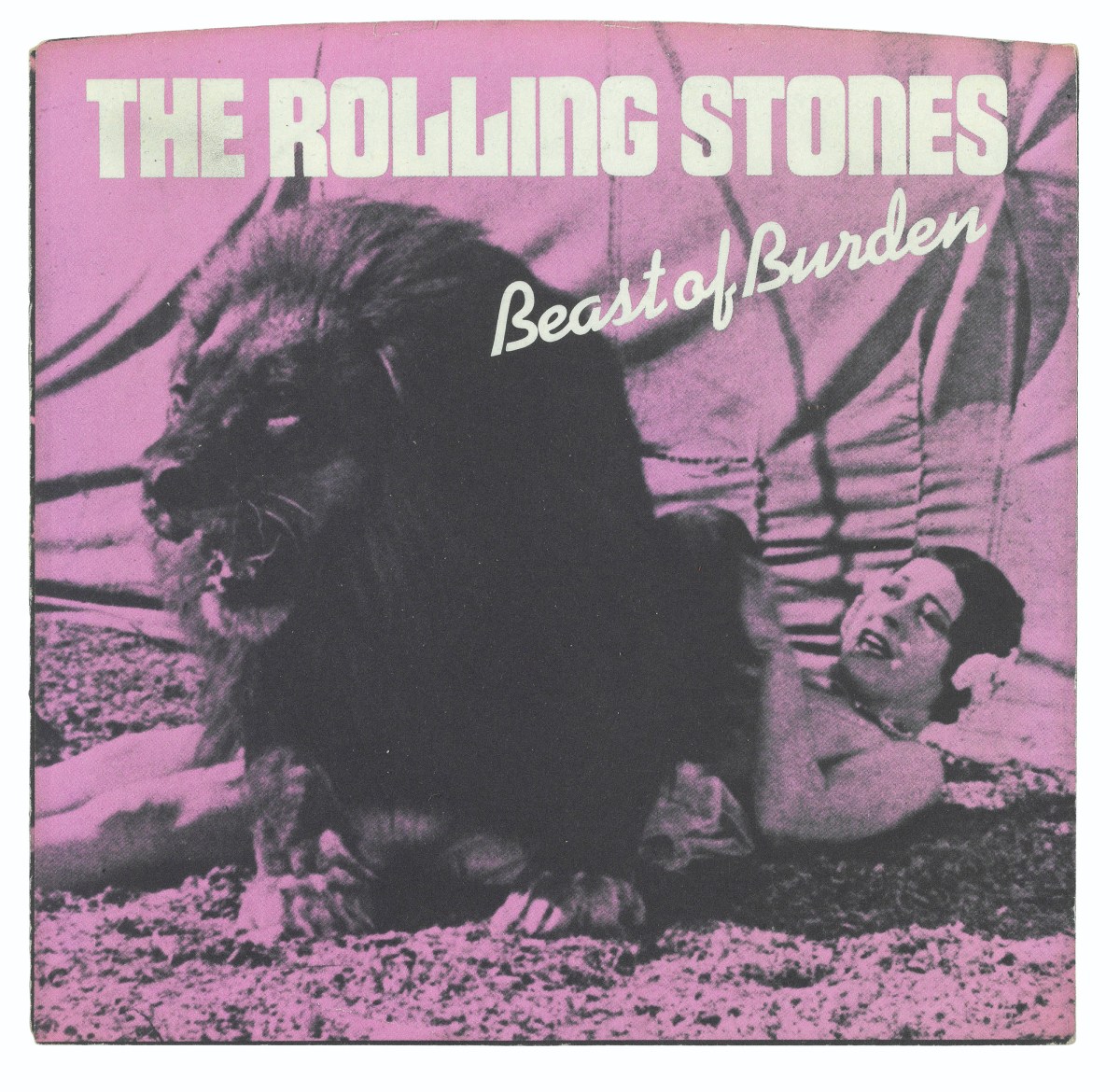
Keith Richards: “Those who say it’s about one woman in particular, they’ve got it all wrong. We were trying to write for a slightly broader audience than just Anita Pallenberg or Marianne Faithfull. Although that’s not to say they didn’t have some influence in there somewhere. I mean, what’s close by is close by! I’ve always felt it’s one of my best soul songs. It was another strict collaboration between Mick and me. I think I had the first verse—‘I’ll never be your beast of burden’—along with the hook, and we were still working very much in our traditional way: Here’s the idea, here’s the song, now run away and fill it in! Some of the theories surrounding it are very intriguing, but they’re about as divorced from reality as can be. I find it quite amusing that there are people in the world who spend a lot of their time trying to decode something that is, at the end of the day, completely undecodable. I mean, even I’ve forgotten the code!”
From Songfacts
Sometimes misunderstood as a putdown, this is a rare Stones song that treats women as equals. Jagger sings that he “Don’t need no beast of burden.”
This isn’t about a specific woman. Most women in Stones’ songs are composites of many.
A live version from their 1981 US tour was used as the B-side of their “Going To A Go-Go” single.
A beast of burden is an animal that labors for the benefit of man, like an ox or a pack mule.
This song could be allegorical – it was written by Keith as a kind of homage to Mick for having to carry the band while Keith was strung out on heroin: “All your sickness I can suck it up, throw it all at me, I can shrug it off.”
The Chinese ministry of culture ordered The Stones not to play this when they performed there in 2003. It was going to be the first time The Stones played in China, but they canceled because of a respiratory disease that was spreading through the country.
Whilst Richards spent much of the ’70s insulating himself with drugs, former London School of Economics student Jagger was running the band. However, by the time of Some Girls, Richards wanted to share the workload. Mojo magazine January 2012 asked Richards how much this song was about his relationship with Jagger? He replied; “Mick wrote a lot of it but I laid the general idea on him. At the time Mick was getting used to running the band. Charlie was just the drummer, I was just the other guitar player. I was trying to say, ‘OK I’m back, so let’s share a bit more of the power, share the weight, brother.”
Beast Of Burden
I’ll never be your beast of burden My back is broad but it’s a hurting All I want for you to make love to me I’ll never be your beast of burden I’ve walked for miles my feet are hurting All I want for you to make love to me
Am I hard enough? Am I rough enough? Am I rich enough? I’m not too blind to see
I’ll never be your beast of burden So let’s go home and draw the curtains Music on the radio Come on baby make sweet love to me
Am I hard enough? Am I rough enough? Am I rich enough? I’m not too blind to see
Oh little sister Pretty, pretty, pretty, pretty, pretty girls Uh you’re a pretty, pretty, pretty, pretty, pretty, pretty girl Pretty, pretty, such a pretty, pretty, pretty girl Come on baby please, please, please
I’ll tell ya You can put me out On the street Put me out With no shoes on my feet But, put me out, put me out Put me out of misery, yeah
All your sickness I can suck it up Throw it all at me I can shrug it off There’s one thing baby I don’t understand You keep on telling me I ain’t your kind of man
Ain’t I rough enough, ooh baby Ain’t I tough enough Ain’t I rich enough, in love enough Ooh, ooh please
I’ll never be your beast of burden I’ll never be your beast of burden Never, never, never, never, never, never, never be
I’ll never be your beast of burden I’ve walked for miles, my feet are hurting All I want is you to make love to me Yeah
I don’t need the beast of burden I need no fussing I need no nursing Never, never, never, never, never, never, never be
And the preacher said, you know you always have the Lord by your side And I was so pleased to be informed of this that I ran Twenty red lights in his honor Thank you Jesus, thank you Lord
When I saw the Rolling Stones in the 90s there was a vote on a song for them to play. This one won and I didn’t suspect it. Frankly, I would rather hear this than yet another version of Satisfaction or Jumping Jack Flash although I love those songs.
Mick said he wrote this after driving through Bakersfield on a Sunday morning. He would listen to the country music stations and they would many times be broadcasting black gospel church services.
This tongue in cheek song was released as the B-side to Miss You. It’s a fun song because it’s so unlike them.
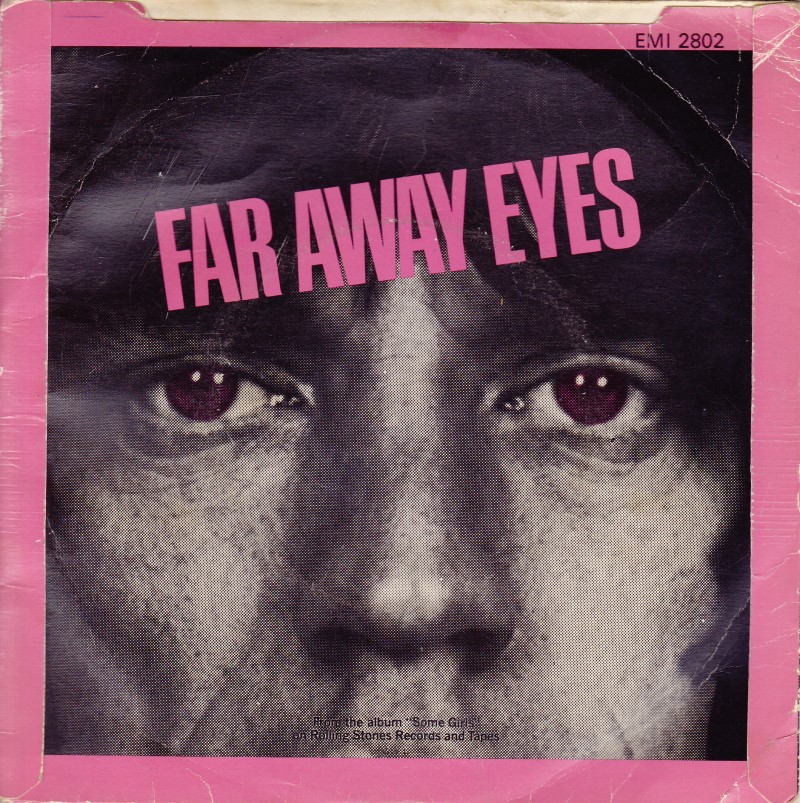
Mick Jagger: “I knew Gram Parsons quite well, and he was one of the few people who really helped me to sing country music — before that, Keith and I used to just copy it off records. I used to play piano with Gram, and on “Faraway Eyes” I’m playing piano, though Keith is actually playing the top part — we added it on after. But I wouldn’t say this song was influenced specifically by Gram. That idea of country music played slightly tongue in cheek — Gram had that in “Drugstore Truck Drivin’ Man,” and we have that sardonic quality, too.
Far Away Eyes
I was driving home early Sunday morning through Bakersfield Listening to gospel music on the colored radio station And the preacher said, you know you always have the Lord by your side And I was so pleased to be informed of this that I ran Twenty red lights in his honor Thank you Jesus, thank you Lord
I had an arrangement to meet a girl, and I was kind of late And I thought by the time I got there she’d be off She’d be off with the nearest truck driver she could find Much to my surprise, there she was sittin’ in the corner A little bleary, worse for wear and tear Was a girl with far away eyes
So if you’re down on your luck And you can’t harmonize Find a girl with far away eyes And if you’re downright disgusted And life ain’t worth a dime Get a girl with far away eyes
Well the preacher kept right on saying that all I had to do was send Ten dollars to the church of the Sacred Bleeding Heart Of Jesus Located somewhere in Los Angeles, California And next week they’d say my prayer on the radio And all my dreams would come true So I did, the next week, I got a prayer with a girl Well, you know what kind of eyes she got, well I’ll tell ya
So if you’re down on your luck I know you all sympathize Find a girl with far away eyes And if you’re downright disgusted And life ain’t worth a dime Get a girl with far away eyes
So if you’re down on your luck I know you all sympathize Get a girl with far away eyes
Another new old song from the upcoming reissue of Goats Head Soup. This one features Jimmy Page and was probably named after his daughter. It has a very cool groove to it.
The Stones’ Keith Richards has his own recollections on how “Scarlet” took shape and how “we walked in at the end of a Zeppelin session. They were just leaving, and we were booked in next and I believe that Jimmy decided to stay.”
“Scarlet” was a freak accident. “We weren’t actually cutting it as a track,” enthuses Richards in a statement, “it was basically for a demo, a demonstration, you know, just to get the feel of it, but it came out well, with a line up like that, you know, we better use it.‘’
Baby you excite me But you talk too much Won’t stand on a corner Love you more, oh yeah
Scarlet, why you wearing my heart, on your sleeve Where it ain’t supposed to be
Scarlet, why you tearing my heart, all to pieces It ain’t the way it’s supposed to be
Scarlet, why are you keeping my heart, to yourself It ain’t the way it’s supposed to be
Scarlet, Scarlet Ooh yeah!
You don’t have to change your mind And leave this neighbourhood so far behind Honey you don’t have to cry no more When I come a knocking, right at your front door
Scarlet, Scarlet, Scarlet
Scarlet, why you wearing my heart, on your sleeve Where it ain’t supposed to be Scarlet, Scarlet, oh
Scarlet, Scarlet, Scarlet Why you wearing my heart
Scarlet, why you wearing my heart Scarlet, why you wearing my heart Scarlet, why you wearing my heart Scarlet
A new old song from the Stones. This song has been in the vault…it will be included with the reissued “Goats Head Soup,” out Sept. 4. Two more unheard tracks will be on the reissue. Thanks to Deke for pointing this song out last week.
It’s a cool funky track produced by Jimmy Miller.
“The remastered “Goats Head Soup” box set and deluxe editions will all feature 10 bonus tracks, including “Criss Cross,” the previously unheard “Scarlet,” featuring guitar by Jimmy Page, and a third newly unearthed song, “All The Rage.” All three songs were recorded more than 40 years ago but were never officially released until now. ”
Baby. Ooh! Baby Save me. Ooh! Save me. Ah! Yeah, here come a woman Givin’ me a criss cross mind Save me Save me. Ooh! Yeah, here come a woman Giving me a criss cross mind Oh I got a lotta knots in my hair I can’t seem to straighten out Ah, I think I need a blood transfusion Yeah, here come a lady Giving’me a criss cross mind
Darling Darling Ooh! Touch me Ooh, yeah! Kiss me Ooh, yeah! Ooh, yeah! Lip to lip Fingertip Skin to skin Ring to ring Tongue to tongue Thigh to thigh Oh baby Yeah All the time Baby Save me Yeah here come a lady Giving’ me a criss cross mind Mama walkin’ around in the rain She want you every night An’ think I need a blood transfusion Yeah here come a woman Givin’ me a criss cross mind Yeah, yeah Darling Darling Baby Save me. Save me. Save me. Save me And feed me, yeah Baby. Baby. Baby Save me Cheek to cheek Ohh yeah Tounge to tounge
This is a perfect song for a slow Sunday…kick back and enjoy this 1971 classic song by the Stones.
Mick Jagger wrote the lyrics about his breakup with Marianne Faithfull.
Bobby Keys played the saxophone on this track and Jim Price, who also came up with the horn arrangements, played the trumpet. They both joined The Stones for their 1970 European tour. Billy Preston also played the gospel organ on this track.
Sticky Fingers was the first album The Stones recorded on their own label and the first in which Mick Taylor played guitar on nearly all the tracks. The album peaked at #1 in the Billboard Album Charts, and #1 in Canada, and the UK.
Many consider this and Exile on Mainstreet their best albums.
I’ve Got The Blues
As I stand by your flame I get burned once again Feelin’ low down, I’m blue
As I sit by the fire Of your warm desire I’ve got the blues for you, yeah
Every night you’ve been away I’ve sat down and I have prayed That you’re safe in the arms of a guy Who will bring you alive Won’t drag you down with abuse
In the silk sheet of time I will find peace of mind Love is a bed full of blues
And I’ve got the blues for you And I’ve got the blues for you And I’ll bust my brains out for you And I’ll tear my hair out I’m gonna tear my hair out just for you If you don’t believe what I’m singing At three o’clock in the morning, babe, well I’m singing my song for you
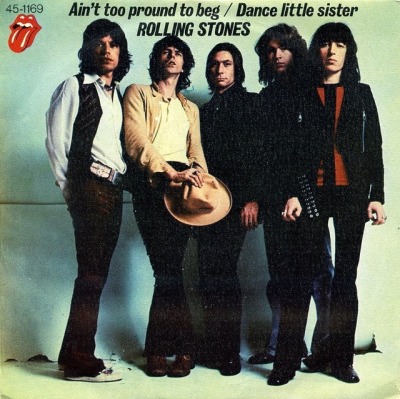
If this doesn’t get you going on a Sunday morning nothing will. Dance Little Sister was the B side to “Ain’t Too Proud To Beg” released in 1974. Thank goodness for B sides like this.
This is a great album track by the Stones. Keith Richard’s rhythm guitar just drives you in the ground…it is relentless. Dance Little Sister was on the It’s Only Rock and Roll Album and it’s an album that to me…wasn’t up to the previous five albums standards. One reason could be that Jimmy Miller was not the producer. I do like the album though…it has the great title track and some other good songs…including this one.
The album peaked at #1 in the Billboard Album Chart, #5 in Canada, and #2 in the UK in 1974,
Tracks like this make the Stones the Stones. Turn it up to 11 and have a great Sunday.
Dance Little Sister
On Thursday night she looked a fright Her pricky hair all curled, oh what a sight Dance, dance, little sister, dance
On Friday night, she all decked out Her high heel shoes, her dress so tight Dance, dance little sister, dance
On Saturday night she bass-a-dee She stepping high on Frederick’s Street Dance, dance, little sister, dance
I said, “Dance, dance little sister, dance Dance little sister, dance Dance little sister, dance” I said, “Dance, dance little sister, dance Dance little sister, dance Dance little sister, dance”
It make me hot, I wet with sweat It burn like hell, I’ve four hours left Dance, dance little sister, dance
Get next to me, drive me close Don’t mammaguay, I lose control Dance, dance with fire, dance
I said, “Dance, dance little sister, dance Dance little sister, dance Dance little sister, dance” I said, “Dance, dance little sister, dance Dance little sister, dance Dance little sister, dance”
Ah, jump out of Africa With a step that looks so bold Ah, when you’re kickin’ high It make my blood run cold
I said, “Dance, dance little sister, dance Dance little sisters, dance Dance little sister, dance” I said, “Dance, dance little sister, dance Dance little sister, dance Dance little sister, dance”
I said, “Dance, dance little sister, dance Dance little sister, dance Dance little sister, dance”
On Saturday night we don’t go home We bacchanal, ain’t no dawn Dance, little sister, dance
I said, “Dance, dance little sister Dance little sister Dance little sister, dance” I said, “Dance, dance little sister Dance little sister Dance little sister, dance”
The tone of this track is ominous. What a powerful statement The Stones were making in this song. With me growing up in the late 70s and 80s I didn’t grasp what the song was getting across when I first heard it. We didn’t have the turmoil that was going on during the sixties happening at that time.
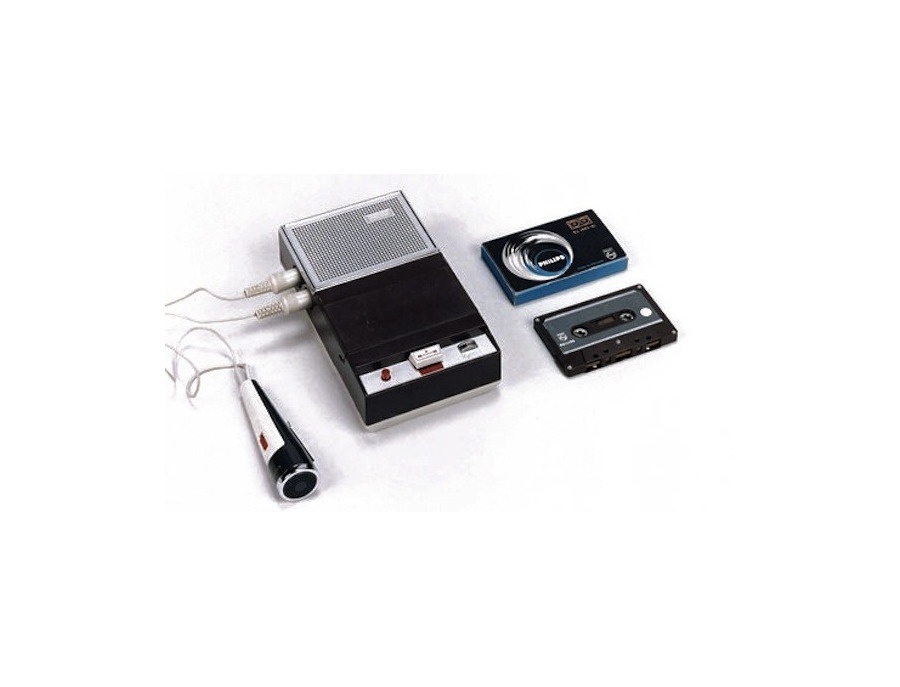
Now the tone…something about the sixties that is missing today is the low fi experimenting. Keith Richards started developing this song in late 1966 but had a hard time getting the sound he was after. The breakthrough came when he bought a Philips cassette recorder and realized he could get a dry, crisp sound by playing his acoustic guitar into it and overloading it. The only electric instrument on the entire song is the bass. The guitar you hear is coming from an old Philips cassette recorder.
Charlie Watts used a 1930s toy drum kit called a London Jazz Kit Set…it was something close to this…
The song was released in 1968 and was on Beggars Banquet. The song peaked at #48 in the Billboard 100, #21 in the UK, and #32 in Canada.
From Songfacts
This song deals with civil unrest in Europe and America in 1968. There were student riots in London and Paris, and protests in America over the Vietnam War. The specific event that led Mick Jagger to write the lyric was a demonstration at Grosvenor Square in London on March 17, 1968. Jagger (along with Vanessa Redgrave), joined an estimated 25,000 protesters in condemning the Vietnam War.
The demonstrators marched to the American embassy, where the protest turned violent. Mounted police charged the crowd, which responded by throwing rocks and smoke bombs. About 200 people were taken to the hospital and another 246 arrested. Jagger didn’t make it to the embassy: before the protest turned violent, he abandoned it, returning to his home in nearby Cheyne Walk. Jagger realized that his celebrity was a hindrance to the protest, as his presence distracted from the cause.
This was the first Stones song to make a powerful political statement, although with an air of resignation. Jagger opens the song declaring “the time is right for fighting in the street,” but goes on to sing, “But what can a poor boy do, ‘cept sing in a rock and roll band.”
This sense of hopelessness in the face of atrocity may be why the Rolling Stones became apolitical, focusing their efforts on songs about relationships and rock n’ roll. In the process, they became very rich and beloved by members of all political persuasion.
In the US, this was released as a single on August 31, 1968, just a few days after the Democratic National Convention, which took place August 26-29. The convention was marred by violence, as Chicago police clashed with protesters. When the song was released, every radio station in Chicago (and most in the rest of the country), refused to play it for fear that it would incite more violence. There was no official ban in America or Chicago, but stations knew it was in their best interest to shun the song, which accounts for its meager chart position of #48.
Mick Jagger later said: “The radio stations that banned the song told me that ‘Street Fighting Man’ was subversive. ‘Of course it’s subversive,’ we said. It’s stupid to think you can start a revolution with a record. I wish you could!”
The original title of this song was “Did Everybody Pay Their Dues?” It had completely different lyrics and therefore altogether a different and rather strange meaning, with Jagger singing about an Indian chief and his family. The music however was basically the same (slightly alternative mixes exist), but the lead guitar over the chorus was omitted on the final mix of “Street Fighting Man.” Fairly listenable versions have appeared on various bootlegs.
Keith Richards created a distinctive guitar sound on this track using a technique he also used on “Jumpin’ Jack Flash,” where his acoustic guitar was overdubbed several times. Said Richards: “‘Street Fighting Man’ was all acoustics. There’s no electric guitar parts in it. Even the high-end lead part was through a cassette player with no limiter. Just distortion. Just two acoustics, played right into the mike, and hit very hard. There’s a sitar in the back, too. That would give the effect of the high notes on the guitar. And Charlie was playing his little 1930s drummer’s practice kit. It was all sort of built into a little attaché case, so some drummer who was going to his gig on the train could open it up – with two little things about the size of small tambourines without the bells on them, and the skin was stretched over that. And he set up this little cymbal, and this little hi-hat would unfold. Charlie sat right in front of the microphone with it. I mean, this drum sound is massive. When you’re recording, the size of things has got nothing to do with it. It’s how you record them. Everything there was totally acoustic. The only electric instrument on there is the bass guitar, which I overdubbed afterwards. What I was after with all of those – Street Fighting Man, Jumping Jack Flash – was to get the drive and dryness of an acoustic guitar but still distort it. They were all attempts at that.”
Dave Mason did session work on this track. He played the shelani, an Indian reed instrument, which comes in near the end of the song. Mason went on to form the group Traffic, and has played guitar on albums by Jimi Hendrix, George Harrison, Paul McCartney and Fleetwood Mac.
Mick Jagger said of this song: “It was a very strange time in France. But not only in France but also in America, because of the Vietnam War and these endless disruptions…. I wrote a lot of the melody and all the words, and Keith and I sat around and made this wonderful track, with Dave Mason playing the shelani on it live. It’s a kind of Indian reed instrument a bit like a primitive clarinet. It comes in at the end of the tune. It has a very wailing, strange sound.”
This was recorded on an 8-track machine with one track devoted to the cassette recording Richards and Watts made together. Richards added more acoustic guitar on another track, Watts put some bass drum on another, and the rest were filled out by Jagger’s vocal and the other instruments: Jones on sitar and tamboura, Dave Mason’s shehnai, Nicky Hopkins on piano and Richards on bass because Bill Wyman wasn’t around. There is a great deal of stereo separation in the mix.
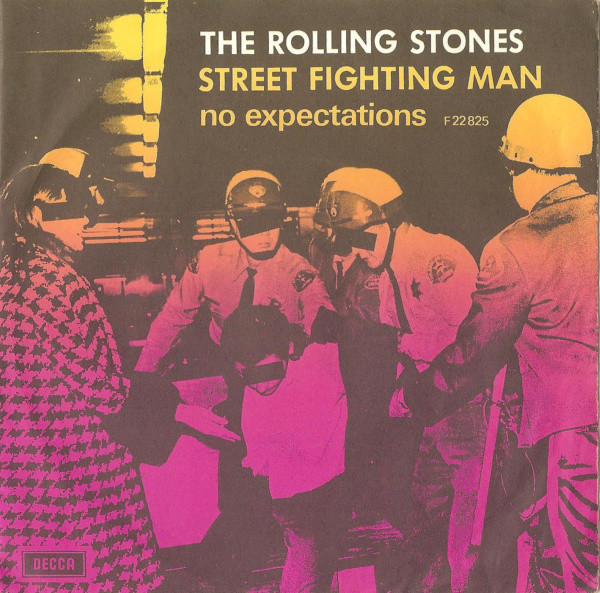
In the US, the single was originally released with a picture on the sleeve of police beating protesters in Los Angeles. The music was different on this version, with different vocals and more piano. This single was quickly pulled by the record company and is now a rare collectors item.
The studio recording, with acoustic guitars and sitar, is impossible to replicate live, but the group came up with an electric arrangement that packed plenty of punch when they performed it. The song remained a concert favorite throughout their run.
The Stones released this the same month The Beatles came out with “Revolution,” which was their first blatantly political song.
A number of sources claim that this song was inspired by the radicalism of a young student leader Tariq Ali, who was active in revolutionary socialist politics in Britain in the late ’60s. In an interview with the April 19, 2007 edition of the Galway Advertiser, Ali, who is now a writer and filmmaker, confirmed this. “Yes, its true. Jagger was/is an artist. He writes and sings what he wants.”
In the UK, this wasn’t released as a single until July 1971, but it still made a strong showing on the chart, reaching #21.
Rod Stewart covered this on his 1973 album Sing It Again Rod. Rage Against The Machine covered it on their 2000 album Renegades.
Mick Jagger said in 1995: “I’m not sure if it really has any resonance for the present day. I don’t really like it that much. I thought it was a very good thing at the time. There was all this violence going on. I mean, they almost toppled the government in France; De Gaulle went into this complete funk, as he had in the past, and he went and sort of locked himself in his house in the country. And so the government was almost inactive. And the French riot police were amazing. Yeah, it was a direct inspiration, because by contrast, London was very quiet.”
Engineer Eddie Kramer recalled to Uncut in a 2016 interview: “The beginning of Street Fighting Man? My recollection is that Jimmy Miller brought in a Wollensak – a cassette machine with one mic built in – stuck it on the floor, pressed ‘Record’ and the band just make a circle round it. And that was the basic track. Now, of course, Keith says it was his idea and his tape machine, but I don’t remember it that way.”
Keith Richards lists this among his favorite Rolling Stones tracks, and feels the message rings true. “When people feel that mad about the way they’re being run, you should go to the streets,” he said. “America wouldn’t be here if it wasn’t for people going to the streets.”
Street Fighting Man
Ev’rywhere I hear the sound Of marching charging feet, boy ‘Cause summer’s here and the time is right For fighting in the street, boy
Well now, what can a poor boy do Except to sing for a rock n’ roll band? ‘Cause in sleepy London town There’s just no place for a street fighting man, no
Hey think the time is right For a palace revolution But where I live the game To play is compromise solution
Well now, what can a poor boy do Except to sing for a rock n’ roll band? ‘Cause in sleepy London town There’s just no place for a street fighting man, no. Get down.
Hey so my name is called Disturbance I’ll shout and scream I’ll kill the king, I’ll rail at all his servants
Well, what can a poor boy do Except to sing for a rock n’ roll band? ‘Cause in sleepy London town There’s just no place for a street fighting man, no Get down
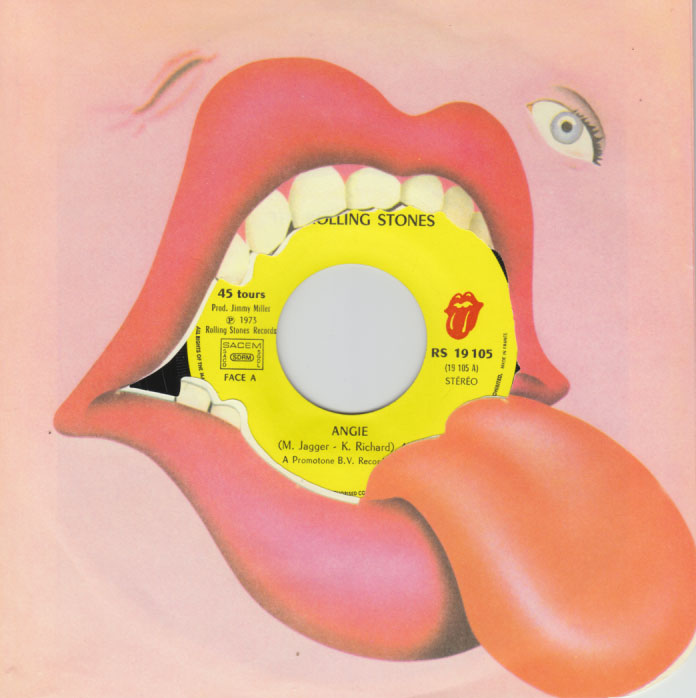
This song is a great ballad by the Rolling Stones. Keith Richards wrote this song in Switzerland after the Exile on Main St. album had been approved by the record company, but before it was released. “Angie” was one of the first songs The Stones recorded for Goat’s Head Soup.
It was on 20 October 1973 that the Rolling Stones secured their 7th US No.1 when ‘Angie’ made the top of the Billboard chart.
It has been speculated that it was inspired by Angie, David Bowie’s wife, or even Keith’s daughter. Keith, who wrote the majority of the song’s music and lyrics. Keith said in his autobiography that the name Angie came to him while in Switzerland detoxing from his heroin addiction. “I wrote ‘Angie’ in an afternoon, sitting in bed, because I could finally move my fingers and get them in the right place again…It was not about any particular person, it was a name, like “Ohhh, Diana””I didn’t know Angela was going to be called Angela when I wrote ‘Angie.’ In those days you didn’t know what sex the thing was going to be until it popped out.”
The song peaked at #1 in the Billboard 100, #5 in the UK, #1 in Canada, and #1 in New Zealand in 1973.
From Songfacts
The big rumor about this song is that it was written about David Bowie’s wife, Angela, who wrote in her autobiography that she once walked in on Bowie and Mick Jagger in bed together – a story Jagger denies. According to the rumor, Jagger wrote this song to appease her, but it was Jagger’s bandmate Keith Richards who wrote most of the song. Jagger had this to say about it: “People began to say that song was written about David Bowie’s wife but the truth is that Keith wrote the title. He said, ‘Angie,’ and I think it was to do with his daughter. She’s called Angela. And then I just wrote the rest of it.”
There was also speculation that Richards’ girlfriend Anita Pallenberg inspired this song, but Keith cleared it up in his 2010 autobiography Life, where he wrote: “While I was in the [Vevey drug] clinic (in March-April 1972), Anita was down the road having our daughter, Angela. Once I came out of the usual trauma, I had a guitar with me and I wrote ‘Angie’ in an afternoon, sitting in bed, because I could finally move my fingers and put them in the right place again, and I didn’t feel like I had to s–t the bed or climb the walls or feel manic anymore. I just went, ‘Angie, Angie.’ It was not about any particular person; it was a name, like ohhh, Diana.
A rare ballad for The Stones, this was the first single released from Goat’s Head Soup. It wasn’t typical of their sound, since most of the band’s material at the time was hard and aggressive. Still, it was a huge hit, and their only ballad that hit #1 in the US.
This is one of the few Rolling Stones songs that is acoustic.
The Angela Bowie rumor picked up steam in 1990, when she went on The Joan Rivers Show and claimed she once walked in on David Bowie and Mick Jagger in bed together naked. What’s even more shocking is that Rivers had her own talk show. She was quickly replaced by Arsenio Hall.
Nicky Hopkins played piano on this track. He became part of the band’s inner circle after working on the 1966 Stones album Between The Buttons.
In 2005 German chancellor Angela Merkel appropriated this acoustic ballad for her Christian Democratic Union Party. “We’re surprised that permission wasn’t requested,” said a Stones spokesman of Merkel’s choice of song. “If it had been, we would have said no.”
The line from this song, “Ain’t it time we said goodbye,” was used as the title to Robert Greenfield’s 2014 book, which chronicles his time covering the Stones’ 1971 British tour and their Exile on Main St. sessions for Rolling Stone magazine. Greenfield is not a fan of the song, however, calling it “soppy and far too sweet for my taste.”
Angie
Angie, Angie, when will those clouds all disappear? Angie, Angie, where will it lead us from here? With no loving in our souls and no money in our coats You can’t say we’re satisfied But Angie, Angie, you can’t say we never tried
Angie, you’re beautiful, but ain’t it time we said good-bye? Angie, I still love you, remember all those nights we cried? All the dreams we held so close seemed to all go up in smoke Let me whisper in your ear:
Angie, Angie, where will it lead us from here? Oh, Angie, don’t you weep, all your kisses still taste sweet I hate that sadness in your eyes But Angie, Angie, ain’t it time we said good-bye?
With no loving in our souls and no money in our coats You can’t say we’re satisfied But Angie, I still love you, baby Ev’rywhere I look I see your eyes
There ain’t a woman that comes close to you Come on baby, dry your eyes But Angie, Angie, ain’t it good to be alive? Angie, Angie, they can’t say we never tried
Love the Beggars Banquet album (1968) and this song in particular. Mick remembers the working class in this song. It was written by Mick and Keith.
It’s a mostly acoustic number, with Charlie Watts playing tabla and Ric Grech sitting in on fiddle. Grech was a violinist and bass player who was a member of the band Family in the ’60s and went on to play in Blind Faith with Eric Clapton. He also played on Gram Parsons’ solo albums in the ’70s, and he appears on Ron Wood and Ronnie Lane’s 1976 Mahoney’s Last Stand project.
Dave Mason, who did some session work for Jimi Hendrix and was a member of the band Traffic, played the mandolin on this song.
The song wasn’t released as a single but it’s a great song like most of what’s on Beggars Banquet.
Drummer Charlie Watts: “On Factory Girl, I was doing something you shouldn’t do, which is playing the tabla with sticks instead of trying to get that sound using your hand, which Indian tabla players do, though it’s an extremely difficult technique and painful if you’re not trained.”
From Songfacts
This song is a great example of Mick Jagger taking on a persona, which he often did in his lyrics. Here, he sings from the perspective of a guy who is waiting for his girlfriend – a destitute, disheveled sort – to get out of work at the factory. It’s quite a contrast to Jagger’s reality: a glamorous rock star who often dated models.
Guitarist Keith Richards: “To me ‘Factory Girl’ felt something like Molly Malone, an Irish jig; one of those ancient Celtic things that emerge from time to time, or an Appalachian song. In those days I would just come up and play something, sitting around the room. I still do that today.”
Factory Girl
Waiting for a girl who’s got curlers in her hair Waiting for a girl she has no money anywhere We get buses everywhere Waiting for a factory girl
Waiting for a girl and her knees are much too fat Waiting for a girl who wears scarves instead of hats Her zipper’s broken down the back Waiting for a factory girl
Waiting for a girl and she gets me into fights Waiting for a girl, we get drunk on Friday night She’s a sight for sore eyes Waiting for a factory girl
Waiting for a girl and she’s got stains all down her dress Waiting for a girl and my feet are getting wet She ain’t come out yet Waiting for a factory girl







 PowerPop... An Eclectic Collection of Pop Culture