This song was on the third Beatles album I bought. That would have been The Red Album compilation.
I’m posting it because I just heard the live version from the Anthology and for me…it’s better than the released version. I like the harmonica as an instrument but I like this live version they did without it. John didn’t want to use it because they had used it on Love Me Do, Please Please Me, and then this one. He didn’t want them repeating themselves but was talked into it.
This was their third single in the UK. Love Me Do (#17), Please Please Me (#2), and then this song which peaked at #1 in the UK. When The Beatles hit America…their hits more times than not charted higher in the US. Some of the examples are Twist and Shout (#2 US #0 UK), Penny Lane/Strawberry Fields (#1 US #2 UK), Something (#4 UK #1 US) and more. Now some did the opposite but this song was really odd. It didn’t chart in the top 40 in America at all. Very unusual in 1964.
George Martin asked them to come up with something as good as Please Please Me and they gave him this. No, I don’t think it’s as good but it’s a good song. There was a column in the New Musical Express that was titled From You To Us which featured fans writing columns. This particular one featured a fan letter talking about how Cliff Richard was currently outshining Elvis Presley in the charts. Lennon stated in May of 1963 that Paul and he started to “talk about one of the letters in the column,” which led to them putting ideas together for a song inspired by the title of this newspaper column. This one both Lennon and McCartney agreed was a 50/50 composition.
Paul said that they wrote it while on tour with Roy Orbison. The only problem is that the song was already released then. They were on tour with Helen Shapiro who at the start of the tour were more popular than they were.
Del Shannon was the first American to cover a Beatles song…and he covered this one in 1963.
John Lennon: We were just fooling about on the guitar, this went on for a while. Then we began to get a good melody line and we really started to work at it. Before the journey was over we’d completed the lyric, everything. The words weren’t really all that difficult – especially as we had decided quite definitely not to do anything that was at all complicated. I suppose that is why we often had the words “you” and “me” in the titles of our songs. It’s the kind of thing that helps the listeners to identify with the lyrics. We think this is very important. The fans like to feel that they are part of something that is being done by the performers.”
That said, this song was “below Beatles par ” by a critic…John Lennon: “Maybe it wasn’t as good as ‘Please Please Me,’ but below par? I’ll never forget that one. That’s when I first realized you’ve got to keep it up, there’s some sort of system where you get on the wheel and you’ve got to keep going around.”
The original version is below…there is one thing you can hear now in the remastered versions…the bass!
From Me To You
If there’s anything that you want If there’s anything I can do Just call on me and I’ll send it along With love, from me to you
I’ve got everything that you want Like a heart that’s oh so true Just call on me and I’ll send it along With love, from me to you
I’ve got arms that long to hold you And keep you by my side I’ve got lips that long to kiss you And keep you satisfied (oh)
If there’s anything that you want If there’s anything I can do Just call on me and I’ll send it along With love, from me to you
From me To you Just call on me and I’ll send it along With love, from me to you
I’ve got arms that long to hold you And keep you by my side I’ve got lips that long to kiss you And keep you satisfied (oh)
If there’s anything that you want If there’s anything I can do Just call on me and I’ll send it along With love, from me to you To you To you To you
This is an interesting list to make. Everyone knows I’m a huge fan but there are some that I won’t listen to…not because they are burned out…I won’t even list those…these are ones I never really liked since I was a kid.
Some of you will notice that one “song” or experiment is not in here…that’s because I count Revolution #9 as an experiment and not a true song. I find it fascinating…a sound collage. I looked up the usual suspects… Yellow Submarine, Good Day Sunshine, Don’t Pass Me By, Rocky Raccoon, and Ob-La-Di, Ob-La-Da but I like those.
These are songs I’ll never post except this once.
5: Little Child – This was on their Meet The Beatles album in the US. Never liked it as a kid, teen, or now. But I did find a version I like by The Inmates that I just found recently.
4: Mister Moonlight – This song was written by someone else but I just never took to it at all…although John did a great vocal on it.
3: Can’t Buy Me Love – I know…this one seems out of place on this list but it was on the first Beatle album I ever bought (Hey Jude Again) and I skipped it even as an eight-year-old.
2: Maxwell’s Silver Hammer – I’ve heard my share of jokes about this song with me being named Max. I would like to use that damn hammer on every recording of this. I’ll never forgive Paul for introducing Maxwell to the world. The other three Beatles felt the same. There are some that really like it…more power to them!
1: Now the number 1 song…it’s the only one on the White Album I cannot and will not listen to. Wild Honey Pie. This song makes Revolution #9 look like Stairway to Heaven. I have to think they did this as a joke and just left it on. Patti Harrison liked this one so Paul left it on. Paul is the only one on this song.
I’m 8-9 years old again when I hear this song. It’s not a deep meaningful song but it’s just catchy and good. I heard it first in 1976 on the Beatles compilation album Rock and Roll Music. That was terrible packaging…not the albums but the packaging itself. It made the Beatles look like they were popular in the 1950s.
Ringo Starr said: “It made us look cheap and we never were cheap. All that Coca-Cola and cars with big fins was the Fifties!” John Lennon told Capitol that the cover looked like a Monkees reject. He offered to design the cover but was declined. That doesn’t mean the album didn’t contain great music…a double album full of some great songs.
This song was on the UK version of A Hard Day’s Night album. In America, it was on the Something New album. They were pressed for time and John finished the song off while on vacation and brought it to the studio. Lennon is believed to be the only writer of this song. This one was known then as an album track but it’s not like it doesn’t have a nice hook.
We know that Paul is very active in songwriting but on this album, John ended up writing 10 of the 13 songs. I had a book that measured each of them in the Lennon/McCartney songs and Lennon wrote a larger percentage, most of that because of the early days.
John later said it was an effort in re-writing It Won’t Be Long (my first favorite Beatle song) and it’s true. It’s also got some of All I’ve Got To Do theme in it.
On the albums in America. Something New peaked at #2 on the Billboard 100 and #2 in Canada. The reason it peaked at #2? A Hard Day’s Night was released in America on June 26, 1964, and peaked at #1 in America and Canada. Something New was released less than a month later on July 20, 1964. A Hard Days Night held its sister album off. There were 6 Beatles albums released in America and 5 in Canada in 1964. In the UK there were 2 released in 1964. Capitol pulled songs from 1962-1963 and all of them came rolling out.
I’ve also included the song It Won’t Be Long. A very underrated Beatles early rocker which they never played live for some reason. When you are 8 years old…that guitar riff sounded so cool…wait a minute…it does now also!
John Lennon: “An effort in writing ‘It Won’t Be Long’ – same ilk. C to A minor, C to A minor with me shouting.”
George Harrison: “Paul and John write a song, bring it into the studio and usually, nine times out of ten, Ringo and I haven’t heard the song before, and we get into the studio and try all different arrangements. We all stick little bits here and there, you know.”
My first favorite Beatles song It Won’t Be Long
Any Time At All
Any time at all, any time at all
Any time at all, all you gotta do is call
And I’ll be there
If you need somebody to love
Just look into my eyes
I’ll be there to make you feel right
If you’re feeling sorry and sad
I’d really sympathize
Don’t you be sad, just call me tonight
Any time at all, any time at all
Any time at all, all you gotta do is call
And I’ll be there
If the sun has faded away
I’ll try to make it shine
There is nothing I won’t do
When you need a shoulder to cry on
I hope it will be mine
Call me tonight and I’ll come to you
Any time at all, any time at all
Any time at all, all you gotta do is call
And I’ll be there
Any time at all, any time at all
Any time at all, all you gotta do is call
And I’ll be there
Any time at all, all you gotta do is call
And I’ll be there
This is probably one of the most studied songs by the Beatles in their entire catalog. Why is it studied? That opening chord or chords. It baffled musicians for years on how to duplicate it. It took around 40 years to figure it out to be exact. It’s probably one of the most recognizable intros in rock. A musician didn’t figure it out…that took a Dalhousie mathematician. None of the Beatles could remember exactly how they did it.
Here is a PDF you can download. A Hard Days Night Chord . It’s called Mathematics, Physics and A Hard Day’s Night. Here is what Wiki said: George Harrison: Fadd9 in 1st position on Rickenbacker 360/12 12-string electric guitar. John Lennon: Fadd9 in 1st position on a Gibson J-160E 6-string acoustic guitar. Paul McCartney: high D3 played on the D-string, 12th fret on Hofner 500/1 electric bass. George Martin: D2-G2-D3 played on a Steinway Grand Piano.
I just don’t see how they thought it up…it was most likely helped by George Martin. Anyway, it’s a great song and a hugely popular one from their early years. The title came from something Ringo said and John remembered it. They all called Ringo’s odd phrases Ringoisms. Ringo said “We went to do a job, and we’d worked all day and we happened to work all night. I came up still thinking it was day I suppose, and I said, ‘It’s been a hard day…’ and I looked around and saw it was dark so I said, ‘Night!’ So we came to ‘A Hard Day’s Night.”
A Hard Day’s Night was written and recorded in less than 24 hours. It only took them 3 hours to finish the song. It was another song that was written under pressure. The movie production had begun and this was the last song to be recorded. On the way to the studio, John Lennon was talking to a journalist Maureen Cleave who was sharing a cab with him.
He showed her the lyrics to A Hard Day’s Night. They were scrawled down on a birthday card sent from a fan to his son Julian. What the lyrics were was “When I get home to you / I find my tiredness is through …” and Cleave didn’t like the word tiredness and told John…so he grabbed her pen and wrote, “When I get home to you / I find the things that you do / Will make me feel all right.” Today Julian’s birthday card is in the British Library.
The song peaked at #1 on the Billboard 100, #1 in Canada, #1 in New Zealand, and #1 in the UK in 1964.
The album peaked at #1 on the Billboard Album Charts, #1 in Canada, and #1 in the UK.
A fun fact about the movie. Phil Collins was one of the school kids brought in as extras for a scene in the movie where The Beatles perform. He didn’t make the cut, but years later, the film’s producer gave Collins the outtake footage with him in it and had Collins add commentary to the DVD release.
They won their first Grammy with this song.
A Hard Day’s Night
It’s been a hard day’s night
And I’ve been workin’ like a dog
It’s been a hard day’s night
I should be sleepin’ like a log
But when I get home to you
I find the things that you do
Will make me feel alright
You know I work all day
To get you money to buy you things
And it’s worth it just to hear you say
You’re gonna give me everything
So why on Earth should I moan?
‘Cause when I get you alone
You know I feel okay
When I’m home
Everything seems to be right
When I’m home
Feeling you holding me tight, tight, yeah
It’s been a hard day’s night
And I’ve been workin’ like a dog
It’s been a hard day’s night
I should be sleepin’ like a log
But when I get home to you
I find the things that you do
Will make me feel alright, ow
So why on Earth should I moan?
‘Cause when I get you alone
You know I feel okay
When I’m home
Everything seems to be right
When I’m home
Feeling you holding me tight, tight, yeah
Oh, it’s been a hard day’s night
And I’ve been workin’ like a dog
It’s been a hard day’s night
I should be sleepin’ like a log
But when I get home to you
I find the things that you do
Will make me feel alright
You know I feel alright
You know I feel alright
“If looks could kill, it would have been us instead of him”.
I got the White Album and Abbey Road in the winter of 1981 and immediately fell in love with both, mainly the White Album. The sheer volume of variety knocked me out. I had heard a lot of the songs already but this album changed me musically. When our band started to play I always wanted a variety in our sets. I wanted to play the loudest raunchiest song and then the next one be the quietest song ever. One example would be AC/DC’s You Shook Me All Night Long and then…Wonderful Tonight. I try my best for the blog to be like that also. John Denver one day and then The Stones…it’s warped…but so am I.
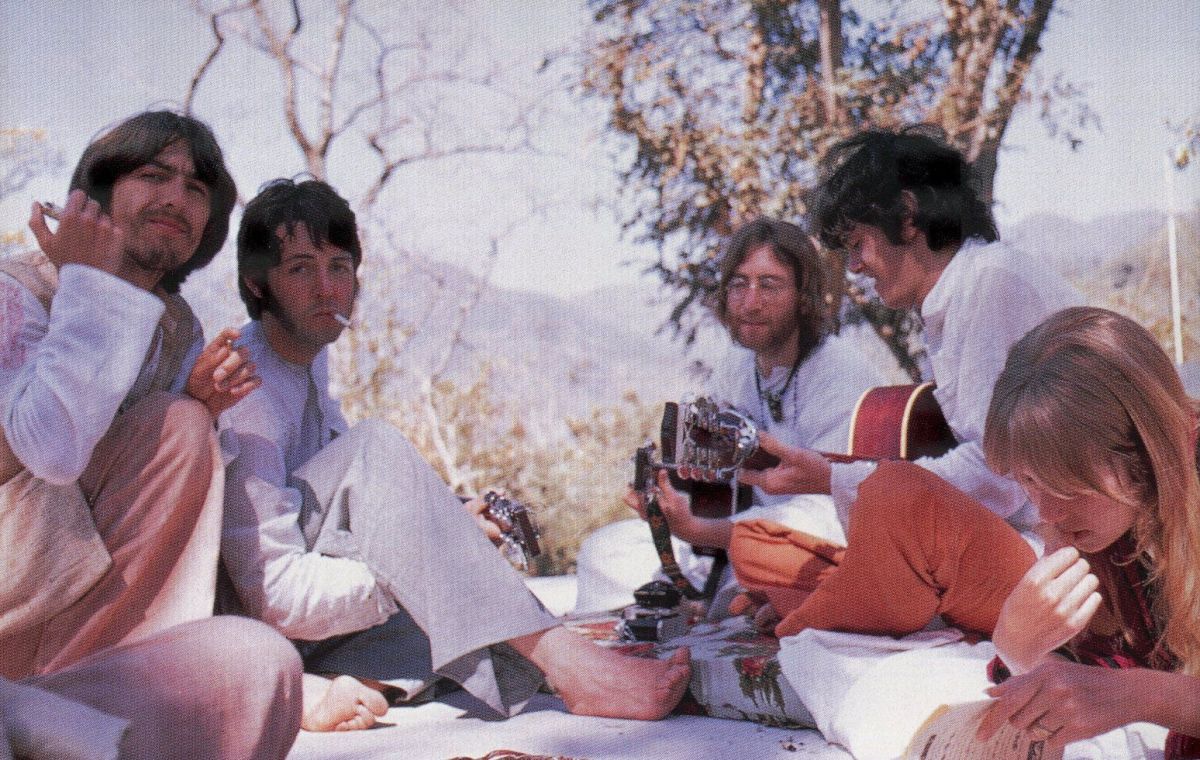
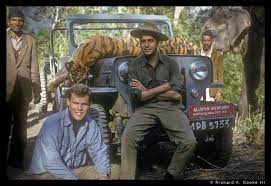
This song stuck in my head for months but I didn’t mind. John wrote this one while all of the Beatles were in India visiting the Maraharshi. It’s based on a true story. When they were there they did meet a hunter who shot tigers. The hunter’s name was Richard A. Cooke, and his wife Bronwyn explained that Richard, “had asked the Maharishi if it was a sin to kill a tiger. John and George were in the room. Maharishi’s response was, ‘Life destruction is Life destruction.’ Rik has not shot anything since. He became a freelance photographer for National Geographic.”
Richard Cooke in the blue shirt
This event ended the hunting career of Richard Cooke III. He decided instead to take up professional photography, working as a freelancer for The National Geographic Society for the next 40 years. His mother Nancy remained friends with fellow meditator George Harrison until his death in 2001.
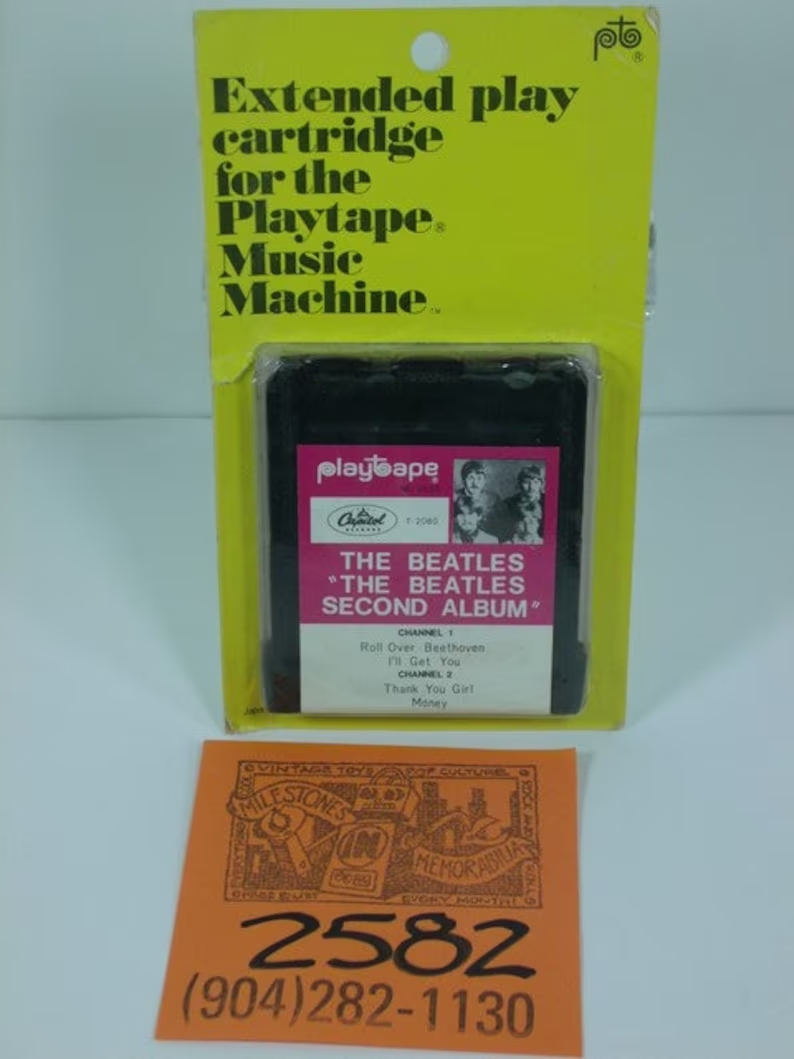
Sometime in 1969, Capitol released “Bungalow Bill” on a short lived format called “Playtape,” which was a tape cartridge made for portable players. Since there wasn’t much tape allotted to a cartridge, it took five volumes to contain most of the songs on the “White Album,” “Bungalow Bill” being featured on “The Beatles Vol. III.” These tapes are highly sought after today and are quite valuable.
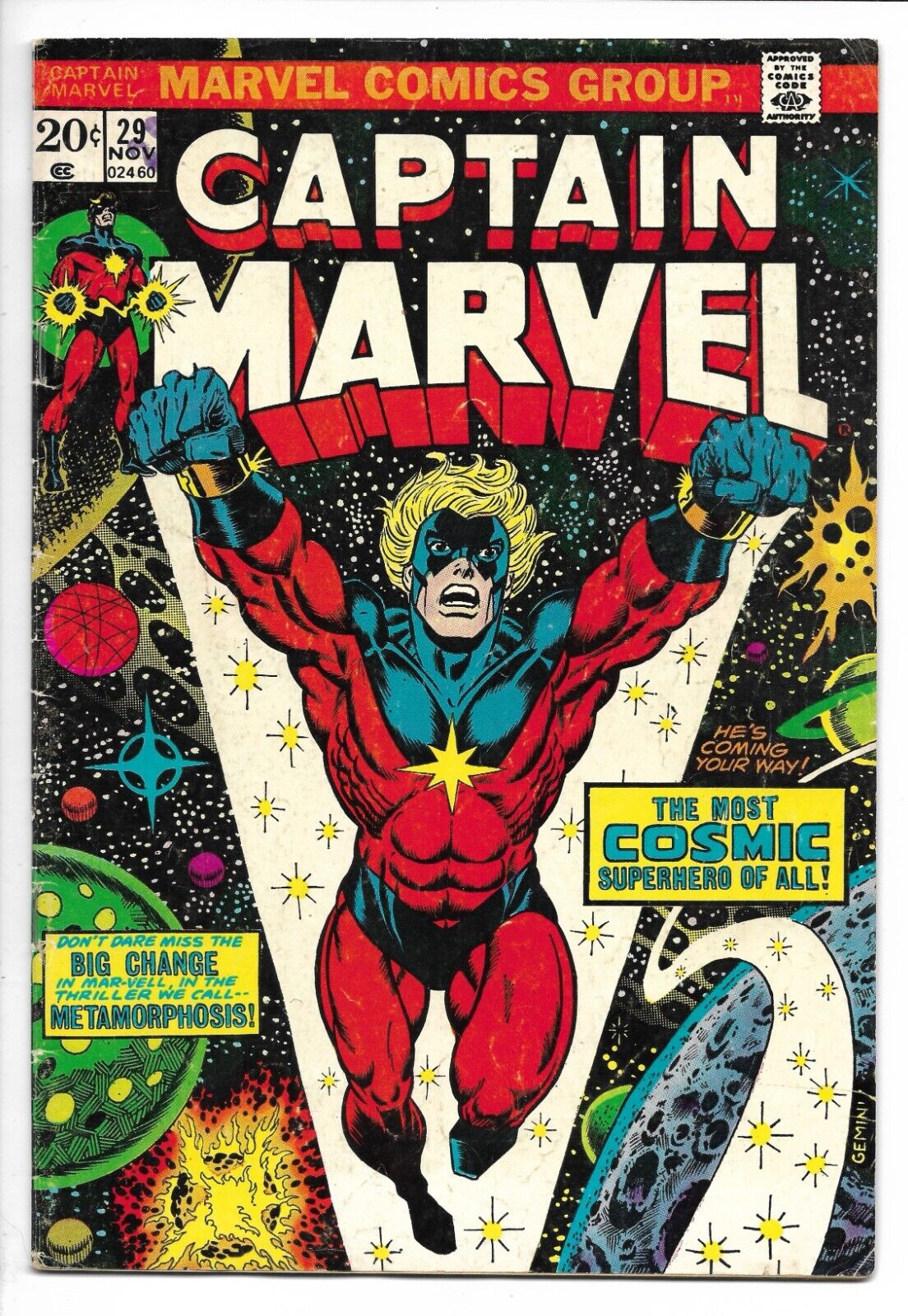
It was widely known that John Lennon didn’t write fictional story songs. He was amazed that Paul wrote so many about fictional people like Rita the Meter Maid or Desmond and Molly. The only fictional departure from this song’s actual story is the throwback reference to comic books that John enjoyed during his childhood in the late ’50s and early ’60s. “Captain Marvel – The World’s Mightiest Mortal.”
It’s John’s voice through the verses that I like…he could make any song sound interesting.
John’s lyrics contain “zapped him right between the eyes.” This American comic book reference to someone ‘zapping’ someone was something that John thought to be humorous, so he added it into the story as an inside joke, emphatically repeated afterward as “ZZZZAP!”
The White Album was released in 1968 and peaked at #1 in the Billboard Album Chart, #1 in Canada, #1 in the UK, and #1 about everywhere else. The sessions were not the happiest time for the band but they came up with the most eclectic batch of songs they ever produced.
John Lennon: “At the Maharishi’s meditation camp, there was a guy who took a short break to go away and shoot a few poor tigers and then came back to commune with God. There used to be a character called Jungle Jim and I combined him with Buffalo Bill. It’s a sort of teenage social-comment song. It’s a bit of a joke.”
Paul McCartney: “This is another of his great songs and it’s one of my favorites to this day because it stands for a lot of what I stand for now. ‘Did you really have to shoot that tiger’ is its message. ‘Aren’t you a big guy? Aren’t you a brave man?’ I think John put it very well.”
John Lennon: “I had a sort of professional songwriter’s attitude to writing pop songs, I’d have a separate ‘songwriting’ John Lennon who wrote songs for the sort of meat market, and I didn’t consider them, the lyrics or anything, to have any depth at all. Then I started being me about the songs…not writing them objectively, but subjectively…I think it was Dylan that helped me realize that.”
The Continuing Story of Bungalow Bill
Hey, Bungalow Bill
What did you kill
Bungalow Bill?
Hey, Bungalow Bill
What did you kill
Bungalow Bill?
He went out hunting with his elephant and gun
In case of accidents, he always took his mom
He’s the all-American bullet-headed Saxon mother’s son
All the children sing
Hey, Bungalow Bill
What did you kill
Bungalow Bill?
Hey, Bungalow Bill
What did you kill
Bungalow Bill?
Deep in the jungle where the mighty tiger lies
Bill and his elephants were taken by surprise
So Captain Marvel zapped him right between the eyes
All the children sing
Hey, Bungalow Bill
What did you kill
Bungalow Bill?
Hey, Bungalow Bill
What did you kill
Bungalow Bill?
The children asked him if to kill was not a sin
“Not when he looked so fierce”, his mommy butted in
“If looks could kill, it would have been us instead of him”.
All the children sing
Hey, Bungalow Bill
What did you kill
Bungalow Bill?
Hey, Bungalow Bill
What did you kill
Bungalow Bill?
Hey, Bungalow Bill
What did you kill
Bungalow Bill?
Hey, Bungalow Bill
What did you kill
Bungalow Bill?
Hey, Bungalow Bill
What did you kill
Bungalow Bill?
I posted this on February 14, 2021, and every year this is the first song that comes to mind on Valentine’s day. I then thought…enough time has gone by so I’m posting it again. Sorry to cheat but to me it is such a Valentines song that I just had to.
I hope all of you have a great Valentine’s Day… let’s join the Beatles on June 25, 1967, for All You Need Is Love. There’s nothing you can do that can’t be done…
How nerve-racking this had to be even if you were a Beatle. They performed this on one of the first Satellite hookups around the world. An estimated 350 million people were watching. This performance was a rock and roll milestone…they were in front of the world.
The show was called “Our World”, the first worldwide TV special. Broadcast in 24 countries on June 25, 1967, the show was six hours long and featured music from 6 continents, with The Beatles representing Britain.
If any of you remember this show…please comment.
At the Beatles’ feet were members of The Rolling Stones, The Who, Cream, The Hollies, and The Small Faces helping by singing along.
The song peaked at #1 almost everywhere and probably even in Venus and Mars in 1967.
Musically, this song is very unusual. The chorus is only one note, and the song is in a rare 7/4 tempo. In the orchestral ending, you can hear pieces of both “Greensleeves,” a Bach two-part invention (by George Martin) and Glenn Miller’s “In The Mood.” Royalties were paid to Miller for his contribution.
Just think of all of the bits of paper all of them wrote or scribbled on and threw away. John Lennon’s hand-written lyrics for this song sold for one million pounds in the summer of 2005. Lennon left them in the BBC studios after this appearance, and they were salvaged by a very smart BBC employee.
From Songfacts
The concept of the song was born out of a request to bring a song that was going to be understood by people of all nations. The writing began in late May of 1967, with John and Paul working on separate songs. It was decided that John’s “All You Need Is Love” was the better choice because of its easy to understand message of love and peace. The song was easy to play, the words easy to remember and it encompassed the feeling of the world’s youth during that period.
“All You Need Is Love” was a popular saying in the ’60s anti-war movement. The song was released in the middle of the Summer of Love (1967). It was a big part of the vibe.
John Lennon wrote this as a continuation of the idea he was trying to express in his 1965 song “The Word.” John was fascinated by how slogans effect the masses and was trying to capture the same essence as songs like “We Shall Overcome.” He once stated, “I like slogans. I like advertising. I love the telly.” In a 1971 interview about his song “Power To The People,” he was asked if that song was propaganda. He said, “Sure. So was ‘All You Need Is Love.’ I’m a revolutionary artist. My art is dedicated to change.”
It was not until 1983 and the publication of the in the book John Lennon: In My Life by Pete Shotton and Nicholas Schaffner that it was revealed that John Lennon was the primary composer of the song. It is typical of Lennon: Three long notes (“love -love -love”) and the rise of excitement with at first speaking, then recital, then singing, then the climax and finally the redemption. This as opposed to McCartney’s conventional verse, verse, middle part, verse or A,A,B,A. Lennon felt that a good song must have a rise of excitement, climax and redeeming.
Ringo’s second son, Jason, was born the day this hit #1 in the US: August 19, 1967. Jason is also a drummer.
McCartney sang the chorus to The Beatles 1963 hit, “She Loves You” at the end: “She loves you yeah yeah yeah… She loves you yeah yeah yeah”
This begins with a clip from the French national anthem, “La Marseillaise,” written and composed by Claude Joseph Rouget de Lisle in Strasbourg on April 25, 1792. Its original name was “Chant de guerre de l’Armee du Rhin” (“Marching Song of the Rhine Army”) and it was dedicated to Marshal Nicolas Luckner, a Bavarian-born French officer from Cham. It became the rallying call of the French Revolution and got its name because it was first sung on the streets by troops from Marseille upon their arrival in Paris. Now the national anthem of France, the song was also once the anthem of the international revolutionary movement, contrasting with the theme of The Beatles song. In the late 1970s, Serge Gainsbourg recorded a reggae version “Aux Armes et cetera,” with Robbie Shakespeare, Sly Dunbar and Rita Marley in the choir in Jamaica, which resulted in him getting death threats from veterans of the Algerian War of Independence.
Al and Tipper Gore had this song played at their wedding. They married in 1970 and separated in 2010.
George Harrison mentioned this in his 1981 song “All Those Years Ago” with the line, “But you point the way to the truth when you say ‘All you need is love.'” Harrison’s song is a tribute to John Lennon, who was killed in 1980.
This was used in the climactic final episode of the UK sci-fi series The Prisoner, and was the entrance music for Queen Elizabeth II during the UK Millennial celebrations of 1999. It was also sung by choirs across the kingdom in 2002 during the Queen’s Golden Jubilee celebration.
In 2007, this was used in an advertising campaign for Luvs diapers with the lyrics changed to “All You Need Is Luvs.” While Beatles songs have been used in commercials before, notably “Revolution” in spots for Nike and “Hello Goodbye” for Target, this peace anthem shilling for diapers didn’t go over well with fans who thought it sullied The Beatles legacy. The publishing rights to “All You Need Is Love” and most other Beatles songs are controlled by the Sony corporation and Michael Jackson, which means The Beatles cannot prevent a company from re-recording the song and using it in a commercial.
When asked what his favorite lyric is during an interview with NME, John Lennon’s son Sean replied: “My list of favorite things changes from day to day. I like when my dad said: ‘There’s nothing you can know that isn’t known/ Nothing you can see that isn’t shown/ Nowhere you can go that isn’t where you’re meant to be.’ It seems to be a good representation of the sort of enlightenment that came out of the ’60s.”
All You Need Is Love
Love, love, love Love, love, love Love, love, love
There’s nothing you can do that can’t be done Nothing you can sing that can’t be sung Nothing you can say, but you can learn how to play the game It’s easy Nothing you can make that can’t be made No one you can save that can’t be saved Nothing you can do, but you can learn how to be you in time It’s easy
All you need is love All you need is love All you need is love, love Love is all you need
All you need is love All you need is love All you need is love, love Love is all you need
There’s nothing you can know that isn’t known Nothing you can see that isn’t shown There’s nowhere you can be that isn’t where you’re meant to be It’s easy
All you need is love All you need is love All you need is love, love Love is all you need
All you need is love (all together now) All you need is love (everybody) All you need is love, love Love is all you need
Love is all you need (Love is all you need) Love is all you need (Love is all you need) Love is all you need (Love is all you need) Love is all you need (Love is all you need) Love is all you need (Love is all you need) Love is all you need (Love is all you need) Love is all you need (Love is all you need) Love is all you need (Love is all you need) Love is all you need (Love is all you need) Love is all you need (Love is all you need) Love is all you need (Love is all you need) (Love is all you need) (Love is all you need) (Love is all you need) Yesterday (Love is all you need) Oh Love is all you need Love is all you need Oh yeah Love is all you need (She love you, yeah, yeah, yeah) (She love you, yeah, yeah, yeah) (Love is all you need) (Love is all you need)
I listened to the radio in 1987 a little more than in the previous 3 years or so. The albums that really got my attention were George Harrison’s Cloud Nine and the Replacements album that’s one of my favorites of the 1980s…Please To Meet Me… it was recorded in the Memphis studio where Big Star recorded. It was also the year of the Grateful Dead…a huge top-ten album and single.
Grateful Dead – Touch Of Grey
I knew of the Grateful Dead from an older brother of a friend I had. I had heard of them as a kid in the seventies before I actually heard them. I knew some of their songs and the Garcia song Sugaree. I always pictured this heavy tough metal band with a name like that. Whenever they toured they would draw a massive amount of fans despite having no top ten hits…until this song. After this song, they drew a larger amount of attention and fans.
When this came out in the 80s, it was like Deadmania. With MTV suddenly everyone was talking about them. While big success is great it did cause some trouble at some of their concerts. Chilled-out Deadheads followed them around the country for decades. Some financed their travels by hawking food, T-shirts, and handicrafts…not to mention pot and LSD usually peacefully. Through the years more would add to the fold…some described it as a giant community more than a regular concert. In 1987 they suddenly had an influx of new young fans (Touchheads) and some didn’t know what the band was about. Along with them came some gate crashers and riots.
With the backing of the band, older Deadheads handed out flyers on how to act, trying to mellow out the newer crowd.
Robert Hunter started writing the lyrics to this song in 1980, and the Grateful Dead first performed it in 1982. They played it sporadically over the next few years and finally recorded it for their 1987 album In The Dark.
George Harrison – We We Was Fab
I loved this song when I heard it. To hear George sing about his time with The Beatles surprised me. Of all the Beatles George seemed to have the most resentment and some of it was understandable. A few years after this he would join the remaining Beatles and start on The Beatles Anthology. George wanted Paul to be in this video but Paul was tied up at the time. He asked George to put a left-handed bass player in the video with a walrus mask and tell everyone it was him.
George co-wrote the song with Jeff Lynne, who also co-produced the album that shortly pre-dates the two of them forming The Traveling Wilburys. ‘When We Was Fab’ is a musical nod to the psychedelic sound that the Beatles had made their own. George used a sitar, string quartet, and backward tape effects.
He also got some help from Ringo. Starr played drums on this track and a few others on the album. Harrison says that when he started writing the song, he had Ringo’s drumming in mind for the intro and the overall tempo
Replacements – Alex Chilton
The Replacement’s tribute song about Big Star and Box Tops lead singer, Alex Chilton. The song was off the album Please To Meet Me. One of my favorite bands of all time singing about a singer in one of my favorite bands. This would be my number 1 song of 1987.
The Replacements recorded Pleased To Meet Me in Memphis at Ardent Studios, the same studio as Big Star. The man behind the board was Jim Dickinson, who produced the storied third Big Star album. Alex came into the studio a few times while the Replacements were working on the record (and laid down a guitar fill for “Can’t Hardly Wait”), but the band avoided the awkwardness of playing “Alex Chilton” whenever Chilton was around.
R.E.M. – It’s The End of the World as We Know It (And I Feel Fine)
This song came off of the great Document album. With some REM songs, it takes a few listens for me but this one… the first time was enough to know I really liked it. It was recorded in the Sound Emporium in Nashville, Tennessee. The song peaked at #69 in 1988. The song was inspired by Subterranean Homesick Blues by Bob Dylan and you can tell.
Michael Stipe said: “The words come from everywhere. I’m extremely aware of everything around me, whether I am in a sleeping state, awake, dream-state or just in day to day life. There’s a part in ‘It’s The End Of The World As We Know It’ that came from a dream where I was at Lester Bangs’ birthday party and I was the only person there whose initials weren’t L.B. So there was Lenny Bruce, Leonid Brezhnev, Leonard Bernstein… So that ended up in the song along with a lot of stuff I’d seen when I was flipping TV channels. It’s a collection of streams of consciousness.”
Los Lobos – La Bamba
This band had been around a long time before this song came out. They formed in 1973 and released their first album in 1978. They opened for bands such as The Clash and The Blasters so they got exposed to a lot of different audiences.
They recorded some Ritchie Valens covers for the movie La Bamba and their cover of the title track made them known internationally. The song was number 1 almost everywhere including the US, Canada, the UK, and New Zealand.
This song is not one of Ringo’s best songs but it probably is my secret favorite of his because of what it’s about. The song is about the status of the Beatles in early 1970.
I usually don’t describe what a song is about because I like the back stories to songs much more…and everyone interprets songs a different way…but this one is known to be about the other Beatles. This was the B side to It Don’t Come Easy…it’s a very basic simple song…no great work of art but it has a charm about it because it’s Ringo.
The first verse is about Paul… he talks about his farm, and his new wife Linda, and Paul was very quiet around this time and he stopped coming to Apple. He also told Ringo to get out of his house when Ringo delivered a message from the 3 Beatles for McCartney to delay releasing his debut album because of Let It Be releasing at the same time. They finally gave in to Paul. Ringo was wondering if Paul would play music with him when he came by again. And when he comes to town, I wonder if he’ll play with me.
The second verse is about John. Ringo sings about John and Yoko doing the bed in and what I thought was “Cocaine” as a kid was really a lesser drug…”Cookies.” He also references Yoko with “With his mama by his side, she’s Japanese.” At the end of the verse…unlike Paul he knows John will play music with him. And when he comes to town, I know he’s gonna play with me.
The third verse is about George. Ringo and George were extremely close in the Beatles and afterward. Things did pop up between them through the years but they remained friends. He describes George in the first line, Pattie Boyd Harrison in the second, and George’s famous mansion Friar Park in the 3rd. Ringo and George wrote together and George hung out with Ringo more than the other Beatles. He’s a long-haired, cross-legged guitar picker, um-um. With his long-legged lady in the garden picking daisies for his soup. A forty acre house he doesn’t see, ‘Cause he’s always in town playing for you with me.
The last verse was pretty much true…Ringo knew a little piano and guitar but that is about it other than drums. It’s the last verse that had to make Beatle fans happy at the time. “And when I go to town I wanna see all three.”
Early 1970
Lives on a farm, got plenty of charm, beep, beep.
He’s got no cows but he’s sure got a whole lotta sheep.
And brand new wife and a family,
And when he comes to town,
I wonder if he’ll play with me.
Laying in bed, watching tv, cookies!
With his mama by his side, she’s japanese.
They scream and they cried, now they’re free,
And when he comes to town,
I know he’s gonna play with me.
He’s a long-haired, cross-legged guitar picker, um-um.
With his long-legged lady in the garden picking daisies for his soup.
A forty acre house he doesn’t see,
‘Cause he’s always in town
Playing for you with me.
I play guitar, a – d – e.
I don’t play bass ’cause that’s too hard for me.
I play the piano if it’s in c.
And when I go to town I wanna see all three,
And when I go to town I wanna see all three,
And when I go to town I wanna see all three.
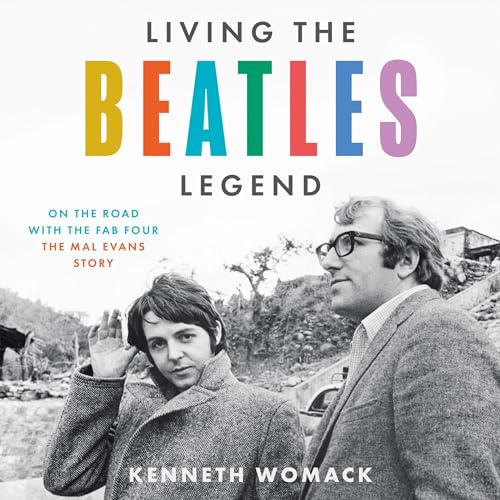
I’ve been waiting on this book since I read about the Beatles in the 70s as a kid. I knew the story…after a showdown with police Mal Evans was shot and killed on January 5, 1976. He was working on his autobiography at the time. Evans was the last person you would think would die that way…and in this case…he wanted it. Could the police have handled it better? Yes, but Mal had said that is how he wanted to go out. He forced the situation. He was only 40 years old.
Mal Evans along with Neil Aspinal were the roadies for the Beatles. Imagine that…2 roadies for the world’s biggest band. Mal worked at a telephone company in the early ’60s but he loved rock and roll…especially Elvis Presley. He would go see bands at the Cavern and struck up a friendship with George Harrison. George told him since he loved music…take a part-time job as a bouncer at The Cavern. The Beatles automatically liked him from the start. He was a big guy at 6’4″ but he never wanted to use violence. More times than not…he talked his way out of trouble. Aspinal was their only roadie and when Love Me Do and then Please Please Me came out…they needed another person because Aspinal was worn out.
The book covers his entire life and of course, focuses on the years 1963 – 1976. It’s a wonder we have the book at all. All of Mal Evan’s diaries and papers were lost for 12 years after he died. They were discovered by a paralegal who was looking through the basement of a publishing company. They were stored in 6 banker boxes so he had a lot of material including original lyrics to many Beatle songs. He kept about everything and you could say he was the Beatle’s first historian.
He made his mark in history. He was a talent scout for Apple and signed The Iveys which later became Badfinger. Without him pushing them they probably would not have been signed. After the Beatles broke up he continued to work for them as solo artists. Mal loved the Beatles and they in turn trusted him and Neil more than anyone else. He tried a few things like songwriting and he did get some songs covered. He also did a bit of acting appearing in a few of the Beatles movies and also a few with Ringo. When making sure The Beatles had some private space in public he would keep fans away to a point…but was always nice. He said he didn’t want to be rude to the fans who made the Beatles who they were.
His son Gary helped Womack with this book including full access to all of the papers left behind by Mal. His family were the ones who suffered. He was gone most of the time especially when the Beatles were touring. After touring was over he moved his family to London but still was rarely home.
I would highly recommend this book. Kenneth Womack had full access to his diaries and used many of the entries. This book turned up a lot of things about them that I had no clue about. It also gave a different look at their personalities on an everyday basis. Near the end, Mal went to the 2nd Beatles convention and spoke. He started to battle depression in the seventies after living in California and missing his wife and kids back in London. He picked up a girlfriend in California and that made his guilt worse. Drugs also affected him in the end.
If you are a Beatles fan…get the book. I wrote this book review originally with over 15 paragraphs but I was telling his story more than critiquing the book. At the end, Mal was working on his book and lined up a publishing deal. All the Beatles signed off on it and wanted to see Mal succeed. He was known for his kindness and loyalty. He told each Beatle in 1974 that he was leaving to do his own thing but continued to help them out.
Mal appeared in every Beatles movie but Yellow Submarine and you see him throughout Get Back.
He produced “No Matter What” by Badfinger
He helped Paul write Fixing A Hole and Sgt Peppers Lonely Hearts Club Band
The original producer of Keith Moon’s solo album
If anyone is interested…I’m including some of the Foreward by his son Gary Evans.
This book is the product of decades of toil. It would not have been possible without the initial determination of my father, Mal Evans, to capture the Beatles’ story as it unfolded before him. He knew, even in his earliest days as a bouncer at the Cavern Club door, that the boys were something special. As he traveled with them across the whole of England and, eventually, the world, he recorded his memories in the pages of his diaries and filled up notebooks with his drawings and recollections, all the while taking thousands of candid photographs and saving ephemera of all shapes and sizes—a receipt here, a scrap of lyrics there.
When my dad sat down to compose his memoir for Grosset and Dunlap in 1975, he realized the difficulty inherent in taking up a pen to capture his thoughts. Fortunately, he was aided by a stenographer, who transcribed his words to the letter, and by the sage advice of Ringo Starr: “If you don’t tell the truth,” he told my dad, then “don’t bother doing it.” And so, Dad did.
On January 4, 1976, when he simply couldn’t stomach the act of living another day, my father orchestrated his own demise in a Los Angeles duplex. He left behind the fruits of decades of collecting, along with a full draft of his memoir, which he planned to call Living the Beatles’ Legend: 200 Miles to Go. He had even gone so far as to plot out the book’s illustrations, with the assistance of a friend who had served as an art director, and mocked up a couple of cover ideas.
My dad’s death threw all this into disarray. For a time, Grosset and Dunlap made various attempts at publishing Living the Beatles’ Legend, but my mother, Lily, understandably distraught over her estranged husband’s tragic death, simply wanted his collection to be returned to our family back in England, so that we could sort things out for ourselves. As we later learned, in the days after my father died in Los Angeles, Grosset and Dunlap transported the materials from L.A. to New York City, eventually placing them in a storage room in the basement of the New York Life Building.
And that’s where they sat for more than a dozen years, to be rescued from the garbage heap only by the quick thinking of Leena Kutti, a temporary worker who discovered my dad’s materials—along with the diaries, the photographs, and the memoir—recognizing she was in the presence of a most unusual archive. When her efforts to raise the alarm with the publishing house fell on deaf ears, Kutti took it upon herself to march uptown to the Dakota, where she left a note for Yoko Ono, one of the few genuine heroes in the strange progress of my father’s artifacts. In short order, Yoko alerted Neil Aspinall, my dad’s counterpart during the Beatles years. With the assistance of some shrewd Apple lawyering, Neil saw to it that the collection was finally delivered to our family home in 1988.
For several years, my dad’s manuscripts and memorabilia were stored in our attic. I would periodically dip into them and reacquaint myself with the person whom I had lost when I was fourteen years old. Thumbing through the materials reminded me why I loved my father so dearly, in spite of the flaws that drove him away from us and led to his death at age forty. Over the years, my family has struggled with the idea of sharing Mal’s story. Then, in 2004, a forger created an international sensation when he claimed to possess Dad’s collection in a suitcase full of artifacts he had discovered in an Australian flea market. The news was quickly picked up and shared across the globe with much fanfare before it was proven to be a hoax.
To stem the ensuing confusion, my mum and I consented to a 2005 interview with the Sunday Times Magazine, even going so far as to allow the publication of a few excerpts from my dad’s diaries. The tide began to change for us in July 2018, when I decided to follow in my father’s, and the Beatles’, footsteps and retrace the famous “Mad Day Out” photo session on its fiftieth anniversary. I was joined that day by my good friend, actor and playwright Nik Wood-Jones. Along the way, we had the remarkable good fortune to cross paths with filmmaker and Beatles aficionado Simon Weitzman, who was on a similar mission.
As my friendship with Simon developed, I confided in him about the ongoing challenge of sharing my dad’s story with the world. He assured me that he knew just the guy to make it happen. Through Simon, I met Ken Womack via Zoom in 2020, during the first few months of the Covid-19 pandemic. Ken had already authored several books about the Beatles, but more important, Simon trusted him implicitly. Almost as soon as we began working together, I knew that Ken was the right collaborator to tell my dad’s story with the historical integrity it required. Over the years, I have come to understand the ways in which Beatles fans the world over adore “Big Mal,” and to his credit, Ken has been able to honor that connection while also mining the truth of my dad’s life, warts and all.
Working with our friends at HarperCollins, we are proud to share the present book with you—a full-length biography detailing my dad’s life with (and without) the Beatles. A second, even more richly illustrated book will follow in which we provide readers with highlights from my dad’s collection, including the manuscripts he compiled, the contents of his diaries, numerous drawings and other ephemera, along with a vast selection of unpublished photographs from our family archives and from his Beatle years.
The present effort simply wouldn’t have been possible without the saving graces of people like Leena Kutti, Yoko Ono, Neil Aspinall, Simon Weitzman, and Nik Wood-Jones. And now, thanks to Ken, readers will be able to experience my dad’s story with the vividness it deserves. Ken, you kindly lent me your ears over the past three years; I got by with more than a little help from you, my friend.
My father meant the world to me. He was my hero. Before Ken joined the project, I thought I knew my dad’s story. But what I knew was in monochrome; now, some three years later, it is like The Wizard of Oz, my dad’s favorite film, when the scene shifts from black-and-white Kansas to the dazzling multicolored brilliance of Oz. Ken has added so much color, so much light to my dad’s story. He has shown me that Mal Evans was the Beatles’ greatest friend. Yes, Big Mal was lucky to meet the Beatles, but the Beatles possessed even more good fortune when, for the first time, all those years ago, my dad happened to walk down the Cavern Club steps. The rest is music history.
This was on the American album Meet The Beatles (the UK version would be With The Beatles) that I first heard when I was a kid. Lennon’s voice in this is fantastic. It’s a bit more sophisticated than many of their other songs at the time. The lyrics and the chord structure are really good.
I’ve always liked this song and the song drew a serious review from William Mann. Willaim Mann was the music critic of The Times in London. The article, titled “What Songs The Beatles Sang…,” was printed on December 23rd, 1963, just over a month after the release of the album “With The Beatles” in the UK. This critical analysis was unlike any media exposure The Beatles were getting up to this time, most of which consisted of reports on the mass hysteria that accompanied their appearances or their hair.
“Harmonic interest is typical of their quicker songs, and one gets the impression that they think simultaneously of harmony and melody, so firmly are the major tonic sevenths and ninths built into their tunes, and the flat submediant key switches, so natural is the Aeolian cadence at the end of ‘Not A Second Time’ (the chord progression which ends Mahler’s Song of the Earth).”
Mann would go on to say that Lennon and McCartney were “the greatest songwriters since Schubert.”
Pop music wasn’t considered important enough for serious music critics to review. Lennon and McCartney had no formal musical training. They wrote by feel, which Lennon said in 1973: “Intellectuals have the problem of having to understand it. They can’t feel anything. The only way to get an intellectual is to talk to him and then play him the record. You couldn’t put a record on and just let him hear it.”
The effect of William Mann’s review had such a lasting impact that the subject was still raised in a 1980 interview shortly before John’s death. His last words on the subject of Aeolian cadences were, “To this day I don’t have any idea what they are. They sound like exotic birds!”
This is one Lennon and McCartney song that was written solely by John Lennon. He said he was influenced again by Smokey Robinson and the Miracles.
Not A Second Time
You know you made me cry I see no use in wondering why I cry for you
And now you’ve changed your mind I see no reason to change mine I cry
It’s through, oh-oh You’re giving me the same old line I’m wondering why You hurt me then, you’re back again No, no, no, not a second time
You know you made me cry I see no use in wondering why I cry for you, yeah
And now you’ve changed your mind I see no reason to change mine I cry
It’s through, oh-oh You’re giving me the same old line I’m wondering why You hurt me then, you’re back again No, no, no, not a second time
Not a second time Not a second time No, no, no, no, no No, no, no (not a second time)
It’s that time of year…and this is one-holiday song that is on my list and not worn out. I first heard this in 1994 when I bought the Beatles Anthology album. I never knew of this song before. This song was never officially released until it appeared as the B-side to “Free As A Bird” in 1994. I’ve posted it every year since I’ve blogged and will continue to do so…it’s repetitive but I like it…it drives home the point.
My friend Dave posted this song in 2021 and he has more info than I do so check it out.
The song is credited to Lennon-McCartney-Harrison-Starkey. The original version was distributed to The Beatles fan club in 1967. It’s the only song written specifically for the Beatles Fan Club members. Along with the Beatles…actor Victor Spinetti and roadie Mal Evans were on the recording.
Between December 1963 and December 1969, they sent out 7 flexi discs that had spoken and musical messages to their official fan clubs in the UK and the US at Christmas time.
The Beatles recorded this in 1967 and wasn’t released until 1994 paired with “Free As A Bird”. It is a fun Christmas song that will stick in your head. The Beatles did not release a Christmas song commercially… only to their fan club when they were active.
Many performers of this era like The Beach Boys and The Four Seasons released Christmas songs, but The Beatles never had an official Christmas release.
Christmas time is here again
Christmas time is here again Christmas time is here again Christmas time is here again Christmas time is here again
Ain’t been round since you know when Christmas time is here again O-U-T spells “out”
Christmas time is here again Christmas time is here again Christmas time is here again Christmas time is here again
Ain’t been round since you know when Christmas time is here again O-U-T spells “out”
Christmas time is here again Christmas time is here again Christmas time is here again Christmas time is here again
Ain’t been round since you know when Christmas time…[music continues and fades to background]
[spoken]
This is Paul McCartney here, I’d just like to wish you everything you wish yourself for Christmas.
This is John Lennon saying on behalf of the Beatles, have a very Happy Christmas and a good New Year.
George Harrison speaking. I’d like to take this opportunity to wish you a very Merry Christmas, listeners everywhere.
This is Ringo Starr and I’d just like to say Merry Christmas and a really Happy New Year to all listeners
[a John Lennon pastiche at this point, very hard to understand]
This track is so alive. Lennon’s voice as always cuts through as always and Lennon’s sense of rhythm is different as always. He wrote and recorded this song in one day. John enlisted George Harrison, Klaus Voormann, Alan White, and Billy Preston to help him record the song. He also got Mal Evans, a Beatles road manager, to do the chimes, handclaps, and backing vocals. He is playing tambourine in the video below. The song was recorded on January 27, 1970, and released to the public on February 6, 1970.
I always tell people that I prefer John’s early albums to his later ones and to Pauls early ones. John had an edge to him that Paul didn’t have until Band on the Run… to me anyway.
The chorus was made up of Mal Evans, Yoko, and a small group of strangers Lennon rounded up from a West End pub called Hatchetts.
The song peaked at #3 in the Billboard 100, #2 in Canada, #4 in New Zealand, and #5 in the UK in 1970. Phil Spector produced this track with great results. John kept it simple and Spector produced an exciting record and didn’t overproduce it because John reigned him in. The drums are really in your face in this recording.
Stephen King has said the novel The Shining got its inspiration from this song with the chorus of “We all shine on.”. Before Lennon would let Spector touch the Let It Be tapes…he tried him out on this song to see if he could not overproduce something this sparse and have a hit.
Yoko caught a lot of heat in 1993 when she let Nike use this song in a commercial. I will give her credit on this one… she took the $800,000 that Nike gave her, and gave it to the United Negro College Fund. Nowadays no one says anything about it as much because it’s much more commonplace now.
John Lennon: “I wrote it in the morning on the piano. I went to the office and sang it many times. So I said ‘Hell, let’s do it,’ and we booked the studio, and Phil came in, and said, ‘How do you want it?’ I said, ‘You know, 1950’s.’ He said, ‘right,’ and boom, I did it in about three goes or something like that. I went in and he played it back and there it was. The only argument was that I said a bit more bass, that’s all, and off we went.”
Yoko Ono: “It’s like, ‘Let’s all be together and anybody who’s out there who’s not in this game, why don’t you join us?,'” she told Uncut in 1998. “And to say that ‘We all shine on,’ it’s a beautiful, beautiful thing, instead of saying some people are shining and some people are not. It’s a really uplifting song.”
Instant Karma
Instant Karma’s gonna get you Gonna knock you right on the head You better get yourself together Pretty soon you’re gonna be dead What in the world you thinking of Laughing in the face of love What on earth you tryin’ to do It’s up to you, yeah you
Instant Karma’s gonna get you Gonna look you right in the face Better get yourself together darlin’ Join the human race How in the world you gonna see Laughin’ at fools like me Who in the hell d’you think you are A super star Well, right you are
Well we all shine on Like the moon and the stars and the sun Well we all shine on Ev’ryone come on
Instant Karma’s gonna get you Gonna knock you off your feet Better recognize your brothers Ev’ryone you meet Why in the world are we here Surely not to live in pain and fear Why on earth are you there When you’re ev’rywhere Come and get your share
Well we all shine on Like the moon and the stars and the sun Yeah we all shine on Come on and on and on on on Yeah yeah, alright, uh huh, ah
Well we all shine on Like the moon and the stars and the sun Yeah we all shine on On and on and on on and on
Well we all shine on Like the moon and the stars and the sun Well we all shine on Like the moon and the stars and the sun Well we all shine on Like the moon and the stars and the sun Yeah we all shine on Like the moon and the stars and the sun
I’ve been listening to All Things Must Pass recently and the songs are really consistent on that album.
Harrison wrote these lyrics while he was still a Beatle. He found it hard to get many of them on Beatles albums because there was only so much room. The good side is when The Beatles broke up, he had a backlog full of songs.
Phil Collins was brought in to play the congos on this song. He played for 90 minutes and got blisters on his fingers from playing them for so long. Unfortunately for Collins…his version didn’t make the cut. George Harrison had a great sense of humor and pranked Collins in later years.
Collins met Harrison several more times over the years, and the pair became friendly… friendly enough for Harrison to prank Collins. In 2001, shortly before Harrison’s death, he put out a remastered version of All Things Must Pass and around the same time sent Collins what he claimed was a version of the track on which he had played featuring the drummer’s missing Congas handiwork.
George had the percussionist Ray Cooper play out of time on the tape and that is what he sent to Collins. Phil later said: “I got a tape from George of the song that I played with the congas quite loud, I thought, Oh my god, this sounds terrible. In fact, it was a Harrison joke. He’d recorded [percussionist] Ray Cooper. [He said] said, ‘Play bad, I’m going to record it and send it to Phil.’ I couldn’t believe that a Beatle had actually spent that much time on a practical joke for me.” He did have a connection to the Beatles… As a kid, he was an extra in the Beatles movie A Hard Day’s Night but was edited out. Harrison did credit Collins on the 2001 remastered version of All Things Must Pass.
All the members of Derek and the Dominos played on this track and it was produced by Phil Spector.
George Harrison credits his first experience with LSD as being the doorway to his spiritual awakening and introduction to Hinduism. Harrison said that during the LSD trip, he thought of Yogis of the Himalayas running through his mind. He began to think about death and that is how this song came about.
George Harrison passed away on November 29, 2001 after a long battle with cancer. He was not afraid of death, as he believed it would take him to a better place. Before he passed, Paul and Ringo visited him and spent the day telling jokes and talking about times in Liverpool. He did tell Paul McCartney one to stop fighting with Yoko…that life was too short. Paul honored that wish and started to communicate with Yoko.
George Harrison: In the scriptures and in the Bhagavad Gita it says there’s never a time when you didn’t exist and will never be a time you cease to exist. The only thing that changes is our bodily conditioned soul comes in the body and we go from birth to death and it’s death how I look at it. It is like taking your suit off, you know the soul is in these three bodies and one body falls off.
Acoustic Demo
Art Of Dying
There’ll come a time when all of us must leave here
Then nothing sister Mary can do
Will keep me here with you
As nothing in this life that I’ve been trying
Could equal or surpass the art of dying
Do you believe me?
There’ll come a time when all your hopes are fading
When things that seemed so very plain
Become an awful pain
Searching for the truth among the lying
And answered when you’ve learned the art of dying
But you’re still with me
But if you want it
Then you must find it
But when you have it
There’ll be no need for it
There’ll come a time when most of us return here
Brought back by our desire to be
A perfect entity
Living through a million years of crying
Until you’ve realized the Art of Dying
Do you believe me?
I have been hyped about this because I’m not old enough to remember The Beatles when they were together. In the 90s when Free As A Bird came out I was so excited because it was the first time I ever heard a “new” Beatles song. I’ve been waiting for Paul to finish this song for 27 years. I thought it would end up just being him finishing it or not at all. My son Bailey is excited also. He was born in 2000 so he didn’t even get to hear Free As A Bird much less The Beatles as an active band. I think he is more excited than I am.
The thing that I’m happy about the most after listening to it is the great sound. They didn’t try to make it fit with everyone else now. The mix sounds lively and not flat and compressed to death like a lot of recordings. I’m listening through headphones and they did a hell of a job on it.
This song is not one of John’s best but it sounds great hearing John Lennon again. This will be the last single from them and for me, this is my musical event of the year.
This came about because of Peter Jackson’s advancements in audio technology while working on Get Back. He took John’s voice off of the 1978 cassette tape and it’s clean. They ran into a buzz on the tape before and could not finish it in the 90s.
Is this the best song ever by them? No, it’s not but it’s a nice send-off. On the single version, the B-Side is appropriately their first single Love Me Do. The video (out tomorrow) was directed by Peter Jackson.
What a long road this song took to get here.
12-Minute Bio on the song.
Now and Then
I know it’s true, it’s all because of you
And if I make it through, it’s all because of you
And now and then, if we must start again
Well we will know for sure, that I love you
I don’t want to lose you – oh no, no, no
Lose you or abuse you – oh no, no, no, sweet doll
But if you have to go, away
If you have to go
Nda-da-doo, doo-doo-doo
Now and then, I miss you
Oh now and then, I want you to return on me
And now return to me…
I know it’s true, it’s all because of you
And if you go away, I know you you’ll nev’… stay
I don’t want to lose you – oh no, no, no
Abuse you or confuse you – oh no, no, no, sweet darl’
But if you had to go,
Well I won’t stop you babe
And if you had to go, well you believe in that love
This song was on the first album I ever bought by the Beatles. It was a greatest hits package called Hey Jude Again when I was eight. This song I liked right away as I was learning about the band. Ask a Beatle fan what their opinion of Yoko is…and you will get different answers but I would safely say more negative. Don’t count me as a fan. She gets blamed for breaking the Beatles up. I think Allen Klein deserves more of the blame but not all…
It’s John, George, and Ringo who followed Klein and later paid millions for it but not as dearly as The Stones. Klein ended up with rights to all of their 1960s catalog. Paul’s lawsuit against the Beatles and Klein stopped Klein from doing more damage. I do think the Beatles broke up at a perfect time. Closing a career with Abbey Road…is about as good as it gets.
This song…was written obviously by Lennon but it wasn’t a true Beatles recording. Only John and Paul played on the recording. Despite the business BS going on…the music still worked between the two. John played all of the guitars and lead vocals and Paul played drums, bass, and backing vocals. George was out of town and Ringo was filming a movie. The song is a true story about John and Yoko getting married.
It was banned by many stations in America and the UK because of the line “Christ, you know it ain’t easy.” The song was supposedly written, recorded, and mixed on the same day…April 14, 1969. John didn’t like spending a long time in a studio and would do this later on with Instant Karma. He liked minimum production in those days.
John and Yoko were married on March 20, 1969, in Gibraltar, a British Overseas Territory on Spain’s south coast.
The song peaked at #1 in the UK, #8 on the Billboard 100, #7 in Canada, and #2 in New Zealand in 1969. At the time, it was a non-album single with the George Harrison song Old Brown Shoe as the B side. It would later be on Hey Jude Again.
A small side note…as an eight-year-old, I did learn about Holland, France, Paris, Gibraltar, and Spain. I told my mom that I would like her to drive me to France please…hey give me a break…I was 8.
The Ballad of John and Yoko
Standing in the dock at Southampton
Trying to get to Holland or France.
The man in the mac said you’ve got to go back,
You know they didn’t even give us a chance.
Christ! You know it ain’t easy,
You know how hard it can be.
The way things are going,
They’re going to crucify me.
Finally made the plane into Paris,
Honeymooning down by the Seine.
Peter Brown called to say,
You can make it OK,
You can get married in Gibraltar near Spain.
Christ! You know it ain’t easy,
You know how hard it can be.
The way things are going,
They’re going to crucify me.
Drove from Paris to the Amsterdam Hilton,
Talking in our beds for a week.
The newspapers said, say what’re you doing in bed,
I said we’re only trying to get us some peace.
Christ! You know it ain’t easy,
You know how hard it can be.
The way things are going,
They’re going to crucify me.
Saving up your money for a rainy day,
Giving all your clothes to charity.
Last night the wife said,
Oh boy, when you’re dead you
Don’t take nothing with you but your soul think!
Made a lightning trip to Vienna,
Eating chocolate cake in a bag.
The newspapers said,
She’s gone to his head,
They look just like two Gurus in a drag.
Christ! You know it ain’t easy,
You know how hard it can be.
The way things are going,
They’re going to crucify me.
Caught the early plane back to London,
Fifty acorns tied in a sack.
The men from the press said we wish you success,
It’s good to have the both of you back.
Christ! You know it ain’t easy,
You know how hard it can be.
The way things are going,
They’re going to crucify me





 Big Star album. Alex came into the studio a few times while the Replacements were working on the record (and laid down a guitar fill for “Can’t Hardly Wait”), but the band avoided the awkwardness of playing “Alex Chilton” whenever Chilton was around.




 PowerPop... An Eclectic Collection of Pop Culture