Fleetwood Mac – Kiln House …album review

When most folks hear the words Fleetwood Mac, they immediately think of the Rumours-era band. But rewind just a few years earlier and you’ll find a very different band, one still rooted in the blues, still searching for direction after the departure of founding guitarist Peter Green. Starting that transitional phase is the album Kiln House.

Fleetwood Mac was changing throughout the decade, but 1970s Kiln House was one of their strangest detours. After Peter Green’s sudden exit, the band found itself leaderless. Instead of breaking up, Jeremy Spencer and Danny Kirwan took the lead and led the band through a melodic 1950s-inspired sound with that glorious echo. The entire album isn’t that, but it’s a heavy influence. 

 This is one of the most interesting bands ever. You can find a song in one of their many eras to satisfy anyone. This album was a departure from the Peter Green era. It didn’t have the intensity that Green brought, but it made up for it in some great songs. It was highly melodic with some complicated melodies, like Station Man (written by Danny Kirwan, Spencer, and John McVie); the later incarnation picked up on that song as well. The first song of this period I took notice of a few years ago was Jewel Eyed Judy from this album. 

Jeremy Spencer adored that 1950s rock style, and This Is the Rock is one of his tributes to that era. Another obvious one is the song Buddy’s Song. They also had some nice straight-out rock on the album with Kirwan’s Tell Me All the Things You Do.

This album ties the eras together for me. You had straight out rock, a touch of blues, rockabilly, country, and some pop that foreshadowed what was to come. It is probably the most varied Fleetwood Mac album I’ve listened to. You can hear Fleetwood Mac going toward something new.

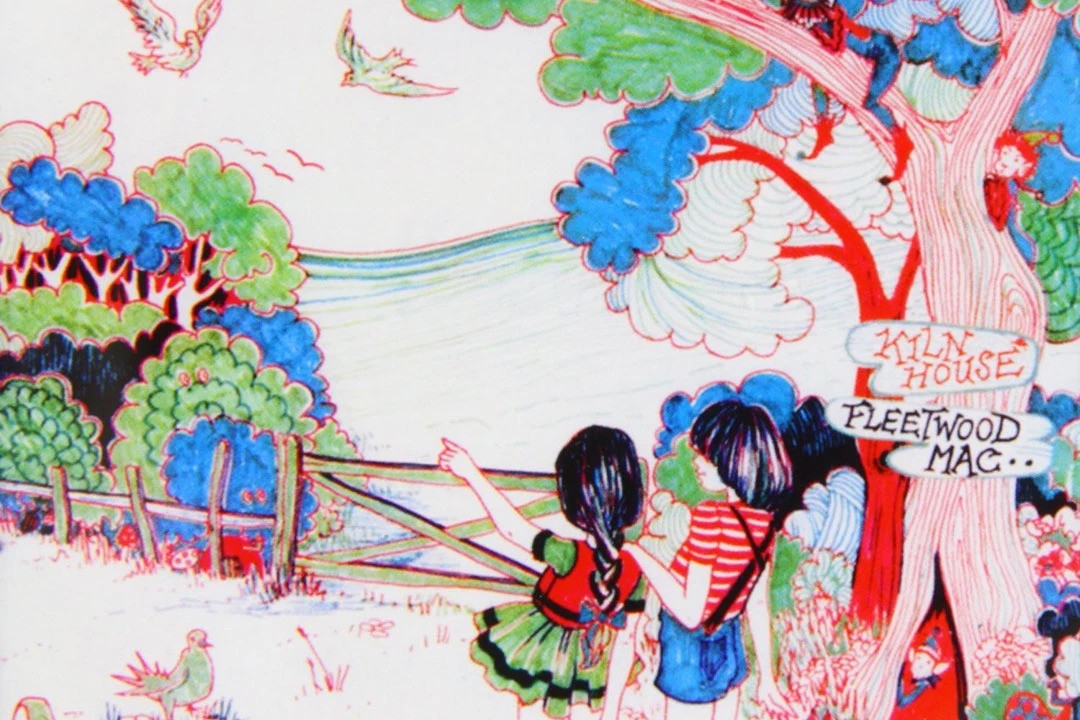
The album peaked at #69 on the Billboard Album Charts, #67 in Canada, and #39 in the UK. Christine McVie not only drew the cover, she also contributed to the album with backup vocals, keyboards, and even cover art. After this album, she became a full member.

This Is The Rock

This is the rockWe’ve been talking about (this is the rock)Yeah, this is the rockMakes you jump and shout (this is the rock)This is the rockThat knocks you right out

It makes you loseAll your troubles and caresYou’ll lose your bluesThey ain’t going nowhereThis is the rockThat hits you right there

Well you can get back on the roofAnd shout it all aroundGet up off your seats is what I’m putting downGet ’em all a hoppin’ to that crazy beatGet ’em all a boppin’ and a tappin’ their feet

‘Cause it’s the rockMoves you all day long (it’s the rock)Yeah, it’s the rockGettin’ everyone (it’s the rock)This is the rockIt really turns you on, woo

Well you can get back on the roofAnd shout it all aroundGet up off your seats is what I’m putting downGet ’em all a hoppin’ to that crazy beatGet ’em all a boppin’ and a tappin’ their feet

‘Cause it’s the rock (it’s the rock)Moves you all day long (it’s the rock)Yeah, yeah it’s the rockGettin’ everyone (it’s the rock)This is the rockIt really turns you on

Yeah, this is the rockIt really turns you onThis is the rockIt really turns you on

Well this is the rock

Fleetwood Mac – Man of the World

And there’s no one I’d rather beBut I just wish that I’d never been born

I have to thank obbverse and CB for their enthusiasm for this version of the band. It really made me look back into their catalog more and find these great songs. This song in particular, really hit me hard lyrically and musically. Incredibly haunting and beautiful.  After a couple of listens, it has stuck with me ever since. 

The more I hear this early stuff by Fleetwood Mac, the more I like it. I knew about it from friends growing up who had these albums, but never really explored them until around 5-6 years ago. This song really shows how much soul Peter Green had in him. This song was part song, part confession, and so genuine. The song peaked at #2 in the UK in 1968. This version of the band was rooted in British blues and driven by the Green.

He wrote this song during a time he was getting wary of the fame, wealth, and the music business. A song that someone who appears to have everything but is lost. Green was battling depression and had begun experimenting heavily with LSD. Within a year, he would walk away from Fleetwood Mac entirely, unable to cope with the spotlight and pressure. What followed was a long period of mental health struggles, hospitalization, and silence for many years.

This song was released as a standalone single in April 1969. It marks one of Green’s most poignant personal songs, a ballad that stands apart from the blues-heavy sound the band was known for during its early years.

Peter Green quit Fleetwood Mac a year after this was released and gave all his money away to charity. He played some with Fleetwood Mac in 1971 but vanished. In 1977, Mick Fleetwood arranged a record deal for Green, but it fell through when Peter refused to sign the contract.

Mick Fleetwood: “It’s a sad song. Had we known what Peter was saying… What’s that line? ‘How I wish that I’d never been born.’ You know, whoa. It’s pregnant with passion, it’s a prayer, it’s a crying out.”

Ian Anderson has a nice cover of this song as well.

Man of the World

Shall I tell you about my lifeThey say I’m a man of the worldI’ve flown across every tideAnd I’ve seen lots of pretty girls

I guess I’ve got everything I needI wouldn’t ask for moreAnd there’s no one I’d rather beBut I just wish that I’d never been born

And I need a good womanTo make me feel like a good man shouldI don’t say I’m a good manOh, but I would be if I could

I could tell you about my lifeAnd keep you amused I’m sureAbout all the times I’ve criedAnd how I don’t want to be sad anymoreAnd how I wish I was in love

Fleetwood Mac – Albatross

Albatross is an instrumental from Fleetwood Mac…the 60’s version of the band with the great guitar player Peter Green. I first heard about the song in a book. The Beatles were recording Abbey Road and they played this song constantly through the sessions. You can hear the reverb effect used on Sun King by Lennon that resembles Albatross. 

When this song was released, Fleetwood Mac was six years away from their pop conversion of the Stevie Nicks/Lindsey Buckingham era. The lineup on this track was Peter Green (vocals, guitar), John McVie (bass), Danny Kirwan (guitar), and Mick Fleetwood (drums). The song was released on November 22, 1968, with ‘Jigsaw Puzzle Blues’ (written by the band’s James Kirwan) on the B-side.

It remains one of the band’s most recognizable songs from their early blues- period. The song peaked at #1 on the UK Charts, #45 in Canada, and #4 on the Billboard Bubbling Under the Hot 100 Charts (per Wiki) in 1969. Peter Green wrote this song. Albatross was re-released in 1973 peaking at #2 on the UK Charts. In 1989, it was released again and peaked at #96 on the UK Charts…and in 2020-2023 it was released yet again and peaked at #8 on the UK Singles Charts. The song keeps on giving. 

Funny enough…this song remains their only #1 UK song! That surprises me with the later commercial success they had. Few bands could evolve like they did. Genesis is one and David Bowie is another one that pulled off different sounds but remained popular. 

The title came from a bird called The Albatross, which sailors regarded as a sign of bad luck. That is where the saying “like an Albatross around your neck” came from. Green was also influenced by the Santo and Johnny song Sleep Walk…which you can hear that sound in this. Green also said some of it came from notes that Clapton would play with the John Mayall Bluesbreakers on the song The Last Meal but just slowed down. Peter Green would replace Eric in that band. 

Peter Green remains one of my favorite guitar players. My admiration for him has grown through the years. Sleep Walk from Santo and Johnny remains one of my favorite instrumentals and I can hear it in this clearly…makes me like it more. 

Danny Kirwan: Well, that was Monsieur Peter Green – I called him Monsieur, you know – and I played with him. On “Albatross” he told me what to do, all the bits I had to play.

George Harrison: “So we said, ‘Let’s be Fleetwood Mac doing Albatross, just to get going.’ It never really sounded like Fleetwood Mac… but that was the point of origin.”

Peter Green talking about LSD and Albatross

Max Picks …songs from 1977

1977

This is the year I became aware of sports, news, and politics. This year is an eclectic bunch of songs. You have punk, reggae, pub rock, rock, and pop/rock.

I didn’t get into the Sex Pistols at the time they came out. They were not as big over here as they were in the UK. I did find them later on. I can’t say I’m a huge fan but I do recognize the importance of the Punk rock movement… and they stirred up the rock music industry when it needed stirring up.

This was originally called “No Future.” The band played it live and recorded a demo version with that title, but changed it when lead singer Johnny Rotten got the idea to mock the British monarchy.

I got into Bob Marley and the Wailers a little later but better late than never. Jammin’ is on their ninth studio album Exodus. In Jamaica, the word “jamming” refers to getting together for a celebration. Although it can also mean an impromptu musical session.

Marley wrote the song in exile in Nassau after the 1976 attempt on his life.

The song was written by David Bowie and Brian Eno and was on the Heroes album released in 1977. After burnout because of touring Bowie moved to Berlin and rented a cheap apartment above an auto-repair shop, which is where he wrote the album.

I was walking through a drug store in the late seventies as a kid and I saw this album cover…I thought what??? another person named Elvis? Who is this skinny guy? While at the drug store, the guy was playing this album and I heard Alison… That was the first thing I ever heard from Elvis. The album peaked at #32 in the Billboard Album Charts in 1978. His songs were different than a lot of the radio hits of the day…with different, I mean better.

Fleetwood Mac released Rumours and it was the album of the year. An incredible four singles were pulled off of this album plus the other songs that would become FM classics. Personally, my favorite two are Second Hand News and Never Going Back Again but I do like Go Your On Way.

Lindsey Buckingham showed that less was more in this solo…he used very few notes and used sustain.

Santana – Black Magic Woman ….Under The Covers Tuesday

This song was not written by guitarist Carlos Santana but by the great guitarist for Fleetwood Mac. No not Lindsey Buckingham or Bob Welch…but the great blues guitarist Peter Green. I have to admit I like both versions about the same. Two legendary guitar players make this song come alive. I always thought Santana wrote it until a few years ago.

This song was Santana’s first single from their second album Abraxas. The album was released in 1970. It was a year after their acclaimed appearance at Woodstock. That performance launched Santana into national fame. When Carlos Santana played Woodstock, he had yet not released an album.  He was one of the most unknown artists.  Basically, his manager, Bill Graham, forced the band’s way onto the bill.  A couple of weeks later, riding the great press from his Woodstock performance, Santana released “Black Magic Woman” and the rest is history.

Peter Green made friends with an occult group that dabbled in black magic. In turn, they turned Green on to acid which untimely destroyed him. He left Fleetwood Mac a couple of years after that. Green was probably happy that Santana covered this song. Green was convinced to give all of his money away. The royalties from this song helped him later on to live. He ended up taking jobs wherever he could find work, including one as a grave digger.

Fleetwood Mac’s version peaked at #37 in the UK charts in 1968. It was a non-album single. It later appeared on the band’s 1969 compilation album, The Pious Bird of Good Omen. Fleetwood Mac played the song on their last tour with Stevie Nicks singing it from a woman’s point of view. It just didn’t have the power that the original band did.

Santana’s version peaked at #4 on the Billboard 100 and #4 in Canada in 1970-71.

Christine McVie: “Something snapped in him, he dropped this fatal tab of acid and withdrew. He still has this amazing power, but it’s negative. You don’t want him around. We’ve all cried a lot of tears over Peter. We’ve all spent so much time and energy talking him into more positive channels. He’ll just sit there and laugh. ‘FUCK IT . . .’”

Santana: “I used to go to see the original Fleetwood Mac, and they used to kill me, just knock me out, to me, they were the best blues band.”

Mick Fleetwood: “Three minutes of sustain/reverb guitar with two exquisite solos from Peter.”

Santana AND Green

Black Magic Woman

Got a black magic woman
I’ve got a black magic woman
Got me so blind I can’t see
That she’s a black magic woman
She’s trying to make a devil out of me

Don’t turn your back on me, baby
Yes, don’t turn your back on me, baby
Stop messing ’round with your tricks
Don’t turn your back on me, baby
You just might pick up my magic sticks

You got your spell on me, baby
Yes, you got your spell on me, baby
Turnin’ my heart into stone
I need you so bad
Magic woman I can’t leave you alone

Fleetwood Mac – Say You Love Me

This song was on Fleetwood Mac’s self-titled album, the first one with Lindsey Buckingham and Stevie Nicks.

I know that Rumours is the big album of Fleetwood Mac but I have a special place for the Buckingham and Nicks debut album with the band. For me, it was up there with Rumours. The songs include Monday Morning, Rhiannon, Landslide, Over My Head, World Turning, and this song. It was the tenth album by the band and was released in 1975. I have to admit that I favor it now over Rumours because of the extensive play of that album.

FM

After Bob Welch left the band in 1974 the band was talking to producer Keith Olsen and he played Mick Fleetwood the Buckingham and Nicks album. Mick liked the guitar player and wanted to hire him to take Welch’s place. Buckingham would not join unless they took Stevie Nicks…which they did.

This album had 3 top twenty hits (Say That You Love Me, Rhiannon, and Over My Head) and songs like Landslide and Monday Morning that remained favorites by fans. Say That You Love me peaked at #11 on The Billboard 100, #29 in Canada, and #40 in the UK.

The album peaked at #1 on the Billboard Album Charts, #2 in Canada, #23 in the UK, and #4 in New Zealand. Christine McVie wrote this song and personally, besides Buckingham…she is my favorite singer/songwriter in the band.

From Wiki:  Shirley Eikhard covered “Say You Love Me” and released it as single several weeks in advance of Fleetwood Mac in early June 1976. Eikhard’s version became a Canadian top 40, peaking at No. 34; Fleetwood Mac’s version, released only a few weeks later, peaked at No. 29 in September. That version is below.

Say That You Love Me

Have mercy baby,On a poor girl like me,You know I’m falling falling,Falling at your feet.

I’m tingling right,From my head to my toes,So help me help me,Help me make the feeling grow.

‘Cause when the loving starts and the lights go down,And there’s not another living soul around,You woo me until the sun comes up,And you say that you love me.

Pity, baby, just,When I thought it was over,And now you got me runnin’, runnin’,Runnin’ for cover.

I’m begging you for, a bit ofSympathy,If you use me again,It’ll be the end of me.

‘Cause when the lovin’ starts and the lights go down,And there’s not another living soul around,You woo me until the sun comes up,And you say that you love me.

Baby, baby hope,You’re gonna stay away,‘Cause I’m getting weaker,Weaker every day.

I guess I’m not as strong,As I used to be,If you use me again,It’ll be the end of me.

‘Cause when the lovin’ starts and the lights go down,And there’s not another living soul around,You woo me until the sun comes up,And you say that you love me.

‘Cause when the lovin’ starts and the lights go down,And there’s not another living soul around,You woo me until the sun comes up,And you say that you love me.

Say that you love me,Say that you love me,Say that you love me.

Fallin’ fallin’ fallin’,Fallin’ fallin’ fallin’,Fallin’ fallin’ fallin’,Fallin’ fallin’ fallin’.

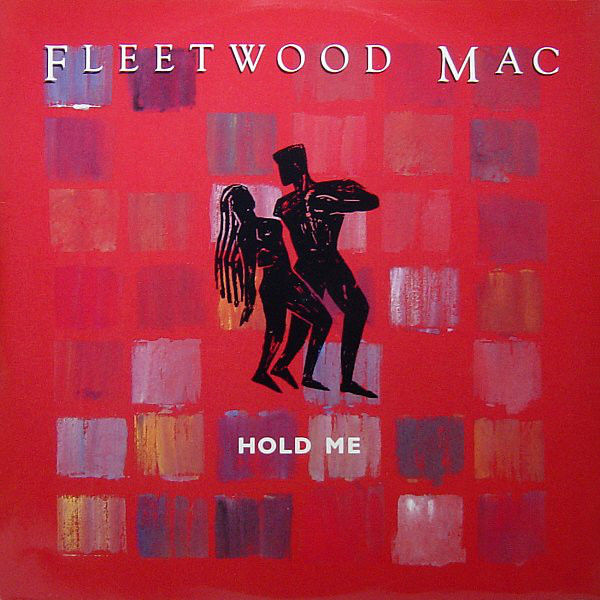
Fleetwood Mac – Hold Me

Stevie Nicks always got more attention in Fleetwood Mac but I’ve always favored Christine’s songs. McVie has written some superb pop songs. This video I saw many times on the still new MTV.

Fleetwood Mac singer/keyboard player Christine McVie wrote this song with Robbie Patton, a singer who had a US hit in 1981 with “Don’t Give It Up,” which features guitar by Lindsey Buckingham.

This song was inspired by Christine McVie’s relationship with Beach Boys drummer Dennis Wilson. After she split with Fleetwood Mac bass player John McVie, Christine dated Wilson for several years before they broke up in 1981. Wilson died in 1983 in a drunk-drowning accident.

Hold Me was on the Mirage album released in 1982. The band recorded the album at the Château d’Hérouville outside of Paris… they filmed the video for this song in the Mojave Desert outside of Palm Springs. The album peaked at #1 in the Billboard Album Charts, #5 in the UK, and #4 in Canada in 1982.

Fleetwood Mac - Mirage (1982, Vinyl) | Discogs

The song peaked at #4 in the Billboard 100, #7 in Canada, and #94 in the UK.

Christine McVie on Mirage getting overlooked:  “It does, and I don’t know why,” she says. But, she adds, “As it stands today, a lot of people know every track on it. Which is quite unbelievable. So I just take it for what it is.”

I suppose we all felt in a way that what we were doing was kind of an homage to Rumours, in the sense that, obviously, after Rumours we went completely the opposite way and made a double album of an entirely different nature with Tusk. And for Tusk we had done this hugely long tour. Two world tours, I believe. Then we all disappeared for a few years. But we have a habit of doing that, Fleetwood Mac. Just kind of taking quite long hiatuses. And as we got together again, I think it was Mick who had this idea that perhaps we should enter another bubble-like situation, which was similar to what we had done for the Rumours album, when we recorded in Sausalito. Just taking us away from familiar things, like our families. There was the idea that maybe something would emerge from there that was completely different. Maybe it would make us more creative. And I think it worked, to an extent. It was definitely an unusual experience.

From Songfacts

Robbie Patton toured as an opening act with Fleetwood Mac in 1979 and McVie produced his albums Distant Shores (1981) and Orders From Headquarters (1982).

The video for this song was inspired in large part by the works of the Belgian painter Magritte, whose paintings appear in the clip. It was directed by Steve Barron and shot in the Mojave Desert. The combination of extreme heat and band tension made for a very difficult shoot. Christine McVie, Lindsey Buckingham and Stevie Nicks had all started solo projects, and getting the band to collaborate was a lesson in futility. The video’s producer Simon Fields said in I Want My MTV by Craig Marks, “John McVie was drunk and tried to punch me. Stevie Nicks didn’t want to walk on the sand with her platforms. Christine McVie was fed up with all of them. They were a fractious bunch.”

The video was subpar, but it was a fresh Fleetwood Mac video, which was good enough for MTV, which in 1982 was desperate for new clips by rock artists, especially established ones. Fleetwood Mac’s video for “Tusk” was one of the few they had available when they launched on August 1, 1981.

Christine McVie and Lindsey Buckingham share the lead vocals on this track.

Hold Me

Can you understand me
Baby don’t you hand me a line
Although it doesn’t matter
You and me got plenty of time

There’s nobody in the future
So baby let me hand you my love
Oh, there’s no step for you to dance to
So slip your hand inside of my glove

Hold me, hold me, hold me

I don’t want no damage
But how am I gonna manage with you
You hold the percentage
But I’m the fool payin’ the dues

I’m just around the corner
If you got a minute to spare
I’ll be waitin’ for ya’
If you ever want to be there

Hold me, hold me, hold me

Hold me, hold me, hold me

Fleetwood Mac – Hypnotized

Bob Welch was a guitarist and vocalist in Fleetwood Mac from 1971-1974. He wrote this song and it was released in 1973. The song was on the album Mystery To Me album.

The song did not chart which surprises me. It was released as the B-side to Fleetwood Mac’s cover version of For Your Love…Hypnotized proved to be the more popular song out of the two. It won an ASCAP award for 35 years on consecutive worldwide radio airplay.

This was right before the Stevie Nicks-Lindsey Buckingham era Fleetwood Mac. After leaving Fleetwood Mac, Welch went on to have a couple big radio hits as a solo artist, “Sentimental Lady” and “Ebony Eyes.”

The album Mystery To Me peaked at #67 in the Billboard Album Charts and #82 in Canada.

Bob Welch: “What I remember about the Mystery to Me sessions is almost everything, so let me be selective. It was a cold winter, and we used the Rolling Stones’ mobile unit to record. I had to re-write all of my songs, because, for instance, ‘Hypnotized’ was intended to be sung by Dave Walker, who was ‘let go’ (there really is no nice way to say it) because, although he was a great singer, we (belatedly) realized that he just stylistically didn’t fit FM.”

“Those two guys in Pascagoula, Mississippi, Charles Hickson and Calvin Parker had just reported on a major UFO encounter, and it was all over the TV for a while. Part of that went into ‘Hypnotized.’  Mick copied my Maestro Rhythm Machine part for ‘Hypno’ almost exactly … Mick’s sense of tempo, in this day before drum machines, was almost perfect … ‘Hypnotized’ was primarily inspired by [Carlos] Castaneda’s books, the Hickson Pascagoula UFO sighting, some stories told to me by friends, and some personal experiences.”

https://www.youtube.com/watch?v=g4685X55xj0

Hypnotized

It’s the same kind of story
That seems to come down from long ago
Two friends having coffee together
When something flies by their window
It might be out on that lawn
Which is wide, at least half of a playing field
Because there’s no explaining what your imagination
Can make you see and feel

Seems like a dream
They got me hypnotized

Now it’s not a meaningless question
To ask if they’ve been and gone
I remember a talk about North Carolina
And a strange, strange pond
You see the sides were like glass
In the thick of a forest without a road
And if any man’s hand ever made that land
Then I think it would’ve showed

That’s why it seems like a dream
Got me hypnotized
And I know that’s right

Seems like a dream
They got me hypnotized

They say there’s a place down in Mexico
Where a man can fly over mountains and hills
And he don’t need an airplane or some kind of engine
And he never will
Now you know it’s a meaningless question
To ask if those stories are right
‘Cause what matters most is the feeling
You get when you’re hypnotized

Seems like a dream
They got me hypnotized
Seems like a dream
They got me hypnotized
Seems like a dream
They got me hypnotized
Got me hypnotized

Fleetwood Mac – Gold Dust Woman…Drug Reference Week

Rock on gold dust woman
Take your silver spoon
Dig your grave

Stevie Nicks wrote this song and it’s on their most successful album, Rumours. The album was made in turmoil with everyone going through relationship problems and on top of that…drugs were everywhere…hey this was the mid-seventies.

Nicks has never been clear on the meaning, you can make a good case that it is about cocaine, which the band was consuming in quantity during the Rumours sessions.

This song was the B side to You Make Loving Fun in America…and Don’t Stop in the UK.

Stevie Nicks: Gold Dust Woman was a little bit about drugs ~ it was about you know keeping going. It was about cocaine. And, uh, you know after all these years since I haven’t done any cocaine since 1986 I can talk about it now you know. But it was ,ah, at that point ~ it was ~ I don’t think I had ever been so tired in my whole life as I was when we were like – doing that. You know I think it was shocking me ~ the whole rock’n’roll life ~ was really heavy and it was so much work and it was so everyday intense you know. Being in Fleetwood Mac was like being in the army. It was like you have to be there. You have to be there and you have to be there as on time as you can be there. And even if there nothing you have to do, you have to be there. So Gold Dust Woman was really my kind of symbolic look at somebody going through a bad relationship, and doing alot of drugs, and trying to just make it ~ trying to live ~ you know trying to get through it to the next thing.

Cris Morris recording assistant on the album: “Recording ‘Gold Dust Woman’ was one of the great moments because Stevie was very passionate about getting that vocal right. It seemed like it was directed straight at Lindsey and she was letting it all out. She worked right through the night on it, and finally did it after loads of takes. The wailing, the animal sounds and the breaking glass were all added later. Five or six months into it, once John had got his parts down, Lindsey spent weeks in the studio adding guitar parts, and that’s what really gave the album its texture.”

From Songfacts

In Mick Fleetwood’s book My Life and Adventures in Fleetwood Mac, he explains that it took Nicks eight takes to get the vocal right, and they were recorded early in the morning. Fleetwood described Nicks as “hunched over in a chair, alternately choosing from her supply of tissues, a Vicks inhaler, a box of lozenges for her sore throat and a bottle of mineral water.”

Among the artists who have recorded this song: Waylon Jennings, Hole, Sheryl Crow and Sister Hazel.

Lindsay Buckingham played a dobro on this track. The dobro is an acoustic guitar with a single resonator with its concave surface uppermost. The inventor of the resonator guitar, John Dopyera, together with his brothers Rudy, Emile, Robert, and Louis, developed the dobro in 1928. They named it as a contraction of Dopyera Brothers’ coupled with the meaning of “goodness” in their native Slovak language. Gibson acquired exclusive use of the dobro trademark in 1993 and the guitar corporation currently produces several round sound hole models under the dobro name. One of these ornate guitars is featured on the cover of Dire Straits’ Brothers In Arms.

For insight on Buckingham’s performance, we spoke with Jerry Douglas, an esteemed dobro player with 14 Grammy Awards to his credit. Said Douglas: “He’s an electric guitar player so I noticed that technique right away. He’s using it for more of a texture. He’s not going to be a bluegrass dobro player and he’s not trying to be. He’s a great guitar player and I think he chose to use the dobro in that situation for a texture more than for a guitar part. It went deeper than that for him. He needed to set that song apart from the rest of the songs and one of the ways to do it and one of the ways to actually get to the subject matter quicker, change it from the rest of the songs, was to use a different kind of guitar, and the dobro was perfect for that.”


Gold Dust Woman

Rock on gold dust woman
Take your silver spoon
Dig your grave

Heartless challenge
Pick your path and I’ll pray

Wake up in the morning
See your sunrise loves to go down
Lousy lovers pick their prey
But they never cry out loud
Cry out

Did she make you cry
Make you break down
Shatter your illusions of love
And is it over now do you know how
Pick up the pieces and go home.

Rock on ancient queen
Follow those who pale
In your shadow

Rulers make bad lovers
You better put your kingdom up for sale
Up for sale

Well did she make you cry
Make you break down
Shatter your illusions of love
And is it over now, do you know how
Pickup the pieces and go home.

Well did she make you cry
Make you break down
Shatter your illusions of love
And now tell me
Is it over now, do you know how
Pickup the pieces and go home
Go home
Go home

Pale
Shadow
Of a woman
Black widow
Pale
Shadow
Of a dragon
Dust woman

Pale
Shadow
Of a woman
Black widow
Pale
Shadow
She’s a dragon
Gold dust woman
Woman, woman

Fleetwood Mac – Jewel Eyed Judy

What a beautiful song this is and it was between the Green and the Buckingham/Nicks era. Thanks to Sharon for bringing this wonderful song up. The song was written by Danny Kirwan and was on the album Kiln House released in 1970.

18-year-old guitarist Danny Kirwan joined Fleetwood Mac in 1968 and one of the first recordings he played on was Albatross. He couldn’t take the pressure of touring and eventually fired in 1972.

The album peaked at #69 in the Billboard Album Charts, #67 in Canada, and #39 in the UK. The song didn’t chart. This is the first album after Peter Green left the band. Christine McVie contributed to the album with backup vocals, keyboards, and even cover art. After this album, she became a full member.

It doesn’t really sound like the Peter Green blues era or the later pure pop sound. It has more of a power-pop sound.

Jewel Eyed Judy

Moonshine time
Thoughts of you
Spinning round
As thoughts do
I just wondered if
Your eyes still shine
As they did
When you were mine

I can see
In a dream
Thougts so clear
And jewels that gleam
Would your eyes
Still sparkle then
If we were, once again

Jewel eyed Judy please come home
Jewel eyed Judy don’t leave me alone
Jewel eyed Judy please come home
Jewel eyed Judy don’t leave me alone

Lovely Judy
Can you see
Where it is
You’re meant to be
Where you lay
Your head tonight
May the stars
Find your light
So am I
Sitting here
Moonlight glistens
On my tears
Is this all
That we could find
Chains of memories
Left behind

Jewel eyed Judy please come home
Jewel eyed Judy don’t leave me alone
Jewel eyed Judy please come home
Jewel eyed Judy don’t leave me alone


https://en.wikipedia.org/wiki/Kiln_House


Fleetwood Mac – Second Hand News

One of my favorites off of the band’s most successful album Rumors.

Second Hand News” was written by Fleetwood Mac frontman Lindsey Buckingham. The turmoil making this album would have made a thrilling TV movie or soap opera…take your pick.

This song was originally an acoustic demo titled “Strummer.” But when Buckingham heard the Bee Gees’ “Jive Talkin’,” he rearranged it with more audio tracks and the rhythmic effect from “playing” the faux-leather seat of a studio chair to make it evoke a slightly Celtic feel.

On recording Rumors…Stevie Nicks: “It lasted thirteen months and it took every bit of inner strength we had. It was very hard on us, like being a hostage in Iran, and to an extent, Lindsay was the Ayatollah.”

It was not released as a single but could have been…the album peaked at #1 in the Billboard 100, #1 in Canada, #1 in the UK, and #4 in New Zealand in 1977.

From Songfacts

 It is the first track on the Rumours album – the most successful album of Fleetwood Mac’s career with sales of over 40 million worldwide, going 19x platinum in the US and 10x platinum in the UK. The band’s original drummer Mick Fleetwood calls it the most important album they ever made.

Like many of the songs on the Rumours album, this one shows a darker side in the lyrics. It’s asking you to move on, leave the singer alone. Fleetwood Mac was experiencing the shatter of all of their emotional ties with not one, not two, but three break-ups! That was the divorce of the McVies, Buckingham and Stevie Nicks breaking up, and Fleetwood going through a divorce from his wife.

In Frank Moriarty’s book Seventies Rock: The Decade of Creative Chaos, Stevie Nicks is quoted from a Creem interview in July 1977, explaining the acrid lyrics: “We were all trying to break up and when you break up with someone you don’t want to see him. You especially don’t want to eat breakfast with him the next morning, see him all day and all night, and all day the day after…”

In Bill Martin’s Avant Rock: Experimental Music from the Beatles to Bjork, while meditating on the dichotomy between Yuppies and Yippies of the ’60s/’70s, the author states: “If I had to pick the ultimate musical document of AOR [Adult-Oriented Rock]/Yuppie rock, it would probably be the 1977 album by Fleetwood Mac, Rumours.” Well, take that!

Second Hand News

I know there’s nothing to say
Someone has taken my place
When times go bad
When times go rough
Won’t you lay me down in tall grass
And let me do my stuff

I know I got nothin’ on you
I know there’s nothing to do
When times go bad
And you can’t get enough
Won’t you lay me down in the tall grass
And let me do my stuff

One thing I think you should know
I ain’t gonna miss you when you go
Been down so long
I’ve been tossed around enough
Awh couldn’t you just
Let me go down and do my stuff

I know you’re hopin’ to find
Someone who’s gonna give you piece of mind
When times go bad
When times go rough
Won’t you lay me down in tall grass
And let me do my stuff

I’m just second hand news
I’m just second hand news yeah
I’m just second hand news
I’m just second hand news yeah
I’m just second hand news
I’m just second hand news yeah
I’m just second hand news
I’m just second hand news yeah, yeah
Yeah

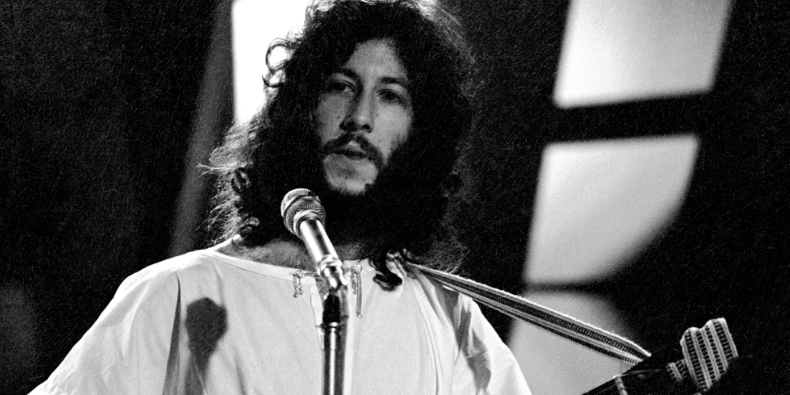
Peter Green (1946-2020)

Peter Green has passed away at age 73. I’ve been listening to that version of Fleetwood Mac a lot lately and he was a great guitar player and songwriter.

https://www.nme.com/news/music/fleetwood-mac-co-founder-peter-green-died-2715066

Fleetwood Mac co-founder Peter Green has died at the age of 73.

His family have confirmed his death in a statement released by solicitors Swan Turton, who are acting on their behalf.

“It is with great sadness that the family of Peter Green announce his death this weekend, peacefully in his sleep,” the statement read. “A further statement will be provided in the coming days.”

The guitarist was born in London on October 29, 1946. He played in several bands after beginning to play professionally at the age of 15, including Bobby Dennis And The Dominoes, and The Muskrats.

In 1965, he met drummer Mick Fleetwood while a member of Peter B’s Looners, with whom he would go on to form Peter Green’s Fleetwood Mac alongside guitarist Jeremy Spencer. John McVie later replaced Bob Brunning on bass and the band released their self-titled debut album in February 1968.

Fleetwood Mac – Over My Head

This was the first single off the Fleetwood Mac album released in 1975. This was the first Fleetwood Mac album with newcomers Lindsey Buckingham and Stevie Nicks.

McVie has said that she composed the song using a portable Hohner electric piano in Malibu, California, where she and then-husband John McVie lived after completing a concert tour to promote the previous album Heroes Are Hard to Find.

The song was written by Christie McVie and peaked at #20 in the Billboard 100 and #9 in Canada in 1976.

The single itself was edited…the fade-in intro that appeared on the album version was removed, and louder guitars were added in the chorus. It became their first song to reach the American charts since 1970s Oh Well.

Over My Head

You can take me to paradise,
And then again you can be cold as ice
I’m over my head,
But it sure feels nice.
You can take me anytime you like,
I’ll be around if you think you might love me baby,
And hold me tight.
Your mood is like a circus wheel,
You’re changing all the time,
Sometimes I can’t help but feel,
That I’m wasting all of my time.
Think I’m looking on the dark side,
But everyday you hurt my pride,
I’m over my head,
But it sure feels nice,
I’m over my head,
But it sure feels nice.

Fleetwood Mac – Green Manalishi (With The Two-Prong Crown)

I heard this song when I was younger. It wasn’t on the radio but a friend of mine who had some old Fleetwood Mac albums. Peter Green was/is a great guitar player and his voice fit the band perfectly.

This is among the last songs Peter Green wrote before quitting the band. A consistent riff carries the rhythm, while Green wails the lyrics. At the time, he was taking a lot of acid, but has always maintained this was about the evils of money.

The song didn’t chart in America but did peak at #10 in the UK in 1969.

Judas Priest covered this on their Hell Bent for Leather album in 1979.

Peter Green: “When I woke up I found I was writing this song. Next day I went out to the park and the words started coming. The Green Manalishi is the wad of notes, the devil is green and he was after me. Fear, inspiration is what it was, but it was that tribal ancient Hebrew thing I was going for. Ancient music.” More recently he admitted, “It took me two years to recover from that song. When I listened to it afterward there was so much power there… it exhausted me.”

From Songfacts

As Green explained in a 1996 interview with Mojo, the song is about the evils of money: the Green Manalishi was the devil manifested as a wad of cash. Green explained: “I had a dream where I woke up and I couldn’t move, literally immobile on the bed. I had to fight to get back into my body. I had this message that came to me while I was like this, saying that I was separate from people like shop assistants, and I saw a picture of a female shop assistant and a wad of pound notes, and there was this other message saying,
‘You’re not what you used to be. You think you’re better than them. You used to be an everyday person like a shop assistant, just a regular working person.’ I had been separated from it because I had too much money. So I thought, How can I change that?”

Peter Green built quite a legend by giving away most of his money. He gave most of his savings to a London-based charity called War On Want, which provided aid to developing nations, mostly in Africa. Green explained: “Last thing at night they used to put pictures on telly of starving people and I used to sit there eating a doughnut and thinking, Why have I got this big stash that I don’t need when probably I’m going to die with it and all this is going on?”

Rumors had it that “Green Manalishi” was a kind of LSD, but Peter Green insists that is was about money. It was based upon a recurrent dream he had in which he woke up unable to move while messages about money formed in his brain. Green recalls:  (from an article by Neil Slaven on Union Square Music)

In retrospect, the song seems like an obvious cry for help from Peter Green, but this wasn’t so clear to his bandmates, who say that his descent was a gradual process, and that they didn’t read so much into this song. “Peter going off the rails was not an immediate thing,” Mick Fleetwood explained. “He left Fleetwood Mac under the most controlled circumstances.”


Fleetwood Mac – Green Manalishi (With The Two-Prong Crown)

Now, when the day goes to sleep
And the full moon looks
The night is so black that the darkness cooks

Don’t you come creepin’ around
Makin’ me do things I don’t wanna do

Can’t believe that you need my love so bad
Come sneakin’ around tryin’ to drive me mad
Bustin’ in on my dreams
Makin’ me see things I don’t wanna see

‘Cause you’re da Green Manalishi with the two prong crown
All my tryin’ is up, all your bringin’ is down

Just takin’ my love then slippin’ away
Leavin’ me here just tryin’ to keep from followin’ you

Fleetwood Mac – Oh Well -Pt1

This song was from Fleetwood Mac…the 60’s version of the band with the great guitar player Peter Green. The song peaked at #55 in the Billboard 100 in 1970.

Fleetwood Mac was six years away from their Stevie Nicks/Lindsey Buckingham era when this song was released. The lineup on this track was Peter Green (vocals, guitar), John McVie (bass), Danny Kirwan (guitar), Mick Fleetwood (drums), and Jeremy Spencer (piano).

This is the only song that has been played in every decade of Fleetwood Mac, starting in the ’60s. When Mike Campbell of Tom Petty & the Heartbreakers joined the band in 2018, the song became a feature for him, and his only lead vocal in their set.

The single was released in two parts. Radio stations usually play the A-side, “Oh Well (part 1).” The B-side is “Oh Well (part 2),” an orchestral piece that sounds completely different. Both parts were written by Peter Green and go together on the album, but Green always thought the best part wasn’t played.

Peter Green: “The best bit was Part 2 on the other side of the record,” “You miss the best bit, the Spanish guitar break. The first side was what we played on stage. I didn’t think it would be a hit and I used to hate playing that one because we played the part that wasn’t as good. I wanted a bit of moody guitar playing. They wanted the bit that was easy to do, that everyone knew.”


From Songfacts

At the time, Fleetwood Mac was a successful blues band known for their raucous stage shows. Their albums consistently sold about 300,000 copies and they were known as outstanding musicians. When Stevie Nicks and Lindsey Buckingham joined the band in 1974, they changed their sound and became one of the best-selling bands ever. Until then, “Oh Well” was the only Fleetwood Mac song that made the Hot 100 in America; they did have several UK hits in this era, including the #1 “Albatross.”

This was one of Peter Green’s last contributions to Fleetwood Mac. He was revered as one of the greatest guitarists and songwriters of the time, having replaced Eric Clapton in John Mayall’s Bluesbreakers before forming Fleetwood Mac in 1967. He became a high profile acid casualty in 1970 when he suffered a mental breakdown and left the band, devoting himself to religious practice and proclaiming money as evil. An oft-repeated tale has him entering his manager’s office with a shotgun, demanding that his royalty checks be discontinued.

Mick Fleetwood was sure this song would go nowhere. He bet Green that it would tank.

The stop and start technique inspired Led Zeppelin to do the same thing on “Black Dog.”

Jimmy Page and The Black Crowes released a version on their 2000 album Live At The Greek.

Oh Well – Part 2

The original  with Peter Green

Oh Well

I can’t help about the shape I’m in
I can’t sing, I ain’t pretty and my legs are thin
But don’t ask me what I think of you
I might not give the answer that you want me to

Now, when I talked to God, I knew He’d understand
He said, “Stick by my side and I’ll be your guiding hand
But don’t ask me what I think of you
I might not give the answer that you want me to”
Ooh, well